• About

Seeking and Serving

~ seek and serve Christ in all persons

Seeking and Serving

Tag Archives: strength

Sermon – Proverbs 31.10-31, P20, YB, September 22, 2024

02 Wednesday Oct 2024

Posted by jandrewsweckerly in Sermons

≈ Leave a comment

Tags

anxiety, capable woman, community, creator, election, God, grace, king, partnership, powerful, president, Sermon, strength, together

As the presidential election approaches in just about six weeks, I have spoken with many of you about a rising sense of anxiety and despair.  One of the things I have noticed about the last three presidential elections is that we have kind of gotten lost – so caught up in big personalities and dramatic events that we have lost sight of one core question in elections:  what do we need in a president to create a just country that reflects the priority of love.

Since I always tell our community that I do not preach politics – just Jesus – I thought I would turn to scripture this week for guidance.  I started with the daily office.  On Wednesday, I came across Psalm 72.  The psalm begins, “Give the king your justice, O God, and your righteousness to a king’s son.  May he judge your people with righteousness, and your poor with justice.  May he defend the cause of the poor of the people, give deliverance to the needy, and crush the oppressor.”  “Yes,” I thought, “This is the president we need.  After all this debate and controversy, this is the kind of president I want.”  Then I kept reading.  The more I read about this noble king, the more the king sounded a lot like Jesus.  Finally, a truth seeped through – this year, as I am considering my choice for President, I have not been looking for an actual person.  I have been looking for a savior; and that is not fair to any human being.  Any person running for president is going to be flawed.  And we already have a Savior – we do not need another one. 

Then I turned to our Old Testament lesson for today: the so-called “capable woman” from Proverbs.  I spent some time with this text when I was writing my thesis in seminary, so I am always drawn to this familiar text.  But the more I read about this woman this time, the more inadequate I felt.  She makes clothes, rises before dawn to feed her family, manages a staff, purchases a field, and plants a vineyard by herself.  She in an entrepreneur, selling her wares for good money.  She cares for the poor, and is a wise teacher.  She does all this and is happy.  As a priest, mother of two, and a wife, I feel woefully inadequate next to the capable woman.  In fact, in Hebrew, the word to describe her is not really “capable” per se.  The word, hayil, is a word that means much more than capable.  Hayil is primarily used in the Old Testament to describe men of great power, valor, and strength.  Hayil is a term for powerful warriors.  In fact, this Proverbs woman and Ruth are the only women in the Old Testament to earn the title normally reserved for men.  The Proverbs woman is not just capable; she is a woman of strength and power.  She is a superwoman. 

The challenge with these two images – the righteous king and the powerful woman – is that neither of these labels feels attainable.  For women, the Proverbs woman of power is especially loaded.  Many of us long to be a woman of hayil.  We want to be a woman who can do everything – work outside the home, manage our finances, care for a home and family, maintain a healthy relationship with God, have power and honor in our lives.  This is the challenge of the modern woman – society is opening doors for us to do everything – to work, to raise a family, to be successful.  But the reality is that we either kill ourselves trying to do everything, or we feel horribly guilty for our many failures.  Unlike celebrities, who seem to manage family, fame, and face with ease, we feel overwhelmed and woefully inadequate.  In fact, as I was pondering preaching this text this week, I stumbled across a quote from one seminary professor.  She writes, “Many of you will conclude this text is too much a minefield and steer clear, with good reason.”[i] 

Of course, today is not just a sermon for the women in our community.  Men often feel the same sense of being overwhelmed by trying to do everything.  Forget the kingly imagery from the Psalm.  There is often pressure for men to be financially stable, and if you have a family, to provide for them.  There is now an expectation that men play a role in the rearing of children and doing housework, being involved in the community, and caring for the upkeep of your home.  As I have read parenting magazines over the years, I have seen story after story of men trying to navigate the modern family’s expectations of playing both traditional and nontraditional male roles.  And for the man and woman running for President, expecting a “just king” or a “capable woman” places incredibly unfair expectations on either candidate.

So, what do we make of this woman of hayil in Proverbs today?  Like the King in Psalm 72, I wonder if the woman in Proverbs is perhaps not a particular human, but an ideal.  All the practices of the woman of strength are practices that we should strive to embody – we are to be industrious, using the talents that God has given us for the good of ourselves and others.  We are to work hard and to care for the poor and needy.  We are to use our words wisely, and shape the next generation to love kindness and walk humbly with God.  And most of all, we are to fear the Lord.  Fear in this sense is not the kind of fear that cowers from God, but that holds the Lord in awe, marveling at the majesty of God, rooting our lives in that sense of wonder, gratitude, and reverent humility before the Creator.[ii]  But mostly, this text is a reminder that we do not put these expectations just on presidents – these are expectations, or ways of life, for each of us.

The good news is that we do not strive for the ideal of hayil alone.  Perhaps a better image for us today is not a single woman of hayil, but a community of hayil.  This text from Proverbs is not inviting us to be all things to all people, but instead is inviting all men and women to consider together what the tasks of a family, church, or community are, and to consider the ways we can share in those tasks together.[iii]  When we focus on only one woman, we miss that this text encourages us to think about the partnerships between men and women in the work of the community.  This text is not a beautiful hymn to one human woman, but is a lesson about interdependence, partnership, and the contours of community.[iv]

That’s what excites me about Hickory Neck.  We are on a journey to become a woman, a community, of hayil.  I see you using your time, talent, and treasure to help in the ways that you are most gifted.  I see you praying for one another, especially when one of us looks particularly overwhelmed or stressed.  I see you looking beyond our doors about the way we can individually and collectively care for our neighbors in need.  I see you leaning into our creativity to make a path forward in a new reality.  In this moment, Hickory Neck is living as the woman of hayil.

Of course, we still have work to do – we are still accomplishing the ideal as a community.  A priest friend of mine had a set of triplets in her parish.  She knew that the mother could not manage all three alone – one person only has two arms!  So, the priest arranged for a rocking chair in the narthex to help ease the babies’ tempers.  There were older women in the congregation who, within seconds of a cry, would swoop up one of the babies and rock the child in the side aisle, without the mother having to even ask for help.  There were men who caught the crawling babies under pews and returned them to their mother.  And mostly, there were patient parishioners, who would focus through the cries of the children to hear the sermon without complaint.  We too can offer this grace to one another.  Whether there is a parent with a child who could use some help, whether there is a parishioner who needs a hand to get to the communion rail, or whether we offer prayers for someone who we notice is struggling this week, we are a community who can exemplify the holy partnership we see in scripture today.  We can acknowledge that our work is best accomplished together because our shared labor expresses faith, hope, and love in ways that build us up and bring us together.  We can all be that woman of hayil, that superwoman for the wider community, but only if we do the work together.  Amen.


[i] Amy Oden, https://www.workingpreacher.org/commentaries/revised-common-lectionary/ordinary-25-2/commentary-on-proverbs-3110-3, September 23, 2012, as found on September 20, 2024. 

[ii] Kathleen M. O’Connor, “Exegetical Perspective,” Feasting on the Word, Yr. B, vol. 4 (Louisville: Westminster John Knox Press, 2009), 79.

[iii] H. James Hopkins, “Homiletical Perspective,” Feasting on the Word, Yr. B, vol. 4 (Louisville: Westminster John Knox Press, 2009), 77.

[iv] Hopkins, 79.

Sermon – John 15.9-17, Acts 10.44-48, E6, YB, May 5, 2024

08 Wednesday May 2024

Posted by jandrewsweckerly in Sermons

≈ Leave a comment

Tags

abide, boundaries, circular, hard, Jesus, John, love, messy, repetitive, sacred, Sermon, source, strength, transformative

When I was curate, I served with two other full-time priests.  That meant after about two years, I got used to our very different styles of preaching, but also some of the themes of our preaching.  I remember at one point, my Rector was preaching and I had the distinct thought, “Here we go again.  Another sermon about love!  Ugh!”  I remember being almost irritated thinking, surely there were other topics to preach about.

Sometimes I think we experience John’s gospel in the same way.  John’s gospel is repetitive and circular from the very beginning, “In the beginning was the Word, and the Word was with God, and the Word was God.  He was in the beginning with God.  All things came into being through him, and without him not one thing came into being.”[i]  But John is not the only one who is repetitive and circular – Jesus in John’s gospel is repetitive and circular too.  In the first five verses of John’s gospel today we heard the word “love” eight times.  “As the Father has loved me, so I have loved you; abide in my love.  If you keep my commandments, you will abide in my love, just as I have kept my Father’s commandments and abide in his love.”[ii]  And the funny thing about the gospel today is this is not the first time Jesus talks about love.  As I was reading verse 12, which says, “This is my commandment, that you love one another as I have loved you,” I immediately thought, “Oh, we must be reading the same text we read on Maundy Thursday!”  But you know what?  On Maundy Thursday, we read a passage from two chapters before what we heard today.  The words there are strikingly similar though.  On that night of washing feet, Jesus says, “I give you a new commandment, that you love one another.  Just as I have loved you, you also should love one another.”[iii]

So what is the deal with Jesus talking about love over and over again?  Scholar Karoline Lewis argues that you cannot summarize Jesus in one sentence, so of course we have lots of sentences – even if they are repetitive.[iv]  But I think there is something deeper here.  I think Jesus knew that we, as humans, easily distracted.  “Yeah, yeah, yeah Jesus, I got it.  Love my neighbor! Oh look at that shiny thing over there!”  But even more importantly, I think Jesus knew that love – loving neighbor, loving self, loving God, loving others as Jesus loved is not easy.  Loving as Jesus loves means loving people that others (and even sometimes ourselves) would rather hate.  Loving as Jesus loves means mingling with people that society calls unlovable, difficult, and even evil.  Loving as Jesus loves means seeing dignity and worth in every human being – even when they hurt us, say awful things, or are just so different that they make us uncomfortable.  All we have to do is think about what we have been hearing in the lessons from Acts last week and this week to know that loving means letting people into your circle that you had no intention of letting in – breaking those boundaries that Father Charles talked about last week.  For Peter and the early disciples, that meant Jesus was not just for the Jews, but for Jew and Gentile alike.  And not just as charity, but as a way that transformed the entire community of Jesus followers – such that we find Peter dining and staying with Gentiles – who definitely are not kosher and might even be holding fast to other gods while committing to Jesus. 

So how are we supposed to do this really hard work?  How are we supposed to pull together the strength to love as Jesus loves?  I found comfort in words from scholar Debie Thomas this week.  If you remember, last week we heard the verses from John right before our Gospel lesson today, where Jesus declares he is the vine and we are the branches – he is the vine that we are to abide in.  Debie Thomas says, “My problem is that I often treat Jesus as a role model, and then despair when I can’t live up to his high standards.  But abiding in something is not the same as emulating it.  In the vine-and-branches metaphor, Jesus’s love is not our example; it’s our source.  It’s where our love originates and deepens.  Where it replenishes itself.  In other words, if we don’t abide, we can’t love.  Jesus’s commandment to us is not that we wear ourselves out, trying to conjure love from our own easily depleted resources.  Rather, it’s that we abide in the holy place where divine love becomes possible.  That we make our home in Jesus’s love — the most abundant and inexhaustible love in existence.”[v]

Yes, we will continue to hear about loving others because love is the most important message of Jesus.  And yes, loving will feel nearly impossible at times.  But as Thomas reminds us, “As is so often the case in our lives as Christians, Jesus’s commandment leads us straight to paradox: we are called to action via rest.  Called to become love as we abide in love.  In other words, we will become what we attend to; we will give away what we take in.  The commandment — or better yet, the invitation — is to drink our fill of the Source, which is Christ, spill over to bless the world, and then return to the Source for a fresh in-filling.  This is our movement, our rhythm, our dance.  Over and over again.  This is where we begin and end and begin again.  ‘Love one another as I have loved you.’ ‘Abide in my love.’  These are finally not two separate actions.  They are one and the same.  One ‘impossible’ commandment to save the world.  It’s all about love.”[vi] 

That is our invitation today – to become love and to abide in love.  Perhaps in reverse order:  maybe we need to abide in Jesus’ love in order to know how to love.  But either way, we repetitively and circularly are invited to love – to love as Christ has loved.  Loving will be hard, loving will be messy, loving will be wearying.  But loving will also be beautiful, loving will life-giving, loving will be transformative – certainly of the other, but mostly of ourselves.  We can do that hard, messy, beautiful, sacred work by returning to the source of love and strength.  We can love as Jesus loves because Jesus first loved us.  Amen.


[i] John 1.1-3.

[ii] John 15.9-10.

[iii] John 13.34.

[iv] Karoline Lewis, as explained in the podcast “#963: Sixth Sunday of Easter – May 5, 2024” Sermon Brainwave, April 28, 2024, as found at https://www.workingpreacher.org/podcasts/963-sixth-sunday-of-easter-may-5-2024 on May 2, 2024

[v] Debie Thomas, “It’s All About Love,” May 2, 2021, as found at https://www.journeywithjesus.net/essays/3003-it-s-all-about-love on May 3, 2024.

[vi] Thomas.

Sermon – John 11.32-44, Isaiah 25.6-9, AS, YB, November 7, 2021

17 Wednesday Nov 2021

Posted by jandrewsweckerly in Sermons

≈ Leave a comment

Tags

All Saints Sunday, All Souls Day, death, God, hope, humanity, Jesus, Lazarus, loss, necrology, new life, promise, saint, Sermon, soul, strength, tears, weep

Most Sundays we talk about Jesus’ life and witness and how we can emulate the Son of God.  Many years ago, there was even a campaign with the letters WWJD:  What Would Jesus Do.  But what we rarely talk about is how incredibly hard that ideal is – how hard as everyday humans emulating the Savior, who was both fully human and fully divine, really is.  So, in theory, a day like today should be a relief.  All Saints Sunday is a day we shift gears and talk about emulating people who were fully human.  Of course, that notion is tricky too.  By “saints” the church means those “persons of heroic sanctity, whose deeds were recalled with gratitude by

later generations.”[i]  These are people like St. Francis who shed his every earthly possession and obtained the stigmata, Mother Teresa who nursed this sickest of the sick and poorest of the poor, or even St. Margaret, who slayed her way out of a dragon after being tortured for her faith. 

I think that is why we often conflate All Saints and All Souls Day – the latter being a day when we remember all of those who have died in the hope of the resurrection.  These are the saints or souls who may not have been marked by heroic sanctity, but certainly had an impact on our lives.  These are the moms and dads, the spouses and friends, the children and lovers who may not have always been holy, but certainly taught us about the Christian faith and who we entrusted to the hope of the resurrection as we sat by their deathbeds or mourned their sudden deaths from afar.

We conflate the notion of All Souls Day into All Saints Day because there is something more human about All Souls Day – not only because we can relate to ordinary human life and death, but because the celebration today makes us feel like our humanity can be enough too.  That’s why I love the gospel lesson we get today.  In all the texts about Jesus’ healings, outwitting the challengers, and his ultimate sacrifice for us on the cross, today we get a text about Jesus being very human.  Before the amazing miracle of raising Lazarus from the dead, we are told, very simply, Jesus wept.  Caught up in the grief of his friends Martha and Mary and lost in his own overwhelming sense of loss, Jesus cries; not just a single, artistic tear, but a full-on bout of weeping.  In that solitary moment of grief, Jesus feels deeply, tangibly human.

I do not know about you, but that is what I need from Jesus today.  Later in our service we will list the names of the beautiful souls from Hickory Neck who died in the last year – those who made us laugh, sometimes made us angry, who put a smile on our face, and sometimes made us weep.  In the Prayers of the People, we will pray for the over 750,000 people who have died of COVID in the United States, mourning not just their loss, but the loss of our old “normal” and all that this pandemic has taken from us.  We mourn the ways in which many of the funerals we celebrated in the last year cheated us from each other’s presence – a reality that has still not be fully remedied.  In the midst of what has been a time of significant trauma, we need a Savior who weeps with us – and not just for the dear friend who has died, but also for the fact that his raising Lazarus will soon mean his own death.[ii]

That very gift of Jesus’ humanity today is what empowers us to boldly proclaim hope[iii] in the midst of sorrow, in the midst of trauma, in midst of this strange in-between time.  The words of Isaiah remind us of the promise, the promise that, “the Lord of hosts will make for all peoples a feast of rich food, a feast of well-aged wines, of rich food filled with marrow, of well-aged wines strained clear.  And he will destroy on this mountain the shroud that is cast over all peoples, the sheet that is spread over all nations; he will swallow up death forever.  Then the Lord God will wipe away the tears from all faces, and the disgrace of his people he will take away from all the earth, for the Lord has spoken.  It will be said on that day, Lo, this is our God; we have waited for him, so that he might save us.  This is the Lord for whom we have waited; let us be glad and rejoice in his salvation.”  On this All Saints Sunday, that is our hope for the week – the promise that the Lord God will wipe away tears – because God’s Son has known our tears – and that we will enjoy that rich feast with our loved ones again.  This in-between time is just that – a time in-between where the promise of new life is a rich promise indeed; one that gives us strength for the not-yet time.  Thanks be to God!


[i] Holy Women, Holy Men:  Celebrating the Saints, (New York:  The Church Pension Fund, 2010),664.

[ii] Debie Thomas, “When Jesus Weeps,” October 28, 2018, as found at https://www.journeywithjesus.net/essays/1999-when-jesus-weeps on November 5, 2021.

[iii] Kathryn M. Schifferdecker, “Mourn Loss, Proclaim Faith,” November 1, 2021, as found at https://www.workingpreacher.org/dear-working-preacher/mourn-loss-proclaim-faith on November 5, 2021.

Sermon – Isaiah 9.2-7, Blue Christmas, December 21, 2020

06 Wednesday Jan 2021

Posted by jandrewsweckerly in Sermons

≈ Leave a comment

Tags

Blue Christmas, Christ Child, Christmas, church, darkness, God, joy, light, mourn, night, painful, pandemic, Sermon, strength, suffering

Blue Christmas is a service we offer every year.  This service is not always mainstream.  For many, Christmas is a season of uncomplicated joy.  But for others, Christmas can be a painful experience:  we mourn the memories of those who are no longer with us, the darkness of shorter days weighs on our mental health, or the unbounded exuberance of others creates a chasm between their happiness and our loneliness, sorrow, or pain.  And that does not account for the grief we may be experiencing otherwise – broken relationships, dissatisfaction with or lost employment, an unexpected medical diagnosis, or a dream unfulfilled.  And because Christmas cheer is all around us, we feel even more isolated in our sadness – as if we are alone in our feelings.  Only in services like these do we feel seen.

That is the experience of a “normal” Christmas.  This year, we have added nine months of a pandemic, a tumultuous political year, and civil unrest.  Suddenly, those of us who struggle with finding joy this Christmas find ourselves in a rising majority, not the minority.  I watched this year as hundreds of people decorated for Christmas in mid-November, in an effort to demand the experience of joy from a year that has been short on joy.  I can see the desperate need of a suffering people to find light somewhere, anywhere, during this holiday season.

Fortunately for us, the church is not silent on this experience.  The text we heard from Isaiah earlier says, “The people who walked in darkness have seen a great light; those who lived in a land of deep darkness–on them light has shined. You have multiplied the nation, you have increased its joy; they rejoice before you as with joy at the harvest, as people exult when dividing plunder. For the yoke of their burden, and the bar across their shoulders, the rod of their oppressor, you have broken as on the day of Midian.”  The prophet says all of this light and joy is possible for one reason:  “For a child has been born for us, a son given to us.”  Scripture tonight honors that there are seasons of darkness.  There are times when we live in deep darkness, devoid of joy.  There are times when burdens feel like weights on our shoulders, where oppressors keep us in positions of suffering.  Sometimes those times of darkness happen around holidays, and sometimes the memory of those dark moments invade our holidays.  To that experience, the prophet says, God brings us light.  God lifts burdens, God helps us recall joy, God strengthens us.  And perhaps, most importantly, God gives us the Christ Child – the only true source of light that can lighten the darkness.

I have always loved that the Christ Child was born in literal darkness.  The delivery of the Christ Child at night reminds us that even in the rustic setting of being outcast, joy comes to Mary and Joseph.  The delivery of the Christ Child at night reminds us that even in the mundane, lonely, and exhausting work of tending sheep through the night, unbounded joy can break forth in the form of angels with heavenly news.  The delivery of the Christ Child at night reminds us that even in the darkness of night, whispered conversations between strangers can bring joy to kindle and ponder in our hearts.

Tonight, by the manager, God sees your darkness, your suffering, your hurt.  The removal of that darkness, suffering, and hurt may not be possible in these next few days.  But in that darkness, God promises you the tiniest sliver of light.  Whether you find that light by seeing you are not alone in the darkness tonight, whether you find that light through the stories of others, or whether you find that light gazing on the miracle of the Christ Child, the light, however faint, is there, waiting for you, warming you ever so slightly, and starting the long, hard work of lifting your heavy burden.  And until you are ready to receive that light, the Church sits with you in the darkness tonight.  Amen.

On Things Hidden and Things Seen…

07 Wednesday Oct 2020

Posted by jandrewsweckerly in Uncategorized

≈ Leave a comment

Tags

empathy, God, grace, grief, hidden, journey, pain, pandemic, seen, strength, struggle, suffering

Photo credit: https://psychcentral.com/blog/how-to-sit-with-painful-emotions/

October is reserved for awareness about many issues:  infertility and child loss; breast cancer; domestic violence; and mental health.  What I noticed about all these issues is they are hidden – issues we do not talk about, have shame about, or are labeled as “private” and therefore off-limits.  And while I always like to respect people’s privacy or private grief, when we do not talk about these issues, we end up ignoring people’s pain or worse, robbing them of our empathy and support.  By hiding these issues away, we can do more damage than the issue itself.

I have seen a similar pattern with the Coronavirus.  Because we are physically isolated, we struggle to make space to honor the physical, emotional, spiritual, and financial strain of this time.  In my pastoral conversations, I have heard the grief of people who are physically or financially secure but are overcome with anxiety and depression.  I have talked with those who have lost jobs and are struggling with a sense of failure that has nothing to do with their abilities, effort, or achievements.  And I have reflected with others on how things slowly returning to a semblance of normalcy as we progress forward in phases of regathering in our communities makes them feel even more stress – as if they should feel normal too, but cannot seem to operate at full capacity.

In times like these –in infertility, infant loss, breast cancer diagnoses, domestic violence events, and mental health strains – but also most certainly during this pandemic, many of us are trying to show strength or an ability to power through, so much so that we avoid taking our suffering to God.  But that is not the kind of God we worship.  God does not expect an ability to be stronger than the pain and suffering of this world.  Instead, God longs to be invited into our pain, journeying with us, giving a comfort the world cannot provide.  This kind of relationship involves vulnerability and honesty – something that may be difficult for us.  If you find yourself in the midst of that struggle to trust God enough to show your weakness, or if you are feeling shame for your lack of empathy lately, I invite you to pray Psalm 139 with me this week, especially the first twelve verses.  I leave them here for your prayers, inviting you to be gracious with yourself, with your neighbor, and with the stranger.  Even if we do not know their struggles, God does.

Psalm 139.1-12

1 O Lord, you have searched me and known me.

2 You know when I sit down and when I rise up;

    you discern my thoughts from far away.

3 You search out my path and my lying down,

    and are acquainted with all my ways.

4 Even before a word is on my tongue,

    O Lord, you know it completely.

5 You hem me in, behind and before,

    and lay your hand upon me.

6 Such knowledge is too wonderful for me;

    it is so high that I cannot attain it.

7 Where can I go from your spirit?

    Or where can I flee from your presence?

8 If I ascend to heaven, you are there;

    if I make my bed in Sheol, you are there.

9 If I take the wings of the morning

    and settle at the farthest limits of the sea,

10 even there your hand shall lead me,

    and your right hand shall hold me fast.

11 If I say, “Surely the darkness shall cover me,

    and the light around me become night,”

12 even the darkness is not dark to you;

    the night is as bright as the day,

    for darkness is as light to you.

Sermon – Isaiah 1.1, 10-20, P14, YC, August 11, 2019

14 Wednesday Aug 2019

Posted by jandrewsweckerly in Sermons, Uncategorized

≈ Leave a comment

Tags

action, blame, change, do something, God, guilt, hypocritical, injustice, innocent, love, meaning, renewal, Sermon, serve, strength, worship

One of the topics in Confirmation Class is how the Episcopal Church interprets and talks about Holy Scripture.  Confirmands are often surprised to hear the labels “Old Testament” and “New Testament” are not helpful labels.  Instead of calling the first portion of Holy Scripture the “Old Testament,” we call that portion the “Hebrew Scriptures.”  We make that change for two reasons.  One, we want to remind ourselves that the Christian Scriptures do not eliminate the importance of the Hebrew Scriptures – as if the “new” testament makes the “old” testament obsolete.  Two, the use of the “old” can connote irrelevance.  Neither of those things being true, we try to reframe our language.

Today’s Hebrew Scripture reading is a classic example of how our language can taint our interaction with Scripture.  Many of us hear the words of Isaiah and the judgment of Israel’s worship, and we slip into “they” language.  They are being as sinful as Sodom and Gomorrah – the same people who “had pride, excess of food, and prosperous ease, but did not aid the poor and needy.”[i].  Their worship, their sacrifice of animals, is meaningless to God.  Their prayers will be ignored by God.  They have blood on their hands.  The shifting of audience is easy enough for us; not being a community that offers sacrifices anymore, this piece of Scripture really can feel like an “old” testament.

That’s why I like one scholar’s rereading of this passage.  He argues we need to reframe today’s passage in our modern context.  Instead of condemning ancient practices, he rereads the text for the modern church as God saying thus:  “I hate your worship.  Your prayers make me sick.  I loathe your music.  Your sermons are a sacrilege.  Who asked for your offerings?  Your Holy Communion stinks.  I want none of it.”[ii]  I do not know about you, but that rewording made this passage come alive in ways “old” texts never do.  Suddenly, God is not talking about them; God is talking about us – our worship, our actions, our behavior.  With new ears for this text, God is not criticizing outdated, foreign practices – God is criticizing the thing we are right in the midst of: our worship, our music, our prayers, our communion, this very sermon!

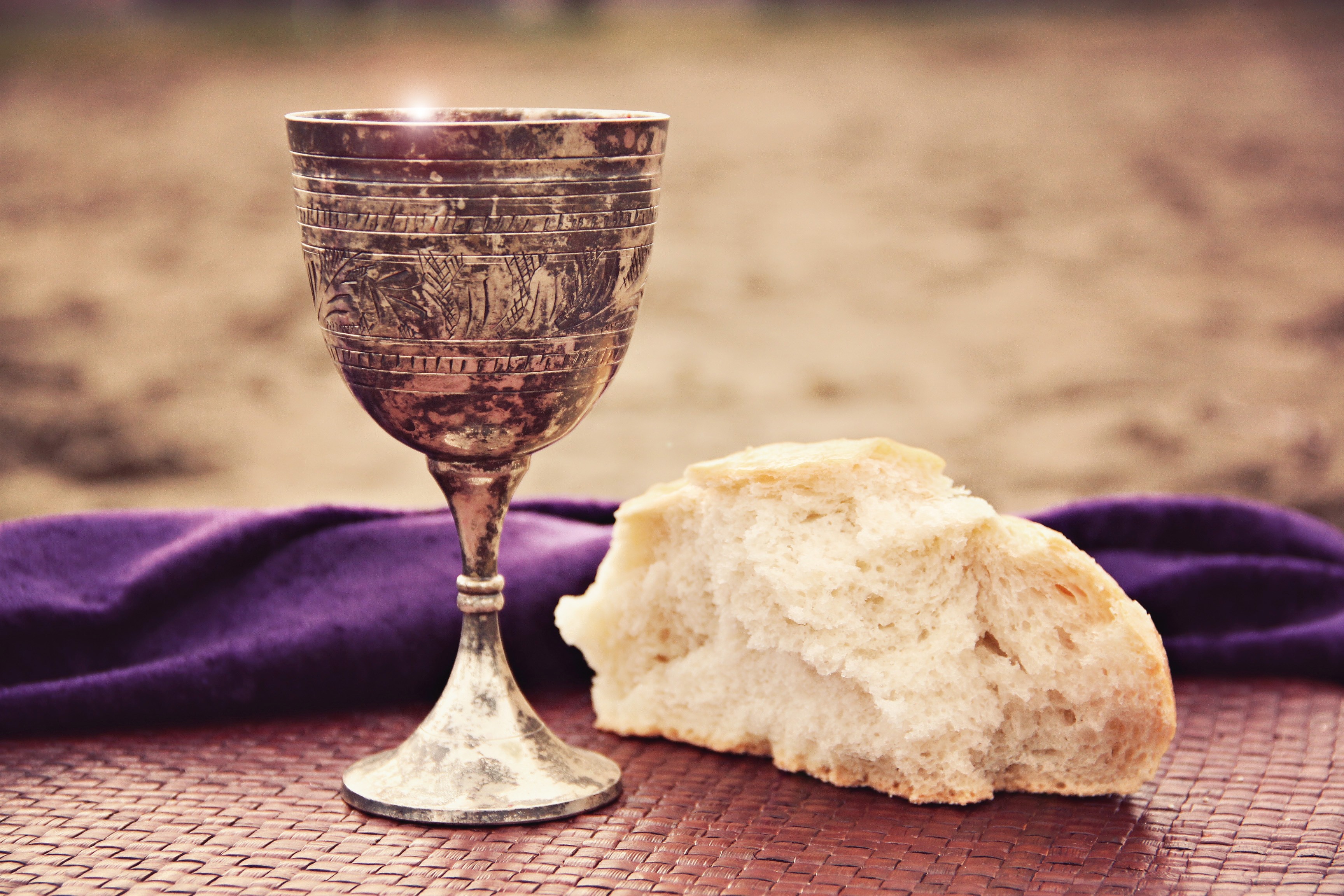
Hearing this passage as a modern reading shook me up this week.  All week I have been pondering our worship – the primary marker of our identity.  Does our communion stink?  As I thought about the sacred meal this week, I could imagine how communion could be so rote communion loses its meaning.  But then I began to think about my experience with communion.  As a priest, I receive communion two to three times on a Sunday – sometimes more.  Despite that repetition, something about the physicality of communion keeps communion fresh.  Sometimes the wafers are stale, making them hard to swallow; sometimes the bread is dry and crumbly, making a huge mess around the altar; sometimes, especially by 11:15, my breakfast is so far gone that eating communion feels like a desperate attempt to ease the rumbling in my empty stomach.  The same happens with the wine:  sometimes the wine burns going down; sometimes the wine soothes a dry throat; sometimes I wish I could take a long draw of wine to wash down the gluten-free wafer that is stuck in my teeth.  Those experiences may sound silly or trivial, but I find God in every one of them:  How often have I longed for God the way I long for food when I am hungry?  How often have I cursed the mess of life before realizing Jesus makes our life messy?  How often has something from church or a word from God nagged at me like a wafer that scraped my throat on the way down.

I like thinking about those physical-spiritual connections in Eucharist because they do what God is challenging us to do in Isaiah today.  God is not saying worship is inherently bad.  The sacrificing of animals, the prayers, the offerings were all thing the community of God had been instructed to do.  There are whole books of the Bible that laboriously detail how to do these things, thoughtfully making concessions for those lacking the resources to make the recommending offerings.  God is not saying God hates the festivals, is repelled by their sacrifices, and will ignore their prayers because God finds them archaic or brutal or wrong.  God’s fervent and harsh criticism of their worship is the hypocrisy of their worship.  In verse fifteen, God says, “I will not listen; your hands are full of blood.”  What God is pointing out is the irony of their worship. Here they are, their hands covered in the blood of the sacrificed animals – what should be a pure, sacred offering to God for the blessings of this life.  But what God sees is different blood:  their raised hands are not simply covered in the holy blood of sacrifice; their raised hands are covered in the blood of the oppressed, the orphan, the widow.  God, rather bluntly, says, “Do not come to me with the pretense of humility and righteousness when nothing about your life is righteous.  Do not come to me as though you are pure and sanctified, when I see you covered in the blood of the innocent you trampled on the way into the temple.”

In the aftermath of two more mass shootings last weekend, the cities of Dayton and El Paso gathered in vigil, in prayer, and in conversation.  In Dayton, the governor offered the kind of speech one usually offers in times such as these – a sense of condolence, an encouragement to come together in mutual support, an acknowledgment of grief.  But the residents of Dayton were not having that speech this week.  As the governor was speaking, someone in the crowd shouted, “Do something!”  The governor continued his speech, and two more voices cried out the same call, “Do something! Do something!”  The governor maintained his cool and kept going with his scripted speech, but within moments, the crowd was chanting in one voice, “Do something!” so loudly the governor’s speech was completely inaudible.  Perhaps reflecting the tenor of a nation who is emotionally exhausted by the repeated trauma of mass shootings, the people of Dayton broke.  No longer content to receive prayers and idle words, the people of Dayton demanded the governor do something to change their reality.

I think that is what God is really upset about in our scripture lesson today.  God is not bored by their worship or saying the acts of worship of the Israelites are inherently bad.  What God is saying is their worship is invalidated by their actions outside the temple.  The people of God cannot do evil, ignore injustice, forget the oppressed, shun the orphaned, and leave the widowed behind while still seeking refuge in God.  God wants us to do something.  In fact, in verse seventeen, God says, “Learn to do good.”  We can pray all we want, we can mourn mass violence, we can even criticize politicians about their lack of action.  But God is looking straight into our eyes today and saying, “I am glad you are here and I love you.  But you need to do something.”  And if we are unclear about what that something is, God tells us right here in Isaiah:  cease doing evil, do good, seek justice, rescue the oppressed, defend the orphan, plead for the widow.  When tragedy strikes, when the world feels like the world is falling apart, when we feel helpless or overwhelmed by the evil of this time, God says your worship of God is odious unless you are doing something.

Now I do not want you to leave today thinking this service is meaningless.  Quite the contrary, “worship is essential for us and requires of us an awed and candid engagement with God that is life giving, community transforming, and world altering.”[iii]  What would be meaningless is for you to go through the motions, or for you to seek solace only, and not strength; pardon only, and not renewal.  The prayers, your offering, our music, the sacred meal are meant to empower us to go out in the world and do something.  I know that can be scary.  I know you may be thinking, “well, I have very strong opinions about guns and what our country should be doing.”  But I also know the people I have spoken to on both sides of the issue do not want the slaughter of innocents.  To that, God offers us encouragement.  God says in verse eighteen, “Come now, let us argue it out.”  God does not want you to run away from the evil of the world, but to dive in and figure out a way to do something.  God wants you to engage because God knows you can.  In fact, God says, “though your sins are like scarlet, they shall be like snow; though they are red like crimson, they shall become like wool.”  God does not hate our worship; but God does not tolerate our worship when our worship is void of action – when we forget the dismissal of our deacon, to go in peace, to love and serve the Lord.  Today, God invites us to wash the blood of the innocent off our hands, and to go out and do something:  to go in peace, to love and serve the Lord.  Amen.

[i] Ezekiel 16.49.

[ii] Paul Simpson Duke, “Homiletical Perspective,” Feasting on the Word, Yr. C, Vol. 3 (Louisville: Westminster John Knox Press, 2010), 319.

[iii] Duke, 321.

On Waiting with God…

12 Wednesday Sep 2018

Posted by jandrewsweckerly in Uncategorized

≈ Leave a comment

Tags

ambiguity, anxiety, comfort, crisis, expectations, God, hurricane, Jesus, plans, strength, waiting

chairs

Photo credit:  http://www.makemommygosomethingsomething.com/2016/03/25/the-waiting-room/

The last few days have been marked by two contrasts in our family.  The first was a broken bone for one of our children.  What had been planned was a relaxed dinner of my daughter’s favorite meal, some homework, an early bedtime, and some evening chores.  Instead, what happened was scarfed down meals, scooping up of activities for the waiting room, dividing up of the children with parents, and a long evening of x-rays, diagnoses, and treatment.  After putting the patient to bed, then followed the flurry of emails to teachers, coaches, and parents to cancel classes, rearrange plans, and arrange for care.  Basically, the experience was a classic experience of dealing with an unexpected crisis, the adrenaline that helps you manage everything, and the upending of expectations.

Also happening this week is the opposite experience.  Our region is intently watching the weather forecast as a large, destructive hurricane is approaching the East Coast.  Unlike an immediate crisis, the build-up is much slower with a hurricane.  We can see several days out that the storm is coming.  We can ascertain from previous experiences with hurricanes what sorts of supplies we should have on hand.  Some areas are being evacuated in preparation, and schools have closed.  But unlike an immediate crisis, this kind of crisis is like waiting for a crisis in slow motion.  And these kinds of storms also involve much more ambiguity:  the storm could create massive damage and even death, or the storm could take a different path, destroying other areas, but leaving our area less impacted.  Instead of adrenaline, clarity, and decisiveness, this crisis involves lots of planning, worrying, and waiting.

As I have held these two experiences in tension this week, I have begun to see spiritual parallels.  Often, we relegate our relationship with God to crisis mode.  We lean into God when we need God, but most of our days are spent doing the work we have been given and are equipped to do without thinking much about God.  But in a situation where there is a long wait with an uncertain outcome:  a marriage that is struggling, a friend with a cancer diagnosis, an economy that puts one’s future in jeopardy – we find leaning into God more difficult.  When we lean into God during ambiguous times, we not only have to share all our ourselves with God (the hurt, the doubt, the fear, the anger), we also become much aware of how little control we have in this world.  Ambiguity in life tests our relationships with Jesus more than just about anything in life.

This week, my prayer for all of us is that we push against of our natural patterns.  Instead pulling away from God in ambiguity, my prayer is that you might saddle up next to God and give the anxiety that ambiguity creates back to God.  I promise that God can handle the weight of your anxiety.  And in freeing you up from some of that anxiety, you might be able to offer that same comfort to a neighbor, friend, or stranger.  I know God will give us strength to support one another once this storm hits.  We will do the work we need to do.  In the meantime, my prayer is that we help one another lift the burden of waiting.  God is with us!


On Grieving Together…

22 Wednesday Aug 2018

Posted by jandrewsweckerly in Uncategorized

≈ Leave a comment

Tags

community, companion, death, eternal life, God, grief, Jesus Christ, life, mortality, pastor, strength

elderly-woman-and-child-holding-hands-750

Photo credit:  https://www.everplans.com/articles/how-to-make-sure-your-legacy-lives-on-after-youre-gone

Grief is a funny thing.  We all experience it differently, respond to it differently, and let it impact us differently.  Sometimes we let grief do its work and then we are done; sometimes the grief sneaks up on us; and sometimes the grief never fades, a constant companion.  This week my grandmother passed away.  We knew this call would come soon.  I had taken my girls to see her months ago for a goodbye.  She had been in Hospice and had stopped eating.  But in the flurry of living – of clothes strewn about, water sloshing around, story-telling, cleaning, and brushing, the news of death was jarring.  For a moment I thought I would wait – share the news with the girls at a more appropriate time.  But then I remembered there is no appropriate time.  Death happens when it happens, and its companion, grief, comes as it will.

My initial work was helping my girls navigate their grief.  Upon receiving the news, my younger’s eyes got wide, and she was quick to assert that we needed to leave so that we could “take ‘Mee-maw’ to the hospital and take care of her.”  I tried to explain that it was too late, but she insisted that if we rushed, we could help her.  Once her disappointed face registered reality, she proclaimed, “Well, I’m not going to die!”  Then began a conversation about mortality and eternal life.  And a new level of grief began.

Meanwhile, the older child seemed to hold her thoughts and emotions at bay, being equally distracted by her sister’s reactions.  We talked about it briefly as I tucked her in, and she seemed okay.  The next morning, after I had dropped her off at camp and was heading back to my car, she ran back up to me and gave me a big hug and started crying.  “I’m sad about what happened yesterday.”  I honestly wasn’t sure what she was talking about until she explained her delayed reaction to Mee-maw’s death.  Time stood still as we grieved together.  A minute later, she was drying her face with the back of her hand and running to catch up with friends.

My own grief finally caught up with me as I watched an emotional movie later that night.  The truth is, my grandmother was a complicated woman.  She was the matriarch of the family who sometimes ruled with an iron first – even if you were only aware of her power subconsciously.  She was intimidatingly smart, held a wealth of knowledge in her mind, and could talk to any stranger.  I loved and respected her, and also saw her many flaws and the ways she hurt people.  She was not really a loving, doting grandmother, but a woman who held everyone to high standards and pushed us to be our best.  I was often afraid of the woman who insisted on the title “Grandmother Andrews.”  But in these last years, I loved seeing her humanity as a new generation of greatgrandchildren called her “Mee-maw.”

As I wade through grief this week, I welcome your prayers.  Even pastors need pastoring sometimes.  But also know that I am praying for you and the ways in which grief continues to be your companion:  for the grandparents, parents, spouses, and friends lost; for the marriages, jobs, and pregnancies lost; for the possibilities, dreams, and loves lost.  You especially have my prayers as grief reminds us all of our own mortality.  As you hold me, I also hold you in the promise of eternal life, a new reality in Christ Jesus.  May that grounding strengthen each of us as we stand together in the already and the not yet.

Almighty God, look with pity upon the sorrows of your servants.  Remember us, Lord, in mercy; nourish us with patience; comfort us with a sense of your goodness; lift up your countenance up us; and give us peace; through Jesus Christ our Lord.  Amen.  (BCP 467, amended)

On God’s Mothering Wings…

13 Wednesday Jun 2018

Posted by jandrewsweckerly in Uncategorized

≈ Leave a comment

Tags

barrier, brood, God, hen, Jesus, relax, strength, vulnerability, weakness, willfulness

fall-asleep-fast-FB

Photo credit:  https://themilitarywifeandmom.com/one-simple-trick-to-help-your-kids-fall-asleep-fast/

The other night I was rocking my younger to sleep.  The practice is slowly becoming a rarity.  She is getting a bit big for rocking, and now seems to prefer me to sing to her in her bed without rocking her.  The loss of that privilege is one more thing on the list of preferences that demonstrate she is becoming a big girl and is needing me less and less.  So, although she consented to the rocking, her body revealed her resistance.  She was tense and alert.  But once I was able to quiet her down, and the rocking continued, her body began to let go.  Fatigue overcame her, and I could feel her body gradually relaxing in my arms.  That willful, determined, independent little girl was able to let go for a moment, and give into sleep in my arms.

As the tension in her body melted away, I wondered if that is how God feels when I finally cede control to God – if I am similarly determined and defiant when it comes to my relationship with God.  The revelation reminded me of the lament of Jesus from Matthew 23, “Jerusalem, Jerusalem, the city that kills the prophets and stones those who are sent to it! How often have I desired to gather your children together as a hen gathers her brood under her wings, and you were not willing!”  I have always loved that image of the hen gathering her brood, but I never thought about how willful those chicks felt to the mother hen, how willful we are when it comes to God.

As I held my child that night, and I felt her breathing slow and her muscles untense, I was keenly aware of how our bodies were becoming more sympathetic.  Her relaxing into me allowed me to relax too – such that I was not fighting for intimacy with her but just experiencing it.  Barriers came down, just for a moment, and we were able to just lean into one another.

I wonder what barriers are up between you and God these days.  What might leaning into God, trusting God to handle your vulnerability and weakness, feel like?  I do not think God wants us to give up our strength, independence, or drive.  But I do suspect that we would do a better job with those if we were bold enough to admit when we need God too.  That may mean confessing that to God directly.  It may mean finding a trusted friend who can serve as Christ for you this week.  Or it may mean confessing that weakness to a friend who is also struggling so that they can see their weakness as beloved as yours.  Allowing ourselves to be gathered by God’s mothering wings – even if only every once in a while – might just be what we need to strengthen us for Christ’s work in the world.

On Cuisine and Community…

15 Wednesday Feb 2017

Posted by jandrewsweckerly in Uncategorized

≈ 3 Comments

Tags

church, comfort, comfort food, communion, community, cuisine, Eucharist, feast, fellowship, food, God, journey, recipe, strength, sustenance

mac-and-cheese

Photo credit:  whoneedsacape.com/2016/10/italian-mac-cheese/

This weekend, I made a family recipe from my husband’s grandfather.  Though Grandpa Gray is no longer with us, somehow, making this recipe for the first time in a long while flooded me with all kinds of memories.  You see, Italian Mac was the family’s favorite dish – the ultimate comfort food.  One year, I finally asked for the recipe and stayed with Grandpa Gray in the kitchen while he made it.  Now, as I look at the words of the recipe, I can hear his beautiful voice in the words.  As I crush the herbs as he instructed, I can imagine his worn hands doing the same thing.  As our house fills with the aromas of Italian Mac and garlic bread, I can remember the smell of his house.  As I sip the red wine that the recipe suggests I pair with the meal, I can recall the comforting sound of his laughter.

Food has a special power.  Whenever I have been on mission trips, food has created intimate connection.  In Honduras, we all took turns helping the women of the village cook for our team.  After ten minutes of attempting to grind corn, we were all laughing at how much stronger the women were than the men who were lifting bricks to build the church.  On my second visit to Costa Rica, I wanted to learn how to make the beans and rice we ate regularly.  The women were surprised that I was willing to get up early with them and learn.  After that morning, our relationship shifted.  In Myanmar, giggles and laughter ensued as we tried new foods and our hosts appreciated our boldness.

The same is true of the Eucharist.  I have been in churches that use grape juice and a small cube of pasty, crunchy “bread.”  I remember the splendor of the sweet Hawaiian bread used at another church.  I remember the first time I had real wine at communion, and the way that it burned down my throat, lighting a new fire in me.  Whether baked bread, bland wafers, or store-purchased pita bread, each texture and flavor imprints in my mind the church, the community, the spiritual place where I was at the time.  Even this weekend, at my goddaughter’s baptism, my own daughter commented on the “yucky” communion bread they had.  I would have just said it was dense, but that dense texture will linger in my mind as my reminder of our celebration.

Holy Eucharist is the comfort food of Church.  That is why I love being a part of a sacramental church that has Eucharist every Sunday.  But the Church offers other comfort foods as well.  The pancakes we eat every Shrove Tuesday remind me of years of fellowship and laughter – with communities all over the East Coast.  The Brunswick Stew of the Fall Festival at Hickory Neck will always remind me of warmth and community.  There are those dishes at every potluck that you search for, knowing the comfort it will bring.  And of course, there is the Sunday morning coffee – a staple of hospitality and grace.  If you have been missing a sense of community and comfort, I hope you will make your way to Church this week and join us in the feast that not only comforts us, but also strengthens us for the journey.  God has given us great work to do – but God has also given us the sustenance we need for the road ahead.

lords-supper-church-stock-photos

Photo credit:  stthomasnorwalk.com/religious-ed/sacraments/Eucharist

← Older posts

Recent Posts

  • On the Myth and Magic of Advent…
  • On Risking Failure and Facing Fear…
  • Sermon – Luke 23.33-43, P29, YC, November 23, 2025
  • On Inhabiting Gratitude…
  • Sermon – Luke 20.27-38, P27, YC, November 9, 2025

Archives

  • December 2025
  • November 2025
  • October 2025
  • September 2025
  • August 2025
  • July 2025
  • June 2025
  • March 2025
  • February 2025
  • December 2024
  • November 2024
  • October 2024
  • September 2024
  • August 2024
  • July 2024
  • June 2024
  • May 2024
  • March 2024
  • February 2024
  • January 2024
  • December 2023
  • November 2023
  • October 2023
  • September 2023
  • August 2023
  • July 2023
  • June 2023
  • May 2023
  • March 2023
  • February 2023
  • January 2023
  • December 2022
  • November 2022
  • October 2022
  • June 2022
  • May 2022
  • January 2022
  • December 2021
  • November 2021
  • October 2021
  • September 2021
  • August 2021
  • June 2021
  • May 2021
  • April 2021
  • March 2021
  • February 2021
  • January 2021
  • December 2020
  • November 2020
  • October 2020
  • September 2020
  • August 2020
  • July 2020
  • June 2020
  • May 2020
  • April 2020
  • March 2020
  • February 2020
  • January 2020
  • December 2019
  • November 2019
  • October 2019
  • September 2019
  • August 2019
  • July 2019
  • June 2019
  • May 2019
  • April 2019
  • March 2019
  • February 2019
  • January 2019
  • December 2018
  • November 2018
  • October 2018
  • September 2018
  • August 2018
  • July 2018
  • June 2018
  • May 2018
  • April 2018
  • March 2018
  • February 2018
  • January 2018
  • December 2017
  • November 2017
  • October 2017
  • September 2017
  • August 2017
  • July 2017
  • June 2017
  • May 2017
  • April 2017
  • March 2017
  • February 2017
  • January 2017
  • December 2016
  • November 2016
  • October 2016
  • September 2016
  • August 2016
  • July 2016
  • June 2016
  • May 2016
  • April 2016
  • March 2016
  • February 2016
  • January 2016
  • December 2015
  • November 2015
  • October 2015
  • September 2015
  • August 2015
  • July 2015
  • June 2015
  • May 2015
  • April 2015
  • March 2015
  • February 2015
  • January 2015
  • December 2014
  • November 2014
  • October 2014
  • September 2014
  • August 2014
  • July 2014
  • June 2014
  • April 2014
  • March 2014
  • February 2014
  • January 2014
  • December 2013
  • November 2013
  • October 2013
  • September 2013
  • August 2013
  • July 2013
  • June 2013
  • May 2013
  • April 2013
  • March 2013
  • February 2013
  • January 2013
  • December 2012
  • November 2012
  • October 2012
  • September 2012

Categories

  • reflection
  • Sermons
  • Uncategorized

Meta

  • Create account
  • Log in
  • Entries feed
  • Comments feed
  • WordPress.com

Blog at WordPress.com.

  • Subscribe Subscribed
    • Seeking and Serving
    • Join 394 other subscribers
    • Already have a WordPress.com account? Log in now.
    • Seeking and Serving
    • Subscribe Subscribed
    • Sign up
    • Log in
    • Report this content
    • View site in Reader
    • Manage subscriptions
    • Collapse this bar
 

Loading Comments...