• About

Seeking and Serving

~ seek and serve Christ in all persons

Seeking and Serving

Tag Archives: unity

On Finding Commonality and Church…

01 Wednesday Oct 2025

Posted by jandrewsweckerly in reflection

≈ Leave a comment

Tags

band, beauty, Christ, church, commonality, community, concert, disparate, healing, meaning, music, unity

Photo credit: https://unsplash.com/s/photos/concert-audience

Last weekend we took one of our daughters to her first concert.  It was not a band or even a genre of music I particularly like.  But she had been obsessing over every concert venue.  When the band came within an hour of our town, coupled with a big birthday this year, we couldn’t refuse.  So, off we went, playing chaperone to one of those fun life milestones.

While I cannot say that I came to fall in love with the band, what did not escape me was the beautiful experience of that night.  Feeling like a total outsider, I watched as everyone around me joined in commonality.  I watched as people belted out memorized lyrics, and they mimicked famous moves and gestures of the band, and as they shared excitement as each new song began.  I watched people who did not know each other exchange comradery and joy with total strangers.  I watched parents smile at the adulation of a younger generation.  I watched many disparate parts come together as one in that singular moment.

Now I would never claim that Church, especially a church in my denomination, has the same electric, communal energy as that night of raw, unfiltered passion caused by music, but I like to dream that some things like that night happen every Sunday.  We gather every Sunday as a disparate group too:  young parents, frazzled by life; retirees, finding their purpose in later life; singletons longing for a place of belonging; couples or families praying they are not alone in their experiences.  Those who are joyous, those who are grieving, those who are anxious, and those who are feeling good gather every week – not for a favorite band per se, but certainly for a favorite activity.  We gather to remember something bigger than ourselves as individuals, to ground ourselves in something better than what sometimes feels like the daily grind, to find oneness in the one bread and one cup.

Though I would never claim my church feels like going to a band’s concert, I do think Church offers a weekly dose of beauty, of commonality, of belonging, and of joyful purpose.  For those who are not regular church-goers, or even for those who have been hurt by the Church, I understand why you would keep your distance.  But when the Church is at her most Christ-like, the Church offers a weekly gift that might be a source of healing from all those hurts, isolations, and divisions of life.  If you ever want to give it a try, know that this community welcomes you here.

Sermon – John 17.20-26, E7, YC, June 1, 2025

18 Wednesday Jun 2025

Posted by jandrewsweckerly in Sermons

≈ Leave a comment

Tags

community, disciples, disunity, faith, gospel, Jesus, John, love, prayer, Sermon, unity

One of my favorite biblical scholars is Karoline Lewis.  She is one of the hosts of a preaching podcast I listen to, and through listening to her over the years I have found her to be insightful, funny, passionate, and deeply attuned to where the Word of God meets our daily lives.  Lewis is a New Testament scholar whose expertise is especially in the gospel of John.  In fact, her commentary on the Gospel of John is my go-to commentary anytime I am exploring John’s gospel.          

The irony in my deep appreciation for Karoline Lewis is that her passion and love for the gospel of John is almost in equal balance to my dislike for the gospel of John.  Where she finds deep beauty and meaning in John, I often find a jumble of words that are so repetitive and circular that I get lost.  Even when I have prepared a sermon for and studied a passage of John for the entire week, when I get to the moment of holding that gospel book and proclaiming John, I find myself second guessing myself, “Wait.  Didn’t I just read that sentence?  That sounds like what I just said a second ago – did I repeat a line?” 

Today’s gospel from John is a classic example.  We find ourselves at the end of Jesus’ farewell address to the disciples before his crucifixion and death, and within that address, at the end of his high priestly prayer.  In this prayer, Jesus prays several phrases in that typical Johannine circular language, “As you, Father, are in me and I am in you, may they also be in us…so that they maybe be one, as we are one, I in them and you in me, that they may become completely one..”  The good news is that Lewis and other scholars seem to agree that what Jesus is praying in his circular, convoluted way for is unity.  As scholar William Herzog suggests, “What matters most for John is that the experience of the indwelling remains available to the community, for the unity of the Johannine community is based not on dogma but on a communal experience of indwelling that is analogous to the relationship between Jesus and the Father.  This is what the community witnesses to the world.  Their mission is to keep this experience of faith alive in the community, so that they can offer it to a broken and fractured world.”[i]

Now, while unity is a theme we can get our heads around, unity is a practice we seldom live or experience.  Disunity is our lived experience.  One look at the deep, seemingly irreconcilable differences between political positions would be enough for any of us to understand how fantastical unity sounds.  But disunity is not just in the wider world.  Just this week in Discovery Class we were talking about how theological differences around the sacraments are what created the array of denominational differences within the Christian body – the reason why some of us are not welcome at the communion table in other denominations.  And that does not even address the differences of opinion the various churches hold on the role and place of women, LGBTQ members, and people of color.  But the lack of unity gets even closer to home right here at Hickory Neck.  I have long touted the unity of Hickory Neck across political and theological differences.  The unifying symbol of us of gathering together around the table has instilled in me a deep belief that if we can be one in communion, surely unity is possible in the world.  But even I, in the last six months have wondered if external pressures would prove that our unity is not as a strong as I think. 

That is why, for this one time in particular, I am grateful for John’s repetitive circular language.  Jesus’ final words of prayer today are, “I made your name known to them, and will make it known, so that the love with which you have loved me may be in them, and I in them.”  As one scholar says, “The last word is love.  Jesus does not call for doctrinal unity, organizational unity, or political unity.  So often, Christ’s prayer for his disciples has been used to sanctify those ends, and even to justify the harsh imposition of artificial unity.  Yet this prayer is for unity that grows out of the love of God, received and shared among his followers, leading to an experience of unity in love between Jesus and his followers, and with the one from whom Christ comes.  In moments of communion, surely the debates about the nature of God and humanity, the questions of whether divine grace or human will is the means of unity, all of these must fade away, leaving only the burning vision of a cross and the words, ‘For God so loved the world…’”[ii]

My fear that the unity I have witnessed at Hickory Neck would unravel was perhaps based on the idea that we could humanly will our unity to stay together.  But John’s gospel today reminds me that the only reason we are not unraveling is not because we have willed our unity, but because the love we have found in Jesus – the same triune love experienced within the three persons of the trinity – is what holds us together.  Jesus’ prayer today is not a prayer for those disciples who heard the prayer.  Jesus’ prayer today was for us – the future generations who would exist only through the love that the divine has given us – that circular, sometimes confusing, but ever convincing love in us and through us.  Our work is in that last part – that love going through us.  The love of Jesus for us in this prayer is not just for us – but is the gift that emanates through us out in the world.  As Lewis says of this prayer, “Jesus is no longer in the world.  The incarnation is over.  Jesus has been resurrected.  He ascended to the Father from whence he came.  But we are still in the world.  Jesus’ works are now in our hands, and Jesus is counting on us to be his presence in the wake of his absence.”[iii]  That charge would be daunting if not for Jesus’ prayer of promise – we can be that presence because the love that was in Jesus is now in us, breathing, transforming, and blessing the world through love.  Amen.


[i] William R. Herzog, II, “Exegetical Perspective,” Feasting on the Word, Yr. C, Vol. 2 (Louisville: Westminster John Knox Press, 2009), 545.

[ii] Peter J.B. Carman, “Theological Perspective, Feasting on the Word, Yr. C, Vol. 2 (Louisville: Westminster John Knox Press, 2009), 544.

[iii] Karoline M. Lewis, John:  Fortress Biblical Preaching Commentaries (Minneapolis:  Fortress Press, 2014),214.

Sabbatical Journey…on Choosing Unity

05 Wednesday Jul 2023

Posted by jandrewsweckerly in reflection

≈ Leave a comment

Tags

beauty, choice, country, disagree, diversity, division, forbearance, God, image of God, Jesus, July 4th, justice, respect, united, unity

License Plate Game (reuse with permission)

As we celebrate the 4th of July today, I cannot think of a more appropriate activity than to be on a cross-country trip.  Our trip so far has given me a renewed appreciation for the vastness of our country, the unique topographical beauty in each state, and the tremendous diversity of people.  Though we call ourselves the United States of America, sometimes I think we forget what an improbable arrangement we have – that these fifty states, in all their glorious diversity, are united as one.

Traveling through the country these last eighteen days, I have seen both signs of our political divisions as well as indicators that there is more in common between us than different.  I have also seen that experiencing each other in our own settings, learning about each other’s heritage, remembering that the creation of this country was done on the backs of so many oppressed peoples, helps me remember that being united states takes work.

Often when I am doing premarital counseling, I will tell couples that marriage is a choice – not made one day in beautiful attire with all your family and friends – but a choice made every day, over and over again.  Only when we make that daily commitment do marriages thrive and can be filled with love.  What I appreciate about the Fourth of July is that it is our annual reminder that we have to choose to be united over and over again, so that we might thrive and be filled with love.  I realize that may sound overly romantic, and in our current political times even impossible, but that we live in such a place that allows for differences and disagreements is a true gift that can help in the midst of our divisions.

As fireworks go off tonight, my prayer is that we renew our commitment to care for one another and respect the dignity of every human being in this country.  We know that we are all made in the image of God – even those folks with whom we disagree.  I offer the following prayer from the Book of Common Prayer for you tonight.  May we take up the mantle of being united once again.

Lord God Almighty, you have made all the peoples of the earth for your glory, to serve you in freedom and in peace:  Give to the people of our country a zeal for justice and the strength of forbearance, that we may use our liberty in accordance with your gracious will; through Jesus Christ our Lord, who lives and reigns with you and the Holy Spirit, one God, for ever and ever. Amen.  (Book of Common Prayer, 258)

Sermon – 2 Thessalonians 1.1-4, 11-12, P26, YC, October 30, 2022

03 Thursday Nov 2022

Posted by jandrewsweckerly in Sermons

≈ Leave a comment

Tags

affliction, boast, challenges, church, community, God, Holy Spirit, Jesus Christ, love, ministry, opportunities, persecution, Sermon, suffering, thankful, thanks, unity

I spent the last week at Princeton Theological Seminary, concluding an Executive Leadership certificate program called Iron Sharpening Iron.  For the past two years, the clergy participants and I have journeyed together, all facing the unique challenges of this liminal time for the Church, but also all hopeful that God is doing a new thing in the Church.  In the spirit of camaraderie that has developed over that time, we found ourselves asking each other this week, “So, how are you really doing?  How is your church?”  This is the kind of setting where clergy feel comfortable enough to let down their guard and share life with an honesty that we might not in other settings.  And I confess to you, every time that question was asked of me, and I took a moment to really think about the question, the answer was the same, “Things are actually really good.”  In truth, I think I was just as surprised by my answer as every other clergy person was.  I had no reason in that space to posture or try to make myself or our ministry look good, especially since most of the participants were not even Episcopalians.  I just knew when pondering how we are really doing, at the core of all that has happened in the last two to three years, we at Hickory Neck are doing really well.

I suppose I could have talked about how many of our longtime parishioners and many of our new members are online participants exclusively.  I suppose I could have talked about how many ministries are having shortages of volunteers, causing us to rethink what is possible because we cannot sustain the volunteer leadership.  Or I suppose I could have talked about how we stepped out on faith by hiring two part-time clergy associates this year, knowing that our financial giving would need to grow to support the programmatic needs of our growing church.  But those are realities I do not see as challenges; instead, I see them as opportunities to be the Church in new and creative ways as invited by the Holy Spirit.  Certainly, I want our in-person attendance in worship to grow – but I want our online ministry to grow and thrive concurrently.  Certainly, I would love some of our ministries to return to how we experienced them pre-pandemic – but I also see sacred invitations into new forms of ministry that may mean letting go of other forms.  Certainly, I want to be fiscally judicious within our budget – but I also want to create enough space in our budget to grow ministries that matter and make an impact both inside these walls and outside these walls. 

Perhaps what I mean is I look at Hickory Neck the same way that Paul, Silvanus, and Timothy look at their church in Thessalonians.  The writer of second Thessalonians, which some debate could be Paul or someone within the Pauline community, is writing to a community of believers facing persecution and afflictions.  The text is not clear what those persecutions and afflictions are, but we know the church of the Thessalonians is suffering.  In those days, persecutions and afflictions were often seen as signs of the end times, likely leading to a great deal of fear and anxiety.[i]  And so, we hear this letter meant to commend, encourage, and thank the community, and help them interpret meaning in the midst of suffering.  But the writer does not have to struggle too much to find that encouragement because what the writer has seen about this church is that they have developed an uncommon unity and love for one another.[ii]  And that gift of unity and love is a gift to be celebrated and honored.  That gift is something for which to give thanks.

And that is what we are doing today on this In-Gathering Sunday.  We are giving thanks for the ways in which Hickory Neck has experienced uncommon unity and love for one another, especially as we emerge from what has been a tumultuous couple of years in our community and the world.  We are giving thanks for the ways in which God has sustained us through afflictions and persecutions.  We are giving thanks for the bountiful abundance in our lives, when the world around us would want us to see scarcity, and we are returning that abundance in the form of our time, talent, and treasure.  And, so, friends, as we give thanks, I read to you our letter from second Thessalonians, paraphrased for today:

To the church of Hickory Neck:  Grace to you and peace from God our Father and the Lord Jesus Christ.  I must always give thanks to God for you, brothers and sisters, as is right, because your faith is growing abundantly, and the love of everyone of you for one another is increasing.  Therefore, I myself boast of you among the churches of God for your steadfastness and faith during all your persecutions and the afflictions that you are enduring…To this end, I always pray for you, asking that our God will make you worthy of God’s call and will fulfil by God’s power every good resolve and work of faith, so that the name of our Lord Jesus may be glorified in you, and you in him, according to the grace of our God and the Lord Jesus Christ.  Amen.


[i] Guy D. Nave, Jr. “Exegetical Perspective,” Feasting on the Word, Yr. C, Vol. 4 (Louisville:  Westminster John Knox Press, 2010), 257.

[ii] Robert E. Dunham, “Homiletical Perspective,” Feasting on the Word, Yr. C, Vol. 4 (Louisville:  Westminster John Knox Press, 2010), 257.

Sermon – John 17.20-26, E7, YC, May 28, 2022

01 Wednesday Jun 2022

Posted by jandrewsweckerly in Sermons

≈ Leave a comment

Tags

children, diverse, God, grief, gun control, I AM, Jesus, love, mass shooting, political, relationship, Sermon, unity, witness

On this last Sunday of Eastertide, we finally arrive at what is referred to as the High Priestly Prayer in John’s Gospel.  We have heard the stories about the empty tomb, Jesus’ appearances to the disciples, stories about how they are to be a people of love, and Jesus’ ascension into heaven.  As our final lesson, as is true for every seventh Sunday in Eastertide in the three-year lectionary cycle, we hear the final prayer Jesus says before his trial and crucifixion.  In this year’s section of the High Priestly Prayer, Jesus asks for one thing:  unity.  He prays the disciples and all the people who will become believers may be one.

As I have watched our country over the last week, we as Americans, and most definitely we as followers of Christ, have been showing anything BUT unity.  You would think a mass shooting of children would have brought us together.  And maybe for a moment, we were united in action – deep grief and despair at the loss of young life.  We all seem to be of one mind in one area only – that none of us wants our young school children to die.  But as soon as the tears subside and we open our mouths, any conversation about what our response should be sends us flying to opposite camps, no one staying in the same room to talk about a uniting action to protect life.

I have always been so very proud of the ways that Hickory Neck is a place where people of all political persuasions gather at a common table.  You only need to take a look around the bumper stickers in the parking lot to know we are not of one mind when talking politics.  But we are of one mind about Jesus – and so we sit next to people who likely voted for a different political candidate than we did, we pray next to people who go to opposite rallies than we do, and we kneel at the altar rail, rubbing elbows with someone who we, outside of church, might refer to as “those people.”  I cannot tell you the number of people who have asked me, “How in the world can you do that?  How do you even preach the gospel in such a diverse room?”  Usually my answer is pretty simple – we focus on what unites us – the one thing we all long for:  a place at the Table where all are welcome.

Now, I say that all that time, and usually people leave me alone about that answer.  But I think secretly, they are thinking, “Ok!  That sounds all well and good but just wait – there is no way you can keep up that ruse.  Something is going to give!”  And in many ways, they are right.  We live and witness in a precarious reality.  That’s why I think what Jesus does in this prayer today is so very important.  We often define “unity” as everyone being of the same mind.  But that is not what Jesus means in John’s gospel.  As scholar Karoline Lewis explains, “Their unity is not a made-up concept but is based on the unity between the Father and the Son.  Answering the question of what this unity looks like gives us the definition of what unity is.  For this Gospel, unity with God means making God known.  [Unity] means being the ‘I AM’ in the world.  [Unity] means knowing that, in the midst of all that would seek to undermine that unity, you are at the bosom of the Father.”[i]

So how can we be the “I AM” in the world?  What does being at the bosom of the Father look like when we all want to protect life but cannot seem to find a way forward?  Scholar Meda Stamper qualifies that unity comes through love.  She says, “This love clearly cannot depend on feelings of attraction, desire, affection or even liking.  [Love] is a behavior-shaping attitude toward the world, which is both a gift we cannot manufacture and a choice to live into the promises of that gift that is already given.  We cannot paste [love] onto ourselves.  Like branches of a vine, we live in something larger than ourselves, in which we are nurtured to bear fruit by the Spirit dwelling in us (about which we read in the Pentecost passage for next week).  But because we are more than vines, we also become more loving by choosing to follow Jesus’ model and teachings (13:14-15) about what love is: tending, feeding, bearing witness, and breaking barriers for love—societal barriers and also barriers we set up for ourselves, including some that we may think make us rightly religious but which do not make us loving.”[ii]

The way forward to be a people of unity through love starts here at Hickory Neck.  We certainly have taken the first step by assembling a group of people who are united in relationship with God even though we are not united in political persuasion.  But that is the tremendous blessing:  we have a place to start.  The only way we are ever going to make our way to the unity Jesus wants for us is to gather in our dis-unity and find a way forward through our relationships.  The reason we are facing a carbon copy of Sandy Hook ten years later is because we never sat down with people of a different mind about gun control.  We simply did what we always do – we divided into camps about the right solution, and then locked horns in a stalemate that led to little change.  Our gospel this Sunday invites us into a different way.  Our gospel invites us into true unity through our relationship with God and one another.  Only when we agree to not just rub elbows at the altar rail, but also rub elbows at houses of legislature will we find a way of tangibly witnessing the love of Jesus  – so that we are one as the Father and Son are one.  Amen.


[i] Karoline Lewis, John: Fortress Biblical Preaching Commentaries (Minneapolis:  Fortress Press, 2014), 213.

[ii] Meda Stamper, “Commentary on John 17:20-26,” May 29, 2022, as found at https://www.workingpreacher.org/commentaries/revised-common-lectionary/seventh-sunday-of-easter-3/commentary-on-john-1720-26-5 on May 27, 2022.

Sermon – 1 Corinthians 12.12-31a, EP3, YC, January 24, 2016

26 Tuesday Jan 2016

Posted by jandrewsweckerly in Sermons

≈ Leave a comment

Tags

Anglican Communion, body, body of Christ, Christ, conflict, Corinthians, diversity, Episcopal Church, gift, one, parts, Paul, primates, Sermon, table, tension, unity

Below is the sermon I had prepared for this past Sunday.  However, since most of my parishioners were still shoveling themselves out of their homes, I never got to preach it.  Here it is in its written form.  


A little over a week ago, the primates of the Anglican Communion made a big decision.  The primates suspended the Episcopal Church from full participation in the life and work of the Anglican Communion.  For those of you wondering what exactly the Anglican Communion is, the Anglican Communion consists of 38 autonomous national and regional Churches plus six Extra Provincial Churches and dioceses, of which the Episcopal Church is a member.  All of those bodies are in Communion – in a reciprocal relationship – with the Archbishop of Canterbury, who is the Communion’s spiritual head.  Each Church makes its own decisions in its own ways, guided by recommendations from specific Anglican entities.  Back in 2003, the Episcopal Church elected the first openly gay bishop, and since that time, the Anglican Communion and the Episcopal Church have experienced a great deal of tension.  Many churches in the Global South are morally opposed to homosexuality and have suggested that the Episcopal Church voluntarily withdraw from the Communion.  Meanwhile, many Episcopal Churches split from the church, causing lawsuits around the use of church buildings, as well as deep divisions and sadness.

This past summer at General Convention, the Episcopal Church voted to authorize liturgies for same-sex marriages.  That decision is what led to the primates’ decision last week to suspend the Episcopal Church from full participation in the life and work of the Anglican Communion for the next three years.  Though the Episcopal Church will have voice in meetings of pan-Anglican institutions and assemblies, the Episcopal Church will not have a vote on those bodies.  Our own Presiding Bishop has talked about how painful this action is, but confesses that the wideness of God’s love has made it impossible for the Episcopal Church to change course.  No one knows what the future holds.  Many in the Anglican Communion hope the Episcopal Church will change course.  Many in the Episcopal Church believe that our mission is to love all God’s children and to provide a witness of that love despite opposition.  For many of us Episcopalians, we may not feel an everyday impact from this decision, but one way or another, through this recent decision of the primates, the Anglican Communion will experience some sort of change in the way the Communion operates.

For all the drama and complexity of the Anglican Church, we are not the first in the church to experience this kind of conflict.  Thousands of years ago, the church in Corinth was struggling too.  You see, the “Church in Corinth ‘was a very mixed group, with several differing views and practices which put considerable strains on their common life.’”  Into that strain, Paul writes them to “encourage a sense of cooperation and unity amongst a group of people that were struggling with their differences.”[i]  He uses the familiar metaphor of a body to help the Corinthians see how they are to relate to one another:  not as a hierarchical body, with one part superior to the others, but as a body of mutuality, diversity, and interdependence, in which all the parts (or points of view) are needed.[ii]  Paul’s letter is both affirming and challenging.  He wants the Corinthians to know that each of them are valued and significant.  But he also wants of each of them to know that they are not to let their significance get “blown up into self-importance.”[iii]  Their significance comes from being a part of the body.  In other words, Paul wants the Corinthians to know that they are each valuable, they are each needed, and they each need to appreciate the contributions of the others.

One of the things that was most hurtful in the early 2000s, when the Episcopal Church first started openly talking about the issue of sexual orientation was that people started to leave the table.  I remember when I first became an Episcopalian, I loved how no matter what differences we all have, we could still come and feast at the Eucharistic table, side-by-side.  And in most Episcopal churches, that still happens.  But when those who opposed same-sex marriage and the ordination of gay and lesbian brothers and sisters left the Episcopal Church, we lost a part of our body.  We lost the part of our body that would challenge us, question our theology, and make us aware that although we are one body, we are not of one mind.  I fear that the same thing will happen in the Anglican Communion should the Anglican Communion decide that the Episcopal Church can no longer be fully a part of the body.

The challenges that Paul presents to Corinth and the Anglican Communion presents to the Episcopal Church are just as important to us at St. Margaret’s.  Having been with our parish for over four years, I have seen a fair amount of conflict.  Whether we were discerning whether or not to take on an expensive capital project, to start a new outreach ministry, or to reach out to our neighbors and invite them to church, we have rarely been unanimous in our conversations.  But Paul is not inviting the church to experience unity as uniformity or as some sort of superficial harmony.  In fact, Paul might argue that conflict is good because conflict highlights the ways in which we are of a diverse mind.  Diversity within the body means that we are quite naturally going to have a variety of perspectives – and that variety is a blessing.  Paul argues that “diversity within the church community is not something to be tolerated, or regretted, or manipulated for one’s own advantage, but something to be received as the gift that it is.  Paul’s argument implies that not only diversity, but unity in that diversity, is a reality without which the church cannot live.”[iv]

That being said, unity of the body – unity in diversity – is not easy.  I am the first to admit that I grew up in an environment that was conflict avoidant.  My initial inner reaction to conflict is to step back in the face of conflict.  But St. Margaret’s has been a wonderful teacher about how to love and respect in the midst of conflict.  This community has taught me that without conflict, we do not get anywhere real or authentic.  With conflict, we respectfully hear the breadth of our differences, and then we move gently through those, comforting those who mourn decisions, and encouraging those who rejoice in those same decisions.  As Paul teaches us, “If one member suffers, all suffer together with it; if one member is honored, all rejoice together with it”[v]

I do not know how the Anglican Communion will fare in the next three years.  My hope is that the Episcopal Church might continue to witness the power of unity through diversity within the body as opposed to unity for the sake of uniformity.  The path forward will be hard.  We will need to rejoice with those who were long treated as second class citizens and are now able to be married and ordained just like their heterosexual brothers and sisters.  We will need to mourn with those who see that change as a violation of God’s will.  We will need to honor those who have consensus around suspending our church, and comfort those in our church who feel rejected by that decision.  But mostly, we will need to keep reminding the Communion that we are one body, whose parts cannot be cut off without a weakening of the body.

The same is true for our parish and our own families.  If we see the Communion weakened by cutting off parts of the body, we will have learned some hard lessons about when our behaviors are similar in our own church and families.  If we see the Communion strengthened as the Communion honors its unity through diversity, we too will see the value of renewal through honoring diversity.  Being a body is not easy.  The good news is that we do not have to work to become the body of Christ.  “That is not Paul’s notion.  He considers that believers as believers are already the body of Christ, and he exhorts [us] to relate to one another in a manner appropriate to what [we] already are.”[vi]  Amen.

[i] Carol Troupe, “One Body, Many Parts:  A Reading of 1 Corinthians 12:12-27” Black Theology, vol. 6, no. 1, January 2008, 33.

[ii] Lee C. Barrett, “Theological Perspective,” Feasting on the Word, Yr. C, vol. 1 (Louisville:  Westminster John Knox Press, 2009), 278, 280.

[iii] 1 Corinthians 12.19.  Language from Eugene Patterson’s paraphrase of the Bible, The Message. 

[iv] Brian Peterson, “Commentary on 1 Corinthians 12:12-31a,” January 24, 2016 as found at http://www.workingpreacher.org/preaching.aspx?commentary_id=2733 on January 21, 2016.

[v] 1 Cor. 12.2

[vi] Leander E. Keck, ed., The New Interpreter’s Bible, vol. 10 (Nashville:  Abingdon Press, 2002), 948.

On Progress and Outstanding Work…

30 Wednesday Sep 2015

Posted by jandrewsweckerly in Uncategorized

≈ Leave a comment

Tags

boundaries, Christian, church, conflicted, Episcopal, Eucharist, excitement, exclusion, God, Jesus, love, open table, Pope Francis, Roman Catholic, Spirit, table, unity

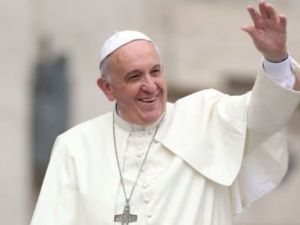
Photo credit: http://www.wusa9.com/story/life/faith/pope-coverage/2015/08/20/poll-pope-francis/32052555/

Photo credit: http://www.wusa9.com/story/life/faith/pope-coverage/2015/08/20/poll-pope-francis/32052555/

I must admit, the Pope’s visit to the United States last week was awesome.  Though I have been happy for the Roman Catholic Church since Pope Francis was elected, last week I realized his witness is good for all Christians.  Too often people professing to be Christian make Christians look bad.  Their hatred and exclusion in no way reflects the love and inclusion expressed by Jesus Christ.  But not Pope Francis.  He continues to challenge all of us to get back to the work Jesus gave us to do – to love and care for the poor, disenfranchised, and unjustly treated.  He beckons us toward lives of making peace and justice.  In essence, he reminds us to live as Christ called us to live.  And in starkly obvious ways, he reminded us that Jesus was not a Democrat or a Republican.  In fact, Jesus made, and continues to make, everyone uncomfortable.  Pope Francis did the same thing.  Though we all loved what he did for the Church and Christians in general last week, he likely made each of us feel uncomfortable at some point during his visit.  But I think we could all respect that he was trying to get us back to our true identity – he is a Christian who made us proud, not embarrassed, to be Christians.

Coming off the high of the Pope’s visit, I attended a funeral mass this week at the local Roman Catholic Church.  I was there to support a parishioner who had lost his mother (a Roman Catholic).  I wore my collar, but sat in the pew.  I prayed with the priest, cried with the family, and reverenced during the Eucharist.  But when the Eucharist was distributed, I stayed in my seat.  To his credit, the priest did not disinvite any non-RC attendees.  But he did not actively invite them either.  So instead of risking offense, I stayed in my seat, as I have been well-trained by many other RC priests that I am not to receive Eucharist as a non-RC.  I knew the moment would come and I was mentally prepared to stay in that seat.  But I must admit, my heart ached in that moment.  I felt a sharp pain in my chest as others walked around me to go forward for the heavenly meal.  For all the unity, the love, and the excitement of last week, I realized in that moment that we have a long way to go.

Of course, that work is not limited to the Roman Catholic Church.  Last week I preached about how much the Episcopal Church does its own work of excluding people – even from the Table, if you are not baptized.  In fact, I remember writing a paper in my liturgics class in seminary defending the practice of limiting the Eucharist to those who are baptized.  I don’t remember my argument at the time, but it was good, well-thought out, and prayerfully constructed.  But sitting in that pew yesterday, not receiving the comfort of the holy meal made me rethink the whole concept of an open table.  I do not really know if I am ready to make any changes right away, but the experience was a powerful lesson in the realities of constructing boundaries around the Table.  I do not want anyone’s heart to hurt the way mine did yesterday.  What about you?  What boundaries the church has constructed make you feel conflicted?  What might compel you to reconsider your position?  I invite us to pray about these conflicts as a community and see where the Spirit is leading.

Recent Posts

  • On the Myth and Magic of Advent…
  • On Risking Failure and Facing Fear…
  • Sermon – Luke 23.33-43, P29, YC, November 23, 2025
  • On Inhabiting Gratitude…
  • Sermon – Luke 20.27-38, P27, YC, November 9, 2025

Archives

  • December 2025
  • November 2025
  • October 2025
  • September 2025
  • August 2025
  • July 2025
  • June 2025
  • March 2025
  • February 2025
  • December 2024
  • November 2024
  • October 2024
  • September 2024
  • August 2024
  • July 2024
  • June 2024
  • May 2024
  • March 2024
  • February 2024
  • January 2024
  • December 2023
  • November 2023
  • October 2023
  • September 2023
  • August 2023
  • July 2023
  • June 2023
  • May 2023
  • March 2023
  • February 2023
  • January 2023
  • December 2022
  • November 2022
  • October 2022
  • June 2022
  • May 2022
  • January 2022
  • December 2021
  • November 2021
  • October 2021
  • September 2021
  • August 2021
  • June 2021
  • May 2021
  • April 2021
  • March 2021
  • February 2021
  • January 2021
  • December 2020
  • November 2020
  • October 2020
  • September 2020
  • August 2020
  • July 2020
  • June 2020
  • May 2020
  • April 2020
  • March 2020
  • February 2020
  • January 2020
  • December 2019
  • November 2019
  • October 2019
  • September 2019
  • August 2019
  • July 2019
  • June 2019
  • May 2019
  • April 2019
  • March 2019
  • February 2019
  • January 2019
  • December 2018
  • November 2018
  • October 2018
  • September 2018
  • August 2018
  • July 2018
  • June 2018
  • May 2018
  • April 2018
  • March 2018
  • February 2018
  • January 2018
  • December 2017
  • November 2017
  • October 2017
  • September 2017
  • August 2017
  • July 2017
  • June 2017
  • May 2017
  • April 2017
  • March 2017
  • February 2017
  • January 2017
  • December 2016
  • November 2016
  • October 2016
  • September 2016
  • August 2016
  • July 2016
  • June 2016
  • May 2016
  • April 2016
  • March 2016
  • February 2016
  • January 2016
  • December 2015
  • November 2015
  • October 2015
  • September 2015
  • August 2015
  • July 2015
  • June 2015
  • May 2015
  • April 2015
  • March 2015
  • February 2015
  • January 2015
  • December 2014
  • November 2014
  • October 2014
  • September 2014
  • August 2014
  • July 2014
  • June 2014
  • April 2014
  • March 2014
  • February 2014
  • January 2014
  • December 2013
  • November 2013
  • October 2013
  • September 2013
  • August 2013
  • July 2013
  • June 2013
  • May 2013
  • April 2013
  • March 2013
  • February 2013
  • January 2013
  • December 2012
  • November 2012
  • October 2012
  • September 2012

Categories

  • reflection
  • Sermons
  • Uncategorized

Meta

  • Create account
  • Log in
  • Entries feed
  • Comments feed
  • WordPress.com

Blog at WordPress.com.

  • Subscribe Subscribed
    • Seeking and Serving
    • Join 394 other subscribers
    • Already have a WordPress.com account? Log in now.
    • Seeking and Serving
    • Subscribe Subscribed
    • Sign up
    • Log in
    • Report this content
    • View site in Reader
    • Manage subscriptions
    • Collapse this bar
 

Loading Comments...