• About

Seeking and Serving

~ seek and serve Christ in all persons

Seeking and Serving

Monthly Archives: January 2021

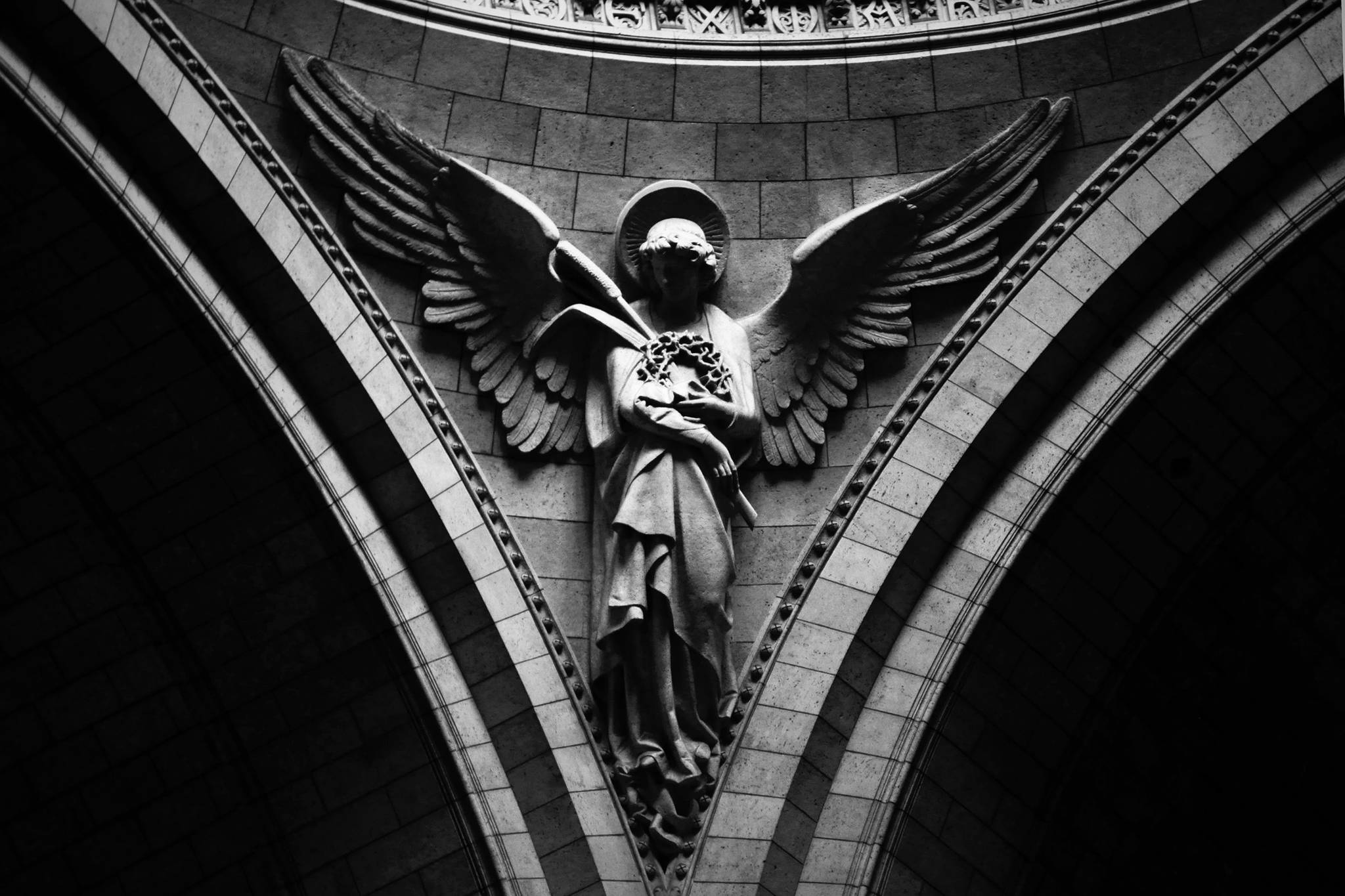
On Hope, Sobriety, and Better Angels…

20 Wednesday Jan 2021

Posted by jandrewsweckerly in reflection

≈ Leave a comment

Tags

baptismal covenant, better angels, dignity, God, grace, hope, Inauguration, nation, prayer, president, sober

Photo credit: https://www.juneauempire.com/life/living-growing-the-better-angels-of-our-nature/

We are not enemies, but friends. We must not be enemies. Though passion may have strained it must not break our bonds of affection. The mystic chords of memory, stretching from every battlefield and patriot grave to every living heart and hearthstone all over this broad land, will yet swell the chorus of the Union, when again touched, as surely they will be, by the better angels of our nature.  ~Abraham Lincoln, Inaugural Address, March 4, 1861

This morning, as we await the inauguration of our next President, I find myself equally sober and hopeful.  I am sober today because I am still reeling from the attempted insurrection in our Capitol Building just weeks ago.  That event signaled to me how much damage has been done to the fabric of our nation – how divided we have become, how hateful we have become, and how far we have strayed from our baptismal promise to respect the dignity of every human being.  I am sober because I know simply changing Presidents will not magically solve the division that took many years of cultivation.  We have much truth telling and healing to do. 

But my sobriety is balanced with hope.  Again, I have this hope not because I think our President Elect is the Messiah – we already have one of those!  But I am hopeful because being hopeful is the nature of being made in the image of God.  I am hopeful we will find our way back to our baptismal identity, of seeking and serving Christ in all persons, and striving for justice and peace among all people.  I know we have a long way to go.  Our black brothers and sisters have shown us this year how far we have to go in the movement toward respecting the dignity of every human being.  But somehow, seemingly impossibly, I am hopeful.

I was reminded today of the quote above from Abraham Lincoln’s first inaugural address, given on the brink of Civil War.  He had no idea what the future held and how our nation almost fell apart – and the very long road it would take (and is still taking) to recover.  But even then, on the cusp of some of our darkest times as a nation, Lincoln was convinced that we had better angels of our nature.  Perhaps that is where my hope comes from today too.  I am convinced that we have better angels still, and that, with God’s grace, we will be touched again by the better angels of our nature.  That is my prayer for all of us today!

Sermon – 1 Samuel 3.1-20, E2, YB (Annual Meeting), January 17, 2020

20 Wednesday Jan 2021

Posted by jandrewsweckerly in Sermons

≈ Leave a comment

Tags

action, creativity, difficult, God, Here I Am, Hineni, journey, listening, pandemic, Samuel, Sermon, service, technology

When I was in seminary, our Old Testament Professor would take roll every class.  She told us at the beginning of the semester we could either answer with, “Here,” “Present,” or if we were really bold, “Hineni,” which is the Hebrew word for “Here I am.”  Most of us giggled and several of us used the term throughout the semester.  But what I am not sure any of us realized fully was saying hineni was not simply about practicing our Biblical Hebrew or even taking attendance.  As one scholar explains, the word hineni connotes “a willingness to respond with action to one’s master.”[i]  So all those times we have heard those words uttered in Holy Scripture, “Here I am,” from Samuel, Moses, Abraham, Jacob, to Mary, we are not simply witnessing God taking attendance.  We are witnessing a weighty exchange: from the one who utters the words being willing to respond with action, to the response God offers:  a journey of difficult service.[ii]

As we gather for our Annual Meeting today, I am keenly aware of how much this has been a year of saying hineni to God.  At the beginning of 2020, showing up for God was easy.  We celebrated the ministry of our curate, we welcomed with gusto Presiding Bishop Curry’s message of love, we walked as pilgrims through the music and stones of the Mother Church in England, we sang the spirituals that have accompanied our black brothers and sisters for centuries.  Saying hineni was easy then.

Saying hineni was a lot harder when a pandemic began ravaging our nation, when our buildings closed and all our ministries had to totally transform within days’ notice, when weeks turned to months of separation and mourning for all we missed, when our black brothers and sisters called us to task about the impact of institutional racism in our country, and when political trauma demanded we define our Christian identity.  Saying hineni to God this year has indeed been an experience of being invited into a journey of difficult service.

But saying hineni this year has also been an experience is seeing the heretofore inconceivable.  We went from being a church with zero commitment to broadcasting our services to being a church with daily online worship.  We went from being a church where homebound members only saw an occasional visit to being a church where our homebound could see faces online they know not just in worship, but in formation and fellowship.  We went from being a church who put the onus on others to walk through our church doors to get to know us, to being a church who did drive-by birthday celebrations, online live auctions, and helping newcomers “meet us” without actually meeting us in a what we thought was the best way. 

 When Samuel, in a sleepy, confused stupor says hineni to God three times, he has no idea what is coming.  He is not a priest, he does not know that his priestly mentor will be replaced by himself, he does not know he will anoint kings, take away kingly power, and eventually watch his own sons fail as Eli’s do.  And yet, when Eli helps Samuel understand what he is to do, Samuel responds the fourth time, “Speak, LORD, for your servant is listening.”  His response is no longer a sleepy, obligatory response of action, but is a confident, mature embracing of the difficult, but incredible road ahead.

We are entering into another year where God is calling our name too.  The arrival of vaccines at some point this year does not mean as we eventually regather we will simply go “back to normal.”  No, when God calls our name this year, God is inviting us to continue saying hineni to this new journey we are on – one where we continue being committed to sharing the gospel using all the technological gifts at our disposal, where we consider the new ways God has showed us to reach our neighbors in need, where we witness to the unchurched, and where we praise God for the gift of creativity that has always been our gift here at Hickory Neck – and then use that creativity to keep saying hineni to God.  As we look forward to this year, we do not simply sing hineni, “Here I am Lord.”  We also boldly say, “Speak, LORD, for your servant is listening.”  Amen.


[i] Cory Driver, “Commentary on 1 Samuel 3:1-10 [11-20]” January 17, 2021, as found at https://www.workingpreacher.org/commentaries/revised-common-lectionary/second-sunday-after-epiphany-2/commentary-on-1-samuel-31-10-11-20-6 on January 14, 2021.

[ii] Driver.

Sermon – Mark 1.4-11, E1, YB, January 10, 2021

20 Wednesday Jan 2021

Posted by jandrewsweckerly in Sermons

≈ Leave a comment

Tags

baptism, Capitol Building, community, democracy, desecrate, eschatological, hallowed, heavens, insurrection, Jesus, mending, Sermon, torn

This week, we watched in horror as our democracy was torn open.  In many ways, what happened at our nation’s Capitol Building should not be a surprise.  The last four years we have witnessed the fracturing of our common life, as if you could see the very threads of the fabric that holds us together as one pulling so far apart, they look as if they will rip in two.  Both sides have dug in their heels, both have created bubbles around themselves so that they do not hear or engage with the other side, and both seem to think the other side has lost their minds.  That kind of tension only needs a push before the fabric shreds.  The push was just the final straw, but the push masks the many months and years of actions by many more people that led to barricades being pushed down, police officers being overwhelmed, hallowed space being desecrated, and our very identity being called into question by the international community.

As we gather for church today, I am grateful our gospel lesson from Mark is about Jesus’ baptism.  Liturgically, the transition in scripture from the last several weeks is an abrupt shift.  We went from talking about pregnancies, angels, shepherds, the Christ Child, kings, and magi, to a full-grown John the Baptist and Jesus experiencing a vastly different epiphany.  Of course, if we were to read Mark’s gospel from cover to cover, this would not be surprising.  Mark does not even talk about the infant or adolescent Jesus.  We jump into Mark at verse four of chapter one today, but the first three verses are quite simply, “Here is the good news of God in Christ.”  And then we hear the description of John being the prophet foretold by Isaiah. 

But what caught my attention in our reading today is what happens when Jesus is baptized by John.  The text tells us the heavens are “torn apart.”  According to scholar Joel Marcus, the word here in the original Greek is a harsh word, “not the usual one for the opening of the heavens in visionary contexts.”[i]  Mark’s telling of this event is not like Matthew or Luke parallels where the heavens are simply “opened.”  Instead, Mark says the heavens are ripped apart.  The difference is significant, because as another scholar notes, Mark “…implies an irreversible cosmic change with his picture of the torn heavens…:  ‘What is opened may not be closed; what is torn apart cannot easily return to its former state.’”[ii]  In other words, the tearing apart of the heavens is a dramatic changing of the world forever – a “gracious gash in the universe”[iii] that indicates a change in God’s relationship with God’s covenanted people.  Mark’s version of the incarnation story does not involve babies, shepherds, or magi, but his version functions similarly, helping us understand the incarnation changes our lives irrevocably, even if the event feels traumatic.

Now, the difference in tearing we saw this week may seem totally different at first glance.  In the latter, the heavens are torn apart to reveal an eschatological change for the better.  Our covenantal relationship with God is forever altered by the incarnation of Jesus the Christ.  And through our own baptisms, we are adopted into the community of faith and the redemptive hope of Jesus.  In the former, the ripping apart of our democracy felt violently catastrophic, leaving many of us to fear that this ripping apart might be similarly irrevocable, like Mark describes.  Admittedly, that may be giving too much credence to what happened this week.  But the tear this week was similarly revealing.  We saw how far our divisions have pushed us.  We saw how precarious our very identity as moral leaders in the world is.  And perhaps most importantly, we saw in the shredding of our own fabric, a dramatic look at our shadow side.  We have talked a lot about our shadow side this year – whether in looking at our country’s history with slavery, the subjugation of indigenous Americans, or discrimination.  But the events of this week invite us not to try to hide our shadow side, but to expose our shadow side to the light.  My seminary contemporary Patrick Hall explained this week this way, “We must wrestle with what these insurrectionists show us about ourselves.  They ARE us.  We ARE them.[sic]  Acknowledging this truth is devastating and traumatic.  But in order to move forward together, we have to acknowledge that our American city on a hill…was not built by angels, but by people, with all the ugliness and cruelty that people always bring in their wake.  Their ugliness and cruelty is as much our inheritance as the democratic republic we steward together.  All of it lives in us.  All of it always will.”[iv]

The good news for us is unlike the gracious gash in the heavens, which forever changes our world for the good, the tearing we saw this week is not irreparable.  Instead, our invitation this week is to embrace how the tearing open of the heavens, the incarnation of the Christ, gives us the power to begin mending the fabric of our democracy.  The mending will not make us good as new.   In fact, whatever mending we do will leave a misshapen seam that cannot be hidden.  But the repair work we begin today whether in our public act of confession, our recommitment to justice and advocacy work, or simply in our dedication to mending relationships with our neighbors with whom we do not agree, the repair work will leave a misshapen seam that will allow us to never forget the work of reconciliation we are invited into this week.  Fortunately for us, the ripping apart of the heavens is exactly what we need this week to empower us to begin the modern work of mending.  Amen.


[i] Joel Marcus, The Anchor Bible:  Mark 1-8 (New York:  Doubleday, 2000), 159.

[ii] Marcus, 165.  Here, Marcus is quoting D. H. Juel.

[iii] Marcus, 165.

[iv] Patrick Hall, January 8, 2021, as found at https://www.facebook.com/patrick.hall.9889261/posts/10116845123723900 on January 8, 2021. 

On New Year Hope…

06 Wednesday Jan 2021

Posted by jandrewsweckerly in Uncategorized

≈ Leave a comment

Tags

breathe, change, community, fortitude, goodness, Holy Spirit, hope, invitation, New Year, pandemic

Photo credit: https://www.health.harvard.edu/blog/hope-and-caution-during-infertility-treatment-2019102818130

I remember when the year 1999 rolled over into 2000.  It was a time a great hubbub.  There was a sense of enormity about the transition.  Prince’s song 1999 experienced a revival, most of the world was worried about the ability of our technology to transition to Y2K, and many feared there would be some sort of cosmological event.  As the minutes rolled down to seconds, there was a collective intake of breath that we held until the clocks moved to midnight.  In the end, the transition was fairly uneventful.  Technology kept functioning, no big events happened, and most of us realized it was just another New Year’s. 

I have felt a similar incongruence this New Year’s.  Having had such a tumultuous year – between the pandemic, civil unrest, and political upheaval – I think many of us had begun to believe that once we turned the calendar from 2020 to 2021, things would be better.  The virus spread would slow as vaccines were promisingly being rolled out and we would finally be able to turn our energy from crisis mode to dealing with long-term issues like race.  And we might even begin to see some political stability.  If we could just get 2020 to close, all would be well. 

But these first days of 2021 have felt a little like the first days of 2000.  Not much has changed.  Instead of feeling like the change in calendar year has made everything better, we are left with the reality that we are still in the same situation.  In fact, things are going to get worse before they get better, which is almost incomprehensible.    

As that reality has sunken in these last few days, I see two invitations before us.  The first invitation is to take a deep, steadying breath.  This is not a loud, exasperated sigh, but a calming, strengthening breath – a breathing in of the Holy Spirit as we face the continuation of this season.  The second invitation is to take a moment to reflect on all the coping mechanisms we have developed in these last ten months – whether it has been operating in a new way (like livestreaming worship, zooming formation, or drive-thru connection events), whether it has been making space for community when we feel isolated (like sending mail, emails, and texts to fellow parishioners, hosting far-flung friends on Zoom calls just for fun, or taking socially distanced walks with others), or whether it has been discovering pleasant surprises (like the new people who have connected to your community even when your doors are closed, the hilarity that can ensue with virtual Epiphany pageants, or the blessings of a property that can lead to things like an outdoor labyrinth).  I know these last months have felt overwhelmingly disastrous at times.  But taking some breaths and looking at the goodness that has happened in the mess is what is giving me hope and fortitude for this next year.  My prayer is that you might find that same hope today too!

Sermon – Luke 2.1-20, CE, YB, December 24, 2020

06 Wednesday Jan 2021

Posted by jandrewsweckerly in Sermons

≈ Leave a comment

Tags

anxiety, beautiful, Bonhoeffer, Christ, Christ Child, Christmas, different, discomfort, displacement, Eucharist, familiar, feast, God, Jesus, joy, magnificence, real

This year, Christmas is unlike any other we have experienced.  For starters, we are gathered in homes around the globe, perhaps in pjs, on couches, or even bundled up in our beds, instead of being here together, crammed into seats where we may not normally sit, sitting next to friends and strangers, dressed in our Christmas finery.  Instead of gathering with large groups of extended family and friends, or traveling great distances, many of us are home alone, only able to see beloved faces on screens or hear familiar voices on phones.  Meals may be much smaller, gift exchanging more subdued (if happening at all), and singing is happening in isolation, not in the warmth of this space, where the sound fills not just the room but also our hearts.  Operating in the background of all of this is anxiety – fear for the health of ourselves and our loved ones, concern about financial stability, and dread about how much longer this pandemic may press down upon us.  Christmas this year is an experience in displacement, discomfort, and dissatisfaction.

And yet, here we are – gathered virtually, hearing the achingly familiar Christmas story, singing the soothing, familiar songs, and eventually participating in the ritual of the Eucharistic feast – even if we receive the feast spiritually.  Although this is not at all how I hoped to spend this Christmas, both for us as a community, or even personally with my own family, as I hear the Christmas story again this year, something is different.  The displacement of Mary and Joseph, the strain of a long journey, the collective discomfort of being herded against their will, and the anxiety of giving birth with none of the creature comforts of home or health feels strikingly familiar and contemporary.  The shock of angels is more palpable when we imagine shepherds going about the daily tasks needed for survival, the sheer ordinariness of working the night shift, and the miraculous happening among the least.  Even the experience of intimate conversation between strangers forced together by life is familiar, as we recall the recent conversations we have had with neighbors who, perhaps until this year, we have only spoken to superficially.  And Lord knows we have been doing a lot of pondering in our hearts these days.  Somehow the rawness of these days cracks open this overly familiar story in ways I could have never expected.

This Christmas, as I was preparing for tonight, I stumbled on a letter from Dietrich Bonhoeffer to his parents.  Bonhoeffer was a pastor, theologian, and political activist in World War II Germany.  When word of his anti-Nazi activism spread, he was imprisoned for a year and a half.  Sitting in that jail cell as Christmas approached, Bonhoeffer wrote to his parents, “In times like these we learn as never before what it means to possess a past and a spiritual heritage untrammeled by the changes and chances of the present.  A spiritual heritage reaching back for centuries is a wonderful support and comfort in face of all temporary stresses and strains.”  He goes on to say, “I daresay [Christmas] will have more meaning and will be observed with greater sincerity here in this prison than in places where all that survives of the feast is its name.  That misery, suffering, poverty, loneliness, helplessness and guilt look very different to the eyes of God from what they do to man, that God should come down to the very place which men usually abhor, that Christ was born in a stable because there was no room for him in the inn – these are things which a prisoner can understand better than anyone else.  For a prisoner, the Christmas story is glad tidings in a very real sense.”[i]

We may not have wanted any of this:  the discomfort, the dislocation, the anxiety, the suffering, the total upendedness of these days, especially during a holiday that is supposed to be reserved for joy and jubilation.  But perhaps the good news for us this Christmas is we get to know the Christmas story in a different way – not in the shiny, pretty way we normally tell the story, but in the raw, gritty, real way we tell the story tonight.  We hear, smell, and feel the ordinariness of the room with the holy family:  the “sweat; blood; makeshift blankets and diapers; the raw, immediate joy that comes with new life.”  But we also hear the unfathomable news of angels through shepherds intruding into that space, beautifully weaving the ordinary and extraordinary.[ii]  I know this is not the Christmas any of us wanted.  But perhaps in this terrible, awful, beautiful Christmas, we can more profoundly understand the terrible, awful, beautiful thing that happens in the Christ Child this year.  And whether we sing with jubilation with angels and shepherds, or ponder these things in our hearts with Mary, perhaps we see the Christ Child in his magnificence for the first time.  Amen.


[i] Dietrich Bonhoeffer, Letter to his parents, December 17, 1943, as found in A Christmas Sourcebook, Mary Ann Simcoe, ed. (Chicago:  Liturgy Training Publications, 1984), 11.

[ii] Cynthia RL. Rigby, “Theological Perspective,” Feasting on the Word, Yr. B, Vol. 1 (Louisville:  Westminster John Knox Press, 2008), 116, 118.

Sermon – Isaiah 9.2-7, Blue Christmas, December 21, 2020

06 Wednesday Jan 2021

Posted by jandrewsweckerly in Sermons

≈ Leave a comment

Tags

Blue Christmas, Christ Child, Christmas, church, darkness, God, joy, light, mourn, night, painful, pandemic, Sermon, strength, suffering

Blue Christmas is a service we offer every year.  This service is not always mainstream.  For many, Christmas is a season of uncomplicated joy.  But for others, Christmas can be a painful experience:  we mourn the memories of those who are no longer with us, the darkness of shorter days weighs on our mental health, or the unbounded exuberance of others creates a chasm between their happiness and our loneliness, sorrow, or pain.  And that does not account for the grief we may be experiencing otherwise – broken relationships, dissatisfaction with or lost employment, an unexpected medical diagnosis, or a dream unfulfilled.  And because Christmas cheer is all around us, we feel even more isolated in our sadness – as if we are alone in our feelings.  Only in services like these do we feel seen.

That is the experience of a “normal” Christmas.  This year, we have added nine months of a pandemic, a tumultuous political year, and civil unrest.  Suddenly, those of us who struggle with finding joy this Christmas find ourselves in a rising majority, not the minority.  I watched this year as hundreds of people decorated for Christmas in mid-November, in an effort to demand the experience of joy from a year that has been short on joy.  I can see the desperate need of a suffering people to find light somewhere, anywhere, during this holiday season.

Fortunately for us, the church is not silent on this experience.  The text we heard from Isaiah earlier says, “The people who walked in darkness have seen a great light; those who lived in a land of deep darkness–on them light has shined. You have multiplied the nation, you have increased its joy; they rejoice before you as with joy at the harvest, as people exult when dividing plunder. For the yoke of their burden, and the bar across their shoulders, the rod of their oppressor, you have broken as on the day of Midian.”  The prophet says all of this light and joy is possible for one reason:  “For a child has been born for us, a son given to us.”  Scripture tonight honors that there are seasons of darkness.  There are times when we live in deep darkness, devoid of joy.  There are times when burdens feel like weights on our shoulders, where oppressors keep us in positions of suffering.  Sometimes those times of darkness happen around holidays, and sometimes the memory of those dark moments invade our holidays.  To that experience, the prophet says, God brings us light.  God lifts burdens, God helps us recall joy, God strengthens us.  And perhaps, most importantly, God gives us the Christ Child – the only true source of light that can lighten the darkness.

I have always loved that the Christ Child was born in literal darkness.  The delivery of the Christ Child at night reminds us that even in the rustic setting of being outcast, joy comes to Mary and Joseph.  The delivery of the Christ Child at night reminds us that even in the mundane, lonely, and exhausting work of tending sheep through the night, unbounded joy can break forth in the form of angels with heavenly news.  The delivery of the Christ Child at night reminds us that even in the darkness of night, whispered conversations between strangers can bring joy to kindle and ponder in our hearts.

Tonight, by the manager, God sees your darkness, your suffering, your hurt.  The removal of that darkness, suffering, and hurt may not be possible in these next few days.  But in that darkness, God promises you the tiniest sliver of light.  Whether you find that light by seeing you are not alone in the darkness tonight, whether you find that light through the stories of others, or whether you find that light gazing on the miracle of the Christ Child, the light, however faint, is there, waiting for you, warming you ever so slightly, and starting the long, hard work of lifting your heavy burden.  And until you are ready to receive that light, the Church sits with you in the darkness tonight.  Amen.

Recent Posts

  • On the Myth and Magic of Advent…
  • On Risking Failure and Facing Fear…
  • Sermon – Luke 23.33-43, P29, YC, November 23, 2025
  • On Inhabiting Gratitude…
  • Sermon – Luke 20.27-38, P27, YC, November 9, 2025

Archives

  • December 2025
  • November 2025
  • October 2025
  • September 2025
  • August 2025
  • July 2025
  • June 2025
  • March 2025
  • February 2025
  • December 2024
  • November 2024
  • October 2024
  • September 2024
  • August 2024
  • July 2024
  • June 2024
  • May 2024
  • March 2024
  • February 2024
  • January 2024
  • December 2023
  • November 2023
  • October 2023
  • September 2023
  • August 2023
  • July 2023
  • June 2023
  • May 2023
  • March 2023
  • February 2023
  • January 2023
  • December 2022
  • November 2022
  • October 2022
  • June 2022
  • May 2022
  • January 2022
  • December 2021
  • November 2021
  • October 2021
  • September 2021
  • August 2021
  • June 2021
  • May 2021
  • April 2021
  • March 2021
  • February 2021
  • January 2021
  • December 2020
  • November 2020
  • October 2020
  • September 2020
  • August 2020
  • July 2020
  • June 2020
  • May 2020
  • April 2020
  • March 2020
  • February 2020
  • January 2020
  • December 2019
  • November 2019
  • October 2019
  • September 2019
  • August 2019
  • July 2019
  • June 2019
  • May 2019
  • April 2019
  • March 2019
  • February 2019
  • January 2019
  • December 2018
  • November 2018
  • October 2018
  • September 2018
  • August 2018
  • July 2018
  • June 2018
  • May 2018
  • April 2018
  • March 2018
  • February 2018
  • January 2018
  • December 2017
  • November 2017
  • October 2017
  • September 2017
  • August 2017
  • July 2017
  • June 2017
  • May 2017
  • April 2017
  • March 2017
  • February 2017
  • January 2017
  • December 2016
  • November 2016
  • October 2016
  • September 2016
  • August 2016
  • July 2016
  • June 2016
  • May 2016
  • April 2016
  • March 2016
  • February 2016
  • January 2016
  • December 2015
  • November 2015
  • October 2015
  • September 2015
  • August 2015
  • July 2015
  • June 2015
  • May 2015
  • April 2015
  • March 2015
  • February 2015
  • January 2015
  • December 2014
  • November 2014
  • October 2014
  • September 2014
  • August 2014
  • July 2014
  • June 2014
  • April 2014
  • March 2014
  • February 2014
  • January 2014
  • December 2013
  • November 2013
  • October 2013
  • September 2013
  • August 2013
  • July 2013
  • June 2013
  • May 2013
  • April 2013
  • March 2013
  • February 2013
  • January 2013
  • December 2012
  • November 2012
  • October 2012
  • September 2012

Categories

  • reflection
  • Sermons
  • Uncategorized

Meta

  • Create account
  • Log in
  • Entries feed
  • Comments feed
  • WordPress.com

Blog at WordPress.com.

  • Subscribe Subscribed
    • Seeking and Serving
    • Join 394 other subscribers
    • Already have a WordPress.com account? Log in now.
    • Seeking and Serving
    • Subscribe Subscribed
    • Sign up
    • Log in
    • Report this content
    • View site in Reader
    • Manage subscriptions
    • Collapse this bar
 

Loading Comments...