Being on Stick Patrol…

Tags

, , , , , , , , , ,

twigs

Photo credit:  www.green-talk.com/spring-gardening-maintenance-tips/

This weekend was the big fall cleanup of our property at church.  We trimmed trees and hedges, put down mulch in flower beds and around trees, cleared out debris, and pulled weeds.  Because I had one of the youngest workers with me that day, we were put on “stick patrol,” clearing out the sticks that had fallen from the enormous trees in the front of the property.  When I first glanced at the area, I was not too worried.  You could see some sticks, but not a large amount.  I remember thinking the project would not take long.  But all too quickly I realized that the more I got down in the grass, the more small sticks I saw.  A scan of the grass from a distance was totally different from getting down in the dirt and seeing what was really there.

I have been thinking about how my quick scan of the grass that day is a lot like living with the benefit of privilege.  I realize that talking about privilege makes many of us anxious.  We feel like we are being blamed for something we cannot control and we can probably name multiple hurdles we have had to overcome in life that do not make us feel privileged at all.

While all of that may be true, one the signs of benefiting from privilege is that we are able to scan the grass without really looking through the blades for sticks.  Just today, on what was an otherwise beautifully wooded drive, I passed by a community of mobile homes, a nursing home, and a domestic violence shelter.  If I had wanted to, my privilege could have allowed me to keep on driving and listening to music without thinking about the poverty and its impact on the individuals and families in the mobile homes.  If I had wanted to, I could have smiled at the lovely sign of the nursing home without thinking about those inside who are homebound, lonely, or sick.  If I had wanted to, I could have driven by the unmarked domestic violence shelter, never once thinking about the emotional, physical, psychological, and spiritual effects of violence on the women and children who live there.  My privilege in life, whether racial, socioeconomic, or age, allows me to scan the grass without seeing the sticks.

Jesus ministry was all about seeing the sticks:  the Samaritan woman at the well, the blind man by the road, the hemorrhaging woman who touched the hem of his cloak, the demoniac on the hill.  Jesus could have easily passed all of these by, staying focused on teaching and preaching.  But Jesus rarely scanned the grass – he was always rooting around for the sticks.  In fact, he was rarely interested in how pretty the lawn looked.  He wanted to tend between the blades.  That is the kind of attention that Jesus invites us into every week.  Jesus invites us to let go of the comfort and satisfaction that comes from scanning the lush lawn, and instead, invites us to get down on our knees, to get dirty rooting around in the blades, and to always hold in tension how our privilege lures us into much more comfortable work.  I look forward to hearing what you find as you cede some of your privilege and start playing in the grass.

Sermon – Luke 17.5-10, 2 Timothy 1.1-14, P22, YC, October 2, 2016

Tags

, , , , , , , , , , , , , , , ,

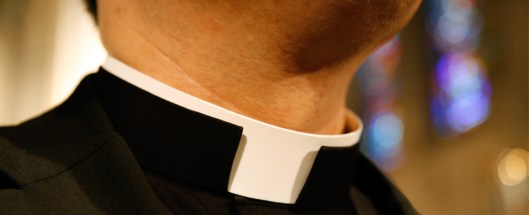
One of the funny things about wearing a priestly collar in public is that people tend to tell you way more about their lives than perhaps they should.  As soon as a person realizes you are a priest, the flood gates open and all of a sudden you are the guest on the “Everything You Always Wanted to Know about Church But Were Afraid to Ask!” Show.  I get questions about how one becomes a priest, what being an Episcopalian means, and what kind of Christian I am.  But mostly I get confessions.  People will confess they used to go to church, but once they became an adult, they had a hard time believing everything the church taught them as a child.  People will confess that they were raised in the church, but when a terrible tragedy hit, they felt abandoned by God and could never go back.  People will confess that they miss going to church, but that they always feel like they do not belong when the go to church – that everyone in the church seems to have their lives figured out except them.

What is interesting to me about those conversations with non-church goers or lapsed Christians is that they seem to think that their struggles with faith make them ineligible for church membership.  Perhaps that is true in some denominations in our country.  But one of the primary reason I became an Episcopalian was because the Episcopal Church not only made room for faith struggles, but expected those struggles.  Almost every time I have raised a question about a Biblical text in Bible Study, instead of someone explaining the answer to me, the response is almost always, “Yeah, that is a hard piece of scripture.”  Almost every time I have been with a grieving family who is on the brink of questioning their faith, no one in the room challenges them.  Usually someone says, “I could totally see how you would be doubting God right now.”  And almost every time I have been in a class about theology, the creeds, confirmation, or baptism, someone has asked, “What if I can’t believe that part.”  Never once has that person been told they do not belong if they cannot believe – in fact, usually the person is praised for naming the lack of faith we have all have had at some point in our spiritual journey.

I think that is why today’s Gospel lesson feels so real.  The disciples and apostles have been following Jesus for weeks, and Jesus has been handing them a lot of heavy stuff.  Jesus has told them to give up their possessions, to forgive those who wrong them, to take up their cross.  I cannot imagine anyone looking at the stark life Jesus describes and not calling out, “Increase our faith!”  How else can we be all Jesus wants us to be without increasing our faith?  Surely we have all had those trough moments – in the face of our mortality, at the betrayal of a friend or spouse, in the midst of anxiety and stress – when we too cry out to God, “Increase our faith!”

What might be helpful to do is talk a little about what we mean when we say faith.  Marcus Borg talks about two different kinds of faith:  faith of the head and faith of the heart.  Faith of the head is claiming something about God or the human condition.  This kind of faith is more about what we believe.  When someone says they have lost their faith, they have often lost this faith of the head.  They no longer believe something taught by holy scripture or the church.  In the Episcopal Church, we do not get too upset about this kind of faith struggle.  Instead, we see faith as ever evolving and growing.  Questions are at the root of a deep, mature faith.  Borg would argue that God cares very little about what beliefs are in our heads – if we believe the right things.  Borg knows that you can believe all the right things and still be in bondage, because, “Believing a set of claims to be true has very little transforming power.”[i]

Unlike faith of the head, faith of the heart is a little different, according to Borg.  Faith of the heart is characterized by three things:  trust, fidelity, and vision.  To have faith of the heart is to put a radical trust in God – to rely on God for grounding and safety.  Faith of the heart is also characterized by fidelity – an understanding that we will be faithful in our relationship with God and God with us.  Faith of the heart is finally characterized by vision – a belief that reality is life-giving and nourishing instead of threatening or hostile.  “To live in faith requires ‘a radical centering (of our lives) in God that leads to a deepening trust that transforms the way we see and live our lives.’”[ii]  So when the disciples ask Jesus to increase their faith, they are not necessarily asking Jesus to help them believe certain statements about God to be true (that faith of the head).  Instead, they are asking for faith of the heart – to get help in trusting God, remaining faithful in their relationship with God, and seeing life as God-given and gracious.

Now one would hope that Jesus would hear this request from the disciples and come back with a loving response – a pastoral word of encouragement that makes them feel affirmed in their fears and doubts.  Unfortunately, that is not what Jesus does at all today.  Instead he tells an abrasive story about masters and servants, which is basically Jesus’ way of saying, “You want your faith to increase?  Then get out there and do the work you have been given to do.”  Instead of assuring and coddling the disciples, Jesus sounds more like that old Nike ad that says, “Just do it!”

I do not know about you, but Jesus’ words are not all that comforting today.  I have sat with someone who is overwhelmed by the disappointments of life, and never once did it occur to me to tell them to just go out there and do the work they have been given to do.  I have counseled people who are facing death, divorce, job loss, or shame, and I have not told a single one of them to stop complaining and just get back out in the world doing what God has called them to do.  I myself have had moments when God felt absent, and I probably would have deemed any counsel to “Just do it!” as insensitive or unfair – to just trust that God is there anyway and get back to work.  Where are we supposed to find the strength to be faithful – to trust, to be loyal, to hold on to the vision of God’s goodness – when we feel completely unable to “Just do it!”?

As I struggled with Jesus’ harshness today, I remembered Paul’s second letter to Timothy.  Paul says to Timothy, “I am reminded of your sincere faith, a faith that lived first in your grandmother Lois and your mother Eunice and now, I am sure, lives in you.”  Paul’s words this week help me see how we get back to the work Jesus wants us to do.  In Paul’s encouragement, he is confident that Timothy can “Just do it!” because he knows Timothy’s identity.  Timothy is the grandson of Lois and the son of Eunice.  These women have taught him everything he knows about Jesus.  They have been through the depths of despair themselves, and yet they are faithful witnesses of God.  Timothy is not just a man fighting for faith – Timothy is known by God, and comes from a long line of people who have walked with God.  Timothy’s heritage is a heritage of people who have gone before, who have shown him the way through their lives, and who have encouraged him.  Now, you may be thinking, “Yeah, except my Grandma was a Southern Baptist who disagrees with what I believe, or my Mom stopped going to church ages ago.”  Whether biological or not, we all have grandmothers and mothers of our faith.   Maybe they are friends or fellow parishioners.  Or maybe those mothers and grandmothers are the matriarchs of our faith.  Regardless, we are all rooted in something bigger than us – something with much deeper roots that can ground us when we feel like we are flailing in our faith.

When I first read our gospel lesson this week, I thought we had been cursed with the wrong lessons – especially for those of you who brought friends today.  But the more the lessons unfolded, the more I realized they might be the perfect lessons.  We all struggle with faith – certainly of the head, but more importantly of the heart.  But as Paul reminds us, we come from a long line of people who have gone before who have struggled as we do, and who leaned into their identity as beloved children of God in order to keep putting one foot in front of the other.  We are encouraged today because we have seen the fruit of “Just doing it!”  We have prayed for someone struggling this week.  We have called or visited a friend who needed encouragement this week.  We stood up to a bully this week.   We gave money to support ministry this week.  We did something seemingly inconsequential, but those small, everyday acts of faith are powerful, and they are how we answer Jesus’ call to “Just do it!” – even when we did not think we could.[iii]  Paul and the Church remind us that we can – we can do those acts of faith because we are surrounded by matriarchs and patriarchs who encourage us along the way.  We all have those moments when we just want Jesus to increase our faith.  Today we are encouraged by doing – and eventually our faith increases in spite of us.  Amen.

[i] Marcus Borg, The Heart of Christianity, 30.  Argument about Borg presented by Br. David Vryhof, “Lord, Increase our Faith!” October 7, 2007, as found at http://ssje.org/ssje/2007/10/07/lord-increase-our-faith/ on September 28, 2016.

[ii] Vryhof.

[iii] David Lose, “Pentecost 20C:  Everyday Acts of Faith,” September 26, 2016, as found at http://www.davidlose.net/2016/09/pentecost-20-c-every-day-acts-of-faith/ on September 28, 2016.

The Eye of the Beholder…

Tags

, , , , , , , , , ,

This summer I had the great pleasure of seeing some great art exhibits.  Though I typically love going to art museums, I rarely make time to go.  Life just gets too busy and other “important” things seem to take precedence.  But what I realized this summer is I should go to art museums more often because the busyness of life easily distracts me from seeing the really important stuff of life.

gala-contemplating-the-mediterranean-sea-which-at-twenty-meters-becomes-the-portrait-of-abraham-lincoln-large-orginal-504x669

Photo credit:  http://thedali.org/exhibit/gala-contemplating-mediterranean-sea/

My first art museum jaunt was to the Salvadore Dali Museum in St. Petersburg, Florida.  I did not really know much about Dali, except his iconic melting clocks.  But his work blew me away.  One of my favorite pieces of his is called, “Gala Contemplating the Mediterranean Sea,” 1976.  He plays with images in the painting so that up close you see a cross, and far away, you see a portrait of Abraham Lincoln.  But it wasn’t until I took a picture with my phone that I could see the second image.  His playfulness with visual perception made me wonder if we don’t all struggle with visual perception in life.  We all run around seeing only a portion of reality.  This partial vision and perception means that we are also constantly missing the presence and activity of God in our lives.  Like Dali’s painting, we can miss the presence of Christ when we are too close or too far away to notice our Savior in the world about us.


002-kehinde-wiley-theredlist

Photo credit:  http://theredlist.com/search-image?q=angel

I had a similar experience when visiting the Virginia Museum of Fine Arts in Richmond.  They have an exhibit by Kehinde Wiley that shakes up our senses about who is traditionally featured in portraits.  My favorite piece of his was a gold-leaf icon-like portrait called “The Archangel Gabriel” 2014.  Everything about the Angel Gabriel is unexpected – his clothing, his hair, his jewelry, and his skin color.  But there is also something entirely familiar about him – a gentleness, trustworthiness, and sense of reassurance.  By reimagining ancient depictions of the Angel Gabriel, Wiley reminds us that God does not always appear in the ways and in the people we expect.  I suspect that we often miss God’s presence simply because we are not looking with the eyes of God.

I wonder how common this pattern is for all of us.  How often do we rush past Christ as we rush through life?  This week, I invite you to do what you need to do to slow down and see God at work in the world about you.  Whether you need to go to an art exhibit, take a yoga class, volunteer with one of our outreach ministries, or just take thirty minutes of quiet or prayer, find a way to shake up your busy routine and look with intention to see the ways in which God is active in your life.  I look forward to hearing about what you learn.

Discovering Home…

Tags

, , , , , , , , ,

dscf1749_edited-1

Photo credit:  John Rothnie, http://www.hickoryneck.org

When my husband and I were engaged, we relocated to Delaware.  One of the first things on our priority list was finding a church home – partly because we missed church back in North Carolina, but also because we were hoping to make some new friends in our new town.  “Church shopping” was hard – nothing felt quite right, and our old standbys were not working.  I was born and raised in the United Methodist Church, and my husband had nominally been raised in the Presbyterian Church.  After months of frustration, and the recommendation of a friend, we tentatively tried out the Cathedral in Delaware.  My husband was sold on the first Sunday; I took some time to come around.  For a long time, I thought that we were just United Methodists who happened to worship in an Episcopal Church.  But what I did not realize was that a transformation was taking place – I was discovering the Church home I didn’t know I was missing.

Every person who walks in the door of a church has a similar story.  Sometimes a person is what we call a “cradle Episcopalian” – born, raised, and stayed in the Episcopal Church.  Sometimes a couple or family is looking for a compromise in faith traditions.  Sometimes people leave their denomination out of frustration and are looking for something that feels closer to the Gospel as they experience it.  And sometimes a person has never before stepped a foot in a church.  That’s part of the beauty of the Episcopal Church – our members come from a diverse set of experiences, all of which feed our mutual ministry.

That is why we are kicking off a class called “Discovery Class” this week at Hickory Neck.  Whether you are new to Hickory Neck, the Episcopal Church, or you have been around forever, I find it is always helpful to review our roots.  No matter how many times I teach this class, I find that people learn something new, feel inspired to deepen their faith, or find themselves reenergized about their Episcopal identity.  The class also gives us a chance to reflect on and celebrate the unique way that our Episcopal identity is incarnate at Hickory Neck.

I hope you will take some time this week to reflect on your own spiritual journey.  Think back to the times when you felt inspired, fed, and reinvigorated in your faith.  Recall the way you felt when you knew, or suspected, that your current faith community began to feel like a spiritual home.  And if you cannot join us at Hickory Neck, share some of those stories with your neighbors – and invite them into the wonderful work Jesus is doing in your church home!

Sermon – Luke 16.1-13, P20, YC, September 18, 2016

Tags

, , , , , , , , , , , , , , , , ,

Often when we talk about Jesus, we marvel at his parables, and we encourage each other to follow his teachings.  We ask questions like, “What would Jesus do?” as if the answers are obvious.  We describe Jesus as illuminating God, helping us to understand God in an incarnate way.  We even say that all things necessary for salvation are found in Holy Scripture.  And for the most part, all of those things are true – until we get to today’s parable.  Most of us listen to the lesson for today and can only say, “Wait….what?”

Here’s the problem.  Unlike many of Jesus’ parables and sayings, most of us come away from this one completely confused.  Jesus starts off simply enough.  A rich man has a manger, or steward, and the manager is accused of squandering the master’s property.  The master threatens to fire the manager, and so the manager goes off and talks to all the debtors of his master.  Knowing he is about to be fired, the steward strikes deals with the debtors, decreasing their debts, in the hopes of making some friends who will feel indebted to him and may take him in once he is fired.  But what happens next is where the parable gets confusing.  When the master finds out what the steward has done, instead of being angry, he commends the manager for being shrewd.  And to top off this odd response, Jesus completes this whole parable with an instruction that all of us should be like the shrewd manager, making friends by means of dishonest wealth.  Jesus concludes the story by telling us that no one can serve God and wealth.

Confused yet?  You are in good company!  Even most scholars disagree about what the parable is trying to do.  Though we all might understand the part about our loyalties being torn between God and money, the parable hardly helps us get there.  The manager is a schemer – he is about to be fired because he has mismanaged things.  But instead of righting the situation with his master, he confesses that he is both lazy and proud.  He sneakily makes deals with the master’s debtors in the hopes that the debtors will see him as an ally and will help take care of him when he is fired.  But what is most confusing about the whole story is that Jesus says we should go and do likewise.

What might be helpful in getting our heads around Jesus’ strange parable is to understand the economics of “Roman-occupied Galilee in the first century.  Rich landlords and rulers were loan-sharks, using exorbitant interest rates to amass more land and to disinherit peasants of their family land, in direct violation of biblical covenantal law.  The rich man … along with his steward or debt collector, were both exploiting desperate peasants.”  Wealthy landlords of the day would hide interest charges in the money owed by the peasants.  According to scholars, someone like the wealthy steward could be charging the average peasant anywhere from 25-50% for the landlord, an additional cut for the himself, and then a Roman tax on top of all that.[i]

Now before we get too self-righteous about the injustice of the Roman economic system, we have to remember the economic system we operate under today.  Think about modern college students, who not only attend colleges with soaring tuitions, but also are being offered student loans with higher interest rates that ever before.  Add on top of that a weak economy and you see our young people being buried under unfair debt.  Or think about predatory payday loans.  Those scraping by to make ends meet start slipping behind.  Bills are due and they do not have enough to make ends meet, so they get lured in by the immediacy of a pay-day loan.  But by the time all is said and done, they lose more of their paychecks to the interest charged by loan sharks than if they had just kept their money.  And just in case we think we can get away with blaming student loan and payday lenders, we cannot forget our own country’s lending policies with impoverished countries.  Leaders of third world countries agree to harshly austere loans we make, but the poor of the country end up bearing the brunt of the burden.  In fact, “the Lutheran World Federation calls oppressive debt terms imposed on Honduras and other Latin American countries ‘illegitimate debt’ and likens such debt itself to ‘violence,’ because of its crushing effects on people’s futures.”[ii]  Though we may not have everyday contact with stewards or managers, their economic system is more familiar than we may realize.

What is unclear about the steward’s actions is how he is able to forgive some of the debtors’ debts.  In forgiving the debts of the debtors, the manager may have been forgiving his own cut of the interest being charged.  In that way, his actions seem a bit more noble.  Obviously, he is cutting out his own salary, but he is doing so in a way that seems to, at least outwardly, condemn the system.  Or, the steward could have been eliminating all the hidden and prohibited interest in the contracts.[iii]  This would have been a bolder move, as he would have been denying the master his typical amount due.  But because he is enforcing Jewish laws around interest, he would have ingratiated himself to the local Jewish peasants.   This is why the steward may receive commendations from the landlord and Jesus – not because he is noble per se, but because he manipulates the unjust system to curry favor with his neighbors – the very ones who might lend him a hand when he is fired for doing something supposedly just.[iv]  Whatever the self-interest of the steward is, what he is able to do, and perhaps why his master calls him shrewd, is use an unjust system against itself.  Just or not, the steward is able to see that the power of mutuality, of relationship, is the better bedfellow than the unjust economic system of the day.

One of my favorite classes in college was a class called “Social Dance.”  We spent the semester learning the Fox Trot, Waltz, Tango, Cha-Cha, and Swing.  My class happened to have more men than women, so I never had to sit out a dance.  I just switched from partner to partner, trying to adjust as each lead learned the steps.  There were many hard lessons in that class, not least of which was learning how to let the man lead.  But the hardest lesson was learning that no matter what dance we were doing, and no matter how intertwined our bodies were, my frame was a vital component to the dance.  Even in a dance like the Tango, where bodies seem to be intertwined, each partner is holding on to their frame, protecting their space.   I was fascinated to see how two bodies could function in such unison, looking like one unit, and yet, be two differentiated, separate units.

As I studied our gospel lesson this week, I wondered if Jesus’ lesson about wealth is not unlike a couple dancing the Tango.  Living in the world that we do, there is no way for us to escape the dancing partner of wealth.  Given that wealth has the power to corrupt, we will always need to keep our frame in place – keeping the dance going in unison, but never letting ourselves forget to be differentiated from dishonest wealth.  Though the steward seems unseemly and self-interested, he shows us an intricate tango with wealth – how to manipulate wealth so that wealth only hurts itself, not those most in need.

The way that we keep that firm frame is by being in relationship – by making friends as Jesus tells us.[v]  When we invest in friendships (not just friendships with people we like, but kingdom friendships[vi] – the kind of relationships that are unexpected, but feed us more than any wealth can), then wealth begins to lose its power to weaken our frame.  Kingdom friendships are those friendships with people at church or in the world with whom you thought you would never have anything in common.  Kingdom friendships are those relationships you develop with those who are different – either socioeconomically, racially, or ethnically.   Kingdom friendships are those relationships that develop when you realize that despite the fact that you are trying to help someone else, they are actually helping you.  The steward may have made kingdom friendships out self-interest, but the results are the same.  He realizes once he sees the humanity in those he is oppressing – once he makes kingdom friendships, the wealth he is pursuing no longer matters.  That is what Jesus invites us into today – that is how Jesus knows that we can hold onto our frame when dealing with the master of wealth.  Jesus invites us to nurture our kingdom friendships because when we nurture those friendships, we strengthen our sense of self, ensuring our frame never slips in our tango with wealth.  Amen.

[i] Barbara Rossing, “Commentary on Luke 16:1-13,” September 18, 2016, as found at http://www.workingpreacher.org/preaching.aspx?commentary_id=2982 on September 14, 2016.

[ii] Rossing.

[iii] Rossing.

[iv] G. Penny Nixon, “Homiletical Perspective,” Feasting on the Word, Yr. C, Vol. 4 (Louisville: Westminster John Knox Press, 2010), 95.

[v] David Lose, “Pentecost 18C:  Wealth and Relationships,” September 14, 2016, as found at http://www.davidlose.net/2016/09/pentecost-18-c-wealth-and-relationships/ on September 15, 2016.

[vi] Thomas Long, “Making Friends,” Journal for Preachers, vol. 30, no. 4, Pentecost 2007, 57.

On Collars, Conversations, and Confessions…

Tags

, , , , , , , , ,

Last week, I stopped by a local doughnut shop to pick up treats for some of our church volunteers.  The staff needed to make a fresh pot of coffee, so I had to wait by the counter.  After a couple of minutes, the woman who had been helping me approached me and said, “Okay, settle a bet for us.  Are you a nun or a pastor?”

anglican-collar

Photo credit:  https://blackandwhiteandlivingincolor.com/2014/01/16/coffeehouse-musings-why-i-wear-my-anglican-collar-sometimes/

I get questions about my collar all the time.  Most people are not as courageous and will simply stare – usually with a furrowed brow of confusion.  Others will only confess that they always wondered what that “thing” was I wore when we finally get around to talking about our jobs.  Sometimes people will ask if the Roman Catholic Church started ordaining women (trust me – you would know if they had!).  Of course, my favorite experiences have been when I have been both in a collar and pregnant.  That really confuses people!

Once I finally confessed I was a “pastor” to the doughnut shop, one of the women working the drive-through said, “Oh good!  Can you pray for us?”  We had a great conversation after that, and I promised to keep them in my prayers for the rest of the day as I departed.  But as I left, I realized two things.  First, being a priest in my community is a tremendous blessing.  It allows me to have deep, intimate conversations with people a lot more quickly than you would with most strangers.  It allows me to not only be a pastor with my own parishioners, but everywhere I go in my collar.  It allows me to stretch the reach of the Church beyond the walls of our church.

But what I also realized when I left that shop is that talking about the need for prayer probably would not have happened had I not had on my collar.  I am constantly inviting my parishioners to have faith conversations outside the context of our community, but that day I realized how challenging that invitation can be.  A clergy collar is like an automatic ice breaker – it is an invitation for you to say, “Oh good!  Can you pray for us?!?”  But how do we break the ice without such tools?  How can I let the grocery clerk, the delivery man, or the construction worker know that I want to pray for them too – even when I am in my sweats?  How do we get beyond the perfunctory greetings and start having real conversations?  This week, I invite us all to consider how we might start such a journey toward authentic, meaningful conversations about the intersection of our individual journeys and the presence of Christ in our lives.  Know that I will be praying for us both as we figure it out!

Sermon – Luke 15.1-10, Jeremiah 4.11-12, 22-28, P19, YC, September 11, 2016

Tags

, , , , , , , , , , , , , , , , ,

I remember that day like it was months ago, not years ago.  I was driving into work, and caught the story right as I was about to exit the car.  A plane had crashed into one of the twin towers.  I rushed inside to find a radio, and my boss and I spent the day listening to the story unfold.  That night, I got the first glimpse of the destruction on television, and the visual was worse than listening to radio updates.  When the first tower fell, and then the second, the wind rushed out of me as I watched the wind rush out of those buildings.  Life lost inside, life being forced away from the wreckage, chaos and rubble left in the wake.  An eerie silence fell upon us as we watched in horror.

In Genesis 1, the narrator tells us that God forms the earth out of the formless void – tohu wa-vohu, in the Hebrew.  Out of nothingness and chaos, God forms order – separating the watery chaos from the earth, dividing the day from the night, bringing vegetation, beasts, and humans to life.  God takes chaos and creates order.  But on that day fifteen years ago, many of us felt like the opposite happened.  All of our order, routine, and compartmentalizing exploded into havoc.  Two-hundred and twenty stories of order were thrown into disorder – which does not even take into account the madness of destroyed winding hallways in the Pentagon and the decision of victims to crash into their own deaths rather than allow terrorists to use their plane for more destruction.  That day, we felt thrown back into a formless void, unsure of what end was up, and what had happened to our world.

I would like to say all is back to normal now – that after fifteen years, we or God managed to bring order back to the earth.  But all one has to do is look at the news and the state of our planet and governments around the world and feel like we are still in the formless void of post-9-11.  That is what makes the reading from Jeremiah so unsettling today.  As a foil to Genesis 1, Jeremiah 4 describes the earth as waste and void – the same word tohu wa-vohu found in Genesis.[i]  Jeremiah says that a hot, destructive wind[ii] blows and the earth becomes a mess – there is no light, the mountains quake, the people and birds of the air are gone, the fruitful land becomes a desert, and cities’ lay in ruin.  Jeremiah goes on to say something even more jarring – that the people are foolish and stupid.

Now, I imagine you may be sitting here today thinking, “This is supposed to be a celebratory day, and I managed to invite a friend to church.  Can you find us some joy, preacher?!?”  Don’t worry – we will get there.  I am happy to name where hope is today, but before we get to hope we have to go with Jeremiah into that desolate place.  You see, for those of us who know hope and joy, we know we do not arrive there on a straight path.  With the exception perhaps of children who have not begun to sense the depth of our depravity, most of us have been through the barren land Jeremiah sees coming.  Perhaps we only saw that formless void in the midst of a national tragedy, but perhaps we found that nothingness in the face of death, divorce, or debt.  Perhaps the destructive wind blew through our lives when violence, illness, or loneliness overwhelmed us.  We do not need to live in this world too long before we know exactly what that barren land looks and feels like.  There is probably even a scar left behind, or a metaphorical box we keep so that the watery chaos does not drown us.

But here is the weird part.  Only when we claim those times in our lives of tohu wa-vohu, those moments when the world is a formless void, can we experience the fullest heights of hope and joy.  Jeremiah calls the people nasty names today not because they are bad people or because they are not smart.  He calls them those nasty names because they have failed to remember gratefully and loyally who created them.  They have begun to live as if there is no hope, no grace.[iii]  And that is why we come to church.  To not let the formless voids of life overcome us, but to surround ourselves with a group of people who will remind us that there is still reason and room for hope.  We eagerly gather in church because we want to be reminded that our God graciously, lovingly, and mercifully blows a creative air into our nothingness and creates again and again.

That is why we celebrate on this day that could otherwise be a day of overwhelming sadness.  We celebrate today because Jesus tells us two parables that remind us why we are a people of hope.  These parables of being lost are why we gather with laughter and smiles today.  These parables are why we host a party later this afternoon – because we want to mirror the joy that God has over lost coins and sheep.

So how do we turn ourselves from the depths of sadness to the rejoicing of a heavenly party?  We need to do some work first.  Because the parable of the Prodigal Son follows these two short parables in Luke, we sometimes jump ahead and want to conclude, “All we need to do is repent, and the Lord will be happy.”[iv]  But today we only get these two short parables, and for that we are quite lucky.  Here’s the thing:  sheep and coins cannot repent.  They do not have the capacity to understand their own sinfulness.  They do not even have the capacity to act.  The funny thing about sheep who are lost is that they do not go around bleating for help.  They know that such noise might attract a predator.   Instead, they crouch behind a bush or other cover, and try to become invisible – paralyzed by the fear of being consumed in addition to being lost.[v]  Likewise, coins have no agency.  They cannot shout from under the couch cushion, “Over here by the crumbs!!”  Those being found cannot cause God to find them.  Nothing we do can earn us being found by God.  Being found, as always, is a gift from our loving God – who is the kind of God who will always seek us, ever search for us, even when searching for us may seem like a lost cause.  And on top of that, when those who are lost are found, the party that ensues is lavish, extravagant, and a taste of the heavenly banquet, as the heavens rejoice with God.

When I was growing up, money was often tight.  Though my parents rarely talked about our finances, I could tell the financial strain made them anxious.  As an adult, my father finally explained how they got by in scarce times.  A box of produce would show up on our doorstep on a day my dad was wondering what we eat that night.  A large bill would be sitting on the table and in our mailbox he would fine an envelope of cash – sometimes with a note that said, “thinking of you,” but sometimes without even a name.  Now, I am not saying that our family’s experience was the best financial planning model, but what our experience taught us is that sometimes you have no control over the good that happens in your life.  Sometimes you do not even have a person to thank.  Regardless, whatever blessing, whatever good comes our way, what Jesus invites us to do today is to be people who celebrate the God who, sometimes completely illogically, searches us out and finds us – and then throws a party when we are found.

When I realized we would be kicking off our program year on the same day as the fifteenth anniversary of September 11th, I was overcome with dread, wondering if maybe I could just ignore the anniversary and turn our hearts toward celebration.  But our scripture today made me realize that celebration – true, deep, heart-rending celebration – can only happen when we understand the depths of our indebtedness toward our gracious God.  Once we understand that debt, then we can celebrate with grateful hearts.  I am thrilled to be embarking on a new program year with Hickory Neck and look forward to all that this year brings.  But that sense of excitement is especially deep because I know the depths of the formless void – the chaos from which we were created and back into which we sometimes slide.  Having seen the barren land that we sometimes create, I can only be even more filled with gratitude that our God is a God who scours every corner to find the coin She has lost.  Today is a day for sobriety – but that sobriety also leads us to a celebration of the heart:  a lavish party with the heavenly host.  I am grateful to be a part of a faith community that invites me to be a person of abiding hope.  Amen.

[i] Anathea Portier-Young, “Commentary on Jeremiah 4:11-12, 22-28,” September 11, 2016, as found at http://www.workingpreacher.org/preaching.aspx?commentary_id=2973 on September 7, 2016.

[ii] George W. Ramsey, “Exegetical Perspective,” Feasting on the Word, Yr. C, Vol. 4 (Louisville: Westminster John Knox Press, 2010), 51.

[iii] Dwight M. Lundgren, “Homiletical Perspective,” Feasting on the Word, Yr. C, Vol. 4 (Louisville: Westminster John Knox Press, 2010), 53.

[iv] Karoline Lewis, “Lost and Found,” September 4, 2016, as found at http://www.workingpreacher.org/craft.aspx?post= 4708 on September 7, 2017.

[v] Helen Montgomery DeBevoise, “Pastoral Perspective,” Feasting on the Word, Yr. C, Vol. 4 (Louisville: Westminster John Knox Press, 2010), 70.

Working Together to Make it Work

Tags

, , , , , , , ,

multigenerational

Photo credit:  https://www.indacoriskadvisors.com

Every year our family vacations at a place called, “Memorial House,” in Rehoboth Beach.  The house is owned by the Diocese of Delaware and is an 11-bedroom home used for retreats, meetings, and, in the summer, for family and church vacations.  Each family or individual has a private room, but the dining and living area is shared.  Each day in the summer, a full, hot breakfast and dinner is served buffet-style, and enjoyed at shared tables with the other guests.

This year, our family vacationed with another family with two children.  Joining us were a family with adult children, older couples, and some retired singles.  Our four children were the only children this year, making our eight-person dinner table the most raucous.  I lost count on how many tablecloths we changed, and the broom was never far from hand.  The other mom and I worried a bit that we might be disturbing what could have been a perfectly peaceful vacation for the others.

Luckily, I had two encounters that told a different story.  The first was with a grandmother who talked to us as we were preparing lunches.  She joked with us about how much work she saw us doing.  She confessed that she had already spent one week this summer at the beach with her own family – including children and grandchildren.  But she had done so much work that week that she decided to come to Memorial House so she could have an “actual vacation”!  Another grandmother talked to me at the end of our week.  She pulled me aside and said, “You know, I had forgotten how much work I did as a young mom.  You guys are doing a great job!”

What Memorial House does is a little like what Church does, when Church is at its best.  You see, Church is one of the few places that multiple generations gather to worship, learn, and grow together.  When the Church is at its best, grandmothers distract an inconsolable child when a mom or dad is at her or his wits end.  When Church is at its best, a retiree is teaching children his favorite Bible Stories in dramatic and fun ways.  When Church is at its best, youth know adults who might give them the same answers as their parents, but the youth can hear it better from someone else.  When Church is at its best, we are a multigenerational family, welcoming those from all walks of life, making sure we are all fed, nurtured, and empowered to go out into the world to witness the love of Christ.  This week, I am especially grateful for that gift!

Sermon – Jeremiah 1.4-10, P16, YC, August 21, 2016

Tags

, , , , , , , , ,

“What do you want to be when you grow up?”  I have lost count of how many times we have asked that question to our oldest daughter.  The answer varies widely depending on what phase she is in or what they have been talking about in school.  I confess that there have been times when I was disappointed when she changed her mind – “author and illustrator” was my favorite, though “engineer” was a pretty good one recently.  But my all-time favorite conversation about what she wanted to be when she grew up was actually a conversation about priesthood.  I asked her my typical question, “So have you decided what you want to be when you grow up?”  She replied thoughtfully, “I can’t decide.  There are too many options.”  Sympathetically I said, “I totally understand.  It took me years to decide what I wanted to be.”  And without a beat, she replied, with disgust, “And you decided to become a priest?!?”

The thing is, I do not think my daughter’s reaction is all that different than most people.  Very few people ever imagine themselves being ordained.  The vocation seems too foreign, to require some mysterious amount of holiness, or to just be too weird.  All of that makes sense to me – not everyone feels called to the priesthood.  But too often acknowledging we do not want to be a priest means that we stop using “call” language altogether.  Instead of being able to talk about what we feel called to do in life, we instead talk about what we want to be when we grow up.  A calling, a ministry, or even a vocation is something that clergy people do, not what we all do.

At least, that is what the secular world would have us believe.  The church says something a bit different.  Throughout our liturgies and Prayer Book, we talk about the ministry of all people.  Our Catechism defines the ministers of the Church as lay persons, bishops, priests, and deacons.  The Catechism further states that the ministry of lay persons is to represent Christ and his Church; to bear witness to him wherever they may be; and, according to the gifts given them, to carry on Christ’s work of reconciliation in the world; and to take their place in the life, worship, and governance of the Church.”[i]  In the baptismal covenant, we all promise to proclaim, by word and example, the Good News of God in Christ, to seek and serve Christ in all persons, and to strive for justice and peace.  Now some of you may argue that you do those things – just not as your daily work.  You are happy to be involved in church, but you do not see your life as a student, a secular worker, or a retiree as a vocation.

And stories like the one we hear in Jeremiah do not help us in this distinction.  You see, we hear Jeremiah’s call today like we hear the call of most prophets – and rightly so, since Jeremiah is so similar to other prophets.  Like Moses, Isaiah, and Ezekiel, Jeremiah balks at the idea that God may be calling him to do something.  Jeremiah protests that he is too young.  Similarly, Moses tried to argue he was unskilled, Isaiah that he was unworthy, and Ezekiel that he did not know what to say.[ii]  When God calls people to do big things, they often push back and seek an out.  In most cases, their fear is legitimate.  Being a prophet is often a thankless job – which can certainly lead to suffering, if not death.  But invariably, God reassures the person being called.  In Jeremiah’s case, God tells Jeremiah that he was born for this job.  “Before I formed you in the womb I knew you; and before you were born I consecrated you; I appointed you a prophet to the nations.”

All of that sounds nice. In fact, many of us love this verse from scripture because the verse gives us a sense of comfort, belonging, and affirmation – a sense that we are all known by God.[iii]  But what we forget is that in knowing Jeremiah so deeply, God also knows that Jeremiah will have to do a really hard job.  The touchy-feely part of the text starts to wane when we hear the part about being a prophet – especially a prophet who will need to fear others.  But here’s the real problem with Jeremiah’s call:  we do not think God similarly calls us.  Not even all priests see themselves as prophets.  Prophets, priests, deacons – those are jobs that other people do.  Those are not jobs we do.  We go to school everyday.  We are teachers, financial consultants, government workers, stay-at-home parents, or journalists.  We are retired and are done with the “job” part of our lives.  We hear stories like the call narratives of Jeremiah, Moses, Ezekiel, and Isaiah, and we can keep ourselves at a safe distance because those are the jobs that those people do.

But remember that catechism and baptismal covenant?  The truth is we are all called to something.  We all have a vocation.  That calling or vocation may be our jobs or what we do every day.  We may live out our vocation as a student when we stand up to a bully, play with the new kid who seems lonely, or help tutor the troublemaker clearly needs help.  We live out our vocations at work when we advocate for justice for our coworkers, when we offer an ear to a coworker who is struggling, or when we organize a volunteer day for our company.  We live out our vocations as retirees when we volunteer at the local homeless shelter, when we treat with dignity the workers we encounter who provide us services, and when we use our time to advocate for the poor.

But vocation is sometimes found outside of those typical confines.  Sometimes living into our vocation means calling that person who has been on our minds – only to discover how much they needed a word of encouragement.  Sometimes living into our vocation means helping the mom in front of us in the grocery store line who is clearly juggling children, groceries, and dealing with a cashier who has never handled food stamps or WIC benefits.  Sometimes living into our vocation means praising and giving thanks to a preschool teacher who just got chewed out by a parent who thinks their child is just fine (when you suspect the child is actually really hard for the teacher to manage).

This fall, we will be starting up an adult education series called Discovery Class.  The class is for newcomers and members alike, who want to learn more about our Episcopal Identity, the work of Hickory Neck, and how we can connect to a ministry.  In the final session, participants will take a survey to help us discern how our gifts might best tie in with a ministry at Hickory Neck.  The survey is a great resource because sometimes teachers are the best matches for Sunday School and Youth Group leadership.  But sometimes, best matches for Sunday School and Youth Group are retirees who have been around the block and get how hard the teenage years are.  Likewise, someone may have been may have been in construction or administration during their career, but really want to learn how to arrange flowers with the Flower Guild, or play with babies in the nursery.  Though many of us have vocations and callings out in the world, sometimes the church is another place where our vocations and callings feed us and others.

So if we are willing to agree that we all have a calling or vocation, recognizing that some vocations can change and evolve over time, how do we know if we are living into our calling?  The true test of a vocation might be something like this:  whatever in your life is the most intimidating, daunting, or even terrifying task (be it teaching teenagers, asking for money for church, or praying in front of a group), and yet, when you try doing that task gives you an odd sense of deep satisfaction and meaning, is probably your vocation.  Prophets would not go kicking and screaming if being a prophet was easy.  And yet, prophets would not say yes without the assurance that God is with them, empowering them to be God’s agents.[iv]

This fall, I hope we will all prayerfully consider what ministry God is calling us to do.  Paul says in his letter to the Ephesians, “I therefore, the prisoner in the Lord, beg you to lead a life worthy of the calling to which you have been called, …The gifts he gave were that some would be apostles, some prophets, some evangelists, some pastors and teachers, to equip the saints for the work of ministry, for building up the body of Christ, until all of us come to the unity of the faith and of the knowledge of the Son of God, to maturity, to the measure of the full stature of Christ.”[v]  Though Church is certainly meant to give us comfort and encouragement each week, Church is also the place that strengthens us and sends us out into the world to do the work Christ has given us to do.  One of my favorite church signs looked simple enough from the road – with the name of the church emblazed on front, as you drove into the parking lot.  But on the backside, as you were leaving church each week, the sign had a separate message.  The sign read, “Go in Peace to Love and Serve the Lord.”  That is our dismissal this and every week – to not just consume Church, but to use Church as our foundation to go out into the world to love and serve.  And our response is, as always, “Thanks be to God!”  Amen.

[i][i] BCP, 855.

[ii] Bruce C. Birch, “Exegetical Perspective,” Feasting on the Word, Yr. C, Vol. 3 (Louisville: Westminster John Knox Press, 2010), 367.

[iii] John t. DeBevoise, “Pastoral Perspective,” Feasting on the Word, Yr. C, Vol. 3 (Louisville: Westminster John Knox Press, 2010), 364.

[iv] Thomas R. Steagald, “Theological Perspective,” Feasting on the Word, Yr. C, Vol. 3 (Louisville: Westminster John Knox Press, 2010), 366, 368.

[v] Ephesians 4.1, 11-13.

Making it Work…

Tags

, , , , , , , , , , , ,

Millennial-marriage

Photo credit:  marriage.about.com/od/proposingbeingengaged/

This month, my husband and I celebrated fifteen years of marriage.  Now I know fifteen may not seem like a big deal to some – it is certainly not 25, 50, or even the 64 years that one of the couples at church is celebrating this month.  But having worked with couples in premarital counseling for several years now, having worked with couples who were struggling with the strains marriage can bring, and having talked with couples who have had failed marriages, I know that marriage is not simply a gift.  Marriage is not just something that happens.  Marriage is something you work at, that you choose everyday (even on the days you would rather not), that is constantly tested, and that needs tending and loving care.  While wedding days are lovely, they are only the first day of many days that you will have to return to the commitment you made to make it work.

That being said, marriage is also a tremendous blessing.  It can be the place where you learn about the depths of love; your capacity for forgiveness (in part, because you are forgiven so often); where you can find the most honest, if not brutal, truth; where you can laugh more deeply than you ever have because that person knows what really produces a belly laugh; where you experience affirming, life-giving sexual pleasure; and where you find abiding companionship.  When we got married fifteen years ago, I was not entirely sure how things would go.  My own parents had gotten divorced just three years before our marriage began, and part of me wondered whether marriage could be done successfully.  I am so glad I made the leap anyway because marriage has brought joys (and challenges) that I never could have imagined.

I do not often talk about marriage because I work with a variety of people in all walks of life:  people who want to be married but have not found a partner, people who have lost their spouse to death, people who are divorced or who feel like the marriage is on the brink of failure, people who had abusive spouses, and people, who until very recently, were not allowed to be legally married.  At times, I have considered having a Valentine’s Day reaffirmation of vows celebration, as I have seen in other parishes, but shied away because I did not want anyone to think I was being insensitive to those for whom marriage is difficult.

All of that being said, my hope today is not to highlight how blissfully easy and wonderful marriage is.  Simply put, my hope is to honor how each day of marriage can be both a blessing and a challenge – and to thank God for the strength, wisdom, humility, and grace my husband and I have been given to get this far.  I pray for continued strength, wisdom, humility, and grace, as I pray for each of you on your various journeys in partnered, single, and dating life.  In the marriage liturgy of the Episcopal Church, we offer this petition at weddings.  Today, I leave it for my husband and I and all of you doing the work of marriage:  Grant that all married persons who have witnessed these vows may find their lives strengthened and their loyalties confirmed. Amen.  (BCP, 430)