• About

Seeking and Serving

~ seek and serve Christ in all persons

Seeking and Serving

Tag Archives: abundance

Making hay…

29 Wednesday Jun 2016

Posted by jandrewsweckerly in Uncategorized

≈ Leave a comment

Tags

abundance, church, enjoy, God, goodness, make hay, proverb, summer, time, work

hay in field 1100_0

Photo credit:  www.cattlenetwork.com/advice-and-tips/cattle-feeding/make-hay-supplies-last-through-winter

“Make hay while the sun shines.”  That has been the motto this summer at our household.  Being new to our town, we are discovering all sorts of fun things – places to go, foods to try, even a community pool to enjoy.  I suppose coming from a climate that has long, sometimes tough winters, summer in a new place has felt like an open invitation to enjoy all the goodness around us for as long as we can (even though we have heard that winters are not so bad here).

In some ways, living by that old proverb has been a ton of fun.  For those of you who know me, I can be a creature of habit – Mondays are laundry day, Fridays are pizza night, etc.  Plus, we have young children who can be quite cranky if they do not get enough sleep or who can be quite rowdy if they do not get proper nutrition (e.g. too much ice cream from the awesome homemade ice cream joint within walking distance means sugar-crazed bedtime routines).  But despite my penchant for order and predictability, I am trying to embrace the “Make hay while the sun shines” mantra because we having a lot of fun.

That proverb is embraced at church over the summer too.  In the ebb and flow of church life, the program year (September through May) is the busy time of year – more programs, more activities, and more meetings.  In the summer, people travel, kids are off on adventures, and some of us are “making hay.”  Based on that shift, one might imagine that all is quiet at church during the summer.  In fact, we too are busy “making hay.”  The program year is being planned, calendars are coming together, and groups are meeting to strategize for needs in the fall.

I am grateful for time set apart for hay making.  Parishioners at Hickory Neck are working hard so that when things kickoff in the fall, all runs smoothly.  I am grateful for the time that people are committing to the church, the creativity they are contributing, and the joy and laughter with which we do it all.  Thank you to all those contributing behind the scenes!  I am happy to be making hay with you this summer!!

On hollowness and hallowedness…

02 Saturday Apr 2016

Posted by jandrewsweckerly in Uncategorized

≈ 2 Comments

Tags

abundance, empty, God, good, gratitude, grief, hallow, hollow, house, memories, moving, sadness, tradition, transition

Empty-Property

Photo credit:  https://www.nationalpropertytrade.co.uk/dealing-with-empty-property/

As I mentioned recently, I have moved a lot in my lifetime.  If my calculations are correct, I have moved about 15 times (and that’s only counting college once, despite the fact that I moved to a different dorm every year, and twice my junior year).  As you might imagine, the moves have occurred over a lifetime – from as young as one-year old to this move in my late thirties.

At some point over the years of moving I developed a tradition.  When the whole house is empty, the truck fully loaded, and the cars ready to pull out, I quietly slip back into the house and walk through every room.  There is something about the hollowness of an empty home that you have lived in:  the echo of your feet as you walk through the house, the lingering hints of artwork once hung, and even the scents of people or food.  There is an ache that the emptiness causes – a finality like none other.  But there is also the rush of memories:  the child you brought home from the hospital, the sleepless nights as the toddler transitioned to a “big girl bed,” the parties and family celebrations, and the countless visitors.  In the silence of the empty house you can hear the hint of years of laughter, remember the nights of tears shed, feel the warmth of a child rocked to sleep, and see the shadows left by the lamp as you wrote by night.  Though the house is empty, the house has been your home, steeped in love for however long you have been there.  The hollowness reveals the hallowedness of the space.

This week I continued the tradition.  Though I have given myself little time to grieve the phase of my life’s journey, tonight I realized how sad I am to close this chapter.  God has been so very good to us here – four years of marriage and children and work and play is a lot.  We have been blessed by new friends and experiences.  We have grown and changed for the better.  In the quiet of the house, I am deeply grateful for the abundance God has shown us.  God is good.  All the time.

The Truth about Weddings…

20 Wednesday Jan 2016

Posted by jandrewsweckerly in Uncategorized

≈ Leave a comment

Tags

abundance, Anglican Communion, Cana, conflict, Episcopal Church, feast, God, Jesus, joy, marriage, miracle, pain, tension, water, wedding, wine

wedding-cana

Photo credit:  http://www.freebibleimages.org/photos/wedding-cana/

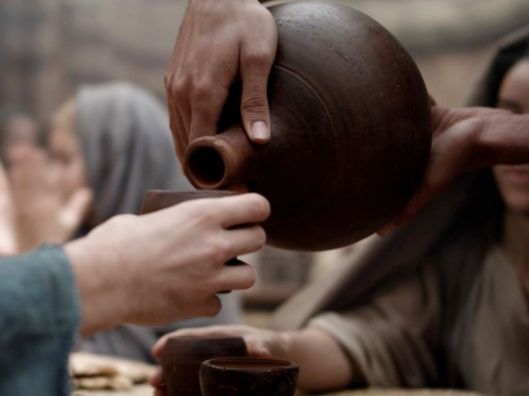
Almost two years ago, we welcomed our second daughter, Cana into the world.  We have gotten countless questions about the choice of her name and we find ourselves telling the story about the wedding in Cana over and over again.  Sometimes the repetition is annoying.  But mostly, retelling the story is a gift in itself.  You see, the story of Jesus’ first miracle is a story of great joy.  There is the setting of a wedding – one already filled with merriment and delight.  There is the wonder of a miracle – the amazing ability of Jesus to convert water into wine.  And there is the shock of abundance – not just the enormous amount of wine that Jesus produces, but also the best wine of the evening.  There are certainly questions in the story:  What is happening between Jesus and Mary?  Is this kind of miracle an exercise in indulgence?  Why does Jesus choose this as his first miracle?  But the questions usually fade in comparison to the joy.  Jesus chooses an occasion of joy to bring forth a miracle of abundance and pleasure.  I cannot help but smile every time I read the story.

Attending a wedding this weekend, hearing the story of Cana in Sunday’s lectionary, and thinking about our own daughter Cana, I cannot help but be left with a sense of gratitude for the gift of abundant joy given to us by Jesus in his first miracle.  There are parts of Jesus’ story that are neither joyful nor abundant.  But this first miracle gives us a taste – a literal and delightful taste – of the abundance of God’s love and kingdom.  I really cannot seem to wipe the smile off my face when I think of any of the three of those reminders of Jesus’ abundance and grace.

Perhaps that is why I am so saddened by the continued discord in the Anglican Communion about gay marriage.  In my country, the occasion of the legalization and blessing of gay marriage in the Episcopal Church has been a source of great joy for my gay and lesbian brothers and sisters, as well as their allies.  That, coupled with the ordination of gay and lesbian clergy, has left many in our church feeling a deep connection to the joy and abundance that Christ brings.  And yet, that joy is bringing great sadness to a large portion of the Anglican Communion.  Here we are at the earthly banquet, and instead of a joyful occasion of abundance, we are at a different feast – one where family drama and strife is overshadowing the joy of some of our members.

The irony of the wedding of Cana being appointed for the same Sunday that the Episcopal Church is grappling with the Anglican Communion Primates’ decision to suspend the full participation of the Episcopal Church in the life and work of the Anglican Communion is not lost on me.  But maybe that is the truth of every wedding – the constant tension between heavenly grace and abundance and human sinfulness and frailty.  Behind every dreamy wedding is some glossed over (or sometimes very obvious) family drama.  But even in the midst of family tension, there are usually moments of grace – glimpses of the abundance Jesus wants to shower upon us.  That is what I am grasping onto this week:  in the midst of pain, and facing the ambiguity of these next years in the Anglican Communion, God will keep breaking through with abundance, joy, and miracle.  Though I do not know all the answers to the biblical or the ecclesiastical story, I am grateful for the gift of Cana.

Sermon – Job 42.1-6, 10-17, P25, YB, October 25, 2015

28 Wednesday Oct 2015

Posted by jandrewsweckerly in Uncategorized

≈ Leave a comment

Tags

abundance, faithfulness, gift, God, happily ever after, happy, Job, new normal, opportunity, Sermon, stewardship, suffering, theology of gratitude, transform, wealth

I remember well the reentry experience I had after my first major international mission trip.  A team of about 20 of us traveled to Honduras for ten days, spending seven of those days in a rural, impoverished village.  When I came back to Duke, I came back a changed person.  Suddenly the mounds of food available in the dining hall seemed exorbitant, if not wasteful when I remembered the hungry children of the village.  Although the long, hot showers felt glorious, I also could not help but feeling guilty for using so much water and having that water so ready at my fingertips when I had become so accustomed to having only a bucket of water to bathe with every other day – a bucket that I had to share with someone else.  Even being able to go to the student health center for the stomach bug I brought back with me felt like a luxury after having run a health clinic with meager supplies and only one doctor.

All that would be enough to make me feel out of place.  But what made the experience worse was that I felt like a transformed, confused, vulnerable person in a sea of people going about their everyday lives.  In fact, I was very clear that I was the weird one.  All I had to do was have the basic, “What did you do for Spring Break?” conversation, and I could tell that no one could relate to my new reality.  They had been to Cancun, Cabo, or Costa Rica for Spring Break.  They had stories about partying, pools, and pina coladas.  There biggest stressors were navigating taxis without speaking Spanish, haggling with shop owners about prices, and trying to figure out how much to tip the cabana guys.  My stories about a lack of indoor plumbing, sleeping on cement floors, and boiling water to drink just led to blank stares and quick exits.  Instead, I was left alone, on a campus full of abundance, with students who have never had to worry about money or even their basic needs being met, in a place where my only responsibility was to study and attend classes.  Having seen real poverty, I would never again be able to look at the campus and people and privilege around me and see all of that in the same way again.

I think that is what makes me so uncomfortable about the happily-ever-after ending we get in Job today.  These last few weeks we have been reading through Job.  We hear the confusing conversation between the Adversary and God about how the Adversary will test Job’s righteousness by taking everything away – his children, his livestock, his home.  We remember how his friends try to tell him he must have done something to deserve his suffering.  We hear Job lash out at God, demanding to know why he is suffering so.  And last week we heard God put Job in his place, asking how Job thought he had any right to presume he knew God’s ways.  The today, when Job humbly confesses and submits to God, God suddenly relieves Job of his suffering.  He brings back his wealth – twice as much as he had before.  He blesses Job with children and livestock again.  On the surface, the whole story sounds so simple.  Job has everything taken away, he remains faithful, and then is restored his fortunes.  But something about that ending does not sit well with me.  How could Job ever look at his ten children without remembering the ten he had before?  How could Job ever look at that livestock and wealth without remembering how he once had nothing?  How could Job receive his consoling brothers and sisters without remembering how they had all deserted him and left him to sit with his sores and grief?  For some reason, I just cannot imagine how all that abundance in the face of recent tragedy somehow makes up for all his suffering.

Of course, we all try to make that transition in life.  I know widowers or divorcees who have had countless people ask why they do not start dating – as if a new spouse could ever make them forget the one with whom they shared a lifetime.  I know pet owners who have lost a beloved pet, only to have someone say, “You should just get a new puppy.  A puppy will make you forget your old dog.”  I even know young mothers who have lost a pregnancy or even an infant, only to have someone say, “You’re young.  You can always have another.”  To their credit, I genuinely think our friends and family are trying to say something that they think is helpful.  They are facing the abyss of pain too, and simply want to make everything okay.  And so they, and we, say something that even sounds awful to us coming out of our mouths.  But we do not know what else to say.

As I have thought about Job this week, I realized the end of his story is not a happily-ever-after ending.  The end of his story is a story about the new normal.  The new normal is not just a return to the same – or even a doubling of what was before.  The new normal for Job is learning how to be a person of faith in the midst of abundance.  Job teaches us a lot about living in the new normal.  Job prays for his friends who tried to blame Job’s suffering on Job.  Job eats with his siblings who disappeared during his suffering.  And Job does something radical.  When he has those ten children, three of them are daughters.  The text tells us that he gives the daughters an inheritance along with their brothers.  That kind of action was unheard of in Job’s day.[i]  Women were not given inheritances.  If they wanted security, they got married.  But Job, in his new normal, decides not just to enjoy his wealth, but to make his wealth count for others – for the most vulnerable:  for women.

Though I would never wish Job’s fate on anyone, Job’s suffering and trials teach him something about faithfulness.  Job moves from basically espousing a prosperity gospel – one in which he was blessed with good things because of his faithfulness – to espousing a theology of gratitude.  His wealth is no longer something for him to possess as a reward, but is now a tool for making a difference in the world.  That is not to say that Job is not a righteous man before his trials.  The text tells us he is.  What the text does infer is that Job’s relationship with his wealth is transformed, along with his faith.[ii]

A few weeks ago, Deacon Anthony told us about an experience of a man in New York City that he saw on the website, “Humans of New York.”  The story about the man in his own words goes like this, “Not long ago it looked like I was about to get everything.  I was one of the first employees at a company that sold for a billion dollars.  So I started a new company, and everything seemed to be going perfectly, but suddenly everything came apart.  This has been the toughest year of my adult life.  I went bankrupt, my company failed, and a person I loved died.  I didn’t commit suicide—though I considered it.  But my ideas of myself have definitely died.  I thought I was better than everyone.  I saw my success as the culmination of all my positive merits.  Losing everything forced me to realize how much of my good fortune was due to things that had been given to me.”[iii]  I think that man from New York understood Job’s reality deeply.  His year of tragedy taught him the same thing that Job’s time of tragedy taught him.  Everything is a gift:  our wealth, our abundance, our comfort, our security.  Everything is a gift.  And once we realize that everything is a gift, we are irrevocably changed.  We cannot go back to living life in a haphazard, oblivious way.  Our perspective toward abundance, and our responsibility to manage that abundance, changes.

Job found a way to transform the lives of his daughters with his wealth – even though society would have never have considered asking him, let alone expected him to do so.  Often we talk about wealth being a burden or a responsibility.  All we need to do is think about the lesson we heard recently about the rich getting into heaven being like a camel going through the eye of a needle.  Or we know those familiar words from Luke, “to whom much is given, much is required.”  But Job does not teach us that lesson today.  Wealth is not a burden or a responsibility.  Wealth frees us for opportunity – opportunities to bless, to transform, and to flourish.  Like that man in New York understood, wealth is a gift.  Our invitation this week is to consider how we might use our wealth as a gift.  Instead of seeing this stewardship season as a reminder of the burden we all have to support the operating budget of the church, I invite you to consider this stewardship season as a gift – an invitation to use your wealth to create opportunities to bless, to transform, and to flourish the ministries of this place.  Like Job joyfully watched his daughters experience a new freedom, I wonder what new opportunities your wealth might create in this community.  Amen.

[i] Dale P. Andrews, “Homiletical Perspective,” Feasting on the Word, Yr. B, Vol. 4 (Louisville: Westminster John Knox Press, 2009), 199.

[ii] Kathryn M. Schifferdecker, “Commentary on Job 42:1-6, 10-17,” October 28, 2012, as found at http://www.workingpreacher.org/preaching.aspx?commentary_id=1455 on October 22, 2015.

[iii] Found at “Humans of New York,” October 10, 2015, found at https://www.facebook.com/humansofnewyork/photos/a.102107073196735.4429.102099916530784/1105944539479645/?type=3&fref=nf on October 23, 2015.

Waves of Gratitude

16 Friday Oct 2015

Posted by jandrewsweckerly in Uncategorized

≈ Leave a comment

Tags

abundance, blessed, covet, dissatisfied, God, gratitude, greed, humble, stewardship

I don’t really know how it happens.  I am sure we could blame consumerism, capitalism, or competition.  Maybe we could even blame sin.  But somehow, in the midst of our abundance, we find ways to be dissatisfied.  We want more – more stuff, more security, more freedom.  There is something deep inside of us that sees what others have and covets.  Our maybe it is more subtle and quiet.  We look at our current situation, and think, “If I just had that, I would be happy.”  And whatever “that” is, it does not seem like too much to ask in our minds.

The other day, my family and I were driving in the city.  We turned the corner, and right before us loomed an enormous billboard.  But instead of trying to sell something (or convince me that I needed “that”), it simply said, “Gratitude.”  I was stunned.  I do not know who put up the sign or why, but what I can tell you is that it stopped me in my tracks.  Whether I am bustling around with my family or busy at work, I am rarely meditating on gratitude.  I am just not very good at holding gratitude at the center of everything.  For me, that sign was a beckoning back:  a beckoning back to a spirit of gratitude.  So instead of having my mind on wherever we were going that day, suddenly, I looked around the car.  There was my beautiful, loving, precious family.  We were sitting in a car that works, enjoying leisure time.  I was not sick or worried about my housing security.  A wave of gratitude swept through that car that left me stunned.

This week St. Margaret’s kicked off our Stewardship season.  Most of us think about Stewardship season, and we immediately start worrying about what we are going to be able to pledge this year.  But before you start crunching numbers, I invite you to take a moment to be stunned by the prayerful practice of gratitude.  Start at home.  Prayerfully consider your friends and community.  Think about St. Margaret’s and why you pull yourself out of bed every Sunday to be there.  Give thanks for the God that creates us, sustains us, and gives us all that we need.  The further out we move from ourselves, the bigger our gratitude gets.  By the time we get to God, that unfathomable One who is infinitely bigger and more gracious than we can imagine, our longings for anything else disappear.  All we are left with is humble sense of gratitude.

This week, I invite you to meditate not on your checkbook, but on this blessed life God has given you.  If you have to start with something as basic as being able to breathe – being on this side of the ground, then start there.  I imagine no matter how rough or dissatisfying life may feel, you will slowly begin to realize the enormity of abundance surrounding you.  Let that wave of gratitude sweep you into a stunned silence – and join our God who waits there for you.

Journeying in the darkness…

07 Wednesday Oct 2015

Posted by jandrewsweckerly in Uncategorized

≈ 2 Comments

Tags

abundance, church, darkness, grief, light, loss, mourning, pregnancy

October is Pregnancy Loss Awareness Month.  In some ways, it seems like a strange month to choose.  In October, we are often focused on the harvest.  We have harvest-themed door wreaths and table decorations.  We enjoy a taste of the harvest ourselves – picking apples and pumpkins.  This is a time we celebrate abundance, and yet this is also the month when we honor when abundance is taken away.

As a child, I knew very little about pregnancy loss.  I had an aunt who sometimes referred to infant she lost by name, but no one besides her talked about it much, and the subject was so hushed and confusing that I never asked many questions.  As a chaplain, I experienced my first pregnancy loss with a patient.  A whole new world of darkness invaded what had developed in my mind as a world of joy.  I was at the age that my friends were starting to have babies.  But no one had ever talked to me about the dark side of pregnancy.  The darkness still felt very “other.”

Finally, a dear friend – one with whom I had shared many confidences – lost her pregnancy.  We lived far away, but I had just seen her pregnant belly at a reunion of friends for the weekend.  We had laughed and shared dreams about the child.  It had been a weekend of light.  And suddenly, that weekend was washed away with darkness.  We all rallied, sending flowers, meals, and cards.  We prayed and we cried.  And we listened.  My friend was very good about being vocal and honest about her pain.  We journeyed with her through the darkness.

During our mourning period, I shared with a few coworkers about my grief.  Slowly, the stories poured out.  Of pregnancies lost, of an infant loss, and even of the grief of trying to get pregnant.  No longer could I go on pretended that the world of pregnancy and babies was all roses and sunshine.  There is a darkness, a fear, and an uncertainty that haunts every pregnancy.  Most of the time those fears are unrealized, but unfortunately, not always.  And sometimes that darkness crashes down on those who never even realized the darkness was lurking.

We don’t talk about pregnancy loss much in church.  We have a liturgy for blessing a pregnancy.  We have a liturgy for giving thanks for a healthy birth.  And we have a liturgy for an infant baptism.  But the liturgies for infant loss are scattered and hard to find.  They are modified versions of other liturgies, often unauthorized by a liturgical committee.  They are like the darkened corner room of the maternity ward where they try to hide away the mom who has to deliver her stillborn.

Today, I want you to know that I am willing to talk about pregnancy and infant loss.  As a priest in the Church, I am willing to journey with you through the darkness – even if that darkness has been lingering for twenty years or more.  Or if you are trying to get pregnant, or even if you are pregnant and are afraid of the darkness – I am here.  You are not alone.  I will stand in the darkness with you – for however long you need.  And for those of you who are just now becoming aware of this issue and want to be supportive, I recommend this video.  You will find great resources on the website, as well as a link to an amazing book of devotions.  Join me in being the Church – a Church willing to sit in the darkness until we can find the light again together.

O death…

16 Wednesday Sep 2015

Posted by jandrewsweckerly in Uncategorized

≈ 1 Comment

Tags

abundance, blessing, call, death, different, eternal life, fear, freedom, God, grace, joy, pretend

This past week I have been thinking a lot about death.  It’s probably a function of being a priest, but death is ever a part of my journey.  Many days I can avoid thinking about it.  But I imagine that is not really what God wants.  Just to prove the point, I find that deaths usually come in threes.  No one can avoid thinking about death when they come in threes.

That was the case last week.  Within 24 hours, a parishioner, a family member, and an acquaintance all died.  The parishioner was retired but was living a full life.  She went in to check on some pain and within four months she was gone.  The family member was much older.  She had lived a full life and the journey toward death took a long time.  We were sad, but ready.  The acquaintance was around my age and had three kids at the same nursery school one of my daughters attends.  She got sick and within a week died.  Three children.  My age.

That’s the funny thing about death.  We can pretend it happens only to old people (which we never are – even when we are).  We can pretend it is far away and will come when we are fully prepared and ready to join our God.  We can pretend that death is non-existent.  But we know that is all pretend.  We know that pretending is just our way of masking how scary death is.  For those of us who believe in eternal life, we like to say that life is changed, not ended.  But that is what we say about others.  I wonder how much we can proclaim it for ourselves.

Photo credit:  http://www.oneforall-allforone.net/rssnews/odeath/

Photo credit: http://www.oneforall-allforone.net/rssnews/odeath/

One of my favorite songs from the film “O Brother, Where Art Thou,” soundtrack is called “O Death.”  In the song, the artist sings, “O, death, won’t you spare me over til another year.”  The singer’s voice is haunting.  And while there is a part of us that knows we should not fear death, there is something in that song’s words that resonates with us.  We want one more year.  One more decade.  One more lifetime.

And yet death comes.  Sometimes death comes within a week – within a day.  I wonder what you would do differently with your life if you were willing to let that reality slip over you.  What has God been calling you to do that you have been avoiding?  What have you been meaning to say to someone that you don’t say because you are afraid?  Does the reality of death make you want to move?  Though the questions are heavy, as is the topic, I think there is freedom in the questions too.  We can let go of all that is weighing us down and start living.  The promise of earthly death is a blessing – one that frees us to live this life with abundance, grace, and joy.  How will you start living into that joy today?

Sermon – John 6.1-12, P12, YB, July 26, 2015

29 Wednesday Jul 2015

Posted by jandrewsweckerly in Uncategorized

≈ Leave a comment

Tags

abundance, baskets, church, disciples, five thousand, Jesus, scarcity, Sermon, theology

On one of the first days on a mission trip to Burma, our team went to Church.  Like any good Anglican Church, the Burmese have their own version of Coffee Hour.  Lots of people wanted to be around us, but mostly all we could do was smile and nod because of the language barrier.  One of the mothers of the parish came up to us and asked our translator if we were hungry.  She said she would bring us some Mohingar.  When she returned, we discovered Mohingar was a soup.  My teammate and I graciously thanked our host, but suspiciously eyed the soup.  I mean, it’s soup, so how bad can it be, right?  But it’s soup – there’s not telling what is in that thick broth.  But when you are a guest, you eat.  And, so, with many eyes on us, we tentatively ate our Mohingar.  As we ate, flavors filled our mouths.  The soup was good – really good.  In fact, this “Mohingar” was probably the best soup I have ever eaten.  This was no ordinary soup – Mohingar is like a meal in soup form.  Mohingar has eggs, noodles, fish, banana stems.  It sounds strange, but I promise you it was delicious.  I had no problem needing to pretend to graciously like the soup.  It was amazing!  At the end of my very satisfying, filling bowl of Mohingar, I raved to our host.  Unfortunately, that meant she insisted I have more.  I later realized on that trip in Burma, that this was always the practice with food.  If you even came close to finishing your food, you were always offered more – more rice, more fish, more fruit, more Mohingar.  We finally broke down and learned how to say, “I’m full” in Burmese.  What I learned about food in Burma was that showing love and hospitality meant showing abundance through food.  That is not to say that our hosts were well-off.  In fact, many of them were struggling.  But even in the midst of poverty, abundance found a way.

The disciples in our gospel lesson today were not accustomed to this practice of abundance.  Instead, they were quite adept at the practice of scarcity.  When Philip is asked where they can buy bread for everyone, he calculates the number of wages that would be needed to feed such a crowd, basically concluding that there is no way they can afford to feed so many.  When Andrew is presented with just a little food from boy – five loaves and two fish, he scoffs.  His scarcity mentality is too limited to imagine how greatness can come from so little.  I am sure that when Jesus told the disciples to sit the people down, the disciples were vacillating between skepticism, disbelief, and maybe even fear of what would happen when all five thousand people realized how hungry they were and how little this Jesus and his disciples had.

We are all familiar with this theology of scarcity.  Karen Yust imagines the same scene in a contemporary congregation.  She says, “One might expect the [Vestry] to echo Philip’s money-management concern, pointing out that the congregation does not take in enough revenue to support such a project.  The outreach committee might reinforce Andrew’s position, stating that the congregation has earmarked only a small percentage of its income for mission giving and the proposed project’s needs far exceed the allocated amount.  The groups responsible for discipleship and worship may not even offer an opinion, as they are busy preparing for a fast-approaching religious festival.  The buildings and grounds committee may assist with seating everyone on the lawn, although some [committee] members might worry about the effects of this event on the property’s landscaping.  It is likely that none of the congregations’ boards or committees would expect to participate in a miracle, as that is not what they signed on for.”[i]  On the surface, those behaviors are all smart behaviors.  Vestries have fiduciary responsibility for parishes.  Outreach committees must be wise in managing their aid.  The Altar Guild, Buildings and Grounds Committee, and Sunday School teachers all have areas of responsibility that need tending.  Even I have parameters around my discretionary fund and how often one person or family can receive aid.  The challenge is when a group of people have gathered to serve and glorify God, but only have a limited financial ability to do so (and trust me, big parishes sweat paying the bills as much as small parishes do), a seemingly necessary but nasty habit evolves – a theology of scarcity.  We all have faced that temptation.  Think about the last time you were planning your pledge to the church.  I am sure each of us looked at our income and other financial obligations before deciding what we had left to spare for the church.  We want to be sure that if we give generously to the church, we still have enough to pay the bills!

But Jesus does not seem to know anything about this theology of scarcity.  In fact, Jesus seems to have developed the opposite theology – a theology of abundance.  Of course, this feeding of five thousand should be no surprise.  This is the same Jesus who turned water into wine in Cana – and not just a little wine, but gallons upon gallons of wine; and not just any wine, but the best wine they had had all night long.  This is the same Jesus who will later explain to his disciples that in God’s house, there are many dwelling places – not just room for each of them, but many dwelling places.  In John’s gospel, “we are confronted with this profuse and full-measured flood of God’s grace mediated through the Christ.”[ii]  Nowhere does Jesus invite us to be careful or reserved.  Instead, Jesus keeps reminding us of the abundance of God.  Not only can he feed five thousand people, there will be leftovers.  And my guess is that those leftovers were there even after Jesus kept asking if they wanted more – until the people found the right words for “I’m full.”

Today, Jesus leaves us with baskets – twelve to be exact.  Twelve full baskets that are left over after feeding five thousand.  Those baskets sit there, challenging our every tendency to live on our own scarcity or fears of insufficiency.  Those baskets sit there, challenging our tendency to hoard, save, worry, and live a very small, safe life.  Those baskets sit there, challenging all the times we would rather pull back than push forward.  Instead, the baskets sit here today, right here at St. Margaret’s, inviting us to exercise faith in God’s abundance.  The baskets sit here today, calling us as a community to go places we have never been, to do things we have never tried, and to be things we have never envisioned.[iii]  The baskets sit here today, reminding us of all the times St. Margaret’s has had enough and emboldening us to live our lives as though we will always have not just enough, but an abundance.  The baskets sit here today, inviting us not be a people of anxiety and competition, but a people of generosity and hope.[iv]  Those baskets – that message of abundance is our good news today.  Amen.

[i] Karen Marie Yust, “Pastoral Perspective,” Feasting on the Word, Yr. B, vol. 3 (Louisville:  Westminster John Knox Press, 2009), 284.

[ii] Charles Hoffman, “More than Enough,” Christian Century, vol. 123, no. 15, July 25, 2006, 18.

[iii] Hoffman, 18

[iv] H. Stephen Shoemaker, “Bread and Miracles,” Christian Century, vol. 117, no. 20, July 5-12, 2000, 715.

Sermon – John 15.9-17, E6, YB, May 10, 2015

20 Wednesday May 2015

Posted by jandrewsweckerly in Uncategorized

≈ 2 Comments

Tags

abundance, choice, disciples, faith, friends, guilt, Jesus, joy, love, obligation, parent, Sermon

One of my favorite television shows was a show called Gilmore Girls.  Gilmore Girls captured the story of the quirky relationship between a single-mom and her teenage daughter, and the funny adventures that happened to them in their small town.  One of my favorite scenes from that show was an episode in which the daughter was celebrating her birthday.  First thing that morning, the mother tiptoed into her daughter’s room, snuggled in her bed, and began her yearly ritual of retelling her birth story.  “Once upon a time, a long time ago, a scared, pregnant woman entered the hospital with contractions.”  Based on the way the story begins and the tone in the mom’s voice, the viewers all think this is going to be a tender moment between mother and child, where the mom will describe the way her heart filled with joy when she looked into her daughter’s eyes.  Instead, the mother proceeds to tell the gory, painful story in graphic detail, basically intimating that the daughter should feel indebted to her mother for the great burden of her birth, and every year the child should celebrate the work her mother did to birth her, instead of the mother needing to joyfully celebrate the daughter.

The audience chuckles at the scene because we all know that mother.  This is the mother who says, “I was in labor for 60 hours with you…the least you could do is…”  Or the mother who says, “Oh you think that is hard?  Try giving birth naturally to a nine-pound baby and then tell me what hard is!!”  This kind of guilt-based love never really feels like love.  The response guilt-based love gets is something done out of obligation, not out of joy or devotion.

The funny thing is that in many ways, that guilt-based love is what we hear from Jesus in our gospel lesson today.  Jesus says, “This is my commandment, that you love one another as I have loved you.  No one has greater love than this, to lay down one’s life for one’s friends.”  When I think about Jesus, I do not think of him as a coercive parent.  And yet, his language, especially about his death and resurrection can sound exactly like that.  You can almost hear the nagging parent, “I hung on a cross until midday and died for your sins.  The least you could do is love one another as I loved you!!”  And what is so frustrating is that there is no comeback line to that logic.  There is no way for us to come back to Jesus and argue, “Well, that was a different time period.  If you had lived today, that would not have happened.”  Or, “But your death wasn’t all that bad, and you did rise again, so really, we don’t need to feel that guilty because your death was a necessary evil.”  Those whining excuses do not hold water, and we are left manipulated into a sense of obligation, because, really, who can argue with Jesus?  He did die for our sins, and there is no way to repay him.

When we think about our faith, more often than not the lessons we learn are guilt-based.  Even our most basic “Golden Rule:  Do unto others as you would have them do unto you,” is a lesson based on guilt.  When we are reminded of that rule, and we think about how we feel when someone hurts us, we guiltily stop our negative behavior.  But the guilt is not limited to our faith.  Our behavior in friendships is often dictated by guilt and obligation.  She always buys me a gift for Christmas, so I should buy her a gift too – even when we know neither of us needs gifts.  They had us over for dinner and served nice wine, so now we need to invite them to our place and pick up a similar vintage.  He gave party favors at his party, so we need to give party favors at our party too.  We get so caught up in the obligations of life that we lose touch with joy – the joy of our faith, of our friends, of our life.

Here’s the problem with guilt:  guilt creates a false sense of agency.  In other words, after we experience guilt, we come to believe that we have the power, and in the case of guilt, the need, to work harder to achieve something better.  When we first read our gospel lesson, the lesson seems laced with guilt.  Upon first glance, Jesus seems to be telling us over and over all the things we need to do to be better – to love better.  But that assumption could not be farther from the truth.  Jesus says three things that show us how his love is not a manipulative, guilt-inducing love, but a freely given and freeing love.  First, Jesus explains that he wants the disciples to abide in his love and to love others because he wants his joy to be in them, so that their joy may be complete.  I hear Jesus’ words this way, “Don’t love because you feel like you have to or because you feel like you should.  Love because loving will give you joy.  This joy is no ordinary ‘happiness’[i] – a fleeting feeling like the one you get from a great piece of chocolate.  This joy runs deep and can be a well that you can keep drawing from, even after happiness is long gone.  I know because I have this joy – and I want to give that joy to you.”  Jesus does not guilt us into a particular behavior because we should behave that way.  He wants us to know and feel the deep joy he has and he knows the way to get there – through love.

Second, Jesus renames the disciples as friends.  He says, “I do not call you servants any longer, because the servant does not know what the master is doing; but I have called you friends, because I have made known to you everything that I have heard from my Father.”  As one scholar explains, in Jesus’ day, “to be called a ‘slave’ of a good master was not denigrating, and it could even be a title of respect.  But still a ‘slave’ was not on the same level as a friend.  A slave’s status obligated him to support a master through difficult times, but a friend would do it freely, for reasons of mutual commitment and affection.”[ii]  Jesus is not offering a promotion in order to garner favor with the disciples.  Jesus is pointing to a reality that has already occurred, and that reality shifts the motivation behind all that they do.  The love Jesus talks about giving is not out of a sense of obligation due to an unequal relationship, but out of a sense of abundance that comes from intimate, loving equality and mutuality.

Finally, Jesus reminds the disciples that the love they experience in him is not out of a sense of obligation because of their relationship, or even because the disciples must do something to receive that love.  No, Jesus says, “you did not choose me but I chose you.”  This is different from the love of a mother or father for a child.  A child never chooses their parents, but parents also do not get to choose their children.  But here, Jesus chooses the disciples.  Jesus sees their inadequacies, their weaknesses, their imperfections, and he chooses them anyway.  They do not earn his love; they do not even earn their discipleship.  Jesus chooses them.  Jesus loves them first.  They do not earn that love or owe anything for that love.  Jesus chooses them – again and again.

When we hear Jesus’ words more clearly – when we hear the great abundance behind his words, suddenly our sense of guilt disappears.  When we understand that we are Jesus’ friends, that we are chosen by Jesus, and that Jesus simply wants us to know the same joy that he knows, all those commandments – which basically boil down to love anyway – are not burdens or actions done out of guilt.[iii]  Those commandments are what we do because we are so overwhelmed by how we are loved that the love spills out of us helping us to extend Christ-like friendship, love, and joy to others.  That behavior is not something we choose.  We do not choose to love our cranky neighbor.  We do not choose to love that parishioner who always seems to know how to irritate and downright anger us sometimes.  We do not choose to love that homeless person on the street.  We could not fake that kind of love if we were guilted or even if we wanted to give that love.  We can only approach that kind of love because when we know Christ – as his friend – the friend who chooses us before we ever choose him – the friend who longs for us to know deep, abiding joy – when we know that Christ, the love we need oozes out of us despite ourselves.  We find ourselves doing ridiculous things like taking that cranky neighbor a bowl of soup when we hear about their cancer treatments.  We do silly things like hug that frustrating parishioner really hard at the peace.  We do crazy things like giving our full wallet’s contents to the homeless person because suddenly how responsible they are with the money just doesn’t even matter anymore.  We cannot stop that love.  We cannot control that love.  We cannot even use that love judiciously.  That kind of love comes from a place in us unlike any other we know – a place free from guilt, obligation, and coercion.  Because although you were birthed through the waters of baptism, that birth will never be a reason for you to be guilted into anything.  Amen.

[i] Karoline Lewis, “Choose Joy,” May 3, 2015 as found at http://www.workingpreacher.org/craft.aspx?post=3608 on May 8, 2015.

[ii] Thomas H. Troeger, “Homiletical Perspective,” Feasting on the Word, Yr. B, vol. 2 (Louisville:  Westminster John Knox Press, 2008), 499.

[iii] Lawrence Wood, “Labors of Love,” Christian Century, vol. 120, no. 10, May 17, 2003.

Homily – II Cor. 9.6-15, Thanksgiving Day, YA, November 27, 2014

03 Wednesday Dec 2014

Posted by jandrewsweckerly in Uncategorized

≈ Leave a comment

Tags

abundance, God, homily, sacred, secular, share, thankful, Thanksgiving Day

One of the funny things about being a priest is the way that everyday people interact with me.  The funniest experiences occur when people first find out I am a priest.  I love seeing the raised eyebrows or hearing the stammers as someone panics about any inappropriate things they might have said in the first ten minutes of our conversation.  Parties with strangers or our children’s school gatherings are always fun as people try to figure out how they should modify their behavior in front of me.  In fact, many of my single and dating priest friends have avoided the conversation altogether about what they do for a living, hoping that the other person will get to know them for who they are, not just what they do.  There really is a sort of cultural divide that I forget about until I get in one of these situations and then have work with someone to create a sense of comfort and commonality.

That cultural divide is no more obvious than on a holiday like Thanksgiving Day.  Today we gather to celebrate what is mostly a secular holiday.  This day has become a day about an abundance of food, watching parades and football, enjoying fellowship with friends and family, and post-turkey naps.  This is a day of giving thanks for the good things of life, but often in a secular way.  I know many people who have a tradition of going around the table and saying something for which they are thankful.  But those things are usually listed without a mention of God.  In fact, the non-specific nature of gratitude this day is what makes it a perfect day for interfaith groups, like our own Plainview-Old Bethpage Interfaith Group, to celebrate – because we can all recognize in our own different ways our gratitude and thanks.

But for us Christians, this day is a little different.  We may do all the same activities: feast, fellowship, and fun; but we also root those activities in gratitude toward God – the source of all our blessings.  For us, today is not just a day to be grateful for the good things in life, but to be thankful to God for our blessings.  That may sound like semantics, but I think that, especially today, our language matters.  So we can still go around the table listing our blessing, but we also acknowledge that God is the source of those blessings.  We can still enjoy a feast, but we begin our meal in a prayer that thanks God for the bounty of the earth, the hands that touch our meal in its many stages, and for the privilege and pleasure of good food.  We can still watch the game or the parade, but we are grateful to God for the blessing of shelter and the disposable income to afford that television and cable service.  And we can still enjoy the company of friends and family because we know that God blesses us with companions on our journey.

So why does our naming God today matter?  What difference does our calling this a sacred day have to do with anything?  The difference is that when we name God in the midst of blessing, there is a “so what?” attached.  Our epistle lesson says today, “God is able to provide you with every blessing in abundance, so that by always having enough of everything, you may share abundantly in every good work.”  In other words, when we give thanks today, that is not the end of the story.  When we give thanks today, God is well pleased.  And God also expects us to share that abundance with others.  As the epistle says, our blessing is not strictly for us.  Our blessing is given to us so that our blessing might be a blessing to others.

And that is why we mark this day as a sacred day.  Because if Thanksgiving Day is simply a secular day of being grateful, the day begins and ends with us – our experiences, our gratefulness, our happiness.  But if we celebrate Thanksgiving Day as a sacred day, then the day may begin with us, but the day ends with others – our blessings overflowing to bless others.  That is the true abundance of Thanksgiving Day.  The abundance cannot be contained.  In fact, our epistle lesson says that the more we pass along our abundance, the more that abundance grows, “The one who sows sparingly will also reap sparingly, and the one who sows bountifully will also reap bountifully.”  So, go home and enjoy all the blessings of this day – and then share those blessings bountifully.  Amen.

← Older posts
Newer posts →

Recent Posts

  • On Redefining Community…
  • On Parenting, Milestones, and Community…
  • Sermon – Acts 2.42-47, E4, YA, April 26, 2026
  • On Seasons of Discernment…
  • Sermon – Luke 24.13-35, E3, YA, April 19, 2026

Archives

  • May 2026
  • April 2026
  • February 2026
  • January 2026
  • December 2025
  • November 2025
  • October 2025
  • September 2025
  • August 2025
  • July 2025
  • June 2025
  • March 2025
  • February 2025
  • December 2024
  • November 2024
  • October 2024
  • September 2024
  • August 2024
  • July 2024
  • June 2024
  • May 2024
  • March 2024
  • February 2024
  • January 2024
  • December 2023
  • November 2023
  • October 2023
  • September 2023
  • August 2023
  • July 2023
  • June 2023
  • May 2023
  • March 2023
  • February 2023
  • January 2023
  • December 2022
  • November 2022
  • October 2022
  • June 2022
  • May 2022
  • January 2022
  • December 2021
  • November 2021
  • October 2021
  • September 2021
  • August 2021
  • June 2021
  • May 2021
  • April 2021
  • March 2021
  • February 2021
  • January 2021
  • December 2020
  • November 2020
  • October 2020
  • September 2020
  • August 2020
  • July 2020
  • June 2020
  • May 2020
  • April 2020
  • March 2020
  • February 2020
  • January 2020
  • December 2019
  • November 2019
  • October 2019
  • September 2019
  • August 2019
  • July 2019
  • June 2019
  • May 2019
  • April 2019
  • March 2019
  • February 2019
  • January 2019
  • December 2018
  • November 2018
  • October 2018
  • September 2018
  • August 2018
  • July 2018
  • June 2018
  • May 2018
  • April 2018
  • March 2018
  • February 2018
  • January 2018
  • December 2017
  • November 2017
  • October 2017
  • September 2017
  • August 2017
  • July 2017
  • June 2017
  • May 2017
  • April 2017
  • March 2017
  • February 2017
  • January 2017
  • December 2016
  • November 2016
  • October 2016
  • September 2016
  • August 2016
  • July 2016
  • June 2016
  • May 2016
  • April 2016
  • March 2016
  • February 2016
  • January 2016
  • December 2015
  • November 2015
  • October 2015
  • September 2015
  • August 2015
  • July 2015
  • June 2015
  • May 2015
  • April 2015
  • March 2015
  • February 2015
  • January 2015
  • December 2014
  • November 2014
  • October 2014
  • September 2014
  • August 2014
  • July 2014
  • June 2014
  • April 2014
  • March 2014
  • February 2014
  • January 2014
  • December 2013
  • November 2013
  • October 2013
  • September 2013
  • August 2013
  • July 2013
  • June 2013
  • May 2013
  • April 2013
  • March 2013
  • February 2013
  • January 2013
  • December 2012
  • November 2012
  • October 2012
  • September 2012

Categories

  • reflection
  • Sermons
  • Uncategorized

Meta

  • Create account
  • Log in
  • Entries feed
  • Comments feed
  • WordPress.com

Blog at WordPress.com.

  • Subscribe Subscribed
    • Seeking and Serving
    • Join 391 other subscribers
    • Already have a WordPress.com account? Log in now.
    • Seeking and Serving
    • Subscribe Subscribed
    • Sign up
    • Log in
    • Report this content
    • View site in Reader
    • Manage subscriptions
    • Collapse this bar

Loading Comments...