• About

Seeking and Serving

~ seek and serve Christ in all persons

Seeking and Serving

Tag Archives: abundance

On Serving, Humanity, and Jesus…

29 Wednesday Jan 2020

Posted by jandrewsweckerly in Uncategorized

≈ Leave a comment

Tags

abundance, comfort, community, homeless, humanity, Jesus, light, love, poor, poverty, relationship

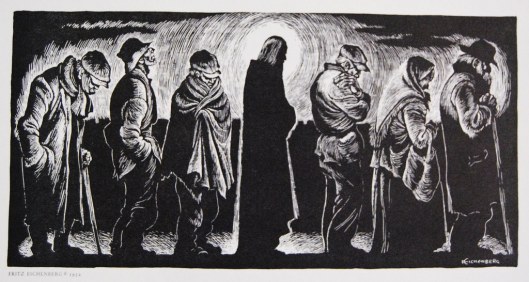
Christ of the Breadlines

Photo credit:  https://www.flickr.com/photos/jimforest/8367811926

This week our church is hosting our community’s winter shelter.  Every week, a different church hosts homeless community members from approximately 6:30 pm – 8:00 am, providing dinner, a place to sleep, breakfast, and a bag lunch to go.  The organization that runs the program also coordinates services like off-site showers, bus passes, referrals for services, and other necessities.  For our church, this is an all hands on deck kind of week – from checking in guests, setting up and cleaning spaces, making and serving meals, handling checkout, and doing security.  The week brings us together as a community, helps create a sense of giving back to the community, and gives us an outlet to shine Christ’s light.

But one of the things the shelter also does is forces us to look into the face of poverty.  As I talk with our parishioners, I find them surprised to know (or remember) that the homeless often have jobs, sometimes are going to school, and may have things like cars, cell phones, and laptops.  I find our parishioners reminded of our common humanity – that comfortable or poor, we all have likes, dislikes, joys, and sorrows.  I find our parishioners able to see how important community can be for support, care, and love – whether a church community, a nonprofit community, or a community of people struggling to get by who look out for each other.  I find our parishioners taking fresh new looks at their surroundings, perhaps seeing abundance for the first time in a long time.

Jesus spent a lot of time with the poor, oppressed, and marginalized.  Part of that time was certainly about relieving suffering and healing brokenness.  But I imagine part of that time was about looking into the face of poverty and seeing something one cannot see elsewhere – humanity, commonality, community, and abundance.  I think Jesus also knew how hard it is to see the realness of life when surrounded by wealth – that’s why he was always telling people to give it away!  Ultimately, Jesus cared about loving relationships, and sometimes money just gets in the way of those kind of authentic interactions.

Whether you are volunteering this week or not, I encourage you to find a way this week to step out of your comfort zone – have a conversation with someone who is suffering, look into the eyes of someone asking for help, or take a look at your own lifestyle and assess what you need less of in your life.  It is in those moments we see glimpses of where Jesus is, and it is in those moments that we shine Christ’s light for others.  I can’t wait to hear your stories!

Sermon – Matthew 2.1-12, Isaiah 60.1-6, EP, YA, January 5, 2020

08 Wednesday Jan 2020

Posted by jandrewsweckerly in Sermons, Uncategorized

≈ Leave a comment

Tags

abundance, Bethlehem, Christ, control, Epiphany, God, grace, hide, ignore, incarnation, Jerusalem, light, love, magi, mystery, need, pageant, power, promise, Sermon

At our 9:00 am service today, we honor the feast of Epiphany with our annual Epiphany Pageant.  Every year I love watching the children and youth bring the Christmas story alive one more time.  Part of what makes the service special is hearing the story with fresh ears – not from a clergy person reading from the aisle like every other Sunday, but with a variety of voices narrating and enlivening the words, making the incarnation story more incarnate.  I love how the pageant keeps us in the Christmas moment one more week, and I love how the story brings all our Christmas characters under one roof, reminding us of the continual unfolding of the mystery of the incarnation.  Though there is something certainly endearing about the whole experience of a pageant, there is also something quite profound in a pageant too.

But what pageants can sometimes do is focus our attention so intently on the manger – on Jesus and his family – that we forget what happens outside the manger is just as important as what happens at the manger.  Even our beloved carol “We Three Kings,” draws us to the experience of the magi’s adoration in Bethlehem, without insight into what happens in Jerusalem.  This year, after hearing of registrations, of humble births, of angel choruses, of everyday shepherds spreading the Gospel, and of cosmic explanations of the incarnation, we turn our attention to Jerusalem.  Isaiah gives us some clue about where our attention is drawn.  “Arise, shine; for your light has come, and the glory of the LORD has risen upon you…Lift up your eyes and look around…”[i]  The instruction in Isaiah is not for Bethlehem, but the city of Jerusalem[ii] – the city where Jesus’ journey will end, the city for whom Jesus weeps, the city of eventual redemption and salvation.  There, Isaiah foretells of the incarnation, how the people of God are to reflect the light of Christ, and to pay attention to what is happening around them, to God incarnate.

Those words, “lift up your eyes and look around,” have been lingering with me this week.  Instead of looking deep into the scene at the manger or with the holy family, I am drawn by what is happening in Jerusalem.  Three things happen there.  One, we learn more about the magi.  The testimony of the magi is what most of us associate with Epiphany.  Foreigners set out on a quest, more attuned to the cosmic nature of the incarnation than the people of faith.  Their astrological findings do not simply fascinate them, but inspire action – a long, uncomfortable journey to see the incarnation for themselves.  As profound as their witness is, they are not able to complete the journey alone.  They stop in Jerusalem for guidance.  They know they are on the right path, they just cannot quite get to the proper place. And so, the magi stop and ask for help along the way.  They know something significant has happened, but they need guidance from people of faith to fully realize their journey.[iii]

The magi’s insightful question, “Where is the child who has been born king of the Jews?” is a question that brings in the second action.  The chief priests and scribes, the ultimate insiders of the faithful, those who hold the revelation of scripture and interpret scripture for the people of God, are given news that should be earth shattering.  When asked about the birth of the Messiah, the religious leaders recall what they know of the Messiah:  the Messiah is to be born of Bethlehem and is to shepherd and rule the people of God.  The religious leaders offer the key – the prophecy of scripture about the coming Messiah.  And yet, even though they have this scriptural foundation, they do not react to the news of the magi.  Even though these wise people profess this awaited Messiah has been born, the religious leaders do not drop everything.  They do not even ask to go with the Magi, just to check and see if this story might have something.  They may be versed in scripture, but their inaction shows that even insiders sometimes need outsiders to be faithful.[iv]

Finally, the third thing that happens are the actions of Herod.  Herod is probably the most fascinating to me.  He is wise too, even if he uses his wisdom for his own nefarious purposes.  Herod knows the announcement, even if from an outsider of a new king being born means his own kingship is threatened, and shows how fragile his rule is.[v]  But instead of acting impulsively, he manipulates those around him.  First, he calls in the religious leaders.  You see, Herod is not a Jew – in fact, he is a Roman, serving at the leisure of the kingdom.  But his subjects are Jewish, and so he is wise enough to seek their counsel on what a king, what a Messiah, might look like.  But instead of sending his religious leaders to check things out in Bethlehem, knowing they might discover a true king among them, he secretly sends the foreigners, hoping to manipulate them into doing the work of finding the king, knowing he will get news from them so he can kill this new king.  Herod is only worried about himself and his power, and he will do whatever is needed to maintain that power.

The foreign magi are so unfamiliar with the people of God, they do not initially understand the weight of their question about the new king.  The scribes and religious leaders are so buried in their scripture, and so keen to keep balance with secular power, they do not realize the messianic fulfillment right in front of them.  And Herod is so bent on keeping his power, he does not fully understand the power of God working all around him.  All three of these agents in our story need the words of Isaiah today – all three need to lift up their eyes and look around.

We are not unlike the characters in our story today.  How often are we so mired in our own power – as people of privilege and comfort, as Americans with power more globally, as members and advocates in this community – how often does a word about the movement of God, the promise of change, and the possibility of giving up some of our power to allow that fulfillment, make us just as nefarious as Herod – just as willing to manipulate the world around us?  Or how often have we steeped ourselves in scripture, scouring God’s Holy Word, longing for some sort of guidance or truth, not realizing truth is being spoken through another right to our faces?  Or how often have we been so intent on a mission, so focused on what we sense God calling us to do, we ignore the consequences of our actions, forget the power of our words?

Today’s scripture reading is certainly about the gift of the magi to us – the revelation of the incarnation, the insight of foreigners, and the abundance and homage the incarnation inspires.  But today’s scripture reading is also an invitation to consider our own response to that incarnation in the modern era, considering the ways in which we have not lifted our eyes and looked around.  Taking up Isaiah’s invitation to self-critique is important because there is also a promise in Isaiah.  You see, when we lift our eyes and look around, we acknowledge the narrowness in our lives, or we acknowledge the ways in which we are blind to our own power, or we discover the ways in which we even hide behind our faith, we are then able to see the promise in Isaiah.  Isaiah tells us to look around because glory of the LORD has risen upon us.  Isaiah says in verse five, “Nations shall come to your light, and kings to the brightness of your dawn.”  When we talk about shining our light on this holy hill here at Hickory Neck, this is what we mean.  The gift of the magi to us is not news that is frightening.  When we are not hoarding power or hiding behind our intellect or comfort zones, the news of the magi is news for rejoicing.  And that rejoicing is light that draws nations, and kings, and neighbors, and strangers, and family members, and friends.  The gift of the magi is the invitation to let go of the things that feel under our control, and embrace the thing in no way we control, but in every way brings us grace, love, and abundance.  That is the kind of living that shines light from this hill and brings others to Christ’s light.  That is the light offered to us today in the magi.  That is the kind of good news worthy of pageants and proclamation today.  Amen.

[i] Isaiah 60.1, 4a

[ii] Rolf Jacobson, “Sermon Brainwave #701 – Day of Epiphany,” December 29, 2019, as found at http://www.workingpreacher.org/brainwave.aspx?podcast_id=1216 on January 3, 2019.

[iii] R. Alan Culpepper, “Exegetical Perspective,” Feasting on the Word, Yr. A, Vol. 1 (Louisville:  Westminster John Knox Press, 2010), 217.

[iv] Culpepper, 217.

[v] Stanley Hauerwas, Matthew (Grand Rapids:  Brazos Press, 2006), 38-39.

On God’s Love…

06 Wednesday Nov 2019

Posted by jandrewsweckerly in Uncategorized

≈ Leave a comment

Tags

abundance, beauty, fall, foliage, gift, God, heart, leaves, love, moment, mundane, scarcity, warm

Yellow Leaves

Photo credit:  https://homeguides.sfgate.com/yellowed-leaves-outside-plants-64953.html

Fall is my favorite season of the year.  Mostly I love the transformation of foliage into beautiful shades of yellow, red, and orange.  Although spring’s blossoms are certainly lovely, there is something bold and deeply stirring about fall colors that warms my entire being.  You can imagine my disappointment this year, then, when the forecasters warned us the fall foliage would likely be less vibrant this fall due to the drought we experienced at the end of the summer and into the beginning of fall in our area.  I had already seen evidence of this disappointment as some of my favorite trees turned straight from green to brown – or even a grayish brown, as if their color had been drained.

But last week, driving home from a long meeting, I turned a corner I rarely travel as the sun was lowering, when I gasped.  A tall tree had turned a brilliant shade of yellow, every leaf singing a beautiful song, as the sun made the tree dance in a radiant glow.  The sight was so stunning, I found tears prickling in the corners of my eye, and a tightness I had not realized was in my chest dissolving away.  The tree was a magnificent gift, ready for the receiving of anyone who would have it.

I was thinking how similar God’s love for us is.  We so often lower our expectations with the slightest hint of scarcity, bracing ourselves so we do not experience loneliness, disappointment, or sadness.  We do not even notice the slow development of our guardedness, and before we realize it, we cut ourselves off to others.  But God is not easily deterred.  Out of the blue, we find ourselves sideswiped by God’s love – some unexpected act of kindness by another, an undeserved gift, or an observed moment between others that restores our hope in humanity – and we realize how God’s love is there all along, shining brilliantly.  And when we stubbornly slip into a theology of scarcity or a closed-off sense of abandonment, God shows up with such force that we cannot help but see abundance and love all around us.

I invite you today to find your own moment of God’s love and beauty.  Whether it is in a brilliantly glorious display of fall foliage, a sacred act of kindness between strangers, or a moment of appreciation for the gift of this day, I invite you to look for God today.  But be forewarned:  once you finally see that God-moment today, you are likely to start seeing a lot more of them in the little, shocking, overwhelming, mundane, beautiful moments of life.  I cannot wait to hear how God is warming your heart today!

Homily – Luke 18.9-14, P25, YC, October 27, 2019

06 Wednesday Nov 2019

Posted by jandrewsweckerly in Sermons, Uncategorized

≈ Leave a comment

Tags

abundance, alongside, bad, community, good, identity, Jesus, light, love, ministry, parable, passionate, pray, shine, stewardship, walk

Today’s parable from Jesus is one of those short parables that seems pretty straightforward at first glance.  Jesus describes two men who go to the temple to pray.  One is a Pharisee – a law-abiding, God-fearing man who offers a prayer of thanksgiving, albeit one that is full of self-righteousness, comparing himself and his choices favorably against those of others – suggesting in a sense that others are outside of God’s favor and grace.  The other is a tax collector – a corrupt collaborator with the government who, full of shame, humbly confesses to God his sins.  Jesus tells us the tax collector, “went down to his home justified rather than the other.”

Our temptation is to hear this text and conclude something quite simple:  the Pharisee is bad and the tax collector is good; bragging about yourself is bad and being humble is good; being a faithful person who misjudges God’s abundance is bad and being a self-aware sinner is good.  The problem with reading the text in this black-and-white way is we miss little details.  With such a stark reading, we can find ourselves walking out of church today thinking, “Thank God I’m not like the Pharisee!”  And before we even notice, we realize we are praying the same prayer as the Pharisee from the parable!

But this week, I stumbled on a little translation difference that shifted this parable for me.  In verse 14, Jesus says, “I tell you, [the tax collector] went down to his home justified rather than the other…”  But scholar Matt Skinner argues the preposition, “rather than,” should be translated instead as “alongside.”  So, verse 14 becomes, “I tell you, [the tax collector] went down to his home justified alongside the other…”[i]  Skinner argues there is much more nuance in this parable than we often allow.  That both men are praying, both men have faults, and both go home justified in different ways.  Sure, the Pharisee limits the extent of God’s grace, and he is unaware of his sinfulness in such exclusion, but the tax collector is no innocent.  Both men go home justified alongside each other.

One of the things we have been celebrating this stewardship season is our identity.  When we say, “We are Hickory Neck!” we say we are a people who have raised over $170,000 for local charities, who have over 50 volunteers on a given Sunday, who support one another through spiritual offerings like Lectio Divina, Book Club, Bible Study, and Jam Sessions, who nurture children and young families, who welcome newcomers, who work hard, and who have fun.  We are all those things are more – I imagine each of us here has a mental picture about what we mean when we say, “We are Hickory Neck!”  One of those things is that we walk home justified alongside each other.

That is what I love about this community.  This is a community that is passionate about Jesus and take’s Christ’s light out into the world.  This is a community that is passionate about caring for one another – where all can feel loved and affirmed, and all can find a place to thrive.  This is a community that is passionate about serving our neighbors – those young families looking for a sense of belonging and affirmation, and those retirees looking for a new sense of home.  This is a community that is passionate about liturgy, music, having fun, sharing sorrows, honoring history, dreaming about future possibilities, and laughing – lots of laughing.  This is a community that is passionate about investing our individual resources into Hickory Neck so Hickory Neck can bless others as Hickory Neck has blessed us.  We are Hickory Neck!  We are a community who walks alongside each other.

But that’s just me.  I want to know what gets you excited about Hickory Neck.  I want to know what saying “We are Hickory Neck!” conjures in your mind.  At your tables is a list of ideas from our Stewardship Committee.  Reread those ideas, and then talk with the people at your table about what you think of that is not on the list.  Write them down as you talk, so the Stewardship Committee understands what is important to you as we support and fund ministry.  You have about five minutes to chat and make notes, and then we’ll regather with a word of prayer…

Let us pray.  God of abundance, we come to you as self-righteous, sinful followers, who regularly mess up.  But our heart is with you.  We want to be agents of your light and your love.  Help us to love you abundantly.  Help us to support your kingdom generously.  Help us to walk alongside one another, shining your light for others so they may give glory to you.  In the name of the Father, and the Son, and the Holy Spirit.  Amen.

[i] Matt Skinner, “Sermon Brainwave #686 – Twentieth Sunday after Pentecost (Ord. 30),” October 19, 2019, as found at https://www.workingpreacher.org/brainwave.aspx?podcast_id=1192 on October 23, 2019.

On Shining Our Light…

23 Wednesday Oct 2019

Posted by jandrewsweckerly in Uncategorized

≈ Leave a comment

Tags

abundance, anxiety, church, community, giving, Jesus, joy, light, money, nervous, passionate, pledge, relationship, shine, stewardship

711x400-FiC-LetYourLightShine

Photo credit:  https://wels.net/let-your-light-shine-3/

A couple of weeks ago, Hickory Neck had a wonderful guest preacher who talked to us about stewardship.  He led with a participatory set of questions.  The first was, “What is your reaction when I tell you today is a Stewardship Sunday?”  The responses ranged from “anxiety,” “nervousness,” “dread,” and “frustration” (though some people studiously responded, “gratitude”).  The next question was, “How do you think your rector feels about Stewardship Sundays?”  The responses were fairly similar, and the preacher surmised that stewardship is something rectors dread too because so much of what they can do is based on what parishioners are willing to give.

The funny thing is though, as I sat there listening to the preacher’s question about my own feelings, my initial response about how I, as rector, felt about stewardship season was “joy.”  I know what you are thinking, “Come on, Jennifer, we know you get stressed out about money as much as we do!”  And there is probably a latent sense of anxiety or at least uncertainty.  But mostly I feel joy.  I love talking about stewardship because to me, talking about stewardship is a lot like evangelism.  Both involve talking about something you love and inviting people into that passion.  And I absolutely love and am passionate about the community of Hickory Neck and the powerful ministry we are doing.  I see every day what a powerful place this is for people, and what an incredible impact it is making on their lives.  So, asking people to financially support this place is really just a matter of inviting people to affirm that goodness in their life – to give with the same abundance that is experienced within this community.

The other reason I feel joy in talking about stewardship is because talking about our financial giving is what people do when they are in relationship with one another – they talk about what it is important to them, and what effects their everyday lives.  Money is one of those things that is at the very heart of our lives – we need it, we use it, and we often wish we had more.  Jesus even talked about money perhaps more than any other issue in his ministry.  But the reason many of us get uncomfortable talking about money is because money feels personal and intimate.  But being in authentic relationship means sharing things that are personal and intimate.  With whom else can you talk about money if not with those to whom you are closest, who support you in your darkest moments, and who love you unconditionally?

The last couple of months I have run into many colleagues and long-time friends, and invariably they ask me how things are going at Hickory Neck.  I have noticed when I answer that inquiry, my body has a visceral response.  I immediately and unconsciously smile and let out a sigh of satisfaction before I launch into what I love about our community and the work we are doing together.  As you are working on your pledge cards this week, I hope you can first think about what those things are at Hickory Neck that give you joy, that make you excited to be here, investing your time and energy.  Then I hope you can allow your financial pledge to be a testimony to that joy.  Come, shine your light with me!tens-shining-our-light-horiz

Sermon – Mark 7.24-27, P18, YB, September 9, 2018

12 Wednesday Sep 2018

Posted by jandrewsweckerly in Sermons, Uncategorized

≈ Leave a comment

Tags

abundance, amends, dog, insult, Jesus, learn, limitations, painful, possibilities, redemption, right, Sermon, shame, Syrophoenecian Woman, words, wrong

This week I came back to work excited for a new program year and rejoining you in worship together.  I felt well rested, and ready to preach today.  I caught up with the staff and lay leaders, dug into the onslaught of emails, had some pastoral visits, and then finally sat down to read the lessons for today.  After reading the gospel, I momentarily considered calling Charlie to say, “Are you sure you don’t want to preach this week too?”

If you were listening as we proclaimed the “Good News” of God in Christ today, you might not have felt like this was very good news.  Within Mark’s gospel lesson is one of the very few stories in Holy Scripture about Jesus where we get very uncomfortable.  We are told Jesus has set out to get away.  He wants some rest and to be alone after weeks of healing, miracles, and debates with Pharisees.  In the midst of trying to get some peace and quiet, a woman comes to him, asking for another healing.  The story at this point could go in a couple of directions:  Jesus could agree to heal her daughter out of compassion; Jesus could engage the mother in conversation; or the disciples might intervene to help Jesus get some rest – and maybe Jesus would protest and heal the girl anyway.  We know Jesus is likely tired and needs some serious alone time.  But even in the midst of fatigue and a need to escape the constant pressure of the crowds, we find Jesus’ words to the Syrophoenician woman unpalatable. Jesus says, “Let the children be fed first, for it is not fair to take the children’s food and throw it to the dogs.”

We know a few things.  We know this is a woman and women in Jesus’ day have less power and would not customarily approach a man without a husband or male family member intervening.  But this woman is no ordinary woman – the original Greek text tells us she is a woman of means, a “lady.”[i] We also know that she is Syrophoenician and Greek – a comment on her culture and ethnicity – as well as the fact that she is a Gentile, and not a Jew.  We know her daughter has a demon, so in Jewish minds this woman and her child are impure.  We even know from scholars that this particular area of geography has a history of tensions between Gentiles and Jews, with many Jews being mistreated by Gentiles.[ii]  Finally, we know Jesus understands his ministry is about redeeming the people of Israel first.[iii]  Eventually the Gentiles will be included, in fact, he even says so in his insulting comment; but the Gentiles are not Jesus’ primary mission.  But even with all of that:  the cultural norms, the racial and ethnic tensions, the purity laws, and the God-given mission, Jesus’ words have a tone of disdain and degradation that we simply do not associate with Jesus.  Jesus’ words are uniquely harsh:  no other supplicant in the gospel is treated in this manner.[iv]  This is not the Jesus we know.  To look at this suffering woman and to call her and her child dogs makes our stomachs turn.  We are embarrassed by Jesus, and would rather sweep this particular story under the proverbial rug.

I have been wondering all week why this story about Jesus bothers us so much.  Countless scholars have tried to justify Jesus’ action or mitigate the brutality of his statements or soften Jesus’ words. But after pondering Jesus’ words this week, I realized what bothers us so much about Jesus’ words.  What bothers us is we see ourselves in his brutal behavior.  We do not like Jesus’ harsh treatment of this woman because we do not like to ponder the times when we have acted similarly.  We do not want to examine too closely those times when we have treated persons of color like dogs – through segregation, lynching, fire hoses, criminalization, or exclusion from opportunities.  We do not want to examine too closely those times when we have treated persons of other ethnicities like dogs – migrant workers who take jobs, extremists who commit violence, illegal immigrants who want free healthcare or education.  We do not want to examine too closely those times when we have treated women like dogs – refusing safe, affordable birth control and childcare, ignoring sexual assault, leaving unresolved wage gaps.  Because even if we have never called one of those groups, “dogs,” we have either thought the word, “dog,” or our actions have indicated we think of those groups as dogs.  And when someone shines a light on our incongruous behavior, we feel exposed as being uniquely harsh as Jesus is harsh.  We do not like Jesus’ behavior because we do not like our own behavior.  And Jesus is supposed to be the good one.  Jesus is that one about whom we proclaim “and yet He did not sin.”

Here is the good news though:  what is brilliant about this story is the very fact that we see ourselves in Jesus today. As much as we see the bad in Jesus, we also find redemption in Jesus today.  The good news about Jesus’ awful behavior is that he finds a formidable opponent today.  This Syrophoenician woman does not cower, or feel defeated, or walk away.  Quite the contrary, she takes Jesus’ words – his exclusion, his justification, his arrogance, and she turns them back on Jesus.  Jesus thinks she is a dog unworthy of the children’s food.  Fine.  She reminds him that even dogs get crumbs from under the table.  The woman does not contradict the system, or take a deserved stand for dignity, or try to fight Jesus’ presumptions.  She simply reminds Jesus that there is enough for everyone – even in the scraps.  She does not defend herself – she holds a mirror up to Jesus.  And this – this is the best part – this is where something tremendous happens.  Jesus says, “You’re right.”  Jesus acknowledges he is wrong.  Jesus heals and restores her daughter to health.  And, most importantly, Jesus redefines his entire ministry – no longer maintaining redemption of the Jews first and, maybe if there is time, the Gentiles.  Jesus expands his abundance and wideness of mercy for all.

What I love about this story is two-fold.  First, I love that the Syrophoenician woman is a woman who sees abundance in the face of humiliation.  The woman is unwilling to believe she is unworthy of God’s grace and abundance.  She boldly, humbly demands that abundance from the person of Jesus.  Second, I love that we actually get to see Jesus’ humanity in this story.  We could spend hours debating scripture and tradition and the creeds about whether Jesus can be sinful and what that means for our faith.  But one of the things we say about Jesus is that he is fully divine and fully human.  And we all know in this room being fully human means messing up, saying awful things, and sometimes being a failure.  But being human also means righting our wrongs, making amends, and taking our learnings from failures and turning them into future goodness.

What Jesus says today is awful, and we should feel his words as embarrassing, shameful words.  What we sometimes say and do is awful, and we should regard those actions as embarrassing and shameful too.  But what Jesus does today is also beautiful.  Jesus not only changes his mind, he expands the wideness of the kingdom of God.[v]  What the Syrophoenician woman does is make a claim on abundance and hold up a mirror to Jesus to see where he limiting abundance.  Her invitation to Jesus is her invitation to us today too.  Where are we limiting abundance and shutting down possibilities for blessing?  The Syrophoenician woman today asks us to look at the mirror and let go of a sense that there are limited resources and particular protocols about those resources.  She invites us to look at our lives, at the ministry of Hickory Neck, and the community around us and see the opportunities to choose abundance over limitations, to see grace over judgment, to see divinity over humanity.  With her mirror, and Jesus’ example, the possibilities for new life and ministry are endless.  And that’s a Jesus, and a you and me, and a Hickory Neck of which we can all be proud.  That’s a ministry that is expansive and explosive with grace, and dignity, and love.  That’s a church who is doing exciting things and I want to be a part!  Come and join us!

[i] Daniel J. Harrington, ed., Sacra Pagina:  The Gospel of Mark (Collegeville:  The Liturgical Press, 2002), 233.

[ii] Harrington, 232.

[iii] Douglas R. A. Hare, “Exegetical Perspective,” Feasting on the Word, Yr. B, vol. 4 (Louisville:  Westminster John Knox Press, 2009), 47.

[iv] Harrington, 233-234.

[v] Dawn Ottoni Wilhelm, “Homiletical Perspective,” Feasting on the Word, Yr. B, vol. 4 (Louisville:  Westminster John Knox Press, 2009), 49.

On Generations of Generosity…

25 Wednesday Oct 2017

Posted by jandrewsweckerly in Uncategorized

≈ Leave a comment

Tags

abundance, celebration, church, commitment, compassion, faithful, future, generations, generosity, giving, God, journey

KonstantinChristian_ChildParent_Generosity

Photo credit:  https://www.psychologytoday.com/blog/the-athletes-way/201510/small-acts-generosity-and-the-neuroscience-gratitude

This past week, my daughter and I were out shopping for a birthday gift for a friend.  As we were doing the self-checkout, the computer asked us if we would like to donate to charity.  I quickly tapped “no,” and my daughter was incensed.  “Don’t you want to help, Mommy?!?”  As we walked back to our car, I explained how we do help others.  She seemed incredulous, so I detailed our charitable giving, starting with what we give to the church.

Though she seemed mildly satisfied, our conversation made me realize a couple of things.  First, I could stand to have more explicit conversations with our children about our giving to church.  We already talk about budgets, treats, and how we spend money otherwise.  I realize now that our eldest may be ready to understand the commitment we make to church too.  Second, my daughter’s initial indignation is really good thing.  Her frustration with me reveals a sense of compassion and generosity that I was not sure she had fully developed.

This Sunday in church, we are celebrating lots of things.  We are celebrating the 100th anniversary of the consecration of our historic church.  After hundreds of years of our church being used as a school and hospital, a faithful community gathered once again in 1917 for the original purpose of the building – to worship the Lord in the beauty of holiness.  We are also celebrating the paying off of our mortgage on our newest worship space.  After one final push this summer, and years of generosity before, we are able to be debt free!  We are also celebrating In-Gathering Sunday: a day where we offer our pledge cards for blessing.  These pledge cards indicate our commitment to the upcoming year of ministry, and reflect our journey toward generosity.

As these three celebrations combine into one day, I am ever aware of Hickory Neck’s own journey to generosity.  From the faithful who worked to reestablish our church after years of dormancy, to the faithful who saw a vision of a more modern, spacious place of worship just over ten years ago, to the faithful who see the new things budding at Hickory Neck and want to be a part of that growing community, we are a community who has always been on a journey to generosity.  I am grateful for the chance to celebrate together, especially for the ways in which our celebration is an example for the future generations who are also being shaped into faithful servants of compassion and generosity.  From the past and present, and into the future, I see God’s abundance all around us!

Sermon – Exodus 16.2-15, Matthew 20.1-16, P20, YA, September 24, 2017

27 Wednesday Sep 2017

Posted by jandrewsweckerly in Sermons, Uncategorized

≈ Leave a comment

Tags

abundance, complain, deserve, fairness, faithful, generosity, God, gratitude, Jesus, laborers, loyal, parable, scripture, Sermon, whine

This week in Discovery Class, we did a review of Holy Scripture.  We talked about how many years writing the Bible took, the content in each section, the types of literature we find in scripture, and what scripture reveals about us as God’s people.  Our homework was to study today’s gospel lesson, being sure to read the text immediately before and after the text we hear today as a way of helping us interpret the passage.  That tip was especially telling in today’s Old and New Testament lessons

In our lesson from Exodus last Sunday, we heard the story of the parting of the Sea of Reeds.  We heard of that dramatic moment where God allows the Israelites to pass through on dry land, but destroys the Egyptians as the waters return.  The last line in last week’s lesson from Exodus is, “Israel saw the great work that the Lord did against the Egyptians.  So the people feared the Lord and believed in the Lord and in his servant Moses.”  Today, the first sentence from our Exodus reading is, “The whole congregation of the Israelites complained against Moses and Aaron in the wilderness. The Israelites said to them, ‘If only we had died by the hand of the Lord in the land of Egypt, when we sat by the fleshpots and ate our fill of bread; for you have brought us out into this wilderness to kill this whole assembly with hunger.’”  Israel’s groaning and complaining today are much more grievous when we read the great heights of their praise and faithfulness last week.

Likewise, in our gospel lesson today, we hear the familiar story of the generous landowner, who gives the same wage to those who work an hour and those who work all day in the broiling sun.  We can read this passage, and criticize the envious, hardworking laborers for their lack of gratitude.  But the power of the story is heightened when we realize immediately before Jesus’ parable, Peter interrupts Jesus’ teaching and basically says, “But what about us?  We left everything behind and we have been following you.  What’s in it for us?”  And right after Jesus’ parable, the mother of James and John approaches Jesus and basically says, “Listen, if it’s not too much trouble, can my boys sit at your right and left hand in the kingdom?”  So, when Jesus says to Peter, “many who are first will be last, and the last will be first,” and when the landowner says to the workers, “the last will be first, and the first will be last,” what do you think Jesus is trying to address?[i]

I do not know about you, but both of these texts have left me pretty uncomfortable this week.  Watching the Israelites go from faithful, obedient, loyal followers, to whiny, unappreciative, complaining messes hits a little too close to home.  Admittedly, part of me cringes at this text because we have been hammering home the importance of gratitude with our own children.  No sooner is the ice cream cone finished before the complaint comes that we never do anything nice for them.  But as much as we fuss at them, we know the same is true for us.  We are great at praise and thanksgiving to God – when things are going well.  When seas are parting, and enemies are defeated, our God is awesome.  But when we cannot seem to make ends meet, when our loved one is sick again, or when our relationships are falling apart, gratitude is the last thing on our lips.  We find ourselves in what one scholar calls the “spiritual wilderness of ingratitude.”[ii]  We cringe at these readings because we are no more masters at gratitude than our children are.

What both of these lessons do, ever so brutally, is lure us in with stories about abundant, underserved generosity, and put under a microscope our deeply buried discomfort with abundant, underserved generosity.  Part of the reason we are uncomfortable is because God’s generosity often bumps up against our notions of fairness.[iii]  I do not know if we understand the concept of fairness innately or if we are taught fairness by our community, but somewhere along the line, we learn the concept of fairness and apply the concept with exacting scrutiny.  I remember when I was a child and wanted a treat, my dad would make my brother and me share the treat.  One child was allowed to split the treat in half, but the other child got to pick which half he or she wanted.  You can imagine how precise my cuts became when looking at that cookie.

But our notions of fairness evolve over time.  One could take that same cookie and give a slightly larger half to the older child since they are bigger.  Or one could take that same cookie and give the slightly larger half to the child who was better-behaved.  Or one could give the larger half to the one who was physically weaker and needed more nourishment.  There are all sorts of ways to determine fairness.  But God’s measure, in both the Hebrew and Christian Scriptures seems to be that everyone receives God’s generosity despite worth or effort – or even the showing of gratitude.

Take our lesson from Exodus.  The people have clearly approached mutiny.  Their love for God is buried in their physical hunger and their self-centered greed.  But instead of punishing the Israelites, God lavishes them with all they need.  God gives them bread every day and meat every night.  In fact, God even gives them a double portion on the eve of the Sabbath so that they can observe the Sabbath without having to work for their food.  The feast is not a rich feast of wines and marrow, but their feast is gloriously generous and enough.

The same is true in Jesus’ parable.  Yes, the landowner has a weird way of putting the day-long workers in the awkward position of watching his generosity, but ultimately, the landowner gives everyone enough.  He gives the wage he promised to the day-long workers – a wage that will fill them and their families for days.[iv]  But he also gives the same wage to the hour-long workers.  Sure, they did not deserve the wage, but the same wage that feeds the other workers feeds them too.  The landowner is gloriously generous and gives enough.[v]

I have been wondering all week where these texts leave us:  maybe a bit guilty, perhaps a bit convicted, and definitely “last” in the pecking order Jesus describes.  But what I realized this week is both in Exodus and in Jesus’ parable, perhaps being last is not all that bad.  You see, Jesus does not say, “The last shall be first, and the first shall be ejected.”  No, Jesus says, “the last will be first, and the first will be last.”  So even on our worst Israelite days, when we are moaning and complaining about the very God who miraculously saved us, or even on our worst vineyard days, when we are complaining about an unfair, albeit generous, owner, we are still not ejected.  We are not taken out of God’s generosity; we are not stripped of our blessing.  We may be last, but we still have enough.  Our abundantly generous God takes care of us when we deserve God’s care and when we do not.  Our abundantly generous God gives us enough when we think God’s generosity is fair and when we do not.  Our abundantly generous God loves us whether we embrace God’s generosity or we do not.

I cannot promise we will ever get in line with God’s generosity.  I am not sure we will ever be cured of our sense of fairness or even our ill-conceived notions that we could earn God’s generosity.  But what I can tell you is that we are not alone.  Our people thousands of years ago did not master God’s generosity.  The disciples two thousand years ago did not master Christ’s generosity.  And I suspect we will not either.  But every week, we try.  Every week we continue on our journey toward generosity – seeing God’s generosity in ourselves and others – being inspired to try again.  I am not sure we will ever be first in line.  But the good news is we get to stay in line – which means there is always room to try again.  Our generous God will make sure we have enough until then.  Amen.

[i] Barbara Brown Taylor, The Seeds of Heaven: Sermons on the Gospel of Matthew (Louisville:  Westminster John Knox Press, 2004), 100-102.

[ii] Deborah A. Block, “Homiletical Perspective,” Feasting on the Word, Supplemental Essays, Year A  (Louisville:  Westminster John Knox Press, 2011), 2.

[iii] Taylor, 103.

[iv] Amy-Jill Levine, Short Stories by Jesus: The Enigmatic Parables of a Controversial Rabbi (New York:  Harper Collins, 2014), 224.

[v] Block, 4.

Sermon – Acts 2.42-47, John 10.1-10, E4, YA, May 7, 2017

10 Wednesday May 2017

Posted by jandrewsweckerly in Sermons, Uncategorized

≈ Leave a comment

Tags

abundance, abundant, baptismal covenant, Christian community, church, communal, community, confirmation, disciples, early, Jesus, life, reception, resurrection, Sermon, uncomfortable

These last weeks since Easter Day, we have been telling the story of what happened after Jesus’ crucifixion.  We heard the wonderful stories of discovery on Easter Day, the news from Mary Magdalene that Christ is risen.  We heard that familiar story of Thomas and the other disciples who were able to see and touch Jesus’ risen body.  We heard that beloved story of the walk to Emmaus, where two disciples were able to walk and talk with Jesus, and were reminded that Jesus is still with them.  And then today, we hear in the Acts story what has happened to the disciples.  They have gathered a community of believers who are growing every day.  People are sharing the holy meal, praying together, living in community, and praising God in the temple.  They are seeing signs and wonders, they are being generous with one another, and they have even sold their possessions like Jesus told them to, and are sharing their resources.  Today’s reading from Acts takes all of good stuff from Jesus’ ministry, all the heartache of Holy Week, and all of the joy of Eastertide, and basically concludes, “And they all lived happily ever after!”

In some ways, I cannot imagine a better text for today.  At our later service, we will be confirming and receiving nine parishioners in the church.  These are parishioners who have been studying Holy Scripture, Church History, the sacraments, Church polity, spirituality, and vocation.  Some are teenagers and some have grandchildren.  Some have spent a lifetime in other Christian traditions, and others were born and raised in the Episcopal Church.  And all of them feel called at this point in their spiritual journey to claim their faith as their own and begin a new phase of their walk with Christ at Hickory Neck.  What better thing than for these reinvigorated Christians to hear than a text about what their life will now look like?  They will be sharing in communion, worshiping God in God’s temple, praying together, living generous lives, and sharing their resources communally.  Is that not the image you have of Hickory Neck?

Well….  Okay, so maybe Hickory Neck does not look exactly like that early Christian community.  We certainly have some things down.  We baptize, are generous with one another, share the Holy meal, and praise God in worship.  But as far as I know, we have yet to enter a relationship with one another where we have sold everything we have and are living communally.  I suspect there would be a stack of cots at the back of the church today since we would all need a place to sleep.  I suspect we would have a roster to indicate who was cooking us lunch after services today and who was on clean-up duty.  I suspect we might have a line of zip cars and bike shares in the parking lot every day for those who work further away from church.  I suspect that our retirees here would be responsible for the children while their parents are out working.  Though Hickory Neck has certainly gotten close to the early Church community, we have a long way to go.

Now some of you may be rolling your eyes right now – wondering if Holy Scripture is trying to make the case for socialism or some hippie compound.  Since you know I try to avoid politics in the pulpit, here’s what I can tell you:  there are some Christian communities that are in fact trying to get much closer to the early church than we have ever considered.  When the housing crisis hit almost ten years ago, there were stories about neighbors who made agreements.  One family would sell their house and move in with another struggling family.  The two families would double up in rooms, figure out childcare sharing, meal sharing, and payment sharing.  They found that although the home felt crowded, the home also felt like a place of support, security, and serenity.[i]  And of course, there are what are called, “intentional Christian communities” all over the country.  I had multiple friends from college who volunteered or took nonprofit jobs out of college and lived in these intentional communities.  They shared rooms in a house, took turns with the household duties, gathered for communal dinners every night, and shared in worship a few times a week.

But I think we all know that this lifestyle is not “normal.”  We are not raised nowadays to live communally with other Christians, sharing our possessions and life.  In fact, when we hear Jesus say today that he came that we might have life and have it abundantly, we often think that means that Jesus came so that we might experience financial stability, good health, and happiness.  We confuse our American sensibilities of achievement and accumulation of wealth, with the kind of abundance that Jesus is talking about.[ii]  The truth is, those crazy hippies in the early church were on to something.  They did have an abundance – but they had the abundance because they shared.  And they were able to share because they listened to the teachings of Jesus through his disciples, they broke break regularly, they worshiped in the temple, and they shared the good news.  Their understanding of abundance changed – not an overwhelming sense of monetary wealth, but an overwhelming sense of community, of belonging, of purpose, and of “enough.”

Now before we get too down on ourselves or start thinking about all our possession that we would need to sell, we know the story takes a twist.  Three chapters later in Acts we learn about two members of the community who keep some of their wealth back – they start hording, hoping no one will know their secret.  So, like any of us, not everyone was on board with the communal living thing.  But the majority of the community entered into a covenant about this new way of being together.

I like that we get this text today because I like how the text makes us all ever so slightly uncomfortable.  I like that our new confirmands and those being received are hearing this today because they will need to struggle with this notion of Christian community with each of us too.  I do not know if we will ever get to the ideal found in the early Church, but we need these days of the newly received to remind us that we are not there yet.  We have not yet lived into the abundant life that Christ intended for us.  We are still on our journey, prayerfully pondering how to open ourselves up to the invitation to live life, and live it more abundantly.

That is why at our later service we will reaffirm our baptismal covenant.  Like we do over and over again throughout the year, we remind ourselves of the promises we made in baptism and in confirmation.  To gather with the community of faith, to repent and return to the Lord when we sin, to share the good news of God in Christ, to seek and serve Christ in all persons, to strive for justice and peace.  That baptismal covenant is our touchstone – that five-part measuring stick that lets us know those areas where we are really thriving in our spiritual journey, and those areas that need some work.  On Sundays like this, we get the questions once again, “Are you all in?  Are you ready for the gift of abundant life in Christ and all of the implications that gift involves?”  That gift is both a promise and a challenge – a blessing and what sometimes feels like a curse.  But we have all seen glimpses of that abundant life, and know how the abundant life is like milk and honey.  We just sometimes need a nudge to get us back on the way.  Amen.

[i] Joanna Goddard, “Two Families Sharing a House (Would You?),” October 26, 2015, as found at https://cupofjo.com/2015/10/communal-house-cohousing-san-francisco/ on May 4, 2017.

[ii] Rolf Jacobson, Karoline Lewis, and Matt Skinner, “Sermon Brainwave Podcast:  #539 – Fourth Sunday of Easter,” April 29, 2017, as found at http://www.workingpreacher.org/brainwave.aspx?podcast_id=880 on May 3, 2017.


On Living Generously…

12 Wednesday Oct 2016

Posted by jandrewsweckerly in Uncategorized

≈ Leave a comment

Tags

abundance, commitment, conversation, discernment, generosity, God, journey, Living Generously, persistence, pilgrimage, pledge, scarcity, steward, stewardship

tens2016logo7x12webonly

Photo credit:  www.tens.org

This past Sunday we kicked off our Fall Stewardship Season, “Living Generously.”  I talked about the campaign in my sermon, but we also have many invitations into this time of discernment for our parishioners.  We each received a packet of information about the ways we can support the life and ministry of Hickory Neck.  We have reflections written by national and parish-level leaders that invite us to consider their experiences around stewardship.  And we are having conversations with each other about how pledging works for each of us.

Just last night, the Vestry took on one of those conversations.  We looked at the gospel lesson for this coming Sunday (Luke 18.1-8) and talked about the challenge of persistence when it comes to stewardship.  We realized that no matter what financial situation or phase of life we are in, living generously does not come naturally or easily, but takes intentionality and persistent commitment.  In our small group, we had a person with young children – including some in childcare, a person with teens approaching college, a person who is thinking about retirement but has taken in an aging parent, and a person in retirement on a fixed income.  Despite those differences, we all have to be intentional with our commitment to stewardship because we all have commitments that can distract us from generosity and tempt us into scarcity.

There was something powerful about talking about hard keeping our commitment to stewardship is with other parishioners.  Too often we take those pledge cards home and embark on a discernment process that is very individualized.  Certainly, we all need time with our God on our own to fortify ourselves to being generous stewards.  But we also need companions on the journey – fellow parishioners who can say, “Yes, it is hard living generously!”  We need those fellow pilgrims because they also remind us of why we keep at it.  These are the same people who will remind you why you are grateful.  After the Vestry talked about the challenges of living generously, then we talked about the benefits.  Stories started pouring in about what we each get out of Church.  We talked about the ways that Hickory Neck feeds us and brings us joy.  We talked about the ways that, throughout life, God has been so faithful to us, and what an honor it is to be able to harness some of that generosity in our own lives.

On Sunday, I encouraged us to spend some time at home in discernment about our stewardship of God’s abundance.  This week, I also want to encourage us to spend some time in discernment with each other.  Share those challenges to being a steward; but also share those blessings of being a steward.  Those conversations may feed the conversation you have at home and will certainly renew your spirit.  Join us as we embark on this journey toward living generously together!

← Older posts
Newer posts →

Recent Posts

  • On Redefining Community…
  • On Parenting, Milestones, and Community…
  • Sermon – Acts 2.42-47, E4, YA, April 26, 2026
  • On Seasons of Discernment…
  • Sermon – Luke 24.13-35, E3, YA, April 19, 2026

Archives

  • May 2026
  • April 2026
  • February 2026
  • January 2026
  • December 2025
  • November 2025
  • October 2025
  • September 2025
  • August 2025
  • July 2025
  • June 2025
  • March 2025
  • February 2025
  • December 2024
  • November 2024
  • October 2024
  • September 2024
  • August 2024
  • July 2024
  • June 2024
  • May 2024
  • March 2024
  • February 2024
  • January 2024
  • December 2023
  • November 2023
  • October 2023
  • September 2023
  • August 2023
  • July 2023
  • June 2023
  • May 2023
  • March 2023
  • February 2023
  • January 2023
  • December 2022
  • November 2022
  • October 2022
  • June 2022
  • May 2022
  • January 2022
  • December 2021
  • November 2021
  • October 2021
  • September 2021
  • August 2021
  • June 2021
  • May 2021
  • April 2021
  • March 2021
  • February 2021
  • January 2021
  • December 2020
  • November 2020
  • October 2020
  • September 2020
  • August 2020
  • July 2020
  • June 2020
  • May 2020
  • April 2020
  • March 2020
  • February 2020
  • January 2020
  • December 2019
  • November 2019
  • October 2019
  • September 2019
  • August 2019
  • July 2019
  • June 2019
  • May 2019
  • April 2019
  • March 2019
  • February 2019
  • January 2019
  • December 2018
  • November 2018
  • October 2018
  • September 2018
  • August 2018
  • July 2018
  • June 2018
  • May 2018
  • April 2018
  • March 2018
  • February 2018
  • January 2018
  • December 2017
  • November 2017
  • October 2017
  • September 2017
  • August 2017
  • July 2017
  • June 2017
  • May 2017
  • April 2017
  • March 2017
  • February 2017
  • January 2017
  • December 2016
  • November 2016
  • October 2016
  • September 2016
  • August 2016
  • July 2016
  • June 2016
  • May 2016
  • April 2016
  • March 2016
  • February 2016
  • January 2016
  • December 2015
  • November 2015
  • October 2015
  • September 2015
  • August 2015
  • July 2015
  • June 2015
  • May 2015
  • April 2015
  • March 2015
  • February 2015
  • January 2015
  • December 2014
  • November 2014
  • October 2014
  • September 2014
  • August 2014
  • July 2014
  • June 2014
  • April 2014
  • March 2014
  • February 2014
  • January 2014
  • December 2013
  • November 2013
  • October 2013
  • September 2013
  • August 2013
  • July 2013
  • June 2013
  • May 2013
  • April 2013
  • March 2013
  • February 2013
  • January 2013
  • December 2012
  • November 2012
  • October 2012
  • September 2012

Categories

  • reflection
  • Sermons
  • Uncategorized

Meta

  • Create account
  • Log in
  • Entries feed
  • Comments feed
  • WordPress.com

Blog at WordPress.com.

  • Subscribe Subscribed
    • Seeking and Serving
    • Join 391 other subscribers
    • Already have a WordPress.com account? Log in now.
    • Seeking and Serving
    • Subscribe Subscribed
    • Sign up
    • Log in
    • Report this content
    • View site in Reader
    • Manage subscriptions
    • Collapse this bar

Loading Comments...