• About

Seeking and Serving

~ seek and serve Christ in all persons

Seeking and Serving

Tag Archives: bless

On Claiming Your Why…

05 Wednesday Nov 2025

Posted by jandrewsweckerly in reflection

≈ Leave a comment

Tags

abundance, bless, church, community, God, grace, gratitude, home, obligation, why

Photo credit: https://worksheets.clipart-library.com/five-whys-worksheet.html

In one of my executive leadership courses we read about the “five whys.”  Developed within the Toyota Motor Corporation, the process is a problem-solving process meant to get to the deepest root causes of a problem by asking the simple question, “why?” repeatedly.  While this was intended for manufacturing processes, the “five whys” found its way into all industries as a way to help teams focus on the root of any situation. 

I have often said that at church, understanding your “why” is really important.  Using a system like the “five whys” to get to the root of a challenge before the Vestry, or a situation before the staff, or even to problem before lay leaders, discerning the real “why” before us helps us address the issue at hand at a deeper, much more relevant manner.

This autumn, our parishioners have been sharing their “whys” with our congregation about why supporting ministry at Hickory Neck Church is so important.  Through short video testimonies we have heard all kinds of whys, learned about the impact of ministries in our faith community, and been able to see the deeper meaning people are finding in our spiritual home.  Why would we want to know that?  Well, as we consider how we want to support the church with our time, talent, and treasure, knowing our whys helps us convert our giving from obligation to gratitude.  Once we understand our why more deeply – and the whys of fellow members – we begin to see the wideness of God’s mercy in this place, and begin to feel more committed to supporting this place that blesses us and others so richly.  Slowly, we see we are not being pressured to give, we are being invited into a vibrant, life-changing, purpose-making place that we can enable with the resources God has given us.

We’ve shared the case for Hickory Neck, we’ve heard from fellow parishioners, and now, we are invited to ask our “five whys” about this place we have come to call our spiritual home.  I look forward to hearing about the abundance and grace you find when you ask your “five whys” this week.  I suspect your whys might inspire my own!

Sermon – Matthew 5.1-12, AS, YA, November 5, 2023

29 Wednesday Nov 2023

Posted by jandrewsweckerly in Sermons

≈ Leave a comment

Tags

All Saints, Beatitudes, bless, blessed, communion of saints, disciples, faith journey, faithful, holy, Jesus, right road, saints, unattainable

I once served at a church that decided to support a ministry for women exiting prison.  We decided to prepare ourselves for our engagement in the ministry by reading the book The Prison Angel, about a wealthy divorcee in California who has an epiphany about her call, and eventually becomes a nun that lives in the notorious prisons of Tiajuana, Mexico, serving the men and their families.  We spent weeks reading the book, reflecting on Mother Antonia’s stories, slowly grasping the realities of prison life and those who serve them.  I was feeling energized by how well prepared our book study group would be when we finally began serving our local ministry.  But on the last day of our study, one of our participants shared, “I don’t know.  I don’t think I could ever be as self-sacrificial as Mother Antonia.  She’s sort of superhuman and I just cannot imagine living that kind of life.”  I remember feeling completely deflated – here I was trying to inspire servanthood and instead, I had made servanthood feel unattainable.

Sometimes I fear All Saints Sunday does the same thing.  Certainly, that can happen as we think of those significant saints of the church, like St. Peter, St. Francis, or Mother Teresa.  But our feelings of inadequacy can happen with the personal saints of our lives – the souls of beloved parents, lovers, children, and friends.  We remember the faithful ways they lived and only see our own failings.  And then we go and read the Beatitudes from Matthew’s gospel, we can become downright despondent.  Maybe I have mourned or felt poor in spirit.   But do I hunger and thirst for righteousness?  Am I pure in heart?  As we grieve the violence in the Middle East, have I done anything tangible to be considered peacemaking?  Has anyone ever reviled or persecuted me for the sake of Jesus?  Instead of inspiring and uplifting us today, this feast day with Matthew’s gospel has the potential to leave us feeling unworthy and unmotivated in our journey to live faithfully.

I can assure you that is not the lectionary’s intent.  In fact, after weeks of stories about discipleship in Matthew, the lectionary takes us back to the fifth chapter of Matthew for a purpose.  Perhaps we should look at what the Beatitudes are not doing today before we look at what they are doing.  The Beatitudes are not “to do” items.  As scholar Debie Thomas explains, these are not suggestions, instructions, or commandments.  There is no sense of “should,” “must,” or “ought” in these words.  We are not to walk away from these words thinking we should “try very hard to be poorer, sadder, meeker, hungrier, thirstier, purer, more peaceable, and more persecuted…”[i]  Likewise, the Beatitudes are not meant to shame us.  Jesus is not attempting to make us feel like overprivileged wretches worthy of self-condemnation.  Likewise, Jesus is not telling us to grit our teeth through whatever suffering we are living through, knowing that relief comes after death.[ii]

Instead, the Beatitudes are redefining what our modern culture might define as “#blessed.”  When we talk about being blessed, we are usually referring to our bounty or at the very least, the goodness we see in an otherwise hard world.  Instead, theologian Stanley Hauerwas explains that by declaring the poor in spirit, the mourning, the meek, the merciful, and the peacemakers as blessed, Jesus is indicating the transformed world of the kingdom of God has begun.  “Each of the Beatitudes names a gift, but it is not presumed that everyone who is a follower of Jesus will possess each beatitude.  Rather, the gifts named in the Beatitudes suggest that the diversity of these gifts will be present in the community of those who have heard Jesus’s call to discipleship.  Indeed, to learn to be a disciple is to learn why we are dependent on those who mourn or who are meek, though we may not possess that gift ourselves.”[iii]

What is particularly helpful as we read these familiar words, then, is to clarify what we me by the literal word “blessed.”  Going back to the Hebrew scriptures here will help.  There are two words for “blessing” in Hebrew:  ’ashar and barak.  Barak means to “bow or stoop.”  For example, in Psalm 103, when we say “Bless the Lord my soul,” we mean “Bow to the Lord.”  But ’ashar literally means, “to find the right road.”  So, if we go back to Beatitudes, we instead hear “You are on the right road when you are poor in spirit; You are on the right road when you hunger and thirst for righteousness; you are on the right road when you are persecuted.”  Jesus is calling his disciples to hear and walk in the way of his will for our lives.[iv]

As we remember those saints who inspire us, as we recall those loved ones who taught us about how to live faithfully, as we hear Jesus’ beautiful blessings of all kinds of experiences in life, we are reminded today not to feel guilted into a more holy life.  We simply remember that the people sitting next to you today are all different points of the faith journey, with different blessings or things that feel like curses.  Because we choose to walk together, we will learn to be faithful people that, someday, someone else will remember – that someone else will tie a ribbon onto this altar rail to remember the ways you taught them what being “#blessed” really means.  Our invitation today is to celebrate the right road, knowing the fullness of that road is only visible through the communion of saints who walk the right road together.  Amen.


[i] Debie Thomas, Into the Mess and Other Jesus Stories:  Reflections on the Life of Christ (Eugene, OR:  Cascade Books, 2022),120.

[ii] Thomas, 120-121.

[iii] Stanley Hauerwas, Matthew:  Brazos Theological Commentary on the Bible (Grand Rapids:  Brazos Press, 2006), 63

[iv] Earl F. Palmer, “Pastoral Perspective,” Feasting on the Word, Yr. A, Vol. 4 (Louisville:  Westminster John Knox Press, 2011), 238

On Celebrating Life, Death, and Movies…

04 Wednesday Oct 2023

Posted by jandrewsweckerly in reflection

≈ Leave a comment

Tags

bless, celebration, change, community, death, end, Episcopal Church, eternal life, finality, grace, growth, Holy Spirit, Jesus, joy, life, ministry, movies, new, past

Photo credit: https://www.cnn.com/2023/09/28/tech/netflix-dvd-rental-movies-ending/index.html

Well, it finally happened.  Netflix’s DVD business closed last Friday.  Now I recognize that acknowledging I still received DVDs from Netflix may make me seem old-fashioned.  Even a contemporary exclaimed recently, “Do people even have the equipment to play DVDs anymore?!?”  I took a good ribbing, but the truth is I love movies, and Netflix’s DVD business allowed me to watch movies that were not available via streaming services.  I was constantly finding new gems, and still had over 100 movies in my queue that I hoped to watch some day.

For those of us old-timers still watching DVDs, the closing of Netflix’s DVD branch has been tinged with nostalgia and a tiny bit of grief.  Over the course of 18 years, I watched 667 films, each story sparking my imagination, eliciting pleasure, sorrow, excitement, indignation, laughter, and hope.  Obviously there will be other ways for me to revel in the artistry of filmmaking, but there is a certain finality to the closing of this chapter. 

Despite my wistfulness, I commend Netflix for the way they have handled this change.  Instead of wallowing in grief, or attempting to apologize for market changes beyond their control, instead, they have handled this “death” with grace and joy.  Knowing the closing was coming, this year they used their iconic mailing envelopes to feature celebratory artwork honoring how a whole generation has been shaped by their service.  On the week of their closure, the sent a “gift” to every member – a summary of the highlights of our membership – what movies we had watched each year, milestones in our membership, and even the list of movies in our queue in case we want to find another way to see them.  Instead of a death, it has felt like a celebration of life.

In a lot of ways, it has reminded me of the ways the Episcopal Church approaches death.  When someone we love passes, we use the burial office to celebrate life – certainly the life of the one who has died, but especially the promise of eternal life promised in Jesus Christ.  But I’ve been thinking about it over this last week, and the Church honors “mini-deaths” all the time:  the ending of a ministry that is no longer needed or effectively utilized, the retirement of a ministry leader after a successful tenure, or the blessing of a parishioner or staff member who moves away from the community.  All those transitions can be hard because they make us remember fondly the ways ministry blessed us in the past.  But those transitions are also often the source of new life:  a new ministry we could never have imagined five years ago, a new leader whose fresh ideas opens up new opportunities, and new members who shape and mold us into a new community.

I wonder what things feel like they are dying in your life right now – what things you thought would always be there are undergoing change.  Where might the Holy Spirit be inviting you to see new shoots of growth in the midst of something withering on the vine?  How might those “mini-deaths,” be tremendous gifts to you or your community?  How might we take a cue from Netflix, and find ways to celebrate those endings with dignity and joy?  I am grateful for the ways a secular business is helping me see the sacred in our own life cycles.  Let’s celebrate together!

On Singing in a Strange Land…

27 Friday Mar 2020

Posted by jandrewsweckerly in Uncategorized

≈ Leave a comment

Tags

bless, community, Coronavirus, God, Lord, Lord's song, prayer, psalms, reality, refugee, Rivers of Babylon, singing, strange, upheaval, virtual

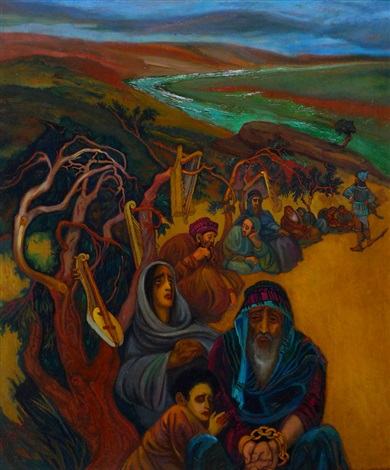
saul-raskin-on-the-rivers-of-babylon

Paul Raskin, “On the rivers of Babylon.”  Photo credit:  http://www.artnet.com/artists/saul-raskin/on-the-rivers-of-babylon-CQj4JGZtS9eQctXb-beJg2

In some ways, I suppose I could have predicted it.  We spent hours luxuriously debating how to safely distribute communion, being able to consider every detail:  imagining how hard this new reality would be for our parish, who is a loving, “touchy-feely” parish; researching burgeoning new practices in other parishes and dioceses; and prayerfully considering how to model safe behavior.  And in the end, our parish engaged beautifully, the pain of their sacrifices obvious on their faces, but also the determination to protect and care for one another equally obvious on their faces.

But then the bottom dropped out.  It was two weeks ago, and I was in the family surgical waiting room, already letting my wardens know I would have to miss a Vestry meeting because my daughter’s surgery had been more complicated than expected, and I had yet to see her.  But just as the nurse was telling us our daughter had been moved to recovery and we could go back soon, our Bishop sent out a communication, cancelling all church campus activities, including worship – including that Vestry Meeting we had planned to hold.  The next several days were a blur – sleep in three-hour bursts as I tended my daughter; texts, emails, and calls to figure out how to still hold worship virtually; pastoral letters to be written to the parish explaining what was happening and how this would all work; and the reality of this even newer normal sinking in slowly.

I have never had a long conversation with a refugee, but I have watched enough news coverage, read enough human-interest stories, and seen enough movies about refugees to have a tiny inkling of how upending, world-changing, and scary it must be to be a refugee.  I would never argue my life in the midst of the Coronavirus is as brutal or devastating as a refugee, but there do seem to be some parallels.  Within moments, our world has been upended.  We went from being totally free to do whatever we desire, to being confined to our homes, having our jobs be totally changed (or sometimes ended), having the schooling of our children and the social support system schooling represents stripped away, worrying about the scarcity of necessities and the wisdom of going out to obtain what we could find, feeling the anxiety of financial insecurity, and losing the comfort of physical touch and community.  As a parent and priest, it has meant taking on the impossibility of two full-time jobs, knowing everyday you could do more, and yet being limited to the constraints of 24 hours a day.  And none of that even touches the emotional, psychological, and spiritual weight of upheaval that our bodies are processing, whether we try to stifle it or not.

Unlike most refugees, I know this new normal for us is relatively temporary.  Someday, we will be able to go back to some modification of the old normal.  But for now, this new reality is foreign, disorienting, and unnerving.  I was just yesterday reminded of that song “Rivers of Babylon,” which pulls from Psalm 137 and 19.  The echo of the verse, “How can we sing the Lord’s song in a strange land?” has been lingering with me.  And yet, that seems to be the only thing holding me together these days – singing the Lord’s song in a strange land.  For all the upheaval, all the disorder, all the anxiety and confusion, rooting myself in daily prayer – having people join in watching on Facebook Live, leaving their comments or greetings, or just seeing their names pop up, has felt like a balm to my heart.  I have not been able to bless or consume the holy meal, I have not been able to embrace my beloved parishioners, and I have not been able exchange physical signs of the peace.  But I have been able to hear the prayers of not only our parish’s heart, but also the hearts of our neighbors, friends, and even strangers.  I have not been able to gather physically with our community, but I have felt the connection of virtual community so palpably, I thought I would cry.  I do not know how long this new reality will last, but I am grateful for the opportunity to sing the Lord’s song in this strange land.  You are most welcome to join me in this singing.  And if you do not know the song, I’m happy to teach you or sing it for you for a while.  May God bless you all, and I’ll see you sometime today as we gather virtually to sing the Lord’s song!

On Bringing the Church and World Together…

02 Wednesday May 2018

Posted by jandrewsweckerly in Uncategorized

≈ Leave a comment

Tags

bless, church, community, fellowship, holy, identity, rogation, sacred, service, welcome, world

img_0160

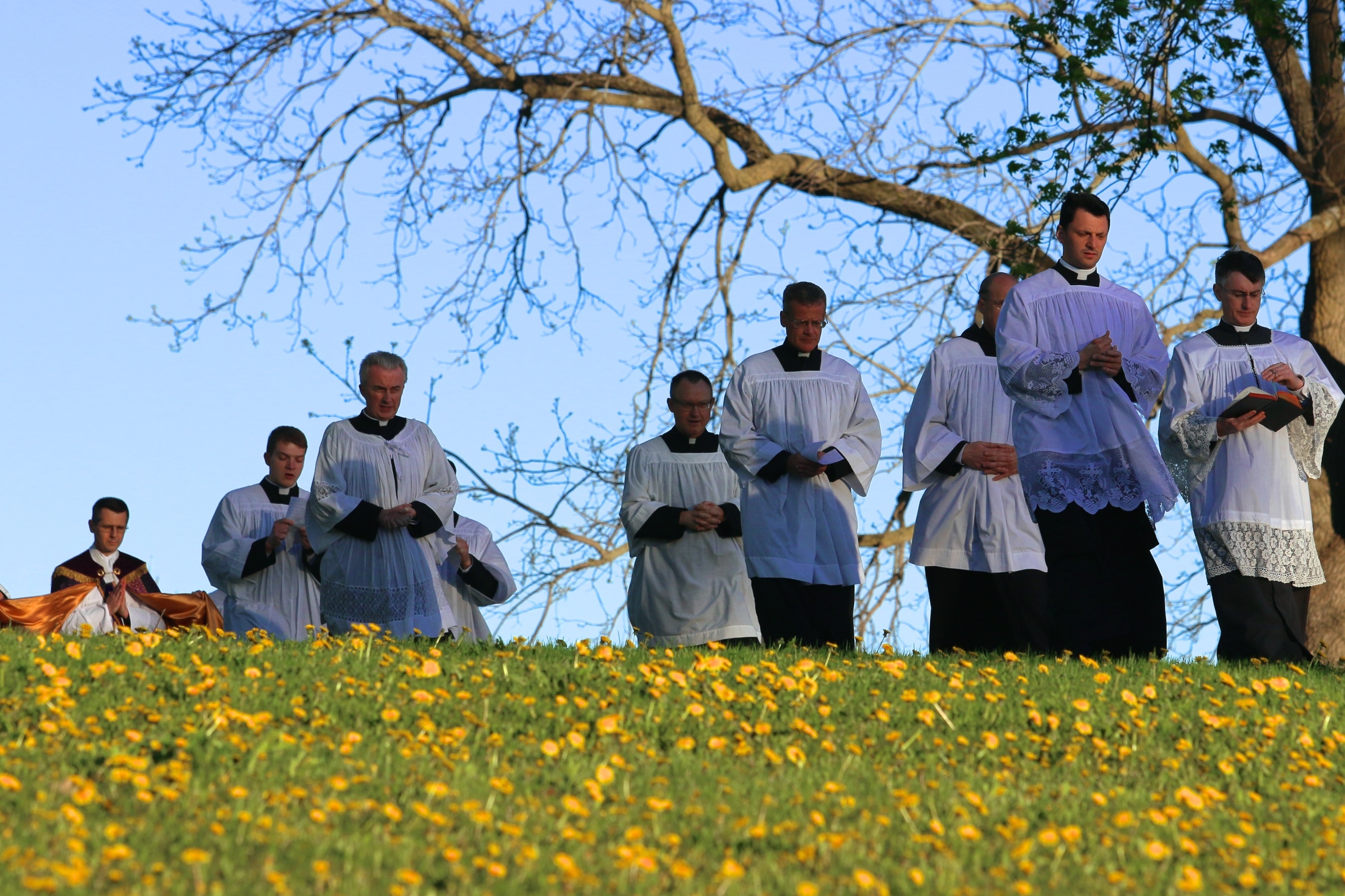
Photo credit:  http://stas.org/en/media/photos/rogation-days-2016-15612

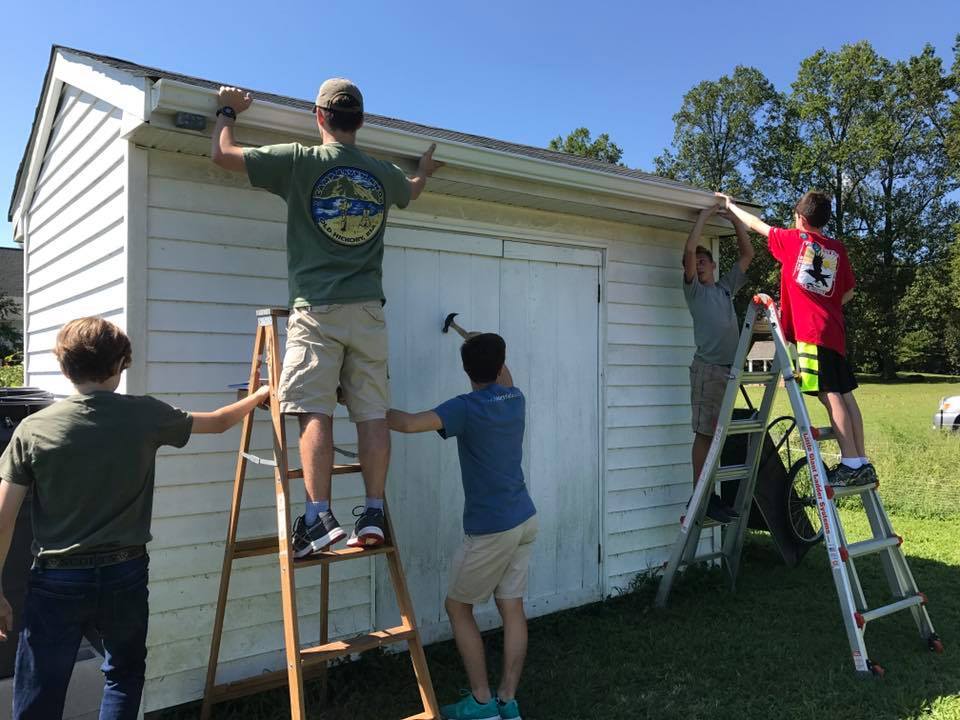
This coming Sunday at Hickory Neck, we will be adding a procession and blessing before our service begins in honor of Rogation Days.  Traditionally, Rogation Days are the three days before Ascension Day during which the litany is said as an act of intercession. In England, Rogation Days were associated with the blessing of the fields at planting, and in the United States they have been associated with rural life, agriculture and fishing, commerce and industry, and the stewardship of creation.[i]  For Hickory Neck, we are using this year’s Rogation Days to give thanks for rainwater collection barrels built for our Community Garden by a Boy Scout in our parish.  We will also bless the Garden, praying for a fruitful harvest for our parishioners and neighbors who use the gardens this year.

What I love about this upcoming event is that it represents a confluence of everything about which the church should be.  Our Community Garden has long been an example of using our property as a way to bless and welcome others.  At the garden, I see strangers become friends, people planting and tending in sacred silence, and the fruits of labor shared with one another.  Meanwhile, it has been a joy to watch our parishioner take leadership of an Eagle Scout project that benefits the church, the community, and his troop.  Watching our parishioner bring his faith community and his service community together has been a tremendous witness to each of us about how to make connections between the various parts of our lives.  And marking Rogation Days with liturgy is the church’s way of making the everyday parts of our lives sacred.  We take the labor of our hands, the fellowship of friends and strangers, the bounty of creation, and we name it all as holy.

Often when people think about church, they think about the building and the people who regularly attend worship services on Sundays.  But the church is much more about what the faith community does outside of the walls of the building, and how the community uses the blessing of its property to bless others.  This Sunday, we celebrate the ways in which we are living into the fullness of our identity, while also challenging ourselves to ever be outwardly-minded in our ministry.  I hope you will join us, but mostly, I hope you will invite a friend as we celebrate the ways in which the blessing of our community flows out into the world!

21463342_1589859034403684_3079109709240303206_n

Rainwater Collection Barrels Installation.  Photo credit:  Paula Simmons.  Permission required for reuse.


[i] Donald S. Armentrout and Robert Boak Slocum, eds., An Episcopal Dictionary of the Church:  A User-Friendly Reference for Episcopalians, “Rogation Days,” as found at https://www.episcopalchurch.org/library/glossary/rogation-days on May 1, 2018.

Sermon – John 2.13-22, Exodus 20.1-17, L3, YB, March 4, 2018

07 Wednesday Mar 2018

Posted by jandrewsweckerly in Sermons, Uncategorized

≈ Leave a comment

Tags

beautiful, bless, body, flesh, God, good, honor, incarnation, Jesus, Lent, ministry, repentance, righteous anger, sacred, Sermon, sinful, temple

Today’s gospel lesson is one of those lessons in Scripture that is so vivid we find looking away difficult.  All four of the gospels have this story, and three of the gospels use this story to convey Jesus’ righteous anger about how the practice around temple worship and obligatory sacrifice has led to monetary abuses.  Matthew and Luke even have Jesus calling the whole enterprise a den of robbers.  The story evokes images of Jesus flipping tables, or in today’s version, swinging around a whip like Indiana Jones.  We often recall this text when looking for evidence of Jesus’ righteous anger at injustice.  We are so familiar with this text we can almost hear the sermon about a call to justice in our heads.

But this week, the gospel has been speaking a different sermon to me.  You see, John’s version of this story is a bit different from the other three gospels.  First, John places this story in a very different place in his narrative.[i]  Unlike the other gospels who place this story toward the end of Jesus’ earthly ministry, John places this incident in the second chapter, right after the miracle in Cana.  And in John’s version, Jesus does not lay into the moneychangers in quite the same way.  Instead of financial injustice, Jesus seems more concerned that those gathered have missed something critical – in the obligatory administering of sacrifices at the physical temple, they have missed the fact that God is no longer tied to the location of the temple – and instead is found in the temple of Jesus’ body.  For John, the incarnation, the word becoming flesh and dwelling among us, is central to the entirety of the good news and in this story specifically.

I realized this week that when I think about the Incarnation, I immediately think of the baby Jesus.  Somehow, like a child you do not see for a few years, my image of Jesus incarnate gets stuck in the manger.  And because the adult Jesus sometimes feels so superhuman, I forget about the earthy, gritty flesh of his body – the body that touches to heal, stoops down to wash feet, eats and drinks with others, cries wet tears, and breathes a last breath of the cross.  In coming to know the Messiah who heals, teaches, brings about justice, and is transfigured before the disciples, I forget the enfleshed Jesus – the human body in which God dwells – the only temple we need to draw nearer to our God.

We are in a season of flesh.  Lent is that season when we experience Jesus in deeply enfleshed ways.  What our disciplines or our practices do for us in Lent is help us remember that we are a people of flesh and our God was willing to take on that flesh to transform our lives.  We do not often talk about the profound reality of an enfleshed God, but I stumbled on a hymn this week that opened up the reality.  Brian Wren’s hymn Good is the Flesh says, “Good is the flesh that the Word has become, good is the birthing, the milk in the breast, good is the feeding, caressing and rest, good is the body for knowing the world, Good is the flesh that the Word has become.”  The hymn goes on to say, “Good is the body, from cradle to grave, growing and aging, arousing, impaired, happy in clothing, or lovingly bared, good is the pleasure of God in our flesh, Good is the flesh that the Word has become.”[ii]  Now I do not know about your own spiritual journey, but I do not think I have ever heard Jesus’ flesh being described so vividly.  The closest I have come has been in imagining the vulnerability of that enfleshed body in the cradle.  But capturing what being enfleshed means for all of life – from cradle to grave – somehow opened up John’s words about the temple of Jesus’ body.  God takes something we often associate with sinfulness – and transforms that flesh into something good.  “Good is the pleasure of God in our flesh,” are powerful words that shift how we experience the fullness of Christ’s humanity.

Once we reconnect with the goodness of God’s flesh – the incarnation of Christ – then we begin to see all of Jesus’ ministry not stuck in a manger but immersed in the flesh of life.  Karoline Lewis reminds us Jesus’ fleshy life was important, “Because a woman at a well, whose body was rejected for the barren body it was, experiences the truth of neither on this mountain nor in Jerusalem; because a man ill for 38 years, his entire life to be exact, whose body has only known life on the ground, is now able to imagine his ascended life; because a man born blind, is then able to see, and to see himself as a sheep of Jesus’ own fold; because Lazarus, whose body was dead and starting to decay, found himself reclining on Jesus, eating and drinking, and with his sisters, sharing a meal once again.”[iii]  Not only is Jesus’ incarnation good, making flesh good, Jesus’ ministry is about blessing, healing, and restoring physical bodies.

Once we connect with the goodness of God’s flesh, and the power of Jesus’ fleshy ministry, we are forced to see something we do not always feel comfortable with – the goodness of our own flesh.  Now I do not know about you, but my experience in church has not been one in which the church tells me how good my body is.  In fact, today’s inclusion of the ten commandments usually reminds me of the opposite – of the myriad ways my body is sinful:  from the words that come out of my mouth, to the ways in which I hurt others and take things with my body, to the ways in which I covet things and other bodies.  And those sins do not even touch the ways in which I learn the message that my body is imperfect – how my body is not the right height or shape or gender, how my body is not fit or strong enough, how my skin color, hair, or nails are not quite the ideal.  But if God takes on flesh and says, “Good is the flesh,” and if that enfleshed God engages in a ministry of blessing flesh, then surely part of what we remember today is how good and blessed our own flesh is – how God made our flesh for good.

Now, here comes the tricky part.  Once we realize “Good is the flesh,” that ministered to the flesh, that our flesh is beautiful and revered, then we are forced to make yet another leap – that the flesh of others is also beautiful.  Those bodies we would like to subjugate, regulate, and decimate are no longer able to be separated from the goodness of God’s flesh or our own flesh.  Barbara Brown Taylor argues in An Altar in the World, “‘One of the truer things about bodies is that it is just about impossible to increase the reverence I show mine without also increasing the reverence I show yours.’  In other words, once I value my own body as God’s temple, as a site of God’s pleasure, delight, and grace, how can I stand by while other bodies suffer exploitation, poverty, discrimination, or abuse?”[iv]

This week, we enter that kind of work.  As we welcome guests through the Winter Shelter, we affirm the goodness of all flesh – of God’s flesh, of our flesh, and especially the flesh of those who have no shelter, who work hard all day but cannot secure housing, who live lives of uncertainty, of insecurity, of scarcity.  Once we recall the incarnation of Christ, the dignity of our own incarnation, our work immediately becomes to honor the incarnation of others.  We certainly accomplish the work of honoring flesh this week through the Winter Shelter.  But as we keep walking our Lenten journey, we will struggle with our bodies.  Even our collect today says, “we have no power in ourselves to help ourselves: Keep us both outwardly in our bodies and inwardly in our souls, that we may be defended from all adversities which may happen to the body, and from all evil thoughts which may assault and hurt the soul.”  But our invitation this Lent is to also struggle with claiming our body as good – and using the goodness of the flesh to bless other flesh.  Our repentance this week is not just of the sinfulness of the flesh, but we repent this week of the ways in which we do not honor how “Good is the flesh that the Word has become.”  Amen.


[i] Joseph D. Small, “Theological Perspective,” Feasting on the Word, Year B, Vol. 2 (Louisville:  Westminster John Knox Press, 2008), 92.

[ii] I found this hymn in the commentary by Debie Thomas, “The Temple of His Body” February 28, 2018, https://www.journeywithjesus.net/lectionary-essays/current-essay?id=1675 as found on March 1, 2018.

[iii] Karoline Lewis, “Body Zeal,” February 26, 2018, http://www.workingpreacher.org/craft.aspx?post=5071 as found on March 1, 2018.

[iv] Thomas.

A Journey to Generosity…

04 Wednesday Oct 2017

Posted by jandrewsweckerly in Uncategorized

≈ Leave a comment

Tags

bless, evangelism, generosity, giving, God, gratitude, Holy Spirit, idea, inspire, journey, life, light, stewardship, vision

tens_nodate_logovertical (1)I am always amused when I discover the Holy Spirit at work because the discovery usually happens when I am in the thick of executing something I thought I had planned myself.  Ideas come to me, I test out the idea with others, I do the planning to implement the idea – basically the whole process involves a great deal of self-direction.  But when an idea really blows me away is when the idea takes off in even better ways than I planned.  When I finally realize how inspired the idea is, I realize that the idea could not have possibly come from me alone.  The only way those incredible moments of confluence occur is through the Holy Spirit.

I had one of those moments this week.  On Sunday we kicked off our stewardship campaign entitled “Journey to Generosity.”   All sorts of activities are a part of that campaign:  inspirational materials from our Stewardship Committee explaining the campaign, reflections from fellow parishioners, Parish Parties, sermons from the clergy, and meditations from national church leaders.  All of those experiences would be enough to situate us in a place of profound gratitude.  But then other things started happening.

The first has been attending our adult formation series.  The series is about evangelism, so I had expected our energies to be focused on the work of spreading the good news.  But the first sentence from the book we are using says, “Evangelism is your natural expression of gratitude for God’s goodness.”[i]  While I thought our conversations about gratitude and generosity would be limited to stewardship, here gratitude was permeating other areas of church life.  The second thing that happened was welcoming the first of three babies due this month at church.  As I held the first one yesterday, especially after a rough twenty-four hours of mourning another massive shooting in Las Vegas, I looked at that tiny child and felt a profound sense of gratitude for the gift of life.

Our “inspired” idea to talk and pray about our Journey to Generosity has already morphed into something much bigger.  I find myself being grateful not just for the generosity of parishioners who are passionate about our church and support its work through financial giving.  I am also grateful for a community of people who are so enthusiastic about their gratitude that they want to go out and share the good news with others.  I am grateful for a church community so generous in spirit that they can take tragedy and find rays of light and hope all around.  I am grateful for a community whose gratitude is so powerful that they have a vision of making our community a better place:  through our Fall Festival, through our visioning work with our Vestry, and through daily service to others.  What seemed like a catchy campaign slogan has actually been naming a way of life at Hickory Neck:  a life rooted in gratitude and generosity.  Thank you for letting me be a part of this journey with you all.  You inspire me every day and you transform my relationship with God every week.  God bless you on your journey to generosity!

[i] David Gortner, Transforming Evangelism (New York:  Church Publishing, 2008), 1.

On Mother’s Day…

07 Thursday May 2015

Posted by jandrewsweckerly in Uncategorized

≈ 1 Comment

Tags

bless, difficult, joy, Mother's Day, mothers, pregnancy, struggle

Photo credit: http://www.modernartimages.com/symbol-of-motherhood.htm

Photo credit: http://www.modernartimages.com/symbol-of-motherhood.htm

As Mother’s Day approaches, I face it with my usual dread.  Though there are so many mothers that we can and should honor (I love you, Mom!!), there are so many people for whom this is a hard day.  I am at the stage in life when many of my friends are having children.  There are the sonogram picture announcements about the pregnancies, the gender-reveal parties, the showers, and, of course, the onslaught of beautiful baby pictures.  It is a time of great joy and most of the time it feels like a gift, especially to be a part of it all when friends live far away.

But then I remember all of those friends who want to be pregnant, but struggle with infertility.  Each pregnancy announcement is bittersweet.  And I remember all of those friends who have lost a pregnancy.  Those sonogram pictures bring up fresh rounds of grief.  And I remember those friends who have lost children after birth.  Those pictures of swaddled babies bring back the muscle memory of empty arms.

Of course, that does not even include all the other ways that Mother’s Day can be difficult:  the mothers we have lost, the mothers who have been abusive, the mothers who are estranged from their children.  The list goes on and on.  And so, each year, my Mother’s Day tradition has been to reread this wonderful ode to “The Wide Spectrum of Mothering,” by Amy Young.  May you bless and be blessed this Mother’s Day, affirming all the women in your life.

Homily – Psalm 34.1-9, Luke 1.46-55, St. Mary the Virgin, August 15, 2013

26 Thursday Sep 2013

Posted by jandrewsweckerly in Uncategorized

≈ Leave a comment

Tags

angry, bless, God, homily, Jesus, Lord, praise, prayer, St. Mary the Virgin

Today we honor St. Mary the Virgin, mother of our Lord Jesus Christ.  What I find so fascinating about our lessons today is that they are filled with praise.  Mary’s song, or the Magnificat, we heard in Luke, the words from Isaiah, and even the psalm are all about our praise of God.  But if you think about Mary’s life, Mary could have easily and justifiably been quite angry with God.  Not only is she a young bride to an older man, she enters into marriage being pregnant in a traditionally shameful way.  Then her life with Jesus, though with moments of joy, is full of pain:  Jesus pushes her away, she watches him die on the cross, and suffers through his life and the days after his death.  The song of Mary could have been a song raging against God.

More often than not, I think our prayer life with God is like this.  We get angry with God when God doesn’t seem to be responding to our petitions.  We dwell on the things that are going wrong in our lives, in the lives of our loved ones, and in the world.  When we come to God in prayer, it is rarely for thanksgiving; it is usually with petitions and frustrations.

But today, Mary shows us another way.  She sees in her pregnancy blessing not a curse.  She sees the magnificent big picture of what God is doing in the world through her, not to her.  She can dream about what this Messiah can do, and she stays by his side, knowing God can do more – even in the throws of death.  Mary is able to do what the psalmist does: “I will bless the LORD at all times; his praise shall ever be in my mouth.”

This is our invitation today – to find our way back into praising and blessing the LORD.  I was recently reading about a spiritual discipline of prayer where the person looks back on each day and offers to God at least one thing they are grateful for.  The practice seems so simple, but already the practice is changing my prayer life and my attitude toward life in general.  This is the shift Mary invites us into today – to bless the LORD at all times and to let God’s praise ever be in our mouths.  Amen.

Recent Posts

  • On the Myth and Magic of Advent…
  • On Risking Failure and Facing Fear…
  • Sermon – Luke 23.33-43, P29, YC, November 23, 2025
  • On Inhabiting Gratitude…
  • Sermon – Luke 20.27-38, P27, YC, November 9, 2025

Archives

  • December 2025
  • November 2025
  • October 2025
  • September 2025
  • August 2025
  • July 2025
  • June 2025
  • March 2025
  • February 2025
  • December 2024
  • November 2024
  • October 2024
  • September 2024
  • August 2024
  • July 2024
  • June 2024
  • May 2024
  • March 2024
  • February 2024
  • January 2024
  • December 2023
  • November 2023
  • October 2023
  • September 2023
  • August 2023
  • July 2023
  • June 2023
  • May 2023
  • March 2023
  • February 2023
  • January 2023
  • December 2022
  • November 2022
  • October 2022
  • June 2022
  • May 2022
  • January 2022
  • December 2021
  • November 2021
  • October 2021
  • September 2021
  • August 2021
  • June 2021
  • May 2021
  • April 2021
  • March 2021
  • February 2021
  • January 2021
  • December 2020
  • November 2020
  • October 2020
  • September 2020
  • August 2020
  • July 2020
  • June 2020
  • May 2020
  • April 2020
  • March 2020
  • February 2020
  • January 2020
  • December 2019
  • November 2019
  • October 2019
  • September 2019
  • August 2019
  • July 2019
  • June 2019
  • May 2019
  • April 2019
  • March 2019
  • February 2019
  • January 2019
  • December 2018
  • November 2018
  • October 2018
  • September 2018
  • August 2018
  • July 2018
  • June 2018
  • May 2018
  • April 2018
  • March 2018
  • February 2018
  • January 2018
  • December 2017
  • November 2017
  • October 2017
  • September 2017
  • August 2017
  • July 2017
  • June 2017
  • May 2017
  • April 2017
  • March 2017
  • February 2017
  • January 2017
  • December 2016
  • November 2016
  • October 2016
  • September 2016
  • August 2016
  • July 2016
  • June 2016
  • May 2016
  • April 2016
  • March 2016
  • February 2016
  • January 2016
  • December 2015
  • November 2015
  • October 2015
  • September 2015
  • August 2015
  • July 2015
  • June 2015
  • May 2015
  • April 2015
  • March 2015
  • February 2015
  • January 2015
  • December 2014
  • November 2014
  • October 2014
  • September 2014
  • August 2014
  • July 2014
  • June 2014
  • April 2014
  • March 2014
  • February 2014
  • January 2014
  • December 2013
  • November 2013
  • October 2013
  • September 2013
  • August 2013
  • July 2013
  • June 2013
  • May 2013
  • April 2013
  • March 2013
  • February 2013
  • January 2013
  • December 2012
  • November 2012
  • October 2012
  • September 2012

Categories

  • reflection
  • Sermons
  • Uncategorized

Meta

  • Create account
  • Log in
  • Entries feed
  • Comments feed
  • WordPress.com

Blog at WordPress.com.

  • Subscribe Subscribed
    • Seeking and Serving
    • Join 394 other subscribers
    • Already have a WordPress.com account? Log in now.
    • Seeking and Serving
    • Subscribe Subscribed
    • Sign up
    • Log in
    • Report this content
    • View site in Reader
    • Manage subscriptions
    • Collapse this bar
 

Loading Comments...