• About

Seeking and Serving

~ seek and serve Christ in all persons

Seeking and Serving

Tag Archives: Christ Child

Sermon – Luke 2.1-20, CE, YC, December 24, 2024

12 Wednesday Feb 2025

Posted by jandrewsweckerly in Sermons

≈ Leave a comment

Tags

awe, Bethlehem, burdens, Christ Child, Christmas, dystopian, film, gift, hope, Jesus, Joseph, joy, light, Mary, Messiah, sacred, Savior, Sermon, unsteady

Every summer, we hold a film series at Hickory Neck.  This summer, one of the films was movie called Children of Men.  The film is a dystopian film situated in London about a time in the future when the world has become infertile.  The youngest human, aged 18 has just died, schools and playgrounds are abandoned, a pall of grief and depression hangs in the air, and the world has become violent, unpredictable, harsh – with massive detainment camps of refugees and rebels fighting the government militia and civilians alike.  Into this setting, we meet Theo, a man who has lost hope and purpose, and we meet a young woman of color who would normally be in one of those detainment camps, who is secretly carrying the first pregnancy in over 18 years.  Theo’s world is thrown into chaos as he tries to get the young mother to safety so that the child will be able to live freely. 

In a powerful scene near the end of the movie, the mother has birthed her child in a dingy, rat-infested, crumbling room, and Theo needs to get her and the child to the safe haven.  But the crumbling building is overrun with rebels and a battle ensues as the military shows up.  In the din of violence and noise, the baby cries out, and all activity ceases.  Rebels hold their fire as they watch in reverence as the baby is carried down the stairs of the building.  The soldiers outside call for a ceasefire as the high-pitched cries they have not heard in almost 20 years fill the air.  Rebels, civilians, and soldiers alike stand in awe, many reaching out just to touch the baby and mother.  The awed silence is so palpable that even movie watchers hold their breath at this miracle.

I imagine that night from our gospel lesson was a bit like that breath-holding moment in Children of Men.   We know that Mary and Joseph are going to be registered in Bethlehem, but what we can forget is that Mary and Joseph live in a time of occupation – where taxes are extorted, registrations can drive folks from their homes, where rebellion against the state leads to death.  The mass movement of people for the registration creates another layer of chaos, leaving people jockeying for shelter, especially a couple so close to birth, and whose pregnancy is of a dubious nature from the beginning.  Even in the peaceful countryside where shepherds are just doing their work, a chaos of shocking news, a chorus from angels, and the blinding light of the glory of the Lord is shining in their normally darkened pastoral setting. 

And then, just like in that battle scene in the film, the shepherds arrive where the holy family have made due, and a whispered conversation leads to a stillness that makes you hold your breath.  But this stillness is not just about the miracle of life – no this stillness is about so much more – about a savior, the Messiah, who has been promised for generations who finally is here; about a promised peace in a world that has no peace; about promises for justice that Mary has sung about with her cousin Elizabeth, and now seems to be a reality.  Mary is so overwhelmed by the enormity of the moment that all she can do is ponder the words of the shepherds in her heart.

What is so unsettling about the parallels in this secular, dystopian film and the ancient biblical story is not just their similarities.  What is most unsettling is their similarities to our own time.  Our political landscape is just as unstable, conflicted, and threatening.  Our economic, mental, and physical health is just as unsteady.  And for some of us, our home life is a place of even more strain.  In so many ways, having ourselves a merry little Christmas feels like a stretch.  In fact, the very reason we may be here tonight – besides a family member telling us we had to come – is that we long for that moment of awe – that quiet, tremendous, encouraging peace that can only be found at the site of the Christ Child.  We want a word, or a song, or a meal shared that will leave us something to treasure and ponder in our hearts too.

That is what Christmas does.  Coming here tonight is not going to solve all our problems or the world’s problems.  In that movie, as soon as the child is out of sight, bombs and gunfire ramp up dangerously again.  At that manger scene, Herod’s paranoid tyranny means Mary, Joseph, and Jesus will have to flee to Egypt for safety.  And come January, we will have a transition in power in our own country.  But tonight, in this sacred space, we enter into a time of unfiltered joy.  We recall what matters most – the Savior born in a manger whose eventual salvation will give us meaning and purpose.  We lean into those gathered with us tonight – those who are family and friends, those who are fellow church members, and even those whose names we do not know – we lean into one another in this safe space of sanctuary, where none of the darkness outside can touch us – even if only for an hour.  We lay down any burdens on our hearts at the altar as we share a holy meal, fortifying ourselves for what comes next.  And we glorify and praise God, like shepherds who have seen a great light, and whispered holy truths. 

Now unfortunately, that tremendous gift, that sacred life-giving balm, is not without a price.  The price, is that we must leave this place, enter back into the dark of night, and carry on with life back out in the world.  Our invitation is to carry whatever light, whatever hope, whatever small sliver of praise and glory we find this night, and gift it to someone else.  To be like Theo, who refuses to allow the glory of a mother’s child to suffer; to be like shepherds, who share the good news of a Messiah; to be like your neighbor in the chair (pew) beside you, who is already thinking of someone who needs the gift of hope and healing who cannot be here tonight, but whom your neighbor will be sure to gift some of that love and peace to tomorrow.  Christmas is the Church’s gift to you this night.  You are Jesus’s gift to someone else tomorrow.  Amen.
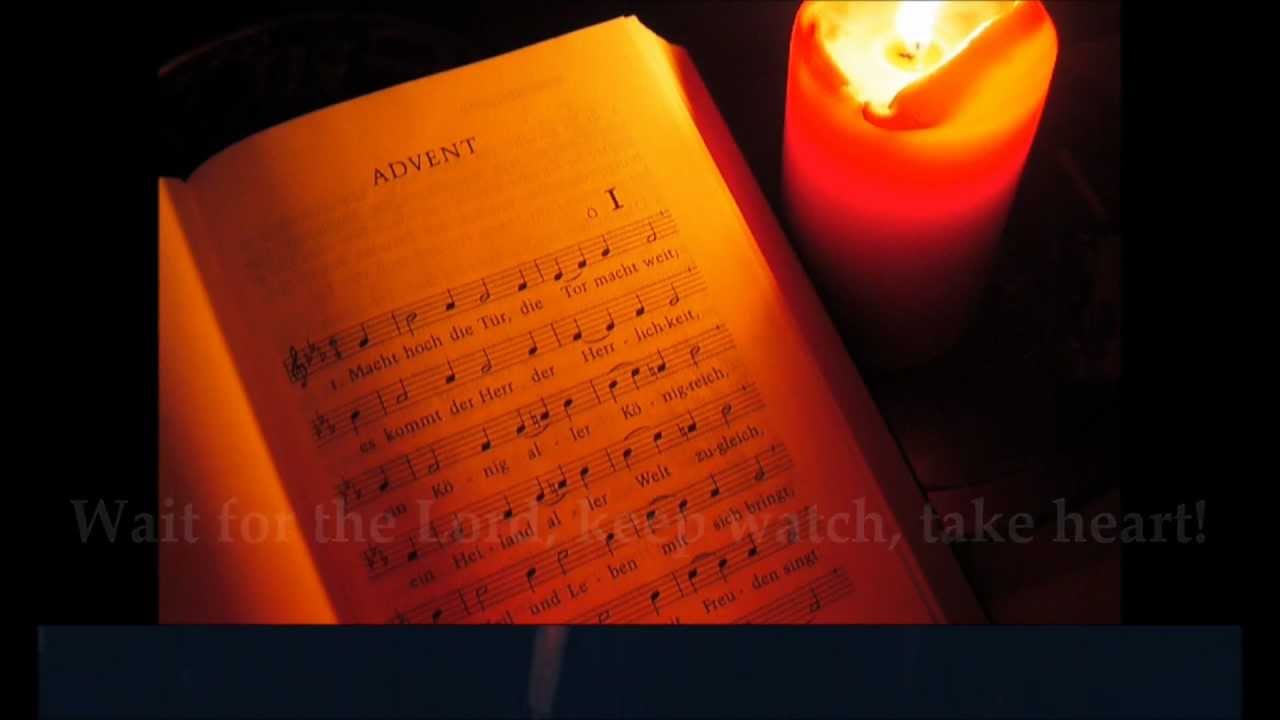
Sermon – Malachi 3.1-4, A2, YC, December 8, 2024

12 Wednesday Feb 2025

Posted by jandrewsweckerly in Sermons

≈ Leave a comment

Tags

Advent, Christ Child, entertain, familiar, God, music, pain, preparation, questions, refine, Sermon, together, tougher

The professional choir at the parish I served as a curate would perform Handel’s Messiah every Advent season in preparation for Christmas.  I remember my first Advent the Rector told me about the performance with excitement and anticipation, and all I remember thinking was, “Oh goodness!  Do I have to go??”  Do not get me wrong, I love Handel’s Hallelujah Chorus as much as anyone, but that piece is only about three-four minutes long and is only half-way into the three hours of singing that Handel’s Messiah takes. 

Music is a funny thing in Advent.  Since we hardly ever hear music at this service, you may not remember the hymns designated for singing in Advent.  But most people I know who regularly attend services with music do not really love Advent music.  Unlike familiar, comforting, endearing Christmas carols, Advent hymns are “discordant, unsung, and unpopular in many congregations.”[i]  I have known choir members whose skin crawls from Advent music, and I imagine some of you are here today because the idea of a whole service dedicated to Advent Carols which we will hear at 10:00 am sounds like torture. 

The problem might be that Advent music is not as catchy as Christmas music.  But I think there is a deeper truth to our distaste of Advent music.  The music of Advent points to the themes of Advent:  of apocalyptic demands to be alert, doing acts of righteousness to be right with God; of judgment so stringent to be compared to a refiner’s fire and fullers’ soap; of needing to bear fruit worthy of repentance so as not to be chopped down and thrown into the fire; and of bringing down the powerful from their thrones and lifting up the lowly.  None of that is quite as catchy as a holly, jolly Christmas.

Perhaps the issue is that Advent music tries to do the same thing scripture does.  In 1741, Handel wrote to a friend of his masterpiece Messiah, “‘I should be sorry if I only entertained them.  I wished to make them better.’  The composer challenges [us] to go beyond feeling good to doing good.”[ii]  The same was true for Malachi.  Malachi brings good news of a messenger coming to prepare the way of the Lord and that we will be purified enough that our offerings will be pleasing to the Lord as they once were before.  But Malachi also reveals the fearful questions of the people.  “But who can endure the day of his coming, and who can stand when he appears?”  These are just two of the twenty-two questions in the fifty-five verses of Malachi.[iii]  But they are questions we all ask if we are paying attention during Advent.

I remember when I was pregnant with my first child, women poured pregnancy stories over me.  A camaraderie of sorts began to build, the state of our friendship altered because we were now going to share something we had not before.  But what I always noticed about those stories is whenever I expressed my nervousness about labor, their eyes darted away, and they made wistful promises about how anything resembling pain would be forgotten.  The more their warm countenances shifted to wary, twitchiness, the more I suspected labor would be a painful reality.

The same is true for the infant we will welcome once again on December 24th.  As much as we cry out, “Hark the Herald Angels Sing,” as much as we sing of “Silent Nights,” and as much as we dream of “Joy to the World,” our Christmas celebration comes with a price – the price of preparation, of messengers making the way for joy, of fire burning away all that corrupts us.  Advent is not about entertaining us.  But, much like Handel hoped, Advent is meant to make us just and better, so that we might be right with God when that infant is placed in the arms of the Church.  Advent is for Malachis, for Zechariahs, the father of that coming messenger, and for you and for me.  And although we may feel like we have been refined enough to last a lifetime after the last election season, the refining God is doing now in each of us means, as one scholar assures, we will “be re-formed in God’s image, and [that re-forming] will be good.  No matter how we feel about it now.  No matter what we may be afraid of now.  When we are refined and purified as God promises, it will be good.”[iv]  As much as we may dread that awful Advent music or loathe those heavy, foreboding stories of Advent, we do so together, knowing that we are being refined tougher, so that, together as a community, we will welcome the Christ Child with open, ready arms.  Amen.


[i] Deborah A. Block, “Pastoral Perspective, Feasting on the Word, Year C, Vol. 1  (Louisville: Westminster John Knox Press, 2009), 30.

[ii] Block, 30.

[iii] Block, 26.

[iv] Seth Moland-Kovash, “Homiletical Perspective,” Feasting on the Word, Year C, Vol. 1  (Louisville: Westminster John Knox Press, 2009), 31.

Sermon – Luke 2.1-20, CE, YC, December 24, 2022

05 Thursday Jan 2023

Posted by jandrewsweckerly in Sermons

≈ Leave a comment

Tags

baby, Christ Child, Christmas, Christmas Eve, community, discomforting, disruption, familiar, Jesus, joy, love, Mary, messiness, peaceful, Sermon

When our girls were very small, our favorite book was Goodnight Moon.  We read that book so many times, I could have recited the book to you from memory.  “In the great green room there was a telephone, and a red balloon, and a picture of – the cow jumping over the moon…”  I read to our girls to calm them for bedtime, but truth be told, the cadence of a familiar book calmed me too.  Reading Goodnight Moon for the hundredth time became like taking a deep, steadying breath.

The same thing happened to me this year as I heard tonight’s gospel.  “In those days a decree went out from Emperor Augustus that all the world should be registered…”  As I kept listening, I could feel my body physically relaxing, my breath slowing, and a sense of peace and comfort settling in me. 

In all honesty, the reaction is a bit strange.  Nothing about Luke’s birth narrative is all that soothing.  Governments are forcibly moving people, accommodations are extremely cramped, childbirth in such conditions is anything but luxurious, we are transported to far off fields with the smells and discomforts of tending animals, and angels are sharing wonderful, terrible news, and mysteries are being introduced that delight and terrify.

So why in the world did my body have such a viscerally peaceful reaction to these familiar words despite the discomforting story?  Because Christ’s birth happens in the middle of disruption, chaos, shame, and messiness is perhaps the reason why the story is so comforting.  Our lives have been full of disruption, chaos, shame, and messiness these last few years.  Whether it was the global upending of a pandemic, economic and political upheaval, the denigrating, objectifying, or persecuting of other humans, or something closer to home – like death, divorce, job loss, or even lost sense of purpose, there is something tremendously familiar and contemporary about this story.  Of course, the government is causing disruption and chaos.  Of course, Mary is laying her baby in a manger.  Of course, strange, dirty men are interrupting an exhausted family in the middle of the night.  “Of course!” is the exclamation we have all assumed of late.

The “Of course!” though is not why we are here and is certainly not why my body heaved a sigh of relief.  What causes that relief is the “And…” of our scripture.  And, God came among us in the form of a child.  And, angels came and sang stunning songs of reassurance, promise, and deliverance.  And, strangers became friends and praised and pondered this magnificent God.  We came here burdened with our “Of course!”s.  Maybe the cookies burned before you got here.  Maybe there were some tempter tantrums in the car – or before you even got in the car.  Maybe the storms are cancelling the plans of you or your loved ones. 

And, you are here, hearing a familiar, reassuring story.  And you are among others just like you – who long for peace, comfort, and joy.  And you will be fed at the Eucharistic table, a food more glorious than the best roast beast!  We are here for our “and…” tonight.  But not just for our own sense of peace – we are here for the “and…” that God gives us to take out into the world.  And, hearing the story of the Christ Child reminds us of our bountiful blessings.  And, singing familiar songs reminds us of what really matters in life.  And, having reconnected with a community of believers, we are given a chance to go back out into the world and be harbingers of peace, shepherds of joy, caregivers of love.  That is the gift of this familiar story tonight.  You will likely experience some “Of course!”s on the way home tonight or in the coming days.  But now you have your, “And…”.  Amen.

Sermon – Matthew 1.18-25, A4, YA, December 18, 2022

21 Wednesday Dec 2022

Posted by jandrewsweckerly in Sermons

≈ Leave a comment

Tags

afriad, baptism, Christ Child, faith, God, Joseph, journey, love, Mary, messy, righteous, Sermon

I have always loved stories and images of Mary and the Christ Child.  Mary is revered around the world, a patron saint to many, an intercessor for others (just think of all the “Hail Mary”s said globally), and a spiritual companion to some.  I remember in the Holy Land visiting a chapel honoring Mary, the mother of Jesus.  The chapel commissioned artists from around the world to depict their unique cultural version of Mary and Child.  The walls are lined with these floor-to-ceiling renderings of the sacred pair.  I was so taken with the images that I now have my own collection of Mary and Child paintings in my office. 

I also remember that same day in the Holy Land, after spending what felt like hours meditating with these stunning paintings, then going down the road to a chapel dedicated to Joseph.  The chapel was much smaller, rather nondescript, and quite frankly, easily forgettable.  The only real memorable thing about the chapel is how distinctly different the Joseph chapel is from the Mary chapel. 

I am struck this year, particularly as we baptize little Melody, how glad I am that we get Joseph’s story this Advent as opposed to Mary’s.  On baptism Sundays with children, we have two realities.  The first reality is the adorable, belovedness of the child, the glossy photos with family and fonts, the perfect hopefulness of initiating a child of God into the family of faith.  We often skim over the second reality.  We will hear right at the beginning of the baptism some questions for the family about renouncing Satan, evil powers of the world, and sinful desires.  I often joke with the family how inappropriate talking about evil seems at a child’s baptism until you remember those painful sleepless nights of new parenting.  But the reason we talk about that second reality is because we are initiating someone into the life of faith, and for those of us who have been at the life of faith for a while, we know the life of faith is not all roses, glossy photos, and cake.  There will be real struggles.

And that is why I love that we start off Melody’s journey with a story about Joseph.  We are told Joseph is a righteous man.  He is devoted to God and lives an ethical life.  He represents reality number one of baptism.  But then, Joseph is presented with reality number two.  When he learns Mary is pregnant before their marriage is consummated, he has three options:  the harsh one would be to have her publicly held responsible, most likely by stoning; the generous one he plans to choose of quietly divorcing her, which saves her life, but will leave her in poverty with child in tow; or the unheard of third one, especially for a righteous man, of marrying her anyway and living forever in scandal.  As one scholar explains, “In choosing Joseph to be Jesus’s earthly father, God leads a righteous man with an impeccable reputation straight into doubt, shame, scandal, and controversy…[God] requires Joseph to embrace a mess he has not created, to love a woman whose story he doesn’t understand, to protect a baby he didn’t father, to accept an heir who is not his son.  In other words, God’s messy plan of salvation requires Joseph – a quiet, cautious, status quo kind of guy – to choose precisely what he fears and dreads the most.  The fraught, the complicated, the suspicious, and the inexplicable.”[i]

I would much rather Melody start her faith journey off with a story that lets her know, honestly and unequivocally, how messy this journey will be.  We have a hint of that messiness in Matthew’s gospel from the beginning.  In the verses before what we heard today, is a long list of Joseph’s forefathers: from Abraham, who almost kills his son Ishmael and twice risks the life and safety of his wife Sarah, to Jacob, the trickster who steals his inheritance and livelihood twice, to David, who steals another man’s wife and has her husband murdered, to Tamar, who pretends to be a sex worker, and Rahab who is one.  The genealogy of Christ is a “long line of broken, imperfect, dishonorable, and scandalous people.”  As Debie Thomas explains, “The perfect backdrop, I suppose, for God’s relentless work of restoration, healing, and hope.”[ii]

That’s what telling Joseph’s story does for Melody and all of us today.  Joseph reminds us that our faith journey will be messy.  Our faith journey will not take us where we think our journey will.  Our faith journey will invite us to love people we never thought we could.  Our faith journey will sometimes seem meaningless or small, like that Joseph’s chapel in the Holy Land.  But as the angel tells Joseph, so the angel of the Lord tells us today, “Do not be afraid.”  Do not be afraid of the messiness of this journey.  Do not be afraid of going where society may deem too messy.  Do not be afraid to love with abandon, even if your loving is not seen by the crowds, or recognized all over the world.  When we come out of the waters of baptism, we walk right into the mess – because the mess of the world is where God is.  And we want to be there too.  Amen.


[i] Debie Thomas, Into the Mess & Other Jesus Stories:  Reflections on the Life of Christ (Eugene, OR:  Cascade Books, 2022), 12.

[ii] Thomas, 13.

Sermon – Luke 21.25-36, A1, YC, November 28, 2021

01 Wednesday Dec 2021

Posted by jandrewsweckerly in Sermons

≈ Leave a comment

Tags

Advent, anticipation, apocalyptic, busy, Christ Child, dread, God, happy, help, Jesus, righteousness, Sermon, works

As the passing of Thanksgiving brought on the presence of Christmas music radio stations, my husband and were talking about our favorite classics.  His grandfather and I both loved Nat King Cole’s “Christmas Song” with its images of, “chestnuts roasting on an open fire.”  Our conversation swept me up in wave of nostalgia as we talked about other favorites like Judy Garland’s “Have Yourself a Merry Little Christmas” or Mariah Carey’s admittedly cheesy “All I Want for Christmas is You.”  The tricky part about these songs though is that they do not connect me to the reality of my lifetime of Christmases.  Instead, they simply remind me of my idealized dream of Christmas – the glossy picture I have devised about the utter perfection of Christmas.

Our entrance into Advent is a lot like that contrast.  You might have come into church today totally excited about the hope and love of Advent as we await the perfect baby Jesus.  We imagine Advent as a sort of pregnancy, where we wait for four weeks to birth the Christ Child.  We cannot wait to hear those stories that are coming – of Mary and Joseph, of shepherds and angels, of wise men.  Advent in our minds is this great time of anticipation.

But the actual gospel text for today does little to fuel this happy anticipation.  Instead, our gospel lesson from Luke is an apocalyptic text about signs and fainting and fear.  “Stand up and raise your heads…Be on guard…Be alert at all times,” says Jesus.  The words from Jesus are not soothing or encouraging at all.  The kind of waiting Jesus describes does not sound like a joyful waiting for a birth but sounds more like the dreaded waiting for judgment. 

As modern Christians, we do not tend to enjoy apocalyptic scripture lessons for several reasons.  First, apocalyptic readings are usually weird.  We much more often associate these texts with crazy fanatics who make predictions about the end of the world that rarely come true.  We even make jokes with silly bumper stickers that say, “Jesus is coming.  Look busy.”  Second, we often do not understand what apocalyptic readings mean or how to interpret them.  That style of literature is totally foreign to us.  Even John Calvin, theologian and father of the Presbyterian Church, who wrote a commentary on every other book of the Bible, did not attempt to write about Revelation.[i]  If John Calvin cannot interpret apocalyptic literature, we do not have much hope for our own understanding.  And, finally, we do not tend to enjoy apocalyptic readings because we find them exhausting.  Even Will Willimon argues that, “It’s hard to stand on tiptoe for two thousand years.”[ii]  Our life is already full of anxiety these days.  Between the state of the economy, a devastating pandemic, deeply divisive political tensions, and our own financial, personal, and emotional anxieties, we have enough to worry about without having to also be anxious about Jesus’ return. 

Despite our hesitancy, there is good reason for us to turn to this kind of text.  The season of Advent reminds us that we cannot anticipate the first coming of Christ without also anticipating the second coming of Christ.  The two activities are intimately linked.  We celebrate the birth of this child because we know what this child will be.  We do not simply anticipate the Christ Child because he will be a cute baby.  We anticipate him because we know that he will be the Savior and Redeemer of the world and he promises to come again.  We anticipate this birth because of the joy of this specific person and Godhead, in whom we have redemption. 

In this time between the two advents, the Church invites us through Luke to live a little differently than normal.  This Advent, we are invited to step back and look at the whole of our Christian faith.  Sure, we may not want to be on guard at all times but being on guard from time to time is a good thing.  As Lewis Smedes argues the hardest part of anticipating the second coming of Jesus Christ is in “living the sort of life that makes people say, ‘Ah, so that’s how people are going to live when righteousness takes over our world.’”[iii]  This is our work this Advent.  Not just to look busy because Jesus is coming, but to be busy with works of righteousness.

There is a well-known story that happened in the colonial period of American history.  The Connecticut House of Representatives were going about their work on a sunny May day, when all of a sudden, an eclipse caught the entire legislature off guard.  Right in the middle of debate, everything went to darkness.  In the midst of panic over whether this might be the second coming, a motion was made to adjourn the legislature so that people could pray and prepare for the coming of the Lord.  In response, one legislator stood up and said, “Mr. Speaker, if it is not the end of the world and we adjourn, we shall appear to be fools.  If it is the end of the world, I choose to be found doing my duty.  I move you, sir, let candles be brought.”[iv]  Those men who expected Jesus went back to their desks and by candlelight resumed their debate. 

We too light candles in Advent.  We too move into a time of actively living in the time between two advents.  We too take on the intentional work of living as though righteousness has taken over the world.  Of course, we do not do this work alone.  We do this work “prayerfully, depending upon God to give strength to persevere despite temptation or persecution.”[v]  Jesus is coming.  With God’s help, instead of “looking busy” this Advent, we can be busy this Advent with works of righteousness.  Amen.       


[i] Cornelius Plantinga, Jr., “In the Interim,” Christian Century, vol. 117, no. 34, Dec. 6, 2000, 1271.

[ii] Will Willimon, as quoted by Plantinga, 1270.

[iii] Lewis Smedes, Standing on the Promises, as quoted by Plantinga, 1272.

[iv] Joanna M. Adams, “Light the Candles,” Christian Century, vol. 123, no. 24, Nov. 28, 2006, 18.

[v] Mariam J. Kamell, “Exegetical Perspective,” Feasting on the Word, Yr. C, Vol. 1 (Louisville: Westminster John Knox Press, 2009),25.

Sermon – Luke 2.1-20, CE, YB, December 24, 2020

06 Wednesday Jan 2021

Posted by jandrewsweckerly in Sermons

≈ Leave a comment

Tags

anxiety, beautiful, Bonhoeffer, Christ, Christ Child, Christmas, different, discomfort, displacement, Eucharist, familiar, feast, God, Jesus, joy, magnificence, real

This year, Christmas is unlike any other we have experienced.  For starters, we are gathered in homes around the globe, perhaps in pjs, on couches, or even bundled up in our beds, instead of being here together, crammed into seats where we may not normally sit, sitting next to friends and strangers, dressed in our Christmas finery.  Instead of gathering with large groups of extended family and friends, or traveling great distances, many of us are home alone, only able to see beloved faces on screens or hear familiar voices on phones.  Meals may be much smaller, gift exchanging more subdued (if happening at all), and singing is happening in isolation, not in the warmth of this space, where the sound fills not just the room but also our hearts.  Operating in the background of all of this is anxiety – fear for the health of ourselves and our loved ones, concern about financial stability, and dread about how much longer this pandemic may press down upon us.  Christmas this year is an experience in displacement, discomfort, and dissatisfaction.

And yet, here we are – gathered virtually, hearing the achingly familiar Christmas story, singing the soothing, familiar songs, and eventually participating in the ritual of the Eucharistic feast – even if we receive the feast spiritually.  Although this is not at all how I hoped to spend this Christmas, both for us as a community, or even personally with my own family, as I hear the Christmas story again this year, something is different.  The displacement of Mary and Joseph, the strain of a long journey, the collective discomfort of being herded against their will, and the anxiety of giving birth with none of the creature comforts of home or health feels strikingly familiar and contemporary.  The shock of angels is more palpable when we imagine shepherds going about the daily tasks needed for survival, the sheer ordinariness of working the night shift, and the miraculous happening among the least.  Even the experience of intimate conversation between strangers forced together by life is familiar, as we recall the recent conversations we have had with neighbors who, perhaps until this year, we have only spoken to superficially.  And Lord knows we have been doing a lot of pondering in our hearts these days.  Somehow the rawness of these days cracks open this overly familiar story in ways I could have never expected.

This Christmas, as I was preparing for tonight, I stumbled on a letter from Dietrich Bonhoeffer to his parents.  Bonhoeffer was a pastor, theologian, and political activist in World War II Germany.  When word of his anti-Nazi activism spread, he was imprisoned for a year and a half.  Sitting in that jail cell as Christmas approached, Bonhoeffer wrote to his parents, “In times like these we learn as never before what it means to possess a past and a spiritual heritage untrammeled by the changes and chances of the present.  A spiritual heritage reaching back for centuries is a wonderful support and comfort in face of all temporary stresses and strains.”  He goes on to say, “I daresay [Christmas] will have more meaning and will be observed with greater sincerity here in this prison than in places where all that survives of the feast is its name.  That misery, suffering, poverty, loneliness, helplessness and guilt look very different to the eyes of God from what they do to man, that God should come down to the very place which men usually abhor, that Christ was born in a stable because there was no room for him in the inn – these are things which a prisoner can understand better than anyone else.  For a prisoner, the Christmas story is glad tidings in a very real sense.”[i]

We may not have wanted any of this:  the discomfort, the dislocation, the anxiety, the suffering, the total upendedness of these days, especially during a holiday that is supposed to be reserved for joy and jubilation.  But perhaps the good news for us this Christmas is we get to know the Christmas story in a different way – not in the shiny, pretty way we normally tell the story, but in the raw, gritty, real way we tell the story tonight.  We hear, smell, and feel the ordinariness of the room with the holy family:  the “sweat; blood; makeshift blankets and diapers; the raw, immediate joy that comes with new life.”  But we also hear the unfathomable news of angels through shepherds intruding into that space, beautifully weaving the ordinary and extraordinary.[ii]  I know this is not the Christmas any of us wanted.  But perhaps in this terrible, awful, beautiful Christmas, we can more profoundly understand the terrible, awful, beautiful thing that happens in the Christ Child this year.  And whether we sing with jubilation with angels and shepherds, or ponder these things in our hearts with Mary, perhaps we see the Christ Child in his magnificence for the first time.  Amen.


[i] Dietrich Bonhoeffer, Letter to his parents, December 17, 1943, as found in A Christmas Sourcebook, Mary Ann Simcoe, ed. (Chicago:  Liturgy Training Publications, 1984), 11.

[ii] Cynthia RL. Rigby, “Theological Perspective,” Feasting on the Word, Yr. B, Vol. 1 (Louisville:  Westminster John Knox Press, 2008), 116, 118.

Sermon – Isaiah 9.2-7, Blue Christmas, December 21, 2020

06 Wednesday Jan 2021

Posted by jandrewsweckerly in Sermons

≈ Leave a comment

Tags

Blue Christmas, Christ Child, Christmas, church, darkness, God, joy, light, mourn, night, painful, pandemic, Sermon, strength, suffering

Blue Christmas is a service we offer every year.  This service is not always mainstream.  For many, Christmas is a season of uncomplicated joy.  But for others, Christmas can be a painful experience:  we mourn the memories of those who are no longer with us, the darkness of shorter days weighs on our mental health, or the unbounded exuberance of others creates a chasm between their happiness and our loneliness, sorrow, or pain.  And that does not account for the grief we may be experiencing otherwise – broken relationships, dissatisfaction with or lost employment, an unexpected medical diagnosis, or a dream unfulfilled.  And because Christmas cheer is all around us, we feel even more isolated in our sadness – as if we are alone in our feelings.  Only in services like these do we feel seen.

That is the experience of a “normal” Christmas.  This year, we have added nine months of a pandemic, a tumultuous political year, and civil unrest.  Suddenly, those of us who struggle with finding joy this Christmas find ourselves in a rising majority, not the minority.  I watched this year as hundreds of people decorated for Christmas in mid-November, in an effort to demand the experience of joy from a year that has been short on joy.  I can see the desperate need of a suffering people to find light somewhere, anywhere, during this holiday season.

Fortunately for us, the church is not silent on this experience.  The text we heard from Isaiah earlier says, “The people who walked in darkness have seen a great light; those who lived in a land of deep darkness–on them light has shined. You have multiplied the nation, you have increased its joy; they rejoice before you as with joy at the harvest, as people exult when dividing plunder. For the yoke of their burden, and the bar across their shoulders, the rod of their oppressor, you have broken as on the day of Midian.”  The prophet says all of this light and joy is possible for one reason:  “For a child has been born for us, a son given to us.”  Scripture tonight honors that there are seasons of darkness.  There are times when we live in deep darkness, devoid of joy.  There are times when burdens feel like weights on our shoulders, where oppressors keep us in positions of suffering.  Sometimes those times of darkness happen around holidays, and sometimes the memory of those dark moments invade our holidays.  To that experience, the prophet says, God brings us light.  God lifts burdens, God helps us recall joy, God strengthens us.  And perhaps, most importantly, God gives us the Christ Child – the only true source of light that can lighten the darkness.

I have always loved that the Christ Child was born in literal darkness.  The delivery of the Christ Child at night reminds us that even in the rustic setting of being outcast, joy comes to Mary and Joseph.  The delivery of the Christ Child at night reminds us that even in the mundane, lonely, and exhausting work of tending sheep through the night, unbounded joy can break forth in the form of angels with heavenly news.  The delivery of the Christ Child at night reminds us that even in the darkness of night, whispered conversations between strangers can bring joy to kindle and ponder in our hearts.

Tonight, by the manager, God sees your darkness, your suffering, your hurt.  The removal of that darkness, suffering, and hurt may not be possible in these next few days.  But in that darkness, God promises you the tiniest sliver of light.  Whether you find that light by seeing you are not alone in the darkness tonight, whether you find that light through the stories of others, or whether you find that light gazing on the miracle of the Christ Child, the light, however faint, is there, waiting for you, warming you ever so slightly, and starting the long, hard work of lifting your heavy burden.  And until you are ready to receive that light, the Church sits with you in the darkness tonight.  Amen.

Sermon – Luke 2.1-20, CD, YA, December 25, 2019

08 Wednesday Jan 2020

Posted by jandrewsweckerly in Sermons, Uncategorized

≈ Leave a comment

Tags

amazing, Christ Child, Christmas, Christmas Eve, church, glorify, God, love, new, noise, praise, quiet, Sermon, silence, Silent Night, story

This past year I have been learning a lot about Godly Play, the program we use with our smallest children in Sunday School, and more recently, the program we use with the Kensington School too.  At first blush, the program is pretty simple:  we tell Bible stories, using simple props to engage the children visually, we let the children play with the story, and then we wonder about the story along the way.  But when we are telling the story with the Kensington School, we have about fifteen kids, ages two-and-a-half to five years old.  I do not know how much time you have spent with that age group recently, but what that means is working super hard to hold their attention.  Being the loud extrovert that I am, I assumed holding their attention would mean using a loud, commanding voice.  But I have discovered from our seasoned teachers that the opposite is true.  They lower their voices to a slow-paced, almost whisper, and they manage to keep the children on the edges of their seats – as if something amazing is going to happen if they listen really hard.

Oftentimes, when we think of Christmas, we imagine a similar pattern.  When we gather on Christmas Eve, we look forward to savoring the familiar story, imagining being able to hear a pin drop as the beloved story is told again.  Our favorite song on Christmas Eve is usually Silent Night.  The song lulls us to imagining Mary and Joseph blissfully enjoying a silent night of wonder.  But that holy night, and most Christmas Eve services, are anything but quiet.  Bethlehem is inundated with people coming in for the registration.  The fact that there is no room for Joseph and Mary tells us how crowded Bethlehem is.  But Mary and Joseph not only have to tend with homecoming revelers, they also have to contend with the animals over whose abode they have taken.  Add into the mix a screaming newborn, and the idea of a silent night is almost comical.

But Mary and Joseph get even more noise than that.  You see, nearby shepherds hear a cacophony of praise from the heavenly hosts in the middle of the night.  Their night has been anything but quiet too.  Instead of trying to get the animals and themselves back to sleep, they decide to go into town and see this thing which has come to pass.  And so, they spend the night, talking to Mary and Joseph, maybe taking turns trying to soothe the baby Jesus.  When they leave those rudimentary quarters, they leave town praising and glorifying God.  This is no silent night for the shepherds either.

I think that is why I enjoy our celebration on Christmas Day so much.  Silence is in short supply on Christmas Eve.  We sing carols, we hear the giddy laughter of children awaiting gifts, stockings, and cookies, and we chant the mass, singing our traditionally spoken words.  For those of us with small children, even the wee hours of the morning on Christmas Day are loud – filled with cries of elation, joy, and battery-operated toys.  But on Christmas Day, after a noisy night and morning, we make our way to church and find, perhaps for the first time, the silence for which we have been looking.  We do not sing carols.  We do not have to speak over the hubbub of full pews.  Instead we gather in relative quiet, and tell the old story again – but this time with a softness that cannot be found on Christmas Eve.

What I love about finding true silence on Christmas Day is that our morning is structured a lot like I imagine that first holy morning being structured.  Christmas Eve is full of noise – of animals, shepherds, angels, and crying babies.  But that next morning, the dust has settled.  Gone are the shepherds and angels.  The animals have calmed down after too many midnight guests.  I even imagine baby Jesus has given in to sleep, since most newborns get their nights and days reversed for the first few weeks.  Into this relative quiet is when I imagine Mary treasuring all those words and pondering them in her heart.  The night before is just too loud.  The exhausted, travel-weary, physically and emotionally spent Mary gets a moment in the morning to begin to process what God has done in and through her.  After the break of dawn, as the sun rises and the loud revelers and news deliverers have gone, she can have a quiet moment as she rocks or feeds baby Jesus and ponder in her heart this child at her breast.

I do not think that night is silent.  But I understand why our hymnodists would want to talk about silence.  I think that is why I prefer the hymn, “Let all mortal flesh keep silence.”  Instead of depicting a silent night, that hymn invites us to keep silence as a form of reverence.  The first verse says, “Let all mortal flesh keep silence, and with fear and trembling stand; ponder nothing earthly minded, for with blessing in his hand, Christ our God to earth descendeth, our full homage to demand.”  I like the hymn because that is the kind of pondering I imagine Mary does in her heart this morning.  Unlike most new mothers, I do not think she is worried about the impact of birth on her body or even about her humble surroundings.  I imagine her thoughts that morning are consumed with nothing earthly minded.  Instead, I imagine her heart is pondering the blessing of Christ our God descending on earth through her – and the enormity of the event drives her to pay silent homage as she gazes on Jesus’ precious face.

That is what the church invites us to do today as well.  We structure a morning for worship.  The dust of gift wrap, eggnog, and stocking stuffers is settling.  The noise of carols, singing choirs and priests, and antsy children in pews is fading.  The anxiety of preparing for the big event of this day is easing.  And all that is left is a moment to let our mortal flesh keep silent before the Christ Child.  This morning we take a moment to ponder nothing earthly minded, and instead join Mary as she ponders all that has happened in her heart.  We come to church on this holy morning to ponder the miracle of the Christ Child.  We honor the way in which God is ever trying to honor the covenant God has made with us – willing to go to the extreme of taking on human form to care for and preserve us.  Our God’s love knows no bounds.  Humbled by that knowledge, we come to pay God homage.

The question for us in our pondering is what we will do with that love.  Though we make space this morning for silence, we do not remain here all day.  Like any other Sunday, the clergy will dismiss us to go in peace, and serve the Lord.  Anytime we feast at Christ’s table, that is our charge:  to take whatever sustenance we have gained and to go out into the world to do the work that Christ has given us to do.  Certainly that may involve cooking, travel, or more gift giving.  But the news we ponder in our hearts today is much bigger than today.  Today we are commissioned to consider the impact of the birth of the Christ Child on our lives, what our response will be to the God who is so faithful to God’s covenant with us that God would take on human flesh to redeem us.  As our talented Godly Play teachers might pose, I wonder what new work God is crafting in our hearts.  Perhaps this morning, or for at least the next few minutes, you can let your mortal flesh keep silence and ponder with Mary.  And then go out with the shepherds, glorifying and praising God in your work.  Amen.


On Keeping Watch…

13 Wednesday Dec 2017

Posted by jandrewsweckerly in Uncategorized

≈ Leave a comment

Tags

Advent, anxiety, Christ Child, Christian, community, devotional, God, Holy Spirit, insight, inspiration, keep, photo, speak, tension, watch, Word

f9f56881c6863e8e994df67022934897

Photo credit:  https://it.pinterest.com/pin/628252216738231468/

One of the themes we find in Advent is keeping watch.  Throughout the four weeks leading up to the birth of the Christ Child, we are to keep watch, preparing our hearts for the nativity of our Lord.  Traditionally, I have kept watch by using an Advent calendar or a special devotional book.  But this year, I am trying something new.  I have joined the Anglican Communion in a participatory Advent devotional called “Advent Word.”  Each day of Advent has an assigned word, and participants are invited to post a picture on social media that captures that word.

When I decided to join the Advent Word community, I was a bit nervous.  I worried what I would do if I could not figure out a picture to take or use that went with the daily word.  I have found my initial anxiety has not disappeared, but has created a sense of anticipatory tension.  Each day, I open up my email, and find a word and picture, with an invitation to prayer.  Then, throughout the day, I am keeping watch – for inspiration, for insight, for the Holy Spirit speaking to me anew through the images of everyday life.  By praying the word throughout the day, I am finding myself much more aware throughout the day, and much more attuned to God speaking to me in fresh ways.

In some ways, the anticipatory tension of participating in Advent Word has helped me accomplish the bigger goal of keeping watch during Advent.  Instead of having Advent slip by in the bustle of the season, each day has a poignancy and sense of meaning.  Instead of wishing away the days until Christmas comes, my Advent has become much more intentional and meaningful.

I wonder how your Advent is going?  Are you finding ways to keep watch?  If the days are slipping away, I invite you to find ways to slow down, and listen for the Holy Spirit who longs to prepare your heart for the Christ Child.  If you have found other ways to keep watch this Advent, I would love to hear about your experience.  If nothing else, I have learned this year that Christian community can be a wonderful partner in helping us keep watch.  If you are looking for such a community, Hickory Neck is full of everyday people who are happy to keep watch with you.

On Repentance, Joy, and Journey…

06 Wednesday Dec 2017

Posted by jandrewsweckerly in Uncategorized

≈ Leave a comment

Tags

Advent, Christ Child, Jesus, journey, joy, love, prepare, repent, repentance, sinfulness

IMG_7647

Photo by Jennifer Andrews-Weckerly

One of the long-standing debates among clergy and scholars is whether or not Advent is a penitential season or not – a mini-Lent, if you will.[i]  There are arguments both ways, some saying absolutely yes; to prepare our hearts for the birth of Christ, our job is certainly to repent of our sinfulness.  Others who disagree with Advent being a season of penitence argue the season is more about joyful expectation and anticipation, and is distinct from the penitential season of Lent.  Meanwhile others argue that the both Lent and Advent are for both penitence and joy.

I am not sure I have made up my mind about these debates.  What I can tell you is that in the decluttering of my heart in preparation for the Christ Child, and in listening to the lesson appointed each Sunday, I know I am, and the world around me is, in need of some repentance.  As case after case pours in of sexual harassment and abuse, I am aware of how far we have drifted from the ways in which Christ longs for us to treat one another.  From the ways that we eviscerate one another online, or talk behind our neighbor’s backs, I know that we have lost a groundedness in Christ Jesus’ message of love.  From the ways in which we have stormed away from the communion table, I feel how deeply broken we are as a world.  I play a part in not correcting those sins, and sometimes actively participating in them.

And so, this Advent, my preparation feels a bit like a journey.  The first step is going to involve a bit of grief – for every woman or man who felt shamed or silenced by a society who would not affirm that they are created in the image of God, and should never suffer bodily violation; for the loss of an ability to see shades of gray instead of seeing black and white; for the hateful things we say and do to one another.  The second step is going to be some real repentance – not just naming the grief, but claiming my role in the degradation of others.  And then, hopefully, by the time we get to Christmas Eve, I expect to arrive at the manger, not with an armful of gifts, but the open arms of humility, repentance, and renewal.  I may not have words, but I long for the evening when I can bow in front of the Christ Child, rejoicing in the gift of love, forgiveness, and transformation that Jesus is for all of us.  Whether that means this Advent is a season of penitence or not, I am not sure.  All I know is this year, I am grateful for the journey.

[i] https://livingchurch.org/covenant/2016/11/29/is-advent-a-penitential-season/

← Older posts

Recent Posts

  • On the Myth and Magic of Advent…
  • On Risking Failure and Facing Fear…
  • Sermon – Luke 23.33-43, P29, YC, November 23, 2025
  • On Inhabiting Gratitude…
  • Sermon – Luke 20.27-38, P27, YC, November 9, 2025

Archives

  • December 2025
  • November 2025
  • October 2025
  • September 2025
  • August 2025
  • July 2025
  • June 2025
  • March 2025
  • February 2025
  • December 2024
  • November 2024
  • October 2024
  • September 2024
  • August 2024
  • July 2024
  • June 2024
  • May 2024
  • March 2024
  • February 2024
  • January 2024
  • December 2023
  • November 2023
  • October 2023
  • September 2023
  • August 2023
  • July 2023
  • June 2023
  • May 2023
  • March 2023
  • February 2023
  • January 2023
  • December 2022
  • November 2022
  • October 2022
  • June 2022
  • May 2022
  • January 2022
  • December 2021
  • November 2021
  • October 2021
  • September 2021
  • August 2021
  • June 2021
  • May 2021
  • April 2021
  • March 2021
  • February 2021
  • January 2021
  • December 2020
  • November 2020
  • October 2020
  • September 2020
  • August 2020
  • July 2020
  • June 2020
  • May 2020
  • April 2020
  • March 2020
  • February 2020
  • January 2020
  • December 2019
  • November 2019
  • October 2019
  • September 2019
  • August 2019
  • July 2019
  • June 2019
  • May 2019
  • April 2019
  • March 2019
  • February 2019
  • January 2019
  • December 2018
  • November 2018
  • October 2018
  • September 2018
  • August 2018
  • July 2018
  • June 2018
  • May 2018
  • April 2018
  • March 2018
  • February 2018
  • January 2018
  • December 2017
  • November 2017
  • October 2017
  • September 2017
  • August 2017
  • July 2017
  • June 2017
  • May 2017
  • April 2017
  • March 2017
  • February 2017
  • January 2017
  • December 2016
  • November 2016
  • October 2016
  • September 2016
  • August 2016
  • July 2016
  • June 2016
  • May 2016
  • April 2016
  • March 2016
  • February 2016
  • January 2016
  • December 2015
  • November 2015
  • October 2015
  • September 2015
  • August 2015
  • July 2015
  • June 2015
  • May 2015
  • April 2015
  • March 2015
  • February 2015
  • January 2015
  • December 2014
  • November 2014
  • October 2014
  • September 2014
  • August 2014
  • July 2014
  • June 2014
  • April 2014
  • March 2014
  • February 2014
  • January 2014
  • December 2013
  • November 2013
  • October 2013
  • September 2013
  • August 2013
  • July 2013
  • June 2013
  • May 2013
  • April 2013
  • March 2013
  • February 2013
  • January 2013
  • December 2012
  • November 2012
  • October 2012
  • September 2012

Categories

  • reflection
  • Sermons
  • Uncategorized

Meta

  • Create account
  • Log in
  • Entries feed
  • Comments feed
  • WordPress.com

Blog at WordPress.com.

  • Subscribe Subscribed
    • Seeking and Serving
    • Join 394 other subscribers
    • Already have a WordPress.com account? Log in now.
    • Seeking and Serving
    • Subscribe Subscribed
    • Sign up
    • Log in
    • Report this content
    • View site in Reader
    • Manage subscriptions
    • Collapse this bar
 

Loading Comments...