• About

Seeking and Serving

~ seek and serve Christ in all persons

Seeking and Serving

Tag Archives: church

On Claiming Your Why…

05 Wednesday Nov 2025

Posted by jandrewsweckerly in reflection

≈ Leave a comment

Tags

abundance, bless, church, community, God, grace, gratitude, home, obligation, why

Photo credit: https://worksheets.clipart-library.com/five-whys-worksheet.html

In one of my executive leadership courses we read about the “five whys.”  Developed within the Toyota Motor Corporation, the process is a problem-solving process meant to get to the deepest root causes of a problem by asking the simple question, “why?” repeatedly.  While this was intended for manufacturing processes, the “five whys” found its way into all industries as a way to help teams focus on the root of any situation. 

I have often said that at church, understanding your “why” is really important.  Using a system like the “five whys” to get to the root of a challenge before the Vestry, or a situation before the staff, or even to problem before lay leaders, discerning the real “why” before us helps us address the issue at hand at a deeper, much more relevant manner.

This autumn, our parishioners have been sharing their “whys” with our congregation about why supporting ministry at Hickory Neck Church is so important.  Through short video testimonies we have heard all kinds of whys, learned about the impact of ministries in our faith community, and been able to see the deeper meaning people are finding in our spiritual home.  Why would we want to know that?  Well, as we consider how we want to support the church with our time, talent, and treasure, knowing our whys helps us convert our giving from obligation to gratitude.  Once we understand our why more deeply – and the whys of fellow members – we begin to see the wideness of God’s mercy in this place, and begin to feel more committed to supporting this place that blesses us and others so richly.  Slowly, we see we are not being pressured to give, we are being invited into a vibrant, life-changing, purpose-making place that we can enable with the resources God has given us.

We’ve shared the case for Hickory Neck, we’ve heard from fellow parishioners, and now, we are invited to ask our “five whys” about this place we have come to call our spiritual home.  I look forward to hearing about the abundance and grace you find when you ask your “five whys” this week.  I suspect your whys might inspire my own!

Sermon – Matthew 11.25-30, St. Francis Feast, YC, October 5, 2025

15 Wednesday Oct 2025

Posted by jandrewsweckerly in Sermons

≈ Leave a comment

Tags

animals, blessing, church, connected, creation, God, Jesus, pets, saint, Sermon, St. Francis, yoked

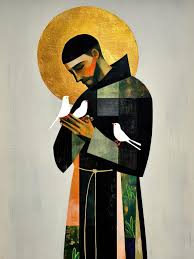
Image credit: https://www.instagram.com/p/CF_31K6sogj/

I was talking to a friend recently who had been on a road trip.  She had stopped for gas and was standing by her car when another car pulled up next to her.  A family piled out of the car, followed by the family’s dog.  My friend was paralyzed in place.  The dog looked exactly like her beloved dog Buddy who had passed away four years ago.  Her eyes immediately watered, and even though four years had passed, an ache appeared in her chest that she thought had long ago gone away forever.  “I just really miss that dog,” she explained later – surprising even herself at how her grief lingered.

I have sometimes wondered if our celebration of St. Francis and the Blessing of the Animals is not a little gimmicky.  We even took our celebration on the road yesterday for the first time, offering to bless animals and their owners whom we have never met, who maybe never harken the door of any church, let alone Hickory Neck’s doors.  But as I thought about my friend’s lingering grief over her dog who had passed, and as I have heard countless stories over the years of cats, horses, Guinea pigs, goats, and even chickens who have been a source of joy, companionship, sometimes consternation, but always love, I understand more fully why we commit to blessing animals and their owners, even if on the surface the practice may seem like a gimmick.

We engage in the blessing of animals because of the inspiration that comes from St. Francis of Assisi.  St. Francis is one of the most beloved saints of the Church.  Most of us think of Francis as the patron saint of animals and creation.  When we think of him, we may think of a St. Francis statue in a garden.  We may think of various images of him preaching to birds.   Some of us may even recall that tale where Francis negotiated peace between a village and a wolf that had been terrorizing the town.  His understanding of animals as his brothers and sisters is why we bless animals on his feast day – the creatures that were so dear to him.  That is also why when we say the Eucharistic prayer [at 10:00 am] today, we will use Prayer C – the one that praises, “the vast expanse of interstellar space, galaxies, suns, and the planets in their courses, and this fragile earth, our island home.”[i]

At the heart of our blessings yesterday and today is an understanding that St. Francis had mastered and we continue to understand – that we are bound to all of the creation God created – to the earth, to the earth’s animals, and to one another – even the other humans or other creation we may not like.  Jesus reminds us of the nature of that bond today in his words about following him.  In Matthew’s gospel, Jesus says, “Come to me, all you that are weary and are carrying heavy burdens, and I will give you rest.  Take my yoke upon you, and learn from me; for I am gentle and humble in heart, and you will find rest for your souls.  For my yoke is easy, and my burden is light.”  Those yokes Jesus talks about were used to harness two animals for work.  The yoke allowed the two not just to double their work, but to rely on one another – if one was tired, the other could push harder; and then the weaker one could later support the stronger one.  Yokes, like Jesus’ work, were easy and made the burden light. 

But beyond the mechanics of a good yoke, the yoke is also a good metaphor for how we see the gospel.  Being yoked to another makes you connected.  And once you are connected, and see how dependent upon one another you are, you begin to see how that connection extends beyond the two of you – that your yoked interconnection is a microcosm of the connectedness of all of God’s creation.  Francis, who was just as known for helping the poor as he was for befriending animals, understood that all humanity is connected.  He learned that the more we spend time seeing the humanity in others – especially the humanity in those we would rather not – then we start to see that our interconnectedness extends even further – to God’s creation, to God’s creatures, to the cosmos.  If we open our hearts to one, we cannot help but to open our hearts to all.  Francis’ love for the poor and Francis’ love for creatures were not two separate things – they were one in the same. 

The invitation for us is to start claiming our yoked nature – yoked to those we love, yoked to our political opponents, yoked to those who have different ethics and values than ourselves, yoked to parents who make different parenting decisions, yoked to those with different skin color or sexual orientation, yoked to those we see as deserving of God’s grace and those who are not.  Our yoked nature allows us to pray [and later sing] the Prayer of St. Francis from our Prayer Book:  “Lord, make us instruments of your peace. Where there is hatred, let us sow love; where there is injury, pardon; where there is discord, union; where there is doubt, faith; where there is despair, hope; where there is darkness, light; where there is sadness, joy. Grant that we may not so much seek to be consoled as to console; to be understood as to understand; to be loved as to love. For it is in giving that we receive; it is in pardoning that we are pardoned; and it is in dying that we are born to eternal life.”[ii]  We can do the work of St. Francis, blessing animals, humans, and all creation, because of the yoke of Jesus.  Thanks be to God.  Amen.


[i] BCP, 370.

[ii] BCP, 833.

On Finding Commonality and Church…

01 Wednesday Oct 2025

Posted by jandrewsweckerly in reflection

≈ Leave a comment

Tags

band, beauty, Christ, church, commonality, community, concert, disparate, healing, meaning, music, unity

Photo credit: https://unsplash.com/s/photos/concert-audience

Last weekend we took one of our daughters to her first concert.  It was not a band or even a genre of music I particularly like.  But she had been obsessing over every concert venue.  When the band came within an hour of our town, coupled with a big birthday this year, we couldn’t refuse.  So, off we went, playing chaperone to one of those fun life milestones.

While I cannot say that I came to fall in love with the band, what did not escape me was the beautiful experience of that night.  Feeling like a total outsider, I watched as everyone around me joined in commonality.  I watched as people belted out memorized lyrics, and they mimicked famous moves and gestures of the band, and as they shared excitement as each new song began.  I watched people who did not know each other exchange comradery and joy with total strangers.  I watched parents smile at the adulation of a younger generation.  I watched many disparate parts come together as one in that singular moment.

Now I would never claim that Church, especially a church in my denomination, has the same electric, communal energy as that night of raw, unfiltered passion caused by music, but I like to dream that some things like that night happen every Sunday.  We gather every Sunday as a disparate group too:  young parents, frazzled by life; retirees, finding their purpose in later life; singletons longing for a place of belonging; couples or families praying they are not alone in their experiences.  Those who are joyous, those who are grieving, those who are anxious, and those who are feeling good gather every week – not for a favorite band per se, but certainly for a favorite activity.  We gather to remember something bigger than ourselves as individuals, to ground ourselves in something better than what sometimes feels like the daily grind, to find oneness in the one bread and one cup.

Though I would never claim my church feels like going to a band’s concert, I do think Church offers a weekly dose of beauty, of commonality, of belonging, and of joyful purpose.  For those who are not regular church-goers, or even for those who have been hurt by the Church, I understand why you would keep your distance.  But when the Church is at her most Christ-like, the Church offers a weekly gift that might be a source of healing from all those hurts, isolations, and divisions of life.  If you ever want to give it a try, know that this community welcomes you here.

On Rituals and Faith…

24 Wednesday Sep 2025

Posted by jandrewsweckerly in reflection

≈ Leave a comment

Tags

church, disconnected, God, Jesus, journey, kids, pleasure, reflection, ritual, routine, television

Photo credit: https://www.istockphoto.com/photos/hand-popcorn-bowl

I grew up in a time where watching TV meant sitting down with my family at a TV at a scheduled time of a show (though eventually with the ability to record a show and watch it later).  The experience is somewhat foreign to my and my family’s patterns now, with so many on-demand options and individual devices, not to mention increased prices at movie theaters. 

That’s why I’ve been especially grateful this summer and fall with some “old school” experiences with my kids.  My older child and I started watching a show several years ago that released its final season this summer.  However, unlike shows who release seasons in bulk, this one released the episodes one at a time.  We found ourselves dissecting each episode, wondering what would happen next week, making “dates” to sit down together and watch.  Meanwhile, our local movie theater is re-airing a movie series in the theaters – one movie each week for eight weeks.  The movies are based on books my younger child and I have read, and we’ve been able to have our own set of dates, recalling favorite moments, making connections she hadn’t noticed before now that she’s read most of the books.  It’s been a delightful source of joy for both of us.

Having these experiences has made me think a lot about rituals – not just the content of my time with my kids, but the ritual of setting aside time, joining in something that brings us pleasure, making space for conversation and reflection.  Reflecting on these last weeks has made me ever more appreciative of the rituals we find in church.  Some are obvious, like attending weekly worship.  But others are less obvious, like how it feels to receive communion weekly, talking about what we learned that day through Sunday School or a sermon, or even the beauty of a post-church nap every week.  The ritual of being connect to a church community creates the environment for us to develop a relationship with God too.  I have no way of knowing if my children will be church attenders in their adult lives, but by giving them the experience of the ritual, they at least have some place to start in adulthood for making their own way to God.

I wonder what rituals need tending in your life this week.  Where are you feeling disconnected and disjointed, and how might finding your way back to those rituals feed your life and your journey with Jesus?  Or, if you are not so sure about that relationship with God, how might trying out some of the rituals with church open up some doors to which you didn’t know you had access.  I look forward to hearing about your what tending you want to try this week!

On Leaks and Parishes…

31 Thursday Jul 2025

Posted by jandrewsweckerly in reflection

≈ Leave a comment

Tags

church, Episcopal, faith, God, member, parish, spiritual, world

Photo credit: Jennifer Andrews-Weckerly. Reuse with permission only.

Last week at our church we discovered a leak in our parish house that necessitated saws, hammers, and very loud industrial fans.  By Friday, the constant noise broke my patience and I decided I needed to find an alternate place to work remotely – maybe not a place of silence, but certainly a change of scenery.  I landed in two different eateries/coffeehouses and decided to publicize my “remote office.”

What I found was people visiting from out-of-town I did not know were here, parishioners running errands, happy for an open ear, and lots of gratitude for being invited into the shared experience – both from church members and non-members alike.  The experience reminded me why Episcopal Churches are often referred to as “parishes.” Once upon a time, Episcopal churches served a geographic region, or a parish, and the priest was sort of the neighborhood priest.  Doing my work and meeting people where they are – whether they are from my actual church or not, reminded me of the original intention or churches:  that their priests were for the good of the entire community, not just the members.

Archbishop William Temple is attributed with having once said, “The Church is the only institution that exists primarily for the benefit of those who are not its members.”  At our church, we often talk about our mission being simultaneously about those inside our walls and those outside our walls.  That’s why we are doing some big things of late:  developing a third worship service designed specifically for people who are not a part of our community; forming a team who will look at alternative uses of our property that are missional and community-facing; and establishing small groups for spiritual formation that meet off campus – in homes and places of everyday “parish” life.  If we truly believe Archbishop Temple, then our clergy sitting in coffeehouses and eateries should more often be the norm than the crisis-driven exception.

Being out in the “parish” is not just the role of the priest.  I wonder how you are taking your faith, your worship community, your church out into the world.  When was the last time you asked a friend about their spiritual health (in the same way you would ask them about their physical or emotional health)?  When was the last time you were listening deeply to another person’s story and were willing to offer where you saw God in their story?  When was the last time you invited someone to church – not necessarily to the building on Sunday at a certain time, but into the experience of “church” that has been so transformative for you?  I cannot wait to hear about how you can envision taking your church out into the parish!

Sermon – Acts 16.9-15, E6, YC, May 25, 2025

18 Wednesday Jun 2025

Posted by jandrewsweckerly in Sermons

≈ Leave a comment

Tags

Bible, church, Easter, evangelism, God, gratitude, growth, Jesus, Sermon, uncomfortable

Last week at the Rector’s Forum, I talked about the work of the Vestry since our Annual Meeting in January.  At the Vestry Retreat weeks after the Annual Meeting, the Vestry defined the “main thing” for Hickory Neck in the coming year:  growth.  Now the word growth is layered:  growth certainly means growth of resources, growth of membership, but especially spiritual growth of those in and around our community.  Out of that focus, the Vestry formulated five strategic initiatives, all rooted in best practices for healthy, growing parishes.  You will continue to hear about their work and efforts, and their labor is filled with a renewed sense of energy and vibrancy.

At the heart of Eastertide – these seven weeks after egg hunts, fancy clothes, and celebratory singing – is that very work: the growth of the church.  The resurrection is not a one-time stunning event, but the catalyst for the formation of the church.  In these weeks since Jesus’ resurrection, the disciples and apostles are doing the very work Hickory Neck is doing two thousand years later – growing the church (or as some more sassy followers of Jesus might say:  engaging in evangelism). 

What I appreciate about our lesson from Acts today is that the practice of church growth, of evangelism, in biblical times was not exactly precise.  You would think that the book of Acts would tell the story of how, after Jesus’ death, the disciples knew exactly how to spread the Good News.  You would think after all those years with Jesus, the disciples had clear instructions for moving forward, and were able to draw up a structured growth plan.  But our stories from Acts this year have included nothing of the sort.  So far, we have heard stories of a brutal persecutor of Christians being dramatically converted, of Peter realizing that Gentiles should also be included in the Christian community, and today we hear of this foreign woman of power coming to Christ.  I am pretty sure if the disciples sat down and planned their target audience for the Good News, Paul, Cornelius, and Lydia would not have been on their list.  And yet, this is the story of evangelism we hear during Eastertide: a story of unlikely and unexpected people hearing and responding to the word of God.

On the surface, this seems like good news.  These stories of conversion give a sense of confidence that no matter with whom we share the story of Jesus, they will be converted.  But looking at the end of the story glosses over the actual experiences of those on the evangelism journey.  If you remember, when Paul is converted, and his eyes are scaled over, the Christian who goes to talk with him is scared to death.  God tells him to go to Paul, but that is little assurance when that instruction means walking into the lair of a nasty murderer of Christians.  And for Peter, his interaction with Cornelius means that he must surrender all that has been familiar to him – the necessity of circumcision and all that he has known as being central markers of faithfulness – and let go of that familiarity.  Even with this interaction between Paul and Lydia today, Paul must take on a long journey based on a few words in a dream, only to find not a Macedonian man who is asking for help, but a foreign woman.[i]

These stories during Eastertide highlight our own anxieties about growing the church.  We might support the Vestry’s focus on growth, and we might be excited about their strategic initiatives.  And, we sort of hope that work is someone else’s work to do.  Before seminary, I was taking a Bible Study class that necessitated me doing some reading while traveling.  I don’t know if you have ever lugged around and read a Bible while traveling by plane, but doing so will lead to some very interesting experiences.  I had a slightly uncomfortable conversation with a young evangelical male who started telling me about his conservative views on scripture.  I had a businessman ask me if I was a minister or theology student.  When I told him no, he seemed bewildered as to why I would be reading the Bible, and kept eyeing me suspiciously the rest of that flight.  I had a middle-aged woman start telling me about her church and Bible Studies she had enjoyed.  And of course, there were tons of people who just stared at me warily trying to figure out what my angle was.  You would think the lesson from my trip would be, “Take a Bible with you, and see how you can grow the church.”  But to be honest, I found myself wanting to never carry a Bible with me again in an airport.

I think why we get so uncomfortable about church growth or evangelism is we imagine evangelism as knocking on the doors of strangers, presenting some uncomfortable script, and then having doors slammed in our faces.  But our lesson from Acts today shows us a different model.  Our lesson from Acts tells us is that yes, evangelism will entail going places that may be uncomfortable or interacting with people you would not expect.  Paul goes on a long journey expecting to meet a man and gets something quite different.  Lydia goes seeking a place to pray with her familiar girlfriends and hears something entirely new.  But evangelism is not just about the evangelizer and the evangelizee.  The other major actor is the Holy Spirit.  The text tells us that the Lord opened Lydia’s heart to listen eagerly to Paul.  Scholar Ronald Cole-Turner says evangelism is the intersection between human faithfulness and divine guidance.  “Paul would not have been guided to this place at this moment, were he not first of all at God’s disposal, open to being guided, sensitively attuned to being steered in one direction and away from all others.  Lydia would not have arrived at this place or time, had she not first of all been a worshiper of God, a seeker already on her way.  Peter does his part and Lydia hers, but it is God who guides all things and works in and through all things, not just for good but for what would otherwise be impossible.”[ii]

What is so liberating about this understanding of church growth is that even if we thought we had to or could do evangelism on our own, we realize today that our work of growth only happens with God.  David Gortner says, “Evangelism is a spiritual practice of expressing gratitude for God’s goodness and grace.”[iii]  That does not sound so bad, does it?  A spiritual practice of expressing gratitude for God’s goodness and grace.  He does not define evangelism as saving souls or self-righteously driving away your friends.  He says that evangelism is about expressing gratitude for God’s goodness and grace.  Knowing that definition of evangelism and knowing from scripture that evangelism happens as a partnership between our faithfulness and God’s guidance makes the whole enterprise seem a lot less scary. So, right now, I want you to take a deep breath, clear your mind, and then think about the best vacation you ever had.  Think about all the reasons why the vacation was wonderful and why you enjoyed yourself.  Think about the joy or peace that the vacation brought you and notice the warm smile starting to spread on your face.  Imagine the enthusiasm in your voice if you were to share that story with the person sitting next to you and the great conversation your sharing might evoke.  Now, take another deep breath, and then imagine the same full-body experience happening with a conversation about your faith journey.  Think about the great joy you have had in your relationship with God.  Think about the sense of meaning or peace you have at times found in God.  And now think about the broad smile on your face and the enthusiasm in your voice as you share that story with someone else and the incredible conversation your sharing might evoke.  That is all that happens between Paul and Lydia.  That is all that God invites you to do today.  Because the Holy Spir


[i] Eric Barreto, “Commentary on Acts 16:9-15,” May 9, 2010, as found at https://www.workingpreacher.org/commentaries/revised-common-lectionary/sixth-sunday-of-easter-3/commentary-on-acts-169-15-2 on May 22, 2025.

[ii] Ronald Cole-Turner, “Theological Perspective,” Feasting on the Word, Yr. C, Vol. 2 (Louisville: Westminster John Knox Press, 2009), 476

[iii] David Gortner, Transforming Evangelism (New York: Church Publishing, 2008), 29.

Sermon – Luke 24.1-12, ED, YC, April 20, 2025

18 Wednesday Jun 2025

Posted by jandrewsweckerly in Sermons

≈ Leave a comment

Tags

ambiguity, both-and, Christ, church, death, differences, divine, Easter, humanity, Jesus, joy, life, risen, Sermon

I grew up in a small town in rural North Carolina with a lot of evangelicals.  I learned quickly that if I wanted to get along, I had to get really comfortable with my response to the question, “Have you been saved?”  If you have been around the Episcopal Church for long, you will realize that we do not really use that kind of language to describe our faith experience.  But as a teenager, where the prominent local church had “Jesus Saves” blazed in red neon on the side of the church, I got used to that kind of faith language – the desire for certainty, clarity, and conviction.  Now, I am not sure my evangelical friends really believed me when I said, “Yes!” to their question about whether I was saved or not, but “Yes!” was the answer for which they were searching.

The funny thing is, on Easter Sunday, Episcopalians seem to be pretty steeped in certainty, clarity, and conviction too.  Just listen to our songs:  Jesus Christ is Risen Today and Christ is Alive – both pretty declarative titles.  And, after the sermon, go back and count how many times in our liturgy we will say, “Christ is risen. The Lord is risen indeed.”  After almost two thousand years have passed, we are pretty clear on what Easter means:  the Easter empty tomb is the answer to the cross of Good Friday.  All that has been forsaken is redeemed.  Jesus is alive.  The cross does not have the final say.

For a faith community, across all kinds of denominational differences, who seems so very certain, clear, and convicted about Easter, nothing about our gospel story we heard this morning from Luke has that same certainty, clarity, and conviction.  The women who come to the tomb early Easter morning don’t come in their celebration finery, with bells to ring alleluias.  They come bearing spices to finish the final burial rituals of what they know to be a dead Jesus.  When they find the empty tomb, they are entirely perplexed, even though, as the men in dazzling clothes remind them, Jesus had told them that he would rise again.  And when the women finally start to put the pieces together, and Mary Magdalene, Joanna, and the other women go to tell the apostles, these guys don’t believe them.  Even Peter, who goes to double check, just in case the women aren’t totally crazy, doesn’t go out proclaiming Jesus’ victory.  One scholar tells us, “There is an alternate translation of verse 12 – a reading where Peter does not simply ‘go home,’ but wonders ‘to himself’ or ‘with himself’ at what he has seen.”[i]  I am not sure any of the actors in today’s gospel would be able to confidently say in our liturgy today, “The Lord is risen indeed!”

As ambiguous as our text feels, I kind of love the ambiguity today.  This Lenten season and Holy Week have been rough.  The world outside these walls feels like complete chaos, with structures, lives, and systems being totally upended.  And while that may feel like a necessary action by some, the experience of that action has been destabilizing and debilitating.  In truth, I had no problem this past week walking the path to Jerusalem, hearing of my sinfulness and the corporate sinfulness of world, because the stories of betrayal, abandonment, jockeying for power, shameful dehumanization, the degradation of human life feel very contemporary – not a set of stories from millennia ago, but stories with modern parallels to today. 

The harder parallel for me has been turning to Easter joy – to confidently saying, “The Lord is risen indeed!” when resurrection life feels less real than crucifixion life.  So, I have no problem imagining coming to Church this Sunday with my burial spices, because we’ve been doing a lot of burials lately.  I have no problem imagining the faithful forgetting good news because I have a hard time clinging to the Good News these days.  And I have no problem imagining men not believing women (although don’t get me started because that is probably a whole different sermon!) – I have no problem imagining those apostles not believing the witnesses because when all you hear is bad news, sometimes we lose the ability to hear and receive good news.

The good news is, the Church makes room for all of us today.  The church makes room for those of us so caught up in our grief that we cannot see life in the midst of death.  The Church makes room for those of us so focused on the present moment that we cannot remember Christ’s promises for us.  The Church makes room for those so convinced of their own wisdom that we cannot hear wisdom from those unlike us.  And the Church makes room for those who still have certainty, clarity, and conviction that Jesus saves and there is light in the darkness.  The Church makes room for all of us because we need each other – we need those who are questioning and those who are certain; we need those who see the complicated nature of life and those who have real clarity; we need those who are unsure and those who are convicted.  We need each other because we hold each other accountable.  We are not an either-or kind of Church:  we are a both-and Church.  We hold in tension the reality that Christ is alive with the reality that sometimes we feel like Christ is not alive.  We hold in tension the conviction that Jesus Christ is risen today with the conviction that we sure would like the world to stop feeling like Christ isn’t risen. 

By honoring the both-and, we honor the real Easter experience of Luke’s gospel.  We honor the fullness of our humanity that is probably a little too human to fully understand the divine, sacred thing that happens on this day.  And we honor our longing for some Easter joy in what has felt like a long, dark winter.  Together, we get there a little more honestly, a little more boldly, and with a little more joy that we might on our own.  Christ is risen – we sure hope the Lord is risen indeed!  Amen.


[i] Jerusha Matsen Neal, “Commentary on Luke 24:1-12,” April 20, 2025, as found at https://www.workingpreacher.org/commentaries/revised-common-lectionary/resurrection-of-our-lord-3/commentary-on-luke-241-12-10 on April 18, 2025.

Sermon – Luke 24.1-12, EV, YC, April 19, 2025

18 Wednesday Jun 2025

Posted by jandrewsweckerly in Sermons

≈ Leave a comment

Tags

church, Easter Vigil, God, Jesus, love, salvation, Savior, Sermon, story

Tonight, we celebrate one of the most ancient, and in many traditions, the most important liturgies of the Church.  This is the festival of the resurrection of our Lord – despite what you may have learned about Easter Sunday.  Tonight is the night that we liturgically mark that shift from Lent and the Passion to our Lord and Savior’s Resurrection.  The church gives us this incredible gift tonight, and our job is to hearken back to an innocent sense of awe as we realize what God does through Jesus Christ.

Luckily the Church helps us hearken back to that innocent sense of awe through the structure of the liturgy.  I like to think the Church’s work in the Easter Vigil as being like that grandfather in the movie The Princess Bride, who visits his sick grandson to read him a fantastic tale.  In that movie, the grandson is skeptical – that in fact his grandfather might be planning to read him a boring or sappy story.  But the grandfather insists that this story is one of the greatest stories ever told – a story that his father read him, that he read to his son, and now, he would read to him, his grandson.

The Church is like that grandfather to us tonight, who gathers up the grandchildren around him, and says, “Let me tell you a story.  This story is greater than any other story you have ever heard.  This story is full of intrigue and surprise, full of the primal elements, full of drama and passion, and full of twists and turns you will not expect.  Do you want to hear the story?”  And before the grandfather can even begin, we, the grandchildren, are waiting with bated breath.

“Once upon a time, before there was time, or people, or even land or sky, the earth as we know the earth was a formless void – filled with watery chaos.  God created the world as we know the world, and proclaimed that creation, ‘good.’  Sometime later, that world fell into sin and God used water to cleanse the whole earth through flood.  To the one person God saved, God promised to never do such destruction again and made a covenant of protection.  Much later, the people of God were fleeing a horrible fate – an awful leader who had enslaved the people.  This time, God once again manipulated the water – both to save God’s people and to destroy those who wished to destroy God’s people.  On the other side of the sea, on dry land, the people rejoiced.  Later, the people fell away from God and although God was grieved, God spoke to the prophet Ezekiel.  God told Ezekiel to reassemble the dry bones of God’s people, and to breathe new life into them.  And the people lived again.  Much later, when the people had become dispersed and disheartened, God proclaimed new hope.  God proclaimed that God would gather God’s people again and would eliminate their despair.

“But after all of that – after creation and floods, after the division of the sea and the giving of new life to old bones, even after promising to save the people – after all of that, yet still the people of God lived in sin and in separation from God.  And, knowing no other way, God did something so unexpected, so wonderful that we could never repay God.  God sent God’s Son to live and breathe among us, to show us the way of faithful living and the way to eternal life.  And as if that were not enough, that same Son was betrayed by his friends, mocked and reviled, and killed on a cross.  That was a dark, painful time – darker and more painful than anything the people had known before.  And so, the people of God did the only thing they knew to do:  they mourned, they hid in fear, and a few brave women went to tend to this precious gift they had been given, making his death as sacred as they knew how. 

“But something amazing happened – something no one ever anticipated.  The Son of Man, the Prince of Peace, the Messiah, Jesus was not there.  And the disciples went from east to west, sharing the sacred and imperishable proclamation of eternal salvation.”

At the end of the film The Princess Bride, the grandfather finishes the book, and tells his grandson to go off to sleep.  The once skeptical grandson hesitantly addresses his grandfather, “Grandpa?  Maybe you could come over and read it again to me tomorrow?”  His grandfather smiles and responds, “As you wish.”  Those words are significant because in the story the grandfather tells, the main characters say, “As you wish,” as their code word for, “I love you.”  Tonight, we too hear the story of our salvation, the great sweeping of our history with our Lord, and the salvific work of our Savior Jesus Christ, and we too find ourselves strangely warmed, longing to perhaps hear the story again.  And to us, the Church says, “As you wish.”  Amen.

Sermon – John 18.1-19.43, GF, YC, April 18, 2025

18 Wednesday Jun 2025

Posted by jandrewsweckerly in Sermons

≈ Leave a comment

Tags

church, community, darkness, death, failure, Good Friday, Jesus, light, love, relationship, Sermon, sin

There is something about Good Friday and the passion narrative from John’s gospel that is gruelingly convicting.  On most days we do a pretty good job of convincing others and ourselves that we are fine – that we are working hard, trying to love and serve others, and be a faithful follower of Christ.  But if we are honest, part of what is so hard about facing Good Friday is that facing Good Friday means facing ourselves – facing our failures, our sinfulness, our lack of ability or even willingness to actually follow Jesus. 

I confess that the last four months, one of my coping mechanisms for facing the state of our country has been to read, listen to, and watch less news.  I was finding that my mental health was getting diminished the more time I spent reading, listening, and watching the news, so I just stopped.  I filled the void with music, or people, or movement, but not with knowledge.  That has been my method of coping, to shut out the ugly, painful, and evil, because the alternative has felt overwhelming – so overwhelming that I can scarcely put together words around my devastation about who and how we have become, especially as people of faith.

But coming here, listening to John’s words, engaging in the Good Friday liturgy feels like the exact opposite.  Listening to that passion narrative feels like standing in an ocean of sinfulness, failures, and all that is not of God, and having waves of devastation hit us over and over and over again.  If we are really listening and really being honest with ourselves, all of the bad of this story is not bad that others do – but bad that we have all done at some point in our lives.  We grieve over Judas because we too at times have thought we knew better than Jesus and took matters into our own betraying hands.  We grieve over Peter because we too have prioritized our survival instinct over faithfulness.  We grieve over Caiaphas because we too have argued our way through the ethics of choosing the lesser of two evils instead of not choosing an evil at all.  We grieve over Pilate, seeing how hard he tried to do the right thing, because we too have caved under peer pressure and fear.  We grieve over the chief priests who are caught up in anger and the desire to remove a thorn from their sides because we too have often wished that someone difficult would just go away.  We grieve over soldiers who follow orders even when they know they are doing wrong, because we too have towed the company line.[i]   

Coming to church on Good Friday is our way of turning the news back on, sitting in the ashes, being fully and honestly ourselves in ways that we rarely do because doing so is painful, vulnerable, and scary.  But doing so also opens us up.  When we allow ourselves to face the fullness of human depravity – the fullness of our own depravity that we try so desperately to hide – we open up a path in the darkness to the light.  We agree to this exercise of turning on the news because we trust that the Church can empower us into another way – can help us find light and life in the ocean of darkness and death. 

When I was training to become a priest, I spent a summer serving as a chaplain in a hospital.  The days were long, and you never knew what situations would be thrown at you – from folks making their way through routine surgeries, to people in the ICU unable to communicate what landed them there, to people holding vigil with a beloved (or dreaded) family member.  I remember one day in particular getting paged up to a floor for someone approaching death.  When I arrived, the nurses told me the family had left for the day, but the patient of the family would likely die in the next hour.  The family lived further than an hour away, and had asked that someone sit with her in their stead.  The nurses had decided I was that someone.  And so, I sat, with someone whose story I did not know, whose faith and piety was unknown to me, and, at that point, with no knowledge of what the moment of death actually looked like.  And so I sat, uncomfortably called to a task I felt completely ill-equipped for, and yet, by my identity as Christian, was called to perform.

In that horrible ocean of Good Friday, there is light in our darkness.  Despite all those faithful people who failed Jesus so horrifically and fully, four people hold vigil.  They show up.  They stay.  And, eventually, by doing exactly what you are doing today – sitting in the inconceivable darkness of Good Friday – they see a glimpse of light.  Three Mary’s (Mary, Jesus’ mother, Mary wife of Clopas and sister of Mary, and Mary Magdalene) and the beloved disciple stand near the cross.  They do not protest, they do not fight, they do scheme.  They hold vigil by Jesus, facing the evil of the crucifixion of the Messiah, and they stay.  They do not run away, they do not cover their ears or eyes, the do not try to mask the ugly in something pretty.  They bear witness together, gathering at the foot of Jesus’ cross, staying fully open to the awfulness of the cross.

In that moment of gathering – of not really doing something other than being present – something transformative happens.  Jesus says some of the words we label as the Last Words of Jesus.  Jesus says to his mom, “Woman, here is your son.”  And then he says to the beloved disciple, “Here is your mother.”  What commentators say about these words is that Jesus created the new family unit with these words.  Now, I get a little skittish when we call church communities families because families are so incredibly complicated and the term “family” can be so loaded – often with negative connotations.  Instead, I might say that, in his abandonment and death on the cross, Jesus creates a path of light – a way to find companionship, community, and Christ – through relationships with Jesus at the center.  Peter Gomes describes the moment beautifully.  He says, “…what we find…is Jesus redefining the concept of family:  What it is, who belongs, and what it does.  It should not surprise us that here on the cross…he now reorganizes human affections.  He redefines human relationships, creates a new family, and in the center of it is to be the remembrance of him.  This is a family that is made not by blood, not by the old way, but by love and care:  that is the new way.”[ii]

On the one hand, this new definition of our relationships is beautiful in and of itself, and perhaps that beauty can sooth all the grief we talked about surrounding this scene.  And, on the other hand, there is a charge in this gift, in this path of light.  For months I have been trying to figure out what the call to us as Christians is at this time – especially for the “family” or “community” here at Hickory Neck that is so diverse in its political expression.  What unites us, that community that we have formed for centuries gathering around the common table is found in this moment in Good Friday.  In the turmoil and divisiveness of this time, Jesus reminds us that we are obligated to one another.  We are parents and children.  We are lovers and loved.  Even, and especially, with those people with whom we have no blood connection to – we are bound to one another in Christ.  And it matters when members of our gifted community are being persecuted, are being made afraid, are being made “other” – are essentially being booted out of our community of love.  In this turbulent time, we cannot run off, we cannot avoid, we cannot seek the lesser of evils.  We can gather at the cross and bear witness – bear witness to the encompassing love of Christ and the community to whom we are now obligated to love too.  In a world where we may feel like there is no way, Jesus breathes words of love and life into every one of us – words that cannot be contained in our own lungs and hearts and souls.

I do not know where this path of light in the darkness will take us.  I do not know how Jesus is calling you to be mother or father or son or daughter.  I do know that even in the darkest of days, Jesus sees light in you.  Jesus sees goodness in you.  Jesus see possibility in you.  And if we have nothing left to celebrate, we can walk out of here today commissioned in love and light.  Amen.


[i] Jim Green Somerville, “Pastoral Perspective,” Feasting on the Word, Yr. C, Vol. 2 (Louisville: Westminster John Knox Press, 2009), 300, 302.

[ii] Peter J. Gomes, The Preaching of the Passion:  The Seven Last Words from the Cross (Cincinnati:  Forward Movement Publications, 2002), 32

Sermon – Luke 9.28-43, TRS, YC, March 2, 2025

05 Wednesday Mar 2025

Posted by jandrewsweckerly in Sermons

≈ Leave a comment

Tags

Christian, church, division, Elijah, follow, formation, identity, Jesus, Lent, love, mission, Moses, prayer, Sermon, spiritual, Transfiguration

As I spend time with parishioners, staff, clergy leaders, and folks outside the community one common question keeps emerging, “What do we do?”  As we watch divisions deepen – something that seemed impossible given how deeply divided we already were, and as we watch a dismantling of how our country has operated for ages, and as we argue about what is best for our country, I have heard us asking, wondering, struggling with that question, “What do we do?”  The question is mirrored in the story of the transfiguration in Luke’s gospel today too.  Sleepy disciples who are supposed to be praying with Jesus on top of a mountain are jolted into alertness upon seeing Jesus in dazzling brightness, talking with long-gone Moses and Elijah, saying something about Jesus departing.  John and James are stunned into silence, but Peter answers his own question of “What do we do?” by proposing they build some dwellings – for surely remaining here in God’s glory is what he thought they should do.

Though we tease Peter about his not fully “getting it” when we wonder what we should do, I find myself mimicking Peter these days.  When I am asked, “What do we do?” my immediate and probably over-simplified answer is “follow Jesus” – not follow Republicans or follow Democrats; not follow supporters or follow opposers; not follow these Christians or follow those Christians.  Simply follow Jesus.  The problem with my answer of following Jesus is that the answer is so simple the answer leaves us with more questions than actual answers. 

That is why I am so grateful for Luke’s gospel today.  What this passage from Luke’s gospel does is tell us that following Jesus means, One, “…we must be clear about our identity;” two, be “resolute in our mission;” and three, be “intentional in our spiritual formation.”[i]  So, clear on our identity, focused on mission, and intentional about our spiritual formation.  Let’s dig in to this passage to find more clarity.

To follow Jesus, we need to be clear about our identity.  As scholar Jeffery Tribble argues, in Luke’s gospel, “The transfiguration bears witness to the identity of Jesus Christ.  By God’s action in the transformation itself and in the words of the voice of heaven, a theological statement is made.  Jesus Christ is declared to be the Chosen Son of God.  The disciples heard the declaration:  ‘Listen to him!’  The Christ event – his incarnation, passion, death, resurrection, ascension, gift of the Holy Spirit, and promised second coming – is the defining script for our local performances of the gospel.”[ii]

So what does that mean?  What is our identity here at Hickory Neck?  We define that identity using the acronym HNEC.  H stands for Hospitality:  We are committed to creating an environment where all experience an on-going sense of welcome, acceptance, and belonging.  Our hospitality is responsive to the unique needs of each generation, creating a community of mutuality, respect, dignity, and connection.  N stands for Nurture:  We are committed to nurturing the unique ministry of every individual so they can fully realize their baptismal covenant and participate in the life of the church, using their God-given gifts both within and outside the parish.  E stands for Engagement and Evangelism:  We are committed to responding to the needs of the wider community, sharing the love of Christ with our neighbors, and shining Christ’s light in the world.  And C stands for Curiosity:  While cherishing our particular history and Anglican identity, we are committed to being open to the movement of the Holy Spirit, being playful with one another and the wider community, while taking joy in one another.  So, our identity is about hospitality, nurture, engagement, and curiosity. 

So, being clear first about our identity, we must secondly be resolute in mission.  The transfiguration reveals the redemptive mission of Jesus Christ.  With Moses’ presence pointing to the exodus event and the communal responsibly to teach the statutes and ordinances, and with Elijah’s presence pointing to the end times, Jesus’ work of continued redemption is clear.  As Tribble says that “…in the transfiguration event Jesus is clear about his mission, which continues the redemptive work of God from the exodus through the end times.”[iii]

What about us, then?  Hickory Neck actually has a mission statement.  The mission statement reads, “We foster a loving, welcoming Christian Community with a uniquely intergenerational approach to worship, fellowship, and formation, helping us to develop a relationship with God and each other.  Nourished in community, we share the love of Christ Jesus by caring for each other, serving neighbors in need, and seeking justice and peace for all people.”  If I had to “make it plain,” I would use these eight words, “Love inside these walls, love outside these walls.”  When we are puzzling our way through what we should be doing in these profound times, our mission is simple:  love inside these walls and love outside these walls.  Now I know that sounds very pie in the sky – I have been known to roll my eyes a few times when someone says, “It’s all about love!”  But here’s the thing:  no matter what political or theological view you have, I can guarantee you that someone in this room disagrees with you.  How will you love them?  And when you are out in the world, all kinds of policies and moves are being made that may feel like they do not matter because they do not impact you directly – at least not yet.  How will you make sure that you and we as wider community are making sure love reigns?  There is a lot happening outside these walls that are done in the name of the redemptive Christ.  Your work is to discern which of those activities are actually following the identity and mission of the Jesus we are talking about this very day.

And that leads us to the third thing we invited to do to follow Jesus:  to be intentional in our spiritual formation.  I don’t know if you noticed, but Jesus took James, John, and Peter up that mountain not to heal, or to work, or even to witness the transfiguration.  Jesus brought them up to pray.  Whether in this passage or in the many verses to come, we know from holy scripture that “throughout his ministry Jesus was faithful in spiritual disciplines that would bring him into the presence of his Father.”[iv]

Tribble reminds us that “Professing faith in Christ in one thing, but living our Christian faith requires greater depth and breadth in our spiritual formation.”[v]  If we are in fact a congregation that doesn’t preach politics but instead preaches Jesus, then our work collectively is to know Jesus.  That means if you are not already in Bible Study, or reading scripture at home, or listening to a podcast about scripture, now is the time to dust off that book (or app) and get going.  That means if you are not one who is too comfortable with prayer, or only use prayer when you have an emergency, now is the time to start flexing your prayer muscles – whether you work your way through the Book of Common Prayer, whether you set aside daily time for prayer, or whether you start using those prayer beads, now is the time to step away with Jesus in prayer.  I remember reading about a conversation between His Holiness the Dalai Lama and Archbishop Desmond Tutu in which the two of them were competing about who got up the earliest for prayer.  Both of these deeply spiritual men knew that the only way they could do any good work was to deepen their spiritual formation.

The good news is that we are heading into a season in the church where all of this work is enriched, supported, and encouraged.  In the season of Lent, we are encouraged to be intentional about our spiritual formation.  In Lent we work to become very clear about our identity.  In Lent we become resolute in our mission.  If you are feeling that overwhelming sense of “What do I do?” in these times, the Church invites you to follow Jesus.  The Church invites you to be focused on identity, mission, and formation.  And this Church specifically creates the structure for you to do just that.  Your invitation is to join us!  Amen.


[i] Jeffery L. Tribble, Sr., “Pastoral Perspective,” Feasting on the Word, Yr. C, Vol. 1 (Louisville:  Westminster John Knox Press, 2009), 452.

[ii] Tribble, 452.

[iii] Tribble, 454.

[iv] Tribble, 454.

[v] Tribble, 456.

← Older posts

Recent Posts

  • On the Myth and Magic of Advent…
  • On Risking Failure and Facing Fear…
  • Sermon – Luke 23.33-43, P29, YC, November 23, 2025
  • On Inhabiting Gratitude…
  • Sermon – Luke 20.27-38, P27, YC, November 9, 2025

Archives

  • December 2025
  • November 2025
  • October 2025
  • September 2025
  • August 2025
  • July 2025
  • June 2025
  • March 2025
  • February 2025
  • December 2024
  • November 2024
  • October 2024
  • September 2024
  • August 2024
  • July 2024
  • June 2024
  • May 2024
  • March 2024
  • February 2024
  • January 2024
  • December 2023
  • November 2023
  • October 2023
  • September 2023
  • August 2023
  • July 2023
  • June 2023
  • May 2023
  • March 2023
  • February 2023
  • January 2023
  • December 2022
  • November 2022
  • October 2022
  • June 2022
  • May 2022
  • January 2022
  • December 2021
  • November 2021
  • October 2021
  • September 2021
  • August 2021
  • June 2021
  • May 2021
  • April 2021
  • March 2021
  • February 2021
  • January 2021
  • December 2020
  • November 2020
  • October 2020
  • September 2020
  • August 2020
  • July 2020
  • June 2020
  • May 2020
  • April 2020
  • March 2020
  • February 2020
  • January 2020
  • December 2019
  • November 2019
  • October 2019
  • September 2019
  • August 2019
  • July 2019
  • June 2019
  • May 2019
  • April 2019
  • March 2019
  • February 2019
  • January 2019
  • December 2018
  • November 2018
  • October 2018
  • September 2018
  • August 2018
  • July 2018
  • June 2018
  • May 2018
  • April 2018
  • March 2018
  • February 2018
  • January 2018
  • December 2017
  • November 2017
  • October 2017
  • September 2017
  • August 2017
  • July 2017
  • June 2017
  • May 2017
  • April 2017
  • March 2017
  • February 2017
  • January 2017
  • December 2016
  • November 2016
  • October 2016
  • September 2016
  • August 2016
  • July 2016
  • June 2016
  • May 2016
  • April 2016
  • March 2016
  • February 2016
  • January 2016
  • December 2015
  • November 2015
  • October 2015
  • September 2015
  • August 2015
  • July 2015
  • June 2015
  • May 2015
  • April 2015
  • March 2015
  • February 2015
  • January 2015
  • December 2014
  • November 2014
  • October 2014
  • September 2014
  • August 2014
  • July 2014
  • June 2014
  • April 2014
  • March 2014
  • February 2014
  • January 2014
  • December 2013
  • November 2013
  • October 2013
  • September 2013
  • August 2013
  • July 2013
  • June 2013
  • May 2013
  • April 2013
  • March 2013
  • February 2013
  • January 2013
  • December 2012
  • November 2012
  • October 2012
  • September 2012

Categories

  • reflection
  • Sermons
  • Uncategorized

Meta

  • Create account
  • Log in
  • Entries feed
  • Comments feed
  • WordPress.com

Blog at WordPress.com.

  • Subscribe Subscribed
    • Seeking and Serving
    • Join 394 other subscribers
    • Already have a WordPress.com account? Log in now.
    • Seeking and Serving
    • Subscribe Subscribed
    • Sign up
    • Log in
    • Report this content
    • View site in Reader
    • Manage subscriptions
    • Collapse this bar
 

Loading Comments...