• About

Seeking and Serving

~ seek and serve Christ in all persons

Seeking and Serving

Tag Archives: comfort

Sermon – Matthew 11.16-19, 25-30, P9, YA, July 5, 2020

15 Wednesday Jul 2020

Posted by jandrewsweckerly in Sermons, Uncategorized

≈ Leave a comment

Tags

abdication, comfort, delightful, God, Jesus, light, meaning, pandemic, purpose, reckless, refreshment, rest, satisfying, Sermon, weary, yoke

In Compline, one of the prayers is for “we who are wearied by the changes and chances of this life.”[i]  I have been feeling that prayer these last several weeks – or even months.  The longer we stay in our homes, the longer this pandemic wages illness and death upon us, the longer the spread of virus takes away the everyday privileges we never fully appreciated, and the longer civil unrest forces us to look at our demons and sinfulness, we become more and more weary.  We do not have to ponder too long why cases of the pandemic are soaring this summer.  People who are wearied by the changes and chances of this life are so grief-stricken they are becoming reckless, self-centered, and indignant.

So, you can imagine my full-bodied relief when I heard the last verses of our Gospel lesson today.  “Come to me, all you that are weary and are carrying heavy burdens, and I will give you rest.”  Those words from Jesus are sweet comfort to us, who just want a break, who just want some semblance of normalcy, who just want peace.  Jesus’ words are a warm embrace in a time of touchlessness.  Jesus’ words are a balm to our country who this very weekend honors a liberty that many of our neighbors are reminding us is not felt by all our citizens.

But as scholar Thomas Long says, “What Jesus offers, however, is not a hammock, but a yoke.”[ii]  I know we want to linger on verse 28, but immediately after that comforting embrace, Jesus says, “Take my yoke upon you, and learn from me; for I am gentle and humble in heart, and you will find rest for your souls.  For my yoke is easy, and my burden is light.”  In the shift between these last verses, Jesus does a bit of a bait and switch.  He beckons us into his comforting arms, but also places a burden on our shoulders.

I confess, I have been a bit cranky about that switch.  Can’t we just have one week, one Sunday, one moment, where we abdicate responsibility, where we take a sabbath from all this work, where we binge watch television and eat crappy food?  Isn’t that what Jesus means when he says he will give us rest?!?

Fortunately for all of us, I had my tempter tantrum early in the week, and have had some time to sit with this yoke of Jesus’.  You see, when I am being honest, I know binge watching television or eating junk food is not actually restorative.  I feel stiff and tired after sitting for hours.  And when I eat unhealthily, the lingering stomachache or sluggishness is not actually as comforting as the comfort food implies.

What Jesus is suggesting today is not a restful, self-centered, time of abdication.  What Jesus is suggesting is we find rest in the things of life that matter.  As one scholar suggests, “we will find rest for carrying the burden of the gospel by living out the unique mission to which Jesus calls each of us.”[iii]  That yoke we may be skeptical of this week, is not actually a ploy or a trick by Jesus.  The reason Jesus says his yoke is easy and his burden is light is “because [his yoke] is the way of God, and [his yoke] is profoundly satisfying to the human soul.”[iv]

Jesus uses some strong imperatives today:  come to me, take my yoke, learn from me.  But Jesus is not being bossy.  Jesus is reminding us, in his ever so firm, but pastoral way, that the ways we are seeking rest and relief from weariness are not the ways to life.  The way to life, of true refreshment, of renewed spirits is through the yoke of Christ.  How is that possible?  As one scholar reminds us, “The easy yoke means having something to do:  a purpose that demands your all and summons forth your best.  [The easy yoke] means work that is motivated by a passionate desire to see God’s kingdom realized.  [The easy yoke] means work toward a certain future in which all of God’s dreams will finally come true.  To accept the yoke of the gentle and humble Lord is to embrace the worthy task that puts the soul at ease.”[v]  Jesus reminds us today that the rest we seek is not mind-numbing, emotion-numbing, spirit-numbing relief, but purposeful, meaning-filled, reward-making clarity.  When we harness ourselves to Christ, the burdens no longer feel like burdens, the work no longer feels like work, and the desire to be done turns to a desire for God’s delightful sense of purpose and meaning.  That is the kind of profound satisfaction Jesus offers today.  Thanks be to God!

[i] Book of Common Prayer, 133.

[ii] Thomas G. Long, Matthew (Louisville:  Westminster John Knox Press, 1997), 132.

[iii] Emilie M. Townes, “Theological Perspective,”  Feasting on the Word, Year A, Volume 3 (Louisville:  Westminster John Knox Press, 2011), 214.

[iv] Long, 132.

[v] Lance Pape, “Homiletical Perspective,” Feasting on the Word, Year A, Volume 3 (Louisville:  Westminster John Knox Press, 2011), 217.

On Refreshment in a Parched Land…

01 Wednesday Jul 2020

Posted by jandrewsweckerly in Uncategorized

≈ Leave a comment

Tags

care, comfort, communion, Coronavirus, grieve, Holy Eucharist, pandemic, parched, prayer, reassurance, refreshment, salve, wilderness

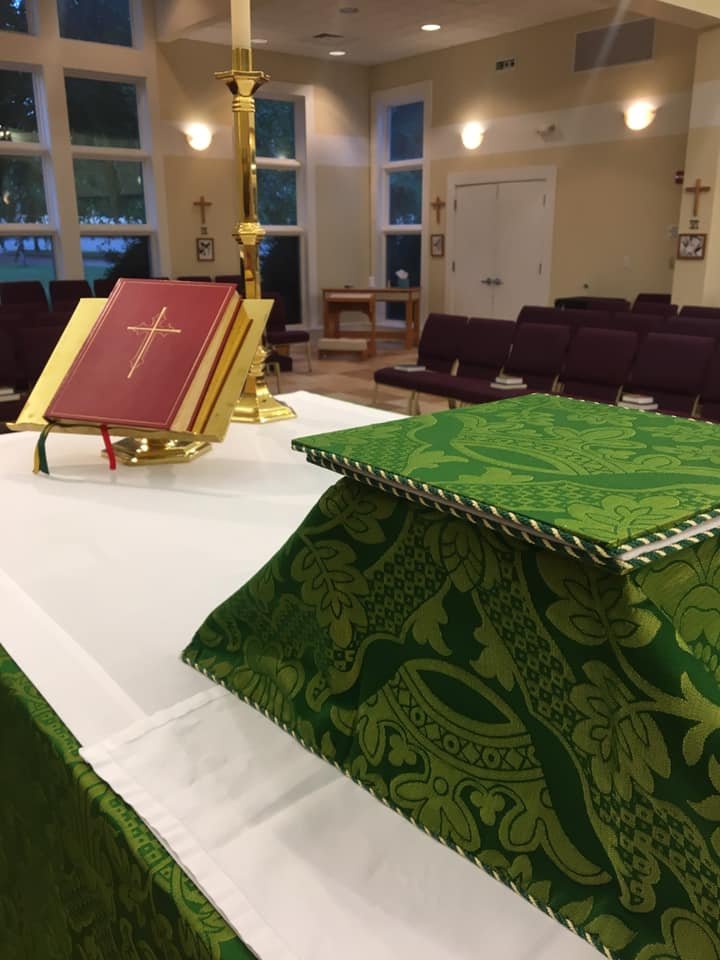
70038647_10158090008257565_6128712585278652416_n

Photo credit:  Jennifer Andrews-Weckerly; resuse with permission only.

Over three months ago, when we closed our church’s doors because of the Coronavirus pandemic, we had to make some quick, difficult decisions.  We knew we wanted to offer a livestream service, but we also knew we did not feel comfortable consuming the holy meal without the community of faith gathered.  Fortunately, we have a rich traditional of prayers from our Book of Common Prayer, so we switched to Morning Prayer on Sundays.  In seminary, I attended Morning Prayer daily, so in some ways, the last many months has been like visiting an old friend.  As the officiant, I have often worn my seminary cross as a sign of gratitude for the formation I receive at Virginia Theological Seminary to be able to confidently officiate the service.

But as our diocese gave us permission to begin the regathering process, the liturgical team began to realize we had a conundrum.  For the limited number of people who would be able to gather in the space, would we keep offering Morning Prayer, or would we offer communion under the new guidelines?  If we offered communion to some, would those watching online feel left out if the livestream was different from the in-person offering?  So, like we often do at Hickory Neck, we decided to try an experiment.  We still did not want the altar party to consume on screen if no one else could consume with us.  But perhaps we could try an offering of “Spiritual Communion”:  a service identical to the familiar Holy Eucharist we normally celebrate, but with a special shared prayer instead of actual reception of the body and blood of Christ.

This past Sunday, we gave the experiment a go.  Shifting types of services is more complicated than it sounds, especially given the challenges of working with limited technology.  My brain was so jumbled with details that when we hit the livestream button, I had not processed the significance of the morning.  I put on vestments I have not worn in over three months – vestments I used to wear every week.  As the celebrant, I was saying words that I have said countless times in the last ten years.  It was only when I elevated the elements, recognizing the muscle memory of my body, that the power of what we were doing hit me.  Holy Eucharist is just one of the myriad things that have been taken away from us during this time of social distancing – one of the many comforts that I have grieved in these last months.  Despite the fact we were not actually receiving communion, despite the fact the room was still empty minus a camera, despite the fact a hundred little things were different, all of a sudden, I found myself overwhelmed with emotion.

Celebrating Spiritual Communion was not the same as celebrating Holy Eucharist.  But celebrating Spiritual Communion felt like a sip of water in a parched land.  It was not complete refreshment, but it was reassurance, comfort, and care.  It was an unexpected gift from the Holy Spirit in the wilderness of this pandemic.  I do not know what our community will decide to do going forward – whether we will keep Morning Prayer or Spiritual Communion, or some combination of the two.  In fact, I am hoping our parishioners and viewers will let us know their feedback.  This week I am just grateful for a community that is willing to experiment – to try, to fail, to learn, and to grow.  That commitment to playful creativity has always been a joy; during this pandemic it is salve to our open wounds.  Thanks be to God!  And thank you, Hickory Neck!

Sermon – John 9.1-41, L4, YA, March 22, 2020

27 Friday Mar 2020

Posted by jandrewsweckerly in Sermons, Uncategorized

≈ Leave a comment

Tags

blind man, cause and effect, comfort, Coronavirus, faith, God, good, grace, hope, Jesus, journey, light, questions, see, Sermon, sight, sin, suffering, theology

I must confess to you:  I have been dreading talking to you about this text all week.  The presence of cause and effect in this text is overwhelming.  The text says multiple times that the reason the blind man is blind from birth is because he sinned (and since it was from birth, there is the implication his parents sinned, and the blind man is being doubly punished and exists in double sin).  Those gathered insist that Jesus must be sinful too because he does not follow the law – he heals on the Sabbath, and he cannot possibly speak for or act for God as a sinner.  Jesus also says those gathered are sinners for they cannot see God.  Even at the beginning of John’s story, even Jesus says, “Neither this man nor his parents sinned; he was born blind so that God’s works might be revealed in him.”

I have not wanted to preach this text today because I do not at feel comfortable with the cause and effect nature of this text, especially what that cause and effect nature seems to imply about suffering.  Can Jesus really be saying this man was made blind so that God could be revealed?  Is this text saying God causes suffering – pain, disability, ostracizing from community, poverty so deep that only begging will ensure survival?  That concept is a huge hurdle for me because that is not at all my theology of suffering.  And I especially do not like hearing that theology of suffering this week – a week when we are watching the cases of Coronavirus creep up in our country and double in our county and have begun asking the same sorts of questions the people in this passage are asking:  Where is God in this?  Why is God allowing not only this terrible virus to happen, but the accompanying societal upheaval?  Is God causing this suffering for some greater good?  This kind of health crisis pulls at all of us and in our innermost, private places, and makes us wonder, even if we cannot say the words aloud, “Did God have something to do with this virus?”  Or sometimes we find ourselves not embarrassingly asking the question, but boldly shouting at God, “What in the world are you doing?  Why aren’t you here fixing this?  How could you do this?!?”  The absolute LAST passage I want to hear when we are asking these bone-deep theological, desperate questions is a text that seems to imply God causes suffering for God’s own glory.

That is why I am especially grateful for biblical scholars who can journey with us in interpreting scripture.  Biblical Scholar Rolf Jacobson took a look at that same verse that has been nagging me all week, “Neither this man nor his parents sinned; he was born blind so that God’s works might be revealed in him.”  Luckily Jacobson is better at Greek than me.  He explains that the writers of the New Revised Standard Version inserted text into the English translation that simply is just not there.  In the original Greek, the words “he was born blind,” are not there.  Instead of the text saying, “Neither this man nor his parents sinned; he was born blind so that God’s works might be revealed in him,” the text actually says, “Neither this man nor his parents sinned [period].  In order that God’s works might be revealed in him, we must work the works of him who sent me…”  According to Jacobson, Jesus is not saying the man was blind so God could be revealed.  Jesus is saying no one sinned.  But given the situation, God has given his disciples the opportunity to do something good to reveal God’s goodness.[i]  In other words, God does not cause suffering.  But God can use us in the midst of suffering for good.

I don’t know about you, but that has shifted my understanding of this text completely.  All of the arguing about who sinned, what laws you must follow to be holy, and who should be in or out are a distraction.  The same can be true of us.  When we start trying to logic our way through fault, or sin, or blame – even blame on God, we lose our way; we become blind like those gathered and arguing in our text today.  Instead, this text is inviting us to ask different questions.  Instead of whose sin caused this virus, we can ask, “How can I be a force for good in the midst of this virus?”  Instead of why God is doing this or allowing this to happen, we can ask, “Where are the opportunities to see God acting for good in the midst of suffering?”  Instead of where is God in this, we can ask, “Where am I finding moments of God’s grace in this?”  I am not arguing our questions and demands of God are not valid at this time.  In fact, I think our quiet doubt of and our raging anger at God are perfectly normal – and maybe even necessary for honest relationship with God.  What I am arguing is this text is not a reinforcement of our sense of darkness, but instead an invitation into light – an invitation to seeing when we may feel blinded.  My prayer this week is that we stumble into those moments of light this week – that we find those moments of grace upon grace that give us renewed comfort, hope, and faith.  May God bless you in the journey toward the light.  Amen.

[i] Rolf Jacobson, “Sermon Brainwave #713 – Fourth Sunday in Lent,” March 14, 2020, as found at http://www.workingpreacher.org/brainwave.aspx?podcast_id=1240, on March 19, 2020.

On Serving, Humanity, and Jesus…

29 Wednesday Jan 2020

Posted by jandrewsweckerly in Uncategorized

≈ Leave a comment

Tags

abundance, comfort, community, homeless, humanity, Jesus, light, love, poor, poverty, relationship

Christ of the Breadlines

Photo credit:  https://www.flickr.com/photos/jimforest/8367811926

This week our church is hosting our community’s winter shelter.  Every week, a different church hosts homeless community members from approximately 6:30 pm – 8:00 am, providing dinner, a place to sleep, breakfast, and a bag lunch to go.  The organization that runs the program also coordinates services like off-site showers, bus passes, referrals for services, and other necessities.  For our church, this is an all hands on deck kind of week – from checking in guests, setting up and cleaning spaces, making and serving meals, handling checkout, and doing security.  The week brings us together as a community, helps create a sense of giving back to the community, and gives us an outlet to shine Christ’s light.

But one of the things the shelter also does is forces us to look into the face of poverty.  As I talk with our parishioners, I find them surprised to know (or remember) that the homeless often have jobs, sometimes are going to school, and may have things like cars, cell phones, and laptops.  I find our parishioners reminded of our common humanity – that comfortable or poor, we all have likes, dislikes, joys, and sorrows.  I find our parishioners able to see how important community can be for support, care, and love – whether a church community, a nonprofit community, or a community of people struggling to get by who look out for each other.  I find our parishioners taking fresh new looks at their surroundings, perhaps seeing abundance for the first time in a long time.

Jesus spent a lot of time with the poor, oppressed, and marginalized.  Part of that time was certainly about relieving suffering and healing brokenness.  But I imagine part of that time was about looking into the face of poverty and seeing something one cannot see elsewhere – humanity, commonality, community, and abundance.  I think Jesus also knew how hard it is to see the realness of life when surrounded by wealth – that’s why he was always telling people to give it away!  Ultimately, Jesus cared about loving relationships, and sometimes money just gets in the way of those kind of authentic interactions.

Whether you are volunteering this week or not, I encourage you to find a way this week to step out of your comfort zone – have a conversation with someone who is suffering, look into the eyes of someone asking for help, or take a look at your own lifestyle and assess what you need less of in your life.  It is in those moments we see glimpses of where Jesus is, and it is in those moments that we shine Christ’s light for others.  I can’t wait to hear your stories!

Sermon – Luke 2.1-14, CE, YA, December 24, 2019

08 Wednesday Jan 2020

Posted by jandrewsweckerly in Sermons, Uncategorized

≈ Leave a comment

Tags

Christmas, Christmas Eve, comfort, cozy, familiar, God, identity, incarnate, Jesus, love, Sermon, sharing, story

This December, my elder daughter and I are slowly finishing the last book in the Harry Potter series.  The process has taken us several years, since we usually only finish a few pages each night.  But each time we pick the book up, I can never tell who is more excited – her or me.  You see, I have read the series at least three times – once during a summer interning at a hospital, when I needed a brain break from the emotional labor, and twice while spending lots of time nursing, when I needed a brain break from a different kind of labor.  But reading the books with my daughter has been different.  Although I know what will happen, there have been parts of the seven books I forgot entirely.  As I have watched through her eyes, I had forgotten the range of emotions the books evoke, the anticipation the author builds, and the slew of questions that take ages to answer.  In rereading them with her, I have also seen bigger truths – some allegories and religious parallels that only sink in after multiple readings.  The whole experience has been so fun, I cannot wait to start all over again with our younger daughter!

I have been thinking about how our favorite books are often like that.  Though we have endless options of books to read, sometimes we will pick an old favorite to read again.  I think many of us will reread favorite books because we like the familiarity, like cozying up with old friend.  Some of us enjoy rereading books because we enjoy catching new tidbits we never caught before.  While others of us enjoy rereading books because there is some comfort in knowing how the story ends – of being certain about what will happen.  The same can be true for small children too.  I cannot tell you how many times I read Goodnight Moon over the years.  But I never minded because I totally understood the comfort my kids found in the familiarity of a known book; the comfort they sought in Goodnight Moon was the same comfort I sought in familiar books too.

In a lot of ways, that is what we are doing tonight.  We are telling a story we have heard over and over again – although tonight’s New Revised Standard Version may not sound as familiar as the old King James Version; even Charlie Brown’s friends knew that version.  Every year, every single Christmas Eve, we make our way to church – sometimes having fought over what to wear, when, where, and what to eat, or whether or not to open any gifts beforehand.  But we make our way here tonight because we know the ultimate reward is sitting here, in the quiet of night, listening to the story we hear every year of a powerful emperor imposing a tax; of a very pregnant Mary making her way to Bethlehem with her betrothed, Joseph; of Mary giving birth and putting the Christ Child in a manger because there is no room in the inn; of shepherds minding their business in the dark of night; of angels appearing announcing glorious news; and of a chorus of angels singing magnificent truth.  And our reactions are much like they are with any favorite book.  We find comfort in the story’s familiarity, we look for and sometimes hear tiny details we forgot or had not thought about before, and we find comfort in knowing how the story will end.  Glory to God in the highest, indeed!

But the main reason we tell this story year after year after year is not simply for the familiarity and comfort – though the Church wants us to experience that goodness too.  The main reason we tell this familiar story again tonight is because we need to remember who we are and who God is.  You see, what happened on that beautiful, special night, is God came in human form among us – came as Jesus Christ incarnate – because God loves us so very much.  God saw we were struggling to be good, to live as loving people made in God’s image, and God knew we needed Jesus to help us.  We learn in this story that God is awesome, God loves us and is faithful to God’s covenant even when we are not, and God does unimaginably incredible things for us.  This beloved, almost quaint, story is full of good news about who God is.

But this beloved, familiar story also tells us something about who we are.  This story tells us that whatever baggage we came in here with tonight, whatever we are struggling with on a weekly basis, whatever self-doubts we might have, we learn in this story that we are worthy of God’s love.  We learn in this story that no matter who we are – an esteemed king, feared among the people and wielding great power; a couple with nowhere to go, feeling unsure about the future; everyday workers going about their daily jobs, just trying to pay the bills; or a vulnerable baby, unaware of the dangers all around – no matter who we are, we are loved by God, and given the opportunity to have a relationship with God.  We also learn in this story a bit harder reality.  We learn in this story that being loved by God means sharing God’s love – of going to visit people who need visiting and need to know the love of God in their isolation and loneliness, of caring for people who have no place to go no matter what we judgments we make about how they got into their current situation, of taking on tasks that seem insurmountable but will help more people experience the love of God.  We find out a lot about ourselves tonight in this familiar story too.

I know each of us who has gathered here tonight came for a different reason.  Maybe you just like the music, or maybe someone made you come, or maybe you came out of habit, or maybe you came because you wanted some sense of comfort and familiarity.  Regardless of how you got here, the Church tonight tells us a story full of meaning.  We certainly tell this story tonight because this is safe place we can cozy up to the story and feel comforted in familiarity.  We tell this story because we need reminding who God is and who we are.  But we especially tell this story tonight because God wants us to go from this place and do something with all the love and comfort we receive tonight.  God wants us to share God’s love with those who need love the most – even to the people we sometimes do not like (actually, especially to the people we do not like).  God wants us tonight to remember who we are, and who God is, and then go out into the world, rejoicing, sharing the love of Christ, retelling the Christ Child’s story, and bringing Jesus’ story to life for others.  Who knows?  Maybe this will become your new favorite story you want to read over and over again!  Amen.

On Resurrection and Race…

08 Wednesday May 2019

Posted by jandrewsweckerly in Uncategorized

≈ Leave a comment

Tags

anxiety, comfort, cross, Easter, Jesus, kingdom of God, light, light of Christ, privilege, race, racism, resurrection, shade

Cone

Photo credit:  https://www.christianitytoday.com/ct/2017/august-web-only/reflections-on-cross-and-lynching-tree.html

This Sunday at Hickory Neck, we kick of a three-week series on James H. Cone’s book The Cross and the Lynching Tree.  Only a few pages into the book, and I confess this will be a heavy discussion for us as a parish.  You might be wondering why we chose such a book in Eastertide – isn’t race and violence a better topic for Lent?  Or maybe you are wondering why we are talking about race – again – at church.  Surely we can move on to talk about other topics!?

When my family I visited the Mississippi Civil Rights Museum in April, something poignant happened to me as I shepherded our young children through the museum.  There was an exhibit about the Jim Crow era in Mississippi.  As you walked through the exhibit, there were motion detectors that triggered recordings.  The recordings were of white men and women saying or shouting the things that were said or shouted to persons of color – about not belonging, about watching out, about even just existing in a segregated world.  Since I had small, active children, the motion sensors were triggered a lot, meaning these voices were shouting at me constantly.  I found by the time we exited that portion of the museum, my nerves were totally shot.  The exhibit was a powerful reminder of how, even when civil liberties were won, African-Americans were still not treated equally.  In fact, their existence then (and I suspect even today) was one of walking on egg shells – never knowing when someone would say something offensive, physically-threatening, or even life-threatening.  That kind of lifelong anxiety must do things to your psyche and mental, emotional, and spiritual health.

But as a Caucasian, I have the privilege to not experience that egg shell kind of life.  I have the privilege to decide when “we’ve talked about race enough.”  I even have the privilege of deciding when a good season to talk about race is – lest we confuse happy seasons with sad or contemplative ones.  And that is why we try at Hickory Neck to engage in at least one book or film study a year – to remind us of the privilege we hold because of something totally out of our control:  our skin color.  And if we are an Easter people, then celebrating resurrection life means bringing about the kingdom of God here on earth.  One of the ways we advance the kingdom is to live out the gospel – to live out the life of Jesus, instead of one that is counter to the life of Jesus.

I know the reading will be hard, and I know you have hundreds of things to do.  But for the next three weeks, I invite you to join us.  Join us in setting aside the comfort of our privilege in life, and stepping into the shady places of life.  Join us in being open to hearing other experiences, learning new things, and seeing race and reality differently.  Join us in living into the true meaning of Easter – a life where the resurrection means reconciliation and renewal.  Walking into the shady parts of life will allow us to more authentically proclaim the light of parts of life – the light of Christ.

The Power of Showing Up…

17 Wednesday Apr 2019

Posted by jandrewsweckerly in Uncategorized

≈ Leave a comment

Tags

anxious, beauty, church, comfort, expectation, gift, God, grace, Holy Week, kids, nervous, pilgrimage

IMG_7849

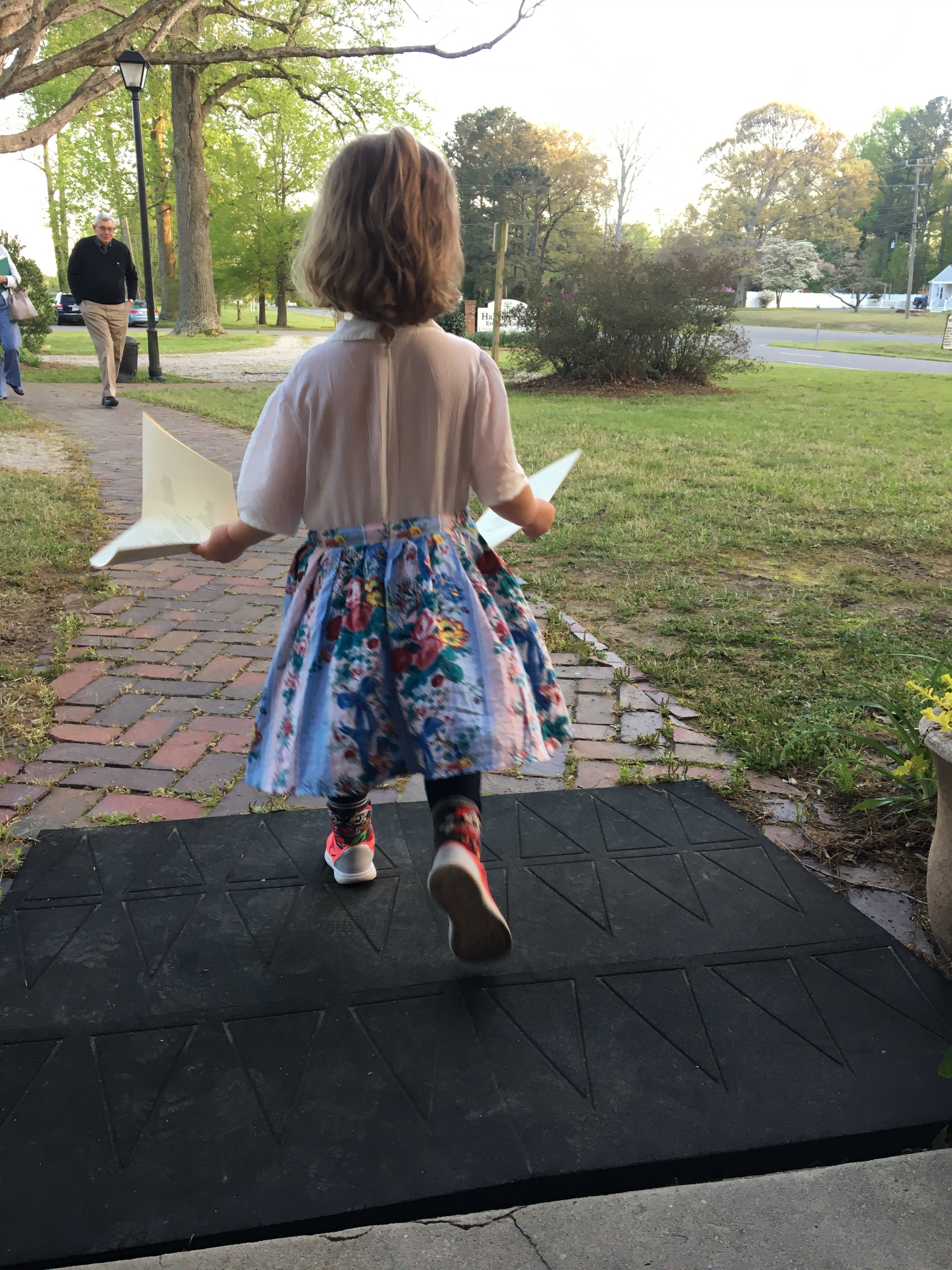
Photo credit:  Jennifer Andrews-Weckerly; reuse with permission only

Most of you know that Holy Week is my favorite week of the year.  I love the way the week feels like a virtual pilgrimage, walking us from Jesus’ entry into Jerusalem, to his last meal with the disciples, to his trial and crucifixion, to his death and resurrection.  Each daily liturgy gives us the opportunity to experience that journey in unique, meaningful ways.  Knowing my passion for this week, my family is gracious every year with my absences from family life that week.  But this year, my husband had an evening work conflict he could not miss, and so I had some options for that night’s service.  I could skip the service – I was not serving that night, and was not physically needed.  I could hire a baby sitter, using some date-night reserves.  Or I could take the girls with me to the quiet service with long periods of silence, knowing how difficult it would be for them after a long day of school.

After much waffling, I decided to try bringing the kids with me.  I really wanted to be there for my own spiritual journey, and I hoped the kids might get something out of the experience.  I prepped the kids endlessly so that they would respect the periods of silence and the experience of those attending.  All in all, for their ages, the girls did amazingly well.  There were certainly a few too many wiggles and distracting noises, but for the most part, they were well-behaved.  I, on the other hand, was a ball of nervous energy.  I know how much I have reveled in the silence of that service and I really did not want to ruin that experience for anyone else.  I found myself so anxious about it, that I realized I didn’t get to experience the service in the way I traditionally do.

But here’s what did happen.  In the midst of trying to prevents disagreements, and minimize crinkling of papers, I was still able to sing and pray the words of the songs.  In the midst of desperately trying to keep kids at whisper-levels, I was able to catch snippets of scripture that hung in my ears and mind.  In the midst of impatient children, I was able to hear my children singing along and see my kids embrace participation – whether in lighting candles, handing out bulletins, or praying at the altar.

Here’s the thing about Holy Week services:  there are a lot of them, and you might not think you are mentally or spiritually ready for them.  You might be curious about some of the services, but are not sure your kids could handle them.  Or you might be thinking you are too tired this week to get anything out of the services.  No matter what is going on with you this week, I promise that if you can get yourself to Church, God will find you.  It may not be in the way you expect, you may not be able to be present as fully as you like, and you might not be convinced it is worth it.  But I promise you, if you figure out a way to get to Church this week, God will break through the chaos of life and whisper a word of comfort, and give you a glimpse into God’s grace and beauty.  My guess is that if you open yourself up to the liturgies of this week, you might just figure out how to carry those lessons into the rest of the Church year too.  The community is gathered this week and welcomes you, wherever you are on your journey, and especially when you do not feel like you have much to offer.  Holy Week is a gift the Church offers to you.  Your invitation is to just show up.

IMG_7836

Photo credit:  Jennifer Andrews-Weckerly; reuse with permission only

Sermon – Luke 2.1-14, CE, YC, December 24, 2018

02 Wednesday Jan 2019

Posted by jandrewsweckerly in Sermons, Uncategorized

≈ Leave a comment

Tags

action, birth, Christmas, Christmas Eve, comfort, God, Grinch, imitate, incarnate, Jesus, kindness, lesson, movie, Sermon, story, teach

One of the things I love about Christmas are Christmas movies.  I know we all have our favorites, and some are related to our generation.  My two favorites are The Grinch Who Stole Christmas (the original, not the Jim Carey one) and Home Alone.  What is fun about Christmas movies is we watch them over and over again because we like something about their message.  The movies teach us something.

This year, I introduced my younger daughter to The Grinch Who Stole Christmas.  She was fascinated by the movie, asking all sorts of questions – why they play bad music when the Grinch is around, why he stole all their presents, and why he hits his dog.  But the question she asks most frequently has been about the Grinch’s heart.  For those of you not familiar with the story, the Grinch tries to ruin Christmas for Whoville by stealing all their presents, decorations, and feast items.  But when Whoville does not cry and wail about all that is lost, and instead returns to the town center to sing as a community, without their “stuff,” the Grinch’s heart is strangely warmed, growing three times the size the heart was.  My daughter keeps asking me about the Grinch’s growing heart, and her questions have allowed us to talk about what Christmas is really about, and why someone’s heart might grow.

Every year we watch our favorite Christmas movies and cartoons because we enjoy revisiting the lessons the movies teach us.  But what is interesting about those movies is, over time, the lesson the movie teaches us takes on new meaning.  We meet new Grinches over our lifetime – or sometimes we become them!  We get to know presumably creepy or scary neighbors who we eventually learn are beautiful human beings.  We experience Christmases where everything goes wrong, but we find joy in the unexpected.  We know part of what the story is teaching us, but as we age and mature, the movies speak to us in new and fresh ways.

We tell the story of Jesus’ birth every single Christmas for a similar reason.  We tell the same story every year because God did this amazing thing.  God is all powerful, and conceivably could do anything God wants – and has:  from kicking Adam and Eve out of the garden, to flooding the earth, to cursing generations for one person’s sins.   God can rule and govern and do anything God wants, and yet the one thing God does is become human.  God becoming incarnate is such an amazing thing that when we say the Creed, many people bow or genuflect during the part of the Creed that talks about God becoming incarnate from the Virgin Mary, being made man.  Becoming human is God’s ultimate expression of God’s lovingkindness, that hesed, we have been talking a lot about lately.  Becoming incarnate is the way God shows God’s love for us.

I am a part of group that is creating a kindness initiative in 2019 in the Greater Williamsburg area.  We will be encouraging the faith community, business community, local schools, and nonprofits to engage in acts of kindness, with the ultimate goal of making Greater Williamsburg the next community of kindness.  I like the initiative because I know doing acts of kindness helps me get a small glimpse into God’s lovingkindness; doing acts of kindness helps me honor God, and embody God to others.  When we talk about shining Christ’s light in the world, or being Jesus to others, we are often talking about doing acts of kindness.  The ultimate form of flattery or honoring someone else is when we do acts of kindness.  When we, as persons of faith, do acts of kindness, we honor God by imitating God’s lovingkindness.  Any of you who has a sibling knows that siblings often copy what we do.  How many times have you heard the complaint, “He’s copying me!” or “She’s keeps stealing my clothes.”?  The reasons our siblings do this, besides to annoy us, is because they want to be like us – they want to honor us by imitating us – just like we imitate God.  Of course, they would never admit that reality to your face, but the truth is, imitation is the best form of flattery.

Tonight, we tell the story of Mary and Joseph, of innkeepers and registrations, of shepherds and angels because we love the story.  The story makes us feel safe, loved, and reassured.  And sometimes we really need opportunities to feel good about life, ourselves, and our God.  But we also tell the story because the story is formative – the story shapes who we are and how we behave.  Over the years, different parts of the story touch us, and as we grow and change, the lesson grows and changes.  So we listen to the story to remember who we have been and who we are.  But we also listen to this familiar story to remind us of what we will do tomorrow.  This story invites us to share God’s lovingkindness like the shepherds.  This story invites us to ponder God’s amazing love like Mary.  This story invites us to sing loudly like the angels, shouting our love for God and the world like an army of kindness.  I cannot wait to learn what hearing the story this year leads you to do in the days, weeks, and months to come!  May this favored story not just be a story of comfort, but also a story of action.  Amen.

On Waiting with God…

12 Wednesday Sep 2018

Posted by jandrewsweckerly in Uncategorized

≈ Leave a comment

Tags

ambiguity, anxiety, comfort, crisis, expectations, God, hurricane, Jesus, plans, strength, waiting

chairs

Photo credit:  http://www.makemommygosomethingsomething.com/2016/03/25/the-waiting-room/

The last few days have been marked by two contrasts in our family.  The first was a broken bone for one of our children.  What had been planned was a relaxed dinner of my daughter’s favorite meal, some homework, an early bedtime, and some evening chores.  Instead, what happened was scarfed down meals, scooping up of activities for the waiting room, dividing up of the children with parents, and a long evening of x-rays, diagnoses, and treatment.  After putting the patient to bed, then followed the flurry of emails to teachers, coaches, and parents to cancel classes, rearrange plans, and arrange for care.  Basically, the experience was a classic experience of dealing with an unexpected crisis, the adrenaline that helps you manage everything, and the upending of expectations.

Also happening this week is the opposite experience.  Our region is intently watching the weather forecast as a large, destructive hurricane is approaching the East Coast.  Unlike an immediate crisis, the build-up is much slower with a hurricane.  We can see several days out that the storm is coming.  We can ascertain from previous experiences with hurricanes what sorts of supplies we should have on hand.  Some areas are being evacuated in preparation, and schools have closed.  But unlike an immediate crisis, this kind of crisis is like waiting for a crisis in slow motion.  And these kinds of storms also involve much more ambiguity:  the storm could create massive damage and even death, or the storm could take a different path, destroying other areas, but leaving our area less impacted.  Instead of adrenaline, clarity, and decisiveness, this crisis involves lots of planning, worrying, and waiting.

As I have held these two experiences in tension this week, I have begun to see spiritual parallels.  Often, we relegate our relationship with God to crisis mode.  We lean into God when we need God, but most of our days are spent doing the work we have been given and are equipped to do without thinking much about God.  But in a situation where there is a long wait with an uncertain outcome:  a marriage that is struggling, a friend with a cancer diagnosis, an economy that puts one’s future in jeopardy – we find leaning into God more difficult.  When we lean into God during ambiguous times, we not only have to share all our ourselves with God (the hurt, the doubt, the fear, the anger), we also become much aware of how little control we have in this world.  Ambiguity in life tests our relationships with Jesus more than just about anything in life.

This week, my prayer for all of us is that we push against of our natural patterns.  Instead pulling away from God in ambiguity, my prayer is that you might saddle up next to God and give the anxiety that ambiguity creates back to God.  I promise that God can handle the weight of your anxiety.  And in freeing you up from some of that anxiety, you might be able to offer that same comfort to a neighbor, friend, or stranger.  I know God will give us strength to support one another once this storm hits.  We will do the work we need to do.  In the meantime, my prayer is that we help one another lift the burden of waiting.  God is with us!


Sermon – Jeremiah 31.31-34, Psalm 51.1-13, L5, YB, March 18, 2018

21 Wednesday Mar 2018

Posted by jandrewsweckerly in Sermons, Uncategorized

≈ Leave a comment

Tags

clean, comfort, communion, covenant, exile, God, heart, Lent, persistence, Psalm, relationship, repentance, Sermon, sin, sinfulness, ten commandments

As we heard our psalm today, you may have thought the psalm sounded familiar.  And you would be right.  Just under five weeks ago, we said this exact same psalm on Ash Wednesday.  After we were invited into a holy Lent – one of fasting, self-examination, and repentance, and ashes were spread across our foreheads, we said this psalm.  “Have mercy on me, O God…For I know my transgressions, and my sin is ever before me…[I have] done evil in your sight…” we confessed.  We begged God to create in us a clean heart and renew a right spirit within us.  I wonder how saying these words again, just several weeks later, feels today.  Perhaps after weeks of following your Lenten discipline, you feel closer to that clean heart and renewed spirit.  Maybe you are making your way out of Lent and the repetition of Psalm 51 feels unnecessary because you have completed your repentance work.  But maybe Psalm 51 feels unattainable, because your sinfulness feels like something you cannot shake.

If you are in the latter category, and if, in fact, you are beginning to wonder if you will ever master this sinfulness thing, take heart.  I actually say verse eleven of this psalm every time I celebrate the Eucharist.  Week in and week out, whether we are in Lent, Eastertide, or Ordinary time, even after I have prayed and confessed with the community, before I approach the altar to celebrate holy communion, I say these same words, “Create in me a clean heart, O God, and renew a right spirit within me.”  Whether in a season of penitence or not, whether I have already celebrated Eucharist two times earlier in the morning, I still pray Psalm 51.11, longing for the God of mercy and hesed, or loving-kindness, to create in me a clean heart.

That is why I think the beginning of our liturgy was so hard today.  As part of the penitential order, we prayed the decalogue, or the ten commandments.  With each commandment, we responded, “Amen. Lord have mercy.”  Reading the decalogue in scripture, as we did just a few weeks ago in Lent is a bit different – somehow having them in paragraph form makes them more palatable – with only certain commandments jumping out at us as areas of improvement.  But praying them is more difficult.  With each commandment receiving a closing petition, the idea is hammered home – we struggle with every last one of these commandments.  Now I can imagine what you are thinking – but I have never murdered.  While that may be true, the poor and the oppressed die every day because no one cares enough to change policy or ensure each person gets help.  Or maybe you are muttering that you have never put any gods before our God.  But we commit idolatry every day when we believe money or even we ourselves are in control instead of our God.  Each petition we pray in the decalogue reminds of how deep and diverse our sinfulness is.

But here’s the funny thing about those commandments – the Israelites could not follow them either.  The Israelites had been rescued from slavery and protected relentlessly.  Once the Israelites were finally in safety and heading to the Promised Land, God created a new covenant with the people.  God sent Moses up the mountaintop and had Moses write the law on tablets – the law that would guide the people into faithful, covenantal living.  But before Moses could even get down the mountain and deliver the covenant to the people, they had already created the golden calf – an idol in the place of God.  They people would struggle so much with the ten commandments that a whole generation of God’s covenantal people would not be allowed into the Promised Land – not even Moses himself.  Although God intended for the decalogue to shape the lives of the people and to create the boundaries for the covenant, and although none of the petitions are all that unreasonable, yet still the people would break their covenant with God time and again.

We are just like our ancestors.  I was just retelling a parishioner this week about my Lenten discipline in college.  You see, in college I picked up a bit of a potty mouth.  It got so bad that my freshman year, I decided to charge myself a quarter for every curse word I uttered, with the plan of giving the proceeds to church on Easter.  By the end of week two in Lent, I had to reduce the fee to a nickel because I could not afford the fee!  And the funny thing was that every year in college was the same.  “This year!  This year I will master my filthy mouth.”  And every year I would have to reduce the fees.  We are creatures of habit, masters of repeated sinfulness, just like our ancestors.

That is why reading Jeremiah is so powerful today.  Jeremiah writes in a time of desperation for the people of God. The Babylonians have razed the temple and carried King Zedekiah off in chains.  Effectively, the Babylonians have “destroyed the twin symbols of God’s covenantal fidelity.”[i]  Sometimes we talk about the exile so much that I think we forget the heart-wrenching experience of exile.  Being taken from homes and forced to live in a foreign land is certainly awful enough.  But the things that were taken – the land of promise, the temple for God’s dwelling, the king offered for comfort to God’s people – are all taken, leaving not just lives in ruin, but faith in question.  But today, in the midst of the physical, emotional, and spiritual devastation, Jeremiah’s reading says God will make a new covenant.  God knows the people cannot stop breaking the old covenant, and so God promises to “forgive their iniquity and remember their sin no more.”  Instead of making the people responsible for the maintenance of the covenant, God goes a step further and writes the law in their hearts, embodies God’s way within the people.

The words of Jeremiah in the section called “the Book of Comfort,”[ii] and this new covenant by God, show a God whose abundance knows no limits.  God offers this new covenant to a people who surely do not deserve another covenant.  God has offered prophets and sages, has called the people to repentance, has threatened and cajoled, and yet still the people could not keep the basic tenants of the covenant established in those ten commandments.  But instead of abandoning the people to exile, God offers reconciliation and restoration yet again.  And because God knows we have no power in ourselves to help ourselves, God basically says, “Here.  Let me help you.  Let me write these laws in your hearts so that you do not have to achieve your way into favor with me, but you will simply live faithfully, living the covenant with your bodies and minds.”  And when even that does not seem to work, God sends God’s only son.  God never gives up on us or our relationship with God.  Even all these years after Christ’s resurrection, God is still finding new ways to make our covenant work.

I have had parishioners attend two services in one day – maybe they were a speaker at two services or maybe they sang in two different choirs.  Invariably, one of these multi-service attendees will ask me, “Should I take communion again?  I shouldn’t, right?”  I always chuckle because I have to remind them that I take communion three times every Sunday – sometimes four or five if I take communion to someone homebound on a Sunday.  I confess all those times, I pray all those times, I say those words of Psalm 51 all those times, “Create in me a clean heart, O God, and renew a right spirit within me.” Lent is the same way – sometimes we are confessing multiple times in one day.  Sometimes we need to say the decalogue, and we need to confess our sins, and we need to hear Psalm 51.  And before we go to bed, we may need to confess to God again.  We do all those things with confidence because our God is a god of mercy, hesed, and restoration, always looking for ways to renew God’s covenant with us.  God’s persistence with us is what inspires our work this Lent.  So yes, create in us clean hearts, O God, and renew a right spirit within us – every week, every day, every hour.  Amen.

[i] Richard Floyd, “Pastoral Perspective,” Feasting on the Word, Year B, Vol. 2 (Louisville:  Westminster John Knox Press, 2008), 122.

[ii] Jon L. Berquist, “Exegetical Perspective,” Feasting on the Word, Year B, Vol. 2 (Louisville:  Westminster John Knox Press, 2008), 123.

← Older posts
Newer posts →

Recent Posts

  • On the Myth and Magic of Advent…
  • On Risking Failure and Facing Fear…
  • Sermon – Luke 23.33-43, P29, YC, November 23, 2025
  • On Inhabiting Gratitude…
  • Sermon – Luke 20.27-38, P27, YC, November 9, 2025

Archives

  • December 2025
  • November 2025
  • October 2025
  • September 2025
  • August 2025
  • July 2025
  • June 2025
  • March 2025
  • February 2025
  • December 2024
  • November 2024
  • October 2024
  • September 2024
  • August 2024
  • July 2024
  • June 2024
  • May 2024
  • March 2024
  • February 2024
  • January 2024
  • December 2023
  • November 2023
  • October 2023
  • September 2023
  • August 2023
  • July 2023
  • June 2023
  • May 2023
  • March 2023
  • February 2023
  • January 2023
  • December 2022
  • November 2022
  • October 2022
  • June 2022
  • May 2022
  • January 2022
  • December 2021
  • November 2021
  • October 2021
  • September 2021
  • August 2021
  • June 2021
  • May 2021
  • April 2021
  • March 2021
  • February 2021
  • January 2021
  • December 2020
  • November 2020
  • October 2020
  • September 2020
  • August 2020
  • July 2020
  • June 2020
  • May 2020
  • April 2020
  • March 2020
  • February 2020
  • January 2020
  • December 2019
  • November 2019
  • October 2019
  • September 2019
  • August 2019
  • July 2019
  • June 2019
  • May 2019
  • April 2019
  • March 2019
  • February 2019
  • January 2019
  • December 2018
  • November 2018
  • October 2018
  • September 2018
  • August 2018
  • July 2018
  • June 2018
  • May 2018
  • April 2018
  • March 2018
  • February 2018
  • January 2018
  • December 2017
  • November 2017
  • October 2017
  • September 2017
  • August 2017
  • July 2017
  • June 2017
  • May 2017
  • April 2017
  • March 2017
  • February 2017
  • January 2017
  • December 2016
  • November 2016
  • October 2016
  • September 2016
  • August 2016
  • July 2016
  • June 2016
  • May 2016
  • April 2016
  • March 2016
  • February 2016
  • January 2016
  • December 2015
  • November 2015
  • October 2015
  • September 2015
  • August 2015
  • July 2015
  • June 2015
  • May 2015
  • April 2015
  • March 2015
  • February 2015
  • January 2015
  • December 2014
  • November 2014
  • October 2014
  • September 2014
  • August 2014
  • July 2014
  • June 2014
  • April 2014
  • March 2014
  • February 2014
  • January 2014
  • December 2013
  • November 2013
  • October 2013
  • September 2013
  • August 2013
  • July 2013
  • June 2013
  • May 2013
  • April 2013
  • March 2013
  • February 2013
  • January 2013
  • December 2012
  • November 2012
  • October 2012
  • September 2012

Categories

  • reflection
  • Sermons
  • Uncategorized

Meta

  • Create account
  • Log in
  • Entries feed
  • Comments feed
  • WordPress.com

Blog at WordPress.com.

  • Subscribe Subscribed
    • Seeking and Serving
    • Join 394 other subscribers
    • Already have a WordPress.com account? Log in now.
    • Seeking and Serving
    • Subscribe Subscribed
    • Sign up
    • Log in
    • Report this content
    • View site in Reader
    • Manage subscriptions
    • Collapse this bar
 

Loading Comments...