• About

Seeking and Serving

~ seek and serve Christ in all persons

Seeking and Serving

Tag Archives: communion

On Messes, Incarnation, and Sacrament…

27 Wednesday Aug 2025

Posted by jandrewsweckerly in Uncategorized

≈ Leave a comment

Tags

Jesus, incarnation, gospel, Eucharist, communion, mess, sacrament, spill

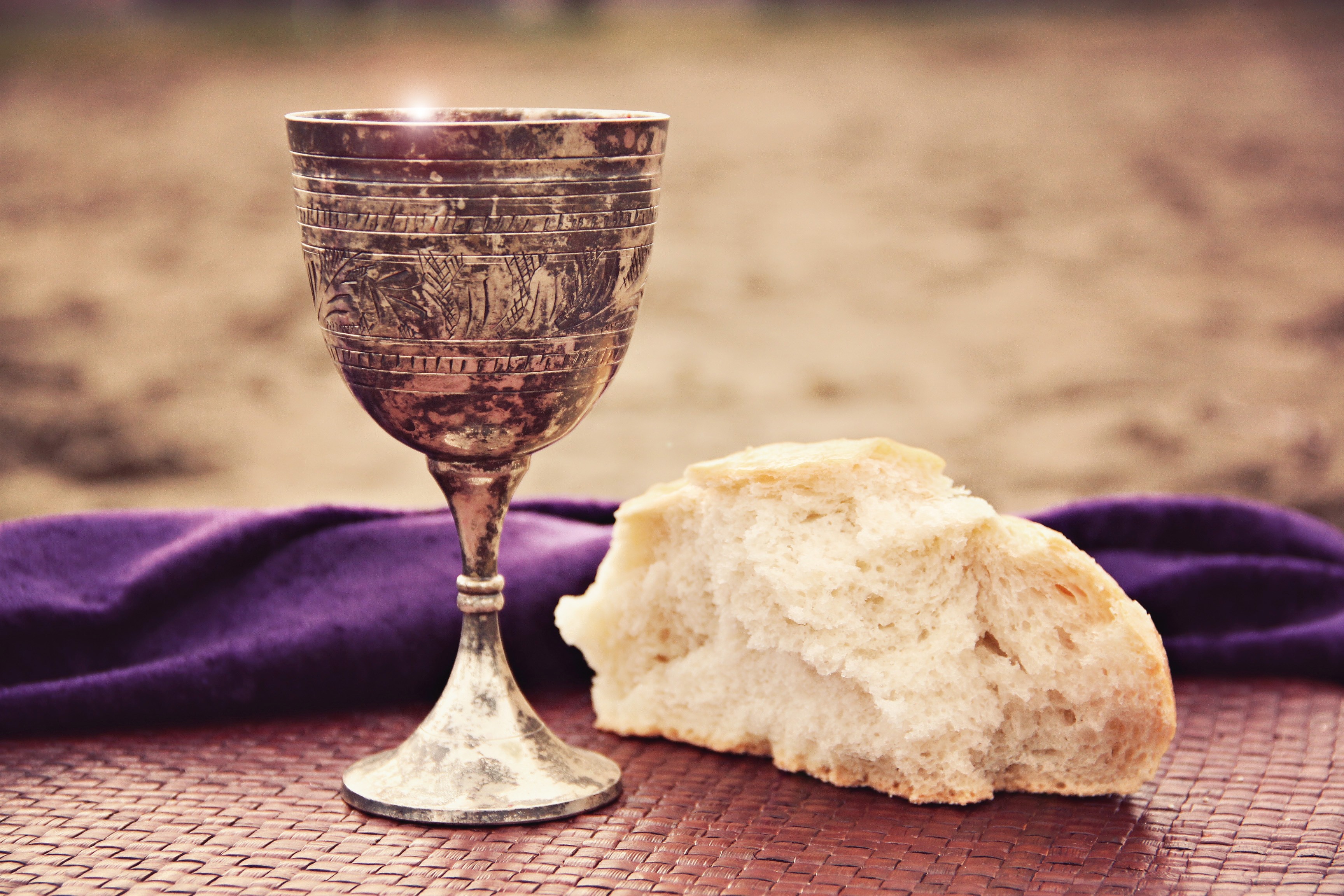
Photo credit: https://premierchristian.news/en/news/article/catholic-priests-allowed-to-offer-holy-communion-from-the-chalice-for-the-first-time-since-2020

Celebrating the sacrament of Holy Eucharist is one of my central jobs as a priest.  I approach the sacrament very seriously and reverently because I know how sacred the privilege of consecrating the Eucharist is and how profound the reception of Holy Communion can be.  In general, my philosophy is to be so graceful and intentional with my celebration that attention is taken off me and turned exclusively and intently to the mystery of the holy meal.

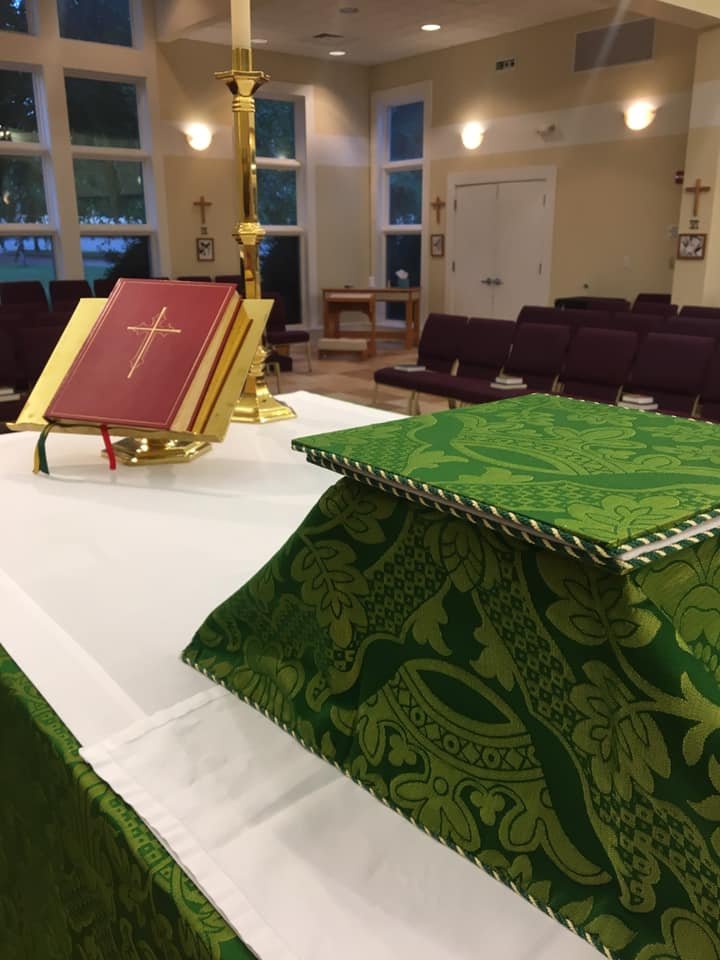
So, imagine my mortification when, after almost 16 years of celebrating Holy Communion multiple times a week, my hand clips the chalice and copious amounts of consecrated wine soak the altar (for those familiar with the terms, the corporal, fair linen, frontal, chasuble, and even my alb were victims).  It was an enormous mess – even the priest host was swimming in wine that landed in the paten.  The gasp was audible when it happened – I’m sure I took in a surprised gasp of air myself.  But I steeled myself and do what we priest always do – I kept going. 

Fortunately, despite the frustration of needing to clear the mess and get linens to the dry cleaners and washing machines, there were lots of laughs and ribbing afterwards.  But the visceral experience of wine flying, landing on silver implements, and making my hands sticky got me thinking.  In the Episcopal Church, we say Jesus’ real presence is in the bread and wine when the priest consecrates it.  There is nothing more incarnational than the messiness of spilt wine.  And we all know that being incarnate means being messy – our bodies naturally make perfection impossible.  But more than that, following Jesus is messy.  Following Jesus means getting into messy relationships with other messy people.  Following Jesus means Jesus sees all our own messiness – even the messiness we hide from others.  And following Jesus makes Jesus very hard to get rid of – there is stickiness to Jesus that lingers with us, much like the stickiness that stayed with me, even after cleaning up. 

I wonder in what ways you’ve been avoiding the messiness of Jesus lately?  In what ways has your desire to control the messiness of the Gospel left you with clean hands, but shallow experiences of the divine?  I look forward to hearing your stories of how the incarnational nature of Jesus is shaking up your life in good and holy ways.  We all need a little more messiness!

Sermon – John 6.35, 41-51, P14, YB, August 11, 2024

28 Wednesday Aug 2024

Posted by jandrewsweckerly in Sermons

≈ Leave a comment

Tags

bread, Bread of Life, change, church, communion, feed, food, God, hierarchy of needs, Jesus, manna, needs, purpose, relationship, security, Sermon, share, tend

One of the components of our leadership training in Vestry is to talk about Maslow’s hierarchy of needs.  If you’re not familiar with his model, Maslow presents a pyramid of needs.  At the bottom are the physiological needs:  food, water, shelter, etc.  The next level of need is safety or security:  this would include health, employment, and social support.  The third level up the pyramid is love and belonging:  this entails friendship, family, intimacy, connection.  The fourth level is self-esteem:  including confidence, achievement, and respect.  And the final level, the tip of that pyramid is self-actualization:  creativity, a sense of purpose and meaning, and acceptance happen here.  The idea is, you cannot work on someone’s sense of purpose or meaning – the top of the pyramid, or even their sense of achievement and confidence without first meeting their basic needs at the base of the pyramid.  The same is true in the church.[i]  If we want to have excellent programming and ministry, where people are successfully naming and living into their vocations, we first have to make sure that we are a church who is in accordance with the canons of the Episcopal Church, that our property is safely maintained, that people feel welcome and cared for, before we think about people feeling proud about their church and helping their church thrive.  For Vestry members, when we are initiating change, we must be sure the hierarchy of needs has been met before we act.

Neal Mitchell tells a story of church who struggled with that sense of pacing with change.  There was a pastor who decided that the piano was not in the ultimate location in the sanctuary, so one week, he just moved it to the other side.  You would have thought he sacrificed a baby on the altar for the blowback he got.  He stirred such a commotion with his unilateral change that he eventually left the church and took another job.  Years and years later, that same pastor came back to the church for an anniversary celebration.  When he walked in the sanctuary, he immediately saw that the piano was in the location he always wanted but the church had refused to allow in his tenure.  After the worship service, he quietly asked the current pastor, “How in the world did you get them to move the piano over to that side of the worship space?!?”  The newer pastor said, “Oh, that.  Yeah, I just moved the piano an inch at a time.  No one even balked with the piano landed in the current position.”[ii] 

In John’s gospel today, Jesus in right in the middle of a lesson about Maslow’s hierarchy of needs.  We are in the third week of what is called the Bread of Life Discourse.  To the casual reader, you may be thinking, “Didn’t we just talk about the bread of life last week?”  And you wouldn’t be wrong.  We are in the middle of talking about the bread of life for five weeks.  But the text may not be as repetitive as the text feels.  You see, Jesus has been walking us through a hierarchy of needs.  First, we had that feeding of the five thousand.  Jesus starts by attending to the people’s immediate need – food.  You can’t share the love of Christ if your belly is growling with hunger.  Next, the conversation goes back to their history – when God provided manna in the wilderness – in other words, when God didn’t just tend today’s hunger, but worked on the need of security – of daily bread.  There God tended to the second level of need.  Today, Jesus is talking not about today’s bread, or even daily bread.  Jesus is talking about the bread of life – the bread that will sustain us for eternity – the feeding of our souls, not just our bodies.  This kind of bread means relationship, intimacy, care, and empowerment.[iii]  

This week, I experienced another week of Vacation Bible School – this time through one of our ecumenical partners in town.  Over the course of two weeks of VBS, one of the common conversations I have had with church members here, there, and with the other Williamsburg Episcopal Churches was a reflection about how although families find their way to church through a program like VBS, the next step of coming to church regularly is more difficult to inspire.  Now there is a lot wrapped up in that pondering, but at the heart of that reflection, particularly by longtime churchgoers is an understanding that they have found something deeply meaningful and lifegiving at church and they want to share that soul sustenance – that bread of life – with folks who do not have that same sustenance. 

I think that is what Jesus is trying to help us see today.  We are certainly called to be a community of food.  Lord knows Jesus did that all the time – feeding masses of people, tending to their health needs, helping lift up the poor.  And, Jesus was also about feeding souls – helping people find relationship, belonging, soul-nourishing, and that sense of purpose in the kingdom.  We consume the bread of life here every week not because the bread tastes all that particularly good or because that bread fills our stomachs (certainly not like Coffee Hour does).  We consume that bread of life because that taste, that lingering feeling of a melting wafer moving down our throats, is a balm of belonging, of purpose, of entrance into the eternal.  We are very good at describing our welcoming community here at Hickory Neck or our awesome children’s formation program or our incredible service to the community.  But what Jesus is inviting us into this week is vulnerable conversations with others about our deep-soul needs that God fills every week in this place.  Those kinds of conversations are tricky while standing at the bus stop with our kids, or while waiting in line at the grocery story, or while running into someone at the gas station.  But those are the conversations that move pianos and move hearts – conversations that name the deep, hidden longing for the eternal that we all have.  Jesus invites us to feed others today, to tend to others’ daily bread, and to share the bread of life:  to share the deepest gift of the Church with a hungry world.  Amen. 


[i] Idea explored by Matt Skinner in Sermon Brainwave Podcast, “#977: Twelfth Sunday after Pentecost (Ord. 19B) – Aug. 11, 2024,” August 4, 2024, as found at https://www.workingpreacher.org/podcasts/977-twelfth-sunday-after-pentecost-ord-19b-aug-11-2024 on August 7, 2024.

[ii] Neal O. Michell, How to Hit the Ground Running (New York:  Church Publishing, 2005), 51-58.

[iii] Idea explored by Karoline Lewis in aforementioned podcast.

Sermon – John 13.31-35, Acts 11.1-18, E5, YC, May 15, 2022

25 Wednesday May 2022

Posted by jandrewsweckerly in Sermons

≈ Leave a comment

Tags

baptism, belonging, challenging, Christian, communion, Episcopal Church, evangelism, General Convention, Holy Eucharist, Holy Spirit, hospitality, identity, Jesus, love, membership, Peter

Every three years, the entire Episcopal Church gathers for what is called General Convention.  Eight lay and ordained people from every diocese in the Episcopal Church and all the bishops gather in two houses to pass legislation that will govern the whole of the church.  Issues range widely, from authorizing new liturgies, to promoting social justice issues, to human resources issues for clergy and lay staff, to who will guide and govern the church.  One topic that is coming around again this year is whether the Episcopal Church should remove the baptism requirement for the reception of Holy Eucharist.  Even though practices range pretty widely, technically the canons of the Episcopal Church reserve communion for those who have been baptized.  The issue is highly contested, has been written about widely, and I could spend a whole hour teaching on this topic.  At the heart of the debate are issues of belonging, identity, hospitality, and evangelism.

 As I have watched some of the initial debate heat up in the Episcopal Church, I marvel at how, as much as the Church has changed over the years, much remains the same.  After Jesus’ ascension, and as the disciples and apostles began to spread the Good News far and wide, Peter and the other disciples begin to debate the issue of membership – whether uncircumcised Gentiles could become full members of the body of Christ without being circumcised.  In our reading from the Acts of the Apostles, we hear the story of how the apostles call Peter in and question his fellowship with uncircumcised Gentiles.  Peter launches into a story about a vision he had and what God said to him about “membership” in the body of Christ.  After hearing Peter’s testimony, there is silence.  The weight of such a change hovers in the silence – issues of belonging, identity, hospitality, and evangelism hanging in the air.

So much about this story today is human.  Time and time again, from the beginning of time, we have debated who is in and who is out.  There are benign ways and malicious ways of defining those boundaries, but ultimately those boundaries help us know who we are so we understand who we are not.  We agree to a set of behaviors and activities every time we reaffirm our baptisms.  Clubs and civic groups have criteria for admitting members.  Colleges have criteria for who can be a student, and what can get you expelled.  Even retirement communities have rules about what age you can be before you can move into the community.  But the malicious ones are trickier.  Redlining is a practice that has kept people of certain races and ethnicities from owning homes in certain areas.  Women are unable to serve as ministers in certain faith traditions.  LGBTQ identifying individuals were denied the same spousal rights and parenting rights as straight individuals.  The question becomes how do we define who we are and what we are about without harming or maligning others?

Some have argued Jesus gives us the answer in John’s gospel today.  Jesus says, “I give you a new commandment, that you love one another.  Just as I have loved you, you also should love one another.  By this everyone will know that you are my disciples, if you have love for one another.”  The instructions sound simple enough.  Our Presiding Bishop preaches nothing but the gospel of love.  But the instruction to love one another so people will know we are disciples does not make the issue of membership simple.  I love my Jewish and Muslim brothers and sisters but that does not make them Christian any more than their love of me makes me Jewish or Muslim.  I remember in seminary an interfaith dialogue between our Episcopal Dean and a Muslim leader in the community.  When they were establishing the ground rules for the conversation, the Muslim leader said, “We both enter into this conversation with deep respect for one another.  But for either of us to say that we are not trying to recruit the other would be a lie.  Of course I want you to become a Muslim:  I would not be a good Muslim if I did not think being a Muslim was the right path.  The same is true for you.  If you are not trying to convert me, I would wonder about the ferocity of your faith.”

What the texts do today is invite us into a challenging space.  By telling us to love one another, Jesus is not telling us that love denies who we are.  Likewise, by the disciples arguing about who can be Christians and who cannot, and coming to a conclusion that the Holy Spirit is doing something new does not mean that the disciples are diminishing their identity or the identity of the community.  Peter does not water down the gospel.  He simply invites the disciples to reconsider who could ascribe to that gospel.  What these two texts do together is remind us that loving one another means both holding fast to the gospel, while trusting the Holy Spirit enlivens the gospel.  The two texts together remind us that loving one another means we can be both generous and orthodox.  The two texts together remind us that loving one another means we can say yes and no, and find a gracious gray area where love abides.  What Jesus simply asks is that in the silence of the question – the silence that stood between Peter and the disciples before they made a decision – we allow love to do love’s work, so that our discernment of the Spirit can flourish.  Amen.

On Refreshment in a Parched Land…

01 Wednesday Jul 2020

Posted by jandrewsweckerly in Uncategorized

≈ Leave a comment

Tags

care, comfort, communion, Coronavirus, grieve, Holy Eucharist, pandemic, parched, prayer, reassurance, refreshment, salve, wilderness

70038647_10158090008257565_6128712585278652416_n

Photo credit:  Jennifer Andrews-Weckerly; resuse with permission only.

Over three months ago, when we closed our church’s doors because of the Coronavirus pandemic, we had to make some quick, difficult decisions.  We knew we wanted to offer a livestream service, but we also knew we did not feel comfortable consuming the holy meal without the community of faith gathered.  Fortunately, we have a rich traditional of prayers from our Book of Common Prayer, so we switched to Morning Prayer on Sundays.  In seminary, I attended Morning Prayer daily, so in some ways, the last many months has been like visiting an old friend.  As the officiant, I have often worn my seminary cross as a sign of gratitude for the formation I receive at Virginia Theological Seminary to be able to confidently officiate the service.

But as our diocese gave us permission to begin the regathering process, the liturgical team began to realize we had a conundrum.  For the limited number of people who would be able to gather in the space, would we keep offering Morning Prayer, or would we offer communion under the new guidelines?  If we offered communion to some, would those watching online feel left out if the livestream was different from the in-person offering?  So, like we often do at Hickory Neck, we decided to try an experiment.  We still did not want the altar party to consume on screen if no one else could consume with us.  But perhaps we could try an offering of “Spiritual Communion”:  a service identical to the familiar Holy Eucharist we normally celebrate, but with a special shared prayer instead of actual reception of the body and blood of Christ.

This past Sunday, we gave the experiment a go.  Shifting types of services is more complicated than it sounds, especially given the challenges of working with limited technology.  My brain was so jumbled with details that when we hit the livestream button, I had not processed the significance of the morning.  I put on vestments I have not worn in over three months – vestments I used to wear every week.  As the celebrant, I was saying words that I have said countless times in the last ten years.  It was only when I elevated the elements, recognizing the muscle memory of my body, that the power of what we were doing hit me.  Holy Eucharist is just one of the myriad things that have been taken away from us during this time of social distancing – one of the many comforts that I have grieved in these last months.  Despite the fact we were not actually receiving communion, despite the fact the room was still empty minus a camera, despite the fact a hundred little things were different, all of a sudden, I found myself overwhelmed with emotion.

Celebrating Spiritual Communion was not the same as celebrating Holy Eucharist.  But celebrating Spiritual Communion felt like a sip of water in a parched land.  It was not complete refreshment, but it was reassurance, comfort, and care.  It was an unexpected gift from the Holy Spirit in the wilderness of this pandemic.  I do not know what our community will decide to do going forward – whether we will keep Morning Prayer or Spiritual Communion, or some combination of the two.  In fact, I am hoping our parishioners and viewers will let us know their feedback.  This week I am just grateful for a community that is willing to experiment – to try, to fail, to learn, and to grow.  That commitment to playful creativity has always been a joy; during this pandemic it is salve to our open wounds.  Thanks be to God!  And thank you, Hickory Neck!

On Liturgy, Love, and the Lord…

19 Wednesday Jun 2019

Posted by jandrewsweckerly in Uncategorized

≈ Leave a comment

Tags

communion, community, Episcopal Church, Eucharist, God, instructed, liturgy, longing, mental, mystery, physical, ritual, spiritual, welcome, wonder

38085329_1940214422701475_4123153700623482880_n

Photo credit:  Hickory Neck Episcopal Church; reuse with permission only.

This past Sunday we celebrated an “Instructed Eucharist,” a worship service in the Episcopal Church narrated to explain how and why we do the things we do in Church.  Though Instructed Eucharists are pretty common in the Episcopal Church, I had never led one myself, and I found I was pretty nervous about how it would go.  I worried the narrative pieces would feel too long and people would start to lose attention.  I worried the worship would feel too disjointed by narration to feel like worship.  I worried the teaching portion would not be particularly meaningful for those gathered.

As in most things, my worries were unfounded.  Many of those gathered shared that the narrative did not make the service too long.  In fact, they were surprised at how seamlessly the narrative flowed, and how engaging the experience was.  Several of those gathered were touched by the parts that are always touching – scripture, music, preaching, the peace, communion, and the dismissal.  And many of those gathered, of all ages, and of all spiritual backgrounds, shared not only did they love the service, but they also learned many new things.

What caught my attention about the feedback was not simply that people liked the experience.  What caught my attention about the feedback was people were excited about worship.  Having learned something about the weekly ritual of worship allowed our worship to shift from the physical (the habits of bowing, kneeling, standing, singing, eating, greeting) to the mental (understanding the theology, history, and spirituality of our worship) to the spiritual (the opening of our bodies and minds creating deeper connection with God).  That kind of excitement is at the heart of what drew most Episcopalians to the Episcopal Church – a ritual that somehow spoke to something deep inside them, and of which they wanted more.  Sometimes that longing could be easily described, but sometimes that longing was too mysterious to capture in words.

If you had that experience this past Sunday, or if you have ever been touched by that mysterious sense of God in the worship within the Episcopal Church, I invite you to share that sense of wonder with someone today.  You may share the first moment you stepped into an Episcopal Church, or a lifetime of practice, or a simple Instructed Eucharist.  Share the wonder and beauty with someone else, and invite them into the same experience that has enlivened your spiritual journey.  And if you have never had that experience in a church before, know you are welcome to join us at Hickory Neck – a place where you can weekly come and participate – whether physically, mentally, or spiritually – in something bigger than yourself, but in something that makes you feel more grounded in yourself – something that allows you to find God within, already there waiting for you, affirmed in the community around you.  You are welcome here.

Flip-Flops and Fresh Looks…

29 Wednesday May 2019

Posted by jandrewsweckerly in Uncategorized

≈ Leave a comment

Tags

adventure, belonging, casual, church, communion, God, Jesus, mass, meaning, passion, purpose, routine, scripture, Sunday, table, worship

61146359_2375297735859806_6242277340265578496_n

Photo credit:  https://www.facebook.com/events/1137823373087599/

This Sunday, our church is trying something new called “Flip-Flop Mass.”  The concept began with the idea that we wanted to move our “Mass on the Grass” indoors because, let’s face it, even in early June, Virginia is hot and humid.  We also had some rearranging with musical leadership, and we wanted to keep the casual vibe of our outdoor service.  But as we shifted to the idea of an indoor casual mass, the ideas started flowing.  What if we totally rearranged the space?  What if we played with the liturgy and how we interact with Scripture?  What if we not only went casual, but we also went ancient?

What has resulted, after a ton of logistical plans, gathering different supplies, and coordinating with servers, is a worship service like that of the earliest church – an intimate meal around the table reminiscent of the meal between Jesus and his disciples.  I suspect the service will have its fumbles and things we did not anticipate, but I am also hopeful that the service will shift our routine just enough that we thoughtfully reflect on what it is we do on Sundays and what it all means.

Whatever style of church you prefer (and believe me, Hickory Neck manages to artfully offer lots of different styles), I encourage you to join us this Sunday for the adventure.  I suspect whatever you are used to or you prefer, this Sunday will give you the opportunity to engage just differently enough that you experience the elements of worship more powerfully:  the gathering of a community of strangers and friends, seeking a sense of belonging and meaning; a space to wrestle with Scripture, especially when Scripture is sometimes difficult to relate to modern-day life; a fresh way to experience God’s presence, using all of your senses; a place where you can find a renewed sense of purpose and passion for serving the world.  I don’t know about you, but I am thrilled to be invited to experience church with fresh eyes this weekend.

So, grab your flip-flops, grab a dish to share for lunch, grab a friend (or a stranger!), and come to church.  We’ll save you a seat at the table!

On Politics, Priests, and Prayer…

20 Wednesday Jun 2018

Posted by jandrewsweckerly in Uncategorized

≈ 4 Comments

Tags

American, Bible, Christian, communion, dignity, disciple, diversity, Episcopal Church, Eucharist, Good News, gospel, Jesus, policy, politics, prayer, priest, scripture, table

lightstock_99088_medium_david_needham

Photo credit:  https://www.lebanonfbc.org/ministries/power-prayer-pop

One of the hardest parts of being a priest is creating a community in which we can talk about the Gospel of Jesus Christ, hold widely varying political opinions, and yet still gather at the Eucharistic Table – elbow to elbow, as the imperfect, but beloved body of Christ, determined to stay in community.  I say that the work is difficult because I have seen how fragile this work really can be.  During my priestly formation at seminary, congregations and Dioceses were walking away from that common table over the issue of human sexuality.  Although I was proud of what the Episcopal Church did at the time, I also deeply mourned the loss of diversity at the Table – the creation of a more homogenous Church than a Church who was devoted to staying in the tension while honoring the Gospel.

Because of my high value of the uniting force of the Eucharistic Table, my priesthood has taken a slightly different shape than I might have imagined in my early twenties.  If you had asked me then about the primary role of the priest, I might have argued the role of prophet – decrying injustice and leading the people of faith to a more just world.  But as I aged, and as I served diverse parishes, I began to see the role of prophet is one of many roles, one that needs to be used judiciously so as not to alienate parishioners and create an exclusive community of like-minded people.  And so, my priesthood has been marked with great caution around politics.  While many of my colleagues will beat the drum for justice, I find myself trying to carefully walk with my diverse congregations as we discern together how to interpret politics in light of the Gospel – not in light of Democrats or Republicans, but in light of the witness of Jesus Christ.  That doesn’t mean I don’t have strong political opinions; it just means that I try to take focus off the politician or political issue of the moment and try to create disciples who can see and follow Christ.

That being said, this past week, the issue of what is happening to families seeking asylum on our southern border, and the separation of children from parents as a punitive, purportedly deterring action has shifted my normal practice – not because I changed my mind about politics and the Church, but because two agents of our government utilized Holy Scripture to justify those actions.  Here’s the thing:  if this were just another issue where we are divided about policy, where we had a debate about the extents to which we value national security over other values, I would have happily encouraged our parishioners to be faithful Christians in dialogue.  But when Attorney General Jeff Sessions invoked Holy Scripture to justify separating children from parents, he stepped into my area of authority, leaving me no other option but to speak.

Now I could layout a Biblical defense against the small portion of Romans 13 that Attorney General Sessions quoted, giving you the context of the chapter, giving you the verses immediately following what he quoted as a counter to his argument.  I could quote to you chapter and verse for countless other scripture lessons that tell us to love one another, respect the dignity of other human beings, care for the outcast and alien, tend the poor, and honor children.  I could also tell you about how that same bit of scripture was used to justify slavery, Nazis, or apartheid in South Africa.  But the problem with a scripture quoting war is that no one wins.  What is more important is what we know of the canon of Scripture:  that our God is a God of love, that Jesus walked the earth showing us how to be agents of love, healing, and grace, and that the Holy Spirit works through us today to keep spreading that love.

Knowing what I know about the Good News of God in Christ, in my baptismal identity as one who seeks and serves Christ in all persons, respecting the dignity of every human being, I cannot stand idly by or be silent when the Holy Scriptures of Christians are being used to justify political actions that are antithetical to our Christian identity.  As a priest, I invite you this week, especially when a governmental leader is invoking our faith, to reflect on how the Gospel of Christ is informing your view on this issue.  Not as a Republican and not as a Democrat, but as a follower of Christ.  Fortunately, prominent politicians on both sides of the aisle seem to be coming to agreement on this issue – a rarity these days – but also an example to Episcopalians who hold a high view of coming to the Eucharistic Table across our differences.  I am not saying we need to agree on this – in fact, I suspect we will not.  What I am asking is that you live into your identity as a disciple of Christ, as an agent of love, and then respond in conversation, in political advocacy, and in worship as one holding in tension both our American and Christian identities.  I support you in this difficult, hard work.  I love you as you struggle.  I welcome you to the Eucharistic Table.

Sermon – Jeremiah 31.31-34, Psalm 51.1-13, L5, YB, March 18, 2018

21 Wednesday Mar 2018

Posted by jandrewsweckerly in Sermons, Uncategorized

≈ Leave a comment

Tags

clean, comfort, communion, covenant, exile, God, heart, Lent, persistence, Psalm, relationship, repentance, Sermon, sin, sinfulness, ten commandments

As we heard our psalm today, you may have thought the psalm sounded familiar.  And you would be right.  Just under five weeks ago, we said this exact same psalm on Ash Wednesday.  After we were invited into a holy Lent – one of fasting, self-examination, and repentance, and ashes were spread across our foreheads, we said this psalm.  “Have mercy on me, O God…For I know my transgressions, and my sin is ever before me…[I have] done evil in your sight…” we confessed.  We begged God to create in us a clean heart and renew a right spirit within us.  I wonder how saying these words again, just several weeks later, feels today.  Perhaps after weeks of following your Lenten discipline, you feel closer to that clean heart and renewed spirit.  Maybe you are making your way out of Lent and the repetition of Psalm 51 feels unnecessary because you have completed your repentance work.  But maybe Psalm 51 feels unattainable, because your sinfulness feels like something you cannot shake.

If you are in the latter category, and if, in fact, you are beginning to wonder if you will ever master this sinfulness thing, take heart.  I actually say verse eleven of this psalm every time I celebrate the Eucharist.  Week in and week out, whether we are in Lent, Eastertide, or Ordinary time, even after I have prayed and confessed with the community, before I approach the altar to celebrate holy communion, I say these same words, “Create in me a clean heart, O God, and renew a right spirit within me.”  Whether in a season of penitence or not, whether I have already celebrated Eucharist two times earlier in the morning, I still pray Psalm 51.11, longing for the God of mercy and hesed, or loving-kindness, to create in me a clean heart.

That is why I think the beginning of our liturgy was so hard today.  As part of the penitential order, we prayed the decalogue, or the ten commandments.  With each commandment, we responded, “Amen. Lord have mercy.”  Reading the decalogue in scripture, as we did just a few weeks ago in Lent is a bit different – somehow having them in paragraph form makes them more palatable – with only certain commandments jumping out at us as areas of improvement.  But praying them is more difficult.  With each commandment receiving a closing petition, the idea is hammered home – we struggle with every last one of these commandments.  Now I can imagine what you are thinking – but I have never murdered.  While that may be true, the poor and the oppressed die every day because no one cares enough to change policy or ensure each person gets help.  Or maybe you are muttering that you have never put any gods before our God.  But we commit idolatry every day when we believe money or even we ourselves are in control instead of our God.  Each petition we pray in the decalogue reminds of how deep and diverse our sinfulness is.

But here’s the funny thing about those commandments – the Israelites could not follow them either.  The Israelites had been rescued from slavery and protected relentlessly.  Once the Israelites were finally in safety and heading to the Promised Land, God created a new covenant with the people.  God sent Moses up the mountaintop and had Moses write the law on tablets – the law that would guide the people into faithful, covenantal living.  But before Moses could even get down the mountain and deliver the covenant to the people, they had already created the golden calf – an idol in the place of God.  They people would struggle so much with the ten commandments that a whole generation of God’s covenantal people would not be allowed into the Promised Land – not even Moses himself.  Although God intended for the decalogue to shape the lives of the people and to create the boundaries for the covenant, and although none of the petitions are all that unreasonable, yet still the people would break their covenant with God time and again.

We are just like our ancestors.  I was just retelling a parishioner this week about my Lenten discipline in college.  You see, in college I picked up a bit of a potty mouth.  It got so bad that my freshman year, I decided to charge myself a quarter for every curse word I uttered, with the plan of giving the proceeds to church on Easter.  By the end of week two in Lent, I had to reduce the fee to a nickel because I could not afford the fee!  And the funny thing was that every year in college was the same.  “This year!  This year I will master my filthy mouth.”  And every year I would have to reduce the fees.  We are creatures of habit, masters of repeated sinfulness, just like our ancestors.

That is why reading Jeremiah is so powerful today.  Jeremiah writes in a time of desperation for the people of God. The Babylonians have razed the temple and carried King Zedekiah off in chains.  Effectively, the Babylonians have “destroyed the twin symbols of God’s covenantal fidelity.”[i]  Sometimes we talk about the exile so much that I think we forget the heart-wrenching experience of exile.  Being taken from homes and forced to live in a foreign land is certainly awful enough.  But the things that were taken – the land of promise, the temple for God’s dwelling, the king offered for comfort to God’s people – are all taken, leaving not just lives in ruin, but faith in question.  But today, in the midst of the physical, emotional, and spiritual devastation, Jeremiah’s reading says God will make a new covenant.  God knows the people cannot stop breaking the old covenant, and so God promises to “forgive their iniquity and remember their sin no more.”  Instead of making the people responsible for the maintenance of the covenant, God goes a step further and writes the law in their hearts, embodies God’s way within the people.

The words of Jeremiah in the section called “the Book of Comfort,”[ii] and this new covenant by God, show a God whose abundance knows no limits.  God offers this new covenant to a people who surely do not deserve another covenant.  God has offered prophets and sages, has called the people to repentance, has threatened and cajoled, and yet still the people could not keep the basic tenants of the covenant established in those ten commandments.  But instead of abandoning the people to exile, God offers reconciliation and restoration yet again.  And because God knows we have no power in ourselves to help ourselves, God basically says, “Here.  Let me help you.  Let me write these laws in your hearts so that you do not have to achieve your way into favor with me, but you will simply live faithfully, living the covenant with your bodies and minds.”  And when even that does not seem to work, God sends God’s only son.  God never gives up on us or our relationship with God.  Even all these years after Christ’s resurrection, God is still finding new ways to make our covenant work.

I have had parishioners attend two services in one day – maybe they were a speaker at two services or maybe they sang in two different choirs.  Invariably, one of these multi-service attendees will ask me, “Should I take communion again?  I shouldn’t, right?”  I always chuckle because I have to remind them that I take communion three times every Sunday – sometimes four or five if I take communion to someone homebound on a Sunday.  I confess all those times, I pray all those times, I say those words of Psalm 51 all those times, “Create in me a clean heart, O God, and renew a right spirit within me.” Lent is the same way – sometimes we are confessing multiple times in one day.  Sometimes we need to say the decalogue, and we need to confess our sins, and we need to hear Psalm 51.  And before we go to bed, we may need to confess to God again.  We do all those things with confidence because our God is a god of mercy, hesed, and restoration, always looking for ways to renew God’s covenant with us.  God’s persistence with us is what inspires our work this Lent.  So yes, create in us clean hearts, O God, and renew a right spirit within us – every week, every day, every hour.  Amen.

[i] Richard Floyd, “Pastoral Perspective,” Feasting on the Word, Year B, Vol. 2 (Louisville:  Westminster John Knox Press, 2008), 122.

[ii] Jon L. Berquist, “Exegetical Perspective,” Feasting on the Word, Year B, Vol. 2 (Louisville:  Westminster John Knox Press, 2008), 123.

On Cuisine and Community…

15 Wednesday Feb 2017

Posted by jandrewsweckerly in Uncategorized

≈ 3 Comments

Tags

church, comfort, comfort food, communion, community, cuisine, Eucharist, feast, fellowship, food, God, journey, recipe, strength, sustenance

mac-and-cheese

Photo credit:  whoneedsacape.com/2016/10/italian-mac-cheese/

This weekend, I made a family recipe from my husband’s grandfather.  Though Grandpa Gray is no longer with us, somehow, making this recipe for the first time in a long while flooded me with all kinds of memories.  You see, Italian Mac was the family’s favorite dish – the ultimate comfort food.  One year, I finally asked for the recipe and stayed with Grandpa Gray in the kitchen while he made it.  Now, as I look at the words of the recipe, I can hear his beautiful voice in the words.  As I crush the herbs as he instructed, I can imagine his worn hands doing the same thing.  As our house fills with the aromas of Italian Mac and garlic bread, I can remember the smell of his house.  As I sip the red wine that the recipe suggests I pair with the meal, I can recall the comforting sound of his laughter.

Food has a special power.  Whenever I have been on mission trips, food has created intimate connection.  In Honduras, we all took turns helping the women of the village cook for our team.  After ten minutes of attempting to grind corn, we were all laughing at how much stronger the women were than the men who were lifting bricks to build the church.  On my second visit to Costa Rica, I wanted to learn how to make the beans and rice we ate regularly.  The women were surprised that I was willing to get up early with them and learn.  After that morning, our relationship shifted.  In Myanmar, giggles and laughter ensued as we tried new foods and our hosts appreciated our boldness.

The same is true of the Eucharist.  I have been in churches that use grape juice and a small cube of pasty, crunchy “bread.”  I remember the splendor of the sweet Hawaiian bread used at another church.  I remember the first time I had real wine at communion, and the way that it burned down my throat, lighting a new fire in me.  Whether baked bread, bland wafers, or store-purchased pita bread, each texture and flavor imprints in my mind the church, the community, the spiritual place where I was at the time.  Even this weekend, at my goddaughter’s baptism, my own daughter commented on the “yucky” communion bread they had.  I would have just said it was dense, but that dense texture will linger in my mind as my reminder of our celebration.

Holy Eucharist is the comfort food of Church.  That is why I love being a part of a sacramental church that has Eucharist every Sunday.  But the Church offers other comfort foods as well.  The pancakes we eat every Shrove Tuesday remind me of years of fellowship and laughter – with communities all over the East Coast.  The Brunswick Stew of the Fall Festival at Hickory Neck will always remind me of warmth and community.  There are those dishes at every potluck that you search for, knowing the comfort it will bring.  And of course, there is the Sunday morning coffee – a staple of hospitality and grace.  If you have been missing a sense of community and comfort, I hope you will make your way to Church this week and join us in the feast that not only comforts us, but also strengthens us for the journey.  God has given us great work to do – but God has also given us the sustenance we need for the road ahead.

lords-supper-church-stock-photos

Photo credit:  stthomasnorwalk.com/religious-ed/sacraments/Eucharist

Sermon – John 13.1-17, 31b-35, 1 Corinthians 11.23-26, MT, YC, March 23, 2016

29 Tuesday Mar 2016

Posted by jandrewsweckerly in Sermons, Uncategorized

≈ Leave a comment

Tags

change, communion, disciples, foot washing, intimate, Jesus, love, Maundy Thursday, meal, Sermon, tangible

As I was writing the sermon for tonight, I realized that maybe we have structured our evening all wrong.  We actually started off on the right foot.  We gathered over a common meal, assembled by dishes from each of our homes (or from the deli you swung by on the way here).  Our meal was a feast made by many hands, and completely organic – shared out of the varying gifts we bring.  In fact, we even did things in a way that was more in line with what Paul wanted for the Corinthians.  The passage that we read tonight from First Corinthians is mostly just the familiar text that includes Jesus’ institution of Holy Eucharist.  But in the verses before what we read tonight, Paul admonishes the Corinthians.  Instead of a true Eucharistic meal, where bread and wine are shared equally and intentionally, the Corinthians have gotten into the habit of having communal meals, but everyone fends for themselves.  In other words, their meal would be like if Kathleen had made a homemade casserole, Kim had grabbed Chinese takeout for her and the kids, Lois had brought the finest filet mignon with a glass of wine from a local fine dining establishment, and I showed up empty-handed.  Except in Corinth, you eat what you bring.  If you show up empty-handed, you leave hungry.  Unlike the Corinthians, at least we got that part right tonight.

But if I had been thinking, instead of coming up here to our beautiful worship space, we would have stayed downstairs.  Mid-meal, I would have taken off my jacket, rummaged around for a towel and bowl from our kitchen, and started washing your feet.  As I moved from table to table, we would have talked about what I was doing, and why Jesus did the same for his disciples.  You see, tonight, we hear the story that is only found in John’s gospel about how Jesus teaches the disciples to love and serve one another and their neighbors.  In order to love, which is going to be their primary mission, they will need to be able to get down on the floor among the crumbs and the remains of the festivities, and tenderly care for one another.

And further, had we been feeling really countercultural, I would have grabbed a loaf of bread that someone got at Stop-N-Shop, and some wine sitting on the beverage table, and we would have talked about how on the night before Jesus is betrayed, he breaks bread with his friends, telling them that the bread is his body, and the wine is his blood – given for them.  We would have passed the loaf around, tearing the bread into bite-sized pieces, dropping blessed crumbs everywhere, and looking into each other’s eyes as we pass the bread, reminding each other that this is the body and blood of our Lord.

If I had been thinking, that is what we could have done tonight – because that is what happens on this last night for Jesus:  a downhome, shared, messy meal, with uncomfortable, intimate moments, and a meal that does not necessarily feed our bellies but feeds our souls.  But Jesus’ words and experiences that night are not just for the disciples.  His words are words for the future.  He knows his death is coming.  In the face of death, he longs to remind the disciples what they will need to do after his death.  This last night is all about Jesus’ final instructions to the disciples.

That is why we call this day Maundy Thursday.  Maundy comes from the Latin word for mandate.  On this night we remember Jesus’ mandate to love one another as he has loved us.[i]  We remember Jesus’ mandate to serve.  And we remember Jesus’ mandate to eat together, feasting on the holy meal.  Where we remember that mandate does not actually matter – whether we remember among the old stones of a Cathedral, in the cozy, board and batten sanctuary of St. Margaret’s, or in the bustling, laughter-filled, sometimes messy Undercroft.  The location matters much less than the intentionality with which we listen to Jesus’ words.

Tonight I invite you walk through the last night of Jesus experiencing the tangibility of this night:  a meal with fellow believers, the washing of feet, Holy Communion, and the stripping of the altar as we head into the night watch.  But I also invite you to remember Jesus’ final mandate:  to love as he has loved us, to serve others, and to sustain our work through the holy meal.  The actions of this night are important, but even more important is the way that this night changes us tomorrow.  Amen.

[i] Mike Graves, “Homiletical Perspective,” Feasting on the Word, Year C, Vol. 2 (Louisville:  Westminster John Knox Press, 2009), 271.

← Older posts

Recent Posts

  • On the Myth and Magic of Advent…
  • On Risking Failure and Facing Fear…
  • Sermon – Luke 23.33-43, P29, YC, November 23, 2025
  • On Inhabiting Gratitude…
  • Sermon – Luke 20.27-38, P27, YC, November 9, 2025

Archives

  • December 2025
  • November 2025
  • October 2025
  • September 2025
  • August 2025
  • July 2025
  • June 2025
  • March 2025
  • February 2025
  • December 2024
  • November 2024
  • October 2024
  • September 2024
  • August 2024
  • July 2024
  • June 2024
  • May 2024
  • March 2024
  • February 2024
  • January 2024
  • December 2023
  • November 2023
  • October 2023
  • September 2023
  • August 2023
  • July 2023
  • June 2023
  • May 2023
  • March 2023
  • February 2023
  • January 2023
  • December 2022
  • November 2022
  • October 2022
  • June 2022
  • May 2022
  • January 2022
  • December 2021
  • November 2021
  • October 2021
  • September 2021
  • August 2021
  • June 2021
  • May 2021
  • April 2021
  • March 2021
  • February 2021
  • January 2021
  • December 2020
  • November 2020
  • October 2020
  • September 2020
  • August 2020
  • July 2020
  • June 2020
  • May 2020
  • April 2020
  • March 2020
  • February 2020
  • January 2020
  • December 2019
  • November 2019
  • October 2019
  • September 2019
  • August 2019
  • July 2019
  • June 2019
  • May 2019
  • April 2019
  • March 2019
  • February 2019
  • January 2019
  • December 2018
  • November 2018
  • October 2018
  • September 2018
  • August 2018
  • July 2018
  • June 2018
  • May 2018
  • April 2018
  • March 2018
  • February 2018
  • January 2018
  • December 2017
  • November 2017
  • October 2017
  • September 2017
  • August 2017
  • July 2017
  • June 2017
  • May 2017
  • April 2017
  • March 2017
  • February 2017
  • January 2017
  • December 2016
  • November 2016
  • October 2016
  • September 2016
  • August 2016
  • July 2016
  • June 2016
  • May 2016
  • April 2016
  • March 2016
  • February 2016
  • January 2016
  • December 2015
  • November 2015
  • October 2015
  • September 2015
  • August 2015
  • July 2015
  • June 2015
  • May 2015
  • April 2015
  • March 2015
  • February 2015
  • January 2015
  • December 2014
  • November 2014
  • October 2014
  • September 2014
  • August 2014
  • July 2014
  • June 2014
  • April 2014
  • March 2014
  • February 2014
  • January 2014
  • December 2013
  • November 2013
  • October 2013
  • September 2013
  • August 2013
  • July 2013
  • June 2013
  • May 2013
  • April 2013
  • March 2013
  • February 2013
  • January 2013
  • December 2012
  • November 2012
  • October 2012
  • September 2012

Categories

  • reflection
  • Sermons
  • Uncategorized

Meta

  • Create account
  • Log in
  • Entries feed
  • Comments feed
  • WordPress.com

Blog at WordPress.com.

  • Subscribe Subscribed
    • Seeking and Serving
    • Join 394 other subscribers
    • Already have a WordPress.com account? Log in now.
    • Seeking and Serving
    • Subscribe Subscribed
    • Sign up
    • Log in
    • Report this content
    • View site in Reader
    • Manage subscriptions
    • Collapse this bar
 

Loading Comments...