• About

Seeking and Serving

~ seek and serve Christ in all persons

Seeking and Serving

Tag Archives: community

Sermon – Mark 5.21-43, P8, YB, June 28, 2015

01 Wednesday Jul 2015

Posted by jandrewsweckerly in Uncategorized

≈ Leave a comment

Tags

baptism, Christ, communion, community, doubt, faith, God, hemorrhaging woman, Jairus' daughter, Jesus, powerful, saints, strong, weakness, witness, women

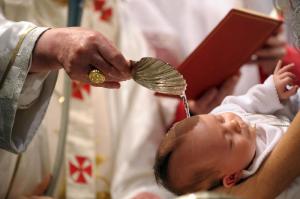
Today we are surrounded by some powerful women.  Many of you do not know Charlotte and Piper, who we are baptizing today, but they came into the world fighting.  While they were in the womb, their lives were threatened.  Doctors were able to operate in the womb at twenty-one weeks to ensure their survival.  Despite that help, they were born early and very tiny, but amazingly, had to have very little medical support.  Once they gained weight, they were able to come home and enjoy a healthy infancy.  My guess is that the strength these two children of God harnessed is what has pulled them through – a strength that their parents might regret when they hit their teenage years!

When we baptize Charlotte and Piper, we will baptize them into a communion full of strong saints – women who have paved the road before them, who have shown great faithfulness and strength, and who will serve as mentors and guides in their earthly pilgrimage.  We meet a couple of those women today.  First we meet Jairus’ daughter through her father.  Now, we might not think of her as a strong woman, since she is near death, but this young woman was powerful nonetheless.  She evokes such devotion in her father that he, a synagogue leader, is willing to bow down to the controversial Jesus and beg for healing for his dying daughter.  Jairus’ love for this powerful young woman made him willing to cross boundaries, to show vulnerability, and put great faith in Jesus.  We also know that Jairus’ daughter is twelve, about the age that women start menstruating, making them capable of producing life – one of the most powerful gifts of nature.  Though she is at death’s door, her power as a woman and as an individual bring people like Jesus to her, so that she might be restored to wholeness of life.

Of course, we also meet another strong woman today.  By all accounts, this woman should not have been strong.  In those days, menstruation alone meant that women had to be separated from the community for a period of time for ritual impurity.  But to have been bleeding for twelve years means that this woman has been ostracized from others for as long as Jairus’ daughter has been alive.  Furthermore, she spent all her money trying to obtain healing from doctors.  Her poverty and her impurity make her a double outcast.[i]  But this woman will not quit.  She boldly steps into a crowd (likely touching many people that she ritually should not) and she grabs on to Jesus’ clothing, knowing that simply by touching Jesus she can be healed.  She does not ask Jesus to heal her or mildly whisper among the crowds, “Excuse me Jesus, could you please heal me?”  No, she takes matters into her own hands, and though Jesus demands to speak with her, her own determination and faith make her whole.

In many ways, the baptism that we witness today is a same expression of strength and faith.  When we are baptized, we (or in the case of infants our parents and godparents) boldly claim the life of faith.  We renounce the forces of evil and we rejoice in the goodness of God.  We promise to live our life seeking and serving Christ, honoring dignity in others, and sharing Christ in the world.  This action is not a meek or mild one.  This action is an action of boldness – one in which we stand before the waters of baptism, and stake our claim in resurrection life.

Now, here’s the good news:  even though we are surrounded by powerful women today and we are doing and saying powerful things, we do not always have to be strong.  All the women we honor today are strong – but they have moments of weakness too.[ii]  I am sure over the course of twelve years, the hemorrhaging woman has doubts.  As bold as she is today, I am sure there are moments when she fears – maybe even that day – whether she could really reach out and claim Jesus’ power as her own.  And as Jairus’ daughter feels the life fade from her, I am sure she doubts.  I am sure she wonders whether she will ever be able to claim the life-force that is budding inside of her or to live a long life honoring her parents.  And though Charlotte and Piper have been warriors thus far in life, they will both have their own doubts and weaknesses.  In fact, that is why we as a congregation today promise that we will do all in our power to support them in their life in Christ.  That is why her parents and godparents promise by their prayers and witness to help them grow into the full stature of Christ.  That is the good news today.  For all the moments of strength that we honor in one another, we also honor the doubts, fears, and weaknesses.  God is with us then too, and gives us the community of faith to keep us stable until we can be strong witnesses again.  Amen.

[i] Mark D. W. Edington, “Theological Perspective,” Feasting on the Word, Yr. B, Vol. 2 (Louisville:  Westminster John Knox Press, 2009), 190.

[ii] David Lose, “Come As You Are,” June 24, 2012 at https://www.workingpreacher.org/craft.aspx?post=1493 found on June 25, 2015.

Sermon – John 20.1-18, ED, YB, April 5, 2015

15 Wednesday Apr 2015

Posted by jandrewsweckerly in Uncategorized

≈ Leave a comment

Tags

community, Easter, Episcopal, intellect, Jesus, John, Mary Magdalene, mystery, personal, questions, realness, Sermon, theological, visceral

Growing up in the church, I always had a lot of questions.  There were a lot of things in the Bible that I found confusing, and downright contradictory, and I wanted someone to explain them.  Often the answers were unsatisfactory, and I struggled to understand why the adults in my church did not just have clear answers.  So imagine my delight in adulthood when I discovered the Episcopal Church and the way that the Church seemed to embrace questions.  Of course, the answers were still not always clear, and priests used words like “mystery” and “I don’t know.”  But at least I was in a place that welcomed the questions, and that fact gave me hope that one day, I might actually figure out all this “God stuff.”  And of course, going to seminary was a dream – I could actually spend 24-7 steeped in my questions, in textbooks, and in my favorite spot, the Library.  And though I discovered that there is rarely one answer to a question, the fact that there were myriad answers that one must hold in tension was just fine.  I was just happy to have developed some of the language and ideas around those big questions.

So imagine how proud I was when my first child finally started asking questions about Jesus.  I was going to be the parent who did not have to use words like “mystery” and “I don’t know.”  I did know, and with her first question, I launched into an explanation of epic proportions.  It was not until I looked in the rearview mirror of the car and saw her eyes glazed over and her attention fading that I realized I had lost her.  Somehow my accumulated knowledge and reference to the debates of scholars was of no help with a three-year old.

What I probably should have done was taken a cue from John’s gospel that we hear today.  The funny thing is that John’s gospel is usually pretty heady – his sentences are often convoluted and complicated.  And to be honest, sometimes my eyes glaze over and my attention fades when I read John’s gospel.  But today’s lesson is a little different.  Today, as we hear about the most significant fact of the Christian faith – Jesus’ resurrection – John is not abstract or intellectual at all.  Quite the opposite, the encounter between the risen Lord and Mary Magdalene is visceral, emotional, and deeply, deeply personal.[i]

This kind of revelation about God is not what we expect from John’s gospel.  This is the same gospel that begins, “In the beginning was the Word, and the Word was with God, and the Word was God.  He was in the beginning with God.  All things came into being through him, and without him not one thing came into being.”  No mangers, angels, or kings.  John is all about theologically explaining Jesus.  So why then does John give us a story about Mary, Peter, and the beloved disciple running around like crazy people?  Why does John have Mary repeatedly not being able to see past her grief to realize that not only is she speaking to angels who are trying to give her good news, she is also talking to the very man whom she is grieving?  John beautifully transitions today from being a writer who consistently presents Jesus in heady, intellectual ways, to being a writer who also shows us that Jesus is most known in the tangible, realness of life.  In the story, Mary is desperate to see her Lord’s body – what she imagines is the last tangible piece of him left.  She is so distraught that she cannot even see clearly when he is looking at her straight in the eye.  Only when she has turned away in despair, is she able to find Jesus.  Jesus says, “’Mary,’ and the sound of his voice saying her names helps her to see him.  He does not offer a general address; no, he uses a word that applies to her and her alone, a word that captures the utter particularity of her individual life – her name.”[ii]

We do not get a distant, transcendent Jesus in John.  We do not get some flowery, academic description of a concept of Jesus.  We get a real man, addressing a real woman, using the sound of his raspy voice, calling a woman by her very own name.  The gospel does not get much more real and tangible than that.  John’s gospel is such a relief to us today because who among us cannot relate to the busyness of this text?  Before we get to the part of Jesus saying Mary’s name we have Mary and disciples running back and forth, people walking past one another without a word, Mary misinterpreting things because she is so singularly focused on what she thinks should be happening.  Of course she could not see Jesus.  Neither can we.  We are running from work to home to meetings to practices to church.  We are answering emails, hearing headlines on the news, and eating dinner.  We are on the phone, driving the car, and scarfing down lunch.  How can we connect to Jesus in the chaos of our lives?

We can certainly try to connect to Jesus through the study of academic readings and theological debates.  We can try to mentally work our way toward Jesus.  But more often, Jesus is revealed to us instead through embodied, physical ways.  As one scholar explains, “As he did with Mary, Jesus comes to us not as a general idea or an imagined ghostly figure, but as a presence that reaches beyond our mind’s overt powers of knowing and touches our lives in ways that we cannot see.  They are felt – tasted, touched, smelled, heard, seen in image, and as such, often as unconscious as they are visceral.”[iii]  Sometimes we will experience God through study and the use of our minds.  But sometimes, we will come to know God through the emotional and personal – like being called by name.

Once we are willing to accept that there are some things that are beyond our knowing, we can perhaps lessen our grip on our Episcopal embrace of the intellect, and realize that some things of God have to be experienced.  In order to do that, we are going to need some help.  We are going to need to “go to church and be in a space where we physically, emotionally, communally, experience Jesus in our midst.”[iv]  Whether in the taste of the communion wine, the smell of the Easter flowers, the sound a favorite old hymn, or the feel of hard wooden pew, church is one of those places in which the familiar tastes, smells, sounds, touches, and sights stirs up something deep inside of us.  Though church can certainly feed our minds, we can feed our minds anywhere.  But our bodies need to be fed too.  And sometimes the only way to feed our body is through our physical, visceral experiences that can only be had in church – so that our bodies might be reminded of Christ too.

Of course, that means we are going to have to give up some things.  We are going to have to give up on the notion that our brains will be able to answer all our questions.  We are going to have to give up some time on Sundays so that we can place ourselves in the position to taste, touch, feel, see, and hear Jesus.  And we might even have to be willing to say the occasional, “I don’t know,” when our children ask us really hard questions.  But my guess is that children, and even adults, when they are willing to admit it, might be relieved to hear us say, “I don’t know.  But sometimes in my gut, I can feel Jesus with me.  And every once in a while, though the thought may be really strange, I really can hear Jesus calling my name.”  My guess is that the ambiguity, the visceral, tangible concept of Christ, and the sense of wonder and mystery you share might make for a more engaging answer anyway.  Amen.

[i] Serene Jones, “Theological Perspective,” Feasting on the Word, Yr. B, vol. 2 (Louisville:  Westminster John Knox Press, 2008), 376.

[ii] Jones, 378.

[iii] Jones, 378.

[iv] Jones, 380.

Sermon – Mark 8.31-38, L2, YB, March 1, 2015

04 Wednesday Mar 2015

Posted by jandrewsweckerly in Uncategorized

≈ Leave a comment

Tags

community, cross, deny, discipline, God, Jesus, Lent, love, Sermon

How many of you have taken on a discipline for Lent?  I have been talking to many parishioners and most of us are taking on something.  Either we have agreed to say our prayers more regularly, we are reading a book or scripture more often, or we are doing some kind of community service or good deeds.  Many of us have committed to playing Lent Madness, which sounds like fun, but still involves reading about the saints each day.  In this way, our Lenten disciplines are burdens – things that we might not make time for normally or are just things we don’t really enjoy doing, but we do them hoping to learn something.  Or perhaps, as we hear Jesus say in our gospel lesson, we are denying ourselves, taking up our crosses, and following Jesus.

To be honest, I am not sure most of us know how to deny ourselves.  We are trying to deny ourselves by following Lenten disciplines.  We are denying ourselves chocolate.  We are denying ourselves more time on Facebook or Instagram so that we have time to learn about saints.  We are denying ourselves extra sleep so that we have time to get up and exercise.  But I am not sure that is what Jesus means when he says we should deny ourselves.  I think what Jesus means when he says we need to deny ourselves is that we need to realize that life is not all about us – our needs, our wants, our plans.

Several of our teens and pre-teens are going through a program called Rite-13.  One of the parts of that program is a liturgy in which we bless a transition they are facing in life – from being shaped primarily by their parents to being shaped by their peers and community.  In that liturgy they will stand on one side of the church with their parents at the beginning, but then they will move over to the other side of the church with their peers – symbolizing this change.  For the teens, I think they often enjoy this part because the move toward their friends feels like freedom – finally getting rid of their overbearing parents.  But what many teens do not realize is that although the freedom is indeed fun, that freedom is also scary.  They are stepping out of a place of safety and protection – out of a situation where it is “all about you” – into a place of vulnerability and trust – into a situation where it is not going to always be about you.  In fact, very often they will need to tend to the needs and concerns of their friends more than their own needs and concerns.

This is what taking up our crosses and denying ourselves really means.  Taking up our crosses means finally seeing that our faith is not just about us and God.  Our faith involves a community that needs us.[i]  And as we learn more, we will find that not only does our church community need us, but the community outside of these walls needs us.  So denying ourselves and taking up our cross means that we might need to be the Christ-like person who helps someone without enough food.  Taking up our cross is going to mean that we might need to be the Christ-like person who stands up for someone else, either by stopping a bully or by advocating for systemic change.  Taking up our cross is going to mean that we might need to be the Christ-like person who talks about their faith even when talking about God might make you seem un-cool.

Julian of Norwich, who was actually one of the saints who almost won Lent Madness a few years ago, once said, “If there is anywhere on earth a lover of God is always kept safe, I know nothing of it, for it was not shown to me.  But in falling and rising again we are always kept in that same precious love.”  We are not guaranteed a carefree and safe path just because we are a part of a community and because we offer love.  But love, which we find in the gift of community, will be with us whether we succeed or we fail.[ii]  One of my favorite pictures is from of a friend of mine who has two boys.  When the second was born, the older brother came to the hospital to see his new younger brother.  My friend took a picture of her older son holding the younger son.  The look on the older son’s face was priceless – the look was a look of utter distain.  In his grimace you could see anger, jealousy, and a sense of betrayal.  That one picture captured perfectly what most of us feel when we realize we are not the center of universe.  For many of us, that is what taking up one’s cross feels like.  We deny ourselves, valuing the community over ourselves.  When we do that, we will often feel the same way that older brother felt.  But what I also know is that eventually, the older brother came to love the younger brother – he found a playmate, a confidant, and a friend.  Like Julian explained, in loving outside of himself, that brother was not always protected from getting bruised up from time to time.  But he has always found love – in others, and especially in God.

That is our invitation today:  not to deny ourselves the simple pleasures in life, but deny ourselves the privilege of being the center of universe.  That work is not always fun, and sometimes we will feel like that older brother with a grimace on our faces.  But sometimes, when we really let go of our focus on ourselves, we find something a lot greater – a love that we could never experience alone – a love that can only come through God and our neighbor.  In that way, taking up our cross and denying ourselves does not seem so bad.  Amen.

[i] Karoline Lewis, “A Different Kind of Denial,” February 22, 2105 found at http://www.workingpreacher.org/craft.aspx?post=3542.

[ii] Becca Stevens, The Way of Tea and Justice (New York: Jericho Books, 2014), 46.  Stevens quotes Julian’s words found in Revelations of Divine Love and adds her own commentary.

Sermon – Joel 2.1-2, 12-17, AW, YB, February 18, 2015

25 Wednesday Feb 2015

Posted by jandrewsweckerly in Uncategorized

≈ Leave a comment

Tags

Ash Wednesday, blessing, community, discipline, expectations, God, Joel, Lent, rend, repent, separation, Sermon

For those of us who have been around the church for any amount of time, we have become quite accustomed to the season of Lent.  We dutifully find a Lenten discipline:  buying that book we are going to read, ridding the house of chocolate, or purchasing new athletic gear for the exercise we plan to take up.  Or if we are feeling particularly uninspired, we may ask our friends and family what they are giving up for Lent this year, in the hopes that something will inspire us too.  We do all these things because we feel obligated.  We take up a discipline because that is what we are supposed to do, not because we particularly want to take up the discipline.  Lenten disciplines have sort of become the second-chance for New Year’s Resolutions.  Whatever failed then might have more luck if we do the discipline in the name of Jesus.  Then we can feel doubly good because not only did we give up red meat for Jesus, but we also lost four pounds.  In that way, Lent is great!

The challenge with that kind of engagement with Lent is that our practices become more about giving up something for the sake of giving up something instead of giving up something because that sacrifice will drive us into the arms of God.  When we choose a Lenten discipline, we choose that discipline not out of habit, or out of peer pressure, or even in the hopes of the secondary benefits (like losing weight or finally getting through our pile of books).  To get to the true heart of Lent, we choose our Lenten disciplines out of a sense of urgency – out of a sense that something needs to change and something needs to change now.

That is what the prophet Joel was trying to say to the people of Israel in our Old Testament lesson today.  You see, “Tradition held that on the Day of the Lord, God would come to vindicate Israel, to judge the nations that had opposed and oppressed her, and to reverse the status quo in favor of the people of Jerusalem”[i] The Israelites had come to believe that the Day of the Lord would be a day of celebration and vindication.  Any sacrifices they made or disciplines they assumed were because they were anticipating a reward.  But Joel tells them that their very identity as the chosen people of God is what brings them up short.  Instead of favor, they will receive a harsher judgment than anyone.

As a parent, I tend to read a lot of parenting blogs and articles.  One of the on-going conversations is about whether children should receive compensation for their chores.  People make arguments that children should never be given money for chores, because paying children for chores teaches them that they should only participate in the life of the family if they will receive something in return.  Instead, many critics argue that chores should be presented as work that is simply expected of all capable members of the family.  In doing chores out of membership instead of reward, the critics argue that children learn a sense of pride and belonging.  Their argument is similar to Joel’s:  favor and belonging in God’s eyes comes with expectations, not prizes.

But Joel’s critique of Israel goes even deeper.  Joel reminds the people of God that not only do they need to repent, they also need to repent with their whole heart.  Joel says they are to rend their hearts, not their garments.  The rending of garments was a ritual practice of repentance.  But Joel insists that God does not simply want ritual repentance.  God wants the kind of repentance that is felt deep in one’s heart.  They are to “approach God in sincerity, rather than by ritual; to beseech God’s mercy through genuine mourning for sin, rather than by cultic rite.  Joel calls for true repentance, the complete turning away from destructive patterns, selfish, inclinations, and self-righteous expectations.  God wants the whole person, not some outward sign…”[ii]  To rend one’s heart was not simply an emotional response.  As one scholar suggests, “Since the heart was considered the seat of thinking and willing, [a commitment of the heart] implied total dedication.”[iii]

That is the kind of discipline we are invited to take up this Lent.  Disciplines that reflect on the ways that we have separated ourselves from God, the ways that we have become so wrapped up in ourselves that we have pushed God away, and the ways that we have simply neglected our relationship with God – those are the disciplines that will create meaning and substance.  When we think about rending our hearts, our disciplines will make space in our lives for us to stop in our tracks, to turn around on our current paths, and to journey back to God’s open arms.

The good news is that we do not do this work alone.  In fact, Joel insists that God not only wants the whole person, God wants “the whole people, the whole city of Jerusalem, indeed, the entire nation.  This is not a call to the pious, or to the willing, or to those who are expected to make offering to the Lord, but to all.”[iv]  When Joel says to gather the aged, the children, the infants, and the newlyweds, he means that even those who normally would not need to repent need to come into the fold.  God is interested not simply in a personal relationship with the people, but with a communal one.

This year, I invited the parish to join me in the solemn practice of playing Lent Madness.  Most of you have wondered why I invited us to play together, especially in something that seemed so silly.  Some of you complained that the process seemed too confusing, or just were not sure why we needed to do something as weird as a sports and saints hybrid.  Part of my motivation in getting us to do a discipline together is that I know how hard isolating Lenten disciplines can be.  When we set a goal of praying or reading scripture for an hour a day during Lent, no one should be surprised when we fail ten days into the practice.  Perhaps we fail because we are doing the practice out of a sense of obligation to be holy.  Perhaps we fail because we have not really done the hard work of rending our hearts – searching for the ways that we are deeply separated from God and need to return to God.  Or perhaps we fail because we were too prideful to repent in the context of community.

Now I am not insisting that you play Lent Madness.  I am simply suggesting that sometimes our piety is so about ourselves that we forget the community of saints sitting right beside us who long to rend their hearts too, but cannot seem to do the work alone.  Together we can do the hard work of rending our hearts.  We can do the hard work of repenting, of truly turning back to the God who longs to be in communion with us.  We can do the hard work of being a vulnerable, loving, supporting community.  Our encouragement in all this work comes from Joel too.  Joel affirms for us that for God is gracious and merciful, slow to anger, and abounding in steadfast love, and relents from punishing.  Joel even conjectures, “Who knows whether God will not turn and relent, and leave a blessing behind.”  The expectations are high.  The work is hard.  The community works together.  Because our God is gracious and merciful.  And who knows whether God will not turn and relent, and leave a blessing behind?  Amen.

[i] David Lose, “Homiletical Perspective,” Feasting on the Word, Yr. B, vol. 2 (Louisville:  Westminster John Knox Press, 2008), 3.

[ii] Lose, 5.

[iii] Dianne Bergant, “Exegetical Perspective,” Feasting on the Word, Yr. B, vol. 2 (Louisville:  Westminster John Knox Press, 2008), 5.

[iv] Lose, 5.

Sermon – Isaiah 40.1-11, A2, YB, December 7, 2014

10 Wednesday Dec 2014

Posted by jandrewsweckerly in Uncategorized

≈ Leave a comment

Tags

Advent, care, Christmas, church, community, God, Isaiah, preparation, prepare, promise, Sermon, the Lord, work

This sermon was delivered on the occasion of our Annual Meeting. 

This time of year, I do a lot of preparing.  Though the setup takes a lot of work, I particularly love preparing our house for Christmas.  Unpacking and hanging all the ornaments is a tradition I shared with my family, and that I now can share with my girls.  I love telling my oldest daughter the stories behind certain ornaments and helping her decide where they should go.  I also put out our international crèche collection.  They remind me of travels I have made or friends from far away places.  Each inspires something different in me, reflecting the culture and artistry of different countries.  And of course, my daughter loves helping me hide away the baby Jesuses until Christmas day.  We even take down some artwork on our wall to make room for the cards which friends from far and wide send to us.  There is something homey and comforting about the whole process of preparing for Christmas, and I love the way that the preparation makes me feel grounded and joyful.

In our Old Testament lesson today, the text says, “prepare the way of the LORD.”  In this season of Advent, we are to prepare for the arrival of the Christ Child.  Now certainly, unpacking ornaments, advent wreaths, and crèches are one way to prepare.  But God is talking about a different kind of preparation today.  God is not talking about an outward change – like decorating our homes.  God is talking about an inward preparation – an inward change in anticipation of the LORD.  I am reminded of how one of our parishioners just recently prepared himself for the LORD.  Several weeks ago, one of our young parishioners decided to receive his first communion.  He prepared by reading about the Eucharist at home with his family, asking questions, and talking with them about their experiences.  He worked on memorizing the Lord’s Prayer, so that he might fully participate in the prayer life of our community.  And then he sat with me as we walked through the Eucharistic liturgy, talking about what each part means, why that part is significant, and what all those crazy things on the altar are called.  Finally, he chose someone to present him before the entire community, where he and we all declared that he was prepared to be in full communion with this community.  He waited and worked to prepare himself for the consumption of our LORD.  And now, each week that I have placed the body of Christ in his hand since then, I have felt a sweet, deeply abiding satisfaction when he reaches his hands toward me to receive Christ’s body.

The kind of preparation that our young parishioner did is a small taste of the kind of preparation God calls for in our Old Testament today.  Isaiah says that in order to prepare, we need to make straight in the desert a highway for our God, lift up every valley, make low every mountain and hill, level the uneven ground, and make plain the rough places.  This passage is so familiar to us, that many of us miss the magnitude of what God is saying.  When was the last time you tried to fill in a valley or level a mountain?  Of course, God is not telling us to literally take the winding roads of deserts and make them straight.  But in the metaphors, God is telling us that preparing for God is not easy work.  In fact, preparing for the LORD is a monumental task.  Preparing for the LORD is not like preparing our homes for Christmas, where we can make a basic checklist and slowly check the items off the list.  When given the hefty work of preparing ourselves inwardly for God, the task of leveling our valleys and mountains and smoothing out our rough places is much more difficult.

In some ways, I have watched St. Margaret’s do a lot of this interior work.  Over the course of the last year, our Vestry and Buildings and Grounds Committee have made level the mess that had become our Undercroft.  Though taking on an expensive project, they together worked to clean out harmful mold and mildew, solved a drainage problem to prevent that kind of damage again, and reimagined how that space could be utilized by us and our community.  Meanwhile, our educational offerings have been totally made low in this last year.  We revamped our Sunday School program after years of struggling to find the best way to raise our children in the faith.  We reworked our worship schedule so that adults could claim an hour in their busy lives to ponder their faith and make straight paths in the desert.  We have filled in the valleys by marching in parades, sponsoring baseball teams, eating pancakes at local diners, and inviting total strangers into our midst so that they might help us fill in those valleys.  Of course, anyone who knows St. Margaret’s also knows that you are only a stranger here for about one Sunday before our wonderfully welcoming community has made sure they know your whole life story before your coffee cup is empty.

All of those have been wonderfully positive things in our lives, but not easy work.  I cannot tell you the number of people who worried and fretted over our Undercroft expenses, complained about how long the work was taking, and questioned the wisdom of the work.  I cannot tell you the number of times I myself considered whether we should halt educational offerings altogether due to low turnout.  I cannot tell you how many times I needed each one of us to invite someone to church and instead heard someone say, “Oh, well isn’t that what our new website is for?”  We have been making progress toward straightening paths, filling in valleys, and leveling mountains.  But we have also gotten very dirty, been impatient and frustrated with each other, and sometimes have dropped our shovels altogether.  That is what happens when you do this kind of preparation for the LORD.  The work is not easy.  The work is monumental.  The work is, well, work.  And work is what God is inviting us into today.

The good news is that today’s text is one of those “both-and” texts.[i]  Yes, God is inviting us into some hard work today.  As we reflect on another year of service, at the mounds of dirt we have already moved, God is charging us to roll up our sleeves and keep digging.  And yes, God promises that the work of preparing will not be easy work.  But God also makes a promise while we are in the mire of making roads straight.  Our text today from Isaiah says, “He will feed his flock like a shepherd; he will gather the lambs in his arms, and carry them in his bosom, and gently lead the mother sheep.”  This last sentence has been lingering with me this week.  Maybe because I am a nursing mom, or maybe because this is the only time that scripture talks about the work of a mother sheep, but I find myself riveted by these words.

Just this week, I had one of “those” nights at our house.  I do not know whether she was teething or just had a rough day, but I lost count after the fifth time I woke up to my infant’s crying one night.  The next morning, I woke up bleary-eyed, almost falling asleep while eating my morning cereal, spilling my coffee on my computer, and generally having a rough time trying to focus.  That is the life of a mother with young children.  And I assume, the life of a mother sheep is not much easier – constantly using her body to protect and feed her lambs.  To that wearied mother sheep, God says that God will gently lead her.  In fact, not only that, God will gather up her lambs, embracing them in God’s bosom, and then God will gently lead the mother sheep.  I am reminded of the many times someone has scooped up my daughters when they were losing their cool.  I am reminded of the individuals who have forced me to go take a date night while they watched my kids.  I am reminded of the encouraging words and sympathetic nods I have received over these last five years.

That is the kind of care God promises us in the midst of our work.  God says, “Go out there and get dirty filling valleys, leveling mountains, and straitening roads.  And when you are weary from the work, I will scoop up your little ones, and gently lead you by my side.”  As I look forward to the coming year, I hear both a charge and a comfort for us today.  We all have more to learn, more people to serve, more spreading of the gospel to do.  But we also have a shepherd who tenderly encourages and comforts us – and then kicks us right back into the ring.  Thanks be to God!  Amen.

[i] George W. Stroup, “Theological Perspective,” Feasting on the Word, Yr. B, Vol. 1 (Louisville: Westminster John Knox Press, 2008), 28.

Sermon – Philippians 2.1-13, P21, YA, September 28, 2014

01 Wednesday Oct 2014

Posted by jandrewsweckerly in Uncategorized

≈ Leave a comment

Tags

community, ego, humility, Jesus, other, Paul, self, Sermon, spiritual discipline, together

Humility has always been one of the trickiest virtues for me.  I actually see myself as a pretty humble person, mainly because life has deflated my ego enough times that I learned pretty quickly to be humble.  In high school I was at the top of my class, and I remember how my classmates all thought I was pretty smart.  But when I got to college, everyone else had been at the top of their class too – and quite frankly, the workload was crazy hard.  Any ego I had started to build up in high school was immediately brought down to size.  Or, as I like to tell the acolytes, in one of my first Sundays as an ordained priest, I was serving the chalice.  We missed a latecomer, so I grabbed the chalice and rushed around the altar to serve them.  In my rushing, my elbow hit the side of the altar, and the wine splashed all over the stone floor.  The gasp from the choir in the chancel was audible.  For someone who holds the sacredness of liturgy dear, I was mortified; but there was nothing I could do.  So humility has never really been an issue for me.  But the weird thing about humility is owning the virtue.  As soon as you declare, “I am a pretty humble person,” haven’t you just negated your humility by bragging about your humility?

Of course, the quest for humility can go to the other extreme as well.  I have a friend who went through a phase of being a pretty fanatical Christian.  At some points I found talking with him to be so frustrating that I avoided him altogether.  He was so obsessed with being a humble Christian that you could never pay him a compliment.  I might say something simple like, “I’m so proud of how well you are doing in school.”  And his immediate retort would be, “Oh, well I had nothing to do with that.  All the credit belongs to God.”  There really is no good response to a retort like that without sounding sarcastic or rude.

But humility is what our epistle lesson today demands.  Paul addresses the community at Philippi with a letter from prison.  Worried that the community of Philippi stay on the right track, Paul tells them, “Do nothing from selfish ambition or conceit, but in humility regard others as better than yourselves.  Let each of you look not to your own interests, but to the interest of others.  Let the same mind be in you that was in Christ Jesus.”  In three simple sentences, Paul’s instructions get harder and harder.  First, Paul tells the community not to let their egos get too big.  Paul wants the community to right-size itself by looking at their intentions and attitudes.  Second, Paul tells the community not just to be humble, but to put the needs of others above their own needs.  Here Paul is commanding the community not just to correct their attitudes, but to reorient their actions as well, focusing on others before themselves.  Finally, as if the other two were not hard enough, Paul takes his instructions one step further and tells the community to have the same mind as Christ Jesus.  Paul wants the community to be a humble as the man who sacrificed his own existence for the sake of humanity.  The more I read Paul’s letter this week, the more I wondered whether my fanatical friend had not been rooting his whole life in the mandate presented here by Paul.  Maybe my friend’s annoying, over-the-top humility was actually what Paul was suggesting.

The challenge with trying to take on any spiritual discipline, like taking on the mind of Christ, or becoming more humble, is that we tend to fret so much over the discipline that we get lost in ourselves – which is, in fact, the very opposite of what Paul invites us to do today.  In focusing on our weaknesses or lack of humility, and trying to work our way into a more humble way of being, instead, we find ourselves alone, struggling with God, but separate from others who may actually be able to help us in our quest for humility.  The secret to mastering humility is not by focusing on the self, but instead by focusing on others.  One scholar describes this method by explaining, “One does not ‘self-empty’ by focusing upon oneself.  One is emptied of self to the degree one is overcome by the needs, pains, hopes, and desires of others.  When concern for others takes one utterly beyond self-interest, beyond obsessions with achievements and self-obsessing guilt over failures, beyond self, then one receives the comfort of an Easter ‘yes’ so overwhelming, unconditional, undeniable, and absolute that [the ‘yes’] is experienced as unfailing and forever – a yes more potent and enduring than any imaginable no.”[i]

When I did my year of AmeriCorps service, I arranged to clean and lock up the Episcopal Campus House in exchange for a free room in the back of the house.  Since AmeriCorps volunteers get a very modest living stipend, the free housing was a huge help.  But one day, at the end of a particularly physically grueling day of work, I was talking to one of the clients that the Food Bank served.  He lived in a group home and was trying to transition to independent housing.  We were talking about my housing situation and he marveled, “Man, I wish I could find a situation like that!”  Truthfully, I had taken my housing situation for granted – occasionally I even resented having to clean toilets and mop floors.  But after that conversation, every time I mopped those floors I remembered how incredibly lucky I was.  I needed that client to help me get to a place of humility and gratitude.

That realization is what Paul is hoping the community at Philippi will have as well.  Paul knows that setting aside the self is difficult.  That is why he pushes us to look at the needs of others.  Paul knew that when the community of faith began focusing on others, they would forget about themselves.  They would gain the perspective needed to help them on the journey toward humility.  And as the community turned more and more outward, they would be turning more and more toward the life of Christ – a life always oriented toward the other.  The work of building individual humility and having a mind like Christ only happens in the context of community.  The work cannot be done alone.

In 1974, poet Adrienne Rich was awarded the National Book Award in poetry, having beaten out fellow nominees Audre Lorde and Alice Walker.  When she gave her acceptance speech, she shocked the literary community.  She began, “We, Audre Lorde, Adrienne Rich, and Alice Walker, together accept this award in the name of all women whose voices have gone and still go unheard in a patriarchal world.”  The three women had sat down together before the event and written the statement.  No matter who won that night, this would be the statement of the winner.  When asked about the statement, they “said they believed that by supporting and giving to each other they could enrich each other’s lives and work more than by competing against each other.”[ii]  What these three poets did was refuse to play by the rules of the game.  Instead of accepting that there must be one winner, they declared that they had all won – despite what the award givers were proclaiming.

What these women did is what Paul was hoping the Church community would do.  By working together, these women resisted the temptation to lose their humility.  If any of them alone had won, they could have become puffed up with pride.  Conversely, if any of them alone had lost, they could have spiraled into the depths of self-doubt.  But together, they were able to claim a humble acknowledgement that God was working through each of them to do great things.  That is the true nature of humility – one found and expressed through community.  We are blessed to already have in place the kind of community that can support and encourage one another in the development of humility.  Our invitation is to trust this community enough to uplift us, to challenge us, and to help us grow.  We cannot face the journey alone; but luckily, we are not alone in the midst of this community.  Amen.

[i] William Greenway, “Theological Perspective,” Feasting on the Word, Year A, Vol. 4 (Louisville: Westminster John Knox Press, 2011), 114.

[ii] Entire story told by Mike Grave, “Homiletical Perspective,” Feasting on the Word, Year A, Vol. 4 (Louisville: Westminster John Knox Press, 2011), 113.

Redefining home…

19 Friday Sep 2014

Posted by jandrewsweckerly in Uncategorized

≈ Leave a comment

Tags

church, comfort, community, construction, home, Jesus, joy, outside, renovation, welcome, world

Courtesy of Dan McGee, St. Margaret's Parishioner

Courtesy of Dan McGee, St. Margaret’s Parishioner

This past Sunday we rededicated our Undercroft.  The Undercroft has been under construction since November 2013, and includes two Sunday School Rooms, our Parish Hall, two bathrooms, and the kitchen.  All rooms were completely renovated with the exception of the kitchen, which only received new flooring.  During construction, our Coffee Hours were moved to the Narthex; a tight space, but one that sufficed – and certainly brought us closer, literally and figuratively.  Many of our normal fellowship activities were either moved off campus or were cancelled altogether.  Our support groups had to move to our Library, which meant meetings on those nights also had to go off campus.

As I looked around the room during our rededication celebration, two things occurred to me.  One, I had really missed being in that space.  Many warm memories have been formed in that space, which all came flooding back.  But mostly, I missed the sound – the noise of people talking, laughing, sharing stories, and lingering a little longer over a meal.  Though we had shared in communion at the altar upstairs, the communion meal was continuing downstairs:  and it was a raucous meal – one I am sure Jesus would have approved.

Two, I found myself a little wary by the sense of deep comfort that was overwhelming me.  One of the nice things about being forced off campus was that we finally did what we had been hesitant to do – take the church out into the world.  Our committees were meeting at local dining establishments, our coffee hours spilled out into the lawn over the summer, and we got to know each other’s homes more intimately.  My fear is that in the comfort of being back “home” we will stop venturing out into the world, sharing our presence and ministry with others.

My hope is that we can do two things with our space.  First, my hope is that we can share that feeling of home with others by inviting more outside groups to utilize our space.  I would love for us to share our joy and warmth with others, so that this can become their home too.  Two, my hope is that we can keep taking church to the streets and to one another.  There is a way in which having meetings here month after month starts to stifle joy and creativity.  My hope is that our committees will agree to keep going off campus at least a few times a year to mix it up; but more importantly, to show the community that there is life and activity at St. Margaret’s.  And they are most welcome to join us!

The Vulnerable Village…

05 Friday Sep 2014

Posted by jandrewsweckerly in Uncategorized

≈ 1 Comment

Tags

children, community, God, kindergarten, prayer, scary, trust, village, vulnerable

Today is the big day.  Our oldest child’s first day of kindergarten.  As background, we are used to our child being in the care of others.  Since she was eighteen months, she has been doing four days a week of full-day care.  Though that was hard at first, we quickly saw how she thrives on the routine and the stimulation.  And we have also embraced the idea of our child being raised by a village.  In fact, our second child started a similar schedule at eleven weeks.  So we are no strangers to the hand-off experience.

Courtesy of http://www.dot.gov/fastlane/school-bus-safety-be-prepared-not-scared

Courtesy of http://www.dot.gov/fastlane/school-bus-safety-be-prepared-not-scared

But I must admit that today was quite different.  Our kindergarten program asked the parents not to deviate from how drop-off will normally occur.  So instead of passing her off at the school itself, our daughter boarded a bus that then drove away.  In fact, the whole transaction took all of a minute or so.  As the bus turned the corner, driving out of sight, I was left standing there with a pit in my stomach.  As I have thought about it since she went to school, I realized that what my daughter did today – stepping on to a bus with people she has never met, going to a school she has never attended, meeting a new teacher she has never met, and experiencing a totally new routine – takes a tremendous amount of courage.  And yet she boldly stepped onto that bus, with a big grin on her face.

Though I have often talked about the village that raises our children, and in some ways have had to embrace that model out of necessity, I rarely admit how wonderful and also scary that whole concept is.  The truth is that I have to trust many people with shaping and forming my child into an amazing person.  Though my husband and I do a lot of that formation, her formation comes from teachers, school staff, church parishioners, friends, and family.  I have seen in person how helpful that can be (like that time when we were arduously trying to teach her to use a spoon – a habit she picked up in minutes once she saw the other kids doing it at school).  But today, I was aware of how vulnerable relying on the village makes one feel.  There is really no getting around that sense of vulnerability – it is a necessary part of life.  But that vulnerability can certainly be unsettling.

This morning, as I have been sorting through that unsettled feeling, the only thing I have been able to “do” is to give that feeling back to God through prayer.  God knows how much I dislike that feeling of being out of control, and so I am sure my prayer is familiar to God.  But I have also found myself praying my daughter through her day – the other kids on the bus she met, the staff who walked her to her classroom, her teacher and new classmates, the staff who works in the cafeteria, her time learning and at play, and her time in after-care.  I pray that the village will be good to her, that she will feel God’s loving arms surrounding her, and that she too will be God’s light to others.  That is my small contribution to the village today – my prayers and my trust.  God bless our village and give us peace.

Homily – 1 Corinthians 10.31-11.1, St. Ignatius of Loyola, July 31, 2014

21 Thursday Aug 2014

Posted by jandrewsweckerly in Uncategorized

≈ 2 Comments

Tags

accountability, community, glorify, God, homily, St. Ignatius Loyola

Today we honor St. Ignatius of Loyola.  Ignatius was born into a noble Basque family in 1491.  An enthusiastic soldier, he was seriously wounded in 1521.  During his convalescence, he experienced a profound spiritual awakening.  Ignatius began to share his experience with others, eventually writing the “Spiritual Exercises,” which continues to be an influential work.  Ignatius went to school in Paris to become a priest, and eventually gathered with others to form the Society of Jesus – known today as the Jesuits. Theirs was a strict vow of poverty and service to the needs of the poor.  Ignatius died in 1556, having sought to find God in all things and to do all things for God’s greater glory.

Ignatius certainly was living the life that Paul commanded to the Corinthians in our Epistle lesson today.  Paul says, “Whether you eat or drink, or whatever you do, do everything for the glory of God …”  Now I don’t know about you, but having everything in one’s life be for the glory of God is not that easy.  I am pretty sure my frustrations and occasional foul language while driving does not glorify God.  I am pretty sure my impatience at the doctor’s office does not glorify God.  I am pretty sure my actively ignoring a homeless person does not glorify God.

One of the great blessings of having young children in my life is the ways in which they are always watching me.  My older daughter regularly asks why I say and do certain things.  I often find myself either apologizing for setting a bad example or censoring myself before she can catch me.  But just because we might not have a 4-year-old in the back seat does not mean that others are not watching us – and making judgments about what living as a Christian means.

What I like about St. Ignatius of Loyola is that he does not try to do all things for God’s greater glory alone.  He gathers a community and they hold each other accountable.  Though we do not always invite that same accountability into our lives, the opportunity is there.  Whether it is in public or private confession, soliciting communal prayers or finding a private prayer partner – the church is here to help us follow Jesus.  Together we can glorify God better than any of us can on our own.  Amen.

Love and marriage…

06 Wednesday Aug 2014

Posted by jandrewsweckerly in Uncategorized

≈ 1 Comment

Tags

anniversary, church, community, God, love, marriage, sacred, secular, vows

Courtesy of http://www.carbonfiberweddingbands.org/wedding-bands/

Courtesy of http://www.carbonfiberweddingbands.org/wedding-bands/

This week my husband and I celebrated thirteen years of marriage.  A few friends asked me what romantic plans we had, and I found I had to do some explaining.  You see, twelve years ago, on our first wedding anniversary, we found ourselves at an impromptu family reunion.  At the time, we reasoned that we would just celebrate our anniversary some other time.  But a few days later, as we talked about the reunion, we realized something.  Our wedding was a celebration not only of our love and commitment and the covenant we were entering into, but also a celebration of the community who was vowing to hold us to our covenant – to support us, love us, and encourage us in the good and bad times.  In that light, it seemed completely appropriate that we would celebrate our anniversary in the same fashion as we celebrated our wedding – surrounded by the community that holds us accountable to our vows.

Ever since the first anniversary, we have made a point of celebrating our special day with others.  Sometimes the gathering has been large; sometimes quite small.  Sometimes we have celebrated with family, and sometimes we have celebrated with friends.  We have celebrated our anniversary with people who did not even know us when we got married, and we have celebrated with people who knew us before we knew each other.  Each year, the celebration reminds us of the blessing of friends and family in our lives and how we could not grow and thrive in marriage with the support of a lot of others.

What I like about the tradition we have developed is that the tradition pushes against secular expectations.  Secular expectations tell us that we should have a dreamy, romantic night with expensive gifts exchanged (don’t get me wrong – I am all for date nights and presents!).  Secular expectations would tell us that marriage is private.  But that is not what the Church tells us.  Sacred expectations are that marriage is blessed within the context of a community.  Sacred expectations are that the community should ask how marriages are going – not just to gossip or vent, but to continue to live into the vow that the entire community takes to help marriages thrive.

So today, I ask for your prayers: prayers that my husband and I might continue to find joy in one another, might continue to find love and support in our marriage, and might glorify God in our life together.  In return, I lift up prayers today for all my friends who are married:  those who are in those first years of wedded bliss, those who are struggling with all sorts of marital challenges, and those who are just treading water.  I also lift up prayers for those who long to be married, but have not found a partner; for those who have lost their spouses to death; for those who are divorced; and for those who long to be married legally but still live in places where that is not an option.  We are all the community of faith, and we all need one another.  I thank God for all of you today!

← Older posts
Newer posts →

Recent Posts

  • On the Myth and Magic of Advent…
  • On Risking Failure and Facing Fear…
  • Sermon – Luke 23.33-43, P29, YC, November 23, 2025
  • On Inhabiting Gratitude…
  • Sermon – Luke 20.27-38, P27, YC, November 9, 2025

Archives

  • December 2025
  • November 2025
  • October 2025
  • September 2025
  • August 2025
  • July 2025
  • June 2025
  • March 2025
  • February 2025
  • December 2024
  • November 2024
  • October 2024
  • September 2024
  • August 2024
  • July 2024
  • June 2024
  • May 2024
  • March 2024
  • February 2024
  • January 2024
  • December 2023
  • November 2023
  • October 2023
  • September 2023
  • August 2023
  • July 2023
  • June 2023
  • May 2023
  • March 2023
  • February 2023
  • January 2023
  • December 2022
  • November 2022
  • October 2022
  • June 2022
  • May 2022
  • January 2022
  • December 2021
  • November 2021
  • October 2021
  • September 2021
  • August 2021
  • June 2021
  • May 2021
  • April 2021
  • March 2021
  • February 2021
  • January 2021
  • December 2020
  • November 2020
  • October 2020
  • September 2020
  • August 2020
  • July 2020
  • June 2020
  • May 2020
  • April 2020
  • March 2020
  • February 2020
  • January 2020
  • December 2019
  • November 2019
  • October 2019
  • September 2019
  • August 2019
  • July 2019
  • June 2019
  • May 2019
  • April 2019
  • March 2019
  • February 2019
  • January 2019
  • December 2018
  • November 2018
  • October 2018
  • September 2018
  • August 2018
  • July 2018
  • June 2018
  • May 2018
  • April 2018
  • March 2018
  • February 2018
  • January 2018
  • December 2017
  • November 2017
  • October 2017
  • September 2017
  • August 2017
  • July 2017
  • June 2017
  • May 2017
  • April 2017
  • March 2017
  • February 2017
  • January 2017
  • December 2016
  • November 2016
  • October 2016
  • September 2016
  • August 2016
  • July 2016
  • June 2016
  • May 2016
  • April 2016
  • March 2016
  • February 2016
  • January 2016
  • December 2015
  • November 2015
  • October 2015
  • September 2015
  • August 2015
  • July 2015
  • June 2015
  • May 2015
  • April 2015
  • March 2015
  • February 2015
  • January 2015
  • December 2014
  • November 2014
  • October 2014
  • September 2014
  • August 2014
  • July 2014
  • June 2014
  • April 2014
  • March 2014
  • February 2014
  • January 2014
  • December 2013
  • November 2013
  • October 2013
  • September 2013
  • August 2013
  • July 2013
  • June 2013
  • May 2013
  • April 2013
  • March 2013
  • February 2013
  • January 2013
  • December 2012
  • November 2012
  • October 2012
  • September 2012

Categories

  • reflection
  • Sermons
  • Uncategorized

Meta

  • Create account
  • Log in
  • Entries feed
  • Comments feed
  • WordPress.com

Blog at WordPress.com.

  • Subscribe Subscribed
    • Seeking and Serving
    • Join 394 other subscribers
    • Already have a WordPress.com account? Log in now.
    • Seeking and Serving
    • Subscribe Subscribed
    • Sign up
    • Log in
    • Report this content
    • View site in Reader
    • Manage subscriptions
    • Collapse this bar
 

Loading Comments...