• About

Seeking and Serving

~ seek and serve Christ in all persons

Seeking and Serving

Tag Archives: community

On Bringing the Church and World Together…

02 Wednesday May 2018

Posted by jandrewsweckerly in Uncategorized

≈ Leave a comment

Tags

bless, church, community, fellowship, holy, identity, rogation, sacred, service, welcome, world

img_0160

Photo credit:  http://stas.org/en/media/photos/rogation-days-2016-15612

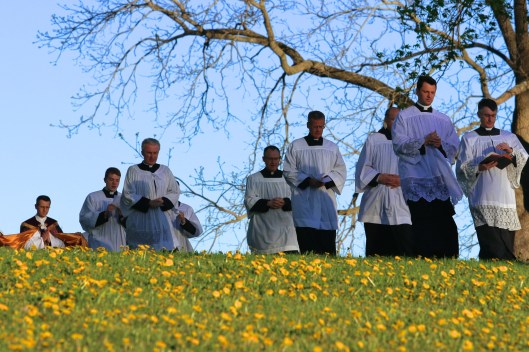
This coming Sunday at Hickory Neck, we will be adding a procession and blessing before our service begins in honor of Rogation Days.  Traditionally, Rogation Days are the three days before Ascension Day during which the litany is said as an act of intercession. In England, Rogation Days were associated with the blessing of the fields at planting, and in the United States they have been associated with rural life, agriculture and fishing, commerce and industry, and the stewardship of creation.[i]  For Hickory Neck, we are using this year’s Rogation Days to give thanks for rainwater collection barrels built for our Community Garden by a Boy Scout in our parish.  We will also bless the Garden, praying for a fruitful harvest for our parishioners and neighbors who use the gardens this year.

What I love about this upcoming event is that it represents a confluence of everything about which the church should be.  Our Community Garden has long been an example of using our property as a way to bless and welcome others.  At the garden, I see strangers become friends, people planting and tending in sacred silence, and the fruits of labor shared with one another.  Meanwhile, it has been a joy to watch our parishioner take leadership of an Eagle Scout project that benefits the church, the community, and his troop.  Watching our parishioner bring his faith community and his service community together has been a tremendous witness to each of us about how to make connections between the various parts of our lives.  And marking Rogation Days with liturgy is the church’s way of making the everyday parts of our lives sacred.  We take the labor of our hands, the fellowship of friends and strangers, the bounty of creation, and we name it all as holy.

Often when people think about church, they think about the building and the people who regularly attend worship services on Sundays.  But the church is much more about what the faith community does outside of the walls of the building, and how the community uses the blessing of its property to bless others.  This Sunday, we celebrate the ways in which we are living into the fullness of our identity, while also challenging ourselves to ever be outwardly-minded in our ministry.  I hope you will join us, but mostly, I hope you will invite a friend as we celebrate the ways in which the blessing of our community flows out into the world!

21463342_1589859034403684_3079109709240303206_n

Rainwater Collection Barrels Installation.  Photo credit:  Paula Simmons.  Permission required for reuse.


[i] Donald S. Armentrout and Robert Boak Slocum, eds., An Episcopal Dictionary of the Church:  A User-Friendly Reference for Episcopalians, “Rogation Days,” as found at https://www.episcopalchurch.org/library/glossary/rogation-days on May 1, 2018.

On Prayer and Connection…

07 Wednesday Mar 2018

Posted by jandrewsweckerly in Uncategorized

≈ Leave a comment

Tags

church, community, connection, God, intentional, petitions, practice, prayer, worthy

39753-women-praying-1200.1200w.tn

Photo credit:  https://www.crosswalk.com/slideshows/10-issues-your-church-should-be-praying-together-about.html

When I was in college, I was involved in the Wesley Fellowship, the United Methodist Campus Ministry.  We gathered every Sunday night for fellowship, a program, and worship.  One of the student leadership roles was the “student pastor” – basically a student who volunteered to be a pastoral presence in the community.  One of the student pastors during my time in Wesley would always carry a small notebook to our Sunday gatherings.  When we got to the time of open prayer requests during worship, he would write notes in his notebook.  Initially, the practice struck me as odd.  What was he writing?  What did he do with those notes?  Assuming he used the notes for his personal prayers that week, did he use them as a checklist?  I never got up the courage to ask any of my questions, so I was left with a bit of skepticism and suspicion.  But also, a little bit of hope – even if he did not use the notes for his prayer life, at least whatever requests were mentioned seemed worthy of his writing them down.

This Lent, I realized that I have basically and unintentionally started doing something similar.  We are trying a new ministry this year at Hickory Neck where each week, 3-6 parishioners or parish families received a postcard from the clergy.  The postcard basically says “I am praying for you this week, and if you want to talk or have coffee, I would love to meet with you.”  Knowing how caught up in the busyness of life I can get, I decided to put the names of those for whom I am praying as an appointment on my calendar.  Everyday, I get a little ping on my phone, reminding me to pray for a specific set of people.  Meanwhile, our church is also hosting a Facebook Live broadcast of compline, or evening prayers, once a week.  In the morning, we put a post on our page, asking for prayer requests, and during the broadcast, people can also submit requests through the website.  This week, I have been using those petitions as another addition to my metaphorical prayer journal.

What I am learning from the two practices, and also incorporating into my prayer life in general, is a more intentional practice of prayer.  When a parishioner tells me about a concern during coffee hour, or when someone drops by my office with a concern, instead of just praying for those concerns as they come in, I incorporate them into my prayers throughout that week.  These practices are having the consequence of making me feel much more connected with my faith community, with the community beyond our church, and with God.  What are some of the practices you have picked up lately – intentional or not – that have brought you closer to God, the church, and the community?  Is there some small change you can make in your daily routine that might help you strengthen those connections?  I look forward to hearing your reflections.


On Remembering You Are Dust…

14 Wednesday Feb 2018

Posted by jandrewsweckerly in Uncategorized

≈ Leave a comment

Tags

ash, Ash Wednesday, church, community, failure, gift, God, Lent, liturgy, mortality, vulnerable

ashes_6329cnp

Photo credit:  http://www.churchofoursaviour.org/church-events/2018/2/14/ash-wednesday-services

As a priest, I find Ash Wednesday to be the most difficult celebration of the Church.  One might think funerals are harder; but by the time we get to a funeral, the loss has already happened, and the people are gathered for a celebration of life and resurrection.  But Ash Wednesday is much more challenging.  The liturgy is the most honest, vulnerable, and sobering of our liturgies.  We gather in community, stripping away all appearances of success, faithfulness, and achievement, and we confess our deepest failures and separation from God – as if standing naked before our Lord.  And then, a priest rubs gritty ash upon our foreheads, and tells us, “Remember you are dust, and to dust you shall return.”

As someone who has experienced the worship from the pews, I know how powerful the liturgy is.  It’s as if the Church says to us, “I know everyone out there thinks you have it all together.  But we both know the truth – that you have a long way to go before you have it all together.  They see your strength and power; I see your weakness and vulnerability.”  The intimacy of the liturgy, experienced within a community of people going through the same exposure, can be both unnerving and deeply comforting.  Out in the world, we are alone, trying to prove ourselves.  Inside the church walls, we are together, admitting we cannot prove ourselves.

As a priest, I have the privilege of guiding people through that powerful experience.  It is so powerful, that I sometimes struggle to perform the actions the liturgy.  As I say those words, “Remember you are dust, and to dust you shall return,” I know that I am saying those words to a preschooler, who does not fully understand death; to a woman who has battled breast cancer and is in remission; to an elderly man who may be closer to death than we want to admit; to a widow or widower who lost their spouse earlier in life than they should have.  The weight of that pronouncement is palpable every single time I say it – and it makes my own mortality that much more real.

If you have not yet received ashes today, I encourage you find a church or Ashes-to-Go station.  It is a tremendous gift to be seen as you truly are, and to kneel alongside others who are trying to be faithful to the charge God has given us.  And if you cannot make it today, know that the entire season of Lent is available to you to continue the journey of remembering you are dust, and finding purpose before you return to that dust.

Sermon – Mark 1.14-20, Jonah 3.1-3, 10, EP3, YB, January 21, 2018

24 Wednesday Jan 2018

Posted by jandrewsweckerly in Sermons, Uncategorized

≈ Leave a comment

Tags

adventure, brothers, call, community, disciple, discipleship, faithful, follow, God, gospel, immediately, Jesus, John, Jonah, journey, Mark, moment, Nathaniel, Sermon

What is fun about our lessons from last week and this week is we get two different gospellers’ versions of Jesus’ first call to the disciples.  Last week, in John’s gospel, we got that great story of Philip and Nathaniel.  When Philip is asked to follow Jesus, he runs to find Nathaniel.  They have this great conversation about whether anything good can come from Nazareth.  Nathaniel reluctantly comes, and when he finally speaks with Jesus, he is amazed at what Jesus knows about him.  In the midst of community, conversation, and collaboration, both Philip and Nathaniel are able to say yes to Jesus’ invitation to discipleship.  On the other hand, Mark’s gospel paints a very different picture of the calling of the disciples.  Mark tells us Jesus passes two sets of brothers by the seashore, and instructs them to follow him.  Both sets of brothers drop what they are in the middle of doing.  In fact, the second set of brothers wordlessly abandon their father to follow Jesus.  No conversations or discernment; no collaboration or goodbyes.  In Mark’s gospel, Jesus invites, and disciples drop everything immediately and go.

I do not know about you, but I am actually in the John camp when we are talking about discipleship.  As an extrovert, I tend to process things aloud.  I need to talk through a problem with others to figure out what the best option might be.  I like to get input from others, using them as sounding boards to make sure my decision will have a positive impact.  I like to marinate on the feedback, pray a bit, share my leanings with a confidant or two, and then act.  So the idea of Nathaniel hemming and hawing, expressing his initial doubt with Philip, and then challenging Jesus when he seems to have some insight about Nathaniel seems totally relatable to me.  I need conversation, community, and collaboration, especially if I am going to drop everything important in life and follow someone in a new direction.

In some ways, I may even be closer to Jonah when we are talking about discipleship.  We hear only a small part from Jonah’s riveting story today, but what we might all remember is Jonah is a terrible follower of God.  The first two chapters of Jonah are filled with Jonah saying “yes” to God, and then totally running in the opposite direction.  He even endangers some total strangers when he boards a boat in the opposite direction of Nineveh.  He needs to be swallowed by a large fish, facing death and shame before he is willing to do what God has asked Jonah to do.

Many of you have heard this before, but my own call narrative was neither immediate nor direct.  When I first sensed a call to ministry in college, I avoided it.  I figured, maybe I could just volunteer for a year instead.  I loved working at a Food Bank that year, but figured, maybe I should work at a faith-based non-profit instead.  That would certainly count as serving God, right?!?  And then, when that did not feel totally right, I started to look at going to school – not for a Masters in Divinity, but maybe to study theology.  You know, try to learn about God, but not to be a minister.  Even when my priest suggested ordination it took me another whole year of talking to other people, reading countless books, prayer, and going on retreat before I could say yes.  Clearly, my identification with Nathaniel and Jonah is not unfounded.

But today’s lessons are nothing like my tendencies.  The portion of Jonah that we get today does not highlight any of Jonah’s dramatic avoidance and foibles.  Instead, when Jonah offers the shortest sermon ever, “Forty days more, and Nineveh shall be overthrown,” immediately, the people of Nineveh believe God, proclaim a fast, and everyone – everyone great and small – puts on sackcloth.  To understand the significance of this response by Nineveh, we need to remember that Nineveh is no saint.  They are a great kingdom of people who have been oppressing God’s chosen for ages.  They are tyrants, powermongers, and bullies.  No one scares Nineveh.  And yet, with Jonah’s sermon of judgment, they stop immediately, take on a fast, and repent of their ways.  No debates, no town hall meetings, no consultation with the king.  In fact, in the verses we do not read today, the king even proclaims that the livestock need to be put in sackcloth.  The repentance of Nineveh is total and immediate.

We see the parallels in Mark’s gospel today.  The two sets of brothers we read about, Simon and Andrew and James and John sound very similar.  They are both in the fishing industry, they are both working on nets, and they both respond immediately to Jesus’ invitation to follow him.  But there are some subtle differences that make their stories even more powerful.  You see, Simon Peter and Andrew are fishing from the shore with leaded nets.  They are fishermen, but not very wealthy ones.  Meanwhile James and John are from a higher socioeconomic status.  James and John have a boat and hired workers.  They are fishing by dragnet method, which means they are able to harvest much larger catches.[i]  Their father is also mentioned, which likely means their family has been at this business for generations.  And yet, despite the fact that James are John are in the midst of a long-standing, thriving business, both James and John and Simon Peter and Andrew have the same response to Jesus.  They drop everything immediately and go.

I wonder when you have similarly acted with immediacy to God’s call on you.  The moments do not have to be as dramatic as walking out of the classroom, office, or house without a word to anyone.  Maybe they were moments around giving to the church or a cause.  Maybe they were moments when you offered help to a stranger, knowing full well you were going to be late to your next engagement.  Maybe you called a Congress member or State Representative because your faith could no longer tolerate inaction on an issue.  Maybe you heard the volunteer sexton was retiring, and you said, “Here I am.”  Or maybe your immediacy was in getting out of bed one day and finally stepping in the doors of a church – because you needed a community to help you figure out this voice that was calling you to something new.  At some point all of us hear Jesus say, “Follow me.”

Now you may be sitting there thinking, “I have never said yes to that voice,” or “Most of the time I feel like a failure in following Jesus.”  The good news is that you are not alone.  Despite the fact that Simon Peter, Andrew, John, and James all behave exemplary today, we know as we read more of Mark’s gospel, that these are the same men who will fail time and again in their faith.  These are the same men who will deny Jesus, will argue about feeding five thousand people, will try to hold on to Jesus, and will vie for favor with Jesus.  Yes, today, they say yes immediately and they drop everything they have ever known and step out and follow Jesus.  But tomorrow they stumble, and keep stumbling their entire journey with Christ.

What our texts remind us of today is, as one scholar puts it, “Becoming a faithful Christian disciple takes both a moment and a lifetime.”[ii]  We are not going to feel emboldened to follow Jesus every day.  We are not going to abandon our families and our way of life every day.  There will be moments, hard days when we need courage and reassurance.  On those days, we can remember the moments when we said yes and answered the call.  We can recall with encouragement, on those days when we do not feel very faithful, the days when in fact we were entirely faithful.  And if we are struggling to hold onto those “yes” moments, we remember that we are called in community.[iii]  Whether the entire city of Nineveh was acting together, or disciples were called in pairs, our ability to answer God faithfully is usually done within the context of community – within a group of people who can remind us of our faithful days, and let us go when we need follow.  We are not alone in this adventure of following Jesus.  And that is good news!  Amen.

[i] Daniel J. Harrington, ed., The Gospel of Mark, Sacra Pagina Series, vol. 2 (Collegeville, MN:  The Liturgical Press, 2002), 76.

[ii] Elton W. Brown, “Pastoral Perspective,” Feasting on the Word, Year B, Vol. 1 (Louisville: Westminster John Knox Press, 2008), 286.

[iii] Karoline Lewis, “You are Never Alone,” January 14, 2018, as found at http://www.workingpreacher.org/craft.aspx?post=5044 on January 18, 2017.

Getting on the Ride…

10 Wednesday Jan 2018

Posted by jandrewsweckerly in Uncategorized

≈ Leave a comment

Tags

adventure, change, community, dream, excitement, exciting, fear, God, Holy Spirit, inviting, ministry, new, ride, rollercoaster, thrill

the-dragon

Photo credit:  https://www.legoland.com/california/legoland-california/rides-and-attractions/park-areas/castle-hill/rides/the-dragon/

On our family vacation last week, we visited an amusement park.  My eight-year old was finally at the age where she could try some more ambitious, if not scary, rides.  Watching her experiment with her fear and curiosity was fascinating.  Before most rides, she was completely enthusiastic and daring.  But waiting in line seemed to rattle her confidence.  Several times, we almost bailed completely.  In fact, one of my favorite pictures of her was taken right before she boarded a particularly scary ride (one even I was too scared to try!).  In the picture, her eyes are like saucers and her eyebrows are raised as she clutches her father’s hand.  But for the rest of the trip, she raved about that particular ride and almost cried when she realized she could not ride the rollercoaster one more time.

I was thinking this week that adults are not that dissimilar from my daughter when it comes to something new and exciting.  There is a part of us that cannot wait to try something new, and there is a part of us that is terrified about the experience, imagining in our minds the countless things that could go wrong or that might happen.  As with any change, we have the option to get on the ride and experience the thrill of something new, or we have the option to play things safe, and step out of line.  I suspect there are times when getting out of the line is the best option.  But more often, I suspect we miss out on adventure and new life when we don’t just step onto the ride.  Too often we forget that we can get on the ride and still say, “I am glad I tried it.  And now I will never do that again!”

Last night, the James City County Board of Supervisors approved a special use permit for the Kensington School to put a second location on the property of Hickory Neck Episcopal Church.  Hickory Neck has been dreaming about creating a school on our property for about ten years.  We kept deferring the dream because we were not sure we could both build and run a school.  But this past year, the Holy Spirit intervened, and we discovered that the Kensington School was looking to open a second location in our neighborhood.  God seemed to be inviting us to finally step onto a thrilling, albeit a bit scary, ride.  We have been standing in line for a while, getting more and more excited about what God can do through Hickory Neck.  Last night, the Board’s approval was our last step before boarding the ride.

Like with any change, this new phase of ministry will be full of exciting, wonderful things we never expected, and some challenging, hard things we never expected.  Part of our work is trusting the same Holy Spirit that has been guiding us thus far will continue to guide and lighten our path.  Some of us may be wide-eyed, with eyebrows raised about what is coming next.  But I suspect in a year or so, most of us will be thrilled that we said yes to the Holy Spirit, and agreed to try to be a force for change for our community.  I am here, with you, Hickory Neck – holding your hand and ready for the adventure!

On Keeping Watch…

13 Wednesday Dec 2017

Posted by jandrewsweckerly in Uncategorized

≈ Leave a comment

Tags

Advent, anxiety, Christ Child, Christian, community, devotional, God, Holy Spirit, insight, inspiration, keep, photo, speak, tension, watch, Word

f9f56881c6863e8e994df67022934897

Photo credit:  https://it.pinterest.com/pin/628252216738231468/

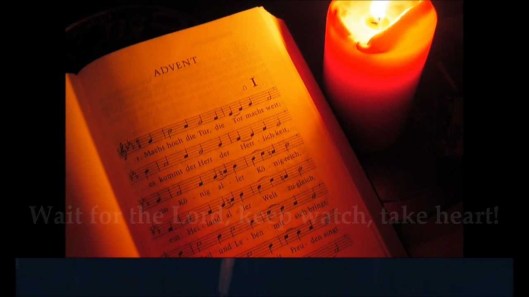
One of the themes we find in Advent is keeping watch.  Throughout the four weeks leading up to the birth of the Christ Child, we are to keep watch, preparing our hearts for the nativity of our Lord.  Traditionally, I have kept watch by using an Advent calendar or a special devotional book.  But this year, I am trying something new.  I have joined the Anglican Communion in a participatory Advent devotional called “Advent Word.”  Each day of Advent has an assigned word, and participants are invited to post a picture on social media that captures that word.

When I decided to join the Advent Word community, I was a bit nervous.  I worried what I would do if I could not figure out a picture to take or use that went with the daily word.  I have found my initial anxiety has not disappeared, but has created a sense of anticipatory tension.  Each day, I open up my email, and find a word and picture, with an invitation to prayer.  Then, throughout the day, I am keeping watch – for inspiration, for insight, for the Holy Spirit speaking to me anew through the images of everyday life.  By praying the word throughout the day, I am finding myself much more aware throughout the day, and much more attuned to God speaking to me in fresh ways.

In some ways, the anticipatory tension of participating in Advent Word has helped me accomplish the bigger goal of keeping watch during Advent.  Instead of having Advent slip by in the bustle of the season, each day has a poignancy and sense of meaning.  Instead of wishing away the days until Christmas comes, my Advent has become much more intentional and meaningful.

I wonder how your Advent is going?  Are you finding ways to keep watch?  If the days are slipping away, I invite you to find ways to slow down, and listen for the Holy Spirit who longs to prepare your heart for the Christ Child.  If you have found other ways to keep watch this Advent, I would love to hear about your experience.  If nothing else, I have learned this year that Christian community can be a wonderful partner in helping us keep watch.  If you are looking for such a community, Hickory Neck is full of everyday people who are happy to keep watch with you.

On Needing Each Other…

16 Thursday Nov 2017

Posted by jandrewsweckerly in Uncategorized

≈ Leave a comment

Tags

community, discipleship, each other, equal, gifts, God, housing, need, others, value

each-other

Photo credit:  https://www.gcurley.info/news/2015/01/

This morning I attending a symposium about housing in the greater Williamsburg area.  The theme of the symposium was the effect of housing on health, both for individuals and the community.  One of the ideas that stuck with me was about the consequence of a lack of affordable housing.  What the researchers found was that a lack of affordable housing had a negative impact on the entire community – not just those struggling to make ends meet, but also on those in upper-income brackets.  When communities do not have affordable housing, service industry workers can eventually opt out of living and working in the community altogether, creating a void of laborers, and an increase in the cost-of-living for all.  Whereas many wealthy community members may not be concerned about affordable housing, in fact, a lack of affordable housing hurts the property values and economy for all.

The idea of affordable housing being a problem for everyone reminded me of an idea I have been pondering lately:  we need each other.  In the United States, we have long-held ideals about individualism, independence, and industriousness.  We value an “every man for himself” ethic.  But that kind of ethic only gets us so far.  Sooner or later, we eventually discover that every man (or woman!) cannot do everything for himself or herself.  In fact, we need each other.  I suspect that our need for one another is not a surprise when we are really honest.  But many of us have a hard time being honest about our mutual need because it means admitting vulnerability, dependency, and incompleteness.  Whether we like it or not, we need one another.

This Sunday at Hickory Neck Church, we are finishing a series on discipleship, using Rowan Williams’ book Being Disciples.  Williams argues that there are two principles of Christian faith and discipleship that we need to form the basis of a moral society:  we are each of equal value to God, and we are all dependent on each other.  His second point is what connected with me today.  Williams argues, “The community that most perfectly represents what God wants to see in the human world is one where the resources of each person are offered for every other, whether those resources are financial or spiritual or intellectual or administrative.”[i]  When we allow each person to be needed, to play a role in each other’s lives, we begin to be able to see that we are not just being kind – we actually need each other.

I invite you to take a look around this week, and try to imagine what each person you meet has to offer the world.  From infants to wise elders; from wealthy to homeless; from male to female; from convict to free – imagine what gift each person has for the world, and how you can honor and respect the dignity of each person you meet.  Even when someone is rude, unkind, or on the other side of the political aisle, I encourage you to find what you need in each other.  God will help you find the answers, and I hope you will share them here!!

[i] Rowan Williams, Being Disciples:  Essentials of the Christian Life (Grand Rapids:  William B. Eerdmans Publishing Company, 2016), 69.

On Saints and Community…

01 Wednesday Nov 2017

Posted by jandrewsweckerly in Uncategorized

≈ Leave a comment

Tags

All Hallows' Eve, All Saints Day, care, community, connect, feast, God, good, Halloween, joy, sacred, saints, secular

Halloween-trick-or-treat-hours

Photo credit:  kanecountyconnects.com/2016/10/complete-list-of-halloween-trick-or-treat-hours-in-kane-county-communitys-2016/

I have never been one for promoting the spirituality of All Hallows’ Eve.  I have done children’s liturgies before, but I always suspect that the lure of trick-or-treating is too strong to encourage people to fast on October 31st.  As an adult, I have never been that into Halloween either.  I never dress up or throw big parties.  As a parent, I take the kids out, and we have candy to pass out at our home, but besides the promise of candy being around, I do not get too invested in the holiday.

But last night, something powerful clicked for me.  We live in a neighborhood that is very easy to walk with kids, and our youngest is old enough that she is starting really enjoy door-to-door trick-or-treating.  As we walked, I realized something new was happening.  Everyone in the neighborhood was genuinely engaged.  Adults made eye contact with one another, smiling and greeting with a heartiness I had not seen before.  Older members of our neighborhood were delighting in the children, making connections over costumes and candy.  Most of the time, I think of our neighborhood as being the place where we live.  But last night, our neighborhood felt like a community:  a community of people who care about each other, want to connect with each other, and are happy to share a little bit of joy in a sometimes very disappointing world.

Though our neighborhood was doing something entirely secular, there was something sacred about our interactions last night.  Though we were not fasting for All Hallows’ Day, our honoring of each other was a way of preparing me for today’s feast day.  Our connections last night made me realize how connected we are to the saints:  people who seem totally unlike us, whose lives feel disconnected from our own, and yet, whose stories bring us comfort, encouragement, and assurance.  The communion of saints makes us realize how much larger our “community” really is, and how full of goodness and hope it can be.  If you are longing for that kind of connection to the saints, or even a connection to a modern community, I hope you will join us tonight as we celebrate All Saints Day.  Come feast on the holy meal, share a good word, and look into the eyes of those who see you for what you are:  a beautiful child of God to be honored and celebrated!

Sermon – Matthew 18.15-20, P18, YA, September 10, 2017

13 Wednesday Sep 2017

Posted by jandrewsweckerly in Sermons, Uncategorized

≈ Leave a comment

Tags

avoidance, church, community, conflict, dignity, family, gift, healthy, Jesus, love, manage, reconciliation, relationship, Sermon, truth, witness

I have been looking forward to this Sunday for weeks!  After taking successive vacations at the end of the summer, all of our staff are finally back in town.  Many of you have been traveling, spending time away with friends, or simply taking a break to enjoy the last bits of summer.  Our musicians and liturgy team have been planning our return to three services.  Our Stewardship Committee has been organizing our new Discipleship Fair.  Our Parish Life Committee has been organizing our Parish Picnic.  Church members have been inviting friends to join them for church, or maybe you yourself decided today was the day to search for a new church home.  I have felt the anticipation building as this has day approached.

I have been so excited to kick off a new program year, to invite people to engage in their faith journey, and to share an invitation to others to discover the beauty of this vibrant community, and what does the gospel lesson from Matthew offer us?  A text about fighting within the church.  Jesus does not just admit that sometimes, every once in a while, people in the church might experience conflict.  No, Jesus goes into great detail about what to do when you face conflict in the church:  embrace conflict directly, repeatedly, and publicly.  To those of us who were raised in the South, or at least to those of us who were raised in conflict-avoidant families, this text is our worst nightmare!  And this is certainly not the joyful text I was looking for when anticipating this festive day.

Part of what bothers us about this text from Holy Scripture is many of us come to church looking for a break from the conflict that surrounds our everyday life.  Whether we experience conflict in our families, conflict in our workplaces, schools, or service organizations, or conflict in our political lives, the last thing we want to do when we come to church on Sundays is deal with more conflict.  A friend of mine once confessed to me that he was thinking about leaving his current church home over a conflict within the church.  We were both young adults, on our own for the first time since college, and we had images in our minds about what church should be and what we wanted from our church communities.  But instead of bucolic communities of peace, harmony, and justice, we were both finding churches riddled with conflict and disunity.  As we were talking about his frustration, my friend finally confessed, “When I go to church, I just want everyone to get along.  I go to church to escape what is going on in my everyday life, not relive it!”

Now, I could spend the next hour deconstructing his complaint, but there is something powerful at the heart of his complaint, and perhaps at the heart of our own experience of church.  When we talk about church as being like a family, or being like home, what we really mean is we want a place that is a bit unlike our families or homes.  We want a place that is always happy, loving, nurturing, sometimes challenging, but more often comforting.  When we think about the warm, fuzzy feeling we have, the feeling we find at a place like Hickory Neck, the last thing we think is, “Man, I love the way we handle conflict at church!”

Unfortunately, that is exactly what our text is inviting us to do – to celebrate the way that the church teaches us to fight – or to phrase it a little differently, how the church teaches us to deal with conflict in healthy ways.  In order to get to the point where we can see the gift of healthy conflict resolution as a good thing, we need to do a few things.  First, we need to get to the point where we can embrace the inevitability of conflict in the church community.  For some of us, that is not a big hurdle.  For others of us, the assumption of conflict is difficult.  Perhaps you were raised in a family who treated conflict as something to be avoided at all costs.  Or perhaps you grew up in an environment where conflict was so aggressive you created patterns of conflict-avoidance later in life.  Regardless, if we have come to see conflict as the enemy, accepting the inevitability of conflict is going to be our first task.  In Matthew’s gospel today, Jesus says, “For where two or three are gathered in my name, I am there among them.”  But what he implies is that when two are three are gathered in his name, there will be conflict.  Jesus himself was so sure there would be conflict that he developed a whole conflict management plan.  So take a deep breath, let the breath out, and repeat after me, “Conflict is unavoidable in church.”

Now that you are breathing calmly, and accepting the unavoidable, the next thing we need to do is honor the gift of conflict management Jesus gives us in scripture today.  For those of us who are conflict avoidant, Jesus’ conflict management plan is going to seem daunting.  The good news is scholars agree with you.  Many of the scholars who have written about this text say the step-by-step instructions do not necessarily need to be read as a step-by-step guide to solving conflict within a church.[i]  What is most important is what the instructions convey:  conflict in the church is not to be ignored, hidden, or buried.  Theologian Stanley Hauerwas has this to say about conflict, “[Jesus] assumes that conflict is not to be ignored or denied, but rather conflict, which may involve sins, is to be forced into the open.  Christian discipleship requires confrontation because the peace that Jesus has established is not simply the absence of violence.  The peace of Christ is nonviolent precisely because it is based on truth and truth-telling.  Just as love without truth cannot help but be accursed, so peace between the brothers and sisters of Jesus must be without illusion.”[ii]

As Christians, Jesus wants us to behave differently.  Jesus wants us to be truthful with one another.  Jesus wants us to deal with one another face-to-face instead of talking behind each other’s backs.  Jesus wants us to work on reconciliation of relationships instead of letting hurt and pain fester and erode relationships.  For Jesus, being right or wrong is much less important than being in relationship.  Being in right relationship, keeping the family together is much more important.[iii]  Jesus wants us to take a breath in, let the breath out, and repeat after him, “Conflict is not the enemy.  Letting conflict ruin relationships is the enemy.”

Finally, once we have accepted the inevitability of conflict, and once we have agreed to value relationships over the avoidance of discomfort, we are ready to embrace the gift of our gospel lesson today – and perhaps even claim that this might be the perfect lesson for a Rally Sunday.  If you came to church to escape conflict or enter some bubble of blissfully ignorant happiness, Hickory Neck is probably not the right place for you.  But, if you came to Hickory Neck to learn how to transform conflict into something holy, they you may have just found a real home – not a home based on illusion, but a home based on truth, dignity, and respect.  When you accept the inevitability of conflict and the value of meaningful relationship, you receive the tools to work through conflict and land in the reality of reconciliation.

But here is the best part of Jesus’ Conflict Resolution Class today.  If we can stay on the journey through conflict to reconciliation, gaining the tools that this community has to offer us, then we as a community create something much more powerful than can be contained in these walls.  We create a witness for our community.  We create disciples capable of not only working through conflict within the community, but also capable of modeling reconciliation beyond our community.  Anyone who has read a headline in our country in the last year knows that our country needs more models for healthy conflict engagement.  That is what Jesus offers us today:  tools to work on our own issues around conflict, tools to become a loving, honest, and reconciling community, and tools to teach reconciliation beyond these walls.  Jesus has promised to be with us as we do our work.  In fact, Jesus is here with us now as we anxiously try to step on that path toward reconciliation.  So take a deep breath, let the breath out, and repeat after me, “Conflict is a blessing my church teaches me to embrace.  Thank you, Jesus, for the blessing of conflict and the promise of reconciliation.  Help me to share that gift with others.”  Amen.

[i] David Lose, “Pentecost 14 A – Christian Community,” September 6, 2017, as found at http://www.davidlose.net/2017/09/pentecost-14-a-christian-community/ on September 7, 2017.

[ii] Stanley Hauerwas, Matthew:  Brazos Theological Commentary on the Bible (Grand Rapids:  Brazos Press, 2006), 165-166.

[iii] Barbara Brown Taylor, The Seeds of Heaven: Sermons on the Gospel of Matthew (Louisville:  Westminster John Knox Press, 2004), 88-89.

On Comforters and Church…

06 Wednesday Sep 2017

Posted by jandrewsweckerly in Uncategorized

≈ Leave a comment

Tags

church, comfort, comforter, community, God, invitation, meaning, routine, vacation

Sleeping-in

Photo credit:  https://www.upi.com/Health_News/2015/11/20/Sleeping-in-on-the-weekend-may-be-bad-for-your-health/1821448035720

I have a confession to make.  Though I always encourage parishioners to go to church when they are traveling, and though many of my clergy friends love checking out other churches while on vacation, this year I skipped church both Sundays I was on vacation.  There were options available to us – in fact, I could have seen some clergy friends celebrate in their own churches.  Instead, I slept in, went shopping, took a long walk, ate brunch, and generally treated the day as a true day “off.”

Now don’t get me wrong, I think it is perfectly healthy to just take a day off from church now and then.  For parents with children, I totally get how hard it is just to get out the door, let alone manage their squirminess in the pew.  In fact, I’ve had parents tell me that they always have to read my sermons on my blog because their kids are just too distracting.  And even if you do not have kids, sometimes the allure of a warm bed or cozy pajamas is just too much.  Sometimes you just need a break.

But here is what I noticed about skipping two Sundays in a row:  something was missing.  I had a hard time tracking what day of the week it was the rest of the week.  I missed seeing familiar faces and hearing about the joys and challenges of the week.  I missed singing songs of praise, being challenged by Holy Scripture, and participating in the holy meal.  I missed prayer time with God, being surrounded by a community that confesses their sins as I confess my own, and having time to set an intention for the week – whether something the preacher said or something the Holy Spirit inspired.

That’s the thing about going to church:  it gives meaning to everything else I do during the week.  The things we say and do in worship, the ways that we relate in community, and the purpose we find as we are sent out into the world define how I experience the rest of life.  And when you find a really great church, that experience makes it a lot easier to toss off that comforter and head to church for some real comfort.  If you are looking for such an experience, you are always welcome at Hickory Neck.  And if you already found a church home at Hickory Neck, invite a friend to join you next Sunday.  The paper and that cozy bed will be waiting for you after church!

← Older posts
Newer posts →

Recent Posts

  • On the Myth and Magic of Advent…
  • On Risking Failure and Facing Fear…
  • Sermon – Luke 23.33-43, P29, YC, November 23, 2025
  • On Inhabiting Gratitude…
  • Sermon – Luke 20.27-38, P27, YC, November 9, 2025

Archives

  • December 2025
  • November 2025
  • October 2025
  • September 2025
  • August 2025
  • July 2025
  • June 2025
  • March 2025
  • February 2025
  • December 2024
  • November 2024
  • October 2024
  • September 2024
  • August 2024
  • July 2024
  • June 2024
  • May 2024
  • March 2024
  • February 2024
  • January 2024
  • December 2023
  • November 2023
  • October 2023
  • September 2023
  • August 2023
  • July 2023
  • June 2023
  • May 2023
  • March 2023
  • February 2023
  • January 2023
  • December 2022
  • November 2022
  • October 2022
  • June 2022
  • May 2022
  • January 2022
  • December 2021
  • November 2021
  • October 2021
  • September 2021
  • August 2021
  • June 2021
  • May 2021
  • April 2021
  • March 2021
  • February 2021
  • January 2021
  • December 2020
  • November 2020
  • October 2020
  • September 2020
  • August 2020
  • July 2020
  • June 2020
  • May 2020
  • April 2020
  • March 2020
  • February 2020
  • January 2020
  • December 2019
  • November 2019
  • October 2019
  • September 2019
  • August 2019
  • July 2019
  • June 2019
  • May 2019
  • April 2019
  • March 2019
  • February 2019
  • January 2019
  • December 2018
  • November 2018
  • October 2018
  • September 2018
  • August 2018
  • July 2018
  • June 2018
  • May 2018
  • April 2018
  • March 2018
  • February 2018
  • January 2018
  • December 2017
  • November 2017
  • October 2017
  • September 2017
  • August 2017
  • July 2017
  • June 2017
  • May 2017
  • April 2017
  • March 2017
  • February 2017
  • January 2017
  • December 2016
  • November 2016
  • October 2016
  • September 2016
  • August 2016
  • July 2016
  • June 2016
  • May 2016
  • April 2016
  • March 2016
  • February 2016
  • January 2016
  • December 2015
  • November 2015
  • October 2015
  • September 2015
  • August 2015
  • July 2015
  • June 2015
  • May 2015
  • April 2015
  • March 2015
  • February 2015
  • January 2015
  • December 2014
  • November 2014
  • October 2014
  • September 2014
  • August 2014
  • July 2014
  • June 2014
  • April 2014
  • March 2014
  • February 2014
  • January 2014
  • December 2013
  • November 2013
  • October 2013
  • September 2013
  • August 2013
  • July 2013
  • June 2013
  • May 2013
  • April 2013
  • March 2013
  • February 2013
  • January 2013
  • December 2012
  • November 2012
  • October 2012
  • September 2012

Categories

  • reflection
  • Sermons
  • Uncategorized

Meta

  • Create account
  • Log in
  • Entries feed
  • Comments feed
  • WordPress.com

Blog at WordPress.com.

  • Subscribe Subscribed
    • Seeking and Serving
    • Join 394 other subscribers
    • Already have a WordPress.com account? Log in now.
    • Seeking and Serving
    • Subscribe Subscribed
    • Sign up
    • Log in
    • Report this content
    • View site in Reader
    • Manage subscriptions
    • Collapse this bar
 

Loading Comments...