• About

Seeking and Serving

~ seek and serve Christ in all persons

Seeking and Serving

Tag Archives: compassion

Sermon – Luke 6.20-31, AS, YC, November 2, 2025

05 Wednesday Nov 2025

Posted by jandrewsweckerly in Sermons

≈ Leave a comment

Tags

All Saints Sunday, Beatitudes, compassion, faithful, fragrance, God, Golden Rule, Jesus, justice, love, saint, scent, sensory, Sermon, witness

On the blog this week, I shared about friends of ours who are fragrance aficionados.  When we spend time together, we’ve taken to doing fragrance samplings with them – sort of like wine tastings, but with the focus on the sense of smell.  Invariably, I find a new fragrance I like that I had never heard of, but that brings me a sense of playful joy.  This past week I was sharing one of those fragrances with one of our daughters and she said, “It’s okay, but I prefer your ‘Mom smell.’”  While I wish there was a more attractive label to that particular fragrance, and while I suspect that “Mom smell” is some combination of the scents of my soap, hair products, and laundry detergent, I get what my daughter meant.  Just like fragrances can evoke memories of special places, fragrances can also recall to us people in our lives.  One whiff, and we are transported to another time and place, remembering what someone meant to us.

On this All Saints Sunday, we engage in a similar kind of sensory recalling.  In our case at Hickory Neck, instead of the sense of smell, we invoke the sense of touch – the feel of smooth or ridged ribbons running through our fingers as we tie them to the altar rail in memory of a saint of God, the feel of droplets of water landing on our heads and bodies as we recall our baptismal identity and the baptisms of saints who have died, and the feel of the wafer in our hands and mouth or the feel of the priest’s thumb as they rub a blessing on our forehead, as we engage in the earthly banquet, reminiscent of the heavenly banquet our loved ones are enjoying.

But just like scents have the power to remind us of beloved memories, so scents can remind us of painful memories.  While some of us may have a “Mom scent” we recall with love and affection or wistful memory, others of us didn’t have such beloved memories or experiences – and unfortunately, smells can recall those memories too.  As I was reading Luke’s gospel for today, that’s where I landed – that all of us – all of us saints of God – have the opportunity to live lives of good or ill – to leave behind fragrances that help or harm.  And since Luke’s language is entirely literal and not at all the flowery, spiritual language of Matthew’s beatitudes[i], we are very clear on Jesus’ words and meaning.  The blessings and woes of Luke’s beatitudes are straightforward and simple.  As one scholar puts it, “If you want anything to do with Jesus or the God who sent him, Luke says, you had better go find the poor, the hungry, the captives, the blind, and the outcast, and join Jesus, as Jesus cares for them.  The way we know who Jesus is, is to go where Jesus is, with the poor, the hungry, and the oppressed.”[ii]

While All Saints Sunday can take us to place of remembering loved ones and the saints of the church, tempting us to get lost in those memories, what All Saints Sunday ultimately hopes to impart is that the lives we live matter.  We remember the saints of the church and the lives of our loved ones we miss because they showed us what living lives that matter looked like.  We do not honor them because they were rich or well fed or joyful or respected.  We honor them because they loved their enemies, they did good to those who hated them, they blessed those who cursed them, and prayed for those who hurt them.  We honor them because they were nonviolent, because they gave sacrificially of their wealth, because they understood that poverty makes people desperate – and because they did to others as they would have them do to them.

We could easily leave here today with the commission to “go and do likewise,” as if Jesus’ words are a simple commission.  But nothing about what Jesus is saying is simple or easy.  Several years ago, I was talking to our children about the Golden Rule – those words we hear today about doing unto others as you would have them do unto you.  To my great shock, my children did not see the wisdom of the words at all.  Instead, their desires were rooted in a sense of justice or fairness.  “No way!” one said.  “I’ll do unto others what they do to me.”  What I had understood as simple, universal wisdom that is shared among faith traditions totally flies in the face of secular, American ideals.  Even Professor Johnson says about Luke’s text today, “It is not only greed that jeopardizes the wealthy Christian’s relationship with God, but the simple – and subtle – temptation to think we can take care of ourselves.”[iii]

Luke leaves us, then, with a challenging invitation.  As you tie on a ribbon to remember a loved one today, you can certainly recall whatever fragrance of theirs you miss.  But Luke asks you to go further – to recall the witness they left to you about living a faithful life, and be emboldened to start leaving your own faithful fragrance behind too.  Lean into those who have gone before to encourage your own witness of love, compassion, and justice.  Lean into the faithful who gather beside you in person every Sunday who struggle to live that Golden Rule with gusto instead of resentment.  Lean into Jesus, who walked before us in incarnate form, leaving behind the fragrance of incense – the fragrance of humility, compassion, and sacrificial love.  With them, you can then begin to create a signature fragrance of your own that will help draw others to God.  Amen. 


[i] Marjorie Procter-Smith, “Homiletical Perspective,” Feasting on the Word, Yr. C, Vol. 4 (Louisville:  Westminster John Knox Press, 2010), 239.

[ii] E. Elizabeth Johnson, “Exegetical Perspective,” Feasting on the Word, Yr. C, Vol. 4 (Louisville:  Westminster John Knox Press, 2010), 239.

[iii] Johnson, 241.
On Stories and Wonder…

17 Wednesday Jul 2024

Posted by jandrewsweckerly in reflection

≈ Leave a comment

Tags

busyness, children, community, compassion, food insecurity, God, hunger, prayer, privilege, stories, story, summer, volunteer

Photo credit: Jennifer Andrews-Weckerly; use with permission only

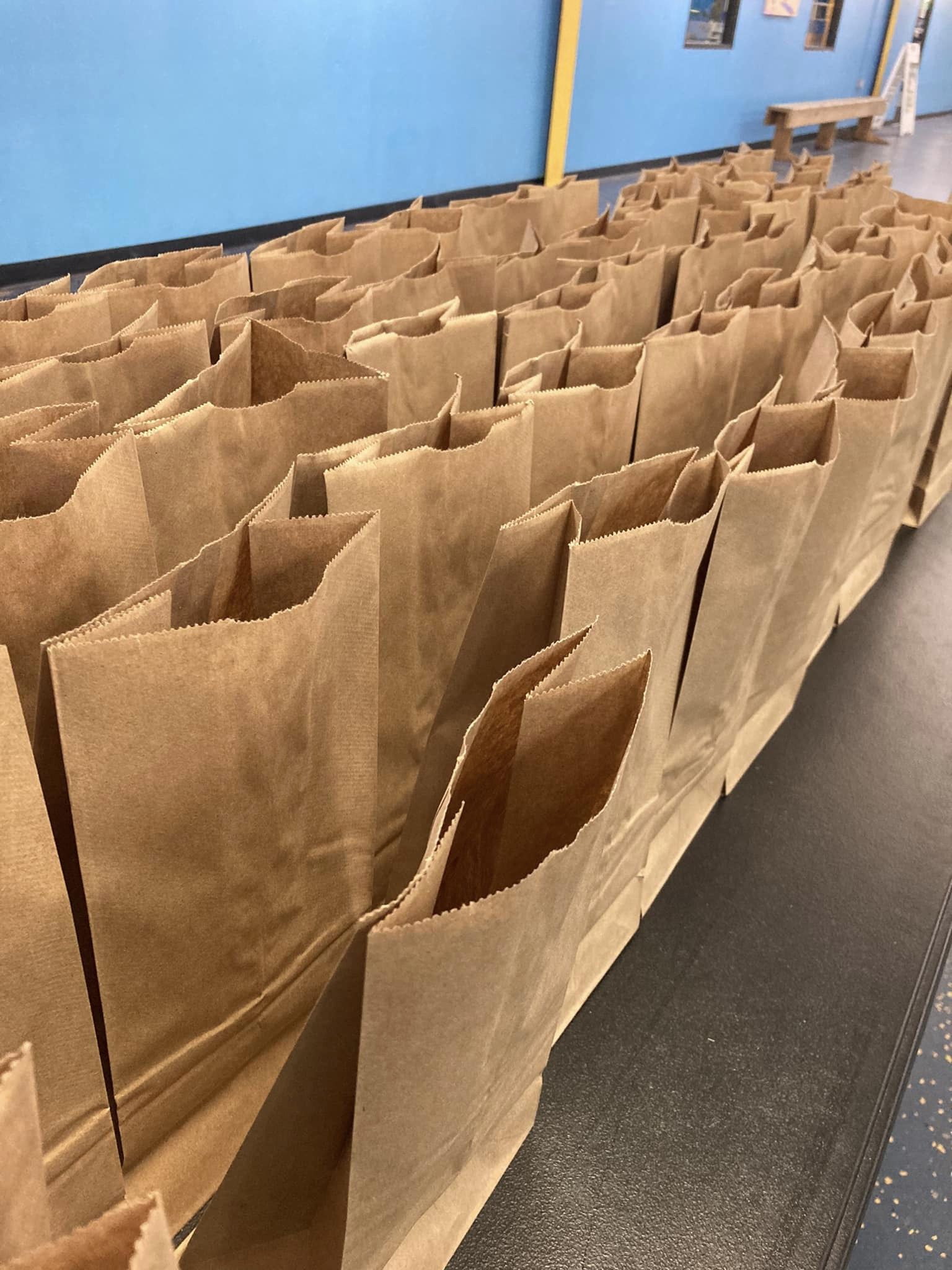
This week my older daughter and I volunteered with a local agency that is providing weekday meals to children in our community experiencing food scarcity.  These are children who qualify for free lunch during the school year, but when school is out of session, lose their one steady source of food for most of the week.  On our volunteer day, we packed about 260 meals – including a protein-packed sandwich, juice, fruit, a salty snack, and a homemade cookie. 

As the smell of those freshly baked cookies wafted from the brown paper bags, I found myself wondering about the countless details of these children.  In that mass of children spread around our county, I wondered how they were getting the food from those drop-off points, knowing that many of their care providers likely work during the day.  I wondered if they took joy in the unknown contents of their bag, or if those five items felt rote for them after a summer of brown bags.  I wondered if they had siblings or friends also receiving bags and whether they traded food items like my kid does sometimes at school.  I wondered if a temporarily filled belly eased any emotional strain they may be experiencing without the socialization of school. 

Wondering about those 260 stories was an important reminder to me of how irregularly I see the world as God does and instead get lost in my own slice of the world.  As I juggle transportation of children, writing the next sermon, facilitating a church meeting, and planning meals, I totally lose the stories of those who struggle with those basic things I take for granted.  I think that is why I longed so much to know at least some of the stories of those children – so that I might more tangibly be mindful of the wideness of our community and those God loves that I have the privilege to be unconcerned about most days.

I wonder what stories you have been missing lately.  Who in your community have you forgotten – not out of malice or lack of generosity, but more out of the busyness of life?  Whose stories might help you see your family members and coworkers with a bit more compassion?  What stories might make you view politics a bit differently or impact where you give your time and resources?  My prayer for you is that you seek those stories this week – and that those stories find you.

On Pandemics, Rollercoasters, and God…

23 Sunday Jan 2022

Posted by jandrewsweckerly in reflection

≈ Leave a comment

Tags

compassion, coping, emotions, God, pandemic, presence, productive, rollercoaster, tender, thrive

Photo credit: https://theinconstantmuse.com/2016/07/27/rollercoaster-ride/

One of the habits this pandemic has cultivated is thriving in survivalist mode:  dealing with the thing in front of you, then moving to the next, until all the “things” are done.  This requires shelving one’s emotions for another time because they get in the way of what needs to be done.  This kind of operating can be intoxicating because there is a rush that comes from accomplishing things when times are hard – acknowledging that despite how hard things are, you are still being productive and useful.  It can be a useful skill, but a habit that cannot be sustained long-term.

Nowhere have I felt that reality more than in this last week.  In the course of one single week I conducted a funeral for a one-month old infant, I joyfully celebrated the baptism of two life-giving children (one infant and one preschooler), I received the shocking news that my beloved barre and yoga studio would be closing in 24 hours (a place that has been a source of joy, friendship, and health for five years), our family entered into quarantine as we finally succumbed to COVID (we’re all fully vaccinated and boosted), which involved postponing countless major and minor events at church, and finally, learned that a dear friend who is younger than we are was gravely ill from long COVID.  It was not until the end of the week, when COVID finally slowed me down that I realized what a rollercoaster of a week it had been emotionally.

Truth be told, the life of a pastor is regularly a rollercoaster like this.  I frequently have back-to-back meetings:  one for a couple preparing for marriage and one for someone facing divorce.  I can have back-to-back visits:  one for a family with a newborn and one for someone on Hospice.  Even Holy Week has Good Friday and Easter Sunday within days of each other.  Emotional whiplash is a regular occurrence in this field.  But in some ways, the disadvantage of this pandemic is that we all seem to be living in a constant emotional rollercoaster.  You may have read my litany of the last week and thought, “Seems like a typical week in COVID!” 

My prayer for all of us during this rollercoaster of a time is that we be tender with one another.  When we hear good or hard news, remember there are a lot of other things going on in the background – family who cannot be there, conflict among neighbors, or even happy news that seems inappropriately timed.  But especially remember to be tender with yourself.  If you need to congratulate yourself for just surviving and being productive, do it.  If you need to wallow or cry, do it.  And in case you cannot feel it or have lost touch with your relationship with God, remember God is with you in the midst of it all, being more tender with us than we could ever be to ourselves or others.  My prayer is that you feel God’s presence this week.

On the Sacred and Bus Stops…

08 Wednesday Sep 2021

Posted by jandrewsweckerly in reflection

≈ Leave a comment

Tags

action, bus, children, compassion, empathy, holy, prayer, ritual, sacred, transition, world

Photo credit: https://www.longislandpress.com/2019/12/13/school-bus-stop-arm-cameras-coming-soon-to-long-island/

For years now, I have walked my children to the school bus stop.  It has been precious time – holding hands, talking about expectations and hopes for the day, noticing nature’s wonders, playing games while we wait.  We have goodbye rituals too:  the four instructions they get everyday (have fun, be kind, learn lots, and do your best), waving and making heart signs from the bus, waiting until the bus pulls away.  They are rituals that are often taken for granted as the day’s to-do list creeps into one’s mind.  But when one pays attention, one realizes these are sacred rituals.

As you can imagine, the transition to the new rituals of Middle School has been a bit rough.  I am still allowed to drive my child to the bus stop, but definitely not allowed to get out of the car.  We still talk about hopes and expectations, except when a friend finally shows up and becomes the priority.  We are in that journey to adulthood where my child’s primary influences are changing from me to her peers:  and this is good and holy too. 

And so, I am creating new practices for myself.  When my child leaves the safe space of the car and boards the bus with twenty other kids, I have been surprised to find myself praying.  Praying for my own child, certainly:  that she will be safe from this pandemic, that she will cultivate friendships that are life-giving, that she will be inspired by the gift of learning.  But as I watch the other children board the bus, I find myself praying for them too:  for the ways in which Middle School can be so brutal, for the struggles at home they may be experiencing, for the pressures they face as they define their identity.  I even pray for the bus driver, and the ways in which he is the guardian of our children, even if only for a couple of hours a day.

I imagine there are opportunities for expanding prayer for all of us in everyday life.  Where have you found yourself worryingly praying for a loved one?  Who in their immediate field can you pray for too:  their coworkers, teammates, doctors and nurses?  Who are the shepherds who need your prayers too:  their bosses, coaches, ministers?  This week, in your prayers, I invite you to let your prayers expand – fan out a little further than the immediate concern on your heart.  Observe how your fanning prayers expand something inside of you too:  a larger worldview, a bit more compassion, a lot more empathy.  Then, maybe add an action:  send a note to someone, make a phone call, send a text.  I would love to hear how your expanding prayers and actions help expand your experiences with the sacred.

On Race, Earthquakes, and Action…

17 Wednesday Jun 2020

Posted by jandrewsweckerly in Uncategorized

≈ 2 Comments

Tags

action, African-American, beauty, blindness, compassion, complacency, confederate, earthquake, harassed, Jesus, learn, listen, love, power, protest, racism, senses, uncomfortable, value

Kehinde Wiley

Photo credit:  https://www.npr.org/2015/05/22/408558234/the-exquisite-dissonance-of-kehinde-wiley

A few years ago, the Virginia Museum of Fine Arts had an exhibit of the works of Kehinde Wiley.  I had not seen his work before, and found his pieces in the exhibit shocking to the eye.  Wiley managed to take traditional poses and settings from art history and infuse them with images of modern African-Americans.  The pieces were jarring to the senses.  As I made my way through the exhibit, it began to dawn on me why my senses were so jarred. By consistently seeing classical art featuring people with light-colored skin, I had been enculturated to expect certain images in art.  The prominence of one kind of subject also created unspoken messages about value, beauty, and power.  Wiley’s vibrant pieces were like an earthquake.  And as someone who considers herself fairly self-aware, I found myself humbled by his work, and sorrowful for my ignorance.

I think that is why I was so surprised by an experience last week.  Last Tuesday night, our family went up to Richmond to take a look at the Robert E. Lee statue and the surrounding damage to businesses and monuments.  For those of you who have not been following the story, as part of the protests about George Floyd’s death and the Black Lives Matter cause, the prominent Confederate monuments in Richmond have come under fire.  The statue of Robert E. Lee’s large stone plinth has been covered in graffiti, protesting George’s death, the treatment of African-Americans by the police, and systemic racism.  As I took in the visceral, pain-filled cries of graffiti, as I looked at pictures of black victims of police violence surrounding the statue, whose names I have prayed for over the years, as I watched families of color take pictures in front of this once pristine, but ever-controversial, statue with a new sense of pride and defiance, what I began to understand is those who are harassed and feel helpless have been begging for our compassion for a long time – cries that could no longer be ignored when staring at that powerfully altered statue.

But mostly, I mourned again for my complacency and blindness.  As a descendant of Confederate veterans, student of African-American history and politics, and pastor of a church built long before the Civil War, I know the issue of Confederate statues and monuments is sensitive.  But watching what was happening at the Robert E. Lee statue created the same feeling as Kehinde Wiley’s art work:  an earthquake for all in positions of privilege and power.  Standing there with my family, I felt like I was on unstable ground, my complicity in systemic racism exposed, and the weight of the question pressing on my chest:  what are you going to do about it?

For my brothers and sisters of color, I am sorry.  I am sorry that you have had to do the work to awaken my senses instead of doing that work myself.  For my brothers and sisters of European descent, we have work to do.  Hickory Neck Church has been posting ways for you to engage this issue – not necessarily telling you what to do, but inviting you into the position of making yourself vulnerable to listening, learning, and acting.  This is our work to do.  It is hard and uncomfortable, and this post may even make you defensive.  Please know that I am here – here to walk with you, here to encourage you, and here to hold us all to Jesus’ message of love.  What you do next will vary widely.  Maybe you can only do one small thing to start.  Our invitation is do something – and keep doing something until we find ourselves doing the work of the kingdom Jesus has desired for a long time.

IMG_8253

Photo credit:  Jennifer Andrews-Weckerly; reuse with permission only.


Sermon – Matthew 9.35-10.23, P6, YA, June 14, 2020

17 Wednesday Jun 2020

Posted by jandrewsweckerly in Sermons, Uncategorized

≈ Leave a comment

Tags

African-American, compassion, disciples, empower, God, harassed, helpless, Jesus, justice, love, mercy, police, protest, racism, rally, Sermon, Spirit, truth, witness

Last Sunday afternoon, I attended a rally in Colonial Williamsburg to renew the covenant between our Historical area police departments and the African-American community.  Established just three years ago, initiated by faith leaders in the African-American community, the covenant was established to proactively create collaborative relationships with our local police in order to prevent some of the racial divides that have occurred in other cities.  Although I was there to witness the support of the local clergy for this covenant, what I heard was the testimony of a community of people who have been harassed and feel helpless right here in our community.  Though we may have avoided some of the violence we have seen elsewhere in our country, the African-American community here in Williamsburg still feels the heel of racism pushing down on her neck.

Last week, we heard Matthew’s Great Commission, and we talked about the juxtaposition of civil unrest exploding around the issue of systemic racism and Jesus’ call to go out into the world doing works of justice, mercy, and love.  As some of the heat from protests simmered down a bit this past week, we could easily come to church today and long to turn down the heat too.  But our collect appointed for today, which you will hear later, holds our feet to the fire.  The collect says, “Keep, O Lord, your household the Church in your steadfast faith and love, that through your grace we may proclaim your truth with boldness, and minister your justice with compassion…”  Now the Collect of the Day is not just a random prayer, meant to sound good.  The Collect of the Day pulls themes from the scripture lessons appointed for the day – in essence, the Collect of the Day tries to articulate the thesis of our lessons.

After watching weeks of protests (maybe attending some yourself), hearing countless stories about unrest, reading articles or starting books about systemic racism, and praying diligently for peace, you may have come to church today hoping for some respite or reassurance.  But Jesus’ message to “Go!” from the Great Commission last week does not fade today.  Instead, Jesus’ words from Matthew’s gospel from almost 20 chapters earlier shows us our work is ever before us, beckoning us out into the world.

Years before his cross, resurrection, and ascension, we find Jesus teaching, healing, and proclaiming the good news to crowds of people.  In the midst of this work, we are told Jesus looks at the crowd and has compassion for them because they are harassed and helpless.  When Jesus sees the harassed and helpless, he does not simply fix the problem or strike down the system with godly power.  Instead, he turns to his disciples with a charge.  Jesus calls the twelve disciples by name (Simon Peter, Andrew, James, John, Philip, Bartholomew, Thomas, Matthew, James, Thaddaeus, Simon, and Judas), those who have been following him, learning from him, studying and praying with him, and sends them out, telling them how hard the work of showing compassion will be:  they will go without financial support, will be dependent upon the hospitality of strangers – some of whom will show them scorn rather than hospitality, will be persecuted and beaten, and will be betrayed even by their closest relatives.  This is the sobering work of love – of proclaiming God’s truth with boldness, and ministering God’s justice with compassion.

So how do the disciples hear such a sobering commission and still take the first step?  They take the first step because Jesus empowers the disciples.  Jesus gives the disciples power to heal and care for the oppressed; Jesus teaches them how to dust off their feet when they are scorned; Jesus promises when they need words, the Spirit of God will speak through them.  In other words, they just need to go, and God will take care of the rest.

Several of you have reached out to me over these last two weeks, longing for something to do in the midst of this important moment.  We have exchanged ideas and resources, and many of you have already begun to take specific action.  The content of how we respond in the coming weeks and months will vary widely, given our different gifts and abilities.  But our Collect today is not a prayer asking God to empower others to do the work of love or for God to just “fix it.”  Our Collect today is a request to God to help each one of us – called by name (Sue, John, Linda, Bob, Lisa, Bill, Tori, Don, Terri, Jim, Beth, and Dave) – to proclaim God’s truth with boldness, and minister God’s justice with compassion.  Jesus has already given us everything we need to do this work.  God is already keeping us in God’s steadfast faith and love; through God’s grace we can proclaim God’s truth with boldness, and minister God’s justice with compassion.  Amen.

On Invitations to Compassion…

30 Wednesday Jan 2019

Posted by jandrewsweckerly in Uncategorized

≈ Leave a comment

Tags

barriers, compassion, empathy, God, invitation, journey, margins, sacred, share, suffering, sympathy, walk

compassion_1200x627

Photo credit:  https://www.ted.com/topics/compassion

This past week I have been pondering the notion of compassion.  The notion first struck me as I visited one of our parishioners at the hospital several times.  Each time I have visited, someone else had already visited or was on their way to visit.  Having been to many a hospital room, I know this is not the norm.  Often, people in the hospital are there without much support.  To see the community rally around this parishioner – both fellow parishioners and personal friends – was such a potent witness to the power of compassion.

Midweek, our own parish began to wonder how we might show compassion to our neighbors in need who were struggling due to government shutdown furloughs.  As we shared ideas as a community, and as we checked on our own parishioners, we discovered that several of our parishioners were already acting on behalf of our neighbors in need.  In fact, several parishioners were quietly gathering funds to support our local Coast Guard members.  I was so proud to learn about the quiet, unassuming compassion of our church.

Finally, my daughter and I paid a visit to a Children’s hospital for some routine checkups.  As we were waiting in three different waiting rooms, we watching families pass us by with children who were much sicker, or who had challenges that I will never face with my children.  I found myself humbled by journeys I could not imagine, and wondering how I might move from sympathy to compassion.

My ponderings reminded me of something Father Gregory Boyle articulated in his book Tattoos on the Heart.  Father Gregory teaches a class in the local prisons, and in one of the classes they talked about the difference between sympathy, empathy, and compassion.  As the inmates discussed the topic, they agreed that sympathy is the expression of sadness for something someone is experiencing.  They defined empathy as going a step further and sharing how your own similar experience makes your sympathy more personal.  But compassion was a bit harder to define.  Father Gregory argues, “Compassion isn’t just about feeling the pain of others; it’s about bringing them in toward yourself.  If we love what God loves, then, in compassion, margins get erased. ‘Be compassionate as God is compassionate,’ means the dismantling of barriers that exclude.”[i]

I wonder how God is inviting you this week to step beyond sympathy and empathy, and step into compassion. That kind of work is not easy, and will likely mean getting a bit messy.  But I suspect that same kind of work takes us from looking at the world around us and saying, “That’s too bad,” or “I’m so sorry,” to “Let me walk with you.”  That is the sacred spot where we experience God between us.  I look forward to hearing about your experiences of accepting God’s invitation to compassion this week.

[i] Father Gregory Boyle, Tattoos on the Heart: The Power of Boundless Compassion (New York:  Free Press, 2010), 75.

On Generations of Generosity…

25 Wednesday Oct 2017

Posted by jandrewsweckerly in Uncategorized

≈ Leave a comment

Tags

abundance, celebration, church, commitment, compassion, faithful, future, generations, generosity, giving, God, journey

KonstantinChristian_ChildParent_Generosity

Photo credit:  https://www.psychologytoday.com/blog/the-athletes-way/201510/small-acts-generosity-and-the-neuroscience-gratitude

This past week, my daughter and I were out shopping for a birthday gift for a friend.  As we were doing the self-checkout, the computer asked us if we would like to donate to charity.  I quickly tapped “no,” and my daughter was incensed.  “Don’t you want to help, Mommy?!?”  As we walked back to our car, I explained how we do help others.  She seemed incredulous, so I detailed our charitable giving, starting with what we give to the church.

Though she seemed mildly satisfied, our conversation made me realize a couple of things.  First, I could stand to have more explicit conversations with our children about our giving to church.  We already talk about budgets, treats, and how we spend money otherwise.  I realize now that our eldest may be ready to understand the commitment we make to church too.  Second, my daughter’s initial indignation is really good thing.  Her frustration with me reveals a sense of compassion and generosity that I was not sure she had fully developed.

This Sunday in church, we are celebrating lots of things.  We are celebrating the 100th anniversary of the consecration of our historic church.  After hundreds of years of our church being used as a school and hospital, a faithful community gathered once again in 1917 for the original purpose of the building – to worship the Lord in the beauty of holiness.  We are also celebrating the paying off of our mortgage on our newest worship space.  After one final push this summer, and years of generosity before, we are able to be debt free!  We are also celebrating In-Gathering Sunday: a day where we offer our pledge cards for blessing.  These pledge cards indicate our commitment to the upcoming year of ministry, and reflect our journey toward generosity.

As these three celebrations combine into one day, I am ever aware of Hickory Neck’s own journey to generosity.  From the faithful who worked to reestablish our church after years of dormancy, to the faithful who saw a vision of a more modern, spacious place of worship just over ten years ago, to the faithful who see the new things budding at Hickory Neck and want to be a part of that growing community, we are a community who has always been on a journey to generosity.  I am grateful for the chance to celebrate together, especially for the ways in which our celebration is an example for the future generations who are also being shaped into faithful servants of compassion and generosity.  From the past and present, and into the future, I see God’s abundance all around us!

On Seeing Sacred Moments…

18 Wednesday Oct 2017

Posted by jandrewsweckerly in Uncategorized

≈ Leave a comment

Tags

blessing, church, compassion, fellowship, God, holy, laughter, light, love, moment, outreach, sacred, support, witness, work

In general, my children are pretty typical in many ways – they have their good days and their bad days.  They tattle on each other, try to sneak in a hit or shove, and one will occasionally shout how she “hates her life.”  But then, every once in a while, totally unprompted and seemingly “out of sight,” I will overhear the love, care, and affection they have for one another.  One child will walk over the other who is crying, and she will give a hug and offer reassuring words.  Or the two children will gleefully play with one another without arguing or fussing.  Or best of all, I will hear them laughing pure, innocent laughs together.  In these holy moments, they show me the light of God’s presence, and reveal their best qualities – that they are individuals full of love and compassion.

These last few weeks at our church, I feel like I have been able to see similar holy moments.  We are preparing for our Annual Fall Festival, from which all the proceeds go to support local ministries.  As we lead up to the event, I have seen countless tasks being done by parishioners:  from making up food order forms and staffing tables for pre-orders, from cleaning out closets to pricing and sorting donations, from recruiting donations from local businesses to developing the silent auction booklet, from breaking down our worship space to setting up parking space.  As the weeks and days have gotten closer to our festival, I have seen hard work, commitments of time, generosity of spirit, and joy in participation.  Most of the work could go unnoticed; even those of us who volunteer do not always see all the other work that is happening somewhere else.

But today, I want to say, “I see you.”  I see you, Hickory Neck, giving your cherished time to support the church.  I see you, sharing in fellowship as you work together on projects.  I see you, passionate about your neighbors in need and working a little bit harder.  I see you in holy moments, individually and collectively, and I am so proud of you.  Your laughter together is a sweet, sacred sound.  Your labor is a witness to me and to our community of God’s abundant love for all.  Well done, good and faithful servants!  You are a blessing!!

laughter_625x350_41474366938

Photo credit:  food.ndtv.com/health/10-surprising-health-benefits-of-laughter-1464095

On Compassion, Fatigue, and Prayer…

10 Wednesday May 2017

Posted by jandrewsweckerly in Uncategorized

≈ Leave a comment

Tags

compassion, compassion fatigue, dignity, God, Jesus, ministry, overwhelmed, prayer, refugees, suffering

EMM_logo

Photo credit:  houseofdeputies.org/episcopal-migration-ministries-shares-the-journey.html

At our Clergy Day yesterday, we had a staff member from Episcopal Migration Ministries talk to us about the Episcopal Church’s work with refugees.  In what has become a heated topic in our current political climate, I was grateful for an explanation about how the process works for someone to come to our country as a refugee.  The demands and expectations were staggering, and the work to become self-sufficient seemed overwhelming and humbling.  One of the biggest take-aways from the presentation was that if we are going to make progress on this issue, we need to be in relationship with those unlike ourselves.

I left the presentation feeling a bit overwhelmed, wondering how I could invest more energy into one more of the world’s ills.  Our parish has been focusing its energy on racial reconciliation.  But we still have a long way to go.  Imagining taking on another area of reconciliation work felt like a tremendous burden.  I have talked about compassion fatigue before (see post here).  I realized today that my capacity for compassion is stretched pretty thinly these days.  Every time I turn around, the poor seemed to pushed further to the fringes, the oppressed are feeling more pressure instead of less, and we as a country seem to be failing at our commitment to respect the dignity of every human being.

Though we rarely use this language, I think Jesus often suffered from compassion fatigue too.  That is why so often we find him retreating with his disciples, longing for a place of quiet and prayer.  Knowing that Jesus suffered compassion fatigue is comforting, but it only gets me so far.  You see, when I suffer compassion fatigue, I find myself burying my head in the sand, trying to block out the news stories that serve to overwhelm instead of inform.  I find myself watching frivolous television, or escaping in a novel.  I find myself simply tired.  Of course, Jesus did not have online streaming television, but there are ways he could have diverted his mind when retreating from his compassion work.  Instead, he goes off to pray.  That is our invitation when faced with compassion fatigue – not to escape, but to retreat into the Lord, listening for God’s guidance, and praying for those suffering when there is little else we can do.  I invite your prayers for refugees – all those fleeing violence, all those who make it to makeshift homes, all those who boldly decide to make a home in a foreign land, and all those who suffer by those who wish to persecute the persecuted further.

← Older posts

Recent Posts

  • On the Myth and Magic of Advent…
  • On Risking Failure and Facing Fear…
  • Sermon – Luke 23.33-43, P29, YC, November 23, 2025
  • On Inhabiting Gratitude…
  • Sermon – Luke 20.27-38, P27, YC, November 9, 2025

Archives

  • December 2025
  • November 2025
  • October 2025
  • September 2025
  • August 2025
  • July 2025
  • June 2025
  • March 2025
  • February 2025
  • December 2024
  • November 2024
  • October 2024
  • September 2024
  • August 2024
  • July 2024
  • June 2024
  • May 2024
  • March 2024
  • February 2024
  • January 2024
  • December 2023
  • November 2023
  • October 2023
  • September 2023
  • August 2023
  • July 2023
  • June 2023
  • May 2023
  • March 2023
  • February 2023
  • January 2023
  • December 2022
  • November 2022
  • October 2022
  • June 2022
  • May 2022
  • January 2022
  • December 2021
  • November 2021
  • October 2021
  • September 2021
  • August 2021
  • June 2021
  • May 2021
  • April 2021
  • March 2021
  • February 2021
  • January 2021
  • December 2020
  • November 2020
  • October 2020
  • September 2020
  • August 2020
  • July 2020
  • June 2020
  • May 2020
  • April 2020
  • March 2020
  • February 2020
  • January 2020
  • December 2019
  • November 2019
  • October 2019
  • September 2019
  • August 2019
  • July 2019
  • June 2019
  • May 2019
  • April 2019
  • March 2019
  • February 2019
  • January 2019
  • December 2018
  • November 2018
  • October 2018
  • September 2018
  • August 2018
  • July 2018
  • June 2018
  • May 2018
  • April 2018
  • March 2018
  • February 2018
  • January 2018
  • December 2017
  • November 2017
  • October 2017
  • September 2017
  • August 2017
  • July 2017
  • June 2017
  • May 2017
  • April 2017
  • March 2017
  • February 2017
  • January 2017
  • December 2016
  • November 2016
  • October 2016
  • September 2016
  • August 2016
  • July 2016
  • June 2016
  • May 2016
  • April 2016
  • March 2016
  • February 2016
  • January 2016
  • December 2015
  • November 2015
  • October 2015
  • September 2015
  • August 2015
  • July 2015
  • June 2015
  • May 2015
  • April 2015
  • March 2015
  • February 2015
  • January 2015
  • December 2014
  • November 2014
  • October 2014
  • September 2014
  • August 2014
  • July 2014
  • June 2014
  • April 2014
  • March 2014
  • February 2014
  • January 2014
  • December 2013
  • November 2013
  • October 2013
  • September 2013
  • August 2013
  • July 2013
  • June 2013
  • May 2013
  • April 2013
  • March 2013
  • February 2013
  • January 2013
  • December 2012
  • November 2012
  • October 2012
  • September 2012

Categories

  • reflection
  • Sermons
  • Uncategorized

Meta

  • Create account
  • Log in
  • Entries feed
  • Comments feed
  • WordPress.com

Blog at WordPress.com.

  • Subscribe Subscribed
    • Seeking and Serving
    • Join 394 other subscribers
    • Already have a WordPress.com account? Log in now.
    • Seeking and Serving
    • Subscribe Subscribed
    • Sign up
    • Log in
    • Report this content
    • View site in Reader
    • Manage subscriptions
    • Collapse this bar
 

Loading Comments...