• About

Seeking and Serving

~ seek and serve Christ in all persons

Seeking and Serving

Tag Archives: God

On Ashes and Dust…

05 Wednesday Mar 2025

Posted by jandrewsweckerly in reflection

≈ Leave a comment

Tags

Ash Wednesday, ashes, care, community, dust, dusty, finitude, God, healing, mortality, music, organ, spiritual life, vulnerability

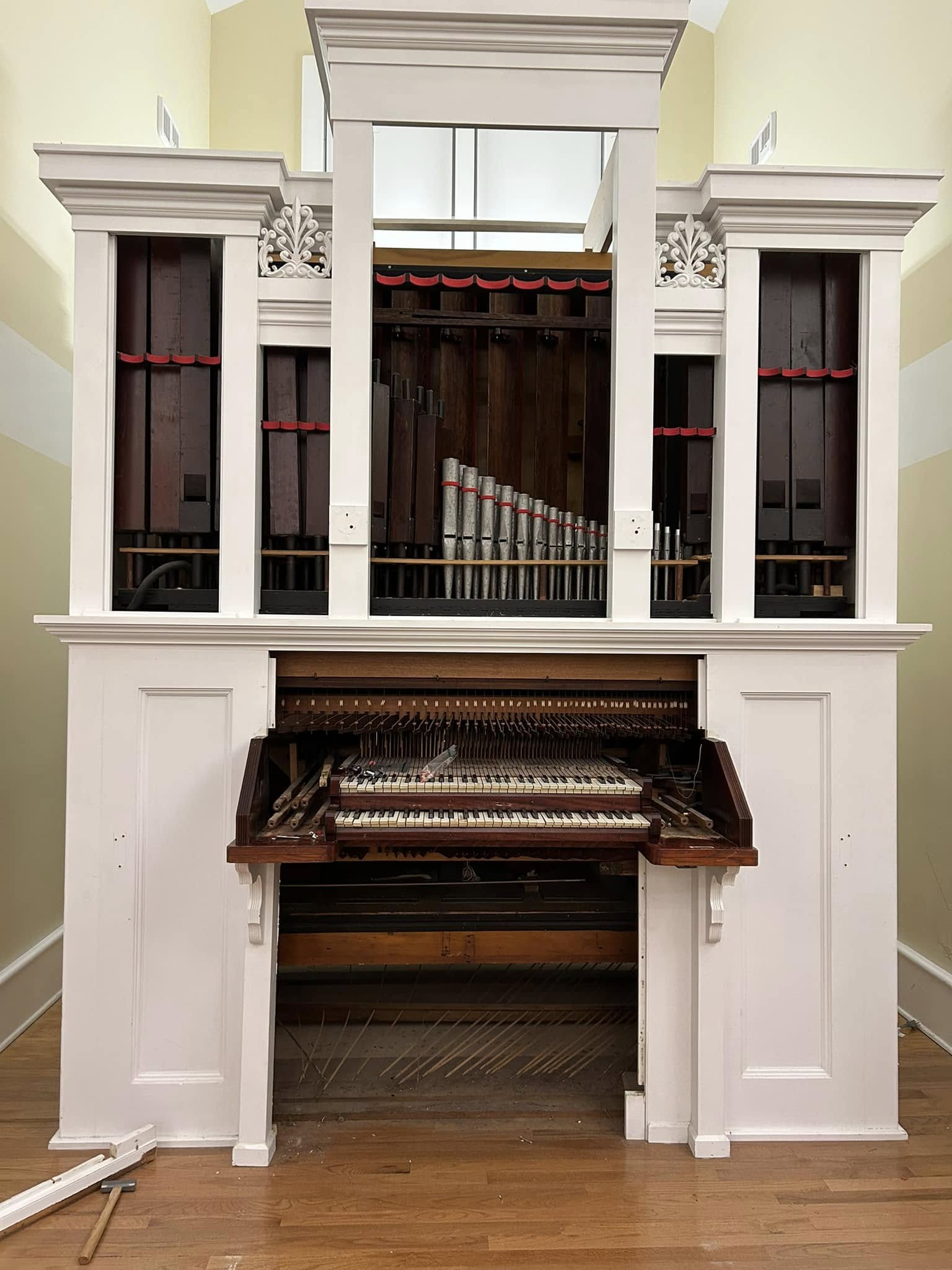
Phot credit: https://www.yamaha.com/en/musical_instrument_guide/pipeorgan/maintenance/

Last year our parish was donated a new pipe organ.  We have been eagerly waiting for the deconstruction of our current organ and the installation of the new one.  The time has finally come, we said a prayer of blessing on the current organ, and we have been waiting and watching as the process begins.  Ideally this wouldn’t be staring just days before Ash Wednesday, but I suppose there is no “perfect” time to deconstruct your worship space.

Knowing we are in a liminal time of deconstruction and reconstruction, I had not thoroughly thought through the impact this time would have on our experience of Ash Wednesday.  But walking into the Chapel this morning, seeing the pipes mostly gone, and the guts of our current organ exposed, I was hit by a sadness I couldn’t quite place.  Almost 20 years of music from that organ has filled our worship space, countless talented individuals have made the organ sing, and even more moments of sacred encounters with God have happened through that instrument.  Seeing the organ exposed today did something that left me unsettled. 

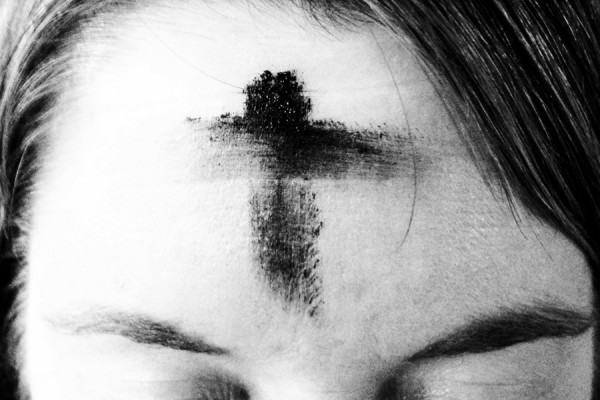
Photo credit: https://annkroeker.com/2011/03/09/there-back-again-my-first-ash-wednesday/

When I necessarily turned my attention to preparing for tonight’s Ashes to Go and Ash Wednesday service, I realized what was so unsettling.  Ash Wednesday is all about reminding us of our mortality, our finitude, and our vulnerability before God.  When those gritty ashes are scraped across my forehead and I am told that I will return to dust, that texture and those words linger with me.  So too, as that organ case sits gaping and open, with dust motes floating in the air, our worship space has suddenly become the perfect metaphor for entering a Holy Lent.

I wonder what gaping holes Ash Wednesday is exposing for you.  I wonder where your spiritual life is feeling dusty and in need of some care.  As always, you are most welcome to engage at Hickory Neck Episcopal Church for some tending – to find a connection with God that might be missing, to heal some holes that have been exposed for too long, and to find a place of belonging, because, believe me, you are not alone.  Welcome to Lent.

Photo credit: Stephen Trumbull; reuse with permission only

Sermon – Luke 6.17-26, Jeremiah 15.5-10, EP6, YC, February 16, 2025

05 Wednesday Mar 2025

Posted by jandrewsweckerly in Sermons

≈ Leave a comment

Tags

blessed, blessing, curse, discipleship, God, Jesus, politics, Sermon, Sermon on the Plain, status quo, trust, vulnerable, woe

One of the things I love about the diversity of parish like Hickory Neck is that I often get to see the fullness of life in just a matter of days – or even hours.  Whether I am talking to a retiree dealing with new health issue, an adult dealing with rigors of parenting, or a kid dealing with the everyday challenges to their identity, the breath of life is ever before me.  But these last weeks have brought a new rawness that I have not seen in a while.  The philosophical arguments of an election year have birthed a new praxis that has everyone on edge – from deep divides about economic and ethical policies, to the questions of how we bound we are to care for our neighbors, to whole livelihoods and vocations coming into question.  We are swimming in a sea of defensiveness, of vulnerability, of righteous indignation – no matter where you find yourself on the political spectrum. 

Into that volatile atmosphere, we get some scripture today that cuts to the bone and leaves all of us standing vulnerably before God who is calling us to task.  The bite starts in Jesus’ Sermon on the Plain in Luke’s gospel.  The blessings alone should bring us up short:  blessed are you who are poor (not poor in Spirit like Matthew says, but the literal poor), who are hungry, who weep, who are reviled.  Jesus’ blessings should be enough to bring us up short about how we are treating the poor, hungry, and oppressed.  But Jesus does not stop there.  Then he begins with the “woes.”  The word “woe” in Greek is translated literally as “woe” – like the sound woe makes as woe comes out of your mouth – like a sigh of “oh man!”  As New Testament scholar Matt Skinner says, that sound is not necessarily a sign of disappointment, but as if Jesus is explaining, “Your vision is so small, so limited,” like Jesus is just giving a “deep sigh.”[i] And all of this blessing and woe would be hard enough in normal times, but the truth is, as many of our own find ourselves in economic insecurity – whether layoffs are coming, or social security may be cut, or loan payments may increase – we’re not even sure which category we are in anymore.

In looking at Luke’s Gospel, professor Mary Hinkle Shore explains, “The difficulty in…this text in a 21st-century American, mainline Christian context is that most of us who will hear this word are not inclined to trust it…  We aim to be rich, full, laughing, and respected.  Hearing the beatitudes from Jesus, we may be tempted to think, ‘I’ll take my chances with the status quo.’   This reaction may be why Jesus adds woes here after his blessings.  No matter how hopeful his words are, some in the crowd have placed their trust elsewhere, and the choices they have made are working for them.  For these, the woes are not curses, but warnings.  It is as if Jesus said, ‘Certain things are worthy of your trust, and other things are sure to betray it.’  When those objects of misplaced loyalty do betray your trust—Lord, have mercy.”[ii]

I think that is why the designers of the lectionary chose Jermiah today.  Jeremiah features blessings and curses too.  But these blessings and curses are almost harder because they are not about economic categories but about our very relationship with God.  Jeremiah pronounces in the text today, “Cursed are those who trust in mere mortals and make mere flesh their strength, whose hearts turn away from the Lord.  They shall be like a shrub in the desert, and shall not see when relief comes.  They shall live in the parched places of the wilderness, in an uninhabited salt land.”  In contrast, Jeremiah goes on to say, “Blessed are those who trust in the Lord, whose trust is the Lord.  They shall be like a tree planted by water, sending out its roots by the stream.”  All of holy scripture seems to be pushing us to deeply examine where we are putting our trust these days.

As many of you know I have been working the last few months on a charity event to raise money for two amazing non-profits in our community – a little event called Dancing with the Williamsburg Stars.  I thought the dance lessons would be fun, and as someone who has danced in the past, I thought I would have a somewhat easier go of things.  And I loved the idea of representing Hickory Neck in such a fun-loving way.  But here’s the funny thing about ballroom dancing – dancing with a partner requires a level of trust I never experienced when dancing in an ensemble.  A few weeks ago, we were practicing a move where I basically lean backwards, held up by my partner.  I thought I was doing a great job until we watched video replays.  I was barely dipping my head back at all.  My partner had to show me where his arms were placed to catch me and how little I was leaning into them.  Then just this week, we were working on another move were I basically fall forward with an extended arm behind me.  My partner explained that if I try to catch myself in the fall, I will make him fall.  I must trust that his hold is steady enough that I won’t slam face-forward to the ground.  And then, just to show me how I still wasn’t fully trusting him, he showed me how even in the turn out from that fall, I was muscling my arm to get up, instead of trusting him to pull me up. 

We are in intricate dance with God right now.  We are vulnerable, on stage, and not at all in control.  Our natural inclination is going to be to muscle our way through, to fight for some modicum of control, to determine what we want (to be rich, full, laughing, and respected) and trusting that that fullness is the ultimate end game.  Into that battle of wills, Jesus sighs a big “woe.”  As we stare out into the audience of that dance, I love what Debie Thomas sees in this text.  When thinking about her relationship with trust and God, Thomas confesses, “I might begin by admitting that Jesus is right.  I might come clean about the fact that most of the time, I am not desperate for God.  I am not keenly aware of God’s active, daily intervention in my life.  I am not on my knees with need, ache, sorrow, longing, gratitude, or love.  After all, why would I be?  I have plenty to eat.  I live in a comfortable home.  My family is safe.  I’m not in dire need of anything.  In short, there isn’t much in my circumstances that leads me to a sense of urgency about ultimate things.  I can go for days without talking to God…Most of the time, it just plain doesn’t occur to me that I would be lost — utterly and wholly lost — without the grace that sustains me.”

Thomas goes on to conclude, “I think what Jesus is saying in this Gospel is that I have something to learn about discipleship that my life circumstances will not teach me.  Something to grasp about the beauty, glory, and freedom of the Christian life that I will never grasp until God becomes my everything, my all, my starting place, and my ending place.”[iii]  In other words, until I let God take the lead, and actually follow, my dance through this life is going to echo the woe’s I have been sighing for the last several weeks.  Blessing comes in placing trust not in earthly things or earthly policies, but in the Lord.  Then, as Jeremiah reminds us, we will be like trees planted by water, roots going down by the stream, and leaves that stay green, not ceasing to bear fruit.  When we are so rooted, growing, and producing, then we can share our fruit, our shade, our refreshment.  God needs us so rooted so that we can stop sighing woes and start being blessings.  Amen.


[i] Matt Skinner, “Sermon Brainwave Podcast:  #1008: Sixth Sunday after Epiphany (C) – Feb. 16, 2025,” February 6, 2025, as found at https://www.workingpreacher.org/podcasts/1008-sixth-sunday-after-epiphany-c-feb-16-2025 on February 12, 2025.

[ii] Mary Hinkle Shore, “Commentary on Luke 6:17-26,” February 16, 2025, as found at https://www.workingpreacher.org/commentaries/revised-common-lectionary/sixth-sunday-after-epiphany-3/commentary-on-luke-617-26-3 on February 14, 2025.

[iii] Debie Thomas, “Leveled,” February 6, 2022, as found at https://www.journeywithjesus.net/essays/3319-leveled on February 14, 2025.

On the Dance of Trust…

12 Wednesday Feb 2025

Posted by jandrewsweckerly in reflection

≈ 2 Comments

Tags

afraid, dance, God, grace, hard, trust

Photo credit: World Class Ballroom

In a little over a week, I will be competing in my town’s version of Dancing with the Stars – where 12 of us local “stars” are paired with professional dancers and perform our routines in a ticketed show.  The event is for charity, hoping to raise about $60,000 for our local Big Brothers Big Sisters affiliate and Literacy for Life.  When I was asked to be a star this year, I was excited.  I loved the idea of supporting local ministries, of a clergy person doing something so outside the box, and the fun of dancing.

Naively, I thought years of dancing in childhood and adolescence would be a big help.  I took ballet, tap, and jazz all through my school years – even taking a little ballet in college.  I was on dance teams in high school and college, doing hip hop style dancing.  And I even took a “Social Dance” class in college meant to teach you the basics of ballroom dance.  Consequently, I was fully expecting to learn and execute my routine with relative ease.

What I hadn’t accounted for in my mental preparation was what dancing with a partner would mean.  Of course, I knew that, as a female, I would need to let the male lead – and I also knew that would be hard based on previous experiences.  It can be hard to trust someone who also doesn’t know what they are doing.  But I had assumed dancing with a professional would make the trust part easier.  That was until a lesson recently where my teacher basically told me that I needed to fall forward in a particular position – with the promise he would catch me.  When I gave him an incredulous look, he explained that if I tried to catch myself, I would make him fall.  But if I just fell, he would catch me and the move would look dramatically graceful.

I have loved getting to know my teacher and have no reason not to trust him – he’s incredibly talented and has been doing this for ages.  But my resistance to trusting my teacher has given me a lot of insight on how deeply demanding trusting God is.  God has proven to us time and again how God is holding us, caring for us, bringing us to the right places at the right time.  And yet, every time something gets scary or unfamiliar, we yank that trust right back.  I suppose that is why we hear that refrain in Scripture, “Do not be afraid,” so often – because being unafraid is really hard.

I wonder in what ways you are holding back your trust in God these days.  I wonder how often you are unwilling to “fall,” expecting something dramatically graceful, and instead limiting God’s grace by your resistance to giving up control.  Letting go will not be easy – God wouldn’t have to tell us to not be afraid so much if letting go were easy.  But imagine the beautiful dance you could produce if you could reach out your hand and instead say, “Here I am.  Send me.” 

You can help me “let go” by making a donation to the amazing charities we are supporting.  Click HERE to donate today and make a difference in the lives of others.

Sermon – Isaiah 43.1-7, Luke 3.15-17, 21-22, E1, YC, January 12, 2025

12 Wednesday Feb 2025

Posted by jandrewsweckerly in Sermons

≈ Leave a comment

Tags

affirmation, baptism, belong, Christ, church, exile, God, hard, joy, new birth, Sermon

Some Sundays, Church is a bit hard.  Every Sunday, even the ones in Lent, are considered resurrection celebrations – days where we take a break from all that weighs on us and we celebrate the gift of a Savior.  But some Sundays turning our hearts to joy is difficult.  We may be mourning a loss, or watching a crisis like the fires near Los Angeles this week.  We may be struggling with anger or fear, or worried about an estranged child, or precarious relationship, or how we are going to make ends meet.  And yet, Sunday after Sunday, the Church says, “Rejoice, and again I say, rejoice!” 

That contrast is experienced brilliantly in our Old Testament lesson today.  The reading from Isaiah is the perfect pairing for our gospel lesson where Jesus is baptized, the Holy Spirit descends like a dove, and the voice of God speaks, “You are my Son, the Beloved; with you I am well pleased.”  The echoes of the prophet Isaiah are those words to Jesus.  God says to the people in Isaiah’s time, “Do not fear, for I have redeemed you; I have called you by name, you are mine…you are precious in my sight, and honored, and I love you…I am with you.”  On the surface, these words sound like joy upon joy.  Who would not be thrilled to hear such affirmation and respond with songs of praise and jubilation?

But here is what you might not realize about chapter 43 of Isaiah.  At this point, the people of God are in exile in Babylon.  God is not speaking to0 the generation of people who were driven out of the land of promise into Babylon.  These words are spoken to the children and even grandchildren of those first exiles – some of whom were born in exile and only know the land of promise by legend.[i]  These words sound lovely, but must have been hard to hear.  The exiles may have even asked, “If God is with us…how did we end up in Babylon?”[ii]  God is speaking to a people who have likely lost hope or lost belief that God is even with them anymore.  Because if God is with us, how can suffering be? 

Today we will baptize two young boys – one, August, who is too young and innocent for such questions yet, and the other, Jonathan, who is just old enough to start asking the big questions:  who is God?  What is baptism?  If you are a priest, can you bless the water I drink too?  On a Sunday when we might be struggling to bring the joy with the world burning and freezing around us, a baptism might be just what we need.  Baptism is all about identity making – baptism is the moment we are acknowledged as full members of the body of Christ – as children of God.  Baptism is the day the church says, “You belong to God.” 

And so, when God says through Isaiah, “I have called you by name, you are mine…you are precious in my sight, and honored, and I love you…I am with you,” God means you.  Even the pronoun used in the text is the second-person-singular – as if God is speaking to each member of the community.[iii]  So you, Bob and Betty, are precious in God’s sight.  You, Nancy and David, are called by name and are God’s.  God loves you, Jonathan and August.  As one scholar writes, “Our sense of belonging comes not from the acceptance of our peers or the status of our communities but from the One who claims us and will never let us go.  What makes us worthy is not our individual achievements or the size of our congregational budgets, but God’s gracious love.”[iv]

In the ancient church, baptism looked a little different than it does today.  They did not have beautifully carved and crafted fonts with small amounts of water poured over heads or sprinkled among people.  The early Church had a deep, cruciform shaped pools with stairs on either end of the cross length.  So the candidate would walk down into the water at one end, totally submerge under the waters, and then emerge on the other end.  The symbolism was that your old self died in the waters of baptism, and you were born into the life of Christ, emerging from the womb’s water a new person.

We may not submerge Jonathan and August, but we do understand them as born anew today.  And in fact, each of us here today are born anew too as we reaffirm what happened in that new birth for us.  That’s how we tangibly grasp onto the hope and celebration of a resurrection Sunday – even in the midst of fire and freeze.  We grasp onto hope as the Church reminds us who we are and how we will be.  We promise today to “continue in the apostles’ teaching and fellowship, in the breaking of the bread, and in the prayers.”  We promise to “repent and return to the Lord, to proclaim by word and example the Good News of God in Christ.”  We promise to “seek and serve Christ in all persons, loving our neighbor as ourselves and to strive for justice and peace among all people, and respect the dignity of every human being.”  Whether we brought joy with us today, or we are in need of joy, the Church promises that if we keep trying to live into those baptismal promises, live into that identity of beloved children of God, we will find our way into believing and feeling the truth of those words from God.  “I have called you by name, you are mine…you are precious in my sight, and honored, and I love you…I am with you.”  Amen.     


[i] Julia M. O’Brien, “Commentary on Isaiah 43:1-7,” January 12, 2025, as found at https://www.workingpreacher.org/commentaries/revised-common-lectionary/baptism-of-our-lord-3/commentary-on-isaiah-431-7-6 on January 10, 2025.

[ii] Valerie Bridgeman Davis, “Homiletical Perspective,” Feasting on the Word, Yr. C, Vol. 1 (Louisville:  Westminster John Knox Press, 2009), 221.

[iii] Kathleen M. O’Connor, “Exegetical Perspective,” Feasting on the Word, Yr. C, Vol. 1 (Louisville:  Westminster John Knox Press, 2009), 219.

[iv] W. Carter Lester, “Pastoral Perspective,” Feasting on the Word, Yr. C, Vol. 1 (Louisville:  Westminster John Knox Press, 2009), 222.

Sermon – Matthew 2.1-12, EP, YC, January 5, 2025

12 Wednesday Feb 2025

Posted by jandrewsweckerly in Sermons

≈ Leave a comment

Tags

both/and, either/or, Epiphany, Episcopal, fear, God, hope, Jesus, magi, Sermon

Many Episcopalians find their way to the Episcopal Church from another way – another denomination or even no faith at all.  One common theme among those making their way to the Episcopal Church is that they are fleeing a faith that is “black and white,” or “either/or.”  They find comfort in the Episcopal Church because the Episcopal Church embraces the “gray,” or the “both/and.”  The appeal of those other traditions is obvious – there is no ambiguity or need for discernment in a “black and white” faith.  Something is either right or wrong.  That kind of clarity is refreshing in a world that is always complex, complicated, and ambiguous.  But our Episcopal tradition does not offer the comfort that comes from absolutes.  Our tradition helps us find comfort within, not despite, the complexity and ambiguity of both our sacred and secular lives.

Take our gospel lesson today.  We could easily read the Epiphany story, the story of the visitation of the Wise Men or Magi, and make easy, defendable categories:  Herod is bad, the Magi are good.  But before we dig in too deeply in that dichotomy, we are going to be good Episcopalians this morning and look into the gray.  We start with the Magi.  There is something quite magical about these wise people of thought.  Their magic is not in how they used their mental capacities to track a star to find the Messiah.  What is magical about the Magi is their response to finding Jesus.  Matthew tells in the literal translation that the Magi “rejoiced with a really, really big joy.”[i]  These Magi, who know very little about the life, death, and resurrection of the king of the Jews feel something, feel really, really big joy in the Christ Child because they, unlike most of us, have “mastered the art of hoping in God.”[ii]

Ellen Davis, Old Testament scholar, explains there is a Proverbs verse that helps us understand the Magi.  Proverbs 10.28 says, “The hope of the righteous is gladness.”  She goes on to explain, “Those who train their sights on the faithfulness of God, ‘the righteous’ – they already experience joy even before they see their hopes fulfilled, even if they never live to see (in this world, at least) the clear fulfillment of all that God has promised…That is the kind of joy that burst forth that night on the streets of Roman-occupied Bethlehem, like flowers springing suddenly out of stone pavement.  It was joy that takes root in nothing more (or less) substantial than hope itself.”[iii]

The Magi’s hope does not teach us that because God is born in Jesus all is right in the world.  I am not sure any of us would believe that anyway, given the current state of the world.  Instead, as Davis explains, “Christian hope is something very different from the natural feeling of elation that comes when things are going our way.  No, hope is not a feeling that ebbs and flows.  Rather, it is a way of living that we choose; and gradually, day by day, we learn to be graceful in it.  Hope is a way of living beyond our own limited vision and natural fears, a way of living into God’s faithfulness and there finding fullness of joy forevermore.”[iv]

Now, we could easily stop our interpretation there, and say, “Don’t be bad like Herod, be hopeful and righteous like the Magi, and all shall be well.”  But remember how I told you about the ambiguity of the Episcopal Church?  Let’s go back to Herod – the supposed “wrong” to the “right” of the Magi.  We know Herod is a horrible, power-hungry, paranoid ruler.  We are told that when these foreigners come out saying a new King of the Jews has been born, Herod is afraid.  He’s not scared of a baby – he’s scared about the threat to his power.  And so, he pulls together his own biblical scholars in secret, and then talks to the Magi in secret to get them to find this baby – not so that he can worship him, as Herod claims, but so that he can kill the threat to his power.  And when that does not work because the Magi go home another way, we find out in the verses following our text today, that Herod has all the boys in Bethlehem under the age of two murdered – just to make super sure that his power is secure.

But the problem of making Herod out to be the villain is we skip over one key point.  The text says, all of Jerusalem is frightened by this new king too.  As Davis explains, “Herod could not have secured the deaths of all those children, if he were the only one who was afraid.  Matthew is pointing to the clearly documented fact that fear is contagious, and [fear] readily crosses party lines…Fear spreads like plague through an unhealthy system, infecting not only those who are powerless to defend themselves – the Jewish families in Bethlehem – but also infecting the relatively powerful, the ruling elite in Jerusalem, who sensed (with that gut-gripping fear that comes in the middle of the night) the fragility of the base on which their power rested.”[v]

So, before we try to simplify again – Magi are good, Herod (and the people of faith in Jerusalem) are bad,” Ellen Davis encourages us to see another way.  She says, “This is not a simple picture of them and us, as we would prefer to believe.  Rather, if we read the story deeply and honestly, I think we will identify both with fearful Jerusalem and with hopeful Magi; for they both reveal aspects of our own situation that we have not seen clearly before…there is judgment for us in that picture of Herod and all Jerusalem.  Matthew holds [that judgment] before us like a mirror, challenging us to acknowledge our fear, to recognize the violence that springs from fear and will doubtless perpetuate [violence].  Yet Matthew does not consign us to despair.  For alongside that mirror is a second one – you might call [the second mirror] a glass of vision, for [the second mirror] show us something a little ahead of where we are now.  [The mirror] shows what we as a church can and will look like if we stand against the tyranny of self-perpetuating fear.  We will look like the Magi.”[vi]

I cannot think of a better time to read this “both/and” text, this “gray” text where everything is not so rigid as we might prefer.  Many in our communities are full of fear right now – fear from what the changes of a new administration will do in power, fear of violence like the wonton killing of those in New Orleans this New Year’s, and even fear of financial instability in these volatile times.  We do not honor the Magi today because their message is “Just have hope and all shall be well!”  Instead, as Davis argues, Matthew, “challenges us to be the community of resistance that the church has been…from the beginning.  [Matthew] challenges us as a church to examine and deepen our understanding of the systems that generate fear for ourselves and others.  He challenges us as a church to find ways out of those systems – not to despair, though the systems are large and powerful, but to find and commit ourselves to the small steps by which we may depart from the country governed by fear and go by another road to our own country, that place we call the kingdom of God.  Matthew’s Gospel challenges us to live boldly in the hope of the Magi, so that having rejoiced with them at the first coming of Christ, we may at his second coming know fullness of joy forevermore.”[vii]  That may not be the “right/wrong” word you were looking for this morning.  But I think the beauty of the gray of Holy Scripture today is exactly what we need.  Amen.


[i] Ellen F. Davis, “Stargazers,” January 5, 2003, Sermons from Duke Chapel:  Voices from “A Great Towering Church,” William H. Willimon, ed. (Durham, NC:  Duke University Press, 2005), 337.

[ii] Davis, 338.

[iii] Davis 338.

[iv] Davis, 339.

[v] Davis, 340. 

[vi] Davis, 341.

[vii] Davis, 341.

Sermon – Luke 2.8-20, Blue Christmas, December 21, 2024

12 Wednesday Feb 2025

Posted by jandrewsweckerly in Sermons

≈ Leave a comment

Tags

Blue Christmas, Christmas, church, comfort, God, grief, hope, light, paradox, sacred, secular, Sermon, sit, unsettling

Christmas is a funny thing.  Christmas is simultaneously soft and loud, comforting and unsettling, hopeful and demoralizing.  Some of that paradox comes from the Christmas story itself, but some of that paradox comes from our hopes and memories of Christmas verses our lived experience of Christmas.  I remember all the loveliness of Christmases past:  of familiar foods shared, of gifts exchanged, of the aunts and uncles verses cousins football games in our grandparents’ yard.  But as I aged, the veneer wore off:  aunts and uncles divorced, hurtful things were said and done, and older generations began sharing the “behind the scenes” version of our Christmases that I never knew – and wished I didn’t know now.  And, slowly, I began reshaping what Christmas meant for the next generation – with a sense of certainty about what I wanted them to experience and a sense of anxiety that they might someday lose the magic of a once special time. 

We hold this Blue Christmas service every year because somewhere in the midst of shopping, caroling, worshiping, and partying, our world – both the secular one, with Hallmark movies and glossy advertisements, and sometimes even our sacred one, with familiar carols and perfect pageants – our world offers us dissonance.  In the merry making, there is little room for the parts of us that are not merry – whether those parts are due to lingering Christmas grievances, visitations from the grief fairy when we least expect her, economic pressures and worldly anxieties, the open wounds from the brokenness of our country from a nasty political year, or relationships that are broken or are limping along.  The world and even the Church rarely makes space for our inability to fully embrace the merriness of Christmas. 

As I pondered this disconnect this year, I stumbled on a reading from Gertrud Mueller Nelson.  Nelson describes about this time of year – of this season of shortened days and lessened light, “Pre-Christian peoples who lived far north,” she writes, “and who suffered the archetypal loss of life and light with the disappearance of the sun, had a way of wooing back life and hope.  Primitive peoples do not separate the natural phenomena from their religious or mystical yearning, so nature and mystery remained combined.  As the days grew shorter and colder, and the sun threatened to abandon the earth, these ancient people suffered the sort of guilt and separation anxiety, which we also know.  Their solution was to bring all ordinary action and daily routine to a halt.  They gave in to the nature of winter, came away from their fields and put away their tools.  They removed the wheels from their carts and wagons, festooned them with greens and lights, and brought them indoors to hang in their halls.  They brought the wheels indoors as a sign of a different time, a time to stop and turn inward.  They engaged the feelings of cold and fear and loss.  Slowly, slowly, they wooed the sun-god back.  And light followed darkness.  Morning came earlier.  The festivals announced the return of hope after primal darkness.

This kind of success – hauling the very sun back:  the recovery of hope – can only be accomplished when we have the courage to stop and wait and engage fully in the winter of our dark longing.”  Nelson goes on to say, “Perhaps the symbolic energy of those wheels made sacred has escaped us and we wish to relegate our Advent wreaths to the realm of quaint custom or pretty decoration.  Symbolism, however, has the power to put us directly in touch with a force or idea by means of an image or an object – a “thing” can do that for us.  The symbolic action bridges the gulf between knowing and believing.  It integrates mind and heart.  As we go about the process of clipping our greens and winding them on a hoop, we use our hands, we smell the pungent smell that fills the room, we think about our action.  Our imagination is stirred.

Imagine what would happen,” Nelson adds, “if we were to understand that ancient prescription for this season literally and remove – just one – say the right front tire from our automobiles and use this for our Advent wreath.  Indeed, things would stop.  Our daily routines would come to a halt and we would have the leisure to incubate.  We could attend to our precarious pregnancy and look after ourselves.  Having to stay put, we would lose the opportunity to escape or deny our feelings or becomings because our cars could not bring us away to the circus in town.[i]”

In some small way, that is what tonight does.  Tonight, we take the wheel off our cars, and place the wheel in the wreath right here in this little chapel.  We take away our ability to bustle about, and we sit.  We sit in the dark, we sit in our discomfort, and we sit in our un-merriness.  We take time, listening to a story about some shepherds who were similarly uncomfortable in the dark of night, dirty among their sheep, in the fields – doing their daily, maybe sometimes demoralizing, work of shepherding.  We pray, we mark our specific sense of loss or pain with the lighting of candles, and we bless our lack of merriment – we receive permission to tarry for a while in the darkness.  We do that all because we know that after today, the light will start to come a little earlier, will start to last a little longer, and will start to kindle hope in us.  We may not yet be ready to leave this place, glorifying and praising God like those shepherds.  But we are able to receive the gift of this sacred inside time, knowing that light is coming – that days are coming when we, too, will remember joy, and life, and praise.  We tarry here because this is where we also find hope.  That is the Church’s gift to you tonight – space and a tiny little sliver of hope.  Come, gather by the wheel, and tarry a bit longer.  Amen.


[i] Gertrud Mueller Nelson, To Dance With God: Family Ritual and Community Celebration (Mahwah, NJ:  Paulist Press, 1986), 63, as quoted in An Advent Sourcebook, Thomas J. O’Gorman, ed. (Chicago:  Liturgy Training Publications, 1988), 141-142.

Sermon – Malachi 3.1-4, A2, YC, December 8, 2024

12 Wednesday Feb 2025

Posted by jandrewsweckerly in Sermons

≈ Leave a comment

Tags

Advent, Christ Child, entertain, familiar, God, music, pain, preparation, questions, refine, Sermon, together, tougher

The professional choir at the parish I served as a curate would perform Handel’s Messiah every Advent season in preparation for Christmas.  I remember my first Advent the Rector told me about the performance with excitement and anticipation, and all I remember thinking was, “Oh goodness!  Do I have to go??”  Do not get me wrong, I love Handel’s Hallelujah Chorus as much as anyone, but that piece is only about three-four minutes long and is only half-way into the three hours of singing that Handel’s Messiah takes. 

Music is a funny thing in Advent.  Since we hardly ever hear music at this service, you may not remember the hymns designated for singing in Advent.  But most people I know who regularly attend services with music do not really love Advent music.  Unlike familiar, comforting, endearing Christmas carols, Advent hymns are “discordant, unsung, and unpopular in many congregations.”[i]  I have known choir members whose skin crawls from Advent music, and I imagine some of you are here today because the idea of a whole service dedicated to Advent Carols which we will hear at 10:00 am sounds like torture. 

The problem might be that Advent music is not as catchy as Christmas music.  But I think there is a deeper truth to our distaste of Advent music.  The music of Advent points to the themes of Advent:  of apocalyptic demands to be alert, doing acts of righteousness to be right with God; of judgment so stringent to be compared to a refiner’s fire and fullers’ soap; of needing to bear fruit worthy of repentance so as not to be chopped down and thrown into the fire; and of bringing down the powerful from their thrones and lifting up the lowly.  None of that is quite as catchy as a holly, jolly Christmas.

Perhaps the issue is that Advent music tries to do the same thing scripture does.  In 1741, Handel wrote to a friend of his masterpiece Messiah, “‘I should be sorry if I only entertained them.  I wished to make them better.’  The composer challenges [us] to go beyond feeling good to doing good.”[ii]  The same was true for Malachi.  Malachi brings good news of a messenger coming to prepare the way of the Lord and that we will be purified enough that our offerings will be pleasing to the Lord as they once were before.  But Malachi also reveals the fearful questions of the people.  “But who can endure the day of his coming, and who can stand when he appears?”  These are just two of the twenty-two questions in the fifty-five verses of Malachi.[iii]  But they are questions we all ask if we are paying attention during Advent.

I remember when I was pregnant with my first child, women poured pregnancy stories over me.  A camaraderie of sorts began to build, the state of our friendship altered because we were now going to share something we had not before.  But what I always noticed about those stories is whenever I expressed my nervousness about labor, their eyes darted away, and they made wistful promises about how anything resembling pain would be forgotten.  The more their warm countenances shifted to wary, twitchiness, the more I suspected labor would be a painful reality.

The same is true for the infant we will welcome once again on December 24th.  As much as we cry out, “Hark the Herald Angels Sing,” as much as we sing of “Silent Nights,” and as much as we dream of “Joy to the World,” our Christmas celebration comes with a price – the price of preparation, of messengers making the way for joy, of fire burning away all that corrupts us.  Advent is not about entertaining us.  But, much like Handel hoped, Advent is meant to make us just and better, so that we might be right with God when that infant is placed in the arms of the Church.  Advent is for Malachis, for Zechariahs, the father of that coming messenger, and for you and for me.  And although we may feel like we have been refined enough to last a lifetime after the last election season, the refining God is doing now in each of us means, as one scholar assures, we will “be re-formed in God’s image, and [that re-forming] will be good.  No matter how we feel about it now.  No matter what we may be afraid of now.  When we are refined and purified as God promises, it will be good.”[iv]  As much as we may dread that awful Advent music or loathe those heavy, foreboding stories of Advent, we do so together, knowing that we are being refined tougher, so that, together as a community, we will welcome the Christ Child with open, ready arms.  Amen.


[i] Deborah A. Block, “Pastoral Perspective, Feasting on the Word, Year C, Vol. 1  (Louisville: Westminster John Knox Press, 2009), 30.

[ii] Block, 30.

[iii] Block, 26.

[iv] Seth Moland-Kovash, “Homiletical Perspective,” Feasting on the Word, Year C, Vol. 1  (Louisville: Westminster John Knox Press, 2009), 31.

On Blooms of Hope…

13 Wednesday Nov 2024

Posted by jandrewsweckerly in reflection

≈ Leave a comment

Tags

blooms, comfort, generosity, God, good, goodness, growth, hope, plants, suffice, thriving

Photo credit: Jennifer Andrews-Weckerly; permission required for reuse

I have written before about how I am not good with plants.  If the term “brown thumb” was invented for anyone, it was likely me.  I have been known to even kill a cactus.  I am so resigned to this reality that when someone gifts me a potted plant, even one with blooms already on it, my immediate reaction is guilt about how short a life the plant can expect in my care.

So, imagine my surprise when a similar gift from last Christmas, a Christmas cactus, began blooming today.  I was so shocked, that I went online to learn about the plant’s blooming practices.  It was in this research that I learned I have been doing everything wrong.  The research says the plant should never be in direct light (it is sitting in the full blast of the sunrise every morning); it says you should only water the plant when the top two inches are dry (I am pretty sure I water it weekly no matter what); and it says the plant should be kept in a cool, humid space (nope, and nope).  So, despite all my mistakes, despite how this plant should likely be dead by now, here this cute plant is blooming for the first time. 

That plant has reminded me of two things today.  First, that plant has reminded me of the ways that God can work for good despite me.  I do not have the gifts, interest, or time to lovingly help plants thrive.  But God has taken my measly offerings – the occasional remembrance to water the plant without any recollection how long ago I watered it last, the guilt that has kept me from throwing the plant away before now, and the half-hearted attempt to at least give the plant sunlight – God has taken these offerings and transformed them not just to survival, but to thriving.  I am humbled by a God who can produce good despite me.

Two, I am also struck by the fact that this plant is just one tiny example of the small goodness that surrounds us all the time.  The last week has been a rough one, especially in a congregation and a community that is very “purple” politically.  Though we are quite civil with one another, emotions have been all over the spectrum and I have been struggling to see where the hope is.  But the truth is hope and goodness have been around me this whole time.  I certainly see hope in this plant who is thriving despite me – and looking quite beautiful, indeed.  I see hope in the ways people are caring for one another – asking how people are really doing, and finding ways to offer solidarity and comfort where possible.  And I see hope as parishioners increase their giving to the church in a time when budgets are stretched and prices are rising.  We could find counter arguments for all those instances – reasons to be wary or suspicious or doubtful.  Or we can choose to notice the blooms opening slowly all around us.  I am not entirely sure what God is doing these days, but I have to tell you, I feel confident that God is here, bringing us comfort and signs of hope.  And that will suffice for today.

Sermon – 1 Kings 17.8-16, P27, YB, November 10, 2024

13 Wednesday Nov 2024

Posted by jandrewsweckerly in Sermons

≈ Leave a comment

Tags

afraid, blessing, church, consecration, drought, election, Elijah, enough, God, promise, Sermon, stewardship, trust, widow of Zarephath

On this Consecration Sunday, the day we offer and celebrate our gifts to support the ministry of this beloved community, the lectionary seemingly delivers the perfect text – the widow’s mite.  One might guess the lectionary shapers designed the lectionary just for a day like today – so that the sermon might be a nice a tidy story about how you too might give sacrificially.  But that story – and that sermon – are not our gift today.  After the tumultuous election week we have had, our gift lies with another widow – the widow of Zarephath from the first book of Kings. 

The widow of Zarephath is both a woman and widow, and as you know by now, that makes her doubly vulnerable in Elijah’s day.  In fact, although our translation says she is a widow, the original Hebrew actually adds, “…the word ‘woman’ in apposition before ‘widow.’  Verse 9 could literally be translated as, “Rise and go to Zarephath, which belongs to Sidon, and dwell there.  Look, I have commanded a woman, a widow, to sustain you.”[i]   The widow is also the mother of a child who is dependent upon her, so she has needs beyond her own.  If we read a bit further in Kings, we learn she is not normally poor – even as a widow, she owns a home that is large enough for an upper chamber.[ii]  And, we know she lives in Sidon, which means she is a foreigner, and that she likely worships Baal.

But to fully understand this widow we have step back even further.  The reason Elijah wanders into Sidon needing food is because he is fleeing Queen Jezebel, another Sidonian woman who has convinced King Ahab to build temples to Baal, and who threatens to kill Elijah.  So, we already see two different treatments of Elijah by two different Sidonian women.[iii]  But the other big piece of information is there is a drought in the land – and the lack of water means a threat to life – in fact, any poverty the widow of Zarephath faces is because the drought has dried up the food supply.  But drought also has theological significance in this story.  “…the condition of drought is the result of the Israelite King Ahab’s disobedience.”[iv]  As Old Testament Scholar Ellen Davis explains, “Overall, from a biblical perspective, the sustained fertility and habitability of the earth, or more particularly of the land of Israel, is the best index of the health of the covenant relationship.”[v]  In other words, if there is a drought, the people of God have really messed up!

Now sometimes stories from the Bible feel so foreign, that even with context like we just learned, we do not really feel like we can relate.  But if we really think about the widow of Zarephath and her context today, we find much more relatability than we might like to admit.  We certainly know the reality of people of means suffering financially.  In fact, a recent story from Forbes said that over 75% of Americans are living paycheck to paycheck.[vi]  That’s a lot of folks eking out a living with last bits of grain and oil.  We also know something about fighting about authority and ultimate values – where we put our trust.  I would say the dramatically different reactions to the election this week are a classic example – from people who are relieved by the election results to people who feel so marginalized they do not feel like they can even stay in relationship with their neighbors.  Our church too is living donation to donation – with the annual threat of budget deficits – and is now facing the reality of what being a politically diverse community means – how we will not just respect differences but how we will actively serve Christ as one.  I think we are all too familiar with what being in a theological drought is all about.

So, what happens to this woman widow in Zarephath?  As she faces the ludicrous request of Elijah to feed him when she is literally about to feed her son and herself their last meal before they die of starvation, Elijah says, “Do not be afraid.”  I confess, when I first read those four words this week, “Do not be afraid,” I was pretty upset.  That’s God’s answer to this theological drought we are in?  This hurting, deeply divided, seemingly irreparable place?  Do not be afraid?!?  Now, the good news is I stayed in the text.  As I kept studying, I stumbled on a commentary in which Professor Robert Wall said, “‘Do not be afraid,’ is not meant to comfort one facing death but rather to inspire confidence that [Elijah’s] God keeps promises of salvation made.”[vii]  Elijah’s God keeps promises of salvation made.  And as if to support the good professor’s insight, Elijah goes on to say in the text, “For thus says the LORD the God of Israel:  The jar of meal will not be emptied and the jug of oil will not fail until the day that the LORD sends rain on the earth.”[viii]  God never says the jar will be overflowing or we will have so much we will need a second jug.  But God does say we will have enough.

Those words from Elijah, those words that often introduce an oracle of salvation[ix], are words for us too.  Do not be afraid.  I know those four words may feel impossible for some of us today.  Many of you have already told me about your literal fears:  either your fears about the economy before the election or your fears for your rights and dignity after the election.  But those four words are our promise today – that God keeps promises of salvation made.  Like Elijah promises the widow, so God promises to you today that your jar of meal will not be emptied and your jug of oil will not fail until the day that the LORD sends rain on the earth.  So, even in our fears, we make promises to the church about what time, talent, and treasure we can share to ensure our ministries remain vibrant and thriving.  In our fears, we keep coming to church and engaging with neighbors who differ from us more meaningfully than we did before.  In our fears, we trust in our God, no matter what civic leaders are in place.  Because our jar will not be emptied and our jug will not fail, we can trust that we will have enough – enough for ourself, enough for our neighbor, and enough for the church.  We can say yes, just like the widow of Zarephath on the verge of death.  We can say yes.  Do not be afraid.  Amen.


[i] David G. Garber, Jr, “Commentary on 1 Kings 17:8-16,” Working Preacher, November 10, 2024, as found at https://www.workingpreacher.org/commentaries/revised-common-lectionary/ordinary-32-2/commentary-on-1-kings-178-16-9 on November 8, 2024.

[ii] Denise Dombkowski Hopkins, “Exegetical Perspective,” Feasting on the Word Supplemental Essays, Year B, Batch 4 (Louisville:  Westminster John Knox Press, 2012), 6.

[iii] Hopkins, 4.

[iv] Garber.

[v] Ellen F. Davis, Scripture, Culture, and Agriculture: An Agrarian Reading of the Bible (New York: Cambridge University Press, 2009), 8, as quoted by Garber.

[vi] Emily Batdorf , “Living Paycheck To Paycheck Statistics 2024,” Forbes Advisor, April 2, 2024 as found at https://www.forbes.com/advisor/banking/living-paycheck-to-paycheck-statistics-2024/?fbclid=IwY2xjawGcVSVleHRuA2FlbQIxMAABHSkGQLYo1Mye_ETSWURRZckm0B5EKB226F-g1znt-H6_s6kt5j5eFvxjvw_aem_OKcSGHZduH78GmIJSrYAZw on November 8, 2024.

[vii] Robert W. Wall, “Theological Perspective,” Feasting on the Word Supplemental Essays, Year B, Batch 4 (Louisville:  Westminster John Knox Press, 2012), 3.

[viii] 1 Kings 17.14.

[ix] Ronald J. Allen, “Considering the Text: Week Six, Twenty-Fifth Sunday After Pentecost, 10 November 2024”  Center for Faith and Giving, as found at centerforfaithandgiving.org, 41.

Sermon – John 11.32-44, AS, YB, November 3, 2024

13 Wednesday Nov 2024

Posted by jandrewsweckerly in Sermons

≈ Leave a comment

Tags

All Saints Sunday, anxiety, baptism, burial, covenant, God, grief, Jesus, presidential election, saints, Sermon, ultimate

I imagine if you were to poll a group of priests, most of them would say that one of their favorite liturgies in the Episcopal Church is the burial office – not because of the painful journey of grief and loss that leads to such an office, but because of what the liturgy and its scripture lessons accomplish.  In the midst of personal pain and gut-wrenching bereavement, the Church shows up with scripture lessons that point us toward ultimate things – that remind us of the ultimate source of hope for the faithful:  the promise of resurrection and eternal life.  Grief can upend your entire center, leaving you feeling lost.  But scripture, the burial office liturgy, and our faith are like a tether that hold us steady – that hold us close to Christ when Christ can feel absent.

Our lessons today on this feast of All Saints are all lessons traditionally recommended for a burial office – ones that have given us hope as we have lost spouses, parents, children, friends, and spiritual mentors.  They are lessons that give us hope for that feast of rich food and well-aged wines, where death is swallowed up forever, and God wipes away our tears.  They are lessons that promise that death will be no more, mourning and crying and pain will be no more, for the first things have passed away.  They are lessons that depict a Jesus deeply disturbed and deeply moved by our suffering. 

So why all this focus on end things?  Why this focus on ultimate things?  For one, as we honor the saints who have gone before on All Saints Sunday, these are lessons that remind us of what the Church has always believed about life, death, and eternal life in Christ.  As we will later recall in the service those souls closer to our own journeys and tie ribbons on the altar rail in their memory, the Church wants us to be ever confident in where those souls are and where we will go too.  And as we reaffirm our baptismal covenant today – that reminder of how in baptism we go down into the baptismal waters and die to self and come up again born anew in Christ, we are reminded that we are a kingdom people, living in resurrection not just in eternal life but in the here and now.

I am especially grateful for this feast of All Saints, on this day of remembering ultimate things, as we head into a week that feels especially weighty and consequential.  Not only are we each feeling our own anxieties and fears about how this presidential election will go (probably not all agreeing about which way would be best), I was also reminded yesterday as I watched the investiture of our new Presiding Bishop Rowe, that the rest of the world joins in our anxiety.  As a primate from South Sudan reminded us, our presidential election this week does not just impact us, but has ripple effects in countries around the world. 

Into this global anxiety, in this conflicted country, commonwealth, and county, we are gifted the same thing the Church gifts us with at every burial and every reminder of the saints:  the reminder of ultimate things.  We are reminded that in celebration and catastrophe, God is with us, wiping away tears.  We are reminded that in victory and defeat, death holds no power over us.  But maybe most importantly, we are reminded in anxiety, in relief, in hope, and in hope vanquished, Jesus is by our side, deeply moved and ever ready to continue showing us God’s glory when God’s glory feels long lost.

Today our lessons and our liturgy are powerful reminders that we have a sacred duty to live into our baptismal covenant.  That may not sound like much of a balm – maybe the command to honor our baptismal covenant feels more like homework than comfort.  But we are never baptized just into comfort.  We are baptized through comfort to live radical lives as Christ’s disciples – where we share the good news of God in Christ, where we gather in weekly worship and communion, where we seek and serve Christ in all persons, and where we strive for justice and peace, respecting the dignity of every human being.

Yes, this time feels so weighty on our shoulders that we feel like we may collapse under the weight of this time.  But the Jesus who weeps for Lazarus is the same Jesus who told us his burden is easy and his yoke is light.  The Jesus who is deeply disturbed is also the Jesus who troubles the water – the waters in which we died in baptism and rose to new life.  The Jesus who walked alongside Martha and Mary is the same Jesus who walks alongside you and me.  Our invitation today is take that baptismal covenant seriously – with the heft of ultimate things like death and resurrection and eternal life.  We stand in those baptismal waters this week, and we invite others to join us.  Those waters are our source of strength this week.  Amen.

← Older posts
Newer posts →

Recent Posts

  • On Redefining Community…
  • On Parenting, Milestones, and Community…
  • Sermon – Acts 2.42-47, E4, YA, April 26, 2026
  • On Seasons of Discernment…
  • Sermon – Luke 24.13-35, E3, YA, April 19, 2026

Archives

  • May 2026
  • April 2026
  • February 2026
  • January 2026
  • December 2025
  • November 2025
  • October 2025
  • September 2025
  • August 2025
  • July 2025
  • June 2025
  • March 2025
  • February 2025
  • December 2024
  • November 2024
  • October 2024
  • September 2024
  • August 2024
  • July 2024
  • June 2024
  • May 2024
  • March 2024
  • February 2024
  • January 2024
  • December 2023
  • November 2023
  • October 2023
  • September 2023
  • August 2023
  • July 2023
  • June 2023
  • May 2023
  • March 2023
  • February 2023
  • January 2023
  • December 2022
  • November 2022
  • October 2022
  • June 2022
  • May 2022
  • January 2022
  • December 2021
  • November 2021
  • October 2021
  • September 2021
  • August 2021
  • June 2021
  • May 2021
  • April 2021
  • March 2021
  • February 2021
  • January 2021
  • December 2020
  • November 2020
  • October 2020
  • September 2020
  • August 2020
  • July 2020
  • June 2020
  • May 2020
  • April 2020
  • March 2020
  • February 2020
  • January 2020
  • December 2019
  • November 2019
  • October 2019
  • September 2019
  • August 2019
  • July 2019
  • June 2019
  • May 2019
  • April 2019
  • March 2019
  • February 2019
  • January 2019
  • December 2018
  • November 2018
  • October 2018
  • September 2018
  • August 2018
  • July 2018
  • June 2018
  • May 2018
  • April 2018
  • March 2018
  • February 2018
  • January 2018
  • December 2017
  • November 2017
  • October 2017
  • September 2017
  • August 2017
  • July 2017
  • June 2017
  • May 2017
  • April 2017
  • March 2017
  • February 2017
  • January 2017
  • December 2016
  • November 2016
  • October 2016
  • September 2016
  • August 2016
  • July 2016
  • June 2016
  • May 2016
  • April 2016
  • March 2016
  • February 2016
  • January 2016
  • December 2015
  • November 2015
  • October 2015
  • September 2015
  • August 2015
  • July 2015
  • June 2015
  • May 2015
  • April 2015
  • March 2015
  • February 2015
  • January 2015
  • December 2014
  • November 2014
  • October 2014
  • September 2014
  • August 2014
  • July 2014
  • June 2014
  • April 2014
  • March 2014
  • February 2014
  • January 2014
  • December 2013
  • November 2013
  • October 2013
  • September 2013
  • August 2013
  • July 2013
  • June 2013
  • May 2013
  • April 2013
  • March 2013
  • February 2013
  • January 2013
  • December 2012
  • November 2012
  • October 2012
  • September 2012

Categories

  • reflection
  • Sermons
  • Uncategorized

Meta

  • Create account
  • Log in
  • Entries feed
  • Comments feed
  • WordPress.com

Blog at WordPress.com.

  • Subscribe Subscribed
    • Seeking and Serving
    • Join 391 other subscribers
    • Already have a WordPress.com account? Log in now.
    • Seeking and Serving
    • Subscribe Subscribed
    • Sign up
    • Log in
    • Report this content
    • View site in Reader
    • Manage subscriptions
    • Collapse this bar

Loading Comments...