• About

Seeking and Serving

~ seek and serve Christ in all persons

Seeking and Serving

Tag Archives: holy

Holding on to Joy in Lent…

06 Wednesday Mar 2019

Posted by jandrewsweckerly in Uncategorized

≈ Leave a comment

Tags

Ash Wednesday, Christ, discipline, earthy, holy, identity, joy, kindness, Lent, life, light, love, repent, virtue

IMG_6748

Photo credit:  Jennifer Andrews-Weckerly; reuse only with permission

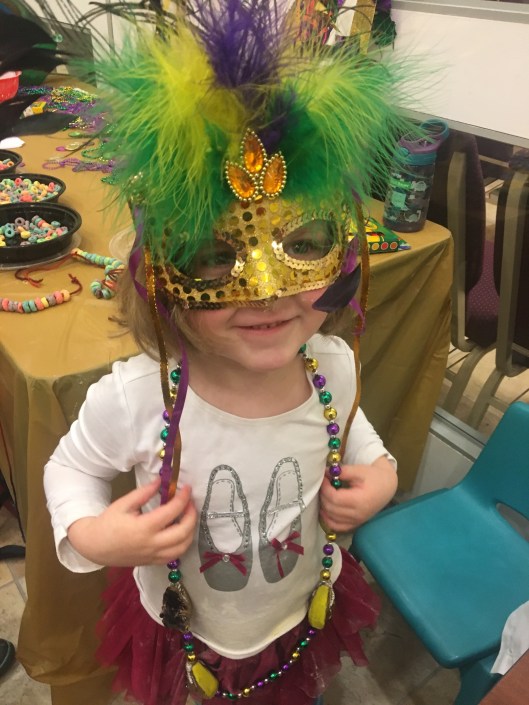
Last night I had one of the most fun Shrove Tuesday/Mardi Gras celebrations I have ever had.  We had a great crowd, there was a spirit of joy and celebration, the Kensington School hosted an awesome kids’ corner with fun activities, and best of all was the Hickory Neck Talent Show.  I have not laughed so hard and smiled so much in a long time.  I even woke up this morning with an uplifted spirit, the smile still lingering on my face.

While I am so grateful for that blessing, as a priest, it does make entering into Ash Wednesday a bit tricky.  Here I am still coming down from the high of last night, and now I need to enter into a worship service where I tell people to fast, to repent, and to remember their mortality.  It almost feels like emotional or spiritual whip-lash, and I have been struggling this morning to know how to help others with that same abrupt shift.

Where I have landed is that I think the best way to enter into Ash Wednesday and the season of Lent is with that same lingering sense of celebration.  You see, when you have experienced the highs of life, talking about the “lows” of life seems a bit more bearable.  Yes, we are mortal, and yes, we will return to the dust.  But while we are still mortal, we can make this life here on earth one of great joy and love – one of laughter, of community, of togetherness.

I wonder if this might be a way to enter Lent in a healthier way.  Instead of lamenting our sinful nature (and believe me, we do need to lament our sins), perhaps our Ashes today might remind of us the earthy nature of being humans and encourage us to strive for the ways we might live that earthy life in a more holy way.  I plan to do that today by entering into a season of kindness.  I am taking the joy from my community of faith last night and channeling it into forty days of kindness – where my repentance becomes a practice of demonstrating my identity – of living more faithfully the virtue of kindness.  What Lenten discipline are you taking up?  What might be a way for you to joyfully grasp onto this fleeting life and make it a witness to Christ’s light and love?  I can’t wait to hear all about it!!

Ash-Wednesday-1

Photo credit:  https://saintvincents.org/2019/02/25/ash-wednesday-march-6/

On Kindness and Holy Healing…

06 Wednesday Feb 2019

Posted by jandrewsweckerly in Uncategorized

≈ Leave a comment

Tags

baptism, body, church, community, faith, God, healing, holy, Jesus, kindness, Mayor Tait, symptom, wholeness, Williamsburg

KINDlogo_final-01This past Friday, our LEAD Greater Williamsburg Class launched our kindness initiative.  About 200 people from Williamsburg, James City County, and York County gathered to learn how they could commit to kindness.  One of the highlights was keynote speaker former Mayor Tom Tait.  Mayor Tait served for many years on City Council in Anaheim, California.  He described his work with City Council as a game of “Whack-a-Mole,” where they were constantly trying to snuff out “symptoms,” whether they be drug abuse, homelessness, or violence.  What he slowly came to realize was this model of treating the symptoms was not getting to the root of the problem – the fact that the whole body was sick.  And so, he ran for Mayor on a campaign of kindness.  He believed kindness would transform the entire body, or system, in such a way that the symptoms would go away – because the entire body would learn to operate in a healthier way.

After the event, as I spoke with clergy about the theology of kindness, we came to a few conclusions.  First, we agreed that embodying kindness is one way that people of faith can embody God – the same God that is regularly described as showing loving-kindness, or hesed, in Hebrew.  Our acts of kindness help us to show forth and experience God in our community.  But as we talked about Mayor Tait’s analogy, we realized that showing kindness gets to the root of Jesus’ work.  Jesus was often seen healing what may be seen as symptoms – leprosy, blindness, hemorrhaging.  But what Jesus was really doing was healing entire systems.  Each healed person was restored to wholeness in the community, with no barriers to full membership in the community.  Christ was concerned about the presenting symptoms and suffering of individuals – but what his work was really about was restoring the entire body to wholeness.

The kindness campaign #WMBGkind is an incredible movement because it seeks to do just the same thing – transform our entire community from one that can be divided or cynical, to being a community transformed to wholeness through kindness.  As members of the faith community of Greater Williamsburg, we have an opportunity to be leaders in that transformative work:  because we were commissioned through our baptism to be agents of healing and wholeness, because we can be a powerful witness of God’s love through our kindness, and because, as members of the “body” of our community, we will be transformed too.  This Sunday at Hickory Neck, you will be invited into this commitment to kindness – or as we as persons of faith would call it, into doing acts consistent with our baptismal identity.  I look forward to seeing you then, as we work toward transforming our community, one act of kindness at a time!

Sermon – Luke 2.8-20, CD, YC, December 25, 2018

02 Wednesday Jan 2019

Posted by jandrewsweckerly in Sermons, Uncategorized

≈ Leave a comment

Tags

birth, chaos, Christmas, forgiveness, God, holy, incarnate, intimate, Jesus, marriage, Mary, normal, quiet, Sermon, shepherds, vows, wisdom

On Christmas Eve and Christmas Day, we split up the gospel of Luke.  On Christmas Eve we hear about the registration, and how all the families have to travel to be taxed.  That part of the story is when we learn about there being no room in the inn, and Mary giving birth, wrapping her child in bands of cloth, lying him in a manger.  But today, we get the part of the story I love.  I know the multitude of the heavenly host has inspired many a Christmas carol, but I like the very last part of the story:  the part where the shepherds have gathered with Mary, Joseph, and baby Jesus, where others gather with them to marvel at the shepherd’s story and Mary ponders everything in her heart.

I like this last part, because this last part is the most normal, intimate moment we get in the birth narrative of Jesus.  Everything else is so chaotic – people migrating, hustling for space to stay, likely arguing about who gets to stay where.  Then there is the birth of Jesus itself, not only without modern medicine, but in the roughest of conditions.  Birthing children is hard enough as is – I cannot imagine the messy, loud scene of childbirth under such conditions.  And finally, the shock of not only an angel of the Lord, but also the chorus of the heavenly host in the middle of the night where there is usually no sound is mind-blowing.

Instead, I prefer the quiet scene at the end.  That is a kind of scene I can imagine.  Of outcasts thrown together, sharing stories, bonding over the craziness of the night.  Of an exhausted mother and father and shepherds lounging around, wondering what all this means.  Of the moments of silence when everyone’s eyes settle on baby Jesus who has finally drifted off to sleep, watching his chest rise and fall, wondering what else might rise and fall because of this tiny baby.  I imagine the bonding that can only happen at three in the morning, that can only happen through a people filled with hope in a hopeless world, that can only happen when God sweeps through your life in a bold way.

That’s why I love today’s service so much.  Last night was the night of holy chaos – of kids with pent up excitement for Christmas day, of dinners being prepared, trumpets leading us in song, and the loud chatter of old friends and family greeting one another.  But today, we enter the church in quiet, with no music to distract us, perhaps having left behind piles of wrapping paper or needy family members, having turned off our radios so that we can tell the old, old story.  On Christmas Day, I like to imagine we recreate that holy, intimate night, where old friends and strangers gather around the mystery of the incarnation, wondering what Jesus has in store for us today.  All we need is a little straw and sleep deprivation, and we can almost imagine ourselves there.

That is why when Margaret and Jim asked if we could renew their wedding vows on Christmas Day, wanting something quiet and sacred to mark their sixtieth wedding anniversary, I said an emphatic, “Yes!”  Marriage is a sacred institution too – where we welcome friend and stranger alike, where we sometimes meet people who change our lives but we never see again, where we share intimate time, and where we ponder what God is doing in our lives.  So, gathering again, sixty years later, we too gather like a band of misfits, sharing stories of marriage, of Jesus, and of community.  We let down our hair and marvel at the holy mystery of God, holding holy moments of silence like gifts, and giving thanks for the God who makes sixty years possible.

The other reason I love the idea of renewing wedding vows on a day like today is because today is a day of hope.  When God incarnate comes into the world, we are given the gift of hope – the promise that life will change dramatically.  As we ponder the baby Jesus with those in that quiet room, we also slowly fill with hope, knowing that God is doing great things.  The same is true of marriage.  When I marry two people, I never know how the marriage will go.  I am hopeful that the two will get to do things like celebrate sixtieth wedding anniversaries, but honestly, hardship and separation are equally likely.  But we marry people anyway because we have hope – hope that God is doing a new thing between two people, and will make those people better through God.  As Margaret and Jim recommit themselves to one another today, we again claim hope that God will do amazing things through their marriage, bringing blessing to all of us, not just to the two of them.

Our prayers for Margaret and Jim today are not just for them.  They are for all of us.  We need wisdom and devotion in the ordering of our common lives as much as they do.  We need to recognize and acknowledge our fault when we hurt others, and seek forgiveness of others just as they do.  We need to make our lives a sign of Christ’s love to this sinful and broken world, and reach out in love and concern for others as much as they do.  All of that ordering of our lives is made possible by what happens today.  When God becomes incarnate in Christ, everything changes.  In that intimate space where strangers, exhausted, afraid, and full of hope, came together in the mystery of a miracle, life is changed.  Our gathering here today, to honor the incarnation, to celebrate the blessing of long marriage, and to create a sacred moment of intimate community, is the way we take the first step in living life differently – living a life of sacred incarnation.  Thanks be to the God who showed us the way in the incarnation of God’s only, begotten Son.  Amen.

On the Sanctity of Life…

31 Wednesday Oct 2018

Posted by jandrewsweckerly in Uncategorized

≈ 1 Comment

Tags

change, complicit, God, goodness, holy, image of God, life, mass shooting, sacrifice, stewardship

Life-Is-Sacred-Main-881x496

Photo credit:  https://bigvalleygrace.org/life-is-sacred/

This past Sunday, I was assigned to be the preacher.  I had done my research and preparation, I had incorporated the theme from our stewardship campaign which would be culminating on Sunday, and I had finished the sermon by Saturday morning.  By that evening though, I found out there had been another mass shooting, this time at a synagogue in Pittsburgh.  This one was particularly heart-wrenching because it was at a place of worship, committed by someone who explicitly wanted to persecute people from the Jewish faith – my brothers and sisters.  So, on Saturday night, I had the age-old question of a preacher:  do I need to change my sermon?

Ultimately, I decided to mark the event liturgically with our prayers, but not address the incident in my sermon.  I could not preach about it because I was not ready.  Something about this incident hit me differently, but I could not yet articulate it.  And one of my homiletics professors always told me if you are going to preach something pastorally sensitive, make sure you have carefully constructed your sermons to pastorally address the issue.  And I just wasn’t there.

But in the days since the massacre, and after having a few conversations with parishioners about their frustration that I didn’t mention it, I am finally beginning to be able to articulate why this particular mass shooting is so upsetting.  The problem for me with this shooting was not that it occurred in a place of worship.  Despite the fact that I think those places are sacred places, gunmen and those with bombs have long desecrated houses of worship.  The problem for me was not that the shooting was anti-Semitically motivated.  Christians have long been complicit in anti-Semitism and if we are going to get upset about a shooter, we need to be equally upset about our own culpability in not rooting out that sin.  The problem for me is that this mass shooting was the final straw in helping me see that we as a country, and more importantly, we as a Church, have become complicit with the devaluing of all life – that same very life we claim to be made in God’s image, and created in goodness.

That accusation may feel harsh for you, as you are not likely a person who has ever committed violence with firearms on another person.  But until we as a society, and we as Church, decide that human life is sacred, these incidents will never stop.  The Oklahoma City Bombing happened weeks before I graduated from high school.  The Columbine High School massacre happened weeks before I graduated from college.  Essentially, for my entire adulthood, our country and our Church has not been willing to definitely say, “No, this is not who we will be.  We will make concrete changes so that this doesn’t happen again.”  And so it keeps happening.   At colleges, in schools, at workplaces, in homes, and in houses of worship.  To African-Americans, to immigrants, to the LGBTQ community, to Jews, Christians, and Muslims.  To teachers protecting students, to police officers protecting innocents, to mothers protecting children.  Yes, I am outraged that eleven beautiful children of YHWH were murdered senselessly in their most sacred place of worship.  But I am also outraged that we as a people are unwilling to do something about it.  We are so scared of losing, of sacrificing, of giving up something that we do nothing.  We become complicit, unable to hear from a mother who lost her kindergartener and say, “This will not happen again.”  And so it does.  Again, and again, and again.  Because this is who we are.  In our unwillingness to change, we have become a country who does not value life, who does not stand up for what is sacred, who does not see God in every human being.

My dear readers, I implore you, please take this day or this week or this month to do better.  I know it is hard, and compromise is nearly impossible in our current political climate, and you deserve certain rights.  But when the Lord our God created us in God’s image, God said that it was very good.  Our job while on this earth is to protect that goodness – even if it means not winning, sacrificing, and giving up some things.  Because until we are willing to make a change – any change – this is our reality.  This is our America.  This is our norm.  I don’t want that.  And I suspect you don’t either.  So, crawl with me.  Creep with me.  Scratch with me to make our way back to that blessed place where we hold life as sacred, where we stand in the light with all our brothers and sisters and see the holy in each one of them, where we can look at another person, no matter what political views they have, and say, “it is very good.”  And then help us to live into that goodness.

On Bringing the Church and World Together…

02 Wednesday May 2018

Posted by jandrewsweckerly in Uncategorized

≈ Leave a comment

Tags

bless, church, community, fellowship, holy, identity, rogation, sacred, service, welcome, world

img_0160

Photo credit:  http://stas.org/en/media/photos/rogation-days-2016-15612

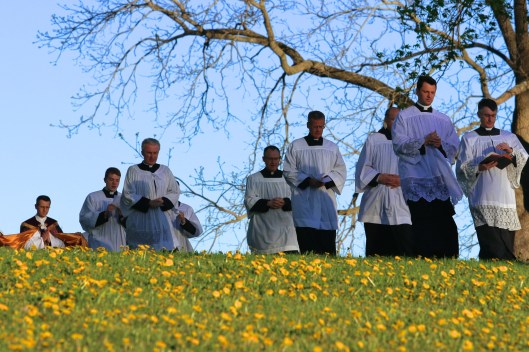
This coming Sunday at Hickory Neck, we will be adding a procession and blessing before our service begins in honor of Rogation Days.  Traditionally, Rogation Days are the three days before Ascension Day during which the litany is said as an act of intercession. In England, Rogation Days were associated with the blessing of the fields at planting, and in the United States they have been associated with rural life, agriculture and fishing, commerce and industry, and the stewardship of creation.[i]  For Hickory Neck, we are using this year’s Rogation Days to give thanks for rainwater collection barrels built for our Community Garden by a Boy Scout in our parish.  We will also bless the Garden, praying for a fruitful harvest for our parishioners and neighbors who use the gardens this year.

What I love about this upcoming event is that it represents a confluence of everything about which the church should be.  Our Community Garden has long been an example of using our property as a way to bless and welcome others.  At the garden, I see strangers become friends, people planting and tending in sacred silence, and the fruits of labor shared with one another.  Meanwhile, it has been a joy to watch our parishioner take leadership of an Eagle Scout project that benefits the church, the community, and his troop.  Watching our parishioner bring his faith community and his service community together has been a tremendous witness to each of us about how to make connections between the various parts of our lives.  And marking Rogation Days with liturgy is the church’s way of making the everyday parts of our lives sacred.  We take the labor of our hands, the fellowship of friends and strangers, the bounty of creation, and we name it all as holy.

Often when people think about church, they think about the building and the people who regularly attend worship services on Sundays.  But the church is much more about what the faith community does outside of the walls of the building, and how the community uses the blessing of its property to bless others.  This Sunday, we celebrate the ways in which we are living into the fullness of our identity, while also challenging ourselves to ever be outwardly-minded in our ministry.  I hope you will join us, but mostly, I hope you will invite a friend as we celebrate the ways in which the blessing of our community flows out into the world!

21463342_1589859034403684_3079109709240303206_n

Rainwater Collection Barrels Installation.  Photo credit:  Paula Simmons.  Permission required for reuse.


[i] Donald S. Armentrout and Robert Boak Slocum, eds., An Episcopal Dictionary of the Church:  A User-Friendly Reference for Episcopalians, “Rogation Days,” as found at https://www.episcopalchurch.org/library/glossary/rogation-days on May 1, 2018.

On Finding the Holy…

28 Wednesday Feb 2018

Posted by jandrewsweckerly in Uncategorized

≈ Leave a comment

Tags

Christ, devotion, discipline, disorder, God, habit, holy, Lent, repentance, rhythm, room, routine, sacred, sinfulness

IMG_9874

“Jesus is Taken Down from the Cross,” by G. Roland Biermann.  Photo taken by Jennifer Andrews-Weckerly at Trinity Episcopal Church, Wall Street.

It was a pretty simple question.  “How is your Lent going?”  What was not simple was my answer.  As a priest, I feel like my answer should have been, “It’s going really well,” followed by a list of things I am appreciating about the season.  But this year, I have been having a hard time finding my Lenten rhythm.  Part of the reason is that I scheduled a brief vacation right at the beginning of Lent, experiencing a powerful Ash Wednesday, but missing the first Sunday in Lent, the beginning of our digital Compline offering, and our first Wednesday night of worship.  Being away also meant that I got off-schedule with our family devotional time at breakfast.  Meanwhile, the book I planned to read with a book group for Lent got lost in the mail and had to be reordered while my fellow readers got ahead of me.  I had expected to re-center at our Lenten Quiet Day, but that had to be cancelled.  And so there I was on Sunday, left with this question about Lent, feeling like my Lent was not really off to a good start.

Part of the challenge for me is that I am a creature of habit.  I like routine and order.  I am able to focus more clearly when life is ordered in a regular pattern.  I think that is why I like Lent so much.  Lent encourages us to find a regular pattern – whether we have given up something daily, we are reading something devotionally each day, or we are praying at a particular time.  Regular services are added, or maybe we just commit to not missing any of the Sundays in Lent.  Regardless of our practice, the whole purpose of Lent is to create a rhythm for six weeks that deepens our relationship with Christ, and draws us out of sinfulness and into repentance and renewal of life.

But the more I thought about the question about how my Lent was going, I realized that perhaps the disorder of my Lent is forcing me to find the holy outside of the construct of patterns.  So, yes, the book I wanted to read did not arrive on time; but its delay meant that I more fully enjoyed my vacation and was not distracted during my “away” time.  Yes, I missed several routine things in the first week of Lent, but I also got to experience some incredible things while away – seeing the Cathedral Church of St. John the Divine for the first time, stumbling into a city-wide Stations of the Cross designed by artists in New York City, finding beautiful religious artwork in churches and art museums, and even unexpectedly enjoying a midday Eucharist with my husband – something that never happens in my normal routine.

This year, I am beginning to think my new Lenten discipline might be finding the holy in the disordered chaos of life.  It means I have to pay attention to the little moments of life where God is trying to break in:  the blessing of a glass of wine with friends, the pure joy of a three-year old laughing, the sacred experience of holding a newborn baby, the power of a hug as someone’s eyes well up with emotions of fear or grief, the sacred invitation into pain as someone texts, calls, or emails what is on their mind.  It is possible that I will regain some semblance of Lenten order as Lent goes on.  But if not, I am feeling especially grateful for the ways in which God is present every day, even when I do not feel like I am making room for God.  So, I suppose my new answer is that my Lent is going really well.  How is your Lent going?

On Making Mary Moments…

31 Wednesday Jan 2018

Posted by jandrewsweckerly in Uncategorized

≈ 2 Comments

Tags

beauty, closure, death, goodbye, grandmother, holy, Jesus, journey, Martha, Mary, meaningful, presence, sit, visit

IMG_9482

Photo Credit:  Jennifer Andrews-Weckerly, January 26, 2018

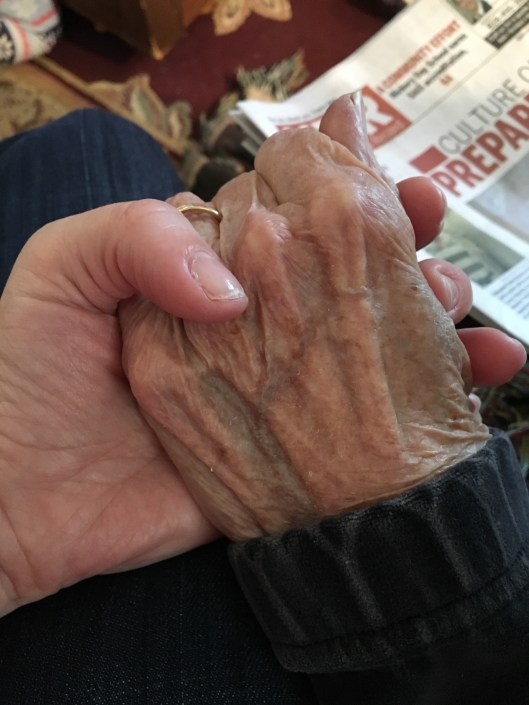
Over a week ago, I received a call that my grandmother was approaching death.  The suggestion was if I wanted a last visit, I should come sooner rather than later.  Looking at the week ahead, I realized I could go with my children last weekend with minimal impact to their school schedule or my own work obligations.  I was not sure what to expect – whether I would be able to have meaningful conversation or even eye contact with her, or especially how my three- and eight-year olds would respond to her in her current state.  At some point, a family member pastorally suggested I not come, knowing how hard such a long journey for such a brief visit would be.  But something kept pushing me to go, even if the journey seemed fraught with potential difficulty.

There were things that did not happen.  We did not have one last, long, meaningful conversation as I had with my other grandmother.  My grandmother was much too weak and her thoughts much too confused to answer any of my lingering questions about our family.  My children did not get to interact with my grandmother extensively.  They had beautiful moments of tenderness with her, and they played nearby, but they also needed to be kids and move.  I did not leave with a sense of real closure.  No one really knows how long she will be able to thrive.

What did happen was a much clearer understanding of why Mary chose to sit at Jesus’ feet, while her sister Martha busied herself with the duties of the home.  For full confession’s sake, I am much more like Martha most days – I am always washing one more dish or finishing one more piece of laundry instead of playing with my kids or hanging out with my husband.  But sitting beside my grandmother, holding her hand, realizing all the things I was not getting, I came to see the beauty of presence.  I do not think I have ever just been still with my grandmother.  I have never looked into her eyes for an extended period of time without saying anything.  I am pretty sure I have never just held her hand.  In the midst of all that could not be said, I felt a different kind of closure.  I could finally see in my larger-than-life grandmother her vulnerability, her desire to love, her humanity.

I left my grandmother last weekend wondering if I might be able to create more space for Mary-type moments in everyday life.  Whether I might put my phone away more often at home and be more present with my family.  How I might stop worrying about my to-do list, and spend more open time with our staff and parishioners.   Whether I might write that note to a suffering friend instead of letting the thought pass.  What Mary-type moments have been missing in your life lately?  When was the last time you sat at the feet of Jesus, or sat at the feet of the holy in others, and stayed for a while?  What might you need to do this week to find your own Mary moment?  I look forward to hearing about your reflections.

Sermon – Luke 2.1-14, CE, YB, December 24, 2017

10 Wednesday Jan 2018

Posted by jandrewsweckerly in Sermons, Uncategorized

≈ Leave a comment

Tags

chaos, Christmas Eve, church, God, holy, Holy Family, Jesus, life, love, manger, peace, silent, story, worship

Sometimes arriving at the manger on Christmas Eve feels a bit like just barely sliding into home plate.  When little ones are around, you have scurried about, making sure their tights and bowties are on, while trying to squeeze in one last family picture while everyone still looks nice.  By now, you have probably served or been served a meal, purchased and wrapped gifts, prepped or cooked food for tomorrow, sent out cards, decorated the house, and run countless errands.  And none of that includes the four hundred things that will be done in the next twenty-four hours.  Arriving here and semi-put together is a minor victory, with the promise of a peaceful, beautiful hour of worship, before preparing for the chaos to resume tomorrow.

The unfortunate thing is that the story of tonight is not all that much less chaotic.  Though we sing songs like Silent Night or Away in a Manger, or though we exchange cards with pastoral, peaceful settings, nothing about that night is silent.  And I am pretty sure the little Lord Jesus makes lots of cries.  The chaos of the holy family is not unlike the chaos in which we sometimes find ourselves.  Remembering how scandalous Mary’s pregnancy and relationship with Joseph are, the chaos continues as Emperor Augustus sends out a decree that forces a very pregnant, uncomfortable Mary away from her hometown to the crowded city of Bethlehem.  Before they can secure housing, Mary goes into labor.  Not only is she dealing with the drama of delivering a child for the first time ever, she is delivering without so much as the comfort of a home.  And then, just as they are trying to figure out nursing, and soothing, and the fear and wonder of parenting, along come some rowdy, likely filthy, shepherds, who have also not had a silent night.  In fact, they have heard the terrifying chorus of the heavenly host and been told a most preposterous story – so much so, they gather up their livestock and come to see.

With all the chaos of our own lives, and with all the mayhem of that holy night, why do we do it?  Why do we come to church at all?  Maybe we come to church on this night specifically because on this night, more than perhaps any night ever, we find the wonderful revelation that God can take the messy chaos of life and make our mess holy.  You see, as much as we love tonight’s beautiful story, what happens this night is beyond the chaos of registrations, no vacancies, angelic revelations, and messy encounters with strangers.  In order to understand the enormity of what is happening tonight, we broaden our scope.  Tonight’s event – the nativity of our Lord –  is the culmination of a much larger story.  The story started when there was no earth or humankind, when God formed the earth from the formless void.  When we first sinned against God and were cast out of the garden, to when we kept sinning and God flooded the world, to our deliverance from the hands of pharaoh and our arrival in the promised land, to our sinful desires for a king that led to the eventual confiscation of our land.  We are a people who have been oppressed so many times and rescued so many times we can barely count.  And in that rollercoaster of a relationship with our God, as we failed time and again, God, who never gives up and never cedes love, does something unheard of:  takes on human flesh, comes to us in the form of a vulnerable child, with the plan of redeeming us forever and granting us eternal life.

Maybe we come to church tonight because tonight is about God’s unending, undying, unfailing, uncompromising love for us.  Despite centuries of chaos, disobedience, and failures, God shows up tonight in a mighty way.  Despite the chaos of the times and of this night, God shows up among the outcast.  Despite the chaos of our own times, in our seeming inability to tend to those most outcast, God comes once more to redeem us.  We come to church tonight because we long to grasp the enormity of God’s love for us, the extents to which God will go for us, and the hope which only God can give to us.

But the news is even better than that.  I do not believe the beauty of tonight is in trying to find a holy moment, where God’s love speaks to us in an otherwise chaotic life.  In fact, you might not find that moment tonight because despite the fact that you were physically able to get here, your mind may still be somewhere else.  The good news is that is okay.  The deep, lasting peace of this night is not found in a single church service (though I must say, the service certainly helps).  The deep, lasting peace we are looking for comes from the reality that we do not find God’s love and peace in spite of the chaos of life.  Tonight teaches us that God hallows the chaos of life.

Based on our standards, God should have placed this precious child – the God incarnate – in the wealthiest, most well-guarded palace, where a person of great wealth could have given the baby everything the baby needed.  A person of power could have protected the child, brought honor to the child, raised the child up to assume the power of a Messiah.  If we had something so precious, we certainly would have worked to find the best of what we have to protect that preciousness.  And yet, God takes on flesh in an unmarried, inconsequential woman of little means.  God takes on flesh amidst the common people, being born in the lowliest of estates.  God takes on flesh and announces the news not to kings and rulers, but to shepherds – those disregarded by society as being of little import.  From the very beginning, the extraordinary thing God does is done in the midst of the ordinary – worse yet, among the marginalized and outcast.

God takes the mess of life:  our divisions, our stratifications by class, gender, and race, our subjugation of the poor, our inability to refrain from sin, our messes and chaos – and God makes our mess holy.  God sanctifies our chaos, reminding us that in the midst of chaos, God is present.   In the midst of chaos, God is doing a new thing through us.  In the midst of chaos, God is love and makes us agents of love.  I cannot promise that the chaos will not try to overtake you when you walk out the church door tonight.  But just like you will find small glimpses tonight of the overwhelming love God has for you, you can find God present in the chaos of life too.  God is continually breaking through, birthing in you Christ’s light and love, using you to make room in the world for the Christ child, using you to announce good news of great joy for all people.  If that doesn’t break though the chaos, I don’t know what will!  Amen.

On Seeing Sacred Moments…

18 Wednesday Oct 2017

Posted by jandrewsweckerly in Uncategorized

≈ Leave a comment

Tags

blessing, church, compassion, fellowship, God, holy, laughter, light, love, moment, outreach, sacred, support, witness, work

In general, my children are pretty typical in many ways – they have their good days and their bad days.  They tattle on each other, try to sneak in a hit or shove, and one will occasionally shout how she “hates her life.”  But then, every once in a while, totally unprompted and seemingly “out of sight,” I will overhear the love, care, and affection they have for one another.  One child will walk over the other who is crying, and she will give a hug and offer reassuring words.  Or the two children will gleefully play with one another without arguing or fussing.  Or best of all, I will hear them laughing pure, innocent laughs together.  In these holy moments, they show me the light of God’s presence, and reveal their best qualities – that they are individuals full of love and compassion.

These last few weeks at our church, I feel like I have been able to see similar holy moments.  We are preparing for our Annual Fall Festival, from which all the proceeds go to support local ministries.  As we lead up to the event, I have seen countless tasks being done by parishioners:  from making up food order forms and staffing tables for pre-orders, from cleaning out closets to pricing and sorting donations, from recruiting donations from local businesses to developing the silent auction booklet, from breaking down our worship space to setting up parking space.  As the weeks and days have gotten closer to our festival, I have seen hard work, commitments of time, generosity of spirit, and joy in participation.  Most of the work could go unnoticed; even those of us who volunteer do not always see all the other work that is happening somewhere else.

But today, I want to say, “I see you.”  I see you, Hickory Neck, giving your cherished time to support the church.  I see you, sharing in fellowship as you work together on projects.  I see you, passionate about your neighbors in need and working a little bit harder.  I see you in holy moments, individually and collectively, and I am so proud of you.  Your laughter together is a sweet, sacred sound.  Your labor is a witness to me and to our community of God’s abundant love for all.  Well done, good and faithful servants!  You are a blessing!!

laughter_625x350_41474366938

Photo credit:  food.ndtv.com/health/10-surprising-health-benefits-of-laughter-1464095

On Busyness…

13 Wednesday Sep 2017

Posted by jandrewsweckerly in Uncategorized

≈ 1 Comment

Tags

beauty, busyness, creation, exuberance, God, habits, holy, joy, lessons, life, savor, sins, white space

We all have habits that pull us away from God.  Mine is the habit of busyness.  In juggling family, work, and self, I can easily fill every second of every day.  Even the fun stuff I schedule can feel like something to be “fit” into the schedule, not delighted in and savored in the moment.  I was particularly convicted of this reality by a speaker I heard at a leadership conference, Juliet Funt, who talked about the value of white space.  She defines white space as the strategic pause taken between activities.  White space is not meditation, letting the mind wander, or mindfulness.  It is a simple, intentional break.  And white space isn’t just for work – it is for the home too.

What struck me about her talk is I realized in my devotion to busyness, I am carving out a life that looks and is experienced in a particular way – a way that I am not sure I necessarily like.  Two things brought this home to me recently.  The first was watching the film About Time.  The plotline was a bit farfetched:  a man who can travel back in time and change parts of his life.  After myriad adventures, what the time traveler eventually realizes (spoiler alert!) is that he does not need to travel anymore.  Instead, he treats everyday like a gift to be savored and celebrated.  He was carving out white space in his life.

The second thing that brought this home was the funeral of a beloved parishioner.  In the eulogy, the family talked about all the life lessons they had learned from their mother, many of which were about living with joy and exuberance.  As I sat listening to the eulogy, I realized that everyday I am filling up my children’s life full of lessons – and I want them to be the right ones.

So, taking a cue from the fictional to the very real, I decided to create a little white space this week.  There are some lovely yellow wildflowers blooming on the drive to my children’s childcare facility.  So yesterday, I pulled over, grabbed the phone, and took some pictures of beauty – the beauty of God’s creation in nature and in my children.  It was a small victory, but as my children proclaimed, “That was fun!” I knew I had carved out a little holy space for all of us:  space to say thank you to God for all of our gifts – creation, life, each other.  I invite you today to find a moment of white space.  I can’t wait to hear about what that white space brings!

yellow-flowers-field-background-1

Photo credit:  eskipaper.com/yellow-flowers-field-background.html#gal_post_32591_yellow-flowers-field-background-1.jpg

← Older posts
Newer posts →

Recent Posts

  • On Politics, Football, and Love…
  • On Sharing the Love…
  • Sermon – Micah 6.1-8, Matthew 5.1-12, EP4, YA, January 30, 2026
  • On Justice, Kindness, Humility, and the Messy Middle…
  • Feast of the Rev. Dr. Martin Luther King, Jr., January 18, 2026

Archives

  • February 2026
  • January 2026
  • December 2025
  • November 2025
  • October 2025
  • September 2025
  • August 2025
  • July 2025
  • June 2025
  • March 2025
  • February 2025
  • December 2024
  • November 2024
  • October 2024
  • September 2024
  • August 2024
  • July 2024
  • June 2024
  • May 2024
  • March 2024
  • February 2024
  • January 2024
  • December 2023
  • November 2023
  • October 2023
  • September 2023
  • August 2023
  • July 2023
  • June 2023
  • May 2023
  • March 2023
  • February 2023
  • January 2023
  • December 2022
  • November 2022
  • October 2022
  • June 2022
  • May 2022
  • January 2022
  • December 2021
  • November 2021
  • October 2021
  • September 2021
  • August 2021
  • June 2021
  • May 2021
  • April 2021
  • March 2021
  • February 2021
  • January 2021
  • December 2020
  • November 2020
  • October 2020
  • September 2020
  • August 2020
  • July 2020
  • June 2020
  • May 2020
  • April 2020
  • March 2020
  • February 2020
  • January 2020
  • December 2019
  • November 2019
  • October 2019
  • September 2019
  • August 2019
  • July 2019
  • June 2019
  • May 2019
  • April 2019
  • March 2019
  • February 2019
  • January 2019
  • December 2018
  • November 2018
  • October 2018
  • September 2018
  • August 2018
  • July 2018
  • June 2018
  • May 2018
  • April 2018
  • March 2018
  • February 2018
  • January 2018
  • December 2017
  • November 2017
  • October 2017
  • September 2017
  • August 2017
  • July 2017
  • June 2017
  • May 2017
  • April 2017
  • March 2017
  • February 2017
  • January 2017
  • December 2016
  • November 2016
  • October 2016
  • September 2016
  • August 2016
  • July 2016
  • June 2016
  • May 2016
  • April 2016
  • March 2016
  • February 2016
  • January 2016
  • December 2015
  • November 2015
  • October 2015
  • September 2015
  • August 2015
  • July 2015
  • June 2015
  • May 2015
  • April 2015
  • March 2015
  • February 2015
  • January 2015
  • December 2014
  • November 2014
  • October 2014
  • September 2014
  • August 2014
  • July 2014
  • June 2014
  • April 2014
  • March 2014
  • February 2014
  • January 2014
  • December 2013
  • November 2013
  • October 2013
  • September 2013
  • August 2013
  • July 2013
  • June 2013
  • May 2013
  • April 2013
  • March 2013
  • February 2013
  • January 2013
  • December 2012
  • November 2012
  • October 2012
  • September 2012

Categories

  • reflection
  • Sermons
  • Uncategorized

Meta

  • Create account
  • Log in
  • Entries feed
  • Comments feed
  • WordPress.com

Blog at WordPress.com.

  • Subscribe Subscribed
    • Seeking and Serving
    • Join 395 other subscribers
    • Already have a WordPress.com account? Log in now.
    • Seeking and Serving
    • Subscribe Subscribed
    • Sign up
    • Log in
    • Report this content
    • View site in Reader
    • Manage subscriptions
    • Collapse this bar
 

Loading Comments...