• About

Seeking and Serving

~ seek and serve Christ in all persons

Seeking and Serving

Tag Archives: home

On Claiming Your Why…

05 Wednesday Nov 2025

Posted by jandrewsweckerly in reflection

≈ Leave a comment

Tags

abundance, bless, church, community, God, grace, gratitude, home, obligation, why

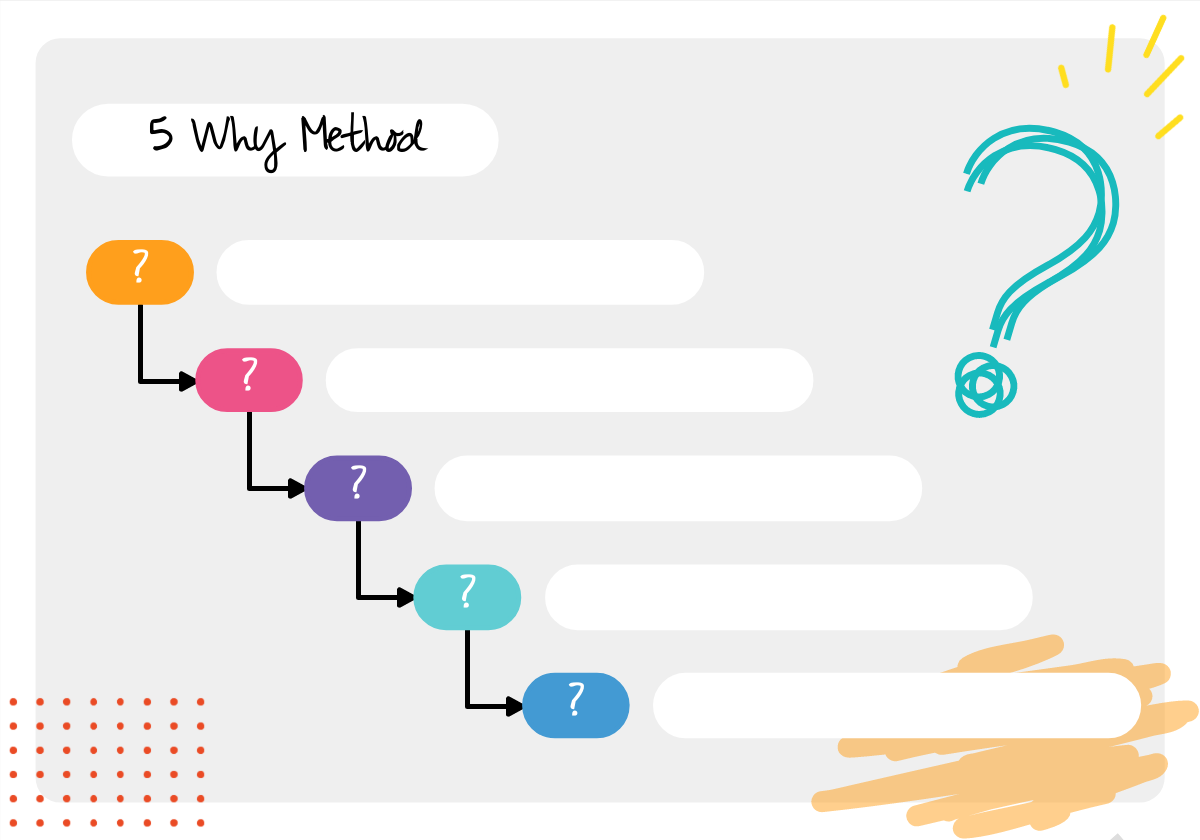
Photo credit: https://worksheets.clipart-library.com/five-whys-worksheet.html

In one of my executive leadership courses we read about the “five whys.”  Developed within the Toyota Motor Corporation, the process is a problem-solving process meant to get to the deepest root causes of a problem by asking the simple question, “why?” repeatedly.  While this was intended for manufacturing processes, the “five whys” found its way into all industries as a way to help teams focus on the root of any situation. 

I have often said that at church, understanding your “why” is really important.  Using a system like the “five whys” to get to the root of a challenge before the Vestry, or a situation before the staff, or even to problem before lay leaders, discerning the real “why” before us helps us address the issue at hand at a deeper, much more relevant manner.

This autumn, our parishioners have been sharing their “whys” with our congregation about why supporting ministry at Hickory Neck Church is so important.  Through short video testimonies we have heard all kinds of whys, learned about the impact of ministries in our faith community, and been able to see the deeper meaning people are finding in our spiritual home.  Why would we want to know that?  Well, as we consider how we want to support the church with our time, talent, and treasure, knowing our whys helps us convert our giving from obligation to gratitude.  Once we understand our why more deeply – and the whys of fellow members – we begin to see the wideness of God’s mercy in this place, and begin to feel more committed to supporting this place that blesses us and others so richly.  Slowly, we see we are not being pressured to give, we are being invited into a vibrant, life-changing, purpose-making place that we can enable with the resources God has given us.

We’ve shared the case for Hickory Neck, we’ve heard from fellow parishioners, and now, we are invited to ask our “five whys” about this place we have come to call our spiritual home.  I look forward to hearing about the abundance and grace you find when you ask your “five whys” this week.  I suspect your whys might inspire my own!

Sermon & Annual Meeting Address – 1 Corinthians 12.12-31a, EP3, YC, January 26, 2025

12 Wednesday Feb 2025

Posted by jandrewsweckerly in Sermons

≈ Leave a comment

Tags

Annual Meeting, anxiety, body, Christ, Holy Spirit, home, Jesus, members, Paul, Sermon, system, value

One of the things we do on Annual Meeting Sunday is install new Vestry Members.  Even though only one third of the Vestry rotates on and off each year, I always remind Vestries that we become a new, changed body every year.  Each of those nine members bring different gifts, talents, and insights.  Each of those members shifts the tone and tenor of our work, and helps us dance a little bit differently.  I was reminded of this reality last week.  When talking about a retiring Vestry member, another member said, “What’s so cool about him is that he does not speak often, but when he does everyone gets really quiet because the insight he offers is so profound.”  That feedback was entirely true – and that feedback reminded of me of another Vestry member much earlier in my tenure at Hickory Neck who would do the same thing – come in toward the end of a conversation with an insight none of us had seen but was entirely needed.

That is the funny thing about bodies – we need all our parts to be the best versions of our bodies.  I think that is why Paul leans into the metaphor of a body to describe the followers of Christ in first Corinthians.  As one scholar writes, “The human body has 206 bones, 693 muscles, and about 6 pounds of skin, along with ligaments, cartilage, veins, arteries, blood, fat, and more.  Every time we hear a sound; every time we take a step; every time we take a breath, hundreds of different parts work together so that what we experience is a single movement, our minds and bodies working as one unit.  Even the great engineers struggle to achieve anything like [the body] in mechanical form.  The human body represents one of the most complex systems in existence.”[i]

For Paul, that super complex system represents the body of Christ – the way each part of the body (or in this case, each member of the church) is not just a belonging member, but is a member whose participation is vital – the whole body is thrown out of balance when we are not all using our gifts.  Scholar Raewynne Whiteley explains, “Every single person in the church matters – the homebound elderly, babies, those with disabilities, and well as the generous givers and hard workers.  This is a reality we can name, which has less to do with equality than with wholeness.  Only with all our members can the body of the church be whole.”[ii]

This last year, we saw what wholeness looks like at Hickory Neck.  Tech team members and pop-up prayer leaders who stream worship online connect us to homebound members, overstretched families who cannot make their way to church but want to pray with us, and those unchurched in our wider community who want to see if they have a place in this body before braving the doors that open to super friendly (sometimes overwhelmingly so) Hickory Neckers.  Retirees who live far from their families and have very little interaction with children in the daily lives connect with children whose own grandparents may live far away and whose parents may be frazzled just by trying to get the family in the car on Sunday mornings.  College students who love to sing but maybe have an estranged relationship or no relationship with the Church connect with a community who cares about the poor and hear sermons from clergy that help them think about faith and politics a little differently. 

And that is just the everyday Sunday at Hickory Neck.  If we are to believe Paul’s metaphor that we are a complex body of parts that need one another, we need only to look at the long list of moving parts in our community in the last year:  from 5 baptisms, 2 first communions, 11 confirmations/receptions/ reaffirmations, and 1 wedding; from 19 members of Discovery Class, 25 participants in Godly Play classes at the Kensington School, and countless volunteers during the Winter Shelter; from a brand new Choir Camp with 20 children, guest concerts with well over 100 attendees each time, to a guest choir of 38 high school students from New Jersey; from over 13,000 points of pastoral care from clergy, an increase in pledges by over $17,000, and an increase in average Sunday attendance by 8%.  This is a complex community, who is not only content with daily operations but is ever trying new things like a Cursillo Eucharist, St. Patrick’s Day Liturgy, a children’s Chorister program, Holy Vino fundraiser, a new organ, a Finance Committee, and even a priest as a dancing star in Williamsburg.  When Bishop Haynes visited us in 2024, and said we are a vibrant, thriving community, this is what she meant.

Now, there is an inherent tension about being a body with varying parts, as Paul reminds us.  As scholar Karen Stokes explains, “There will always be differences with a congregation – differing opinions, experiences, priorities, needs – and it is dangerous to try to play down those differences in the interest of some superficial harmony.  When this natural diversity within a congregation is not allowed to be expressed openly, subtle judgments are communicated:  when the ear gets the message that it would really be better if [the ear] were an eye, when the foot realizes the community values hands more highly.”[iii]  If we do not let the uniqueness of each part be celebrated, when we face changes, anxieties can increase.  And Stokes goes on to say, “Anxiety lessens once’s ability to be imaginative, creative, and self-reflective, and instead causes reactivity, defensiveness, even paranoia”[iv] 

We have been talking a lot the last couple of weeks about our finances and our need for increased revenue to support our vibrant, varied ministries.  Those conversations have brought up a lot of anxiety.  After nine years at Hickory Neck, I have come to recognize that every January is similar – talk of finances gets all of us anxious.  As I have been marinating on Paul’s body metaphor and thinking about the miracle of such diverse parts working so harmoniously together, and as I reflected on 2024 and how we started with anxiety around budgets twelve months ago and managed to power through a tremendous year of vibrant ministry, I find I am looking toward 2025 with renewed confidence.  Perhaps this is the time of year when we are reminded that we are not all ears or feet or eyes.  We will not see ministry the same or hold the same opinions.  Even though we might approach ministry differently, we are all here to see the body do what the body of Christ does best – love God, love self, and love neighbor. 

Just a few weeks ago, I was talking to a first-time visitor who was looking for a new church home.  She heard about Hickory Neck from another new family to Hickory Neck and was able in that one Sunday to see a place for her family here.  That experience tells us all something powerful:  we may be a body that is complex, and beautiful, and sometimes anxious because of our differences; but we are also a body who honors how every person who comes through that door is a part we did not even realize we were missing and who we are thrilled to welcome into their unique contribution to our whole.  Having seen church communities who are not open to new body parts being added, I can tell you, having that experience made me realize we are a beautiful, complex, fabulous body, made possible by the gifts of the Spirit, who works in and through each of us.[v]  Our work this year is to let the Spirit use us to be awesome ears, eyes, feet, tendons, and muscles.  I cannot wait to see what the Spirit does with this fabulous body in 2025!  Amen.


[i] Raewynne J. Whiteley, “Homiletical Perspective,” Feasting on the Word, Yr. C, Vol. 1 (Louisville:  Westminster John Knox Press, 2009), 279.

[ii] Whiteley, 283.

[iii] Karen Stokes, “Pastoral Perspective,” Feasting on the Word, Yr. C, Vol. 1 (Louisville:  Westminster John Knox Press, 2009), 280.

[iv] Stokes, 280.

[v] Whiteley, 283.

On Finding God in Community…

22 Wednesday May 2019

Posted by jandrewsweckerly in Uncategorized

≈ Leave a comment

Tags

bubble, building, church, community, conversation, encounter, God, home, meet, moments, people, property

724_meeting-new-people

Photo credit:  https://www.spottie.com/blog/meeting-new-people-30

One of the quirks of being a priest is that my work is often outside of the church.  Whether I am meeting a newcomer for coffee, catching up with a parishioner over lunch, or visiting someone in the hospital, I am more often out in the community than sitting in the church office.  The challenge with that mode of operating is that I sometimes find myself with an extra hour here or there between commitments.  So I often take work with me – catching up on emails, reading for a class or sermon, or doing some writing.

Lately, that pattern has meant having all kinds of interesting encounters.  The other day I met someone who was a former parishioner of my church while buying a cup of coffee.  While responding to emails, someone who recognized me from barre class introduced herself to me, realizing we had never formally introduced ourselves, but that she had seen me around town several times.  While doing some writing while waiting for routine maintenance in the local car dealership, one of the salesmen came over to say he was one of my neighbors and we had not yet met.  Sometimes you even have to leave your home to meet those closest to your home!

Research tells us in order to grow your church community, you need to get off the property.  If you want to get to know the people who are not joining you every Sunday, you need to go where they are on the other days of the week.  Of course, just drinking coffee does not mean you will magically meet people – you do actually have to engage others in conversation – even if it is about car brand loyalty, or your favorite new drink on the coffee menu.  Getting off the property allows us to meet people where they are – and to see God in all the wonderful, myriad places God likes to hang out.  Though there are other ways to do that in reverse – holding a Fiber Festival, welcoming a school to your property – you really have to do both to have those God-moments.

All that being said, I confess, I sometimes have an easier job of talking about God.  The collar is dead giveaway.  But my invitation to you is the same.  Take a moment to get out of your bubble.  Go to an event to which you wouldn’t normally go, linger in a coffee shop you do not regularly frequent, or get even more bold, and take your committee meeting off campus and go public.  If you need some Hickory Neck gear to break the ice, I can help you out.  But my guess is you will find those God moments just by being you.  I cannot wait to hear about who you meet and what you learn!

On Glimpses of Goodness…

17 Wednesday Oct 2018

Posted by jandrewsweckerly in Uncategorized

≈ Leave a comment

Tags

belonging, care, community, fall, festival, glimpse, glory, God, goodness, home, neighbors, witness

festivalHeader

Photo credit:  https://bscomt.org/donate/community-fall-festival/

This weekend our parish is holding its Annual Fall Festival.  I look forward to the event every year because it showcases all the wonderful things about our parish.  All the proceeds of the Festival are used to support outreach ministries in our community.  The Festival is a great way for us to share our property with the community – from time for fellowship and yummy food, to fun activities for children and families, to vendors being able to display their wares, to being able to get an in-depth tour of our historic chapel.  Our “Attic Treasures” section is a wonderful example of being good stewards of creation – allowing one person’s underused items to find new life with someone else (plus all the unpurchased goods get donated to a local ministry).  Our “Amazin’ Grazin’” section allows neighbors to have access to home-baked goods – a privilege that is sometimes lost in this fast-paced, pre-packaged world of consumption.  Even our silent auction is a wonderful example of local businesses and individuals donating their services to benefit the great community.  And that does not even touch the volunteer labor that goes into this one day – both before, during, and after.

If you are paying attention on Saturday, you will learn that Hickory Neck is a community that cares.  We care about our neighbors in need.  We care about children and families, and creating safe, fun places for them.  We care about partnerships and collaboration in the greater Williamsburg area.  We care about the environment, and using our creativity to enrich the earth.  We care about creating a space where a sense of home can be found.  We care about using our time, talent, and treasure to the glory of God.  We care about you.

So, yes, I will be out and about enjoying a festivities of our Fall Festival.  But more than that, I will be thrilled to show you a glimpse into the awesome community of Hickory Neck.  Come join us as we celebrate belonging, believing, and becoming.  The treasure you leave with will be more than just what you purchase; it will be a sense that, for a moment, you are a part of Hickory Neck too.  And if you like how that feels, then come join us again on any given Sunday.  I promise you’ll see more of the same!

GC79: Reconciliation in Real Time

20 Friday Jul 2018

Posted by jandrewsweckerly in Uncategorized

≈ Leave a comment

Tags

anxiety, bishops, change, cheer, concern, Cuba, Episcopal Church, family, General Convention, God, home, House of Bishops, humbling, mercy, reconciliation, right, wrong

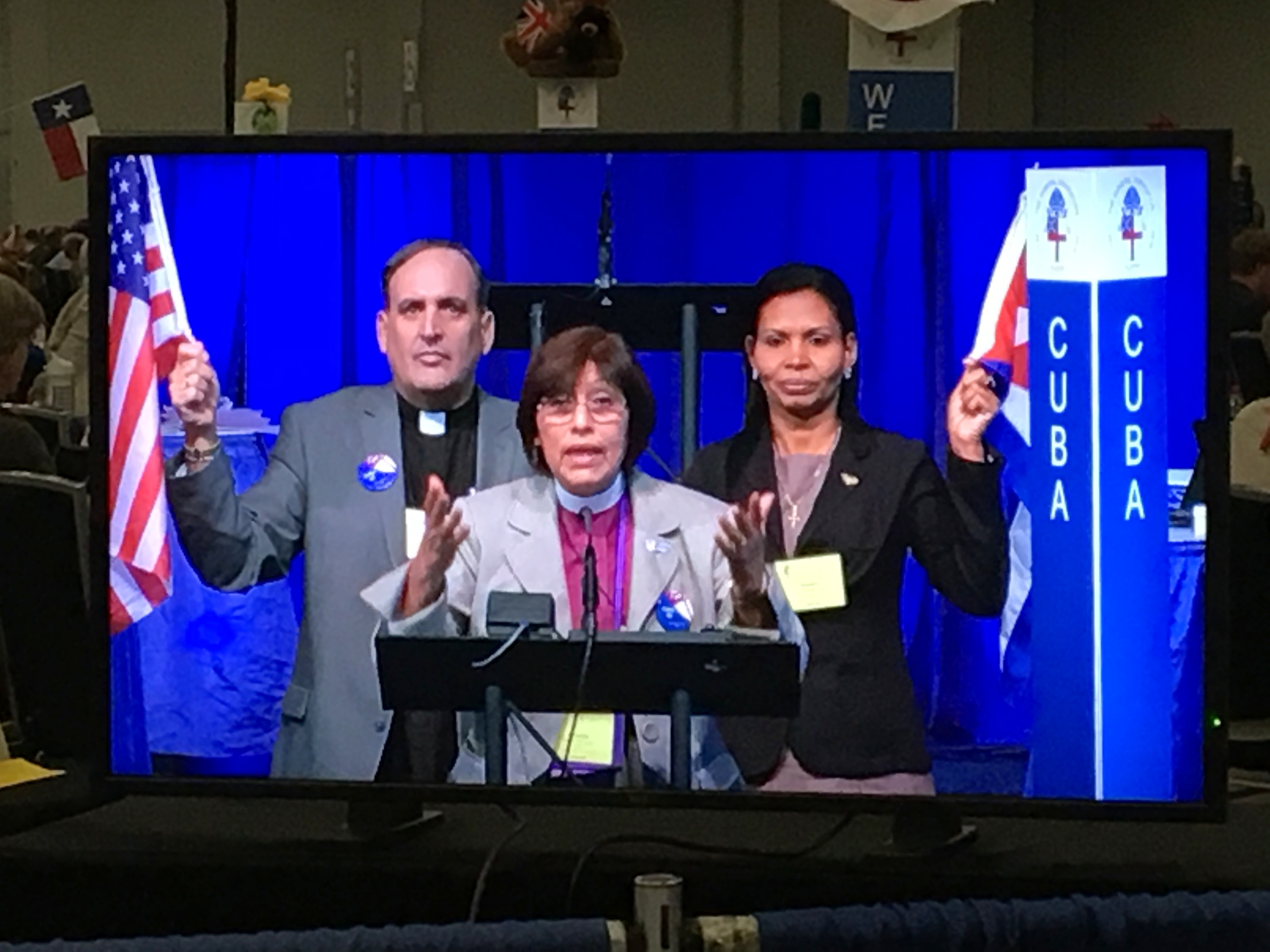
IMG_1927In 1966, in light of the Cuban Revolution and the political response of the United States, the House of Bishops voted to separate from the Diocese of Cuba from the Episcopal Church, leaving it an autonomous diocese without a provincial home.  The clergy scattered, some returning or immigrating to the US, but some who remained in Cuba were imprisoned, executed, or disappeared; priests lost their pensions, and they operated in isolation from the Church.  Cuba officially requested to be reaffiliated with the Episcopal Church and was given a list of requirements before admission.  As of GC79, all of those conditions had been met.  However, leading up to the resolution coming to the floor of both the Deputies and Bishops, there was controversy on what it would mean, how this admission might impact the admission of other Dioceses (or their exit), how to affirm already elected bishops (assuming they had not followed the current practices of approval for bishops in the Episcopal Church), among other concerns.  In other words, there was a desire to right the wrong done 52 years ago, but some anxiety about the implications of the decision.

As an alternate deputy, I had the leisure of observing either House.  On Tuesday, I happened to be observing the House of Bishops when resolution A238 came to the floor.  Each testimony pleaded for righting the wrong done by the House of Bishops in 1966.  Retired bishop Leo Frade from the Diocese of Southeast Florida spoke passionately about the resolution.  As a Cuban American who had been a part of the Church in Cuba, he got quite emotional in his plea for the bishops to do the right thing.  When it came time for the vote, the vote was a unanimous approval for readmittance.  The entire house – bishops and visitors – exploded.  Cheers and clapping filled the room, and the standing ovation lasted several minutes.  Unbeknownst to me, the Bishop of Cuba was present and was invited to approach the platform to address the House.  Bishop Curry embraced her.  The House broke into singing the Doxology.

Bishop Griselda Delgado’s speech was the most humbling.  Despite every reason to feel resentful or hurt, Bishop Delgado communicated nothing but forgiveness and reconciliation.  “We are family,” she insisted.  And although we severed the relationship so many years ago, she insisted, “Cuba never left.”  Her sentiments struck me as the exact way that God sees us.  When we reject God, God never leaves us.  When we abandon God, we do not abandon our familial ties with God.  Bishop Delgado’s profound sense of right relationship, reconciliation, and forgiveness brought the House to tears.  We did not deserve her mercy, and yet there she was, offering mercy.  When Bishop Delgado said, “The Holy Spirit is here,” I knew she was right.  In response, Presiding Bishop Curry said, “The Bishop may take her seat at Table 7.”  Those words were words of righting a wrong – fully, completely, unconditionally.

The experience the next day was equally powerful in the House of Deputies.  They too needed to approve the resolution, and it also passed unanimously.  Bishop Delgado spoke there too, but equally powerful was the triangular sign with the word, “Cuba” written on it.  It was processed to a table, and the deputies from Cuba were seated in the House of Deputies.  “Welcome home,” pronounced President Jennings.

What I loved about the approval of this resolution was seeing how legislation can powerfully effect change.  Sometimes, in the weeds of parliamentary procedure, and canonical revisions, one can wonder if all we are doing is navel gazing.  But on these days, we watched first-hand the commitment to change, the willingness to boldly repent, and the receiving of mercy.  Surely the presence of this Lord has been in this place!

On homes, humanity, and our hands…

17 Wednesday Jan 2018

Posted by jandrewsweckerly in Uncategorized

≈ Leave a comment

Tags

baptismal covenant, common, dehumanize, dignity, Habitat for Humanity, home, humanity, Jesus, light, other, poor, preferential, respect, story

Web_handsopen

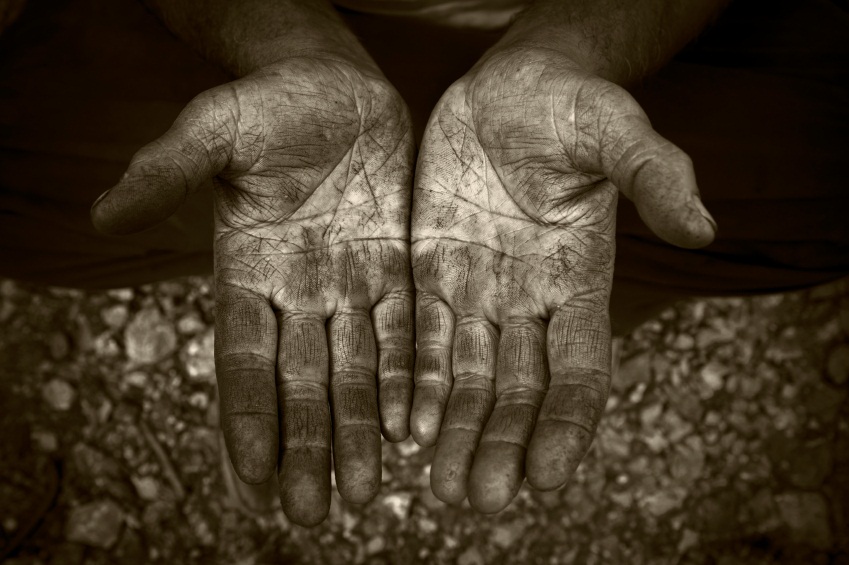
Photo credit:  https://www.mncatholic.org/advocacy-areas/option-for-the-poor-and-vulnerable/

Yesterday, I attended the dedication of a Habitat for Humanity house for which our church had been a financial and volunteer sponsor.  As I watched the family celebrate, it struck me how everyone has a story.  Before becoming a priest, I worked at a Habitat affiliate in Delaware, and I remember that each homeowner’s story varied.  Some had grown up in poverty, and were the first to buy homes in their extended families; some had a health crisis that led to financial and housing problems; some were living in substandard conditions, while others had squeezed their entire families into a friend’s living room.  I do not know the full story of the Fletcher family, except that the matriarch has been working as a nurse for years, has three children, and could not afford to buy a home without Habitat.

What struck me about the Habitat event is how strong our common humanity is.  Get a new Habitat homeowner in the room with a wealthy, privileged person, and I suspect within ten minutes they will be sharing stories of their common humanity.  But get either of them outside of that room, and either person could be seen as an enemy:  someone who oppresses others and does not share their wealth or someone who does not work hard enough and relies too much on outside assistance.  Neither of these characterizations are fair – but we make them all the time.  We forget the story of each individual, and instead create categories that we can then use to generalize – to dehumanize.

I do not usually talk about politics on my blog, but our President’s recent characterization of other countries and their citizens, whom I love, has broken my heart.  The incident itself was not all that surprising.  What put me over the edge was how the comment was so brazenly said and affirmed by others, and how the comment highlighted the ways our country seems to have embraced the practice of dehumanizing others enough that they are able to say things that they would not otherwise say to another human if they were face-to-face.

Our Lord and Savior, Jesus Christ, advocated for a preferential option for the poor.  Time and again, Jesus took the stranger, the outcast, the downtrodden, and healed them, helped them, and loved them.  In fact, “the other,” is a recurring theme in scripture that invites us to examine our own modern designations of “insiders” and “outsiders.”  Our country’s current practice of demonizing and subjugating the “other” is an action in direct conflict with Holy Scripture and the Gospel of Jesus Christ.  We are not living into our baptismal covenant promises of respecting the dignity of every human being, and seeking and serving Christ in all persons.

This week, I invite you to examine our current treatment of the “other” – those for whom Jesus had a particular preference and priority.  Whether you need to spend some time in prayer, have a conversation with someone unlike you, volunteer some time with a charitable organization, write to your governmental representatives, or donate your money to an agency that can affect change – do something.  Do not let your light be hidden under a bushel.  And then share your story with me here, or with a friend on the journey.  I cannot wait to hear how the Holy Spirit uses you.

Discovering Home…

21 Wednesday Sep 2016

Posted by jandrewsweckerly in Uncategorized

≈ Leave a comment

Tags

church, church home, discovery, Episcopal, home, identity, invitation, Jesus, spiritual journey, transformation

dscf1749_edited-1

Photo credit:  John Rothnie, http://www.hickoryneck.org

When my husband and I were engaged, we relocated to Delaware.  One of the first things on our priority list was finding a church home – partly because we missed church back in North Carolina, but also because we were hoping to make some new friends in our new town.  “Church shopping” was hard – nothing felt quite right, and our old standbys were not working.  I was born and raised in the United Methodist Church, and my husband had nominally been raised in the Presbyterian Church.  After months of frustration, and the recommendation of a friend, we tentatively tried out the Cathedral in Delaware.  My husband was sold on the first Sunday; I took some time to come around.  For a long time, I thought that we were just United Methodists who happened to worship in an Episcopal Church.  But what I did not realize was that a transformation was taking place – I was discovering the Church home I didn’t know I was missing.

Every person who walks in the door of a church has a similar story.  Sometimes a person is what we call a “cradle Episcopalian” – born, raised, and stayed in the Episcopal Church.  Sometimes a couple or family is looking for a compromise in faith traditions.  Sometimes people leave their denomination out of frustration and are looking for something that feels closer to the Gospel as they experience it.  And sometimes a person has never before stepped a foot in a church.  That’s part of the beauty of the Episcopal Church – our members come from a diverse set of experiences, all of which feed our mutual ministry.

That is why we are kicking off a class called “Discovery Class” this week at Hickory Neck.  Whether you are new to Hickory Neck, the Episcopal Church, or you have been around forever, I find it is always helpful to review our roots.  No matter how many times I teach this class, I find that people learn something new, feel inspired to deepen their faith, or find themselves reenergized about their Episcopal identity.  The class also gives us a chance to reflect on and celebrate the unique way that our Episcopal identity is incarnate at Hickory Neck.

I hope you will take some time this week to reflect on your own spiritual journey.  Think back to the times when you felt inspired, fed, and reinvigorated in your faith.  Recall the way you felt when you knew, or suspected, that your current faith community began to feel like a spiritual home.  And if you cannot join us at Hickory Neck, share some of those stories with your neighbors – and invite them into the wonderful work Jesus is doing in your church home!

Giving and Sharing…

28 Wednesday Oct 2015

Posted by jandrewsweckerly in Uncategorized

≈ Leave a comment

Tags

church, Episcopal, grow, home, memories, money, stewardship, talent

This week we continue a series of guest blog posts by parishioners at the Episcopal Church of St. Margaret in Plainview, NY.  They are reflecting on what stewardship means to them, and how God the Giver has been a part of their lives.  Our guest post this week is from parishioner Mike Hadden.

In this latest season of stewardship, I reflect on the things that I can do to give back to the Episcopal Church that has provided me many fond memories; camps, dances, youth groups, just to name a few. I’ll share one memory. There was a point when I was a kid, growing up in Shelby, NC (Church of the Redeemer), that my father was out of work for an extended period of time. Mom and Dad were always active members in church (they later went on to found an Episcopal Church in Mooresville, NC – St. Patrick’s Mission). They had good friends through church, and participated in many activities. Deep into that employment transition for my Dad, the church vestry had apparently decided to use a portion of the discretionary funds available to cut a check to them, to help pay for our expenses. I’ll never forget the tears rolled down my Dad’s face when he accepted it.
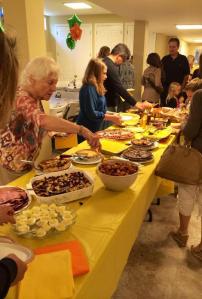
However, stewardship isn’t just about money. It’s about what you can give back to the church through use of your talents – fundraising, maintenance work, etc. My family certainly doesn’t pledge a tremendous amount of money to the church annually. We can’t afford to. What we can – and do – do is give of our time; Mari on the Altar and Flower Guilds and teaching Sunday school; me on Vestry and Stewardship/Fundraising Committee. I firmly believe this Parish has the potential to be great. To grow back into one of the more prominent Episcopal churches on Long Island. We have lots of activities available, and are starting new ones all the time. What we need now is to use that positive momentum to drive forward in growth. The “Town Hall” meeting this Sunday felt like another step forward. Let’s continue that forward push, together.

Thank you all for everything you already do to make St. Margaret’s a great place to call my church home.

Respectfully,  Michael Hadden


Sermon – John 13.1-17, 31b-35, MT, YB, April 2, 2015

15 Wednesday Apr 2015

Posted by jandrewsweckerly in Uncategorized

≈ Leave a comment

Tags

belonging, brokenness, church, dinner, Eucharist, failings, footwashing, forgiveness, God, home, identity, Jesus, joy, Last Supper, Maundy Thursday, peace, renewal, sacred, Sermon, sinfulness, strength, table

The dinner table is where sacred things happen.  The dinner table is where food is served that can satisfy a hunger, can heal an ailing body, can delight the senses, and can invoke a nostalgia like no other.  The dinner table is where stories are told, days are recounted, prayers are said, and laughter is had.  The dinner table is where places are set, dishes are passed, plates are cleared, and remnants are cleaned.  The dinner table is the host of all things mundane – like that frozen meal you threw together before you ran off to the next thing; and the dinner table is the host of all things momentous – like that gloriously planned and executed Thanksgiving meal that you hosted for your friends and family.  Because the dinner table can do all these things, the dinner table becomes the place in our home where sacred things happen – a holy site for one’s everyday and one’s extraordinary moments.

The dinner table where Jesus and his disciples gathered for that Last Supper was no different.  They had gathered at table hundreds of times in the three years they had spent together.  There had been learning and laughter, stories and questions, arguments and celebrations.  In many ways, all of these things seem to happen in the course of this one night during the Last Supper.  Jesus and the disciples are likely chatting up a storm, talking about the days events, when Jesus does something extraordinary.  He gets up, takes off his outer robes, and washes the feet of his disciples.  This kind of event is unheard of.  Hosts and well-respected teachers do not wash others feet; that task was assigned to a household slave.[i]  And some of the midrashic commentary suggests that not even a Hebrew slave was expected to perform such a menial task.  Instead, the slave might bring out a bowl of water, but the guest would wash his own feet.[ii]  So of course, a lively debate ensues with Peter, who does not understand what is happening.  Jesus washes Peter’s feet anyway – and washes Judas’ feet – before returning to that dinner table to explain what he has done.  He goes on to explain that not only will he die soon, but also that he expects a certain behavior after he is gone – that they love one another.

That is the funny thing about dinner tables.  They can bring out the most sacred and holy of conversations.  The dinner table is where one tells his family that he has terminal cancer.  The dinner table is where one tells her best friend that she lost her job and has no idea what she is going to do.  The dinner table is where the young couple announces that that they lost their pregnancy.  The dinner table is where the college student tells his parents that he is dropping out of school.  We tell these awful, scary stories at the dinner table because we know that the table can handle them.  The table is where we gather with those who we care about and is therefore the place where we can share both the joys of life and also the really hard stuff of life.  Though our table may have never hosted a dinner as beautiful as one of the tables Norman Rockwell could paint, our table is still a sacred place that can hold all the parts of us – the good, the bad, the beautiful, and the ugly.  We can share the awfulness of life there because we know that those gathered can handle it, and can carry us until we can be back at the table laughing some day.

What I love about our celebration of this day is that all of those things – the good, the bad, the beautiful, and the ugly – were present that night with Jesus and his disciples.  So yes, earlier in the evening, there probably is a raucous conversation.  The disciples are gathered at the table, in all their imperfection: those who love Jesus with a beautiful innocence and those who greedily hope to be at Jesus’ left and right hand; those who humbly understand Jesus and those who want Jesus to victoriously claim his Messianic power; those who profess undying faithfulness (even though they will fail to be faithful) and those who actively betray Jesus.  At that table Jesus not only talks about how to be agents of love, Jesus also shows them how to love.  On this last night – this last night before the storm of Jesus’ trial, crucifixion, and death – a sacred moment happens at the dinner table.  And though we do not hear the story tonight, we also know that Jesus then breaks the bread and offers the wine, instituting the sacrament of Holy Communion.

We know the rest of the story.  The disciples, who still do not really understand Jesus fully, muddle their way through footwashing and Holy Communion.  Then those same dense disciples sleep their way through Jesus’ last prayers.  One of those disciples becomes violent when a soldier tries to seize Jesus.  And eventually, most of the disciples betray and abandon Jesus altogether.  To this unfaithful, dimwitted, scared group, Jesus offers a sacred moment at the dinner table, inviting them into the depths of his soul and a pathway to our God:  and encourages them to love anyway.

Our own Eucharistic table is not unlike that dinner table with Jesus.  Tonight, we too will tell stories, sing, and laugh.  We too will wash feet in humility, embarrassment, and servitude.  We too will hear the sobering invitation to the Eucharistic meal, and will walk our unworthy selves to the rail to receive that sacrificial body and blood.  We too will argue with God in our prayers, pondering what God is calling us to do in our lives and resisting that call with our whole being.  We too will lean on Jesus, longing for the comfort that only Jesus can give.  And we too will hear Jesus’ desperate plea for us to also be agents of love – not just to talk about love, or profess love, but to show love as Jesus has shown love to us.

In this way, our Eucharistic table is not unlike the dinner table in your own home.  Our Eucharistic table has hosted countless stories, arguments, and bouts of laugher.  Our Eucharistic table has witnessed great sadness and great joy.  Our Eucharistic table feeds us, even when we feel or act unworthily.  And our Eucharistic table charges us to go out into the world, being the agents of love who are willing to wash the feet of others – even those who betray us and fail us.  This Lent, we have been praying Eucharistic Prayer C.  In that prayer, the priest prays, “Deliver us from the presumption of coming to this Table for solace only, and not for strength; for pardon only, and not for renewal.”[iii]   This Eucharistic table, like our own dinner table, can handle all of us – all our failings, sinfulness, and brokenness.  This table can fill us up with joy, forgiveness, and peace.  This table can be a place where we find belonging, identity, and security.  But this table is also meant to build us up – to give us strength and renewal for doing the work God has given us to do – to love others as Christ loves us.  Sacred things happen at this table.  Those sacred things happen so that we can do sacred things in the world for our God.  Amen.

[i] Guy D. Nave, Jr., “Exegetical Perspective,” Feasting on the Word, Yr. B, vol. 2 (Louisville:  Westminster John Knox Press, 2008), 279.

[ii] Mary Louise Bringle, “Homiletical Perspective, Feasting on the Word, Yr. B, vol. 2 (Louisville:  Westminster John Knox Press, 2008), 279.

[iii] BCP, 372.

Redefining home…

19 Friday Sep 2014

Posted by jandrewsweckerly in Uncategorized

≈ Leave a comment

Tags

church, comfort, community, construction, home, Jesus, joy, outside, renovation, welcome, world

Courtesy of Dan McGee, St. Margaret's Parishioner

Courtesy of Dan McGee, St. Margaret’s Parishioner

This past Sunday we rededicated our Undercroft.  The Undercroft has been under construction since November 2013, and includes two Sunday School Rooms, our Parish Hall, two bathrooms, and the kitchen.  All rooms were completely renovated with the exception of the kitchen, which only received new flooring.  During construction, our Coffee Hours were moved to the Narthex; a tight space, but one that sufficed – and certainly brought us closer, literally and figuratively.  Many of our normal fellowship activities were either moved off campus or were cancelled altogether.  Our support groups had to move to our Library, which meant meetings on those nights also had to go off campus.

As I looked around the room during our rededication celebration, two things occurred to me.  One, I had really missed being in that space.  Many warm memories have been formed in that space, which all came flooding back.  But mostly, I missed the sound – the noise of people talking, laughing, sharing stories, and lingering a little longer over a meal.  Though we had shared in communion at the altar upstairs, the communion meal was continuing downstairs:  and it was a raucous meal – one I am sure Jesus would have approved.

Two, I found myself a little wary by the sense of deep comfort that was overwhelming me.  One of the nice things about being forced off campus was that we finally did what we had been hesitant to do – take the church out into the world.  Our committees were meeting at local dining establishments, our coffee hours spilled out into the lawn over the summer, and we got to know each other’s homes more intimately.  My fear is that in the comfort of being back “home” we will stop venturing out into the world, sharing our presence and ministry with others.

My hope is that we can do two things with our space.  First, my hope is that we can share that feeling of home with others by inviting more outside groups to utilize our space.  I would love for us to share our joy and warmth with others, so that this can become their home too.  Two, my hope is that we can keep taking church to the streets and to one another.  There is a way in which having meetings here month after month starts to stifle joy and creativity.  My hope is that our committees will agree to keep going off campus at least a few times a year to mix it up; but more importantly, to show the community that there is life and activity at St. Margaret’s.  And they are most welcome to join us!

← Older posts

Recent Posts

  • On the Myth and Magic of Advent…
  • On Risking Failure and Facing Fear…
  • Sermon – Luke 23.33-43, P29, YC, November 23, 2025
  • On Inhabiting Gratitude…
  • Sermon – Luke 20.27-38, P27, YC, November 9, 2025

Archives

  • December 2025
  • November 2025
  • October 2025
  • September 2025
  • August 2025
  • July 2025
  • June 2025
  • March 2025
  • February 2025
  • December 2024
  • November 2024
  • October 2024
  • September 2024
  • August 2024
  • July 2024
  • June 2024
  • May 2024
  • March 2024
  • February 2024
  • January 2024
  • December 2023
  • November 2023
  • October 2023
  • September 2023
  • August 2023
  • July 2023
  • June 2023
  • May 2023
  • March 2023
  • February 2023
  • January 2023
  • December 2022
  • November 2022
  • October 2022
  • June 2022
  • May 2022
  • January 2022
  • December 2021
  • November 2021
  • October 2021
  • September 2021
  • August 2021
  • June 2021
  • May 2021
  • April 2021
  • March 2021
  • February 2021
  • January 2021
  • December 2020
  • November 2020
  • October 2020
  • September 2020
  • August 2020
  • July 2020
  • June 2020
  • May 2020
  • April 2020
  • March 2020
  • February 2020
  • January 2020
  • December 2019
  • November 2019
  • October 2019
  • September 2019
  • August 2019
  • July 2019
  • June 2019
  • May 2019
  • April 2019
  • March 2019
  • February 2019
  • January 2019
  • December 2018
  • November 2018
  • October 2018
  • September 2018
  • August 2018
  • July 2018
  • June 2018
  • May 2018
  • April 2018
  • March 2018
  • February 2018
  • January 2018
  • December 2017
  • November 2017
  • October 2017
  • September 2017
  • August 2017
  • July 2017
  • June 2017
  • May 2017
  • April 2017
  • March 2017
  • February 2017
  • January 2017
  • December 2016
  • November 2016
  • October 2016
  • September 2016
  • August 2016
  • July 2016
  • June 2016
  • May 2016
  • April 2016
  • March 2016
  • February 2016
  • January 2016
  • December 2015
  • November 2015
  • October 2015
  • September 2015
  • August 2015
  • July 2015
  • June 2015
  • May 2015
  • April 2015
  • March 2015
  • February 2015
  • January 2015
  • December 2014
  • November 2014
  • October 2014
  • September 2014
  • August 2014
  • July 2014
  • June 2014
  • April 2014
  • March 2014
  • February 2014
  • January 2014
  • December 2013
  • November 2013
  • October 2013
  • September 2013
  • August 2013
  • July 2013
  • June 2013
  • May 2013
  • April 2013
  • March 2013
  • February 2013
  • January 2013
  • December 2012
  • November 2012
  • October 2012
  • September 2012

Categories

  • reflection
  • Sermons
  • Uncategorized

Meta

  • Create account
  • Log in
  • Entries feed
  • Comments feed
  • WordPress.com

Blog at WordPress.com.

  • Subscribe Subscribed
    • Seeking and Serving
    • Join 394 other subscribers
    • Already have a WordPress.com account? Log in now.
    • Seeking and Serving
    • Subscribe Subscribed
    • Sign up
    • Log in
    • Report this content
    • View site in Reader
    • Manage subscriptions
    • Collapse this bar
 

Loading Comments...