• About

Seeking and Serving

~ seek and serve Christ in all persons

Seeking and Serving

Tag Archives: joy

Sermon – Luke 10.1-11, 16-20, 2 Kings 5.1-14, P9, YC, July 3, 2016

07 Thursday Jul 2016

Posted by jandrewsweckerly in Sermons, Uncategorized

≈ Leave a comment

Tags

collaboratively, commission, detail, gospel, help, humility, insider, Jesus, joy, mission, Naaman, outsider, power, Sermon, seventy, side effects, story, terrifying, transformation, vulnerable, witness

I remember when I was on maternity leave I ended up watching a fair amount of daytime television – mostly because that was the extent of intellectual stimulation that my sleep-deprived brain could handle.  Not being someone who watches a lot of television, I was fascinated by one phenomenon in general:  pharmaceutical commercials.  There are tons of them and they are all filled with very convincing actors and stories.  The story is always the same:  the patient was sad, scared, or in pain, struggling with no cure; they or their doctor find a little-known drug; and, bam, they are returned to health and wholeness.  Sometimes the actor or narrator will mention a few possible side effects.  But in tiny print below the glowingly happy patient is a longer list of side effects that, quite frankly, sound terrifying – maybe even more terrifying than the disease or symptom they are trying to heal.  If you are not careful, you can miss the messy stuff altogether because everyone looks so happy:  from hair loss, to abdominal pain, partial paralysis, or in rare cases, even death.

That same sort of list of side effects is what our gospel lesson today glosses over too.  The severity of the situation is clearly grim when Jesus commissions the seventy to go ahead of him, proclaiming the kingdom and healing people.  Jesus is unambiguous.  He tells the seventy that they will be like sheep among wolves.  He takes away any forms of security:  no purse, no bag, no sandals.  He warns them that some people will not receive them well, and they will have to dust off their bruised egos and keep going.  He advises them to be gracious guests, eating whatever is put before them (even if it is Brussel sprouts).  Truly, this has to be the worst ad for a mission ever.

But here is the funny part.  The text jumps over the mission of the seventy and simply says, “The seventy returned with joy.”  We do not get details of all the side effects they experience.  We do not get to hear how hard eating what is put before them is.  We do not get to hear how scary traveling with no money or shoes is.  We do not even get to hear how many times they have to dust of their feet in protest from ill treatment.  No, the commercial just glosses straight to the end, “The seventy returned with joy.”  The reading today feels like all the bad stuff is just shoved into fine print so that we do not get a sense of what going out into the mission field really feels like – because, based on what Jesus says, the mission field sounds terrifying.

Feeling frustrated by the lack of detail this week, I found myself wondering how we might get a glimpse into the real experience of following Jesus and sharing the good news.  Then I stumbled back into the Naaman story and realized perhaps he is the key.  Naaman seems like an unlikely candidate at first blush.  He is a foreign national in the time of Elisha.  Jesus does not come onto the scene until hundreds of years later.  But Naaman has much more in common with the followers of Jesus – in fact, more in common with us – than we might imagine.

You see, Naaman is a mighty army commander.  Because of the Lord’s favor, Naaman has led the king’s troops to victory.  Naaman is not one of the Israelites, but he is someone with great power – a prowess we are familiar with as modern Americans.  In that way, he, us, and the seventy commissioned by Jesus are similar – we are insiders with power.  But despite his power, Naaman suffers from leprosy.  He has longed for healing and would use his power, influence, and money if he could.  But so far that has not led to success.  Instead, Naaman has to go another way.  As it turns out, Naaman has to go on a journey that is very similar in conditions to what the seventy must do.

In order to find healing and wholeness, Naaman must give up his power, sense of control, and must rely on others – especially those most marginalized in society.[i]  Basically, like the seventy, Naaman must give up his purse, his bag, his sandals, and must rely on the hospitality of others.  His story starts with a tip from a slave girl from Israel.  She learns of the commander’s leprosy and suggests he seek out the Israeli prophet, Elisha for healing.  So, Naaman gets a blessing from his king and heads off to the king of Israel.  Only, the king of Israel misunderstands Naaman and thinks he is being setup for failure.  Elisha, who is clearly not in the king’s court, saves the day, and sends word that he will help.  So, Naaman takes his bountiful gifts to this non-ranking prophet seeking help again.  But instead of greeting Naaman, Elisha sends out one of his messengers to Naaman with instructions for healing.  Instead of dusting his feet off at the apparent insult, Naaman gets angry.  But some of Naaman’s unnamed servants gently appeal to him to try the remedy anyway.  Naaman eats humble pie again, and is healed.

Naaman gives us a glimpse into the fine print of Jesus’ commissioning of the seventy.  Going without a purse, sandals, and relying on the hospitality of others takes a lot of humility.  Facing rejection, which Jesus guarantees will come, will take a lot of anger management.  Going in Christ’s name will mean accepting help from anyone and everyone – not the easiest of tasks for us, who as Americans prefer to be self-sufficient, independent, strong survivors.  We prefer to be people who help instead of people who need help.

I have been on a variety of mission trips over the years:  medical missions, missions building homes, missions building schools or community centers, and missions meant to build relationships.  On almost every mission trip I have joined, the team members came back feeling like they gained more than they gave.  This conclusion invariably leads to a discussion about whether money is best spent in direct aid than expensive overseas trips that seem to benefit us more than the people we serve.  While that conversation always needs to happen, what that argument fails to see is the power of Christian witness – that even if we do not turn communities around socio-economically, part of what we leave behind is the love and fellowship of Christ – the message that you are not alone in your suffering.  In part, being able to host us and show us hospitality gives those we serve more of a sense of worth and honor than being recipients of aid.

But in order for any of that to happen, we have to make ourselves vulnerable.[ii]  We have to put ourselves in the position of Naaman to receive aid and healing from the least likely persons.  True mission is not about the powerful and wealthy bringing their resources to the poor and downtrodden.  True mission is about the powerful and wealthy realizing their own spiritual poverty and creating an environment where rich and poor, healthy and sick can share healing, wholeness, and health in a way that recognizes we all have needs before God – and that God uses us all of us when we work collaboratively for healing and building up the kingdom of God.[iii]

Jesus was right to warn us with the possible side effects of sharing the good news:  vulnerability, insecurity, bodily danger, hurt egos, and long days.  Though the seventy do not show us what that looks like, Naaman certainly does.  He reminds us of the fine print:  that the side effects may lead to anger, feelings of abandonment, a loss of self-worth and importance.  But the benefits are still the same:  healing and wholeness for the whole community, redefining who is in and who is out of the community, and new purpose in the larger world.  The good news is that part of our prescription involves partners for the journey:  Jesus sends the seventy out two-by-two.[iv]  Even Naaman does not go alone, but takes others with him – others who keep him in check and support him in his sense of loss.  And the result is the same:  healing, transformation, and joy.  Those kind of results make the side effects worth it!  Amen.


[i] Stephen Reid, “Commentary on 2 Kings 5:1-14,” July 3, 2016, as found at http://www.workingpreacher.org/preaching.aspx?commentary_id=2904 on June 29, 2016.

[ii] David J. Lose, “Homiletical Perspective,” Feasting on the Word, Yr. C, Vol. 3 (Louisville: Westminster John Knox Press, 2010), 219.

[iii] Adriene Thorne, “Moral Leprocy,” July 3, 2016, as found at http://www.onscripture.com/moral-leprosy on June 29, 2016.

[iv] Karoline Lewis, “The Security of Seventy,” June 26, 2016, as found at http://www.workingpreacher.org/craft.aspx?post=4683 on June 29, 2016.


In it Together…

06 Friday May 2016

Posted by jandrewsweckerly in Uncategorized

≈ Leave a comment

Tags

alcoholism, both-and, church, compassion, either-or, Eucharist, gratitude, grief, honor, joy, mother, Mother's Day, pain

Hands-together

Photo credit:  indianapublicmedia.org/harmonia/offering-hand/

This week I attended our Spring Clergy Day.  Our presenters for the day talked to us about addictions and their impact on families and communities.  As part of our work, we eventually began to talk about how we honor those in our midst who are struggling with the disease of addiction while staying true to ourselves.  One specific issue at hand was how to make room for alcoholics in a Church that serves wine as the blood of Christ.  Although our Bishop was pretty clear that he did not want us to step outside of the rubrics (i.e. using grape juice instead of wine/non-alcoholic wine), several clergy members shared practices they had adopted to make parishioners struggling with alcoholism feel incorporated into the community.  Ultimately, what we decided was that each parish was different, and the important point was that we talked about the issue, especially soliciting the opinions of those who suffer from the disease.

Meanwhile, this Sunday is Mother’s Day.  I have come to dread Mother’s Day because of the many pastoral implications (see my posts here and here).  However, I am in a new parish that longs to honor those mothers and mothering-types who have made a healthy impact in their lives.  I realized the dilemma of trying to honor mothers while honoring those for whom Mother’s Day is a hard day is not unlike the dilemma of trying to honor years of tradition in the Anglican Church and the pastoral sensitivities needed of a modern priest.

In both of these instances, I find myself mostly concerned about making room for both joy and compassion.  How do we honor the struggle of the alcoholic while also honoring the power the taste and tradition of wine has on our spirituality?  How do we honor the amazing mother we have in our lives while also honoring the fact that not everyone is so lucky?  How do we celebrate the pregnancy or birth of a child in our parish while also honoring how difficult hearing about pregnancy is for someone struggling with infertility?

I am hopeful that we can do both.  This Sunday, my parish is going to try to do just that.  We had several parishioners who really wanted to honor the mothers in our midst.  Holding on to that inner tension, we agreed that every female would be offered a flower and a poem that named the inherent challenge of honoring the amazing mothers in our lives and the ways that this day is hard for many of us.  Our hope is that by doing both, we have the opportunity to give thanks and rejoice while also leaving room for grief and intercession.  We know there is no perfect way to do both – but we also know that in doing nothing, we sever any opportunity for joy by simply attending to grief.  Instead, we are electing to go with the both-and instead of the either-or.  Prayers for all of you as you navigate the both-and of this world!

Homily – John 11.21-27, Cemetery Memorial Service, March 19, 2016

29 Tuesday Mar 2016

Posted by jandrewsweckerly in Sermons, Uncategorized

≈ Leave a comment

Tags

cemetery, darkness, death, Easter, eternal life, grief, homily, if only, Jesus, joy, Lazarus, light, Martha, memorial, resurrection, spring

“Lord, if only you had been here, my brother would not have died.”  These are the words Martha says to Jesus in our gospel lesson today.  The weight of that phrase, “if only,” is heavy.  We all know that weight.  If only he hadn’t caught pneumonia.  If only she hadn’t taken the car out that day. If only we had known about the cancer earlier.  If only they were here now.  We know the sickening power of “if onlys.”

One of my favorite movies is a movie called Sliding Doors.  The movie follows a woman who is fired from her job.  As she makes her way home she has seconds to catch a train.  The movie divides into two at that point.  In one storyline she catches the train home only to find her boyfriend cheating on her at home.  In the other storyline she misses the train and is none the wiser about her boyfriend’s affair.  The two stories unfold in parallel, letting her life unfold from that one moment of a missed or caught train.  Her story is the ultimate “if only” story.

Martha knows the feeling of “if only.”  She knows that if only Jesus had been there, he would have healed Lazarus.  She also knows that if only Jesus had not taken so long, he probably could have made the trip in time.  That phrase, “if only,” hangs in the air for Martha.  But Jesus does not let Martha linger in the past, dreaming about what might have been.  Instead, he points Martha to the future – reminding her that her brother will rise again.  Martha already knows this.  Resurrection life was standard Jewish teaching in their day.  By Martha’s quick response to Jesus, we know that his reminding her about the future of resurrection doesn’t offer Martha much comfort.  But then Jesus does a funny thing.  He twists time all around, telling Martha that “the future is suddenly brought forwards into the present.”[i]

When Jesus says to Martha, “I am the resurrection and the life,” he is not just talking about a doctrine.  He is not just talking about a future fact.  The resurrection is a person, standing here and now in front of Martha.  Jesus invites Martha to exchange her “if only,” for an “if Jesus…”  As one scholar explains, the “if” changes:  “If Jesus is who she is coming to believe he is…If Jesus is the Messiah, the one who was promised by the prophets, the one who was to come into the world…If [Jesus] is God’s own son, the one in whom the living God is strangely and newly present…if [Jesus] is resurrection-in-person, life-come-to-life…”[ii]  You see, when Jesus changes Martha’s mourning to a pondering about what resurrection means, Jesus pulls her out of the past, with an eye on the future, that bursts into the now.

The last time we gathered, we did so in the darkening days of winter.  We watched Christmas approach, and the grief of “if only,” was heavy upon us.  But today, out tone shifts.  Spring is trying to emerge, the days are gifting us with more light, and Easter is approaching.  We have journeyed through a season of darkness.  The Church now invites us to journey toward the light.  The way that we make that transition is not by mourning the “if onlys,” but cultivating the joy of the possibility of “if Jesus.”

Isn’t that how we ever truly face death, though?  That is the eternal gift of our faith in Jesus Christ.  We are promised eternal life through the Savior who came among us, who taught us, loved us, died for us, and rose again.  And through his existence, resurrection is no longer a future longing, but a promise for the here and now.  Our loved ones are celebrating in the resurrection life, because as Jesus says, everyone who believes in Jesus Christ, even though they die, will live and everyone who lives and believes in him will never die.[iii]

As we approach Holy Week and Easter next weekend, I invite you to journey with Christ through the last bits of darkness, holding fast to the promise of the light of Easter – when we shout our joy to the world for the Savior who makes resurrection life possible in the here and now.  The church will journey with us as we loosen our grips on the “if onlys” of life and we attempt to embrace the “if Jesus” ponderings of life.  Today we recognize the ways that the “if onlys” try to haunt us.  But today we also lean on the church for support to hold fast to the “if Jesus” part of our loved ones’ stories.  When we hold on to the power of the future made present, we are able to rejoice this Easter with fullness and joy.  Amen.

[i] N.T. Wright, John for Everyone, Part 2 (Louisville: Westminster John Knox Press, 2004), 6.

[ii] Wright, 7.

[iii] John 11.25-26

The Truth about Weddings…

20 Wednesday Jan 2016

Posted by jandrewsweckerly in Uncategorized

≈ Leave a comment

Tags

abundance, Anglican Communion, Cana, conflict, Episcopal Church, feast, God, Jesus, joy, marriage, miracle, pain, tension, water, wedding, wine

wedding-cana

Photo credit:  http://www.freebibleimages.org/photos/wedding-cana/

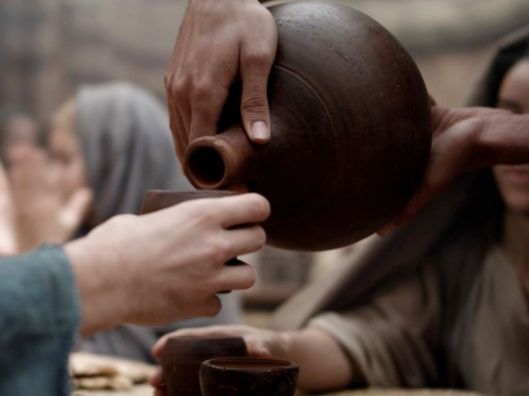
Almost two years ago, we welcomed our second daughter, Cana into the world.  We have gotten countless questions about the choice of her name and we find ourselves telling the story about the wedding in Cana over and over again.  Sometimes the repetition is annoying.  But mostly, retelling the story is a gift in itself.  You see, the story of Jesus’ first miracle is a story of great joy.  There is the setting of a wedding – one already filled with merriment and delight.  There is the wonder of a miracle – the amazing ability of Jesus to convert water into wine.  And there is the shock of abundance – not just the enormous amount of wine that Jesus produces, but also the best wine of the evening.  There are certainly questions in the story:  What is happening between Jesus and Mary?  Is this kind of miracle an exercise in indulgence?  Why does Jesus choose this as his first miracle?  But the questions usually fade in comparison to the joy.  Jesus chooses an occasion of joy to bring forth a miracle of abundance and pleasure.  I cannot help but smile every time I read the story.

Attending a wedding this weekend, hearing the story of Cana in Sunday’s lectionary, and thinking about our own daughter Cana, I cannot help but be left with a sense of gratitude for the gift of abundant joy given to us by Jesus in his first miracle.  There are parts of Jesus’ story that are neither joyful nor abundant.  But this first miracle gives us a taste – a literal and delightful taste – of the abundance of God’s love and kingdom.  I really cannot seem to wipe the smile off my face when I think of any of the three of those reminders of Jesus’ abundance and grace.

Perhaps that is why I am so saddened by the continued discord in the Anglican Communion about gay marriage.  In my country, the occasion of the legalization and blessing of gay marriage in the Episcopal Church has been a source of great joy for my gay and lesbian brothers and sisters, as well as their allies.  That, coupled with the ordination of gay and lesbian clergy, has left many in our church feeling a deep connection to the joy and abundance that Christ brings.  And yet, that joy is bringing great sadness to a large portion of the Anglican Communion.  Here we are at the earthly banquet, and instead of a joyful occasion of abundance, we are at a different feast – one where family drama and strife is overshadowing the joy of some of our members.

The irony of the wedding of Cana being appointed for the same Sunday that the Episcopal Church is grappling with the Anglican Communion Primates’ decision to suspend the full participation of the Episcopal Church in the life and work of the Anglican Communion is not lost on me.  But maybe that is the truth of every wedding – the constant tension between heavenly grace and abundance and human sinfulness and frailty.  Behind every dreamy wedding is some glossed over (or sometimes very obvious) family drama.  But even in the midst of family tension, there are usually moments of grace – glimpses of the abundance Jesus wants to shower upon us.  That is what I am grasping onto this week:  in the midst of pain, and facing the ambiguity of these next years in the Anglican Communion, God will keep breaking through with abundance, joy, and miracle.  Though I do not know all the answers to the biblical or the ecclesiastical story, I am grateful for the gift of Cana.

Sermon – Proverbs 31.10-31, Mark 9.30-37, P20, YB, September 20, 2015

23 Wednesday Sep 2015

Posted by jandrewsweckerly in Uncategorized

≈ Leave a comment

Tags

awe, capable, church, companionship, disciples, fear, God, grace, gratitude, humility, Jesus, joy, Lord, Mark, perfection, power, Proverbs, satisfaction, scolding, scripture, Sermon, strength, warrior-like, wife, woman, wonder

There are some Sundays when the scripture lessons appointed for the day are just right.  They speak truth to power or relate to a spiritual crisis in the community.  They shed light on a current event or they give pastoral words to aching hearts.  On those days, I am so grateful for the ways in which I see the Holy Spirit moving through the Church through the vehicle of scripture.  Today is not one of those days.  I read both our Old Testament and Gospel lessons this week, and my first reaction was, “Really?!?  THIS is what we needed to hear this week, God??”

The Old Testament lesson from Proverbs is actually one of my favorites – even though the lesson takes some deconstructing.  This passage is often referred to as the passage about the capable wife.  Now anytime the church starts talking about how women need to be wives and how those wives need to be “capable” I start getting defensive.  The good news is that the title is more the problem than the lesson itself.  The Hebrew word often translated as “capable” is better translated as powerful, strong, or even warrior-like.  This woman is a superhero.  She rises before dawn; manages a staff, ensuring her family has food and security; she purchases property and plants a vineyard with her own hands; she runs a thriving business, providing fine clothing for her family and the community; she is known for her wisdom and is happy and satisfied; and in her spare time, she is a shining example of philanthropy.  When you think about the traditional role of women in the patriarchal society of the time,[i] this woman is on fire.  She is an empowered woman, an equal partner to her husband, and is the master of both her home and her work outside of the home.[ii]  She is like Martha Stewart on steroids.

In the Gospel lesson, we find the disciples struggling yet again.  Jesus meets with the disciples and explains to them his fate.  And instead of asking Jesus what he means, they remain silent because they are too afraid to ask.  Actually, they do not remain silent.  Instead, they start bickering among themselves about who will be first in the kingdom.  I suppose that if the world is going to end, we might be similarly distracted.  But Jesus catches them arguing and shames them into true silence.  Not only does Jesus tell the disciples that they must strive to be last – servants of all; but also, Jesus tells them that in order to be a part of Jesus’ kingdom, they need to welcome children like they would welcome Jesus (which really could be interpreted as welcoming the poor, widowed, or disenfranchised).  So basically, Jesus tells the disciples they are a mess.  Not only are they not listening, they are distracted by their egos, and they are not attending to the one ministry he has called them to do.

So here is the challenge with these two lessons.  Basically, we take from the lessons that we are all too full of ourselves, we are distracted by the wrong things, we are not doing the work Jesus has called us to do.  And if we want to correct all of that behavior, we need to become warrior women and men – Martha Stewarts on steroids, showing everybody how it’s done.  Now I am not arguing that any of those points are not inherently truthful and are not lovely goals toward which we should strive.  What I am arguing is that I just did not want to hear them this week.  Here we are busting our buns to do the massive amount of work needed to pull off the Fall Fair.  Here we are busy kicking off the program year, with teachers preparing lesson plans, the choir readying music, and all our ministries being back on deck.  Here we are putting together last minute receptions for the bereaved, trying to complete a major construction project, and trying to ensure that we have enough funds to run our operations and enough energy to evangelize in our community.  And that is on top of all the work we are doing to get kids back to school, to reconnect with our community commitments after a summer hiatus, to make sure we are still performing well at work, to get our homes tidy and prepared for fall, and to squeeze in some football games.  In the midst of that chaos, the last thing I need to hear from church today is that my priorities are all wrong and that I need to work harder – a lot harder.  Thanks, but no thanks, Holy Scripture!

The good news is that there is good news.  For all the overwhelming work of the warrior-like woman in Proverbs and for all the scolding the disciples receive, the message from both lessons is clear and surprisingly manageable.  In Proverbs, the lesson concludes, “a woman who fears the Lord is to be praised.”  Now this is not the kind of fear we get when we talk about horror films, phobias, or abject worry.  The fear the passage is talking about is “awe, wonder, gratitude, and reverent humility before the Creator.”[iii]  Now fear of the Lord may sound like one more thing to add to the to-do list, but actually, fear is where the lessons are calling us to start.  You see, the disciples lacked a genuine fear of the Lord.  They were afraid in the more traditional sense – of what Jesus was talking about, of what would happen to them, of how they would ensure their own security.  They got wrapped up in themselves.  But if they had been wrapped up in awe, wonder, gratitude, and humility, all of the things Jesus had to instruct them to do would have come more naturally.  If they were in awe of Jesus, they would have easily been able to see how grateful they should be to have a Messiah who would sacrifice himself for them.  If they had been in wonder of Jesus, they would have simply been happy to be called a disciple, without worrying about their place or status.  If they had been full of gratitude, they would have already been welcoming children – and the poor, and the outcast, and the stranger.  The same sort of reversal is true for the warrior-like woman in Proverbs.  All of those amazing things she seems to accomplish in 24 hours happen only because of her reverence for God.  She is not favored because of all that she does.  She is able to do all that she does because she starts in a place of gratitude.  The rest flows easily out of that vantage point.

Today’s lessons are not about scolding us for how we get everything wrong, or about setting some impossible standard of perfection for us.  Instead, today’s lessons are about checking our baseline.  When our baseline is about awe, wonder, gratitude, and humility, we find living into Jesus’ instructions much easier.  When our baseline is about awe, wonder, gratitude, and humility, those astounding to-do lists and projects do not seem like burdens but gifts.  When our baseline is about awe, wonder, gratitude, and humility, church is not only a place we want to be, church is a place to which we are lovingly drawn.  That’s when that piece you were writing about stewardship doesn’t seem scary or even hard.  That’s when those sacred moments happen in Sunday School when a child or teen says something profound that stays with you all week.  That’s when you are up to your ears in stress about the Fair, and something funny – really funny – happens, and you and the other volunteers laugh so hard that you cry.  Holy Scripture today is not directing us down a path of guilt and shame.  Holy Scripture today is inviting us onto that path less travelled – the one that starts with awe, wonder, gratitude, and humility, and ends with grace, joy, companionship, and satisfaction.  I may not have wanted to hear our scripture lessons today.  But I needed to hear them.  My hope is that you can hear them in the spirit in which they were intended too.  Amen.

[i] Brent A. Strawn, “Commentary on Proverbs 31.10-31,” September 20, 2009, as found at http://www.workingpreacher.org/preaching.aspx?commentary_id=390 on September 18, 2015.

[ii] Telford Work, “Theological Perspective,” Feasting on the Word, Yr. B, vol. 4 (Louisville:  Westminster John Knox Press, 2009), 78.

[iii] Kathleen M. O’Connor, “Exegetical Perspective,” Feasting on the Word, Yr. B, vol. 4 (Louisville:  Westminster John Knox Press, 2009), 79.

O death…

16 Wednesday Sep 2015

Posted by jandrewsweckerly in Uncategorized

≈ 1 Comment

Tags

abundance, blessing, call, death, different, eternal life, fear, freedom, God, grace, joy, pretend

This past week I have been thinking a lot about death.  It’s probably a function of being a priest, but death is ever a part of my journey.  Many days I can avoid thinking about it.  But I imagine that is not really what God wants.  Just to prove the point, I find that deaths usually come in threes.  No one can avoid thinking about death when they come in threes.

That was the case last week.  Within 24 hours, a parishioner, a family member, and an acquaintance all died.  The parishioner was retired but was living a full life.  She went in to check on some pain and within four months she was gone.  The family member was much older.  She had lived a full life and the journey toward death took a long time.  We were sad, but ready.  The acquaintance was around my age and had three kids at the same nursery school one of my daughters attends.  She got sick and within a week died.  Three children.  My age.

That’s the funny thing about death.  We can pretend it happens only to old people (which we never are – even when we are).  We can pretend it is far away and will come when we are fully prepared and ready to join our God.  We can pretend that death is non-existent.  But we know that is all pretend.  We know that pretending is just our way of masking how scary death is.  For those of us who believe in eternal life, we like to say that life is changed, not ended.  But that is what we say about others.  I wonder how much we can proclaim it for ourselves.

Photo credit:  http://www.oneforall-allforone.net/rssnews/odeath/

Photo credit: http://www.oneforall-allforone.net/rssnews/odeath/

One of my favorite songs from the film “O Brother, Where Art Thou,” soundtrack is called “O Death.”  In the song, the artist sings, “O, death, won’t you spare me over til another year.”  The singer’s voice is haunting.  And while there is a part of us that knows we should not fear death, there is something in that song’s words that resonates with us.  We want one more year.  One more decade.  One more lifetime.

And yet death comes.  Sometimes death comes within a week – within a day.  I wonder what you would do differently with your life if you were willing to let that reality slip over you.  What has God been calling you to do that you have been avoiding?  What have you been meaning to say to someone that you don’t say because you are afraid?  Does the reality of death make you want to move?  Though the questions are heavy, as is the topic, I think there is freedom in the questions too.  We can let go of all that is weighing us down and start living.  The promise of earthly death is a blessing – one that frees us to live this life with abundance, grace, and joy.  How will you start living into that joy today?

Sermon – 2 Samuel 6.1-5, 12b-19, P10, YB, July 12, 2015

17 Friday Jul 2015

Posted by jandrewsweckerly in Uncategorized

≈ Leave a comment

Tags

celebration, church, community, dancing, David, God, grief, hurt, joy, Michal, mourning, praise, restraint, Sermon, silly, social media, sorrow

One of the side bonuses of being a parent of small children is that you have to step up your silliness game.  In general, I am not what most people would call being adept at being silly – I tend to err on the side of being serious and thoughtful.  I am not sure when the loss of silliness happened, but I imagine the loss began as I matured into adulthood.  Even scripture seems to condone this putting away of silliness.  First Corinthians says, “When I was a child, I spoke like a child, I thought like a child, I reasoned like a child; when I became an adult, I put an end to childish ways.”[i]  Most of us embrace the mantra of putting aside childish ways when we mature – except perhaps when we are in the presence of a child.  I learned pretty quickly that harnessing silliness could garner me much parenting success.  Nothing deflates a temper tantrum like a silly face contest.  Nothing distracts a fussy baby like silly noises.  And nothing makes a car of children happier than a parent grooving out to a favorite song on the radio while driving.  Sure, the drivers on either side of the car will look at you like you are crazy – and if you think about them too much, you’ll become too self-conscious to keep up your silly dancing.  But if you can block them out, and dance with abandon, the joy in the car multiplies – and the whole car shakes as you and the children dance in your seats.

Restraint is a value for most of us.  Most of the time, dancing while driving is not really appropriate.  Instead we should be calmly and intently focused on driving.  Most of the time, we expect a certain amount of decorum while working.  The expectations around attire, behavior, and language are quite different at work than they are at home.  And most of the time, we expect a significant amount of restraint from those attending church, especially as Episcopalians.  Though we encourage people to come as they are, there are still certain garments that would raise eyebrows if you wore them to church.  Though we say “Amen,” throughout our services, we have designated times for those amens, and many of us tense up when someone says a spontaneous “Amen.”  Though we often sing songs of praise in church, many of us get uncomfortable if someone embodies that praise, either through clapping, raising their hands, or, heaven-forbid, dancing.

And yet, that is exactly where we find David today in our Old Testament lesson – exuberantly, and without many clothes, dancing before the ark of the Lord.  Before we can understand why David’s actions are so outlandish, we need to understand the fullness of this story.  If you recall, we have been tracking David’s story this summer.  We have seen him from his earliest days, when Samuel anoints him after calling him in from the shepherd’s fields; to his daring battle as a boy with the giant Goliath; to his tenuous relationship with Saul and Saul’s children – who seemed to both love David and fear the threat of David at the same time; to the ultimate demise and death of Saul and Jonathan; and to today’s reading, where David is establishing his rule of the people by bringing the ark of the Lord into the city of Jerusalem – the city of David.  If you remember, the ark of the Lord is known as the container of God’s presence among the people.  They built the ark back in Moses’ day, and most recently, the ark had been stolen by the Philistines.  David retrieves the ark so that the ark can be brought back in the center of the people, marking how David’s rule and God’s presence and favor are tied.[ii]  David’s favor with God leads David to begin his dancing journey of celebration to Jerusalem.

Now lest we think that dancing before the ark is totally normal in those days, we encounter a strange comment by David’s wife, Michal.  The text says, “As the ark of the LORD came into the city of David, Michal daughter of Saul looked out of the window, and saw King David leaping and dancing before the LORD; and she despised him in her heart.”[iii]  You almost miss the line in the long text, but that is partially because we do not get the rest of the story today.  In the verses following what we hear today, David and Michal have a heated conversation about the inappropriateness of a king dancing nearly naked before the common people.  In the end, the text says that Michal never bears a child to David, as if suggesting that she is in the wrong for judging David.

But here this is where I am intrigued.  You see, Michal was the daughter of Saul and the sister of Jonathan, both of whom are now dead.  There is some debate about why Michal despises David,[iv] but I think we must remember that Michal is mourning.  In theory, this is a day for joy, since Michal’s husband is now king.  But Michal has every right to be mourning.  That line, “and she despised him in her heart,” though sharp and jarring, is not unfamiliar to me when I really think about her reaction.

One of the realities of the advent of social media is how quickly news travels.  If you follow social media, you are bombarded with news.  Normally, this is a good thing, because social media allows us to stay in touch with the highlights of friends’ lives from around the world.  Where social media becomes a challenge is when someone is struggling.  I have many friends who have struggled with infertility.  Nothing is worse for someone struggling with infertility than to watch a news feed of friend after friend getting pregnant.  They post the coveted ultrasound picture of a baby.  There are endless congratulations, and follow-up baby-bump pictures.  Everyone is full of joy, except for the person who wants that reality and cannot have it.  Every pregnancy announcement feels like another painful reminder of how you cannot seem to become pregnant.  The same is true about jobs or college acceptances.  The social media community seems adept at celebrating the good, but really struggles with recognizing those who mourn while we simultaneously rejoice.  We prefer to dance instead and forget the bad stuff.

We struggle with that reality in the context of church too.  On our healing prayer Sundays I am acutely aware of that reality.  Though each Sunday is meant to be an Easter celebration, once a month we try to remember how Sunday does not always feel like a celebration.  There are parts of our lives that are not whole or healed.  There are times when we still mourn or long for something else.  There are times when we are just not in the mood to dance, and would much rather have people sit with us in our discomfort than for them to be dancing around praising a God who quite frankly may seem absent, neglectful, or downright mean.[v]

I think that is why I love this story from Second Samuel so much.  When we read about David, we long to be like David – unfettered, totally unself-conscious, and full of joy.  We want to be a people of gratitude, celebration, and praise.  But sometimes, we are more like Michal.  We are not ready for joy, we are not ready for celebration, and we not ready to praise God yet.  And quite frankly, having someone in our face doing just that – or worse, telling us to get over ourselves and start dancing makes us despise them in our hearts too.  But that is what I love about this story.  Michal was not edited out of the story.  This is not a simple story about how we should always praise God.  This is a complex story about how freeing and life-giving praising God can be.  In fact, the joy we get from God can make us dance with abandon, totally liberated from what is socially acceptable.  But, there are also times when we are just not there – and the command to make a joyful noise makes us more angry than willing to yield.  And that’s okay.  Things may not turn out how we want them.  We may need to mourn that reality for a long time.  In this complex reality, the Church stands in solidarity with us all, celebrating what can be celebrated, giving space for hurt and mourning where needed.  We are a community of both Davids and Michals.  And sometimes we identify with one more than the other.  To us all, the Church offers a humble meal, reminding us that there is room for all at God’s table.  Amen.

[i] 1 Corinthians 13.11

[ii] Walter Brueggemann, First and Second Samuel: Interpretation, A Bible Commentary for Teaching and Preaching (Louisville:  John Knox Press, 1990), 250-251.

[iii] 2 Samuel 6.16

[iv] Brueggemann, 251.  Also, see other theories by J. Mary Luti, “Homiletical Perspective,” Feasting on the Word, supplemental essays (Louisville:  Westminster John Knox Pres, 2012), 6.

[v] David G. Forney, “Pastoral Perspective,” Feasting on the Word, supplemental essays (Louisville:  Westminster John Knox Pres, 2012), 3.

Seeing dignity…

24 Wednesday Jun 2015

Posted by jandrewsweckerly in Uncategorized

≈ Leave a comment

Tags

baptism, brokenness, difficult, dignity, faith, human being, humanity, joy, laughter, The Intouchables

Photo credit: http://ourfaithinaction.net/2012/the-intouchables/the-intouchables-movie-poster-3/

Photo credit: http://ourfaithinaction.net/2012/the-intouchables/the-intouchables-movie-poster-3/

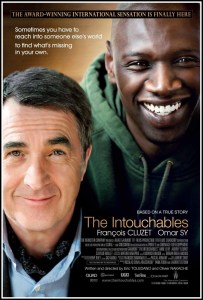
This weekend I finally saw The Intouchables, a 2011 film based on the true story of a French, wealthy quadriplegic who hires a man convicted of petty theft to be his caregiver.  The quadriplegic, Philippe, has been through many caregivers.  He is a widower who lost the use of most of his body in a paragliding accident.  He is bitter and does not like the way that most highly-skilled caregivers treat him more like a patient than a person.  Meanwhile, Driss applies for the job simply to obtain governmental unemployment benefits, assuming that Philippe will never hire him.  Philippe is intrigued by this man who shows him little respect, and hires Driss.  The two begin a relationship that is different than any either of them had known.  Philippe is finally able to rediscover a joy for life and reimagine what his life can be.  Meanwhile, Driss begins to see that he can have value too – that perhaps he can start anew with life, providing for his family and having a new sense of self-worth.

What I loved about this film was two-fold.  First, I had anticipated this being a sober, but triumphal movie.  Instead, I found myself laughing throughout the film – not at a slapstick humor, but at the kind of humor one develops when things get so bad that laughter is both the inappropriate and most appropriate thing to do.  It is an irreverent humor that only two characters who have been pushed to the margins can deeply enjoy, and yet, those outcasts invite us in to our own darkness and bring us out with laughter.  The second thing I loved about this movie is the way in which each character was able to see humanity in one who had been stripped of their humanity.  For Philippe, his physical disability had taken away his ability to full participate in society.  Society struggled to see any value in him beyond his money – which is not a value for which anyone wants to be known.  For Driss, he was a criminal who was unable to hold down a job and be a responsible citizen.  Society struggled to see any value in him, leaving him limited options.  And yet, in Philippe, Driss was able to unearth an adventurous, funny, sarcastic man of compassion and fortitude.  And in Driss, Philippe was able to unearth a sympathetic, strong, talented man of wisdom and grace.  In essence, they could see the humanity in one another.

When we reaffirm our baptismal covenant, one of the promises we make is to respect the dignity of every human being.  Over and over we make that promise, and yet I think it is one of the hardest things we promise to do.  It is very difficult to respect the dignity of the guy who cuts you off in traffic.  It is very difficult to respect the dignity of your family member who constantly puts you down.  It is very difficult to respect the dignity of the man who kills nine Christians in a church because of their race.  This past Sunday, as we were editing the Prayers of the People, I found I had no problem listing the names of the deceased from Charleston.  Where I struggled was adding the killer’s name to our list too.  That action went against every instinct in my body, and yet, some small ache made me feel like I had to add him too.

Respecting the dignity of every human being is not a one-time action.  It takes a lifetime of practice.  We fail at it all the time, but we keep recommitting to the work because we promised we would at our baptism.  What encouraged me about that work this week, was the relationship between Philippe and Driss.  Watching two men, so dramatically different, and yet similar in the way that society treated them as outcasts, heartily laugh from the depths of their souls gave me hope.  They gave me hope that I might see the dignity of others through my own brokenness.  The promise for my work is that I too would find the joy that only hearty, full-bodied laughter can bring.

Embracing joy…

03 Wednesday Jun 2015

Posted by jandrewsweckerly in Uncategorized

≈ Leave a comment

Tags

Christ, church, constructive criticism, encouragement, faithful, health, Holy Spirit, improvement, joy, review, servant

Our Vestry and Parish just completed a Mutual Ministry Review – a time to reflect on the health of our congregation and to strategize about how to move toward greater health and wholeness.  There was a lot of positive feedback in the survey indicating the ways in which we have grown and changed for the better in the last three years of ministry together.  And of course, there was plenty of constructive criticism about what we can do to make our ministry together better.  Some of the feedback included things we could do quite easily, and some of the feedback will take longer to address.  But the Vestry was energized to make those changes and move toward wholeness.

Like with any feedback though, we quickly lost sight of all that is going well.  We lingered only for a moment on the good and positive work God is fostering among us, and we immediately dug in with the work we needed to do to improve.  Although I am super proud of our Vestry’s desire to dig in and do some of the dirty work of improvement, I want to take a moment to remind our whole parish of the need to prayerfully lift up the goodness in our midst.  Without being rooted in gratitude for all the goodness God has brought us, my fear is that we will be overwhelmed by the burden of improvement and not steadied by the encouragement of the Holy Spirit.

I was reminded of that lesson this Sunday.  This Sunday the Vestry started working on prioritizing our improvement work and making goals and deadlines for ourselves.  The work is important and necessary, but I must admit our spirits were a bit heavy.  But just thirty minutes before our meeting, in the context of worship, we honored all of our children and teachers who had participated in Sunday School, Rite 13, and Adult Formation this program year.  The transept was overflowing with people.  Because we use a rotation model for Sunday School, we had over 10 teachers and shepherds this year.  We had three teachers for Rite 13, and five teachers for adult formation.  For a parish with a relatively small average Sunday attendance, those numbers are tremendous.  And that does not include all the children who were present!  It was a glorious sight and a testimony to the good work we are doing to form us into a community that is seeking Christ.  Well done, good and faithful servants!!

Photo credit: http://urfamilies.org/full-of-joy-in-the-lord/

Photo credit: http://urfamilies.org/full-of-joy-in-the-lord/

My encouragement to all of us this week is to hold on to that moment.  Hold on to that image of a full transept of people who have spent the last year deepening their relationship with Christ, and marvel at the good work that the Spirit is doing at St. Margaret’s.  And give yourselves a pat on the back for the ways in which you have committed yourselves to being faithful builders of the Kingdom of God.  There will always be work to do, but my hope is that we can see the joy behind the work we do.  Because there is a lot to be joyful about!

Evangelism joy…

28 Thursday May 2015

Posted by jandrewsweckerly in Uncategorized

≈ Leave a comment

Tags

church, evangelism, fear, fun, Good News, joy, parade, worry

This Monday our parish walked in our local Memorial Day Parade.  I did a lot of cajoling to get our parishioners out among the community that day.  But I must admit, that morning all I wanted to do was stay in bed.  I had experienced some sleepless nights with the little one, Monday is normally my day off and walking in the parade would mean losing not just my day off but a holiday too, and it is a rare weekday that I get to have my whole family together.  So despite all my haranguing about our need to evangelize, all I wanted to do was stay in bed (or at least stay in my pajamas, since little ones do not believe in sleeping in around our house).

But as soon as the crowds began to gather, I realized how good God is.  While walking to the parade, we ran into one of my daughter’s friends from kindergarten.  Later, we ran into the clergy and staff of our neighboring Lutheran church and preschool, who had not seen our youngest child since our preschooler graduated last spring.  I found myself introducing St. Margaret’s parishioners to non-church friends.  We managed to gather the largest number of parishioners to ever walk the parade.  And, quite honestly, I had fun.

That’s the funny thing about evangelism.  We get all nervous about what will happen.  We wonder what we will say.  We fret about how people will react when we talk about church.  We worry it will be awkward.  But Monday gave me a renewed spirit for sharing the Good News.  Sharing your joy about church isn’t really all that awkward.  In fact, it tends to segue into other conversations, because joy is contagious.  Thanks for reminding me about my joy, St. Margaret’s!  Let’s do it again soon!

← Older posts
Newer posts →

Recent Posts

  • On the Myth and Magic of Advent…
  • On Risking Failure and Facing Fear…
  • Sermon – Luke 23.33-43, P29, YC, November 23, 2025
  • On Inhabiting Gratitude…
  • Sermon – Luke 20.27-38, P27, YC, November 9, 2025

Archives

  • December 2025
  • November 2025
  • October 2025
  • September 2025
  • August 2025
  • July 2025
  • June 2025
  • March 2025
  • February 2025
  • December 2024
  • November 2024
  • October 2024
  • September 2024
  • August 2024
  • July 2024
  • June 2024
  • May 2024
  • March 2024
  • February 2024
  • January 2024
  • December 2023
  • November 2023
  • October 2023
  • September 2023
  • August 2023
  • July 2023
  • June 2023
  • May 2023
  • March 2023
  • February 2023
  • January 2023
  • December 2022
  • November 2022
  • October 2022
  • June 2022
  • May 2022
  • January 2022
  • December 2021
  • November 2021
  • October 2021
  • September 2021
  • August 2021
  • June 2021
  • May 2021
  • April 2021
  • March 2021
  • February 2021
  • January 2021
  • December 2020
  • November 2020
  • October 2020
  • September 2020
  • August 2020
  • July 2020
  • June 2020
  • May 2020
  • April 2020
  • March 2020
  • February 2020
  • January 2020
  • December 2019
  • November 2019
  • October 2019
  • September 2019
  • August 2019
  • July 2019
  • June 2019
  • May 2019
  • April 2019
  • March 2019
  • February 2019
  • January 2019
  • December 2018
  • November 2018
  • October 2018
  • September 2018
  • August 2018
  • July 2018
  • June 2018
  • May 2018
  • April 2018
  • March 2018
  • February 2018
  • January 2018
  • December 2017
  • November 2017
  • October 2017
  • September 2017
  • August 2017
  • July 2017
  • June 2017
  • May 2017
  • April 2017
  • March 2017
  • February 2017
  • January 2017
  • December 2016
  • November 2016
  • October 2016
  • September 2016
  • August 2016
  • July 2016
  • June 2016
  • May 2016
  • April 2016
  • March 2016
  • February 2016
  • January 2016
  • December 2015
  • November 2015
  • October 2015
  • September 2015
  • August 2015
  • July 2015
  • June 2015
  • May 2015
  • April 2015
  • March 2015
  • February 2015
  • January 2015
  • December 2014
  • November 2014
  • October 2014
  • September 2014
  • August 2014
  • July 2014
  • June 2014
  • April 2014
  • March 2014
  • February 2014
  • January 2014
  • December 2013
  • November 2013
  • October 2013
  • September 2013
  • August 2013
  • July 2013
  • June 2013
  • May 2013
  • April 2013
  • March 2013
  • February 2013
  • January 2013
  • December 2012
  • November 2012
  • October 2012
  • September 2012

Categories

  • reflection
  • Sermons
  • Uncategorized

Meta

  • Create account
  • Log in
  • Entries feed
  • Comments feed
  • WordPress.com

Blog at WordPress.com.

  • Subscribe Subscribed
    • Seeking and Serving
    • Join 394 other subscribers
    • Already have a WordPress.com account? Log in now.
    • Seeking and Serving
    • Subscribe Subscribed
    • Sign up
    • Log in
    • Report this content
    • View site in Reader
    • Manage subscriptions
    • Collapse this bar
 

Loading Comments...