• About

Seeking and Serving

~ seek and serve Christ in all persons

Seeking and Serving

Tag Archives: life

Homily – Ruth 3.1-5, 4.13-17, P27, YB, November 11, 2018

14 Wednesday Nov 2018

Posted by jandrewsweckerly in Sermons, Uncategorized

≈ Leave a comment

Tags

acceptance, Armistice Day, baptism, Boaz, change, covenant, dignity, God, gun violence, honor, life, Naomi, respect, Ruth, sanctity, Sermon, veterans

My intention today had been to talk about Emersyn, whose baptism we will celebrate today, and the gift that she is giving us through her baptism.  When we baptize someone into the family of faith, we also take time to remember our own baptismal covenant.  We remember the promises we make about how we will live our lives, promises we just renewed last week at another baptism.  One of our promises is to respect the dignity of every human being – to respect human life.

We respect human life because we learn to do so in Holy Scripture.  Today, Ruth, Naomi, and Boaz teach us how to respect life.  If you remember, Naomi is a widow who has not only lost her husband and her two sons, but who is left shepherding two foreign daughters-in-law; she is so shattered, she asks people to call her Mara, which means bitterness, instead of Naomi, which means pleasantness.  Ruth, one of those daughters-in-law, is equally bereft; having married into a foreign family, widowed herself, she pledges allegiance to a people who point out her foreign identity at every turn – in fact, she is regularly called, “Ruth, the Moabite from Moab” – or in common language, “Ruth, the foreigner from a foreign land (a land the people hated, by the way).  Boaz is an upright man, put into a precarious situation by Naomi, who sends Ruth to lay at his feet so that he might serve as their redeemer.  But despite the fact life is hard, life brings sorrow, and life treats us like a hated foreigner, Ruth, Naomi, and Boaz respect the dignity of each other.  They respect life.

We need people like Emersyn, Ruth, Naomi, and Boaz because we have been doing a pretty horrible job of respecting life lately.  In just the past two weeks, we have had four “soft target” attacks in our country.  “Soft targets” are attacks that happen in simple, everyday life – where people are having a cup of coffee, celebrating with friends over food and drink, picking up groceries, or worshipping in their house of worship.  In the last two weeks, 27 people were slain in soft target areas:  Two shoppers were gunned down in a Kroger parking lot in Kentucky; Eleven people were gunned down while worshiping in a synagogue in Pittsburgh; Two women were gunned down in a yoga studio in Florida; and twelve people were gunned down in a bar in California.[i]  We can pray for the victims, and attempt to find motives behind shootings, and even bemoan the mental health system.  But until we are willing to make concrete changes, we as Americans disrespect life.  We as Christians fail to respect the dignity of every human being when we do nothing to change our culture of acceptance around gun violence.

Our Veterans helped us understand this failure many years ago.  One-hundred years ago, this day was marked not as Veterans Day, but as Armistice Day – the day we were able to stop a war, to stop aggression, to stop the denigration of life on both sides.  Armistice Day was a day to honor the end of World War I, but perhaps even more powerfully, Armistice Day was a day to honor the dignity of every human being.  On that day, after 8.5 million soldiers had been killed, 100,000 of which were American, you could see the sheer joy in people’s faces as they flooded the streets, realizing death would be no more – that human life would be honored once more.[ii]

Today we have the opportunity to celebrate too.  We have the opportunity to honor and respect the sanctity of life – the life of beautiful baby Emersyn, the lives of our Veterans, and the lives of those shattered by unrestrained gun violence.  The question is whether we will accept the invitation.  Scholar Cameron Howard says in the book of Ruth, we do not experience God in the story as some divine physical presence, as a booming voice from heaven, or as a visible mover of events; instead, we experience God through the characters in the book – God is revealed to the world through the actions of the characters of Ruth, Naomi, and Boaz.[iii]  The world is not that much different today.  The world needs to see God through us too.  Emersyn needs to see God through us.  Our community, state, and nation need to see God through us.  The growing population of those scarred by gun violence need to see God through us.  The only question remaining is whether we will say “yes,” to the invitation, or at least, “I will with God’s help.”  I promise God’s help is waiting for you when decide to respect the dignity of every human being through your actions, revealing God’s presence in the world.  Amen.

[i] Eliott C. McLaughlin, “This is the 4th ‘soft target’ Attack in 2 Weeks,” November 8, 2018, as found at https://www.cnn.com/2018/11/08/us/soft-targets-thousand-oaks-bar-shooting/index.html on November 9, 2018.

[ii] Alexis Clark, “In Photos Unpublished for 100 Years, the Joy of War’s End on Armistice Day,” The New York Times, November 9, 2018, as found at https://www.nytimes.com/2018/11/09/world/europe/armistice-day-100th-anniversary-photos.html on November 10, 2018.

[iii] Cameron B.R. Howard, “Commentary on Ruth 3:1-5; 4:13-17,” November 11, 2018, as found at http://www.workingpreacher.org/preaching.aspx?commentary_id=3890 on November 8, 2018.


 

On the Sanctity of Life…

31 Wednesday Oct 2018

Posted by jandrewsweckerly in Uncategorized

≈ 1 Comment

Tags

change, complicit, God, goodness, holy, image of God, life, mass shooting, sacrifice, stewardship

Life-Is-Sacred-Main-881x496

Photo credit:  https://bigvalleygrace.org/life-is-sacred/

This past Sunday, I was assigned to be the preacher.  I had done my research and preparation, I had incorporated the theme from our stewardship campaign which would be culminating on Sunday, and I had finished the sermon by Saturday morning.  By that evening though, I found out there had been another mass shooting, this time at a synagogue in Pittsburgh.  This one was particularly heart-wrenching because it was at a place of worship, committed by someone who explicitly wanted to persecute people from the Jewish faith – my brothers and sisters.  So, on Saturday night, I had the age-old question of a preacher:  do I need to change my sermon?

Ultimately, I decided to mark the event liturgically with our prayers, but not address the incident in my sermon.  I could not preach about it because I was not ready.  Something about this incident hit me differently, but I could not yet articulate it.  And one of my homiletics professors always told me if you are going to preach something pastorally sensitive, make sure you have carefully constructed your sermons to pastorally address the issue.  And I just wasn’t there.

But in the days since the massacre, and after having a few conversations with parishioners about their frustration that I didn’t mention it, I am finally beginning to be able to articulate why this particular mass shooting is so upsetting.  The problem for me with this shooting was not that it occurred in a place of worship.  Despite the fact that I think those places are sacred places, gunmen and those with bombs have long desecrated houses of worship.  The problem for me was not that the shooting was anti-Semitically motivated.  Christians have long been complicit in anti-Semitism and if we are going to get upset about a shooter, we need to be equally upset about our own culpability in not rooting out that sin.  The problem for me is that this mass shooting was the final straw in helping me see that we as a country, and more importantly, we as a Church, have become complicit with the devaluing of all life – that same very life we claim to be made in God’s image, and created in goodness.

That accusation may feel harsh for you, as you are not likely a person who has ever committed violence with firearms on another person.  But until we as a society, and we as Church, decide that human life is sacred, these incidents will never stop.  The Oklahoma City Bombing happened weeks before I graduated from high school.  The Columbine High School massacre happened weeks before I graduated from college.  Essentially, for my entire adulthood, our country and our Church has not been willing to definitely say, “No, this is not who we will be.  We will make concrete changes so that this doesn’t happen again.”  And so it keeps happening.   At colleges, in schools, at workplaces, in homes, and in houses of worship.  To African-Americans, to immigrants, to the LGBTQ community, to Jews, Christians, and Muslims.  To teachers protecting students, to police officers protecting innocents, to mothers protecting children.  Yes, I am outraged that eleven beautiful children of YHWH were murdered senselessly in their most sacred place of worship.  But I am also outraged that we as a people are unwilling to do something about it.  We are so scared of losing, of sacrificing, of giving up something that we do nothing.  We become complicit, unable to hear from a mother who lost her kindergartener and say, “This will not happen again.”  And so it does.  Again, and again, and again.  Because this is who we are.  In our unwillingness to change, we have become a country who does not value life, who does not stand up for what is sacred, who does not see God in every human being.

My dear readers, I implore you, please take this day or this week or this month to do better.  I know it is hard, and compromise is nearly impossible in our current political climate, and you deserve certain rights.  But when the Lord our God created us in God’s image, God said that it was very good.  Our job while on this earth is to protect that goodness – even if it means not winning, sacrificing, and giving up some things.  Because until we are willing to make a change – any change – this is our reality.  This is our America.  This is our norm.  I don’t want that.  And I suspect you don’t either.  So, crawl with me.  Creep with me.  Scratch with me to make our way back to that blessed place where we hold life as sacred, where we stand in the light with all our brothers and sisters and see the holy in each one of them, where we can look at another person, no matter what political views they have, and say, “it is very good.”  And then help us to live into that goodness.

On Grieving Together…

22 Wednesday Aug 2018

Posted by jandrewsweckerly in Uncategorized

≈ Leave a comment

Tags

community, companion, death, eternal life, God, grief, Jesus Christ, life, mortality, pastor, strength

elderly-woman-and-child-holding-hands-750

Photo credit:  https://www.everplans.com/articles/how-to-make-sure-your-legacy-lives-on-after-youre-gone

Grief is a funny thing.  We all experience it differently, respond to it differently, and let it impact us differently.  Sometimes we let grief do its work and then we are done; sometimes the grief sneaks up on us; and sometimes the grief never fades, a constant companion.  This week my grandmother passed away.  We knew this call would come soon.  I had taken my girls to see her months ago for a goodbye.  She had been in Hospice and had stopped eating.  But in the flurry of living – of clothes strewn about, water sloshing around, story-telling, cleaning, and brushing, the news of death was jarring.  For a moment I thought I would wait – share the news with the girls at a more appropriate time.  But then I remembered there is no appropriate time.  Death happens when it happens, and its companion, grief, comes as it will.

My initial work was helping my girls navigate their grief.  Upon receiving the news, my younger’s eyes got wide, and she was quick to assert that we needed to leave so that we could “take ‘Mee-maw’ to the hospital and take care of her.”  I tried to explain that it was too late, but she insisted that if we rushed, we could help her.  Once her disappointed face registered reality, she proclaimed, “Well, I’m not going to die!”  Then began a conversation about mortality and eternal life.  And a new level of grief began.

Meanwhile, the older child seemed to hold her thoughts and emotions at bay, being equally distracted by her sister’s reactions.  We talked about it briefly as I tucked her in, and she seemed okay.  The next morning, after I had dropped her off at camp and was heading back to my car, she ran back up to me and gave me a big hug and started crying.  “I’m sad about what happened yesterday.”  I honestly wasn’t sure what she was talking about until she explained her delayed reaction to Mee-maw’s death.  Time stood still as we grieved together.  A minute later, she was drying her face with the back of her hand and running to catch up with friends.

My own grief finally caught up with me as I watched an emotional movie later that night.  The truth is, my grandmother was a complicated woman.  She was the matriarch of the family who sometimes ruled with an iron first – even if you were only aware of her power subconsciously.  She was intimidatingly smart, held a wealth of knowledge in her mind, and could talk to any stranger.  I loved and respected her, and also saw her many flaws and the ways she hurt people.  She was not really a loving, doting grandmother, but a woman who held everyone to high standards and pushed us to be our best.  I was often afraid of the woman who insisted on the title “Grandmother Andrews.”  But in these last years, I loved seeing her humanity as a new generation of greatgrandchildren called her “Mee-maw.”

As I wade through grief this week, I welcome your prayers.  Even pastors need pastoring sometimes.  But also know that I am praying for you and the ways in which grief continues to be your companion:  for the grandparents, parents, spouses, and friends lost; for the marriages, jobs, and pregnancies lost; for the possibilities, dreams, and loves lost.  You especially have my prayers as grief reminds us all of our own mortality.  As you hold me, I also hold you in the promise of eternal life, a new reality in Christ Jesus.  May that grounding strengthen each of us as we stand together in the already and the not yet.

Almighty God, look with pity upon the sorrows of your servants.  Remember us, Lord, in mercy; nourish us with patience; comfort us with a sense of your goodness; lift up your countenance up us; and give us peace; through Jesus Christ our Lord.  Amen.  (BCP 467, amended)

Sermon – John 15.9-17, E6, YB, May 6, 2018

09 Wednesday May 2018

Posted by jandrewsweckerly in Sermons, Uncategorized

≈ Leave a comment

Tags

Christ, church, fail, forgive, God, hurt, Jesus, life, love, pain, pretty, profound, redefine, Sermon, share

Jesus’ words today from John’s gospel have been beckoning me all week.  “As the Father has loved me, so I have loved you; abide in my love…I have said these things to you so that my joy may be in you, and that your joy may be complete…You are my friends…You did not choose me but I chose you.”  These are words that our weary souls need to hear.  We long for the wide, open embrace of God, the unconditional acceptance, the assurance that everything will be okay.  Jesus’ words today are a warm blanket we crawl into and wrap around ourselves, draping over our feelings of sadness, loneliness, doubt, insecurity, and uncertainty.  Jesus’ invitation to abide in his love is the fulfillment of every longing, aching need in our lives, and today Jesus offers that love freely, abundantly, joyfully, completely.

For some of here today, that is your sermon:  Jesus loves you, chooses you, befriends you, and completes your joy.  The humbling, overwhelming love of God invites you into that warm blanket, and you do not need to speak – just accept the gift and abide with God this week.[i]

For others of us, we may be a little too hardened to fully receive the invitation to abide in God’s love.  I used to serve with a priest whose main sermon, no matter what the text, was God loves us.  She said those words so often I remember I would sometimes stop listening.  My cynical self would start the diatribe, “Yeah, yeah, yeah.  God is love.”  The problem for many of us is love has failed us.  We have been in love, been loved by family or friends, or even have felt God’s love.  But we have also been hurt, rejected, or felt abandoned by all those parties.  And if we feel the failure of love too often, “Abide in my love,” sounds too shallow to have meaning, too romantic to last, too wonderful to be sustained.

For those of us who might roll our eyes at the saccharine nature of love we have experienced in the world, we may need a different sermon today.   Part of our challenge is we have defined love in such a way that we will be disappointed every time.  We watch movies, read books, even gaze at couples in those first dreamy weeks of new love, and think we know what love is.  Love becomes two people who agree all the time, who are always able to look lovingly at another never noticing imperfections, who never experience conflict, and who are always happy.  And if that is our expectation of love, we will always be disappointed.  For those of us in this camp, our sermon today is to redefine love.

A few years ago, Paul and Lucy were such a couple.  They had a romantic beginning – meeting in medical school, Paul was funny, smart, and playful.  As they built a life together, they began to dream and to plan.  When Paul finished his 90-hour workweek rotations, and life got back to normal, they would try to have a baby.  Everything was perfect – at least everything was perfect if you did not look too closely.  And then Paul got the diagnosis – a cancer that would give him two more years of life.  And suddenly everything changed.  Lucy’s life began to become about taking care of Paul, walking him through treatments, holding him in pain.  And Paul’s life became about making sure Lucy could enjoy life beyond him.  At one point, Paul assured Lucy he wanted her to remarry after he died.  The two even agreed to have that baby they had been planning.  Lucy worried having a child would make dying worse for Paul.  “Don’t you think that saying goodbye to a child would make your death more painful?” she asked Paul.  He replied, “Wouldn’t it be great if it did?”[ii]

What Paul and Lucy show us is love is not some sappy, sentimentalized emotion best captured by a romantic comedy with a great soundtrack.  Love is beautiful not because love is perfect, pretty, polished.  Love is beautiful because love is “all in,” ready for the ugliness of life, willing to take on pain and suffering and see that pain as a blessing.  Of course, Jesus describes love in the same way in today’s gospel lesson if we are paying attention.  We find ourselves so tarrying in the comforting love language and we sometimes miss the other love language in the text.  “Keep my commandments…love one another as I have loved you…lay down one’s life for one’s friends…go and bear fruit, fruit that will last.”  Jesus shows us what love looks like throughout his life.  He kneels down and tenderly washes the dirty, worn feet of his companions.  He accepts and welcomes adulterers, oppressors, and outcasts of every kind.  He loves and forgives, even when betrayed by his closest friends.  He gives up his life in the most gruesome, humiliating way.  Jesus’ love is not pretty or polished.  But Jesus’ love is profound.

That kind of love is the kind of love that drove most of us to Hickory Neck.  Maybe we came thinking we wanted a perfect, polished, pretty loving community that would make us feel loved too.  And many times, Hickory Neck is just that.  But other times we find a different kind of love at Hickory Neck – a love that stands by us when spouses die, when marriages fail, and when children stumble into dark places; a love that stands by us when diagnoses come, when tragedy strikes, and when sinfulness overcomes us; a love that stands by us when we disagree, when we hurt one another, and when we fail to meet each other’s expectations.  That kind of love sits next to us when we cry, even when no words are exchanged; that kind of love receives awful news and is able to simply say, “this is awful,”; that kind of love prays for us even when we do not realize we are receiving or need prayer.  The love we often find at Hickory Neck may seem to others to be messy, imperfect, and even difficult.  But the love we find at Hickory Neck is much more akin to the kind of love that mimics God’s love for us, that lays down our lives for one another.

The challenge for us today is in four tiny words from Jesus, “Go and bear fruit.”  Both the unconditional blanket of Christ’s love and the messy, ugly, beautiful love of Christ are for us today.  But that gift of love becomes fullest when shared.  We practice that sharing of love every week here at Hickory Neck – with the people we like, and even the people we may not like as much.  But our practicing is preparation for sharing that love beyond these walls – with the family member who drives us crazy, with the neighbor whose annoying habits reveal a lack of love, with the stranger who makes us uncomfortable.  Now, you may go home today and start thinking to yourself, or your friend might say to you, or even Satan himself may start asking you, “Yeah, but won’t that kind of love hurt?  Won’t you be risking pain and hurt by giving that kind of love?”  Today, Jesus invites you to say, “Wouldn’t it be great if it did?”  Amen.

[i] Karoline Lewis, “Abide in my Love,” April 29, 2018, as found at http://www.workingpreacher.org/craft.aspx?post=5142 on May 2, 2018.

[ii] David Greene, “Inside A Doctor’s Mind At The End Of His Life,” February 12, 2016, as found at https://www.npr.org/templates/transcript/transcript.php?storyId=466189316 on May 3, 2018.

Sermon – Psalm 23, E4, YB, April 22, 2018

25 Wednesday Apr 2018

Posted by jandrewsweckerly in Sermons, Uncategorized

≈ Leave a comment

Tags

action, church, dying, funeral, God, Good Shepherd, goodness, life, living, promise, pslam, pursue, Sermon, shadow

Many years ago, I was planning the funeral of a longtime, beloved church member.  We had visited on multiple occasions, and I knew all the stories about her children, including the son who was no longer going to church.  We talked about Jesus and her faith walk, and I always looked forward to sassy, witty, heartfelt stories.  When I sat down with her children to plan her funeral, I had an idea of what I could expect.  As we chose the lessons for the funeral, I shared with them that many people appreciate hearing the 23rd Psalm.  “Oh, no, we can’t do the 23rd Psalm,” the family protested.  A bit taken aback, since the parishioner I knew would have loved the psalm, they explained to me what had happened in her last days.  Her daughter had been comforting her one afternoon and decided to start reading scripture with her mom.  She started with the 23rd Psalm, and the mother snapped at her, saying, “Don’t read that one!  I’m not dead yet!”

Every year, on this Good Shepherd Sunday, we hear the 23rd Psalm.  Though many of us are more familiar with the King James Version, the words of Psalm 23 are words that are familiar even to those who do not attend church regularly.  Whether we have heard the psalm at a funeral, or read the psalm at someone’s deathbed, or seen the psalm on someone’s wall, the 23rd Psalm is one of the most well-known psalms in our culture.  Even in surveys, when asked about their favorite piece of scripture in times of trouble, many respondents name Psalm 23.[i]

In some respect, this familiarity and preference is a blessing and something to be celebrated.  But in other ways, this familiarity can be a tremendous hindrance to hearing these sacred words with fresh ears.  For example, most of us hear the psalm’s words as words of comfort for the dying.  We hear the words, “the valley of the shadow of death,” and we assume the whole psalm is about death.  Lying down in green pastures, remaining by still waters, gathering at a table, and having goodness and mercy follow us all sound like end of life images.  We envision the peaceful, beautiful resting place, gathered around the heavenly banquet table, and we take home the promise that no matter what happens in life, at least the ending will be a place of respite and relief.  And in some ways, that is true.  But I am not sure that is what this psalm is ultimately about; this is a psalm not about death, but about life.

The 23rd Psalm is a psalm on the move.[ii]  Throughout the psalm, we hear the activity of life.  Those green pastures we are going to lie down in are the places where we will find rest after a long day.  Those still waters are the sources of water we will need to drink in this earthly life.  Those righteous pathways we will be on are the paths of ethical living, those paths where we will seek and serve Christ, loving our neighbor as ourselves.  That rod and staff that will comfort us because those are God’s tools that will push and pull us toward our vocations and the purposes God gives us.  The dwelling we do in the house of the Lord is not the eternal dwelling place, but the earthly church where we find renewal for the journey.  That valley of the shadow of death is not the valley of death, but those shadowy places in our lives where we are reminded of the darkness of death:  times of illness, divorce, unemployment, loneliness.  The 23rd Psalm is not ultimately about a promise in death, but about the promise we are given in life – the promise of refreshment, restoration, reinvigoration for the journey of life.

This winter Charlie and I attended a training on church development.  One of the first images from the presentation was that of a base camp on a mountain.  We talked about the purpose of a base camp – what people need from and do at a base camp.  Ideas included rest, refreshment, preparation, and stocking up for the journey.  No one mentioned making a permanent home or using base camp as a place of escape.  Our instructor then asked us how a base camp is similar to Church.  We began to talk about how Church does the same thing – is a place of refreshment, rest, preparation, and stocking up for the journey.  Church is not a place to escape the real world or to hide away from hurt and pain.  Instead, Church is the place where we refill our tanks so that we can go out into the world – gathering the strength we need for the journey.  Church is not the house of the Lord where we will dwell forever.  In fact, that translation, “to dwell” is not helpful.  The word in Hebrew that is translated as “dwell” is better translated as “return.”[iii]  So instead of talking about a place where we will hide out from the world or imagining the heavenly kingdom where we will dwell, the psalmist is talking about the place we will keep returning – the base camp, the Church, where we will keep returning for strength so that we can get back into the world doing the activity of discipleship – the life where we will rest, drink, walk, be righteous, commune, and serve.[iv]

So just in case I have ruined Psalm 23 for you forever, making the psalm feel more like a psalm of work and labor as opposed to a psalm for rest and relief, have no fear.  There is one more line that similarly gets mistranslated which may open this text for you in another way.  In verse six, the psalmist says, “Surely goodness and mercy shall follow me all the days of my life.”  Again, understanding the original Hebrew is helpful.  The word translated as “follow” is better translated as “pursue” or “chase down,”  Goodness and mercy shall chase me down all the days of my life.[v]  Shifting that word does a similar thing as the rest of the verbs in this text.  When goodness and mercy follow us, we often think of hindsight.  Bad things happen to us, but when we look back, we will see goodness and mercy came out of the bad things.  But the psalmist says something more powerful than that.  The psalmist says that goodness and mercy will pursue us – will hunt us down and knock us over with their power.  We will feel threatened by that valley of the shadow of death, or we will worry about places to lie or drink or walk.  But the psalmist tells us those worries are futile because even in the midst of those stresses, God’s goodness and mercy is constantly seeking to bowl us over.

Scholar Gary Simpson says this about God’s goodness, “The goodness of God is in every place before we ever arrive at any particular place.  The good things that happen to us along life’s journey do not happen because we have arrived.  God’s goodness has already been where we are planning to go.  The goodness of God is so present that every direction that we turn to look, wherever we are, we bump into goodness again.  It is perhaps egocentric and arrogant to think that goodness follows us.  The goodness of God goes ahead of us, clearing out new ground, pulling us to new terrain, lighting a pathway in the dark places of new possibility, opening doors that no one can shut.”[vi]

I think that parishioner resisted hearing the 23rd Psalm in her last days of life because like many of us, she had trapped the psalm in the land of the dying.  But the 23rd Psalm is a psalm for the land of the living – a psalm that commissions us to continue our work of discipleship, to move out into the world with the promise of the essentials we will need, to keep returning to God’s house for sustenance and refueling, and to remember that no matter what we face, God’s goodness is already there, chasing us down.  On this Good Shepherd Sunday, perhaps you were hoping to hear a few words of comfort, longing to dwell in this house for longer than an hour today.  But today, that Good Shepherd is prodding you with a staff, filling up your tank so that you can go out into the world, serving as God’s disciple in all the green pastures and right paths where God leads.  You can do your work because no matter how much those shadows linger, God’s goodness will chase you down – all the days of your life.  Amen.

[i] Rolf Jacobson, “Commentary on Psalm 23,” March 30, 2014, as found at http://www.workingpreacher.org/preaching.aspx?commentary_id=2004 as found on April 19, 2018.

[ii] Joel LeMon, “Commentary on Psalm 23,” April 25, 2015, as found at http://www.workingpreacher.org/preaching.aspx?commentary_id=3646 on April 19, 2018.

[iii] LeMon.

[iv] Cameron B.R. Howard, “#602 – Fourth Sunday of Easter,” April 14, 2018, as found at http://www.workingpreacher.org/brainwave.aspx?podcast_id=1008 on April 17, 2018.

[v] Gary V. Simpson “Pastoral Perspective,” Feasting on the Word, Year B, Vol. 2 (Louisville:  Westminster John Knox Press, 2008), 438.

[vi] Simpson, 440.

On Resurrection Living…

19 Thursday Apr 2018

Posted by jandrewsweckerly in Uncategorized

≈ 1 Comment

Tags

afraid, Christ, church, death, Easter, Eastertide, eternal life, free, identity, Jesus, life, resurrection, transformation

I have been thinking a lot about death lately.  That probably sounds a bit morbid, but given my profession, should not be much of a surprise.  I think death has been on my mind for lots of reasons:  we celebrated the death of an incredible woman at our parish last week, our Adult Forum series during Eastertide is about death (end of life care, wills, legacy giving, funeral planning), and this Sunday’s lessons, although beloved, are quite common readings for funerals.  Everywhere I turn seems to offer reminders of death, and yet here we are in the season of Easter – a time to honor resurrection – to honor Christ’s victory over death!

One of the reasons we are freed up to talk about death in Eastertide is because death is changed through the resurrection of Christ.  In light of the resurrection, we see our life and death differently.  We proclaim that difference in the Book of Common Prayer at funerals.  “Life is changed, not ended,” we say in the burial office.  Whereas the secular world would have us consume life to its fullest, ignoring the inevitability of death; would have us preserve our bodies and make ourselves look younger to ignore our natural aging; would have us avoid conversations with our loved ones and community about death, the Church says something different.

The Church says Christ’s resurrection changes life so much, talking about death is no longer morbid.  The Church says, the promise of eternal life allows us make those funeral plans with a spirit of joy, not a spirit of dread.  The Church says that our time among the living is meant to bless and honor others, so making that will and designating those legacy gifts to a church are in great congruence with our understanding of resurrection living.  An Adult Forum series on death (or Resurrection Living, as we have called it) or reading lessons from funerals during Eastertide makes perfect sense.  Those exercises free us from seeing death as final, encouraging instead a life of resurrection hope and joy – a life lived in the light of eternal life.  I hope you will join us this week at Hickory Neck as we dive into that new identity and welcome the transformation of life in the light of the resurrection.

RLM_about

Photo credit:  http://www.rlmonline.com/about-rlm/


Sermon – Luke 2.1-14, CE, YB, December 24, 2017

10 Wednesday Jan 2018

Posted by jandrewsweckerly in Sermons, Uncategorized

≈ Leave a comment

Tags

chaos, Christmas Eve, church, God, holy, Holy Family, Jesus, life, love, manger, peace, silent, story, worship

Sometimes arriving at the manger on Christmas Eve feels a bit like just barely sliding into home plate.  When little ones are around, you have scurried about, making sure their tights and bowties are on, while trying to squeeze in one last family picture while everyone still looks nice.  By now, you have probably served or been served a meal, purchased and wrapped gifts, prepped or cooked food for tomorrow, sent out cards, decorated the house, and run countless errands.  And none of that includes the four hundred things that will be done in the next twenty-four hours.  Arriving here and semi-put together is a minor victory, with the promise of a peaceful, beautiful hour of worship, before preparing for the chaos to resume tomorrow.

The unfortunate thing is that the story of tonight is not all that much less chaotic.  Though we sing songs like Silent Night or Away in a Manger, or though we exchange cards with pastoral, peaceful settings, nothing about that night is silent.  And I am pretty sure the little Lord Jesus makes lots of cries.  The chaos of the holy family is not unlike the chaos in which we sometimes find ourselves.  Remembering how scandalous Mary’s pregnancy and relationship with Joseph are, the chaos continues as Emperor Augustus sends out a decree that forces a very pregnant, uncomfortable Mary away from her hometown to the crowded city of Bethlehem.  Before they can secure housing, Mary goes into labor.  Not only is she dealing with the drama of delivering a child for the first time ever, she is delivering without so much as the comfort of a home.  And then, just as they are trying to figure out nursing, and soothing, and the fear and wonder of parenting, along come some rowdy, likely filthy, shepherds, who have also not had a silent night.  In fact, they have heard the terrifying chorus of the heavenly host and been told a most preposterous story – so much so, they gather up their livestock and come to see.

With all the chaos of our own lives, and with all the mayhem of that holy night, why do we do it?  Why do we come to church at all?  Maybe we come to church on this night specifically because on this night, more than perhaps any night ever, we find the wonderful revelation that God can take the messy chaos of life and make our mess holy.  You see, as much as we love tonight’s beautiful story, what happens this night is beyond the chaos of registrations, no vacancies, angelic revelations, and messy encounters with strangers.  In order to understand the enormity of what is happening tonight, we broaden our scope.  Tonight’s event – the nativity of our Lord –  is the culmination of a much larger story.  The story started when there was no earth or humankind, when God formed the earth from the formless void.  When we first sinned against God and were cast out of the garden, to when we kept sinning and God flooded the world, to our deliverance from the hands of pharaoh and our arrival in the promised land, to our sinful desires for a king that led to the eventual confiscation of our land.  We are a people who have been oppressed so many times and rescued so many times we can barely count.  And in that rollercoaster of a relationship with our God, as we failed time and again, God, who never gives up and never cedes love, does something unheard of:  takes on human flesh, comes to us in the form of a vulnerable child, with the plan of redeeming us forever and granting us eternal life.

Maybe we come to church tonight because tonight is about God’s unending, undying, unfailing, uncompromising love for us.  Despite centuries of chaos, disobedience, and failures, God shows up tonight in a mighty way.  Despite the chaos of the times and of this night, God shows up among the outcast.  Despite the chaos of our own times, in our seeming inability to tend to those most outcast, God comes once more to redeem us.  We come to church tonight because we long to grasp the enormity of God’s love for us, the extents to which God will go for us, and the hope which only God can give to us.

But the news is even better than that.  I do not believe the beauty of tonight is in trying to find a holy moment, where God’s love speaks to us in an otherwise chaotic life.  In fact, you might not find that moment tonight because despite the fact that you were physically able to get here, your mind may still be somewhere else.  The good news is that is okay.  The deep, lasting peace of this night is not found in a single church service (though I must say, the service certainly helps).  The deep, lasting peace we are looking for comes from the reality that we do not find God’s love and peace in spite of the chaos of life.  Tonight teaches us that God hallows the chaos of life.

Based on our standards, God should have placed this precious child – the God incarnate – in the wealthiest, most well-guarded palace, where a person of great wealth could have given the baby everything the baby needed.  A person of power could have protected the child, brought honor to the child, raised the child up to assume the power of a Messiah.  If we had something so precious, we certainly would have worked to find the best of what we have to protect that preciousness.  And yet, God takes on flesh in an unmarried, inconsequential woman of little means.  God takes on flesh amidst the common people, being born in the lowliest of estates.  God takes on flesh and announces the news not to kings and rulers, but to shepherds – those disregarded by society as being of little import.  From the very beginning, the extraordinary thing God does is done in the midst of the ordinary – worse yet, among the marginalized and outcast.

God takes the mess of life:  our divisions, our stratifications by class, gender, and race, our subjugation of the poor, our inability to refrain from sin, our messes and chaos – and God makes our mess holy.  God sanctifies our chaos, reminding us that in the midst of chaos, God is present.   In the midst of chaos, God is doing a new thing through us.  In the midst of chaos, God is love and makes us agents of love.  I cannot promise that the chaos will not try to overtake you when you walk out the church door tonight.  But just like you will find small glimpses tonight of the overwhelming love God has for you, you can find God present in the chaos of life too.  God is continually breaking through, birthing in you Christ’s light and love, using you to make room in the world for the Christ child, using you to announce good news of great joy for all people.  If that doesn’t break though the chaos, I don’t know what will!  Amen.

A Journey to Generosity…

04 Wednesday Oct 2017

Posted by jandrewsweckerly in Uncategorized

≈ Leave a comment

Tags

bless, evangelism, generosity, giving, God, gratitude, Holy Spirit, idea, inspire, journey, life, light, stewardship, vision

tens_nodate_logovertical (1)I am always amused when I discover the Holy Spirit at work because the discovery usually happens when I am in the thick of executing something I thought I had planned myself.  Ideas come to me, I test out the idea with others, I do the planning to implement the idea – basically the whole process involves a great deal of self-direction.  But when an idea really blows me away is when the idea takes off in even better ways than I planned.  When I finally realize how inspired the idea is, I realize that the idea could not have possibly come from me alone.  The only way those incredible moments of confluence occur is through the Holy Spirit.

I had one of those moments this week.  On Sunday we kicked off our stewardship campaign entitled “Journey to Generosity.”   All sorts of activities are a part of that campaign:  inspirational materials from our Stewardship Committee explaining the campaign, reflections from fellow parishioners, Parish Parties, sermons from the clergy, and meditations from national church leaders.  All of those experiences would be enough to situate us in a place of profound gratitude.  But then other things started happening.

The first has been attending our adult formation series.  The series is about evangelism, so I had expected our energies to be focused on the work of spreading the good news.  But the first sentence from the book we are using says, “Evangelism is your natural expression of gratitude for God’s goodness.”[i]  While I thought our conversations about gratitude and generosity would be limited to stewardship, here gratitude was permeating other areas of church life.  The second thing that happened was welcoming the first of three babies due this month at church.  As I held the first one yesterday, especially after a rough twenty-four hours of mourning another massive shooting in Las Vegas, I looked at that tiny child and felt a profound sense of gratitude for the gift of life.

Our “inspired” idea to talk and pray about our Journey to Generosity has already morphed into something much bigger.  I find myself being grateful not just for the generosity of parishioners who are passionate about our church and support its work through financial giving.  I am also grateful for a community of people who are so enthusiastic about their gratitude that they want to go out and share the good news with others.  I am grateful for a church community so generous in spirit that they can take tragedy and find rays of light and hope all around.  I am grateful for a community whose gratitude is so powerful that they have a vision of making our community a better place:  through our Fall Festival, through our visioning work with our Vestry, and through daily service to others.  What seemed like a catchy campaign slogan has actually been naming a way of life at Hickory Neck:  a life rooted in gratitude and generosity.  Thank you for letting me be a part of this journey with you all.  You inspire me every day and you transform my relationship with God every week.  God bless you on your journey to generosity!

[i] David Gortner, Transforming Evangelism (New York:  Church Publishing, 2008), 1.

On Cars and Change…

27 Wednesday Sep 2017

Posted by jandrewsweckerly in Uncategorized

≈ Leave a comment

Tags

car, change, God, grief, Holy Spirit, ideas, life, new, old, relationship with God, sad, season, time

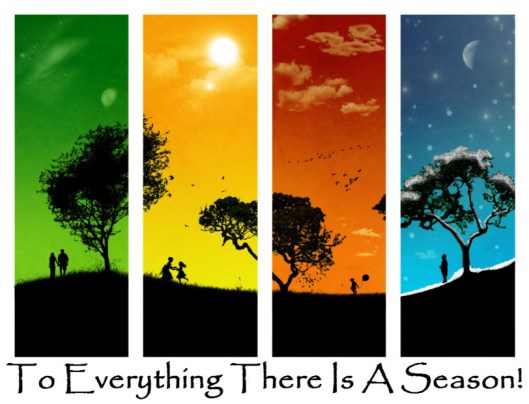
to-everything-there-is-a-season-orlando-espinosa

Photo credit:  https://orlandoespinosa.wordpress.com/2015/12/09/to-everything/

This weekend we got a new car and traded in my old car.  My old car was fifteen years old and had almost 180,000 miles.  We would have kept the car longer, but there were too many expensive fixes to make repairing the car worth the car’s value.  Normally, people get pretty excited about a new car – all the old dents and scratches are gone, and in my case, I can now be certain I won’t be break down on the highway.  But mostly I have been a bit sad about having to get rid of the old car.  That car helped us get through three rounds of graduate school, four moves, multiple jobs, the birth of two children, and was only six months younger than our marriage.  The car survived endless road trips, commutes to work, and at one point was our shared car until we got a second car.  Although the car had started making me anxious with all its repair needs, I felt like I was saying goodbye to a good, faithful friend.

As I have been reflecting on that experience, I have been thinking my experience with my old and new car is similar to how we all experience change.  Most of us know that change in inevitable, and yet most of us do not like change.  Even if the thing we are changing from is good for us, we miss the old quirks, patterns, and sense of regularity.  And the further out of the familiar we get, the more epic the memory of what once was becomes.  This is often the point at which people begin to refer to the “good ol’ days,” or “the way things used to be.”  Whatever the new change is will rarely seem as good as the old standard.

I have been feeling that way about my new car.  Sure, it is more reliable, it has fewer things peeling, sagging, or just broken, and it is more sporty, shiny, and colorful.  But I am finding I am not yet sold.  The new car just does not feel like it fits yet.  Observing my feelings about my car has been especially helpful for me as I think about all the times I have introduced change at church.  Sure, whatever changes I have introduced are usually for the good, and most often, become the new “way we have always done it.”  But falling in love with the new change takes time.  It does not happen overnight.

Perhaps this may be a good way we can approach our relationship with God.  The Holy Spirit is God’s agent of change.  She is always whispering new ideas, blowing new people into our lives, and breathing life into our imaginations.  Listening to the movement of the Holy Spirit is exciting, fun, and invigorating.  But boldly following the Holy Spirit also needs to involve tending to the grief of letting go of the what the Spirit was doing before.  The writer of Ecclesiastes says, “For everything there is a season, and a time for every matter under heaven.”  I wonder what seasons are passing away in your life, and what new times are arriving for you.  My prayer for you is that you be able to appreciate the season you are in, let go of the seasons that have passed, and embrace the seasons that are yet to come.  I know the Holy Spirit is doing good things in you.  I cannot wait to walk with you in the twists and turns!

On Busyness…

13 Wednesday Sep 2017

Posted by jandrewsweckerly in Uncategorized

≈ 1 Comment

Tags

beauty, busyness, creation, exuberance, God, habits, holy, joy, lessons, life, savor, sins, white space

We all have habits that pull us away from God.  Mine is the habit of busyness.  In juggling family, work, and self, I can easily fill every second of every day.  Even the fun stuff I schedule can feel like something to be “fit” into the schedule, not delighted in and savored in the moment.  I was particularly convicted of this reality by a speaker I heard at a leadership conference, Juliet Funt, who talked about the value of white space.  She defines white space as the strategic pause taken between activities.  White space is not meditation, letting the mind wander, or mindfulness.  It is a simple, intentional break.  And white space isn’t just for work – it is for the home too.

What struck me about her talk is I realized in my devotion to busyness, I am carving out a life that looks and is experienced in a particular way – a way that I am not sure I necessarily like.  Two things brought this home to me recently.  The first was watching the film About Time.  The plotline was a bit farfetched:  a man who can travel back in time and change parts of his life.  After myriad adventures, what the time traveler eventually realizes (spoiler alert!) is that he does not need to travel anymore.  Instead, he treats everyday like a gift to be savored and celebrated.  He was carving out white space in his life.

The second thing that brought this home was the funeral of a beloved parishioner.  In the eulogy, the family talked about all the life lessons they had learned from their mother, many of which were about living with joy and exuberance.  As I sat listening to the eulogy, I realized that everyday I am filling up my children’s life full of lessons – and I want them to be the right ones.

So, taking a cue from the fictional to the very real, I decided to create a little white space this week.  There are some lovely yellow wildflowers blooming on the drive to my children’s childcare facility.  So yesterday, I pulled over, grabbed the phone, and took some pictures of beauty – the beauty of God’s creation in nature and in my children.  It was a small victory, but as my children proclaimed, “That was fun!” I knew I had carved out a little holy space for all of us:  space to say thank you to God for all of our gifts – creation, life, each other.  I invite you today to find a moment of white space.  I can’t wait to hear about what that white space brings!

yellow-flowers-field-background-1

Photo credit:  eskipaper.com/yellow-flowers-field-background.html#gal_post_32591_yellow-flowers-field-background-1.jpg

← Older posts
Newer posts →

Recent Posts

  • On Politics, Football, and Love…
  • On Sharing the Love…
  • Sermon – Micah 6.1-8, Matthew 5.1-12, EP4, YA, January 30, 2026
  • On Justice, Kindness, Humility, and the Messy Middle…
  • Feast of the Rev. Dr. Martin Luther King, Jr., January 18, 2026

Archives

  • February 2026
  • January 2026
  • December 2025
  • November 2025
  • October 2025
  • September 2025
  • August 2025
  • July 2025
  • June 2025
  • March 2025
  • February 2025
  • December 2024
  • November 2024
  • October 2024
  • September 2024
  • August 2024
  • July 2024
  • June 2024
  • May 2024
  • March 2024
  • February 2024
  • January 2024
  • December 2023
  • November 2023
  • October 2023
  • September 2023
  • August 2023
  • July 2023
  • June 2023
  • May 2023
  • March 2023
  • February 2023
  • January 2023
  • December 2022
  • November 2022
  • October 2022
  • June 2022
  • May 2022
  • January 2022
  • December 2021
  • November 2021
  • October 2021
  • September 2021
  • August 2021
  • June 2021
  • May 2021
  • April 2021
  • March 2021
  • February 2021
  • January 2021
  • December 2020
  • November 2020
  • October 2020
  • September 2020
  • August 2020
  • July 2020
  • June 2020
  • May 2020
  • April 2020
  • March 2020
  • February 2020
  • January 2020
  • December 2019
  • November 2019
  • October 2019
  • September 2019
  • August 2019
  • July 2019
  • June 2019
  • May 2019
  • April 2019
  • March 2019
  • February 2019
  • January 2019
  • December 2018
  • November 2018
  • October 2018
  • September 2018
  • August 2018
  • July 2018
  • June 2018
  • May 2018
  • April 2018
  • March 2018
  • February 2018
  • January 2018
  • December 2017
  • November 2017
  • October 2017
  • September 2017
  • August 2017
  • July 2017
  • June 2017
  • May 2017
  • April 2017
  • March 2017
  • February 2017
  • January 2017
  • December 2016
  • November 2016
  • October 2016
  • September 2016
  • August 2016
  • July 2016
  • June 2016
  • May 2016
  • April 2016
  • March 2016
  • February 2016
  • January 2016
  • December 2015
  • November 2015
  • October 2015
  • September 2015
  • August 2015
  • July 2015
  • June 2015
  • May 2015
  • April 2015
  • March 2015
  • February 2015
  • January 2015
  • December 2014
  • November 2014
  • October 2014
  • September 2014
  • August 2014
  • July 2014
  • June 2014
  • April 2014
  • March 2014
  • February 2014
  • January 2014
  • December 2013
  • November 2013
  • October 2013
  • September 2013
  • August 2013
  • July 2013
  • June 2013
  • May 2013
  • April 2013
  • March 2013
  • February 2013
  • January 2013
  • December 2012
  • November 2012
  • October 2012
  • September 2012

Categories

  • reflection
  • Sermons
  • Uncategorized

Meta

  • Create account
  • Log in
  • Entries feed
  • Comments feed
  • WordPress.com

Blog at WordPress.com.

  • Subscribe Subscribed
    • Seeking and Serving
    • Join 391 other subscribers
    • Already have a WordPress.com account? Log in now.
    • Seeking and Serving
    • Subscribe Subscribed
    • Sign up
    • Log in
    • Report this content
    • View site in Reader
    • Manage subscriptions
    • Collapse this bar
 

Loading Comments...