• About

Seeking and Serving

~ seek and serve Christ in all persons

Seeking and Serving

Tag Archives: life

A Journey to Generosity…

04 Wednesday Oct 2017

Posted by jandrewsweckerly in Uncategorized

≈ Leave a comment

Tags

bless, evangelism, generosity, giving, God, gratitude, Holy Spirit, idea, inspire, journey, life, light, stewardship, vision

tens_nodate_logovertical (1)I am always amused when I discover the Holy Spirit at work because the discovery usually happens when I am in the thick of executing something I thought I had planned myself.  Ideas come to me, I test out the idea with others, I do the planning to implement the idea – basically the whole process involves a great deal of self-direction.  But when an idea really blows me away is when the idea takes off in even better ways than I planned.  When I finally realize how inspired the idea is, I realize that the idea could not have possibly come from me alone.  The only way those incredible moments of confluence occur is through the Holy Spirit.

I had one of those moments this week.  On Sunday we kicked off our stewardship campaign entitled “Journey to Generosity.”   All sorts of activities are a part of that campaign:  inspirational materials from our Stewardship Committee explaining the campaign, reflections from fellow parishioners, Parish Parties, sermons from the clergy, and meditations from national church leaders.  All of those experiences would be enough to situate us in a place of profound gratitude.  But then other things started happening.

The first has been attending our adult formation series.  The series is about evangelism, so I had expected our energies to be focused on the work of spreading the good news.  But the first sentence from the book we are using says, “Evangelism is your natural expression of gratitude for God’s goodness.”[i]  While I thought our conversations about gratitude and generosity would be limited to stewardship, here gratitude was permeating other areas of church life.  The second thing that happened was welcoming the first of three babies due this month at church.  As I held the first one yesterday, especially after a rough twenty-four hours of mourning another massive shooting in Las Vegas, I looked at that tiny child and felt a profound sense of gratitude for the gift of life.

Our “inspired” idea to talk and pray about our Journey to Generosity has already morphed into something much bigger.  I find myself being grateful not just for the generosity of parishioners who are passionate about our church and support its work through financial giving.  I am also grateful for a community of people who are so enthusiastic about their gratitude that they want to go out and share the good news with others.  I am grateful for a church community so generous in spirit that they can take tragedy and find rays of light and hope all around.  I am grateful for a community whose gratitude is so powerful that they have a vision of making our community a better place:  through our Fall Festival, through our visioning work with our Vestry, and through daily service to others.  What seemed like a catchy campaign slogan has actually been naming a way of life at Hickory Neck:  a life rooted in gratitude and generosity.  Thank you for letting me be a part of this journey with you all.  You inspire me every day and you transform my relationship with God every week.  God bless you on your journey to generosity!

[i] David Gortner, Transforming Evangelism (New York:  Church Publishing, 2008), 1.

On Cars and Change…

27 Wednesday Sep 2017

Posted by jandrewsweckerly in Uncategorized

≈ Leave a comment

Tags

car, change, God, grief, Holy Spirit, ideas, life, new, old, relationship with God, sad, season, time

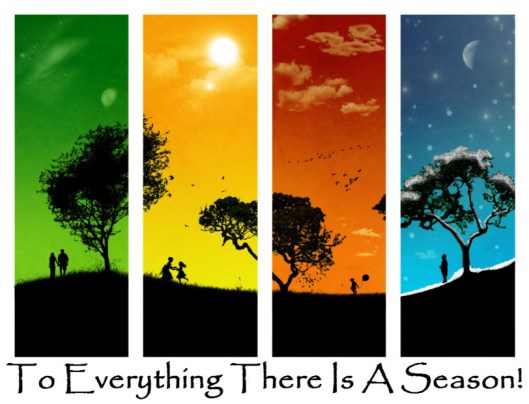
to-everything-there-is-a-season-orlando-espinosa

Photo credit:  https://orlandoespinosa.wordpress.com/2015/12/09/to-everything/

This weekend we got a new car and traded in my old car.  My old car was fifteen years old and had almost 180,000 miles.  We would have kept the car longer, but there were too many expensive fixes to make repairing the car worth the car’s value.  Normally, people get pretty excited about a new car – all the old dents and scratches are gone, and in my case, I can now be certain I won’t be break down on the highway.  But mostly I have been a bit sad about having to get rid of the old car.  That car helped us get through three rounds of graduate school, four moves, multiple jobs, the birth of two children, and was only six months younger than our marriage.  The car survived endless road trips, commutes to work, and at one point was our shared car until we got a second car.  Although the car had started making me anxious with all its repair needs, I felt like I was saying goodbye to a good, faithful friend.

As I have been reflecting on that experience, I have been thinking my experience with my old and new car is similar to how we all experience change.  Most of us know that change in inevitable, and yet most of us do not like change.  Even if the thing we are changing from is good for us, we miss the old quirks, patterns, and sense of regularity.  And the further out of the familiar we get, the more epic the memory of what once was becomes.  This is often the point at which people begin to refer to the “good ol’ days,” or “the way things used to be.”  Whatever the new change is will rarely seem as good as the old standard.

I have been feeling that way about my new car.  Sure, it is more reliable, it has fewer things peeling, sagging, or just broken, and it is more sporty, shiny, and colorful.  But I am finding I am not yet sold.  The new car just does not feel like it fits yet.  Observing my feelings about my car has been especially helpful for me as I think about all the times I have introduced change at church.  Sure, whatever changes I have introduced are usually for the good, and most often, become the new “way we have always done it.”  But falling in love with the new change takes time.  It does not happen overnight.

Perhaps this may be a good way we can approach our relationship with God.  The Holy Spirit is God’s agent of change.  She is always whispering new ideas, blowing new people into our lives, and breathing life into our imaginations.  Listening to the movement of the Holy Spirit is exciting, fun, and invigorating.  But boldly following the Holy Spirit also needs to involve tending to the grief of letting go of the what the Spirit was doing before.  The writer of Ecclesiastes says, “For everything there is a season, and a time for every matter under heaven.”  I wonder what seasons are passing away in your life, and what new times are arriving for you.  My prayer for you is that you be able to appreciate the season you are in, let go of the seasons that have passed, and embrace the seasons that are yet to come.  I know the Holy Spirit is doing good things in you.  I cannot wait to walk with you in the twists and turns!

On Busyness…

13 Wednesday Sep 2017

Posted by jandrewsweckerly in Uncategorized

≈ 1 Comment

Tags

beauty, busyness, creation, exuberance, God, habits, holy, joy, lessons, life, savor, sins, white space

We all have habits that pull us away from God.  Mine is the habit of busyness.  In juggling family, work, and self, I can easily fill every second of every day.  Even the fun stuff I schedule can feel like something to be “fit” into the schedule, not delighted in and savored in the moment.  I was particularly convicted of this reality by a speaker I heard at a leadership conference, Juliet Funt, who talked about the value of white space.  She defines white space as the strategic pause taken between activities.  White space is not meditation, letting the mind wander, or mindfulness.  It is a simple, intentional break.  And white space isn’t just for work – it is for the home too.

What struck me about her talk is I realized in my devotion to busyness, I am carving out a life that looks and is experienced in a particular way – a way that I am not sure I necessarily like.  Two things brought this home to me recently.  The first was watching the film About Time.  The plotline was a bit farfetched:  a man who can travel back in time and change parts of his life.  After myriad adventures, what the time traveler eventually realizes (spoiler alert!) is that he does not need to travel anymore.  Instead, he treats everyday like a gift to be savored and celebrated.  He was carving out white space in his life.

The second thing that brought this home was the funeral of a beloved parishioner.  In the eulogy, the family talked about all the life lessons they had learned from their mother, many of which were about living with joy and exuberance.  As I sat listening to the eulogy, I realized that everyday I am filling up my children’s life full of lessons – and I want them to be the right ones.

So, taking a cue from the fictional to the very real, I decided to create a little white space this week.  There are some lovely yellow wildflowers blooming on the drive to my children’s childcare facility.  So yesterday, I pulled over, grabbed the phone, and took some pictures of beauty – the beauty of God’s creation in nature and in my children.  It was a small victory, but as my children proclaimed, “That was fun!” I knew I had carved out a little holy space for all of us:  space to say thank you to God for all of our gifts – creation, life, each other.  I invite you today to find a moment of white space.  I can’t wait to hear about what that white space brings!

yellow-flowers-field-background-1

Photo credit:  eskipaper.com/yellow-flowers-field-background.html#gal_post_32591_yellow-flowers-field-background-1.jpg

On Life, Death, and the In-Between…

07 Wednesday Jun 2017

Posted by jandrewsweckerly in Uncategorized

≈ Leave a comment

Tags

birth, death, gift, God, joy, life, promise, thin space, Trinity, vocation

At the hospital where I delivered my second child, they had a practice of allowing the spouse or supporting person of the mother push a button that would play a tinkling song throughout the hospital marking the birth of a child.  The practice has many wonderful implications.  One, it makes room for joy – joy that can be experienced throughout the whole hospital community.  For those of you who have spent much time in hospitals, you know joy can be lacking.  Two, it creates a sense of mutuality between the birthing mother and her support team.  When the mom is doing most of the hard labor, it is nice to have tangible ways for the supporting team to participate.  Three, it creates little moments of celebration for the hospital staff – something they need too when bogged down with the work of health care.

But what felt like a wonderful, life-giving gift as I was delivering has taken on new layers of meaning as a pastor who visits hospitals.  More often than not, I have heard that song played while sitting with someone with a serious illness or who is approaching death.  The sense of irony about the circle of life is never lost on me, the patient, or their family.  It still feels like a gift, but a bittersweet one nonetheless.  I have also wondered what that song does for women and men in the hospital who have struggled with infertility or who have just lost a child.  That song represents so many unfulfilled dreams and heartache.

That being said, I do not think the disadvantages of the song outnumber the advantages.  I think the song actually does for everyday people what those in healthcare and pastoral care experience everyday – the thin spaces between life and death.  I cannot tell you the number of times when I have experienced life and death in a matter of days, hours, or minutes.  I have written about that here.  In a given week, I can hear the tinkling song while I sit at the bedside of a dying parishioner.  In a given day, I can hear elementary children playing and laughing, and then sit with a family member who needs a good cry.  In a given span of hours, I can bury a parishioner and then counsel a parishioner who is burying a marriage, birthing new love, or celebrating a new beginning.  This work is such that life and death are thinly separated.

The consequence of that thin space is that I get regular reminders of the enormity of God’s presence.  If I find the experience of celebrating life and watching life pass away in a matter of minutes, how much more infinitely does God experience the highest of highs and the lowest of lows in the human experience.  The God who created us and the world about us and called it good, and yet stood by as we sullied that creation has seen much.  The God who took on human form to experience for God’s self the complexity of the human experience knows much.  The God who breathes through life, death, and vocation in between feels much.  As we celebrate Trinity Sunday this weekend, I wonder how your appreciation of the three-in-one Godhead might help you appreciate both the promise that God is with us always, but also help you name God with us always for others.

worlds-oldest-new-father

Photo credit:  https://www.everydayfamily.com/blog/worlds-oldest-new-father/

On Dancing and Identity…

24 Wednesday May 2017

Posted by jandrewsweckerly in Uncategorized

≈ Leave a comment

Tags

Christ, church, covenant, disciples, dreamy, everyday, identity, life, moments, mundance, ordinary, romantic, wedding

First Dance

Photo credit:  https://apracitcalwedding.com/first-dance-wedding-songs/

This week I was visiting a parishioner at a retirement facility.   I was waiting in the lobby to meet the parishioner when I suddenly realized they were playing Glenn Miller’s Moonlight Serenade on the speakers.  I was catapulted to another time and place as I listened.  You see, Moonlight Serenade was the first song my husband and I danced to when we were married.  It had been the same song his grandparents had danced to when they were married 55 years earlier.  Not long after we started dancing, they joined us on the dance floor.  I remember catching a glimpse of them together as I danced with my husband, hoping we could enjoy such longevity and happiness in marriage.

Of course, little of our everyday lives are that dreamy.  We spend much of our marriage tending to the “stuff” of life – juggling work and family time; shuttling children to school, activities, and parties; tending to household duties; and trying to squeeze in sleep now and then.  There are certainly great moments – watching my husband engage our children, listening intently as he passionately talks about his vocation, and laughing heartily as he jokes about things only we get.  We are piecing together a life full of wonderful memories and chapters, but that life is also full of the mundane, everyday, ordinary stuff too.

I think that is why I was so grateful to hear that song this week.  That song reminded me of my identity – a moment in which I covenanted to live in a certain way with a certain person.  Though our dance together was just one part of that day, the song is a tangible reminder of identity.

After my visit and quick note to my husband about “our song,” I found myself wondering what other markers of identity we experience.  In the Episcopal Church, I would argue the sacraments are our biggest ones – the weekly celebration of Holy Eucharist, and the periodic celebration of Baptism.  In fact, Church is all about helping us define our identity as disciples of Christ – reminding us who and whose we are.  But I wonder, in your mundane, everyday, ordinary lives, what moments or events remind you of that identity?  What are those moments that halt you in your steps in a lobby and make you feel affirmed, rooted, loved, and empowered?

Sermon – Acts 2.42-47, John 10.1-10, E4, YA, May 7, 2017

10 Wednesday May 2017

Posted by jandrewsweckerly in Sermons, Uncategorized

≈ Leave a comment

Tags

abundance, abundant, baptismal covenant, Christian community, church, communal, community, confirmation, disciples, early, Jesus, life, reception, resurrection, Sermon, uncomfortable

These last weeks since Easter Day, we have been telling the story of what happened after Jesus’ crucifixion.  We heard the wonderful stories of discovery on Easter Day, the news from Mary Magdalene that Christ is risen.  We heard that familiar story of Thomas and the other disciples who were able to see and touch Jesus’ risen body.  We heard that beloved story of the walk to Emmaus, where two disciples were able to walk and talk with Jesus, and were reminded that Jesus is still with them.  And then today, we hear in the Acts story what has happened to the disciples.  They have gathered a community of believers who are growing every day.  People are sharing the holy meal, praying together, living in community, and praising God in the temple.  They are seeing signs and wonders, they are being generous with one another, and they have even sold their possessions like Jesus told them to, and are sharing their resources.  Today’s reading from Acts takes all of good stuff from Jesus’ ministry, all the heartache of Holy Week, and all of the joy of Eastertide, and basically concludes, “And they all lived happily ever after!”

In some ways, I cannot imagine a better text for today.  At our later service, we will be confirming and receiving nine parishioners in the church.  These are parishioners who have been studying Holy Scripture, Church History, the sacraments, Church polity, spirituality, and vocation.  Some are teenagers and some have grandchildren.  Some have spent a lifetime in other Christian traditions, and others were born and raised in the Episcopal Church.  And all of them feel called at this point in their spiritual journey to claim their faith as their own and begin a new phase of their walk with Christ at Hickory Neck.  What better thing than for these reinvigorated Christians to hear than a text about what their life will now look like?  They will be sharing in communion, worshiping God in God’s temple, praying together, living generous lives, and sharing their resources communally.  Is that not the image you have of Hickory Neck?

Well….  Okay, so maybe Hickory Neck does not look exactly like that early Christian community.  We certainly have some things down.  We baptize, are generous with one another, share the Holy meal, and praise God in worship.  But as far as I know, we have yet to enter a relationship with one another where we have sold everything we have and are living communally.  I suspect there would be a stack of cots at the back of the church today since we would all need a place to sleep.  I suspect we would have a roster to indicate who was cooking us lunch after services today and who was on clean-up duty.  I suspect we might have a line of zip cars and bike shares in the parking lot every day for those who work further away from church.  I suspect that our retirees here would be responsible for the children while their parents are out working.  Though Hickory Neck has certainly gotten close to the early Church community, we have a long way to go.

Now some of you may be rolling your eyes right now – wondering if Holy Scripture is trying to make the case for socialism or some hippie compound.  Since you know I try to avoid politics in the pulpit, here’s what I can tell you:  there are some Christian communities that are in fact trying to get much closer to the early church than we have ever considered.  When the housing crisis hit almost ten years ago, there were stories about neighbors who made agreements.  One family would sell their house and move in with another struggling family.  The two families would double up in rooms, figure out childcare sharing, meal sharing, and payment sharing.  They found that although the home felt crowded, the home also felt like a place of support, security, and serenity.[i]  And of course, there are what are called, “intentional Christian communities” all over the country.  I had multiple friends from college who volunteered or took nonprofit jobs out of college and lived in these intentional communities.  They shared rooms in a house, took turns with the household duties, gathered for communal dinners every night, and shared in worship a few times a week.

But I think we all know that this lifestyle is not “normal.”  We are not raised nowadays to live communally with other Christians, sharing our possessions and life.  In fact, when we hear Jesus say today that he came that we might have life and have it abundantly, we often think that means that Jesus came so that we might experience financial stability, good health, and happiness.  We confuse our American sensibilities of achievement and accumulation of wealth, with the kind of abundance that Jesus is talking about.[ii]  The truth is, those crazy hippies in the early church were on to something.  They did have an abundance – but they had the abundance because they shared.  And they were able to share because they listened to the teachings of Jesus through his disciples, they broke break regularly, they worshiped in the temple, and they shared the good news.  Their understanding of abundance changed – not an overwhelming sense of monetary wealth, but an overwhelming sense of community, of belonging, of purpose, and of “enough.”

Now before we get too down on ourselves or start thinking about all our possession that we would need to sell, we know the story takes a twist.  Three chapters later in Acts we learn about two members of the community who keep some of their wealth back – they start hording, hoping no one will know their secret.  So, like any of us, not everyone was on board with the communal living thing.  But the majority of the community entered into a covenant about this new way of being together.

I like that we get this text today because I like how the text makes us all ever so slightly uncomfortable.  I like that our new confirmands and those being received are hearing this today because they will need to struggle with this notion of Christian community with each of us too.  I do not know if we will ever get to the ideal found in the early Church, but we need these days of the newly received to remind us that we are not there yet.  We have not yet lived into the abundant life that Christ intended for us.  We are still on our journey, prayerfully pondering how to open ourselves up to the invitation to live life, and live it more abundantly.

That is why at our later service we will reaffirm our baptismal covenant.  Like we do over and over again throughout the year, we remind ourselves of the promises we made in baptism and in confirmation.  To gather with the community of faith, to repent and return to the Lord when we sin, to share the good news of God in Christ, to seek and serve Christ in all persons, to strive for justice and peace.  That baptismal covenant is our touchstone – that five-part measuring stick that lets us know those areas where we are really thriving in our spiritual journey, and those areas that need some work.  On Sundays like this, we get the questions once again, “Are you all in?  Are you ready for the gift of abundant life in Christ and all of the implications that gift involves?”  That gift is both a promise and a challenge – a blessing and what sometimes feels like a curse.  But we have all seen glimpses of that abundant life, and know how the abundant life is like milk and honey.  We just sometimes need a nudge to get us back on the way.  Amen.

[i] Joanna Goddard, “Two Families Sharing a House (Would You?),” October 26, 2015, as found at https://cupofjo.com/2015/10/communal-house-cohousing-san-francisco/ on May 4, 2017.

[ii] Rolf Jacobson, Karoline Lewis, and Matt Skinner, “Sermon Brainwave Podcast:  #539 – Fourth Sunday of Easter,” April 29, 2017, as found at http://www.workingpreacher.org/brainwave.aspx?podcast_id=880 on May 3, 2017.


On hitting our stride…

08 Wednesday Feb 2017

Posted by jandrewsweckerly in Uncategorized

≈ Leave a comment

Tags

blessing, dream, God, identity, life, ministry, retreat, Vestry

family-service-1This weekend, our Vestry gathered for a retreat.  Only a few things were on the agenda:  getting to know each other better (nothing like filling out some Lent Madness brackets to help you get to know someone!), defining who we are as a community, and looking forward to where we are going.  The weekend was a wonderful combination of laughter, reflection, quiet, conversation, dreaming, and planning.  I am reminded once again how blessed we are by the diverse, talented group of leaders who are helping guide our parish into its next phase of life.

One of the things we did on our retreat was to watch a video about Hickory Neck from 2004.  As a relative newcomer to Hickory Neck, it was fascinating to see so many familiar faces (don’t worry – you all still look fabulous!), to hear what was energizing the community back then, and to see what the goals and dreams were.  The video was produced to prepare Hickory Neck for a capital campaign which would support the construction of our New Chapel.  Despite the intent to raise funds, you still could hear clearly what Hickory Neck was about, and where it was going.

What I loved about watching the video was seeing how much things have changed, and how some things have not changed at all.  We are still a community of hope, joy, and belonging.  We still love to worship the Lord in the beauty of holiness, we are still journeying toward deeper relationship with God and our neighbor, and we still want to be beacon of light to our neighbors in need.  And yet, since the video was created, the economy has changed, technology has changed, and demographics have changed.  Our work now is listening to the new ways God is calling us to be faithful disciples to a world in need of redemption.

This is an exciting time for Hickory Neck.  These last ten months, we have been alternately jogging, sprinting, and trying to match each other’s pace.  As we wrap up this first year together, we are hitting a rhythmic stride together.  We have learned a lot more about each other, figured out how to adjust for each other’s gifts and talents, and are now getting ready to take off.  It’s an exciting time and the fun is just beginning.  If you haven’t met Hickory Neck yet, I would encourage you to come on over and check us out.  You won’t be disappointed!  And if you have been around a bit, I think you are going to be pleased to be a part of this next phase of life and ministry together.  God has great things in store!

Sermon – Matthew 1.18-25, A4, YA, December 18, 2016

21 Wednesday Dec 2016

Posted by jandrewsweckerly in Sermons, Uncategorized

≈ Leave a comment

Tags

ancestors, beautiful, call, calling, discernment, God, Jesus, Joseph, life, listen, messy, ordination, righteous, scary, Sermon

This week, I have been thinking a lot about callings.  Of course, with Charlie’s ordination to the priesthood this weekend, thinking about callings is not unusual.  I have always enjoyed ordinations – and not just because I am a priest.  I remember the first ordination I went to there were six people being ordained.  I only knew one of the six because she was our new assistant at the Cathedral.  But I remember being awed by the service.  The six ordinands seemed set apart.  As they processed down the aisle, wearing their simple albs, I remember wondering how they came to be called as priests, imagining they must have led a special life or be particularly holy.  I remember the swarms of clergy who gathered up front to lay hands on the new priests.  I remember how the new priests somehow seemed bathed in light that day – as if they had some special connection to the holy.

Having been through the ordination process myself, I look at ordinands a little differently today.  Instead of seeing perfectly pious priests processing, I see people who have come through a great ordeal.  I imagine the countless nights of struggling with God about why in the world they should become priests.  I imagine the stressful meetings with bishops, priests, and committees and the ambiguity about what would happen.  I imagine the exams, the sense of failure after messy pastoral visit, and the countless “no”s that come along in the process.  I no longer see perfectly coifed new priests, but instead see the haggard, raw, vulnerable people who have said, “yes,” to what promises to be a life of hard, beautiful, ugly, blessed days.   In that way, I do not see the ordained as all that different from the rest of us – a vulnerable group of people who are trying to figure out what in the world God wants us to do with our lives.

That is why I love that we hear Joseph’s story today.  Most of us think of Joseph as the stable, quiet figure in Jesus’ life.  He is present on the holy night of Jesus’ birth.  He protects Jesus from Herod by fleeing to Egypt.  He teaches Jesus a trade.  He accepts the mighty task of raising a child that is both his own and not his own.  In our minds, he is a righteous, quiet, solid man of faith.

While all of those things may be true, what they miss is the mess of his life behind the scenes. [i]  Joseph is a typical man of faith, righteously living his life, betrothed to a faithful, promising young woman.  He is quietly living his life when his world gets turned upside down.  His betrothed becomes pregnant, which must mean she has been unfaithful, and in Joseph’s time, that means his soon-to-be wife must either be stoned or divorced immediately.[ii]  Trying to overcome this tremendous disgrace and disappointment, Joseph discerns the best, most gracious path forward.  And just when he has settled what is next, God comes along, and flips his world upside-down again.  Now Joseph is supposed to not only believe that Mary is magically pregnant through the Holy Spirit, but he is also to stay with her and take the baby in as his own.  And based on scripture, we know once Jesus hits the teenage years, Joseph’s story disappears altogether.  Even though God calls Joseph to do this tremendous, hard, messy, but beautiful thing, Joseph does not get the spotlight for long.  He goes about his everyday life, living out his calling, relatively unnoticed by the world.

One of the things I have loved about mentoring people over the years is seeing just that same phenomenon.  Throughout our lives we have distinct seasons of discerning call.  Sometimes those moments are obvious:  graduating from school, trying to find a job, figuring out how to spend time in retirement.  The pattern seems to go a little like this:  we hit a point where we need to discern what God is calling us to do; we go through a process of discernment, sometimes formal, but usually informal; we make a decision and take the necessary steps to follow that path; and eventually we look back.  In looking back, we rarely find that the call we heard and answered leads us to where we expected or wanted.  Invariably, there are twists and turns we never could have anticipated.  Invariably, there are failures scattered throughout the successes.  Answering a call is never a simple, clean, or easy process.

Just this week, I was reading about a young man from North Carolina who happened to see a traveling ballet company at his church at age seven.  Four years later, he found himself practicing six days a week.  He eventually joined the New York City Ballet.  He says, “I’ve always seen ballet as my way of serving God.  I think it’s what God has called me to do.”[iii]  What I love about this young man’s story is that whether you are a ballet dancer, cabinet maker, housekeeper, or financial manager, at some point, God has called you to that work for a reason.  The ballet dancer admits he sacrificed a lot to follow his call.  I imagine he failed a lot before he succeeded.  And some day, his body will no longer be able to dance, and he will have to figure out what else God is calling him to do.  His story is the messy, beautiful, challenging story of call we all live.

And if we have never struggled with discerning our professional calling, we have certainly struggled to understand what God is doing in our personal lives.  Though we are approaching a season of joy and merriment, I know there are many of us who are facing medical diagnoses whose purpose we do not understand.  There those among us who are living in relationships – romantic, familial, or otherwise – that are at times loving, hurtful, confusing, and life-giving.  And there are those of us who feel lost, lonely, or restless, even though everything in our lives seems to be moving along well on the outside.  God is in the midst of the personal too – calling us, challenging us, and shaping us.

If we were ever unsure about God’s presence in our messy professional and personal calls, Joseph stands ready to remind us.  He too faces a medical diagnosis that changes his world – a pregnancy that he did not plan, or even participate in, that changes the course of his life forever.  He too faces a relationship that seems broken.  Even when he feels as though he is choosing a kind, compassionate, and righteous decision, God calls him to take another path.  Joseph too understood what feeling lost is like.  Just because an angel tells him to take in Mary and adopt the child as his own, I doubt that things are easy sailing at home, on that journey to Bethlehem, or even after Jesus’ birth.  Though Joseph is listening to God and following God’s call, he is never promised a simple, peaceful, happy life.

So why do we do it?  Why do we listen to God’s call for us if we have no guarantees of a happy, smooth, or peaceful life?  We follow God’s call because we have experienced that sense of dis-ease when we do not follow God’s call – that sense that we are not using all the gifts God has given us, or that discomfort that comes from trying to force what we “should” do in life with what God calls us to do in life.  We follow God’s call because we have experienced the tremendous grace that comes from answering God’s call.  Sure, the road is messy, and hard, and sometimes frustrating.  But the road is also full of beautiful surprises, wonderful accidents, and joyful confirmations that we are right where God wants us.  And we follow God’s call because we are part of a people who have always followed God’s call:  from Abraham, to Moses, to Esther, to Jonah, to Mary, to Joseph.  Our ancestors have taught us that when we say “yes,” God does indeed turn our lives upside down.  But our ancestors have also taught us that in the midst of that topsy-turvy turmoil is where we find out truest selves, where we meet the world’s deepest needs, and where we find ourselves in Christ’s light and love.  So, do not be afraid.  God is with us.  God is with you.  Amen.

[i] David Lose, “Matthew’s Version of the Incarnation,” December 17, 2013, as found at http://www.workingpreacher.org/craft.aspx?post=2961 on December 14, 2016.

[ii] Douglas R. A. Hare, “Exegetical Perspective,” Feasting on the Word, Yr. A, Vol. 1 (Louisville:  Westminster John Knox Press, 2010), 93.

[iii] Quote and story from Humans of New York, December 12, 2016, at http://www.humansofnewyork.com/post/154395391126/i-was-first-exposed-to-ballet-at-the-age-of-seven, as found on December 14, 2016.  Photo by Brandon Stanton.  Subject unnamed.

On Fragility…

11 Thursday Aug 2016

Posted by jandrewsweckerly in Uncategorized

≈ Leave a comment

Tags

cycle, death, fragile, God, hidden, life, loss, prayer, pregnancy, thin space

green-leaves-with-sunlight

Photo credit:  www.extremetech.com/extreme/191233-new-nanoparticles-get-us-closer-to-artificial-photosynthesis-mass-carbon-capture

I have talked before about how, as a priest, the life cycle is ever present in my work [see post here].  Simultaneously celebrating new life and honoring earthly death can sometimes happen within days or hours.  But this week I have been reminded of how sometimes we do not even see or think about that thin space between life and death because, all too often, we have the privilege of not having to think about it.

This week, one of my close friends celebrated the fifth anniversary of the birth and death of her child.  The baby died in utero around twenty weeks.  That event was formative for our entire community of friends.  Suddenly, pregnancy was no longer a happy, idyllic time, when everything always turns out okay.  We all began to see the dark side of pregnancy, and understand how much we take a “normal pregnancy” for granted.  In thinking about baby Ella this week, and the impact she had on so many of us, I find myself humbled by how much her death gave us.

And like any other cyclical week in the priesthood, what news should I learn but of a friend who was surprised to discover she is pregnant after having lost her first pregnancy over a year ago.  I was equally elated and terrified.  Elated, because I knew how much the couple hoped that maybe, just maybe, they might be blessed with a successful pregnancy and birth.  But terrified because they, and I, know how fragile these next thirty-four weeks will be.

So this week, my prayers are with all of those who walk through the journey of life, death, and pregnancy.  I especially lift them up, because all too often, their joy, grief, and anxiety are hidden.  For fear that life will not be viable, many couples elect to keep their pregnancy quiet for as long as possible.  Whether they share or not, the couple faces consequences.  When everyone knows about a pregnancy that is lost, the couple can have to retell the painful story over and over again.  When no one knows about the pregnancy, the couple can feel isolated and alone in their grief, because to share their story, they have to tell you that they were pregnant and are now no longer pregnant.  There are no easy ways forward, and so for those in our midst walking the path of longing to create new life, fearfully growing new life, birthing new life, and mourning lost life, our prayers are with you.  You live in a fragile reality that we honor and hold with love and that we lift to God.  You are not alone.

Sermon – I Kings 19.1-15a, P7, YC, June 19, 2016

22 Wednesday Jun 2016

Posted by jandrewsweckerly in Sermons, Uncategorized

≈ Leave a comment

Tags

abandoned, body of Christ, comfort food, desensitized, done, Elijah, fight, food, go, God, healing, life, love, Orlando, peace, sacred, Sermon, serve, shooting, strength, tragedy, tree, wilderness

Last Sunday, after the parish picnic, I found out about the tragedy in Orlando.  When the youth and I gathered for Holy Eucharist that night, we lifted up our prayers for the victims and their families.  Being able to name the tragedy in the context of Eucharist was comforting, but by the time I got home and poured over news coverage, I found myself bereft.  I was not in shock, for this kind of tragedy has honestly become commonplace in our country.  I think I wanted to be in shock or at least surprised.  But instead, I felt a sense of familiarity and coldness.  I realized that my psyche has become desensitized to this sort of tragedy.  Instead of feeling sad, I just felt numb.  I felt powerless, with nothing to do but be resigned to the fact that this is the way our life is now.  Nothing can change.  Mass murder is normal – whether by a religious radical, a mentally unstable person, a racist, or a disillusioned teen.  Mass death is normal – whether LGBT brothers and sisters, people going to the movies, African-Americans worshiping, or children attending school.  All I could comprehend in my numbness was the fight, the outrage, and the compassion draining out of me.

The same thing happens to Elijah in our story today.  If you remember, a couple of weeks ago we heard about how Elijah has been putting Ahab’s practices to shame.  You see, in an effort to keep the political peace, King Ahab agreed to take a foreign wife, Jezebel, and worship her god, Baal, in addition to Yahweh.  The God of Israel is none too pleased, and so Elijah dramatically challenges the prophets of Baal to a duel.  Elijah is full of confidence, taunting, and dramatic flair.  And when Yahweh wins, Elijah slays the entire lot of Baal’s prophets.  But today, Jezebel proclaims she will avenge their deaths, and all of the fight leaves Elijah.  He runs into the wilderness until he cannot run any longer.  He crumbles under a tree, and proclaims that he is done.  He feels that he is all alone.  He asks God to take his life.

We all know the feeling that Elijah has.  Maybe we or a loved one has been fighting cancer.  We go for one last evaluation only to find that things have made a turn for the worse.  Or maybe we have been advocating for a particular political issue and the tide seems to be turning.  But a court decision is made or a vote is cast and the decision or vote does not go our way.  Or we think we have finally seen an addicted friend reach the end of his addictive behavior.  We are relieved to see healthy patterns until we get a late night call about how he has gotten into trouble again.  The fight leaves us.  We no longer feel a sense promise, victory, and confidence.  Instead the darkness settles over us like a fog, and we crumble under a tree and say, “Enough.  I am done, Lord.”

But something seemingly small happens to Elijah in his moment of despair.  The story goes, “Then Elijah lay down under the broom tree and fell asleep.  Suddenly an angel touched him and said to him, ‘Get up and eat.’  He looked, and there at his head was a cake baked on hot stones, and a jar of water. He ate and drank, and lay down again.  The angel of the Lord came a second time, touched him, and said, ‘Get up and eat, otherwise the journey will be too much for you.’  He got up, and ate and drank; then he went in the strength of that food forty days and forty nights to Horeb the mount of God.”  God gives Elijah food.  No words of encouragement, no pep talk about how things will get better.  God feeds Elijah in the wilderness, in a moment of despair, in a time of darkness.

There is a reason why we have something called “comfort food,” in our culture.  In fact, every culture has some version of comfort food.  Whether the food is a southern mom’s chicken and dumplings or a Jewish grandmother’s matzah ball soup; whether the food is Burmese mohingar, Vietnamese pho, or a New Mexican posole; or whether the comfort food is North Carolina, Memphis, or Texas barbeque, we all have food that brings us back to ourselves.  Somehow the taste of something familiar and rooted in our identity or a fond experience connects to our entire body in a visceral way.  The smell of the food, the flavors that are just right, the warmth filling our bellies, and the happy memories that flood our consciousness allows our entire body to relax.  Whatever has been ailing us – a sore throat, a homesickness, or a broken heart – can be wiped away by that simple, familiar, healing meal.

But comfort food does not just make you feel good.  Comfort food gives you strength:  mends your heart, heals your soul, and emboldens your spirit.  Elijah does not simply eat the food from God and wallow longer at the tree.  Elijah gets up.  He journeys for forty days on the strength from that bread.  His renewed spirit allows him to have a deep conversation with God, where he eventually finds out that he is in fact not alone.[i]  God has not abandoned him.  God has enabled other prophets to stand with him.  God is not done with Elijah yet.  Though God does not expect Elijah to go at it alone, God does expect Elijah to get back in there.[ii]

I am fully aware that we as a community are a diverse group of people with a wide range of political opinions.  My guess is that the violence of Orlando brought out a wide variety of responses to the event and the politicking that has happened since then.  But no matter how you feel about the shooter, the victims, or the instruments of the victims’ death, a week ago, 49 of our brothers and sisters died.  Life is sacred, and that sanctity was snuffed out last week.  And this is not the first time this has happened.  Though the stories behind the shooters, the motives behind the shootings, and the demographics of the victims are different each time, invariably, more life is desecrated.

We learn from Elijah’s story that God knows we need to mourn.  God knows we need to wallow for a time.  God knows that we may feel alone, or powerless, or just plain tired.  That is why God gives us trees in the wilderness.  But eventually, God will send us some comfort food – to soothe our aching heart certainly, but more importantly to strengthen us to continue the journey.  Because whether we feel like we have the inner strength or not, God is calling us to step out of the shade of the tree, and get back on the journey.[iii]

What that means for each of us here may be entirely different.  Certainly our work is to be grounded in prayer – prayers for the victims and their family members, prayers for the shooter, prayers for our nation as we sort out how we will govern ourselves, and prayers for us as we figure out how to be witnesses for Christ in the midst of the chaos.  But prayers are not all we are called to do.  We could do that under a tree or in a cave.  Instead, God sends us comfort food to heal our broken hearts, soothe our wearied souls, and embolden our spirits.

Today, and every Sunday, our comfort food, like Elijah’s, is also in the form of bread.  We call that bread the body of Christ.  That bread has power.  That bread has power to forgive our sinfulness and complicity with sin.  That bread has power to comfort our aches and sorrow.  That bread has the power to make us Christ’s body in the world, witnesses to the love that Jesus taught us about.  We know that our prayers and our consumption of Christ’s body does that for us because the very last thing we do – the very last thing we say – in our worship service is “Go in peace to love and serve the Lord.”  We do not say, “Have a good week.”  Or “Be at peace.”  We say “Go in peace to love and serve the Lord.”  How God will use us to love and serve the Lord in the world varies widely.  We all have a variety of vocations that take us to varied and sundry places.  But wherever we find ourselves, God has work for us to do.  Our work is to not only say, “Thanks be to God,” but to mean, “Thanks be to God.”  We thank God for our call to love and serve others.  We thank God for food for the journey.  We thank God for the ways that God does not leave us alone.  We thank God the ways that God will empower us and use us to be agents of love in the world.  So take a little more time today to pray and to mourn.  But then get ready to be sent out into the world to love and serve the Lord.  Thanks be to God.  Amen.

[i] Trevor Eppehimer, “Theological Perspective,” Feasting on the Word, Yr. C, Vol. 3 (Louisville: Westminster John Knox Press, 2010), 150.

[ii] Haywood Barringer Spangler, “Homiletical Perspective,” Feasting on the Word, Yr. C, Vol. 3 (Louisville: Westminster John Knox Press, 2010), 151.

[iii] Terrance E. Fretheim, “Commentary on 1 Kings 19:1-4[5-7]8-15a,” June 19, 2016 as found at http://www.workingpreacher.org/preaching.aspx?commentary_id=2876 on June 16, 2016.

← Older posts
Newer posts →

Recent Posts

  • On Getting It Right…
  • Sermon – Matthew 9.9-13, 18-26, P5, YA, June 7, 2026
  • On God, Grace, and Letting Go…
  • On Spiritual Check-Ins…
  • Sermon – Acts 1.6-14, E7, YA, May 17, 2026

Archives

  • June 2026
  • May 2026
  • April 2026
  • February 2026
  • January 2026
  • December 2025
  • November 2025
  • October 2025
  • September 2025
  • August 2025
  • July 2025
  • June 2025
  • March 2025
  • February 2025
  • December 2024
  • November 2024
  • October 2024
  • September 2024
  • August 2024
  • July 2024
  • June 2024
  • May 2024
  • March 2024
  • February 2024
  • January 2024
  • December 2023
  • November 2023
  • October 2023
  • September 2023
  • August 2023
  • July 2023
  • June 2023
  • May 2023
  • March 2023
  • February 2023
  • January 2023
  • December 2022
  • November 2022
  • October 2022
  • June 2022
  • May 2022
  • January 2022
  • December 2021
  • November 2021
  • October 2021
  • September 2021
  • August 2021
  • June 2021
  • May 2021
  • April 2021
  • March 2021
  • February 2021
  • January 2021
  • December 2020
  • November 2020
  • October 2020
  • September 2020
  • August 2020
  • July 2020
  • June 2020
  • May 2020
  • April 2020
  • March 2020
  • February 2020
  • January 2020
  • December 2019
  • November 2019
  • October 2019
  • September 2019
  • August 2019
  • July 2019
  • June 2019
  • May 2019
  • April 2019
  • March 2019
  • February 2019
  • January 2019
  • December 2018
  • November 2018
  • October 2018
  • September 2018
  • August 2018
  • July 2018
  • June 2018
  • May 2018
  • April 2018
  • March 2018
  • February 2018
  • January 2018
  • December 2017
  • November 2017
  • October 2017
  • September 2017
  • August 2017
  • July 2017
  • June 2017
  • May 2017
  • April 2017
  • March 2017
  • February 2017
  • January 2017
  • December 2016
  • November 2016
  • October 2016
  • September 2016
  • August 2016
  • July 2016
  • June 2016
  • May 2016
  • April 2016
  • March 2016
  • February 2016
  • January 2016
  • December 2015
  • November 2015
  • October 2015
  • September 2015
  • August 2015
  • July 2015
  • June 2015
  • May 2015
  • April 2015
  • March 2015
  • February 2015
  • January 2015
  • December 2014
  • November 2014
  • October 2014
  • September 2014
  • August 2014
  • July 2014
  • June 2014
  • April 2014
  • March 2014
  • February 2014
  • January 2014
  • December 2013
  • November 2013
  • October 2013
  • September 2013
  • August 2013
  • July 2013
  • June 2013
  • May 2013
  • April 2013
  • March 2013
  • February 2013
  • January 2013
  • December 2012
  • November 2012
  • October 2012
  • September 2012

Categories

  • reflection
  • Sermons
  • Uncategorized

Meta

  • Create account
  • Log in
  • Entries feed
  • Comments feed
  • WordPress.com

Blog at WordPress.com.

  • Subscribe Subscribed
    • Seeking and Serving
    • Join 391 other subscribers
    • Already have a WordPress.com account? Log in now.
    • Seeking and Serving
    • Subscribe Subscribed
    • Sign up
    • Log in
    • Report this content
    • View site in Reader
    • Manage subscriptions
    • Collapse this bar

Loading Comments...