• About

Seeking and Serving

~ seek and serve Christ in all persons

Seeking and Serving

Tag Archives: light

Sermon – Matthew 2.1-12, Isaiah 60.1-6, EP, YA, January 5, 2020

08 Wednesday Jan 2020

Posted by jandrewsweckerly in Sermons, Uncategorized

≈ Leave a comment

Tags

abundance, Bethlehem, Christ, control, Epiphany, God, grace, hide, ignore, incarnation, Jerusalem, light, love, magi, mystery, need, pageant, power, promise, Sermon

At our 9:00 am service today, we honor the feast of Epiphany with our annual Epiphany Pageant.  Every year I love watching the children and youth bring the Christmas story alive one more time.  Part of what makes the service special is hearing the story with fresh ears – not from a clergy person reading from the aisle like every other Sunday, but with a variety of voices narrating and enlivening the words, making the incarnation story more incarnate.  I love how the pageant keeps us in the Christmas moment one more week, and I love how the story brings all our Christmas characters under one roof, reminding us of the continual unfolding of the mystery of the incarnation.  Though there is something certainly endearing about the whole experience of a pageant, there is also something quite profound in a pageant too.

But what pageants can sometimes do is focus our attention so intently on the manger – on Jesus and his family – that we forget what happens outside the manger is just as important as what happens at the manger.  Even our beloved carol “We Three Kings,” draws us to the experience of the magi’s adoration in Bethlehem, without insight into what happens in Jerusalem.  This year, after hearing of registrations, of humble births, of angel choruses, of everyday shepherds spreading the Gospel, and of cosmic explanations of the incarnation, we turn our attention to Jerusalem.  Isaiah gives us some clue about where our attention is drawn.  “Arise, shine; for your light has come, and the glory of the LORD has risen upon you…Lift up your eyes and look around…”[i]  The instruction in Isaiah is not for Bethlehem, but the city of Jerusalem[ii] – the city where Jesus’ journey will end, the city for whom Jesus weeps, the city of eventual redemption and salvation.  There, Isaiah foretells of the incarnation, how the people of God are to reflect the light of Christ, and to pay attention to what is happening around them, to God incarnate.

Those words, “lift up your eyes and look around,” have been lingering with me this week.  Instead of looking deep into the scene at the manger or with the holy family, I am drawn by what is happening in Jerusalem.  Three things happen there.  One, we learn more about the magi.  The testimony of the magi is what most of us associate with Epiphany.  Foreigners set out on a quest, more attuned to the cosmic nature of the incarnation than the people of faith.  Their astrological findings do not simply fascinate them, but inspire action – a long, uncomfortable journey to see the incarnation for themselves.  As profound as their witness is, they are not able to complete the journey alone.  They stop in Jerusalem for guidance.  They know they are on the right path, they just cannot quite get to the proper place. And so, the magi stop and ask for help along the way.  They know something significant has happened, but they need guidance from people of faith to fully realize their journey.[iii]

The magi’s insightful question, “Where is the child who has been born king of the Jews?” is a question that brings in the second action.  The chief priests and scribes, the ultimate insiders of the faithful, those who hold the revelation of scripture and interpret scripture for the people of God, are given news that should be earth shattering.  When asked about the birth of the Messiah, the religious leaders recall what they know of the Messiah:  the Messiah is to be born of Bethlehem and is to shepherd and rule the people of God.  The religious leaders offer the key – the prophecy of scripture about the coming Messiah.  And yet, even though they have this scriptural foundation, they do not react to the news of the magi.  Even though these wise people profess this awaited Messiah has been born, the religious leaders do not drop everything.  They do not even ask to go with the Magi, just to check and see if this story might have something.  They may be versed in scripture, but their inaction shows that even insiders sometimes need outsiders to be faithful.[iv]

Finally, the third thing that happens are the actions of Herod.  Herod is probably the most fascinating to me.  He is wise too, even if he uses his wisdom for his own nefarious purposes.  Herod knows the announcement, even if from an outsider of a new king being born means his own kingship is threatened, and shows how fragile his rule is.[v]  But instead of acting impulsively, he manipulates those around him.  First, he calls in the religious leaders.  You see, Herod is not a Jew – in fact, he is a Roman, serving at the leisure of the kingdom.  But his subjects are Jewish, and so he is wise enough to seek their counsel on what a king, what a Messiah, might look like.  But instead of sending his religious leaders to check things out in Bethlehem, knowing they might discover a true king among them, he secretly sends the foreigners, hoping to manipulate them into doing the work of finding the king, knowing he will get news from them so he can kill this new king.  Herod is only worried about himself and his power, and he will do whatever is needed to maintain that power.

The foreign magi are so unfamiliar with the people of God, they do not initially understand the weight of their question about the new king.  The scribes and religious leaders are so buried in their scripture, and so keen to keep balance with secular power, they do not realize the messianic fulfillment right in front of them.  And Herod is so bent on keeping his power, he does not fully understand the power of God working all around him.  All three of these agents in our story need the words of Isaiah today – all three need to lift up their eyes and look around.

We are not unlike the characters in our story today.  How often are we so mired in our own power – as people of privilege and comfort, as Americans with power more globally, as members and advocates in this community – how often does a word about the movement of God, the promise of change, and the possibility of giving up some of our power to allow that fulfillment, make us just as nefarious as Herod – just as willing to manipulate the world around us?  Or how often have we steeped ourselves in scripture, scouring God’s Holy Word, longing for some sort of guidance or truth, not realizing truth is being spoken through another right to our faces?  Or how often have we been so intent on a mission, so focused on what we sense God calling us to do, we ignore the consequences of our actions, forget the power of our words?

Today’s scripture reading is certainly about the gift of the magi to us – the revelation of the incarnation, the insight of foreigners, and the abundance and homage the incarnation inspires.  But today’s scripture reading is also an invitation to consider our own response to that incarnation in the modern era, considering the ways in which we have not lifted our eyes and looked around.  Taking up Isaiah’s invitation to self-critique is important because there is also a promise in Isaiah.  You see, when we lift our eyes and look around, we acknowledge the narrowness in our lives, or we acknowledge the ways in which we are blind to our own power, or we discover the ways in which we even hide behind our faith, we are then able to see the promise in Isaiah.  Isaiah tells us to look around because glory of the LORD has risen upon us.  Isaiah says in verse five, “Nations shall come to your light, and kings to the brightness of your dawn.”  When we talk about shining our light on this holy hill here at Hickory Neck, this is what we mean.  The gift of the magi to us is not news that is frightening.  When we are not hoarding power or hiding behind our intellect or comfort zones, the news of the magi is news for rejoicing.  And that rejoicing is light that draws nations, and kings, and neighbors, and strangers, and family members, and friends.  The gift of the magi is the invitation to let go of the things that feel under our control, and embrace the thing in no way we control, but in every way brings us grace, love, and abundance.  That is the kind of living that shines light from this hill and brings others to Christ’s light.  That is the light offered to us today in the magi.  That is the kind of good news worthy of pageants and proclamation today.  Amen.

[i] Isaiah 60.1, 4a

[ii] Rolf Jacobson, “Sermon Brainwave #701 – Day of Epiphany,” December 29, 2019, as found at http://www.workingpreacher.org/brainwave.aspx?podcast_id=1216 on January 3, 2019.

[iii] R. Alan Culpepper, “Exegetical Perspective,” Feasting on the Word, Yr. A, Vol. 1 (Louisville:  Westminster John Knox Press, 2010), 217.

[iv] Culpepper, 217.

[v] Stanley Hauerwas, Matthew (Grand Rapids:  Brazos Press, 2006), 38-39.

Sermon – Matthew 11.2-11, A3, YA, December 15, 2019

18 Wednesday Dec 2019

Posted by jandrewsweckerly in Sermons, Uncategorized

≈ Leave a comment

Tags

active, Advent, Christmas, church, darkness, God, Jesus, John the Baptist, joy, light, Messiah, repentance, Sermon, sober

Advent is one of the stranger seasons of the Church, in which the experience of churchgoers seems completely out of alignment with the secular world.  The secular world put on bells weeks ago, has been playing songs about holly, jolly Christmases, and in general is so excited about Christmas presents, vacations, and fun that there is a little room for anything but joy.  Meanwhile, those sitting in church in these weeks have heard about preparing our lives and hearts for the return of the Lord, about repenting and making a way for our God, of quietly, soberly, and humbly waiting for what is to come.  But on this third Sunday of Advent, those two worlds collide:  the saccharine-filled, tap-dancing, over-caffeinated secular world of pre-Christmas and the quiet, methodical, prayerful world of Advent both turn us to joy.  This third Sunday of Advent, called Gaudete or Rose Sunday, we light a pink candle, and we proclaim a mini-sabbath from our somberness and lean into joy.  The church seems to be telling us, “Okay, take one day to smile, to linger on how cute baby Jesus must have been, and how exciting things must have been at the manger.  This time of year might just be the hap-happiest season of all!”

Given the Church’s permission to lean into to joy this week, we might anticipate a gospel reading that is also full of joy – maybe Mary and Elizabeth sharing their pregnant joys or angels delivering good tidings of great joy.  Instead, we get John the Baptist, sitting in a cold jail cell, asking an unthinkable question to Jesus, “Are you the one to come, or are we to wait for another?”  Now John has never really been a character who has embodied joy.  He lived the life of an ascetic, he preached about people’s sinfulness and their need to repent, he drove people to be baptized, in their hope to get right with God.  But John has been certain about Jesus in the past.  Earlier in Matthew, John says, “One who is more powerful than I is coming after me; I am not worthy to carry his sandals.”[i]  In John’s Gospel, John the Baptizer says, “Here is the Lamb of God who takes away the sin of the world!”[ii] and “He must increase, but I must decrease.”[iii]  In Luke’s Gospel, John’s surety about Jesus happens before he is even born, as he leaps in his mother Elizabeth’s womb.[iv]  So what has happened to John?  Why can he not just get on the joy train with us today?

Well, a couple of things have indeed changed.  John is no longer free to roam around as he pleases, he is no longer surrounded by growing crowds who are mesmerized by his words, and his own disciples seem lost without him.  John is sitting in a cold, hard jail cell, his life hanging in the balance, and Jesus, the guy he was so sure about, is not exactly playing along.  He is not acting like he is supposed to, and in that dark, damp place, John is left wondering, “Was I wrong?  Is Jesus not The One?  If he is the Messiah, surely I would not be here, suffering without Jesus taking decisive, bold action.”  And John is right to question.  Wonderful things are happening through Jesus, blessings of which the prophet Isaiah had foretold.  But according to scholars, there are no distinctive documents that depicted the Messiah behaving in the way Jesus does.[v]  If Jesus is the Messiah, John’s doubts are not unfounded.

Truth be told, as much as we would like a joyful sabbath from our quiet, sober, season of repentance, we understand John’s plight.  We have all had those moments of darkness where we too have asked God, “Are you the one who is to come?”  That question is a question we have all asked at one point or another.  In the midst of chronic pain, as a romantic relationship is falling apart, as a pink slip is delivered, as loneliness overwhelms us, we have asked Jesus, “Are you the one who is to come?” because we too have been disappointed by God.  We too have expected God to be with us in a specific way, to make things right in the ways we imagined, or to fix the world and show the world that God is indeed present.  Hickory Neck acknowledges that very reality this coming weekend in our Blue Christmas service – a service where we boldly confess that Christmas is not a joyful season for all – and that is okay.  We understand the darkness that can live on the margins of the light.

Although we may all understand John’s plight in some way, although we have all had those deep, painful moments of questioning, we may find ourselves wondering, why we chose this specific text on the day that is supposed to be about joy.  Surely we did not don our rose-colored bow-tie, pink dress, or rose sweater for nothing!  Fortunately, we do get joy from this text from Matthew too – albeit not necessarily in the ways we may want.  When John asks, “Are you the one who is come?” I suspect he wanted a simple, “Yes, of course!  Do not fret!”  But Jesus does not usually do direct.  Instead, Jesus says, “Look around you, John.  What do you see?”  And for those of us not there, Jesus reminds us:  the blind receive their sight, the lame walk, the lepers are cleansed, the deaf hear, the dead are raised, and the poor have good news brought to them.  The Good News John is looking for may not look familiar, but there is good news.  Jesus’ version of Messiahship is not familiar, but his Messiahship is good.

One of the most powerful, and sometimes annoying, questions my spiritual director asks me when talking about my life and ministry is, “Where are you seeing God?”  The question is the same question I have asked many of you too.  Where in the midst of struggle, suffering, or pain are you seeing God?  The question is annoying because sometimes we just want to sit in our suffering – sit in our cold jail cells – with our questions and not look to joy.  But that is what looking for God does.  When we recall the people around us who bring us meals or baked goods, just because, we begin to see the loving care surrounding us.  When we remember the conversation with a good friend when she sees a profound truth that brings us comfort and peace, we begin to hear the comforting words of Jesus.  When we reassess the blessing happening around us – our everyday needs being met, the appearance of an encouraging bloom or bird’s song, or an unexpected act of kindness – we begin to see that maybe, just maybe, there is joy bubbling up all around us.

This Gaudete Sunday may not bring us the kind of joy that makes us feel like this is the most wonderful time of the year.  But today’s gospel does bring the kind of joy that matters – the deep, abiding joy that come from realizing God is active in our lives, making a way for goodness, healing, and grace.  Today’s gospel reminds us our questions and doubts are okay, and are answered by examples of blessing all around us.  Today’s gospel takes our frustrations about how life should be, and shows us the abundance in what is.  Jesus offers us today the kind of joy that eases those lines of stress between our furrowed brows, that softens the tension in the middle of our chests, and unclenches the teeth, shoulders, and hands that have been hardened for so long.  Jesus offers us the kind of joy that is a deep breath of release, a refreshing gulp of cool water, an all-encompassing hug of compassion.  Our invitation today is to receive Christ’s joy with assurance, and then share his joy beyond these walls.  Amen.

[i] Mt. 3.11

[ii] Jn. 1.29

[iii] Jn. 3.30

[iv] Lk. 1.41

[v] William R. Herzog, II, “Exegetical Perspective,” Feasting on the Word, Yr. A, Vol. 1 (Louisville:  Westminster John Knox Press, 2010), 71.

Sermon – Matthew 24.36-44, Isaiah 2.1-5, Psalm 122, Romans 13.11-14, A1, YA, December 1, 2019

04 Wednesday Dec 2019

Posted by jandrewsweckerly in Sermons, Uncategorized

≈ Leave a comment

Tags

Advent, attention, attuned, bury, cope, dramatic, Jesus, keep watch, light, ordinary, parenting, promise, scary, second coming, Sermon

One of the cooler things about my grandmother was a unique skill she had.  She could hold her fingers just so, making a perfect circle between her middle finger and thumb, place the circle in her mouth, and create a whistle so loud it could be heard across a large campus or a packed room, full of people.  The sound was as loud as any instrument you could produce, and the tone was so distinct, you knew right away my grandmother trying to get your attention.  I always thought the gift was super cool, longing to master the gift myself.  But my dad, on the other hand, hated that sound.  Having grown up with my grandmother, he associated the sound with being in trouble.  And he was not alone.  My grandmother’s whistle was so loud and so distinct, the entire neighborhood knew the sound – and also knew the Andrews kids must be in trouble.  Other kids would tell my dad, “You better hurry!”  My grandmother did not need to raise her voice, or call out for her children.  One loud whistle, and the kids knew the whistle meant drop everything you were doing and come immediately.

Today’s gospel lesson has the same kind of impact.  Matthew’s gospel talks of the second coming, a return so shocking people will be caught unawares, with neighbors, family, and friends suddenly disappearing, or swept away unexpectedly, like the people outside of Noah’s ark.  The images are so vivid and alarming, whole book and film series have been created depicting what this dramatic second coming will be like.  Countless street corner preachers have used these images to drive people to Jesus out of fear.  Unfortunately for Jesus, these preachers, books, and films have been so dramatically fantastical, that Jesus’ words have lost their sense of realism.  We hear these words now and either roll our eyes is disbelief, brush them off in discomfort, or walk away in disdain.

Now, I am not suggesting you start watching or reading the Left Behind series, and I acknowledge the two-thousand-year delay in this second coming can leave us a bit skeptical.  But I do think there is an invitation today to step into the parts of the images that are disorienting or even unsettling.  Most of the images Jesus uses today are of people doing their everyday activities:  eating, drinking, working in the fields, preparing daily meals.  These are the activities of life:  reading the paper, driving the kids to school or practice, studying for a test, tending our gardens, preparing dinner.  The space Jesus is talking about is the space in life that can become so routine we can almost do them without thinking.  In fact, sometimes, the routine is so powerful we become absorbed in the routine – not just out of habit, but also because of desire.  Burying our heads in the sand of the ordinary is one of the ways we cope with the world around us.  When the world seems overwhelming or hard, we bury ourselves in routine, leaving little space in our minds, hearts, and spirits for much else.

The problem with burying our heads in the ordinary is that we start missing things.  We pass by the children boarding a school bus from a local motel without thinking.  We ignore how much desolation, deception, and destruction is all around us by avoiding the news.  We stop noticing that elder in church whose health is starting to isolate them from the community.  And we have every reason to bury ourselves – the chaos and need in the world can be thoroughly overwhelming at times.  We all know there are much more unhealthy coping mechanisms, so burying our heads in the ordinary seems pretty tame in comparison.  My family will be the first to tell you that when mommy starts randomly deep cleaning a part of the house, something big has gone awry.

But here’s the thing:  Jesus is not telling us to avoid the ordinary.  Jesus knows as much as anyone we need food to eat – everyday.  What Jesus is asking us to do is keep a part of ourselves out of the ordinary.  Jesus wants our ears to be attuned for his distinctive whistle – the whistle that can grab our attention whether we are in the middle of a conversation, are knee deep in a project, or are binge-watching the latest Netflix release.  But the reasons Jesus wants us to have our ears attuned for his whistle may not be as nefarious as they seem.  In turning to our other three lessons today, we begin to see the light.  Isaiah tells in the days to come, the Lord will be doing some mighty things – beating swords into ploughshares, and spears into pruning-hooks.  Nation will not lift up sword against nation, nor shall they learn war any more.  Isaiah’s message of peace is a message of joy and action.  Isaiah whistles to us, “O house of Jacob, come, let us walk in the light of the Lord!”[i]

The psalmist’s whistle is similar.  “Let us go to the house of the Lord,” she says.  Out of the ordinary, and into the house of God, we hear a new prayer for us.  “May they prosper who love you.  Peace be within your walls and quietness within your towers.  For my brethren and companions’ sake, I pray for your prosperity.  Because of the house of the Lord our God, I will seek to do you good.”[ii]  Can you imagine missing such a beautiful blessing because we were working through our shopping list during mass or afraid of what we would find in the Lord’s house?

Paul whistles to us too.  “Wake up,” Paul says in Romans.  “The night is far gone, the day is near.  Let us then lay aside the works of darkness and put on the armor of light; let us live honorably as in the day…”[iii] Paul’s call for attention is a call to goodness, an invitation into a community of light – in clothing ourselves with that light.

If Jesus’s images felt threatening or scary, enough to drive our heads into the ordinary, the rest of our lessons tell us why we should, in fact, pull our heads out, and keep watch this Advent.  When we do, we hear some stunningly wonderful news – news of peace and harmony, news of blessing and soothing, news of light in a world of darkness.  Perhaps Jesus’ whistle was a bit more like my grandmothers – the whistle that let you and everyone around know you were in trouble.  But the rest of the lectionary today tells us the whistle is a gift – an invitation to turn into the light.

One of the things I loved about WMBGkind, the kindness movement happening in our community, was that the movement opened a real window into the light.  After reading the Last Word in The Virginia Gazette for several years, I had begun to bury my own head – reading the whole paper and then stopping short on the last page so I did not have to read the vitriol in our community.  But once I started paying attention to acts of kindness in our community, my perspective shifted.  I skimmed the Last Word to find the thank you notes – the notes of thanks for big and tiny acts of kindness.  I started to notice photos of countless churches, organizations, and businesses giving back to the community.  I started noticing neighbors holding doors for one another, kids picking up litter, and strangers giving up their time to help someone else.

I have seen the same sense of light here at Hickory Neck too.  As we talked about shining our light this year during Stewardship season, I saw parishioners trying out new ministries.  I watched parishioners increase pledges and talk excitedly about what a difference we could make in our community.  I have watched as longtimers offer lovingkindness to newcomers, as newcomers give of their time to welcome others, and as parishioners and clergy share laughter, love, and levity.  When I listen to the whistle of scripture, I hear light, I hear promise, and I hear invitation.

As a mother of five children, I know we often teased my grandmother for her ominous whistle.  My guess is her whistle was a necessary tool in her parenting toolbelt.  But I found myself wondering this week what might have happened if she had used the same whistle to deliver other news:  hugs and words of affirmation; a quiet whisper in their ear saying, “I just wanted you to know that I love you.”  Instead of the whistle being an ominous sound, the whistle could have been a song of promise.  That’s what today’s lessons offer to us:  a song of promise.  Sure, they may be jarring to the ear at first.  But when we really listen, we hear their promise in the depths of our souls – in places we bury when we bury ourselves in the ordinary.  Our invitation this Advent is to pay attention.  Keep awake therefore, for you do not know on what day your Lord is coming.  Amen.

[i] Isaiah 2.5

[ii] Psalm 122.6-9

[iii] Romans 13.12-13a

Homily – Luke 18.9-14, P25, YC, October 27, 2019

06 Wednesday Nov 2019

Posted by jandrewsweckerly in Sermons, Uncategorized

≈ Leave a comment

Tags

abundance, alongside, bad, community, good, identity, Jesus, light, love, ministry, parable, passionate, pray, shine, stewardship, walk

Today’s parable from Jesus is one of those short parables that seems pretty straightforward at first glance.  Jesus describes two men who go to the temple to pray.  One is a Pharisee – a law-abiding, God-fearing man who offers a prayer of thanksgiving, albeit one that is full of self-righteousness, comparing himself and his choices favorably against those of others – suggesting in a sense that others are outside of God’s favor and grace.  The other is a tax collector – a corrupt collaborator with the government who, full of shame, humbly confesses to God his sins.  Jesus tells us the tax collector, “went down to his home justified rather than the other.”

Our temptation is to hear this text and conclude something quite simple:  the Pharisee is bad and the tax collector is good; bragging about yourself is bad and being humble is good; being a faithful person who misjudges God’s abundance is bad and being a self-aware sinner is good.  The problem with reading the text in this black-and-white way is we miss little details.  With such a stark reading, we can find ourselves walking out of church today thinking, “Thank God I’m not like the Pharisee!”  And before we even notice, we realize we are praying the same prayer as the Pharisee from the parable!

But this week, I stumbled on a little translation difference that shifted this parable for me.  In verse 14, Jesus says, “I tell you, [the tax collector] went down to his home justified rather than the other…”  But scholar Matt Skinner argues the preposition, “rather than,” should be translated instead as “alongside.”  So, verse 14 becomes, “I tell you, [the tax collector] went down to his home justified alongside the other…”[i]  Skinner argues there is much more nuance in this parable than we often allow.  That both men are praying, both men have faults, and both go home justified in different ways.  Sure, the Pharisee limits the extent of God’s grace, and he is unaware of his sinfulness in such exclusion, but the tax collector is no innocent.  Both men go home justified alongside each other.

One of the things we have been celebrating this stewardship season is our identity.  When we say, “We are Hickory Neck!” we say we are a people who have raised over $170,000 for local charities, who have over 50 volunteers on a given Sunday, who support one another through spiritual offerings like Lectio Divina, Book Club, Bible Study, and Jam Sessions, who nurture children and young families, who welcome newcomers, who work hard, and who have fun.  We are all those things are more – I imagine each of us here has a mental picture about what we mean when we say, “We are Hickory Neck!”  One of those things is that we walk home justified alongside each other.

That is what I love about this community.  This is a community that is passionate about Jesus and take’s Christ’s light out into the world.  This is a community that is passionate about caring for one another – where all can feel loved and affirmed, and all can find a place to thrive.  This is a community that is passionate about serving our neighbors – those young families looking for a sense of belonging and affirmation, and those retirees looking for a new sense of home.  This is a community that is passionate about liturgy, music, having fun, sharing sorrows, honoring history, dreaming about future possibilities, and laughing – lots of laughing.  This is a community that is passionate about investing our individual resources into Hickory Neck so Hickory Neck can bless others as Hickory Neck has blessed us.  We are Hickory Neck!  We are a community who walks alongside each other.

But that’s just me.  I want to know what gets you excited about Hickory Neck.  I want to know what saying “We are Hickory Neck!” conjures in your mind.  At your tables is a list of ideas from our Stewardship Committee.  Reread those ideas, and then talk with the people at your table about what you think of that is not on the list.  Write them down as you talk, so the Stewardship Committee understands what is important to you as we support and fund ministry.  You have about five minutes to chat and make notes, and then we’ll regather with a word of prayer…

Let us pray.  God of abundance, we come to you as self-righteous, sinful followers, who regularly mess up.  But our heart is with you.  We want to be agents of your light and your love.  Help us to love you abundantly.  Help us to support your kingdom generously.  Help us to walk alongside one another, shining your light for others so they may give glory to you.  In the name of the Father, and the Son, and the Holy Spirit.  Amen.

[i] Matt Skinner, “Sermon Brainwave #686 – Twentieth Sunday after Pentecost (Ord. 30),” October 19, 2019, as found at https://www.workingpreacher.org/brainwave.aspx?podcast_id=1192 on October 23, 2019.

On Shining Our Light…

23 Wednesday Oct 2019

Posted by jandrewsweckerly in Uncategorized

≈ Leave a comment

Tags

abundance, anxiety, church, community, giving, Jesus, joy, light, money, nervous, passionate, pledge, relationship, shine, stewardship

711x400-FiC-LetYourLightShine

Photo credit:  https://wels.net/let-your-light-shine-3/

A couple of weeks ago, Hickory Neck had a wonderful guest preacher who talked to us about stewardship.  He led with a participatory set of questions.  The first was, “What is your reaction when I tell you today is a Stewardship Sunday?”  The responses ranged from “anxiety,” “nervousness,” “dread,” and “frustration” (though some people studiously responded, “gratitude”).  The next question was, “How do you think your rector feels about Stewardship Sundays?”  The responses were fairly similar, and the preacher surmised that stewardship is something rectors dread too because so much of what they can do is based on what parishioners are willing to give.

The funny thing is though, as I sat there listening to the preacher’s question about my own feelings, my initial response about how I, as rector, felt about stewardship season was “joy.”  I know what you are thinking, “Come on, Jennifer, we know you get stressed out about money as much as we do!”  And there is probably a latent sense of anxiety or at least uncertainty.  But mostly I feel joy.  I love talking about stewardship because to me, talking about stewardship is a lot like evangelism.  Both involve talking about something you love and inviting people into that passion.  And I absolutely love and am passionate about the community of Hickory Neck and the powerful ministry we are doing.  I see every day what a powerful place this is for people, and what an incredible impact it is making on their lives.  So, asking people to financially support this place is really just a matter of inviting people to affirm that goodness in their life – to give with the same abundance that is experienced within this community.

The other reason I feel joy in talking about stewardship is because talking about our financial giving is what people do when they are in relationship with one another – they talk about what it is important to them, and what effects their everyday lives.  Money is one of those things that is at the very heart of our lives – we need it, we use it, and we often wish we had more.  Jesus even talked about money perhaps more than any other issue in his ministry.  But the reason many of us get uncomfortable talking about money is because money feels personal and intimate.  But being in authentic relationship means sharing things that are personal and intimate.  With whom else can you talk about money if not with those to whom you are closest, who support you in your darkest moments, and who love you unconditionally?

The last couple of months I have run into many colleagues and long-time friends, and invariably they ask me how things are going at Hickory Neck.  I have noticed when I answer that inquiry, my body has a visceral response.  I immediately and unconsciously smile and let out a sigh of satisfaction before I launch into what I love about our community and the work we are doing together.  As you are working on your pledge cards this week, I hope you can first think about what those things are at Hickory Neck that give you joy, that make you excited to be here, investing your time and energy.  Then I hope you can allow your financial pledge to be a testimony to that joy.  Come, shine your light with me!tens-shining-our-light-horiz

On Light, Community, and Being All In…

02 Wednesday Oct 2019

Posted by jandrewsweckerly in Uncategorized

≈ Leave a comment

Tags

community, gift, give, harness, idea, Jesus, light, loving, loving kindness, ministry, neighbor, pledge, power, shining, stewardship, together, transform

70161290_10158145043567565_8013087704956796928_n

Photo credit:  Jennifer Andrews-Weckerly; resuse with permission

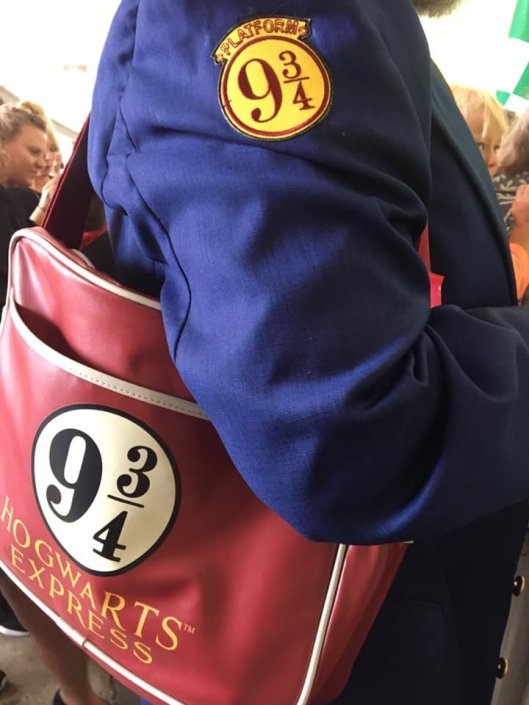
This past weekend, our family traveled to Staunton, Virginia, for their annual Queen City Mischief and Magic weekend – a weekend to celebrate all things Harry Potter.  We had a great time discovering what houses we were sorted into, observing how to duel with wands, and learning dances for the next Yule Ball.  The kids busied themselves collecting trading cards from costumed characters and from local establishments.  The whole downtown area shut down and found creative ways to channel the world of Harry Potter – from the local train station taking on the persona of Platform 9 ¾, to a photography business creating keepsake photos, to a toy store changing out their stock with Potter toys, games, and books, to the local university offering lectures related to themes from the series, to the local spirits store selling “butter beer.”  For those who love the Harry Potter books and movies, it is a great fun-filled weekend.

As we drove home, I realized what amazed me most about the weekend was not the characters, the paraphernalia, or the crowds.  What amazed me was how a few years ago this small town had a crazy idea to convert the town to this magical place – and everyone bought into the idea.  Staunton does not have some significant tie to JK Rowling or the filming of the movies.  They are just a small town in the middle of the state who decided to do something – and the whole town was all in.  I do not know the history of that idea, or how many people said, “but we’ve never done anything like this,” along the way, or how they figured out the logistics and convinced people to get on board.  But what I can tell you is after two years of attending the festival, the whole town is not just grudgingly on board, but wholeheartedly comes together to welcome people to their town that might not otherwise ever step onto their streets.

I know Staunton converts itself for just three days.  But the more I thought about the event, the more I wondered what kind of power our community might be able to harness for good.  I have certainly seen hints of that kind of energy with the WMBGkind movement in Williamsburg – a community of people committed to being a community of kindness as their dominant identity.  I think that is why I have always thought WMBGkind and the faith community can be such great partners.  Though we use religious language, the end result is the same.  We want our community to be a community that lives Christ-like lives of loving-kindness.  In that way, no matter what our denominational or faith differences are, we can step out of our day-to-day operations and be a part of something much bigger – of a people all united around mission of loving neighbor as ourselves.

This week, Hickory Neck kicked off its stewardship campaign, “Shining our Light.”  What I love about the campaign is the campaign reminds us to look at how much light we are gifted with (in worship, in learning, and in play), and then to gift that light the community around us – to shine our lights, rallying the entire community to live life differently.  That is a cause I am happy to pledge our financial giving to; that is a cause I am excited to pledge our time and talent to as well.  This month, as we pray about our own stewardship, I encourage you to think about how your giving not only supports the ministry of Hickory Neck, but might just have the power to transform our community into something much bigger than ourselves.  I am all in.  Won’t you join me?

71757278_2601111433278434_853371931125088256_o

Photo credit:  https://www.facebook.com/Hickory.Neck/photos/p.2601111426611768/2601111426611768/?type=1&theater

Sermon – Luke 16.19-31, P21, YC, September 29, 2019

02 Wednesday Oct 2019

Posted by jandrewsweckerly in Sermons, Uncategorized

≈ Leave a comment

Tags

chasm, Christian, community, corrosive, dignity, goodness, Jesus, judgment, Lazarus, light, money, parable, rich man, scripture, Sermon, stewardship, wealth

I was listening to my favorite preaching podcast this week, which is hosted by three to four seminary professors and scholars.  Usually they spend about a third to half of the podcast talking about the gospel lesson, and then spend the rest of the time on the three other lessons.  But this week, the focus on the gospel was pretty truncated.  In fact, one of the scholars basically said, “If you are looking for some new knowledge or some hidden message in this gospel, there isn’t one.  This one is pretty straightforward.”[i]  After a convoluted, at times ambiguous, lesson last week about a crooked manager who gets praised for his deviousness, this week’s gospel has very little ambiguity.  You can almost hear echoes of Luke’s beatitudes from chapter 6, “Blessed are you who are poor, for yours is the kingdom of God….but woe to you who are rich, for you have received your consolation.”[ii]

We could easily read this parable about the rich man and Lazarus and think, “Wow that rich man really messed up; I am so glad I am not rich so I do not have to worry about that kind of poor behavior.”  But here is the thing:  Jesus is not telling a story about “that guy.”  The fact that Lazarus has a name but the rich man does not gives us a big interpretive tool for this parable.[iii]  This is not a parable about a man who messed up ages ago.  This is a parable for faithful people everywhere who daily must navigate the truth of scripture with the reality of being persons of wealth.  Our very citizenship in this country means that we are people of wealth.  We are the rich man.

So, if we are the rich man, what can we learn from him?  Unlike in our passage a few weeks ago, Jesus is not telling us to give up our possessions so we are no longer rich.  What Jesus is saying is our wealth will make behaving faithfully very difficult.  Later, Luke will tell us behaving faithfully with wealth will make getting into the heavenly kingdom as difficult as getting a camel through the eye of a needle.  Jesus warns us because wealth has a corrosive impact on our lives.  Wealth can make us confuse wants with needs.  Wealth can make us think we somehow deserve wealth – as if we did something to earn favored position in life, instead of blessing coming from the grace of God.[iv]  Wealth can deaden our empathy, turning us inward, slowly turning us into people who avert our eyes in the face of poverty, who dehumanize those in poverty, seeing them as servants instead of equals, who become convinced just being Christians and not living as Christians is enough.

We can see how the rich man in our parable gets there.  We are told his clothing is of fine quality.  He eats sumptuously every day.  He clearly ignores Lazarus, sitting by his gate every day.  We know he actively ignores Lazarus because we find later he knows Lazarus’ name without ever having reached out to him.  Even in his death, the rich man is buried with dignity and care.  Therefore, his behavior in Hades, or Sheol, should be no surprise.  Even in suffering afterlife, the rich man dehumanizes Lazarus.  He regards Lazarus as a servant and messenger who can be ordered around to bring him water or warn his brothers.  When your whole life has been blessed by wealth, slipping into a pattern of forgetting to respect the dignity of every human being is quite easy.

The judgment of the parable is both gentle and direct.  Beloved father Abraham, who gathers Lazarus into his bosom, still sees the humanity in the rich man.  Calling him “child,” he almost sadly has to remind him of his poor earthly behavior.  When the rich man desperately tries to help his living brothers, Abraham finally has to be firmer.  Like the beloved father he is, Abraham draws a definitive boundary.  As the rich man insists his brothers need a personal testimony to change their own wealthy behavior, Abraham reminds the rich man they have already been warned by Moses and the prophets. And if any of us wonder if Abraham is being overly dramatic, we need only catalogue the scripture lessons warning about wealthy behavior:  Exodus 22.21-22, 23.9, Leviticus 19.9-10, 19.33, 23.22, Deuteronomy 10.17-19, 15.1-11, 24.17-18, Amos 2.6-8, Hosea 12.7-9, Micah 3.1-3, Zephaniah, Malachi, Isaiah, Jeremiah, and on, and on, and on.[v]  And Abraham is not even talking about Jesus’ warnings.  Even later letters, like we heard today in the first letter of Timothy, take up the mantle.

So if our very citizenship makes us like the rich man, what can we do to resist the corrosiveness of wealth?  The gospel lesson today seems to suggest three things.  First, one way to combat the seductive lure of wealthy living is to root ourselves in Scripture and Christian community.  One of the things our Discovery Class attendees are learning is how steeped in Scripture Episcopal worship is.  Just by coming to church on Sundays, we hear a large portion of the Bible’s words.  Add in our songs and our prayers, and suddenly we find our liturgy is dripping with the words of Scripture.  Coming to church and hearing hard texts like this one and the ones we have been having for weeks, we find ourselves among a community of people who want to live life differently, and need Holy Scripture and each other to do that.  Of course, reading and praying with scripture and your Prayer Book outside of Sundays doesn’t hurt either.

Second, another way to resist the pull of wealthy living is to spend time examining the chasms in our lives.  Abraham insists Lazarus cannot help the rich man for many reasons; one of those reasons is the great physical, uncrossable chasm between the two realities the men now inhabit.  But that chasm is just a reflection of the chasm that existed on earth too – the rich man’s gate that prohibited connection, help, or even awareness of Lazarus’s suffering and need.[vi]  We create those same chasms, those same gates in our everyday lives too.  We ignore the dilapidated housing we pass on our drives, we allow ourselves to forget the vast number of students on reduced and free lunch in our schools, we choose homes and sidewalks that allow us to avoid the homelessness we meet every winter at the Shelter.  Today’s gospel lesson encourages us to use our eyes to see, really see, the gates we have built and to begin to dismantle them.

Finally, another way we fight the power of wealth is to use the wealth for goodness – to shine our light into the world, as our stewardship team will be encouraging us to do this month.  I know that kind of charge can feel overwhelming – we could give away every cent we have and not heal every Lazarus we meet.  I am not saying we should not use some of our wealth to try – whether we give to the Lazarus in front of us, the non-profits that create support systems for Lazaruses, or, and particularly important, we use our wealth to support this faith community:  the community that teaches us how to be faithful, that brings together the community of support we need to follow Jesus, and that propels us into the world as enlightened people of faith.  As the dishonest steward taught us last week, we can use our corrupting wealth for goodness.  We can use the precarious nature of wealth to be agents of light in the world – to shine our lights as Hickory Neck.

The work will be difficult.  Jesus assures us the work will be hard and shows us that reality in parable after parable.  But we are encouraged today because of the people in this room.  This is a community of people who not only give us a sense of belonging and support, this is also a community of people who have your back in figuring out this whole faithful Christian living thing.  This is a community of people who vulnerably, humbly, and joyfully are willing to walk with you.  We can shine our lights because each person in this room is shining their light too.  Together we can do the work to open gates, dismantle closed doors, and fill in chasms of separation.  Together we can turn the lure of wealth into a tool for goodness.  Together we can show the world another way, shining our lights.  Amen.


[i] Matt Skinner, “Sermon Brainwave #682 – Sixteenth Sunday after Pentecost (Ord. 26),” September 21, 2019, as found at http://www.workingpreacher.org/brainwave.aspx?podcast_id=1180 on September 24, 2019.

[ii] Luke 6.20, 24

[iii] Charles B. Cousar, “Exegetical Perspective,” Feasting on the Word, Yr. C, Vol. 4 (Louisville: Westminster John Knox Press, 2010), 117.

[iv] Fred Craddock, Luke, Interpretation: A Bible Commentary for Teaching and Preaching (Louisville:  John Knox Press, 1990), 196.

[v] Luke Timothy Johnson, The Gospel of Luke, Sacra Pagina Series, vol. 3 (Collegeville:  The Liturgical Press, 1991), 253.

[vi] Skinner.

On Stories, Remembering, and Healing…

11 Wednesday Sep 2019

Posted by jandrewsweckerly in Uncategorized

≈ Leave a comment

Tags

darkness, dignity, God, heal, honor, human being, intimacy, kindness, light, love, people, power, pryaer, reclaim, remember, respect, September 11, share, story

Story Corps

Photo credit:  https://storycorps.org/discover/september-11th/

Today marks the eighteenth anniversary of September 11, 2001 – a fateful day in the United States.  Even eighteen years later, this is a day where we as a country remember – remember where we were that day, remember the people who were touched by tragedy that day, remember how a single day could transform a nation and the world.  This day hangs heavy in our consciousness each year, the weight never quite lifting even with the passage of time.

I think part of why this day is so heavy for us as a people is because of the people this day touched.  Certainly, we could look at the death toll, and recall the names of the almost 3,000 people who died that day, most without the opportunity to say goodbye to their loved ones.  But September 11’s reach went beyond those who died.  The ripple of that day is mind-blowing:  those who were physically injured, those who were bereaved, those who were supposed to be in those buildings and somehow life’s circumstances kept them away, those whose health continues to be poor from living nearby or helping with the cleanup efforts, those who walked for hours fleeing danger, those who made hard decisions that day – some leading to life and some leading to death.

Four years after that fateful day, NPR’s StoryCorps launched their September 11th Initiative.  A program built around having people tell their stories, StoryCorps launched an effort to record the stories of that specific day – of the man who traded shifts that day and whose mentor died because he had volunteered to take his shift; of the man who consoled his wailing two-year old and had to wait four months before his wife’s body was finally identified; to the woman who sifted through bones and debris in a hanger months later, trying to help people find closure; to the airline employee who checked in the terrorists that day at the gate; the father who lost both sons, one a firefighter and one a police officer, in the line of duty that day.  Every story, every single one is gut-wrenching and tear-evoking.  And every one gives a tiny glimpse into the magnitude of the ripple effect this one day had on all of us.

This day, I invite you to honor September 11 with stories.  Talk to your neighbors, friends, and strangers about their experiences.  Listen to stories like the ones on StoryCorps.  Read whatever stories you can find.  When we engage in one another’s stories, we engage in honoring the dignity of every human being, something we pledge to do in our baptismal covenant.  We allow the depth of this day to do something to us.  And somewhere in that intimacy of story, we begin to hear an invitation – an invitation to honor life today.  Whether it is an act of kindness (maybe even the kindness of simply asking someone to tell their story), or whether it is a time of prayer to honor all that has been, or whether it is a commitment to reclaiming love so that hatred can never win in such a powerful way as it did that day.  May our stories help us connect to the cosmic story of a God who loves us and gives us light in the darkness.

Sermon – Luke 14.25-33, P18, YC, September 8, 2019

11 Wednesday Sep 2019

Posted by jandrewsweckerly in Sermons, Uncategorized

≈ Leave a comment

Tags

blessing, community, cost, cross, decisions, discipleship, easy, hard, hate, Jesus, light, possessions, priorities, rainbows, Sermon, sunshine

One of the things I enjoyed about living on Long Island was the directness of communication.  Now do not get me wrong, having been raised in the South, I know all too well that when your mom says, “You’re wearing that?” or if your grandma says, “Don’t you want to wear lipstick?” or if your friend says, “Well those new shoes are utilitarian,” they are not actually saying what they mean.  On Long Island things are much clearer.  Instead you’ll be told, “Don’t wear that,” “Put on some lipstick; I’ll show you which one,” and “Those shoes are awful.”  The words always sting, but at least you know you what people think.

Today’s gospel has me convinced some of Jesus’ relatives were from Long Island.  In these short eight verses, Jesus says if we want to follow him, we will need to sell our possessions, carry our cross, and hate our parents, spouse, children, siblings, and even life itself.  I have to say, on this Rally Sunday, on the day we return to the fullness of Hickory Neck, and we feast and laugh and worship together, I could have used a little more southern-speak from Jesus today.  At least Jesus could have saved the hard sell for Stewardship season!

But as we start putting our calendars together for the fall, as our children sign up for the extracurricular activities, and as we think about what ministries we may want to try at Hickory Neck this fall, I suppose there is no time like the present to get real.  This is a season of hard choices.  I know in our household alone, there were two awesome opportunities for afterschool activities that fell on the exact same time and day.  And so we had to make a hard decision.  As I have mapped out my own calendar, I have realized that there are things I can say yes to and things to which I have to say no.  And on the really tricky days, there are times when our family has to bring in a third adult to help us juggle four people’s commitments.  This is a season of hard choices and consequences.  This is a season of priorities.

I do not actually think Jesus is being harsh today.  I know we sometimes get so used to the inclusive, loving, embracing God that we forget that following Jesus is not all rainbows and sunshine.  Jesus, like our beloved Long Islanders, is not harsh – just honest.  And Jesus is not saying there will be no health, healing, and wholeness; no justice, mercy, and grace; no forgiveness, salvation, and eternal life.  But Jesus is saying those things will cost us.  All those rainbows and sunshine we will receive come at the cost of redistributing wealth, of being faithful even when being faithful gets us ostracized from our social circles, of being intolerant of injustice even if doing so risks our most valued relationships with others.

If we can agree that Jesus is just being honest, understanding why he is setting such a high standard can be helpful.  Starting with one of the trickier things Jesus says today may be best.  Jesus says in the final verse today, “None of you can become my disciple if you do not give up all your possessions.”  Though money is a taboo subject for most people, Jesus talks about money perhaps more than any other subject in scripture.  Jesus talks about money so much because Jesus knows the power money has over us.  Jesus tells us to give up our possessions, to stop worrying about what is mine because my obsession with owning, possessing, or claiming things as my own can make me think ownership is my exclusive, inviolable right.  Jesus knows having possessions can make me think all things are my own:  my money, my time, my comfortable lifestyle, my political or religious beliefs, my closest relationship, my independence.  Jesus knows when I get possessive, I cling to things that are not God, and create habits in myself leading me to smother, not love; to exploit, not steward; to hoard, not appreciate.[i]

On the podcast “On Being,” Rabbi Amichai Lau-Lavie retells an old Talmudic parable.  In the parable there is “a ship that is sailing, and there are many cabins.  And one of the people in the cabins on the lower floor decides to dig a hole in the floor of his cabin, and does so, and sure enough, the ship begins to sink.  And the other passengers suddenly discover what’s going on and see this guy with a hole in the floor.  And they say, ‘What are you doing?’ And he says, ‘Well, it’s my cabin. I paid for it.’  And down goes the ship.”[ii]  What this parable and what Jesus are trying to do is help us see that possessions tempt us to live like the man in the cabin – to believe our ownership negates our relationship to others.  Our possessions can create an obsession with “me, me, me,” with a disregard for the “we” to which we belong as followers of Christ.

Jesus also says in verse 27, “Whoever does not carry the cross and follow me cannot be my disciple.”  Part of Jesus’ cross is a redefining of the “we,” we were just talking about.  If you have read your September Nuggets, our newsletter, you know one of the rallying calls of stewardship this fall is going to be “We are Hickory Neck!”  When I thought about that call, I immediately thought about the movie We Are Marshall.  In the film, the rally call “We Are,” answered vigorously by “Marshall!” is a definitive moment about not letting tragedy overcome goodness – not letting death squash life.  When we start our own rallying, “We are Hickory Neck,” we probably all have things about Hickory Neck that are dear to our heart, that inspire our belonging here, and motivate our involvement here.  One of the things we are doing in the call, “We are Hickory Neck,” is also defining who the “we” is in that call.  In carrying our cross as Jesus invites today, we are not just talking about personal sacrifice.  We are also asking, to whom and for whom we are responsible.  We are widening the circle of “my people,” to consider who the people are we will love, welcome, serve, and for which we would make sacrifices.  We are taking on the task of widening our “we” to be broader and riskier than we have previously embraced.  By taking up our cross, we are saying the whole ship, not just my cabin on the ship, but the whole ship has an irrefutable claim on my life.[iii]

Perhaps the hardest thing Jesus says comes right at the beginning, in verse 26.  Jesus says, “Whoever comes to me and does not hate father and mother, wife and children, brothers and sisters, yes, and even life itself, cannot be my disciple.”  Hate is a strong word – a word we have banned in our home, especially when talking about other family members.  I will not be going home today and telling our children they can pick up that word again.  But I do think Jesus uses a powerful word because the power of discipleship will involve taking on some powerful experiences.  We will need to be willing to hate some things about this life.  We will need to ask which customs, beliefs, or traditions we have inherited we need to renounce in order to follow Jesus.  We will need to look at what baggage we need to abandon, what ties we must loosen, what relationships we must subordinate.  What scholar Debie Thomas says is “Jesus spoke his hard words about ‘hating’ one’s family in a cultural context where the extended family was the source of a person’s security and stability.  Jewish families in first century Palestine were self-sustaining economic units.  No one in their right mind would leave such a unit behind in order to follow a homeless, controversial preacher into some uncertain future.”  What Thomas asks us to consider is what sources of modern-day security and stability we trust more than we trust God.[iv]

So if this is what discipleship looks like, where is the Good News in Jesus’ challenge today?  Why would we do all this hard stuff?  We do all the hard stuff of discipleship because of the rainbows and sunshine.  We give up a sense of possession, we take on crosses, and we renounce things we have loved because we have experienced the rainbows and sunshine of Hickory Neck:  we have experienced life-altering community here; we have experienced love, joy, and blessing we did not know we needed here; we have found purpose, meaning, and value here.  We also take on Jesus’ intense notion of discipleship because we have experienced the rainbows and sunshine of the world around us:  we have experienced the profundity of loving our neighbor as ourselves; we have experienced the blessing of seeing God in someone we thought unworthy of our love; we have experienced being transformed by walking right out of our comfort zones into life-giving discomfort zones.  We accept the invitation of illogical discipleship because of the more cosmic rainbows and sunshine of faith:  of being known and accepted by a loving, living God; of the promise of forgiveness of our most heinous sins; of the reality of eternal life made possible through Jesus’ life, death, and resurrection.  Once we start thinking about the rewards of the life of discipleship, the cost seems surmountable.  Once we look at the depth of Christ’s rainbows and sunshine, letting go of possessions, taking up crosses, and hating the stuff of life that only brings death seems much less scary.  Once we realize we may not be able to do whatever we want to in our cabin, we realize we have a ship full of people ready to hold our hands as we take on the burden of discipleship together – because the burden is easy and the yoke is light.  Amen.

[i] Debie Thomas, “What It Will Cost You,” Journey with Jesus, September 1, 2019, as found at https://www.journeywithjesus.net/lectionary-essays/current-essay?id=2346 on September 4, 2019.

[ii] Amichai Lau-Lavee, “First Aid for Spiritual Seekers,” On Being with Krista Tippet, July 13, 2017, as found at https://onbeing.org/programs/amichai-lau-lavie-first-aid-for-spiritual-seekers/ on September 6, 2019.

[iii] Thomas.

[iv] Thomas.

On Resurrection and Race…

08 Wednesday May 2019

Posted by jandrewsweckerly in Uncategorized

≈ Leave a comment

Tags

anxiety, comfort, cross, Easter, Jesus, kingdom of God, light, light of Christ, privilege, race, racism, resurrection, shade

Cone

Photo credit:  https://www.christianitytoday.com/ct/2017/august-web-only/reflections-on-cross-and-lynching-tree.html

This Sunday at Hickory Neck, we kick of a three-week series on James H. Cone’s book The Cross and the Lynching Tree.  Only a few pages into the book, and I confess this will be a heavy discussion for us as a parish.  You might be wondering why we chose such a book in Eastertide – isn’t race and violence a better topic for Lent?  Or maybe you are wondering why we are talking about race – again – at church.  Surely we can move on to talk about other topics!?

When my family I visited the Mississippi Civil Rights Museum in April, something poignant happened to me as I shepherded our young children through the museum.  There was an exhibit about the Jim Crow era in Mississippi.  As you walked through the exhibit, there were motion detectors that triggered recordings.  The recordings were of white men and women saying or shouting the things that were said or shouted to persons of color – about not belonging, about watching out, about even just existing in a segregated world.  Since I had small, active children, the motion sensors were triggered a lot, meaning these voices were shouting at me constantly.  I found by the time we exited that portion of the museum, my nerves were totally shot.  The exhibit was a powerful reminder of how, even when civil liberties were won, African-Americans were still not treated equally.  In fact, their existence then (and I suspect even today) was one of walking on egg shells – never knowing when someone would say something offensive, physically-threatening, or even life-threatening.  That kind of lifelong anxiety must do things to your psyche and mental, emotional, and spiritual health.

But as a Caucasian, I have the privilege to not experience that egg shell kind of life.  I have the privilege to decide when “we’ve talked about race enough.”  I even have the privilege of deciding when a good season to talk about race is – lest we confuse happy seasons with sad or contemplative ones.  And that is why we try at Hickory Neck to engage in at least one book or film study a year – to remind us of the privilege we hold because of something totally out of our control:  our skin color.  And if we are an Easter people, then celebrating resurrection life means bringing about the kingdom of God here on earth.  One of the ways we advance the kingdom is to live out the gospel – to live out the life of Jesus, instead of one that is counter to the life of Jesus.

I know the reading will be hard, and I know you have hundreds of things to do.  But for the next three weeks, I invite you to join us.  Join us in setting aside the comfort of our privilege in life, and stepping into the shady places of life.  Join us in being open to hearing other experiences, learning new things, and seeing race and reality differently.  Join us in living into the true meaning of Easter – a life where the resurrection means reconciliation and renewal.  Walking into the shady parts of life will allow us to more authentically proclaim the light of parts of life – the light of Christ.

← Older posts
Newer posts →

Recent Posts

  • On the Myth and Magic of Advent…
  • On Risking Failure and Facing Fear…
  • Sermon – Luke 23.33-43, P29, YC, November 23, 2025
  • On Inhabiting Gratitude…
  • Sermon – Luke 20.27-38, P27, YC, November 9, 2025

Archives

  • December 2025
  • November 2025
  • October 2025
  • September 2025
  • August 2025
  • July 2025
  • June 2025
  • March 2025
  • February 2025
  • December 2024
  • November 2024
  • October 2024
  • September 2024
  • August 2024
  • July 2024
  • June 2024
  • May 2024
  • March 2024
  • February 2024
  • January 2024
  • December 2023
  • November 2023
  • October 2023
  • September 2023
  • August 2023
  • July 2023
  • June 2023
  • May 2023
  • March 2023
  • February 2023
  • January 2023
  • December 2022
  • November 2022
  • October 2022
  • June 2022
  • May 2022
  • January 2022
  • December 2021
  • November 2021
  • October 2021
  • September 2021
  • August 2021
  • June 2021
  • May 2021
  • April 2021
  • March 2021
  • February 2021
  • January 2021
  • December 2020
  • November 2020
  • October 2020
  • September 2020
  • August 2020
  • July 2020
  • June 2020
  • May 2020
  • April 2020
  • March 2020
  • February 2020
  • January 2020
  • December 2019
  • November 2019
  • October 2019
  • September 2019
  • August 2019
  • July 2019
  • June 2019
  • May 2019
  • April 2019
  • March 2019
  • February 2019
  • January 2019
  • December 2018
  • November 2018
  • October 2018
  • September 2018
  • August 2018
  • July 2018
  • June 2018
  • May 2018
  • April 2018
  • March 2018
  • February 2018
  • January 2018
  • December 2017
  • November 2017
  • October 2017
  • September 2017
  • August 2017
  • July 2017
  • June 2017
  • May 2017
  • April 2017
  • March 2017
  • February 2017
  • January 2017
  • December 2016
  • November 2016
  • October 2016
  • September 2016
  • August 2016
  • July 2016
  • June 2016
  • May 2016
  • April 2016
  • March 2016
  • February 2016
  • January 2016
  • December 2015
  • November 2015
  • October 2015
  • September 2015
  • August 2015
  • July 2015
  • June 2015
  • May 2015
  • April 2015
  • March 2015
  • February 2015
  • January 2015
  • December 2014
  • November 2014
  • October 2014
  • September 2014
  • August 2014
  • July 2014
  • June 2014
  • April 2014
  • March 2014
  • February 2014
  • January 2014
  • December 2013
  • November 2013
  • October 2013
  • September 2013
  • August 2013
  • July 2013
  • June 2013
  • May 2013
  • April 2013
  • March 2013
  • February 2013
  • January 2013
  • December 2012
  • November 2012
  • October 2012
  • September 2012

Categories

  • reflection
  • Sermons
  • Uncategorized

Meta

  • Create account
  • Log in
  • Entries feed
  • Comments feed
  • WordPress.com

Blog at WordPress.com.

  • Subscribe Subscribed
    • Seeking and Serving
    • Join 394 other subscribers
    • Already have a WordPress.com account? Log in now.
    • Seeking and Serving
    • Subscribe Subscribed
    • Sign up
    • Log in
    • Report this content
    • View site in Reader
    • Manage subscriptions
    • Collapse this bar
 

Loading Comments...