• About

Seeking and Serving

~ seek and serve Christ in all persons

Seeking and Serving

Tag Archives: pandemic

On Being Tended in the Wilderness…

17 Wednesday Mar 2021

Posted by jandrewsweckerly in reflection

≈ Leave a comment

Tags

angels, change, community, faith, gathering, Jesus, pandemic, senses, tending, transformation, wilderness

Photo credit: https://www.markmallett.com/blog/the-desert-path/

This Sunday our church will regather in our building for the second time during this pandemic.  We will be masked, socially distanced, and observing all kinds of safety regulations.  In many ways it will not be the same.  The crowd will be much smaller than normal, we will not be able to hug or slide into a seat next to a dear friend (or soon-to-be friend).  We will not be able to sing, or kneel at the altar, or linger for conversation and coffee. 

But we will be back in a space so sacred that simply sitting in the chairs will bring a flood of memories and emotions.  We will be with people who have suffered through a long, hard year, just like us, and who are just as overwhelmed with gratitude as we are.  We will engage all the senses in worship:  hearing the word and music, seeing familiar and new sights, touching chairs we have not sat in for months, smelling the spring air floating across the room, and tasting the distinctive taste of a communion wafer. 

Five weeks ago, when we read the story of Jesus’ temptation in the wilderness at the beginning of Lent, I am not sure we fully understood Jesus’ experience.  We certainly have a whole new appreciation for the literal experience of wilderness – the deprivation, separation, and desperation.  But I am not sure we have ever fully understood what it means to be tended by angels and to reenter society.  For me, I always thought of Jesus having gone through an ordeal, but essentially leaving the wilderness the same, albeit a bit stronger, person.  But having just marked the one-year anniversary of this pandemic, I am now keenly aware that no one who enters the wilderness ever exits the wilderness the same person. 

Similarly, though I am thrilled to see some of my people on Sunday, and I am honored to offer angelic-like care after a year of suffering, I know that when we finally exit this pandemic, we will be changed community.  We will be a community with an increased capacity for empathy and justice.  We will be community who is not just open to experimentation and creativity, but who demands the kind of nimbleness that will always keep us open to the movement of the Spirit.  We will be a community who is less married to our buildings and more married to creating sacred spaces wherever we find them – online, in homes, in the community just outside our property.  We will be a community who knows all the goodness we have found inside this church community does not belong inside our community, but outside in the world with those who need it.  As we gather in this hybrid time, we are not returning to who we were.  We are pausing in the wilderness to be tended by the angels.  And then, slowly but surely, we will walk unknown paths together, a stronger, nimbler, more faithful community.   

Sermon – Luke 23.18-26, People of the Cross, March 3, 2021

17 Wednesday Mar 2021

Posted by jandrewsweckerly in Sermons

≈ Leave a comment

Tags

autonomous, cross, dependence, discipleship, hope, Jesus, love, need, pandemic, Sermon, Simon of Cyrene, Stations of the Cross, transformation, vaccines, vulnerability

This sermon was preached at New Zion Baptist Church, Williamsburg, Virginia, as part of the Upper James City County Lenten Ecumenical worship series. The series was entitled, “People of the Cross,” a journey with the characters of the Stations of the Cross.

As we approach the one-year anniversary of this pandemic, we have begun to fall into some dangerous patterns.  The more time we safely spend in isolation from others, the more the notion sneaks into our psyche that we do not need others – that we are solitary actors in the world.  The more safety measures become recommendations as opposed to mandates, we begin to think we have power over our destiny – freedom to wear a mask or not, freedom to spend time with people when we want, freedom to take a vaccine or not.  The more time we spend not gathering in our worship spaces, away from our communities of faith, the more distant we can begin to feel from God, slowly no longer watching those digital offerings or joining those Zooms because we are just tired of everything.

Sometimes I wonder if Simon of Cyrene was a man who thought of himself in similar ways.  Now, we have to remember where we are in Jesus’ story.  Jesus has already been betrayed by Judas, arrested in Gethsemane, been shuffled around by religious and secular authorities, undergone trial with Pilate, been sentenced to death, and is heading toward Calvary with a cross.  This is the point in Jesus’ story where we meet Simon of Cyrene.  We know very little about Simon.  He is only mentioned in the three synoptic gospels of Matthew, Mark, and Luke, and even in those gospels, his story is told in just a verse.  Matthew says, “As they went out, they came upon a man from Cyrene named Simon; they compelled this man to carry [Jesus’] cross.”  Mark says, “They compelled a passer-by, who was coming in from the country, to carry [Jesus’] cross; it was Simon of Cyrene, the father of Alexander and Rufus.”  And finally, Luke, who we heard tonight, says, “As they led [Jesus] away, they seized a man, Simon of Cyrene, who was coming from the country, and they laid the cross on him, and made him carry it behind Jesus.” 

That is all we have.  One verse from each synoptic gospel.  We learn a few things though.  Simon was not from Jerusalem – he was coming in from the country.  Simone of Cyrene was a father of at least two sons.  And we know he did not volunteer for the job of helping Jesus.  He did not have compassion, see a man struggling, and offer to help.  He did not see the incorruption of the state and fight back or bravely step in to mitigate the injustice.  All we know is he was compelled or seized and put to work.  And Luke adds that he carried the cross behind Jesus.  The rest of the story we just do not know.

But here is what we do know.  We know the times where we have collided with Jesus, sometimes against our will or even our knowing.  The phone call from the needy friend when you just need some alone time.  The homeless person, who seems slightly unstable, who you know is going to ask you for something, even if they just start with conversation.  That person being bullied on the playground or in the board room, that if you stand up for them, the bullies may turn their evil on you.  The pastor who asks you to take leadership on a new ministry when you are already feeling overwhelmed.       

Author and Dominican brother, Timothy Radcliffe, reminds us that we Americans have a strange relationship with “the ideal of a self-sufficient person who does not need anyone else.   We should stand on our own feet.   It is humiliating to need others, especially strangers.”[i]  That very kind of thinking is what has led us to where we are in this pandemic – where my behavior, my choices, my agency to mask, socially distance, and vaccinate are my own, made in a bubble of self-sufficiency.  But in the heart of Simon of Cyrene’s experience with Jesus, we see how our own American ideals crumble.  We are not wholly autonomous peoples of self-sufficiency and self-actualization.  We are people who need each other.  Jesus shows us in this strange, forced encounter with Simon that vulnerability is not a burden to be scorned, but the place where holiness is encountered – where we see God.

Of course, Jesus taught us this lesson before.  In Matthew’s gospel, Jesus told his followers that when they see a stranger, the least of these, and see they are hungry and give them food, they are thirsty and give them something to drink, when they welcomed a stranger, they clothed the naked, and took care of the sick, and visited the prisoner, they did these things to Jesus.  We know our wearing of masks is not for our own protection, but for the protection of others.  We know in our keeping distant from our loved ones, including from our beloved churches, we are protecting others.  When we get vaccines, we do not take them for ourselves, but for the power of herd immunization to stop the ravaging of our whole country. 

Julian of Norwich, the Middle Ages mystic, once wrote, “If I look at myself alone, I am nothing.  But when I think of myself and all my fellow-Christians joined together in love, I have hope.  For in this joining lies the life of all who shall be saved.”[ii]  Simon of Cyrene may not have wanted to be a part of Jesus’ story.  We may not want to be a part of the work of saving one another, this community, the commonwealth, or even this country.  And yet, here we are, a pandemic having stripped us of all notions of our self-sufficiency and self-actualization, being forced to look at each other in vulnerability and mutual dependence. 

We may not choose this reality, this time, this country in all its sinfulness, but this is where God has placed us.  But just like Simon of Cyrene, even in those times when we are forced into encounters with the holy One, our lives can be changed.  Several scholars have argued that Simon of Cyrene, in this forced encounter, in being forced to carry a stranger’s cross, becomes a disciple of that same stranger.  Pastor Patrick J. Willson argues, “Simon follows Jesus carrying the cross, thus becoming an icon of Christian discipleship. Luke’s vision is not that of an imitatio Christi; only Jesus is crucified. Simon follows the way Jesus has walked bearing the weight of the cross.  Jesus going before him makes discipleship possible.”[iii]

That is our invitation through Simon of Cyrene.  Simon’s story – his one moment with Jesus, his one verse in the entire canon of scripture – offers a powerful invitation to, even in this moment, take our cross of discipleship and follow Jesus.  We do not have to go with an eager spirit.  We may not even go willingly.  But the promise of going is radical transformation:  transformation from a people whose primary concern is for self to a people who know we will encounter Jesus when we finally realize that only when we look at ourselves as joined with fellow-Christians in love can we look to the world in hope.  Jesus humbled himself, making himself vulnerable enough to walk to Calvary and die on a cross for us.  Our invitation is to walk humbly behind and allow the weight of the cross to transform us into people of love and hope.  Amen.


[i] Timothy Radcliffe, Stations of the Cross (Collegeville:  Liturgical Press, 2014), 30.

[ii] Julian of Norwich, Stations of the Cross:  A Devotion Using The Revelations of Divine Love of Julian of Norwich (Norwich:  The Friends of Julian of Norwich, 1998), 13.

[iii] Patrick J. Willson, “Homiletical Perspective,” Feasting on the Word, Yr. C, Pt. 1, Additional Essays (Louisville:  Westminster John Knox Press, 2013), 4.

On Finding Blessings among the Curses…

10 Wednesday Mar 2021

Posted by jandrewsweckerly in reflection

≈ Leave a comment

Tags

blessing, connection, curse, God, grace, gratitude, Myanmar, pandemic, technology

Photo credit: Troy Mendez

Last week, a seminary classmate sent an email to a group of six of us who had travelled to Myanmar on a mission trip while in seminary.  The trip was a powerful, multiple week trip – for us as individuals, for us as a team (one of our members passed away a couple of years after seminary), and, when we returned, for our relationships with the Burmese students at the seminary.  The experience of that trip forever changed the dynamics between us – there are inside jokes that lead to ribbing; we know each other in ways that only fellow travelers can, leading to belly-laughs and understanding sighs too deep for words; and our connection to the Anglican Church in Myanmar and our spiritual experiences there created a brotherhood and sisterhood that is difficult to articulate. 

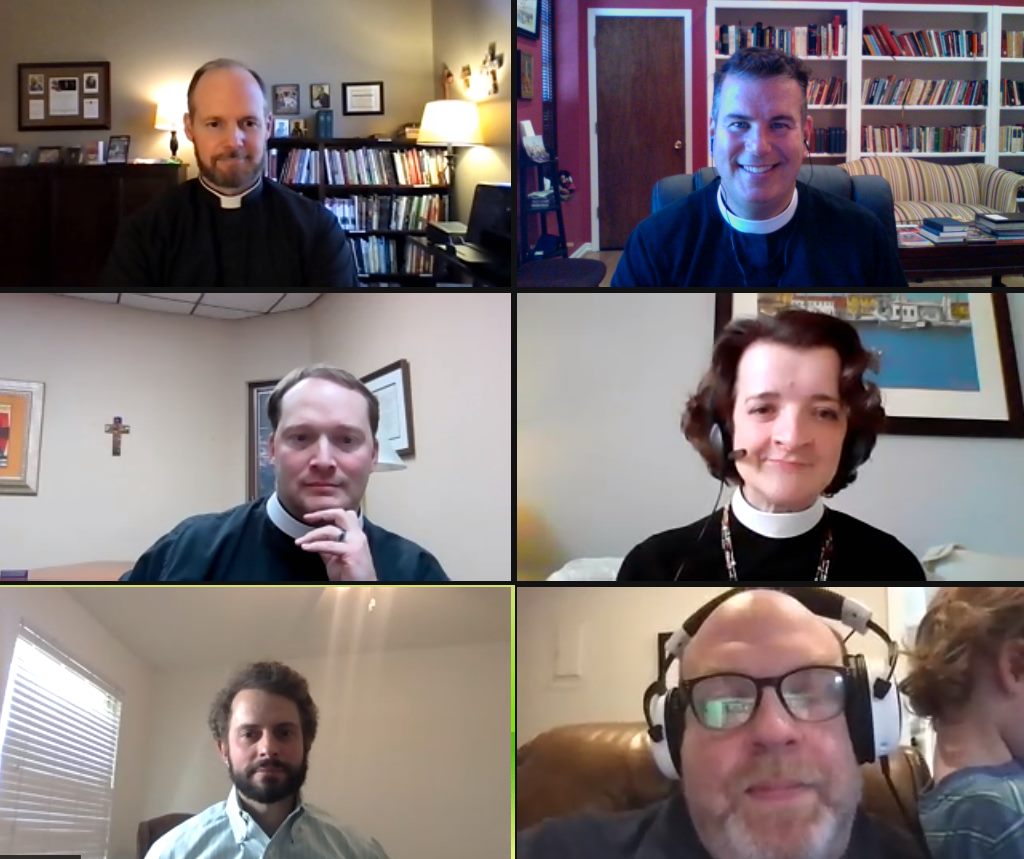
So, when the toughly-won democracy crumbled a few weeks ago in Myanmar, we all watched in horror.  The call to gather from my classmate was certainly an opportunity for us to catch up, but more importantly for us to pray – to pray for our Burmese classmates, the brothers and sisters in Christ we met there, and the countless people who simply want to live their lives free of the brutality of a military junta.  Over the course of this year, I have complained more times than I can count about the amount of time I spent on Zoom.  But as the six of us gathered virtually from around the country to tell stories, to laugh, to mourn, and to pray, I confess to you, I have never been more grateful for a technological tool.  Even in that virtual space, we were able to find the rhythm of a group established fourteen years ago, and slow down enough to put the needs of Myanmar above our own.

As we work to vaccinate our country and as churches begin to regather again, I find myself once again grateful for the ways God has made a way in the wilderness.  And although I will be thrilled to see people in person again, I am glad we will still have technological advances available to us – to facilitate community, care, and compassion.  Not once in the years since we left seminary has our mission team managed to get together in person.  But with technology, we were able to create a virtual space of real connection between us, and, perhaps more importantly, a place where God could move among us and beyond us.  I would never wish this pandemic on any of us, but I remain astounded at the way God has used the gifts God has given us to facilitate the spreading of the Good News. 

One year into this pandemic, I give thanks for the ways in which technology has facilitated fellowship, formation, worship, and pastoral care.  I wonder what graces this pandemic has gifted you over this last year.  What ways has necessity inspired blessedness?  As you reflect this week, I invite you to join me in offering gratitude for God’s grace in the midst of a very dark year. 

Please continue to keep Myanmar in your prayers as they struggle for the restoration of democracy, for the safety of innocent people being brutalized and disappeared, and for the encouragement and protection to keep fighting for justice.

On Glimpses of Togetherness…

03 Wednesday Mar 2021

Posted by jandrewsweckerly in reflection

≈ Leave a comment

Tags

absent, community, ecumenical, God, Holy Spirit, Jesus, Lent, pandemic, present, worship

Photo credit: Jennifer Andrews-Weckerly; reuse with permission only

This evening, we are gathering with our local ecumenical brothers and sisters in worship.  These Lenten gatherings happen every year, usually preceded by a simple supper before worshiping together.  One of the eight churches hosts and a preacher from another church offers the sermon.  The freewill offering supports a local nonprofit.  The evenings allow us to see the broader movement of Christ in our community, remind ourselves of the wideness of God’s mercy, and inspire a sense of community and fellowship.

Of course, in the midst of a pandemic, things look a little different.  Instead of seeing each other’s worship spaces, we are getting to see each other’s virtual worship spaces (Zoom, Facebook, YouTube, etc.).  Instead of seeing faces over a meal, we are feasting strictly on the Word of God.  In some ways, we could see the gatherings as “less than,” lacking all the things we love about community.  But for me, it has been a tremendous blessing to see how we are all in this together – all finding our own ways through technology, all seeking to be closer to Christ in the midst of this chaotic time.  Tonight, I am “preaching,” though technically, I prerecorded my sermon last week.  Our time of recording – with just three of us in the room, and two others on Zoom – was a tender invitation into the space where their community has been making it work for months. 

If you do not have plans tonight, or for the next several Wednesdays through Holy Week, consider yourself invited to virtual worship with the Upper James City County Ministerium.  On a basic level, it will give you a chance to pray, worship, and hear a good word each Wednesday.  On a deeper level, it may help you get out of your comfort zone with an unfamiliar style of worship or a theologically different perspective on scripture.  But on an even deeper level, it will remind you of how widely we are all connected during this strange, seemingly disconnected time.  It is my hope that you experience a glimpse into the magnitude of how the Holy Spirit is doing some incredible work during this time that can often feel absent of God.  You are invited to come and see a different perspective!

On Being Apart While Together…

24 Wednesday Feb 2021

Posted by jandrewsweckerly in reflection

≈ Leave a comment

Tags

alone, apart, Ash Wednesday, beautiful, dichotomy, experiment, God, Holy Spirit, Lent, lonely, pandemic, separated, together

Photo credit: https://www.indiatvnews.com/lifestyle/news-living-apart-together-the-new-relationship-trend-in-town-for-older-adults-380624

As a priest, especially a priest in a pandemic, you do not always know how the things you plan are going to go.  Most of the liturgical things we do are about 90 degrees off from what we “normally” do, and we just keep hoping they capture the spirit of the original liturgies.  I am blessed to serve an awesome congregation whose DNA is wired to be creative, playful, and experimental, so I always feel like we are in this together.  But I still find myself holding my breath a bit each time we try something unusual.

Ash Wednesday was no different.  We did our due diligence, made ample opportunity for parishioners and neighbors to get ashes for home use, and we figured out how to synchronize our ashes through livestreaming.  What I did not anticipate was what it would feel like to put ashes on my own head.  Even when I was a solo clergy person, I always had a parishioner put ashes on me after I put ashes on them.  But putting ashes on my own head felt very solitary – suddenly I was very aware of how separated we all are from one another – and how lonely that sometimes feels.

I pondered that reality for a few days before I remembered something else from Ash Wednesday.  We decided in the pandemic to still offer Ashes to Go – a drive through experience at our location.  As we distributed containers of ash, we gave people three options – “ash” themselves as we pray with them, take the ashes home and say a set of prayers we gave them, or take them home and watch our livestream and “ash” with us.  One family drove through and I gave the mom the three options.  She decided I should go ahead and pray as she put ashes on the foreheads of her two preschool children.  As I watched her work – this mom whose story I could all too easily imagine – the stress of parenting for almost a year in a pandemic, making hard decisions about childcare, juggling work, children, and family, trying to precariously hold it together.  Here she was, taking on the work of the spiritual nourishment of her kids too. 

And that is when I realized the truth.  We are very separated, often alone, and sometimes lonely in this pandemic.  But we are all feeling those things together.  When we gather online together, we are together in our apart-ness.  When we swing by the property for drive-through experiences, we are acknowledging our togetherness in our apart-ness.  When things remind us of our apart-ness, we are collectively reminded together.  It is a beautiful, awful dichotomy, only made better by the fact that we are, in fact, together in this.  This Lent, I invite you to pause to look around, and observe the small, sometimes tiny, reminders that we are in this together.  Even in our apart-ness, we are with each other in Spirit.  And the Spirit is enough to hold us together while apart until we can be physically together some day.

Sermon – Mark 6:1-6, 16-21, Isaiah 58:1-12, AW, YB, February 17, 2021

24 Wednesday Feb 2021

Posted by jandrewsweckerly in Sermons

≈ Leave a comment

Tags

Ash Wednesday, ashes, church, fasting, God, holy, invitation, Lent, mirror, pandemic, Sermon, spiritual practices, struggle

I have always thought the Ash Wednesday liturgy offers a strange contrast.  We engage in the very visible sign of having ashes spread across our foreheads.  And yet, our gospel lesson this day speaks very clearly of not showing your piety publicly.  But this year, the contrast of Ash Wednesday feels even more pointed.  Typically on this day, we talk about giving things up for Lent, fasting, and entering into a season of contemplation about not just our mortality, but the sinfulness that separates us from God.  But we have spent the last eleven months fasting – fasting from social gatherings, fasting from touch and uncovered faces, even fasting from receiving the sacred meal.  And for a large portion of those months, we have been in deep contemplation about the exponentially rising death all around us, the brokenness of our common life, the sin of oppression and racism.  The last thing I want to hear from the church today is how I need to give up more.

I think that is why I love the text from Isaiah this year so much.  God offers a mirror to God’s people.  On first glance, God’s people are certainly doing the things that are expected – in fact, the “things” that are often of Lent.  They are fasting and lying in sackcloth and ashes.  They are doing the work of penitence.  But the acts are not the problem – the motivation of the acts are the problem.  They are doing acts of contrition as sort of an exchange:  fasting so that God will give them favor; Sure, their behavior may end in the oppression of others, but they are doing the manual action called for in this moment. 

But God is having nothing of hollow spiritual practices.  If those practices are not leading to the loosening of the bonds of injustice, or the undoing of the thongs of the yoke, or the freeing of the oppressed, they are meaningless.  If the people of God are not sharing their bread with the hungry, bringing the homeless poor into their homes, covering the naked, and caring for their own kin, then fasting is little more than act in futility, an action done without reflection, intention, or love of neighbor. 

So what do the words of Isaiah have to do with living in month eleven of a pandemic?  I am going to say something that might be a little controversial, but here you go:  the church is not asking you to fast this Lent.  Now, in a few moments, I am going to say these very words, “I invite you, therefore, in the name of the Church, to the observance of a holy Lent, …by…fasting, and self-denial…”  But you have already fasted for a whole year.  You have already been in a season of self-denial.  The ashes you will impose on your head later are not a reminder that you are dust and to dust you shall return.  You know that reality all too well now.  Instead, we are going to take a cue from Isaiah tonight.  You have already done the manual acts of Lent.  Now your invitation is the “so that” part of the action.  Our work this Lent is to reflect upon what has been a most difficult year and to ponder together what this past year of fasting is inviting us into.  How has this season of fasting, this season of struggle, this season of brutality transformed our sense of purpose and identity – a people focused on God’s work loosening the bonds of injustice, freeing the oppressed, and sharing our bread?  How has the sobering nature of death, grittily rubbed onto our foreheads tonight, changing our resolve to lean into God, lean into this Christian community, lean into the work of sharing God’s love with those who do not know that love?

The rest of the invitation I will read in a moment says this, “I invite you, therefore, in the name of the Church, to the observance of a holy Lent, by self-examination and repentance; by prayer…and by reading and meditating on God’s holy Word.”  You have done the rituals of fasting and self-denial long enough.  As we look forward to these next forty days together, our work is to spend time with God, scripture, and one another and answer the question, “So what?”  What are we going to do now?  What are we going to claim and what are we going to let go?  How is the grit of ash this year not the sensation of defeat, but of invitation.  I invite you, therefore, in the name of the Church, to the observance of a holy Lent.  Amen.

On Keeping Rituals Anyway…

17 Wednesday Feb 2021

Posted by jandrewsweckerly in reflection

≈ Leave a comment

Tags

Ash Wednesday, community, dust, God, journey, Lent, normalcy, pandemic, ritual, together

Photo credit: https://www.cincinnati.com/story/news/2019/03/06/ash-wednesday-2019-wearing-ashes-marks-beginning-lent/3064920002/

Today is Ash Wednesday.  It is the day we gather to kick off the beginning of Lent.  The main marker of this day are the ashes rubbed on our foreheads in the shape of a cross.  This ritual action is so powerful that churches typically offer multiple services in their buildings and they hang out in train stations, street corners, or parking lots so that people can grab their ashes on the go. 

But this year Ash Wednesday is happening in a surreal setting.  Reminding us we are dust and to dust we shall return seems a little superfluous when death is all around us from this pandemic.  Beginning a season of fasting seems like overkill when we have been doing nothing but fasting for eleven months – fasting from a way of life we once knew.  Asking us to give us something for Lent seems tone deaf when we have been giving up things for almost a year.  And with large communities having lost power for several days, churches still on lock down, and best practices prohibiting us from actually touching ashes to others’ foreheads, the whole idea of this day seems like too much.

So why are we even bothering with Ash Wednesday this year?  A couple of reasons.  One of the base reasons is we need to keep the rituals of life to help us feel some semblance of normalcy – some reminder of the things that have been meaning-giving in our lives.  Two, we need reminders that God is present in the midst of all this mayhem.  Some of us have never felt God’s absence, some of us have felt the abandonment of God in this time, and some of us have just felt so depleted that God feels distant – not absent, but also not vividly present. 

I don’t know how you are holding up this Ash Wednesday.  I don’t know where you are on your journey with God these days.  But what I do know is that the church is here to walk with you, comfort you, and create space for wherever you are on the journey – whether driving through,  watching online, or catching up by email, phone, or text.  We are in this together.    

Sermon – Mark 9.2-9, TRNS, YB, February 14, 2021

17 Wednesday Feb 2021

Posted by jandrewsweckerly in Sermons

≈ Leave a comment

Tags

Calvary, disciples, Epiphany, God, Good News, Jesus, joy, Lent, Messiah, mountain, pandemic, Sermon, Son of God, tension, Transfiguration

I do not know about you, but lately, I have found myself at a weird emotional place with this pandemic.  Eleven months ago, the pandemic got so bad, our church buildings closed and our experience as church as we know was forever altered.  Then the rollercoaster began.  Cases went up and down.  Schools were in and mostly out.  Masks were optional, then required, and now even recommended to be doubled.  And then there is the death toll.  We went from a couple of thousand a week to lately as much as 25,000 a week.  The introduction of the vaccine feels like the great white hope.  And yet, just this week I learned of a dear family friend who died a rapid death from the virus.  And we know there will be more death before there is life again.

I think that is why I am struggling this year to find the Transfiguration to be a source of joy.  As I read the familiar words this week, I wanted to be mesmerized – by the dazzling white of Jesus’ clothes, the appearance of none other than the law and the prophets:  Moses and Elijah.   Even God speaks words of revelation to the disciples.  Despite all the wonder and awe on this last of epiphanies in the season of Epiphany, I find myself unable to rally in this epiphanic moment.

The good news is the tension I have been feeling this week might not just be a case of my own emotional journey through this pandemic.  The tension we feel today is intentional on Mark’s part.  If you can remember all the way back in Advent, when we read the very first words of Mark, we read, “The beginning of the good news of Jesus Christ, the Son of God,” Mark tells us right away who Jesus is:  Jesus is the Christ, and Jesus is the Son of God.[i]  First, Mark tells us Jesus is the Christ:  the Messiah, the person the people of God had been awaiting, the victorious redeemer of the people, the mighty restorer of the kingdom of God.  Since that day in December when we heard this brief introduction by Mark, we have been celebrating the Messiah who was born.  Even today, as Jesus’ clothes turn dazzling white, and Elijah and Moses appear, we are filled with anticipation:  this is what we have been waiting for – Jesus the Messiah!!

And yet, somehow in the birth stories, and the epiphanies, and the dramatic healing stories, we forget the other half of Mark’s introduction:  The beginning of the good news of Jesus Christ, the Son of God.  You see, just as Jesus is the Messiah, the Christ, Jesus is equally something else:  the Son of God.  Now the Son of God is not a title of honor so much as a reminder of what will happen to Jesus.  The Son of God is destined to lay down his life for the people of God.  Jesus is the suffering servant we hear about in Isaiah – the one who makes the ultimate sacrifice so that new life might come.

So what does any of this have to do with the Transfiguration?  Pretty much everything.  You see, in this victorious Messiah-like last epiphany moment before we head into Lent, the temptation is for us to linger on the mountain, to stay with the Jesus who makes us feel good, who makes us feel powerful, who makes us feel victorious, who dazzles us with shiny clothes.  That euphoric feeling is not unlike the feelings stirred up by the hope of vaccines – a hope so strong that some governors in our country have lifted pandemic restrictions all together – no more masks, no more distancing, no more waiting.

But as we begin Lent this week, we descend this mountain and walk our way to another mountain – the mountain of Calvary that reminds us of the other truth of Jesus:  that Jesus is the Son of God, sent to redeem us through the darkness of the cross.[ii]   Even on the mountain of Transfiguration, God reminds us of this truth.  God does not shout to the disciples, “Jesus is the Messiah!!”  Instead, God whispers the gentle reminder, “This is my Son, the beloved.”  Even God knows we will want to linger on the goodness of who Jesus is – the brilliance of a Messiah.  But as Mark tells us from the beginning:  Jesus is both the Christ and the Son of God.

This week we will begin the long journey of Lent.  We will reflect on our relationship with Jesus, our failings and faults, and our gifts and goodness.  The work will feel hard and tedious at times, especially clouded by this unrelenting pandemic, and we may prefer to hold on to the Messiah on today’s mountain.  But as we walk from today’s mountain to Good Friday’s mountain, we also hold in tension with Jesus the Christ, Jesus the Son of God.  In our weakness, we find a savior who is also weak.  In our dark days, we find a savior mired in darkness.  In our despairing, we find a savior lost in despair too.  Jesus’ identity as the Son of God gives us as much comfort as Jesus’ identity as the mighty Messiah.  When we hold all of who Jesus is in our hearts, we can be more tender with all of who we are. 

I am grateful to walk the Lenten walk with you.  I am grateful to hear about your struggles and victories, your darkness and light.  I am grateful to be surrounded by a community of people – whether virtually or in person – working through valley of two mountains so that we can come through the redemption of the resurrection.  Today’s Transfiguration Sunday offers us sustenance for the valley, fuel for the work, fire for the renewal.  This is the beginning of the good news of Jesus the Christ, the son of God.  Amen.


[i] This understanding of Jesus’ identity was presented by Thomas P. Long at a lecture on February 9, 2018.

[ii] The idea of framing Lent between two mountains come from Rolf Jacobson, in the Sermon Brainwave podcast, “#768: Transfiguration of Our Lord (B) – February 14, 2021,” February 7, 2021 as found at https://www.workingpreacher.org/podcasts/768-transfiguration-of-our-lord-b-feb-14-2021 on February 10, 2021.

On Cups of Sugar and Other Gifts…

03 Wednesday Feb 2021

Posted by jandrewsweckerly in reflection

≈ Leave a comment

Tags

death, emotion, gift, God, neighbors, pandemic, share, struggle, suffering, sugar, together

Photo credit: https://www.bhg.com/recipes/how-to/bake/how-to-measure-sugar/

One of the things I love about our public library is the way they display children’s books to catch your attention.  We have our favorite characters and series, but our librarians always pick books you might not find if you were just looking at endless rows of books.  In our last trip, we picked such a book called Addy’s Cup of Sugar.  There was a girl and a panda bear on the cover, so I was sure it would be a winner with my young daughter.  It also said it was based on a Buddhist story of healing, which sounded intriguing.

Little did I know how powerful this children’s book would be.  For those of you who have not read it (spoiler alert!), the book is about a girl whose cat dies.  She talks to her friend, the panda bear, about bringing the cat back to life.  The bear says the only way to accomplish that is for her to help him with the supplies he will need – specifically a cup of sugar from a neighbor; but the cup of sugar must come from a home where no one has experienced death.  So off Addy goes, and slowly we learn through her visits and beautiful conversations with neighbors that not one single house in her neighborhood has been unaffected by death.  You can imagine the conversation Addy and the bear have upon her return at the close of the day.

After recovering from being sideswiped by the emotional power of the book, I began to reflect on my work as a priest.  As part of my vocation, I am entrusted with fullness of people’s stories – grief they might not confess to their loved ones, weariness they may not show in their tough facades, anger at God they are afraid to claim aloud for fear of judgment.  Every once in a while, one of those poignant moments of sharing knocks the breath out of me and I am at a loss for words – because words cannot heal some hurts. 

Although I experience the depth of humanity more regularly than some, we all have the opportunity to do the same with our family, friends, and neighbors.  As the duration of this pandemic lengthens, I have been wondering if we all might need to start taking our own cups for sugar around the neighborhood (masked and socially distanced, of course), offering the opportunity for others to share their hurts, their sorrows, and perhaps their own struggles to see God.  Once we begin to see the wideness of the human condition, we also see how we are not alone.  Our cups of sugar then become not just gifts for ourselves, but for others too.

Sermon – Jonah 3:1-5, 10, Mark 1:14-20, E3, YB, January 24, 2021

03 Wednesday Feb 2021

Posted by jandrewsweckerly in Sermons

≈ Leave a comment

Tags

act, action, call, calling, faithfulness, God, Jesus, Jonah, light, Nineveh, pandemic, Sermon

We are in a season of call narratives in our lectionary cycle.  Last week, we heard Samuel’s dramatic call story – how the sleepy, confused Samuel keeps trying to be faithful, but needs Eli to help him realize God is the one speaking.  This morning we get two sets of stories.  First is Jonah, perhaps Scripture’s worst follower of God’s call – who runs in the opposite direction God sends him, almost drowns a crew of shipmates and is swallowed by a large fish, who offers the weakest possible sermon of all time to the Ninevites, and then gets angry when God changes God’s mind.  In fact, the Ninevites answer God’s call to repent immediately – they are the exact opposite of Jonah.  Meanwhile, our gospel lesson today follows two sets of brothers who leave their family and livelihood in a lurch to immediately follow Jesus.  Even our collect today, that opening prayer we say together says, “Give us grace, O Lord, to answer readily the call of our Savior Jesus Christ and proclaim to all people the Good News of his salvation…”[i]

In some ways, this time of year is a perfect time to be thinking about our call.  We have all just celebrated the New Year, with the usual practices of setting New Year’s Resolutions.  We just elected a new Vestry last weekend.  Even Poet Laureate Amanda Gorman challenged us this week with her stunning inaugural poem, saying “There is always light, if only we’re brave enough to see it.  If only we are brave enough to be it.”  The invitation is everywhere around us, just waiting for us to answer God’s call. 

But despite the fact that motivation is all around us – from scripture, to secular practices, to inspirational events – few of us are feeling like we have the energy or even the emotional capacity to think about call right now.  Many of our parishioners are living out inspirational calls – from the medical profession, to teaching, to civil service.  But these are the very people are being pushed to capacity, who have had an exhausting year, and although they put on a good face, are just trying to put one foot in front of the other.  Many of our parishioners have answered the call of parenthood, and most days can tell you about the joys of parenthood.  But after almost a year of home and virtual schooling, and all the challenges being with your family 24-7 can bring, are lately wondering where God is in those relationships.  And several of our more seasoned parishioners have told me that although they appreciate all the church is doing to help them feel connected, ten months of social isolation have left them feeling like they should be doing something more meaningful, but they just do not know how.  When we are really honest, the last thing we feel like talking about is call – surely that is a conversation for when we are “back to normal.”

That is why I am so glad the Ninevites are in our call narratives today.  Nineveh is a brutal power in Jonah’s day.[ii]  They are known for their vicious treatment of the people of Israel.  They are the enemy.  But when the residents of Nineveh hear the judgment of the LORD – Jonah’s brief, half-hearted one – they immediately respond.[iii]  All the people put on sackcloth, even the king and the animals; they take up a fast, sit in ashes, and turn from their violent ways.  Talk about a 180!  The Ninevites may not be ideal citizens.  They might not even understand what a calling is.  But they do act.  And as one scholar points out, “Apparently God’s purposes can be accomplished with a minimum of faithfulness; and such faithfulness turns out to be a matter of not merely what one feels, but what one does.”[iv]

That is what all our call narrative actors do:  act.  Samuel, without fully understanding, does when he says, “Speak, Lord, for your servant is listening.”  Acting is what Jonah begrudgingly does and the Ninevites immediately do.  Taking action is what brothers Simon and Andrew and brothers John and James do – against all logic of leaving home and security to follow a man they barely know.  Our invitation this week is do the same – find ways to act.  For some of us, that action is going to be to keep showing up:  for your kids, for your clients, for the needy.  For some of us, that action is going to mean taking those feelings of isolation and doing something:  finally taking up that Connection Challenge and calling, emailing, or sending cards to fellow parishioners (who feel the same way, by the way!).  For others of us, we may need to channel all those feelings into different action:  whether we write to our local representatives to advocate for the disadvantaged, whether we finally call that nonprofit we have been admiring and offer our services, even if they have to be offered from home, or whether we ask God in prayer what acts we are being called to do for others.  We do not have to feel like being the light this week.  We simply are invited to be brave enough to be the light.  God will do the rest.  Amen.         


[i] BCP, 215.

[ii] Callie Plunket-Brewton, “Commentary on Jonah 3.1-5, 10” January 21, 2012, found at http://www.workingpreacher.org/preaching.aspx?commentary_id=1214 on January 22, 2021.

[iii] Joseph L. Price, “Theological Perspective,” Feasting on the Word, Yr. B, Vol. 1 (Louisville: Westminster John Knox Press, 2008), 270.

[iv] Lawrence Wood, “Homiletical Perspective,” Feasting on the Word, Yr. B, Vol. 1 (Louisville: Westminster John Knox Press, 2008), 269.  Emphasis added.

← Older posts
Newer posts →

Recent Posts

  • On the Myth and Magic of Advent…
  • On Risking Failure and Facing Fear…
  • Sermon – Luke 23.33-43, P29, YC, November 23, 2025
  • On Inhabiting Gratitude…
  • Sermon – Luke 20.27-38, P27, YC, November 9, 2025

Archives

  • December 2025
  • November 2025
  • October 2025
  • September 2025
  • August 2025
  • July 2025
  • June 2025
  • March 2025
  • February 2025
  • December 2024
  • November 2024
  • October 2024
  • September 2024
  • August 2024
  • July 2024
  • June 2024
  • May 2024
  • March 2024
  • February 2024
  • January 2024
  • December 2023
  • November 2023
  • October 2023
  • September 2023
  • August 2023
  • July 2023
  • June 2023
  • May 2023
  • March 2023
  • February 2023
  • January 2023
  • December 2022
  • November 2022
  • October 2022
  • June 2022
  • May 2022
  • January 2022
  • December 2021
  • November 2021
  • October 2021
  • September 2021
  • August 2021
  • June 2021
  • May 2021
  • April 2021
  • March 2021
  • February 2021
  • January 2021
  • December 2020
  • November 2020
  • October 2020
  • September 2020
  • August 2020
  • July 2020
  • June 2020
  • May 2020
  • April 2020
  • March 2020
  • February 2020
  • January 2020
  • December 2019
  • November 2019
  • October 2019
  • September 2019
  • August 2019
  • July 2019
  • June 2019
  • May 2019
  • April 2019
  • March 2019
  • February 2019
  • January 2019
  • December 2018
  • November 2018
  • October 2018
  • September 2018
  • August 2018
  • July 2018
  • June 2018
  • May 2018
  • April 2018
  • March 2018
  • February 2018
  • January 2018
  • December 2017
  • November 2017
  • October 2017
  • September 2017
  • August 2017
  • July 2017
  • June 2017
  • May 2017
  • April 2017
  • March 2017
  • February 2017
  • January 2017
  • December 2016
  • November 2016
  • October 2016
  • September 2016
  • August 2016
  • July 2016
  • June 2016
  • May 2016
  • April 2016
  • March 2016
  • February 2016
  • January 2016
  • December 2015
  • November 2015
  • October 2015
  • September 2015
  • August 2015
  • July 2015
  • June 2015
  • May 2015
  • April 2015
  • March 2015
  • February 2015
  • January 2015
  • December 2014
  • November 2014
  • October 2014
  • September 2014
  • August 2014
  • July 2014
  • June 2014
  • April 2014
  • March 2014
  • February 2014
  • January 2014
  • December 2013
  • November 2013
  • October 2013
  • September 2013
  • August 2013
  • July 2013
  • June 2013
  • May 2013
  • April 2013
  • March 2013
  • February 2013
  • January 2013
  • December 2012
  • November 2012
  • October 2012
  • September 2012

Categories

  • reflection
  • Sermons
  • Uncategorized

Meta

  • Create account
  • Log in
  • Entries feed
  • Comments feed
  • WordPress.com

Blog at WordPress.com.

  • Subscribe Subscribed
    • Seeking and Serving
    • Join 394 other subscribers
    • Already have a WordPress.com account? Log in now.
    • Seeking and Serving
    • Subscribe Subscribed
    • Sign up
    • Log in
    • Report this content
    • View site in Reader
    • Manage subscriptions
    • Collapse this bar
 

Loading Comments...