• About

Seeking and Serving

~ seek and serve Christ in all persons

Seeking and Serving

Tag Archives: privilege

On Stories and Wonder…

17 Wednesday Jul 2024

Posted by jandrewsweckerly in reflection

≈ Leave a comment

Tags

busyness, children, community, compassion, food insecurity, God, hunger, prayer, privilege, stories, story, summer, volunteer

Photo credit: Jennifer Andrews-Weckerly; use with permission only

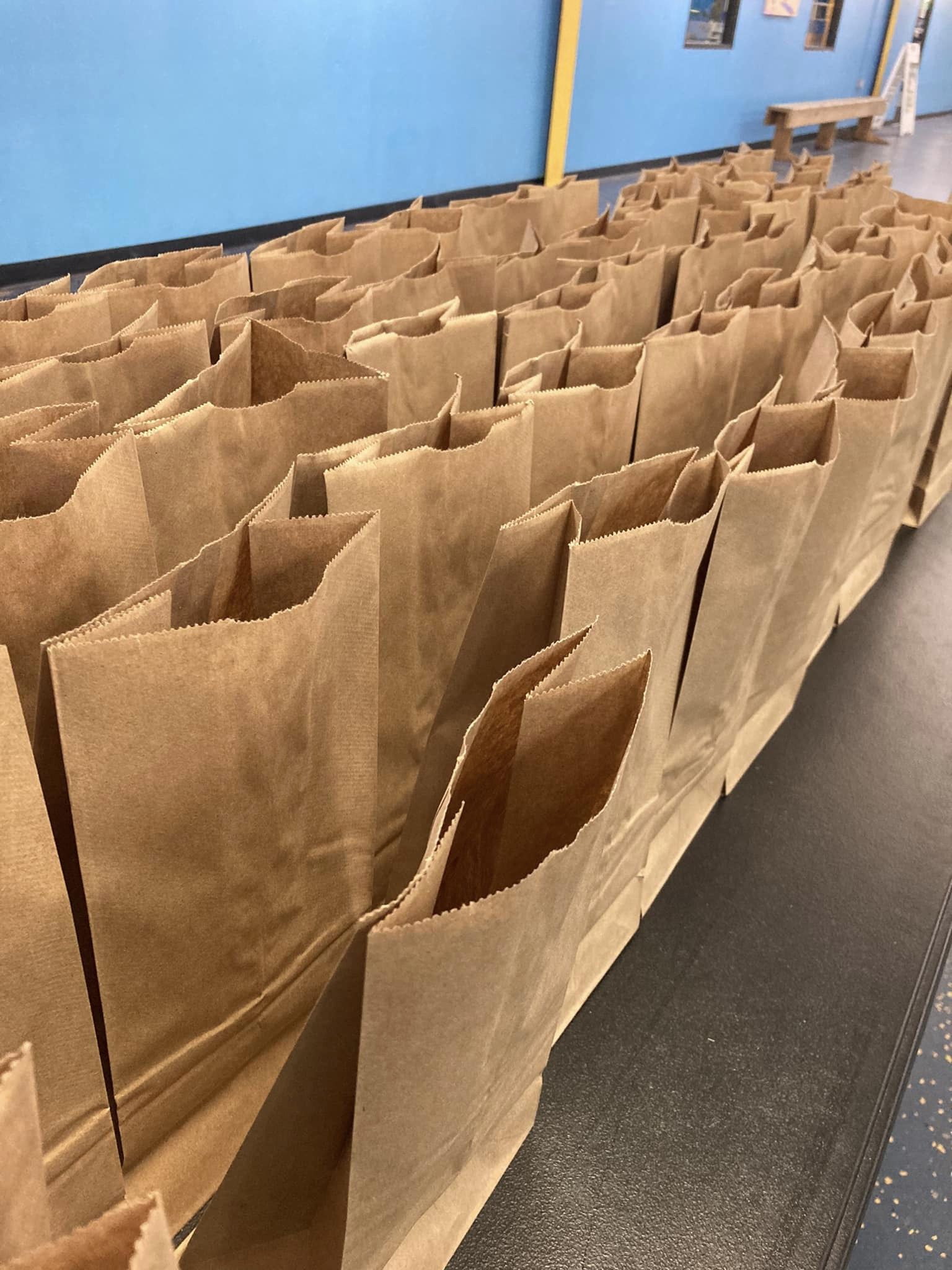
This week my older daughter and I volunteered with a local agency that is providing weekday meals to children in our community experiencing food scarcity.  These are children who qualify for free lunch during the school year, but when school is out of session, lose their one steady source of food for most of the week.  On our volunteer day, we packed about 260 meals – including a protein-packed sandwich, juice, fruit, a salty snack, and a homemade cookie. 

As the smell of those freshly baked cookies wafted from the brown paper bags, I found myself wondering about the countless details of these children.  In that mass of children spread around our county, I wondered how they were getting the food from those drop-off points, knowing that many of their care providers likely work during the day.  I wondered if they took joy in the unknown contents of their bag, or if those five items felt rote for them after a summer of brown bags.  I wondered if they had siblings or friends also receiving bags and whether they traded food items like my kid does sometimes at school.  I wondered if a temporarily filled belly eased any emotional strain they may be experiencing without the socialization of school. 

Wondering about those 260 stories was an important reminder to me of how irregularly I see the world as God does and instead get lost in my own slice of the world.  As I juggle transportation of children, writing the next sermon, facilitating a church meeting, and planning meals, I totally lose the stories of those who struggle with those basic things I take for granted.  I think that is why I longed so much to know at least some of the stories of those children – so that I might more tangibly be mindful of the wideness of our community and those God loves that I have the privilege to be unconcerned about most days.

I wonder what stories you have been missing lately.  Who in your community have you forgotten – not out of malice or lack of generosity, but more out of the busyness of life?  Whose stories might help you see your family members and coworkers with a bit more compassion?  What stories might make you view politics a bit differently or impact where you give your time and resources?  My prayer for you is that you seek those stories this week – and that those stories find you.

On Resurrection and Race…

08 Wednesday May 2019

Posted by jandrewsweckerly in Uncategorized

≈ Leave a comment

Tags

anxiety, comfort, cross, Easter, Jesus, kingdom of God, light, light of Christ, privilege, race, racism, resurrection, shade

Cone

Photo credit:  https://www.christianitytoday.com/ct/2017/august-web-only/reflections-on-cross-and-lynching-tree.html

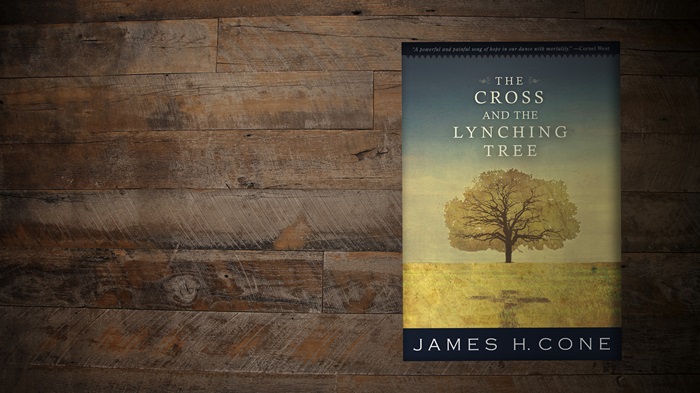
This Sunday at Hickory Neck, we kick of a three-week series on James H. Cone’s book The Cross and the Lynching Tree.  Only a few pages into the book, and I confess this will be a heavy discussion for us as a parish.  You might be wondering why we chose such a book in Eastertide – isn’t race and violence a better topic for Lent?  Or maybe you are wondering why we are talking about race – again – at church.  Surely we can move on to talk about other topics!?

When my family I visited the Mississippi Civil Rights Museum in April, something poignant happened to me as I shepherded our young children through the museum.  There was an exhibit about the Jim Crow era in Mississippi.  As you walked through the exhibit, there were motion detectors that triggered recordings.  The recordings were of white men and women saying or shouting the things that were said or shouted to persons of color – about not belonging, about watching out, about even just existing in a segregated world.  Since I had small, active children, the motion sensors were triggered a lot, meaning these voices were shouting at me constantly.  I found by the time we exited that portion of the museum, my nerves were totally shot.  The exhibit was a powerful reminder of how, even when civil liberties were won, African-Americans were still not treated equally.  In fact, their existence then (and I suspect even today) was one of walking on egg shells – never knowing when someone would say something offensive, physically-threatening, or even life-threatening.  That kind of lifelong anxiety must do things to your psyche and mental, emotional, and spiritual health.

But as a Caucasian, I have the privilege to not experience that egg shell kind of life.  I have the privilege to decide when “we’ve talked about race enough.”  I even have the privilege of deciding when a good season to talk about race is – lest we confuse happy seasons with sad or contemplative ones.  And that is why we try at Hickory Neck to engage in at least one book or film study a year – to remind us of the privilege we hold because of something totally out of our control:  our skin color.  And if we are an Easter people, then celebrating resurrection life means bringing about the kingdom of God here on earth.  One of the ways we advance the kingdom is to live out the gospel – to live out the life of Jesus, instead of one that is counter to the life of Jesus.

I know the reading will be hard, and I know you have hundreds of things to do.  But for the next three weeks, I invite you to join us.  Join us in setting aside the comfort of our privilege in life, and stepping into the shady places of life.  Join us in being open to hearing other experiences, learning new things, and seeing race and reality differently.  Join us in living into the true meaning of Easter – a life where the resurrection means reconciliation and renewal.  Walking into the shady parts of life will allow us to more authentically proclaim the light of parts of life – the light of Christ.

On Awkwardness and Grace…

27 Wednesday Feb 2019

Posted by jandrewsweckerly in Uncategorized

≈ Leave a comment

Tags

awkward, beauty, church, God, grace, guest, hard, homeless, identity, Jesus, love, privilege, purpose

handshake-2009195_640

Image credit:  https://rimland.org/tag/homeless/

This week our church is hosting our community’s Emergency Winter Shelter.  Every day for a week, from about 6:30 pm to about 8:30 am, we welcome up to twenty-five guests into our church.  This week is a banner week for our church community.  It is the week in the year where everything we say about discipleship and being witnesses for Christ’s love becomes a reality.  The week is so important that we try to engage parishioners of all ages, and we partner with other churches and local schools to make the week happen.  This is the week where we boldly proclaim our identity and live it with integrity.  This is the week where Christ can say about us, “I was hungry and you gave me food, I was thirsty and you gave me something to drink, I was a stranger and you welcomed me…”[i]

You would think with that kind of buildup, and that clear sense of purpose, every moment we are hosting our guests would be this beautiful, enlightened, perfect moment.  While there are certainly beautiful moments, what I noticed about our Winter Shelter week is that it is much more awkward that you might imagine.  Up to twenty-five individuals gather together, with unique stories that brought them to this moment of vulnerability and need, and they create a make-shift place of protection for few hours with about twenty volunteers who mostly do not need to worry about where the next meal is coming from or where they will rest their heads.  What do you talk about over a shared meal?  How do you connect with someone who is bone tired from working, hustling to get to the shelter, and worried about what is next?  How do you overcome the very obvious fact that the worlds you are both operating in are diametrically different?

The answers are not super glamorous.  When you invite yourself to sit at a table with homeless men and women, sometimes the conversation is superficial, and sometimes things are said that rock your world and remind you of how much privilege you really have.  When you long for a human connection with someone who is bone tired, sometimes the most you get is a smile; but more often what you get is a reality check about how brutal homelessness can be, and how many other awful things may be present in their lives.  And as you long to overcome the barriers of the two worlds you live in, part of what you have to do is let go of the idea that you can, remembering why Jesus once said it is harder for a person of wealth to get into the kingdom than a camel to fit through the eye of a needle.  Winter Shelter Week is hard and awkward because the experience forces us to examine our lives, acknowledge our privilege, and be honest about the amount of work we still have to do.

The good news in all the awkwardness and difficulty is that God’s grace is all around.  Providing shelter for a week matters.  Acknowledging the humanity of one another matters.  And that we are even trying matters.  God takes our best intentions, and our humbling week, and grants us moments of beauty:  from the almost five-year old who insists on saying goodnight to every guest before going home to bed – and the gracious responses of guests; to the teenager who has the courage to say an extemporaneous blessing over the food, when traditional prayers do not seem to work; to the community – both guests and hosts – who rallies together to protect the physical well-being of all the guests.  When Jesus talked about welcoming in strangers and feeding and quenching other’s thirst, he did not warn us how hard it would be.  I suspect he knew that the grace we would exchange in the mutual vulnerability would be reward enough.

[i] Matthew 25.35

Being on Stick Patrol…

05 Wednesday Oct 2016

Posted by jandrewsweckerly in Uncategorized

≈ Leave a comment

Tags

benefit, cleaning, Jesus, ministry, overlook, play, privilege, see, sticks, teaching, tend

twigs

Photo credit:  www.green-talk.com/spring-gardening-maintenance-tips/

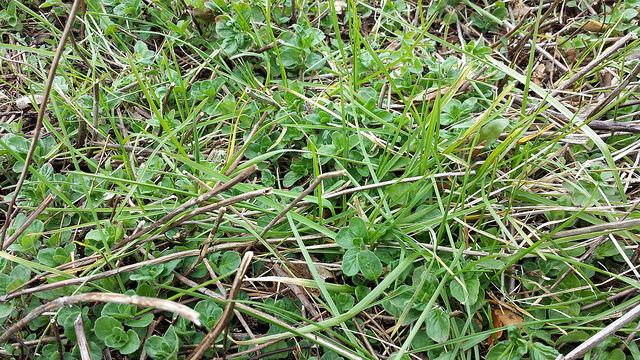
This weekend was the big fall cleanup of our property at church.  We trimmed trees and hedges, put down mulch in flower beds and around trees, cleared out debris, and pulled weeds.  Because I had one of the youngest workers with me that day, we were put on “stick patrol,” clearing out the sticks that had fallen from the enormous trees in the front of the property.  When I first glanced at the area, I was not too worried.  You could see some sticks, but not a large amount.  I remember thinking the project would not take long.  But all too quickly I realized that the more I got down in the grass, the more small sticks I saw.  A scan of the grass from a distance was totally different from getting down in the dirt and seeing what was really there.

I have been thinking about how my quick scan of the grass that day is a lot like living with the benefit of privilege.  I realize that talking about privilege makes many of us anxious.  We feel like we are being blamed for something we cannot control and we can probably name multiple hurdles we have had to overcome in life that do not make us feel privileged at all.

While all of that may be true, one the signs of benefiting from privilege is that we are able to scan the grass without really looking through the blades for sticks.  Just today, on what was an otherwise beautifully wooded drive, I passed by a community of mobile homes, a nursing home, and a domestic violence shelter.  If I had wanted to, my privilege could have allowed me to keep on driving and listening to music without thinking about the poverty and its impact on the individuals and families in the mobile homes.  If I had wanted to, I could have smiled at the lovely sign of the nursing home without thinking about those inside who are homebound, lonely, or sick.  If I had wanted to, I could have driven by the unmarked domestic violence shelter, never once thinking about the emotional, physical, psychological, and spiritual effects of violence on the women and children who live there.  My privilege in life, whether racial, socioeconomic, or age, allows me to scan the grass without seeing the sticks.

Jesus ministry was all about seeing the sticks:  the Samaritan woman at the well, the blind man by the road, the hemorrhaging woman who touched the hem of his cloak, the demoniac on the hill.  Jesus could have easily passed all of these by, staying focused on teaching and preaching.  But Jesus rarely scanned the grass – he was always rooting around for the sticks.  In fact, he was rarely interested in how pretty the lawn looked.  He wanted to tend between the blades.  That is the kind of attention that Jesus invites us into every week.  Jesus invites us to let go of the comfort and satisfaction that comes from scanning the lush lawn, and instead, invites us to get down on our knees, to get dirty rooting around in the blades, and to always hold in tension how our privilege lures us into much more comfortable work.  I look forward to hearing what you find as you cede some of your privilege and start playing in the grass.

Sermon – Acts 16.16-34, E7, YC, May 8, 2016

11 Wednesday May 2016

Posted by jandrewsweckerly in Sermons, Uncategorized

≈ Leave a comment

Tags

Christ, enslaved, faith, freedom, live, Moral Mondays, Paul, power, praise, privilege, protest, Silas, slave, suffering, truth, value, wealth

Thousands of years ago, our people were enslaved.  Once-friendly Egypt got a new pharaoh who saw the sheer number of us, and out of fear, enslaved us.  We lost our freedom, and labored under a brutal new regime.  We longed for better days.  We longed for a return to our homeland, even though our homeland could not have sustained us because of the famine years before.  Every night, our cries went out to God.  One day, God heard us.  God sent us a man by the name of Moses, who dramatically managed to convince Pharaoh to let us go back home.  So we quickly packed our things and ran.  Pharaoh changed his mind and sent his armies after us.  But when we crossed the Sea of Reeds, and Pharaoh’s army drowned, we celebrated.  We were free.

Not long after, the rejoicing stopped.  Freedom did not look like what we thought freedom would look like.  Freedom was hard.  When we were enslaved, we always knew from where our next meal would come.  We knew where we would lay our heads at night.  We knew the routine.  With Moses, we were constantly wandering in the wilderness, wondering where our next meal would come from, searching for water, unsure of what would happen.  Nothing in our journey unfolded as we imagined.  We thought freedom would mean being able to do whatever we wanted, being free of obligation, and not being constrained by anyone or thing other than ourselves.  Pharaoh was admittedly awful, but better the devil you know, right?

Being from a country whose primary value is freedom, sometimes I think we get as confused as our ancestors about what freedom means in the context of being people of faith.  Take our lesson from the Acts of the Apostles today.  There are both people who are free and people who are not.  Those who own the slave-girl are free to collect money for someone else’s performance, and they are free to get someone thrown in jail.  The judges who throw Paul and Silas into jail are also free – free to choose who is punished and who is not.  Finally, we might put the jailer into the free category as well.  He is a man with a steady, respectable job, who has power over those in prison.

Meanwhile, our story has those who are lacking freedom.  The first character we hear about is a slave-girl.  In some ways, this nameless slave is a double slave – a slave to her owners who use her for money and a slave to the spirit of divination inside her.  Paul and Silas also lose their freedom.  They are thrown into jail midway through our story, which clearly puts them in the not-free category.  Plus, the slave-girl calls them “slaves of the Most High God.”

Looking at the characters in Acts, we can see how confusing the definition of freedom can be.  If freedom is a value in and of itself, then the heroes of our story are the slave owners, magistrates, and the jailer.  The owners of the slave girl obviously have social capital and an income source.  They have influence and power, and up until Paul and Silas come along, they have the comforts of wealth.  The judges also have a great deal of respect and power in the community.  They are charged with keeping order in the community and protecting the community’s way of life.  Even the jailer has a clear sense of identity and purpose.  He may not have wealth and prestige, but he has a secure job and a sense of clear identity in the community.

Consciously, we know that we should not identify with these three entities.  But subconsciously, and in a country that does not distinguish between freedom and freedom in Christ, we find ourselves much more aligned with and, quite frankly, longing for the kind of freedom that these three parties have.  Meanwhile, the slave-girl is nothing like what we hope for ourselves.  Being possessed by a spirit and being owned by another individual do not usually make the top of our lists for happiness and fulfillment.  And in no way do we want to be like Paul and Silas, who not only seem to be homeless rebel-rousers, they also are physically brutalized and imprisoned.  We are faithful followers of Christ, but I doubt many of us would take that commitment all the way to jail.

Last week, a friend of mine had that very debate.  She is a priest in North Carolina, and she decided to join the weekly protests that has become known as Moral Mondays.  Moral Mondays have been happening since 2013, as religious leaders and followers across North Carolina have gathered in peaceful protest of the laws being passed that promote unfair treatment, discrimination, and oppression.  Bishop Michael Curry was a frequent protestor and speaker at Moral Mondays before being elected Presiding Bishop.  Last week, my friend decided that she needed to join fellow Christians in protest, but she was uncertain about the possibility of being arrested.  She knew what was happening in the legislature was unjust, but she also had a family and job to think about.  She was unsure about how she could best be of use – by staying long enough to be escorted to jail, or whether her presence at the protest would be enough.

What my friend was on the cusp of understanding is what Paul, Silas, and the slave-girl already know.  The slave-girl already knows the truth that no one else can see – that Jesus is the way to salvation.  And when she shouts that long and loudly enough, she is not only freed of her possession, she is free of the bondage of slavery – because her owners can no longer use her as they did before.  Even Paul and Silas, who are locked in jail, are more free than they seem at first glance.  What person, after being brutally whipped and thrown into a cold cell, can be found praying and singing praises to God in the middle of the night?  Only someone who is so free of the bondage of this world can be able to praise God in the midst of earthly suffering.

If Paul, Silas, and the slave-girl are free, guess who the real enslaved ones in our story are.  Those owners, who seem to have the earthly freedom of wealth, have actually become slaves to their wealth.  They are so enslaved to that wealth that when their source of income is freed, they lash out, bringing pain and suffering down upon others.  They cannot see the gift of freedom and health for the slave-girl; they only see the consequences for themselves.  The magistrates are no freer than the owners.  They are so enslaved to their rigid rules that they cannot see the inherent injustice that the slave-girl has faced for so many years.  Even the jailer is not truly free.  He is so caught up in his identity as a jailer that he is willing to take his life for his job.  He is ready to kill himself for what he thinks is a failure on his part than to see how this job has taken over his sense of identity.[i]

So how do we avoid living like the complaining Israelites, who were physically free, but not yet spiritually free to live as the Lord our God invited them to live?  How do we, in a nation that reveres freedom, avoid being enslaved by the wealth, power, and identity that comes from being free?  The jailer asks the same question to Paul and Silas when he asks, “What must I do to be saved?”  In the paraphrase of our text, Paul’s answer is simple:  Put your entire trust in the Master Jesus. Then you’ll live as you were meant to live.[ii]  Paul and Silas could have easily fled that jail when the earthquake happened.  They could have sped past the jailer, and been focused solely on their own self-preservation.  But we see that there is a peace in Paul and Silas that comes from true freedom – of living how we are meant to live.  Instead of weeping and plotting in that cell, they sing and pray to God.  Instead of running when the doors fling open, they ensure that the jailer is okay.  Instead of demonizing the jailer, they offer him baptism.  This is what true freedom looks like.[iii]

In our freedom, we have become enslaved – in varied and sundry ways, but we are all enslaved by something.[iv]  Paul, Silas, and the slave-girl invite us into another way.  They invite us to live as liberated people who trust in our Lord Jesus Christ.  That true freedom may mean we find ourselves shouting out truth in a peaceful rally.  That true freedom may mean that we find ourselves praising God when no one else is, sacrificing our own comfort so that someone might find theirs.  That true freedom might mean trusting God is acting when we feel like God left the building long ago.  When we claim that freedom, then finally, finally, we will begin living as we were meant to live.  Amen.

[i] David G. Forney, “Pastoral Perspective,” Feasting on the Word, Yr. C, Vol. 2 (Louisville: Westminster John Knox Press, 2009), 526.

[ii] Eugene Patterson, The Message, as found at https://www.biblegateway.com/passage/?search=Acts+16%3A16-34&version=MSG on May 6, 2016.

[iii] L. Gregory Jones, “Come, Lord Jesus,” Christian Century, vol. 109, no. 16, May 6, 1992, 485.

[iv] Ronald Cole-Turner, “Theological Perspective,” Feasting on the Word, Yr. C, Vol. 2 (Louisville: Westminster John Knox Press, 2009), 524.

Homily – Mark 10.35-45, P24, YB, October 18, 2015

23 Friday Oct 2015

Posted by jandrewsweckerly in Uncategorized

≈ Leave a comment

Tags

blessed, earn, entitlement, gift, giving, God, gratitude, homily, Jesus, ours, ownership, privilege, serving, wealth, Zebedee

Most of you know that father was a Methodist minister.  One of my favorite children’s sermons he gave was about an apple.  He gathered us all around and he had an apple and a carving knife.  He said that the apple represented all the money that our families had.  Then he asked us what were all the things that our family needed that we had to spend our money on.  We all shouted out our answers:  clothes, food, our houses, cars.  With each answer, he cut out a chunk of the apple.  When were down to about 1/3 of the apple, he invited us to answer what else we spend our money on.  We had answers for that too:  toys, games, vacation, movies.  By the time we finished, there was nothing left of the apple.

Suddenly, my father gasped.  “Oh, no!  We forgot something.  We forgot to give some of our money to God!”  There was good news though.  My dad had another apple.  He suggested we try to do things a little differently this time.  “How about we give some of our money…say 10%…to God?  Okay?”  Then we carved out all those things we need.  Then we still had a little left for all the stuff we like – maybe not as much, but there was still some there.

Photo credit:  http://callahandesign.biz/home/

Photo credit: http://callahandesign.biz/home/

Thirty years later, I think the point of his children’s sermon was that if we start by returning some of our wealth to God, we’ll have plenty for everything else.  But as I was thinking about that apple this week, something else occurred to me.  That apple – that apple that represents “our” money that we get to choose how to divvy up – is not really ours.  That apple actually belongs to God entirely.  We have money because we work for it, right?  But how do we get jobs in the first place?  We could argue that we have jobs because we worked hard to get there, or we went to school.  But in Eucharistic Prayer C, one of the things we say is that God blessed us with “memory, reason, and skill.”  So yes, we work hard, but we are able to do that work through the blessings of God.  God blesses us with abilities and talents.  God blesses us with good health and a sense of forbearance.  God blesses us with shelter, food, and clothing so that we can rest, build up strength, and fit in socially at work.  God blesses us with support systems, like friends, neighbors, and family who help us stay emotionally stable enough to do the work God has given us to do.  All that money that is “ours” that we “earn” on our own is not really ours when we are honest.

Now, no one is more uncomfortable with this notion than me.  When I was growing up people always said I was smart, but I always insisted that it was because I was a hard worker.  Nothing came easy to me and I worked for everything I got.  So imagine my discomfort when I had to think about my apple – all my income – and realize I didn’t have that apple because I worked hard to earn that apple.  I had that apple because God blessed me with all the things I needed to be able to work hard and earn.  When I insist that I should get to choose who gets what slices of my apple, I get lost in a sense of entitlement instead of gratitude about where the apple comes from in the first place.

The sons of Zebedee had the same struggle with a sense of entitlement.  In fact, the sons of Zebedee sound almost impish today.  “Teacher, we want you to do for us whatever we ask of you.”  They try to manipulate Jesus into the answer they want before they even ask us the question.  “Jesus, promise us you’ll do this one, tiny little favor.”  And then they ask a most ludicrous question – to be at Jesus’ right and left hand in his glory. In essence, they want the most favored spots in the kingdom of God.  Jesus chides them, “You do not know what you are asking.”  The other disciples are enraged – either because they think the Zebedee brothers are being selfish, or because they are mad that they didn’t think of the idea first.

But at the heart of their request is something bigger – a sense of entitlement.[i]  Their question indicates that they think they are owed such a privilege.  And maybe in their eyes they were owed.  They left everything to follow Jesus.  Jesus keeps talking about how they are going to suffer anyway, so they want some guaranteed reward for that suffering.  And they have already proven themselves – look at how loyal they are to Jesus and the cause.  Their request is not just a reward – they earned those places of honor.

But what Jesus does today is what he always does – he turns everything upside down.  The Zebedee boys will be honored – but not with cushy titles or offices.  They will be honored by enduring the same suffering – sharing in Christ’s cup – that Jesus endures.  Honor, Jesus explains, does not come from earning and amassing wealth.  Honor comes from serving others – from emptying ourselves of wealth and serving others.

This week, I was reading an article about a couple who lives on 6.25% of their income.[ii]  They earn just under $245,000 a year, and yet they live on just over $15,000.  They give about $100,000 to charity.  And not just this year, but every year since 2008.  Now, I don’t know whether this couple is Christian, but I tell you what they do seem to understand – that apple isn’t fully theirs either.  And in fact, giving about 40% of their apple away has brought them a sense of freedom and joy that is hard to find elsewhere.

In these weeks of discernment about your giving to St. Margaret’s, I invite you to consider your own relationship with your wealth – with your apple.  I am not suggesting you need to give 40% of your apple to the Church – though I also would not stop you.  But what I am inviting you to consider is how God – God the Giver – gifted you with that apple.  I am inviting you not just to consider the wealth that the apple represents, but also all the other blessings that even enable you to possess the apple.  My guess is that the more you pray on those blessings, the more and more overwhelmed you will become about the abundance God has showered upon you.  Sit in that spiritual space of being overwhelmed by God’s abundance this week and listen for how the Spirit is calling you to use your apple.  Amen.

[i] Stephen B. Chapman, “Sons of Entitlement,” Christian Century, vol. 123, no. 21, October 17, 2006, 20.

[ii] William MacAskill, “Giving to Receive,” October 9, 2015 as found at http://qz.com/515655/this-couple-lives-on-6-of-their-income-so-they-can-give-100000-a-year-to-charity/ on October 14, 2015.

On prayer and listening…

01 Friday May 2015

Posted by jandrewsweckerly in Uncategorized

≈ Leave a comment

Tags

authenticity, Baltimore, God, humility, listen, oppression, prayer, privilege, race

As Christians, there are many things we say out of habit.  We say, “God bless you,” when someone sneezes, even if we do not actually mean to invoke a blessing on the person.  We say, “Peace be with you,” in church without necessarily thinking about what offering the peace really means for our relationship with the other person.  And we regularly say, “I’ll keep you in my prayers,” even if we do not really keep a practice of diligent prayers.

And yet, as I have thought about the chaos that has erupted in Baltimore this past week, the only thing I can say with confidence is that I am holding Baltimore in my prayers.  Everything else I have tried to say has been muddled mess.  If I talk too long about my sorrow around the violence, I find that I too easily slip into blaming – a slippery slope at best.  If I try to talk about race, I find myself getting tangled up in the ways that race is invariably tied to socio-economic status and the inability I have as a white person to speak authority on the experience of my minority brothers and sisters.  No matter what philosophical argument I try to make, I find myself entangled in a very complicated system of oppression and favor.

And so although “I am holding Baltimore in prayer,” sounds like what a person of faith says as a throw-away statement, I really mean it.  I mean it because that is all I feel like I can do with authenticity and humility.  I mean it because it feels like something I can actively do when I feel powerless in so many ways.  And I mean it because what I know in the depths of my heart is that the situation in Baltimore is making me more upset about my own privilege and power than anything.  And I can only work that out through prayer.  God and I need to talk – and I need to listen.

Photo credit:  https://listeningprayer.wordpress.com/

Photo credit: https://listeningprayer.wordpress.com/

My hope is that prayer will open up a listening heart not just for God’s word, but also a listening heart to my brothers and sisters.  When prayer is at its best, it is an exercise in listening – and if anything, I am acutely aware of how much listening we need to do right now.  The listening this week started for me with this article.  After it brought me to my knees in prayer, I stumbled on this article about what Martin Luther King, Jr. once said about riots.  These pieces and many more have reminded me once again of my obligation as a person of privilege to shut my mouth, and open my eyes and ears.  Though a posture of prayer does not excuse us from action, as Desmond Tutu once said, we cannot accomplish much without it.

Sermon – Matthew 25.31-46, P29, YA, November 23, 2014

26 Wednesday Nov 2014

Posted by jandrewsweckerly in Uncategorized

≈ Leave a comment

Tags

face, goats, God, Jesus, poor, privilege, Sermon, sheep, suffering

Once upon a time, “there was a cobbler who lived alone in his shop with one window that looked out on the street.  His wife and children had all died and he asked God, “Holy One why have you so long delayed your coming?  I have almost given up hope in seeing you.  Please come to my humble shop this day and show me your face.”

Outside on the street the cold winter brought snow.  Through his window he saw a beggar who shivered in the cold.  The cobbler invited the beggar into the shop to warm him and offer a meager meal from his shrinking larder.  The beggar thanked him and left.

As the day passed, a few customers came with repairs they needed for their shoes and harnesses.  A young boy sought shelter from the cold and snow.  The child’s feet were wrapped in old dirty rags and stuffed with paper.  Into the shop he invited the boy.  After making him some warm milk and a sandwich from the little food he had he went to his closet and found a pair of shoes that [had] belonged to his son.  He fit the shoes to the boy.  Grateful, the boy left with a promise to return to visit him.

It was approaching dusk and the cobbler despaired of a visit from the Lord.  A woman with her young babe appeared in front of the window.  She was dressed in a thin piece of cloth and she looked as if she might freeze to death.  The cobbler invited her into his shop.  Wary of the old man, she hesitated at the door, but feeling the warmth within she stepped across the threshold.  The cobbler made her some tea and went to his closet to find a heavy woolen cloak that [had] belonged to his wife.  Giving her the cloak the woman thanked him and after he shared the rest of his larder with her, she left with the child.

The sun descended and left the cobbler bereft.  “Why didn’t you come and visit me today,” the cobbler asked?  There was a voice that spoke to him in his humble shop:  “But I did come to you.  When you invited in the beggar, the boy, and the mother and her child, I was there with you.  In each of their faces you looked into my eyes.”  [The cobbler] then remembered the scripture: “When did you see me hungry and feed me, alone and naked and clothe me and thirsty and you gave me a drink.”  The visitors who had come to his shop that day had been his master.  In their faces he had looked into the eyes of God.

That night the cobbler slept happy and at peace for the first time in many months.”[i]

Today’s gospel lesson is one of those lessons that we might hear and immediately panic, for fear that we are those goats at God’s left hand.  We can picture all of those homeless persons we passed without a nod or a coin; that nursing home that we go by everyday but fail to stop in for a visit; or that prison that we avoid because passing the prison makes us nervous enough – we cannot imagine actually going inside.  In fact, we are pretty sure that we are the goats of Jesus’ story, and we know that when those goats do not feed the hungry, clothe the naked, welcome the stranger, tend the sick, and visit the prison, they are sent away to eternal punishment.  Talk about a sobering text.

Truthfully, we probably all could use a little sobering from time to time.  But today, I am more intrigued by the ways in which we are sheep.  In fact, St. Margaret’s gives us all kinds of opportunities to be sheep:  when we plant, tend, and pick produce that feeds the hungry in Huntington Station and Hicksville; when we donate money to the Outreach Fund, which provides clothing, gas, food, and toiletries to needy students at JFK High School here in Plainview; when we take communion to the shut-ins, or simply stop by for a visit or drop off a container of soup; or when we clear out our closets for veterans we may never meet.  All of these ways are ways in which St. Margaret’s is seeking and serving Christ in our neighborhood, and inviting us to fully become sheep at God’s right hand.

But as proud as I am of each of us, and as much as I want to assure us that we fall into the sheep category as often as we fall into the goat category[ii], the more important point is that Jesus’ words today are not meant to make us worry about completing a check list that will get us into heaven someday.  Instead, Jesus’ words today are meant to be a different kind of wake up call.  Jesus is saying today [clap], “Hey!  I am right here.  Wake up!”  Jesus does not want you to do all those wonderful things because that is what will get you into heaven.  Jesus wants you to do those wonderful things because that is where we will see his face and he will see ours.  Only when we are in those places of vulnerability, messiness, and desperation will we find each other.

I do not mean to romanticize poverty or helping the less fortunate.  But here is what I do know:  for the person who is in need, asking for help is one of the most humiliating experiences a person can know.  Asking for help means swallowing one’s pride, admitting defeat, and opening up oneself to rejection.  And for the person who is giving aid, giving that help means talking to someone we usually try to ignore, acknowledging our own privilege, and seeing afresh how thin the line is between “us” and “them.”  In that narrow space is where we can hear God say, “But I did come to you.  When you invited in the beggar, the boy, and the mother and her child, I was there with you.  In each of their faces you looked into my eyes.”  That is the invitation of today’s gospel lesson: not to panic in fear, but to step into those narrow spaces where Christ resides, and to see Christ face to face.  Amen.

[i] Leo Tolstoy, “Martin the Cobbler,” as retold by Bob Stuhlmann in “Goat Cheese And Starfish: For November 23, 2014,” posted on November 18, 2014, as found at http://storiesfromapriestlylife.wordpress.com/2014/11/18/goat-cheese-and-starfish-for-november-232014/.

[ii] Mark Douglas, “Theological Perspective,” Feasting on the Word, Year A, Vol. 4 (Louisville: Westminster John Knox Press, 2011), 336.

Recent Posts

  • On the Myth and Magic of Advent…
  • On Risking Failure and Facing Fear…
  • Sermon – Luke 23.33-43, P29, YC, November 23, 2025
  • On Inhabiting Gratitude…
  • Sermon – Luke 20.27-38, P27, YC, November 9, 2025

Archives

  • December 2025
  • November 2025
  • October 2025
  • September 2025
  • August 2025
  • July 2025
  • June 2025
  • March 2025
  • February 2025
  • December 2024
  • November 2024
  • October 2024
  • September 2024
  • August 2024
  • July 2024
  • June 2024
  • May 2024
  • March 2024
  • February 2024
  • January 2024
  • December 2023
  • November 2023
  • October 2023
  • September 2023
  • August 2023
  • July 2023
  • June 2023
  • May 2023
  • March 2023
  • February 2023
  • January 2023
  • December 2022
  • November 2022
  • October 2022
  • June 2022
  • May 2022
  • January 2022
  • December 2021
  • November 2021
  • October 2021
  • September 2021
  • August 2021
  • June 2021
  • May 2021
  • April 2021
  • March 2021
  • February 2021
  • January 2021
  • December 2020
  • November 2020
  • October 2020
  • September 2020
  • August 2020
  • July 2020
  • June 2020
  • May 2020
  • April 2020
  • March 2020
  • February 2020
  • January 2020
  • December 2019
  • November 2019
  • October 2019
  • September 2019
  • August 2019
  • July 2019
  • June 2019
  • May 2019
  • April 2019
  • March 2019
  • February 2019
  • January 2019
  • December 2018
  • November 2018
  • October 2018
  • September 2018
  • August 2018
  • July 2018
  • June 2018
  • May 2018
  • April 2018
  • March 2018
  • February 2018
  • January 2018
  • December 2017
  • November 2017
  • October 2017
  • September 2017
  • August 2017
  • July 2017
  • June 2017
  • May 2017
  • April 2017
  • March 2017
  • February 2017
  • January 2017
  • December 2016
  • November 2016
  • October 2016
  • September 2016
  • August 2016
  • July 2016
  • June 2016
  • May 2016
  • April 2016
  • March 2016
  • February 2016
  • January 2016
  • December 2015
  • November 2015
  • October 2015
  • September 2015
  • August 2015
  • July 2015
  • June 2015
  • May 2015
  • April 2015
  • March 2015
  • February 2015
  • January 2015
  • December 2014
  • November 2014
  • October 2014
  • September 2014
  • August 2014
  • July 2014
  • June 2014
  • April 2014
  • March 2014
  • February 2014
  • January 2014
  • December 2013
  • November 2013
  • October 2013
  • September 2013
  • August 2013
  • July 2013
  • June 2013
  • May 2013
  • April 2013
  • March 2013
  • February 2013
  • January 2013
  • December 2012
  • November 2012
  • October 2012
  • September 2012

Categories

  • reflection
  • Sermons
  • Uncategorized

Meta

  • Create account
  • Log in
  • Entries feed
  • Comments feed
  • WordPress.com

Blog at WordPress.com.

  • Subscribe Subscribed
    • Seeking and Serving
    • Join 394 other subscribers
    • Already have a WordPress.com account? Log in now.
    • Seeking and Serving
    • Subscribe Subscribed
    • Sign up
    • Log in
    • Report this content
    • View site in Reader
    • Manage subscriptions
    • Collapse this bar
 

Loading Comments...