• About

Seeking and Serving

~ seek and serve Christ in all persons

Seeking and Serving

Tag Archives: respect

On the Timelessness of Scripture…

23 Friday Mar 2018

Posted by jandrewsweckerly in Uncategorized

≈ Leave a comment

Tags

#metoo, Apocrypha, Christ, Daniel, dignity, harassment, kingdom of God, love, men, power, respect, scripture, sin, Susanna, women

This reflection is from a book of devotions that our youth group at Hickory Neck created for our parish’s use this Lent.  Each day, parishioners offer their reflections on the text assigned for that day in Lent.  This is my reflection on an apocryphal writing, Susanna 1-9, 15-29, 34-62.  If it is unfamiliar to you, I highly recommend reading it first.  You can find the text here.

**********

I am struck by the timeliness of Susanna’s story.  Because Susana is a book from the Apocrypha, most Christians do not know her story.  But her story joins the chorus of the many #metoo stories of sexual assault and harassment we have discovered in the last six months.  Susanna’s story is a story of the abuse of power.  Though the two elders purport to give Susanna a choice, either choice will leave her devastated.  Though she chooses the option that feels free from sin, her choice will lead to her condemnation and death.  In truth, she has no choice – the men sinfully exert power of her.

What encourages me about Susanna’s story is that there is a man who uses his power for good.  We are told that God stirs up the holy spirit of Daniel, and Daniel (a man of power in his own right), responds, eventually proving Susanna’s innocence.  Daniel’s role in this story reminds us that God longs for us to use our power for good.  The #metoo stories of our day are not just the stories of women.  They are stories about all of us – stories of how we, men and women, are to love as Christ loves, and to respect the dignity of every human being.  How might we be agents of love, using our power today to help those without power?  How might we be agents in bringing about the kingdom of God?

On homes, humanity, and our hands…

17 Wednesday Jan 2018

Posted by jandrewsweckerly in Uncategorized

≈ Leave a comment

Tags

baptismal covenant, common, dehumanize, dignity, Habitat for Humanity, home, humanity, Jesus, light, other, poor, preferential, respect, story

Web_handsopen

Photo credit:  https://www.mncatholic.org/advocacy-areas/option-for-the-poor-and-vulnerable/

Yesterday, I attended the dedication of a Habitat for Humanity house for which our church had been a financial and volunteer sponsor.  As I watched the family celebrate, it struck me how everyone has a story.  Before becoming a priest, I worked at a Habitat affiliate in Delaware, and I remember that each homeowner’s story varied.  Some had grown up in poverty, and were the first to buy homes in their extended families; some had a health crisis that led to financial and housing problems; some were living in substandard conditions, while others had squeezed their entire families into a friend’s living room.  I do not know the full story of the Fletcher family, except that the matriarch has been working as a nurse for years, has three children, and could not afford to buy a home without Habitat.

What struck me about the Habitat event is how strong our common humanity is.  Get a new Habitat homeowner in the room with a wealthy, privileged person, and I suspect within ten minutes they will be sharing stories of their common humanity.  But get either of them outside of that room, and either person could be seen as an enemy:  someone who oppresses others and does not share their wealth or someone who does not work hard enough and relies too much on outside assistance.  Neither of these characterizations are fair – but we make them all the time.  We forget the story of each individual, and instead create categories that we can then use to generalize – to dehumanize.

I do not usually talk about politics on my blog, but our President’s recent characterization of other countries and their citizens, whom I love, has broken my heart.  The incident itself was not all that surprising.  What put me over the edge was how the comment was so brazenly said and affirmed by others, and how the comment highlighted the ways our country seems to have embraced the practice of dehumanizing others enough that they are able to say things that they would not otherwise say to another human if they were face-to-face.

Our Lord and Savior, Jesus Christ, advocated for a preferential option for the poor.  Time and again, Jesus took the stranger, the outcast, the downtrodden, and healed them, helped them, and loved them.  In fact, “the other,” is a recurring theme in scripture that invites us to examine our own modern designations of “insiders” and “outsiders.”  Our country’s current practice of demonizing and subjugating the “other” is an action in direct conflict with Holy Scripture and the Gospel of Jesus Christ.  We are not living into our baptismal covenant promises of respecting the dignity of every human being, and seeking and serving Christ in all persons.

This week, I invite you to examine our current treatment of the “other” – those for whom Jesus had a particular preference and priority.  Whether you need to spend some time in prayer, have a conversation with someone unlike you, volunteer some time with a charitable organization, write to your governmental representatives, or donate your money to an agency that can affect change – do something.  Do not let your light be hidden under a bushel.  And then share your story with me here, or with a friend on the journey.  I cannot wait to hear how the Holy Spirit uses you.

On Seeing Colors…

08 Wednesday Nov 2017

Posted by jandrewsweckerly in Uncategorized

≈ Leave a comment

Tags

beautiful, color, creation, dignity, fall, God, hatred, hope, leaves, love, peace, respect, violence

IMG_7493For those of you who read here regularly or know me personally, you know that fall is my favorite season.  Though I know many people love the flowers and the vibrancy of greens in spring, I find the turning of leaves in fall much more beautiful.  There is something poignantly graceful about a tree making a vibrant show of color before losing everything and going bare for the winter.  Whether it’s an entire tree that is vividly yellow, orange, or red, or whether it’s stumbling across a particularly beautiful fallen leaf, I find my breath being taken away time and again in the fall.

Fall just finally began to show in force this past week where I live.  The colors could not have come sooner.  In a time filled with anger, hatred, and violence, I have found myself struggling to see beauty around me.  Instead of the vibrant red of love, I have seen the ugly color of abuse and subjugation.  Instead of flaming orange of peace, I have seen the frightening colors of war and gun violence.  Instead of the brilliant yellow of respect and dignity, I have seen demoralizing color of sexism and racism.  In such times, I have longed to stumble on a stray leaf of hope.

As my mind has reeled with yet another mass shooting in Texas, more women coming forward to protest assault and harassment, and legislation that seems to value personal gain over the relief of the suffering of the poor, I have been wondering if fall would come at all.  And then I realized, perhaps the leaves of hope I have been looking for are everyday people who come into my path and show me vibrant signs of hope.  I see hope in a neighboring pastor who told me about the prayer tent he set up in a nearby neighborhood after a shooting that occurred the night before.  Children were overjoyed to see his presence as they got off the school bus the next day.  I see hope in the yoga teacher who, sensing a need in our community, approached our church to see if we could provide space for a sliding-fee yoga class for people of all income levels.  I see hope in children who teach me a profound sense of empathy instead of the reverse.

This week, I invite you to take a look around you in God’s creation to see the signs of hope and love that God is giving you to revive your spirit.  And I also invite you to take a look around you at the people who are offering you signs of hope and love this week – even in the small gestures of kindness, generosity, and love.  I suspect you will be overwhelmed by the beauty you see, and hopefully inspired to unfurl your own beautiful colors of love, peace, respect, and dignity.

On Honoring Christ in Others…

28 Wednesday Jun 2017

Posted by jandrewsweckerly in Uncategorized

≈ Leave a comment

Tags

Christ, differences, faith, honor, light, love, others, respect, witness, yoga

Hungry

Photo credit:  https://www.shutterstock.com/video/clip-7207990-stock-footage-shaking-hand-begging-for-spare-change-giving-money-to-beggar.html

At my local yoga studio, the teachers share a common practice.  At the end of every session, they say, “The love and light in me honors and respects the love and light in each of you.  Namaste.”  The repetition of the refrain every class, by every teacher, makes the end of our class feel like a liturgy – as though the teacher is sending us out into the world with a blessing.  But what I also love about the words is that I can easily substitute Christian language into their words without feeling like I change their meaning that much.  I have talked about a priest-yoga instructor once before here.  Based on his teachings, I always hear, “The Christ in me honors and respects the Christ in each of you.  Peace.”

With that transformed refrain, I find myself each week wondering how I take that mantra out into the world.  Am I honoring and respecting the Christ in each and every person I encounter?  Am I honoring and respecting the Christ in myself?  Those two simple questions are actually really difficult outside of the yoga studio.  In the yoga studio, we are people who are fairly similar – people of privilege who have the time and money to tend to their physical, mental, and spiritual well-being.  But out in the world, we encounter a much wider diversity of people – people of all types of socio-economic, gender, racial, ethnic, and sexual-orientation backgrounds.  Is the Christ in me honoring and respecting the Christ in others when I listen to political rhetoric, when I’m driving around town, or when I make financial decisions?

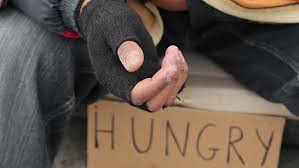
The last couple of days I have noticed a few more community members pan handling near stop lights.  I am not sure why there has been an increase, but it has been noticeable.  I usually carry small bags of supplies in my car for homeless individuals, but I recently cleared out my car and they are sitting in my garage.  So yesterday, knowing I was empty handed, I sat at the stoplight, intentionally not making eye contact with a particular panhandler.  But as we drove by, my youngest daughter waved and shouted, “Hi!”

Clearly my daughter has mastered the art of honoring and respecting the Christ in others.  She did not see class, status, or dirt.  She saw a person whom she would honor like anyone else.  That’s the wonderful thing about being a part of a faith community.  When we are struggling with our Christian witness – with truly allowing the Christ in us to honor and respect the Christ in others – other faithful witnesses will model that behavior for us.  Who are your faith models?  How might you engage more faithfully in honoring and respecting the Christ in others – especially those in whom you struggle to see Christ?

On Staying at the Table…

01 Wednesday Feb 2017

Posted by jandrewsweckerly in Uncategorized

≈ 4 Comments

Tags

controversy, conversation, dinner, Eucharist, God, listen, protest, respect, shelter, table

Yesterday morning, I heard a statistic that said 57% of Americans supported Trump’s current immigration ban.  The number surprised me because I had watched all weekend as people poured into airports and joined protests against the Executive Order.  Perhaps one could argue that the press loves to cover controversy and made the hype feel bigger than the numbers.  Regardless, watching the passionate, immediate, and spontaneous emergence of protests, I was surprised to hear such support in opposition to the protestors’ visceral response.  As I thought about that contradiction, I realized that there must be some part of the supporters’ position that I do not understand.

I have been thinking a lot this past week about how we are going to move through this tense time as a country.  One of the constant refrains I have been hearing is about how we need to listen – really listen – to each other and engage in meaningful conversation with the “other.”  I have appreciated articles like this one, that present a point of view without comment, which is one form of really listening.  But I have not been sure how I would go about engaging in these conversations myself.  But, as God often does, I have found it happening in spite of me.

Last week, Hickory Neck joined another Episcopal Church to host an emergency winter shelter week.  I volunteered for an evening shift.  During dinner, I found that the conversation between guests and volunteers slipped into a conversation about politics.  My initial instinct was to shut the conversation down – worrying I might step on some toes.  But I took a deep breath and tried to do what I kept hearing about – listen.  The points of view varied widely among our homeless guests and our parishioners.  Some points of view were extreme – on both sides!  And some of the things we shared I worried would cause alienation between my parishioners and I.  But we all stayed at the table.

That’s one of the things I have always loved about the Episcopal Church – we stay at the table.  Every week we bring our opposing views, our sinful hearts, and poor hearing to the table, and kneel side-by-side, remember whose we are, and go out into the world renewed and made whole.  Our table fellowship at dinner that night was not a Eucharistic meal.  But the results were quite similar.  As my volunteer shift ended, we shook hands, we looked each other in the eye, and we nodded in mutual respect.  Our conversation did not change the world.  But hopefully it changed each of us just a little.  And that may be the most we can hope for – small changes, made possible by staying at the table.  On Sundays, the church shows us how.  Our job is to create table opportunities as often as we can throughout the week.

life-changing-table

Photo credit:  www.boundless.org/life-changing-power-of-table/

Sermon – Luke 15.1-3, 11b-32, L4, YC, March 6, 2016

10 Thursday Mar 2016

Posted by jandrewsweckerly in Sermons, Uncategorized

≈ Leave a comment

Tags

bad, church, death, family, forgiveness, God, good, grace, honor, layers, Lent, love, parable, prodigal son, refreshment, repentance, respect, Rose Sunday, saints, Sermon

Growing up, my Grandfather was considered a saint.  He was kind and funny.  He was a wiz in the kitchen, and he always made you feel good.  He was beloved by all, and was known as a champion for the underdog.  That narrative was affirmed at his funeral as we told stories of his kindness and generosity.  He was without blemish and probably could have remained so had I not asked questions.  But over coffee one day, I had a conversation about the saintliness of my grandfather with my aunt and uncle.  Over the course of our conversation they slowly opened my eyes about how my grandfather was more nuanced that I realized.  What I interpreted as kindness they helped me see as, at times, avoiding conflict to the detriment of others.  What I saw as peacemaking could be interpreted as not standing up to bullies.  Slowly the one-dimensional man I knew developed layers – layers of goodness and weakness; layers of helpfulness and harm; layers of perfection and flaws.

We regularly do the same thing with those who have died – whether canonized saints or beloved family members.  In death, we honor all the goodness about them and gloss over the bad parts.  A classic example is one of my favorite modern-day saints, the Rev. Dr. Martin Luther King, Jr.  He spearheaded a movement with grace, insight, and boldness and inspired generations.  But I remember reading later in life how his treatment of women in the Civil Rights Movement was not always as admirable.  Slowly his layers emerged for me.  Although I still admire his work and writings, his life is more nuanced now.

Now some people will argue that we should not speak ill of the dead – that we should show our respect by letting go of the bad and only honoring the good.  In some respects, I understand why people do not want to dishonor the dead.  But I think telling stories that only make others seem perfect without honoring their flaws hurts us more than helps us.  That is why I love the parable of the two sons from our gospel today.  I resists calling the parable the parable of the prodigal son because I think both sons have something to teach us.[i]  In the parable, we can easily see the two brothers in one-dimensional ways.  The older brother is the good and faithful son for loyally supporting his father and the family business.  The younger brother is the bad son who insults his father, squanders his ill-gotten inheritance, and shamefully asks for more than he deserves.  Those one-dimensional stories are stories we know.  We have friends, family members, or maybe some of us even who are those characters – the responsible older sibling, or the troublemaking younger sibling; the child whom the parent always brags about, or the child about whom the parent seems embarrassed; the child who brings the family honor, or the child who brings the family shame.

But like any good parable, these characters are not as one-dimensional as they seem.  I was thinking about the younger brother this week and I realized we never hear about his impression of the party his father throws.  We suspect he is grateful for his father’s forgiveness, and we honor the humble way the younger son repents, but that party must have been hard.  Everyone at the party knows his sin.  Asking for his portion of his father’s inheritance before his father’s death was tantamount to wishing his father were dead.[ii]  In order for his father to give the younger son the money, he would have had to have sold off some land – a fate even worse for a culture who understood their land to be God’s promised gift.[iii]  Though his father’s forgiveness must have been a relief, I cannot imagine the rest of the town being so gracious.  I wonder whether the son stayed humble and repentant during the party; whether he was able to relax into his newfound forgiveness, laughing and joking; or whether he felt uncomfortable, bristling from his neighbors’ judgment and sideways glances.

Of course, we cannot forget the older brother.  The dutiful, obedient, hardworking brother loses all his perfection in his reaction to this party.  The older brother throws a temper tantrum of epic proportions.  He whines about the abundance his father shows his brother – perhaps rightfully so, since the money and fatted calf used for the party comes from what is left of the older son’s inheritance.[iv]  He complains about how he has never experienced such bounty and celebration.  He resents his father’s lack of gratitude for all the older son’s dutiful work.  Some of the son’s indignation is warranted.  He was, in fact, the good son, and his younger brother had behaved badly.  But the rewards of the story are not playing out so simply.  The older brother overreacts.  You see, his response is equally disgraceful to his father.  In the day of this parable, the host of a party was never to leave his guests.  Going to his older son would have been seen as disrespectful to the guests he had invited.[v]  But just like he goes out to meet his younger son, the father goes out to meet the older son, offering him similar generosity and abundance in the face of his son’s sin.

Part of why we love this parable so much is that we can identify with all the characters.  We are a people of nuanced layers too.  We have our younger son moments and our older son moments.  We have moments when we are bastions of forgiveness and grace, and moments when we withhold that forgiveness and grace.  Those among us who are known as having deep wells of patience have our moments when we snap.  And those among us who are known as being judgmental or stern have our moments of insightful kindness.

Our layers are why we have seasons like Lent and days for healing prayers.  In Lent, we shuffle home from our partying, wastefulness, and self-centeredness and return to our forgiving Lord.  In Lent, we bring our resentfulness, jealousy, and self-righteousness to the altar as we long for another way. In Lent, we bring our judgment of others and our judgment of ourselves and exchange them for freedom for humility and compassion.  Having a healing service in Lent allows us to do those things in a tangible way – not just to pray for physical healing of ourselves and others, but to pray for spiritual healing for those layers that are not as beautiful as others.

In order to honor that work of self-reflection and repentance, the church gives us what is called Rose Sunday, Refreshment Sunday, or even Mothering Sunday.  The idea is that being half-way through Lent, we take a day to break our fasting in these forty days.  In many parishes, to reflect the respite from penitence and fasting, the vestments and paraments change from their usual Lenten array to a beautiful rose-colored array.  On this day, we take a break from wallowing in ashes and our sack cloths, and we find refreshment in our Lord’s forgiveness and redemption.  In England, apprentice boys took this day off to visit their mothers, hence the one designation as Mothering Sunday.  We hear that invitation into gladness today in our psalm, “Happy are they whose transgressions are forgiven, and whose sin is put away!  Happy are they to whom the Lord imputes no guilt, and in whose spirit there is no guile!”[vi]  After weeks of repentance, heaviness, and weight, today the church invites us into forgiveness, lightness, and joy.

Rose Sunday is like the father in our parable today – full of forgiveness, grace, and love for us and all our layers – the good and the not-so-good – because we all have the layers.  Today the church runs out to greet us, leaves a good party, and meets us where we are – and loves us.  Today, the church says, “I see your layers, and I love all the parts of you, fully.”  Today the church is a fool for forgiveness, not wisely teaching us a lesson about humility, but senselessly lavishing upon us grace, love, and freedom from our self-centeredness and self-righteousness.  On this refreshment Sunday, the church invites us to remember that we are beloved children of God, a God who knows all our layers and loves us anyway.

I invite you today to take on the fullness of refreshment this day.  Whatever you have been working on this Lent, whatever guilt you have been harboring, or whatever sinfulness you have been examining, know that your sins are forgiven.  Know that you can come forward for healing prayers, not asking for healing and wholeness, but celebrating the healing and wholeness you have already experienced.  Know that you can come to the Eucharistic table not just for solace only but for strength; not just for pardon only, but for renewal.  As we say in our Rite I prayers, Jesus says to us, “Come unto me, all ye that travail and are heavy laden, and I will refresh you.”[vii]  Amen.

[i] Karoline Lewis, “Perspective Matters,” February 28, 2016, http://www.workingpreacher.org/craft.aspx?post=4553 as found on March 3, 2016.

[ii] N. T. Wright, Luke for Everyone (Louisville:  Westminster John Knox Press, 2004),187.

[iii] Leslie J. Hoppe, “Exegetical Perspective,” Feasting on the Word, Year C, Vol. 2 (Louisville:  Westminster John Knox Press, 2009), 119.

[iv] Barbara Brown Taylor, “The Parable of the Dysfunctional Family,” April 17, 2006, as found at http://www.barbarabrowntaylor.com/newsletter374062.htm on March 3, 2016.

[v] David Lose, “Lent 4 C:  The Prodigal God,” February 28, 2016, as found at http://www.davidlose.net/2016/02/lent-4-c-the-prodigal-god/ on March 3, 2016.

[vi] Psalm 32.1-2.

[vii] Matthew 11.28.  BCP 332.

Newer posts →

Recent Posts

  • On the Myth and Magic of Advent…
  • On Risking Failure and Facing Fear…
  • Sermon – Luke 23.33-43, P29, YC, November 23, 2025
  • On Inhabiting Gratitude…
  • Sermon – Luke 20.27-38, P27, YC, November 9, 2025

Archives

  • December 2025
  • November 2025
  • October 2025
  • September 2025
  • August 2025
  • July 2025
  • June 2025
  • March 2025
  • February 2025
  • December 2024
  • November 2024
  • October 2024
  • September 2024
  • August 2024
  • July 2024
  • June 2024
  • May 2024
  • March 2024
  • February 2024
  • January 2024
  • December 2023
  • November 2023
  • October 2023
  • September 2023
  • August 2023
  • July 2023
  • June 2023
  • May 2023
  • March 2023
  • February 2023
  • January 2023
  • December 2022
  • November 2022
  • October 2022
  • June 2022
  • May 2022
  • January 2022
  • December 2021
  • November 2021
  • October 2021
  • September 2021
  • August 2021
  • June 2021
  • May 2021
  • April 2021
  • March 2021
  • February 2021
  • January 2021
  • December 2020
  • November 2020
  • October 2020
  • September 2020
  • August 2020
  • July 2020
  • June 2020
  • May 2020
  • April 2020
  • March 2020
  • February 2020
  • January 2020
  • December 2019
  • November 2019
  • October 2019
  • September 2019
  • August 2019
  • July 2019
  • June 2019
  • May 2019
  • April 2019
  • March 2019
  • February 2019
  • January 2019
  • December 2018
  • November 2018
  • October 2018
  • September 2018
  • August 2018
  • July 2018
  • June 2018
  • May 2018
  • April 2018
  • March 2018
  • February 2018
  • January 2018
  • December 2017
  • November 2017
  • October 2017
  • September 2017
  • August 2017
  • July 2017
  • June 2017
  • May 2017
  • April 2017
  • March 2017
  • February 2017
  • January 2017
  • December 2016
  • November 2016
  • October 2016
  • September 2016
  • August 2016
  • July 2016
  • June 2016
  • May 2016
  • April 2016
  • March 2016
  • February 2016
  • January 2016
  • December 2015
  • November 2015
  • October 2015
  • September 2015
  • August 2015
  • July 2015
  • June 2015
  • May 2015
  • April 2015
  • March 2015
  • February 2015
  • January 2015
  • December 2014
  • November 2014
  • October 2014
  • September 2014
  • August 2014
  • July 2014
  • June 2014
  • April 2014
  • March 2014
  • February 2014
  • January 2014
  • December 2013
  • November 2013
  • October 2013
  • September 2013
  • August 2013
  • July 2013
  • June 2013
  • May 2013
  • April 2013
  • March 2013
  • February 2013
  • January 2013
  • December 2012
  • November 2012
  • October 2012
  • September 2012

Categories

  • reflection
  • Sermons
  • Uncategorized

Meta

  • Create account
  • Log in
  • Entries feed
  • Comments feed
  • WordPress.com

Blog at WordPress.com.

  • Subscribe Subscribed
    • Seeking and Serving
    • Join 394 other subscribers
    • Already have a WordPress.com account? Log in now.
    • Seeking and Serving
    • Subscribe Subscribed
    • Sign up
    • Log in
    • Report this content
    • View site in Reader
    • Manage subscriptions
    • Collapse this bar
 

Loading Comments...