• About

Seeking and Serving

~ seek and serve Christ in all persons

Seeking and Serving

Tag Archives: senses

On Ferry Rides and God…

01 Wednesday May 2024

Posted by jandrewsweckerly in reflection

≈ Leave a comment

Tags

control, ferries, ferry, gift, God, gratitude, Jesus, moment, presence, productive, sacred, senses, thanks, time, travel

Photo credit: https://www.vdot.virginia.gov/about/our-system/ferries/

Yesterday I attended a meeting that requires riding a ferry to attend.  I have always found the ferry a bit of a nuisance.  If timed incorrectly, one can spend almost thirty minutes just waiting to board the ferry.  But even timed correctly, once upon ferry, one must sit for the twenty-minute ride – certainly progressing toward the destination, but not nearly as quickly as it feels when driving.  Something about the taking the ferry feels like a mandatory suspension of time and progress. 

Knowing that reality, I try to plan ahead – with a call to make, emails to read, or a podcast to finish.  I talked to a fellow traveler who has young children at home who used the twenty minutes for a coveted power nap.  And certainly, when I have traveled with my own children, one has the opportunity to go to the upper deck and take in the wonder of creation – an imposed moment of awe and wonder.

Thinking about the various ways one occupies oneself on the ferry had me thinking about the gift of time.  My method of busying myself on the ferry is certainly one of attempting to master control of the uncontrollable.  That mother of young children saw the gift of time as just that – a blessed gift she had not realized she needed.  And my children remind me that every moment is ours to steward – that productivity might include making room for the sacred too – that the sacred might feed my moments of productivity just as much as powering through times of tangible productivity.

I wonder what moments God is gifting you today.  Sometimes our schedules are so full, we may believe that there is no room for a “God moment.”  But that is the funny thing about God.  God permeates all our moments – being there when we are hustling to make a deadline, there when our child is seeking care and compassion – or even just a ride from practice, there when the aging customer in front of us needs a little assistance, and there when a blue bird flutters by seeking the creation we rarely notice.  How might you adjust your senses today to acknowledge the sacred all around you?  How might you give thanks and gratitude for God’s blessings so easily unnoticed?  My prayer is for your awakened senses to the blessing of God’s presence today.

On Being Tended in the Wilderness…

17 Wednesday Mar 2021

Posted by jandrewsweckerly in reflection

≈ Leave a comment

Tags

angels, change, community, faith, gathering, Jesus, pandemic, senses, tending, transformation, wilderness

Photo credit: https://www.markmallett.com/blog/the-desert-path/

This Sunday our church will regather in our building for the second time during this pandemic.  We will be masked, socially distanced, and observing all kinds of safety regulations.  In many ways it will not be the same.  The crowd will be much smaller than normal, we will not be able to hug or slide into a seat next to a dear friend (or soon-to-be friend).  We will not be able to sing, or kneel at the altar, or linger for conversation and coffee. 

But we will be back in a space so sacred that simply sitting in the chairs will bring a flood of memories and emotions.  We will be with people who have suffered through a long, hard year, just like us, and who are just as overwhelmed with gratitude as we are.  We will engage all the senses in worship:  hearing the word and music, seeing familiar and new sights, touching chairs we have not sat in for months, smelling the spring air floating across the room, and tasting the distinctive taste of a communion wafer. 

Five weeks ago, when we read the story of Jesus’ temptation in the wilderness at the beginning of Lent, I am not sure we fully understood Jesus’ experience.  We certainly have a whole new appreciation for the literal experience of wilderness – the deprivation, separation, and desperation.  But I am not sure we have ever fully understood what it means to be tended by angels and to reenter society.  For me, I always thought of Jesus having gone through an ordeal, but essentially leaving the wilderness the same, albeit a bit stronger, person.  But having just marked the one-year anniversary of this pandemic, I am now keenly aware that no one who enters the wilderness ever exits the wilderness the same person. 

Similarly, though I am thrilled to see some of my people on Sunday, and I am honored to offer angelic-like care after a year of suffering, I know that when we finally exit this pandemic, we will be changed community.  We will be a community with an increased capacity for empathy and justice.  We will be community who is not just open to experimentation and creativity, but who demands the kind of nimbleness that will always keep us open to the movement of the Spirit.  We will be a community who is less married to our buildings and more married to creating sacred spaces wherever we find them – online, in homes, in the community just outside our property.  We will be a community who knows all the goodness we have found inside this church community does not belong inside our community, but outside in the world with those who need it.  As we gather in this hybrid time, we are not returning to who we were.  We are pausing in the wilderness to be tended by the angels.  And then, slowly but surely, we will walk unknown paths together, a stronger, nimbler, more faithful community.   

On Race, Earthquakes, and Action…

17 Wednesday Jun 2020

Posted by jandrewsweckerly in Uncategorized

≈ 2 Comments

Tags

action, African-American, beauty, blindness, compassion, complacency, confederate, earthquake, harassed, Jesus, learn, listen, love, power, protest, racism, senses, uncomfortable, value

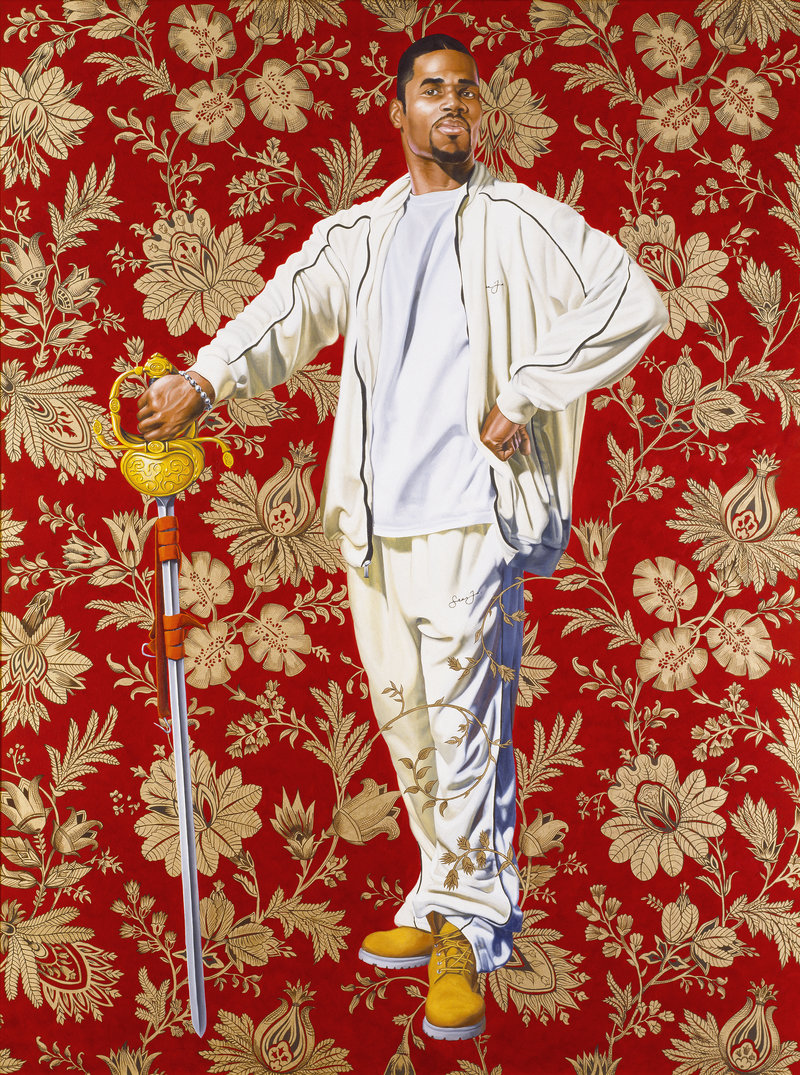
Kehinde Wiley

Photo credit:  https://www.npr.org/2015/05/22/408558234/the-exquisite-dissonance-of-kehinde-wiley

A few years ago, the Virginia Museum of Fine Arts had an exhibit of the works of Kehinde Wiley.  I had not seen his work before, and found his pieces in the exhibit shocking to the eye.  Wiley managed to take traditional poses and settings from art history and infuse them with images of modern African-Americans.  The pieces were jarring to the senses.  As I made my way through the exhibit, it began to dawn on me why my senses were so jarred. By consistently seeing classical art featuring people with light-colored skin, I had been enculturated to expect certain images in art.  The prominence of one kind of subject also created unspoken messages about value, beauty, and power.  Wiley’s vibrant pieces were like an earthquake.  And as someone who considers herself fairly self-aware, I found myself humbled by his work, and sorrowful for my ignorance.

I think that is why I was so surprised by an experience last week.  Last Tuesday night, our family went up to Richmond to take a look at the Robert E. Lee statue and the surrounding damage to businesses and monuments.  For those of you who have not been following the story, as part of the protests about George Floyd’s death and the Black Lives Matter cause, the prominent Confederate monuments in Richmond have come under fire.  The statue of Robert E. Lee’s large stone plinth has been covered in graffiti, protesting George’s death, the treatment of African-Americans by the police, and systemic racism.  As I took in the visceral, pain-filled cries of graffiti, as I looked at pictures of black victims of police violence surrounding the statue, whose names I have prayed for over the years, as I watched families of color take pictures in front of this once pristine, but ever-controversial, statue with a new sense of pride and defiance, what I began to understand is those who are harassed and feel helpless have been begging for our compassion for a long time – cries that could no longer be ignored when staring at that powerfully altered statue.

But mostly, I mourned again for my complacency and blindness.  As a descendant of Confederate veterans, student of African-American history and politics, and pastor of a church built long before the Civil War, I know the issue of Confederate statues and monuments is sensitive.  But watching what was happening at the Robert E. Lee statue created the same feeling as Kehinde Wiley’s art work:  an earthquake for all in positions of privilege and power.  Standing there with my family, I felt like I was on unstable ground, my complicity in systemic racism exposed, and the weight of the question pressing on my chest:  what are you going to do about it?

For my brothers and sisters of color, I am sorry.  I am sorry that you have had to do the work to awaken my senses instead of doing that work myself.  For my brothers and sisters of European descent, we have work to do.  Hickory Neck Church has been posting ways for you to engage this issue – not necessarily telling you what to do, but inviting you into the position of making yourself vulnerable to listening, learning, and acting.  This is our work to do.  It is hard and uncomfortable, and this post may even make you defensive.  Please know that I am here – here to walk with you, here to encourage you, and here to hold us all to Jesus’ message of love.  What you do next will vary widely.  Maybe you can only do one small thing to start.  Our invitation is do something – and keep doing something until we find ourselves doing the work of the kingdom Jesus has desired for a long time.

IMG_8253

Photo credit:  Jennifer Andrews-Weckerly; reuse with permission only.


Homily – Mark 11.1-11, 14.1-15.47, PS, YB, March 25, 2018

28 Wednesday Mar 2018

Posted by jandrewsweckerly in Sermons, Uncategorized

≈ Leave a comment

Tags

complicit, God, Holy Week, homily, Jesus, love, Mary, Palm Sunday, participate, physicality, relationship, senses, Sermon, silence, sin, tomb, uncomfortable, visceral

When I did my AmeriCorps year of service at a food bank in North Carolina, the warehouse manager was from Liberia.  Eugene and I talked about a lot of things, but one favorite topic was the church.  When Holy Week rolled around, I remember Eugene telling me about Good Friday in Liberia.  On the way to church on Good Friday in Liberia, the children lead a procession.  The children carry an effigy of Jesus, and all the children take turns flogging the effigy of Jesus all the way to the church.  I remember being mortified when I learned about this tradition, wondering who in their right mind would invite children to participate in worship in such a gruesome, grotesque way.

The weird thing is, this mortifying tradition is not all that dissimilar to the physicality of our own worship today.  Today, we invite everyone to vigorously wave palms hailing Jesus Christ the king; then we have voices from our parishioners narrate the text, sometimes taking roles of people like Judas, Pilate, or denying Peter; and if that were not bad enough, then we put the words, “Crucify him!” in bold in our bulletins, reminding everyone to shout the words together.  The practice is so visceral that I often notice many people resist participating.  I cannot tell you how many photos I had to scroll through to find a good Hickory Neck Palm Sunday processional photo this year.  In what is supposed to be replica of joyously welcoming the Messiah, Hickory Neck-ers rarely take more than one palm, we hold them upright so as not to seem too zealous, and forget about a smile or look of excited victory.  I do not know if we feel silly or if we know all too well what comes next so we resist, but we struggle to engage in even the joyful part of today’s liturgy.

And I have rarely found an Episcopal Church anywhere who wholeheartedly joins in the chant, “Crucify him!”  We are so uncomfortable with that part of the liturgy.  More often people do not say the words at all, or they embarrassingly mumble the words.  Sometimes I see people tense up if those beside them enthusiastically participate too much.

Our resistance is futile though.  As if we hesitantly wave palms, or if we stay silent while the crowd demands we crucify Christ, we somehow avoid complicity with this humiliating atrocity.  But we are complicit with sin every day, in the most heinous ways.  We are complicit as our neighbors decide between housing, health care, and child care costs.  We are complicit as racism creates separate, unequal experiences for our citizens.  We are complicit as our God invites into a new way and we say “no.”

That is why the church offers us this very tactile, primal service today.  We wave the palms with fervor today because we remember the ways in which we see in part – the ways in which we manage to follow Christ, even if we do not understand what Christ is doing, even if we do not catch how Jesus inverts his triumphal entry on the back of a young donkey.  We fully participate in the words of today’s passion in order to remind us to “stop abusing the image of God revealed in the dignity of every human being.”[i]  And then we let those final words soak in today, as we stand with Mary Magdalene and Mary the mother of Joses, silently at the tomb, seeing where Christ’s body is laid.

What we do in worship today is actually the perfect entry into this most Holy Week in Church.  Now some priests will tell you that we combine the liturgy of the palms with the passion narrative today because the designers of the Prayer Book knew that many of you would come on Palm Sunday, skip the days of worship during Holy Week, and then show up on Easter Sunday without having walked from this triumphal entry into Jerusalem through the cross and tomb.  And maybe they were right (though I know most of you rearranged your schedules this week for Holy Week services).  But more importantly, even if you walk through this journey with Christ this week, the reason we pair the Palms with the Passion is that we could never go from the Palms to the Resurrection without the connection to the cross.  The triumphal entry into Jerusalem makes no sense without the cross; the irony of that festive procession only makes sense when you are standing silently and bleakly at the tomb.

I know today is uncomfortable.  I know today is confusing, and oddly visceral, and may even be a bit overwhelming.  But today, and perhaps all this week if you are able to join us, allow the senses to take over.  Allow the sights, and smells, and touches, and sounds, and tastes to overwhelm you this week.  Allow the ache of standing with Mary Magdalene and Mary the mother of Joses to sink deep into the same body that has waved palms and shouted awful things today.  Because only when our senses are that overwhelmed are we able to see that the cross is not about suffering and death, but rather is about a relationship that holds.  Only then will we find a “love stronger than death, that can withstand whatever the forces of evil do against [love], and that can hold suffering even as [love] struggles to alleviate [suffering].”[ii]  What feels like an empty, guilty ache today instead becomes a sign of how God overcomes terror, enfolds us in Life, and dwells with us forever.[iii]  But until then, stand with the Marys and with one another at the tomb in silence.

[i] Michael Battle, “Pastoral Perspective,” Feasting on the Word, Year B, Vol. 2 (Louisville:  Westminster John Knox Press, 2008), 182.

[ii] Margaret A. Farley, “Theological Perspective,” Feasting on the Word, Year B, Vol. 2 (Louisville:  Westminster John Knox Press, 2008), 182.

[iii] Farley, 184.

Sermon – Matthew 6.1-6, 16-21, AW, YC, February 10, 2016

12 Friday Feb 2016

Posted by jandrewsweckerly in Sermons, Uncategorized

≈ Leave a comment

Tags

Ash Wednesday, authenticity, comfort, disciplines, discomfort, Episcopal, Episcopalian, God, holy, hypocrisy, intention, Lent, liturgy, senses, Sermon

One of the dangers of being a faithful Episcopalian is getting lured in by the liturgy.  The liturgy is certainly what reeled me into the Episcopal Church.  Having been raised as a United Methodist, I had seen a variety of styles and orders of worship.  On any given Sunday, you never knew what text the preacher would use.  And since Eucharist only happened 2-4 times a year, liturgy was not synonymous with rhythm.  But not so in the Episcopal Church.  Once you figure out the kneeling, sitting, and standing patterns, the liturgy becomes gloriously expected.  You get so used to the patterns that your body almost does the movements without thinking.  You love being able to be anywhere in the country and know that the liturgy will be familiar and the lessons predetermined.  When seasonal changes, like Advent or Epiphany, happen, you expect and appreciate the subtle differences more.  Since most people I know do not really like change, the Episcopal Church is like a little slice of predictable heaven.

The trouble with that sense of comfort is we can miss when something really powerful happens.  Ash Wednesday is one of those kinds of days.  Growing up in the south, I never really had an experience of Ash Wednesday.  College was my first exposure to seeing others with ashes while being invited to don them myself.  I remember thinking how exposed having ashes on one’s forehead must be.  Ash Wednesday seemed like a big deal.  But, I am an Episcopalian now, and like many other things in liturgy, the shock of Ash Wednesday has softened.

That is why I love having a young child around.  The first time my oldest really understood what the ashes were all about she exclaimed, “Ew, what is that on your head?!?”  Try explaining to a three year old what being dust means and why I needed to remember I would return to dust.  Watch the child’s face as they process what mortality means.  Wait for the heavy feeling in your chest when they ask if they can have ashes too – knowing that you will have to say, “remember you are dust, and to dust you shall return” to her precious, innocent face.

Today the Church invites us into a holy Lent.  The Prayer Book says this is a time of prayer, fasting, and self-denial.  Matthew’s Gospel talks about the disciplines of giving alms, prayer, and fasting.  Some of us will take up these specific disciplines.  Others of us will commit to reading scripture or a devotional book, giving up chocolate, or playing Lent Madness.  The Church tells us these practices or disciplines are to help us walk with Jesus in repentance.  The challenge with taking on a spiritual discipline in Lent is making sure the practice is not rote – much like our participation in liturgies can be rote.  The Church is not inviting us into the practice of disciplines out of habit.  The Church is trying to help breathe life into our faith – and one of the ways that we do that is to do something out of the ordinary to shake up our comfortable, unchanging practices.

Matthew’s gospel is pretty strict about the way those disciplines happen.  Jesus says that we are to be private about our alms giving, prayer, and fasting so as not to seem like hypocrites, boasting about our giving, piety, or suffering.  But who among us has not slipped on the slippery slope of hypocrisy?  Those of us who give charitably often find ourselves claiming that giving on our taxes.  Those of us who have ever attended a prayer breakfast or have told a friend that we will pray for them surely were being a little showy about our prayers.  And let’s face it, I cannot imagine fasting without complaining at least a little bit.  The question then becomes, “How can a text that implores private acts of righteousness be read on the day one receives the imposition of ashes, a very visible and public act of piety?”[i]

But Jesus is not looking to trick us.  He is checking our intentions – our authenticity.  The trouble with anything rote, whether liturgies or disciplines, is that we risk losing why we are doing them in the first place.  When I am busy complaining about fasting, I do not have space in my thoughts to remember those who go without food daily.  When I am busy talking about my prayer life, I am filling up the silence through which God most likes to speak to me.  When I am weeding through giving materials trying to decide who to support financially, I lose sight of the gratitude from which my giving originates.  The issue is not really whether or not public and private acts are authentic or inauthentic.  The issue is being intentional about not only choosing our disciplines, but living into them.

I invite you today to use the tool of liturgy to awaken your intentionality this Lent.  Listen to the prayers and psalms today.  Notice the discomfort of kneeling – whether you kneel physically or kneel in your heart.  Listen to and feel the gritty ashes being spread on your forehead, allowing the solemnity of the words wash over you.  Taste the bread and the sting of wine on your tongue.  As you allow the liturgy to be fresh today, take time in prayer to consider in what ways God is inviting you into deeper relationship, and what discipline you can realistically take on to get you closer to God.  The liturgy today is not about sending us out with pious reminders to others about our faith.  The liturgy today is about jolting our senses into understanding our humanity, sinfulness, and mortality.  Today, the Church uses the Church’s most familiar tool to create just enough discomfort to help us turn our hearts and minds to God – the God whose arms are wide enough to spread on a cross and wide enough to embrace us all.  Amen.

[i] Lori Brandt Hale, “Theological Perspective,” Feasting on the Word, Yr. C, vol. 2 (Louisville:  Westminster John Knox Press, 2009), 22.

Homily – 2 Corinthians 2.14–17, Matthew 6.19–23, Andrei Rublev, January 29, 2015

16 Monday Feb 2015

Posted by jandrewsweckerly in Uncategorized

≈ Leave a comment

Tags

Christ, devotion, God, homily, icon, Rublev, senses, spirituality

Today we honor the life and work of Andrei Rublev.  Generally acknowledged as Russia’s greatest iconographer, Andrei was born around 1365 near Moscow.  At a young age he became a monk in an orthodox monastery.  There he began to study iconography.  Icons are central to orthodox spirituality.  They are used both in liturgies and in personal devotion.  Icons are not physical portraits, but instead are images of someone meant to provide access to the spiritual and divine.  For Andrei, painting an icon was a spiritual exercise. As he worked, he would reportedly say the Jesus Prayer (Lord Jesus Christ, Son of God, have mercy on me).  His icons were ways of accessing God in a unique way.

I first encountered icons in college.  Having grown up in the United Methodist Church, the devotional use of icons was a foreign experience.  But on my ecumenical mission trips, I was introduced to modern icons of Martin de Porres and Oscar Romero.  The images were jarring and gave me small window into the lives of these modern-day saints.  These stories, in turn, inspired in me a new sense of passion for the Gospel.  This is what icons are supposed to do – jar the senses in such a way that one experiences God in new and fresh ways.

Our lessons for 2 Corinthians and Matthew highlight the ways our senses play a role in our faith.  2 Corinthians talks about the aroma or fragrance of Christ.  At first, that language sounded foreign to me, but then I remembered the many times incense has stirred something in my faith.  That one fragrance can totally change a worship experience, opening up the holy in unexpected ways.  Meanwhile, our gospel lesson talks about the eye and how the eye can be a source of light – like the experience of praying with icons, our visual cues are what bring most of us to a more focused place of worship – whether seeing a crucifix, the drama of the Eucharistic prayer, or the flickering of a candle, these visuals bring our focus back to God who is trying to connect with us in new and fresh ways.

Our invitation today is to find which senses might be out of touch with God.  Maybe we haven’t been really paying attention to the taste of the Eucharistic meal.  Maybe we haven’t been listening to the power of music to lift us up.  Maybe we have not been seeing the beauty of this space and all that the space inspires in us.  These are the gifts God gives us every day – sensing ways of making our faith fresh and engaging.  How might God be inviting reconnection with you?  Amen.

Comfort food…

30 Friday Jan 2015

Posted by jandrewsweckerly in Uncategorized

≈ 3 Comments

Tags

church, comfort food, Eucharist, God, meal, nostalgia, senses, taste

Courtesy of https://www.flickr.com/photos/lorikay/172625272/

Courtesy of https://www.flickr.com/photos/lorikay/172625272/

Whenever my family and I travel to familiar places, there are required food-related stops.  When we go to San Diego, it is El Indio, Rubios, and In-N-Out.  When we go to Delaware, it is Capriotti’s and Rita’s.  When we go anywhere South, it is Krispy Kreme, Chick-fil-A, and Waffle House.  Somehow our trips do not feel complete until we have made it to our special food establishments.  In fact, in San Diego, the very first stop after the airport is not home – it is straight to El Indio.  We look forward to the food for weeks before our trips, and we make sure that whatever agenda is planned, those food stops are figured into the master plan.

Not only do we make the stops because the food is amazing (because it is!), we also make the stops out of a sense of nostalgia.  Because many of those establishments have not expanded to where we currently live, there is a way in which the food brings us back to other times in our lives.  The sense of taste overwhelms the mind with memories, and we find ourselves savoring not just the food but the treasured experiences as well.  Food has a tremendous power to create a sense of home – sometimes even more so than a particular house.

I have often felt that same way about the Eucharistic meal.  Though I celebrate Eucharist multiple times per week now, every once in a while, powerful sensory experiences overwhelm what could be the mundane.  The flavor of the host (yes, those bland wafers actually do have a taste), whether or not the host is stale or crunchy in your mouth, the sharp taste of communion wine at a time that would not normally be acceptable for consumption of wine – all of these sensory experiences can make communion powerful over and over again.  And sometimes, the familiarity of the taste and texture is also comforting.  When all else in my world seems out of control, that moment of receiving the body and blood of Christ is centering like nothing else can be.

I wonder what you have done lately to connect on a sensory level with God.  Maybe you have missed church these last couple of weeks (or months, or years).  Maybe you come to church, but you disconnect during the familiar Eucharistic prayer because it is just too familiar.  This past Sunday at St. Margaret’s, we sang “Taste and See,” one of my favorite communion hymns.  The words are based on Psalm 34.  Like a familiar dining establishment, whenever I read the psalm, I think of the song.  And whenever I think of the song, I am reminded of the many powerful times that holy meal has shaken up my senses in fresh ways.  I invite you reconnect with God this week on a sensory level.  Perhaps you will remember another place you call home.

Recent Posts

  • On the Myth and Magic of Advent…
  • On Risking Failure and Facing Fear…
  • Sermon – Luke 23.33-43, P29, YC, November 23, 2025
  • On Inhabiting Gratitude…
  • Sermon – Luke 20.27-38, P27, YC, November 9, 2025

Archives

  • December 2025
  • November 2025
  • October 2025
  • September 2025
  • August 2025
  • July 2025
  • June 2025
  • March 2025
  • February 2025
  • December 2024
  • November 2024
  • October 2024
  • September 2024
  • August 2024
  • July 2024
  • June 2024
  • May 2024
  • March 2024
  • February 2024
  • January 2024
  • December 2023
  • November 2023
  • October 2023
  • September 2023
  • August 2023
  • July 2023
  • June 2023
  • May 2023
  • March 2023
  • February 2023
  • January 2023
  • December 2022
  • November 2022
  • October 2022
  • June 2022
  • May 2022
  • January 2022
  • December 2021
  • November 2021
  • October 2021
  • September 2021
  • August 2021
  • June 2021
  • May 2021
  • April 2021
  • March 2021
  • February 2021
  • January 2021
  • December 2020
  • November 2020
  • October 2020
  • September 2020
  • August 2020
  • July 2020
  • June 2020
  • May 2020
  • April 2020
  • March 2020
  • February 2020
  • January 2020
  • December 2019
  • November 2019
  • October 2019
  • September 2019
  • August 2019
  • July 2019
  • June 2019
  • May 2019
  • April 2019
  • March 2019
  • February 2019
  • January 2019
  • December 2018
  • November 2018
  • October 2018
  • September 2018
  • August 2018
  • July 2018
  • June 2018
  • May 2018
  • April 2018
  • March 2018
  • February 2018
  • January 2018
  • December 2017
  • November 2017
  • October 2017
  • September 2017
  • August 2017
  • July 2017
  • June 2017
  • May 2017
  • April 2017
  • March 2017
  • February 2017
  • January 2017
  • December 2016
  • November 2016
  • October 2016
  • September 2016
  • August 2016
  • July 2016
  • June 2016
  • May 2016
  • April 2016
  • March 2016
  • February 2016
  • January 2016
  • December 2015
  • November 2015
  • October 2015
  • September 2015
  • August 2015
  • July 2015
  • June 2015
  • May 2015
  • April 2015
  • March 2015
  • February 2015
  • January 2015
  • December 2014
  • November 2014
  • October 2014
  • September 2014
  • August 2014
  • July 2014
  • June 2014
  • April 2014
  • March 2014
  • February 2014
  • January 2014
  • December 2013
  • November 2013
  • October 2013
  • September 2013
  • August 2013
  • July 2013
  • June 2013
  • May 2013
  • April 2013
  • March 2013
  • February 2013
  • January 2013
  • December 2012
  • November 2012
  • October 2012
  • September 2012

Categories

  • reflection
  • Sermons
  • Uncategorized

Meta

  • Create account
  • Log in
  • Entries feed
  • Comments feed
  • WordPress.com

Blog at WordPress.com.

  • Subscribe Subscribed
    • Seeking and Serving
    • Join 394 other subscribers
    • Already have a WordPress.com account? Log in now.
    • Seeking and Serving
    • Subscribe Subscribed
    • Sign up
    • Log in
    • Report this content
    • View site in Reader
    • Manage subscriptions
    • Collapse this bar
 

Loading Comments...