• About

Seeking and Serving

~ seek and serve Christ in all persons

Seeking and Serving

Tag Archives: serve

On Collars, Conversations, and Casual Clothes…

10 Wednesday Sep 2025

Posted by jandrewsweckerly in reflection

≈ Leave a comment

Tags

caring, clergy, clothes, collar, faithful, God, Lord, love, receive, serve

Photo credit: https://medium.com/test-everything/everything-you-never-wanted-to-know-about-clerical-collars-2faa4b84c092

One of our favorite family errands is making the Costco run:  grabbing bulk supplies and some special treats to stock the house for the coming weeks.  My experience these days is mostly functional:  get in, grab items on the list, avoid being tempted by impulse purchases caused by yummy samples, and get home.  But last week I ended up near the warehouse while still in my clergy collar and decided to make a run anyway.  I do not know if it was the collar or it was a full moon, but I could not seem to get out of the warehouse without myriad encounters:  from the older gentleman who started with a question about bread and from whom I had to drag myself away ten minutes later because I think he was working out some loneliness; to the customers who either stared at or asked me directly about my collar; to the employee at check out who, without one word about my attire, asked me to pray for the staff that day. 

I have been thinking about how different that day in the store was from days when I do not wear a collar – wondering how folks might see me as a safe person to share their questions, wonderings, and concerns with or without a collar.  For some, the collar is a visual cue toward receptivity – a signal that I am a pastor even outside the church walls.  I suspect that once my collar is off, I am not necessarily putting out “Come talk to me – I welcome your thoughts, cares, and ponderings” vibes. 

Every Sunday in church we talk about taking the church out into the world.  Our dismissal says, “Go in peace to love and serve the Lord.”  My shopping experience made me wonder how much I limit that loving and serving.  Do I only love and serve the Lord when I’m in the mood?  Is my selective loving and serving obvious to others?  In other words, am I somehow actively shutting down loving, faithful care in daily life by masking my identity as a child of God by wearing my “casual clothes”? 

I invite your pondering with me this week about how loving and serving the Lord might mean cultivating a receptivity to loving, open, caring conversations with friends, family, and strangers (especially strangers!) alike.  We all need down time from being on at work or in our family or our volunteer roles.  But perhaps this week, we can experiment with using some of our “ordinary time” for unusual encounters – seeing people as they really are, listening more meaningfully when people reach out, pausing when others indicate they could use some of your time.  I cannot wait to hear how the shift in your week goes!

Sermon – Mark 7.1-8, 14-15, 21-23, P17, YB, September 1, 2024

04 Wednesday Sep 2024

Posted by jandrewsweckerly in Sermons

≈ Leave a comment

Tags

body, church, disciples, Episcopal Church, faith, identity, Jesus, member, membership, Sermon, serve, work

Before I became a priest, I served as a Director of Volunteer services at a Habitat for Humanity affiliate.  In my training as a volunteer manager, I learned that one of the most important things about recruiting someone to a volunteer position was clarity about what one was asking from a volunteer.  If they were going to serve on a committee, how long was the commitment, how frequently would they meet, what work would be expected, and how was leadership structured were all details they should have.  If they were going to work on site, what training was expected or would be provided, what age restrictions existed, what risks would they undertake, and how their day would be structured were important details before a workday.  If they had a group event, they needed to know how many volunteers could be on site, what hours they needed to commit to, and what happened in inclement weather.  By the end of my tenure, every volunteer position had a position description outlining expectations, qualifications, and rewards.

So, imagine my transition to the priesthood and realizing how poorly the Episcopal Church had defined membership.  The very first time someone asked me (and every time since then), I dread the question, “So what do I need to do to become a member of this church?”  The Episcopal Church does a notoriously poor job of defining membership.  Our commitment to professing “All are welcome!” seems to translate into no defining characteristics of membership.  “How do I join your church?” should be one of the easiest questions there is.  And yet, when I talk to new members, the answer has to be two-fold:  the technical answer (as long as you attend three services a year and are a financial contributor, you’re considered a member – the answer from the wider Episcopal Church which I loathe!), and the more practical answer we have crafted here at Hickory Neck:  you fill out a form, you commit to supporting the church financially, you commit to feeding yourself (through study, prayer, regular worship), and you commit to feeding others (through giving your time to the church and to the wider community on behalf of the church). 

Our gospel lesson today seems to be wading through a similar lack of clarity.  The Pharisees and scribes are totally perplexed by how some of Jesus’ disciples are not washing their hands before eating – a totally valid concern in these days of post-pandemic!  But handwashing was not just about hygiene.  The ritual washing of hands was about identity, or “membership” as we understand membership today.  The Jews of this time are in an “oppressed minority, living in an occupied land.”  Their question is asked with the backdrop of colonialism, cultural and religious diversity, and competing claims on identity.[i]    Their question is both simple and complex:  why aren’t the disciples living like members of our community? 

For many a reader of this text, all sorts of erroneous conclusions have been drawn – primarily the anti-Semitic understanding that the laws of the Jews are superseded by laws of Jesus.[ii]  But that is not what is happening in this text.  Jesus does not have any issue with ritual cleansing:  he of all people understands the expectations of following God.  But Jesus is saying something more nuanced about identity and membership.  Jesus is saying that no matter how we traditionally mark ourselves as “other,” even if something is “the way we’ve always done it,” what is more important is how we live our faith.  So, if we are doing all the right things:  washing our hands the right way, bowing or genuflecting at all the right times, crossing ourselves when we’re supposed to, saying “Amen” during the sermon – or avoiding saying “Amen” during the sermon – none of that matters if our insides are defiled.  As Jesus quotes from Isaiah, “This people honors me with their lips, but their hearts are far from me…”[iii] 

Today’s invitation is to ponder what membership in this body of faith means.  Are we honoring Jesus with our lips, but our hearts are far from Jesus?  Are we following the external “rules” but fostering evil intentions in our heart?  Have we filled out the membership form but neglected our work of feeding ourselves and feeding others?  Our work this week is making sure that when we go out into the world to love and serve the Lord – the dismissal that the we agree to every week – that we love and serve the Lord in ways that show people Christ through our words and actions; that as the political season ramps up, we ensure we are not defiling the dignity of any human being with our lips; and that when we talk about how much we love this church on the hill, we do so in a way that does not mask our individual struggles with avarice, deceit, slander, pride, and folly.  Telling the world you are a proud member of Hickory Neck Episcopal Church is just fine – and something I hope you do on a regular basis.  But our invitation from scripture today is to be clear with others that, as that old tune says, “He’s still working on me,” is also a part of membership in the body of Christ – perhaps the most appealing one that draws others into a desire for membership too.  Amen. 


[i] Debie Thomas, “True Religion,” August 22, 2021, as found at https://www.journeywithjesus.net/lectionary-essays/current-essay?id=2944 on August 30, 2024.

[ii] Idea suggested by Matt Skinner on the Sermon Brainwave podcast, “#799: 14th Sunday after Pentecost (Ord. 22B) – Aug. 29, 2021,” August 22, 2021, as found at https://www.workingpreacher.org/podcasts/799-14th-sunday-after-pentecost-ord-22b-aug-29-2021 on August 28, 2024.

[iii] Mark 7.6b.

Sermon – Mark 1.29-39, EP5, YB, February 4, 2024

14 Wednesday Feb 2024

Posted by jandrewsweckerly in Sermons

≈ Leave a comment

Tags

bishop, calling, comfort, deacon, discernment, Jesus, Kingdom, ministry, motherhood, ordain, redirected, Sermon, serve, work

You may or may not know about me that I became a mom and was ordained at the same time.  I was seven months pregnant when the bishop ordained me.  Needless to say, there is ongoing debate about whether Simone is also a deacon since she was in utero at the ordination.  But what becoming a mom and becoming ordained at the same time has meant is the patterns of the two vocations are interwoven for me.  So just like on any given day in ministry, my plan for the day can get upended with a phone call, a drop-in visit, or a text, so is the precarious nature of parenting.  I can be in the middle of preparing dinner when a friend-crisis erupts at home for one of the kids.  I can be driving a kid to practice, only to learn from the backseat that the kid is struggling with a bully.  I can be trying to write a sermon, and another kid bursts inside with a bloody knee.  Some folks might see those parenting and pastoring moments as “interruptions” to a day.  But as someone who became a pastor and parent at the same time, that constant feeling of pushed and pulled, interrupted while trying to charge ahead, and even rerouted entirely is part and parcel of living my vocations faithfully.

I think that is why I find our gospel lesson today so compelling.  Jesus has just come off the casting out of demons in the temple that we heard about last week, with everyone awe-struck by his teaching with authority.  Then, today he just tries to go to Simon’s house to chill out, when he is immediately notified about Simon’s sick mother-in-law.  After healing her, Jesus tries to settle back down, but by sundown, the whole town is at the door, asking for healing and cures – which Jesus graciously offers.  In the wee hours of the morning, Jesus goes out to a deserted place for a moment of peace and prayer, and Simon and the others interrupt his moment for more work.  Jesus rallies the troops and off they go, proclaiming the gospel and casting out demons.  Even Simon’s mother-in-law, as soon as she is healed, begins serving Jesus and his disciples.  Not to be confused with some sort of subservient, sexist expectation that women should serve men – no, the word used for what Simon’s mother-in-law does is the same word used for what deacons do:  she serves.  In fact, she is the first deacon in the New Testament[i], and as such, teaches us that life following Jesus is just like following along in this story about a day in the life for Jesus – you are constantly pulled and pushed, invited into service in whatever ways that service shows up on your doorstep.

Yesterday I was a part of a bishop’s election.  Sometimes I think the way we elect bishops is almost cruel – for the community where the candidate serves, they are both incredibly proud of their priest, but also incredibly anxious that they may lose their priest.  All sorts of emotions and concerns get stirred:  maybe my priest doesn’t want to be here anymore, maybe my priest is neglecting her job here, maybe my priest doesn’t care about me or our church.  But getting lost in those anxieties misses what is happening in a bishop’s search.  The priest is simply doing what he or she does everyday:  listening and responding to the call of ordained life, wherever that call pushes and pulls.  Sometimes that means hopping in a car to get to the hospital immediately; sometimes that means stopping the crafting of a report, article, or sermon to listen to a hurting soul; sometimes that means talking for an extended time with a stranger at the grocery store, the gym, or the bus stop because your priesthood doesn’t belong just in the church walls.  But sometimes that means saying yes to serving on a board for workforce housing, saying yes to a bishop’s request that you serve the diocese in a particular way, saying yes to raising funds for your seminary – and even saying yes to discernment to the episcopacy.  Just like there are countless balls to juggle in parenting, there are countless balls to juggle in ordained life.  That’s just what we do when Jesus calls us – we serve.

As we settle into the idea that I will in fact being staying in ministry with you, I see this “Day in the life of Jesus” from Mark’s gospel today as an invitation.  As Debie Thomas describes, our invitation today is to “spend our days as Jesus spent his…living graciously and compassionately in this vast and often terrible in-between.  To offer the comfort of our steady presence to those who suffer.  To encourage those in pain to hang on, because the work of redemption is ongoing.  To create and to restore community, family, and dignity to those who have to walk through this life sick, weak, and wounded – without cures.  To make sure that no one who has to die – and that’s all of us in the end – dies abandoned and unloved, if we can help it.”[ii]  That means as we at Hickory Neck step away from this time of discernment, we do the work of that first deacon, Simon’s mother-in-law.  We get up and we get back to work:  caring for one another, serving our neighbors, sharing the good news with those who need a good word.  Though this call to serve may feel like a frustratingly interrupted time of prayer, in fact, the interruption today is the perfect reminder of the life of Jesus:  being pushed and pulled, interrupted and redirected, and in moments like this – seeing the beautifully sacred in the midst of all our very human feelings.  I invite you today to take my hand, so we can get back to the work of the kingdom.  Amen.


[i][i] Gary W. Charles, “Exegetical Perspective,” Feasting on the Word, Yr. B, Vol. 1 (Louisville: Westminster John Knox Press, 2008), 335.

[ii] Debie Thomas, Into the Mess & Other Jesus Stories:  Reflections on the Life of Christ (Eugene, OR:  Cascade Books, 2022), 75.

Sermon – Matthew 11.25-30, Feast of St. Francis, October 1, 2023

04 Wednesday Oct 2023

Posted by jandrewsweckerly in Sermons

≈ Leave a comment

Tags

blessing of animals, burden, creation, disciples, discipleship, easy, impact, Jesus, light, pets, Sermon, serve, St. Francis, yoke

“Come to me, all you that are weary and are carrying heavy burdens, and I will give you rest.”  Whether you are wearied from wrestling your pets this morning (or your kids!), weary from full fall schedules, or weary from illness, anxiety, or bad news, Jesus’ words are words of comfort today.  They remind us of our time of renewal in sabbatical, and we want to cozy into the Gospel words today.

But today is not about Jesus blessing times of rest.  Jesus is actually commissioning disciples.  At this point in Matthew’s gospel, Jesus has been describing the way of discipleship:  serving the poor, working for justice, striving for peace.  Jesus tells them the work will be hard and will make the disciples weary.  To those disciples, Jesus offers a way to reach comfort.  Jesus says, “Take my yoke upon you, and learn from me; for I am gentle and humble in heart, and you will find rest for your souls.  For my yoke is easy, and my burden is light.”

Now, I do not know how much you know about yokes, but I have been studying up on yokes this past week.  There are actually two kinds of yokes.  Some yokes are meant for one person.  Imagine, if you will, a person hauling water from a well in village, the yoke over her shoulders, while two buckets full of water hang below.  The yoke distributes the weight of the water, but the yoke is not exactly an easy yoke.  The other kind of yoke is meant for two animals – like two oxen working together.  If one ox gets tired, the other pushes a little harder; later the roles may reverse.  A good yoke balances the work between the animals, without chafing or rubbing.  The work is genuinely easier and lighter.

This second kind of yoke is the metaphor Jesus uses to depict discipleship.[i]  Jesus tells them the work of discipleship will be hard and wearisome.  But when yoked to Jesus, the work will feel light.  So often, when we think of disciples as easing suffering, fighting for the poor, struggling for justice, we think we need to solve the worlds’ problems on our own – that we must use our own gifts to make a difference.  We go unyoked, and we feel overwhelmed and disheartened.[ii]  Even when try to do good work:  building beds for kids in need, buying extra food for food collection Sunday, or donating money to events like our Murder Mystery – we can still become discouraged.  When we think we can go at it alone (or maybe even better than others), we do not get relief in Jesus’ yoke. 

St. Francis, who we honor today, knew all about the yoke of Jesus.  Francis came from a wealthy family, had a rambunctious youth, and enjoyed status and privilege.  But one day he encountered some beggars and lepers and everything changed.  Francis renounced his privilege and wealth, took on poverty, and honored the sick, poor, and disenfranchised.  What Francis discovered was his wealthy had become its own burden of sorts.  Once he yoked himself to Jesus, everything changed.  He began to see Jesus in everyone, even birds to which he preached and the animals for whom he advocated.  Francis yoked himself to Jesus and became a faithful steward of God’s creation – so faithful that we bless animals and rejoice in creation ourselves through music and scripture today.

Now, I know you maybe came today to bless your pet, or maybe to remember a beloved pet who showed you what unconditional love really is.  And while that will bring us comfort today, and we do so with love and laughter, we also do something much bigger.  Today we remember all the instances where we have felt love – in animals, in each other, even in Jesus – and we take that love not only as a comfort, but also as a commission.  Today Jesus invites us outside of ourselves – our worries, our woes, our weariness, and put our attention on those who may need love even more than we do. 

Do not get confused.  I am not asking you to add weight to that single yoke, asking you to add more water to your heavy buckets.  I am inviting you to take off the single yoke and step in a double yoke – to yoke yourself to Jesus, yoke yourself to other disciples in this room.  Take on that yoke of Christ because the yoke is easy and light – and will actually free up your burden.  Jesus will give you the comfort, encouragement, and strength you need.  And you will be enabled to stride forward making an impact right here in James City County.  We will do that work together, because the yoke is easy and the burden is light.  Amen.


[i][i] Douglas R. A. Hare, Matthew:  A Bible Commentary for Teaching and Preaching (Louisville:  John Knox Press, 1993), 129.

[ii] Barbara Brown Taylor, The Seeds of Heaven:  Sermons on the Gospel of Matthew (Louisville:  Westminster John Knox Press, 2004), 21.

Sermon – John 10.1-10, Acts 2.2.42-47, E4, YA, April 30, 2023

30 Tuesday May 2023

Posted by jandrewsweckerly in Sermons

≈ Leave a comment

Tags

abundant, community, Easter, faithful, Good Shepherd, Jesus, life, love, nurture, parenting, resurrection, Sermon, serve, sheep

As a parent of young children, I often found that I mourned when certain stages ended.  One of the harder transitions was when I was no longer physically able to manhandle my children.  Before then, if a kid was refusing to move, or was throwing an epic tantrum, I could just swoop them up and manage their outburst physically.  But once I could not long hold their weight or battle those strong little arms, I realized my parenting technique was going to need a dramatic change – I was going to have to give up some control and figure out how to help both of us verbally work through what was going on in the moment.  Of course, that probably was the way I should have been parenting from the beginning, but sometimes a good swoop sure did feel good and gave me the illusion of control.

When I see images of Jesus the Good Shepherd – the biblical image we celebrate today – I find a similar sense of disappointment.  If Jesus is the Good Shepherd, I am metaphorically that helpless, probably not too bright, albeit cuddly sheep draped over Jesus’ shoulders.  That kind of image has always made me feel a little disempowered.  But this week I stumbled on a Byzantine icon[i] of Jesus Christ the Good Shepherd which shifted things for me.  Instead of a sheep draped over Jesus’ shoulders, the icon has a person draped over Jesus’ shoulders.  Their eyes are closed, their body is limp, but Jesus, complete with the nail scars in his hands and feet, seems to effortlessly be carrying this person out of the wilderness.  The image did not necessarily make me feel empowered, but the image did humanize this metaphor for me.  I could easily imagine an adult who has been walking through the valley of the shadow of death, exhausted from suffering or grief.  Or I could imagine a protective Jesus who has swooped someone out of harm’s way.  And I can definitely imagine an adult who has worn themselves out with their own tantrum.

In John’s Gospel today, Jesus is shepherding the crowd through all those scenarios.  You may remember back in Lent we got that long story from John’s gospel about the blind man Jesus heals, only to have the religious community freak out about Jesus healing on the sabbath and not believing the man had actually been blind in the first place.  Well after the blind man proclaims his desire to follow Jesus, Jesus then turns back to the community of faith and offers this explanation of his healing the blind man.  His teaching in John is actually much longer than what we hear today – in fact, Chapter 10 of John’s gospel is usually divided into three sections – all about the Good Shepherd – but a different section is appointed for each liturgical year.  In year A, we get the “I am the gate,” or door, portion of Chapter 10.  We are told that when we pass through the gate, the “good shepherd,” tends to us so that we will have life, and have life abundantly.

This passage is the “so what” of Easter.  If you remember, people have been running around, demanding proof of Jesus’ resurrection, taking whole walks with Jesus before realizing who the resurrected Jesus is.  And so, Eastertide is a celebration of the resurrection, and we spend seven weeks trying to figure out what resurrection means.  The “so what” today then is that Jesus came, died, and rose again so that we might have life, and have that life abundantly.  And if that abundant life means Jesus has to carry us out of trouble, hold us when we cannot walk on our own, or haul us over his shoulder when we are just too stubborn to accept his gift of abundant life, that is what Jesus the Good Shepherd will do.  Jesus’ resurrection matters because his resurrection reminds us of the gift of abundant life.

But that story is only part one of our “so what” today.  The rest of the “so what” of resurrection happens in our lesson from Acts today.  Since Easter we have been reading in Acts about the beginnings of the church community.  We have heard two parts of Peter’s sermon after the great day of Pentecost, where he gathers the first mega church of over 3000 people.  Now we hear the “so what” of Jesus being the gate.  You see, when Jesus becomes the gate, the door through which we pass into the protected sheepfold, you know what that gathering of the sheep looks like?  We are not disempowered, limp bodies, lying under protection.  When we pass through Jesus’ resurrection, we join a community – a community of action.[ii]  The text from Acts says of that growing body, “They devoted themselves to the apostles’ teaching and fellowship, to the breaking of bread and the prayers.”[iii]  As the community grows, they share in economic justice, sharing their wealth and caring for all equally.  They spend time together, eating with glad, generous hearts, praising God, and tending to the goodwill of all.  Jesus doesn’t just carry our limp, weary selves, and then deposit us into the world to try again.  Jesus brings us into a fold – a community of study, fellowship, communion, and prayer.

That is the beginning of your “so what” of Easter today.  We are an Easter people because Jesus gave his life so that we might have life and have that life abundantly.  As Easter people we are gifted that abundantly life so that we can enter the sheepfold of faithful community.  Your invitation today is hop off Jesus’ shoulders, walk through the gate of Jesus, and come into to a community of faith where we will study God’s word, develop meaningful relationships, come together around the common table, and pray.  When we gather in that kind of community, when we are fed mentally, physically, and spiritually, then we fueled for the rest of the “so what” of Easter.  Once nurtured in that generous, abundant community, we are led back out through the gate that is Jesus, better able to love and serve the Lord out in the world.  Thanks be to God!


[i] As found at https://www.etsy.com/listing/856250878/hand-painted-byzantine-icon-of-jesus?gpla=1&gao=1&&utm_source=google&utm_medium=cpc&utm_campaign=shopping_us_a-home_and_living-spirituality_and_religion-other&utm_custom1=_k_Cj0KCQjwgLOiBhC7ARIsAIeetVDhfiQo66BpPPH4Bg02sff293o0Q8_YqIhIUuxfVbEDRA8-6wbArd0aAg3OEALw_wcB_k_&utm_content=go_12559942249_120251207180_506897847531_pla-302895540136_c__856250878_122003557&utm_custom2=12559942249&gclid=Cj0KCQjwgLOiBhC7ARIsAIeetVDhfiQo66BpPPH4Bg02sff293o0Q8_YqIhIUuxfVbEDRA8-6wbArd0aAg3OEALw_wcB on April 29, 2023.

[ii] The idea of what life is like in the sheepfold is articulated by Matt Skinner in “Sermon Brainwave:  #901: Fourth Sunday of Easter (Year A) – April 30, 2023,” April 23, 2023, as found at https://www.workingpreacher.org/podcasts/901-fourth-sunday-of-easter-year-a-april-30-2023 on April 29, 2023.

[iii] Acts 2.42-47.

Sermon – John 13:1-17, 31b-35, MT, YB, April 1, 2021

28 Wednesday Apr 2021

Posted by jandrewsweckerly in Sermons

≈ Leave a comment

Tags

absence, church, digital, dignity, evensong, experts, grief, Holy Week, Jesus, love, Maundy Thursday, pandemic, serve, service, tension

One of the things I have learned over the years is the mixed blessing of offering pastoral care from personal experience.  The mother who lost an adult child both feels gratified to help someone else going through the same situation and angry that she is now an expert in grieving the loss of an adult child.  The man who has been through addiction is honored to help someone else through addition – and yet wishes he were not so personally knowledgeable.  The divorcee talking to a dear friend whose marriage has recently crumbled shares, “Welcome to the club you never wanted to belong to.”

As we started thinking about how to honor Maundy Thursday in a pandemic when many of the things we would normally do on this night are forbidden, we thought the same:  we already know how to do this.  We learned last year that when we cannot experience the intimacy of footwashing, the grief of the last holy meal before Easter, the dimming of the lights, the stripping of the altar, and walking out of this space in silence, turning to a totally different liturgy can create another kind of comfort.  We turn to Evensong in the hopes that another ancient tradition, one the Church celebrates almost everyday in the Cathedrals, Minsters, and colleges of the Mother Church in England, will ease the mourning of yet another loss during this time of pandemic.

But being experts in how to cope in a pandemic – either liturgically, emotionally, or spiritually – does not make the grief any easier.  We still feel the absence of what has been – almost as much as we feel the pending absence of Jesus when we will lay him in a tomb tomorrow.  Having figured out how connect with our community digitally, enjoying seeing people’s names pop up on Facebook, and loving hearing the sounds of our Choral Scholars coming through our TVs and laptops on YouTube, certainly has sufficed in these days – and in fact has brought many people into Hickory Neck who had never experienced Hickory Neck before.  But all of that does not negate our grief that a year later we are still in this liminal time of “not yet.”

So, what do we do with this internal tension that we are not yet where we are going, and certainly not fully who we have been?  I like to look at Jesus in our gospel lesson tonight.  Jesus knew what was coming on this night too.  He knew Judas, his beloved companion on his pilgrimage, was going to betray him.  He knew great tragedy was coming, abandonment by the other disciples would happen, and humiliation, pain, and death were inevitable.  Sitting in the upper room, in the tension of no longer being just a rabbi and not yet the risen Messiah, Jesus could have easily wallowed in grief.  Instead, in that overcrowded, tense upper room, Jesus gets up, takes off his outer robe, and ties a towel around his waist.  In the face of pending doom and tremendous transformation, Jesus bends down, and washes feet.  When the world is in chaos, Jesus does the work of humble service, of respecting the dignity of others, of an everyday deed of loving his neighbor.

We cannot possibly know when church will begin to feel familiar and comfortable.  We do not know which changes we have experienced in the last year will become permanent.  We cannot know the lasting impact of this pandemic on the fabric of our lives.  But we do know what Jesus says tonight.  In the face of the unknown, Jesus says to do two things:  to serve others as he served his disciples and to love one another.  Jesus makes everything quite simple tonight.  In the face of disorienting new realities Jesus says: serve and love. That is our invitation in this most sacred week – when our grief and frustration are sometimes paralyzing, engaging in the work of serving and loving are the actions that will give us strength for the days and weeks ahead.  Amen.

Sermon – Mark 1.29-30, EP5, YB, February 7, 2021

17 Wednesday Feb 2021

Posted by jandrewsweckerly in Sermons

≈ Leave a comment

Tags

Bible, disciples, discipleship, feminist, God, Jesus, mother-in-law, resurrected, Sermon, serve, Simon, theology, women

This morning I want to let you in on a little secret:  I do not actually love all of the Bible.  Now I know, I am a priest.  I am supposed to love all of Holy Scripture, the tome of inspired words from God.  Even in our ordination, priests proclaim, “I do believe the Holy Scriptures of the Old and New Testaments to be the Word of God, and to contain all things necessary to salvation.”[i]  And while I do believe what I said in my ordination about Scripture, there are still things in Holy Scripture that make me cringe, and, quite frankly, make me dread preaching them.

Today’s lesson from Mark is one of those texts.  We read of the miraculous healing of Simon’s mother-in-law, and my immediate reaction is, “Great!  Here we go again! A woman gets healed, and what’s the first thing she does?  Go to the kitchen and make the men some food.”  I was bracing myself this week for how I was going to stand here and talk about a woman being healed – actually, not just healed, but the word in the Greek is “raised” – the same word used for what happens to Jesus in his resurrection in Mark 16.6.[ii]  I was all ready to go with my defensive theology when I read the words of one scholar.  He simply says about the mother-in-law, “Mark introduces the first deacon in the New Testament.”[iii] 

My daughters and I enjoy reading a periodical called Bravery Magazine.  Every quarter a new edition features a woman who has shown bravery in the course of her life.  The one my younger daughter and I are reading now is about Eugenie Clark, a famous marine biologist, sometimes referred to as “The Shark Lady.”  Eugenie broke all kinds of boundaries about what women could do, but throughout our readings about her, one quote from her stuck with me, “I don’t work at something because I think it’s important.  I work at things that, to me, are interesting.”[iv]  In other words, Eugenie did not set out to care for marine life because she wanted to prove women are equal to men.  She set out to love and care for marine life because she found that work interesting – or as we might say, she was living out her call or vocation.

The same can be said about the mother-in-law of Simon.  She is not simply serving Jesus and the men with him.  She is not even “bowing to cultural convention, keeping in her restricted place as a servant.”  She is being a deacon, a “disciple who quietly demonstrates the high honor of service for those who follow Jesus.”[v]  What those labeled as disciples do not understand, and as one scholar reminds us, will not understand until Easter, is being a disciple of Jesus means becoming servants.  These named disciples will fight this reality the entire life of Jesus, in fact, later in Mark vying for primacy and privilege.  But this woman, as scholar Ofelia Ortega says, this resurrected mother-in-law, “has overcome all the selfishness and restrictive teachings and has been close to Jesus; deep down she is already a Christian, diakonisa [deacon], a servant of the church gathered in her son-in-law’s house…her diaconal work is the beginning and announcement of the gospel.”[vi]

As much as I would like to argue we are all like the mother-in-law, no matter what our gender, I think most of us are more like the male disciples, who are still trying to figure out discipleship.  We are still busy trying to rush Jesus out of his time of prayer to do more work, to control or contain the work of the Messiah, and certainly to guard our dignity in our daily lives.  But what the mother-in-law reminds us this week, is that if we wish to seek Jesus, to know and feel the presence of God, to understand our call in this crazy world, our first job is to serve:  to return to our baptismal covenant promise of seeking and serving Christ in all persons.

So how do we do we do this?  How do we shake ourselves out of own sense of control, our own agenda, or even, especially these days, our sense of weariness about this world?  We claim our discipleship, our invitation to serve.  We may start very small.  Maybe we start in our families like the mother-in-law and serve – not begrudgingly emptying that dishwasher while muttering, but joyfully honoring the ways Jesus has raised us up and given us power to serve.  Maybe we start with our neighbors, those feeling lonely or anxious, and send them a card or make them a meal.  Or maybe we start with those unknown to us who are suffering and serve them through advocacy or our labor.  We do not have to fully understand our service, and we will likely fail at doing that servant ministry as faithfully as the mother-in-law.  But Jesus has raised us up so that we can start afresh each new day.  Amen.


[i] BCP, 526.

[ii] Ofelia Ortega, “Theological Perspective,” Feasting on the Word, Yr. B, Vol. 1 (Louisville: Westminster John Knox Press, 2008), 334.

[iii] Gary W. Charles, “Exegetical Perspective,” Feasting on the Word, Yr. B, Vol. 1 (Louisville: Westminster John Knox Press, 2008), 335.

[iv] Beard Elyse, editor, Bravery Magazine:  Eugenie Clark, vol. 13, The Prolific Group, 2020, 4.

[v] Charles, 335.

[vi] Ortega, 334.

Sermon – Isaiah 1.1, 10-20, P14, YC, August 11, 2019

14 Wednesday Aug 2019

Posted by jandrewsweckerly in Sermons, Uncategorized

≈ Leave a comment

Tags

action, blame, change, do something, God, guilt, hypocritical, injustice, innocent, love, meaning, renewal, Sermon, serve, strength, worship

One of the topics in Confirmation Class is how the Episcopal Church interprets and talks about Holy Scripture.  Confirmands are often surprised to hear the labels “Old Testament” and “New Testament” are not helpful labels.  Instead of calling the first portion of Holy Scripture the “Old Testament,” we call that portion the “Hebrew Scriptures.”  We make that change for two reasons.  One, we want to remind ourselves that the Christian Scriptures do not eliminate the importance of the Hebrew Scriptures – as if the “new” testament makes the “old” testament obsolete.  Two, the use of the “old” can connote irrelevance.  Neither of those things being true, we try to reframe our language.

Today’s Hebrew Scripture reading is a classic example of how our language can taint our interaction with Scripture.  Many of us hear the words of Isaiah and the judgment of Israel’s worship, and we slip into “they” language.  They are being as sinful as Sodom and Gomorrah – the same people who “had pride, excess of food, and prosperous ease, but did not aid the poor and needy.”[i].  Their worship, their sacrifice of animals, is meaningless to God.  Their prayers will be ignored by God.  They have blood on their hands.  The shifting of audience is easy enough for us; not being a community that offers sacrifices anymore, this piece of Scripture really can feel like an “old” testament.

That’s why I like one scholar’s rereading of this passage.  He argues we need to reframe today’s passage in our modern context.  Instead of condemning ancient practices, he rereads the text for the modern church as God saying thus:  “I hate your worship.  Your prayers make me sick.  I loathe your music.  Your sermons are a sacrilege.  Who asked for your offerings?  Your Holy Communion stinks.  I want none of it.”[ii]  I do not know about you, but that rewording made this passage come alive in ways “old” texts never do.  Suddenly, God is not talking about them; God is talking about us – our worship, our actions, our behavior.  With new ears for this text, God is not criticizing outdated, foreign practices – God is criticizing the thing we are right in the midst of: our worship, our music, our prayers, our communion, this very sermon!

Hearing this passage as a modern reading shook me up this week.  All week I have been pondering our worship – the primary marker of our identity.  Does our communion stink?  As I thought about the sacred meal this week, I could imagine how communion could be so rote communion loses its meaning.  But then I began to think about my experience with communion.  As a priest, I receive communion two to three times on a Sunday – sometimes more.  Despite that repetition, something about the physicality of communion keeps communion fresh.  Sometimes the wafers are stale, making them hard to swallow; sometimes the bread is dry and crumbly, making a huge mess around the altar; sometimes, especially by 11:15, my breakfast is so far gone that eating communion feels like a desperate attempt to ease the rumbling in my empty stomach.  The same happens with the wine:  sometimes the wine burns going down; sometimes the wine soothes a dry throat; sometimes I wish I could take a long draw of wine to wash down the gluten-free wafer that is stuck in my teeth.  Those experiences may sound silly or trivial, but I find God in every one of them:  How often have I longed for God the way I long for food when I am hungry?  How often have I cursed the mess of life before realizing Jesus makes our life messy?  How often has something from church or a word from God nagged at me like a wafer that scraped my throat on the way down.

I like thinking about those physical-spiritual connections in Eucharist because they do what God is challenging us to do in Isaiah today.  God is not saying worship is inherently bad.  The sacrificing of animals, the prayers, the offerings were all thing the community of God had been instructed to do.  There are whole books of the Bible that laboriously detail how to do these things, thoughtfully making concessions for those lacking the resources to make the recommending offerings.  God is not saying God hates the festivals, is repelled by their sacrifices, and will ignore their prayers because God finds them archaic or brutal or wrong.  God’s fervent and harsh criticism of their worship is the hypocrisy of their worship.  In verse fifteen, God says, “I will not listen; your hands are full of blood.”  What God is pointing out is the irony of their worship. Here they are, their hands covered in the blood of the sacrificed animals – what should be a pure, sacred offering to God for the blessings of this life.  But what God sees is different blood:  their raised hands are not simply covered in the holy blood of sacrifice; their raised hands are covered in the blood of the oppressed, the orphan, the widow.  God, rather bluntly, says, “Do not come to me with the pretense of humility and righteousness when nothing about your life is righteous.  Do not come to me as though you are pure and sanctified, when I see you covered in the blood of the innocent you trampled on the way into the temple.”

In the aftermath of two more mass shootings last weekend, the cities of Dayton and El Paso gathered in vigil, in prayer, and in conversation.  In Dayton, the governor offered the kind of speech one usually offers in times such as these – a sense of condolence, an encouragement to come together in mutual support, an acknowledgment of grief.  But the residents of Dayton were not having that speech this week.  As the governor was speaking, someone in the crowd shouted, “Do something!”  The governor continued his speech, and two more voices cried out the same call, “Do something! Do something!”  The governor maintained his cool and kept going with his scripted speech, but within moments, the crowd was chanting in one voice, “Do something!” so loudly the governor’s speech was completely inaudible.  Perhaps reflecting the tenor of a nation who is emotionally exhausted by the repeated trauma of mass shootings, the people of Dayton broke.  No longer content to receive prayers and idle words, the people of Dayton demanded the governor do something to change their reality.

I think that is what God is really upset about in our scripture lesson today.  God is not bored by their worship or saying the acts of worship of the Israelites are inherently bad.  What God is saying is their worship is invalidated by their actions outside the temple.  The people of God cannot do evil, ignore injustice, forget the oppressed, shun the orphaned, and leave the widowed behind while still seeking refuge in God.  God wants us to do something.  In fact, in verse seventeen, God says, “Learn to do good.”  We can pray all we want, we can mourn mass violence, we can even criticize politicians about their lack of action.  But God is looking straight into our eyes today and saying, “I am glad you are here and I love you.  But you need to do something.”  And if we are unclear about what that something is, God tells us right here in Isaiah:  cease doing evil, do good, seek justice, rescue the oppressed, defend the orphan, plead for the widow.  When tragedy strikes, when the world feels like the world is falling apart, when we feel helpless or overwhelmed by the evil of this time, God says your worship of God is odious unless you are doing something.

Now I do not want you to leave today thinking this service is meaningless.  Quite the contrary, “worship is essential for us and requires of us an awed and candid engagement with God that is life giving, community transforming, and world altering.”[iii]  What would be meaningless is for you to go through the motions, or for you to seek solace only, and not strength; pardon only, and not renewal.  The prayers, your offering, our music, the sacred meal are meant to empower us to go out in the world and do something.  I know that can be scary.  I know you may be thinking, “well, I have very strong opinions about guns and what our country should be doing.”  But I also know the people I have spoken to on both sides of the issue do not want the slaughter of innocents.  To that, God offers us encouragement.  God says in verse eighteen, “Come now, let us argue it out.”  God does not want you to run away from the evil of the world, but to dive in and figure out a way to do something.  God wants you to engage because God knows you can.  In fact, God says, “though your sins are like scarlet, they shall be like snow; though they are red like crimson, they shall become like wool.”  God does not hate our worship; but God does not tolerate our worship when our worship is void of action – when we forget the dismissal of our deacon, to go in peace, to love and serve the Lord.  Today, God invites us to wash the blood of the innocent off our hands, and to go out and do something:  to go in peace, to love and serve the Lord.  Amen.

[i] Ezekiel 16.49.

[ii] Paul Simpson Duke, “Homiletical Perspective,” Feasting on the Word, Yr. C, Vol. 3 (Louisville: Westminster John Knox Press, 2010), 319.

[iii] Duke, 321.

On Baseball, Community, and Church…

12 Wednesday Jul 2017

Posted by jandrewsweckerly in Uncategorized

≈ Leave a comment

Tags

baseball, church, community, disciple, God, Good News, Little League, Lord, love, meaning, ritual, serve, support

baseball kids

Photo credit:  newprovidencepal.org/baseball/

This summer we have had the joy of supporting both a friend’s and a parishioner’s little league baseball teams.  Not having boys myself, it has been a long time since I watched a little league game.  In fact, after the first game we saw, I shared with my husband that I could not imagine giving up so much family time for one member’s extracurricular interest.  He understood my hesitation, but invited me to look around.  You see, with all those mornings, afternoons, and evenings at the baseball field; with the ritual of packing chairs, canopies, and ice chests; and with the repeated gathering of parents and siblings, slowly, slowly a community is formed.  Parents learn about each other’s lives, siblings convert boredom into adventures, and guests are quickly made to feel welcome with a shared chair, beverage, or joke.

What those teams, especially travelling teams, have done is create a community.  They have created a group of people who know each other’s stories, who share wins and losses together, and who slowly learn to talk more than just baseball – but life!  They have created a community where kids do not just have one set of parents – they have a whole community of moms, dads, and siblings.  They have created a community that revolves around ritual, memory-making, and maybe even meaning-making.  In many ways, those teams have created something similar to what Church creates.  Church too creates a multigenerational community – where every elder is a grandma, and every adult can parent children.  Church too creates a community where wins and losses are shared together, where stories are known, and companionship is created.  Church too revolves around ritual, memory-making, and meaning-making.

Church creates community, but uses that creation for a different purpose.  The community of Church nurtures, forms, offers comfort, and creates community, but almost as a side-benefit to the main work we do.  Our purpose is to shape disciples for sharing and living the Good News of God in Christ.  So, while we are loved and supported in the community, we are loved and supported so that we can go out into the world to love and support others.  While we share stories, wins, and loses, we also go out to listen to others’ stories, naming where we see God acting in their lives.  While we participate in ritual, making memories and meaning, that same ritual sends us out to love and serve the Lord in the world.  We may come for the community Church creates.  But we stay because that community demands we be much more.

Today I am grateful for our many communities.  In fact, I think we all need more than just Church communities to keep us grounded in the world God created.  But if you haven’t been to church in a while, I invite you to give it a try.  You may find even more than you were looking for!

On Being Stewards of Dreams…

27 Thursday Apr 2017

Posted by jandrewsweckerly in Uncategorized

≈ Leave a comment

Tags

church, cup, dream, God, intergenerational, Lord, ministry, portion, serve, vision

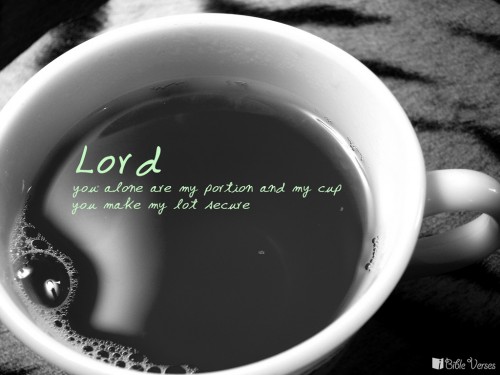
portion and cup

Photo credit:  https://www.pintrest.com/pin/536632111820932245/

“O Lord, you are my portion and my cup; it is you who uphold my lot.  My boundaries enclose a pleasant land; indeed, I have a goodly heritage.”  (Psalm 16.5-6) 

At our Vestry Retreat this winter, we began to talk about the dream we have been tossing around since before my arrival.  Upon reflection of the demographics and needs in Williamsburg, the dream is that Hickory Neck offer a childcare program, adult daycare program, or a combined ministry of the two.  I have been excited about the idea ever since I first heard it articulated.

I had encountered the concept of intergenerational care online (see video here).  What I loved about the video was that the intergenerational care reminded me of what happens at church:  people from all generations finding comfort, care, and a sense of identity and purpose.  In our modern culture, intergenerational relationship is rare.  Families live far apart, people tend to be segregated by life stage, and we value self-sufficiency.  But what we forget in our modern culture is that our young and our old need each other – they teach each other, they bring each other renewed energy, and they help each other learn.  I have always loved that my children have lots of “grandmas and grandpas” at church.

If I had the option of putting my children in childcare that fosters such a rich environment, I would be thrilled.  Furthermore, I know that our geographic area could use more accessible childcare and senior daycare.  As the pieces came together, God seemed to be inviting Hickory Neck into a new phase of its ministry.  This winter, the Vestry agreed that we should start being stewards of this dream the Spirit had given us.  So, for the last month, the Vestry has been having conversations in the community.  The idea is to learn what services are already offered, whether our sense of the needs matches the actual needs, and what potential partners there may be in our community.  We are obviously in the very early stages of this walk, but it is an exciting time!

I hope you will join us this Sunday as we gather for our quarterly Rector’s Forum.  We will be talking about this vision, as well as the many other tremendous ministries of Hickory Neck.  We indeed are blessed by a goodly heritage at Hickory Neck.  I look forward to celebrating the ways that our Portion and our Cup are leading us!

← Older posts

Recent Posts

  • On the Myth and Magic of Advent…
  • On Risking Failure and Facing Fear…
  • Sermon – Luke 23.33-43, P29, YC, November 23, 2025
  • On Inhabiting Gratitude…
  • Sermon – Luke 20.27-38, P27, YC, November 9, 2025

Archives

  • December 2025
  • November 2025
  • October 2025
  • September 2025
  • August 2025
  • July 2025
  • June 2025
  • March 2025
  • February 2025
  • December 2024
  • November 2024
  • October 2024
  • September 2024
  • August 2024
  • July 2024
  • June 2024
  • May 2024
  • March 2024
  • February 2024
  • January 2024
  • December 2023
  • November 2023
  • October 2023
  • September 2023
  • August 2023
  • July 2023
  • June 2023
  • May 2023
  • March 2023
  • February 2023
  • January 2023
  • December 2022
  • November 2022
  • October 2022
  • June 2022
  • May 2022
  • January 2022
  • December 2021
  • November 2021
  • October 2021
  • September 2021
  • August 2021
  • June 2021
  • May 2021
  • April 2021
  • March 2021
  • February 2021
  • January 2021
  • December 2020
  • November 2020
  • October 2020
  • September 2020
  • August 2020
  • July 2020
  • June 2020
  • May 2020
  • April 2020
  • March 2020
  • February 2020
  • January 2020
  • December 2019
  • November 2019
  • October 2019
  • September 2019
  • August 2019
  • July 2019
  • June 2019
  • May 2019
  • April 2019
  • March 2019
  • February 2019
  • January 2019
  • December 2018
  • November 2018
  • October 2018
  • September 2018
  • August 2018
  • July 2018
  • June 2018
  • May 2018
  • April 2018
  • March 2018
  • February 2018
  • January 2018
  • December 2017
  • November 2017
  • October 2017
  • September 2017
  • August 2017
  • July 2017
  • June 2017
  • May 2017
  • April 2017
  • March 2017
  • February 2017
  • January 2017
  • December 2016
  • November 2016
  • October 2016
  • September 2016
  • August 2016
  • July 2016
  • June 2016
  • May 2016
  • April 2016
  • March 2016
  • February 2016
  • January 2016
  • December 2015
  • November 2015
  • October 2015
  • September 2015
  • August 2015
  • July 2015
  • June 2015
  • May 2015
  • April 2015
  • March 2015
  • February 2015
  • January 2015
  • December 2014
  • November 2014
  • October 2014
  • September 2014
  • August 2014
  • July 2014
  • June 2014
  • April 2014
  • March 2014
  • February 2014
  • January 2014
  • December 2013
  • November 2013
  • October 2013
  • September 2013
  • August 2013
  • July 2013
  • June 2013
  • May 2013
  • April 2013
  • March 2013
  • February 2013
  • January 2013
  • December 2012
  • November 2012
  • October 2012
  • September 2012

Categories

  • reflection
  • Sermons
  • Uncategorized

Meta

  • Create account
  • Log in
  • Entries feed
  • Comments feed
  • WordPress.com

Blog at WordPress.com.

  • Subscribe Subscribed
    • Seeking and Serving
    • Join 394 other subscribers
    • Already have a WordPress.com account? Log in now.
    • Seeking and Serving
    • Subscribe Subscribed
    • Sign up
    • Log in
    • Report this content
    • View site in Reader
    • Manage subscriptions
    • Collapse this bar
 

Loading Comments...