• About

Seeking and Serving

~ seek and serve Christ in all persons

Seeking and Serving

Tag Archives: sin

Sermon – John 18.1-19.43, GF, YC, April 18, 2025

18 Wednesday Jun 2025

Posted by jandrewsweckerly in Sermons

≈ Leave a comment

Tags

church, community, darkness, death, failure, Good Friday, Jesus, light, love, relationship, Sermon, sin

There is something about Good Friday and the passion narrative from John’s gospel that is gruelingly convicting.  On most days we do a pretty good job of convincing others and ourselves that we are fine – that we are working hard, trying to love and serve others, and be a faithful follower of Christ.  But if we are honest, part of what is so hard about facing Good Friday is that facing Good Friday means facing ourselves – facing our failures, our sinfulness, our lack of ability or even willingness to actually follow Jesus. 

I confess that the last four months, one of my coping mechanisms for facing the state of our country has been to read, listen to, and watch less news.  I was finding that my mental health was getting diminished the more time I spent reading, listening, and watching the news, so I just stopped.  I filled the void with music, or people, or movement, but not with knowledge.  That has been my method of coping, to shut out the ugly, painful, and evil, because the alternative has felt overwhelming – so overwhelming that I can scarcely put together words around my devastation about who and how we have become, especially as people of faith.

But coming here, listening to John’s words, engaging in the Good Friday liturgy feels like the exact opposite.  Listening to that passion narrative feels like standing in an ocean of sinfulness, failures, and all that is not of God, and having waves of devastation hit us over and over and over again.  If we are really listening and really being honest with ourselves, all of the bad of this story is not bad that others do – but bad that we have all done at some point in our lives.  We grieve over Judas because we too at times have thought we knew better than Jesus and took matters into our own betraying hands.  We grieve over Peter because we too have prioritized our survival instinct over faithfulness.  We grieve over Caiaphas because we too have argued our way through the ethics of choosing the lesser of two evils instead of not choosing an evil at all.  We grieve over Pilate, seeing how hard he tried to do the right thing, because we too have caved under peer pressure and fear.  We grieve over the chief priests who are caught up in anger and the desire to remove a thorn from their sides because we too have often wished that someone difficult would just go away.  We grieve over soldiers who follow orders even when they know they are doing wrong, because we too have towed the company line.[i]   

Coming to church on Good Friday is our way of turning the news back on, sitting in the ashes, being fully and honestly ourselves in ways that we rarely do because doing so is painful, vulnerable, and scary.  But doing so also opens us up.  When we allow ourselves to face the fullness of human depravity – the fullness of our own depravity that we try so desperately to hide – we open up a path in the darkness to the light.  We agree to this exercise of turning on the news because we trust that the Church can empower us into another way – can help us find light and life in the ocean of darkness and death. 

When I was training to become a priest, I spent a summer serving as a chaplain in a hospital.  The days were long, and you never knew what situations would be thrown at you – from folks making their way through routine surgeries, to people in the ICU unable to communicate what landed them there, to people holding vigil with a beloved (or dreaded) family member.  I remember one day in particular getting paged up to a floor for someone approaching death.  When I arrived, the nurses told me the family had left for the day, but the patient of the family would likely die in the next hour.  The family lived further than an hour away, and had asked that someone sit with her in their stead.  The nurses had decided I was that someone.  And so, I sat, with someone whose story I did not know, whose faith and piety was unknown to me, and, at that point, with no knowledge of what the moment of death actually looked like.  And so I sat, uncomfortably called to a task I felt completely ill-equipped for, and yet, by my identity as Christian, was called to perform.

In that horrible ocean of Good Friday, there is light in our darkness.  Despite all those faithful people who failed Jesus so horrifically and fully, four people hold vigil.  They show up.  They stay.  And, eventually, by doing exactly what you are doing today – sitting in the inconceivable darkness of Good Friday – they see a glimpse of light.  Three Mary’s (Mary, Jesus’ mother, Mary wife of Clopas and sister of Mary, and Mary Magdalene) and the beloved disciple stand near the cross.  They do not protest, they do not fight, they do scheme.  They hold vigil by Jesus, facing the evil of the crucifixion of the Messiah, and they stay.  They do not run away, they do not cover their ears or eyes, the do not try to mask the ugly in something pretty.  They bear witness together, gathering at the foot of Jesus’ cross, staying fully open to the awfulness of the cross.

In that moment of gathering – of not really doing something other than being present – something transformative happens.  Jesus says some of the words we label as the Last Words of Jesus.  Jesus says to his mom, “Woman, here is your son.”  And then he says to the beloved disciple, “Here is your mother.”  What commentators say about these words is that Jesus created the new family unit with these words.  Now, I get a little skittish when we call church communities families because families are so incredibly complicated and the term “family” can be so loaded – often with negative connotations.  Instead, I might say that, in his abandonment and death on the cross, Jesus creates a path of light – a way to find companionship, community, and Christ – through relationships with Jesus at the center.  Peter Gomes describes the moment beautifully.  He says, “…what we find…is Jesus redefining the concept of family:  What it is, who belongs, and what it does.  It should not surprise us that here on the cross…he now reorganizes human affections.  He redefines human relationships, creates a new family, and in the center of it is to be the remembrance of him.  This is a family that is made not by blood, not by the old way, but by love and care:  that is the new way.”[ii]

On the one hand, this new definition of our relationships is beautiful in and of itself, and perhaps that beauty can sooth all the grief we talked about surrounding this scene.  And, on the other hand, there is a charge in this gift, in this path of light.  For months I have been trying to figure out what the call to us as Christians is at this time – especially for the “family” or “community” here at Hickory Neck that is so diverse in its political expression.  What unites us, that community that we have formed for centuries gathering around the common table is found in this moment in Good Friday.  In the turmoil and divisiveness of this time, Jesus reminds us that we are obligated to one another.  We are parents and children.  We are lovers and loved.  Even, and especially, with those people with whom we have no blood connection to – we are bound to one another in Christ.  And it matters when members of our gifted community are being persecuted, are being made afraid, are being made “other” – are essentially being booted out of our community of love.  In this turbulent time, we cannot run off, we cannot avoid, we cannot seek the lesser of evils.  We can gather at the cross and bear witness – bear witness to the encompassing love of Christ and the community to whom we are now obligated to love too.  In a world where we may feel like there is no way, Jesus breathes words of love and life into every one of us – words that cannot be contained in our own lungs and hearts and souls.

I do not know where this path of light in the darkness will take us.  I do not know how Jesus is calling you to be mother or father or son or daughter.  I do know that even in the darkest of days, Jesus sees light in you.  Jesus sees goodness in you.  Jesus see possibility in you.  And if we have nothing left to celebrate, we can walk out of here today commissioned in love and light.  Amen.


[i] Jim Green Somerville, “Pastoral Perspective,” Feasting on the Word, Yr. C, Vol. 2 (Louisville: Westminster John Knox Press, 2009), 300, 302.

[ii] Peter J. Gomes, The Preaching of the Passion:  The Seven Last Words from the Cross (Cincinnati:  Forward Movement Publications, 2002), 32

Sermon – Matthew 6.1-6, 16-21, AW, YC, March 5, 2025

18 Wednesday Jun 2025

Posted by jandrewsweckerly in Sermons

≈ Leave a comment

Tags

alms, Ash Wednesday, both-and, community, confess, fasting, honest, Jesus, Lent, prayer, real, reconciliation, redemption, reflection, repentance, Sermon, sin, solo, vulnerable

If I were to say to you that there are two services that attract the most non-members each year, which two services would you guess?  Christmas and Easter?  In part, you could be right – there are definitely a lot of guests at Christmas and Easter.  But proportionately, when talking members and non-members, I notice we get more guests at Blue Christmas and Ash Wednesday – especially if we include Ashes to Go in our Ash Wednesday count. 

So what about Blue Christmas or Ash Wednesday is so appealing to someone who doesn’t regularly attend church?  Having just been a part of Ashes to Go in our parking lot with lots of guests, I think there is something very real, honest, and vulnerable about services on Ash Wednesday that do not always happen on a Sunday or especially on festivals like Christmas and Easter.  On Ash Wednesday, the church gives us permission to bring our real, broken, hurting, mortal selves to a space, to acknowledge our fragility and hurt, and to bless the fullness of our selves – the good, the bad, and the ugly. 

Now to some, this may feel a little too self-centered.  As we impose ashes, the choir will chant from Psalm 51 tonight:  “Wash me through and through from my wickedness and cleanse me from my sin.  For I know my transgressions, and my sin is ever before me.  Against you only have I sinned and done what is evil in your sight.  And so you are justified when you speak and upright in your judgment.”  Perhaps that is the appeal of this day – the opportunity to take a moment for the self and really ponder where we are with God and this life.  Those ashes will be grittily spread on my forehead, the penitence and fasting are my work to do, and death is mine alone to face.  Everything about today is about my own journey with God.

Stephen and I were just debating about this reality for Lent in general.  We are making plans for Holy Week and we have a service with gospel songs and meditations.  I was excited about the possibility of the service and Stephen quipped, “It’s a little self-centered, don’t you think?  What about worrying about others and the rest of the world?!?”  The truth is, the season of Lent that we start today and end on Good Friday is sort of a both-and experience.  This is a season we are called into self-examination and repentance.  AND, this is also a season where we examine the sinfulness in the world in which we are complicit.

That both-and experience is what Jesus was worried about in our gospel lesson today.  Jesus talks a great deal about personal piety and not showing off in front of others – to not to let others seeing you give alms, pray, or fast.  But as I studied Matthew again this year, I reread something that brought me up short.  All those warnings Jesus makes, “Beware of practicing your piety before others…whenever you give alms, do not sound a trumpet…when you pray, do not be like the hypocrites…whenever you fast, do not look dismal…”, all of those warnings are not in the singular.  They are actually in the plural.[i]  So the words are more like, beware of practicing you all’s piety.  Or maybe in southern speak, “when all ya’ll pray…” Jesus is not criticizing or singling out you or you or me.  Jesus is singling out the community of the faithful.

That may sound like semantics, but there is something quite dramatic about Jesus speaking in the plural versus the singular.  Every week in Sunday services, we confess our sins.  But we confess them communally.  Communal confession is an extraordinary event.  While we may feel lost or despondent about our inability to live in the light of Christ as individuals, when we communally confess, a room of voices is saying with you, “Me too!”

One of the things I grieved during the pandemic was our inability to gather in person.  I loved that we had and continue to have an online community – especially for our homebound, our busy members, or for those meeting Hickory Neck for the first time.  But our necessary isolation during the pandemic naturally led to a pattern of looking inward – sometimes so much so that we forgot we are not alone – that there is a whole community of faith who is walking this journey with us and struggling just as we are.  There is something quite powerful about listening to the voices of the 7-year-old next to the 77-year-old – the person who looks so put together next to the person who is clearly struggling – the dad with children next to the widow – all confessing together.  Week in and week out, those myriad voices remind us we are not alone.

Tonight’s service very much calls us into reflection and repentance.  But our invitation tonight as we enter Lent is to remember that the act of reconciliation and redemption does not only happen alone.  We all are invited into a holy Lent.  We all are invited into prayer, fasting, and alms giving.  We all are invited to remember we are dust.  In person, online, and hybrid together, we are not only invited into solo, parallel journeys.  But also, our journeys are strengthened and made possible through the companionship of community.  You are not alone.  We are in this together – all y’all.  And Jesus lights the way for us all.  Amen.


[i] Karoline Lewis, as described on the podcast, “Sermon Brainwave:  #889: Ash Wednesday –Rebroadcast from February 22, 2023,” February 25, 2025, as found at https://www.workingpreacher.org/podcasts/889-ash-wednesday-rebroadcast-from-february-22-2023 on March 4, 2025.

On Finding Our Way to Reconciliation…

03 Wednesday Jan 2024

Posted by jandrewsweckerly in reflection

≈ Leave a comment

Tags

children, creation, God, incarceration, land, legacy, lynching, parent, racial reconciliation, reconciliation, segregation, sin, slavery

Photo credit: https://orionmagazine.org/article/this-land-was-made/

This past week, my family was able to visit The Legacy Museum in Montgomery, Alabama.  The museum artfully and comprehensively presents the “history of the destructive violence that shaped our nation, from the slave trade, to the era of Jim Crow and racial terror lynchings, to our current mass incarceration crisis.”  We have made a point as a family to visit various museums focusing on civil rights, but this museum was the first to tie those four actions in history (slavery, segregation, lynchings, and modern incarceration) so intentionally, powerfully, and succinctly. 

One of the more moving sections for our family was a wall of jars of dirt, of varying colored soil.  As we moved closer, we learned the story of the project through the Equal Justice Initiative.  Family members, researchers, and volunteers worked have worked together to trace every known lynching, visit the site, collect dirt in a large jar, and then label the jar with the name of the victim, the date, and the location of the lynching.  Something about the varying colors of soil from around our country, and the sheer volume of jars was mesmerizing – as though you could see the variation in the victims’ stories, while being reminded of the ways the earth bears witness to the sins of her inhabitants.

As we left the museum, we soberly began talking about impact the museum had on us and what we might like to do differently to be a part of breaking the cycle of violence in our own day.  Inspired by leaders in the closing “Reflection Room,” we realized we all could do something – in our way, in our own place, in our own time.  As a parent, part of my work is exposing my children to the awfulness of our humanity that we do not always discuss – especially recognizing the inherent privilege we have to determine when and how our children know this part of our nation’s story.   But I especially appreciated the invitation to begin wondering where God was uniquely inviting each of us to play a part in the shaping of the future.

I often say the work of racial reconciliation can never be “done” or completed.  Racial reconciliation is lifelong work for us as a country.  But sometimes I worry that the reality that we could never “accomplish” racial reconciliation creates a disincentive to even try – to do anything because it feels so very big.  As we begin a new year, and as we add many resolutions to our plans for 2024, I invite you to pick just one thing you can do to be a part of work of reconciliation – in your own way, your own place, your own time.  God and God’s created order have shown us vividly how far we have to go.  Together, we can find our own place in the history of reconciliation. 

Sermon – John 3.14-21, Numbers 21.4-9, L4, YB, March 14, 2021

17 Wednesday Mar 2021

Posted by jandrewsweckerly in Sermons

≈ Leave a comment

Tags

belief, choice, cross, glory, God, grace, Israel, Jesus, Lent, light, Moses, salvation, Sermon, serpent, sin, transform

Our scripture lessons today offer two contrasts:  a story from the Hebrew Scriptures which might be unfamiliar to you or at least may seem wildly strange, and a story from John’s gospel that is so familiar, you can probably quote a portion of the text if I simply tell you the citation, “John 3.16.”  What is strange about this combination is the unknown, uncomfortable story is a window into the overly familiar, commonplace story.  If we have any hope of understanding either of them, we need to dive into both.

At the point where we join the story from Numbers, God has been infinitely patient with God’s people.  Some might argue too patient.  God has saved God’s people time and again, wresting them from brutal slavery, miraculously helping them flee through the Sea of Reeds, helping sweeten bitter drinking water when they murmured, granting them manna when they complained of being hungry, giving them water out of a rock when they grumbled about being thirsty, offering them birds to eat when they whined of manna-fatigue.  Grace and patience abound with God.  Until this day.  The Israelites throw yet another fit, and God snaps.  This time, God sends poisonous serpents among the people, and many of them die.  When the people beg for help to Moses, God instructs Moses to put a bronze serpent on a pole; if people gaze upon the serpent, they will live.  For a God who asks the people have no idols or gods before God, a serpent on a pole is, quite frankly, just weird.

Meanwhile, we have a super familiar text from John.  “For God so love the world that he gave his only Son.”  We love this verse because the verse reminds of our abundant, loving, graceful God.  Of course, we sometimes gloss over the rest of the troublesome parts of this text.  The rest talks about how Jesus saves the world – as long as the world believes.  Here is where the questions start to pile up for us.  Do we really believe that some people are condemned?  Is God’s love conditional?  What happens if we doubt?  Does that count as not believing?  Can eternal life be given and taken away based on the seesaw of my behavior?  The trouble is if we focus on God’s grace, we can make salvation seem arbitrary, with no essential place for human response.  But if we focus on human faith, we may be in danger of making salvation a human accomplishment, restricting God’s initiative universally.[i]  The only thing that seems to be clear is that God gives us a choice.  When we commit evil deeds, when we deny God through our behavior, when we linger in the darkness, we are making a choice.  And the text tells us today that the consequence of that choice is condemnation.

The answer to so much in these texts seems to lie in verse fourteen of John.  Jesus says, “Just as Moses lifted up the serpent in the wilderness, so must the Son of Man be lifted up, that whoever believes in him may have eternal life.”  As scholar Debie Thomas writes, “In the Old Testament story, God requires the Israelites to look up.  To gaze without flinching at the monstrous thing their sin has conjured.  It’s the thing they have wrought, the thing they fear most, the thing that will surely kill them if God in God’s mercy doesn’t intervene and transform the instrument of pain and death into an instrument of healing and life.  In order to be saved, the people have to confront the serpent — they have to look hard at what harms, poisons, breaks, and kills them.”[ii]  The same seems to happen with Jesus on a cross.  Thomas goes on to say, “In the cross, we are forced to see what our refusal to love, our indifference to suffering, our craving for violence, our resistance to change, our hatred of difference, our addiction to judgment, and our fear of the Other must wreak.  When the Son of Man is lifted up, we see with chilling and desperate clarity our need for a God who will take our most horrific instruments of death, and transform them, at great cost, for the purposes of resurrection.”[iii]

The truth is, I am not sure either of these texts answer some of our basic questions, especially around those of belief.  But tying them together today, we do find an invitation – to change our gaze away from the judgment of others, the wondering about who is in and out, the questions about God’s retribution, and gaze on the cross – the body that reminds us of the goodness of God in spite of our sinfulness, that reminds us of God’s grace in spite of our lack of deserving, that reminds us of God’s unconditional love despite our inability to keep failing.  Our invitation is to take seriously the words of that old hymn, “Turn your eyes upon Jesus, Look full in His wonderful face, And the things of earth will grow strangely dim, In the light of His glory and grace.”  As we continue on the path of Lent toward the cross, today’s texts remind us of where we are going and why.  Our invitation is to look up at the horrible, wonderful truth of what Jesus does in the cross, and stand in the light of his glory and grace.  Amen.


[i] Joseph D. Small, “Theological Perspective,” Feasting on the Word, Year B, Vol. 2 (Louisville: Westminster John Knox Press, 2008), 118.

[ii] Debie Thomas, “Looking Up,” March 7, 2021, as found at https://www.journeywithjesus.net/essays/2944-looking-up, on March 12, 2021. 

[iii] Thomas.

Sermon – Matthew 25.14-30, P28, YA, November 15, 2020

18 Wednesday Nov 2020

Posted by jandrewsweckerly in Sermons

≈ Leave a comment

Tags

abundance, adaptive leadership, creativity, crisis, disciple, fear, gifts, God, Jesus, nimble, pandemic, Sermon, sin, talent, vocation, waste

This week your Vestry spent some time talking about adaptive leadership in the midst of a pandemic.  In our conversation, we were reminded of what Winston Churchill once said about World War II:  Never let a good crisis go to waste.  The phrase sounds a bit morbid, whether talking about World War II or this pandemic where over 245,000 people have died in the United States alone.  But what Churchill and our lecturer were trying to communicate were simple.  In a time of crisis, we see and do things differently.  A crisis produces clarity about what is important, what is not, and how we can creatively and boldly make changes for the good.  In a crisis, we are able to make changes and be nimble because fear is pushed aside for the sake of survival.  Basically, crisis strips away all the things that hold us back when life is “normal” and opens up new and fresh ways of being.  From Churchill’s point of view, wasting all that powerful insight and activity would be a waste of the crisis. 

That is what Jesus is getting at in our parable today.  We can easily get caught up in the emotional whiplash of this parable.  The master trusts his servants with inconceivable wealth – anywhere from 15 – 75 years’ worth of wages[i] – and gives them unprecedented freedom to manage the wealth.  Upon the master’s return, he is gracious, full of praise, even welcoming two of the servants into his bosom.  But when the final servant comes forward, the master becomes another person.  He is angry, scolding, and harsh.  He strips the servant of his talent and casts him into the outer darkness.  The discomfort we feel with the behavior of this stand-in for God is natural; but our discomfort can distract us from the master’s valid concern that we allow fear[ii] to stop us from realizing our vocation.

So why is the master so harsh about fear?  The problem is fear distorts every good thing about our nature.  Fear cuts off creativity.  When we are overcome with fear, we cannot be imaginative and playful, coming to new solutions and ways of being.  Fear also messes with our sense of trust.  When we are overcome with fear, we forget the goodness of others, our previous examples of how things have gone well, or even the bold support of our God.  Fear messes with our confidence.  When we are overcome with fear, all the good, powerful, and holy parts of us get riddled with self-doubt and inaction.  And fear messes with our willingness to take risks.  When we are overcome with fear, we cannot do the things that will lead to great payoff. 

Fear in the abstract is a normal reaction in life.  There are certainly ways in which fear fosters a sense of carefulness, one we have needed in this pandemic.  But we have to remember what Jesus is talking about in this parable to understand why the landowner is so harsh about fear.  You see, talents are not just metaphors for the thing things we are good at or even for the money we have in life.  Talents are metaphors for the vocations we each have.[iii]  Each person in this room has a calling.  Some of us are called to particular jobs or courses of study.  Some of us are called to particular roles within families or groups.  Some of us are called to use our gifts in particular ways.  We all have a call, a vocation in life.  And our vocation is affirmed by the skills or materials we are given to live out that call.  Even our parish has a vocation in our community – a call to use our unique mission to further the Gospel of Christ.  The problem with the third servant is he is given what he needs in abundance.  The landowner affirms him, trusts him, and gives him space and time to live out his vocation.  But the third servant allows himself to be so overcome with fear that he does not live out his vocation.  He shuts down creativity, trust, confidence, and risk-taking all because he is afraid.  And that is an ultimate sin for God. 

What this parable invites us to do today is not to see God as a mean, cruel, reactive God that punishes.  Quite the opposite, the parable today invites us to remember that our God is trusting, discerning about our gifts, confident in our abilities, and joyful in our obedience.  God gives each person in this room and our parish of Hickory Neck a vocation, a purpose, in this world, gives us the gifts and encouragement we need to fulfill that vocation, and, ultimately, expects us to go out into the world and boldly take the risk of doing what God has already enabled us to do.  God is telling us not to waste the crisis of this pandemic.  God sees us becoming nimbler, doing “church” differently in ways that reach more people in our community, and embracing the creativity and experimentation that has always made us great.  Letting fear overpower our beauty is not what God desires for us – because God knows we can open new paths previously unimagined.  God knows our willingness to live out our vocation means great things for the world.  As one scholar reminds us, this “…parable is the invitation to the adventure of faith:  the high-risk venture of being a disciple of Jesus Christ.”[iv]  Amen.


[i] Lindsay P. Armstrong, “Homiletical Perspective,” Feasting on the Word, Yr. A, Vol. 4 (Louisville:  Westminster John Knox Press, 2011), 309, 311.

[ii] Mark Douglas, “Theological Perspective,” Feasting on the Word, Yr. A, Vol. 4 (Louisville:  Westminster John Knox Press, 2011), 312.

[iii] Idea presented by Matthew Skinner in the podcast, “SB570 – Twenty-fourth Sunday after Pentecost (Ord. 33)” November 11, 2017, as found at http://www.workingpreacher.org/brainwave.aspx?podcast_id=948 on November 12, 2020.

[iv] John M. Buchanan, “Pastoral Perspective,” Feasting on the Word, Yr. A, Vol. 4 (Louisville:  Westminster John Knox Press, 2011), 312.

Sermon – John 9.1-41, L4, YA, March 22, 2020

27 Friday Mar 2020

Posted by jandrewsweckerly in Sermons, Uncategorized

≈ Leave a comment

Tags

blind man, cause and effect, comfort, Coronavirus, faith, God, good, grace, hope, Jesus, journey, light, questions, see, Sermon, sight, sin, suffering, theology

I must confess to you:  I have been dreading talking to you about this text all week.  The presence of cause and effect in this text is overwhelming.  The text says multiple times that the reason the blind man is blind from birth is because he sinned (and since it was from birth, there is the implication his parents sinned, and the blind man is being doubly punished and exists in double sin).  Those gathered insist that Jesus must be sinful too because he does not follow the law – he heals on the Sabbath, and he cannot possibly speak for or act for God as a sinner.  Jesus also says those gathered are sinners for they cannot see God.  Even at the beginning of John’s story, even Jesus says, “Neither this man nor his parents sinned; he was born blind so that God’s works might be revealed in him.”

I have not wanted to preach this text today because I do not at feel comfortable with the cause and effect nature of this text, especially what that cause and effect nature seems to imply about suffering.  Can Jesus really be saying this man was made blind so that God could be revealed?  Is this text saying God causes suffering – pain, disability, ostracizing from community, poverty so deep that only begging will ensure survival?  That concept is a huge hurdle for me because that is not at all my theology of suffering.  And I especially do not like hearing that theology of suffering this week – a week when we are watching the cases of Coronavirus creep up in our country and double in our county and have begun asking the same sorts of questions the people in this passage are asking:  Where is God in this?  Why is God allowing not only this terrible virus to happen, but the accompanying societal upheaval?  Is God causing this suffering for some greater good?  This kind of health crisis pulls at all of us and in our innermost, private places, and makes us wonder, even if we cannot say the words aloud, “Did God have something to do with this virus?”  Or sometimes we find ourselves not embarrassingly asking the question, but boldly shouting at God, “What in the world are you doing?  Why aren’t you here fixing this?  How could you do this?!?”  The absolute LAST passage I want to hear when we are asking these bone-deep theological, desperate questions is a text that seems to imply God causes suffering for God’s own glory.

That is why I am especially grateful for biblical scholars who can journey with us in interpreting scripture.  Biblical Scholar Rolf Jacobson took a look at that same verse that has been nagging me all week, “Neither this man nor his parents sinned; he was born blind so that God’s works might be revealed in him.”  Luckily Jacobson is better at Greek than me.  He explains that the writers of the New Revised Standard Version inserted text into the English translation that simply is just not there.  In the original Greek, the words “he was born blind,” are not there.  Instead of the text saying, “Neither this man nor his parents sinned; he was born blind so that God’s works might be revealed in him,” the text actually says, “Neither this man nor his parents sinned [period].  In order that God’s works might be revealed in him, we must work the works of him who sent me…”  According to Jacobson, Jesus is not saying the man was blind so God could be revealed.  Jesus is saying no one sinned.  But given the situation, God has given his disciples the opportunity to do something good to reveal God’s goodness.[i]  In other words, God does not cause suffering.  But God can use us in the midst of suffering for good.

I don’t know about you, but that has shifted my understanding of this text completely.  All of the arguing about who sinned, what laws you must follow to be holy, and who should be in or out are a distraction.  The same can be true of us.  When we start trying to logic our way through fault, or sin, or blame – even blame on God, we lose our way; we become blind like those gathered and arguing in our text today.  Instead, this text is inviting us to ask different questions.  Instead of whose sin caused this virus, we can ask, “How can I be a force for good in the midst of this virus?”  Instead of why God is doing this or allowing this to happen, we can ask, “Where are the opportunities to see God acting for good in the midst of suffering?”  Instead of where is God in this, we can ask, “Where am I finding moments of God’s grace in this?”  I am not arguing our questions and demands of God are not valid at this time.  In fact, I think our quiet doubt of and our raging anger at God are perfectly normal – and maybe even necessary for honest relationship with God.  What I am arguing is this text is not a reinforcement of our sense of darkness, but instead an invitation into light – an invitation to seeing when we may feel blinded.  My prayer this week is that we stumble into those moments of light this week – that we find those moments of grace upon grace that give us renewed comfort, hope, and faith.  May God bless you in the journey toward the light.  Amen.

[i] Rolf Jacobson, “Sermon Brainwave #713 – Fourth Sunday in Lent,” March 14, 2020, as found at http://www.workingpreacher.org/brainwave.aspx?podcast_id=1240, on March 19, 2020.

Sermon – John 18.1-19.42, GF, YC, April 19, 2019

01 Wednesday May 2019

Posted by jandrewsweckerly in Sermons, Uncategorized

≈ Leave a comment

Tags

broken, community, cross, darkness, disciple, find, God, Good Friday, humanity, identity, incomplete, Jesus, lost, passion, prayer, Sermon, sin

When I was in college, I would occasionally find myself sitting in the back of the enormous Chapel.  Sometimes I do not even remember actively choosing to go inside the Chapel.  Somehow my body seemed to know I needed something before my brain did.  The cavernous, quiet building rarely had large crowds.  Or maybe my late-night study sessions meant I was there after everyone had left.  Regardless, I would find myself on a hard, wooden pew, just sitting there.  I am not sure I was there praying necessarily.  At least not in the traditional sense.  More often I was sitting there in desperation.  Sometimes I was at the end of a semester, completely overwhelmed and feeling incapable.  Other times, I was feeling a deep sense of loneliness, despite being surround by tons of friends and classmates.  Other times, I simply felt lost, not sure about my purpose or what in the world God was doing with my life – if God was even there at all.  But mostly, when I sat on those pews, surrounded by magnificent beauty and architecture, I felt a profound hole in my heart.  That Chapel was sometimes the only place I could go and be honest about my profoundly weak humanity.

I think worshiping on Good Friday is a little bit like that.  Unlike other times of worship, we do not usually come to this service looking for praise and joyful singing.  Instead, this day is a day where we willingly come to acknowledge and honor those parts of our lives where we feel a profound sense of brokenness, sinfulness, and incompleteness.  We read Scripture that speaks to our deepest pain and suffering.  We say prayers that address the fullness of need for ourselves and the world.  And we venerate the cross – staring at the object that brings into sharp focus our weakness and humanity, and our need for something bigger than ourselves.

On a day like today, I am grateful for John’s Passion Narrative.  All the Passion Narratives from the gospels tell a similar story – the last moments of Jesus’ time with the disciples, his trial and crucifixion, and his death.  And despite the fact that the story in all four gospels is heart-wrenching, something about John’s version digs deeper – shines a light into those dark places we prefer to keep hidden from the light of day.  But in John’s gospel, there is nowhere to hide.  We experience a deep sense of being bereft of our own sinfulness as the sins of those in our narrative mirror our own.  These are not just the common, everyday sins of life.  The sins of the characters today are the sins of denying our very own identity.

Often when we talk about Judas, we think of his failure as a thing he did to Jesus.  But Judas’ sin goes deeper than betrayal of Jesus.  Judas denies his very discipleship.  After all those years of following Jesus, trusting the salvific work of the Christ, believing and proclaiming Jesus’ Messiahship, Judas denies his discipleship by no longer following and instead trying to control the work of God.  You see, Judas follows Jesus because he believes Jesus is starting a political revolution – is becoming the conquering Messiah.  Jesus is not living into that identity as much as Judas wants, so Judas gives Jesus a push.[i]  But when Judas brings all of those soldiers to the intimate place where he discovered his identity as a disciple, we see how deep Judas’ sinfulness goes.  The garden had been a home for the disciples – where they had gathered regularly, in intimate community.  To bring those soldiers there – to the place that defined his own discipleship – is the marker not of an indiscretion, but of a complete denial of who he is.  In John’s gospel, the last appearance of Judas is not of remorse, or suicide, or judgment of Judas.  John simply says, Judas stands “with them.”  With them is not just a physical location; with them is a theological one.  By seeking to control Jesus, by walking away from relationship with Christ, and by standing against Jesus in the very place of intimate identity-making, Judas takes a new identity.  He denies his discipleship, and instead stands with them.[ii]  And as much as we might want to judge Judas, we all know that there have been times when we were fed up with God, and decided to take matters into our own hands.  The more we think we know better, the further we step away from following Christ, denying our own identity in Christ.  The more we seek control, the further we step away from our intimate relationship with Jesus, and instead stand with someone or something else.

Peter denies his identity in a slightly different way.  When we read John’s gospel, we can easily conflate John’s version with the versions from Matthew, Mark, and Luke.  In those gospels, Peter is asked whether he knows Jesus.  His response is he does not know the man.  But in John’s gospel, the question to Peter is different.  He is not asked if he knows Jesus, but whether he is Jesus’ disciple.  To say, “I am not,” is not just a denial of knowledge.  Peter is denying his very identity.  As Karoline Lewis asserts, “In the Gospel of John…Peter’s denial is not of Jesus but of his own discipleship.  …To deny discipleship is to deny one’s relationship with Jesus and the intimacy that makes Jesus and his followers virtually inseparable.  Peter does not deny Jesus, but denies being a disciple.”[iii]  Because we live in a time when we are rarely asked about our identity as people of God, we think of ourselves as immune to Peter’s temptation or somehow incapable of such identity denial.  And in some ways, we may be right:  our denial of identity is not usually as straightforward as Peter’s.  But that doesn’t mean we do not regularly reject our identity.  In small, everyday ways, we find ourselves making accommodations that fracture our intimacy with Christ – decisions that we can rationalize at the time, but when we look back realize have become of slow pattern of denying whose we really are.  And before long, we get so far from discipleship that no one even knows we are Christ’s disciple.

But the denials of identity are not just limited to Christ’s disciples.  Even the religious authorities lose themselves in their attempt to squash the Jesus movement.  The leaders of the faith community are so convinced that Jesus is wrong, they negotiate with a secular leader to get what they want.  And when Pilate, who knows what they want is wrong, pushes them to recognize they are wrong, the religious authorities say something that seems innocuous enough.  But saying, “We have no king but the emperor,” is the ultimate denial of their identity as a people of God.  The people of faith, who were once freed from a king over them, who journeyed forty years, claiming God as their king, who have an everlasting covenant with God, deny the covenant to get what they want.  By claiming the emperor, they deny their very identity.  The people of God, who are about to prepare the Passover feast – the feast that celebrates their release from Pharaoh, “embrace a latter-day Pharaoh whose overthrow the Passover is intended to celebrate.”[iv]  Although we like to demonize the chief priests, we too have pledged loyalties to things other than God.  Perhaps not as dramatically as the religious authorities, but we have all known those moments when a declaration slipped out of our mouths that we later come to realize was denial of everything we claim to be.

On this most holy of days, we can journey so far into the darkness of humanity, of the ways we deny our very own identity, that we can walk out of this beautiful historic chapel feeling lost – having received no encouragement for our bereft hearts.  But I do not think the point of Good Friday is to walk with us into the darkness without giving us a sliver of light to hold onto in these next hours.  Though our reading ends with the finality of Jesus in a tomb, where we are better left is at the foot of the cross.  At the foot of the cross is where we find identity again.  At the foot of the cross, we find a new community being formed.  Jesus gives his mother to the beloved disciple; and to the beloved disciple, he gives his mother.  In other words, Jesus creates a community of mutual care – a new family, a place of forming identity in Christ, even as Christ is departing.[v]  The very reason we gather in community on Good Friday is because we need this group gathered here – this group gathered at the foot of the cross – to bring us back from the denials of our identity, and help us reclaim whose we are.  Today is certainly a day for claiming how deep our own betrayal of God is, but today is also a day of claiming a community who can help us walk back.

I think that was what I was doing all those years ago in college as I sat on those cold, hard pews of the Chapel.  I knew I was lost, that my angst was not just the anxiety of tests and deadlines, but was a much deeper angst about identity.  And although that Chapel was mostly empty, that Chapel reminded me of all the times I had gathered in sacred spaces with the community of the faithful.  Even when the Chapel was empty, the Chapel was somehow a reminder of the mothers and brothers who gathered with me at the foot of the cross.  The only difference today is you do not have to imagine a community gathered with you at the cross.  We are right here with you.  We are struggling right along with you on this journey called discipleship.  Together, starting at the foot of the cross, we will find our way.  Amen.

[i] Jim Green Somerville, “Pastoral Perspective,” Feasting on the Word, Yr. C, vol. 2 (Louisville:  Westminster John Knox Press, 2009),300, 302.

[ii] Karoline M. Lewis, John (Minneapolis:  Fortress Press, 2014), 218-219.

[iii] Lewis, 222.

[iv] C. Clifton Black, “Theological Perspective,” Feasting on the Word, Yr. C, vol. 2 (Louisville:  Westminster John Knox Press, 2009),303.

[v][v] Lewis, 229.

On Race, Lent, and Children…

10 Wednesday Apr 2019

Posted by jandrewsweckerly in Uncategorized

≈ Leave a comment

Tags

America, brokenness, children, Civil Rights, confess, Jesus, Lent, prayer, race, racism, repentance, shame, sin, unite

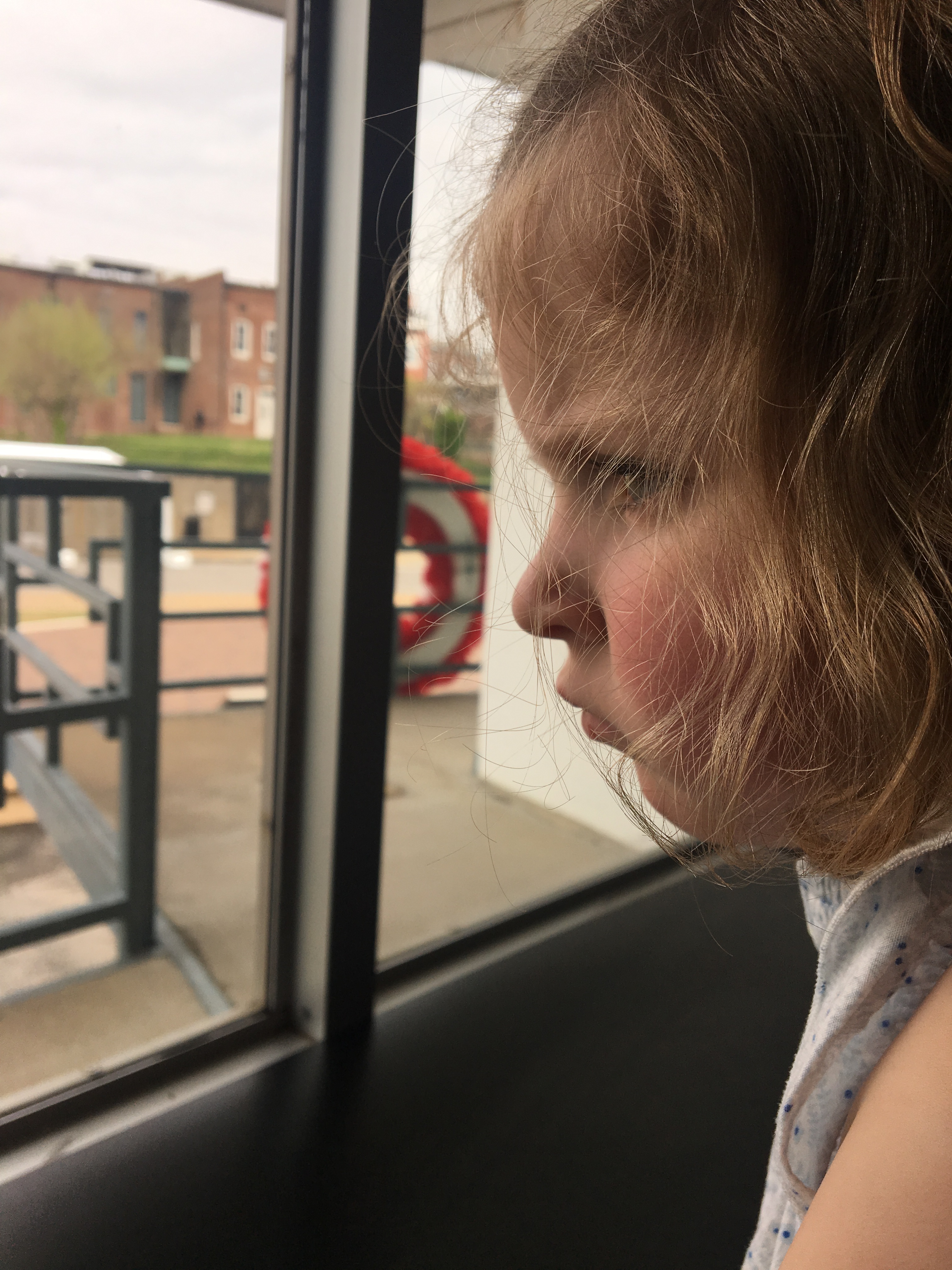
IMG_7640

Photo credit:  Jennifer Andrews-Weckerly; reuse only with permission

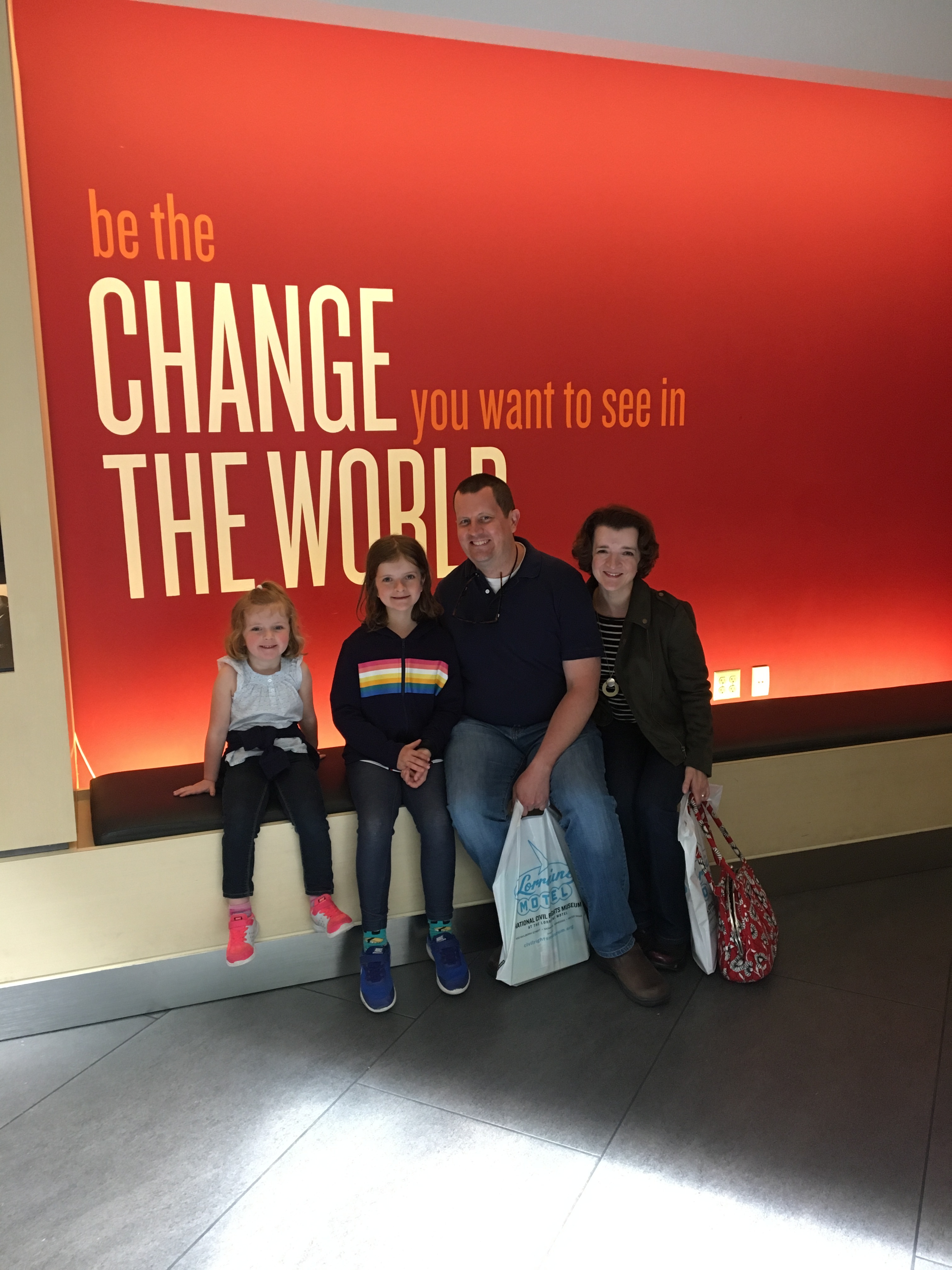
This past week, our family traveled to Mississippi to visit friends.  On the trip we were able to see both the Mississippi Civil Rights Museum in Jackson, and the National Civil Rights Museum in Memphis, Tennessee.  While the museums were appropriate for our older child, who has been studying the Civil War and Reconstruction in her Social Studies Class, our younger child was a bit mystified by the museums.  She struggled with understanding the concept of history versus modern day, but she especially struggled with why people were hurting and killing each other.  She clearly made the connection that Caucasians (or “peach-skinned” people as she called them) were being mean to African-Americans (or “brown-skinned” people), but she could not fathom why.  With every video or picture, I was barraged with questions about why people were doing what they were doing, or why someone would kill someone like Martin Luther King, Jr.

Explaining the atrocities of American racial history to a five-year old is one of the most gut-wrenching experiences I have had.  I already struggle with the shame of our history and my participation in racism.  But to expose my child to the sinfulness and brokenness of our country made the shame deeper.  As the museum bombarded me with statistics around racial disparities, as prerecorded voices shouted out awful words that were once shouted out to people of color, and as “Precious Lord,” or “We Shall Overcome,” played overhead, I was reminded of all that we have been through as a country, and how much further we have to go.

In Lent, we do a lot of confessing of our sinfulness and working on repentance.  On Ash Wednesday, we confessed our exploitation of other people, our blindness to human need and suffering, and for “all false judgments, for uncharitable thoughts toward our neighbors, and for our prejudice and contempt toward those who differ from us.”[i]  In the Great Litany this Lent, we prayed, “From all blindness of heart; from pride, vainglory, and hypocrisy; from envy, hatred, and malice; and from all want of charity, Good Lord, deliver us.”[ii]  In the Exhortation in the Penitential Order, the priest asked us to “Examine your lives and conduct by the rule of God’s commandments, that you may perceive wherein you have offended in what you have done or left undone, whether in thought, word, or deed. And acknowledge your sins before Almighty God, with full purpose of amendment of life, being ready to make restitution for all injuries and wrongs done by you to others; and also being ready to forgive those who have offended you, in order that you yourselves may be forgiven.  And then, being reconciled with one another, come to the banquet of that most heavenly Food.”[iii]

As we finish these last days of Lent, as we hear the passion narrative on Sunday, and as we walk the days of Holy Week next week, I am reminded of how much work we still have to do.  For me, I will be contemplating the ways in which I participate in the systems and practices of racism in our community, working to not only be better, but to teach my children to be better.  And knowing our work of repentance is on-going, I look forward to our Eastertide book study that will allow us to delve into these issues even more.  This week I pray for the whole human family:

O God, you made us in your own image and redeemed us through Jesus your Son: Look with compassion on the whole human family; take away the arrogance and hatred which infect our hearts; break down the walls that separate us; unite us in bonds of love; and work through our struggle and confusion to accomplish your purposes on earth; that, in your good time, all nations and races may serve you in harmony around your heavenly throne; through Jesus Christ our Lord.  Amen.[iv]

IMG_7644 (1)

Photo credit:  Jennifer Andrews-Weckerly; reuse only with permission

[i] Book of Common Prayer (BCP), 268.

[ii] BCP, 149.

[iii] BCP, 317.

[iv] BCP, 815.

Homily – Mark 11.1-11, 14.1-15.47, PS, YB, March 25, 2018

28 Wednesday Mar 2018

Posted by jandrewsweckerly in Sermons, Uncategorized

≈ Leave a comment

Tags

complicit, God, Holy Week, homily, Jesus, love, Mary, Palm Sunday, participate, physicality, relationship, senses, Sermon, silence, sin, tomb, uncomfortable, visceral

When I did my AmeriCorps year of service at a food bank in North Carolina, the warehouse manager was from Liberia.  Eugene and I talked about a lot of things, but one favorite topic was the church.  When Holy Week rolled around, I remember Eugene telling me about Good Friday in Liberia.  On the way to church on Good Friday in Liberia, the children lead a procession.  The children carry an effigy of Jesus, and all the children take turns flogging the effigy of Jesus all the way to the church.  I remember being mortified when I learned about this tradition, wondering who in their right mind would invite children to participate in worship in such a gruesome, grotesque way.

The weird thing is, this mortifying tradition is not all that dissimilar to the physicality of our own worship today.  Today, we invite everyone to vigorously wave palms hailing Jesus Christ the king; then we have voices from our parishioners narrate the text, sometimes taking roles of people like Judas, Pilate, or denying Peter; and if that were not bad enough, then we put the words, “Crucify him!” in bold in our bulletins, reminding everyone to shout the words together.  The practice is so visceral that I often notice many people resist participating.  I cannot tell you how many photos I had to scroll through to find a good Hickory Neck Palm Sunday processional photo this year.  In what is supposed to be replica of joyously welcoming the Messiah, Hickory Neck-ers rarely take more than one palm, we hold them upright so as not to seem too zealous, and forget about a smile or look of excited victory.  I do not know if we feel silly or if we know all too well what comes next so we resist, but we struggle to engage in even the joyful part of today’s liturgy.

And I have rarely found an Episcopal Church anywhere who wholeheartedly joins in the chant, “Crucify him!”  We are so uncomfortable with that part of the liturgy.  More often people do not say the words at all, or they embarrassingly mumble the words.  Sometimes I see people tense up if those beside them enthusiastically participate too much.

Our resistance is futile though.  As if we hesitantly wave palms, or if we stay silent while the crowd demands we crucify Christ, we somehow avoid complicity with this humiliating atrocity.  But we are complicit with sin every day, in the most heinous ways.  We are complicit as our neighbors decide between housing, health care, and child care costs.  We are complicit as racism creates separate, unequal experiences for our citizens.  We are complicit as our God invites into a new way and we say “no.”

That is why the church offers us this very tactile, primal service today.  We wave the palms with fervor today because we remember the ways in which we see in part – the ways in which we manage to follow Christ, even if we do not understand what Christ is doing, even if we do not catch how Jesus inverts his triumphal entry on the back of a young donkey.  We fully participate in the words of today’s passion in order to remind us to “stop abusing the image of God revealed in the dignity of every human being.”[i]  And then we let those final words soak in today, as we stand with Mary Magdalene and Mary the mother of Joses, silently at the tomb, seeing where Christ’s body is laid.

What we do in worship today is actually the perfect entry into this most Holy Week in Church.  Now some priests will tell you that we combine the liturgy of the palms with the passion narrative today because the designers of the Prayer Book knew that many of you would come on Palm Sunday, skip the days of worship during Holy Week, and then show up on Easter Sunday without having walked from this triumphal entry into Jerusalem through the cross and tomb.  And maybe they were right (though I know most of you rearranged your schedules this week for Holy Week services).  But more importantly, even if you walk through this journey with Christ this week, the reason we pair the Palms with the Passion is that we could never go from the Palms to the Resurrection without the connection to the cross.  The triumphal entry into Jerusalem makes no sense without the cross; the irony of that festive procession only makes sense when you are standing silently and bleakly at the tomb.

I know today is uncomfortable.  I know today is confusing, and oddly visceral, and may even be a bit overwhelming.  But today, and perhaps all this week if you are able to join us, allow the senses to take over.  Allow the sights, and smells, and touches, and sounds, and tastes to overwhelm you this week.  Allow the ache of standing with Mary Magdalene and Mary the mother of Joses to sink deep into the same body that has waved palms and shouted awful things today.  Because only when our senses are that overwhelmed are we able to see that the cross is not about suffering and death, but rather is about a relationship that holds.  Only then will we find a “love stronger than death, that can withstand whatever the forces of evil do against [love], and that can hold suffering even as [love] struggles to alleviate [suffering].”[ii]  What feels like an empty, guilty ache today instead becomes a sign of how God overcomes terror, enfolds us in Life, and dwells with us forever.[iii]  But until then, stand with the Marys and with one another at the tomb in silence.

[i] Michael Battle, “Pastoral Perspective,” Feasting on the Word, Year B, Vol. 2 (Louisville:  Westminster John Knox Press, 2008), 182.

[ii] Margaret A. Farley, “Theological Perspective,” Feasting on the Word, Year B, Vol. 2 (Louisville:  Westminster John Knox Press, 2008), 182.

[iii] Farley, 184.

On the Timelessness of Scripture…

23 Friday Mar 2018

Posted by jandrewsweckerly in Uncategorized

≈ Leave a comment

Tags

#metoo, Apocrypha, Christ, Daniel, dignity, harassment, kingdom of God, love, men, power, respect, scripture, sin, Susanna, women

This reflection is from a book of devotions that our youth group at Hickory Neck created for our parish’s use this Lent.  Each day, parishioners offer their reflections on the text assigned for that day in Lent.  This is my reflection on an apocryphal writing, Susanna 1-9, 15-29, 34-62.  If it is unfamiliar to you, I highly recommend reading it first.  You can find the text here.

**********

I am struck by the timeliness of Susanna’s story.  Because Susana is a book from the Apocrypha, most Christians do not know her story.  But her story joins the chorus of the many #metoo stories of sexual assault and harassment we have discovered in the last six months.  Susanna’s story is a story of the abuse of power.  Though the two elders purport to give Susanna a choice, either choice will leave her devastated.  Though she chooses the option that feels free from sin, her choice will lead to her condemnation and death.  In truth, she has no choice – the men sinfully exert power of her.

What encourages me about Susanna’s story is that there is a man who uses his power for good.  We are told that God stirs up the holy spirit of Daniel, and Daniel (a man of power in his own right), responds, eventually proving Susanna’s innocence.  Daniel’s role in this story reminds us that God longs for us to use our power for good.  The #metoo stories of our day are not just the stories of women.  They are stories about all of us – stories of how we, men and women, are to love as Christ loves, and to respect the dignity of every human being.  How might we be agents of love, using our power today to help those without power?  How might we be agents in bringing about the kingdom of God?

← Older posts

Recent Posts

  • On the Myth and Magic of Advent…
  • On Risking Failure and Facing Fear…
  • Sermon – Luke 23.33-43, P29, YC, November 23, 2025
  • On Inhabiting Gratitude…
  • Sermon – Luke 20.27-38, P27, YC, November 9, 2025

Archives

  • December 2025
  • November 2025
  • October 2025
  • September 2025
  • August 2025
  • July 2025
  • June 2025
  • March 2025
  • February 2025
  • December 2024
  • November 2024
  • October 2024
  • September 2024
  • August 2024
  • July 2024
  • June 2024
  • May 2024
  • March 2024
  • February 2024
  • January 2024
  • December 2023
  • November 2023
  • October 2023
  • September 2023
  • August 2023
  • July 2023
  • June 2023
  • May 2023
  • March 2023
  • February 2023
  • January 2023
  • December 2022
  • November 2022
  • October 2022
  • June 2022
  • May 2022
  • January 2022
  • December 2021
  • November 2021
  • October 2021
  • September 2021
  • August 2021
  • June 2021
  • May 2021
  • April 2021
  • March 2021
  • February 2021
  • January 2021
  • December 2020
  • November 2020
  • October 2020
  • September 2020
  • August 2020
  • July 2020
  • June 2020
  • May 2020
  • April 2020
  • March 2020
  • February 2020
  • January 2020
  • December 2019
  • November 2019
  • October 2019
  • September 2019
  • August 2019
  • July 2019
  • June 2019
  • May 2019
  • April 2019
  • March 2019
  • February 2019
  • January 2019
  • December 2018
  • November 2018
  • October 2018
  • September 2018
  • August 2018
  • July 2018
  • June 2018
  • May 2018
  • April 2018
  • March 2018
  • February 2018
  • January 2018
  • December 2017
  • November 2017
  • October 2017
  • September 2017
  • August 2017
  • July 2017
  • June 2017
  • May 2017
  • April 2017
  • March 2017
  • February 2017
  • January 2017
  • December 2016
  • November 2016
  • October 2016
  • September 2016
  • August 2016
  • July 2016
  • June 2016
  • May 2016
  • April 2016
  • March 2016
  • February 2016
  • January 2016
  • December 2015
  • November 2015
  • October 2015
  • September 2015
  • August 2015
  • July 2015
  • June 2015
  • May 2015
  • April 2015
  • March 2015
  • February 2015
  • January 2015
  • December 2014
  • November 2014
  • October 2014
  • September 2014
  • August 2014
  • July 2014
  • June 2014
  • April 2014
  • March 2014
  • February 2014
  • January 2014
  • December 2013
  • November 2013
  • October 2013
  • September 2013
  • August 2013
  • July 2013
  • June 2013
  • May 2013
  • April 2013
  • March 2013
  • February 2013
  • January 2013
  • December 2012
  • November 2012
  • October 2012
  • September 2012

Categories

  • reflection
  • Sermons
  • Uncategorized

Meta

  • Create account
  • Log in
  • Entries feed
  • Comments feed
  • WordPress.com

Blog at WordPress.com.

  • Subscribe Subscribed
    • Seeking and Serving
    • Join 394 other subscribers
    • Already have a WordPress.com account? Log in now.
    • Seeking and Serving
    • Subscribe Subscribed
    • Sign up
    • Log in
    • Report this content
    • View site in Reader
    • Manage subscriptions
    • Collapse this bar
 

Loading Comments...