• About

Seeking and Serving

~ seek and serve Christ in all persons

Seeking and Serving

Tag Archives: Spirit

On Seeking and Seeing Sacred Ground…

29 Wednesday May 2024

Posted by jandrewsweckerly in reflection

≈ Leave a comment

Tags

barre class, Bible, burning bush, Christianity, church, faith, God, holiness, holy, Jesus, Moses, reverence, sacred, sacred ground, shoes, Spirit

Photo credit: https://medium.com/koinonia/dont-wait-for-a-burning-bush-f8c7435489ae

One of my fitness routines includes attending “barre” – a class that combines yoga, Pilates, and ballet.  When you enter the studio, you remove your shoes and put on special socks to prevent slipping during the class.  You then enter the actual classroom and procure any fitness aides required for the class, such as hand weights, bands, or balls, and proceed to setup up your space at the barre.  I tend to take classes in the 5:30 am hour, so most of the time I am pretty groggy and operating on auto pilot as I prepare my space for class. 

Knowing my routine for class, imagine my surprise the other day when, as I somewhat sleepily entered the classroom, I found myself bowing.  I was immediately shocked and a little embarrassed by my body’s instinctual movement.  As a priest, I bow all the time – as I reverence at the altar, as the processional cross passes me, at certain points in the Creed, or at the name of Jesus in the liturgy.  But I have never reverenced an exercise classroom.

The strange appearance of such an out-of-context movement got me thinking about Holy Scripture.  In Exodus, we hear how Moses receives his call at the site of a burning bush.  When God calls out to Moses amid the flames, God says, “Come no closer!  Remove the sandals from your feet, for the place on which you are standing is holy ground.”[i]  Now I am not sure I would call the barre classroom sacred ground – though the Lord’s name is often called upon, especially during long plank series.  But something about that room made my body respond to its holiness the same way I respond to the holiness of Church.  So how exactly do we define a holy place – or sacred ground?

In the instance of barre class, perhaps what my body was responding to was the way I do find holiness – in the care and compassion of teachers, in the camaraderie of classmates on a shared journey of health and wholeness, in the individual experience at the barre when you feel like you cannot go on and something or someone pulls you through doubt.  Though I think the sacred ground of worship space is unrivaled as a place of encounter with God, the community of Jesus, and the movement of the Spirit, I certainly have found other sacred places – the mountain community where my family gathered every summer with the wider church; the edge of crashing waves, where the vastness of the Creator is palpable; the coffee shop where someone pours out their heart’s burdens to another and blessing is proclaimed.  Perhaps regularly attending Church, with its preserved sacred ground, is what allows us to see and hear God on the sites of sacred ground all around us.  Where are you finding unexpected sacred ground these days?  Where is God inviting you to take off your shoes and give reverence to the mightiness of our God?


[i] Exodus 3.5

Sermon – Matthew 9.35-10.23, P6, YA, June 14, 2020

17 Wednesday Jun 2020

Posted by jandrewsweckerly in Sermons, Uncategorized

≈ Leave a comment

Tags

African-American, compassion, disciples, empower, God, harassed, helpless, Jesus, justice, love, mercy, police, protest, racism, rally, Sermon, Spirit, truth, witness

Last Sunday afternoon, I attended a rally in Colonial Williamsburg to renew the covenant between our Historical area police departments and the African-American community.  Established just three years ago, initiated by faith leaders in the African-American community, the covenant was established to proactively create collaborative relationships with our local police in order to prevent some of the racial divides that have occurred in other cities.  Although I was there to witness the support of the local clergy for this covenant, what I heard was the testimony of a community of people who have been harassed and feel helpless right here in our community.  Though we may have avoided some of the violence we have seen elsewhere in our country, the African-American community here in Williamsburg still feels the heel of racism pushing down on her neck.

Last week, we heard Matthew’s Great Commission, and we talked about the juxtaposition of civil unrest exploding around the issue of systemic racism and Jesus’ call to go out into the world doing works of justice, mercy, and love.  As some of the heat from protests simmered down a bit this past week, we could easily come to church today and long to turn down the heat too.  But our collect appointed for today, which you will hear later, holds our feet to the fire.  The collect says, “Keep, O Lord, your household the Church in your steadfast faith and love, that through your grace we may proclaim your truth with boldness, and minister your justice with compassion…”  Now the Collect of the Day is not just a random prayer, meant to sound good.  The Collect of the Day pulls themes from the scripture lessons appointed for the day – in essence, the Collect of the Day tries to articulate the thesis of our lessons.

After watching weeks of protests (maybe attending some yourself), hearing countless stories about unrest, reading articles or starting books about systemic racism, and praying diligently for peace, you may have come to church today hoping for some respite or reassurance.  But Jesus’ message to “Go!” from the Great Commission last week does not fade today.  Instead, Jesus’ words from Matthew’s gospel from almost 20 chapters earlier shows us our work is ever before us, beckoning us out into the world.

Years before his cross, resurrection, and ascension, we find Jesus teaching, healing, and proclaiming the good news to crowds of people.  In the midst of this work, we are told Jesus looks at the crowd and has compassion for them because they are harassed and helpless.  When Jesus sees the harassed and helpless, he does not simply fix the problem or strike down the system with godly power.  Instead, he turns to his disciples with a charge.  Jesus calls the twelve disciples by name (Simon Peter, Andrew, James, John, Philip, Bartholomew, Thomas, Matthew, James, Thaddaeus, Simon, and Judas), those who have been following him, learning from him, studying and praying with him, and sends them out, telling them how hard the work of showing compassion will be:  they will go without financial support, will be dependent upon the hospitality of strangers – some of whom will show them scorn rather than hospitality, will be persecuted and beaten, and will be betrayed even by their closest relatives.  This is the sobering work of love – of proclaiming God’s truth with boldness, and ministering God’s justice with compassion.

So how do the disciples hear such a sobering commission and still take the first step?  They take the first step because Jesus empowers the disciples.  Jesus gives the disciples power to heal and care for the oppressed; Jesus teaches them how to dust off their feet when they are scorned; Jesus promises when they need words, the Spirit of God will speak through them.  In other words, they just need to go, and God will take care of the rest.

Several of you have reached out to me over these last two weeks, longing for something to do in the midst of this important moment.  We have exchanged ideas and resources, and many of you have already begun to take specific action.  The content of how we respond in the coming weeks and months will vary widely, given our different gifts and abilities.  But our Collect today is not a prayer asking God to empower others to do the work of love or for God to just “fix it.”  Our Collect today is a request to God to help each one of us – called by name (Sue, John, Linda, Bob, Lisa, Bill, Tori, Don, Terri, Jim, Beth, and Dave) – to proclaim God’s truth with boldness, and minister God’s justice with compassion.  Jesus has already given us everything we need to do this work.  God is already keeping us in God’s steadfast faith and love; through God’s grace we can proclaim God’s truth with boldness, and minister God’s justice with compassion.  Amen.

The Why of Pilgrimage…

05 Wednesday Feb 2020

Posted by jandrewsweckerly in Uncategorized

≈ Leave a comment

Tags

foreign, God, Holy Spirit, Jesus, journey, pilgrim, pilgrimage, prayer, refresh, relationship, renew, sacred, servant, Spirit, spiritual, walk

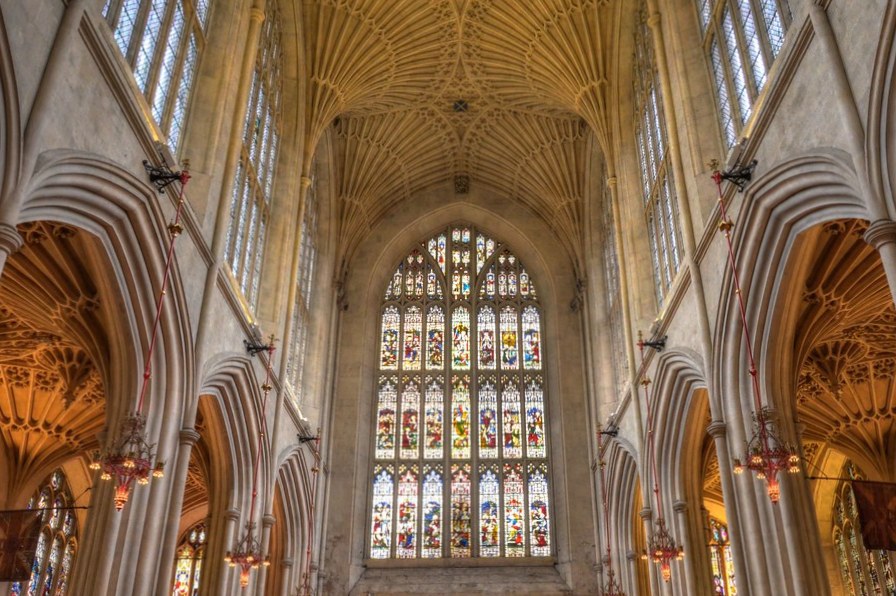
Bath-Abbey

Photo credit:  https://rrcb.org/the-spiritual-blessing-of-pilgrimage/

Tomorrow, I will help lead sixteen pilgrims on a journey through England.  There have been countless details to coordinate, communication to send, logistics to handle back home, and preparations for the team’s spiritual guidance.  Over a year of planning will come to fruition once we step on that plane, and I cannot be more excited to see what is in store for each person’s spiritual journey.

Many people have asked me why we would go on a pilgrimage.  The truth is, there is no simple answer, and each person goes for their own reason.  Perhaps at the heart of the reason is to forge a deep connection to God.  For some, that connection is enriched with beautiful architecture, sacred art, and beautiful, holy music, all of which can be found in minsters, cathedrals, and colleges on our journey.  For others, simply getting out of their routine, going to a foreign place, and taking on the ritual of walking, meditating, listening, and praying is how they enliven that connection.  For others, relationship is their mode of connecting to God – relationship with team members, relationship to other pilgrims and Christians along the way, and relationship with our spiritual ancestors, who built these sacred spaces centuries ago.  We go on pilgrimage to know God, to walk with Jesus, to be fed by the Holy Spirit.  Many of us even go having no idea what to expect, but longing for something deep and abiding.

But we go not just to fill our own spirits – we go to bring back those renewed spirits.  We go so we can share our journey with others.  We go so we can come back better servants of the Good News.  We go so our faith community is richer as a body.  We go on pilgrimage for all of us.  I invite your prayers for those who go this week.  But I also invite your prayers for your own spiritual journey.  May your week be enlivened, refreshed, and renewed as we walk together.


Please enjoy this poem found in Ian Bradley’s Pilgrimage:  A Spiritual and Cultural Journey.  Our team has used it in our own preparations, and would like to gift it to you. 

To the Pilgrim

 Set out!

You were born for the road.

Set out!

You have a meeting to keep.

Where?  With whom?

Perhaps with yourself.


Set out!

Your steps will be your words –

The road your song,

The weariness your prayers.

And at the end

Your silence will speak to you.


Set out!

Alone, or with others –

But get out of yourself!

You have created rivals –

You will find companions.

You envisaged enemies –

You will find brothers and sisters.


Set out!

Your head does not know

Where your feet are leading your heart.


Set out!

You were born for the road –

The pilgrim’s road.

Someone is coming to meet you –

Is seeking you

In the shine at the end of the road –

In the shine at the depths of your heart.


He is your peace.

He is your joy!


Go!

God already walks with you!


~Anonymous


On Cultivating Gratitude…

22 Wednesday Nov 2017

Posted by jandrewsweckerly in Uncategorized

≈ Leave a comment

Tags

blessing, cultivate, enrich, God, gratitude, intentional, joy, practices, Spirit, spiritual, Thanksgiving, Thanksgiving Day

Sixty-and-Me_Women-Over-50-Express-their-Gratitude-on-Thanksgiving-Day-740x417

Photo credit:  sixtyandme.com/50-women-over-50-express-their-gratitude-on-thanksgiving-day/

I don’t know about you, but I find my spiritual life has hills and valleys.  There are times when I feel especially close to God, and that closeness leads to a sense of overflowing gratitude.  And there are times when I fill up the extra space in my life with everything but God.  In those valleys, I sometimes feel God is far away – mostly because that is where I pushed God.  In those times, gratitude is often the last thing I experience.  Instead, I can be irritable and short-tempered.

In order to stay out of those valleys of self-absorption, I have found I need intentional practices of gratitude.  Celebrating Thanksgiving Day tomorrow helps put most of us in a spirit of gratitude (assuming we are not in a spiral of menacing traveling conditions, dread about time with challenging family members, or anxiety about food preparations).  But this year, I have found that I am coming into Thanksgiving Day with a full cup.  I am working on a stack of thank you notes for the generous pledges our parishioners have made to our church; the generosity of our parishioners makes writing the notes a joy.  Our church has been negotiating a new partnership which looks like may come to fruition; it is the culmination of a lot of dreams, most of which began before my arrival, and the promise of fulfillment is at times overwhelming.  And our church has two different services for Thanksgiving:  one with our ecumenical brothers and sisters, and a mass on Thanksgiving Day; both are occasions for deep joy and gratitude.

The thing about these events and experiences is they cultivate in me a spirit of gratitude.  When my spirit is primed for thanksgiving, every time I take a walk or hop in my car, I find a breathtaking tree that has hit its peak fall color.  When my spirit is primed for thanksgiving, the little things my family does – an unprompted “thank you,” a cleaning up of the kitchen, a spontaneous hug – all make my heart warmed.  When my spirit is primed for thanksgiving, I see the daily tasks of others that go unnoticed:  the county worker clearing a dead animal from the street, the childcare provider who sees my child being extra clingy and swoops her up in a big, distracting hug, or the administrator who has already thought about the things on my mind and started the projects I need accomplished.

If your spirit has not been primed, there is still time.  Perhaps you can start with tomorrow’s celebration, looking for glimpses of hope and blessing throughout your day (even in the midst of family drama, I promise you can find those glimpses!).  But do not let the thanksgiving end there.  Find ways to enrich your spirit each day:  whether it is putting on lenses of gratitude, taking up a tangible practice, or surrounding yourself with others who are naturally inclined toward an attitude of gratitude.  My suspicion is you will find your cup running over soon, and that overflow can be a blessing to others!

Sermon – Acts 1.6-14, E7, YA, May 28, 2017

31 Wednesday May 2017

Posted by jandrewsweckerly in Sermons, Uncategorized

≈ 2 Comments

Tags

ambiguity, Ascension, church, community, disciples, discomfort, God, Jesus, Kingdom, liminal, Pentecost, pray, promise, Sermon, Spirit, together, wait, waiting

We do it all the time:  waiting.  Waiting is perhaps one of the cruelest experiences of life.  Waiting for the test results that will tell us whether or not we have cancer.  Waiting for a call back after interviewing for our dream job.  Waiting all summer long after graduating high school before we can start new life in college.  The trouble with waiting is that we can feel lost – we are between two realities – the one we know and the one that is to come.  In some ways, simply by finding out we need the test, by applying for the job, or by making the deposit at college, life can never be the same.  Something is changed in our lives by stepping into the unknown.  And yet, we do not have the answer, we have not started the job, and school has not begun.  We are not the new person we know we will be.  We are in-between, in limbo, in no-man’s land.

Scholars call this in-between time liminal time.[i]  Liminal time is the time in which we are in the middle of a transition.  Native cultures experienced liminal time most famously in the journey to adulthood.  When young men or young women reached a certain age and maturity, they were sent away from their families and out into the wilderness for a time.  When their time in the wilderness was done, they returned with full adult status, respect, and responsibility.  They leave a child and return a man or a woman.  Liminal time is that time in the wilderness – where they are no longer children, and not yet adults.  Their identity is in flux, their purpose is ambiguous, and their life is on pause.  Liminal time is a time fraught with anxiety, frustration, and confusion.  Liminal time is a time when things are happening to you, and you have no agency.  Moments of liminality are some of the hardest moments in life.  The comfort of what has been and promise of what is to come is rarely soothing.  All that is left is ambiguity.

That kind of transition is where we find our disciples today.  They have spent forty glorious days feeling the victory of Christ’s resurrection, being blessed with further teachings, and being comforted by Christ’s presence.  They are ready.  They confidently ask Jesus today, “Lord, is this the time when you will restore the kingdom to Israel?”  This has to finally be the time!  Jesus’ answer is anything but satisfying.  Jesus makes a promise – that they will receive power when the Holy Spirit comes upon them, and they will be empowered to do their work of witnessing.  But for now, at this moment of climax, confidence, and courage, Jesus says, quite simply, “Wait.”

The trouble is that when the disciples ask that final question to Jesus, expecting to hear when Jesus will restore the kingdom of Israel, and effectively assume his place on the earthly throne, initiating the reign of the kingdom of God, the answer they get is a bit different.  As N.T. Wright explains, they are asking when “Israel will be exalted as the top nation, with the nations of the world being subject to God through his vindicated people.”  In one sense, that vindication already happened in the death and resurrection of Jesus.  In another sense, we are still waiting for the “time when the whole world is visibly and clearly living under God’s just and healing rule.”  Jesus is not a future king, but the one who has already been appointed and enthroned.  What the disciples are waiting for now is the empowering of the Spirit to go witness this reality.[ii]  The disciples find they are going to have to wait, but what they are waiting for has shifted dramatically.  Their waiting will be fraught with even more ambiguity than expected.

That’s the funny thing about waiting.  Not only do you find all the discomfort that comes from liminal time – the stripping of identity which leaves you naked for a time before you don your new armor.  But also, we all know that in waiting unexpected things happen.  Like the disciples who may have expected one thing to come at the end of their waiting, only to realize something quite different is coming, we too learn that reality shifts while waiting.  Things we thought would matter when we were done waiting stop mattering.  Truths we held to be unshakeable get shaken up while waiting.  Once unappreciated certainties and clarity become longed for realities when we wait.

So what are we to do?  What are we to do in our periods of waiting, in our liminal times?  Karl Barth called the waiting between the Ascension and Pentecost, the days we are experiencing now, the “significant pause…a pause in which the church’s task is to wait and pray.”[iii]  Now, I know what you are thinking.  That’s all you’ve got?  I should wait and pray?  Telling us to wait and pray seems like a classic platitude, what we say to someone who is hurting in ambiguity, and we have no real solace to offer.  Will Willimon explains, “Waiting, an onerous burden for us computerized and technically impatient moderns who live in an age of instant everything, is one of the tough tasks of the church.  Our waiting implies that the things which need doing in the world are beyond our ability to accomplish solely by our own effort, our programs and crusades.  Some other empowerment is needed, therefore the church waits and prays.”[iv]  For the disciples, their waiting is not empty-handed.  Though Jesus has left them, Jesus has left them to sit at the right hand of God.  There is confidence in that knowledge about Jesus.  And though they are facing the “significant pause,” the promise of the empowering Spirit is a promise of hope, empowerment, and companionship.  So their waiting and prayer is not for personal comfort during this time of ambiguity, but for empowerment to be obedient.  They are praying because they know that the coming work of witnessing will be hard work.  Instead of praying out of self-pity, they are praying out of determined expectation.

Perhaps that is why they stay together and pray.  By going to that upper room together, the disciples teach us that community is central to the life of the church and to the practice of prayer – is central to helping us get through those times of waiting.  Like the disciples, “we need each other’s witness and support, challenge and care, in order to live into the possibilities and expectations of God’s realm.”[v]  Now for those of you who have waited for the diagnosis, call back from the potential employer, or start date of college, you know that waiting and praying in community can be hard.  Answering for the fortieth time, “Any news yet?” can be as torturous as your own longing for answers or change.  Perhaps that is why some cultures spend their liminal time alone – so they can avoid all of that communal pressure.  But that is not what the disciples do.  They see this liminal time as a time for all of them – not even just the eleven left, but also the women and others gathered.  If they are going to have to face this significant pause, full of uncertainty and change, they will pray and wait together.

That is our invitation today too – to pray and wait together.  You may not be facing an obvious period of liminal time.  You may not even feel as though you are waiting for something.  But the reality is that we are all waiting.  As David Lose reminds us, “We have no idea of what the remainder of 2017 will bring, let alone 2018.  There will be accomplishments and setbacks, victories and defeats, joys and sorrows, triumphs and tragedies on a personal, communal, national, and global scale.  And in all these things, God will be with us, comforting, celebrating with, strengthening, and accompanying us in and amid whatever may come.  And God will also be preparing us, preparing us to be God’s emissaries of good news, preparing us to comfort others, preparing us to work for peace, preparing us to live with less fear and more generosity, preparing us to look out for the rights of others, preparing us to strive for a more just community and world.”[vi]  I do not know about you, but I would much rather face that ambiguity with a community who can remind me of God’s promise and helping me see the work of the Spirit.  That is what we do when we pray and wait together.  Our invitation is accept the gift of this community, and to wait and pray with together.

[i] Liminal time is a concept that has been developed by many scholars.  Arnold van Gennep, Victor W. Turner, and Gordon Lathrop all developed the idea of incorporating liminal time into liturgical practice.

[ii] N.T. Wright, Acts for Everyone, Part 1 (Louisville: Westminster John Knox Press, 2008), 9-10.

[iii] William H. Willimon, Acts, Interpretation:  A Bible Commentary for Teaching and Preaching (Atlanta:  John Knox Press, 1988), 20.

[iv] Willimon, 21.

[v] Randle R. Mixon, “Pastoral Perspective,” Feasting on the Word, Yr. A, Vol. 2 (Louisville:  Westminster John Knox Press, 2010), 524.

[vi] David Lose, “Easter 7A:  Important Interludes,” May 25, 2017, as found at http://www.davidlose.net/2017/05/easter-7-a-important-interludes/ on May 26, 2017.

Sermon – 1 Kings 18.20-39, Galatians 1.1-12, Luke 7.1-10, P4, YC, May 29, 2016

01 Wednesday Jun 2016

Posted by jandrewsweckerly in Sermons, Uncategorized

≈ Leave a comment

Tags

comfort, confession, discomfort, faithful, friend, God, Jesus, need, Sermon, Spirit, temptation, truth, witness

The older I have become, the more solid my support system has become.  Over time, I have figured out in which friendships to invest my time, and which friendships, while fun, are not necessarily nourishing.  I know which friend to call when I need fashion advice and which friend to call when I need major life decision advice.  I have learned which friend to find when I want to be comforted, and which friend to find when I need to be discomforted.  The discomforting friend is probably the most valuable one any of us has.  That is the friend who will tell you the brutal, ugly, harsh truth – not to be mean to you but to save you from going down a dark path, to snap you out of a rut, or to help you get your act together.  Of course, sometimes we avoid that friend like the plague because we are not ready to hear the truth.  But when we feel ourselves slipping away, when we feel drawn in by temptation, or when we simply feel incapable of doing the right thing, we know we can trust that friend to hold us accountable to being the best version of ourselves – the version God created us to be.

This morning, the lectionary seems to be filled with discomforting friends.  In First Kings, we hear about the ultimate showdown with the prophets of Baal and Elijah, the prophet of the Lord.  The story is dramatic, with Baal’s prophets comically trying to rain down fire to prove Baal’s power, and Elijah showing them up by demonstrating the Lord’s triumph.  But we quickly learn that Elijah is one of those discomforting friends when he says to the people of God, “How long will you go limping with two different opinions?  If the Lord is God, follow him; but if Baal, then follow him.”[i]  Desperate for rain in a three-year drought, the people of God have begun to hedge their bets.  They figure they can worship both Baal and the Lord.  But Elijah will not let them be so divided.  Either they trust in the Lord their God, or they do not.

If Elijah sounds harsh, you should hear Paul this morning.  Paul starts his letter to the Galatians with a traditional greeting, but we can tell from his lack of thanksgiving for the community, that some harsh words are about to come.[ii]  After a quick introduction, Paul cuts to the chase, “I am astonished that you are so quickly deserting the one who called you in the grace of Christ and are turning to a different gospel…”[iii]  At the heart of the issue is whether Gentile converts must adhere to Jewish laws.  The Galatians want to narrow the wideness of the gospel, while Paul wants to expand the reach of the gospel.  So angry and defiant is Paul that he practically shouts, “If I were still pleasing people, I would not be a servant of Christ.”[iv]  In other words, Paul has no interest in soothing feelings in Galatia.  He is only interested in correcting behavior and preserving the abundance of the gospel.[v]

And if Elijah and Paul were not harsh enough this morning, Jesus rounds us out with a scathing indictment of the faithful.  A centurion, a Roman solider, and sometimes enemy of the people of God, sends a message to Jesus.  Despite the fact that he is not Jewish, he sends word to Jesus twice – first, asking Jesus to heal his sick slave, and second, insisting that Jesus not make the journey, but only speak a word of healing from afar.  The text tells us that Jesus, who is very rarely reactive, is “amazed,” and criticizes the faithful of God by saying, “I tell you, not even in Israel have I found such faith.”[vi]  If we think about who is gathered around Jesus, we are not just talking about some delinquent followers.  Jesus says in front of disciples and everyone that none of them has had the same dedication and faith in Jesus as this outsider.  Jesus has no problem being brutally honest about the people’s lack of faith and trust in Jesus.

If you were hoping for a nice, affirming set of lessons today, a time set apart with that friend who always encourages and affirms you, you picked the wrong Sunday.  We might have guessed the brutal honesty was coming when we prayed our collect today.  The collect says, “O God, your never-failing providence sets in order all things both in heaven and earth: Put away from us, we entreat you, all hurtful things, and give us those things which are profitable for us…”[vii]  In other words, we prayed God would not be that comforting friend today – but would be the discomforting friend that we need.

Now you may be sitting here wondering what kind of discomfort I will be dishing out today.  Or you may be wondering on what issue I think we need work.  The good news is that I do not have such a charge today.  I suspect that you already know where you need discomfort.  Your discomfort may need to be from Elijah, who warns about putting idols before God – putting your trust and hope in places and things that will not satisfy.  Or maybe your discomfort needs to come from Paul, who warns about putting restrictions on the wideness of God’s mercy.  Or maybe your discomfort needs to come from Jesus, who can point to non-believers who seem to trust God more than you.  You alone know how the Spirit is speaking to your need for discomfort.

However, even though you alone know how the Spirit is speaking to your need for discomfort, you are not alone in needing that discomfort.  One of my favorite parts of our liturgy is the confession.  One, I find the confession immensely centering because every week, one phrase or part of the confession jumps out at me – whether something I have done or left undone is nagging me; whether I have sinned against God or my neighbor; or whether I have just strayed that week.  Even though we say the confession every week, the confession never ceases to unsettle me.  Two, I find the confession comforting because of all the voices that join me in the confession.  I love hearing young and old voices, male and female voices, and voices with every accent imaginable confessing the same failings that I confess.  The power of that communal act is always humbling and comforting.

Now I know I told you that you should not have come to church today if you were looking for comfort.  But the truth is, I find all the discomfort today wildly comforting.  Whether we are pushed by our discomforting witnesses in scripture, whether we are jolted by something in our communal confession, or whether we realize that we need to call our best discomforting friend immediately after church, I find the reminder that I am not the only one who needs discomfort comforting today.  I am comforted because I know after the discomfort comes, something akin to a fire is lit inside me.  The discomfort is usually just what I need to reinvigorate my walk with Christ and sharply focus on where God is calling me to be.  If that is not good news, I do not know what is.  Amen.

[i] 1 Kings 18.21.

[ii] Audrey West, “Commentary on Galatians 1:1-12,” May 29, 2016, as found at http://www.workingpreacher.org/preaching.aspx?commentary_id=2882 on May 25, 2016.

[iii] Galatians 1.6.

[iv] Galatians 1.10.

[v] Dan Clendenin, “No Other Gospel,” May 22, 2016, as found at http://www.journeywithjesus.net/essays/977-no-other-gospel on May 26, 2016.

[vi] Luke 7.9.

[vii] BCP, 229.

On Progress and Outstanding Work…

30 Wednesday Sep 2015

Posted by jandrewsweckerly in Uncategorized

≈ Leave a comment

Tags

boundaries, Christian, church, conflicted, Episcopal, Eucharist, excitement, exclusion, God, Jesus, love, open table, Pope Francis, Roman Catholic, Spirit, table, unity

Photo credit: http://www.wusa9.com/story/life/faith/pope-coverage/2015/08/20/poll-pope-francis/32052555/

Photo credit: http://www.wusa9.com/story/life/faith/pope-coverage/2015/08/20/poll-pope-francis/32052555/

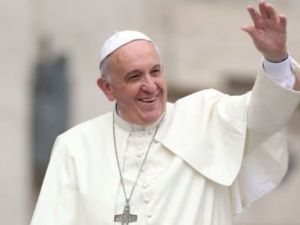
I must admit, the Pope’s visit to the United States last week was awesome.  Though I have been happy for the Roman Catholic Church since Pope Francis was elected, last week I realized his witness is good for all Christians.  Too often people professing to be Christian make Christians look bad.  Their hatred and exclusion in no way reflects the love and inclusion expressed by Jesus Christ.  But not Pope Francis.  He continues to challenge all of us to get back to the work Jesus gave us to do – to love and care for the poor, disenfranchised, and unjustly treated.  He beckons us toward lives of making peace and justice.  In essence, he reminds us to live as Christ called us to live.  And in starkly obvious ways, he reminded us that Jesus was not a Democrat or a Republican.  In fact, Jesus made, and continues to make, everyone uncomfortable.  Pope Francis did the same thing.  Though we all loved what he did for the Church and Christians in general last week, he likely made each of us feel uncomfortable at some point during his visit.  But I think we could all respect that he was trying to get us back to our true identity – he is a Christian who made us proud, not embarrassed, to be Christians.

Coming off the high of the Pope’s visit, I attended a funeral mass this week at the local Roman Catholic Church.  I was there to support a parishioner who had lost his mother (a Roman Catholic).  I wore my collar, but sat in the pew.  I prayed with the priest, cried with the family, and reverenced during the Eucharist.  But when the Eucharist was distributed, I stayed in my seat.  To his credit, the priest did not disinvite any non-RC attendees.  But he did not actively invite them either.  So instead of risking offense, I stayed in my seat, as I have been well-trained by many other RC priests that I am not to receive Eucharist as a non-RC.  I knew the moment would come and I was mentally prepared to stay in that seat.  But I must admit, my heart ached in that moment.  I felt a sharp pain in my chest as others walked around me to go forward for the heavenly meal.  For all the unity, the love, and the excitement of last week, I realized in that moment that we have a long way to go.

Of course, that work is not limited to the Roman Catholic Church.  Last week I preached about how much the Episcopal Church does its own work of excluding people – even from the Table, if you are not baptized.  In fact, I remember writing a paper in my liturgics class in seminary defending the practice of limiting the Eucharist to those who are baptized.  I don’t remember my argument at the time, but it was good, well-thought out, and prayerfully constructed.  But sitting in that pew yesterday, not receiving the comfort of the holy meal made me rethink the whole concept of an open table.  I do not really know if I am ready to make any changes right away, but the experience was a powerful lesson in the realities of constructing boundaries around the Table.  I do not want anyone’s heart to hurt the way mine did yesterday.  What about you?  What boundaries the church has constructed make you feel conflicted?  What might compel you to reconsider your position?  I invite us to pray about these conflicts as a community and see where the Spirit is leading.

A time to laugh…

03 Tuesday Feb 2015

Posted by jandrewsweckerly in Uncategorized

≈ Leave a comment

Tags

comedy, gift, God, humor, joy, laughter, sacred, Spirit

This week I had one of “those” days.  I had a funeral at 10:00 am, which I had specifically scheduled early in the day so that I could run over to Clergy Day with the diocesan clergy, hoping to fit in a few hours with colleagues.  Of course, the day before it snowed and iced, and the schools were on a two-hour delay.  My oldest would need to board the bus at the exact same time the funeral was to begin.  So with lots of help and rearranging, I managed to figure out a way to take my youngest to childcare by 9:00, bring the oldest back to church with me while I setup the funeral, and then have a parishioner take her to bus stop while I began the service.  Perfect plan!  Of course, that is not exactly how it played out.  As I was loading bags in the car, I discovered a small bird in the garage.  Then, as I was doing a last-minute pumping, my infant started crying inconsolably.  Then my eldest could not find her favorite snow books and also began crying.  Once I managed to get everyone in the car and to nursery school, we found out the director was stuck in traffic and school would be opening ten minutes late.

That was the point at which I started laughing.  I have no idea why, but suddenly my whole morning just seemed comical – hilarious really.  I kept laughing.  Despite my eldest daughter’s confusion about why I was laughing so hard, she started laughing too.  Somehow the stress of the morning lifted.  Despite all my scurrying around nothing could keep this day on track – and through unbridled laughter, that reality was suddenly okay.

Laughter has a sacred place in my life.  One of my favorite activities with my husband is watching stand-up comedy.  Though we have pretty different senses of humor, when we find a comedian who can make us both laugh, it is more precious than gold.  And although he regularly laughs at things I deem inappropriate for humor, his belly-laughs make it impossible for me to stifle a smile.  At other times, you can find my husband, eldest daughter, and me huddled around the baby trying to get laughs out of her – which of course lead to our own laughs.  When my eldest and I get into a struggle of wills, I have found laughter to be the key to unlocking the tension and setting us back on track.  In fact, just the other day, as I was struggling to get her out of bed, for some reason I started making funny faces at my daughter.  She started giggling, which got me giggling.  Before I knew it, she was out of bed and we were having one of the more pleasant mornings we have had in a while.

A beautifully captured laugh.

A beautifully captured laugh.

Laughter is gift of the Spirit.  I think of the many times that laughter comes up in scripture.  When God tells Abraham that Sarah will bear a son in her old age, she laughs.  In fact, their son’s name, Isaac, means “he laughs.”  Ecclesiastes proclaims that there is a time for everything, “a time to weep, and a time to laugh; a time to mourn, and a time to dance…” (3.4)  Even in Luke’s beatitudes, Jesus says, “Blessed are you who weep now, for you will laugh.” (6.21)  I think God longs for us to have more laughter in our life.  Through our laughter, we get a glimpse of the unbridled joy of God – a joy that can fill our entire bodies.  I invite you this week to make some space for laughter.  My guess is that you will find God there too.

Recent Posts

  • On the Myth and Magic of Advent…
  • On Risking Failure and Facing Fear…
  • Sermon – Luke 23.33-43, P29, YC, November 23, 2025
  • On Inhabiting Gratitude…
  • Sermon – Luke 20.27-38, P27, YC, November 9, 2025

Archives

  • December 2025
  • November 2025
  • October 2025
  • September 2025
  • August 2025
  • July 2025
  • June 2025
  • March 2025
  • February 2025
  • December 2024
  • November 2024
  • October 2024
  • September 2024
  • August 2024
  • July 2024
  • June 2024
  • May 2024
  • March 2024
  • February 2024
  • January 2024
  • December 2023
  • November 2023
  • October 2023
  • September 2023
  • August 2023
  • July 2023
  • June 2023
  • May 2023
  • March 2023
  • February 2023
  • January 2023
  • December 2022
  • November 2022
  • October 2022
  • June 2022
  • May 2022
  • January 2022
  • December 2021
  • November 2021
  • October 2021
  • September 2021
  • August 2021
  • June 2021
  • May 2021
  • April 2021
  • March 2021
  • February 2021
  • January 2021
  • December 2020
  • November 2020
  • October 2020
  • September 2020
  • August 2020
  • July 2020
  • June 2020
  • May 2020
  • April 2020
  • March 2020
  • February 2020
  • January 2020
  • December 2019
  • November 2019
  • October 2019
  • September 2019
  • August 2019
  • July 2019
  • June 2019
  • May 2019
  • April 2019
  • March 2019
  • February 2019
  • January 2019
  • December 2018
  • November 2018
  • October 2018
  • September 2018
  • August 2018
  • July 2018
  • June 2018
  • May 2018
  • April 2018
  • March 2018
  • February 2018
  • January 2018
  • December 2017
  • November 2017
  • October 2017
  • September 2017
  • August 2017
  • July 2017
  • June 2017
  • May 2017
  • April 2017
  • March 2017
  • February 2017
  • January 2017
  • December 2016
  • November 2016
  • October 2016
  • September 2016
  • August 2016
  • July 2016
  • June 2016
  • May 2016
  • April 2016
  • March 2016
  • February 2016
  • January 2016
  • December 2015
  • November 2015
  • October 2015
  • September 2015
  • August 2015
  • July 2015
  • June 2015
  • May 2015
  • April 2015
  • March 2015
  • February 2015
  • January 2015
  • December 2014
  • November 2014
  • October 2014
  • September 2014
  • August 2014
  • July 2014
  • June 2014
  • April 2014
  • March 2014
  • February 2014
  • January 2014
  • December 2013
  • November 2013
  • October 2013
  • September 2013
  • August 2013
  • July 2013
  • June 2013
  • May 2013
  • April 2013
  • March 2013
  • February 2013
  • January 2013
  • December 2012
  • November 2012
  • October 2012
  • September 2012

Categories

  • reflection
  • Sermons
  • Uncategorized

Meta

  • Create account
  • Log in
  • Entries feed
  • Comments feed
  • WordPress.com

Blog at WordPress.com.

  • Subscribe Subscribed
    • Seeking and Serving
    • Join 394 other subscribers
    • Already have a WordPress.com account? Log in now.
    • Seeking and Serving
    • Subscribe Subscribed
    • Sign up
    • Log in
    • Report this content
    • View site in Reader
    • Manage subscriptions
    • Collapse this bar
 

Loading Comments...