
• About

Seeking and Serving

~ seek and serve Christ in all persons

Seeking and Serving

Monthly Archives: June 2020

On Race, Earthquakes, and Action…

17 Wednesday Jun 2020

Posted by jandrewsweckerly in Uncategorized

≈ 2 Comments

Tags

action, African-American, beauty, blindness, compassion, complacency, confederate, earthquake, harassed, Jesus, learn, listen, love, power, protest, racism, senses, uncomfortable, value

Kehinde Wiley

Photo credit:  https://www.npr.org/2015/05/22/408558234/the-exquisite-dissonance-of-kehinde-wiley

A few years ago, the Virginia Museum of Fine Arts had an exhibit of the works of Kehinde Wiley.  I had not seen his work before, and found his pieces in the exhibit shocking to the eye.  Wiley managed to take traditional poses and settings from art history and infuse them with images of modern African-Americans.  The pieces were jarring to the senses.  As I made my way through the exhibit, it began to dawn on me why my senses were so jarred. By consistently seeing classical art featuring people with light-colored skin, I had been enculturated to expect certain images in art.  The prominence of one kind of subject also created unspoken messages about value, beauty, and power.  Wiley’s vibrant pieces were like an earthquake.  And as someone who considers herself fairly self-aware, I found myself humbled by his work, and sorrowful for my ignorance.

I think that is why I was so surprised by an experience last week.  Last Tuesday night, our family went up to Richmond to take a look at the Robert E. Lee statue and the surrounding damage to businesses and monuments.  For those of you who have not been following the story, as part of the protests about George Floyd’s death and the Black Lives Matter cause, the prominent Confederate monuments in Richmond have come under fire.  The statue of Robert E. Lee’s large stone plinth has been covered in graffiti, protesting George’s death, the treatment of African-Americans by the police, and systemic racism.  As I took in the visceral, pain-filled cries of graffiti, as I looked at pictures of black victims of police violence surrounding the statue, whose names I have prayed for over the years, as I watched families of color take pictures in front of this once pristine, but ever-controversial, statue with a new sense of pride and defiance, what I began to understand is those who are harassed and feel helpless have been begging for our compassion for a long time – cries that could no longer be ignored when staring at that powerfully altered statue.

But mostly, I mourned again for my complacency and blindness.  As a descendant of Confederate veterans, student of African-American history and politics, and pastor of a church built long before the Civil War, I know the issue of Confederate statues and monuments is sensitive.  But watching what was happening at the Robert E. Lee statue created the same feeling as Kehinde Wiley’s art work:  an earthquake for all in positions of privilege and power.  Standing there with my family, I felt like I was on unstable ground, my complicity in systemic racism exposed, and the weight of the question pressing on my chest:  what are you going to do about it?

For my brothers and sisters of color, I am sorry.  I am sorry that you have had to do the work to awaken my senses instead of doing that work myself.  For my brothers and sisters of European descent, we have work to do.  Hickory Neck Church has been posting ways for you to engage this issue – not necessarily telling you what to do, but inviting you into the position of making yourself vulnerable to listening, learning, and acting.  This is our work to do.  It is hard and uncomfortable, and this post may even make you defensive.  Please know that I am here – here to walk with you, here to encourage you, and here to hold us all to Jesus’ message of love.  What you do next will vary widely.  Maybe you can only do one small thing to start.  Our invitation is do something – and keep doing something until we find ourselves doing the work of the kingdom Jesus has desired for a long time.
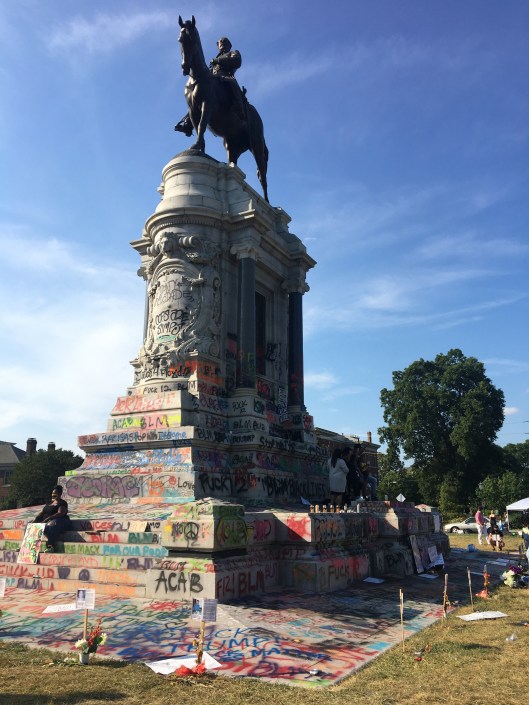
IMG_8253

Photo credit:  Jennifer Andrews-Weckerly; reuse with permission only.


Sermon – Matthew 9.35-10.23, P6, YA, June 14, 2020

17 Wednesday Jun 2020

Posted by jandrewsweckerly in Sermons, Uncategorized

≈ Leave a comment

Tags

African-American, compassion, disciples, empower, God, harassed, helpless, Jesus, justice, love, mercy, police, protest, racism, rally, Sermon, Spirit, truth, witness

Last Sunday afternoon, I attended a rally in Colonial Williamsburg to renew the covenant between our Historical area police departments and the African-American community.  Established just three years ago, initiated by faith leaders in the African-American community, the covenant was established to proactively create collaborative relationships with our local police in order to prevent some of the racial divides that have occurred in other cities.  Although I was there to witness the support of the local clergy for this covenant, what I heard was the testimony of a community of people who have been harassed and feel helpless right here in our community.  Though we may have avoided some of the violence we have seen elsewhere in our country, the African-American community here in Williamsburg still feels the heel of racism pushing down on her neck.

Last week, we heard Matthew’s Great Commission, and we talked about the juxtaposition of civil unrest exploding around the issue of systemic racism and Jesus’ call to go out into the world doing works of justice, mercy, and love.  As some of the heat from protests simmered down a bit this past week, we could easily come to church today and long to turn down the heat too.  But our collect appointed for today, which you will hear later, holds our feet to the fire.  The collect says, “Keep, O Lord, your household the Church in your steadfast faith and love, that through your grace we may proclaim your truth with boldness, and minister your justice with compassion…”  Now the Collect of the Day is not just a random prayer, meant to sound good.  The Collect of the Day pulls themes from the scripture lessons appointed for the day – in essence, the Collect of the Day tries to articulate the thesis of our lessons.

After watching weeks of protests (maybe attending some yourself), hearing countless stories about unrest, reading articles or starting books about systemic racism, and praying diligently for peace, you may have come to church today hoping for some respite or reassurance.  But Jesus’ message to “Go!” from the Great Commission last week does not fade today.  Instead, Jesus’ words from Matthew’s gospel from almost 20 chapters earlier shows us our work is ever before us, beckoning us out into the world.

Years before his cross, resurrection, and ascension, we find Jesus teaching, healing, and proclaiming the good news to crowds of people.  In the midst of this work, we are told Jesus looks at the crowd and has compassion for them because they are harassed and helpless.  When Jesus sees the harassed and helpless, he does not simply fix the problem or strike down the system with godly power.  Instead, he turns to his disciples with a charge.  Jesus calls the twelve disciples by name (Simon Peter, Andrew, James, John, Philip, Bartholomew, Thomas, Matthew, James, Thaddaeus, Simon, and Judas), those who have been following him, learning from him, studying and praying with him, and sends them out, telling them how hard the work of showing compassion will be:  they will go without financial support, will be dependent upon the hospitality of strangers – some of whom will show them scorn rather than hospitality, will be persecuted and beaten, and will be betrayed even by their closest relatives.  This is the sobering work of love – of proclaiming God’s truth with boldness, and ministering God’s justice with compassion.

So how do the disciples hear such a sobering commission and still take the first step?  They take the first step because Jesus empowers the disciples.  Jesus gives the disciples power to heal and care for the oppressed; Jesus teaches them how to dust off their feet when they are scorned; Jesus promises when they need words, the Spirit of God will speak through them.  In other words, they just need to go, and God will take care of the rest.

Several of you have reached out to me over these last two weeks, longing for something to do in the midst of this important moment.  We have exchanged ideas and resources, and many of you have already begun to take specific action.  The content of how we respond in the coming weeks and months will vary widely, given our different gifts and abilities.  But our Collect today is not a prayer asking God to empower others to do the work of love or for God to just “fix it.”  Our Collect today is a request to God to help each one of us – called by name (Sue, John, Linda, Bob, Lisa, Bill, Tori, Don, Terri, Jim, Beth, and Dave) – to proclaim God’s truth with boldness, and minister God’s justice with compassion.  Jesus has already given us everything we need to do this work.  God is already keeping us in God’s steadfast faith and love; through God’s grace we can proclaim God’s truth with boldness, and minister God’s justice with compassion.  Amen.

Sermon – Matthew 28.16-20, TS, YA, June 7, 2020

17 Wednesday Jun 2020

Posted by jandrewsweckerly in Sermons, Uncategorized

≈ Leave a comment

Tags

Christian, connect, Coronavirus, danger, disciples, engage, Episcopal, God, Great Commission, Jesus, love, pandemic, protest, relationship, Sermon, witness

We have had a week.  For most of us, the Coronavirus alone would be enough – the suffering of those infected, the over 100,000 deaths in our country from the virus, the economic hardship on our communities, and the chafing reality of staying distanced from one another.  But in the midst of a pandemic, our country has also exploded with civil unrest as we grapple with the death of another man of color under the hands of a police officer.  We have witnessed daily peaceful protests, violent, destructive rioting, unsettling debates about the extent of national executive power over state’s rights, renewed conversations about systemic racism, and vivid images of police officers and National Guard members trying to balance their genuine support for the content of the protests with needing to keep crowds safe.  And whether he meant to our not, by the aggressive clearing of peaceful protesters in order to take a photograph in front of an Episcopal Church with a Bible in hand, our President has forced Episcopalians and all Christians to take a hard look at what being a Christian means and what Christian witness looks like.  Like I said, it has been a week.

At the end of a week like this, I had been hoping for a comforting word from scripture – maybe something about the Good Shepherd, or some pastoral scene of Jesus gathered in loving community.  Instead, our gospel lesson today from Matthew is the Great Commission – the very last words of Matthew’s gospel – which are not words of comfort and rest, but words of sending out.  Jesus says, “Go therefore and make disciples of all nations, baptizing them in the name of the Father and of the Son and of the Holy Spirit, and teaching them to obey everything that I have commanded you.”  These are not words of retreat and rest.  In these last words of Jesus, Jesus sends us out into the world, encourages us to do work that requires relationship-building, listening, and teaching.[i]  These are words of engagement, witness, and connection.

I do not know about you, but I was not ready to hear these words today.  The idea of venturing out in public still feels fraught with danger in this time of pandemic.  The idea of witnessing Christ’s love, particularly with our brothers and sisters of color, feels fraught with danger because of the volatility and justified anger of many of the protestors.  The idea of relationship building required in the act of “making disciples” feels fraught with hypocrisy as our brothers and sisters of color remind us how deeply our own racism runs.  When Jesus says, “Go!” to us today, I find myself hesitating at the door.  Go how?  Go where?  Go to whom?

So how do we go?  The good news is that Jesus tells us how we will go.  After the words of the Great Commission, Jesus says, “And remember, I am with you always, to the end of the age.”  We can cross that threshold because Jesus is with us – always – to the end of the age.  And where shall we go?  Jesus says we should go to all the nations.  In other words, everyone needs God’s message of love and hope.  The good news today is going to the nations is, surprisingly, still possible.  Even in this pandemic’s limitations on our movement, we can still share God’s love – in our prayers from home, in our words to our neighbors, in our letters to elected officials, in our public witness on social media, and in our calls of support to police officers trying to do the work of reconciliation in their own sphere.  And to whom shall we go?  To our neighbors of color who need our support, to our political opponents (and yes, I recognize those opponents are different for each of us) who need us to stay engaged in honest, calm, productive relationship, to our political allies, who need us to not be an echo chamber, but need us to hold up a mirror to ensure we are actually sharing truth with love.

I know many of you may be thinking, “I can’t.  Even with Jesus’ promise to be with me, I just can’t.  It’s too hard.”  But here’s what I can tell you:  you already are.  I watched this week as over twenty parishioners reclaimed the gospel message of love on the front porch of our historic chapel.  I watched this week as many of you offered up your prayers – for peace, for understanding, for love.  I watched this week as many of you joined peaceful protests – witnessing Christ’s love for all.  I watched this week as many of you searched for reading materials – whether you were looking for books and articles about race, or whether you were ordering your Bibles to join in our 90-day Bible Reading Challenge, looking for ways to hone your ability to make disciples, to build relationships.  Jesus’ Great Commission today may feel like more work instead of the salve you were hoping for today.  But I can tell you the fact that you are already living the Great Commission in your own way, with your own gifts, and your own abilities, is your salve today.  Keep going.  Keep building relationships.  Keep witnessing God’s love.  It’s not too hard – because Jesus is with you always, even to the end of the age.  Amen.

[i] Thomas G. Long, Matthew (Louisville: Westminster John Knox Press, 1997), 326.

On Wanting to Go Back…

02 Tuesday Jun 2020

Posted by jandrewsweckerly in Uncategorized

≈ Leave a comment

Tags

ancestors, darkness, Egypt, faith, God, goodness, hard, help, Israelites, journey, lament, longing, pandemic, power, Promised Land, protest, romanticize, trust, wilderness

walkingdesert2_thumb

Photo credit:  http://www.livingintheshadowofhishand.com/2013/06/wandering-in-wilderness.html

The whole congregation of the Israelites complained against Moses and Aaron in the wilderness.    The Israelites said to them, “If only we had died by the hand of the Lord in the land of Egypt, when we sat by the fleshpots and ate our fill of bread; for you have brought us out into this wilderness to kill this whole assembly with hunger.”  (Exodus 16.2-3) 

The rabble among them had a strong craving; and the Israelites also wept again, and said, “If only we had meat to eat!  We remember the fish we used to eat in Egypt for nothing, the cucumbers, the melons, the leeks, the onions, and the garlic; but now our strength is dried up, and there is nothing at all but this manna to look at.”  (Numbers 11.4-6)


One of the cries we are prone to in these days is “I wish we could just go back to the way it was!”  I just did it myself in a sermon a few weeks ago, when I talked about how at the beginning of the pandemic, we were all chipping in and helping each other, but then slowly our demons had taken back over and we are becoming fractured and partisan again.  But we do it all the time.  The most famous may be our President’s campaign slogan, “Make American Great Again.”  I have heard the cry from former Senators and Congressmembers who have talked about the time when people worked “across the aisle” with compromise and collaboration.  As we have mourned social distancing and stay-at-home orders, this has especially become the cry of many of us in the Church.  And as violence rocks our country, many are asking protestors to quieten down and find other ways to make changes.

Of course, we are not alone in our lament and longing.  Our ancestors, the Israelites, were famous complainers in the wilderness, longing to go back to Egypt – the very place of their enslavement – because “at least they had food,” or they remember with longing the savory foods.  The hardness of the wilderness made them romanticize a life marked by brutality, oppression, and death.  Keeping an eye on the Promised Land was not so easy after years in the wilderness.

We are not unlike of ancestors.  In hoping to make America great again, we forget that any era of our history has been marked by darkness – whether the subjugation of the Indigenous peoples of this land, the enslavement, segregation, or oppression of African-Americans, the disenfranchisement and sexual subjugation of women, and on and on go the examples.  When we look at our current inability to work across party lines, we forget the ways in which women and people of color were wildly underrepresented in leadership – if represented at all!  Our current mourning of how Church used to be forgets the incredible ways technology has connected us to our neighbors, our extended community, and even strangers.   And both this pandemic and the protests about the treatment of persons of color are pulling back the curtains on disparities around wealth and opportunity for African-Americans.

What we learn from our biblical ancestors is that the wilderness is hard:  hunger, thirst, discomfort, and disagreements over power are real.  And yet, only in the wilderness did the faithful learn to trust God, to restructure leadership in shared ways, and find ways to govern themselves marked by justice and mercy.  As a person of privilege, I certainly have the option to turn off news coverage, wait this pandemic and the protests out, and stay ensconced in my place of power.  Or I can use this wilderness to learn, to be vulnerable, to use my power for goodness (or even better, cede some of my power), and to pray for God’s help on the journey.  It may be quite some time before we arrive at the Promised Land.  But we do not have to flee back to Egypt.


Sermon – Acts 1.6-14, E7, YA, May 24, 2020

02 Tuesday Jun 2020

Posted by jandrewsweckerly in Sermons, Uncategorized

≈ Leave a comment

Tags

ambiguity, Ascension, community, empowerment, God, Holy Spirit, Jesus, liminal time, Pentecost, pray, Sermon, waiting

Throughout this time of pandemic, I have struggled with Holy Scripture.  From not being able to wash feet and share in Christ’s last meal on Maundy Thursday, to ringing in the victory of Easter, to watching the disciples be able to touch Jesus or share in communion with him during his bodily appearances after the resurrection, each experience has felt like a stabbing reminder of what we do not have – that we cannot gather, we cannot touch, we cannot share that identity-making holy meal.  But today, as we continue to celebrate Jesus’ ascension, we have finally landed on the perfect Scriptural metaphor for these days.  Thanks be to God!

Of course, I say that not because today’s scripture lesson gives us answers about when we can expect a return to “normal,” (whatever that may mean now), or when this virus will be over, or even when we can safely return to church buildings.  Instead, what our text from Acts recognizes is the brutal truth of this time:  we are in a liminal time.

Now, we have talked about liminal time before.  Liminal time[i] is the time in which we are in the middle of a transition.  Native cultures experienced liminal time most famously in the journey to adulthood.  When young men or young women reached a certain age and maturity, they were sent away from their families and out into the wilderness for a time, a time when they are no longer children, and not yet adults.  Their identity is in flux, their purpose is ambiguous, and their life is on pause.  Liminal time is a time fraught with anxiety, frustration, and confusion.

That kind of transition is where we find our disciples today.  They have spent forty glorious days feeling the victory of Christ’s resurrection, being blessed with further teachings, and being comforted by Christ’s presence.  They are ready.  They confidently ask Jesus today, “Lord, is this the time when you will restore the kingdom to Israel?”  Jesus responds with a promise – that they will receive power when the Holy Spirit comes upon them, and they will be empowered to do their work of witnessing.  But for now, at this moment of climax, confidence, and courage, Jesus says, quite simply, “Wait.”

Now I know I said I was excited about this text because the text is so perfect for this time.  I say that not because this text finally answers all those questions of our liminal time – or even hints at when our anxiety, frustration, and confusion will end.  Instead, what I love about this text is that the text names the very frustrating reality of this time – a time in which we are not longer what we were (a community free to gather how and when we like, doing things like passing the peace, sharing a common cup, and congregating en masse), and yet, we are not yet what we will be – in fact, what we will be is even uncertain.  We are the disciples staring up at the sky, knowing Christ has gone to the father, but frozen in place, not really knowing what is next – waiting.

Karl Barth called the waiting between the Ascension and Pentecost, the days we are experiencing now, the “significant pause…a pause in which the church’s task is to wait and pray.”[ii]  Now, I know what you are thinking.  That’s our Good News?  I should wait and pray?  Telling us to wait and pray seems like a classic platitude, what we say when we do not know what to say.  Will Willimon explains, “Waiting, an onerous burden for us computerized and technically impatient moderns who live in an age of instant everything, is one of the tough tasks of the church.  Our waiting implies that the things which need doing in the world are beyond our ability to accomplish solely by our own effort, our programs and crusades.  Some other empowerment is needed, therefore the church waits and prays.”[iii]  Though the disciples are facing the “significant pause,” the promise of the empowering Spirit is a promise of hope, empowerment, and companionship.  Their waiting and prayer are not for personal comfort during this time of ambiguity, but for empowerment to be obedient.  Instead of praying out of self-pity, they are praying out of determined expectation.

That is our invitation today too – to pray and wait together.  We cannot cram into that Upper Room like the disciples do.  But we can gather – digitally in worship here, in Zoom gatherings, by phone, cards, emails, and texts, even drive-by Coffee Hours.  As David Lose reminds us, in this time of pandemic “God will be with us, comforting, celebrating with, strengthening, and accompanying us in and amid whatever may come.  And God will also be preparing us, preparing us to be God’s emissaries of good news, preparing us to comfort others, preparing us to work for peace, preparing us to live with less fear and more generosity, preparing us to look out for the rights of others, preparing us to strive for a more just community and world.”[iv]  I do not know about you, but I would much rather face the ambiguity of this liminal time with a community who can remind me of God’s promise, helping me see the work of the Spirit.  That is what we do when we pray and wait together.  Our invitation is to accept the gift of this community, gathered virtually for the foreseeable future, and to wait and pray with together.  Amen.

[i] Liminal time is a concept that has been developed by many scholars.  Arnold van Gennep, Victor W. Turner, and Gordon Lathrop all developed the idea of incorporating liminal time into liturgical practice.

[ii] William H. Willimon, Acts, Interpretation:  A Bible Commentary for Teaching and Preaching (Atlanta:  John Knox Press, 1988), 20.

[iii] Willimon, 21.

[iv] David Lose, “Easter 7A:  Important Interludes,” May 25, 2017, as found at http://www.davidlose.net/2017/05/easter-7-a-important-interludes/ on May 26, 2017.

Recent Posts

  • On the Myth and Magic of Advent…
  • On Risking Failure and Facing Fear…
  • Sermon – Luke 23.33-43, P29, YC, November 23, 2025
  • On Inhabiting Gratitude…
  • Sermon – Luke 20.27-38, P27, YC, November 9, 2025

Archives

  • December 2025
  • November 2025
  • October 2025
  • September 2025
  • August 2025
  • July 2025
  • June 2025
  • March 2025
  • February 2025
  • December 2024
  • November 2024
  • October 2024
  • September 2024
  • August 2024
  • July 2024
  • June 2024
  • May 2024
  • March 2024
  • February 2024
  • January 2024
  • December 2023
  • November 2023
  • October 2023
  • September 2023
  • August 2023
  • July 2023
  • June 2023
  • May 2023
  • March 2023
  • February 2023
  • January 2023
  • December 2022
  • November 2022
  • October 2022
  • June 2022
  • May 2022
  • January 2022
  • December 2021
  • November 2021
  • October 2021
  • September 2021
  • August 2021
  • June 2021
  • May 2021
  • April 2021
  • March 2021
  • February 2021
  • January 2021
  • December 2020
  • November 2020
  • October 2020
  • September 2020
  • August 2020
  • July 2020
  • June 2020
  • May 2020
  • April 2020
  • March 2020
  • February 2020
  • January 2020
  • December 2019
  • November 2019
  • October 2019
  • September 2019
  • August 2019
  • July 2019
  • June 2019
  • May 2019
  • April 2019
  • March 2019
  • February 2019
  • January 2019
  • December 2018
  • November 2018
  • October 2018
  • September 2018
  • August 2018
  • July 2018
  • June 2018
  • May 2018
  • April 2018
  • March 2018
  • February 2018
  • January 2018
  • December 2017
  • November 2017
  • October 2017
  • September 2017
  • August 2017
  • July 2017
  • June 2017
  • May 2017
  • April 2017
  • March 2017
  • February 2017
  • January 2017
  • December 2016
  • November 2016
  • October 2016
  • September 2016
  • August 2016
  • July 2016
  • June 2016
  • May 2016
  • April 2016
  • March 2016
  • February 2016
  • January 2016
  • December 2015
  • November 2015
  • October 2015
  • September 2015
  • August 2015
  • July 2015
  • June 2015
  • May 2015
  • April 2015
  • March 2015
  • February 2015
  • January 2015
  • December 2014
  • November 2014
  • October 2014
  • September 2014
  • August 2014
  • July 2014
  • June 2014
  • April 2014
  • March 2014
  • February 2014
  • January 2014
  • December 2013
  • November 2013
  • October 2013
  • September 2013
  • August 2013
  • July 2013
  • June 2013
  • May 2013
  • April 2013
  • March 2013
  • February 2013
  • January 2013
  • December 2012
  • November 2012
  • October 2012
  • September 2012

Categories

  • reflection
  • Sermons
  • Uncategorized

Meta

  • Create account
  • Log in
  • Entries feed
  • Comments feed
  • WordPress.com

Blog at WordPress.com.

  • Subscribe Subscribed
    • Seeking and Serving
    • Join 394 other subscribers
    • Already have a WordPress.com account? Log in now.
    • Seeking and Serving
    • Subscribe Subscribed
    • Sign up
    • Log in
    • Report this content
    • View site in Reader
    • Manage subscriptions
    • Collapse this bar
 

Loading Comments...