• About

Seeking and Serving

~ seek and serve Christ in all persons

Seeking and Serving

Author Archives: jandrewsweckerly

Sermon – John 6.1-21, P12, YB, July 28, 2024

28 Wednesday Aug 2024

Posted by jandrewsweckerly in Sermons

≈ Leave a comment

Tags

abundance, abundant, bread, church, fear, feeding, God, Jesus, scarcity

This spring and summer your Vestry has been reading Mark Elsdon’s book We Aren’t Broke:  Uncovering Hidden Resources for Mission and Ministry.  Elsdon’s primary argument is that churches and faith communities have more resources than they realize and often neglect to utilize those latent resources as alternative sources of revenue and mission.  In his own setting, a campus ministry in the Midwest that no longer had students, they converted the parking lot of their worship space to a high-rise apartment building for students, with designated intentional communities for students.  The rental income from the apartments became a revenue stream that supported both the housing ministry and the worshiping community that emerged.  Whether churches repurpose their existing buildings for coworking space, redesignate green space for affordable housing, or simply rent their land for use by a business like a childcare center, Elsdon’s argument is that churches have an abundance at their fingertips that they rarely recognize or utilize.

As our Vestry has been dreaming about abundance and creative repurposing of resources, I have been seeing a lot of parallels from Elsdon’s vision and today’s gospel lesson.  Because every gospel has a version of the Jesus’ miracle of feeding a mass of people, and because this story is beloved, we sometimes gloss over this story without really hearing the story.  As scholar Karoline Lewis argues, “…a comparison of John and the Synoptic Gospels yields important differences and underscores particular theological themes in the Gospel of John.  The setting has a specific detail unique to John:  that of much grass (6:10).  This description alludes to and foreshadows the presentation of Jesus as the Good Shepherd in chapter 10.  The pasture for the sheep signals provision and abundance of life and this abundance is clearly present in the feeding of the five thousand.”[i]  In a place where there is abundant space, where an enormously abundant amount of people gets to eat until they are full, and there is an abundance of leftovers – twelve whole baskets to be exact – Jesus gives us insight into the abundant life that is found in him. 

But abundant thinking is not how most of us are hardwired.  As one pastor describes, “Much of the time our faith mirrors that of Philip and Andrew, who could not see past the six months’ wages or the meager five loaves and two fish.  We tend to base our living on our own scarcity or even on our own fears of insufficiency.  So we hoard and save and worry and end up living life in small and safe measures.  We pull back when we should push forward.  We give in to our fear of a shortfall rather than exercising faith in God’s abundance.  But Christians are constantly on call to go places where we have never been, to do things that we have never attempted, and to be things we have never envisioned.”[ii]

For those of you who have been around the Episcopal Church very long, you may know that we have something called “the reserve sacrament” – a fancy phrase for leftover communion.  When we celebrate the Great Thanksgiving, if any wine or bread is leftover, we set the elements aside in a safe place – in the New Chapel, we use the aumbry.  We then use the reserve sacrament the next week, or when your clergy take communion out to our homebound members.  But the holy meal we consume each week rarely needs that reserve.  I remember distinctly being asked once to come and deliver communion to a dying parishioner.  I came with a few reserve wafers in my kit and my flask of reserve wine.  But when I arrived, there were probably ten to twelve people in the room.  And although I expected some of them to say, “Oh, no thanks – no communion for me,” they all wanted to consume.  And so, I found myself making tiny wafers even tinier so that everyone might share the sacred meal with their grandma one last time.

Now, I am not suggesting Jesus gave super tiny bites to everyone on that huge area of “much grass.”  In fact, John’s gospel says they don’t just get what they need, they get as much bread and fish as they want – and there are still leftovers!  What I am saying is, Jesus is inviting us today to see with eyes of abundance.  To look at a room full of grieving people and figure out a way to make much bread out of little.  To talk to a business owner who serves our community and see what creative ways we can use our blessings to bless others.  To know that there is a shortage of housing for the workforce in our community and imagine if some of our property might be the solution.  I have been to enough potluck dinners at churches in my lifetime that we almost never finish every morsel of food – in fact, usually we are all taking at least a portion or two home of what we brought.  Jesus is inviting us into being a potluck community:  to see the abundance all around us, to remember where that abundance comes from, and to live and love abundantly in ministry without fear of scarcity.  As one scholar says, Jesus “…gives bread because he is Bread.  He makes possible the gathering of the body so that we might become his body, the church.”[iii]  Our invitation is to honor his generous, abundant legacy in the way we live, move, and have our being – as His Church in the world.  Amen.


[i] Karoline Lewis, John: Fortress Biblical Preaching Commentaries (Minneapolis:  Fortress Press, 2014), 83.

[ii] Charles Hoffman, “More than Enough,” Christian Century, July 25, 2006, vol. 123, no. 15, 18.

[iii] Debie Thomas, “The Miracle of Gathering,” July 18, 2021, as found at https://www.journeywithjesus.net/essays/3081-the-miracle-of-gathering on July 26, 2024.

On Stories and Wonder…

17 Wednesday Jul 2024

Posted by jandrewsweckerly in reflection

≈ Leave a comment

Tags

busyness, children, community, compassion, food insecurity, God, hunger, prayer, privilege, stories, story, summer, volunteer

Photo credit: Jennifer Andrews-Weckerly; use with permission only

This week my older daughter and I volunteered with a local agency that is providing weekday meals to children in our community experiencing food scarcity.  These are children who qualify for free lunch during the school year, but when school is out of session, lose their one steady source of food for most of the week.  On our volunteer day, we packed about 260 meals – including a protein-packed sandwich, juice, fruit, a salty snack, and a homemade cookie. 

As the smell of those freshly baked cookies wafted from the brown paper bags, I found myself wondering about the countless details of these children.  In that mass of children spread around our county, I wondered how they were getting the food from those drop-off points, knowing that many of their care providers likely work during the day.  I wondered if they took joy in the unknown contents of their bag, or if those five items felt rote for them after a summer of brown bags.  I wondered if they had siblings or friends also receiving bags and whether they traded food items like my kid does sometimes at school.  I wondered if a temporarily filled belly eased any emotional strain they may be experiencing without the socialization of school. 

Wondering about those 260 stories was an important reminder to me of how irregularly I see the world as God does and instead get lost in my own slice of the world.  As I juggle transportation of children, writing the next sermon, facilitating a church meeting, and planning meals, I totally lose the stories of those who struggle with those basic things I take for granted.  I think that is why I longed so much to know at least some of the stories of those children – so that I might more tangibly be mindful of the wideness of our community and those God loves that I have the privilege to be unconcerned about most days.

I wonder what stories you have been missing lately.  Who in your community have you forgotten – not out of malice or lack of generosity, but more out of the busyness of life?  Whose stories might help you see your family members and coworkers with a bit more compassion?  What stories might make you view politics a bit differently or impact where you give your time and resources?  My prayer for you is that you seek those stories this week – and that those stories find you.

Sermon – Mark 6.14-29, P10, YB, July 14, 2024

17 Wednesday Jul 2024

Posted by jandrewsweckerly in Sermons

≈ Leave a comment

Tags

death, disciple, Good News, gospel, Herod, Jesus, John the Baptist, Kingdom, politics, scripture, Sermon, terror, together, work

Today’s gospel lesson contains one of those iconic stories that is so vivid the story is seared in our minds.  In short, John the Baptist is decapitated by Herod Antipas who serves John’s head on a platter.  On the one hand, the brutal scene, depicted in art for centuries, is one we prefer to acknowledge and move on.  Certainly, this is a cautionary tale for the prophetic life.  John is now dead, and Jesus takes the reins.  But there is so much more to this story.  There is John’s faithfulness to making a way for the inbreaking of the kingdom – including the criticism of Herod Antipas’ marriage to his brother’s wife.  There is the king’s imprisonment of John mingled with his fascination with John, leaving him sitting at John’s feet enthralled by John’s teachings.  There is the vengeance of Herodias, the criticized wife of Antipas, who manipulates her daughter into asking for John’s head.  There is the proud Herod Antipas who makes ridiculous promises to his daughter and spinelessly agrees to kill John despite his knowing better – just to save face in front of his friends.  This is a story so woven in political and ethical intrigue that we do not like to look too closely for fear of seeing modern-day parallels.

But what is perhaps more intriguing about trying to avert our eyes from this brutal, shameful scene is that John’s beheading is not the first time scripture hands us a story like this.   “The story looks like a reprise of 2 Kings 16-21, the story of Queen Jezebel, the enemy of Elijah.  Just as Jezebel manipulated her husband, King Ahab, so Herodias manipulates Antipas.  Just as Elijah indicts Ahab and Jezebel, so John the Baptizer indicts Antipas and Herodias.”[i]  Furthermore, there are parallels to Esther’s story, whose husband also promises her anything she wants, up to half of his kingdom.  Esther uses her promise for good, able to thwart the villain Haman’s plan to kill off her fellow Jewish brothers and sisters.  Reflecting on the canon of scripture, we cannot avoid the ugly truth that scholar Amy-Jill Levine uncovers:  that “Death at the hands of corrupt authorities is the fate of John, and Jesus, and of countless others who have done the right thing, at the cost of their own lives.”[ii]

So, what do we do with this tale of terror laid at our feet today – a tale told time and time again in scripture?  I am intrigued by scholar Matt Skinner’s instruction look at the disciples.[iii]  In the very last line of our text today, Mark says, “When his disciples heard about [John the Baptizer’s murder], they came and took his body, and laid it in a tomb.”[iv]  If you remember, in the text last week, Jesus was shut down in his hometown and unable to perform miracles, instead sending out the twelve in pairs to cast out demons and to heal the sick.  For Jesus and his disciples, they got back to work.  And if we kept reading Mark’s gospel, in the verses that follow today’s story, we will hear how Jesus and disciples go on about their work, with Jesus miraculously feeding five thousand people.  John’s death is horrific, brought about by evil and sinfulness.  And yet, his disciples boldly come forward and bury his body.  Jesus sees John’s death and must know a similar fate awaits him.  And yet, he and his disciples get back to work, doing the good news of God in Christ.

Stories like John’s beheading are indeed graphic, sobering stories of what awaits those who live in the light of God.  And yet, time and again, Elijah, Esther, John the Baptizer, Jesus, and Jesus’ disciples keep going.  They keep doing the next good thing.  There is part of that model that feels unjust – surely, we should be fighting for justice, standing up to those who abuse power, who manipulate authority, whose self-centeredness and pride promote evil.  We revere plenty of saints who did just that kind of work.  And yet today, in the face of brutality, hopelessness, and injustice, the disciples of John and the disciples of Jesus just keep going.  They keep doing the work of the kingdom.

We are in an unprecedented time of political turmoil.  And in the coming weeks and months, given our diverse political backgrounds in this community, we will likely disagree about what our country can and should be doing.  But what brings us to this common table every week is a commitment to the life and ministry of Christ – the bringing about of a kingdom that is not of this world.  We will need each other – sometimes to figure out what the next best thing is, sometimes for the encouragement to do the next best thing, and always as a reminder that we disciples of Jesus need each other to do the next best thing.  We know from John, Jesus, Elijah, and others that doing the next best thing may end in personal suffering.  But we also know that continuing to do that next best thing helps bring us just a little bit closer to that kingdom here on earth.  We go together.  Amen.


[i] Amy-Jill Levine, The Gospel of Mark:  A Beginner’s Guide to the Good News (Nashville:  Abingdon Press, 2023), 38-39.

[ii] Levine, 42.

[iii] Matt Skinner, “Commentary on Mark 6:14-29,” July 14, 2024, as found at https://www.workingpreacher.org/commentaries/revised-common-lectionary/ordinary-15-2/commentary-on-mark-614-29-6 on July 12, 2024.

[iv] Mark 6.29.

Sermon – Mark 6.1-13, P9, YB, July 7, 2024

17 Wednesday Jul 2024

Posted by jandrewsweckerly in Sermons

≈ Leave a comment

Tags

change, control, Episcopal Church, fresh, God, growth, Holy Spirit, Jesus, lane, limit, movement, new, Philadelphia Eleven, Sermon, uncomfortable

I realized recently that one of things I often say when I am asked how my family is doing is to offer a halfhearted compliment, “Everyone is staying in their lane.”   I think I started adopting that minimum standard, “staying in your lane,” because I have learned over the years how little control I have as a parent.  I may not be able to control what things my kids are interested in, I may not be able to control how well they perform in school, and I may not be able to control how they handle interpersonal relationships.  But if each family member is “staying in their lane,” then that means I have at least controlled their meddling with one another, their active misbehavior, or their making a scene anywhere else. 

That is what seems to be bothering the folks in Jesus’ hometown of Nazareth – Jesus is not staying in his lane.  At the beginning, there seems to be a modicum of respect for what Jesus is teaching in the synagogue – they compliment the wisdom he seems to have gained and the healing acts he has performed.  But the compliments end there.  Then the questions begin.  Where did he get this wisdom?  Isn’t he the carpenter’s son?  Isn’t he the son of Mary – a question dripping with criticism, as you would usually only refer to someone’s parentage through the father, not the mother.[i]  In other words, the people of Jesus’ hometown are basically saying, “Stay in your lane, Jesus!”

Passages like this can be so tempting for us.  We read about Jesus’ hometown and think, “Those silly folks from Nazareth!  They cannot see what God is doing right in front of them!”  As if “those” people and finger pointing is what the gospel calls for.  But when we start wagging our fingers at “those” people, we forget one kernel of truth about scripture:  we are always “those” people.”  Anytime something someone does in scripture makes us uncomfortable or sanctimonious, scripture is speaking straight to “us” not “those people.”  So, the people of Nazareth aren’t the only ones telling Jesus to stay in his lane.  We tell that to Jesus all the time.  When the Holy Spirit is calling us try a new ministry that feels daunting, we are tempted to tell Jesus to stay in his lane and let us do things our way.  When Jesus puts people in our lives that push us out of our comfort zones, we grumble to Jesus to stay in his lane and stop sending us prophets – I mean, annoying people.  When we hear that still, quiet voice speaking truth to us in places we like to keep in a box, we cut Jesus some nasty side-eye and tell Jesus to stay in his lane.

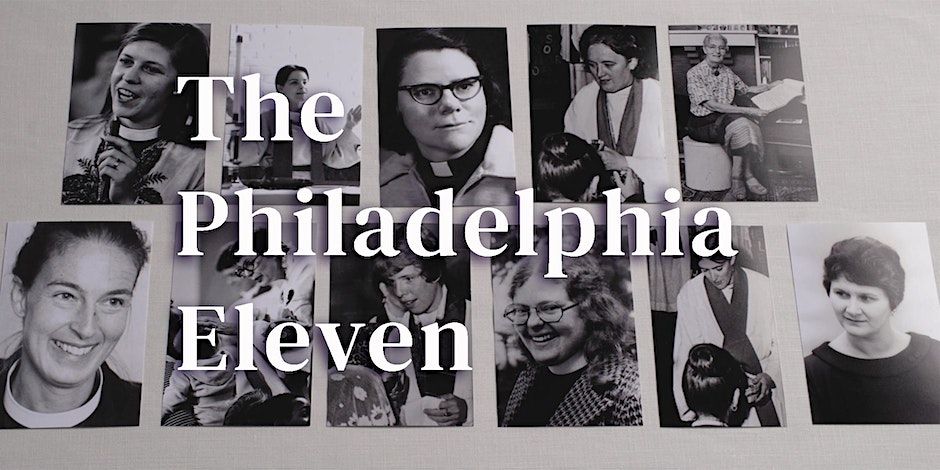
But as scholar Debie Thomas says, “The call of the Gospel is not a call to stand still.  It is a call to choose movement over stasis, change over security, growth over decay.”[ii]  Just last Sunday, we started a movie series about changemakers.  Last week, the film was The Philadelphia Eleven, the story of the unsanctioned ordination of the first eleven women in the Episcopal Church.  The vitriol of the bishops, clergy, and lay people who were opposed to those women’s ordination was shocking to the ears.  From the clergy person who stated with confidence, “Women can be anything they want – except a priest in God’s holy church.”  From the woman who lamented the ways those women had violated what God calls women to be and do in the world.  To the bishops held a public, scathing trial of the three male bishops who dared to ordain the first eleven.  The Philadelphia Eleven had waited time after time for the Episcopal Church to change – to chose growth, change, and movement instead of decay, security, and stasis.  And when the church refused to let these women out of their lane, the stepped out of their lane anyway.

Scholar Thomas concludes, “The scandal of the Incarnation is precisely that Jesus doesn’t stay in his lane.  God doesn’t limit God’s self to our small and stingy notions of the sacred.  God exceeds, God abounds, God transgresses, God transcends.  The lowly carpenter reveals himself as Lord.  The guy with the tainted birth story offers us salvation.  The hometown prophet tells us truths we’d rather not hear… [Jesus] will call out to us, nevertheless, daring us always to see and experience him anew.”[iii]  Our invitation today is let Jesus out of his lane in our life:  to not hold his lane as sacred, and to open ourselves to the ways his transgression of lanes is helping us to experience Jesus in new and fresh ways.  Maybe we do that in weekly worship, opening ourselves through song, prayer, and scripture to fresh experiences of God.  Maybe we come to the film series or Bible study this summer to see where God is exceeding, abounding, transgressing, and transcending.  Or maybe we let go of whatever boundary we are holding here at Hickory Neck to see what happens when we ask Jesus to please cross out of his lane.  The promise for us is a fresh experience of Jesus in our own day, time, and place.  Amen.


[i] Efrain Agosto, “Exegetical Perspective,” Feasting on the Word, Year B, Vol. 3 (Louisville:  Westminster John Knox Press, 2009), 215.

[ii] Debie Thomas, “Hometown Prophets,” June 27, 2021, as found at https://www.journeywithjesus.net/essays/3058-hometown-prophets on July 5, 2024.

[iii] Thomas.

On the Road to Getting It Right…

03 Wednesday Jul 2024

Posted by jandrewsweckerly in reflection

≈ Leave a comment

Tags

Communion Table, Episcopal Church, exclusion, faith, Holy Spirit, love, ministry, ordination, Philadelphia 11, Philadelphia Eleven, priesthood, question, women

Photo credit: https://azdiocese.org/2023/11/the-philadelphia-eleven-screenings-in-arizona/

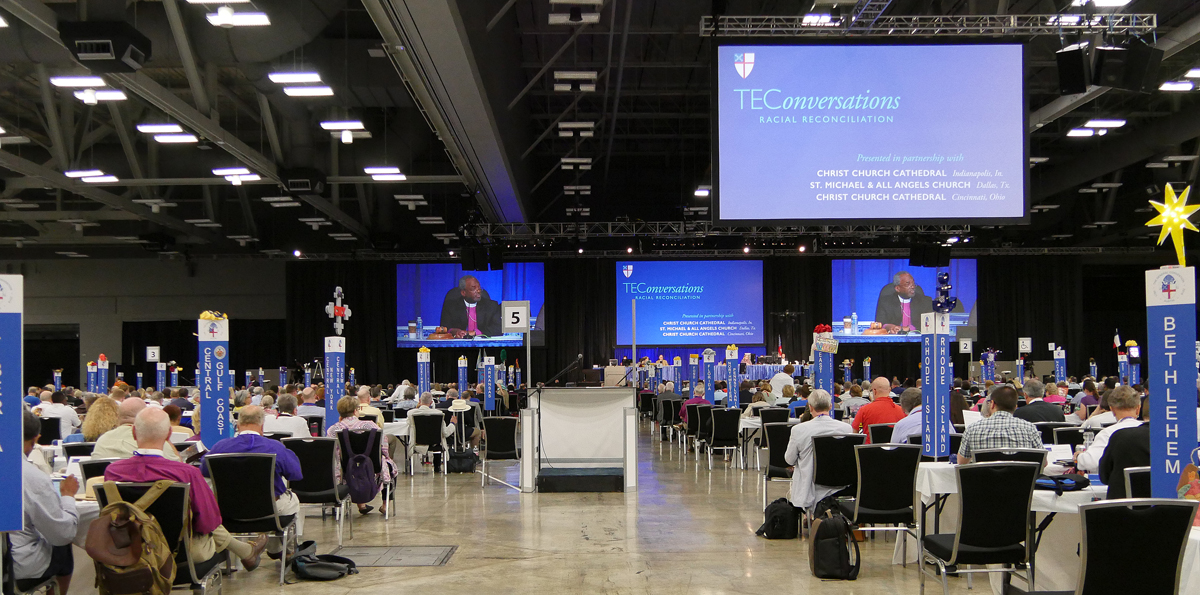
This past Sunday, the local Episcopal parishes in my town gathered to watch the documentary, The Philadelphia Eleven.  The film details the history of women’s ordination in the Episcopal Church, and the first eleven women who were “irregularly ordained” in 1974 (i.e. ordained by Episcopal Bishops, but without the church’s General Convention sanctioning the ordination of women).  The question of women’s ordination had come before General Convention many times before, but was always defeated.  So, fifty years ago, a handful of women, along with male allies, decided they could not wait any longer.  The film tells the story of the outrage the eleven women created, the abuse and death threats they faced, and the way that their diverse ministries led to the sanctioning of women’s ordination by General Convention in 1976. 

I came into the Episcopal Church later in life.  Although deeply involved in the United Methodist campus ministry at my college, an ecumenical trip with the Episcopal campus minister was my first real exposure to the liturgy and polity of the Episcopal Church.  That campus minister was a woman, and at that point in my development, that did not seem abnormal.  Then, a couple of years after college, I stumbled into the Episcopal Cathedral, whose dean was a woman.  One of her assisting priests was also a woman.  Those early mentors did not just normalize women’s ordination – it never occurred to me that there was a time when women were not priests.  In fact, I remember an occasion when one of my own daughters as a young child asked me, “Can boys be priests?”

At this year’s General Convention of the Episcopal Church, we took the first steps to authorize the honoring of the Philadelphia Eleven in our set of honored saints we celebrate at weekday Eucharists.  In the same city, where 51 years earlier the General Convention had denied women’s right to ordination, we agreed to honor the saints who pushed us to be better versions of the Church.  All female clergy in the room were invited to stand to a roar of applause.  I looked at the other women, many of whom I know and love, and I looked at the male clergy and laity whose eyes and smiles were full of admiration and respect, and I realized a couple of things.  One, it is always a joy to celebrate when the Church gets something right – even if it takes a long time for the Church to get there.  And two, I can be in ministry as my most authentic self is due to the suffering and courage of men and women I may never meet. 

I share all this not to brag on the Episcopal Church – in fact, we still have a long way to go.  Income disparity between male and female clergy is still a problem, as well as access to comparable positions.  I have been the first female rector both times I have served as rector, and both times, people left the church when a woman was hired.  But I share this story more because I wonder who else have we excluded from the Table.  I share this story because I found myself wondering whether I would have risked being one of the Philadelphia Eleven, knowing the suffering that would come.  I share this story because as someone who really appreciates rules and boundaries, I wonder which of those rules and boundaries the Holy Spirt keeps bumping against.  While these may seem like big questions, or super-Church-nerdy questions, I think these questions are for all of us – an invitation to wonder who we have excluded in the communities of faith we love so much.  The Philadelphia Eleven seem to be still asking us these questions fifty years later.    

On the Business of Church…

19 Wednesday Jun 2024

Posted by jandrewsweckerly in reflection

≈ Leave a comment

Tags

business, Episcopal Church, General Convention, God, good, governance, grace, Holy Spirit, Jesus, legislation, love, mission, prayer, purpose, vision

Photo credit: https://episcopalnewsservice.org/2020/11/20/80th-general-convention-postponed-to-july-2022-as-pandemic-disrupts-planning-of-triennial-gathering/

This weekend, Episcopalians will descend upon Louisville, Kentucky, for our General Convention.  The General Convention is the governing body of The Episcopal Church.  Every three years (or in this case, two years, due to a delayed GC during COVID), General Convention meets as a bicameral legislature that includes the House of Deputies and the House of Bishops, composed of deputies and bishops from each diocese.  In the House of Deputies, which includes elected lay and ordained deputies and alternates, over 1000 people will gather, and about 140 bishops will gather in the House of Bishops.  This year, we have a shortened Convention of six days of legislative sessions, covering everything from governance, justice issues, ecumenical and interfaith issues, evangelism and church vitality, liturgy, stewardship, formation, and mission.  In those six days, we will review over 275 pieces of legislation. 

Of course, General Convention is not all business.  It is a place of innovation and collaboration.  An exhibit hall of vendors is place of ideas, resources, and connection.  The legislative halls and common spaces are places of reunion with former seminary classmates, dioceses where one has served or worshiped before, and friends from professional connections.  It may be a chance to meet people in person that you have only known online, people you have admired the work of from afar, or a place to make new friends.  And then there are the opportunities to gather in worship in unfamiliar and familiar styles, the deep conversations and sharing of best practices, and the inspiration that can come from being steeped in the wideness of God’s church.

Ultimately, General Convention can be a place of great tension:  of trying to accomplish a great deal of business while honoring and developing relationships across difference, of challenging and trying to correct the failings of the Episcopal Church while learning and being inspired to renew our ministries, of taking a step back to clarify mission, purpose, and priorities while narrowing in and aligning decisions with that clarity.  Add in doing all that with over 1100 people, and that we get anything accomplished is a minor miracle.

Knowing all that, I invite your prayers for the Church as we gather:  that we root ourselves in God’s grace and power, that we ground ourselves in the love of Jesus and serve as faithful disciples, and that we undergird our work with the creative, life-giving, wise movement of the Holy Spirit.  And then ultimately, I invite your prayers that our work will mean something:  to the country church in rural America, to the beleaguered inner city church, to the bustling suburban church, and to churches whose primary languages are not English; to the churches who are shrinking and the churches who are thriving; to the person who is struggling with their faith, the person excited about a new ministry, to the person who is worried about the future of the church, and the person who is entirely unchurched.  We bring each of you with us in our prayers as we gather.  I hope you will surround us in prayer as well – that God is working for good in all of it.     

Sermon – Mark 4.26-32, P6, YB, June 16, 2024

19 Wednesday Jun 2024

Posted by jandrewsweckerly in Sermons

≈ Leave a comment

Tags

care, familiar, gift, God, Jesus, kingdom of God, memorable, mustard seed, parable, plant, seed, Sermon, steward, stewardship, talent, time, treasure, work

Many of you know that I grew up in the United Methodist Church.  Growing up in the Methodist Church meant that I was steeped a particular set of hymns, many written by John and Charles Wesley themselves – John being attributed with the founding of the Methodist movement.  I can be at a retirement community or an ecumenical service and one of those songs will come up, and I am instantly transported back to the old country church where my dad was the pastor.  There is something about that music that almost feels like the music is a part of my DNA.  So, imagine my surprise when I found out in seminary that much of the music settings for those old timey hymns I love were actually pub songs – tunes that anyone who had spent time at the pub would know, just set to new words about Jesus.  Charles and John did that because they knew it would make the songs deeply familiar, while becoming teaching tools for the church.  No wonder those hymns are so catchy!

In some ways, parables from Jesus are similar.  Jesus uses story to teach truth.  Teaching through parables makes the teaching engaging, accessible, and memorable.  I bet that even today, two thousand years later, when we heard Mark’s gospel today, we probably thought, “Oh yeah!  The one about the mustard seed.  That’s about just having a little faith is all you need!”  And in part, you would be right.  But as catchy as pub songs are and parables seem, unfortunately, Jesus’ parables, while memorable, are not always simple in meaning. 

Our trouble starts with the fact that we have two parables together today – not just the one about the mustard seed.  In the first one, Jesus says the kingdom is like a guy who scatters some seed and then does literally almost nothing – he does not even know how the growing of seeds into plants works.  And then he just goes out to harvest.  So, that’s parable number one.  Parable number two compares the kingdom of God to a tiny little mustard seed that, when planted, grows into a huge bush big enough where birds can make nests.  So, this is not exactly a set of stories about just having a little bit of faith.  And quite frankly, if you take these two together, they seem to be saying that basically we do not really have much of a hand in the fruitfulness of the kingdom – that maybe we do not even understand the kingdom.  So, is that the message?  Just sit back because God does all the work to bring about the kingdom – oh, and the kingdom will be really big?

As much as I would like to send you all home today thinking you can just kick up your feet and sit back while God does the heavy lifting, especially as summer gets into full swing, unfortunately, we have summertime work to do.  You see, in both of these parables, while the miracle of growth happens through God, the planting in both stories has to be done by a person – by us, namely.  Scholar Amy-Jill Levine explains that in these parables, the seed still has to be planted.  She confesses that certainly some things need to be left alone – notice the man in the first parable.  And sometimes we need to get out of the way – notice the planter in the second parable.  But most importantly, Levine argues “The kingdom is present when humanity and nature work together, and we do what we were put here to do – to go out on a limb and provide for others, and ourselves as well.”[i]

That doing something, that lack of passivity in the bringing about of the kingdom, is what we are talking about when we talk about stewardship.  Often when we talk about stewardship, we think of that as the church’s codeword for our money.  But we were made stewards long before there was a church.  Even in the moment of creation way back in the book of Genesis, God created us to steward God’s creation – to tend to the blessings given to us.  Now that may feel daunting – as if not only are we to tend to this church but now we must tend to the whole world! 

But before you panic, let’s go back to that mustard seed parable.  I do not know how many of you have actually been around mustard plants, but mustard plants are a lot like kudzu – they tend to take over an area where they are germinated.  Jesus is telling us all we do is plant one of those teeny-tiny seeds, and suddenly we will have kudzu spreading everywhere.  In other words, our work of stewardship is like kudzu[ii] – we invest our time, our talent, and our treasure here in this place – and the results will spread like wildfire.  Suddenly, we have whole hillsides full the love of Christ, spilling over into the neighbor’s yard, draping everything in goodness.  We do not have to micromanage the growth – we do the planting, and God partners with us to bring the growth – even growth we sometimes do not understand.  Our job is simply to plant.

Our invitation today, then is to ponder what seeds we can plant here at Hickory Neck.  What gift of time can you place here that can spread to your fellow parishioner?  What gift of your unique talent can you plant here that can grow into powerful ministry?  What gift of your financial resources can you gift here that reach beyond these walls to share and spread God’s love?  Jesus’ familiar story reminds us that whatever we give, our giving allows us to participate with God in helping manifest the kingdom of God.[iii]  And God will spread our gifts like kudzu!  Amen.


[i] Amy-Jill Levine, Short Stories by Jesus:  The Enigmatic Parables of a Controversial Rabbi (New York:  Harper One, 2014), 182.

[ii] Ronald J. Allen, “Considering the Text: Week Two, Fourth Sunday After Pentecost, 16 June 2024,” Center for Faith and Giving, 11, as found at centerforfaithandgiving.org, 2.

[iii] Allen, 13.

Sermon – 1 Samuel 8.4-20, 11.14-15, Mark 3.20-35, P5, YB, June 9, 2024

19 Wednesday Jun 2024

Posted by jandrewsweckerly in Sermons

≈ Leave a comment

Tags

control, faith, family, God, Holy Spirit, invite, Jesus, king, love, parent, Sermon, trust

This morning, we get two powerful stories from scripture.  In our story from first Samuel, we hear the story of how the people of Israel come to demand a king to rule over them instead of God and God’s appointed judges and prophets.  They figure if they have a king like the other nations, then they’ll never have to worry about their safety and security.  A king will defend them in a way that looks familiar – like the other nations – than a way that feels like trusting a God you cannot see.  Of course, Samuel warns them – you pick a king and the king will take your daughters and sons into his service, will steal your land and produce as his own, will take your property and use it to his own benefit, will basically enslave you (not unlike the days in Egypt).  But the people insist none of that matters – as long as they have a king like everyone else.

Meanwhile, in Mark’s gospel, Jesus has been healing people, driving out demons, saying some things, and generally making a raucous.  Here, two groups insert themselves – the scribes, who try to claim Jesus is possessed by a demon himself, and his family, who are concerned he has lost his mind and want to restrain him.  Jesus is so frustrated by their behavior, especially of his mother and brothers that he loudly states, “Who are my mother and my brother?”  In other words, he denies his very own family because they cannot see the truth in what he is doing.  In these two stories – of the Israelites wanting a king and of Jesus’ family demanding he behave in a certain way, we have people thinking they know better than God – taking matters into their own hands thinking they know how things should be.

I was talking to another parent recently about how parenting is probably the hardest job of all the vocations I have – particularly as a person who likes to imagine she has a modicum of control in her life.  In the beginning, although parenting is physically exhausting, parenting is also manageable in a way that is not so obvious.  For those infants and young children, you have a lot of control – what the child will eat and drink, what the child will wear, when the child will rest, where the child can go.  But as the child ages, they make more and more of the decisions – what they will wear, where they will go, with whom they will spend time.  This is, of course, how parenting should be – the raising up of an independent child.  But the more your child becomes independent the more you realize how the younger years were the “good ol’ days” – the days where you felt like you were in control (or at least convinced yourself you had more control than you probably did).  Parenting feels like the ultimate test for those of us who like a sense of control.

But the truth is, the ultimate test for those of us who like a sense of control is being a person of faith – following a God whose logic sometimes feels illogical, following a savior who says and does things that really push our buttons, and following a Spirit who takes us places we really do not want to go.  And so, we find ourselves, much like the Israelites, accepting slavery, abuse, and the loss of freedom just to get those things we think will make us happy and whole.  We find ourselves, like Mary and Jesus’ brothers, bossing around God, insisting God behave in ways that make us feel comfortable.  Instead, God tells them and us to trust – to trust that God will provide leaders who will guide us in the ways of justice and truth; to trust that even the things we cannot understand will lead to good; to trust that even though we cannot know what God knows, our wholehearted trust in the will of God is all that matters.

So how do we do that?  How do we, people of free will, in a country of democracy where “we the people” make decisions, in a time when choices are boundless and we must make them, how do we become people of trust – people of faith?  Well, I like to go back to that story of Jesus in a crowded room from Mark’s Gospel today.  Scholar Debie Thomas says, “…I can’t help but imagine what it must have felt like to be inside the house with Jesus that day.  I know intimately and well, as perhaps you do, the hunger to belong, to have someone safe and loving to belong to.  Regardless of our circumstances, we all know what it’s like to yearn for someone who can hold all of who we are, and love us still, without flinching.  That’s exactly what Jesus does for the crowds that day. He invites them in, he asks them to stay, and he makes them family. 

Yes, Jesus divides the house, and that process hurts.  But he doesn’t divide [the house] to make us homeless.  He divides [the house] to rebuild it.  To make [the house] more spacious, more welcoming, and more beautiful.  The Spirit of God is neither insane nor evil; the Spirit completes the good work he begins.  His will be a house of healing for the whole world.”[i]

Holy Scripture today is not inviting us to become some mindless, fluff who walk around without aim or purpose just “trusting that God will work everything out.”  God did give us freewill, and God does want us to use that freewill for good.  But what the Holy Spirit is trying to remind us of is that we do not have the whole story.  We cannot see the way in which Jesus is rebuilding the house.  We cannot fully know the feeling of being inside that home where true healing may be.  We cannot understand the fullness of the implications of our desires – which seem reasonable and justified to us.  But what we can see and know and understand is that Jesus is building a house of healing for the whole world.  And if we can stop trying to parent God, we can start beginning to see that God is constantly doing a new thing and inviting us into the family.  We just do not get to be the parent in that family.  And that is a very good thing indeed.  Amen.


[i] Debie Thomas, “A House Divided,” June 3, 2018, as found at https://www.journeywithjesus.net/essays/1805-a-house-divided on June 5, 2024.

On the Blessing of No…

05 Wednesday Jun 2024

Posted by jandrewsweckerly in reflection

≈ Leave a comment

Tags

bishop, ego, faith, good, Holy Spirit, image of God, learning, lose, no, opportunity, priest, self-confidence, transform, win, yes

Photo credit: https://toledoparent.com/online-exclusives/learning-to-say-no/

For weeks my fourth grader has been talking about running for Student Body President.  I was admittedly proud of her gumption, but also wildly (and quietly) nervous on her behalf.  She is a genial, vibrant, beloved individual and I feared what losing an election at her age might do to her self-esteem.  But even with gentle warning, she was determined.  So, we worked on her speech and filled out the paperwork.  The “primary” involved whittling down a group of 12 students to three – no speeches or posters, just a raw “popularity contest” among the fourth graders.  Last night she returned home only a little disappointed that she had not been elected to the final ballot. 

I do not know why I doubted her capacity to maintain her self-confidence in the face of such a loss.  I have been modeling the same for her for years – sometimes you win and sometimes you lose.  Sometimes you get a yes, and sometimes you get a no.  These lessons have certainly happened verbally and in low-risk ways, like in card games.  But the lesson has been learned in big ways too – like a lost bishop’s election.  Though I loathed the very public nature of a bishop’s search, I do not think I fully understood the power of letting my girls watch me not only be nominated, but make very public presentations, and then not be elected.

Without realizing it, I have been teaching my girls the power of a good “no.”  Almost all the good things that have happened to me – jobs, schools, auditions – were preceded by a solid no.  The student government election I did not win, the audition where I did not make the cut, the job I really wanted and did not get.  Every single one of those no’s profoundly taught me something about myself I did not know, and every single one of those no’s led to another opportunity that could only open up because of the no that happened first. 

The experience of no’s can be brutal to the ego.  But I wouldn’t be the spouse, mother, priest, or human that I am today without all those no’s.  And now I know that learning was not just for me – it was for my children too.  And maybe those no’s have been for some of you as well.  I wonder what no’s you are facing these days.  I wonder what you have learned from the times you received a no.  I suspect the Holy Spirit has been transforming you so that when you get a yes, you come to that yes as your most powerful self – the self that was made in God’s image and is beautiful and beloved.

On Seeking and Seeing Sacred Ground…

29 Wednesday May 2024

Posted by jandrewsweckerly in reflection

≈ Leave a comment

Tags

barre class, Bible, burning bush, Christianity, church, faith, God, holiness, holy, Jesus, Moses, reverence, sacred, sacred ground, shoes, Spirit

Photo credit: https://medium.com/koinonia/dont-wait-for-a-burning-bush-f8c7435489ae

One of my fitness routines includes attending “barre” – a class that combines yoga, Pilates, and ballet.  When you enter the studio, you remove your shoes and put on special socks to prevent slipping during the class.  You then enter the actual classroom and procure any fitness aides required for the class, such as hand weights, bands, or balls, and proceed to setup up your space at the barre.  I tend to take classes in the 5:30 am hour, so most of the time I am pretty groggy and operating on auto pilot as I prepare my space for class. 

Knowing my routine for class, imagine my surprise the other day when, as I somewhat sleepily entered the classroom, I found myself bowing.  I was immediately shocked and a little embarrassed by my body’s instinctual movement.  As a priest, I bow all the time – as I reverence at the altar, as the processional cross passes me, at certain points in the Creed, or at the name of Jesus in the liturgy.  But I have never reverenced an exercise classroom.

The strange appearance of such an out-of-context movement got me thinking about Holy Scripture.  In Exodus, we hear how Moses receives his call at the site of a burning bush.  When God calls out to Moses amid the flames, God says, “Come no closer!  Remove the sandals from your feet, for the place on which you are standing is holy ground.”[i]  Now I am not sure I would call the barre classroom sacred ground – though the Lord’s name is often called upon, especially during long plank series.  But something about that room made my body respond to its holiness the same way I respond to the holiness of Church.  So how exactly do we define a holy place – or sacred ground?

In the instance of barre class, perhaps what my body was responding to was the way I do find holiness – in the care and compassion of teachers, in the camaraderie of classmates on a shared journey of health and wholeness, in the individual experience at the barre when you feel like you cannot go on and something or someone pulls you through doubt.  Though I think the sacred ground of worship space is unrivaled as a place of encounter with God, the community of Jesus, and the movement of the Spirit, I certainly have found other sacred places – the mountain community where my family gathered every summer with the wider church; the edge of crashing waves, where the vastness of the Creator is palpable; the coffee shop where someone pours out their heart’s burdens to another and blessing is proclaimed.  Perhaps regularly attending Church, with its preserved sacred ground, is what allows us to see and hear God on the sites of sacred ground all around us.  Where are you finding unexpected sacred ground these days?  Where is God inviting you to take off your shoes and give reverence to the mightiness of our God?


[i] Exodus 3.5

← Older posts
Newer posts →

Recent Posts

  • On Politics, Football, and Love…
  • On Sharing the Love…
  • Sermon – Micah 6.1-8, Matthew 5.1-12, EP4, YA, January 30, 2026
  • On Justice, Kindness, Humility, and the Messy Middle…
  • Feast of the Rev. Dr. Martin Luther King, Jr., January 18, 2026

Archives

  • February 2026
  • January 2026
  • December 2025
  • November 2025
  • October 2025
  • September 2025
  • August 2025
  • July 2025
  • June 2025
  • March 2025
  • February 2025
  • December 2024
  • November 2024
  • October 2024
  • September 2024
  • August 2024
  • July 2024
  • June 2024
  • May 2024
  • March 2024
  • February 2024
  • January 2024
  • December 2023
  • November 2023
  • October 2023
  • September 2023
  • August 2023
  • July 2023
  • June 2023
  • May 2023
  • March 2023
  • February 2023
  • January 2023
  • December 2022
  • November 2022
  • October 2022
  • June 2022
  • May 2022
  • January 2022
  • December 2021
  • November 2021
  • October 2021
  • September 2021
  • August 2021
  • June 2021
  • May 2021
  • April 2021
  • March 2021
  • February 2021
  • January 2021
  • December 2020
  • November 2020
  • October 2020
  • September 2020
  • August 2020
  • July 2020
  • June 2020
  • May 2020
  • April 2020
  • March 2020
  • February 2020
  • January 2020
  • December 2019
  • November 2019
  • October 2019
  • September 2019
  • August 2019
  • July 2019
  • June 2019
  • May 2019
  • April 2019
  • March 2019
  • February 2019
  • January 2019
  • December 2018
  • November 2018
  • October 2018
  • September 2018
  • August 2018
  • July 2018
  • June 2018
  • May 2018
  • April 2018
  • March 2018
  • February 2018
  • January 2018
  • December 2017
  • November 2017
  • October 2017
  • September 2017
  • August 2017
  • July 2017
  • June 2017
  • May 2017
  • April 2017
  • March 2017
  • February 2017
  • January 2017
  • December 2016
  • November 2016
  • October 2016
  • September 2016
  • August 2016
  • July 2016
  • June 2016
  • May 2016
  • April 2016
  • March 2016
  • February 2016
  • January 2016
  • December 2015
  • November 2015
  • October 2015
  • September 2015
  • August 2015
  • July 2015
  • June 2015
  • May 2015
  • April 2015
  • March 2015
  • February 2015
  • January 2015
  • December 2014
  • November 2014
  • October 2014
  • September 2014
  • August 2014
  • July 2014
  • June 2014
  • April 2014
  • March 2014
  • February 2014
  • January 2014
  • December 2013
  • November 2013
  • October 2013
  • September 2013
  • August 2013
  • July 2013
  • June 2013
  • May 2013
  • April 2013
  • March 2013
  • February 2013
  • January 2013
  • December 2012
  • November 2012
  • October 2012
  • September 2012

Categories

  • reflection
  • Sermons
  • Uncategorized

Meta

  • Create account
  • Log in
  • Entries feed
  • Comments feed
  • WordPress.com

Blog at WordPress.com.

  • Subscribe Subscribed
    • Seeking and Serving
    • Join 395 other subscribers
    • Already have a WordPress.com account? Log in now.
    • Seeking and Serving
    • Subscribe Subscribed
    • Sign up
    • Log in
    • Report this content
    • View site in Reader
    • Manage subscriptions
    • Collapse this bar
 

Loading Comments...