A Journey to Generosity…

Tags

, , , , , , , , , , , , ,

tens_nodate_logovertical (1)I am always amused when I discover the Holy Spirit at work because the discovery usually happens when I am in the thick of executing something I thought I had planned myself.  Ideas come to me, I test out the idea with others, I do the planning to implement the idea – basically the whole process involves a great deal of self-direction.  But when an idea really blows me away is when the idea takes off in even better ways than I planned.  When I finally realize how inspired the idea is, I realize that the idea could not have possibly come from me alone.  The only way those incredible moments of confluence occur is through the Holy Spirit.

I had one of those moments this week.  On Sunday we kicked off our stewardship campaign entitled “Journey to Generosity.”   All sorts of activities are a part of that campaign:  inspirational materials from our Stewardship Committee explaining the campaign, reflections from fellow parishioners, Parish Parties, sermons from the clergy, and meditations from national church leaders.  All of those experiences would be enough to situate us in a place of profound gratitude.  But then other things started happening.

The first has been attending our adult formation series.  The series is about evangelism, so I had expected our energies to be focused on the work of spreading the good news.  But the first sentence from the book we are using says, “Evangelism is your natural expression of gratitude for God’s goodness.”[i]  While I thought our conversations about gratitude and generosity would be limited to stewardship, here gratitude was permeating other areas of church life.  The second thing that happened was welcoming the first of three babies due this month at church.  As I held the first one yesterday, especially after a rough twenty-four hours of mourning another massive shooting in Las Vegas, I looked at that tiny child and felt a profound sense of gratitude for the gift of life.

Our “inspired” idea to talk and pray about our Journey to Generosity has already morphed into something much bigger.  I find myself being grateful not just for the generosity of parishioners who are passionate about our church and support its work through financial giving.  I am also grateful for a community of people who are so enthusiastic about their gratitude that they want to go out and share the good news with others.  I am grateful for a church community so generous in spirit that they can take tragedy and find rays of light and hope all around.  I am grateful for a community whose gratitude is so powerful that they have a vision of making our community a better place:  through our Fall Festival, through our visioning work with our Vestry, and through daily service to others.  What seemed like a catchy campaign slogan has actually been naming a way of life at Hickory Neck:  a life rooted in gratitude and generosity.  Thank you for letting me be a part of this journey with you all.  You inspire me every day and you transform my relationship with God every week.  God bless you on your journey to generosity!

[i] David Gortner, Transforming Evangelism (New York:  Church Publishing, 2008), 1.

On Cars and Change…

Tags

, , , , , , , , , , , ,

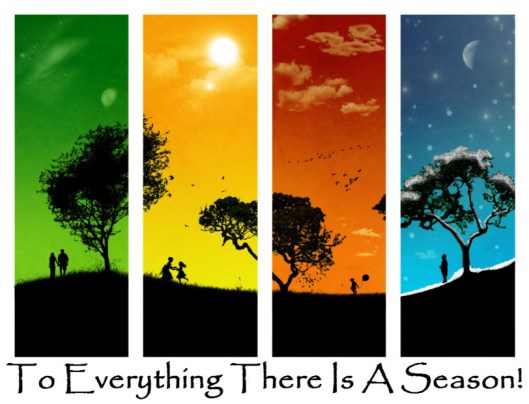
to-everything-there-is-a-season-orlando-espinosa

Photo credit:  https://orlandoespinosa.wordpress.com/2015/12/09/to-everything/

This weekend we got a new car and traded in my old car.  My old car was fifteen years old and had almost 180,000 miles.  We would have kept the car longer, but there were too many expensive fixes to make repairing the car worth the car’s value.  Normally, people get pretty excited about a new car – all the old dents and scratches are gone, and in my case, I can now be certain I won’t be break down on the highway.  But mostly I have been a bit sad about having to get rid of the old car.  That car helped us get through three rounds of graduate school, four moves, multiple jobs, the birth of two children, and was only six months younger than our marriage.  The car survived endless road trips, commutes to work, and at one point was our shared car until we got a second car.  Although the car had started making me anxious with all its repair needs, I felt like I was saying goodbye to a good, faithful friend.

As I have been reflecting on that experience, I have been thinking my experience with my old and new car is similar to how we all experience change.  Most of us know that change in inevitable, and yet most of us do not like change.  Even if the thing we are changing from is good for us, we miss the old quirks, patterns, and sense of regularity.  And the further out of the familiar we get, the more epic the memory of what once was becomes.  This is often the point at which people begin to refer to the “good ol’ days,” or “the way things used to be.”  Whatever the new change is will rarely seem as good as the old standard.

I have been feeling that way about my new car.  Sure, it is more reliable, it has fewer things peeling, sagging, or just broken, and it is more sporty, shiny, and colorful.  But I am finding I am not yet sold.  The new car just does not feel like it fits yet.  Observing my feelings about my car has been especially helpful for me as I think about all the times I have introduced change at church.  Sure, whatever changes I have introduced are usually for the good, and most often, become the new “way we have always done it.”  But falling in love with the new change takes time.  It does not happen overnight.

Perhaps this may be a good way we can approach our relationship with God.  The Holy Spirit is God’s agent of change.  She is always whispering new ideas, blowing new people into our lives, and breathing life into our imaginations.  Listening to the movement of the Holy Spirit is exciting, fun, and invigorating.  But boldly following the Holy Spirit also needs to involve tending to the grief of letting go of the what the Spirit was doing before.  The writer of Ecclesiastes says, “For everything there is a season, and a time for every matter under heaven.”  I wonder what seasons are passing away in your life, and what new times are arriving for you.  My prayer for you is that you be able to appreciate the season you are in, let go of the seasons that have passed, and embrace the seasons that are yet to come.  I know the Holy Spirit is doing good things in you.  I cannot wait to walk with you in the twists and turns!

Sermon – Exodus 16.2-15, Matthew 20.1-16, P20, YA, September 24, 2017

Tags

, , , , , , , , , , , , , ,

This week in Discovery Class, we did a review of Holy Scripture.  We talked about how many years writing the Bible took, the content in each section, the types of literature we find in scripture, and what scripture reveals about us as God’s people.  Our homework was to study today’s gospel lesson, being sure to read the text immediately before and after the text we hear today as a way of helping us interpret the passage.  That tip was especially telling in today’s Old and New Testament lessons

In our lesson from Exodus last Sunday, we heard the story of the parting of the Sea of Reeds.  We heard of that dramatic moment where God allows the Israelites to pass through on dry land, but destroys the Egyptians as the waters return.  The last line in last week’s lesson from Exodus is, “Israel saw the great work that the Lord did against the Egyptians.  So the people feared the Lord and believed in the Lord and in his servant Moses.”  Today, the first sentence from our Exodus reading is, “The whole congregation of the Israelites complained against Moses and Aaron in the wilderness. The Israelites said to them, ‘If only we had died by the hand of the Lord in the land of Egypt, when we sat by the fleshpots and ate our fill of bread; for you have brought us out into this wilderness to kill this whole assembly with hunger.’”  Israel’s groaning and complaining today are much more grievous when we read the great heights of their praise and faithfulness last week.

Likewise, in our gospel lesson today, we hear the familiar story of the generous landowner, who gives the same wage to those who work an hour and those who work all day in the broiling sun.  We can read this passage, and criticize the envious, hardworking laborers for their lack of gratitude.  But the power of the story is heightened when we realize immediately before Jesus’ parable, Peter interrupts Jesus’ teaching and basically says, “But what about us?  We left everything behind and we have been following you.  What’s in it for us?”  And right after Jesus’ parable, the mother of James and John approaches Jesus and basically says, “Listen, if it’s not too much trouble, can my boys sit at your right and left hand in the kingdom?”  So, when Jesus says to Peter, “many who are first will be last, and the last will be first,” and when the landowner says to the workers, “the last will be first, and the first will be last,” what do you think Jesus is trying to address?[i]

I do not know about you, but both of these texts have left me pretty uncomfortable this week.  Watching the Israelites go from faithful, obedient, loyal followers, to whiny, unappreciative, complaining messes hits a little too close to home.  Admittedly, part of me cringes at this text because we have been hammering home the importance of gratitude with our own children.  No sooner is the ice cream cone finished before the complaint comes that we never do anything nice for them.  But as much as we fuss at them, we know the same is true for us.  We are great at praise and thanksgiving to God – when things are going well.  When seas are parting, and enemies are defeated, our God is awesome.  But when we cannot seem to make ends meet, when our loved one is sick again, or when our relationships are falling apart, gratitude is the last thing on our lips.  We find ourselves in what one scholar calls the “spiritual wilderness of ingratitude.”[ii]  We cringe at these readings because we are no more masters at gratitude than our children are.

What both of these lessons do, ever so brutally, is lure us in with stories about abundant, underserved generosity, and put under a microscope our deeply buried discomfort with abundant, underserved generosity.  Part of the reason we are uncomfortable is because God’s generosity often bumps up against our notions of fairness.[iii]  I do not know if we understand the concept of fairness innately or if we are taught fairness by our community, but somewhere along the line, we learn the concept of fairness and apply the concept with exacting scrutiny.  I remember when I was a child and wanted a treat, my dad would make my brother and me share the treat.  One child was allowed to split the treat in half, but the other child got to pick which half he or she wanted.  You can imagine how precise my cuts became when looking at that cookie.

But our notions of fairness evolve over time.  One could take that same cookie and give a slightly larger half to the older child since they are bigger.  Or one could take that same cookie and give the slightly larger half to the child who was better-behaved.  Or one could give the larger half to the one who was physically weaker and needed more nourishment.  There are all sorts of ways to determine fairness.  But God’s measure, in both the Hebrew and Christian Scriptures seems to be that everyone receives God’s generosity despite worth or effort – or even the showing of gratitude.

Take our lesson from Exodus.  The people have clearly approached mutiny.  Their love for God is buried in their physical hunger and their self-centered greed.  But instead of punishing the Israelites, God lavishes them with all they need.  God gives them bread every day and meat every night.  In fact, God even gives them a double portion on the eve of the Sabbath so that they can observe the Sabbath without having to work for their food.  The feast is not a rich feast of wines and marrow, but their feast is gloriously generous and enough.

The same is true in Jesus’ parable.  Yes, the landowner has a weird way of putting the day-long workers in the awkward position of watching his generosity, but ultimately, the landowner gives everyone enough.  He gives the wage he promised to the day-long workers – a wage that will fill them and their families for days.[iv]  But he also gives the same wage to the hour-long workers.  Sure, they did not deserve the wage, but the same wage that feeds the other workers feeds them too.  The landowner is gloriously generous and gives enough.[v]

I have been wondering all week where these texts leave us:  maybe a bit guilty, perhaps a bit convicted, and definitely “last” in the pecking order Jesus describes.  But what I realized this week is both in Exodus and in Jesus’ parable, perhaps being last is not all that bad.  You see, Jesus does not say, “The last shall be first, and the first shall be ejected.”  No, Jesus says, “the last will be first, and the first will be last.”  So even on our worst Israelite days, when we are moaning and complaining about the very God who miraculously saved us, or even on our worst vineyard days, when we are complaining about an unfair, albeit generous, owner, we are still not ejected.  We are not taken out of God’s generosity; we are not stripped of our blessing.  We may be last, but we still have enough.  Our abundantly generous God takes care of us when we deserve God’s care and when we do not.  Our abundantly generous God gives us enough when we think God’s generosity is fair and when we do not.  Our abundantly generous God loves us whether we embrace God’s generosity or we do not.

I cannot promise we will ever get in line with God’s generosity.  I am not sure we will ever be cured of our sense of fairness or even our ill-conceived notions that we could earn God’s generosity.  But what I can tell you is that we are not alone.  Our people thousands of years ago did not master God’s generosity.  The disciples two thousand years ago did not master Christ’s generosity.  And I suspect we will not either.  But every week, we try.  Every week we continue on our journey toward generosity – seeing God’s generosity in ourselves and others – being inspired to try again.  I am not sure we will ever be first in line.  But the good news is we get to stay in line – which means there is always room to try again.  Our generous God will make sure we have enough until then.  Amen.

[i] Barbara Brown Taylor, The Seeds of Heaven: Sermons on the Gospel of Matthew (Louisville:  Westminster John Knox Press, 2004), 100-102.

[ii] Deborah A. Block, “Homiletical Perspective,” Feasting on the Word, Supplemental Essays, Year A  (Louisville:  Westminster John Knox Press, 2011), 2.

[iii] Taylor, 103.

[iv] Amy-Jill Levine, Short Stories by Jesus: The Enigmatic Parables of a Controversial Rabbi (New York:  Harper Collins, 2014), 224.

[v] Block, 4.

On Creating Tables…

Tags

, , , , , , , , , , , , , ,

Group of people using their smart phones

Photo credit:  https://www.webmarketing-com.com/2016/10/03/50473-mobile-first-vitesse-enjeu-principal

This week I stumbled on a commercial that was created for an event commemorating Canada’s 150th anniversary.  Canada decided to celebrate with “Eat Together” Day this summer.  The commercial, which you can see here, features a woman, surrounded by people on their phones wrapped up in their own worlds, not acknowledging each other’s presence.  Fed up, she grabs her roommate, her small kitchen table and chairs, and sets dinner out in the hallway of their apartment complex.  Slowly, people emerge from the elevator and are invited to sit down.  Others hear the commotion, come out of apartments, and add tables, chairs, and food to the impromptu gathering.  People of all colors, ethnicities, and ages sit at the table, perhaps hearing and seeing each other for the first time.

Modern technology did not create the longing to be connected.  The need has always been there.  But technology has shifted how we connect.  We can now feel closer to friends in distant places, keep up to date on news stories that were buried or hard to find, and even connect with strangers with whom we have a lot in common.  But connecting online sometimes means we are no longer available for the person sitting on the couch next to us, waiting in line at the grocery store, or living next door.  In a desire to connect from afar, we sometimes forget to connect nearby.

I am usually one of the last to criticize the ways in which technology helps us connect.  In this past week alone, I have been grateful for the ways social media has enabled me to hear when a friend or family member is safe after a storm, to see that good things are still happening to my friends who are living in areas of conflict, and to learn when friends are blessed with new babies, marriages, and milestones.  In fact, this weekend Christians around the world will be participating in “Social Media Sunday,” a Sunday to embrace the ways social media helps us connect both virtually and in real time to our neighbors, friends, and strangers.

At Hickory Neck, we will be joining other churches as we celebrate the ways social media brings us together.  But part of what we are celebrating this Sunday is how social media takes the connections we make online, and brings them to the table – the Eucharistic table, where, like that video “Eat Together,” people encounter one another in meaningful, vulnerable, and powerful ways.  We can certainly be transformed by Social Media, but nothing can replace the taste of communion bread and wine on your tongue, the experience of brushing shoulders at the altar rail with someone very different from you, and the power of God’s blessing that comes at the table.  So by all means, post about Hickory Neck Episcopal Church, bringing your cell phones and tablets to church.  But also make time and room this week to “Eat Together” at God’s table.  I suspect that the connections you make at the Eucharistic Table will enrich the virtual table you have created online.

On Busyness…

Tags

, , , , , , , , , , , ,

We all have habits that pull us away from God.  Mine is the habit of busyness.  In juggling family, work, and self, I can easily fill every second of every day.  Even the fun stuff I schedule can feel like something to be “fit” into the schedule, not delighted in and savored in the moment.  I was particularly convicted of this reality by a speaker I heard at a leadership conference, Juliet Funt, who talked about the value of white space.  She defines white space as the strategic pause taken between activities.  White space is not meditation, letting the mind wander, or mindfulness.  It is a simple, intentional break.  And white space isn’t just for work – it is for the home too.

What struck me about her talk is I realized in my devotion to busyness, I am carving out a life that looks and is experienced in a particular way – a way that I am not sure I necessarily like.  Two things brought this home to me recently.  The first was watching the film About Time.  The plotline was a bit farfetched:  a man who can travel back in time and change parts of his life.  After myriad adventures, what the time traveler eventually realizes (spoiler alert!) is that he does not need to travel anymore.  Instead, he treats everyday like a gift to be savored and celebrated.  He was carving out white space in his life.

The second thing that brought this home was the funeral of a beloved parishioner.  In the eulogy, the family talked about all the life lessons they had learned from their mother, many of which were about living with joy and exuberance.  As I sat listening to the eulogy, I realized that everyday I am filling up my children’s life full of lessons – and I want them to be the right ones.

So, taking a cue from the fictional to the very real, I decided to create a little white space this week.  There are some lovely yellow wildflowers blooming on the drive to my children’s childcare facility.  So yesterday, I pulled over, grabbed the phone, and took some pictures of beauty – the beauty of God’s creation in nature and in my children.  It was a small victory, but as my children proclaimed, “That was fun!” I knew I had carved out a little holy space for all of us:  space to say thank you to God for all of our gifts – creation, life, each other.  I invite you today to find a moment of white space.  I can’t wait to hear about what that white space brings!

yellow-flowers-field-background-1

Photo credit:  eskipaper.com/yellow-flowers-field-background.html#gal_post_32591_yellow-flowers-field-background-1.jpg

Sermon – Matthew 18.15-20, P18, YA, September 10, 2017

Tags

, , , , , , , , , , , , , , ,

I have been looking forward to this Sunday for weeks!  After taking successive vacations at the end of the summer, all of our staff are finally back in town.  Many of you have been traveling, spending time away with friends, or simply taking a break to enjoy the last bits of summer.  Our musicians and liturgy team have been planning our return to three services.  Our Stewardship Committee has been organizing our new Discipleship Fair.  Our Parish Life Committee has been organizing our Parish Picnic.  Church members have been inviting friends to join them for church, or maybe you yourself decided today was the day to search for a new church home.  I have felt the anticipation building as this has day approached.

I have been so excited to kick off a new program year, to invite people to engage in their faith journey, and to share an invitation to others to discover the beauty of this vibrant community, and what does the gospel lesson from Matthew offer us?  A text about fighting within the church.  Jesus does not just admit that sometimes, every once in a while, people in the church might experience conflict.  No, Jesus goes into great detail about what to do when you face conflict in the church:  embrace conflict directly, repeatedly, and publicly.  To those of us who were raised in the South, or at least to those of us who were raised in conflict-avoidant families, this text is our worst nightmare!  And this is certainly not the joyful text I was looking for when anticipating this festive day.

Part of what bothers us about this text from Holy Scripture is many of us come to church looking for a break from the conflict that surrounds our everyday life.  Whether we experience conflict in our families, conflict in our workplaces, schools, or service organizations, or conflict in our political lives, the last thing we want to do when we come to church on Sundays is deal with more conflict.  A friend of mine once confessed to me that he was thinking about leaving his current church home over a conflict within the church.  We were both young adults, on our own for the first time since college, and we had images in our minds about what church should be and what we wanted from our church communities.  But instead of bucolic communities of peace, harmony, and justice, we were both finding churches riddled with conflict and disunity.  As we were talking about his frustration, my friend finally confessed, “When I go to church, I just want everyone to get along.  I go to church to escape what is going on in my everyday life, not relive it!”

Now, I could spend the next hour deconstructing his complaint, but there is something powerful at the heart of his complaint, and perhaps at the heart of our own experience of church.  When we talk about church as being like a family, or being like home, what we really mean is we want a place that is a bit unlike our families or homes.  We want a place that is always happy, loving, nurturing, sometimes challenging, but more often comforting.  When we think about the warm, fuzzy feeling we have, the feeling we find at a place like Hickory Neck, the last thing we think is, “Man, I love the way we handle conflict at church!”

Unfortunately, that is exactly what our text is inviting us to do – to celebrate the way that the church teaches us to fight – or to phrase it a little differently, how the church teaches us to deal with conflict in healthy ways.  In order to get to the point where we can see the gift of healthy conflict resolution as a good thing, we need to do a few things.  First, we need to get to the point where we can embrace the inevitability of conflict in the church community.  For some of us, that is not a big hurdle.  For others of us, the assumption of conflict is difficult.  Perhaps you were raised in a family who treated conflict as something to be avoided at all costs.  Or perhaps you grew up in an environment where conflict was so aggressive you created patterns of conflict-avoidance later in life.  Regardless, if we have come to see conflict as the enemy, accepting the inevitability of conflict is going to be our first task.  In Matthew’s gospel today, Jesus says, “For where two or three are gathered in my name, I am there among them.”  But what he implies is that when two are three are gathered in his name, there will be conflict.  Jesus himself was so sure there would be conflict that he developed a whole conflict management plan.  So take a deep breath, let the breath out, and repeat after me, “Conflict is unavoidable in church.”

Now that you are breathing calmly, and accepting the unavoidable, the next thing we need to do is honor the gift of conflict management Jesus gives us in scripture today.  For those of us who are conflict avoidant, Jesus’ conflict management plan is going to seem daunting.  The good news is scholars agree with you.  Many of the scholars who have written about this text say the step-by-step instructions do not necessarily need to be read as a step-by-step guide to solving conflict within a church.[i]  What is most important is what the instructions convey:  conflict in the church is not to be ignored, hidden, or buried.  Theologian Stanley Hauerwas has this to say about conflict, “[Jesus] assumes that conflict is not to be ignored or denied, but rather conflict, which may involve sins, is to be forced into the open.  Christian discipleship requires confrontation because the peace that Jesus has established is not simply the absence of violence.  The peace of Christ is nonviolent precisely because it is based on truth and truth-telling.  Just as love without truth cannot help but be accursed, so peace between the brothers and sisters of Jesus must be without illusion.”[ii]

As Christians, Jesus wants us to behave differently.  Jesus wants us to be truthful with one another.  Jesus wants us to deal with one another face-to-face instead of talking behind each other’s backs.  Jesus wants us to work on reconciliation of relationships instead of letting hurt and pain fester and erode relationships.  For Jesus, being right or wrong is much less important than being in relationship.  Being in right relationship, keeping the family together is much more important.[iii]  Jesus wants us to take a breath in, let the breath out, and repeat after him, “Conflict is not the enemy.  Letting conflict ruin relationships is the enemy.”

Finally, once we have accepted the inevitability of conflict, and once we have agreed to value relationships over the avoidance of discomfort, we are ready to embrace the gift of our gospel lesson today – and perhaps even claim that this might be the perfect lesson for a Rally Sunday.  If you came to church to escape conflict or enter some bubble of blissfully ignorant happiness, Hickory Neck is probably not the right place for you.  But, if you came to Hickory Neck to learn how to transform conflict into something holy, they you may have just found a real home – not a home based on illusion, but a home based on truth, dignity, and respect.  When you accept the inevitability of conflict and the value of meaningful relationship, you receive the tools to work through conflict and land in the reality of reconciliation.

But here is the best part of Jesus’ Conflict Resolution Class today.  If we can stay on the journey through conflict to reconciliation, gaining the tools that this community has to offer us, then we as a community create something much more powerful than can be contained in these walls.  We create a witness for our community.  We create disciples capable of not only working through conflict within the community, but also capable of modeling reconciliation beyond our community.  Anyone who has read a headline in our country in the last year knows that our country needs more models for healthy conflict engagement.  That is what Jesus offers us today:  tools to work on our own issues around conflict, tools to become a loving, honest, and reconciling community, and tools to teach reconciliation beyond these walls.  Jesus has promised to be with us as we do our work.  In fact, Jesus is here with us now as we anxiously try to step on that path toward reconciliation.  So take a deep breath, let the breath out, and repeat after me, “Conflict is a blessing my church teaches me to embrace.  Thank you, Jesus, for the blessing of conflict and the promise of reconciliation.  Help me to share that gift with others.”  Amen.

[i] David Lose, “Pentecost 14 A – Christian Community,” September 6, 2017, as found at http://www.davidlose.net/2017/09/pentecost-14-a-christian-community/ on September 7, 2017.

[ii] Stanley Hauerwas, Matthew:  Brazos Theological Commentary on the Bible (Grand Rapids:  Brazos Press, 2006), 165-166.

[iii] Barbara Brown Taylor, The Seeds of Heaven: Sermons on the Gospel of Matthew (Louisville:  Westminster John Knox Press, 2004), 88-89.

On Comforters and Church…

Tags

, , , , , , , ,

Sleeping-in

Photo credit:  https://www.upi.com/Health_News/2015/11/20/Sleeping-in-on-the-weekend-may-be-bad-for-your-health/1821448035720

I have a confession to make.  Though I always encourage parishioners to go to church when they are traveling, and though many of my clergy friends love checking out other churches while on vacation, this year I skipped church both Sundays I was on vacation.  There were options available to us – in fact, I could have seen some clergy friends celebrate in their own churches.  Instead, I slept in, went shopping, took a long walk, ate brunch, and generally treated the day as a true day “off.”

Now don’t get me wrong, I think it is perfectly healthy to just take a day off from church now and then.  For parents with children, I totally get how hard it is just to get out the door, let alone manage their squirminess in the pew.  In fact, I’ve had parents tell me that they always have to read my sermons on my blog because their kids are just too distracting.  And even if you do not have kids, sometimes the allure of a warm bed or cozy pajamas is just too much.  Sometimes you just need a break.

But here is what I noticed about skipping two Sundays in a row:  something was missing.  I had a hard time tracking what day of the week it was the rest of the week.  I missed seeing familiar faces and hearing about the joys and challenges of the week.  I missed singing songs of praise, being challenged by Holy Scripture, and participating in the holy meal.  I missed prayer time with God, being surrounded by a community that confesses their sins as I confess my own, and having time to set an intention for the week – whether something the preacher said or something the Holy Spirit inspired.

That’s the thing about going to church:  it gives meaning to everything else I do during the week.  The things we say and do in worship, the ways that we relate in community, and the purpose we find as we are sent out into the world define how I experience the rest of life.  And when you find a really great church, that experience makes it a lot easier to toss off that comforter and head to church for some real comfort.  If you are looking for such an experience, you are always welcome at Hickory Neck.  And if you already found a church home at Hickory Neck, invite a friend to join you next Sunday.  The paper and that cozy bed will be waiting for you after church!

On Parenting and Other Failures…

Tags

, , , , , , , , , , , , ,

I have never really thought of myself as a very good parent.  I am constantly finding myself in the midst of parenting and thinking, “I really could be handling this much better.”  In looking back, I can see countless ways in which I escalated a situation instead of deescalated, in which I got stuck in wanting control instead of fostering independence, or in which I simply lost my cool.  Parenting sometimes brings out the worst in me, and on the really bad days, I feel like I am failing pretty miserably at the whole endeavor.

I feel that way about my faith sometimes too.  I know all the ways I am called to serve God and to be a faithful disciple.  But I often find myself failing.  For as many times as I can be like an insightful Peter, more often I am like the Peter who is sinking into the sea, trying to control what Jesus does, or putting myself in front of the gospel.  Reading about modern saints, or people who are making a difference with their life only makes me more aware of my many failings to live as a faithful Christian.

The good news is that children, and other people, often give us glimpses of hope and encouragement.  The other day, I was stirring from a nap with my youngest (who refuses to nap now unless you nap with her).  As she was waking up, she smiled at me and said, “You can be my best friend, Mommy.”  A few nights ago, my oldest requested to start using the same shampoo, conditioner, and soap that I use, instead of her 3-in-1 tear-free wash we have been using.  I sighed out of irritation, and asked her why.  She said, “Because I want to be like you, Mommy.  Except for your short hair!”

I laughed on both occasions, but both comments reminded me that for all the times I fail, there is still love.  For all the ways in which I mess up this parenting thing, there are glimpses of times when I managed to get it a tiny bit right.  I think the same is true for our faith life.  For all the ways we are horribly imperfect, we also have glimpses of powerful faithfulness.  I encourage you to listen to those around you to hear those little comments that will encourage you on your journey.  And then I invite you to straighten up, take a deep breath, and get back in there.  God is doing amazing things through you.  I can’t wait to hear all about it!!

Dad Teaching Daughter Electrical Engineering

Photo credit:  www.quoteambition.com/best-encouraging-quotes-words-encouragement/

Sermon – Matthew 15:10-28, P15, YA, August 20, 2017

Tags

, , , , , , , , , , , , , , , ,

I have never really liked the story we hear from our gospel lesson today.  Every time I have heard or read the story of Jesus’ interaction with the Canaanite woman, I cringe.  I do not like the way Jesus ignores the woman.  I do not like the way Jesus then tries to dismiss her – not only because his dismissal is rude, but also because he is being exclusive, saying that his ministry is only for chosen of God.  And I especially do not like the way Jesus not only calls her a dog, but also basically treats her like a dog.  This is not the Jesus I know.  And I am pretty sure that this is not what the slogan designers meant when they asked, “What would Jesus do?”

But the real problem with this story, the problem that I do not like to talk about, is Jesus’ ugly behavior reminds me of all the times I have acted in a similarly ugly way.  Most of the time, my ugly behavior is well-intentioned or even justifiable.  When I see a homeless person or someone begging for money, and I know that I have nothing to give them that day, I have honed the art of avoiding eye contact.  Or, when I am not protected by the rolled-up windows of my car, and a similar person asks me directly for help, I have figured out my patented response, “Sorry I do not have any cash;” which is sometimes true, but is often a lie.  I do have cash, but I feel awkward explaining that I give to agencies that make a difference for people like them to protect me from having to have this very same engagement.  Or I have had countless conversations with people I have helped through the church’s discretionary fund, only to have to say “no” when they show up two weeks later because, as I clearly communicated, we have a policy of helping people not more than once every six months.

Now I can completely explain all the reasons for the things I do:  I am a petite woman, so avoiding engagement with what could be a volatile, unstable person is generally a good practice; I have created a framework for giving which makes a difference, but also makes me feel more comfortable; I have a system for our emergency assistance program because I need to make sure the church’s discretionary fund supports as many people as possible, and as fairly as possible.  All of those explanations are good, and they exhibit healthy boundary-drawing.  In fact, I have had multiple conversations over the years when each of those decisions has been labeled as smart, intentional, and fair.  And yet, when I am in the midst of each of those types of scenarios, the execution of those smart decisions still feels ugly.  I feel like I am actually following that slogan, “What would Jesus do,” when I am in the midst of ignoring, explaining why I cannot help, or firmly drawing a boundary with someone who is being too pushy.  But instead of following the Jesus we find in our passage today and feeling good about myself, I am left with a sense of discomfort.

So, if I feel uncomfortable with my actions, and I especially feel uncomfortable with this version of Jesus that we find in Holy Scripture, why is this story in scripture at all?  And why, of all the texts they could have included, did the designers of our lectionary demand that we hear this particular passage?  Let’s start with the first question – why this story is in scripture at all.  The good news is that this scripture, despite all its ugliness and discomfort is important.  Jesus is sent to the people of God with a very specific mission:  to initiate God’s purposes for God’s people.  God had promised long ago to send a messiah to save God’s people.  Jesus is now enacting that mission.  Jesus has been clear all along that God’s mission starts with God’s people.  In Matthew’s gospel, when Jesus sends out the disciples the first time, Jesus tells the disciples to go only to the house of Israel, not to be distracted by the Gentiles, or non-Jewish peoples.  He is not necessarily being exclusive.  Jesus knows that the people of Israel are going to be a blessing to all people, including the Gentiles.  But the first job is to get the people of Israel on board – to help them understand that the messiah is here and the reign of God is beginning.[i]

The problem for Jesus, and perhaps the reason why we find Jesus the way we find him today, is that the people of God are not listening.  They are throwing Jesus out of towns, they are arguing with him about the following of laws instead of seeing the fulfillment of the law, and they are faltering in their faith.  Just last week we watched as Peter sunk into the sea.  Today, Jesus is moving on to Tyre and Sidon because his people have kicked him out of town.  And all of that stuff we heard today about what defiles a person being what comes out of the mouth, not what goes in, is an argument about getting so caught up in the letter of the law that one cannot see how one is violating the spirit of the law.  So here Jesus is, beating his head against a wall, with the people of God refusing to understand or listen to him, when a woman from a country his people oppose says very simply, “Lord, Son of David.”  The people of God, the leaders of the people of God, even the disciples of God do not get who Jesus is.  But this unclean, foreign, woman – so a triple outcast – gets who Jesus is.

So, we can imagine that Jesus is feeling a little raw – in a sea of rejection, the affirmation of this lowly outsider may not have been enough to draw him out of his funk.[ii]  Fair enough.  But the woman persists.  Jesus lets down his guard a little bit, and instead of ignoring her explains he is not trying to be rude, but he has been sent on a mission that entails him proceeding in a particular manner – Jews first, Gentiles later.  But the woman persists again.  And frazzled, rejected Jesus, who has tried to politely ignore, then perhaps politely explain, snaps and asserts his boundary.  “The good news is just not ready for Gentiles, okay?”  But the woman persists again.  She takes Jesus’ nasty words and she transforms them.  She takes that belittling label “dog,” and puts the label right in front of Jesus.  She does not want to wait for Easter.[iii]  She does not want to wait for the people of God to wake up.  She wants her blessing, the blessing that God eventually intends anyway, to start.  Right now.

And Jesus does that beautiful, awful thing we all hate to do.  Jesus admits he is wrong.  He heals her daughter, seeing in the persistence of this woman that he has gotten so caught up in the proper process and the appropriate boundaries that he has limited the power of the gospel and the reach of the good news.

The last two weeks I have been working on a request for financial assistance.  The person needed rental assistance, and the case had been fully vetted.  I knew Hickory Neck could not cover the full rental payment, so I offered to collaborate with some other churches.  Now any of you who have ever tried to collaborate know that although collaboration is good, collaboration is never simple nor fast.  So this week, the case came back around because the deadline is rapidly approaching.  I explained where we were and how I needed to get back to the churches I had invited to help.  The person I had been working with finally snapped and said, “You guys are all wrapped up in all these protests over something that happened hundreds of years ago.  But when the effects of racism are staring you in the face, and you can actually do something about it, you can’t seem to move!”  I felt like I had been slapped in the face.  Here I was following my process, staying with in the reasoned boundaries I have created, working creatively to solve the problem, while also being quite passionate about and wanting to work on correcting the sin of racism that our whole country is addressing since Charlottesville last weekend.  And here was a Canaanite woman, a Gentile calling me out – pushing me out of the theoretical, or the master plan, and asking me to look her in the face and explain why the fulfillment of God’s promise cannot happen today.

We do not like this story today because Jesus is dismissive, rude, and mean.  But mostly we do not like this story because Jesus’ story reminds us of the times we have been dismissive, rude, or mean.  We can claim that we do not like how Jesus behaves in this story, but really we do not like how Jesus is a mirror of our own behavior in this story.  And for that reason, I am grateful for the discomfort today.  I am grateful for the ways in which I am squirming today because something tremendous happens when Jesus gets uncomfortable today.  When Jesus gets slapped in the face by the Canaanite woman, he wakes up.  He stops, sees, and hears her.  And he changes course.  This lowly triple-outcast changes the ministry of Christ forever.  No longer is Jesus doggedly sticking to the plan of the redemption of Jews followed by the redemption of Gentiles.  Jesus mercy and mission get wider, right in this very moment.[iv]  Jesus’ wide arms of mercy, love, and grace spread just a bit wider, eventually being spread so wide that they fit onto the cross.

Our invitation today is to let our arms start moving to the same position.  I do not know who the Canaanite women are in your lives.  I do not know if your heart needs softening on racism, on sexism, or on some other -ism.  I do not know if you heart needs softening on some other person or group you have deemed beyond redemption.  I do not know if your heart needs softening by the person whose eyes you are avoiding.  But our invitation today is to recognize that our dismissiveness, our exclusion, our boundary-drawing is already in line with what Jesus would do.  Now Jesus is inviting us to keep doing what Jesus would do and to change our minds – to do better, to behave better, to be better.  Stretching our arms that far wide will be hard.  But the promise of transformation is much more powerful than anything we have imagined.

[i] N. T. Wright, Matthew for Everyone, Part 1 (Louisville:  Westminster John Knox Press, 2004), 199-200.

[ii] Barbara Brown Taylor, The Seeds of Heaven:  Sermons on the Gospel of Matthew (Louisville:  Westminster John Knox Press, 2004), 62.

[iii] Wright, 201.

[iv] Brown Taylor, 64-65.

On Race and the Pilgrimage Ahead…

Tags

, , , , , , , ,

diverse_kids_hugging_84470891

Photo credit:  parentingsquad.com/6-ways-to-improve-race-relations-at-home

Last summer a confluence of events happened.  I heard an interview with the author of Homegoing that made me want to read her novel about the history of the slave trade in Ghana and America.  I learned of a Diocesan pilgrimage to Ghana.  I was invited to a racial reconciliation discussion group in the community.  And my Netflix queue brought up two movies in a row – Lee Daniel’s The Butler and Straight Outta Compton.  As I read, watched, listened, and prayed, I wondered if God might be inviting me and our church community to talk more deeply about race.

So we did.  We read Homegoing at our church and our discussions were vulnerable and beautiful.  We went to a play in Colonial Williamsburg about the difficulty of serving as black and white interpreters in a time of slavery.  We hosted an Anglican priest from Ghana, prayed for this year’s Ghanaian pilgrims, and encouraged parishioners to consider a pilgrimage themselves.  We hosted a Bible Study with a predominantly African-American church. And we watched sports films that addressed racial relations.  At some point this summer, about a year after my initial epiphany, I began to wonder if I were beating the same drum too often.  Maybe race was a conversation we needed to give a rest.

And then the protests and counter-protests happened in Charlottesville.  As I watched hatred, racism, and violence on full display, as I saw rage, indignation, and entitlement in protestors’ eyes, and as I watched peaceful resistance dissolve into violent resistance, I knew we were not done with this race topic.  The scars are so deep and the impact is so rampant that we may never be done.  But fatigue, especially by white people, is not an excuse to disengage.  This week, I invite you to consider what you want to do in your life and in your community about racism.  If you are looking for suggestions, I commend the concrete suggestions by the Diocese of Virginia found here.

For me, I am committing to staying involved in our local ecumenical racial reconciliation discussion group.  I will keep inviting our church into race-related conversations, and encourage our exploration of our own complicity with the sin of racism.  I will keep reading and learning.  And I want to commit to going to Ghana with our Diocesan pilgrimage group.  I am not sure our family can afford it (I guess you know what to get me for my birthday!), but I feel God pushing me to walk through those slave castles, to learn in-person our shared history, and see the impact of slavery on another country.  I feel drawn to walking with fellow pilgrims of both white and black races, seeing how God might transform me on the journey.  If you feel similarly called, please join us next summer.  Or if you know you cannot make the pilgrimage, but want to financially support our engagement, I will help you become a partner with us.  Whatever you choose, do something.  I look forward to hearing about how God is calling you or how God is already using you for change.