• About

Seeking and Serving

~ seek and serve Christ in all persons

Seeking and Serving

Tag Archives: children

Sermon – Isaiah 43.1-7, Luke 3.15-17, 21-22, EP1, YC, January 16, 2022

23 Sunday Jan 2022

Posted by jandrewsweckerly in Sermons

≈ Leave a comment

Tags

baptism, belonging, blessing, children, communal, exile, God, hope, individual, Jesus, love, pandemic, redemption, Sermon, you

A couple of weeks ago, despite months of planning, I was not sure today would happen.  Of course, we would celebrate the feast of Jesus’ baptism regardless of whether we were gathered in person or online, but I really wanted all the things that come with an in-person baptism – babies crying the middle of sermons, moms and dads rhythmically bouncing their children to soothe them during the service, crayons scattered wherever children find themselves in the worship space.  But most of all, I love having the congregation’s children gather around the font, eyes fixed on the pouring of water, clutching onto the sacred items we have asked them to hold, nervously giggling as they wait for the big moment of their friends’ baptism.  Their energy is reflected by the adults in the space but seeing that energy up close is invigorating.

But then, we suspended physically gathered worship, and everything shifted.  We had choices in front of us, and after much prayer and discernment, the baptismal family decided to gather their small family without the enthusiasm of the whole congregation physically present.  Not until I read today’s Old Testament lesson did I appreciate the parallels in our collective journey to this day.  You see, Isaiah has been prophesying to a people in exile.  The sinful generations of Israel have led to their own demise, and they now sit in Babylon in despair, recognizing their failings, feeling isolated from everything familiar, wondering if they will ever find God’s favor again.  Though we have not been exiled from our land, this pandemic has created our own exile of sorts.  Our weary hearts long for good news.

Into these twin exiles in Babylon and in pandemic, God speaks words of redemption, belonging, and hope.  “Do not fear, for I have redeemed you; I have called you by name, you are mine,” God says.  “When you pass through the waters, I will be with you; and through the rivers, they shall not overwhelm you; when you walk through fire you shall not be burned…For I am the Lord your God…you are precious in my sight, and honored, and I love you.”  These words from God are a balm to the people of God.  But each of those promises are not only for the nation of God.  Those “you”s are accompanied by the second-person-singular verb forms, as one scholar explains, “as if speaking to each member of the community.”[i]  I will be with you.  You are mine.  You are precious and honored.  I love you.

That is what we do in baptism.  Although baptism is a communal event – whether, like in Luke’s gospel, as Jesus stands in a line of people to be baptized along with them, or whether we gather in some hybrid form of in-person and online worship – even though baptism is necessarily communal, baptism is also about the promises to a unique child of God:  who belongs to God, with whom God is present, and who is loved.  We hear echoes of God’s blessing from Isaiah in Jesus’ baptism, when God says, “You are my Son, the Beloved; with you I am well pleased.”  The Church claims the same for Reed and Zenora today – “You are my child, whom I love; with you I am well pleased.”[ii]  Although Reed is old enough to hear and understand this blessing, we as a community, with Zenora’s parents and godparents, promise today to keep reminding Zenora of her identity as a child of God, whom God protects, to whom she belongs, and who is deeply loved and honored.  In truth, we all need that reminder, especially during these dark times.  That is why we will all reaffirm our baptismal covenant in just a few moments – so that we might reclaim our baptismal identity and receive again the charge of our call. 

This service today is not just a day of blessing for Reed, Zenora, and all of us gathered in hybrid worship.  Today’s baptisms are also a commission.  As one pastor writes, “Luke uses very few words to share with us the baptism of our Lord.  But those few words lead us to very deep wellsprings of joy in the faithful ministry.  To identify with all people, to depend upon God in prayer for the strength to live and to love, and to hear the affirmation of your God as the source of your calling and purpose in life are the most enduring joys of life.  Theses are the blessing of our life together in Christ as the church.”[iii]  Our invitation today is to take this pivotal moment for Zenora and Reed, to receive the reminder of your own beloved status, and then to go back out into the world with a reenergized sense of purpose and renewal.  God says powerful words to us today.  I love you.  Our work this week is to say the same to a hurting world.  I love you.  Amen.


[i] Kathleen M. O’Connor, “Exegetical Perspective,” Feasting on the Word, Year C, Vol. 1 (Louisville: Westminster John Knox Press, 2009), 219.

[ii] Robert M. Brearley, “Pastoral Perspective,” Feasting on the Word, Year C, Vol. 1 (Louisville: Westminster John Knox Press, 2009), 240.

[iii] Brearley, 240.

On the Sacred and Bus Stops…

08 Wednesday Sep 2021

Posted by jandrewsweckerly in reflection

≈ Leave a comment

Tags

action, bus, children, compassion, empathy, holy, prayer, ritual, sacred, transition, world

Photo credit: https://www.longislandpress.com/2019/12/13/school-bus-stop-arm-cameras-coming-soon-to-long-island/

For years now, I have walked my children to the school bus stop.  It has been precious time – holding hands, talking about expectations and hopes for the day, noticing nature’s wonders, playing games while we wait.  We have goodbye rituals too:  the four instructions they get everyday (have fun, be kind, learn lots, and do your best), waving and making heart signs from the bus, waiting until the bus pulls away.  They are rituals that are often taken for granted as the day’s to-do list creeps into one’s mind.  But when one pays attention, one realizes these are sacred rituals.

As you can imagine, the transition to the new rituals of Middle School has been a bit rough.  I am still allowed to drive my child to the bus stop, but definitely not allowed to get out of the car.  We still talk about hopes and expectations, except when a friend finally shows up and becomes the priority.  We are in that journey to adulthood where my child’s primary influences are changing from me to her peers:  and this is good and holy too. 

And so, I am creating new practices for myself.  When my child leaves the safe space of the car and boards the bus with twenty other kids, I have been surprised to find myself praying.  Praying for my own child, certainly:  that she will be safe from this pandemic, that she will cultivate friendships that are life-giving, that she will be inspired by the gift of learning.  But as I watch the other children board the bus, I find myself praying for them too:  for the ways in which Middle School can be so brutal, for the struggles at home they may be experiencing, for the pressures they face as they define their identity.  I even pray for the bus driver, and the ways in which he is the guardian of our children, even if only for a couple of hours a day.

I imagine there are opportunities for expanding prayer for all of us in everyday life.  Where have you found yourself worryingly praying for a loved one?  Who in their immediate field can you pray for too:  their coworkers, teammates, doctors and nurses?  Who are the shepherds who need your prayers too:  their bosses, coaches, ministers?  This week, in your prayers, I invite you to let your prayers expand – fan out a little further than the immediate concern on your heart.  Observe how your fanning prayers expand something inside of you too:  a larger worldview, a bit more compassion, a lot more empathy.  Then, maybe add an action:  send a note to someone, make a phone call, send a text.  I would love to hear how your expanding prayers and actions help expand your experiences with the sacred.

Sermon – John 10.11-18, Psalm 23, E4, YB, April 25, 2021

28 Wednesday Apr 2021

Posted by jandrewsweckerly in Sermons

≈ Leave a comment

Tags

belonging, children, control, Good Shepherd, intimacy, Jesus, love, mutuality, parent, relationship, respect, Sermon, sheep, shepherd, vulnerable

As a new parent, I struggled during the toddler years – those years when the child is first asserting their will, realizing they want to be in control too.  And so, after trying calm coaxing and verbal reasoning, I eventually honed the art of muscling:  I realized I was stronger than my toddler, so I could just sweep them up and carry on doing what I knew we needed to do anyway.  Sometimes the swooping was playful, swinging the child around or letting them hang upside-down.  But more often, it was just a strong, steady sweep – getting us out of the grocery store during a meltdown, getting us out of the house and into the car for an appointment, getting us away from the television.  But that kind of parenting only works for so long – approximately as long as you can physically lift a flailing child, which for me, was not that long.  That is when parenting gets real.

I have been thinking a lot about the Good Shepherd this week, and the similarities between shepherding and parenting.  As children, or more aptly, as sheep, we want a shepherd who will take care of us.  The words from today’s psalm and John’s gospel lay out the idealized caregiver:  The Lord is my shepherd; I shall not be in want[i]; the good shepherd lays down his life for the sheep.[ii]  When we think about what we want from God, especially after a long year-plus of a pandemic, of political divisiveness, of struggling with the institution of racism, we want a God who will cradle us in, and love and protect us unconditionally.  I suspect that is why so many churches have paintings, stained glass windows, and statues of Jesus carrying a perfectly clean, cute little lamb on his shoulder.

I confess, I do not know enough about shepherding, but even from watching the lambs in Colonial Williamsburg, I can assure you, those lambs are not perfectly clean and well-behaved.  There is something about our saccharine-filled images of the Good Shepherd that feel unrealistic to me.  As much as I want to crawl in the lap of a loving, protective Jesus, something about our images of the Good Shepherd does not quite capture reality.  This week, I watched a YouTube video of a man trying to rescue a sheep.  There was this long narrow ditch alongside a road, and the sheep’s hind end was hanging out of the ditch.  A man, carefully using his strength, managed to grasp the sheep’s legs and pull the sheep free.  The freed sheep bounded away from him, bouncing gracefully toward freedom – of course until he bounded back over the ditch toward the other side of the road, jumping head-first, right back into the ditch.  In your imagination, you can almost hear the deep, audible sigh of frustration by the man who had just helped him.

I think that is why I like verse 14 of John’s gospel so much, “I am the good shepherd.  I know my own and my own know me.”  The shepherd knows how to love unconditionally; but the shepherd also knows all our “conditions”:  the times when we stubbornly do things our way, the times when we refuse wisdom and jump right back into trouble, the times when we project our anger and frustration on others.  And the sheep know the shepherd:  the times when the shepherd will try to reason with us instead of muscling us to do the shepherd’s will, the times when the shepherd forgives us when we confess our sins, the times when the shepherd sighs deeply in disappointment at our refusal to lie down in green pastures.  There is an intimacy to that relationship, as one scholar describes, a “mutual recognition and a mutual belonging together.”[iii] 

Our invitation this week is an invitation into that mutuality and intimacy.  The invitation is not an invitation into a snowy-white, paternalistic, cradling love.  The invitation is into a messy, complicated, but respectfully intimate relationship where we are known, and we know our shepherd.  Through this real, honest, vulnerable place we find strength to then go back out into the world, allowing “the Shepherd’s voice to speak through us as we reach out to the lost and hurting we encounter on the way,”[iv] sharing the love of the risen, shepherding Jesus that has saved us from many a ditch!  Amen.


[i] Psalm 23.1

[ii] John 10.11

[iii] Stephen A. Cooper, “Theological Perspective,” Feasting on the Word, Yr. B, Vol. 2 (Louisville:  Westminster John Knox Press, 2008), 448.

[iv] Nancy R. Blakely, “Pastoral Perspective,” Feasting on the Word, Yr. B, Vol. 2 (Louisville:  Westminster John Knox Press, 2008), 452.

On Rituals, Church, and Candy…

05 Thursday Nov 2020

Posted by jandrewsweckerly in Uncategorized

≈ 1 Comment

Tags

children, church, community, connection, creativity, grace, Halloween, incarnational, innocence, Jesus, joy, neighbor, normalcy, pandemic, ritual, safety, trick-or-treat

Photo Credit: https://www.hauntedwisconsin.com/things-to-do/kids-family/trick-or-treat/

Last weekend, I took my younger daughter trick-or-treating.  We spent a long time as parents debating whether we should take our children.  We read scientific articles, talked to other parents, and spent time in long conversations.  Ultimately, we decided to go ahead, making sure we donned our masks, only traveled as a family, and sanitized our hands frequently between houses.  We also talked to our child about how although she may want to greet friends with warm hugs, that night was a night for verbal greetings instead of physical.  Our child did not argue with the restrictions and was simply happy to be going at all.

We embarked at the designated time not knowing what to expect – whether other families with children would be out safely, whether homeowners would respect social distancing and mask wearing, or whether the entire evening would need to be abandoned.  Much to my surprise, the evening went better than I could have hoped.  The number of trick-or-treaters was cut in half, and people mostly respected safe distancing.  Homes distributing candy were also at about fifty percent, and many of those who distributed exhibited tons of creativity:  from baskets of candy lowered from outdoor balconies, to candy “kabobs” planted in yards, to zipline delivery mechanisms, to clotheslines of candy. Many homeowners bagged candy to reduce touching and many seemed to have read the best practices about how to hand out candy.  I was blown away by our neighbors’ thoughtfulness, creativity, and grace.

But what struck me the most was a truth emerging from the whole evening.  If you had asked me or any of my neighbors before Halloween why we were participating in the ritual of trick-or-treating, we probably all would have said we were doing it for the kids:  to give them some sort of normalcy in this crazy, abnormal time.  But as I tucked my child in that night, and thought about all our experiences, I realized a deeper truth.  I think all of us adults participated in the ritual not just because the children needed it; we participated because we needed it.  We needed just one thing to be semi-normal in this super stressful, topsy-turvy world.  And we took our precautions and stretched our creativity, but we participated in a ritual that reminded us of joy, innocence, and community.

In many ways, that is what we are trying to do every week in churches too.  The very essence of Church is incarnational – from how we gather (in large groups), how we worship (using our all our senses, including touch), how we participate in ritual (often kneeling shoulder to shoulder, receiving communion from common dishes, and laying on of hands), to how we interact (from children’s programming and play to Coffee Hours).  With this pandemic, our incarnational essence just is not possible in the same way.  And so, we are worshiping online, we are offering socially distant worship services, and we are gathering on Zoom for pretty much everything – from formation, to fellowship, to learning, and even play.  I know Church right now is not the same, but if Halloween offers any lessons, perhaps it is that participating in the ritual – even an amended and altered ritual – is important for our spiritual, emotional, and physical health.  If you have taken a break from the ritual of Church because it just is not the same (and you are right, it is not), please know that Hickory Neck is here to help you reclaim some of that ritual.  It may be awkward or push your technological abilities.  But I promise, even those unusual connections might just offer the ritual you need to stay healthy and whole!

On Glimpses of Love…

20 Wednesday May 2020

Posted by jandrewsweckerly in Uncategorized

≈ Leave a comment

Tags

children, conflict, crisis, fight, fragile, frustration, God, grace, humanity, love, mercy, pandemic

822890

Photo credit:  https://www.dayspring.org.uk/Articles/490488/Dayspring_Church/Community/Sundays/Walking_in_the.aspx

It finally happened.  We had established a weekly routine for this bizarre time, and the kids seemed to have adjusted to the new rhythm.  But this week, something finally broke.  From sunrise to sunset the day was full of arguments, timeouts, tantrums, and tears.  For the life of me, I cannot recall the content of the conflict, but I am still recovering from the rollercoaster of emotions from that day.

Late that night, once the house was finally quiet, I tried to figure out what in the world had happened.  After my own frustration and fatigue began to settle down, a moment from the day percolated up in my mind.  During our midday quiet time, I was working diligently, trying to maximize my precious work time.  My older daughter had asked to quietly read beside me, and I had hesitantly agreed.  Soon, I realized her breathing had become regular and her booked had slipped down.  She was sleeping, something she never does midday at her age.  In that brief time, without her anger, arguments, and attitude, her peaceful face reminded me of how very fragile she is.  Just for a moment, I was able to remember that as much as our children are resilient, creative, and strong during the new reality this pandemic has created, our children are also frustrated, confused, and lost as they try to make meaning out of the chaos.  All of my anger about how the day had unfolded evaporated in that moment, and a wave of sympathy consumed me.  In seeing all of the “fight” leave my daughter’s body, I was able to see the fragile child left behind.

As I processed the day with a fellow parent that night, I began to wonder if that moment of insight is perhaps the way God sees all of us in this time.  We adults are struggling too – trying to make sense of this terrible time, trying to control the chaos enough to function, trying not to be overcome by the grief of all we have lost in this time.  Most days we succeed, being resilient, creative, and strong ourselves.  But we too have our days where we lose it – lose control over our carefully constructed hold on this new normal.  I imagine God journeys with us in those strong days and those weak days, overflowing with love for us – loving pride for the ways we are trying our best, and loving sympathy for the fragility of our humanity.  And although I only got a glimpse of that love on that rough day this week, that glimpse was just a tiny portion of the massive well of love God has for us.

I do not know what kind of week you are having.  I do not know what stressors are creating small chinks in your armor or big cracks in your façade.  I do not know whose burdens you are carrying in addition to your own.  Whether you are hitting your stride, or stumbling along the path, know that you are loved this week.  Know that God is right there with you, offering grace, mercy, and fortitude whenever you need it.  And if you have it within your capacity this week, or next, I invite you share that same love with those you encounter this week – whether with your family, the essential workers you encounter, or your neighbors.  Getting a glimpse of how God loves you makes it a lot easier to see others with God’s loving eyes.  And we could all use a dose of that love today.

On Church, Community, and Crying…

01 Wednesday Apr 2020

Posted by jandrewsweckerly in Uncategorized

≈ Leave a comment

Tags

care, children, church, close, community, Coronavirus, crying, identity, love, parade, purpose, school, tears, village

91663272_10158735760542565_2455793223893778432_n

Photo credit:  Jennifer Andrews-Weckerly; use with permission only.

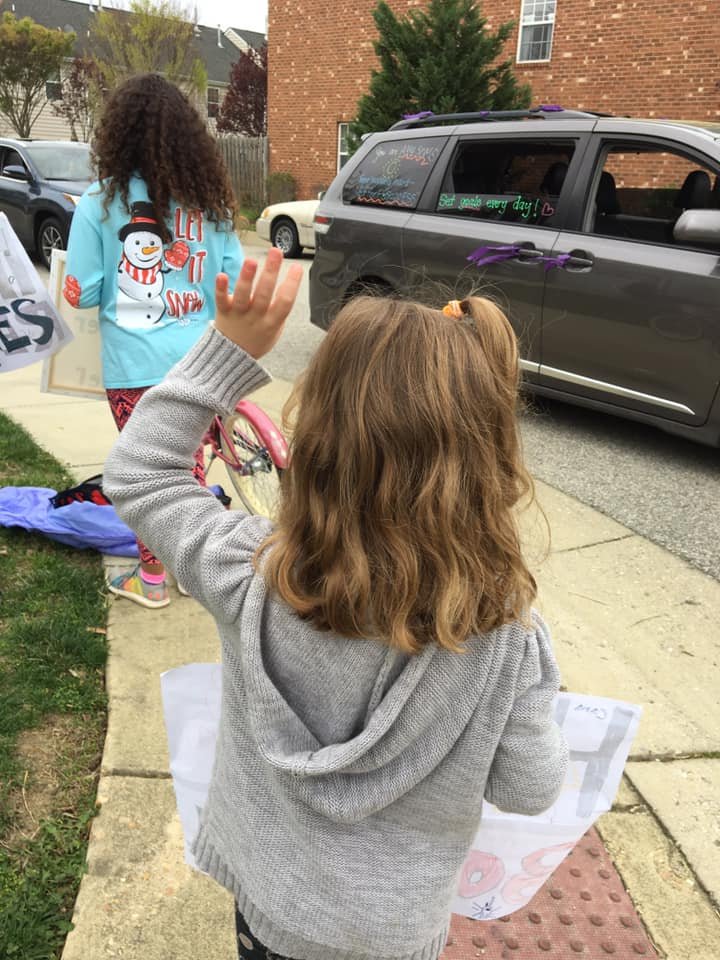
I had seen the pictures and videos in my news feed of teachers and schools “parading” in neighborhoods, saying hello to their students from their cars (keeping safe social distances).  The idea seemed nice enough, but I did not really think too much about the concept.  But when my children found out their elementary school would be doing the same, they jumped right in, making signs for their teachers.  We rearranged our daily schedule, and headed up to the now-unused bus stop in our neighborhood, and waited.

But it was not until I saw familiar face after familiar face – the principal, my fifth grader’s first, third, and current grade teachers; the art, computer, music, orchestra, librarian, and gym teachers; even the custodian – that I lost it.  Tears burst into my eyes, and although I could not stop smiling, I also could not stop crying.  The previous week, we had found out that due to the Coronavirus, our schools would be out for the remainder of the school year.  My fifth grader would not get to say goodbye to friends and one of the best teachers she has ever had, nor the community that has shaped her for the last four years.  My kindergartner would get no closure on her first year of school.  But here was that amazing community, coming to our neighborhood to say goodbye.

I think I burst into tears because I realized how very deeply important community is in our lives.  For the schools, our children are there five days a week, nine months of the year.  The school is a major part of the village that raises our children, teaches them, forms them into amazing citizens, and helps them find their sense of identity and purpose.  The staff and teachers at our school love our children and are a part of our family.  What this virus did was expose a huge part of our children’s lives and take it away from them.  The tears I could not stop that day were tears of gratitude, tears of blessing, tears of humility for the community I had not fully appreciated until that moment.

That is what has been so hard about having our church closed too.  We are making inroads for connection, surely.  But part of the reason we are doing that is because we know that Church is a vital community in our lives too.  Certainly, we are there because of our faith – or our desire to have faith.  But we are also at Church because the community feeds us, sustains us, and gives our lives a sense of purpose and identity.  When we cannot gather, we lose a huge part of our lives.  This week, it is my prayer that for those of you missing your church community, you will take advantage of the ways we are trying to maintain virtual connection during this time of disconnection.  We may not be able to exchange signs of the peace, offer hugs or high fives of affirmation, or kneel at the altar together.  But we can laugh at Virtual Coffee Hour, sing during livestream worship, and even cry during daily pop-up prayers.  Your community is still here, loving you and supporting you.  And we cannot wait to see you again!!

On Being an American and a Christian…

03 Wednesday Jul 2019

Posted by jandrewsweckerly in Uncategorized

≈ 3 Comments

Tags

American, asylum, baptism, children, Christian, complicated, Detention, diverse, faith, God, gospel, immigration, Jesus, politics

6d4151a40a463e26db746895528eb216

Photo credit:  https://www.pinterest.com/pin/439734351090290865/

Last week, several of the interfaith clergy in our community published a litany for children in detention centers.  They requested clergy leaders read the litany in their homes of worship – not in a special vigil, but in the heart of where weekly prayer and formation take place.  The litany was beautiful, and spoke to much of my own sense of despair about our treatment of children.  But I found myself in a quandary.  You see, my parish is a diverse one.  We pride ourselves on being Christians of varying political opinions who respect one another enough to honor our political differences by kneeling as equals at the Lord’s table.  In order to maintain that sense of respect, I am very careful about how I talk about current events.  My goal is always to preach the gospel of Jesus Christ, with the charge that we should engage in politics with the Gospel always in the forefront.

But the issue of children in detention centers tugs at me at two levels.  On the one hand, this is very much an issue of politics – of how we manage the flow of immigrants and those seeking asylum into our country.  I know our parishioners are of a divided mind on this issue – as is most of the country.  The issue of our borders is vastly layered – were it not so, there would be clear, easy answers to very difficult questions.  In addition to being a political, economical, sociological issue, this is a spiritual one as well.  One’s sense of gratitude for our country’s blessings, one’s baptismal covenant to respect the dignity of every human being, and one’s understanding of Christ’s command to love God and love neighbor collide with the realities of limited resources, stretched budgets, and funding priorities.

On the other hand, these are children.  These are eight-year-olds caring for unrelated infants.  These are nursing teen mothers with no diapers or place to lay their heads.  These are toddlers who have no way to wash their hands or clean their soiled clothing.  I look at my own children, who have every comfort they could ever need, and when I imagine them soiled, hungry, deprived of sleep, and so afraid that the color has drained from their faces, my heart shatters.  I know this issue is truly complicated, and I know that philosophically we as a country need to decide how we will manage the treatment of our neighbors.  But when I am hesitant to pray for the welfare of children in detention because it is politically complicated, I realize I am failing to live the Gospel life.

I cannot say I will ever be able to pray the litany presented by my interfaith brothers and sisters.  Though it is beautiful, it is also politically motivated.  But what I can tell you is, as a pastor and baptized child of God, I am praying for those children, praying for their mothers and fathers, and praying for our own souls as we figure out how to reckon politics and human dignity – how to be Americans and Christians.  Given our country’s history, it would seem those two things fit together easily.  But to be a good American and to be a good Christian both take intentionality, discernment, and prayer.  May God bless us all as we seek to harmonize the two.

On Race, Lent, and Children…

10 Wednesday Apr 2019

Posted by jandrewsweckerly in Uncategorized

≈ Leave a comment

Tags

America, brokenness, children, Civil Rights, confess, Jesus, Lent, prayer, race, racism, repentance, shame, sin, unite

IMG_7640

Photo credit:  Jennifer Andrews-Weckerly; reuse only with permission

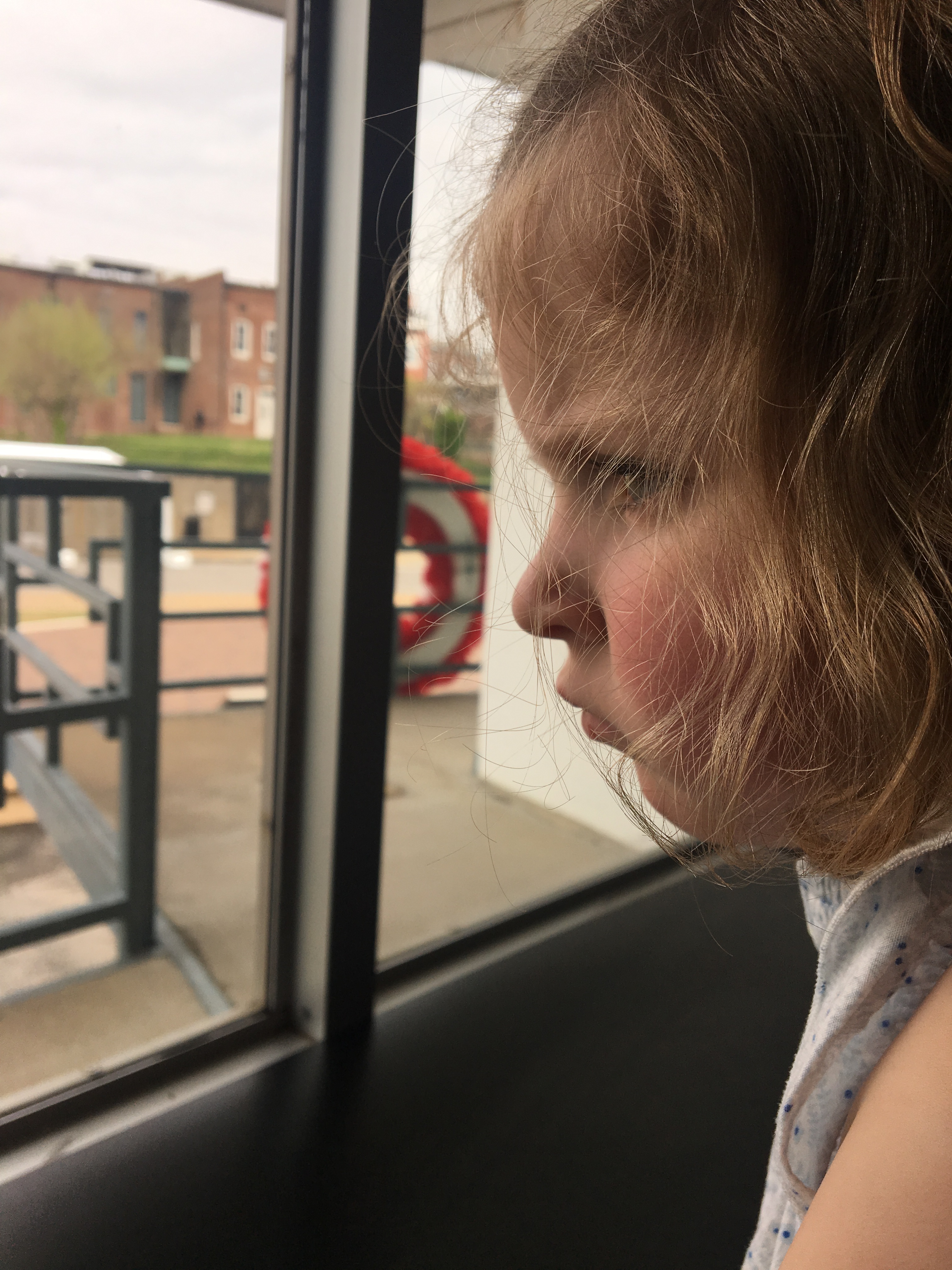
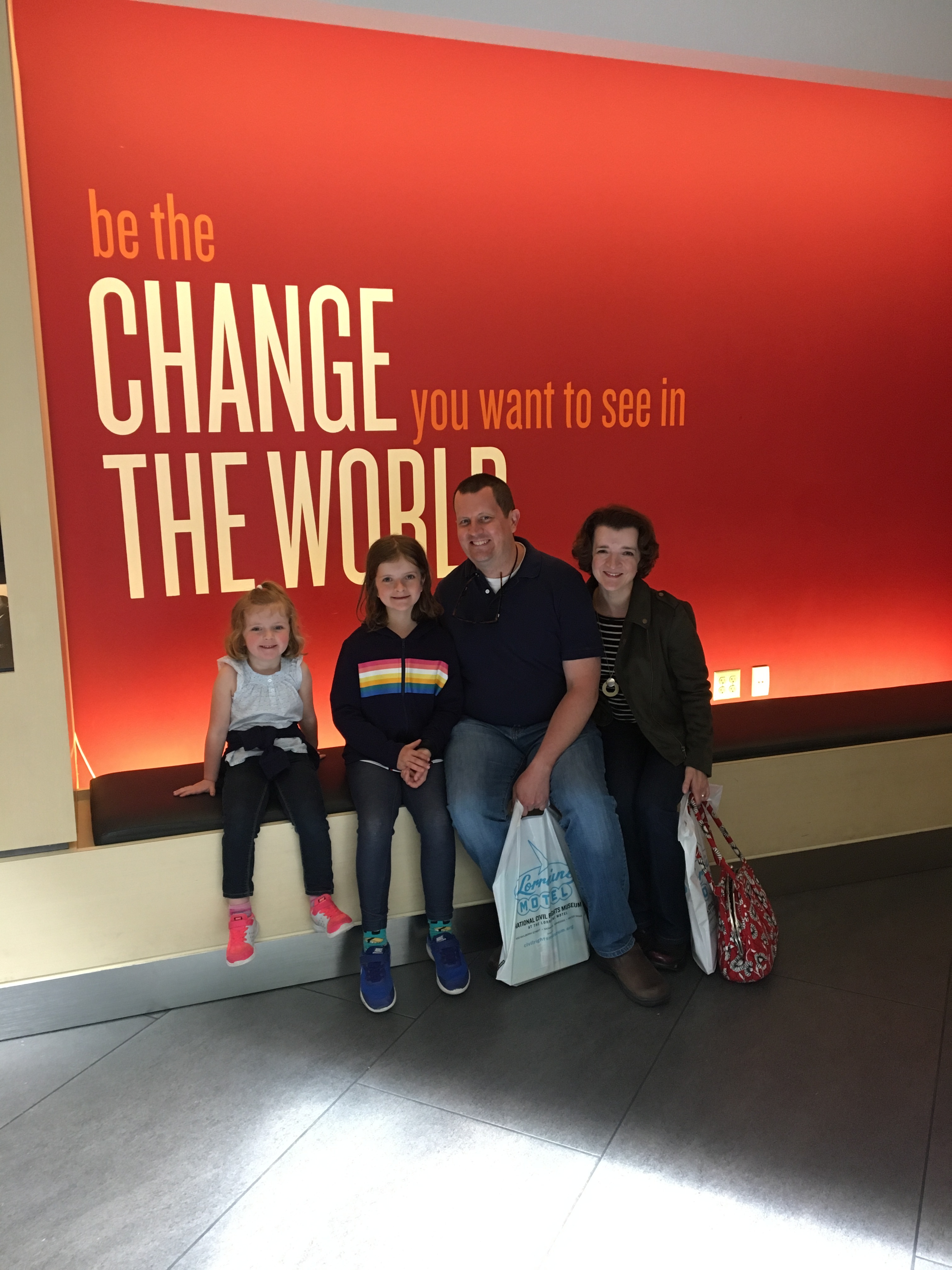
This past week, our family traveled to Mississippi to visit friends.  On the trip we were able to see both the Mississippi Civil Rights Museum in Jackson, and the National Civil Rights Museum in Memphis, Tennessee.  While the museums were appropriate for our older child, who has been studying the Civil War and Reconstruction in her Social Studies Class, our younger child was a bit mystified by the museums.  She struggled with understanding the concept of history versus modern day, but she especially struggled with why people were hurting and killing each other.  She clearly made the connection that Caucasians (or “peach-skinned” people as she called them) were being mean to African-Americans (or “brown-skinned” people), but she could not fathom why.  With every video or picture, I was barraged with questions about why people were doing what they were doing, or why someone would kill someone like Martin Luther King, Jr.

Explaining the atrocities of American racial history to a five-year old is one of the most gut-wrenching experiences I have had.  I already struggle with the shame of our history and my participation in racism.  But to expose my child to the sinfulness and brokenness of our country made the shame deeper.  As the museum bombarded me with statistics around racial disparities, as prerecorded voices shouted out awful words that were once shouted out to people of color, and as “Precious Lord,” or “We Shall Overcome,” played overhead, I was reminded of all that we have been through as a country, and how much further we have to go.

In Lent, we do a lot of confessing of our sinfulness and working on repentance.  On Ash Wednesday, we confessed our exploitation of other people, our blindness to human need and suffering, and for “all false judgments, for uncharitable thoughts toward our neighbors, and for our prejudice and contempt toward those who differ from us.”[i]  In the Great Litany this Lent, we prayed, “From all blindness of heart; from pride, vainglory, and hypocrisy; from envy, hatred, and malice; and from all want of charity, Good Lord, deliver us.”[ii]  In the Exhortation in the Penitential Order, the priest asked us to “Examine your lives and conduct by the rule of God’s commandments, that you may perceive wherein you have offended in what you have done or left undone, whether in thought, word, or deed. And acknowledge your sins before Almighty God, with full purpose of amendment of life, being ready to make restitution for all injuries and wrongs done by you to others; and also being ready to forgive those who have offended you, in order that you yourselves may be forgiven.  And then, being reconciled with one another, come to the banquet of that most heavenly Food.”[iii]

As we finish these last days of Lent, as we hear the passion narrative on Sunday, and as we walk the days of Holy Week next week, I am reminded of how much work we still have to do.  For me, I will be contemplating the ways in which I participate in the systems and practices of racism in our community, working to not only be better, but to teach my children to be better.  And knowing our work of repentance is on-going, I look forward to our Eastertide book study that will allow us to delve into these issues even more.  This week I pray for the whole human family:

O God, you made us in your own image and redeemed us through Jesus your Son: Look with compassion on the whole human family; take away the arrogance and hatred which infect our hearts; break down the walls that separate us; unite us in bonds of love; and work through our struggle and confusion to accomplish your purposes on earth; that, in your good time, all nations and races may serve you in harmony around your heavenly throne; through Jesus Christ our Lord.  Amen.[iv]

IMG_7644 (1)

Photo credit:  Jennifer Andrews-Weckerly; reuse only with permission

[i] Book of Common Prayer (BCP), 268.

[ii] BCP, 149.

[iii] BCP, 317.

[iv] BCP, 815.

On Finding and Sharing Joy…

19 Wednesday Sep 2018

Posted by jandrewsweckerly in Uncategorized

≈ Leave a comment

Tags

children, church, faith, formation, fun, God, invite, Jesus, journey, joy, parent, share

IMG_2901

Photo credit:  Robin Razzino; permission required for reuse.

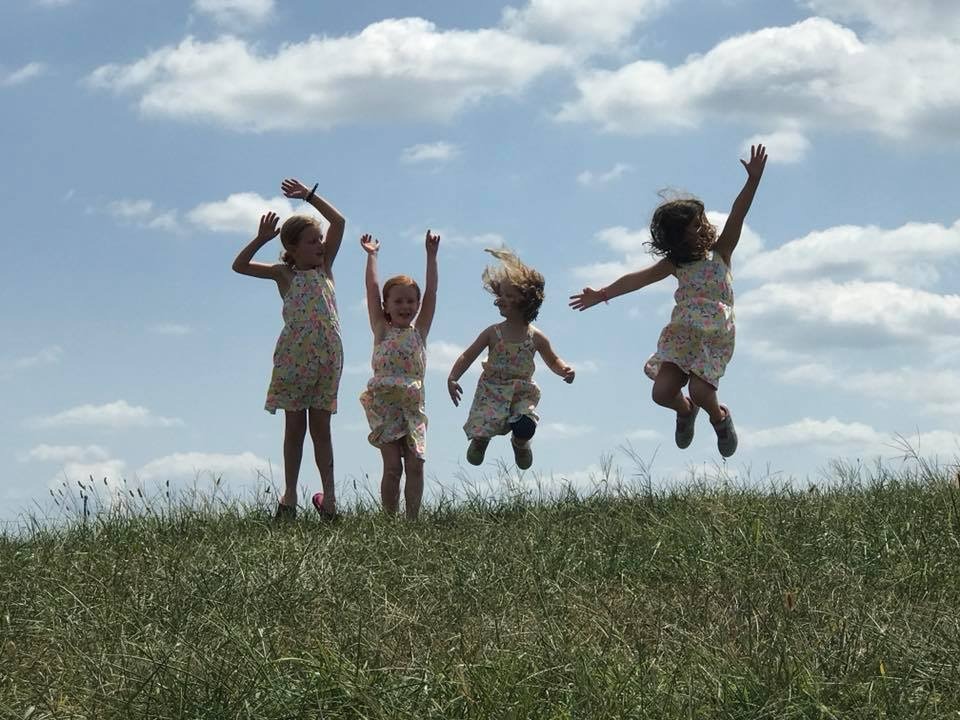
This past Sunday, I was ready to head off for church bright and early.  My younger daughter was still asleep, so I went in to her room to give her a kiss goodbye.  She stirred and very sleepily asked me, “Is today Sunday School?  And Children’s Chapel?”  I almost giggled that this was her first thought upon arousal from sleep.  When I told her, “Yes,” she would be going to Sunday School and Children’s Chapel, she groggily replied, “It’s going to be fun.”

As I have been thinking about my child’s simple question and sense of joy about church, I had two thoughts.  The first was, I am so happy to know that my child is finding joy, happiness, and fun at church.  As a parent, you hope your child will find as much joy in Jesus as you do, but you learn pretty quickly that every child is an individual with their own passions and sources of joy.  To see my child develop a love for church and the experiences she has there has been so thrilling.  And even more importantly to me (especially as a clergy person), I am so grateful that her positive church experiences are almost totally independent of me.  Other adults are guiding her faith journey.  The community is raising her up in the faith.  Our church family is helping her find joy in God that is all her own.  That reality is one that I have deeply desired for my own children, and I am so proud that my church is a place that does the same for so many other children and families.

The second thought I had about my daughter’s early morning pronouncement was that I want adults to have that same sense of anticipatory joy about church too.  Sometimes we struggle to get ourselves to church because our lives are so over-scheduled that church feels like just one more burden.  Sometimes we go to church out of habit, but go through the motions without much joy or food for our souls for the week.  What I long for is church to be a place that when we first awake on Sunday mornings we think of church and we think, “This is going to be fun!”  We can do that at Hickory Neck because we know we will see people who have given us so much joy in our spiritual journey.  We can do that at Hickory Neck because the worship, preaching, and learning will give us new insights and renewed energy and passion for God.  We can do that at Hickory Neck because we know, somewhere during the morning, we will encounter God – and it’s going to be awesome!

This past Sunday at our Rector’s Forum, someone asked about how we invite people to church, how we share the Good News with others.  Where we start is sharing those stories of how, when we wake up on Sundays, we think about Hickory Neck and think, “This is going to be fun.”  When you tell the story of how your church brings you joy, your countenance changes, your energy shifts, and your enthusiasm is contagious.  The only thing left for you to do is say, “Hey, you want to come with me next time?  It’s really fun!”

Sermon – Ephesians 4.25-5.2, P14, YB, August 12, 2018

22 Wednesday Aug 2018

Posted by jandrewsweckerly in Sermons, Uncategorized

≈ Leave a comment

Tags

baptism, children, Christ, Christian, Ephesians, faith, formation, God, identity, imitators, improve, love, offering, Paul, Sermon, systems, vacation bible school

I used to LOVE Vacation Bible School when I was growing up.  As a preacher’s kid, of course that meant I went to VBS at my dad’s church.  But I loved Vacation Bible School more than that.  I would sign up for VBS at the Baptist Church, the Presbyterian Church, and the Lutheran Church, and would beg, “Can I go? Can I go?”  I have always joked that what I really like about VBS was the crafts.  But as I watched our own children in Vacation Bible School this week at Hickory Neck, I began to wonder if my crafts assessment was entirely true.  I liked the songs too.  And the snacks.  And the storytelling.  I liked the instant comradery and the games and laughter.  I liked the feeling of being loved by people who did not even know me.  VBS was the first – and probably only since I did not go to church with many Baptists – place where I was asked if I had accepted Jesus as my Lord and Savior; and if I had not, I could ask Jesus to come to me in that moment.  My eight-year-old self was not sure what the pastor meant, but I did know a strange warming of my heart that night.

On those hot, humid summer nights, with the cicadas chirping and the lightning bugs flashing, VBS accomplished for me what I talked about with the Baptismal family last weekend.  When we prepare a child and their family for baptism, we talk about how their primary role is to raise the child up in the faith – get them to church, talk about Jesus at home, pray together, and read the Bible stories.  The parents and godparents are not flying solo with the task of raising the child in the faith – we as a community pledged just last week that we would be active in raising Dallas up in the faith.

As I watched our children at Vacation Bible School this past week, I slowly began to realize that we were doing just that – raising children up in the faith.  We were teaching them to pray, to sing, to learn, to tactilely use their bodies to engage Jesus.  And sure, there were games and snacks and laughter and silliness.  But there were also children who walked over to their neighbor’s houses and delivered VBS registration forms, inviting them into Jesus’ love too.  There were children who remembered their neighbors with pets and tentatively rang doorbells to deliver pet treats they had made with their own hands.  There were children whose joyous songs in the Public Library later that day brought hope to a man who had lost hope.  When I was a child, I was lured by crafts and snacks and potato sack races; but I left with love, and hope, and mercy.  I left knowing deep in my soul who Jesus was and what being a Christian meant.

This week I have begun to wonder if we might need an adult version of VBS; if we might need a week of evenings where we just spend some time with Jesus among the community of the faithful.  Bishop Curry would call that a revival, and Episcopal Churches are doing revivals all around the country.  I am not sure what we call that week matters, but I am beginning to wonder if we need those summer nights because we have fallen away from the practices Paul articulates today in his epistle to the Ephesians.  Paul is quite clear.  If we are going to claim the moniker of Christian, then our lives need to be signposts.  We need to speak truth to one another.  We need to not let anger rule our lives.  We need to make new ways for thieves and sinners to not only repent, but be fully restored into the world as those who not only contribute their labor, but who are freed to give their money to the poor.  We need to take on kindness, tenderness, forgiveness.  We need to be imitators of God, beloved children of God, living in love.

We hear Paul’s words today and say to ourselves, “Yes, yes, the world needs more of that.”  But what we really mean is, “Yes, that lady two rows over needs to start doing that,” or “Yes, that guy on my committee needs to be that.”  But Paul is not talking to our neighbor.  He is talking to us.  He is talking each person in this room saying, “You…I need you to live in the life of love, to be an imitator of God, to be…to be a Christian.”  And that is where the squirming begins.  I hear Paul’s words about not letting the sun go down on your anger and I can tell you there have been many a night when I was just not done with my anger – I needed to let my anger burn off before I could speak a word of forgiveness or, more importantly, a word or apology.  I hear Paul’s words about thieves and I am not worried about thieves being gainfully employed so they can make charitable contributions – I need them to punished for what they took from me.  I hear Paul’s words telling me to imitate God and I am incredulous that I could ever achieve such holiness – I need to worry about all those other people who are not imitating God towards me!

This week, I attended a conference called the Global Leadership Summit.  Founded over 25 years ago, the conference is for all people, regardless of industry or position at work or home, looking to hone their leadership skills, to learn new techniques, and to refresh old learnings.  The Conference is held in Chicago, but through technology is live broadcasted all over the world, even to Williamsburg.  One of the things I took from the Summit was that my leadership improvement work was primarily about improving myself.  Craig Groeschel reminded us, “When the leader gets better, everyone gets better.”  His message is the same message we teach congregations and families through family systems work.  The only person you can improve in a system is yourself – even though you know for certain your brother Bob is the real problem.  System experts live by this understanding though because they have witnessed time and again when one person in the system gets better, he or she creates a ripple in the system – and almost magically, everyone else starts getting better.

The reason why we send our children to VBS or Sunday School or Children’s Chapel is because we want them to know, and love, and embody Christ.  We want them to be imitators of God, beloved children, who live in love, as Christ loved us.  But what we sometimes forget in helping our children grow in Christ is that we adults need to grow in Christ too – to become those imitators of God, beloved children, who live in love, as Christ loved us.  We like to bemoan the state of the world today – to look at how we are so divided and cannot seem to come together and we want to just give up on the world, or worse yet, we want to bury our heads in the sand and not come back up until things magically get better.  But what Paul says to us today is not to worry about everyone else.  Start working on yourself.  Now whether that means you need to go to a Leadership Summit, or join a Bible Study, or commit to coming to Church regularly, or maybe agree to help with VBS so you can absorb some of that joyful goodness – do something for your faith formation today.  Systems work teaches us that the only person we can change in a dysfunctional system is ourselves.  Paul looking at Ephesians or the United States in 2018 would same the same – work on yourself, imitate God, live in love, make your life like Christ’s – or as Paul says, “a fragrant offering and sacrifice to God.”

I know that Episcopalians are pretty divided about the use of incense.  I have always loved incense.  The parish I served in Alexandria used incense every Sunday.  I loved how the scent lingered in my hair and on my clothes after church.  Sometimes, I would bring my alb home, and when I opened the bag, the fragrance of incense wafted into the room.  Years later, on the occasions my other parishes used incense, I found the scent had a calming effect on my body.  That fragrance was my physical, tangible way of remembering that I was in the presence of God.

When Paul invites us to be a fragrant offering, he is inviting us to be that tangible reminder of God that lingers behind.  When we respect the dignity of every human being, our Christian fragrant offering lingers behind.  When we are kind, tenderhearted, and forgiving, our fragrant offering lingers behind.  When we seek to imitate God in our lives, even as others see us fail and try again and again, our fragrant offering lingers behind.  I am not saying our work on ourselves will be perfect right away – or even ever help us achieve that true fragrant offering.  But what Paul encourages us to do is try.  To put ourselves in places where we can grow in faith and love and mercy so that we can become those fragrant offerings that linger with others.  And Paul knows we can do that work because God is with us to enable us.  Our invitation today is to accept the challenge:  to not leave behind the foul odors of anger, judgment, and malice, but through our baptismal-life striving through our faithful work on ourselves, to leave behind the fragrant scent of God.  What happens after that is God’s work.  Amen.

← Older posts
Newer posts →

Recent Posts

  • On the Myth and Magic of Advent…
  • On Risking Failure and Facing Fear…
  • Sermon – Luke 23.33-43, P29, YC, November 23, 2025
  • On Inhabiting Gratitude…
  • Sermon – Luke 20.27-38, P27, YC, November 9, 2025

Archives

  • December 2025
  • November 2025
  • October 2025
  • September 2025
  • August 2025
  • July 2025
  • June 2025
  • March 2025
  • February 2025
  • December 2024
  • November 2024
  • October 2024
  • September 2024
  • August 2024
  • July 2024
  • June 2024
  • May 2024
  • March 2024
  • February 2024
  • January 2024
  • December 2023
  • November 2023
  • October 2023
  • September 2023
  • August 2023
  • July 2023
  • June 2023
  • May 2023
  • March 2023
  • February 2023
  • January 2023
  • December 2022
  • November 2022
  • October 2022
  • June 2022
  • May 2022
  • January 2022
  • December 2021
  • November 2021
  • October 2021
  • September 2021
  • August 2021
  • June 2021
  • May 2021
  • April 2021
  • March 2021
  • February 2021
  • January 2021
  • December 2020
  • November 2020
  • October 2020
  • September 2020
  • August 2020
  • July 2020
  • June 2020
  • May 2020
  • April 2020
  • March 2020
  • February 2020
  • January 2020
  • December 2019
  • November 2019
  • October 2019
  • September 2019
  • August 2019
  • July 2019
  • June 2019
  • May 2019
  • April 2019
  • March 2019
  • February 2019
  • January 2019
  • December 2018
  • November 2018
  • October 2018
  • September 2018
  • August 2018
  • July 2018
  • June 2018
  • May 2018
  • April 2018
  • March 2018
  • February 2018
  • January 2018
  • December 2017
  • November 2017
  • October 2017
  • September 2017
  • August 2017
  • July 2017
  • June 2017
  • May 2017
  • April 2017
  • March 2017
  • February 2017
  • January 2017
  • December 2016
  • November 2016
  • October 2016
  • September 2016
  • August 2016
  • July 2016
  • June 2016
  • May 2016
  • April 2016
  • March 2016
  • February 2016
  • January 2016
  • December 2015
  • November 2015
  • October 2015
  • September 2015
  • August 2015
  • July 2015
  • June 2015
  • May 2015
  • April 2015
  • March 2015
  • February 2015
  • January 2015
  • December 2014
  • November 2014
  • October 2014
  • September 2014
  • August 2014
  • July 2014
  • June 2014
  • April 2014
  • March 2014
  • February 2014
  • January 2014
  • December 2013
  • November 2013
  • October 2013
  • September 2013
  • August 2013
  • July 2013
  • June 2013
  • May 2013
  • April 2013
  • March 2013
  • February 2013
  • January 2013
  • December 2012
  • November 2012
  • October 2012
  • September 2012

Categories

  • reflection
  • Sermons
  • Uncategorized

Meta

  • Create account
  • Log in
  • Entries feed
  • Comments feed
  • WordPress.com

Blog at WordPress.com.

  • Subscribe Subscribed
    • Seeking and Serving
    • Join 394 other subscribers
    • Already have a WordPress.com account? Log in now.
    • Seeking and Serving
    • Subscribe Subscribed
    • Sign up
    • Log in
    • Report this content
    • View site in Reader
    • Manage subscriptions
    • Collapse this bar
 

Loading Comments...