• About

Seeking and Serving

~ seek and serve Christ in all persons

Seeking and Serving

Tag Archives: faith

On Wanting to Go Back…

02 Tuesday Jun 2020

Posted by jandrewsweckerly in Uncategorized

≈ Leave a comment

Tags

ancestors, darkness, Egypt, faith, God, goodness, hard, help, Israelites, journey, lament, longing, pandemic, power, Promised Land, protest, romanticize, trust, wilderness

walkingdesert2_thumb

Photo credit:  http://www.livingintheshadowofhishand.com/2013/06/wandering-in-wilderness.html

The whole congregation of the Israelites complained against Moses and Aaron in the wilderness.    The Israelites said to them, “If only we had died by the hand of the Lord in the land of Egypt, when we sat by the fleshpots and ate our fill of bread; for you have brought us out into this wilderness to kill this whole assembly with hunger.”  (Exodus 16.2-3) 

The rabble among them had a strong craving; and the Israelites also wept again, and said, “If only we had meat to eat!  We remember the fish we used to eat in Egypt for nothing, the cucumbers, the melons, the leeks, the onions, and the garlic; but now our strength is dried up, and there is nothing at all but this manna to look at.”  (Numbers 11.4-6)


One of the cries we are prone to in these days is “I wish we could just go back to the way it was!”  I just did it myself in a sermon a few weeks ago, when I talked about how at the beginning of the pandemic, we were all chipping in and helping each other, but then slowly our demons had taken back over and we are becoming fractured and partisan again.  But we do it all the time.  The most famous may be our President’s campaign slogan, “Make American Great Again.”  I have heard the cry from former Senators and Congressmembers who have talked about the time when people worked “across the aisle” with compromise and collaboration.  As we have mourned social distancing and stay-at-home orders, this has especially become the cry of many of us in the Church.  And as violence rocks our country, many are asking protestors to quieten down and find other ways to make changes.

Of course, we are not alone in our lament and longing.  Our ancestors, the Israelites, were famous complainers in the wilderness, longing to go back to Egypt – the very place of their enslavement – because “at least they had food,” or they remember with longing the savory foods.  The hardness of the wilderness made them romanticize a life marked by brutality, oppression, and death.  Keeping an eye on the Promised Land was not so easy after years in the wilderness.

We are not unlike of ancestors.  In hoping to make America great again, we forget that any era of our history has been marked by darkness – whether the subjugation of the Indigenous peoples of this land, the enslavement, segregation, or oppression of African-Americans, the disenfranchisement and sexual subjugation of women, and on and on go the examples.  When we look at our current inability to work across party lines, we forget the ways in which women and people of color were wildly underrepresented in leadership – if represented at all!  Our current mourning of how Church used to be forgets the incredible ways technology has connected us to our neighbors, our extended community, and even strangers.   And both this pandemic and the protests about the treatment of persons of color are pulling back the curtains on disparities around wealth and opportunity for African-Americans.

What we learn from our biblical ancestors is that the wilderness is hard:  hunger, thirst, discomfort, and disagreements over power are real.  And yet, only in the wilderness did the faithful learn to trust God, to restructure leadership in shared ways, and find ways to govern themselves marked by justice and mercy.  As a person of privilege, I certainly have the option to turn off news coverage, wait this pandemic and the protests out, and stay ensconced in my place of power.  Or I can use this wilderness to learn, to be vulnerable, to use my power for goodness (or even better, cede some of my power), and to pray for God’s help on the journey.  It may be quite some time before we arrive at the Promised Land.  But we do not have to flee back to Egypt.


Sermon – Luke 24.13-35, Acts 2.14a, 36-41, E3, YA, April 26, 2020

30 Thursday Apr 2020

Posted by jandrewsweckerly in Sermons, Uncategorized

≈ Leave a comment

Tags

church, crisis, disciples, Easter, Emmaus, faith, hope, human, Jesus, lost, love, pandemic, resurrection, Sermon, vulnerable, weakness

To say we have been operating in crisis mode here at Hickory Neck would be an understatement.  We went from normal operations, to heavy restrictions for gathering and receiving communion, to entirely closing our buildings, to moving all worship online, to virtual learning, fellowship, and pastoral care.  All of those changes happened rapidly, and with an eye to whatever was next.  Once we figured out some semblance of a new rhythm and “normal,” Holy Week came, and we had to figure out how to make our most sacred week of the Church Year meaningful despite our inability to gather physically.  Baptisms and confirmations have been postponed, our Bishop’s visit has been delayed, and farewells and celebrations have been canceled.  And yet, here we are, about half-way through a stay-at-home order, with infection and death rates at astronomical levels, and the Church finds herself in the third week of Easter, still proclaiming her alleluias.

I am not sure I could pull myself together and proclaim those alleluias without the lessons from Holy Scripture we have been journeying with these last Sundays.  In a normal Eastertide, we are more carefree, reveling in Easter joy, making bold proclamations about resurrection and eternal life, and listening to the early Easter stories like the walk to Emmaus with a sense of endearment – as if saying, “Bless their hearts!” as the early Christians try to figure out what in the world is going on after Jesus’ resurrection.  But this is not a normal Eastertide.  In fact, Biblical scholar Matt Skinner refers to this time as “Pandemic Easter.”[i]  For the first time in perhaps most of our lives, we can more deeply empathize with the disciples during these early days of resurrection.  The modern Church has used Eastertide as a bold proclamation of the meaning of Jesus’ death and resurrection.  But the first disciples of Christ are not boldly doing anything.  In fact, they are bereft, confused, scared, given glimpses of hope followed by bouts of despair and doubt.  They are not sure what to believe, even having seen the risen Jesus themselves.  Even those who receive the teaching from the disciples in our Acts lesson are overcome with emotion and can only ask, “Brothers, what should we do?”

Somehow, living in Pandemic Easter has made our Eastertide lessons much more powerfully relatable.  I do not know if I am ready to boldly proclaim, “The Lord is Risen Indeed.”  But I am willing to say to fellow Christians, and to God, “What should we do?”  I am willing to talk with a fellow person of faith, or even a person of no faith, walking with them (either metaphorically or at least at a distance of six feet) as we make our way through this mess.  Those disciples on the walk to Emmaus look different to me this year.  Those two people who thought they knew what they believed, who are confused by testimony of Jesus’ resurrection, who walk away from the protective hideout with fellow disciples, are trying to make sense of life, death, and Jesus.  They are not people to be pitied or seen as adorably unsure of their faith.  They are us.  They are people in a life-altering crisis, trying to make sense of death and defeat, wondering where hope may be, and a bit lost.

And here comes the best part.  Now, I have always thought the best parts of this story are where Jesus teaches the disciples unawares, shares a meal with them, or their hearts becoming strangely warmed, allowing them to become the second set of witnesses after the women at the tomb.  But in Pandemic Easter, the best part of this story might just be what happens on the walk to Emmaus.  Jesus invites these two followers to talk about what has happened to them.  He literally walks with them as they share their shock, their grief, their sadness.  Perhaps in Easters past, I thought Jesus was being coy or trying to trick the disciples in some way.  But in Pandemic Easter, I think Jesus is doing what we all need:  Jesus listens, he lets the disciples share their reality, he makes space for the human response to a new normal.    Jesus makes space for questions like, “What should we do?”

I don’t know about you, but the very real, vulnerable, human interactions between Jesus and the disciples in Scripture today has been a tremendous balm to me.  More than perhaps any year, the Church is not telling us how to embrace and proclaim a certain and sure faith.  Today the Church is simply inviting us to hover in the actual experience of Easter – days of confusion, sadness, fear, and grief.  We are able to tarry there because Scripture reminds us today that Jesus walks with us.  When we cannot yet understand, when we perhaps cannot even believe, Jesus walks with us on the journey.  Jesus listens to our real human response to crisis and walks with us.  Someday – maybe today, maybe in a week or month, or maybe in a year, we will be able to hear Jesus’ teaching and understand, and our hearts will be strangely warmed with conviction.  Until then, Jesus walks with us where we are, acknowledging the fullness of our weakness, and staying with us and loving us through it all.  Thanks be to God.

[i] Matt Skinner, “The Road to Emmaus Feels Longer This Year,” April 19, 2020, as found at http://www.workingpreacher.org/craft.aspx?post=5428 on April 24, 2020.

Sermon – John 9.1-41, L4, YA, March 22, 2020

27 Friday Mar 2020

Posted by jandrewsweckerly in Sermons, Uncategorized

≈ Leave a comment

Tags

blind man, cause and effect, comfort, Coronavirus, faith, God, good, grace, hope, Jesus, journey, light, questions, see, Sermon, sight, sin, suffering, theology

I must confess to you:  I have been dreading talking to you about this text all week.  The presence of cause and effect in this text is overwhelming.  The text says multiple times that the reason the blind man is blind from birth is because he sinned (and since it was from birth, there is the implication his parents sinned, and the blind man is being doubly punished and exists in double sin).  Those gathered insist that Jesus must be sinful too because he does not follow the law – he heals on the Sabbath, and he cannot possibly speak for or act for God as a sinner.  Jesus also says those gathered are sinners for they cannot see God.  Even at the beginning of John’s story, even Jesus says, “Neither this man nor his parents sinned; he was born blind so that God’s works might be revealed in him.”

I have not wanted to preach this text today because I do not at feel comfortable with the cause and effect nature of this text, especially what that cause and effect nature seems to imply about suffering.  Can Jesus really be saying this man was made blind so that God could be revealed?  Is this text saying God causes suffering – pain, disability, ostracizing from community, poverty so deep that only begging will ensure survival?  That concept is a huge hurdle for me because that is not at all my theology of suffering.  And I especially do not like hearing that theology of suffering this week – a week when we are watching the cases of Coronavirus creep up in our country and double in our county and have begun asking the same sorts of questions the people in this passage are asking:  Where is God in this?  Why is God allowing not only this terrible virus to happen, but the accompanying societal upheaval?  Is God causing this suffering for some greater good?  This kind of health crisis pulls at all of us and in our innermost, private places, and makes us wonder, even if we cannot say the words aloud, “Did God have something to do with this virus?”  Or sometimes we find ourselves not embarrassingly asking the question, but boldly shouting at God, “What in the world are you doing?  Why aren’t you here fixing this?  How could you do this?!?”  The absolute LAST passage I want to hear when we are asking these bone-deep theological, desperate questions is a text that seems to imply God causes suffering for God’s own glory.

That is why I am especially grateful for biblical scholars who can journey with us in interpreting scripture.  Biblical Scholar Rolf Jacobson took a look at that same verse that has been nagging me all week, “Neither this man nor his parents sinned; he was born blind so that God’s works might be revealed in him.”  Luckily Jacobson is better at Greek than me.  He explains that the writers of the New Revised Standard Version inserted text into the English translation that simply is just not there.  In the original Greek, the words “he was born blind,” are not there.  Instead of the text saying, “Neither this man nor his parents sinned; he was born blind so that God’s works might be revealed in him,” the text actually says, “Neither this man nor his parents sinned [period].  In order that God’s works might be revealed in him, we must work the works of him who sent me…”  According to Jacobson, Jesus is not saying the man was blind so God could be revealed.  Jesus is saying no one sinned.  But given the situation, God has given his disciples the opportunity to do something good to reveal God’s goodness.[i]  In other words, God does not cause suffering.  But God can use us in the midst of suffering for good.

I don’t know about you, but that has shifted my understanding of this text completely.  All of the arguing about who sinned, what laws you must follow to be holy, and who should be in or out are a distraction.  The same can be true of us.  When we start trying to logic our way through fault, or sin, or blame – even blame on God, we lose our way; we become blind like those gathered and arguing in our text today.  Instead, this text is inviting us to ask different questions.  Instead of whose sin caused this virus, we can ask, “How can I be a force for good in the midst of this virus?”  Instead of why God is doing this or allowing this to happen, we can ask, “Where are the opportunities to see God acting for good in the midst of suffering?”  Instead of where is God in this, we can ask, “Where am I finding moments of God’s grace in this?”  I am not arguing our questions and demands of God are not valid at this time.  In fact, I think our quiet doubt of and our raging anger at God are perfectly normal – and maybe even necessary for honest relationship with God.  What I am arguing is this text is not a reinforcement of our sense of darkness, but instead an invitation into light – an invitation to seeing when we may feel blinded.  My prayer this week is that we stumble into those moments of light this week – that we find those moments of grace upon grace that give us renewed comfort, hope, and faith.  May God bless you in the journey toward the light.  Amen.

[i] Rolf Jacobson, “Sermon Brainwave #713 – Fourth Sunday in Lent,” March 14, 2020, as found at http://www.workingpreacher.org/brainwave.aspx?podcast_id=1240, on March 19, 2020.

On Signs and Listening…

26 Wednesday Feb 2020

Posted by jandrewsweckerly in Uncategorized

≈ Leave a comment

Tags

faith, God, Jesus, journey, Lent, listening, preaching, sign, truth

hearing

Photo credit:  http://www.charismamag.com/life/women/34343-learning-to-listen-large-when-god-speaks-small

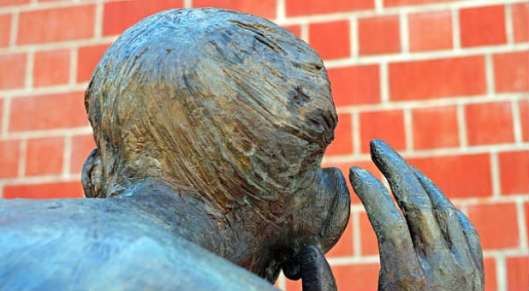
Every once in a while, someone will ask me to whom my sermon was directed.  I think most folks who ask this think I somehow got into their minds and was preaching about them.  But I always assure people that the primary person I am preaching to is myself, something on which I need work.  I share my struggle because I often hear echoes of my struggle in others’ struggles as well.

Well, this past Sunday I preached a sermon directed at myself, without even realizing it!  On Sunday we celebrated Transfiguration Sunday, this year using Matthew’s Gospel[i].  In Matthew’s Gospel, God says, “This is my Son, the Beloved; with him I am well pleased; listen to him!”  In my sermon, I talked about one of the things we all need to do this Lent is listen to Jesus.  Sunday night, by the time three services and one concert was over, my voice was gone.  By Monday, I was diagnosed with laryngitis.

Now, we can all get a laugh about how the preacher who reminded us all to listen is now mute and forced to listen to Jesus.  But I must be hardheaded, because I think Jesus was already asking me to listen just a few days before.  The week prior to my sermon, I had just returned from a pilgrimage, and was frantically trying to meet deadlines, follow up on pastoral care, and catch up on emails.  But we got a snow on Thursday night that cancelled school on Friday, and I had to clear my entire calendar so I could be at home with my kids.  Instead of making all my appointments, I sat down and did other things from my home office that were also being neglected.  I am convinced the snow day was God’s way of trying to get me to slow down, and listen to Jesus.  Apparently, I need more than one sign from God before I listen!

I wonder what signs you are finding in your faith journey?  Where are you having ah-ha moments of God speaking truth that finally click?  I believe God is speaking to us all the time:  sometimes in words directly to us, sometimes through the words and actions of others, and maybe even sometimes through creation!  As we take our ashes today, and as we begin a season of intentional relationship with God, I invite you to take time this Lent to listen.  I cannot wait to hear what God is saying to you!

[i] Matthew 17.1-9.

The Pilgrim’s Way…Day 7

13 Thursday Feb 2020

Posted by jandrewsweckerly in Uncategorized

≈ Leave a comment

Tags

Christ, community, evensong, faith, feel, God, guide, hear, history, London, pilgrimage, profound, space, spiritual, St. Paul's Cathedral, Westminster Abbey

84582427_2894152720640969_3643179195351171072_n

Photo credit:  Jennifer Andrews-Weckerly; reuse with permission only

Sixteen pilgrims from Hickory Neck Church traveled to England for 8 days of pilgrimage.  Our focus was on choral music, hearing Evensong or Choral Mass at a Cathedral, Minster, or college everyday.  This is the seventh entry, initially posted on our church Facebook page.  For those of you who do not follow us on Facebook, I am repeating the journey’s daily entries here.  Enjoy!

London – Westminster Abbey/St. Paul’s Cathedral

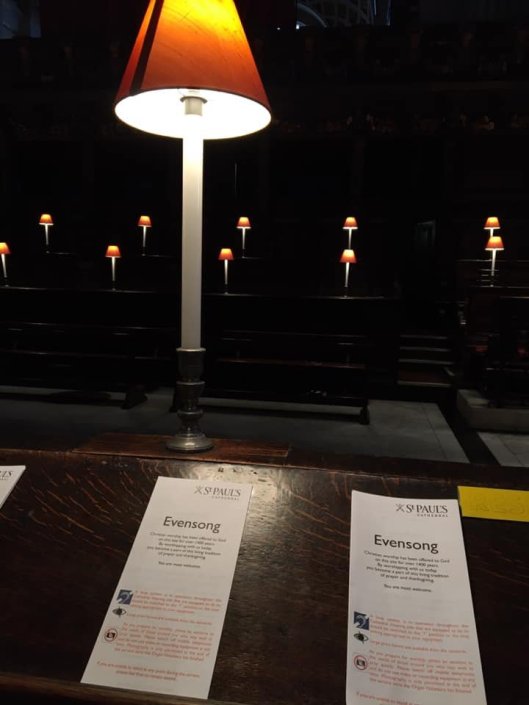
Today’s journey highlighted a truth about our spiritual lives in general. One of the tricky dynamics of being a pilgrim in cathedrals, minsters, and colleges is you need a guide to teach you and create a depth of learning and growth. What the naked eye sees only gets you so far. Then you need someone who can explain how many years worship has happened there, why you are only one pilgrim in centuries of pilgrims, and how our history informs our present. Our guides are not just historical guides; they are spiritual guides too.

But the other part of pilgrimage is experience. No three hour lecture can replace the experience of staring at beautiful arches, stained glass windows, modern art, or a flickering prayer candle. No amount of talking can help you hear God more than just sitting and listening. No lesson on the historical period of a composer can help you hear the intricacies of Evensong that can sometimes take your breath away. Sometimes pilgrimage is about making space to hear and feel God in profound ways – in ways that are hard to access in the hubbub of everyday life.

Today was such a day. The morning was full of kings, queens, murder, theft, and a lot of royal history as it relates to the faith. This afternoon was about making room for God. And Evensong was a breath of fresh air – with sounds of comfort, of embracing gentleness, of the maternal nature of God. Today was about finding a spiritual guide and then letting go in order to meet God on your own.

Where are you on your journey? Do you need a guide, or perhaps a faith community, to start enriching your spiritual life? Or do you need to let go of learning for a time and simply bring yourself to God’s house for either new connections to Christ, or to recall richer spiritual times, waiting for enlightenment? I can’t wait to hear about your pilgrimage!

85121020_2894152613974313_5887720260903108608_n

Photo credit:  Jennifer Andrews-Weckerly; reuse with permission only

The Pilgrim’s Way…Day 4

10 Monday Feb 2020

Posted by jandrewsweckerly in Uncategorized

≈ Leave a comment

Tags

Christ, claim, Coventry, faith, forgive, God, inspire, love, Oxford, persecution, pilgrimage, reconciliation, witness

85028394_2887868867936021_715629181731340288_n

Photo credit:  Jennifer Andrews-Weckerly; reuse with permission only

Sixteen pilgrims from Hickory Neck Church traveled to England for 8 days of pilgrimage.  Our focus was on choral music, hearing Evensong or Choral Mass at a Cathedral, Minster, or college everyday.  This is the fourth entry, initially posted on our church Facebook page.  For those of you who do not follow us on Facebook, I am repeating the journey’s daily entries here.  Enjoy!

Coventry/Oxford

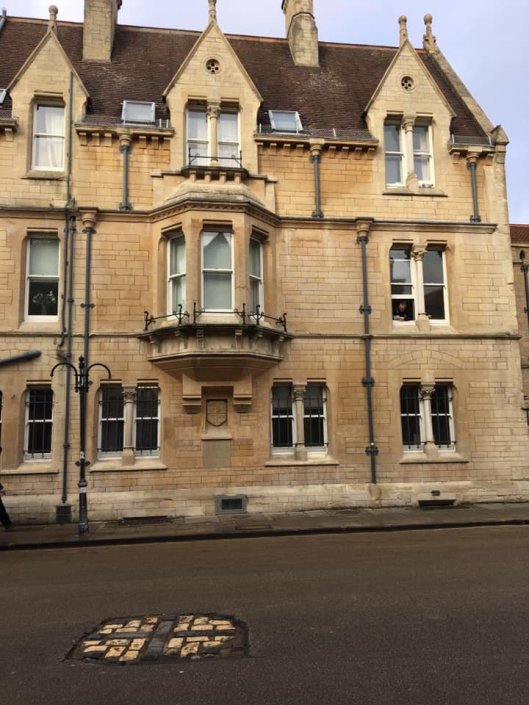
Today I was struck by the notion of our lives as “witness.” Following the bombing of the medieval Cathedral in 1940, Provost Howard had the words “Father Forgive,” inscribed on the wall behind the altar of the ruined building. Howard had many ways he could have pastored the community. But by asking God to forgive, he led his people to forgive their enemies, but also forgive themselves who were complicit in war too. His witness of forgiveness inspired a community to embrace reconciliation over retaliation, love over hate, life over death.

Meanwhile, Bishops Cranmer, Ridley, and Latimer had the option renounce their new Protestant identity and return to their Catholic roots – the only identity they had ever known. Instead, they bravely faced fire over their faith. Their witness inspired countless others to hold fast to their faith, to choose what is right, to trust God even until persecution and death.

I wonder what witness you are embracing today. How are you claiming Christ in a way that inspires others? I can’t wait to hear about it!

84686777_2887868871269354_7932178037292924928_n

Photo credit:  Jennifer Andrews-Weckerly; reuse with permission only

On Festivals, Fitness, and Fun…

16 Wednesday Oct 2019

Posted by jandrewsweckerly in Uncategorized

≈ Leave a comment

Tags

church, community, faith, festival, fun, God, good, grace, joy, love, muscle memory, passion, spiritual

44247089_2050605094995740_7020791298546204672_n

Photo credit:  Charlie Bauer; permission required for reuse.

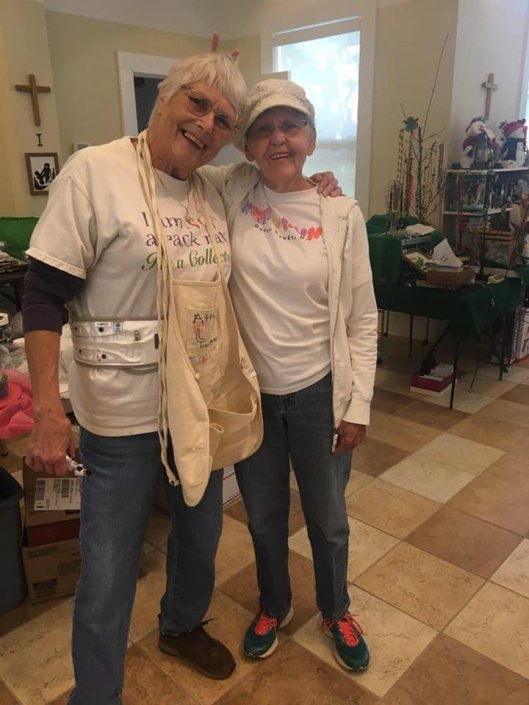
This week is one of my favorite weeks of the year.  This is the time when our church community transforms our property for our Annual Fall Festival.  Leading up to this week, there is a lot of organizing, delegating, preparing, and a fair amount of stress.  But this week, everything snaps into place.  The setup crew knows exactly what to breakdown and where it goes.  The Attic Treasures crew knows just what layout works and the room is magically converted to look like the same inviting space.  Later, our parking crew will come out and lay out where cars can park, tents will be erected, and all kinds of goods will be placed.  Having done the festival for nineteen years, we know the drill and seem to operate from muscle memory.

I love this week for several reasons.  One, I love seeing the community come together – both parishioners and neighbors alike, to make for a fun week of memories, laughter, and new experiences.  I love seeing people’s passion for helping others unfold in a way that is loving, affirming, and fun.  And I also love seeing people step up, taking on things that are a burden on their time, but doing so for the greater good.  The week truly is inspiring, and I love inviting the larger community into our joy.

This week – or perhaps next week after the dust has settled – I invite you to consider what other parts of your faith life might need to be flexed enough so that you have muscle memory around them as well.  Perhaps it is just making Sunday worship a part of your weekly experience with God – letting the routine of liturgy create a common pattern for you, while also seeing how the routine of liturgy creates surprising moments of grace and joy.  Maybe your muscle memory can form around inviting people to church.  I find the more I talk about a thing I am passionate about, the more talking about it becomes easy.  Or maybe your muscle memory will be around creating practices that feed your soul – our monthly book group, our yearly Women’s Retreat, a weekly Bible Study or Choir rehearsal.  If any of these practices create even a portion of the joy we experience during Fall Festival week, I expect you are in for a real treat.  I cannot wait to hear about it!


Homily – Luke 10:25-37, P10, YC, July 13, 2019

17 Wednesday Jul 2019

Posted by jandrewsweckerly in Sermons, Uncategorized

≈ Leave a comment

Tags

baptism, baptismal covenant, covenant, dignity, faith, God, Good Samaritan, Jesus, kindness, Mr. Rogers, neighbor, sacred, Samaritan, Sermon, unworthy

Last Sunday, a group of parishioners gathered to watch Won’t You Be My Neighbor, the documentary about Fred Rogers.  There were countless things I could tell you about this film, but one thing that really grabbed my attention was toward the end.  The film documented a criticism of Mr. Rogers as raising up a generation of people who feel and act entitled.  You see, one of the primary lessons from Mr. Rogers is he loves each individual, just as they are.  No changes are necessary; no fault is too big.  Mr. Rogers loves you just as you are.  You can hear the words of God in Mr. Rogers’ words – God too loves us unconditionally, and certainly loves us better than any human ever could.  However, Mr. Rogers’ critics would argue if everyone is loved just as they are, then surely they do not need to improve, or earn respect, or work hard.  But the film asserts something quite different.  The film asserts without being recipients of unconditional love, individuals cannot be givers of unconditional love.  In other words, to respect the dignity of every human being, one must first learn how sacred one’s own dignity is – one must be shown how she or he is a person with dignity to be respected in order to know how to respect the dignity of others.

That sense of each person having profound, sacred dignity is one of the main lessons of our gospel today.  The Good Samaritan is one of those stories that is so widely known all I need to do is say, “the Good Samaritan,” and we likely already know the story.  We might automatically recall, “Oh, that’s the story Jesus uses to tell us to be like the Good Samaritan – to be kind to others.”  In one sense, our recollection would be true – at the heart of Jesus’ story is a message to be kind to all.  But what that simple summary misses is the finer details to this story.

You see, those two people who separately pass the victim along the road, are a priest and a Levite.  These two people are not just people of faith – they are keepers of the faith.  They know the laws better than most people of faith.  You may have heard over the years the logic that priests or Levites could not risk being defiled by touching the body of the victim, and so that is why they went around the victim.  But the truth is, their avoidance had nothing to do with defilement – they were heading away from the temple and therefore were not in need of ritual purity, and any good priest or Levite knows they were expected to check on this victim; should he be dead, they should help bury him, and should he be alive, they should tend him.[i]  Basically, these are good, trained people of faith, not fulfilling their duty to love their neighbor as themselves.

But perhaps even more significant is the identity of the Samaritan.  The story does not say, a priest and Levite passed, but another faithful Jew came to the victim’s aid.  The story says, a priest and Levite passed, but a man whose people are mortal enemies of people of faith – who has persecuted, defiled, and subjugated people of faith – is the one who helps.  Saying “The Good Samaritan,” is like saying, “The Good Murderer.”[ii]  That this typically hated man is the one who shows mercy, kindness, and love is shocking.  The hearers of Jesus’ story are shocked, and our ears need to be similarly shocked.  Asking us to respect the dignity of every human being is already a monumental task; respecting the dignity of every human being is inconvenient, is humbling, and involves a willingness to be wrong about others.  Respecting the dignity of every human being means being willing to see how the best of the faithful fail at kindness, and how sometimes our worst enemies are better people of faith than we are.

Today we are baptizing a child of God.  Her parents, godmothers, and our community will make promises today – to raise her in the community of faith, to show her to love and respect, to fight for justice and peace, to share the word of God, and to repent when she messes up.  We say those words today as we reaffirm our own baptismal covenants; but sometimes we forget how revolutionary the covenant is.  We are agreeing to teach Selah to live a revolutionary life.  When we say we will teach baby Selah to respect the dignity of every human being, we are saying we will teach her the hard work being inconvenienced and humbled in order to care for others.  When we say we will teach her to love her neighbor as herself, we are saying we will teach her that even her greatest enemies are worthy of love.  When we say we will teach her to repent when she sins, we are saying we will teach her to be willing to admit when people who we have deemed unworthy of love and care show us what true kindness really looks like.

Today, when we hear Christ’s words to “go and do likewise,” we can be encouraged that Jesus empowers us to make some promises.  Today we look at Selah’s precious, innocent face, and we promise to walk with her as she discovers how hard this work of being a faithful follower of Christ really is.  Today, we promise to confess to Selah the times when we have failed to love our neighbors as ourselves.  Today, we promise when those we despise, those who hurt us, those we cast out because they are not like us, those we can no longer see humanity in ask us, “Won’t you be my neighbor,” we will say with Selah, “Yes.  You are my neighbor too.”  Amen.

[i] Amy-Jill Levine, Short Stories by Jesus (New York:  Harper One, 2014), 99-102.

[ii] Levine, 105.

On Being an American and a Christian…

03 Wednesday Jul 2019

Posted by jandrewsweckerly in Uncategorized

≈ 3 Comments

Tags

American, asylum, baptism, children, Christian, complicated, Detention, diverse, faith, God, gospel, immigration, Jesus, politics

6d4151a40a463e26db746895528eb216

Photo credit:  https://www.pinterest.com/pin/439734351090290865/

Last week, several of the interfaith clergy in our community published a litany for children in detention centers.  They requested clergy leaders read the litany in their homes of worship – not in a special vigil, but in the heart of where weekly prayer and formation take place.  The litany was beautiful, and spoke to much of my own sense of despair about our treatment of children.  But I found myself in a quandary.  You see, my parish is a diverse one.  We pride ourselves on being Christians of varying political opinions who respect one another enough to honor our political differences by kneeling as equals at the Lord’s table.  In order to maintain that sense of respect, I am very careful about how I talk about current events.  My goal is always to preach the gospel of Jesus Christ, with the charge that we should engage in politics with the Gospel always in the forefront.

But the issue of children in detention centers tugs at me at two levels.  On the one hand, this is very much an issue of politics – of how we manage the flow of immigrants and those seeking asylum into our country.  I know our parishioners are of a divided mind on this issue – as is most of the country.  The issue of our borders is vastly layered – were it not so, there would be clear, easy answers to very difficult questions.  In addition to being a political, economical, sociological issue, this is a spiritual one as well.  One’s sense of gratitude for our country’s blessings, one’s baptismal covenant to respect the dignity of every human being, and one’s understanding of Christ’s command to love God and love neighbor collide with the realities of limited resources, stretched budgets, and funding priorities.

On the other hand, these are children.  These are eight-year-olds caring for unrelated infants.  These are nursing teen mothers with no diapers or place to lay their heads.  These are toddlers who have no way to wash their hands or clean their soiled clothing.  I look at my own children, who have every comfort they could ever need, and when I imagine them soiled, hungry, deprived of sleep, and so afraid that the color has drained from their faces, my heart shatters.  I know this issue is truly complicated, and I know that philosophically we as a country need to decide how we will manage the treatment of our neighbors.  But when I am hesitant to pray for the welfare of children in detention because it is politically complicated, I realize I am failing to live the Gospel life.

I cannot say I will ever be able to pray the litany presented by my interfaith brothers and sisters.  Though it is beautiful, it is also politically motivated.  But what I can tell you is, as a pastor and baptized child of God, I am praying for those children, praying for their mothers and fathers, and praying for our own souls as we figure out how to reckon politics and human dignity – how to be Americans and Christians.  Given our country’s history, it would seem those two things fit together easily.  But to be a good American and to be a good Christian both take intentionality, discernment, and prayer.  May God bless us all as we seek to harmonize the two.

Sermon – 1 Kings 19.1-15a, Luke 8.26-39, P7, YC, June 23, 2019

26 Wednesday Jun 2019

Posted by jandrewsweckerly in Sermons, Uncategorized

≈ Leave a comment

Tags

call, demons, faith, fear, God, goodness, grace, love, paralysis, release, scary, Sermon, trust

I remember when I was discerning one of my first calls to a parish, I heard a distinct word of encouragement from God that made me confident I should accept the call.  Or at least I thought I heard a distinct word from God.  Moments and days later, I began to doubt myself.  Maybe the words I heard in my head were my own.  Maybe I imagined the whole thing or, in hoping from a word of clarity, I made up the words myself.  And as soon as I began questioning what I heard, I started questioning the guidance of the words.  Either I was boldly following God’s distinct word to me or I was misguidedly making decisions based on an imagined experience.  Saying yes in that fog of doubt became one of the scariest experiences I have had.

That’s the funny thing about our relationship with God.  Most of the time when we talk about our relationship with God, we talk about the God of love.  But real, vulnerable, authentic experiences with God are scary too.  Whether we are trusting God through a major life crisis, we are taking a new path we are not certain is the right one, or someone challenges our life choices, following God in everyday life is scary.

We see that reality in two of our scripture readings today.  To understand why Jezebel wants to kill the prophet Elijah, we have to recall what happened in the previous chapters.  In an effort to proclaim the supremacy of Yahweh, Elijah challenges the god of Jezebel’s prophets to a duel of sorts.  All day long the prophets of Baal cry out to Baal to reign down fire on a sacrifice and are unable.  Elijah, fully confident in the power of Yahweh, immediately calls down fire, victorious over the prophets of Baal, and then proceeds to slaughter the whole lot.  But Jezebel’s answering threat on Elijah’s life sends him running.  No longer full of prophetic nerve[i], he runs to the wilderness, and asks God to take away his life.  Once so confident in the power of God, Elijah would rather cower in a corner and die.  Even when God’s voice come to him in a word of encouragement, Elijah can only see what is in front of him; in fact, he can only see the limited view he has, not the wider, sweeping view of God’s power to save.   Fear leads Elijah to paralysis.

Meanwhile the Gerasenes are equally scared.  They have developed a system for dealing with the possessed man of their village.  They know when to bind him and when to abandon him.  They know he is dangerous, and unclean, but they have figured out how to keep the town safe.  He is the identified patient of the town – the one who has the “real” problems.  By identifying the demoniac as the patient, no one else has to look at their own demons – the ways in which each of them are “vulnerable to forces that seek to take [them] over, to bind [their] mouths, to take away [their] true names, and to separate [them] from God and from each other.”[ii]  So, when Jesus casts out the impossible demons, and sends them to their death through their herd of swine, and the townspeople find the demoniac healed, clothed, and sitting in his right mind at the feet of Jesus, they do not celebrate or thank God for healing.  Instead they stand afraid of the power of God.  Now the demoniac is healed, they are afraid this Jesus will see their demons or challenge their feigned health.  In response, they do not ask for an explanation, but ask Jesus to leave.  Their fear leads to paralysis too.

To be fair, fear is a natural and sometimes necessary emotion.  Fear helps us develop a healthy sense of preservation.  Fear allows us to make necessarily cautious decisions.  Fear can keep us safe.  But fear can also lead to paralysis, and perhaps more importantly, to a lack of trust.  And when we are talking about God, a lack of trust evolving from fear gets us into trouble.  We start doubting the graciousness we know God intends for us.  We start avoiding the very work that will give us joy and fulfillment.  We start losing our sense of connection to God – who happily emboldens us when we allow God to do so.

We see in Elijah and the Gerasenes’ story the goodness that can happen when we work through our fear.  For Elijah, despite the fact he is terrified and despondent, convinced he would be better off dead, God provides food for him the wilderness – twice!  The angel of God feeds him with food so sustaining Elijah is able to make a forty-day journey.  And despite the fact that Elijah is so afraid he becomes convinced he is all alone in God’s work, God not only speaks to him, but opens up a vision of God’s work that is bigger than Elijah and extends well beyond his lifetime.[iii]  As Elijah slowly loosens his grip on fear, he opens himself up again to God’s guidance, protection, and confidence – even though the guidance, protection, and confidence had been present all along, hidden in the presence of gripping fear, but there nonetheless.

The same is true for the Gerasenes.  Despite the fact the townspeople are fearful of Jesus’ power, Jesus brings about healing anyway.  And knowing the people of Gerasene may continue to be fearful, Jesus has the former demoniac stay behind so he can testify to the salvific work of God.  As scholar Debie Thomas points out, “The story ends with Jesus commissioning the healed man to stay where he is and serve as the first missionary to his townspeople — the same townspeople who feared, shunned, trapped, and shackled him for years.”[iv]  Jesus does not scold, shun, or shame when he is asked to leave.  Jesus keeps holding out hope in the face of fear – Jesus holds hope that the townspeople might be healed like the demoniac is healed.  Jesus loves graciously and expects transformation in the face of hopeless fear.

One of the main tenants of practicing yoga is while you are practicing, you are to clear you mind of thoughts.  I am pretty sure every yoga instructor knows this is an impossible goal, because the other thing one learns in yoga is how to clear your mind once your mind becomes distracted – not if your mind becomes distracted.  There are all sorts of methods, but the primary instruction is to acknowledge the thought and then let the thought go.  In other words, when you catch yourself on the fifth thing on your to do list, you stop yourself by acknowledging you got off track, let the failure go, and try to clear you mind again.  There is no need for judgment, just acknowledgment and release.

That is our invitation today too.  Fear will always be with us.  No matter how strong we are in our faith life, we will sometimes be paralyzed by fear.  But if we can take a cue from yoga by pausing, taking a deep breath, acknowledging our failure in the face of fear, and trying again, perhaps we will be able to release the paralysis fear causes and step boldly back into the path God establishes for us.  Today’s lessons remind us there is encouragement for this work all around us.  There are angels that feed us when we want to give up the fight.  God speaks to us, reminding us how God is working at a much higher level, supporting us in ways we do not even realize we need.  God sends healed messengers to testify to us, to remind us of the ways in which we need healing more than those we have labeled as sick.  In breathing and letting go, we open our eyes in fresh ways to see God all around us acting for good.  And with each breath, and with each relaxing of our grip on fear, God washes over us with grace, kindness, compassion, and love.  Yes, letting go is scary.  But God shows us over and over again how when we let go of our fear, God is there with abundant, wonderful, powerful love.  Amen.

[i] Trevor Eppehimer, “Theological Perspective,” Feasting on the Word, Yr. C, Vol. 3 (Louisville: Westminster John Knox Press, 2010), 148.

[ii] Debie Thomas, “Legion,” June 16, 2019, as found at https://www.journeywithjesus.net/lectionary-essays/current-essay, on June 19, 2019.

[iii] Kathleen A. Robertson Farmer, “Theological Perspective,” Feasting on the Word, Yr. C, Vol. 3 (Louisville: Westminster John Knox Press, 2010), 151.

[iv] Thomas.

← Older posts
Newer posts →

Recent Posts

  • On Sharing the Love…
  • Sermon – Micah 6.1-8, Matthew 5.1-12, EP4, YA, January 30, 2026
  • On Justice, Kindness, Humility, and the Messy Middle…
  • Feast of the Rev. Dr. Martin Luther King, Jr., January 18, 2026
  • On Peace, Love, and Conduits…

Archives

  • February 2026
  • January 2026
  • December 2025
  • November 2025
  • October 2025
  • September 2025
  • August 2025
  • July 2025
  • June 2025
  • March 2025
  • February 2025
  • December 2024
  • November 2024
  • October 2024
  • September 2024
  • August 2024
  • July 2024
  • June 2024
  • May 2024
  • March 2024
  • February 2024
  • January 2024
  • December 2023
  • November 2023
  • October 2023
  • September 2023
  • August 2023
  • July 2023
  • June 2023
  • May 2023
  • March 2023
  • February 2023
  • January 2023
  • December 2022
  • November 2022
  • October 2022
  • June 2022
  • May 2022
  • January 2022
  • December 2021
  • November 2021
  • October 2021
  • September 2021
  • August 2021
  • June 2021
  • May 2021
  • April 2021
  • March 2021
  • February 2021
  • January 2021
  • December 2020
  • November 2020
  • October 2020
  • September 2020
  • August 2020
  • July 2020
  • June 2020
  • May 2020
  • April 2020
  • March 2020
  • February 2020
  • January 2020
  • December 2019
  • November 2019
  • October 2019
  • September 2019
  • August 2019
  • July 2019
  • June 2019
  • May 2019
  • April 2019
  • March 2019
  • February 2019
  • January 2019
  • December 2018
  • November 2018
  • October 2018
  • September 2018
  • August 2018
  • July 2018
  • June 2018
  • May 2018
  • April 2018
  • March 2018
  • February 2018
  • January 2018
  • December 2017
  • November 2017
  • October 2017
  • September 2017
  • August 2017
  • July 2017
  • June 2017
  • May 2017
  • April 2017
  • March 2017
  • February 2017
  • January 2017
  • December 2016
  • November 2016
  • October 2016
  • September 2016
  • August 2016
  • July 2016
  • June 2016
  • May 2016
  • April 2016
  • March 2016
  • February 2016
  • January 2016
  • December 2015
  • November 2015
  • October 2015
  • September 2015
  • August 2015
  • July 2015
  • June 2015
  • May 2015
  • April 2015
  • March 2015
  • February 2015
  • January 2015
  • December 2014
  • November 2014
  • October 2014
  • September 2014
  • August 2014
  • July 2014
  • June 2014
  • April 2014
  • March 2014
  • February 2014
  • January 2014
  • December 2013
  • November 2013
  • October 2013
  • September 2013
  • August 2013
  • July 2013
  • June 2013
  • May 2013
  • April 2013
  • March 2013
  • February 2013
  • January 2013
  • December 2012
  • November 2012
  • October 2012
  • September 2012

Categories

  • reflection
  • Sermons
  • Uncategorized

Meta

  • Create account
  • Log in
  • Entries feed
  • Comments feed
  • WordPress.com

Blog at WordPress.com.

  • Subscribe Subscribed
    • Seeking and Serving
    • Join 395 other subscribers
    • Already have a WordPress.com account? Log in now.
    • Seeking and Serving
    • Subscribe Subscribed
    • Sign up
    • Log in
    • Report this content
    • View site in Reader
    • Manage subscriptions
    • Collapse this bar
 

Loading Comments...