• About

Seeking and Serving

~ seek and serve Christ in all persons

Seeking and Serving

Tag Archives: faith

On Parenting and Other Failures…

23 Wednesday Aug 2017

Posted by jandrewsweckerly in Uncategorized

≈ Leave a comment

Tags

children, Christian, disciple, encouragement, failure, faith, faithful, God, hope, Jesus, love, parent, parenting, Peter

I have never really thought of myself as a very good parent.  I am constantly finding myself in the midst of parenting and thinking, “I really could be handling this much better.”  In looking back, I can see countless ways in which I escalated a situation instead of deescalated, in which I got stuck in wanting control instead of fostering independence, or in which I simply lost my cool.  Parenting sometimes brings out the worst in me, and on the really bad days, I feel like I am failing pretty miserably at the whole endeavor.

I feel that way about my faith sometimes too.  I know all the ways I am called to serve God and to be a faithful disciple.  But I often find myself failing.  For as many times as I can be like an insightful Peter, more often I am like the Peter who is sinking into the sea, trying to control what Jesus does, or putting myself in front of the gospel.  Reading about modern saints, or people who are making a difference with their life only makes me more aware of my many failings to live as a faithful Christian.

The good news is that children, and other people, often give us glimpses of hope and encouragement.  The other day, I was stirring from a nap with my youngest (who refuses to nap now unless you nap with her).  As she was waking up, she smiled at me and said, “You can be my best friend, Mommy.”  A few nights ago, my oldest requested to start using the same shampoo, conditioner, and soap that I use, instead of her 3-in-1 tear-free wash we have been using.  I sighed out of irritation, and asked her why.  She said, “Because I want to be like you, Mommy.  Except for your short hair!”

I laughed on both occasions, but both comments reminded me that for all the times I fail, there is still love.  For all the ways in which I mess up this parenting thing, there are glimpses of times when I managed to get it a tiny bit right.  I think the same is true for our faith life.  For all the ways we are horribly imperfect, we also have glimpses of powerful faithfulness.  I encourage you to listen to those around you to hear those little comments that will encourage you on your journey.  And then I invite you to straighten up, take a deep breath, and get back in there.  God is doing amazing things through you.  I can’t wait to hear all about it!!

Dad Teaching Daughter Electrical Engineering

Photo credit:  www.quoteambition.com/best-encouraging-quotes-words-encouragement/

On the Power of Hospitality…

02 Wednesday Aug 2017

Posted by jandrewsweckerly in Uncategorized

≈ 1 Comment

Tags

church, community, disciple, Episcopal, faith, gift, hospitality, invite, kingdom of God, powerful, radical, share, welcome, witness

Hospitality

Photo credit:  www.riversouthbay.org/my-river/opportunities/hospitality-team

As a priest, it is pretty rare that I get to sit in the pew, let alone worship in or experience another church’s community.  But last week I had the opportunity to do that in two very different, but blessed ways.  The first was taking my children to Vacation Bible School (VBS) at a local Disciples of Christ church.  The church is one of our ecumenical partners, and I had preached there during a pulpit exchange last Lent.  Our children had requested attending VBS, but our shared Episcopal offering was at a time we could not do.  So off to the Disciples of Christ church we went.  As we ate dinner each night, and as the kids ran off to crafts, music, teaching, and play, and as I sat in on the adult class, I felt like a guest in a wonderful house of hospitality.  I watched as within just a week, the church members fell in love with our children, giving them hugs and high fives, teaching them powerful lessons about how they are made for a purpose and that God is always in their corner.  It was a wonderful gift to be welcomed as strangers and sent off as fellow disciples in Christ.

The other experience was quite different.  A gentleman who had worked for the cleaning company we use at our church passed away unexpectedly a few weeks ago.  His church hosted the funeral, and I attended the service on Sunday.  The funeral was admittedly a difficult one.  Lonnie had experienced a rough road in life – from the loss of family, addictions, homelessness, imprisonment, recovery, and new life.  I only knew his story superficially, having been introduced to him through one of our parishioners who was a mentor of his.  But what I witnessed was a community of faith who completely embraced Lonnie in every way – loving him fully, accepting him as he was, incorporating him into the life of the church, welcoming him into their homes, and being active agents of his recovery and faith life.  They offered me a powerful witness about what Christ-like relationship looks like.

I come out of those experiences with two distinct conclusions.  First, I have a renewed appreciation for my own faith community.  Though I learned powerful lessons last week, I also developed a renewed love for Hickory Neck and our distinct work in furthering the kingdom in the greater Williamsburg area.  My experience reminded me of what radical hospitality can feel like as a recipient and made me want to offer it more.

Second, I am impressed with the broad range of expressions of faith in Williamsburg, and I am grateful that there is a place where anyone can find a church home.  The witness for Jesus is strong in this community.  I suspect that the more we appreciate our collective witness, the stronger our individual witness will become.  If you have not invited a friend or acquaintance to church lately, I encourage you to do so.  Experiencing the gift of Christian hospitality, community, and formation at Hickory Neck is not a gift to keep to ourselves.  That gift can be life changing!

On Sports, Story, and the Spirit…

19 Wednesday Jul 2017

Posted by jandrewsweckerly in Uncategorized

≈ Leave a comment

Tags

challenge, conversation, faith, faithful, fun, hope, Jesus, journey, movie, power, race, racial reconciliation, sports, story

banner-top-basketball-960x275-960x275

Photo credit:  coachcarter5.blogspot.com/p/plot-summary.html

This summer, our church was looking to do two things:  we wanted to offer a “light” educational series that adults could enjoy and we wanted to continue our conversation about racial reconciliation.  One might think those two goals do not go together.  But we were not to be deterred.  We settled on the option of watching movies that were about racial reconciliation.  Movies are certainly fun, but the topic still wasn’t capturing the “fun” or “light” criteria.  Then the idea hit us:  sports movies!  Sports movies allow us to be entertained, while sneaking in powerful stories of hope, challenge, and encouragement.

The model has worked even better than I suspected.  Our first two movies have been 42: The Jackie Robinson Story and The Blind Side.  The last two movies are Coach Carter and Invictus.  We were able to feature four sports:  baseball, football, basketball, and rugby.  Each week we have been able to cheer on teams, laugh at comical moments, and pause with discomfort when truth broke through.  Our conversations have been rich – each movie bringing up parallels in our own stories – about race, about respecting the dignity of every human being, and about our journey with faith.

I think what has made that work is each movie is based on a true story.  We did not make that connection when planning the film list, but it has been a powerful surprise.  Unlike a fictional film, which could be dismissed as romantic, overly simple, or unrealistic, these movies show us real people, trying to live faithful lives on and off the field.  Their stories have been encouraging us to do likewise – examine how we are living faithful lives on and off the field.  Ultimately, I think that is the only way we are going to make our way toward racial reconciliation:  sharing our stories and listening to others’ stories.  It would be easy to do otherwise; to keep our heads down and ignore what is happening in the world about us.  But these stories invite us into another way of being.

The invitation of our Faith and Film series this week is for us to find ways to engage outside of the theater.  Maybe you start by telling someone about this awesome movie you just saw.  Or if you are feeling more confident, maybe you simply talk to a friend or coworker – either of your race or another – and start with a confession, “I watched this movie and it has made me think about [insert your thoughts here].  What is your experience with that?”  Using the movie or your own story allows you to do what Jesus did all the time – engage people where they are through the power of story.  I believe reconciliation starts there:  one story at a time.

On Honoring Christ in Others…

28 Wednesday Jun 2017

Posted by jandrewsweckerly in Uncategorized

≈ Leave a comment

Tags

Christ, differences, faith, honor, light, love, others, respect, witness, yoga

Hungry

Photo credit:  https://www.shutterstock.com/video/clip-7207990-stock-footage-shaking-hand-begging-for-spare-change-giving-money-to-beggar.html

At my local yoga studio, the teachers share a common practice.  At the end of every session, they say, “The love and light in me honors and respects the love and light in each of you.  Namaste.”  The repetition of the refrain every class, by every teacher, makes the end of our class feel like a liturgy – as though the teacher is sending us out into the world with a blessing.  But what I also love about the words is that I can easily substitute Christian language into their words without feeling like I change their meaning that much.  I have talked about a priest-yoga instructor once before here.  Based on his teachings, I always hear, “The Christ in me honors and respects the Christ in each of you.  Peace.”

With that transformed refrain, I find myself each week wondering how I take that mantra out into the world.  Am I honoring and respecting the Christ in each and every person I encounter?  Am I honoring and respecting the Christ in myself?  Those two simple questions are actually really difficult outside of the yoga studio.  In the yoga studio, we are people who are fairly similar – people of privilege who have the time and money to tend to their physical, mental, and spiritual well-being.  But out in the world, we encounter a much wider diversity of people – people of all types of socio-economic, gender, racial, ethnic, and sexual-orientation backgrounds.  Is the Christ in me honoring and respecting the Christ in others when I listen to political rhetoric, when I’m driving around town, or when I make financial decisions?

The last couple of days I have noticed a few more community members pan handling near stop lights.  I am not sure why there has been an increase, but it has been noticeable.  I usually carry small bags of supplies in my car for homeless individuals, but I recently cleared out my car and they are sitting in my garage.  So yesterday, knowing I was empty handed, I sat at the stoplight, intentionally not making eye contact with a particular panhandler.  But as we drove by, my youngest daughter waved and shouted, “Hi!”

Clearly my daughter has mastered the art of honoring and respecting the Christ in others.  She did not see class, status, or dirt.  She saw a person whom she would honor like anyone else.  That’s the wonderful thing about being a part of a faith community.  When we are struggling with our Christian witness – with truly allowing the Christ in us to honor and respect the Christ in others – other faithful witnesses will model that behavior for us.  Who are your faith models?  How might you engage more faithfully in honoring and respecting the Christ in others – especially those in whom you struggle to see Christ?

Sermon – Genesis 18.1-1, 21-1-7, P6, YA, June 18, 2017

21 Wednesday Jun 2017

Posted by jandrewsweckerly in Sermons, Uncategorized

≈ Leave a comment

Tags

Abraham, anger, conversation, doubt, dream, faith, frustration, God, honor, lack of faith, laugh, laughter, promise, Sarah, Sermon, share, transform

Today we get one of my favorite stories in scripture – Sarah’s laughter at God’s promise.  The story is perfectly crafted.  The story with a flurry of activity.  Abraham is sitting in his tent in the heat of the day when three guests suddenly appear.  As soon as Abraham sees them, he runs to greet them, begging them to stay.  Then Abraham sends the entire household into a tizzy.  He barks orders about baking cakes, grabs a calf and commands the calf be prepared for the guests.  He gets curds and milk and rushes to plate the feast for the guests.  We can almost imagine Abraham panting as he finally delivers the meals to the guests.

But then the story comes to a screeching halt, with a question that tells us what is really important.  “Where is your wife, Sarah?”  And slowly, the promise of a child to a barren, post-menopausal woman unfolds.  Abraham and Sarah were promised long ago to be the parents of a great nation.  But Sarah had given up on that dream.  She had already asked Abraham to go to her slave-girl and have a child with Hagar as a representative child for her.  Her action with Hagar had been a desperate move, but what else could she have done?  So when this guest, or God, as the text later tells us, says that Sarah will conceive herself, after years of longing, hoping, feeling devastated and powerless, Sarah does what we all might do.  She laughs.  She laughs at the prospect of pleasure in her marriage when she and Abraham are so advanced in age.  She laughs at the impossibility that their pleasure might lead to progeny.  She laughs at the promise because believing the promise would mean opening herself up to unfilled dreams yet again.

Sarah’s laughter has long been used as a criticism for a lack of faith in God.  When God asks, “Is anything too wonderful for the Lord?” and when Sarah quickly denies her laughter, countless readers have wagged their fingers at Sarah as if to say, “Oh ye of little faith.”  And I can see how we get there.  The exchange between Sarah and God – the laughter that bubbles out from years of hurt and disappointment, the scolding by God, the attempt to lie to cover up embarrassment, and the scolding yet again when God calls Sarah on her dishonesty – is all too familiar to us.  What the accusation of lacking faith forgets is how terribly vulnerable and resigned Sarah is.  I cannot tell you the number of people I have counseled who at the end of second marriage have begun to doubt God’s presence.  I cannot tell you the number of people I have sat with after receiving a bad diagnosis for themselves or their loved one who has begun to whether God has abandoned them.  I cannot tell you the number of people have received yet another rejection letter who have begun to question God’s call on their life.  When Sarah laughs, I do not feel justification for judgment against her level of faith.  When Sarah laughs, I hear the ache of countless believers who know how ludicrous God’s promises can be.

What gets me about the judgment of Sarah is the short memory of scripture readers.  In the chapter before what we heard today, Abraham is given the same promise that Sarah hears – a child by Sarah.  And his reaction?  He does not simply laugh quietly to himself as Sarah does in that tent.  He falls on his face and laughs full-bodied at God.  The only difference in laughter between Abraham and Sarah is that Abraham laughs in front of God where Sarah tries to hide her laughter.  Both are an acknowledgement of doubt about what God can do.  Both take all their disappointment, pain, and hurt, and dissolve into laughter because, quite frankly, sometimes God is laughable.  Sometimes God makes no sense at all, and laughing is the only release and protection from more hurt.  Humans questioning God is a natural part of a genuine God-human conversation, a conventional motif we see throughout the Old Testament.[i]

This week, I stumbled on an Old Testament scholar, Kathryn Shifferdecker, who suggests that God may not be a God of judgment in this passage.  In fact, she sees God as fully understanding the comedy of the situation.  She sees a God with a sense of humor, who when God says, “Oh yes you did laugh,” says so with a twinkle in his eye.[ii]  The theory totally shifted the reading for me.  Suddenly the pieces all fit together.  Instead of an angry or disappointed God, who judges disbelief, our God is a God who understands that God’s promises are sometimes laughable – even if they are true.  Why else would God tell Abraham to name his son Isaac, which means, “he laughs,” in Hebrew?[iii]  As Schifferdecker explains, “Abraham falls on his face in a fit of laughter.  Sarah laughs behind the tent door.  And the LORD (I believe) laughs with them at the divine, wonderful absurdity of it all.  Given the humor of the scene under the oaks of Mamre, and the comedy of a God who acts in unexpected ways to fulfill God’s promises, it is entirely appropriate that the child of the promise should be named ‘Laughter.’”[iv]

The image of the three of them laughing – Sarah, Abraham, and God, makes a lot of sense once we hear the final words of Sarah.  In chapter 21, Sarah, perhaps initially embarrassed or doubtful of God, now says, “God has brought laughter for me; everyone who hears will laugh with me.”  This story is not a story of shame for those of us who struggle with doubt, anger, or frustration with God.  This is not a story of an unfaithful follower of God.  This is a story about a woman and a man who look at the absurdity of God’s promise with the fullness of their humanity and laugh – hard, belly-shaking, on-the-floor laughter that only comes when the divine finally breaks through our disappointment, shame, and anger, and brings us to laughter.

I love this story even more as I think about the trinity of Abraham, Sarah, and God laughing.  Their laughter affirms our own incredulous walks with God.  Their laughter takes those moments when we no long trust God’s promises, and transforms them.  No longer do we need to hide away our deepest doubts, but instead we honor them.  We share them.  And we create communities of laughter with them.  Amen.

[i] Leander E. Keck, ed., New Interpreter’s Bible Commentary, vol. I (Abingdon Press, 1994), 465.

[ii] Kathryn M. Schifferdecker, “Commentary on Genesis 18:1-15 [21:1-7],” June 18, 2017, as found at http://www.workingpreacher.org/preaching.aspx?commentary_id=3301 on June 14, 2017.

[iii] Tamara Cohn Eshkenazi, ed., The Torah:  A Women’s Commentary, (Women of Reform Judaism URJ Press, 2008), 97.

[iv] Schifferdecker.

Homily – Matthew 17.1-9, LEP, YA, February 26, 2017

01 Wednesday Mar 2017

Posted by jandrewsweckerly in Sermons, Uncategorized

≈ Leave a comment

Tags

baptism, baptismal covenant, clarity, faith, homily, identity, Jesus, journey, promises, Transfiguration, transformation

Today we celebrate two major events – the Transfiguration of Jesus and the baptism of Levi and Owen at our 9:00 am service.  I have been thinking all week about what a strange, and quite frankly, difficult combination those two events are.  For well over a month, I have been looking forward to being able to tell a child-friendly story about Jesus and baptism – until I realized we were hearing about the Transfiguration.  The Transfiguration is one of those major ah-ha moments in Jesus’ story.  Jesus had been trying to communicate his identity even before he could communicate – first with his miracle birth and the multiple witnesses to his birth.  Later, at his baptism, the voice from Heaven says, “This is my Son, the beloved, with whom I am well pleased.”[i]  Even six days before the story we hear today, Peter proclaims that Jesus is the Messiah – but then he quickly gets confused, and Jesus is telling him, “Get behind me Satan”[ii]  So, to help everyone avoid confusion about Jesus’ identity, Jesus, Peter, James, and John go up a mountain and everything becomes crystal clear.

Except, nothing about the Transfiguration is crystal clear.  Why is Jesus all of a sudden dazzling white?  Why are Moses and Elijah there?  Why is Peter babbling about making three dwelling places?  Why are the disciples terrified?  And what in the world does this have to do with baptism?  Of course, there are answers to each of those questions – what we know happens when people encounter God directly, how Moses and Elijah’s presence signify the completion of the Law and the Prophets in Jesus[iii], how dwelling places are a reference to the feast of Tabernacles[iv], and how theophanies are always terrifying.  But the last question – what the Transfiguration has to do with baptism – is the one that has been intriguing me this week.

The more I thought about the Transfiguration, the more I was grateful that Levi and Owen will have this lesson to remember their baptism.  You see, today, their parents and godparents make some promises on their behalf.  They promise to raise these two boys up in the life of faith.  Now that promise may sound simple – years from now, Levi and Owen’s godparents may be calling to say, “Have you been to church lately?”  But the promise is not that simple.  The promise is about not just bringing them to Church, but helping them engage in their faith life.  At first, engaging in their faith life will mean asking about what happened in Sunday School, or talking about something in the church service.  But as they get older, their promise will mean answering fun questions like, “Why was Jesus so shiny, and why were his clothes sparkling?”  As the boys mature, their promise will mean being role models for living a godly life – and talking about how hard that really is, how much we fail at it, and how we keep repenting and returning to the Lord.  Their promise means being willing to go to hard, vulnerable places and encouraging the boys to listen for God’s voice.

So what does the Transfiguration have to do with those promises?  I like that we get this particular lesson because this lesson is a bit of a metaphor for all of our spiritual journeys.  Throughout our spiritual journey we all have mountaintop experiences.  We have these amazing moments of clarity, of wonder, of mystery, of profound insight, and of transformation.  Those moments help define who and whose we are and how we are going to live our lives.  But just like the disciples, we also find ourselves at times, confused and certainly full of fear on that journey.  To the disciples, Jesus places his hand on them and says, “Get up and do not be afraid.”  We are given those gifts too – sometimes the power of God is so close that the power feels like a hand on us; but most times, the hand is from another pilgrim on the faith journey, encouraging us to get up and telling us not to be afraid.[v]  In many ways, our baptism is our great moment of clarity.  Our baptism is so important and so defining that every time we witness a baptism, the Church invites all of us to reaffirm our baptismal covenant – to remember that profound moment and to recommit ourselves to bringing our lives in line with the vows we took – or someone took on our behalf.

In that way, I am deeply grateful that we get this wonderful story of transformation today.  As we remember this moment of clarity, confusion, companionship, and grace, we engage in another story of transformation – the story of Levi and Owen’s transformation into full members in the body of Christ.  Today, their parents, godparents, and each one of us commit ourselves to being agents of transformation in Levi and Owen’s lives, reminding them who and whose they are as we remind ourselves of who and whose we are.  In that way, Levi and Owen give us a gift too – they gift us with the reminder of our own transformation, and encourage us to renew our faith journey.  And if we especially need it today, they too place their small hands on our shoulders and say to us, “Get up and do not be afraid.”  Because God has work for us to do!  Amen.

[i] Mt. 3.17

[ii] Mt. 16.23

[iii] Robert A. Bryant, “Exegetical Perspective,” Feasting on the Word, Yr. A, Vol. 1 (Louisville:  Westminster John Knox Press, 2010), 455.

[iv] Bryant, 457.

[v] Patrick J. Willson, “Homiletical Perspective,” Feasting on the Word, Yr. A, Vol. 1 (Louisville:  Westminster John Knox Press, 2010), 457.

Sermon – Luke 17.5-10, 2 Timothy 1.1-14, P22, YC, October 2, 2016

05 Wednesday Oct 2016

Posted by jandrewsweckerly in Sermons, Uncategorized

≈ Leave a comment

Tags

apostles, belief, Episcopal, faith, God, head, heart, heritage, identity, increase, Jesus, mothers, pastoral, Sermon, struggle, Timothy, work

One of the funny things about wearing a priestly collar in public is that people tend to tell you way more about their lives than perhaps they should.  As soon as a person realizes you are a priest, the flood gates open and all of a sudden you are the guest on the “Everything You Always Wanted to Know about Church But Were Afraid to Ask!” Show.  I get questions about how one becomes a priest, what being an Episcopalian means, and what kind of Christian I am.  But mostly I get confessions.  People will confess they used to go to church, but once they became an adult, they had a hard time believing everything the church taught them as a child.  People will confess that they were raised in the church, but when a terrible tragedy hit, they felt abandoned by God and could never go back.  People will confess that they miss going to church, but that they always feel like they do not belong when the go to church – that everyone in the church seems to have their lives figured out except them.

What is interesting to me about those conversations with non-church goers or lapsed Christians is that they seem to think that their struggles with faith make them ineligible for church membership.  Perhaps that is true in some denominations in our country.  But one of the primary reason I became an Episcopalian was because the Episcopal Church not only made room for faith struggles, but expected those struggles.  Almost every time I have raised a question about a Biblical text in Bible Study, instead of someone explaining the answer to me, the response is almost always, “Yeah, that is a hard piece of scripture.”  Almost every time I have been with a grieving family who is on the brink of questioning their faith, no one in the room challenges them.  Usually someone says, “I could totally see how you would be doubting God right now.”  And almost every time I have been in a class about theology, the creeds, confirmation, or baptism, someone has asked, “What if I can’t believe that part.”  Never once has that person been told they do not belong if they cannot believe – in fact, usually the person is praised for naming the lack of faith we have all have had at some point in our spiritual journey.

I think that is why today’s Gospel lesson feels so real.  The disciples and apostles have been following Jesus for weeks, and Jesus has been handing them a lot of heavy stuff.  Jesus has told them to give up their possessions, to forgive those who wrong them, to take up their cross.  I cannot imagine anyone looking at the stark life Jesus describes and not calling out, “Increase our faith!”  How else can we be all Jesus wants us to be without increasing our faith?  Surely we have all had those trough moments – in the face of our mortality, at the betrayal of a friend or spouse, in the midst of anxiety and stress – when we too cry out to God, “Increase our faith!”

What might be helpful to do is talk a little about what we mean when we say faith.  Marcus Borg talks about two different kinds of faith:  faith of the head and faith of the heart.  Faith of the head is claiming something about God or the human condition.  This kind of faith is more about what we believe.  When someone says they have lost their faith, they have often lost this faith of the head.  They no longer believe something taught by holy scripture or the church.  In the Episcopal Church, we do not get too upset about this kind of faith struggle.  Instead, we see faith as ever evolving and growing.  Questions are at the root of a deep, mature faith.  Borg would argue that God cares very little about what beliefs are in our heads – if we believe the right things.  Borg knows that you can believe all the right things and still be in bondage, because, “Believing a set of claims to be true has very little transforming power.”[i]

Unlike faith of the head, faith of the heart is a little different, according to Borg.  Faith of the heart is characterized by three things:  trust, fidelity, and vision.  To have faith of the heart is to put a radical trust in God – to rely on God for grounding and safety.  Faith of the heart is also characterized by fidelity – an understanding that we will be faithful in our relationship with God and God with us.  Faith of the heart is finally characterized by vision – a belief that reality is life-giving and nourishing instead of threatening or hostile.  “To live in faith requires ‘a radical centering (of our lives) in God that leads to a deepening trust that transforms the way we see and live our lives.’”[ii]  So when the disciples ask Jesus to increase their faith, they are not necessarily asking Jesus to help them believe certain statements about God to be true (that faith of the head).  Instead, they are asking for faith of the heart – to get help in trusting God, remaining faithful in their relationship with God, and seeing life as God-given and gracious.

Now one would hope that Jesus would hear this request from the disciples and come back with a loving response – a pastoral word of encouragement that makes them feel affirmed in their fears and doubts.  Unfortunately, that is not what Jesus does at all today.  Instead he tells an abrasive story about masters and servants, which is basically Jesus’ way of saying, “You want your faith to increase?  Then get out there and do the work you have been given to do.”  Instead of assuring and coddling the disciples, Jesus sounds more like that old Nike ad that says, “Just do it!”

I do not know about you, but Jesus’ words are not all that comforting today.  I have sat with someone who is overwhelmed by the disappointments of life, and never once did it occur to me to tell them to just go out there and do the work they have been given to do.  I have counseled people who are facing death, divorce, job loss, or shame, and I have not told a single one of them to stop complaining and just get back out in the world doing what God has called them to do.  I myself have had moments when God felt absent, and I probably would have deemed any counsel to “Just do it!” as insensitive or unfair – to just trust that God is there anyway and get back to work.  Where are we supposed to find the strength to be faithful – to trust, to be loyal, to hold on to the vision of God’s goodness – when we feel completely unable to “Just do it!”?

As I struggled with Jesus’ harshness today, I remembered Paul’s second letter to Timothy.  Paul says to Timothy, “I am reminded of your sincere faith, a faith that lived first in your grandmother Lois and your mother Eunice and now, I am sure, lives in you.”  Paul’s words this week help me see how we get back to the work Jesus wants us to do.  In Paul’s encouragement, he is confident that Timothy can “Just do it!” because he knows Timothy’s identity.  Timothy is the grandson of Lois and the son of Eunice.  These women have taught him everything he knows about Jesus.  They have been through the depths of despair themselves, and yet they are faithful witnesses of God.  Timothy is not just a man fighting for faith – Timothy is known by God, and comes from a long line of people who have walked with God.  Timothy’s heritage is a heritage of people who have gone before, who have shown him the way through their lives, and who have encouraged him.  Now, you may be thinking, “Yeah, except my Grandma was a Southern Baptist who disagrees with what I believe, or my Mom stopped going to church ages ago.”  Whether biological or not, we all have grandmothers and mothers of our faith.   Maybe they are friends or fellow parishioners.  Or maybe those mothers and grandmothers are the matriarchs of our faith.  Regardless, we are all rooted in something bigger than us – something with much deeper roots that can ground us when we feel like we are flailing in our faith.

When I first read our gospel lesson this week, I thought we had been cursed with the wrong lessons – especially for those of you who brought friends today.  But the more the lessons unfolded, the more I realized they might be the perfect lessons.  We all struggle with faith – certainly of the head, but more importantly of the heart.  But as Paul reminds us, we come from a long line of people who have gone before who have struggled as we do, and who leaned into their identity as beloved children of God in order to keep putting one foot in front of the other.  We are encouraged today because we have seen the fruit of “Just doing it!”  We have prayed for someone struggling this week.  We have called or visited a friend who needed encouragement this week.  We stood up to a bully this week.   We gave money to support ministry this week.  We did something seemingly inconsequential, but those small, everyday acts of faith are powerful, and they are how we answer Jesus’ call to “Just do it!” – even when we did not think we could.[iii]  Paul and the Church remind us that we can – we can do those acts of faith because we are surrounded by matriarchs and patriarchs who encourage us along the way.  We all have those moments when we just want Jesus to increase our faith.  Today we are encouraged by doing – and eventually our faith increases in spite of us.  Amen.

[i] Marcus Borg, The Heart of Christianity, 30.  Argument about Borg presented by Br. David Vryhof, “Lord, Increase our Faith!” October 7, 2007, as found at http://ssje.org/ssje/2007/10/07/lord-increase-our-faith/ on September 28, 2016.

[ii] Vryhof.

[iii] David Lose, “Pentecost 20C:  Everyday Acts of Faith,” September 26, 2016, as found at http://www.davidlose.net/2016/09/pentecost-20-c-every-day-acts-of-faith/ on September 28, 2016.


On Collars, Conversations, and Confessions…

14 Wednesday Sep 2016

Posted by jandrewsweckerly in Uncategorized

≈ Leave a comment

Tags

Christ, clergy, collar, conversation, faith, journey, pastor, prayer, priest, stranger

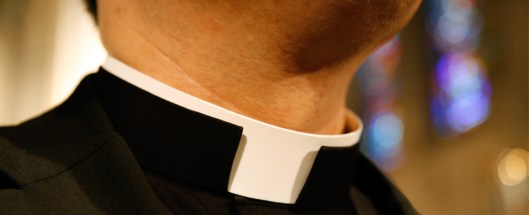
Last week, I stopped by a local doughnut shop to pick up treats for some of our church volunteers.  The staff needed to make a fresh pot of coffee, so I had to wait by the counter.  After a couple of minutes, the woman who had been helping me approached me and said, “Okay, settle a bet for us.  Are you a nun or a pastor?”

anglican-collar

Photo credit:  https://blackandwhiteandlivingincolor.com/2014/01/16/coffeehouse-musings-why-i-wear-my-anglican-collar-sometimes/

I get questions about my collar all the time.  Most people are not as courageous and will simply stare – usually with a furrowed brow of confusion.  Others will only confess that they always wondered what that “thing” was I wore when we finally get around to talking about our jobs.  Sometimes people will ask if the Roman Catholic Church started ordaining women (trust me – you would know if they had!).  Of course, my favorite experiences have been when I have been both in a collar and pregnant.  That really confuses people!

Once I finally confessed I was a “pastor” to the doughnut shop, one of the women working the drive-through said, “Oh good!  Can you pray for us?”  We had a great conversation after that, and I promised to keep them in my prayers for the rest of the day as I departed.  But as I left, I realized two things.  First, being a priest in my community is a tremendous blessing.  It allows me to have deep, intimate conversations with people a lot more quickly than you would with most strangers.  It allows me to not only be a pastor with my own parishioners, but everywhere I go in my collar.  It allows me to stretch the reach of the Church beyond the walls of our church.

But what I also realized when I left that shop is that talking about the need for prayer probably would not have happened had I not had on my collar.  I am constantly inviting my parishioners to have faith conversations outside the context of our community, but that day I realized how challenging that invitation can be.  A clergy collar is like an automatic ice breaker – it is an invitation for you to say, “Oh good!  Can you pray for us?!?”  But how do we break the ice without such tools?  How can I let the grocery clerk, the delivery man, or the construction worker know that I want to pray for them too – even when I am in my sweats?  How do we get beyond the perfunctory greetings and start having real conversations?  This week, I invite us all to consider how we might start such a journey toward authentic, meaningful conversations about the intersection of our individual journeys and the presence of Christ in our lives.  Know that I will be praying for us both as we figure it out!

Working Together to Make it Work

07 Wednesday Sep 2016

Posted by jandrewsweckerly in Uncategorized

≈ Leave a comment

Tags

Christ, church, faith, family, generation, grow, love, multigeneration, witness

multigenerational

Photo credit:  https://www.indacoriskadvisors.com

Every year our family vacations at a place called, “Memorial House,” in Rehoboth Beach.  The house is owned by the Diocese of Delaware and is an 11-bedroom home used for retreats, meetings, and, in the summer, for family and church vacations.  Each family or individual has a private room, but the dining and living area is shared.  Each day in the summer, a full, hot breakfast and dinner is served buffet-style, and enjoyed at shared tables with the other guests.

This year, our family vacationed with another family with two children.  Joining us were a family with adult children, older couples, and some retired singles.  Our four children were the only children this year, making our eight-person dinner table the most raucous.  I lost count on how many tablecloths we changed, and the broom was never far from hand.  The other mom and I worried a bit that we might be disturbing what could have been a perfectly peaceful vacation for the others.

Luckily, I had two encounters that told a different story.  The first was with a grandmother who talked to us as we were preparing lunches.  She joked with us about how much work she saw us doing.  She confessed that she had already spent one week this summer at the beach with her own family – including children and grandchildren.  But she had done so much work that week that she decided to come to Memorial House so she could have an “actual vacation”!  Another grandmother talked to me at the end of our week.  She pulled me aside and said, “You know, I had forgotten how much work I did as a young mom.  You guys are doing a great job!”

What Memorial House does is a little like what Church does, when Church is at its best.  You see, Church is one of the few places that multiple generations gather to worship, learn, and grow together.  When the Church is at its best, grandmothers distract an inconsolable child when a mom or dad is at her or his wits end.  When Church is at its best, a retiree is teaching children his favorite Bible Stories in dramatic and fun ways.  When Church is at its best, youth know adults who might give them the same answers as their parents, but the youth can hear it better from someone else.  When Church is at its best, we are a multigenerational family, welcoming those from all walks of life, making sure we are all fed, nurtured, and empowered to go out into the world to witness the love of Christ.  This week, I am especially grateful for that gift!

Sermon – Romans 5.1-5, John 16.12-15, TS, YC, May 22, 2016

25 Wednesday May 2016

Posted by jandrewsweckerly in Sermons, Uncategorized

≈ Leave a comment

Tags

activity, attention, community, disciples, doctrine, faith, God, grace, grow, guide, heresy, Holy Spirit, Jesus, learn, love, seminary, Sermon, suffering, theology, Trinity, Trinity Sunday, world

In seminary one of my favorite professors was our theology professor.  I did not like her because of the subject she taught.  In fact, her class was one of the classes that gave me the most headaches as I struggled to understand theological arguments.  Instead, what I liked about her was the way that she taught.  She had a dizzying intellect, and yet she had the ability to gently make you feel like you were not an idiot.  Someone in class would ask a question, trying to get their head around a theological concept.  Her soft response would be, “Oh, yes, yes, I could see how you might get to that conclusion.  So-and-so also argued that heresy in the fourth century.”  Or she might answer, “Oh yes, that heresy is one of the church’s favorite,” and then go on to explain how the church struggled to counter the heresy.  What I loved about her responses was she let you know that although you clearly did not understand the theological concept, you were not the first person to struggle to understand and you will not be the last.  Struggling to understand and articulate a cogent theological concept without slipping into a heretical argument is a basic part of being a Christian.

What I loved about the pastoral nature of my professor’s responses was she understood that being able to articulate a definition of God is incredibly difficult.  More important to her than you getting that articulation correct was your engagement with the concept.  Perhaps she understood that theologians for centuries have tried to do the same thing – define who God is and what God means.  That may be why she never seemed bothered by our heresies – because she knew that her role, and in fact the role of the church, is to be involved in the ongoing endeavor of naming God’s activity in our world.[i]  That is the same work that we do every year on the feast of Trinity Sunday – embracing the endeavor of naming God’s activity in our world.

To help us in that endeavor, we get two great pieces of scripture today.  In our gospel lesson from John, Jesus tells the disciples that the Spirit will guide the disciples into all truth.  Jesus’ promise to the disciples tells us those closest to Jesus, those who have been sitting at Jesus’ feet, learning truth from the source, are still going to need help.  The disciples, who will be commissioned to go out into the world to share the Good News, will not do that work alone.  The Spirit will go with them, helping them to continue to learn and grow into the fullness of faith.

I was recently invited to come to Sunday School for a little round of “stump the priest.”  I laughed at the title, but inside I was thinking, “What if they ask a question that really does stump me?!?”  Luckily, a cooler head prevailed.  The truth is they probably will stump me – several times over.  But that will give us a chance to talk about how the Spirit guides us into all truth – in childhood, in young adulthood, and into our older years.  But more importantly, I hope that we get the chance to talk about how the community of faith is a vital part of that learning of all truth.  We are certainly dependent on the Spirit, but we are also dependent on each other, because the Spirit so often speaks to us through people and the words of those around us.[ii]

That is one of the things I love most about being in the Episcopal Church.  The Episcopal Church has always been a place where ambiguity is okay.  As David Lose explains, “…being part of being a Trinitarian community [means] striving to be a place that knows it doesn’t have all the answers, and so consequently makes space for conversation and values those who bring different voices and experiences into its midst.  Conversation, valuing difference, being inclusive – these things aren’t easy, but genuine community, while challenging, is also creative, productive, and enriching.”[iii]

The other great piece of learning today comes from our reading in Romans.  On the surface, this piece of scripture has always troubled me.  Paul’s claim that suffering produces endurance, endurance produces character, and character produces hope, has always sounded a little dismissive about suffering.  But I do not think Paul meant for this formula of suffering leading to hope was not meant to be prescriptive, but descriptive.[iv]  In other words, he is not saying those who are suffering should be grateful.  What he is saying is those who are suffering have the opportunity to not waste the pain.  Peter Steinke says, “We ‘waste’ suffering if we gloss over, deny, avoid, or neglect its message…. If, however, we can learn from pain, [pain] is not wasted but a source of life and health.”[v]  My suspicion is that Paul is trying to capture what we learn from our gospel lesson today.  Even in the midst of suffering the Holy Spirit and the community of faith can guide us into all truth.

I have been a part of parishes that have a communal component to their premarital counseling.  In addition to meeting with the priest, each engaged couple is partnered with a married couple in the parish for mentoring.  One would think that the married couple’s job is to tell the engaged couple how to do everything and give them advice.  But more often, the couples end up talking about how hard marriage is, what struggles they have dealt with, and how they got through the suffering.  The relationships between the mentors and the mentees often last well beyond the wedding.  When done with honesty, vulnerability, and compassion, the couples realize that they gain strength from one another and find a place where they can go when they are looking for truth and guidance.

Our gospel and epistle lessons today weave together an understanding of the Trinity that is both vertical and horizontal.[vi]  Vertically, we learn that our understanding of God is ever changing and dynamic – much like God is ever changing and dynamic.  I think that is why my professor was so open to us stepping into and out of heresies and doctrine.  She knew that every Christian had to take that journey of steps and missteps.  But I think she also understood that truth was ever evolving and that the Spirit was with us in that journey.  She was not worried about us because, “…a critical characteristic of faith is an ever-striving and dynamic making sense of God.  The Trinity [cannot] be the only way to get God.  [That theology] is as limited and finite as our humanity.  [The theology of the Trinity] is one attempt of the church to articulate the being of God in a particular time and place.”[vii]  We will continue to walk toward truth in our own time and place too.

Horizontally, our lessons teach us that we find our way to that truth the Spirit is showing us through the vehicle of those around us – both those in the church, and those outside our walls.  I cannot count the number of times I have learned something profound about God by someone who never harkens the door a church.  Our job is to pay attention:  pay attention to the way that God is using others to show us more about God; pay attention to the ways God invites us to interpret our sufferings with others; pay attention to those who are struggling toward truth along with us.  We will surely step into heresy now and then.  But we will also step into God’s love and grace through the guidance of the Holy Spirit and those around us.  Amen.

[i] Karoline Lewis, “Trinity Talk,” May 15, 2016, as found on http://www.workingpreacher.org/craft.aspx?post=4648 on May 18, 2016.

[ii] David Lose, “Trinity C:  Don’t Mention the Trinity,” May 17, 2016, as found on http://www.davidlose.net/2016/05/trinity-c-shh-dont-mention-the-trinity/ on May 18, 2016.

[iii] Lose.

[iv] Richard L. Sheffield, “Homiletical Perspective,” Feasting on the Word, Yr. C, Vol. 3 (Louisville: Westminster John Knox Press, 2010), 39.

[v][v] Sheffield, 41.

[vi] Lose.

[vii] Lewis.

← Older posts
Newer posts →

Recent Posts

  • On Sharing the Love…
  • Sermon – Micah 6.1-8, Matthew 5.1-12, EP4, YA, January 30, 2026
  • On Justice, Kindness, Humility, and the Messy Middle…
  • Feast of the Rev. Dr. Martin Luther King, Jr., January 18, 2026
  • On Peace, Love, and Conduits…

Archives

  • February 2026
  • January 2026
  • December 2025
  • November 2025
  • October 2025
  • September 2025
  • August 2025
  • July 2025
  • June 2025
  • March 2025
  • February 2025
  • December 2024
  • November 2024
  • October 2024
  • September 2024
  • August 2024
  • July 2024
  • June 2024
  • May 2024
  • March 2024
  • February 2024
  • January 2024
  • December 2023
  • November 2023
  • October 2023
  • September 2023
  • August 2023
  • July 2023
  • June 2023
  • May 2023
  • March 2023
  • February 2023
  • January 2023
  • December 2022
  • November 2022
  • October 2022
  • June 2022
  • May 2022
  • January 2022
  • December 2021
  • November 2021
  • October 2021
  • September 2021
  • August 2021
  • June 2021
  • May 2021
  • April 2021
  • March 2021
  • February 2021
  • January 2021
  • December 2020
  • November 2020
  • October 2020
  • September 2020
  • August 2020
  • July 2020
  • June 2020
  • May 2020
  • April 2020
  • March 2020
  • February 2020
  • January 2020
  • December 2019
  • November 2019
  • October 2019
  • September 2019
  • August 2019
  • July 2019
  • June 2019
  • May 2019
  • April 2019
  • March 2019
  • February 2019
  • January 2019
  • December 2018
  • November 2018
  • October 2018
  • September 2018
  • August 2018
  • July 2018
  • June 2018
  • May 2018
  • April 2018
  • March 2018
  • February 2018
  • January 2018
  • December 2017
  • November 2017
  • October 2017
  • September 2017
  • August 2017
  • July 2017
  • June 2017
  • May 2017
  • April 2017
  • March 2017
  • February 2017
  • January 2017
  • December 2016
  • November 2016
  • October 2016
  • September 2016
  • August 2016
  • July 2016
  • June 2016
  • May 2016
  • April 2016
  • March 2016
  • February 2016
  • January 2016
  • December 2015
  • November 2015
  • October 2015
  • September 2015
  • August 2015
  • July 2015
  • June 2015
  • May 2015
  • April 2015
  • March 2015
  • February 2015
  • January 2015
  • December 2014
  • November 2014
  • October 2014
  • September 2014
  • August 2014
  • July 2014
  • June 2014
  • April 2014
  • March 2014
  • February 2014
  • January 2014
  • December 2013
  • November 2013
  • October 2013
  • September 2013
  • August 2013
  • July 2013
  • June 2013
  • May 2013
  • April 2013
  • March 2013
  • February 2013
  • January 2013
  • December 2012
  • November 2012
  • October 2012
  • September 2012

Categories

  • reflection
  • Sermons
  • Uncategorized

Meta

  • Create account
  • Log in
  • Entries feed
  • Comments feed
  • WordPress.com

Blog at WordPress.com.

  • Subscribe Subscribed
    • Seeking and Serving
    • Join 395 other subscribers
    • Already have a WordPress.com account? Log in now.
    • Seeking and Serving
    • Subscribe Subscribed
    • Sign up
    • Log in
    • Report this content
    • View site in Reader
    • Manage subscriptions
    • Collapse this bar
 

Loading Comments...