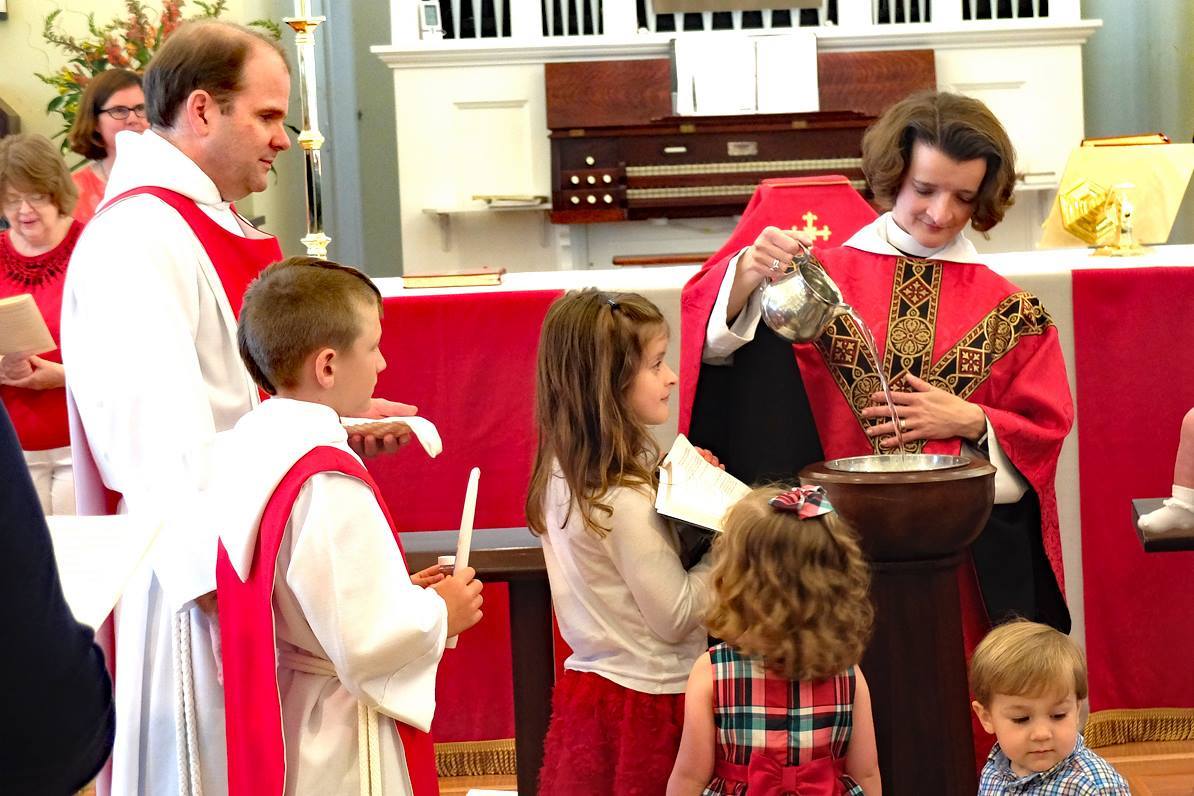
• About

Seeking and Serving

~ seek and serve Christ in all persons

Seeking and Serving

Tag Archives: formation

Sermon – Luke 9.28-43, TRS, YC, March 2, 2025

05 Wednesday Mar 2025

Posted by jandrewsweckerly in Sermons

≈ Leave a comment

Tags

Christian, church, division, Elijah, follow, formation, identity, Jesus, Lent, love, mission, Moses, prayer, Sermon, spiritual, Transfiguration

As I spend time with parishioners, staff, clergy leaders, and folks outside the community one common question keeps emerging, “What do we do?”  As we watch divisions deepen – something that seemed impossible given how deeply divided we already were, and as we watch a dismantling of how our country has operated for ages, and as we argue about what is best for our country, I have heard us asking, wondering, struggling with that question, “What do we do?”  The question is mirrored in the story of the transfiguration in Luke’s gospel today too.  Sleepy disciples who are supposed to be praying with Jesus on top of a mountain are jolted into alertness upon seeing Jesus in dazzling brightness, talking with long-gone Moses and Elijah, saying something about Jesus departing.  John and James are stunned into silence, but Peter answers his own question of “What do we do?” by proposing they build some dwellings – for surely remaining here in God’s glory is what he thought they should do.

Though we tease Peter about his not fully “getting it” when we wonder what we should do, I find myself mimicking Peter these days.  When I am asked, “What do we do?” my immediate and probably over-simplified answer is “follow Jesus” – not follow Republicans or follow Democrats; not follow supporters or follow opposers; not follow these Christians or follow those Christians.  Simply follow Jesus.  The problem with my answer of following Jesus is that the answer is so simple the answer leaves us with more questions than actual answers. 

That is why I am so grateful for Luke’s gospel today.  What this passage from Luke’s gospel does is tell us that following Jesus means, One, “…we must be clear about our identity;” two, be “resolute in our mission;” and three, be “intentional in our spiritual formation.”[i]  So, clear on our identity, focused on mission, and intentional about our spiritual formation.  Let’s dig in to this passage to find more clarity.

To follow Jesus, we need to be clear about our identity.  As scholar Jeffery Tribble argues, in Luke’s gospel, “The transfiguration bears witness to the identity of Jesus Christ.  By God’s action in the transformation itself and in the words of the voice of heaven, a theological statement is made.  Jesus Christ is declared to be the Chosen Son of God.  The disciples heard the declaration:  ‘Listen to him!’  The Christ event – his incarnation, passion, death, resurrection, ascension, gift of the Holy Spirit, and promised second coming – is the defining script for our local performances of the gospel.”[ii]

So what does that mean?  What is our identity here at Hickory Neck?  We define that identity using the acronym HNEC.  H stands for Hospitality:  We are committed to creating an environment where all experience an on-going sense of welcome, acceptance, and belonging.  Our hospitality is responsive to the unique needs of each generation, creating a community of mutuality, respect, dignity, and connection.  N stands for Nurture:  We are committed to nurturing the unique ministry of every individual so they can fully realize their baptismal covenant and participate in the life of the church, using their God-given gifts both within and outside the parish.  E stands for Engagement and Evangelism:  We are committed to responding to the needs of the wider community, sharing the love of Christ with our neighbors, and shining Christ’s light in the world.  And C stands for Curiosity:  While cherishing our particular history and Anglican identity, we are committed to being open to the movement of the Holy Spirit, being playful with one another and the wider community, while taking joy in one another.  So, our identity is about hospitality, nurture, engagement, and curiosity. 

So, being clear first about our identity, we must secondly be resolute in mission.  The transfiguration reveals the redemptive mission of Jesus Christ.  With Moses’ presence pointing to the exodus event and the communal responsibly to teach the statutes and ordinances, and with Elijah’s presence pointing to the end times, Jesus’ work of continued redemption is clear.  As Tribble says that “…in the transfiguration event Jesus is clear about his mission, which continues the redemptive work of God from the exodus through the end times.”[iii]

What about us, then?  Hickory Neck actually has a mission statement.  The mission statement reads, “We foster a loving, welcoming Christian Community with a uniquely intergenerational approach to worship, fellowship, and formation, helping us to develop a relationship with God and each other.  Nourished in community, we share the love of Christ Jesus by caring for each other, serving neighbors in need, and seeking justice and peace for all people.”  If I had to “make it plain,” I would use these eight words, “Love inside these walls, love outside these walls.”  When we are puzzling our way through what we should be doing in these profound times, our mission is simple:  love inside these walls and love outside these walls.  Now I know that sounds very pie in the sky – I have been known to roll my eyes a few times when someone says, “It’s all about love!”  But here’s the thing:  no matter what political or theological view you have, I can guarantee you that someone in this room disagrees with you.  How will you love them?  And when you are out in the world, all kinds of policies and moves are being made that may feel like they do not matter because they do not impact you directly – at least not yet.  How will you make sure that you and we as wider community are making sure love reigns?  There is a lot happening outside these walls that are done in the name of the redemptive Christ.  Your work is to discern which of those activities are actually following the identity and mission of the Jesus we are talking about this very day.

And that leads us to the third thing we invited to do to follow Jesus:  to be intentional in our spiritual formation.  I don’t know if you noticed, but Jesus took James, John, and Peter up that mountain not to heal, or to work, or even to witness the transfiguration.  Jesus brought them up to pray.  Whether in this passage or in the many verses to come, we know from holy scripture that “throughout his ministry Jesus was faithful in spiritual disciplines that would bring him into the presence of his Father.”[iv]

Tribble reminds us that “Professing faith in Christ in one thing, but living our Christian faith requires greater depth and breadth in our spiritual formation.”[v]  If we are in fact a congregation that doesn’t preach politics but instead preaches Jesus, then our work collectively is to know Jesus.  That means if you are not already in Bible Study, or reading scripture at home, or listening to a podcast about scripture, now is the time to dust off that book (or app) and get going.  That means if you are not one who is too comfortable with prayer, or only use prayer when you have an emergency, now is the time to start flexing your prayer muscles – whether you work your way through the Book of Common Prayer, whether you set aside daily time for prayer, or whether you start using those prayer beads, now is the time to step away with Jesus in prayer.  I remember reading about a conversation between His Holiness the Dalai Lama and Archbishop Desmond Tutu in which the two of them were competing about who got up the earliest for prayer.  Both of these deeply spiritual men knew that the only way they could do any good work was to deepen their spiritual formation.

The good news is that we are heading into a season in the church where all of this work is enriched, supported, and encouraged.  In the season of Lent, we are encouraged to be intentional about our spiritual formation.  In Lent we work to become very clear about our identity.  In Lent we become resolute in our mission.  If you are feeling that overwhelming sense of “What do I do?” in these times, the Church invites you to follow Jesus.  The Church invites you to be focused on identity, mission, and formation.  And this Church specifically creates the structure for you to do just that.  Your invitation is to join us!  Amen.


[i] Jeffery L. Tribble, Sr., “Pastoral Perspective,” Feasting on the Word, Yr. C, Vol. 1 (Louisville:  Westminster John Knox Press, 2009), 452.

[ii] Tribble, 452.

[iii] Tribble, 454.

[iv] Tribble, 454.

[v] Tribble, 456.
On Looking Back to Look Forward…

20 Friday Oct 2023

Posted by jandrewsweckerly in reflection

≈ Leave a comment

Tags

church, Episcopal Church, formation, God, gospel, history, impact, seminary, stewardship

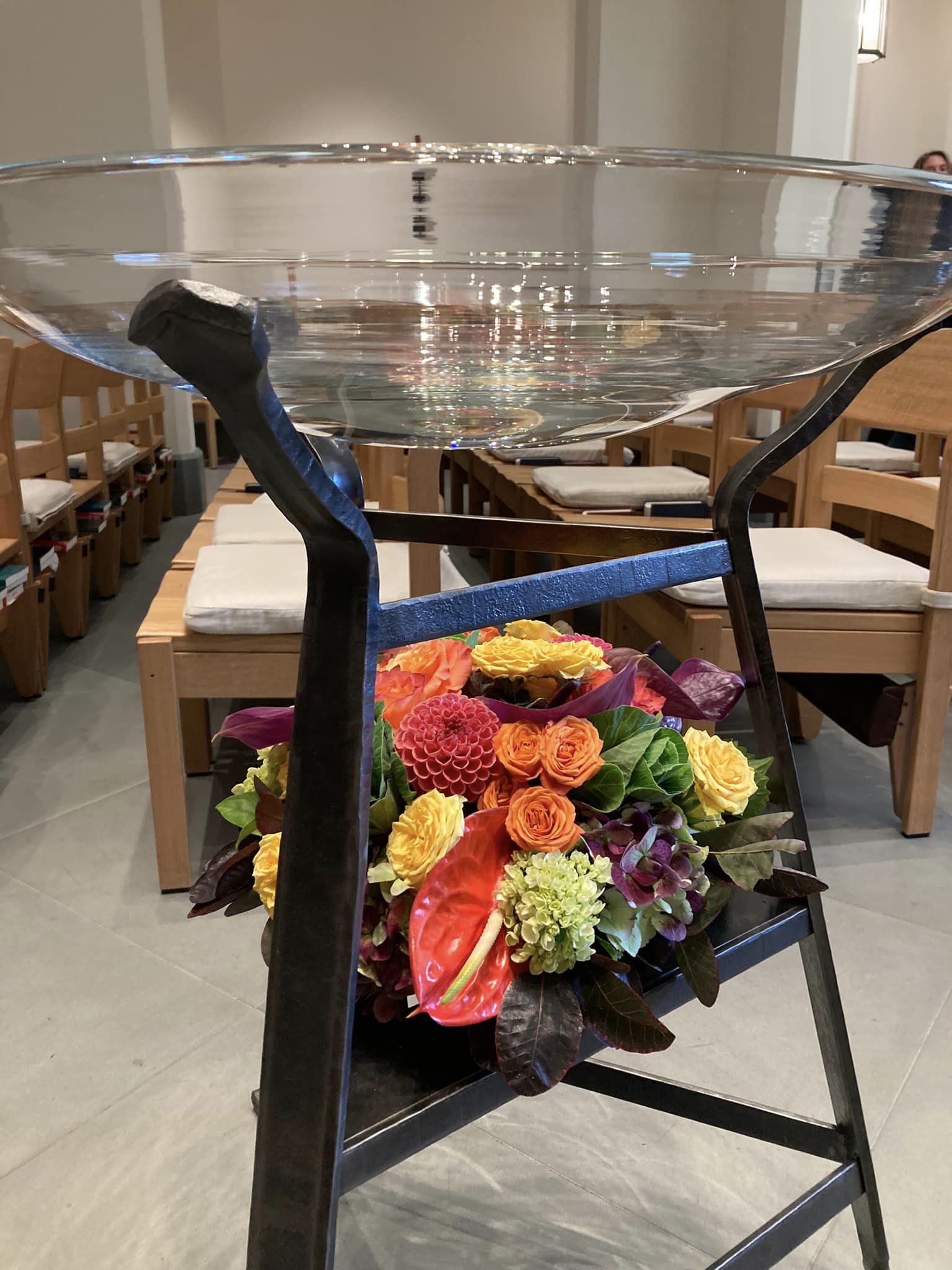
Font at Virginia Theological Seminary

I remember when I was a seminarian, sitting in daily worship, my eyes and mind would sometimes wander.  In particular, I was fascinated by the names or other small mementos carved into the old pews.  I always wondered who the mystery person was who left their mark, how long ago they carved it, and how they managed not to get caught.  What I loved about those small little marks was how they made me feel connected – connected to a long line of priests and lay leaders shaped by the seminary, all with varying gifts and talents, serving God in God’s church around the world.

Last week, my seminary honored 200 years of forming priests in the Episcopal Church.  Though those pews from the old chapel were lost in a fire, what struck me was the massive changes the seminary has seen.  From slaves who helped build and then worked on the property, wars that shaped the context for ministry dramatically for generations, fiduciary decisions that impacted the viability and structure of the seminary, the growing diversity of the student body as the Episcopal Church’s understanding of who can be called to ministry has expanded, and an evolving physical plant that has shifted what the school on the holy hill looks like – all of that change has made for a rich and layered history, of which I am a small part. 

But perhaps what speaks to me most about Virginia Theological Seminary is the ways that it also has a microcosmic impact on the church – namely, the ministry of every graduate from the seminary.  My time at VTS shaped and formed me into the priest I am today – from academic formation to liturgical formation, from learnings on leadership to the development of relationships, from shaping my spirituality to shaping my sense of the wider church.  And for every graduate like me, VTS has shaped thousands of others who go out into the world to preach the gospel.  That reality is what inspires my financial support every year – knowing the future generations I can support.

As my church journeys into stewardship season, a time of discernment about how we will support our church financially and with our time, I am reminded of how we all come to think about the stewardship of our resources.  Supporting my seminary and my church financially are ways I say to those institutions and my community that these institutions are important to me:  they have made an impact in my life, and have inspired me to make an impact on the them.  I would not be the priest, mother, or wife that I am without either my seminary or Hickory Neck Church.  What about you?  How has our church shaped your life?  What stories are the stories that make you eager to be a part of financially supporting ministries of impact?  I can’t wait to hear what inspires your giving!

On Finding and Sharing Joy…

19 Wednesday Sep 2018

Posted by jandrewsweckerly in Uncategorized

≈ Leave a comment

Tags

children, church, faith, formation, fun, God, invite, Jesus, journey, joy, parent, share

IMG_2901

Photo credit:  Robin Razzino; permission required for reuse.

This past Sunday, I was ready to head off for church bright and early.  My younger daughter was still asleep, so I went in to her room to give her a kiss goodbye.  She stirred and very sleepily asked me, “Is today Sunday School?  And Children’s Chapel?”  I almost giggled that this was her first thought upon arousal from sleep.  When I told her, “Yes,” she would be going to Sunday School and Children’s Chapel, she groggily replied, “It’s going to be fun.”

As I have been thinking about my child’s simple question and sense of joy about church, I had two thoughts.  The first was, I am so happy to know that my child is finding joy, happiness, and fun at church.  As a parent, you hope your child will find as much joy in Jesus as you do, but you learn pretty quickly that every child is an individual with their own passions and sources of joy.  To see my child develop a love for church and the experiences she has there has been so thrilling.  And even more importantly to me (especially as a clergy person), I am so grateful that her positive church experiences are almost totally independent of me.  Other adults are guiding her faith journey.  The community is raising her up in the faith.  Our church family is helping her find joy in God that is all her own.  That reality is one that I have deeply desired for my own children, and I am so proud that my church is a place that does the same for so many other children and families.

The second thought I had about my daughter’s early morning pronouncement was that I want adults to have that same sense of anticipatory joy about church too.  Sometimes we struggle to get ourselves to church because our lives are so over-scheduled that church feels like just one more burden.  Sometimes we go to church out of habit, but go through the motions without much joy or food for our souls for the week.  What I long for is church to be a place that when we first awake on Sunday mornings we think of church and we think, “This is going to be fun!”  We can do that at Hickory Neck because we know we will see people who have given us so much joy in our spiritual journey.  We can do that at Hickory Neck because the worship, preaching, and learning will give us new insights and renewed energy and passion for God.  We can do that at Hickory Neck because we know, somewhere during the morning, we will encounter God – and it’s going to be awesome!

This past Sunday at our Rector’s Forum, someone asked about how we invite people to church, how we share the Good News with others.  Where we start is sharing those stories of how, when we wake up on Sundays, we think about Hickory Neck and think, “This is going to be fun.”  When you tell the story of how your church brings you joy, your countenance changes, your energy shifts, and your enthusiasm is contagious.  The only thing left for you to do is say, “Hey, you want to come with me next time?  It’s really fun!”

Sermon – Ephesians 4.25-5.2, P14, YB, August 12, 2018

22 Wednesday Aug 2018

Posted by jandrewsweckerly in Sermons, Uncategorized

≈ Leave a comment

Tags

baptism, children, Christ, Christian, Ephesians, faith, formation, God, identity, imitators, improve, love, offering, Paul, Sermon, systems, vacation bible school

I used to LOVE Vacation Bible School when I was growing up.  As a preacher’s kid, of course that meant I went to VBS at my dad’s church.  But I loved Vacation Bible School more than that.  I would sign up for VBS at the Baptist Church, the Presbyterian Church, and the Lutheran Church, and would beg, “Can I go? Can I go?”  I have always joked that what I really like about VBS was the crafts.  But as I watched our own children in Vacation Bible School this week at Hickory Neck, I began to wonder if my crafts assessment was entirely true.  I liked the songs too.  And the snacks.  And the storytelling.  I liked the instant comradery and the games and laughter.  I liked the feeling of being loved by people who did not even know me.  VBS was the first – and probably only since I did not go to church with many Baptists – place where I was asked if I had accepted Jesus as my Lord and Savior; and if I had not, I could ask Jesus to come to me in that moment.  My eight-year-old self was not sure what the pastor meant, but I did know a strange warming of my heart that night.

On those hot, humid summer nights, with the cicadas chirping and the lightning bugs flashing, VBS accomplished for me what I talked about with the Baptismal family last weekend.  When we prepare a child and their family for baptism, we talk about how their primary role is to raise the child up in the faith – get them to church, talk about Jesus at home, pray together, and read the Bible stories.  The parents and godparents are not flying solo with the task of raising the child in the faith – we as a community pledged just last week that we would be active in raising Dallas up in the faith.

As I watched our children at Vacation Bible School this past week, I slowly began to realize that we were doing just that – raising children up in the faith.  We were teaching them to pray, to sing, to learn, to tactilely use their bodies to engage Jesus.  And sure, there were games and snacks and laughter and silliness.  But there were also children who walked over to their neighbor’s houses and delivered VBS registration forms, inviting them into Jesus’ love too.  There were children who remembered their neighbors with pets and tentatively rang doorbells to deliver pet treats they had made with their own hands.  There were children whose joyous songs in the Public Library later that day brought hope to a man who had lost hope.  When I was a child, I was lured by crafts and snacks and potato sack races; but I left with love, and hope, and mercy.  I left knowing deep in my soul who Jesus was and what being a Christian meant.

This week I have begun to wonder if we might need an adult version of VBS; if we might need a week of evenings where we just spend some time with Jesus among the community of the faithful.  Bishop Curry would call that a revival, and Episcopal Churches are doing revivals all around the country.  I am not sure what we call that week matters, but I am beginning to wonder if we need those summer nights because we have fallen away from the practices Paul articulates today in his epistle to the Ephesians.  Paul is quite clear.  If we are going to claim the moniker of Christian, then our lives need to be signposts.  We need to speak truth to one another.  We need to not let anger rule our lives.  We need to make new ways for thieves and sinners to not only repent, but be fully restored into the world as those who not only contribute their labor, but who are freed to give their money to the poor.  We need to take on kindness, tenderness, forgiveness.  We need to be imitators of God, beloved children of God, living in love.

We hear Paul’s words today and say to ourselves, “Yes, yes, the world needs more of that.”  But what we really mean is, “Yes, that lady two rows over needs to start doing that,” or “Yes, that guy on my committee needs to be that.”  But Paul is not talking to our neighbor.  He is talking to us.  He is talking each person in this room saying, “You…I need you to live in the life of love, to be an imitator of God, to be…to be a Christian.”  And that is where the squirming begins.  I hear Paul’s words about not letting the sun go down on your anger and I can tell you there have been many a night when I was just not done with my anger – I needed to let my anger burn off before I could speak a word of forgiveness or, more importantly, a word or apology.  I hear Paul’s words about thieves and I am not worried about thieves being gainfully employed so they can make charitable contributions – I need them to punished for what they took from me.  I hear Paul’s words telling me to imitate God and I am incredulous that I could ever achieve such holiness – I need to worry about all those other people who are not imitating God towards me!

This week, I attended a conference called the Global Leadership Summit.  Founded over 25 years ago, the conference is for all people, regardless of industry or position at work or home, looking to hone their leadership skills, to learn new techniques, and to refresh old learnings.  The Conference is held in Chicago, but through technology is live broadcasted all over the world, even to Williamsburg.  One of the things I took from the Summit was that my leadership improvement work was primarily about improving myself.  Craig Groeschel reminded us, “When the leader gets better, everyone gets better.”  His message is the same message we teach congregations and families through family systems work.  The only person you can improve in a system is yourself – even though you know for certain your brother Bob is the real problem.  System experts live by this understanding though because they have witnessed time and again when one person in the system gets better, he or she creates a ripple in the system – and almost magically, everyone else starts getting better.

The reason why we send our children to VBS or Sunday School or Children’s Chapel is because we want them to know, and love, and embody Christ.  We want them to be imitators of God, beloved children, who live in love, as Christ loved us.  But what we sometimes forget in helping our children grow in Christ is that we adults need to grow in Christ too – to become those imitators of God, beloved children, who live in love, as Christ loved us.  We like to bemoan the state of the world today – to look at how we are so divided and cannot seem to come together and we want to just give up on the world, or worse yet, we want to bury our heads in the sand and not come back up until things magically get better.  But what Paul says to us today is not to worry about everyone else.  Start working on yourself.  Now whether that means you need to go to a Leadership Summit, or join a Bible Study, or commit to coming to Church regularly, or maybe agree to help with VBS so you can absorb some of that joyful goodness – do something for your faith formation today.  Systems work teaches us that the only person we can change in a dysfunctional system is ourselves.  Paul looking at Ephesians or the United States in 2018 would same the same – work on yourself, imitate God, live in love, make your life like Christ’s – or as Paul says, “a fragrant offering and sacrifice to God.”

I know that Episcopalians are pretty divided about the use of incense.  I have always loved incense.  The parish I served in Alexandria used incense every Sunday.  I loved how the scent lingered in my hair and on my clothes after church.  Sometimes, I would bring my alb home, and when I opened the bag, the fragrance of incense wafted into the room.  Years later, on the occasions my other parishes used incense, I found the scent had a calming effect on my body.  That fragrance was my physical, tangible way of remembering that I was in the presence of God.

When Paul invites us to be a fragrant offering, he is inviting us to be that tangible reminder of God that lingers behind.  When we respect the dignity of every human being, our Christian fragrant offering lingers behind.  When we are kind, tenderhearted, and forgiving, our fragrant offering lingers behind.  When we seek to imitate God in our lives, even as others see us fail and try again and again, our fragrant offering lingers behind.  I am not saying our work on ourselves will be perfect right away – or even ever help us achieve that true fragrant offering.  But what Paul encourages us to do is try.  To put ourselves in places where we can grow in faith and love and mercy so that we can become those fragrant offerings that linger with others.  And Paul knows we can do that work because God is with us to enable us.  Our invitation today is to accept the challenge:  to not leave behind the foul odors of anger, judgment, and malice, but through our baptismal-life striving through our faithful work on ourselves, to leave behind the fragrant scent of God.  What happens after that is God’s work.  Amen.

On Raising Kids in the Faith…

01 Wednesday Aug 2018

Posted by jandrewsweckerly in Uncategorized

≈ Leave a comment

Tags

baptism, children, church, faith, formation, God, kids, questions, scripture, teach, teaching, vacation bible school

kids_SS

Photo credit:  http://livingwaterlutheran.us/

Last week, as we were driving to summer day-camp, my eight-year old was mid-stream with a story from the backseat when she abruptly jumped to another story she remembered.  Used to the constant chatter from my little ones, I barely noticed, but she exclaimed, “Oh my goodness!  I’m just like Mark!”  “What?” I asked, having no idea who this Mark was and what he had to do with either of her stories.  “You know, like Mark from the Bible, when he interrupts one story with another one.  Ha!”

As I struggled to stay focused on driving, my mouth fell open.  I was stunned.  You see, several weeks ago, I preached a sermon about Mark, explaining his “sandwiching technique,” – basically interrupting the telling of a story with another story, only to return to the original story.  You can read here about why he utilizes this literary technique.  I was shocked to know that my daughter actually remembered that detail from a sermon; honestly, I was a little surprised that she was listening at all, let alone remembering anything I said.  In my shock, I managed to stammer out, “Oh, you remember that?”  “Yeah.  Everyone thinks I don’t listen in church because I’m doing other things.  But I listen.”

Now I don’t expect children of all ages to grasp literary devices of Gospel writers, but what that conversation reminded me of is how often children are listening, and especially listening to what we have to say about God.  Many parents I talk to often worry about how to help their children learn about God, feeling a bit inadequate themselves for such a daunting task.  The advice I give them is simple:  bring them to church.  Let them experience as much of the liturgies as they can handle.  Let them go to Children’s Chapel and Sunday School as much as you can.  And when things like Vacation Bible School come up, as they do next week at Hickory Neck, take them.  The songs, the stories, the dialogue will slowly seep in, and the questions will surely pop up in the backseat of a car, at the dinner table, or before bed.  And if you are not sure about the answers, don’t worry.  You can always use the question as a “wondering moment,” asking questions and leaving things open for their imaginations (and the Holy Spirit!).

This Sunday we will baptize a baby at Hickory Neck, and his parents, godparents, and the parish will pledge to do the same – see that the child is raised up in the church.  We won’t have all the answers, and we may even stumble through trying to explain our faith (I could tell you countless stories about my own bumbling).  But in the end, each child’s journey feeds and enriches the journey of each of us.  Their questions inspire the adults to get into church too – to be steeped in the liturgy, to study scripture, to engage in conversation, to reflect on the presence of God in our lives.  The Church offers that tremendous gift to us every week.  Our invitation is to get ourselves there.

33076825_1843825552340363_5100443877848907776_o

Photo credit:  John Rothnie (permission required for reuse)

On Remembering Roots…

29 Wednesday Mar 2017

Posted by jandrewsweckerly in Uncategorized

≈ Leave a comment

Tags

Campus Ministry, Christ, church, college, community, disciple, discipleship, faithful, formation, fun, Jesus, leadership, love

842x347-WELS-CampusMinistry

Photo credit:  https://wels.net/serving-you/christian-life/campus-ministry/

Last night, as a member of our Diocesan College Ministry Commission, I visited Canterbury at William & Mary.  We had some time with both the students involved in the Episcopal Campus ministry and with the Campus Minister.  It is a vibrant ministry, with a lot of passion and enthusiasm around service, worship, and discipleship.  Canterbury is a place where they can ask questions of their faith, become leaders, serve their community, and forge deep friendships.  They are doing the work began in their baptism, continued in their confirmation, and now affirmed as adults.

As I listened to the students and Campus Minister, I was flooded with a host of memories from my own experience in Campus Ministry at Duke.  Although I was involved in the Wesley Fellowship, the models are quite similar.  Wesley was the place where I came into my own faith, where I engaged my intellect in partnership with professors at the Divinity School, where I first discovered the power of mission trips, and ultimately, where I began to feel a sense of call to ordained ministry.  Wesley created disciples – encouraging us to find a local church community, fostering a personal spirituality, developing deep Christian friendships, and exploring the implications of my faith.  Most of my friends from Wesley took a year or more to volunteer or live in intentional Christian community.  Today, most of the alumni I know are clergy, lay leaders, non-profit workers, social services providers, and are raising up a new generation of faithful disciples.

When I was in college, I thought Wesley was doing something revolutionary.  The community certainly articulated its faith a little differently than my home churches had.  But more than that, we created an intimate, trusting, challenging space that fed me and informed my life path.  As I thought about that experience and the experience of the Canterbury students at Williams & Mary, campus ministry does exactly what Church does – or should do.  We are forming people into faithful disciples, who want to learn and grow in their faith, who want to find ways to serve God and live out their baptismal covenant, who want to develop the deep bonds of Christian community, and who want to have some fun while they are at it!

As a pastor, I often get caught up in the programmatic and administrative work of Church.  I want to create a community that offers the things necessary to produce faithful disciples.  What last night reminded me of is that I need to remember to look around and enjoy what we are creating too.  If you have been looking for a community that can help you find meaning and purpose, can help you grow in unexpected ways, can help you connect with others on the spiritual journey, and can embolden you to live a life full of the love of Christ, come join us at Hickory Neck.  And if you are already a member, invite a friend into this rich experience.  There is good news to share!

Sermon – Luke 4.1-13, L1, YC, February 14, 2016

17 Wednesday Feb 2016

Posted by jandrewsweckerly in Sermons, Uncategorized

≈ 2 Comments

Tags

clergy, death, dependence, faithfulness, formation, God, Holy Spirit, hope, Lent, presence, Satan, Sermon, temptation, transition, wilderness

The irony of this being the first Sunday in Lent after the week we have had is not lost on me.  By now our parish should have received a letter from me explaining how I have accepted a call to a new position in Williamsburg, Virginia.  The letter has been met with a variety of reactions, from surprise to disappointment, from understanding to hurt, from confusion to anger.  But no matter what the initial reactions have been, the primary question from all has been, “What does that mean for St. Margaret’s now?”  That question and the news of coming change alone would have been enough for the week.  But then on Friday we lost one of the patriarchs of St. Margaret’s.  Though any death is hard, as a founding member and a perpetual evangelist, Chet will be deeply missed.  Given the week we have had, I cannot think of a better Sunday to talk about the wilderness.

In Luke’s gospel today, Jesus goes from the high of his baptism, where God proclaims Jesus’ identity as God’s son, out to the wilderness where he will be tempted for forty days by Satan.  The people of God are no strangers to the wilderness.  Before the people of Israel entered the land of promise in our Old Testament reading today, first they wandered for forty years in the wilderness.  Those years typify what a wilderness experience is all about:  confusion, fear, wariness, hunger, dissatisfaction, mourning, regret, anger, jealousy, and impatience.  In the wilderness, the people of Israel wondered why they had ever left Egypt, even though Egypt had been a place of slavery.  At least in Egypt they knew from where their next meal would come.  In the wilderness, the people of Israel whined about everything – a lack of food, a lack of water, a lack of direction.  They lost hope in God to provide for them so, in a moment of weakness, they had their priest construct a golden calf for them to worship.  They behaved so badly that a whole generation did not get the chance to see the promised land.  For Jesus, the wilderness is no different.  The wilderness is marked by scarcity and temptation.  Voices try to sway Jesus away from God.  And when Jesus was at his weakest, Satan himself came to tempt Jesus to take matters into his own hands instead of trusting God to stand with Jesus.

Of course, St. Margaret’s is no stranger to wilderness times.  Before we had parish status we went through several vicars, experiencing one transition after another.  When the twenty-year tenure of our first rector ended, many wondered how we would survive.  Clergy transitions can feel much like those wilderness moments for the Israelites.  On the one hand, transitions are full of promise as we imagine what new life a different clergy person might breathe into our community.  On the other hand, there are days when we glorify Egypt, when although our time in Egypt was not perfect and maybe had even become stale, at least we knew what to expect or had the stability of Father so-and-so.  Likewise, we have been through many parish deaths.  Each one hits us in a unique way, and each one makes us wonder what we will do without the person we have lost.  Who will be our warden, our treasurer, our coordinator of ushers, or our major donor?  How will we sing in the choir, laugh at coffee hour, or balance the budget without them?

That is the scary thing about the wilderness.  The wilderness tempts us into thinking and doing all sorts of things.  Although the three specific temptations of Jesus that Luke describes are certainly challenging, what is more unsettling is the underlying nature of temptation itself.  As one scholar argues, “…temptation is not so often temptation toward something – usually portrayed as doing something you shouldn’t – but rather is usually the temptation away from something – namely, our relationship with God and the identity we receive in and through that relationship.”[i]  What the wilderness has the chance to do is undermine our confidence in ourselves and in the community God made us to be.  That is what Satan is trying to do to Jesus:  erode Jesus’ confidence in his identity, in his security, and in his worthiness before God.  Satan did the same thing to the people of Israel for forty years, and Satan will do the same thing to St. Margaret’s if we let him.  Satan will try to erode our confidence that God is still acting and moving in this place and will continue to make this community a place of sacred encounter and experiences with God and God’s people.

As I was thinking about the wilderness of Lent, transition, and death, I kept coming back to the Holy Spirit.  You see, when Jesus goes into the wilderness, he does not go alone.  The text tells us that the Spirit led Jesus into the wilderness.  The Spirit does not just drop Jesus off to fend for himself.  “…the Spirit continues to abide with him, enabling him to grow stronger through this season.”[ii]  Being filled with and accompanied by the Holy Spirit is the only way one gets through the wilderness.[iii]  The Spirit stays with Jesus in the wilderness because being chosen and anointed for one’s mission is not enough.  Jesus must be tested, being led to places of hunger and despair.  Only then does he learn dependence on God, who graciously provides for all our needs in all of life’s seasons.[iv]  The Holy Spirit enables Jesus to journey through the wilderness so that Jesus can learn that lesson about dependence upon the Lord our God.  The Holy Spirit’s company allows Jesus to see the powerful presence and abundance of God in his deepest need.

Thinking about the Holy Spirit this week has shifted my energy.  Instead of thinking about the wilderness with a sense of dread and familiarity, instead of bracing myself for impact, and instead of erecting soaring walls of protection to keep pain out, I found myself asking a different set of questions.  Where have I experienced God’s faithfulness in the wilderness?  How has my relationship with God been transformed?  How strong are the temptations of returning to old ways – to ways of relying on myself?[v]  Somehow, shifting the questions from where has God been absent in the wilderness to where has God or the Holy Spirit been present in the wilderness gave me a sense of hope.  Instead of looking for the bad – the dreariness of Lent, the burden of transition, the grief of death – I found myself wanting to look for the good – the blessing of time set apart with God, the opportunity for new life and growth, the reminder of resurrection promised for us all.

I will not tell you that the next forty days or even forty weeks will be easy.  In fact, I know that many of those days and weeks will be very hard.  But having been through Lents, transitions, and deaths before, and having watched Jesus held up by the Spirit, I can tell you that we have all experienced God’s faithfulness in the wilderness.  Though none of us likes the wilderness, the wilderness is a necessary part of our formation in Christ – like the necessity of wildfires to restore health and wholeness to ecosystems.  Just like those fires can contribute to overall forest health, the wilderness can contribute to our overall spiritual health.  In these next forty days, I invite you to not turn inward toward fear, protection, and isolation.  I invite you to turn to one another for strength and companionship.  I invite you to come to me as we all process what this change means for St. Margaret’s.  But mostly, I invite you to remember the Holy Spirit who is keeping vigil with each one of us.  The wilderness of Lent this year may be more palpable than in years past.  But I invite you to hold on to the hope of God’s promise to be with you in the midst of the wilderness.  Amen.

[i] David Lose, “Lent 1 C: Identity Theft,” February 9, 2016, as found at http://www.davidlose.net/2016/02/lent-1-c-identity-theft/ on February 11, 2016.

[ii] Jeffery L. Tribble, Sr., “Pastoral Perspective,” Feasting on the Word, Yr. C, vol. 2 (Louisville:  Westminster John Knox Press, 2009), 44.

[iii] Karoline Lewis, “Filled With the Holy Spirit,” February 7, 2016 as found at http://www.workingpreacher.org/craft.aspx?post=4291 on February 11, 2016.

[iv] Tribble, 44.

[v] Kimberly M. Van Driel, “Homiletical Perspective,” Feasting on the Word, Yr. C, vol. 2 (Louisville:  Westminster John Knox Press, 2009), 47.

Making plans…

16 Wednesday Jan 2013

Posted by jandrewsweckerly in Uncategorized

≈ Leave a comment

Tags

formation, Holy Spirit, mission, outreach

Holy SpiritDuring this program year, we have created a partnership between our formation and mission efforts.  Focused on the issue of hunger, our adults and children not only have been learning about the causes and experience of hunger, we also have been working to serve the hungry in our community.  The idea is that both our learning and our service would be richer if we had both in mind simultaneously.  In other words, as we are learning about hunger, or considering Christ’s call to feed the hungry, we might remember a specific person we had met, or the stories we had heard while at the local feeding ministry.  Or, while making peanut butter and jelly sandwiches for our low-income earning neighbors, we might remember the book we read about how hard making ends meet on minimum wage is.

What I have loved about this partnership is the way that God is working in spite of us.  For example, this Epiphany, we are reading a book called Nickel and Dimed by Barbara Ehrenreich.  I had the sessions planned out before Christmas – five reading sessions followed by a work or learning day at our local food pantry where we regularly make donations.  Then, at the beginning of January, we received word that another of our regular ministries, making sandwiches for a local feeding program, had been scheduled in the middle of one of our classes, unbeknownst to us.  We all panicked for a moment – I did not want to lose students, and the Outreach coordinators did not want to lose sandwich-makers.  But then it occurred to us – why couldn’t we do both?  If we were supposed to be integrating our service and learning, what better way than to make sandwiches for an hour, and then sit to discuss the challenges facing the kinds of people who would be eating our sandwiches?

What often feels like a conflict or inconvenience is instead the movement of the Holy Spirit.  The Holy Spirit is gracing us with an abundance of opportunities to affect change – change in others, change in the world, and change in ourselves.  We just need to listen.

This spring we are working on forming a new ministry, and I am ever aware of the need for guidance from the Holy Spirit.  I have ideas.  Many of our parishioners have ideas.  But what might be critical is for us to also hear what the Holy Spirit is doing among us – which might be different (and ultimately better) than anything we could have imagined on our own.  Lord, keep us open to the movement of your Spirit.

Recent Posts

  • On the Myth and Magic of Advent…
  • On Risking Failure and Facing Fear…
  • Sermon – Luke 23.33-43, P29, YC, November 23, 2025
  • On Inhabiting Gratitude…
  • Sermon – Luke 20.27-38, P27, YC, November 9, 2025

Archives

  • December 2025
  • November 2025
  • October 2025
  • September 2025
  • August 2025
  • July 2025
  • June 2025
  • March 2025
  • February 2025
  • December 2024
  • November 2024
  • October 2024
  • September 2024
  • August 2024
  • July 2024
  • June 2024
  • May 2024
  • March 2024
  • February 2024
  • January 2024
  • December 2023
  • November 2023
  • October 2023
  • September 2023
  • August 2023
  • July 2023
  • June 2023
  • May 2023
  • March 2023
  • February 2023
  • January 2023
  • December 2022
  • November 2022
  • October 2022
  • June 2022
  • May 2022
  • January 2022
  • December 2021
  • November 2021
  • October 2021
  • September 2021
  • August 2021
  • June 2021
  • May 2021
  • April 2021
  • March 2021
  • February 2021
  • January 2021
  • December 2020
  • November 2020
  • October 2020
  • September 2020
  • August 2020
  • July 2020
  • June 2020
  • May 2020
  • April 2020
  • March 2020
  • February 2020
  • January 2020
  • December 2019
  • November 2019
  • October 2019
  • September 2019
  • August 2019
  • July 2019
  • June 2019
  • May 2019
  • April 2019
  • March 2019
  • February 2019
  • January 2019
  • December 2018
  • November 2018
  • October 2018
  • September 2018
  • August 2018
  • July 2018
  • June 2018
  • May 2018
  • April 2018
  • March 2018
  • February 2018
  • January 2018
  • December 2017
  • November 2017
  • October 2017
  • September 2017
  • August 2017
  • July 2017
  • June 2017
  • May 2017
  • April 2017
  • March 2017
  • February 2017
  • January 2017
  • December 2016
  • November 2016
  • October 2016
  • September 2016
  • August 2016
  • July 2016
  • June 2016
  • May 2016
  • April 2016
  • March 2016
  • February 2016
  • January 2016
  • December 2015
  • November 2015
  • October 2015
  • September 2015
  • August 2015
  • July 2015
  • June 2015
  • May 2015
  • April 2015
  • March 2015
  • February 2015
  • January 2015
  • December 2014
  • November 2014
  • October 2014
  • September 2014
  • August 2014
  • July 2014
  • June 2014
  • April 2014
  • March 2014
  • February 2014
  • January 2014
  • December 2013
  • November 2013
  • October 2013
  • September 2013
  • August 2013
  • July 2013
  • June 2013
  • May 2013
  • April 2013
  • March 2013
  • February 2013
  • January 2013
  • December 2012
  • November 2012
  • October 2012
  • September 2012

Categories

  • reflection
  • Sermons
  • Uncategorized

Meta

  • Create account
  • Log in
  • Entries feed
  • Comments feed
  • WordPress.com

Blog at WordPress.com.

  • Subscribe Subscribed
    • Seeking and Serving
    • Join 394 other subscribers
    • Already have a WordPress.com account? Log in now.
    • Seeking and Serving
    • Subscribe Subscribed
    • Sign up
    • Log in
    • Report this content
    • View site in Reader
    • Manage subscriptions
    • Collapse this bar
 

Loading Comments...