• About

Seeking and Serving

~ seek and serve Christ in all persons

Seeking and Serving

Tag Archives: God

On Redefining Sacraments…

28 Thursday Oct 2021

Posted by jandrewsweckerly in reflection

≈ Leave a comment

Tags

coffee, Coffee Hour, gift, God, grace, sacrament, sign, spiritual

Photo credit: https://jacklondonoakland.org/new-events/virtual-coffee-hour-september-2020

This past Sunday was a day of celebration at Hickory Neck.  The bishop confirmed, received, and reaffirmed 16 parishioners, gave out blessings at our Drive-Thru Coffee Hour, and even celebrated Eucharist in our Historic Chapel.  It was a day of delight and joy and brought so many people together – both online and in person. 

But one of the things we tried for the first time since the pandemic was a “mini Coffee Hour”  We could not get past the idea of a celebration like this without a cake, so we safely served up cake and put coffee in safe, disposable containers, and we ate outside in a way that we have not done in ages.  It was a small thing in a lot of ways – something we have done thousands of times before the pandemic.  But it was anything but small.  As the organizer teared up talking about having Coffee Hour that day, I knew there was something much deeper happening.

Some people have joked that Coffee Hour is the eighth sacrament of the Episcopal Church.  I always scoffed at that idea, thinking it was much too disrespectful of the sacraments.  But in having Coffee Hour taken away during the pandemic and experiencing it again for the first time in 19 months, I now realize the truth hidden in those forced laughs about Coffee Hour’s sacramental status.  We are told in the Catechism that a sacrament is an outward and visible sign of an inward and spiritual grace, given by Christ as a sure and certain means by which we receive that grace.  Now I am not arguing that Jesus gives us coffee, but the cup of coffee one receives at Coffee Hour may in fact be that outward and visible sign of the grace of Coffee Hour – where sacred hospitality is offered, intimate Christ-like friendships are nurtured, and forgiveness, pastoral care, and sharing in mutual joy happens. 

I would not wish this pandemic on anyone.  But I am grateful for the fasting that it created which enabled me to see the fullness of holiness that happens in church:  in the pews, at the altar rail, and yes, at the coffee pot.  My hope is that we as a church figure out ways to offer those unauthorized sacraments in new and fresh ways as we continue to recover from this pandemic and live into community in restricted ways.  I wonder what ways we will be overwhelmed by God’s grace in these in-between times.

Sermon – Mark 10.17-31, P23, YB, October 10, 2021

27 Wednesday Oct 2021

Posted by jandrewsweckerly in Sermons

≈ Leave a comment

Tags

abundance, follower, gift, giving, God, Jesus, love, money, poor, rich, Sermon, stewardship

This Sunday, we kick off our stewardship season, whose theme is “Every Perfect Gift.”  I know a lot of people hear we have entered stewardship season and internally groan, knowing full well that we will have to spend the next few weeks talking about how we are sharing our time, talent, and treasure.  This can be especially hard for those of us who were raised to believe that there are certain taboo subjects in public – and money is definitely on the banned list.  I’m not sure why:  money is one of the topics Jesus talks about more than any in scripture.  But even Jesus seems incapable of eliminating Southern hospitality mores. 

Knowing our predisposition to loathe talking about money, imagine my own groan when I read today’s gospel lesson earlier this week.  This is the lesson we get on the kickoff of stewardship season?!?  A lesson about how the only proper relationship with money is to give money away to the poor and follow Jesus; a lesson that asserts getting a camel through the eye of a needle is easier than the rich to get into the kingdom of God.  And just in case any of us were hoping for an out, I already checked, and yes, we are considered “rich” by Jesus’ standards.  We might like to think ourselves exempt because we know plenty of people who have more than we do.  But given global standards, we certainly fall in the same category as the rich man in this text.

So, if your shoulders are already tensed, your foot is nervously tapping the ground, or your arms are crossed over your chest, I want you to take a deep breath in, and as you slowly exhale, allow the tension in your body to slowly release.  As you take in and release a second breath, I want you to clear you mind and listen to the text again with me with an open mind.  A man of deep faith runs to Jesus and throws himself at Jesus’ feet – he is already a faithful follower of God, and yet we see in him a yearning for deeper relationship, to align himself with the goodness of this man named Jesus.  He is a seeker, he is humble, he is passionate.  And, the text tells us, Jesus looks at him and loves him.  This is not a dependent clause.  This is a declarative, gracious, merciful statement of deep, abiding love.  Jesus looks at him and loves him.  Period. 

Many have described the next part of the story as an incisive judgment or a condemnation.[i]  But I see the next part of the story is an invitation – for the wealthy man, for the disciples, and for us.  The invitation is to contemplate the nature of our relationship with wealth.  Jesus never condemns wealth.  Jesus just knows that wealth has the power to corrupt: to corrupt our generous spirit, to corrupt our sense of self-worth, to corrupt our ability to see that every perfect gift comes from God – not from our hard work, our intelligence, or even our good looks. 

One of my favorite children’s sermons from my dad involved an apple.  He sat down with a paring knife and asked us kids to think of the apple as the money that we have.  He asked us, “What are some of the things we have to spend money on in life.”  The answers started flying:  housing, clothes, school supplies, food.  With each answer, he would slice off a part of the apple.  Then he leaned in and whispered, “Now what are the things we like to spend money on?”  We had those answer too:  bicycles, TVs, video games, candy!  With the last suggestion, we realized he had cut every last part of the apple away.  Then he looked at his empty hands and said, “Uh oh.  Did any of us save anything for the church?”  That morning, both the kids and the adults had guilty looks on their faces.  Fortunately, my dad had stashed a second apple and suggested we start over, this time giving the first slice to God.  We were amazed how we still had room for both needs and wants, even losing that crucial first slice.

That is the invitation of our stewardship season too:  to take a look at every perfect gift in our lives, to look at every perfect gift within ourselves, and to look at every perfect gift in others and to understand all that abundance comes from God.  When we allow ourselves to see the magnitude of that abundance, we can then see what Jesus is inviting the wealthy man, the disciples, and us into:  a posture of abundance, that sees all the perfect gifts we receive, we have, and others around us have and to become agents of abundance who, with relaxed shoulders, untensed bodies, and unfolded arms long to share that abundance.  Amen.        


[i] Debie Thomas, “What Must I Do?” October 3, 2021, as found at https://www.journeywithjesus.net/lectionary-essays/current-essay?id=2944 on October 8, 2021.

On the Power of Every Perfect Gift…

06 Wednesday Oct 2021

Posted by jandrewsweckerly in reflection

≈ Leave a comment

Tags

blessing, church, every perfect gift, gift, giving, God, gratitude, stewardship, talent, team, time, treasure

Photo credit: https://www.tens.org/

Ministry is a funny endeavor because you can have a to-do list planned for any given day, but between drop-ins, unexpected calls, or pastoral events, your to-do list gets completely set aside.  Yesterday I had one of those days where I left the office thinking, “Man!  I only got a couple of things done today!  I’m so frustrated!”  But then I remembered that even though I personally only got a couple of things done, my staff picked up a lot of the floating to-do items and together, we actually got a lot of things done.  Suddenly a seemingly wasted day felt like a day of accomplishment.

The last two years have been years of transition for our staff.  A full-time priest left the staff right as COVID hit and was not replaced.  This past summer, we had an administrative staffing gap.  Suddenly, if things were getting done, they really were dependent upon my personally accomplishing them – which is never a sustainable model.  It was not until yesterday that a wave of gratitude overwhelmed me as I realized how much can be achieved when you are a part of team.

This week, we will kick off our stewardship season at Hickory Neck Episcopal Church, whose theme is Every Perfect Gift.  My experience this week made me remember how even our giving to church is a team effort.  We work hard to do our part – giving a tithe or other generous financial gift, our time, and our talent.  But our part does not sustain the work of ministry.  In order to reflect the fullness of the body of Christ, each of us needs to give Every Perfect Gift – those parts that make the whole better. 

As you think about your giving to the church, maybe your finances are making it such that you cannot give as much as you would like.  Or maybe you are giving in earnest, but feel like you are pulling more weight than others.  Or maybe you are taking a hard look at your budget and time and are considering how you can do more this year.  Just remember two things:  1) your gift is perfect and is a reflection of your gratitude to God for your many blessings – making your giving sacred; and 2) you are a part of a community where everyone does their part – where we all make an impact on our community because when we all share our every perfect gift, our collective effort is stunning.  You are in my prayers this year as you consider how you might share your perfect gifts with Hickory Neck!

Sermon – Matthew 11.25-30, Feast of St. Francis, YB, October 3, 2021

06 Wednesday Oct 2021

Posted by jandrewsweckerly in Sermons

≈ Leave a comment

Tags

animals, blessing, burden, creation, easy, God, Jesus, sacred, Sermon, St. Francis, wealth, work, yoke

Occasionally I wander the Hickory Neck property as a way of clearing my head.  I often end up over in the St. Francis Memorial Garden, reveling in the quiet in that remote corner behind the Historic Chapel.  The bucolic scene and the St. Francis statue make me imagine the peaceful walks he took in his journey to commune with God and God’s created order.  The funny thing is our celebrations of St. Francis today are nothing like those peaceful moments.  There is the chaos of the drive-thru, as confused pets worry they are headed toward the dreaded veterinarian or are confused by the people in clerical garb.  There is the hubbub of owners calming pets inside the New Chapel, the curiosity of what unique pets one may see, and the endless giggles and chuckles about unpredictable animals in an enclosed space.  The whole morning is a morning of contrasts.

The contradictions of this day are equally evident in our Gospel lesson.  Our gospel lesson closes with one of our favorite invitations from Jesus, “Come to me, all you that are weary and carrying heavy burdens, and I will give you rest.  Take my yoke upon you … and you will find rest for your souls.  For my yoke is easy, and my burden is light.”  Those words describe a loving, gentle Jesus, who enfolds us in a calm, affirming embrace.  At least, they should.  But if we read the words critically, there is more contrast in them than we might like to admit.  Yes, Jesus taking our heavy burdens and recognizing our weariness is balm for the soul.  But the last time I checked, yokes were not exactly tools for rest.  And even though Jesus promises his yoke is easy, the yoke is still a yoke – a tool for directing, guiding, ensuring productive work is done.  Having listened to the gospels these last weeks, we know this work is anything but light.  In the last few weeks in Mark’s gospel, Jesus told us we would have to take up our cross, suffer, and die; that discipleship would mean being servant of all; and that if our hand or eye were causing us to stumble, we should just cut them off!  That does not really sound like an easy yoke to me!

Part of what we appreciate about St. Francis, and why we celebrate him every year – besides having an excuse to have a day to honor our beloved animals – is St. Francis understood Jesus’ words in a tangible, personal way.  Francis grew up in the life of luxury.  He grew up in a privileged home, lived a life of young adult revelry, and could have easily assumed his father’s wealth in adulthood.  But there were these poor people everywhere he looked around town.[i]  And there was the day everything changed at the church of St. Mary of the Angles[ii], when Francis heard different words from Matthew’s gospel, just a chapter before what we heard today.  Jesus says, “Cure the sick, raise the dead, cleanse the lepers, cast out demons…Take no gold, or silver, or coper in your belts, no bag for your journey, or two tunics, or sandals, or a staff…”[iii]  For Francis, Jesus’ yoke felt light because the yoke of keeping up appearances, the yoke of ignoring the poor to enjoy your own wealth, the yoke of never feeling like you have enough was indeed a heavy yoke.  The yoke of another way – of the way of Jesus – helped Francis reframe his entire life.

That is what we celebrate too.  St. Francis, in his faith conversion, and in his ability to see the sacred in all of God’s creation, saw the truth of our gospel lesson today.  As one scholar explains, “The proper ordering of our relationship to Father and Son can be deemed ‘light’ and ‘easy’ because an improper relationship to them surely makes for a much harder and more restless life!”[iv]  Whether in the pure love between animals and owners, whether in peaceful moments with God’s creation, or whether in today’s gospel lesson and in Francis’ example, our invitation today is to let go of the hard and restless life and to take up the light burden of Jesus’ easy yoke.  The more we practice taking on that yoke, the more we find work that is meaningful, life-giving, and blessed.  And that is a yoke we can all enjoy!  Amen.


[i] Holy Women, Holy Men:  Celebrating the Saints (New York:  Church Publishing, 2010), 622.

[ii] Hilarion Kistner, O.F.M., The Gospels According to Saint Francis (Cincinnati:  Franciscan Media, 2014), 6-7.

[iii] Matthew 10.7-10

[iv] Colin Yuckman, “Commentary on Matthew 11:16-19, 25-30,” July 9, 2017, as found at https://www.workingpreacher.org/commentaries/revised-common-lectionary/ordinary-14/commentary-on-matthew-1116-19-25-30-4 on October 1, 2021.

On Clearing the Way…

29 Wednesday Sep 2021

Posted by jandrewsweckerly in reflection

≈ Leave a comment

Tags

absence, clearing, desk, essential, God, luxury, necessity, organization, pandemic, purging, putting off, relationship, sacred, stacks

Photo credit: https://stock.adobe.com/search?k=stack%20of%20paper%20on%20desk

Last week, I finally took on the task of clearing my desk.  In general, I am a “stacks” kind of person when it comes to organization.  I stack papers on my desk when I am done with them.  The stacks can get quite large, but I also know enough about the stacks that I can find papers if I need them.  Eventually, when the stacks get a little too big, I take a day and go through the whole assortment of stacks, tossing things or filing them when necessary.  But even though I love the satisfaction of the clean desk, the stack method is never really eliminated.

My periodic purging of the stacks normally works fine.  But when you’ve been through eighteen months of a pandemic and were super busy before the pandemic hit, let’s just say my stacks had gotten taller than my head when I was seated at my desk.  Because I had precious little time in the office in the last eighteen months, giving up a whole day or at least half a day purging seemed like a luxury I could not afford.  And so, week after week, I would promise myself, “Maybe next week…”

Sometimes, I think our relationship with God is a lot like that – especially during this pandemic.  Maybe we have prayer books we like, devotionals on our nightstand, or even a little prayer station at home with items like prayer beads or inspirational photos or trinkets.  But the survival patterns we have developed during this pandemic have meant the normal things that helped us feel close to God – the physical things or even the people from church we have not seen in eighteen months – have been absent for too long.  Maybe we have even made those same promises to ourselves, “Maybe next week…”

I wonder what that “thing” is for you:  What have you been putting off during this pandemic because you could not let it be a priority like it once was?  Maybe it has been taking care of yourself physically or emotionally, maybe it has been caring for others in ways that bring you joy, or maybe it has been connecting to a church community.  Whatever the “thing” is for you, maybe this week is the week when you take a deep breath, drop the things that have seemed essential until now, and give yourself a moment to take care of yourself – in ways that maybe seem luxurious, but in the end, might just be sacred necessities.

Sermon – Mark 9.30-37, P20, YB, September 19, 2021

29 Wednesday Sep 2021

Posted by jandrewsweckerly in Sermons

≈ Leave a comment

Tags

creative, design thinking, faith, fear, Five Whys, God, innovation, innovative, Jesus, Messiah, Peter, problem, relationship, Savior, seekers, Sermon, solving, stuck, thinking, truth, why

This spring I took a class on Design Thinking.  Technically speaking, “Design thinking is a non-linear, iterative process that teams use to understand users, challenge assumptions, redefine problems and create innovative solutions to prototype and test.”[i]  In layman’s terms, design thinking is a non-traditional way of getting to innovative idea.  Within design thinking are several methods to help people get out of their traditional ways of thinking.  One of my favorites is The Five Whys Method.  You start with a problem, and you ask why the problem is happening.  Then you look at the first “why?” and ask the question again.  Why is that answer happening.  And on and on until you get to the root of the issue[ii] – almost like peeling layers off an onion.  At first, the Five Whys feel a little silly.  But the more you play with the method, the faster you realize the problem you are looking at is not the actual problem.  And when you finally hit the right answer, you may be surprised by how uncomfortably honest the answer is.

 In our gospel lesson today, the disciples clearly have never heard of the Five Whys Method.  In fact, when Jesus, privately teaching the disciples, tells them he will be betrayed, killed, and will rise again on the third day, the disciples say nothing.  The text tells us they do not understand Jesus, and they are “afraid to ask him.”  They are afraid to ask why.  They are afraid to go beyond that first layer of the onion because they do not even like the layer in front of them.  We talked last week about how Peter tried to discourage Jesus from this same fate:  because a Messiah is not supposed to suffer and die – a Messiah is supposed to free them from oppressive power.[iii] 

We can understand their fear.  When taking that class on design thinking I practiced the method using a challenge we were facing at Hickory Neck.  To be honest, I do not even remember the actual presenting problem.  But what I do remember was getting the answer to the third why.  When I answered why to that third question, the answer took my breath away.  I was mortified and ashamed:  surely that was not the answer to the problem.  As I stood stunned at the words that had just come out of my mouth, and after some awkward silence, my partner asked me again, “Okay.  But why?”  As I shook off my paralysis and answered the fourth why, I started getting some more honest clarity.  By the time I got to the fifth why, I was sold on the method.  The method helped me name the thing I could not name just staring at presenting problem.

After the conversation with the disciples, Jesus introduces a child into the teaching with the disciples.  Scholars have many theories about the introduction.  Thousands of years ago, children were not regarded with honor.  As Sharon Ringe explains, “A child did not contribute much if anything to the economic value of a household or community, and a child could not do anything to enhance one’s position in the struggles for prestige or influence.  One would obtain no benefit from according to a child the hospitality or rituals of honor or respect that one might offer to someone of higher status…”[iv]  Most scholars agree Jesus does not introduce children because they are cute and to be loved (even if they are!).  But I wonder if Jesus, having known a few children, knew that children are particularly adept at asking, “why?”  Any of you who has known a preschooler has known the incessant way they can ask the question, “why?”  And as children age, the question does not stop:  the question just gets increasingly uncomfortable.  I think Jesus knew the disciples were stuck on their own conceptions of the Messiah and their role in the divine narrative, and Jesus wanted them to start probing why that narrative mattered to them.  Jesus wanted them to start peeling back the narratives, but saw they were afraid of truth.

That is our invitation today.  Our gospel scene is an invitation for us into deeper, more honest, more probing relationship with Jesus.  Instead of taking our relationship with Jesus at face value, instead of being afraid of hard questions, instead of being afraid of scary answers, our invitation today is to engage in our faith in the same way we engage in innovative thinking:  to keep asking the whys over and over again.  The good news is we have a community of seekers who can ask those whys with us and hold us in the uncomfortable answers until we get clarity.  The good news is we have tools to help overcome our fear and silence, and kids in our community who will keep us honest.  The good news is we have a Savior who is willing to engage with us in a brutally honest, yet radically salvific relationship.  Thanks be to God!  Amen.


[i] Teo Yu Siang, “Design Thinking,” Interaction Design Foundation, as found at https://www.interaction-design.org/literature/topics/design-thinking on September 18, 2021.

[ii] iSixSigma-Editorial, “Determine the Root Cause: 5 Whys,” as found at https://www.isixsigma.com/tools-templates/cause-effect/determine-root-cause-5-whys/ on September 18, 2021. 

[iii] N.T. Wright, Mark for Everyone (Louisville: Westminster John Knox Press, 2004), 122.

[iv] Sharon H. Ringe, “Exegetical Perspective,” Feasting on the Word, Year B, Vol. 4 (Louisville: Westminster John Knox Press, 2009), 97.

On Crises, Crucibles, and Communities…

15 Wednesday Sep 2021

Posted by jandrewsweckerly in reflection

≈ Leave a comment

Tags

baptism, care, community, crucible, elders, exhausted, God, love, pandemic, parents, retirees

Photo credit: Deposit Photos (used with permission)

The parish I serve is situated in a crossroads.  In our community are two very different populations:  one is retirees who have fallen in love with the greater Williamsburg area and have settled here to enjoy their retirement; the other is families with young children, who have found a relatively affordable place where they are excited to raise their children.  In both of those populations, the moves to our area often mean people are leaving behind familial systems of support.  In that crucible of our community, Hickory Neck has worked to ensure that our faith community is a community for both populations:  that doesn’t try to just serve each unique group but tries to bring them together so that they can care for each other – surrogate grandparents for young children, and surrogate children and grandchildren the elders can love.  It has been a joy to watch our community embrace our context and thrive.

Then, 18 months ago, our world imploded.  Throughout that time, our parish has tried to be attentive.  Our younger families offered to pick up groceries for our elder members to keep them safe.  Our elders send cards to families encouraging them during these difficult times.  We all figured out new technologies together and laughed along the way.  And when there were times that we could gather, there was joy and hesitation among both populations.  Many of the elders needed to be careful about their health, even if vaccinated.  Many of the young parents were happily vaccinated but then have been forced to wait for vaccines for their children.  In so many ways, it has been the best of times and the worst of times.

Eighteen months later I find a community of parishioners who are just exhausted.  Parents have been pushed to the point of breakage at times.  I cannot tell you the number of times this article came across my desk when talking about the impact of this pandemic of families with school-aged children.  And our elders are breaking too.  Many of them have been pushed into lonely isolation, maybe having figured out technological ways to connect but missing human contact horribly.  Having ridden the rollercoaster of being rushed to be vaccinated, being told they are now safe, many of our elders now are being asked to mask and distance again, and they are terrified of the isolation they thought they had defeated.  All of us are carrying a heavy burden but in very different ways.

Having watched our faith community love and care for each other for so long, I sense now that we are at a new crossroads – one in which our love and care for one another is being tested.  When a crisis comes, adrenaline kicks in, and we move mountains to care for the “other.”  But when a new wave of crisis hits in the form of the Delta variant, our now wearied minds, bodies, and spirits are being pushed once again.  This is the moment when our community will shine.  This is the moment when superficial questions like “how are you?” are being transformed to, “No, really.  How are you?”  This is the moment when emails, texts, calls, and cards that simply say, “I see you,” mean so much – to both generations.  This is the moment when the light of our love is not done out of instinct but out of a deeply rooted baptismal identity that says, with God’s help, I will respect the dignity of every human being.  I am so grateful to be a part of our faith community now – not in the first days, weeks, and months of a pandemic, but in the heart of a long crisis whose crucible will reveal something more beautiful than I ever imagined.

Sermon – Mark 8.27-38, P19, YB, September 12, 2021

15 Wednesday Sep 2021

Posted by jandrewsweckerly in Sermons

≈ Leave a comment

Tags

control, cross, God, Jesus, Messiah, Peter, relationship, Sermon, suffering, trust, understanding

Our Gospel lesson today is pretty harsh.  We read with sympathetic ears for Peter:  partly because, objectively speaking, Jesus is being rude.  But we are also sympathetic because we can identify with Peter more than we might like to admit.  Peter has decided that he knows what being a Messiah is, that Jesus is that same Messiah, and that Jesus is not acting how he should.[i]  So he rebukes Jesus in front of everyone.  Peter’s desire to control Jesus makes sense.  His life has been out of control since the moment he left his boat to follow this crazy man.  Trying to control Jesus is the natural response of someone desperate for some normalcy.  For Peter, Jesus being the conquering Messiah will validate Peter’s decisions – but only if Jesus acts in accordance with the definition of a Messiah.  If Jesus starts redefining the concept of Messiah, Peter will be left floundering, his life spinning even further out of control than his life already feels.  Anyone who has been paying attention during this pandemic knows what having little control over life around you feels like.

One of my favorite book and film series is Harry Potter.  In the first movie, while trying to save the Sorcerer’s Stone, the main characters, Harry, Hermione, and Ron, fall into a pit.  At the bottom of the pit is a bed of vines that cushions their fall.  But they soon find that the vines are magical vines, which start weaving themselves around Harry and the others’ bodies.  The more they struggle, the tighter the vines wrap around their bodies.  Hermione remembers from class that the only way to escape one these plants is to totally relax your body – to surrender.  She relaxes, and her body sinks into the bed of vines, disappearing.  Harry and Ron freak out, but Hermione shouts from below that they just need to relax and they will reach the floor.  Harry listens to Hermione and relaxes his body and is also sucked in and released.  Ron, however, totally loses his cool.  He completely panics, and thrashes about so much that the vines wrap themselves around his screaming mouth.  After losing the battle of trying to convince Ron to relax, Hermione has to use a special spell to get the plant to release him. 

Sometimes I think our relationship with God is a lot like Ron’s relationship with that strange plant.  We are creatures who want to be in control.  We want to control how our careers develop, what our relationships will be like, our plans for retirement, and the timing of major life events.  Although we are rarely successful, we try to control other people too – our family members, our friends, our co-workers.  And most of all, we try to control God.  We see this desire most readily in our prayer lives – we ask God for things, we pray for specific solutions to our problems, and we get angry with God when things do not go our way.  We rarely say those words that Jesus says, “Not my will but yours be done.”[ii]  And even more rarely do we sit in prayer with God and just listen.  When we examine our relationship with God, we are more likely to find our hands grasping tightly for control than to find ourselves with open hands, willingly ceding control to God.[iii]

The unfortunate thing about our desperate need for control is that we miss what God is trying to do in our lives – just like Peter.  By being so controlling with Jesus, Peter is unable to really hear Jesus, and unable to understand the radically wonderful way that Jesus will not only redefine the concept of the Messiah, but will do so much more than the expected Messiah could do.  But that is not the scariest part.  The challenge for us today is not just the ceding of control; the challenge is when we finally cede control with Peter, there is more to the story.  In our gospel lesson, Jesus tells us that once we understand what a Messiah really is, we too must behave like a Messiah.  We too must follow the way of Christ – the way of the cross that leads to death.  That cross up there over our altar, the one that we hang everywhere, including around our necks, is not just a symbol for what Christ did for us.  That cross is a symbol for the life that we take up too.  The cross is not simply Jesus’ cross, but the cross is our cross. 

But, if we can trust Jesus, trust God, if we can relax our bodies in those tangled vines that are trying to squeeze the life out of us, we might just fall into the place where we need to be.  We might just realize that taking up our cross does not only lead to suffering; taking up our cross also leads to a glorious life of greater joy than we can imagine, and salvation beyond our wildest dreams, where death and suffering have no power over us.  When we move our hands from being tightly closed fists of control to open hands of trust and acceptance, we create space for God to rest in our hands, to show us the way.  The other side of those tangled vines of our desire for control is a glorious place.  All we have to do is let go and let God.  Amen.


[i] Martha L. Moore-Keish, “Theological Perspective,” Feasting on the Word, Yr. B, vol. 4 (Louisville: Westminster John Knox Press, 2009), 70.

[ii] Luke 22.42. 

[iii] Patrick J. Wilson, “Cross Culture,” Christian Century, vol. 111, no. 5, Feb. 16, 1994, 165.

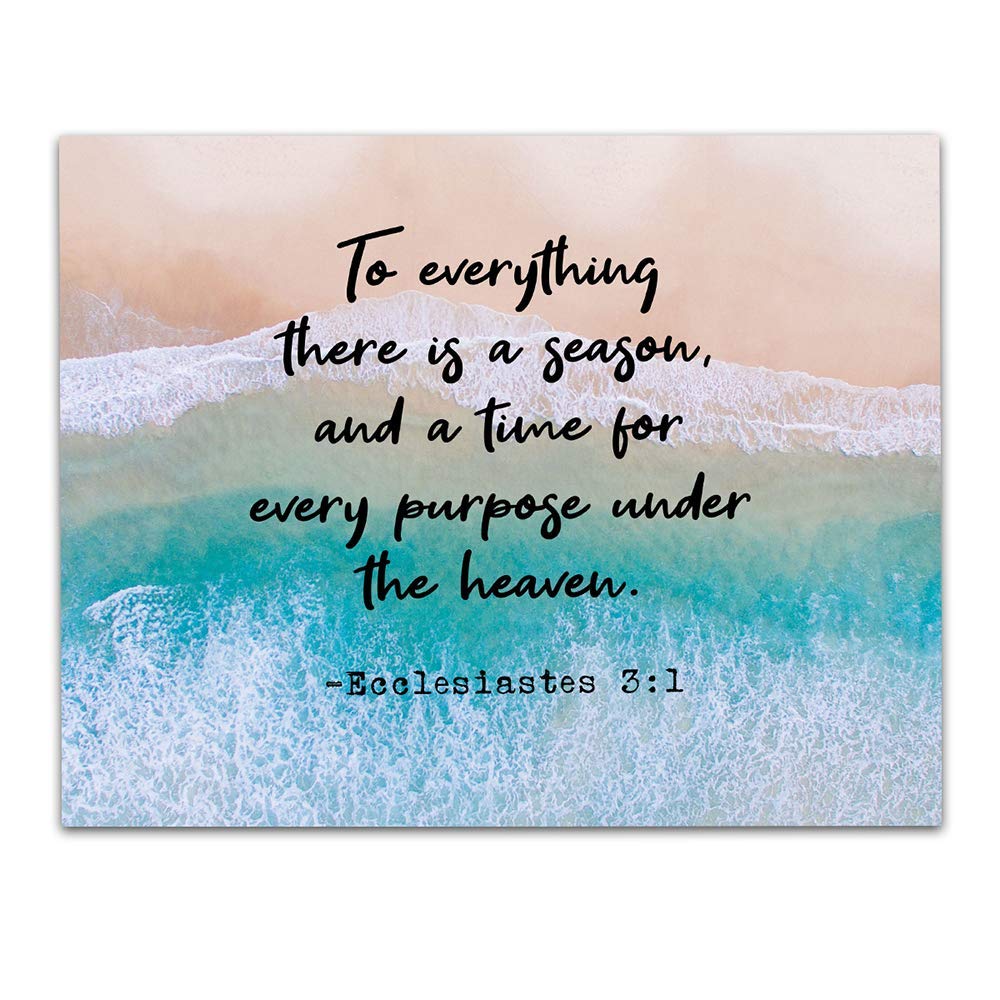
To Everything There is a Season…

25 Wednesday Aug 2021

Posted by jandrewsweckerly in reflection

≈ Leave a comment

Tags

call, church, discernment, God, Jesus, love, season, vulnerable

Photo credit: https://www.amazon.com/Ecclesiastes-Everything-Season-Unframed-Inspirational/dp/B08FMDFBTK

Having finally sat down to write a blog post, I was shocked to realize it had been two months since my last post.  Writing has always been a source of pleasure, joy, and learning for me – a way to reflect on the happenings of life in light of my faith and Holy Scripture.  Blogging for me is akin to preaching and spiritual direction:  an exercise in translating our daily, seemingly secular life into the sacred.  Nearly weekly postings for most of my ministry has been an outlet for me and a ministry to many others.

As I contemplated why there was such a big gap this summer, two theories percolated.  One was the more obvious.  I took some time for vacation, we were searching for and then training a new staff member, I was a part of a bishop’s search (which some argue is like a second full-time job), I was tending my family in a pandemic, I was investing time in continuing education, and I was trying to serve my beloved parish.  My plate was quite obviously full. 

But the second, perhaps more revealing reason came to me through scripture.  I was reminding of that familiar passage from Ecclesiastes, chapter 3:  For everything there is a season.[i]  Honestly, I think more people are familiar with this passage through The Byrd’s song “Turn! Turn! Turn!”  This summer has felt like a different season for me.  Instead of writing about life around us and interpreting it in light of our faith, I spent the summer doing that work orally with two faith communities – talking through what God is doing in the Church, what God has done through us in this time of pandemic, where the Church is going, and who Jesus is calling all of us to be.  In some ways those conversations have been very similar in content to what I write.  But experientially, it was significantly more vulnerable.  Instead of hiding behind the written word, I was engaging in deep, hard, thoughtful conversations in real time, being probed, questioned, and challenged – and all of that experience being broadcast in recorded and live videos for anyone and everyone to see.  I described it to a dear friend as a time of feeling naked before the world.

This summer has been a season for discernment, for deep reflection, for vulnerable pondering.  And just like the scripture writer says, for everything there is a season:  a time to plant, a time to break down, a time to laugh and dance, a time to embrace, a time to seek and a time to lose, a time to speak, and a time to love.  Now, I enter into another season:  a time to reconnect with the Hickory Neck community that loved me through this process – even though it was difficult for them.  A time to write again:  about where we see God in the midst of this season of pandemic that we wish were over.  A time to dream and a time to innovate:  about where God is calling us now.  A time to laugh, dance, and embrace:  even if we have to go back to doing that all virtually.  No matter what the season, God is with us.  I’m honored to journey in this season with you.


[i] Ecclesiastes 3.1-8 reads:  For everything there is a season, and a time for every matter under heaven:  a time to be born, and a time to die; a time to plant, and a time to pluck up what is planted; a time to kill, and a time to heal; a time to break down, and a time to build up; a time to weep, and a time to laugh; a time to mourn, and a time to dance; a time to throw away stones, and a time to gather stones together; a time to embrace, and a time to refrain from embracing; a time to seek, and a time to lose; a time to keep, and a time to throw away; a time to tear, and a time to sew; a time to keep silence, and a time to speak; a time to love, and a time to hate; a time for war, and a time for peace.

Sermon – Joshua 24.1-2a,14-18, John 6.56-69, P16, YB, August 22, 2021

25 Wednesday Aug 2021

Posted by jandrewsweckerly in Sermons

≈ Leave a comment

Tags

baptism, covenant, God, identity, Jesus, Joshua, political, posture, purpose, Sermon

The film Remember the Titans tells the story of the integration of the football team at TC Williams High School in Alexandria, Virginia in 1971.  Bringing together an all-white and an all-black team, the new head black coach has to be very clear about the rules – how and who they will be, how they will comport themselves, what is acceptable.  The rules are strict – if you’re on-time, you’re late.  The rules disrupt the norms – interracial roommates at camp for starters.  The rules are non-negotiable – break them and you are out.  In some ways, there is no other way for the head coach to be.  He is trying to do the impossible at a racially charged time in a racially charged town in a racially charged system.  Any lack of clarity about identity, purpose, and posture could lead to a collapse of the entire system.

This past week, we baptized another child into the household of God.  When the church celebrates a baptism, we are similarly clear about identity, purpose, and posture.  The parents and godparents promise to raise the child in the Christian faith and life, praying and witnessing for the child how to grow into the full stature of Christ.  Further, we claim that the child is marked as Christ’s own forever.  We are clear about identity.  We are also clear about purpose.  The community gathered promises to confess the faith of Christ crucified, to proclaim Jesus’s resurrection, and to share in the eternal priesthood.  We promise to continue in the apostles’ teaching and fellowship, the breaking of the bread, and in the prayers.  We are also clear about posture.  We will resist evil and when we fail, we will repent and return to the Lord.  We will proclaim by word and example the Good News of God in Christ.  We will seek and serve Christ in all persons, loving our neighbors as ourselves.  And we will strive for justice and peace among all people, and respect the dignity of every human being.  We are clear about identity, purpose, and posture:  who we are, what we are made for, and how we go about our faith. 

Of course, what we do in baptism is not that extraordinary among people of faith.  As people of faith, we have constantly handed down our sense of identity, purpose, and posture.  We hear some of that in the Hebrew Scriptures today. Joshua pulls the people of God together and demands they proclaim their identity:  they are the people of God who will serve the Lord.  They respond by telling their story – the way God led them out of slavery, protected and provided for them.  The people proclaim their purpose:  They are to serve the Lord.  And finally, they define their posture:  they will put away false gods, the gods of the ancestors to free them to serve only the Lord. 

What’s interesting is Jesus does the same thing in the gospel lesson today.  Jesus is trying to explain his identity, his purpose, and his posture – the same he expects from his followers.  In response, we are told many people walk away.  Not unlike that football team in Remember the Titans, some are just simply unwilling to get on board with the identity, purpose, and posture Jesus demands.  The text tells us, “Because of this many of his disciples turned back and no longer went about with him.”  Those disciples hear about Jesus’ identity, purpose, and posture, and they walk away – Jesus’ way of life is just too difficult.  But Jesus does not judge or condemn; in fact, Jesus gives an out.  He asks if those remaining wish to go too.  But those who remain are clear.  They know no other way but to follow Jesus now, the one who has the words of eternal life, the Holy One of God. 

You know, sometimes I think we take for granted how difficult being a Christian can be.  One of the things I consistently talked about in the bishop search was how proud I am to be a part of a Church who can gather people of all political persuasions around the Eucharistic Table peacefully.  But in my pride in our identity, purpose, and posture, I sometimes forget how much work that common table really is.  Just this week I read a blog post of epidemiologist who happens to be a preacher’s wife.  She writes of her sympathy for pastors making decisions about gathering the church during the escalation of the Delta variant of the Coronavirus, especially as pastors weigh all the sides.  She argues, “This is not a debate though.  There are no sides.”[i]  She argues that how we handle the church’s response to the pandemic is not political but a matter of faith.  But that is the rub today.  Everything these days is politicized:  how we handle the prevention of the spread of a pandemic, whether we go or stay in Afghanistan, what the extents of humanitarian aid and support should be, and on and on.  When people ask me how I handle politics in the pulpit, I usually say I just preach Jesus and let everyone figure out the rest.  But even Jesus is political.  His clear defining of his identity, purpose, and posture has people deserting him.  Walking with God has always been political.  The Israelites are given a similar choice by Joshua – to be with him and his house as they serve the Lord, or to serve the gods of the locals. 

Our invitation this week is to take a similar hard look at our lives and the difficult teachings of Jesus and to decide which god we will follow.  As Jesus gives the disciples a choice, we too have a choice; although, I suspect your answer may be similar to Simon Peter’s, “Lord, to whom can we go? You have the words of eternal life. We have come to believe and know that you are the Holy One of God.”  The question this week is just what Simon Peter’s declaration means for our daily lives.  How will we embrace our baptismal covenant this week, respecting the dignity of every human being, seeking and serving Christ in all persons, loving our neighbor as ourselves?  These are not just pretty words and lovely concepts.  They are difficult markers of identity, of purpose, and of posture.  Our work is to reclaim the baptismal promises together the only way we know how:  by promising, “I will, with God’s help.”[ii]  Amen.   


[i] Dr. Emily Smith, “Delta and Church:  Three questions: Is it truthful, faithful, and loving?” August 20, 2021, as found at https://emilysmith.substack.com/p/delta-and-church?r=aezlb&utm_campaign=post&utm_medium=web&utm_source=facebook&fbclid=IwAR0JMkDQ07Z1OHcV-ec0Z8s0lFQlyGMe8VdL-DDrvVbcF0txJi0LnyUncZM, on August 21, 2021.

[ii] BCP, 304-305.  This is the repeated response to the five baptismal covenant questions.

← Older posts
Newer posts →

Recent Posts

  • On Politics, Football, and Love…
  • On Sharing the Love…
  • Sermon – Micah 6.1-8, Matthew 5.1-12, EP4, YA, January 30, 2026
  • On Justice, Kindness, Humility, and the Messy Middle…
  • Feast of the Rev. Dr. Martin Luther King, Jr., January 18, 2026

Archives

  • February 2026
  • January 2026
  • December 2025
  • November 2025
  • October 2025
  • September 2025
  • August 2025
  • July 2025
  • June 2025
  • March 2025
  • February 2025
  • December 2024
  • November 2024
  • October 2024
  • September 2024
  • August 2024
  • July 2024
  • June 2024
  • May 2024
  • March 2024
  • February 2024
  • January 2024
  • December 2023
  • November 2023
  • October 2023
  • September 2023
  • August 2023
  • July 2023
  • June 2023
  • May 2023
  • March 2023
  • February 2023
  • January 2023
  • December 2022
  • November 2022
  • October 2022
  • June 2022
  • May 2022
  • January 2022
  • December 2021
  • November 2021
  • October 2021
  • September 2021
  • August 2021
  • June 2021
  • May 2021
  • April 2021
  • March 2021
  • February 2021
  • January 2021
  • December 2020
  • November 2020
  • October 2020
  • September 2020
  • August 2020
  • July 2020
  • June 2020
  • May 2020
  • April 2020
  • March 2020
  • February 2020
  • January 2020
  • December 2019
  • November 2019
  • October 2019
  • September 2019
  • August 2019
  • July 2019
  • June 2019
  • May 2019
  • April 2019
  • March 2019
  • February 2019
  • January 2019
  • December 2018
  • November 2018
  • October 2018
  • September 2018
  • August 2018
  • July 2018
  • June 2018
  • May 2018
  • April 2018
  • March 2018
  • February 2018
  • January 2018
  • December 2017
  • November 2017
  • October 2017
  • September 2017
  • August 2017
  • July 2017
  • June 2017
  • May 2017
  • April 2017
  • March 2017
  • February 2017
  • January 2017
  • December 2016
  • November 2016
  • October 2016
  • September 2016
  • August 2016
  • July 2016
  • June 2016
  • May 2016
  • April 2016
  • March 2016
  • February 2016
  • January 2016
  • December 2015
  • November 2015
  • October 2015
  • September 2015
  • August 2015
  • July 2015
  • June 2015
  • May 2015
  • April 2015
  • March 2015
  • February 2015
  • January 2015
  • December 2014
  • November 2014
  • October 2014
  • September 2014
  • August 2014
  • July 2014
  • June 2014
  • April 2014
  • March 2014
  • February 2014
  • January 2014
  • December 2013
  • November 2013
  • October 2013
  • September 2013
  • August 2013
  • July 2013
  • June 2013
  • May 2013
  • April 2013
  • March 2013
  • February 2013
  • January 2013
  • December 2012
  • November 2012
  • October 2012
  • September 2012

Categories

  • reflection
  • Sermons
  • Uncategorized

Meta

  • Create account
  • Log in
  • Entries feed
  • Comments feed
  • WordPress.com

Blog at WordPress.com.

  • Subscribe Subscribed
    • Seeking and Serving
    • Join 395 other subscribers
    • Already have a WordPress.com account? Log in now.
    • Seeking and Serving
    • Subscribe Subscribed
    • Sign up
    • Log in
    • Report this content
    • View site in Reader
    • Manage subscriptions
    • Collapse this bar
 

Loading Comments...