• About

Seeking and Serving

~ seek and serve Christ in all persons

Seeking and Serving

Tag Archives: God

On control and other myths…

22 Wednesday Mar 2017

Posted by jandrewsweckerly in Uncategorized

≈ Leave a comment

Tags

aging, control, creator, dependency, God, health, illusion, independence, Lent, stewards

control

Photo credit:  nordicapis.com/should-you-control-how-your-public-api-is-used/

Nine years ago, Oscar-nominated film, The Curious Case of Benjamin Button, debuted.  The story was certainly curious.  The main character was born as an elderly person and then aged in reverse over the duration of the movie.  When he was biologically still a child, he looked like a senior citizen, and by the time he was a senior citizen, he looked like a teenager.  He came into the world unable to control his body, and as he aged/became younger, he died as an infant, unable to control his body again.  Although the process was reversed, the stages of life are not all that dissimilar to the stages we face – dependency, increased control over the self, and, if we live long enough, increased dependency as we age.

I have had many conversations with parishioners about this process.  “Getting old is for the birds!” they often tell me.  Once you have lived the majority of your life in relative independence, wrapping up your life with a return to dependency is a scary, frustrating, sometimes mentally debilitating process.  In my conversations with parishioners, the common thread seems to be about the mental, emotional, and spiritual anguish created by the lack of control that illness and aging creates.

I have realized recently though how the aging process does not create a lack of control.  The aging process simply highlights the reality of life all along – that we are not in control.  We like to create illusions of control throughout life – how we spend money, what jobs we take, what we eat and wear, and whom we love.  But the reality is that our jobs are highly informed by our vocations – that calling that God enables each of us to do through our gifts and talents.  Our money is all a gift from God – a trust we are given of which we are to be faithful stewards.  What we eat and wear is highly correlated to circumstances out of our control – class, race, and nationality.  Even who we love depends greatly on the paths we take – what geographic radius we live our lives in and who God brings into those paths.

Of course, all of that does not ignore the agency God gives us and the work we do in gratitude for our many blessings.  We are to be good stewards.  But our reminder, especially in Lent, is that we are just that:  stewards, not creators.  Our collect this Sunday was a tremendous reminder of that:  Almighty God, you know that we have no power in ourselves to help ourselves: Keep us both outwardly in our bodies and inwardly in our souls, that we may be defended from all adversities which may happen to the body, and from all evil thoughts which may assault and hurt the soul; through Jesus Christ our Lord, who lives and reigns with you and the Holy Spirit, one God, for ever and ever. Amen.  (BCP, 218)  What might you change this week, or what might you do differently in prayerful recognition of from where our control, care, and defense comes?  I look forward to hearing your reflections!

On Disagreement and Hope…

15 Wednesday Mar 2017

Posted by jandrewsweckerly in Uncategorized

≈ Leave a comment

Tags

Bible, Christian, clergy, community, conversation, disagreement, God, hope, interpretation, Jesus, love, protest, relationship, scripture, sexuality, witness

hope (1)

Photo credit:  www.gwinnettpl.org/nine-books-on-hope-in-troubled-times/

Last week, I received an email directed to local pastors from a fellow pastor.  He wanted to draw our attention to the fact that the local elementary schools would be hosting an author whose most recent book features a family with two gay dads.  He was upset that the author had been invited and upset that the school board and principals had not been more upfront about the invitation to the author to parents and the community.  His email was an invitation for the clergy to come together to discuss what we might be able to do to voice our protest.

There were several things that alarmed me in the communication.  First, as a pastor and parent, not only am I not opposed to the author coming, I am quite pleased that a non-heteronormative story is being featured in our schools.  Second, and more importantly, I was concerned about a group of clergy gathering to present to the community the voice of the clergy – as though we are all of one mind.  At first I thought I would email the pastor, and then I thought I should email the schools and board.  But then I realized, no email or letter could fully express my concerns, and that kind of one-sided communication often leads to misunderstanding and assumptions.  And so, I decided to go.

I did not make that decision lightly.  I have many friends and family members who have a very different interpretation of the Bible and the issue of sexuality than me.  I have engaged in some deeply hurtful conversations around those topics, and knew I could be walking into a lion’s den going to the meeting.  But I kept thinking of my goddaughter, raised by two incredibly loving men, who have created a home that is a shining example of Christ’s commandment to love God and neighbor.  And so, I went.

I suspected we were heading for trouble as I listened to people talking before the meeting about how Christian morals are being corrupted by the world.  But when the meeting started, things shifted.  The inviting pastor opened with scripture, and then asked us to pray for God’s guidance and for each member of the School Board.  Out of those prayers came the same words I always use when talking about the wideness of God’s love:  inclusivity, love, transformation, loving neighbor as self, being a witness to Christ’s love.  I was fascinated to see how two opposing opinions could be rooted in the same biblical text and the witness of Christ Jesus.  After our enlightening time of prayer, people began to speak.  Some of the concerns were quite legitimate:  a lack of transparency from the schools and board, a lack of intentional engagement with the parents around the choice of the author, and a lack of clarity around why the decision was made.

Of course, where we differed was in the result we desired.  I braced myself and shared with the group why I was there.  Much to my surprise, no one freaked out, no one condemned me for my different perspective, and no one shut down.  Most of the other pastors and lay leaders were quite clear that they believe that scripture should be interpreted differently than I do, but there was no hate or malice.  We even learned that another pastor in the room shared my viewpoint.

What I came away with from the meeting was a sense of hope.  I have never seen such civility, such Christ-like conversation, as I saw that day.  I have rarely seen people of radically different opinions be able to stay at the table without walking away.  We did not change each other’s minds, but we also did not denigrate or disrespect one another.  Suddenly it hit me:  if we could take that kind of civil, Christ-like engagement out into the world, that would be a much more powerful witness of Christ’s love than pastors simply telling people to love each other without actually doing it.  I could even envision the two groups peacefully gathered at a School Board meeting, calmly presenting our opposing views; not witnesses to whether or not an author should be invited into the schools, but witnesses to what holy conflict and conversation look like.  It was a beautiful image, and a wonderful counter to our current political climate.

Now, I do not know if that image will ever come to fruition.  I do not know if the relationship-building we discussed will ever materialize.  But if nothing else, the meeting taught me that there is hope.  There is hope that God can work in the midst of conflict and disagreement and transform it into something sacred.  There is hope that we as a people can engage with one another respectfully despite our differences.  There is hope that Christ can do infinitely more than we can ask or imagine.

Sermon – Jonah 3.1-10, Psalm 51.11-18, and Luke 11.29-32, Ecumenical Lenten Worship Series, March 8, 2017

15 Wednesday Mar 2017

Posted by jandrewsweckerly in Sermons, Uncategorized

≈ Leave a comment

Tags

change, ecumenical, God, hero, immature, Jonah, journey, judgment, Lent, listen, neighbor, Nineveh, renewal, repent, repentance, Sermon, sin, temper tantrum, together, witness

I have always loved Jonah’s story.  He is probably one of the most juvenile characters in the Hebrew Scriptures.  When God tells him to go to Nineveh, he runs in the opposite direction.  Only when God makes the seas roar, and he is swallowed by a fish, does Jonah call out for God’s mercy.  Jonah finally submits to God and goes to Nineveh as he is told, but then he throws a temper tantrum at God when God forgives Nineveh.  He is angry God doesn’t punish the city, and so he storms off to pout.  When a bush giving him shade withers, he ramps up his tirade.  God asks if Jonah has any right to be angry, and Jonah, in classic toddler style, whines, “Yes! Angry enough to die!”  You can almost imagine him stamping his foot, pouting his lower lip, and furrowing his brow.

Jonah is easy to make fun of because his behavior is so incredibly immature and self-centered.  We laugh at his adult-sized temper tantrum because we all know adults are too old for that sort of behavior.  But that is what is tricky about Jonah too.  Deep down, in places we do not like to talk about, we know Jonah’s experience all too well.  When we are really honest, we can confess that may or may not have thrown an epic temper tantrum in our adult lives too.  Whether over the reoccurrence of an illness, the death of a loved one, a lost cause, the job we did not get, or the love that was not returned, we have all had our Jonah moments.  Though we publicly all can say, “Silly Jonah, when will he learn?!?”, privately, we all think, “That sounds uncomfortably familiar.  I hope no one noticed my temper tantrum!”

Of course, at the end of the day, Jonah does what he is told – witnesses to the people of Nineveh, as God requests.  But in the drama of Jonah’s story, we often forget one minor, and yet central component of Jonah’s story.  Nineveh is the Rockstar of this story.  Nineveh, for all its sinfulness and shame, has no problem admitting Nineveh is wrong.  When Jonah tells Nineveh the city will be overthrown if Nineveh does not repent and change its ways, the people immediately believe God.  They proclaim a fast, and everyone – adults, elders, and children, put on sackcloth.  Even the king of Nineveh immediately rises from his throne, puts on sackcloth and sits in ashes.  He decrees that everyone in the city – humans and animals – will fast, be covered in sackcloth, and cry out their repentance to God.  He declares, “All shall turn form their evil ways and from the violence that is in their hands.  Who knows?  God may relent and change God’s mind; God may turn from God’s fierce anger, so that we do not perish.”

The king of Nineveh and the people of Nineveh are quite unlike most modern recipients of judgment.  In Nineveh, no one holds a press conference to defend their motives and actions.  No one holds a counter-protest to the judgment.  No one even argues with Jonah or asks, “Are you sure?”  Nineveh is told a cold, hard, ugly truth that exposes their deep sinfulness and grievances, and instead of getting defensive, Nineveh drops everything.  They stop in their tracks and change their ways.  They take the judgment with sobriety and honesty, and they make a change.  Though we like to give Jonah the attention, the real heroes in this story are the king and people of Nineveh.

When Jesus talks about repentance in Luke’s gospel today, and when the Church talks about repentance in the season of Lent, this is the kind of repentance we are talking about.  Jesus basically shares that he is to the people of Israel as Jonah was to the people of Nineveh.  He is their sign that repentance is needed.  The people of God are to use Nineveh as their guide for what true repentance looks like.  Jesus’ instruction and Nineveh’s example come at an opportune time for us.  We have managed to work ourselves into a time of finger pointing and name calling.  Our division is found on the political scene, between denominations of churches, and even in our families.  We have presumed that we are Jonahs and everyone else is Nineveh.  The reality, though, is much scarier.  We are not Jonahs.  We are Ninevehs.  Jesus is the Jonah of our time, calling us into repentance and renewal.  We can follow the model that Nineveh set for us, dropping everything to evaluate our sinfulness and changing our behavior immediately.  We can sit in sackcloth and work to deeply understand the role we play in sinful behaviors.  We can invite our neighbors to sit with us as we both work toward repentance.  That is what Lent is all about.

So how do we repent?  How do we take this time of Lent as a time for intentional, dramatic, meaningful change in our lives?  The psalm appointed for today gives us a few clues.  “Create in me a clean heart, O God, and renew a right spirit within me.  Cast me not away from your presence and take not your holy Spirit from me.  Give me the joy of your saving help again and sustain me with your bountiful Spirit.”  First, we ask God for help.  We ask God for help, because we know our God will enable us to do the work God has given us to do.  The psalm also tells us to bring others into our journey, “I shall teach your ways to the wicked, and sinners shall return to you.”  We not only bring our broken, sinful, hurtful selves to God, we witness our work to others, using our own vulnerability and humility as an entry to shared journey.  And then we sing.  “Deliver me from death, O God, and my tongue shall sing of your righteousness, O God of my salvation.  Open my lips, O Lord, and my mouth shall proclaim your praise.”  We use our mouths to praise our God – a God who can change course, who can see the repentance of God’s people and take away the horror of judgment.

That’s why I am grateful that we are together tonight.  We come to God across denominational differences and we sit together in worship.  We hear the witness of Nineveh tonight, and then we start the work of emulating Nineveh.  First, we hear Jonah and Jesus’ word of judgment, letting God create in us clean hearts and renewing right spirits in us.  Then, we turn to our neighbor, and work on creating a community of repentance, working to love the Lord our God and our neighbor as ourselves.  Finally, we turn to those not gathered here tonight – those who may not have a church home, and we share our witness.  We share our witness of how we have been a people of sin, and how we are hoping to change our ways.  And we ask if they might help us on that journey – not taking the judgment of Jonah out into the world, but taking the repentance of Nineveh out into the world.  Listening to our neighbors, working together for meaningful change, and creating a city that is humble enough to know that God may relent and not let us perish.  God will renew a right spirit within you, will give you the joy of God’s saving help again, and will sustain you with God’s bountiful Spirit.  Thanks be to God!  Amen.

On Sacred Snippets…

08 Wednesday Mar 2017

Posted by jandrewsweckerly in Uncategorized

≈ 1 Comment

Tags

balance, chaos, God, goodness, holy, Lent, lenten discipline, liturgy, prayer, sacred, sinfulness

lent_image

Photo credit:  https://prayerbookguide.wordpress.com/living-the-season/lent/

I know many Christians who loathe the season of Lent.  They find the season to be heavy-handed, to be too somber and full of self-loathing, and to be a bit of a downer.  I am not one of those Christians.  Lent is probably my favorite season of the Church Year.  There is an honesty about Lent that feels more authentic to me.  I feel like we do not have to pretend in Lent – pretend to be happy, pretend to have our lives together, pretend to be perfect.  Instead, Lent feels like a great equalizer – a time when we all confess our utter inability to live the lives we intend, and our utter dependence upon God.  Add on top of that intentional disciplines, liturgies that articulate the tension of our sinfulness and goodness, and additional church programming, and I come alive during Lent.

But this year, I have been struggling a bit with Lent.  I have gone through all the motions of Lent:  I am reading a book with a study group, I am playing Lent Madness with my oldest child, and I am attending a weekly ecumenical worship service and fellowship gathering.  I have also worked with our liturgical team to change up the liturgies to make them just different enough to shake up the senses.  I am helping teach a bible study in preparation for Holy Week.  I participated in the winter emergency shelter our church hosted last week.  The Lenten “wheels” are all in motion.  But I find this year that I am having a difficult time getting my Lenten grounding.

Now, it could be that my family has been in and out illness over the past month.  It could be that the church schedule has been particularly full, leaving me working most Saturdays this past month.  It could be that I’m still adjusting to my first full year at Hickory Neck, not having shaped a Lenten season here yet.  Whatever is going on, I was gently reminded by my Spiritual Director once that there is no wrong or right prayer life.  Our prayer life is a reflection of the rest of our life.  The Director told me that it was no wonder that my prayers were happening on the go much of the time – because juggling a family of four and a parish means that prayers happen with the rest of life.  In fact, it is unlikely that I will have an hour of prayer time every morning – because balance means finding varied ways to pray in various stages of life.

Remembering that instruction, I have been shifting my expectation of Lent this year.  Since there is little likelihood that Lent will slow down, I am trying to catch meaningful moments as they fly by.  Like how my seven-year old demands that she be allowed to go to Ash Wednesday services to get her ashes or how she begsto go to the winter shelter one more time.  Like how a parishioner calls between drop-offs to talk about navigating the faithful raising of children.  Like how the Great Litany shakes me to my core.  Like how a sermon I prepared speaks to me on a totally different level as I am preaching it.  Like how a conversation with a parishioner reminds me of the powerful ways we are living into God’s call to respect the dignity of every human being.  I may not be finding long periods of silence, setting apart times of dutiful Lenten practices, or mastering a Zen-like experience at church.  But holiness is happening all around me.  My hope now is to savor each moment for just a bit longer, honoring the holy moments God throws my way in the midst of a chaotic season of life.

Sermon – Matthew 4.1-11, Genesis 2.15-17, 3.1-7, L1, YA, March 5, 2017

08 Wednesday Mar 2017

Posted by jandrewsweckerly in Sermons, Uncategorized

≈ Leave a comment

Tags

church, corrupt, disciplines, doubt, evil, God, goodness, identity, insecurity, Jesus, Lent, question, relationship, repentance, Satan, Sermon, sin, temptation, trust

On this first Sunday in Lent, I usually like to talk about Lenten disciplines.  The season of Lent is one of the few times in the Church that we take a hard look at our faith life and then actually commit to doing something tangible to strengthen our walk with Christ.  When I hear about your disciplines, I get some clue as to what feeds each of you spiritually – whether you long to connect with Holy Scripture, or hope to deepen your prayer life; whether you know that denial of certain parts of your life will create a needed discomfort or disruption, or instead find taking up something to create needed transformation; whether you are motivated by something fun and engaging (like Lent Madness), or you prefer something more philosophical (like our Lenten study group focusing on the spirituality of the Eucharist).  Lenten disciplines also give me a tiny clue about what sinful behaviors have been pulling you away from God.  As we prayed the Great Litany today, there were countless options:  pride, vainglory, hypocrisy, envy, hatred, malice, desires of the flesh, and hardness of heart.  Or, perhaps you are inspired to help one of those we prayed for in the Litany:  the lonely, the sick, the homeless, the imprisoned, broken families, the oppressed, or those suffering injustice.  There really is no wrong way to approach Lenten disciplines – that we are taking them on demonstrates a commitment to enriching our faith and growing closer to God.

Given the beginning of those practices, the text of Jesus’ temptation every year on this first Sunday in Lent has always seemed most appropriate.  How better to encourage us to engage in repentance and reformation than to remember that Jesus too was tempted – tempted to ease the discomfort of hunger, tempted to test God’s loyalty and support, and tempted to take on power – even if ill-gotten – for the greater good?  And even better that this year in Lent, we get that powerful lesson from Hebrew Scriptures of Adam and Eve’s temptation – the temptation to eat beautiful fruit, to learn what God knows but won’t tell us, to take control of our destiny.  And all of those temptations would be plenty.  But what has been striking me more powerfully this year has been what is at the root of the temptations of Satan.  You see, in all of those tests for Jesus, and even in the simple offering of forbidden fruit, Satan does something even more insidious.  Through his temptations, Satan works to undermine our relationship with God – to sow the seed of mistrust that promises to unravel the very foundation of our faith.

We can talk all we want about deepening our faith, working on our sinful behaviors, or becoming better Christians in Lent.  But much scarier to talk about is the power of evil to undo our faith altogether.  Many of us know the darkness of this power from Satan.  If we have not had a spiritual identity crisis in our lives, someone we know has.  Enough people around us die, enough suffering happens in the world, enough pain comes our way that slowly we begin to wonder if God cares at all.  We watch what Christians do to one another or how they fail to care for one another, we see the misdeeds of the Church, or the Church’s clergy disappoint us, and slowly, slowly, we begin to doubt God is even present.  As I have been watching the news, as our country becomes more deeply divided, as suffering seems to be epidemic, and as we dehumanize one another, sometimes institutionalizing that dehumanization, I see the power of evil planting seed after seed of mistrust.  Who hasn’t asked, “Where is God?” in the last year?  Who hasn’t thought, “Maybe I should stop trusting God, and start taking care of things myself.”?  Who hasn’t wondered if God is slipping into irrelevance as the world falls apart around us?

As I have pondered the temptations of Adam, Eve, and Jesus, the power of evil to corrupt has been much more powerful, potent, and pressing this year.  The “crafts and assaults of the devil” and the desire to “beat down Satan under our feet”[i] we heard in the Great Litany are much more powerful in our current climate.  I am much less worried about Adam and Eve’s original sin than I am worried about their original insecurity.  The serpent comes along and sews mistrust among Adam and Eve.  He starts out with a simple question, “Did God really say…”  And so begins the serpent’s assault on their relationship with God – misrepresenting and undermining God’s instructions, suggesting God is keeping something from them.  And as scholar David Lose suggests, once this primary relationship is undermined, Adam and Eve are “susceptible to the temptation to forge their identity on their own, independent on their relationship with God, and so take and eat the forbidden fruit… [They] forget whose they are and so lose themselves in the temptation to secure their identity on their own.”[ii]  Though Adam and Eve’s sin is grave, how the serpent gets them there is much scarier to me.

Satan attempts to do the very same thing with Jesus.  “The devil also tries to undermine Jesus’ relationship with God by suggesting [the relationship] is not secure, that he should test [the relationship] by throwing himself off the mountain, or that he should go his own way by creating food for himself, or that he should seek the protection and patronage of the devil rather than trust God’s provision.”[iii]  Satan is good!  He even tries to twist Jesus’ use of scripture to convince Jesus of God’s unworthiness of trust.  What is frightening about Satan’s tactics is that he is not just about tempting us to do bad things.  He is meddling in our relationship with God, sewing distrust, confusion, questioning our identity as beloved children of God.  And that kind of meddling leads to much worse problems than poor behavior.  Satan tries to upend who we are.

Last week, we baptized two members into the household of faith.  We talked about how baptism marks for us who and whose we are.  We gave thanks for the reminder and celebrated as a community.  We were not unlike Adam and Eve, who upon their creation, God says it is very good.  We were not unlike Jesus, who at his own baptism, which occurs immediately before his temptation today, God says, “This is my beloved, with whom I am well pleased.”  But Satan takes goodness and blessedness, and tries to taint that goodness and blessedness with doubt, mistrust, and insecurity.  He tries to confuse us, making us forget who and whose we are.

Several years ago, the movie The Help debuted.  In the film, there is a maid who cares for a child who gets a lot of verbal abuse from her mother.  In several key scenes, the maid takes the child aside and teaches the child a mantra of sorts.  In her rough grammar, she reminds the child, “You is smart, you is kind, you is important.”  Eventually the maid is fired, and the audience is left hoping that the mantra she taught the child will remind her that no matter what verbal abuse she receives, she can remember who she is – smart, kind, and important.

We do not always have caretakers in our lives who will instill in us a mantra that holds us in the face of adversity.  But we do have a church.  We have a church that will tell us we are made in the image of God, that our very creation is rooted in goodness, and that we are beloved children of God.  When we begin to be assaulted by the power of evil, which would rather us question our identity, the church reminds of us of our baptismal covenant, our identity-making set of promises, which tells us we are enough, there is plenty to go around, and we need not live in fear.  While the forces of evil will try to isolate us and send us into questions of identity, the church comes together every week to remind us that we are beloved children of God – a people of value, worth, and purpose.[iv]

I do not know what spiritual discipline you are taking up for Lent this year.  But if you do nothing else this Lent, come to church.  Come gather with the community that reminds you who and whose you are.  Come be with a people who are also assaulted by the doubts, questions, and fears of the day, but who ground themselves in their identity, and find meaning, encouragement, and purpose in this place.  Come.  Together, we will stamp down Satan under our feet as we shine light on our God who redeems, reveres, and renews us.  Amen.

[i] BCP, 151-152.

[ii] David Lose, “Lent 1A:  Identity as Gift and Promise,” February 28, 2017, as found at http://www.davidlose.net/2017/02/lent-1-a-identity-as-gift-and-promise/ on March 2, 2017.

[iii] Lose.

[iv] Lose.

On Cuisine and Community…

15 Wednesday Feb 2017

Posted by jandrewsweckerly in Uncategorized

≈ 3 Comments

Tags

church, comfort, comfort food, communion, community, cuisine, Eucharist, feast, fellowship, food, God, journey, recipe, strength, sustenance

mac-and-cheese

Photo credit:  whoneedsacape.com/2016/10/italian-mac-cheese/

This weekend, I made a family recipe from my husband’s grandfather.  Though Grandpa Gray is no longer with us, somehow, making this recipe for the first time in a long while flooded me with all kinds of memories.  You see, Italian Mac was the family’s favorite dish – the ultimate comfort food.  One year, I finally asked for the recipe and stayed with Grandpa Gray in the kitchen while he made it.  Now, as I look at the words of the recipe, I can hear his beautiful voice in the words.  As I crush the herbs as he instructed, I can imagine his worn hands doing the same thing.  As our house fills with the aromas of Italian Mac and garlic bread, I can remember the smell of his house.  As I sip the red wine that the recipe suggests I pair with the meal, I can recall the comforting sound of his laughter.

Food has a special power.  Whenever I have been on mission trips, food has created intimate connection.  In Honduras, we all took turns helping the women of the village cook for our team.  After ten minutes of attempting to grind corn, we were all laughing at how much stronger the women were than the men who were lifting bricks to build the church.  On my second visit to Costa Rica, I wanted to learn how to make the beans and rice we ate regularly.  The women were surprised that I was willing to get up early with them and learn.  After that morning, our relationship shifted.  In Myanmar, giggles and laughter ensued as we tried new foods and our hosts appreciated our boldness.

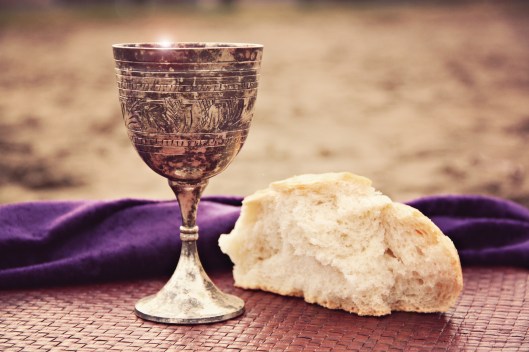
The same is true of the Eucharist.  I have been in churches that use grape juice and a small cube of pasty, crunchy “bread.”  I remember the splendor of the sweet Hawaiian bread used at another church.  I remember the first time I had real wine at communion, and the way that it burned down my throat, lighting a new fire in me.  Whether baked bread, bland wafers, or store-purchased pita bread, each texture and flavor imprints in my mind the church, the community, the spiritual place where I was at the time.  Even this weekend, at my goddaughter’s baptism, my own daughter commented on the “yucky” communion bread they had.  I would have just said it was dense, but that dense texture will linger in my mind as my reminder of our celebration.

Holy Eucharist is the comfort food of Church.  That is why I love being a part of a sacramental church that has Eucharist every Sunday.  But the Church offers other comfort foods as well.  The pancakes we eat every Shrove Tuesday remind me of years of fellowship and laughter – with communities all over the East Coast.  The Brunswick Stew of the Fall Festival at Hickory Neck will always remind me of warmth and community.  There are those dishes at every potluck that you search for, knowing the comfort it will bring.  And of course, there is the Sunday morning coffee – a staple of hospitality and grace.  If you have been missing a sense of community and comfort, I hope you will make your way to Church this week and join us in the feast that not only comforts us, but also strengthens us for the journey.  God has given us great work to do – but God has also given us the sustenance we need for the road ahead.

lords-supper-church-stock-photos

Photo credit:  stthomasnorwalk.com/religious-ed/sacraments/Eucharist

On hitting our stride…

08 Wednesday Feb 2017

Posted by jandrewsweckerly in Uncategorized

≈ Leave a comment

Tags

blessing, dream, God, identity, life, ministry, retreat, Vestry

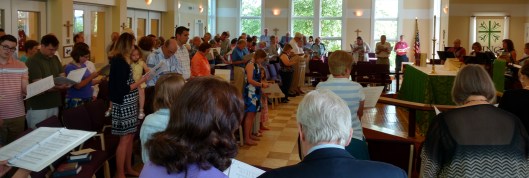
family-service-1This weekend, our Vestry gathered for a retreat.  Only a few things were on the agenda:  getting to know each other better (nothing like filling out some Lent Madness brackets to help you get to know someone!), defining who we are as a community, and looking forward to where we are going.  The weekend was a wonderful combination of laughter, reflection, quiet, conversation, dreaming, and planning.  I am reminded once again how blessed we are by the diverse, talented group of leaders who are helping guide our parish into its next phase of life.

One of the things we did on our retreat was to watch a video about Hickory Neck from 2004.  As a relative newcomer to Hickory Neck, it was fascinating to see so many familiar faces (don’t worry – you all still look fabulous!), to hear what was energizing the community back then, and to see what the goals and dreams were.  The video was produced to prepare Hickory Neck for a capital campaign which would support the construction of our New Chapel.  Despite the intent to raise funds, you still could hear clearly what Hickory Neck was about, and where it was going.

What I loved about watching the video was seeing how much things have changed, and how some things have not changed at all.  We are still a community of hope, joy, and belonging.  We still love to worship the Lord in the beauty of holiness, we are still journeying toward deeper relationship with God and our neighbor, and we still want to be beacon of light to our neighbors in need.  And yet, since the video was created, the economy has changed, technology has changed, and demographics have changed.  Our work now is listening to the new ways God is calling us to be faithful disciples to a world in need of redemption.

This is an exciting time for Hickory Neck.  These last ten months, we have been alternately jogging, sprinting, and trying to match each other’s pace.  As we wrap up this first year together, we are hitting a rhythmic stride together.  We have learned a lot more about each other, figured out how to adjust for each other’s gifts and talents, and are now getting ready to take off.  It’s an exciting time and the fun is just beginning.  If you haven’t met Hickory Neck yet, I would encourage you to come on over and check us out.  You won’t be disappointed!  And if you have been around a bit, I think you are going to be pleased to be a part of this next phase of life and ministry together.  God has great things in store!

Sermon – Isaiah 58.1-12, EP5, YA, February 5, 2017

08 Wednesday Feb 2017

Posted by jandrewsweckerly in Sermons, Uncategorized

≈ Leave a comment

Tags

church, fast, fasting, God, Isaiah, love, need, outreach, relationship, Sermon, serve, worship

In about three and half weeks we will gather in the Historic Chapel for Ash Wednesday services.  In the liturgy for Ash Wednesday, the priest invites us into the “observance of a holy Lent, by self-examination and repentance; by prayer, fasting, and self-denial; and by reading and meditating on God’s holy Word.”  I don’t know about you, but this invitation always makes me a little nervous.  The truth is, I am terrible at fasting.  I have often blamed the issue on low blood-sugar.  But really, I just hate the way not eating makes me feel.  I get cranky, I cannot focus on work, and I just want to crawl into bed.  And what makes fasting worse is that we get scriptural passages that warn us about grimacing while fasting – that we should go so far as to put oil on our faces so that we look shiny and happy during our fasting.

Knowing my utter sense of failure at my inability to engage in the most holy of spiritual practices, I confess that I was secretly pleased to read our text from Isaiah today.  The people of Israel have become quite good at fasting and pious worship.  We are told that day after day the Israelites come to God in worship, delighting to know more about God, and fasting like righteous followers of God.  They even bow down and lie in sackcloth and ashes.  They are the epitome of penitential Lenten worshippers.  Except for one small, teeny, tiny problem.  Despite their devotional fasting and their fervent prayers, God is angry with the Israelites.  You see, while the Israelites are piously engaging in reverent, penitential worship, their hired hands are working under their oppressive orders.  While they have been perfecting reverential bows, there are hungry, homeless, naked, impoverished peoples just outside their doors.  Oblivious, the Israelites complain to God, “Why do we fast, but you do not see?  Why humble ourselves, but you do not notice?”  God’s response is a brutal question:  Why are you here?

In polite Episcopal circles, we do not often ask that question:  Why are you here?  We might ask a visitor a much softer version of that question, “What brings you to Hickory Neck?”  But we almost never ask a regular or long-time church member, “Why are you here?”  I think part of why we do not ask someone else that question is because we are afraid someone will ask us that question.  We are afraid to be asked that question because the question feels like a trick.  If I say I am here because I want peace or comfort, does that make me a passive, self-serving Christian?  If I say I am here because I enjoy the community, does that mean my church is more like a country club than a church?  If I admit that I do not know why I am in church this morning other than a strange longing somewhere deep inside me, does that mean that my worship is superficial or doomed for ambiguity?

The scary part about our anxiety around that question, “Why are you here today,” is that God has a very clear response before we or the Israelites can even answer the question.  God says that if we do not come to worship to be changed, we are doing something wrong.  As one scholar argues, Isaiah’s words today tell us that, “Worship without justice has no value in the eyes of God.”[i]   For Isaiah, a gap has formed between the faithful’s seeking God and God’s ways and their actual way of life.  What Isaiah wants the people to know is that fasting, prayer, and worship are all well and good, but without some connection to the other 167 hours of their week, their worship, their fasting, their relationship with God is hollow.  Now, God is not telling us that worship is inherently bad or self-serving.  As another scholar points out, “worship is the most important thing we do together.  It is the place that forms us into the people of God.  It is the place where we inhale God’s love and grace, so that,” and here comes the important part, “so that we can be sent forth to exhale God’s love and grace in a broken world in need of redemption.”[ii]

One of the things that attracted me to Hickory Neck was the wide variety in styles of worship.  On any given Sunday, I can pray the Prayer of Humble Access in the midst of a quiet Rite I liturgy; I can belt out a praise song that is so familiar I don’t need to look at the words; I can chant the Eucharistic Prayer while the Choral Scholars respond with beautiful, precise, haunting harmonies; or I can sing a version of the Lord’s Prayer that my seven-year old daughter has learned by memory.  I love the variety of expressions of worship here, and love our unique gift that is rare in most parishes.  But variety can be dangerous.  Variety means bringing together people who don’t necessarily revel in the differences.  There will be people who only come to our early service because they find music to be a distraction.  There will be people who only come to the late service because anything other than traditional Anglican music interferes with their worship.  And there will be people who only like the middle service because they can let their hair down and be themselves.  Slowly, what is meant to be the gift of variety becomes a competition for the best – the most holy, most reverent, most relatable, most “of God.”  But what all that comparison leads to is not deeper relationship with God.  That comparison leads us to focus on the worship as an end unto itself, instead of as a means “right relationship.”[iii]

In order to get to the point of fasting or worship, God tells the Israelites to redefine fasting.  Instead of abstaining from food or drink, the fast God desires, “is outreach to those in need, which involves not only feeding the hungry, clothing the naked, and caring for one’s own, but also addressing the attitudes and structures responsible for injustices.”[iv]  In the Episcopal Church, we have codified this redefinition of fasting in our dismissal.  We take all of our prayers, all of learning, all of our confessions, and all of our feasting and we say, “Go in peace, to love and serve the Lord.”  In other words, we give ourselves the beauty of worship, and then remind ourselves of the point of that worship – right relationship with God and our neighbor.  I have often thought the church needs the words of the dismissal painted above the Narthex door, so that as each of us departs this space, we can jump up and slap the words – much life a sports team entering the arena who slaps a slogan or the team name.  Go in peace to love and serve the Lord.

Now some of you may be thinking about this radical redefinition of fasting and this question of why we are here in worship, and be wondering, “Can’t I just give up some food and call it a day?!?  Can’t I just sit in worship and not worry about why I am here?!?”  You may know well that righting relationships with God and neighbor is a lot harder than a day’s worth of sacrificing food or just showing up on Sunday.  But before you get too anxious, listen again to Isaiah’s words about what happens when we enter the kind of fast God prefers, “The Lord will guide you continually, and satisfy your needs in parched places, and make your bones strong; and you shall be like a watered garden, like a spring of water, whose waters never fail.  Your ancient ruins shall be rebuilt; you shall raise up the foundations of many generations; you shall be called the repairer of the breach, the restorer of streets to live in.”  God’s work is never too difficult – exhaling God’s love and grace in a broken world in need of redemption is as easy as breathing in the love and grace we inhale every Sunday.  The promise of God’s blessing is waiting – we just need to breathe.  Amen.

[i] Carol J. Dempsey, “Theological Perspective,” Feasting on the Word, Yr. A, Vol. 1 (Louisville:  Westminster John Knox Press, 2010), 314.

[ii] Andrew Foster Connors, “Pastoral Perspective,” Feasting on the Word, Yr. A, Vol. 1 (Louisville:  Westminster John Knox Press, 2010), 316.

[iii] Dempsey, 316.

[iv] Dempsey, 316.

On Staying at the Table…

01 Wednesday Feb 2017

Posted by jandrewsweckerly in Uncategorized

≈ 4 Comments

Tags

controversy, conversation, dinner, Eucharist, God, listen, protest, respect, shelter, table

Yesterday morning, I heard a statistic that said 57% of Americans supported Trump’s current immigration ban.  The number surprised me because I had watched all weekend as people poured into airports and joined protests against the Executive Order.  Perhaps one could argue that the press loves to cover controversy and made the hype feel bigger than the numbers.  Regardless, watching the passionate, immediate, and spontaneous emergence of protests, I was surprised to hear such support in opposition to the protestors’ visceral response.  As I thought about that contradiction, I realized that there must be some part of the supporters’ position that I do not understand.

I have been thinking a lot this past week about how we are going to move through this tense time as a country.  One of the constant refrains I have been hearing is about how we need to listen – really listen – to each other and engage in meaningful conversation with the “other.”  I have appreciated articles like this one, that present a point of view without comment, which is one form of really listening.  But I have not been sure how I would go about engaging in these conversations myself.  But, as God often does, I have found it happening in spite of me.

Last week, Hickory Neck joined another Episcopal Church to host an emergency winter shelter week.  I volunteered for an evening shift.  During dinner, I found that the conversation between guests and volunteers slipped into a conversation about politics.  My initial instinct was to shut the conversation down – worrying I might step on some toes.  But I took a deep breath and tried to do what I kept hearing about – listen.  The points of view varied widely among our homeless guests and our parishioners.  Some points of view were extreme – on both sides!  And some of the things we shared I worried would cause alienation between my parishioners and I.  But we all stayed at the table.

That’s one of the things I have always loved about the Episcopal Church – we stay at the table.  Every week we bring our opposing views, our sinful hearts, and poor hearing to the table, and kneel side-by-side, remember whose we are, and go out into the world renewed and made whole.  Our table fellowship at dinner that night was not a Eucharistic meal.  But the results were quite similar.  As my volunteer shift ended, we shook hands, we looked each other in the eye, and we nodded in mutual respect.  Our conversation did not change the world.  But hopefully it changed each of us just a little.  And that may be the most we can hope for – small changes, made possible by staying at the table.  On Sundays, the church shows us how.  Our job is to create table opportunities as often as we can throughout the week.

life-changing-table

Photo credit:  www.boundless.org/life-changing-power-of-table/

On Roots and Relationships…

25 Wednesday Jan 2017

Posted by jandrewsweckerly in Uncategorized

≈ Leave a comment

Tags

connection, God, Jesus, parable, relationship, roots, strength, tree, weeds, wheat, yoga

ficus_roots_tree

Photo credit:  www.arborcentre.co.uk/tree-root-subsidence-damage.html

I recently started a new yoga class.  Over the years I have learned that every yoga teacher has their own language and philosophy about the practice.  I had a teacher who used to tell us that when we are feeling discomfort, we shouldn’t label it as “pain” but “awareness.”  We had tons of fun talking about how much awareness I was having as I labored with my first child.  I had another teacher who was also a priest.  Instead of saying that he honored the “light” in each of us, he would say, “I honor the Christ in each of you.”  Anytime a teacher talks about honoring the light in me now, my brain automatically translates it to “Christ.”

This new teacher has added another phrase to my list of favorites – an image, actually.  Like many other teachers, when we practice “tree” pose she has us imagine our legs as having roots that extend deeply into the earth, grounding us.  But she added another element to that image.  As we stood there – young, old, black, white, small, and large – she asked us to imagine our roots intermingling with one another’s roots.  She went on to explain how we are stronger with our interwoven roots than we are on our own.  I immediately regarded the people in that room differently – wondering what their stories were, what brought them to that room, and what about our differences and similarities might make us stronger – what might make our community stronger.

I left that room feeling a sense of embrace and comradery.  I felt the power of all the students in the class carrying me through the day.  But in the weeks since then, and especially in light of our current political climate, I have found myself wondering what it might mean that my roots are interwoven with those who are not like me at all.  What if my roots are tied in with those who disagree with me, who marginalize those I support, and who seem to be working against what I stand for?

The realization reminded me of Jesus’ parable of the weeds (Matthew 13.24-30).  A man sows good seed in his field, but in the night, an enemy sows weeds among the good seed.  The man’s workers want to know if they should pull the weeds, but the farmer knows pulling the weeds will destroy the wheat.  So they must wait until the harvest time to separate the good from the evil.  Now, before you go too far, thinking you know who are the wheat and the weeds, two things.  First, it is God who makes those judgments in the parable.  But second, the wheat cannot survive without the weeds among it.  You might imagine the wheat tolerates the weeds, but I wonder if the weeds make the wheat better – challenge the wheat to be wise, discerning, and strong.  And perhaps the wheat encourages the weeds to do likewise.  I think my yogi’s description of intertwining roots applies.  We are stronger tied together than trying to remove ourselves or ignore the roots around us.  My prayer for us this week is that we start looking at the diversity of our intertwined roots and work toward engagement, discernment, and relationship – instead of hacking away at roots that might be our own.

← Older posts
Newer posts →

Recent Posts

  • On Politics, Football, and Love…
  • On Sharing the Love…
  • Sermon – Micah 6.1-8, Matthew 5.1-12, EP4, YA, January 30, 2026
  • On Justice, Kindness, Humility, and the Messy Middle…
  • Feast of the Rev. Dr. Martin Luther King, Jr., January 18, 2026

Archives

  • February 2026
  • January 2026
  • December 2025
  • November 2025
  • October 2025
  • September 2025
  • August 2025
  • July 2025
  • June 2025
  • March 2025
  • February 2025
  • December 2024
  • November 2024
  • October 2024
  • September 2024
  • August 2024
  • July 2024
  • June 2024
  • May 2024
  • March 2024
  • February 2024
  • January 2024
  • December 2023
  • November 2023
  • October 2023
  • September 2023
  • August 2023
  • July 2023
  • June 2023
  • May 2023
  • March 2023
  • February 2023
  • January 2023
  • December 2022
  • November 2022
  • October 2022
  • June 2022
  • May 2022
  • January 2022
  • December 2021
  • November 2021
  • October 2021
  • September 2021
  • August 2021
  • June 2021
  • May 2021
  • April 2021
  • March 2021
  • February 2021
  • January 2021
  • December 2020
  • November 2020
  • October 2020
  • September 2020
  • August 2020
  • July 2020
  • June 2020
  • May 2020
  • April 2020
  • March 2020
  • February 2020
  • January 2020
  • December 2019
  • November 2019
  • October 2019
  • September 2019
  • August 2019
  • July 2019
  • June 2019
  • May 2019
  • April 2019
  • March 2019
  • February 2019
  • January 2019
  • December 2018
  • November 2018
  • October 2018
  • September 2018
  • August 2018
  • July 2018
  • June 2018
  • May 2018
  • April 2018
  • March 2018
  • February 2018
  • January 2018
  • December 2017
  • November 2017
  • October 2017
  • September 2017
  • August 2017
  • July 2017
  • June 2017
  • May 2017
  • April 2017
  • March 2017
  • February 2017
  • January 2017
  • December 2016
  • November 2016
  • October 2016
  • September 2016
  • August 2016
  • July 2016
  • June 2016
  • May 2016
  • April 2016
  • March 2016
  • February 2016
  • January 2016
  • December 2015
  • November 2015
  • October 2015
  • September 2015
  • August 2015
  • July 2015
  • June 2015
  • May 2015
  • April 2015
  • March 2015
  • February 2015
  • January 2015
  • December 2014
  • November 2014
  • October 2014
  • September 2014
  • August 2014
  • July 2014
  • June 2014
  • April 2014
  • March 2014
  • February 2014
  • January 2014
  • December 2013
  • November 2013
  • October 2013
  • September 2013
  • August 2013
  • July 2013
  • June 2013
  • May 2013
  • April 2013
  • March 2013
  • February 2013
  • January 2013
  • December 2012
  • November 2012
  • October 2012
  • September 2012

Categories

  • reflection
  • Sermons
  • Uncategorized

Meta

  • Create account
  • Log in
  • Entries feed
  • Comments feed
  • WordPress.com

Blog at WordPress.com.

  • Subscribe Subscribed
    • Seeking and Serving
    • Join 391 other subscribers
    • Already have a WordPress.com account? Log in now.
    • Seeking and Serving
    • Subscribe Subscribed
    • Sign up
    • Log in
    • Report this content
    • View site in Reader
    • Manage subscriptions
    • Collapse this bar
 

Loading Comments...