• About

Seeking and Serving

~ seek and serve Christ in all persons

Seeking and Serving

Tag Archives: Holy Spirit

On Risking Failure and Facing Fear…

03 Wednesday Dec 2025

Posted by jandrewsweckerly in reflection

≈ Leave a comment

Tags

anxiety, challenge, failure, fear, God, growth, hesitant, Holy Spirit, invitations, Jesus, joy, new, risk, try, yes

Photo credit: https://stock.adobe.com/search?k=parachute+jump+plane

I was listening to a podcast this week that was talking about how, as they mature, adults have a harder time trying new things because they have a deeper understanding, and perhaps fear of, failure.  Children don’t have this same hesitancy.  They try new things, figure out what works and what doesn’t, and keep at it.  There is a freedom in their development that allows them not to hold back or be afraid, but to keep trying out new experiences and challenges.

As one of my daughters ages, she is heading into that in-between time where she doesn’t have the same innocent willingness to try and fail, and is starting to understand that failures or inadequacies are sometimes noticed by others negatively.  She is trying out a new extracurricular this fall, and hated the first session.  As we headed into the second session, she pulled out all the stops about why she shouldn’t have to go back:  she wasn’t good enough, people weren’t nice, she would bring down the group through her inexperience.  In a moment of weakness, I almost caved.  I know how big those feelings are.  I palpably remember the anxiety that kind of experience brings, and I wanted to protect her from that hurt. 

When she came out of the second practice, she was a different person.  She was smiling, had a lightness to her step, and a warmth about her.  “That was fun!” she said.  As I listened to her describe the session, I was overwhelmed with two realizations.  First, I realized how close I came to cutting off a growth experience – how she would have never had learned the feeling of what it means to push through fear and find joy.  And second, I realized I needed to take a long look at where I am cutting off growth experiences in my own life.  Masked with the label, “wisdom,” how often do I fail to risk?

I wonder what growth opportunities are being presented to you today.  It doesn’t have to be something big or dramatically different.  Part of creating an openness to growth means being open to the little invitations – talking to a stranger when that’s not something you would normally do, reaching out for support when you don’t like feeling dependent upon someone, saying yes to an invitation to something that is not at all in your comfort zone but you admittedly have never tried to know for sure.  Those yeses prepare us for the yeses the Holy Spirit desires in each of our lives.  Those invitations are often God’s quiet invitations into God’s joy.  Those experiences are often pathways to the incarnate Jesus in your life.  I can’t wait to hear what you say yes to this week!

On Seeing Joy…

18 Wednesday Jun 2025

Posted by jandrewsweckerly in reflection

≈ Leave a comment

Tags

abundance, calendar, children, extraordinary, God, Holy Spirit, joy, ordinary, scheduling, soul

Photo credit: https://www.kcresolve.com/blog/why-joy-is-scary

Those who have young children, or are friends with families with children, know that a big part of parenting is running your kids to activities – sports, dance, music, or whatever other passion the kid has (or the parent wants them to have).  The more children there are, the more running and coordinating there seems to be.  When I talk to most parents, that shuttling and coordinating is something that occupies big spaces in their brains and emotional energy – myself included!

These next two weeks, our family is in the thick of that mode of being with our little one.  She has started a fun summer day camp, her dance recital is this weekend (the culmination of a year of work), and next week she gets to do a half-day basketball camp and start summer cello lessons with a beloved teacher.  My normal response to such a load is feeling overwhelmed by the details.  But this week, I have had an odd sense of objectivity about it all.  Over the course of two weeks, this kid will get to experience all the things she loves in life:  play, dance, basketball, music, and relationship.  I have been marveling at how awesome it is to have so many soul-feeding things in such a short span of time.  It is like a concentrated dose of joy-making and I find myself getting to bask in the glow of her happiness.

Watching this special time for her has made me wonder how we are structuring our own busy calendars.  Summer is often a time of special trips and adventures.  But I am not sure what is calling to me is the planning of extraordinary things to fill our hearts.  Instead, what I sense is calling me is to name the extraordinary in the ordinary life I have crafted for myself.  If I value relationships, how are those relationships feeding me right now?  If I value the health of my body, how am tending to my body?  If I feel enlivened when I am rooted in God, how am I connecting with God these days?

I wonder what ways the Holy Spirit is calling you into joy through the abundant gifts surrounding you.  I wonder what beautiful things in your life you have been remiss in giving gratitude for lately.  I wonder if this week, you might take out that planner, or calendar, or set of sticky notes on the fridge, and start reframing those things that feel like obligations as things that God has gifted you for your joy.  I cannot wait to hear where you are finding abundance!

Sermon – John 16.12-15, TS, YC, June 15, 2025

18 Wednesday Jun 2025

Posted by jandrewsweckerly in Sermons

≈ Leave a comment

Tags

community, cross, feed, God, grace, Holy Spirit, horizontal, Jesus, love, relationship, sacred, Sermon, Trinity, Trinity Sunday, triune, vertical, work

Most of you know that I grew up the United Methodist Church.  My first meaningful exposure to the Episcopal Church came through an ecumenical mission trip led by the Episcopal Campus minister at my university.  We spent a semester being shaped by Episcopal liturgies, and the community in the rural Honduran village we served was primarily Roman Catholic by tradition.  On one dark night, as we closed a long, physically demanding day in prayer with our team and village members, I watched as a large portion of those gathered crossed themselves at the words, “In the name of the Father, the Son, and the Holy Spirit.”  My weary, dirty, displaced self suddenly felt the urge to cross myself too.  The urge to cross myself was a longing – a longing that brought up the guilt of what my Methodist teammates might think of me suddenly doing something that was decidedly not Methodist – but also a longing for a physical, tangible way to grab onto God – to feel intimately connected and related to God.  I am not even sure I understood what crossing oneself meant, but there was an aching deep in my chest for an action that could make me feel not only related to the trinitarian God we were all worshiping, but also to the hodgepodge collection of people of faith who had gathered.

Today we celebrate Trinity Sunday – the only Sunday in the whole church year focused on a Christian doctrine as opposed to an event or a piece of scripture.  Each of the three years in the lectionary focused on Trinity Sunday attempts to utilize a piece of scripture that somehow relates to the persons of the Trinity, but because the concept of the Trinity is not explicitly articulated in Holy Scripture, each year we just get a taste of this strange doctrine we all profess, even though most of us, even theologians and scholars over the centuries, struggle to articulate.[i]

Given the lack of a “Trinity 101” text in scripture, I am grateful we get this passage from John’s gospel today.  We are still in the Farewell Address of Jesus – that very long speech in John’s gospel that Jesus makes as the disciples gather for their last supper with Jesus that we have been reading from for weeks.  We know this is the long address that is often circular and convoluted in nature.  In this particular piece of Jesus’ address, he is telling them again about the coming of the Holy Spirit, or the Advocate.  Jesus explains how the coming Holy Spirit will share Jesus’ truth, which is, in fact, truth from God.  In this circular explanation of how the disciples will still experience relationship with God, we see something deeply relational between and among the persons of the Trinity. 

As scholar Debie Thomas explains of this text, we “…see that God is communal.  It’s one thing to say that God values community.  Or that God thinks community is good for us.  It’s altogether another to say that God is community.  That God is relationship, intimacy, connection, and communion.  …God is Relationship, and it is only in relationship that we’ll experience God’s fullness.”[ii]  Perhaps that is what I was longing for that dark night in that rural village – relationship.  I was longing for a deeper relationship with God – but equally profoundly, a relationship with fellow people of faith.  Sure, maybe making the sign of the cross is just a gesture.  But in that moment, the gesture was a physical manifestation of the relationship found in the triune God, and found in Christian community.

When we can see that the triune God is community, relationship, intimacy, and connection, something about that convoluted explanation of Jesus begins to click not only about the Trinity, but also about our everyday lives.  If the very nature of God is communal and relational, then our invitation is for our lives to also reflect that triune nature.  That means, when we are here, gathered across differences, across divides, and across diversions, we are doing the sacred work of relationship.  That means when we are out in our community, caring for those in need, using our God-given gifts in our vocations, and loving stranger and loved-one alike, we are doing the sacred work of relationship.  And that means when we following the news to learn more about civic life outside these walls, when we are engaging our political representatives in honest dialogue, and when we are praying for the peace this world needs, we are doing the sacred work of relationship.

That is the beauty of honoring the Trinity today.  Jesus teaches us today that the very nature of God is relational – a relationship that is accessible vertically through our relationship with God.  Jesus also teaches us today that the sacred relationship found among the Trinity is also accessible horizontally through all those made in God’s image – in other words, through every human being God has gifted to us.  Our invitation today is to let that crossing of vertical and horizontal create in us a vehicle of God’s love and grace.[iii]  That longing for relationship is fed here so that you can feed that longing in others.  In the name of the Father, and of the Son, and of the Holy Spirit.  Amen.


[i] David Lose, “Resurrecting the Trinity,” May 23, 2010, as found at https://www.workingpreacher.org/dear-working-preacher/resurrecting-the-trinity on June 13, 2025.

[ii] Debie Thomas, “The Trinity: So What?” June 9, 2019, as found at https://journeywithjesus.net/essays/2251-the-trinity-so-what on June 13, 2025.

[iii] David Lose, “Trinity C:  Don’t Mention the Trinity!” May 17, 2019, as found at https://www.davidlose.net/2016/05/trinity-c-shh-dont-mention-the-trinity/ on June 13, 2025.

On the Risk of Anticipation…

12 Wednesday Mar 2025

Posted by jandrewsweckerly in reflection

≈ Leave a comment

Tags

anticipate, anticipation, control, dance, God, good, Holy Spirit, impact, Lent, movement, planner, spiritual

Photo Credit: https://www.pinterest.com/pin/tango–761882461966749050/

So, what does a Dancing with the Williamsburg Stars competitor do after the competition?  Well, in my case, you get back in the studio!  Before the competition even began, I already knew I wanted to keep dancing.  I was having such a great time stretching my mind and body learning new things that I knew it was a good physical, and spiritual, discipline I wanted to maintain. 

Now, you may be wondering how in the world ballroom dancing can be categorized as a spiritual discipline.  The truth is, I encounter the sacred in ballroom dance all the time.  I talked about it once before HERE.  This week, as I started my first post-competition class, we went back to basics, learning the rumba and cha-cha.  There’s a certain humbling that comes with learning a new dance that I had forgotten from when I started months ago.  As we progressed through the class, I felt like I was slowly getting the hang of the technicalities – that is, until we started turns.  At one point, my instructor said, “Stop anticipating!”  He reminded me that he would show me where to go, but if I anticipated what he was going to do next, I would mess up our unique dance.

Those two words have been rattling around in my head.  Stop anticipating.  You see, I am a planner by nature.  Anticipation is my jam.  I am constantly thinking ahead, wondering about decision trees and the potential impact of each branch.  I like thinking about the larger system and strategically guiding my parish in our next steps.  So, the idea of stopping anticipation seems anathema. 

But the more I thought about it, every good thing that has come about in my ministry was nothing I actually anticipated.  In my current parish, I might have conducted a needs assessment with the community, listened to my parish’s desires, and researched a particular new ministry.  But what I didn’t anticipate was an outside group needing space to do the exact ministry we were contemplating.  I might have envied other parishes with digital ministries, but what I never anticipated was a worldwide pandemic that would launch my church’s own digital ministry.  I might be dreaming with my parish about alternative revenue streams and the repurposing of our spaces, but what I didn’t anticipate was three conversations that fell into my lap in the course of three weeks about potential partnerships.  When I finished the planning and stop anticipating, God happened each time.

I wonder in what ways your anticipation is blocking the movement of the Holy Spirit.  In what ways are you anticipating a left-hand turn, only to discover, God is over the to right, ready for you, if you can just stop anticipating?  For those of you who are lifetime planners, I know this is hard spiritual work.  Perhaps this Lent, you can join me in my prayer, “Lord, help me stop anticipating.” 

Sermon & Annual Meeting Address – 1 Corinthians 12.12-31a, EP3, YC, January 26, 2025

12 Wednesday Feb 2025

Posted by jandrewsweckerly in Sermons

≈ Leave a comment

Tags

Annual Meeting, anxiety, body, Christ, Holy Spirit, home, Jesus, members, Paul, Sermon, system, value

One of the things we do on Annual Meeting Sunday is install new Vestry Members.  Even though only one third of the Vestry rotates on and off each year, I always remind Vestries that we become a new, changed body every year.  Each of those nine members bring different gifts, talents, and insights.  Each of those members shifts the tone and tenor of our work, and helps us dance a little bit differently.  I was reminded of this reality last week.  When talking about a retiring Vestry member, another member said, “What’s so cool about him is that he does not speak often, but when he does everyone gets really quiet because the insight he offers is so profound.”  That feedback was entirely true – and that feedback reminded of me of another Vestry member much earlier in my tenure at Hickory Neck who would do the same thing – come in toward the end of a conversation with an insight none of us had seen but was entirely needed.

That is the funny thing about bodies – we need all our parts to be the best versions of our bodies.  I think that is why Paul leans into the metaphor of a body to describe the followers of Christ in first Corinthians.  As one scholar writes, “The human body has 206 bones, 693 muscles, and about 6 pounds of skin, along with ligaments, cartilage, veins, arteries, blood, fat, and more.  Every time we hear a sound; every time we take a step; every time we take a breath, hundreds of different parts work together so that what we experience is a single movement, our minds and bodies working as one unit.  Even the great engineers struggle to achieve anything like [the body] in mechanical form.  The human body represents one of the most complex systems in existence.”[i]

For Paul, that super complex system represents the body of Christ – the way each part of the body (or in this case, each member of the church) is not just a belonging member, but is a member whose participation is vital – the whole body is thrown out of balance when we are not all using our gifts.  Scholar Raewynne Whiteley explains, “Every single person in the church matters – the homebound elderly, babies, those with disabilities, and well as the generous givers and hard workers.  This is a reality we can name, which has less to do with equality than with wholeness.  Only with all our members can the body of the church be whole.”[ii]

This last year, we saw what wholeness looks like at Hickory Neck.  Tech team members and pop-up prayer leaders who stream worship online connect us to homebound members, overstretched families who cannot make their way to church but want to pray with us, and those unchurched in our wider community who want to see if they have a place in this body before braving the doors that open to super friendly (sometimes overwhelmingly so) Hickory Neckers.  Retirees who live far from their families and have very little interaction with children in the daily lives connect with children whose own grandparents may live far away and whose parents may be frazzled just by trying to get the family in the car on Sunday mornings.  College students who love to sing but maybe have an estranged relationship or no relationship with the Church connect with a community who cares about the poor and hear sermons from clergy that help them think about faith and politics a little differently. 

And that is just the everyday Sunday at Hickory Neck.  If we are to believe Paul’s metaphor that we are a complex body of parts that need one another, we need only to look at the long list of moving parts in our community in the last year:  from 5 baptisms, 2 first communions, 11 confirmations/receptions/ reaffirmations, and 1 wedding; from 19 members of Discovery Class, 25 participants in Godly Play classes at the Kensington School, and countless volunteers during the Winter Shelter; from a brand new Choir Camp with 20 children, guest concerts with well over 100 attendees each time, to a guest choir of 38 high school students from New Jersey; from over 13,000 points of pastoral care from clergy, an increase in pledges by over $17,000, and an increase in average Sunday attendance by 8%.  This is a complex community, who is not only content with daily operations but is ever trying new things like a Cursillo Eucharist, St. Patrick’s Day Liturgy, a children’s Chorister program, Holy Vino fundraiser, a new organ, a Finance Committee, and even a priest as a dancing star in Williamsburg.  When Bishop Haynes visited us in 2024, and said we are a vibrant, thriving community, this is what she meant.

Now, there is an inherent tension about being a body with varying parts, as Paul reminds us.  As scholar Karen Stokes explains, “There will always be differences with a congregation – differing opinions, experiences, priorities, needs – and it is dangerous to try to play down those differences in the interest of some superficial harmony.  When this natural diversity within a congregation is not allowed to be expressed openly, subtle judgments are communicated:  when the ear gets the message that it would really be better if [the ear] were an eye, when the foot realizes the community values hands more highly.”[iii]  If we do not let the uniqueness of each part be celebrated, when we face changes, anxieties can increase.  And Stokes goes on to say, “Anxiety lessens once’s ability to be imaginative, creative, and self-reflective, and instead causes reactivity, defensiveness, even paranoia”[iv] 

We have been talking a lot the last couple of weeks about our finances and our need for increased revenue to support our vibrant, varied ministries.  Those conversations have brought up a lot of anxiety.  After nine years at Hickory Neck, I have come to recognize that every January is similar – talk of finances gets all of us anxious.  As I have been marinating on Paul’s body metaphor and thinking about the miracle of such diverse parts working so harmoniously together, and as I reflected on 2024 and how we started with anxiety around budgets twelve months ago and managed to power through a tremendous year of vibrant ministry, I find I am looking toward 2025 with renewed confidence.  Perhaps this is the time of year when we are reminded that we are not all ears or feet or eyes.  We will not see ministry the same or hold the same opinions.  Even though we might approach ministry differently, we are all here to see the body do what the body of Christ does best – love God, love self, and love neighbor. 

Just a few weeks ago, I was talking to a first-time visitor who was looking for a new church home.  She heard about Hickory Neck from another new family to Hickory Neck and was able in that one Sunday to see a place for her family here.  That experience tells us all something powerful:  we may be a body that is complex, and beautiful, and sometimes anxious because of our differences; but we are also a body who honors how every person who comes through that door is a part we did not even realize we were missing and who we are thrilled to welcome into their unique contribution to our whole.  Having seen church communities who are not open to new body parts being added, I can tell you, having that experience made me realize we are a beautiful, complex, fabulous body, made possible by the gifts of the Spirit, who works in and through each of us.[v]  Our work this year is to let the Spirit use us to be awesome ears, eyes, feet, tendons, and muscles.  I cannot wait to see what the Spirit does with this fabulous body in 2025!  Amen.


[i] Raewynne J. Whiteley, “Homiletical Perspective,” Feasting on the Word, Yr. C, Vol. 1 (Louisville:  Westminster John Knox Press, 2009), 279.

[ii] Whiteley, 283.

[iii] Karen Stokes, “Pastoral Perspective,” Feasting on the Word, Yr. C, Vol. 1 (Louisville:  Westminster John Knox Press, 2009), 280.

[iv] Stokes, 280.

[v] Whiteley, 283.

On Looking for Helpers…

02 Wednesday Oct 2024

Posted by jandrewsweckerly in reflection

≈ Leave a comment

Tags

despair, electric company trucks, God, help, helpers, Holy Spirit, hope, hurricane, Hurricane Helene, natural disaster, relief

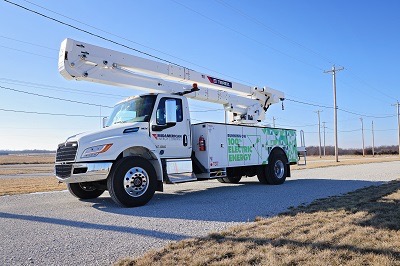
Photo credit: https://www.power-grid.com/der-grid-edge/electric-vehicles/midamerican-rolls-out-three-all-electric-utility-bucket-trucks/#gref

Last week I was on retreat in western North Carolina.  We were east enough that Hurricane Helene mostly dealt us wind and rain, and we only lost power and water for about seven hours.  But as we prepared to return home, the news was trickling in that the impact further west was bad – inconceivably devastating.  As I headed east making my way home, signs indicated the highway I was traveling was completely closed in the other direction and that all travel to western North Carolina was forbidden.

On the sobering home drive, as I contemplated all who were suffering and how mostly unscathed I was, a familiar sight appeared:  a line of electric company trucks driving westward.  Having grown up mostly in NC and having been on Long Island during Superstorm Sandy, I felt that familiar overwhelming sense of relief when you see those trucks after a storm.  Help was on the way.  Trucks with their workers from all over the place were dropping everything in their lives to offer up the gifts God gave them to help others.  I knew those in western North Carolina would feel a similar palpable relief to see those glorious white trucks, and I offered a prayer of thanksgiving. 

Fred Rogers used to say, “When I was a boy and I would see scary things in the news, my mother would say to me, ‘Look for the helpers.  You will always find people who are helping.’”  No matter how much we bemoan our divisions and the political toxicity in our country, it is the helpers that give me hope.  That line of white trucks was a reminder to me that goodness is all around us, even when hopelessness feels like it may drown us. 

I wonder what signs of hope you might be able to spy this week – what glimmers of light are breaking through the clouds if you open your eyes.  Or perhaps the Holy Spirit is beckoning you to be a helper – to be one of those signs of hopefulness in the ways that only you can.  I cannot wait to hear the stories of how God is showing up and birthing hope.

Sermon – Mark 6.1-13, P9, YB, July 7, 2024

17 Wednesday Jul 2024

Posted by jandrewsweckerly in Sermons

≈ Leave a comment

Tags

change, control, Episcopal Church, fresh, God, growth, Holy Spirit, Jesus, lane, limit, movement, new, Philadelphia Eleven, Sermon, uncomfortable

I realized recently that one of things I often say when I am asked how my family is doing is to offer a halfhearted compliment, “Everyone is staying in their lane.”   I think I started adopting that minimum standard, “staying in your lane,” because I have learned over the years how little control I have as a parent.  I may not be able to control what things my kids are interested in, I may not be able to control how well they perform in school, and I may not be able to control how they handle interpersonal relationships.  But if each family member is “staying in their lane,” then that means I have at least controlled their meddling with one another, their active misbehavior, or their making a scene anywhere else. 

That is what seems to be bothering the folks in Jesus’ hometown of Nazareth – Jesus is not staying in his lane.  At the beginning, there seems to be a modicum of respect for what Jesus is teaching in the synagogue – they compliment the wisdom he seems to have gained and the healing acts he has performed.  But the compliments end there.  Then the questions begin.  Where did he get this wisdom?  Isn’t he the carpenter’s son?  Isn’t he the son of Mary – a question dripping with criticism, as you would usually only refer to someone’s parentage through the father, not the mother.[i]  In other words, the people of Jesus’ hometown are basically saying, “Stay in your lane, Jesus!”

Passages like this can be so tempting for us.  We read about Jesus’ hometown and think, “Those silly folks from Nazareth!  They cannot see what God is doing right in front of them!”  As if “those” people and finger pointing is what the gospel calls for.  But when we start wagging our fingers at “those” people, we forget one kernel of truth about scripture:  we are always “those” people.”  Anytime something someone does in scripture makes us uncomfortable or sanctimonious, scripture is speaking straight to “us” not “those people.”  So, the people of Nazareth aren’t the only ones telling Jesus to stay in his lane.  We tell that to Jesus all the time.  When the Holy Spirit is calling us try a new ministry that feels daunting, we are tempted to tell Jesus to stay in his lane and let us do things our way.  When Jesus puts people in our lives that push us out of our comfort zones, we grumble to Jesus to stay in his lane and stop sending us prophets – I mean, annoying people.  When we hear that still, quiet voice speaking truth to us in places we like to keep in a box, we cut Jesus some nasty side-eye and tell Jesus to stay in his lane.

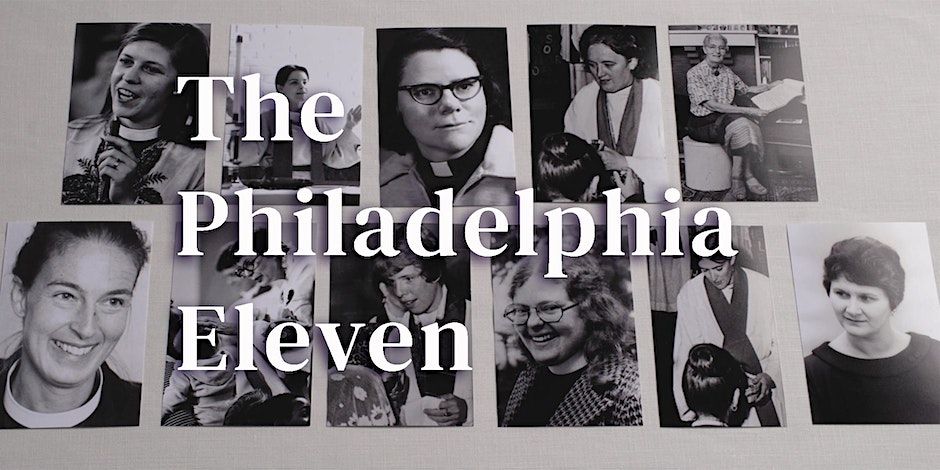
But as scholar Debie Thomas says, “The call of the Gospel is not a call to stand still.  It is a call to choose movement over stasis, change over security, growth over decay.”[ii]  Just last Sunday, we started a movie series about changemakers.  Last week, the film was The Philadelphia Eleven, the story of the unsanctioned ordination of the first eleven women in the Episcopal Church.  The vitriol of the bishops, clergy, and lay people who were opposed to those women’s ordination was shocking to the ears.  From the clergy person who stated with confidence, “Women can be anything they want – except a priest in God’s holy church.”  From the woman who lamented the ways those women had violated what God calls women to be and do in the world.  To the bishops held a public, scathing trial of the three male bishops who dared to ordain the first eleven.  The Philadelphia Eleven had waited time after time for the Episcopal Church to change – to chose growth, change, and movement instead of decay, security, and stasis.  And when the church refused to let these women out of their lane, the stepped out of their lane anyway.

Scholar Thomas concludes, “The scandal of the Incarnation is precisely that Jesus doesn’t stay in his lane.  God doesn’t limit God’s self to our small and stingy notions of the sacred.  God exceeds, God abounds, God transgresses, God transcends.  The lowly carpenter reveals himself as Lord.  The guy with the tainted birth story offers us salvation.  The hometown prophet tells us truths we’d rather not hear… [Jesus] will call out to us, nevertheless, daring us always to see and experience him anew.”[iii]  Our invitation today is let Jesus out of his lane in our life:  to not hold his lane as sacred, and to open ourselves to the ways his transgression of lanes is helping us to experience Jesus in new and fresh ways.  Maybe we do that in weekly worship, opening ourselves through song, prayer, and scripture to fresh experiences of God.  Maybe we come to the film series or Bible study this summer to see where God is exceeding, abounding, transgressing, and transcending.  Or maybe we let go of whatever boundary we are holding here at Hickory Neck to see what happens when we ask Jesus to please cross out of his lane.  The promise for us is a fresh experience of Jesus in our own day, time, and place.  Amen.


[i] Efrain Agosto, “Exegetical Perspective,” Feasting on the Word, Year B, Vol. 3 (Louisville:  Westminster John Knox Press, 2009), 215.

[ii] Debie Thomas, “Hometown Prophets,” June 27, 2021, as found at https://www.journeywithjesus.net/essays/3058-hometown-prophets on July 5, 2024.

[iii] Thomas.

On the Road to Getting It Right…

03 Wednesday Jul 2024

Posted by jandrewsweckerly in reflection

≈ Leave a comment

Tags

Communion Table, Episcopal Church, exclusion, faith, Holy Spirit, love, ministry, ordination, Philadelphia 11, Philadelphia Eleven, priesthood, question, women

Photo credit: https://azdiocese.org/2023/11/the-philadelphia-eleven-screenings-in-arizona/

This past Sunday, the local Episcopal parishes in my town gathered to watch the documentary, The Philadelphia Eleven.  The film details the history of women’s ordination in the Episcopal Church, and the first eleven women who were “irregularly ordained” in 1974 (i.e. ordained by Episcopal Bishops, but without the church’s General Convention sanctioning the ordination of women).  The question of women’s ordination had come before General Convention many times before, but was always defeated.  So, fifty years ago, a handful of women, along with male allies, decided they could not wait any longer.  The film tells the story of the outrage the eleven women created, the abuse and death threats they faced, and the way that their diverse ministries led to the sanctioning of women’s ordination by General Convention in 1976. 

I came into the Episcopal Church later in life.  Although deeply involved in the United Methodist campus ministry at my college, an ecumenical trip with the Episcopal campus minister was my first real exposure to the liturgy and polity of the Episcopal Church.  That campus minister was a woman, and at that point in my development, that did not seem abnormal.  Then, a couple of years after college, I stumbled into the Episcopal Cathedral, whose dean was a woman.  One of her assisting priests was also a woman.  Those early mentors did not just normalize women’s ordination – it never occurred to me that there was a time when women were not priests.  In fact, I remember an occasion when one of my own daughters as a young child asked me, “Can boys be priests?”

At this year’s General Convention of the Episcopal Church, we took the first steps to authorize the honoring of the Philadelphia Eleven in our set of honored saints we celebrate at weekday Eucharists.  In the same city, where 51 years earlier the General Convention had denied women’s right to ordination, we agreed to honor the saints who pushed us to be better versions of the Church.  All female clergy in the room were invited to stand to a roar of applause.  I looked at the other women, many of whom I know and love, and I looked at the male clergy and laity whose eyes and smiles were full of admiration and respect, and I realized a couple of things.  One, it is always a joy to celebrate when the Church gets something right – even if it takes a long time for the Church to get there.  And two, I can be in ministry as my most authentic self is due to the suffering and courage of men and women I may never meet. 

I share all this not to brag on the Episcopal Church – in fact, we still have a long way to go.  Income disparity between male and female clergy is still a problem, as well as access to comparable positions.  I have been the first female rector both times I have served as rector, and both times, people left the church when a woman was hired.  But I share this story more because I wonder who else have we excluded from the Table.  I share this story because I found myself wondering whether I would have risked being one of the Philadelphia Eleven, knowing the suffering that would come.  I share this story because as someone who really appreciates rules and boundaries, I wonder which of those rules and boundaries the Holy Spirt keeps bumping against.  While these may seem like big questions, or super-Church-nerdy questions, I think these questions are for all of us – an invitation to wonder who we have excluded in the communities of faith we love so much.  The Philadelphia Eleven seem to be still asking us these questions fifty years later.    

On the Business of Church…

19 Wednesday Jun 2024

Posted by jandrewsweckerly in reflection

≈ Leave a comment

Tags

business, Episcopal Church, General Convention, God, good, governance, grace, Holy Spirit, Jesus, legislation, love, mission, prayer, purpose, vision

Photo credit: https://episcopalnewsservice.org/2020/11/20/80th-general-convention-postponed-to-july-2022-as-pandemic-disrupts-planning-of-triennial-gathering/

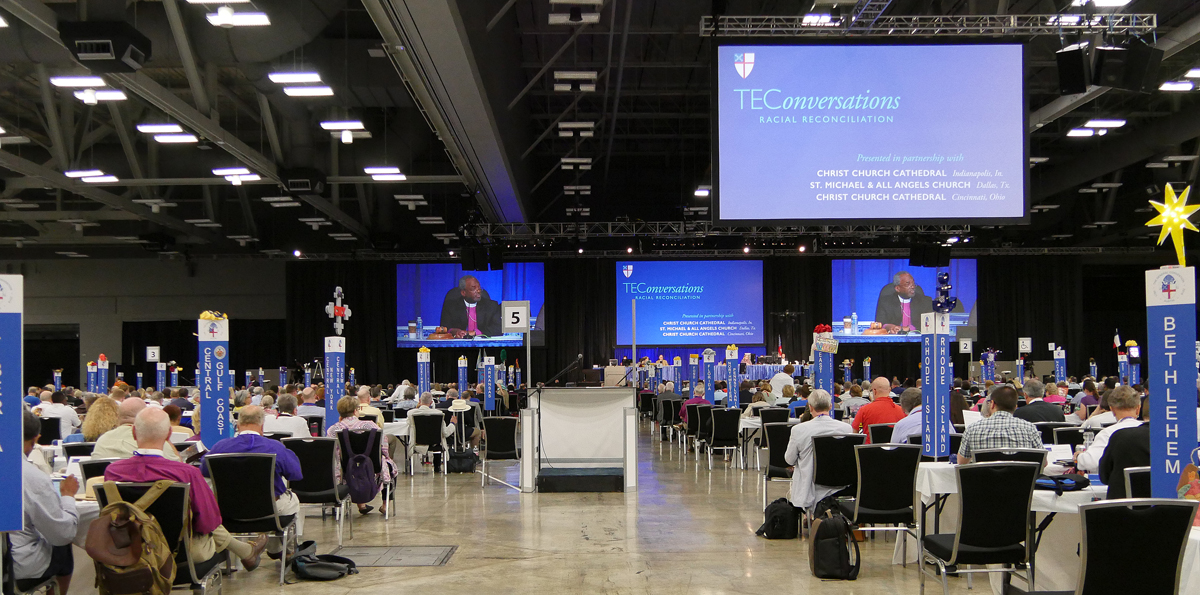
This weekend, Episcopalians will descend upon Louisville, Kentucky, for our General Convention.  The General Convention is the governing body of The Episcopal Church.  Every three years (or in this case, two years, due to a delayed GC during COVID), General Convention meets as a bicameral legislature that includes the House of Deputies and the House of Bishops, composed of deputies and bishops from each diocese.  In the House of Deputies, which includes elected lay and ordained deputies and alternates, over 1000 people will gather, and about 140 bishops will gather in the House of Bishops.  This year, we have a shortened Convention of six days of legislative sessions, covering everything from governance, justice issues, ecumenical and interfaith issues, evangelism and church vitality, liturgy, stewardship, formation, and mission.  In those six days, we will review over 275 pieces of legislation. 

Of course, General Convention is not all business.  It is a place of innovation and collaboration.  An exhibit hall of vendors is place of ideas, resources, and connection.  The legislative halls and common spaces are places of reunion with former seminary classmates, dioceses where one has served or worshiped before, and friends from professional connections.  It may be a chance to meet people in person that you have only known online, people you have admired the work of from afar, or a place to make new friends.  And then there are the opportunities to gather in worship in unfamiliar and familiar styles, the deep conversations and sharing of best practices, and the inspiration that can come from being steeped in the wideness of God’s church.

Ultimately, General Convention can be a place of great tension:  of trying to accomplish a great deal of business while honoring and developing relationships across difference, of challenging and trying to correct the failings of the Episcopal Church while learning and being inspired to renew our ministries, of taking a step back to clarify mission, purpose, and priorities while narrowing in and aligning decisions with that clarity.  Add in doing all that with over 1100 people, and that we get anything accomplished is a minor miracle.

Knowing all that, I invite your prayers for the Church as we gather:  that we root ourselves in God’s grace and power, that we ground ourselves in the love of Jesus and serve as faithful disciples, and that we undergird our work with the creative, life-giving, wise movement of the Holy Spirit.  And then ultimately, I invite your prayers that our work will mean something:  to the country church in rural America, to the beleaguered inner city church, to the bustling suburban church, and to churches whose primary languages are not English; to the churches who are shrinking and the churches who are thriving; to the person who is struggling with their faith, the person excited about a new ministry, to the person who is worried about the future of the church, and the person who is entirely unchurched.  We bring each of you with us in our prayers as we gather.  I hope you will surround us in prayer as well – that God is working for good in all of it.     

Sermon – 1 Samuel 8.4-20, 11.14-15, Mark 3.20-35, P5, YB, June 9, 2024

19 Wednesday Jun 2024

Posted by jandrewsweckerly in Sermons

≈ Leave a comment

Tags

control, faith, family, God, Holy Spirit, invite, Jesus, king, love, parent, Sermon, trust

This morning, we get two powerful stories from scripture.  In our story from first Samuel, we hear the story of how the people of Israel come to demand a king to rule over them instead of God and God’s appointed judges and prophets.  They figure if they have a king like the other nations, then they’ll never have to worry about their safety and security.  A king will defend them in a way that looks familiar – like the other nations – than a way that feels like trusting a God you cannot see.  Of course, Samuel warns them – you pick a king and the king will take your daughters and sons into his service, will steal your land and produce as his own, will take your property and use it to his own benefit, will basically enslave you (not unlike the days in Egypt).  But the people insist none of that matters – as long as they have a king like everyone else.

Meanwhile, in Mark’s gospel, Jesus has been healing people, driving out demons, saying some things, and generally making a raucous.  Here, two groups insert themselves – the scribes, who try to claim Jesus is possessed by a demon himself, and his family, who are concerned he has lost his mind and want to restrain him.  Jesus is so frustrated by their behavior, especially of his mother and brothers that he loudly states, “Who are my mother and my brother?”  In other words, he denies his very own family because they cannot see the truth in what he is doing.  In these two stories – of the Israelites wanting a king and of Jesus’ family demanding he behave in a certain way, we have people thinking they know better than God – taking matters into their own hands thinking they know how things should be.

I was talking to another parent recently about how parenting is probably the hardest job of all the vocations I have – particularly as a person who likes to imagine she has a modicum of control in her life.  In the beginning, although parenting is physically exhausting, parenting is also manageable in a way that is not so obvious.  For those infants and young children, you have a lot of control – what the child will eat and drink, what the child will wear, when the child will rest, where the child can go.  But as the child ages, they make more and more of the decisions – what they will wear, where they will go, with whom they will spend time.  This is, of course, how parenting should be – the raising up of an independent child.  But the more your child becomes independent the more you realize how the younger years were the “good ol’ days” – the days where you felt like you were in control (or at least convinced yourself you had more control than you probably did).  Parenting feels like the ultimate test for those of us who like a sense of control.

But the truth is, the ultimate test for those of us who like a sense of control is being a person of faith – following a God whose logic sometimes feels illogical, following a savior who says and does things that really push our buttons, and following a Spirit who takes us places we really do not want to go.  And so, we find ourselves, much like the Israelites, accepting slavery, abuse, and the loss of freedom just to get those things we think will make us happy and whole.  We find ourselves, like Mary and Jesus’ brothers, bossing around God, insisting God behave in ways that make us feel comfortable.  Instead, God tells them and us to trust – to trust that God will provide leaders who will guide us in the ways of justice and truth; to trust that even the things we cannot understand will lead to good; to trust that even though we cannot know what God knows, our wholehearted trust in the will of God is all that matters.

So how do we do that?  How do we, people of free will, in a country of democracy where “we the people” make decisions, in a time when choices are boundless and we must make them, how do we become people of trust – people of faith?  Well, I like to go back to that story of Jesus in a crowded room from Mark’s Gospel today.  Scholar Debie Thomas says, “…I can’t help but imagine what it must have felt like to be inside the house with Jesus that day.  I know intimately and well, as perhaps you do, the hunger to belong, to have someone safe and loving to belong to.  Regardless of our circumstances, we all know what it’s like to yearn for someone who can hold all of who we are, and love us still, without flinching.  That’s exactly what Jesus does for the crowds that day. He invites them in, he asks them to stay, and he makes them family. 

Yes, Jesus divides the house, and that process hurts.  But he doesn’t divide [the house] to make us homeless.  He divides [the house] to rebuild it.  To make [the house] more spacious, more welcoming, and more beautiful.  The Spirit of God is neither insane nor evil; the Spirit completes the good work he begins.  His will be a house of healing for the whole world.”[i]

Holy Scripture today is not inviting us to become some mindless, fluff who walk around without aim or purpose just “trusting that God will work everything out.”  God did give us freewill, and God does want us to use that freewill for good.  But what the Holy Spirit is trying to remind us of is that we do not have the whole story.  We cannot see the way in which Jesus is rebuilding the house.  We cannot fully know the feeling of being inside that home where true healing may be.  We cannot understand the fullness of the implications of our desires – which seem reasonable and justified to us.  But what we can see and know and understand is that Jesus is building a house of healing for the whole world.  And if we can stop trying to parent God, we can start beginning to see that God is constantly doing a new thing and inviting us into the family.  We just do not get to be the parent in that family.  And that is a very good thing indeed.  Amen.


[i] Debie Thomas, “A House Divided,” June 3, 2018, as found at https://www.journeywithjesus.net/essays/1805-a-house-divided on June 5, 2024.

← Older posts

Recent Posts

  • On the Myth and Magic of Advent…
  • On Risking Failure and Facing Fear…
  • Sermon – Luke 23.33-43, P29, YC, November 23, 2025
  • On Inhabiting Gratitude…
  • Sermon – Luke 20.27-38, P27, YC, November 9, 2025

Archives

  • December 2025
  • November 2025
  • October 2025
  • September 2025
  • August 2025
  • July 2025
  • June 2025
  • March 2025
  • February 2025
  • December 2024
  • November 2024
  • October 2024
  • September 2024
  • August 2024
  • July 2024
  • June 2024
  • May 2024
  • March 2024
  • February 2024
  • January 2024
  • December 2023
  • November 2023
  • October 2023
  • September 2023
  • August 2023
  • July 2023
  • June 2023
  • May 2023
  • March 2023
  • February 2023
  • January 2023
  • December 2022
  • November 2022
  • October 2022
  • June 2022
  • May 2022
  • January 2022
  • December 2021
  • November 2021
  • October 2021
  • September 2021
  • August 2021
  • June 2021
  • May 2021
  • April 2021
  • March 2021
  • February 2021
  • January 2021
  • December 2020
  • November 2020
  • October 2020
  • September 2020
  • August 2020
  • July 2020
  • June 2020
  • May 2020
  • April 2020
  • March 2020
  • February 2020
  • January 2020
  • December 2019
  • November 2019
  • October 2019
  • September 2019
  • August 2019
  • July 2019
  • June 2019
  • May 2019
  • April 2019
  • March 2019
  • February 2019
  • January 2019
  • December 2018
  • November 2018
  • October 2018
  • September 2018
  • August 2018
  • July 2018
  • June 2018
  • May 2018
  • April 2018
  • March 2018
  • February 2018
  • January 2018
  • December 2017
  • November 2017
  • October 2017
  • September 2017
  • August 2017
  • July 2017
  • June 2017
  • May 2017
  • April 2017
  • March 2017
  • February 2017
  • January 2017
  • December 2016
  • November 2016
  • October 2016
  • September 2016
  • August 2016
  • July 2016
  • June 2016
  • May 2016
  • April 2016
  • March 2016
  • February 2016
  • January 2016
  • December 2015
  • November 2015
  • October 2015
  • September 2015
  • August 2015
  • July 2015
  • June 2015
  • May 2015
  • April 2015
  • March 2015
  • February 2015
  • January 2015
  • December 2014
  • November 2014
  • October 2014
  • September 2014
  • August 2014
  • July 2014
  • June 2014
  • April 2014
  • March 2014
  • February 2014
  • January 2014
  • December 2013
  • November 2013
  • October 2013
  • September 2013
  • August 2013
  • July 2013
  • June 2013
  • May 2013
  • April 2013
  • March 2013
  • February 2013
  • January 2013
  • December 2012
  • November 2012
  • October 2012
  • September 2012

Categories

  • reflection
  • Sermons
  • Uncategorized

Meta

  • Create account
  • Log in
  • Entries feed
  • Comments feed
  • WordPress.com

Blog at WordPress.com.

  • Subscribe Subscribed
    • Seeking and Serving
    • Join 394 other subscribers
    • Already have a WordPress.com account? Log in now.
    • Seeking and Serving
    • Subscribe Subscribed
    • Sign up
    • Log in
    • Report this content
    • View site in Reader
    • Manage subscriptions
    • Collapse this bar
 

Loading Comments...