• About

Seeking and Serving

~ seek and serve Christ in all persons

Seeking and Serving

Tag Archives: Holy Spirit

Sermon – Daniel 3:14-20,24-28, John 8:31–42, Ecumenical Eucharist, March 21, 2018

23 Friday Mar 2018

Posted by jandrewsweckerly in Sermons, Uncategorized

≈ Leave a comment

Tags

Abednego, call, companions, discerning, ecumencial, faithful, God, Holy Spirit, Jesus, Meshack, new, Shadrach, trust

This sermon was preached at Our Saviour Lutheran Church in Norge, Virginia.  Each week in Lent, one of the churches from the Upper James City County Ministerium hosts a worship service and welcomes a guest preacher from another church.  It has been a wonderful experience in the exchange of worship, and has made all our church members feel more connected with the community.  

**********

One of my favorite gospel songs is a song called, Jesus Can Work It Out.  There are lots of versions of the song, but the basic tenet of the song is that whenever you have a problem that you cannot seem to solve, you can give the problem over to the Lord and the Lord will work the problem out.  In the version of the song in my iTunes, the lead singer talks about a variety of problems that she has had over her life that, as soon as she gave them over to the Lord, God worked the problems out.  In one example she talks about how she and the choir went on tour and when she came back home, she had a foreclosure notice.  Overcome with grief, she says she turned the situation over to the Lord and the Lord worked it out.

Now I love this song – mostly because not only does the song encourage me to trust God, but also because the song has a way of getting your toes tapping.  But every time I hear the part about the foreclosure, I cannot help thinking, “I mean, I get trusting the Lord, but I am pretty sure you knew you had not paid the mortgage before you decided to go on tour.  I mean there is trust and there is TRUST.”

That is what I think is so interesting about our two readings today.  They represent two different extremes when we talk about the role of trust in our relationship with God.  The first is the vivid and dramatic story of Shadrach, Meshach, and Abednego.  King Nebuchadnezzar has captured the three men and insists they worship his gods and his statue or face a fiery death.  When the three men refuse, the king has them thrown into the furnace, turned up seven times as high as normal.  But much to the king’s surprise, not only do the men survive, they seem to be dancing around in the flames with Yahweh.  When the men come out untouched by the flames, not even smelling of smoke, King Nebuchadnezzar concedes and decides to worship their God instead of his gods. This fantastic story is a story of how, even in the face of persecution and death, faithfulness, trust, and loyalty to our God will make you victorious, even in impossible situations.

Meanwhile, in our gospel text, the faithful are equally trusting of God, but in this instance, their trust and confidence is ill-placed.  You see, Jesus has gathered people who are following him and begins to talk about who he is in relation to God.  When Jesus starts talking about to whom the people belong, and that God is doing a new thing in Jesus Christ, the followers become obstinate.  “We are descendants of Abraham…Abraham is our father,” they protest  What is funny about this exchange between Jesus and the faithful is that on the surface, the faithful are doing the same thing Shadrach, Meshach, and Abednego do.  They are staying true to their God, despite the fact that this new teacher and prophet is asking them to see something new in what God is doing.  But in their case, we can see that Jesus does not see their faithfulness and trust as a virtue, but instead a hinderance to seeing the work of the Holy Spirit in something new.  Unlike Shadrach, Meshach, and Abednego’s story, this story seems to be about how we should hold tightly to what God has taught us, but not so tightly that we lose touch with when God is doing a new thing.  We are to be loyal and trusting, but also discerning and open.

I do not know about you, but I find myself lost in these lessons.  When am I supposed to be so faithful that I am willing to face death (or foreclosure on my mortgage), and when am I supposed to be so faithful that I am willing to abandon what I know about my God and my identity to follow a new way?  When I was figuring out my vocation as a priest, I struggled.  The first step was getting over the hurdle of saying yes to a call to ordained ministry at all.  You see, my dad was a United Methodist minister, and I had sworn that I would never go into the ministry.  But once I finally was able to say yes, then came the hard part.  You see, I was called in the context of the Episcopal Church.  But not only was my father a United Methodist Minister.  His father was a United Methodist Minister.  And my grandfather’s brothers were United Methodist Ministers, and my uncle was a United Methodist Chaplain, and my cousins were United Methodist ministers.  At Annual Conference every year, there was a whole Andrews section.  So what I was dreading was telling my grandmother that I was breaking ranks.  My grandmother is pretty intense.  As a former librarian and English teacher, I was actually pretty intimidated by her most of my childhood.  Eventually I gathered up my nerve and had a talk with her.  As soon as I told her the news she gave out a huff.  And then she leaned in toward me and said, “I was a Lutheran before I married your grandfather.  I never wanted to be a Methodist anyway!”

Here’s the thing about following God – when we follow God, we get confirmation along the way.  I do not think that Jesus was asking his followers to abandon Abraham and trust in him alone.  Instead, I think Jesus was reminding them that if Abraham was their father, they would actually follow Abraham’s example.  Instead of clinging to an old, stable identity, they needed to remember that the main thing Abraham was known for was abandoning his old life and going to a new, scary place, and following God.  Jesus is not mad at his followers because they are clinging to the past.  Jesus is mad at his followers because they are clinging to a distorted version of the past – they are clinging to security instead of remembering the past is what taught them that sometimes they need to get up, drop everything, and go.  Sometimes they need to take a risk and say no to a worldly power who wants them to abandon who they are and what they are called to be.  These two stories are not about examples of total trust versus a lack of trust.  The two stories remind us that trusting God will lead us to uncomfortable places, will challenge our sense that we know God best, and will sometimes make us dance.

Our collect or prayer appointed for this last Wednesday before we begin Holy Week says, “Almighty God our heavenly Father, renew in us the gifts of your mercy; increase our faith, strengthen our hope, enlighten our understanding, widen our charity, and make us ready to serve you; through Jesus Christ our Lord, who lives and reigns with you and the Holy Spirit, one God, for ever and ever. Amen.”  We leave this sacred place tonight, not with a sense that we need to dramatically follow Christ into the flames or be considered faithlessly unwilling to go where God calls us.  Instead, these stories remind us that we can always stand to increase our faith, strengthen our hope, enlighten our understanding, widen our charity, and be made ready to serve.  We all know we need that work because that is the work we have been doing all Lent – working on our faithful walk with Christ.  What these stories remind us of is we have companions along the way – companions who are bold and fearless, companions who have messed up, and companions who may not even go to our own church, but who know our same journey and our same God.  Christ renews us in his mercy tonight, so that we can keep saying yes to God.  Amen.

Getting on the Ride…

10 Wednesday Jan 2018

Posted by jandrewsweckerly in Uncategorized

≈ Leave a comment

Tags

adventure, change, community, dream, excitement, exciting, fear, God, Holy Spirit, inviting, ministry, new, ride, rollercoaster, thrill

the-dragon

Photo credit:  https://www.legoland.com/california/legoland-california/rides-and-attractions/park-areas/castle-hill/rides/the-dragon/

On our family vacation last week, we visited an amusement park.  My eight-year old was finally at the age where she could try some more ambitious, if not scary, rides.  Watching her experiment with her fear and curiosity was fascinating.  Before most rides, she was completely enthusiastic and daring.  But waiting in line seemed to rattle her confidence.  Several times, we almost bailed completely.  In fact, one of my favorite pictures of her was taken right before she boarded a particularly scary ride (one even I was too scared to try!).  In the picture, her eyes are like saucers and her eyebrows are raised as she clutches her father’s hand.  But for the rest of the trip, she raved about that particular ride and almost cried when she realized she could not ride the rollercoaster one more time.

I was thinking this week that adults are not that dissimilar from my daughter when it comes to something new and exciting.  There is a part of us that cannot wait to try something new, and there is a part of us that is terrified about the experience, imagining in our minds the countless things that could go wrong or that might happen.  As with any change, we have the option to get on the ride and experience the thrill of something new, or we have the option to play things safe, and step out of line.  I suspect there are times when getting out of the line is the best option.  But more often, I suspect we miss out on adventure and new life when we don’t just step onto the ride.  Too often we forget that we can get on the ride and still say, “I am glad I tried it.  And now I will never do that again!”

Last night, the James City County Board of Supervisors approved a special use permit for the Kensington School to put a second location on the property of Hickory Neck Episcopal Church.  Hickory Neck has been dreaming about creating a school on our property for about ten years.  We kept deferring the dream because we were not sure we could both build and run a school.  But this past year, the Holy Spirit intervened, and we discovered that the Kensington School was looking to open a second location in our neighborhood.  God seemed to be inviting us to finally step onto a thrilling, albeit a bit scary, ride.  We have been standing in line for a while, getting more and more excited about what God can do through Hickory Neck.  Last night, the Board’s approval was our last step before boarding the ride.

Like with any change, this new phase of ministry will be full of exciting, wonderful things we never expected, and some challenging, hard things we never expected.  Part of our work is trusting the same Holy Spirit that has been guiding us thus far will continue to guide and lighten our path.  Some of us may be wide-eyed, with eyebrows raised about what is coming next.  But I suspect in a year or so, most of us will be thrilled that we said yes to the Holy Spirit, and agreed to try to be a force for change for our community.  I am here, with you, Hickory Neck – holding your hand and ready for the adventure!

On Keeping Watch…

13 Wednesday Dec 2017

Posted by jandrewsweckerly in Uncategorized

≈ Leave a comment

Tags

Advent, anxiety, Christ Child, Christian, community, devotional, God, Holy Spirit, insight, inspiration, keep, photo, speak, tension, watch, Word

f9f56881c6863e8e994df67022934897

Photo credit:  https://it.pinterest.com/pin/628252216738231468/

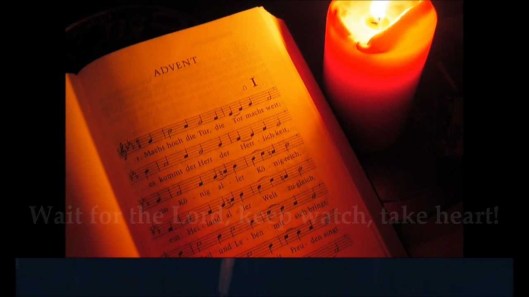
One of the themes we find in Advent is keeping watch.  Throughout the four weeks leading up to the birth of the Christ Child, we are to keep watch, preparing our hearts for the nativity of our Lord.  Traditionally, I have kept watch by using an Advent calendar or a special devotional book.  But this year, I am trying something new.  I have joined the Anglican Communion in a participatory Advent devotional called “Advent Word.”  Each day of Advent has an assigned word, and participants are invited to post a picture on social media that captures that word.

When I decided to join the Advent Word community, I was a bit nervous.  I worried what I would do if I could not figure out a picture to take or use that went with the daily word.  I have found my initial anxiety has not disappeared, but has created a sense of anticipatory tension.  Each day, I open up my email, and find a word and picture, with an invitation to prayer.  Then, throughout the day, I am keeping watch – for inspiration, for insight, for the Holy Spirit speaking to me anew through the images of everyday life.  By praying the word throughout the day, I am finding myself much more aware throughout the day, and much more attuned to God speaking to me in fresh ways.

In some ways, the anticipatory tension of participating in Advent Word has helped me accomplish the bigger goal of keeping watch during Advent.  Instead of having Advent slip by in the bustle of the season, each day has a poignancy and sense of meaning.  Instead of wishing away the days until Christmas comes, my Advent has become much more intentional and meaningful.

I wonder how your Advent is going?  Are you finding ways to keep watch?  If the days are slipping away, I invite you to find ways to slow down, and listen for the Holy Spirit who longs to prepare your heart for the Christ Child.  If you have found other ways to keep watch this Advent, I would love to hear about your experience.  If nothing else, I have learned this year that Christian community can be a wonderful partner in helping us keep watch.  If you are looking for such a community, Hickory Neck is full of everyday people who are happy to keep watch with you.

A Journey to Generosity…

04 Wednesday Oct 2017

Posted by jandrewsweckerly in Uncategorized

≈ Leave a comment

Tags

bless, evangelism, generosity, giving, God, gratitude, Holy Spirit, idea, inspire, journey, life, light, stewardship, vision

tens_nodate_logovertical (1)I am always amused when I discover the Holy Spirit at work because the discovery usually happens when I am in the thick of executing something I thought I had planned myself.  Ideas come to me, I test out the idea with others, I do the planning to implement the idea – basically the whole process involves a great deal of self-direction.  But when an idea really blows me away is when the idea takes off in even better ways than I planned.  When I finally realize how inspired the idea is, I realize that the idea could not have possibly come from me alone.  The only way those incredible moments of confluence occur is through the Holy Spirit.
I had one of those moments this week.  On Sunday we kicked off our stewardship campaign entitled “Journey to Generosity.”   All sorts of activities are a part of that campaign:  inspirational materials from our Stewardship Committee explaining the campaign, reflections from fellow parishioners, Parish Parties, sermons from the clergy, and meditations from national church leaders.  All of those experiences would be enough to situate us in a place of profound gratitude.  But then other things started happening.

The first has been attending our adult formation series.  The series is about evangelism, so I had expected our energies to be focused on the work of spreading the good news.  But the first sentence from the book we are using says, “Evangelism is your natural expression of gratitude for God’s goodness.”[i]  While I thought our conversations about gratitude and generosity would be limited to stewardship, here gratitude was permeating other areas of church life.  The second thing that happened was welcoming the first of three babies due this month at church.  As I held the first one yesterday, especially after a rough twenty-four hours of mourning another massive shooting in Las Vegas, I looked at that tiny child and felt a profound sense of gratitude for the gift of life.

Our “inspired” idea to talk and pray about our Journey to Generosity has already morphed into something much bigger.  I find myself being grateful not just for the generosity of parishioners who are passionate about our church and support its work through financial giving.  I am also grateful for a community of people who are so enthusiastic about their gratitude that they want to go out and share the good news with others.  I am grateful for a church community so generous in spirit that they can take tragedy and find rays of light and hope all around.  I am grateful for a community whose gratitude is so powerful that they have a vision of making our community a better place:  through our Fall Festival, through our visioning work with our Vestry, and through daily service to others.  What seemed like a catchy campaign slogan has actually been naming a way of life at Hickory Neck:  a life rooted in gratitude and generosity.  Thank you for letting me be a part of this journey with you all.  You inspire me every day and you transform my relationship with God every week.  God bless you on your journey to generosity!

[i] David Gortner, Transforming Evangelism (New York:  Church Publishing, 2008), 1.

On Cars and Change…

27 Wednesday Sep 2017

Posted by jandrewsweckerly in Uncategorized

≈ Leave a comment

Tags

car, change, God, grief, Holy Spirit, ideas, life, new, old, relationship with God, sad, season, time

to-everything-there-is-a-season-orlando-espinosa

Photo credit:  https://orlandoespinosa.wordpress.com/2015/12/09/to-everything/

This weekend we got a new car and traded in my old car.  My old car was fifteen years old and had almost 180,000 miles.  We would have kept the car longer, but there were too many expensive fixes to make repairing the car worth the car’s value.  Normally, people get pretty excited about a new car – all the old dents and scratches are gone, and in my case, I can now be certain I won’t be break down on the highway.  But mostly I have been a bit sad about having to get rid of the old car.  That car helped us get through three rounds of graduate school, four moves, multiple jobs, the birth of two children, and was only six months younger than our marriage.  The car survived endless road trips, commutes to work, and at one point was our shared car until we got a second car.  Although the car had started making me anxious with all its repair needs, I felt like I was saying goodbye to a good, faithful friend.

As I have been reflecting on that experience, I have been thinking my experience with my old and new car is similar to how we all experience change.  Most of us know that change in inevitable, and yet most of us do not like change.  Even if the thing we are changing from is good for us, we miss the old quirks, patterns, and sense of regularity.  And the further out of the familiar we get, the more epic the memory of what once was becomes.  This is often the point at which people begin to refer to the “good ol’ days,” or “the way things used to be.”  Whatever the new change is will rarely seem as good as the old standard.

I have been feeling that way about my new car.  Sure, it is more reliable, it has fewer things peeling, sagging, or just broken, and it is more sporty, shiny, and colorful.  But I am finding I am not yet sold.  The new car just does not feel like it fits yet.  Observing my feelings about my car has been especially helpful for me as I think about all the times I have introduced change at church.  Sure, whatever changes I have introduced are usually for the good, and most often, become the new “way we have always done it.”  But falling in love with the new change takes time.  It does not happen overnight.

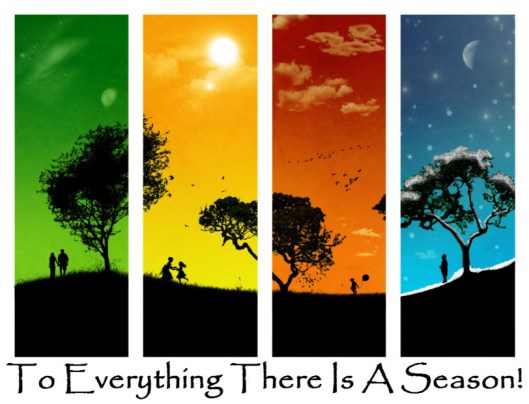
Perhaps this may be a good way we can approach our relationship with God.  The Holy Spirit is God’s agent of change.  She is always whispering new ideas, blowing new people into our lives, and breathing life into our imaginations.  Listening to the movement of the Holy Spirit is exciting, fun, and invigorating.  But boldly following the Holy Spirit also needs to involve tending to the grief of letting go of the what the Spirit was doing before.  The writer of Ecclesiastes says, “For everything there is a season, and a time for every matter under heaven.”  I wonder what seasons are passing away in your life, and what new times are arriving for you.  My prayer for you is that you be able to appreciate the season you are in, let go of the seasons that have passed, and embrace the seasons that are yet to come.  I know the Holy Spirit is doing good things in you.  I cannot wait to walk with you in the twists and turns!

Homily – Matthew 28.16-20, TS, YA, June 11, 2017

14 Wednesday Jun 2017

Posted by jandrewsweckerly in Sermons, Uncategorized

≈ 1 Comment

Tags

always, anxiety, baptize, disciples, evangelism, evangelist, fear, go, God, Great Commission, Holy Spirit, homily, Jesus, teach

When I first sat in the chapel at my seminary, I immediately got a little nervous.  You see, over the altar was a huge stain glass window.  Around the edges of the window were emblazoned the words, “Go ye into all the world and preach the gospel.”  I remember staring at those words and thinking, “When I said I wanted to be a priest, I didn’t mean I wanted to go out evangelize people.”  Sure, I wanted to gather communities around the sacraments, encouraging us to serve the poor and needy, and creating groups of people set apart.  My early vision was about the people who were already there.  But that is not what Jesus commands in the Great Commission.  Though Mark’s gospel is where the instruction comes from to preach the gospel, Matthew’s intent in similar.  They are to go, make disciples, baptize, and teach.  In other words, they are to be evangelists.  I don’t know about you, but no matter how many sermons I hear from Presiding Bishop Curry about the Jesus Movement, I still get nervous thinking about going out into the world to make disciples.

I have been thinking a lot this week about why, after all these years after Jesus’ commission, we are still a little skittish about the idea of going out, making disciples, baptizing, and teaching.  I think a lot of our anxiety is about fear.  We are afraid of what people will think.  We do not want to be perceived as one of those faith groups that goes door to door, pressuring someone to come to Jesus.  We do not want to be perceived as judgmental, as if by sharing the Good News we are saying someone’s life is incomplete.  We do not want to be perceived as fanatical, nosy, or just uncool.  And as we all know, the minute you start talking about God, you can get into all kinds of trouble around interpretation of Scripture, historical sins of the Church, and modern heresies.  Forget being judged – we could lose friends!

So why in the world would we ever do what Jesus is asking?  Why would we go out, make disciples, baptize, and teach?  We do what Jesus asks because we were once baptized, and faithful people surrounded us, promising to journey with us, to raise us into the life of faith, and to help us get to know the mysterious, loving, life-giving entity that we call Father, Son, and Holy Spirit.  We do what Jesus asks because we have been taught – by countless faithful people.  Some of them were priests, professors, and Sunday School teachers.  But some of them were everyday people, just trying to make sense of the Word of God, who spoke truth to us and changed our lives.  We do what Jesus asks because we were made disciples.  At some point along the line, we learned enough, prayed enough, struggled enough, served enough, and were loved enough that we decided to walk in the way of Christ – even on those days when we do not understand fully what that means.  If all of those wonderfully converting things have happened to us, have brought beautiful children of God into our lives, and have changed our lives for the better, why wouldn’t we want to share that with others?!?

I imagine you may not still be convinced.  You may be still sitting there thinking about that scary window at the seminary thinking, “There is no way I can do that.” After rereading Matthew’s gospel this week, here is what I wish that seminary window had done.  In that big arched window, emblazoned with the words “Go ye into all the world and preach the gospel,” I would have put under the window, perhaps even in parentheses, the words Jesus says today:  Remember, I am with you always, to the end of the age.  The going, the baptizing, the teaching, the making disciples is all done because Jesus, coeternal with that creative, blessing God we read about today, through the ever-present power of the Holy Spirit is with us always, to the end of the age.[i]  Not just back then, in a historical moment with the disciples, not just tomorrow when we are finally ready, but now, this very moment, God – Father, Son, and Holy Spirit – is with us, always, to the end of the age.[ii]  Our God created you in God’s image, making you very good.  This community, as the community of the Corinthians did with Paul, has taught you how to agree with one another, live in peace, be a people of love who greet one another with holy kisses.  And Jesus sends you out to do some hard, life-giving, joyful work, which you can do because the Jesus, through the Spirit, is with you always, to the end of the age.  When we dismiss you today, we will dismiss you to love and serve the Lord.  But we also dismiss you to go, make disciples, baptize, and teach.  And we all say, “Thanks be to God,” because we know that God is with us, always, to the end of the age.  Amen.

[i] Thomas G. Long, “Homiletical Perspective,” Feasting on the Word, Yr. A, Vol. 3 (Louisville:  Westminster John Knox Press, 2011), 49.

[ii] David Lose, “Trinity Sunday A:  The Great Promise,” June 7, 2017, as found at http://www.davidlose.net/2017/06/trinity-sunday-a-the-great-promise/ on July 8, 2017.

On Presumed Barriers…

31 Wednesday May 2017

Posted by jandrewsweckerly in Uncategorized

≈ Leave a comment

Tags

barriers, communicate, community, connect, connection, different, Holy Spirit, languages, Pentecost, united

Pentecost Languages

Photo credit:  https://www.pinterest.com/dcntgirl/pentecost-sunday/

Most of my travels have been to places where I knew or was learning the language.  And if I did not know the language, a few team members did, so we were able to communicate in at least a basic way.  The exception to that pattern was my trip to Myanmar.  There were eight of us on the team, and none of us spoke Burmese.  Most of the time, that was not a problem because we had a local translator.  But on our first Sunday, we were divided into groups and sent to Anglican churches.  When my partner and I sat down, we were handed a prayer book and a hymnal (familiar accoutrements for Episcopalians).  We even had parishioners nearby who would help us find the page we were on during the service.  But the prayer books and hymnals were completely in Burmese – a very pretty language to look at, but completely indecipherable to an English-speaking American.

So we did all we could do.  We smiled and nodded as others helped us.  We sat and stood as others sat and stood.  We closed our eyes when it was obvious we were praying.  We knew when the sermon was being delivered, even if we couldn’t understand it.  But my favorite part came about two-thirds of the way through the service.  One of the hymns was announced.  We stood up with everyone else and prepared to stand silently again.  Then all of a sudden, the people were singing a tune we knew.  All of the tension and anxiety in my body melted away as a broad smile crossed my face.  I quietly sang the words I could remember in English.  Finally, I felt like a full participant in the body as we worshiped.

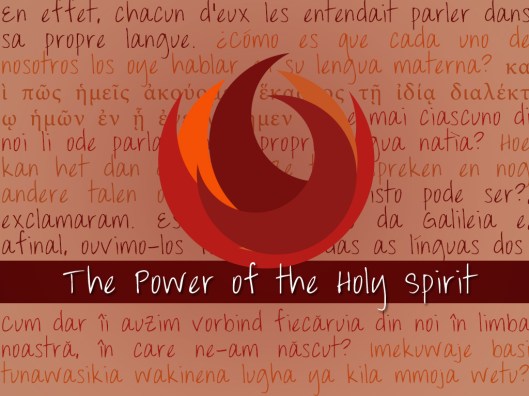
This Sunday, we will celebrate Pentecost.  Even though we will be experimenting with using foreign languages at Hickory Neck, I am not sure we will ever grasp the fullness of that first Pentecost experience – the chaos of languages, and yet the clarity of understanding by each in their own tongue.  But what I hope we get a small taste of is the experience of being united by the Holy Spirit.  That Sunday in Myanmar was a bit like that first experience with the Holy Spirit.  In the desire to connect, communicate, and create community, we were able to do that through the power of song.  On this coming Sunday, we will do that through the written word in our native tongues.  What I hope the day challenges us to do going forward is to seek ways to find common languages – to connect, communicate, and create community with people who are unlike us.  Whether they speak another language, hold another faith, are of a different race or socioeconomic class, there are “languages” that can create barriers to true connection.  I suspect the Holy Spirit is with us when we are willing to work through the barriers.  And if my experience in Myanmar gives any clue, the Holy Spirit will work its magic to help us connect, communicate, and create community.  Then our work really begins.

Sermon – John 14.15-21, E6, YA, May 21, 2017

24 Wednesday May 2017

Posted by jandrewsweckerly in Sermons, Uncategorized

≈ Leave a comment

Tags

abide, Advocate, Bible Study, hard, Holy Spirit, Jesus, love, Paraclete, promise, relationship, separation, Sermon, sin, work

If you could have any person, living or dead, over for dinner, who would it be?  We have all played the game.  Either you were asked the question at a job interview, you used the question as part of an icebreaker, or you shared the question at the family dinner table as a conversation starter.  The answers are always telling – some would like to have dinner with their favorite celebrity or sports hero; some would love to talk to a famous figure in history, like Martin Luther King, Jr. or Abraham Lincoln; while others would want to have dinner one more time with a loved one who has died.  Invariably, though, someone will give the answer we all get to eventually.  If we could have dinner with any person, dead or alive, we would want to have dinner with Jesus.  We could finally ask Jesus all the answers to our questions!  We could ask Jesus what that one parable means that we can never figure out.  We could ask Jesus what death and eternal life are like.  We could ask Jesus why things are the way they are today and what he plans on doing about them!  The options are endless and the gift of that time with Jesus seems like the gift a magic decoder ring for life.

Except, I am not sure that dinner with Jesus is the best answer to that age-old question about dinner guests.  If you remember, Jesus was not always the easiest to understand.[i]  Think about all those parables that no one understood.  Think about all those times Jesus said something to the disciples that they could not comprehend.  Think about all those times that Jesus was challenged by Pharisees, foreigners, and faithful alike, only to get cryptic, unexpected answers.  Though we like to think we would have understood better than all of those, I suspect that even a modern-day dinner with Jesus would leave us with way more questions than answers.

That’s why I love our gospel passage today.  Jesus is preparing to leave his beloved disciples.  He has gathered them for a last meal, has washed their feet, and is sharing with them all his last instructions and words of wisdom.  The anxiety of his disciples is rising as they start to piece together how Jesus is giving what we now call his “Farewell Address.”  To those anxious, confused, uncertain disciples, Jesus offers a promise.  Jesus says, “I will not leave you orphaned.”  Instead, Jesus will send the Advocate.  Actually, he says, God will send, “another Advocate, to be with you forever.”  The first Advocate is Jesus himself.[ii]  Unlike Jesus, who is limited by time and space, the next Advocate will be with us forever.  The text tells us that the Advocate will abide in us – will actually be in us.  That word, “Advocate,” is alternatively translated as “counselor, comforter, helper, mediator, or broker.”[iii]  The word in Greek is Parakletos or Paraclete, which literally means “to call alongside.”  This Holy Spirit, this second Advocate, is the one who is called to be alongside us.[iv]

In just a couple of weeks we will celebrate the fulfillment of Jesus’ promise today.  The celebration of Pentecost is a significant feast for us because what Jesus promises in his Farewell Address finally comes to fruition.  Not only does the Spirit fill for us a spiritual need, the Spirit also fills for us a practical need.  You see, throughout his final instructions, through both word and deed, Jesus gives the disciples one final instruction – to love.  Jesus wants his followers to embrace, “not an abstract philosophical concept, but the lived reality revealed in the life, relationships, and actions of a simple Nazarene who looks and talks like them and lives simply among them.”[v]

This past week, our Tuesday night Bible Study group invited a Bible Study group from New Zion Baptist Church to join us for a mutual Bible Study.  After having talked quite a lot about race relations here at Hickory Neck, and having watched our country struggle with race, our Bible Study group decided the best thing they could do was to start building relationships with people of color.  Intentionally or not, the group selected 1 Corinthians 13 as their text for study.  Most of you who have been to a wedding will know this text by heart.  “Love is patient, love is kind…”  On and on we hear Paul talk about the characteristics of love – how love is not envious, boastful, or rude; how love does not insist on its own way, and is not irritable or resentful.”  Just like with a wedding, on the surface, the text was quite romantic for what we were trying to do – talk about loving each other and how we could do that as two different communities.  But what we realized as we studied and reflected on the text is the more we talked about love, the less romantic love felt.  Quite the opposite, we realized the love we Christians are called into is hard work.  We talked about how hard being patient and kind are.  We talked about how hard not being irritable or resentful can be, and how often we insist on our own way.  What seemed like a simple text for a simple gathering – an interracial Bible Study on love, suddenly felt anything but simple.  As we shared our stories, we realized not only did we have a massive amount of work to do on ourselves, we would also have a massive amount of work to do if we were even going to attempt to love each other.

That is why Jesus’ promise today, the promise of the one who comes alongside of us, is so incredibly powerful.  Because if the disciples recall the ways that Jesus feeds the hungry, touches lepers, heals the sick, speaks and acts with care and regard toward women, shows compassion and fiercely protests against injustice,[vi] and then realize that Jesus wants them to do the same in his absence, they could indeed become overwhelmed.  They cannot even seem to get through Jesus’ farewell address without one disciple departing to betray him, and the promise of another disciple who will deny him.  How in the world will they manage to master the simple and yet enormous work of love?!?

Toward the end of our Bible Study, as we became more and more sober about the enormity and humbling nature of living a life of love, someone finally stood up and said something quite simple.  He confessed he did not have any answers and perhaps was not sure he could do what Jesus would want for us.  But what he would do is go and have coffee with anyone who was willing.  That’s all.  Coffee.  It was a simple offer, and maybe seemed like nothing on the surface.  But that offer of coffee was profound.  In that offer was an unspoken confession of sin and separation, and a commitment to turn toward love and relationship.  After over an hour of talking about love, that offer of coffee was a commitment to not just talk about love, but to act on love.

I believe the ability of that parishioner to offer coffee came because the Paraclete, the Advocate, the Spirit was abiding in him.  Jesus had not left him an orphan.  Jesus sent another Advocate who empowered him to be an agent of love.  That is the power of the gospel today.  We will never likely get that dinner with Jesus, even though I am not convinced that dinner would help us anyway.  But we do get dinner with the Spirit – everyday, offering us God’s presence and spirit of truth, empowering us to be agents of love.  We get a dinner with our Advocate, who invites us to pull up another chair, so that we can share that love with our neighbor – one coffee at a time.  Amen.

[i] N. T. Wright, John for Everyone, Part 2 (Louisville: Westminster John Knox Press, 2004), 63.

[ii] Linda Lee Clader, “Homiletical Perspective,” Feasting on the Word, Yr. A, Vol. 2 (Louisville:  Westminster John Knox Press, 2010), 491.

[iii] Larry D. Bouchard, “Theological Perspective,” Feasting on the Word, Yr. A, Vol. 2 (Louisville:  Westminster John Knox Press, 2010), 492.

[iv] Karoline M. Lewis, John:  Fortress Biblical Preaching Commentaries (Minneapolis:  Fortress Press, 2014), 191.

[v] Nancy J. Ramsay, “Pastoral Perspective,” Feasting on the Word, Yr. A, Vol. 2 (Louisville:  Westminster John Knox Press, 2010), 492.

[vi] Ramsay, 492.

The Power of Love…

14 Thursday Jul 2016

Posted by jandrewsweckerly in Uncategorized

≈ 2 Comments

Tags

broad, death, Holy Spirit, Jesus, love, mantle, power, racism, reconciliation

Love_Sign_VA

Photo credit:  blog.claibornehouse.net/2011/06/yes-virginia-we-are-for-lovers.html

Last week, two very opposite realities collided for me.  On the one hand, I was processing all sorts of anger, grief, frustration, and hopelessness.  In the course of one week, two more African-American men were killed at the hands of police officers, and five police officers were killed in retaliation.  Though each case was different, all I could see was blood and death and racism.  By the end of the week, I was despairing, wondering how we could pull our act together to be able to have open, honest, vulnerable conversations about our own participation in the sin of racism without turning to violence and degradation.

On the other hand, as the reports from Dallas were filling TV screens, I was on my way to a weekend getaway – a vacation planned long ago with some dear friends.  The following days involved sun, sand, food, art, yoga, laughter, and joy.  Part of me felt guilty for having so much fun, but part of my soul really needed that time away.  It was cleansing and restorative, and in some ways, could not be better timed.

As I made my way home on Monday, I found myself listening to and seeing stories of reconciliation:  Protestors and counter-protestors hugging; a Police Chief being raw and real about how hard being a police officer is; a surgeon, who worked tirelessly on the same police officers that he, as a black male, fears in daily life.  As I drove home, I passed a rest area that had a simple sign:  LOVE.  I have always loved Virginia’s slogan, “Virginia is for Lovers,” but never have I appreciated how deeply that lesson could go.  Virginia has made a claim on love – the same claim that our Lord and Savior Jesus Christ asks us to claim every day.

And in case I did not receive the message clearly enough, I am blessed with two children who have the capacity to show unbounded love.  Hugs, kisses, giggles, and gentle pats on my face were the tangible reminders of what love can do out in the world.  How each of us makes a claim on love will vary.  But traveling through an airport, seeing all the world’s people crammed into one place is a great way to see how broadly and widely we will need to love if we take up the mantle of Christ.  The good news is that the Spirit is already working to empower us to be agents of love.  Our work is to let the Holy Spirit work on us.

On Big Changes…

08 Wednesday Jun 2016

Posted by jandrewsweckerly in Uncategorized

≈ Leave a comment

Tags

baptism, being, celebrate, change, church, Holy Spirit, identity, nature, ontological change, ordination

4792_115739632564_7119988_n

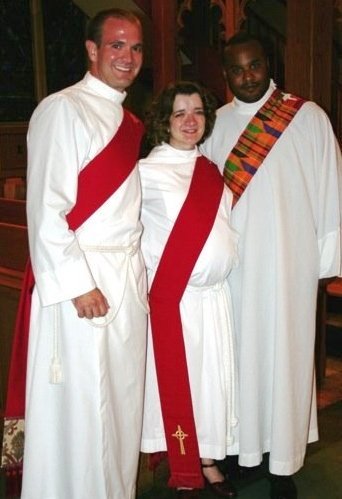
The Reverands Jody Burnett, Jennifer Andrews-Weckerly, and Charles Fischer III, Cathedral Church of St. John, June 24, 2009

Later this month I will celebrate the seven-year anniversary of my ordination.  What most people remember about that day was that I was very pregnant.  I confess that my large belly in an alb and a stole were rather extraordinary.  But what I remember about that day was a brief, but profound encounter.  I had gotten to the Cathedral early to make sure everything was in place and everyone knew where to go.  I was bustling around, managing logistics, when I ran into my boss, who was the rector of the church where I was serving.  She saw that I had my clergy shirt on but that I had not yet put on my collar.  You see, although you are not technically ordained until midway through the liturgy, you put your collar on before the liturgy starts.  The idea seemed strange to me to put it on before the bishop laid hands on me.  And if I am really being honest, I was really nervous about the whole endeavor.  My rector put her hands on my shoulders, looked me square in the eye, and said, “Jennifer, it’s time.  Go put on your collar.”

When we talk about ordination, we talk about the newly ordained experiencing an ontological change – a change in who the person is and in the nature of her existence.  It sounds rather dramatic because the change is dramatic.  When we ordain someone, we forever set them apart for a specific role in the church.

This Saturday, we will join our new curate, Charlie Bauer, as he is ordained to the transitional diaconate.  Charlie will be facing a similar ontological change – committing the rest of his life to this new way of being in and for the church.  Ordained persons do not simply start a new job.  Their whole person and existence is changed.  That is why an ordination is so special – because it is a day set apart for honoring this tremendous change.

Of course, all people in the church have access to ontological change.  Both baptism and confirmation are considered similar ontological changes – something profound happens in those moments, moments that only happen once in a lifetime.  We are marked as something different, and the way that we live our lives changes forever.  Because that change for all of us is so profound, the church sets apart days that we reaffirm our baptismal covenant and ordination vows.  We want to remember those tremendous moments when we put on a collar or stole, when water was poured over our heads, when a bishop placed heavy hands on our heads, and when we felt the Holy Spirit whisk through the room.  I hope you will join us as we celebrate this ontological change with Charlie.  But I especially hope you will take a moment to remember your own change and how the Spirit invites you to reclaim your changed identity.


← Older posts
Newer posts →

Recent Posts

  • On Change and Bread…
  • Sermon – Exodus 14.19-31, P19, YA, September 13, 2026
  • On Realizing Dreams…
  • On Seeing the Kingdom…
  • Sermon – Exodus 3.1-15, P17, YA, August 30, 2026

Archives

  • September 2026
  • August 2026
  • July 2026
  • June 2026
  • May 2026
  • April 2026
  • February 2026
  • January 2026
  • December 2025
  • November 2025
  • October 2025
  • September 2025
  • August 2025
  • July 2025
  • June 2025
  • March 2025
  • February 2025
  • December 2024
  • November 2024
  • October 2024
  • September 2024
  • August 2024
  • July 2024
  • June 2024
  • May 2024
  • March 2024
  • February 2024
  • January 2024
  • December 2023
  • November 2023
  • October 2023
  • September 2023
  • August 2023
  • July 2023
  • June 2023
  • May 2023
  • March 2023
  • February 2023
  • January 2023
  • December 2022
  • November 2022
  • October 2022
  • June 2022
  • May 2022
  • January 2022
  • December 2021
  • November 2021
  • October 2021
  • September 2021
  • August 2021
  • June 2021
  • May 2021
  • April 2021
  • March 2021
  • February 2021
  • January 2021
  • December 2020
  • November 2020
  • October 2020
  • September 2020
  • August 2020
  • July 2020
  • June 2020
  • May 2020
  • April 2020
  • March 2020
  • February 2020
  • January 2020
  • December 2019
  • November 2019
  • October 2019
  • September 2019
  • August 2019
  • July 2019
  • June 2019
  • May 2019
  • April 2019
  • March 2019
  • February 2019
  • January 2019
  • December 2018
  • November 2018
  • October 2018
  • September 2018
  • August 2018
  • July 2018
  • June 2018
  • May 2018
  • April 2018
  • March 2018
  • February 2018
  • January 2018
  • December 2017
  • November 2017
  • October 2017
  • September 2017
  • August 2017
  • July 2017
  • June 2017
  • May 2017
  • April 2017
  • March 2017
  • February 2017
  • January 2017
  • December 2016
  • November 2016
  • October 2016
  • September 2016
  • August 2016
  • July 2016
  • June 2016
  • May 2016
  • April 2016
  • March 2016
  • February 2016
  • January 2016
  • December 2015
  • November 2015
  • October 2015
  • September 2015
  • August 2015
  • July 2015
  • June 2015
  • May 2015
  • April 2015
  • March 2015
  • February 2015
  • January 2015
  • December 2014
  • November 2014
  • October 2014
  • September 2014
  • August 2014
  • July 2014
  • June 2014
  • April 2014
  • March 2014
  • February 2014
  • January 2014
  • December 2013
  • November 2013
  • October 2013
  • September 2013
  • August 2013
  • July 2013
  • June 2013
  • May 2013
  • April 2013
  • March 2013
  • February 2013
  • January 2013
  • December 2012
  • November 2012
  • October 2012
  • September 2012

Categories

  • reflection
  • Sermons
  • Uncategorized

Meta

  • Create account
  • Log in
  • Entries feed
  • Comments feed
  • WordPress.com

Blog at WordPress.com.

  • Subscribe Subscribed
    Seeking and Serving
    Join 397 other subscribers

    Have a WordPress.com account? Log in now.

  • Seeking and Serving
    View site in Reader
    Manage subscriptionsSign upLog in
    Report this content
    Collapse this bar
Loading Comments...