• About

Seeking and Serving

~ seek and serve Christ in all persons

Seeking and Serving

Tag Archives: life

Sermon – Matthew 16.21-28, P17, YA, August 30, 2020

02 Wednesday Sep 2020

Posted by jandrewsweckerly in Sermons, Uncategorized

≈ Leave a comment

Tags

control, cross, follow, God, Jesus, life, listen, love, Messiah, pandemic, Peter, resurrection, Sermon, suffering

I have to tell you, I have been dreading this gospel text all week.  We are in a season of life that feels completely out of our control:  whether we direct our attention to the looming presidential election in just ten weeks, the fires and hurricanes bearing down on our neighbors, the impending start of a new school year – whose daily schedule is still unclear, or the ever pervasive global pandemic and the way the pandemic has disrupted our physical, emotional, spiritual, and financial lives.  Even planning this year’s church calendar with our Vestry this past month felt like a game of pin the tail on the donkey – as we tried to guess where our lives would be in two, four, or even six months.

As experts in living an out-of-control life, we can totally understand Peter’s actions in our gospel lesson today.  An impending sense of doom and the anxiety-provoking lack of control lead Peter to rebuke Jesus, declaring vehemently that Jesus must never experience the great suffering and death Jesus predicts for himself.  Peter, who literally two verses before this text is praised for his bold proclamation of Jesus’ identity as the Messiah, is severely scolded by Jesus.  “Get behind me, Satan!” Jesus yells.  Peter, who has just been called the rock on which Jesus would build his Church, is now a stumbling block, getting in the way of Christ’s mission.  We understand Peter’s actions though.  When Peter declares Jesus the Messiah, he means a triumphal, redeeming Messiah, not one heading to death.  Peter’s Messiah is not supposed to behave this way, and Peter will not stand idly by and let his Messiah self-destruct.

Our tendency is to look at Peter and shake our heads.  Poor Peter – always getting things wrong:  sinking in the water when walking to Jesus, misunderstanding what Messiahship means, getting confused at the Transfiguration, insisting he will never abandon Jesus at the end.  But we have to be really careful with Peter because Peter is not that much different than each of us.  We have all had those instances where we rebuked God for one reason or another.  We too have faced hurricane forecasts and have rebuked God.  As we have watched our political life crumble, we have rebuked God.  As colleges close, mandated technology gets delayed two weeks after school starts, and school schedules are still unknown, we have rebuked God.  As friends are infected, lose jobs, or die from the pandemic, we have rebuked God.  Like Peter, we too have yelled out, “God forbid it!”  We have seen the darkness and pain looming ahead and have desired with every inch of our being to stop the suffering.

And yet, suffering is what Jesus predicts for all of us.  Jesus says, “If any want to become my followers, let them deny themselves and take up their cross and follow me.  For those who want to save their life will lose it, and those who lose their life for my sake will find it.”  Jesus’s words make us very uncomfortable and confuse our notions of a loving, grace-filled God who beckons us to come to God when we are weary.  We hear these words about suffering, recalling all of the pain in our lives – the loss, the heartache, the loneliness – and we cannot imagine that God plans for us to suffer in these ways.  Predestined suffering does not fit our understanding of who God is.  And yet, here we are with Jesus’ words today.

What helps me with this text is to go back to Peter.  What is interesting about Peter’s rebuking of Jesus is that he seems to rebuke all of what Jesus says without actually listening to all of what Jesus says.  Jesus says he, “must go to Jerusalem and undergo great suffering at the hands of the elders and chief priests and scribes, and be killed, and on the third day be raised.”  Peter hears the suffering and the killing part and seems to totally miss the part about being raised on the third day.  If Peter had been listening, he would have heard the good news imbedded in Jesus’ words.  He would have heard the promise of resurrection, the promise of everlasting life, the promise of resurrection life for all of us.  Yes, the road will be dark and painful – maybe even unbearable – but there is goodness at the end of that road.  God’s promise of salvation, of resurrection on the third day, is good news for Peter.  Suddenly Jesus’ scolding of Peter seems much more justified.

The invitation for us today the same:  to listen.  Listen to the entirety of what Christ is saying to us.  If we get lost in the words about suffering and death, then we become like Peter.  Now I am not arguing Jesus is encouraging us to go recklessly surfing in this hurricane of life.  Instead, Jesus is inviting us into a life that matters – a life lived not inwardly guarding our own comfort, but a life that lets go of control, not worrying about the cost for self, but a life that is poured out for others.  We can enter into that ambiguous place because God promises us that even if our lives end in the process, God has more life in store for us.  Jesus’ invitation to take up our crosses is not an invitation into death, but an invitation into life.[i]  This week, boldly take up your cross; knowing that on the third day, Christ will be raised.  Resurrection life awaits!  Amen.

[i] Barbara Brown Taylor, The Seeds of Heaven: Sermons on the Gospel of Matthew (Louisville: Westminster John Knox Press, 2004), 80.

Sermon – John 10.1-10, Acts 2.42-47, E4, YA, May 3, 2020

07 Thursday May 2020

Posted by jandrewsweckerly in Sermons, Uncategorized

≈ Leave a comment

Tags

abundant, church, community, Coronavirus, emotion, filter, Good Shepherd, grief, Jesus, life, pandemic, pastor, protection, redeeming, resentment, restorative, Sermon

It could be that having been ordered to stay in our homes for almost two months, with no real end in sight, has made me a bit cranky.  It could be that the tidal wave of illness, death, and suffering bearing down on us has birthed rising anxiety and fear.  It could be the slow realization that having lived in this “new normal” will mean our old “normal” will be forever tainted and will never fully be restored has brought a sense of grief or despair.  Whatever the feelings and emotional responses we are having to this pandemic, they are creating a lens or a filter through which we interpret everything – including Holy Scripture.

For me, the initial lens or filter through which I have been reading Holy Scripture has been one of bitterness, resentment, and grief.  Take today’s lessons.  This Sunday, the Fourth Sunday of Easter, is colloquially known as Good Shepherd Sunday.  The lessons on this Sunday every year give us images of pasture, protection, and pastoring.  And yet, this year, my initial response to the readings were resistance.  I am not emotionally ready to be cradled in the arms of a Good Shepherd.  I am not mentally ready to hear that Jesus wants us to have life, and have life abundantly.  I am not spiritually ready to hear about the post-Pentecost community gathered, breaking bread, spending time together in person in the temple and in homes, growing in numbers day by day.  I am not emotionally, mentally, or spiritually ready because hearing those wonderfully affirming things makes me realize how far from reality those things feel right now.

Of course, Church has not always been that way.  In fact, Church used to be exactly those things.  Throughout my life, Church has been the place where the Good Shepherd, where Jesus, has been the comforting figure who brings me into the fold, who knows me by name, whose voice brings assurance and confidence.  Church has been the place where I have found a community of people who make my life whole – a people who teach me about love, about calling, and about what family really looks like.  A little over a week ago, when over thirty of us gathered around our cars, seeing each other’s faces for the first time in months, as we prepared to drive to parishioners’ homes to sing Happy Birthday wishes, I was stunned at how powerful the feelings were of just seeing those beautiful faces, of having a glimpse of why this community has been so incredibly meaningful in my life, of remembering the comfort of being together.  The experience was a shock of love, care, and affection that opened up the gaping hole in my life I had so carefully covered up to protect myself from thinking about what I was missing in this pandemic.

So, does Scripture have any chance with us to be redeeming, restorative, and refreshing when our emotions are so raw?  Is there Good News today?  I have begun to realize in order to allow Scripture to have that power for me, I have needed to switch glasses.  On the Fourth Sunday of Easter in almost every year in memory, this Sunday has been about rose-colored glasses.  We talk about the Good Shepherd romantically and abundance superficially, we sing our favorite psalm, and we gather round and cozy up together.  But today, I hear Jesus inviting us to take off those rose-colored glasses (which he would have hated anyway), and slip on some clear glasses.  In those clear glasses, we can look at the community gathered in Acts and not imagine a loving community gathered and growing and peacefully breaking bread together.  Instead, scholars remind us the post-Pentecost community represents “different regions, speaking different dialects.  Some may not have shared the native languages of others, in spite of a shared Jewish faith.  There would have been distinct food preferences and different levels of financial security.  There would have been different prejudices to navigate, different interpretations of Torah and different political proclivities.”  And for those in charge of making the bread, those numbers growing day by day represented increased stress and strain, not jubilant joy.[i]  I imagine the chaos of that time was not unlike the chaos of sheep gathered into a fold – a noisy, messy, resistant bunch that the loving Shepherd had to prod, yank, and shove into said fold.

With new glasses, we no longer look with jealousy on that early gathered Christian community or that chaotic, smelly sheep fold, but instead begin to see commonality.  Just like the early Christian community trying to make her way through the chaos, we too are making our way through chaos.  We are overcoming technological hurdles, welcoming strangers from all over the community and the globe in our worship, and finding community even in our isolation.  Our gathering now is weird and awkward and frustrating.  But our gathering is also encouraging and life-giving and hope-making.  And as we watch people’s names pop up on the screen and as we see comments of reassurance, we see beauty in this particular community, we see hope percolating up despite us, and we see that even as life feels stripped of all goodness, the Good Shepherd is indeed offering us life in abundance.  This week, the Good Shepherd is not some picture-perfect stained-glass version of a Shepherd with a lamb gently hanging over his shoulder.  This week, the Good Shepherd is standing beside us, his arm cocked over our shoulder, shaking his head with us at the immensity of this crazy reality, and simply giving us a reassuring, unspoken smile, and a nudge into some abundant life this week.  Thanks be to God.

[i] Jerusha Matsen Neal, “Commentary on Acts 2:42-47,” May 3, 2020, as found at http://www.workingpreacher.org/preaching.aspx?commentary_id=4443 on May 1, 2020.

Sermon – Ezekiel 37.1-14, John 11.1-45, L5, YA, March 29, 2020

01 Wednesday Apr 2020

Posted by jandrewsweckerly in Sermons, Uncategorized

≈ Leave a comment

Tags

change, Christ, Coronavirus, death, dry bones, exile, God, health, hope, Israel, Jesus, journey, Lazarus, life, normal, restoration, resurrection, Sermon, suffering

Today would be an easy day to skim the lessons and declare a victory.  We come to these texts today with cases of Coronavirus rising, deaths increasing, schools closing, jobs ending, and life stopping.  A simple drive down Richmond Road, and the restaurants and tourist stops whose parking lots are usually filled reveal a ghost town.  Even when we do venture out to grab necessities, the faces of people in stores are filled with anxiety, and bodies tense when spacing gets a little too close with others.  In this bizarre reality, we want nothing more than a breath of fresh air, a promise of hope and resurrection.

In many ways, that is exactly what we get in our lessons today.  Ezekiel shares a vision of resurrection and restoration.  The valley full of dry bones – presumably representing the people of Israel in exile in Babylon[i] – are brought back to life.  Through Ezekiel’s prophesying, God’s breath is breathed into the bones.  Bones reassemble, sinews and flesh come upon them, and even breath fills their lungs.  Reassembled, the bodies feel bereft in a strange land, but the Lord our God promises them they will be returned to Israel – to their land.  The same can be said of John’s gospel.  Lazarus is dead.  Four days dead.  The common Jewish understanding of the time was that the soul hovered near the body for three days, hoping to return; but after those three days, the soul departed for good.[ii]  There is no hope for Lazarus.  And yet, in Jesus’ deep love for this man, he weeps.  And then he raises Lazarus from the dead.  Into the next chapter, we even find Lazarus reclining on Jesus – not just alive, but living a life of abundance.

These are texts we want to hear today.  We want Holy Scripture to say, “Everything will be okay.  Everything will go back to normal.  You’re okay.”  And in some ways, that is what the texts seem to say.  The exiled people of Israel will be returned to their land.  The lost brother of Martha and Mary is returned to them in health and vigor.  Suffering is ended for both.  Life is restored for both.  We get to go back to normal.

And yet, I am not sure our texts today are saying things quite that simply.  For the people of God in exile, Ezekiel’s words are a bit more complex.  The breath God breathes into them helps them remember that even in exile, God is with them.  God is animating them in a foreign land.  Yes, there is a promise to return to the Promised Land.  But we know that any great journey into suffering means that even when we return to “normal,” we are not “normal.”  We are changed.  Health may be restored, land may be restored; but we are forever changed.  The news for Lazarus is a bit more complex too.  Although Jesus brings Lazarus back from the dead, to live an abundant life in the here and now, Lazarus’ resurrection is not forever.  Someday, Lazarus will return to the ground.  We know, like the people in exile, Lazarus’ life after the tomb will not be like his life before.  And we also see in Jesus’ conversation with Martha that Lazarus’ death not just about Lazarus.  Lazarus’ death is merely a foretaste of the resurrection of Jesus.  This return to life is limited to one person.  Jesus’ return to life will change a people.

All of this is to say that today’s good news is good news indeed.  There will be life after this virus.  There will be restored health and community after this virus.  There will be renewed strength and vitality after this virus.  But we will also be forever changed by this virus.  We will see life and the gift of life differently than before.  We will come back to our life rhythms and routines a changed people.  We will understand the gift of resurrection in new and deeply moving ways.  The promise of these passages in not simply a return to normal.  The promise of these passages is a journey that will change us all – of valleys with dry bones, of weeping by bedsides, of crying out to Jesus.  The promise of these passages is the destination of Easter.  Not a return to normal, but a new, profound understanding of resurrection in Christ.  In the meantime, Jesus weeps with us.  God is breathing life into us.  And soon, we will know the depths of resurrection life like never before.  Amen.

[i] Kelton Cobb, “Theological Perspective,” Feasting on the Word, Yr. A, Vol. 2 (Louisville:  Westminster John Knox Press, 2010), 122.

[ii] Leander E. Keck, ed., The New Interpreters Bible, vol. ix (Nashville: Abingdon Press, 1995), 687.

On Birthdays and Blessings…

20 Wednesday Nov 2019

Posted by jandrewsweckerly in Uncategorized

≈ Leave a comment

Tags

big, birthday, blessing, celebrate, God, gratitude, life, little, thankful, ultimate

gratitude

Photo credit:  https://www.lupus.org.uk/lupus-trust-uk-news/2019/8/2/qzppdr7brifhgd5i9zi7h8o1ia34i0

My husband and I experience our birthdays very differently.  He is perfectly happy to have a quiet, reserved day, wanting to be acknowledged, but not wanting a lot of attention on him.  I, on the other hand, love have a ton of attention on my birthday – songs, cake, cheers, you name it.  So when my daughter insisted I wear a “It’s My Birthday!” sash yesterday, I only hesitated for a second.  What was funny about the sash was the experience I had wearing it.  The funniest reactions were probably at the bus stop.  I think most of the kids must have parents more like my husband as they seemed surprised I was celebrating.  But one kid in particular asked me, “So are you having a big party with your friends tonight?”  When I replied I was not, her response was, “Yeah, I guess you’re too old, huh?”

It’s funny how a six-year old can make you question your life.  I was suddenly wondering, “Should I have assembled a party?  Should I have found other big ways to celebrate?”  But as the evening closed yesterday, I reflected on what my day of celebration entailed:  a breakfast, including eggs and coffee, my children proudly made by themselves; a lunch in the school cafeteria with my older daughter and her friends; an evening watching my younger daughter’s ballet class – an activity I cherished growing up; a surprise dinner by my husband, fully ready upon our return home; not to mention cards, cupcakes, and endless texts, calls, and social media messages.  It wasn’t a party in the traditional sense, but it did feel like wonderful day of celebrating life – my life here and now.

In the last couple of weeks, I have administered last rites, conducted a funeral, spent several days with my dad who was in the hospital, talked to families dealing with crisis, consoled the bereaved, baptized a baby, and heard people’s life stories for the first time.  When you are that deep in the reality of life, parties or treats no longer seem necessary.  What suddenly becomes important are the ultimate things of life – breath, family, loved ones, intimacy, little life moments.

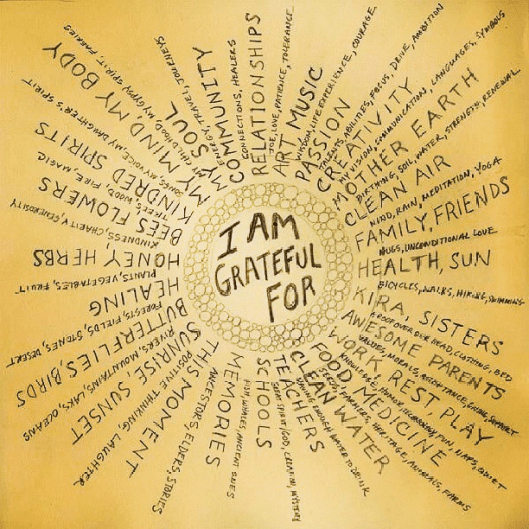
To help me keep celebrating, I invite you this week, to slow down and look at the blessings all around you.  I know some of you are hurting, some of you are just trying to get by, and some of you don’t have that many stressors right now.  Wherever you are, take a moment today to give thanks to God for all your bountiful blessings – big and very small.  Each breath, each day, each year is a gift.  Tell me where you are feeling grateful.  I’d like to celebrate with you!

Homily – Luke 22.14-23.56, PS, YC, April 14, 2019

17 Wednesday Apr 2019

Posted by jandrewsweckerly in Sermons, Uncategorized

≈ Leave a comment

Tags

church, death, faithfulness, hope, hopelessness, Jesus, life, Palm Sunday, Sermon, sinfulness, tension

Several years ago, I was visiting a parishioner on her deathbed in the hospital.  We were talking about the things you talk about at the end of life:  the blessings, the memories, the unexpected turns of life.  Whatever fears about death that had been present were long gone.  All that was left was a sense of peace, and a certainty about the eternal life waiting for her on the other side.  I found myself wistful and a little sad, knowing there was nothing I or the doctors could do at that point.  Death was coming.  In the midst of this sacred, serious moment of inevitability, we heard a tinkling noise in the hallway.  Having had a child in a hospital, I knew what the tinkling noise was:  the tinkling sound was the announcement of a new baby being born.  As I explained the noise, the parishioner and I sat in awe – the closeness of life and death were all around us.  We did not have much to say at that point.  The sound of that tinkling just lingered in the room, long after the sound was gone.

I was thinking this week how similar the experience of Palm Sunday is to that hospital room.  We hold in tension so many things today.  We certainly hold life and death in tension:  the joyful celebration of Jesus with palms, and the wailing sorrow of death at the cross of Jesus.  We hold hope and hopelessness in tension too:  the promise of a new king, entering triumphantly, and the despair and finality of Christ on the cross.  We hold faithfulness and sinfulness in tension today:  the bold proclamation of the king who has come in the Name of the Lord, and the shouts of “crucify, crucify him,” just moments later.  Though we might prefer to claim life, hope, and faithfulness, today we must claim death, hopelessness, and sinfulness too.  They are as intertwined as life and death in a hospital.

In some ways, the tension of this day is just what we need in a culture that might like us to jump from the palms to the risen, triumphant Lord.  I am reading Brené Brown’s Dare to Lead this Lent, and one of the hazards to leadership she articulates is numbing.  Numbing can happen in all kinds of ways – through food, work, social media, shopping, television, video games, or alcohol.  The problem with numbing is that we cannot selectively numb emotions.  As Brown says, “if we numb the dark, we numb the light.  If we take the edge off pain and discomfort, we are, by default, taking the edge off joy, love, belonging, and the other emotions that give meaning to our lives.”[i]  When we numb our way through life, we not only suppress the bad stuff; we never get to fully enjoy the good stuff of life.

Today, the Church refuses to allow us to numb.  The Church has us wave palms and sing loudly and smell the sweet smell of victory, with a grin from ear to ear.  And the Church has us listen to the devastation of betrayal, hear the voices of contempt and hatred, and shout for Christ’s death.  Our hearts feel heavy as our minds try to justify all the times we too have betrayed Christ.  We feast as the disciples did on Christ’s body and blood, and we leave in silence as his disciples did from the cross.  Today we feel everything:  life, death; victory, failure; joy, and devastation.  In letting go of our tendency to numb, we open ourselves to the fullness of all that happens on this day.  Only then can embrace the Easter message of resurrection that is to come.  Only when we are fully broken, fully vulnerable, fully present in the tension of this day can we receive the fullness of joy that comes next week.  Only when we are looking into the doorway to death can we understand the depth of joy that comes from the tinkling sound of new life.  So, stay awake with us for just a little while longer.

[i] Brené Brown, Dare to Lead (New York:  Random House, 2018), 85.

Holding on to Joy in Lent…

06 Wednesday Mar 2019

Posted by jandrewsweckerly in Uncategorized

≈ Leave a comment

Tags

Ash Wednesday, Christ, discipline, earthy, holy, identity, joy, kindness, Lent, life, light, love, repent, virtue

IMG_6748

Photo credit:  Jennifer Andrews-Weckerly; reuse only with permission

Last night I had one of the most fun Shrove Tuesday/Mardi Gras celebrations I have ever had.  We had a great crowd, there was a spirit of joy and celebration, the Kensington School hosted an awesome kids’ corner with fun activities, and best of all was the Hickory Neck Talent Show.  I have not laughed so hard and smiled so much in a long time.  I even woke up this morning with an uplifted spirit, the smile still lingering on my face.

While I am so grateful for that blessing, as a priest, it does make entering into Ash Wednesday a bit tricky.  Here I am still coming down from the high of last night, and now I need to enter into a worship service where I tell people to fast, to repent, and to remember their mortality.  It almost feels like emotional or spiritual whip-lash, and I have been struggling this morning to know how to help others with that same abrupt shift.

Where I have landed is that I think the best way to enter into Ash Wednesday and the season of Lent is with that same lingering sense of celebration.  You see, when you have experienced the highs of life, talking about the “lows” of life seems a bit more bearable.  Yes, we are mortal, and yes, we will return to the dust.  But while we are still mortal, we can make this life here on earth one of great joy and love – one of laughter, of community, of togetherness.

I wonder if this might be a way to enter Lent in a healthier way.  Instead of lamenting our sinful nature (and believe me, we do need to lament our sins), perhaps our Ashes today might remind of us the earthy nature of being humans and encourage us to strive for the ways we might live that earthy life in a more holy way.  I plan to do that today by entering into a season of kindness.  I am taking the joy from my community of faith last night and channeling it into forty days of kindness – where my repentance becomes a practice of demonstrating my identity – of living more faithfully the virtue of kindness.  What Lenten discipline are you taking up?  What might be a way for you to joyfully grasp onto this fleeting life and make it a witness to Christ’s light and love?  I can’t wait to hear all about it!!

Ash-Wednesday-1

Photo credit:  https://saintvincents.org/2019/02/25/ash-wednesday-march-6/

On Walking toward Christ through Kindness…

13 Wednesday Feb 2019

Posted by jandrewsweckerly in Uncategorized

≈ Leave a comment

Tags

Acts, Christ, faith, grace, humility, kindness, life, love, model, patience, receive, student, teacher, transform

walking

Photo credit:  https://www.truefaithcogic.org/put-on-the-lord-jesus-christ/

Many people I encounter, both church-going and non-church-going, tend to think my role as a priest is to teach people how to live holy lives.  The expectation is not unfounded.  When I was ordained, the bishop asked me several questions in front of the congregation.  One of them was, “Will you do your best to pattern your life and that of your family in accordance with the teachings of Christ, so that you may be a wholesome example to your people?”  Not only does the Church anticipate I will teach my community how to live holy lives, the Church expects me to exemplify how to live a holy life.

The reality of that expectation sneaks up on me sometimes.  This week has been one of those times.  On Sunday, I challenged our church community to participate in Random Acts of Kindness Week, doing at least three acts of kindness this week, and reporting back next Sunday.  Just a few days in, two funny things have struck me.  One, I have felt a pressure to do kind acts myself.  As a servant leader, I need to set the tone with my own behavior.  And so, I have been plugging away – purchasing food for our local food pantry, collecting prom dresses and accessories for a program that helps low-income teens, and writing some kind notes.  But planned acts are almost easy.  It is the everyday inculcation of kindness that I am not as sure about.  Just two Sundays ago we heard the passage from 1 Corinthians, “Love is patient, love is kind.  Love is not envious or boastful or arrogant or rude.  It does not insist on its own way; it is not irritable or resentful; it does not rejoice in wrongdoing, but rejoices in the truth.  It bears all things, believes all things, hopes all things, endures all things. Love never ends.”[i]  Although I may be performing kind acts, I have a bit further to go before I am living a life of kindness:  of patience, humility, flexibility, and generosity.

The second thing that struck me this week is how often I have been the recipient of kindness since we started honoring this week.  Already a parishioner has offered to cook me and my family a meal – just because.  Another parishioner sent me a thank you note for my kindness and work on behalf of the church.  Two classmates came to support me on Sunday, even though they have their own church homes.  And the kindness is not limited to people I know.  I have noticed people holding doors for me, waiting patiently for me as a pull out of a parking space, asking how I am doing (and really wanting to know).  I am not sure if people are inspired by this week, or if they are already living faithful lives of loving-kindness.  Either way, I find myself inspired by those around me, who are managing to be kind in the mundane parts of life.

If anything, this week is teaching me that the work of modeling faithful living will go way beyond a week.  And although the intentional acts I am doing this week are great, they are just a small part of transforming my entire life into a model of kindness and graciousness.  The other thing I am learning is that all of the modeling does not have to come from me.  In fact, I am also a student of Christ, still on the path to learning how to walk in Christ’s path.  The good news is that I have more than a week to master this transformation.  In fact, Hickory Neck will be taking up a Lenten kindness challenge this year.  I am so excited to see what forty days of living a life of kindness might teach me.  If they are as powerful as this first seven, then Hickory Neck is in for some incredible inspiration.  I cannot wait to hear what you are learning about this week too!

[i] 1 Corinthians 13.1.13

Homily – Luke 2.8-20, Blue Christmas, December 21, 2018

02 Wednesday Jan 2019

Posted by jandrewsweckerly in Sermons

≈ Leave a comment

Tags

angels, Blue Christmas, Christmas, hope, Jesus, joy, life, light, Mary, peace, rest, sad, Sermon, shepherds, slow, weary

One of the Christmas songs we do not sing tonight is “It Came Upon a Midnight Clear.”  Up until this year, I was mostly familiar with the first verse, which says, “Peace on the earth, good will to men,” and “The world in solemn stillness lay to hear the angels sing.”  Those words have always felt more like an aspiration than my reality.  I do not know about you, but the holidays are rarely a time of stillness and peace for me.

But this year, I stumbled on a verse of this song that is not in our hymnal.  The verse says, “And you, beneath life’s crushing load, whose forms are bending low, who toil along the climbing way with painful steps and slow; look now, for glad and golden hours come swiftly on the wing; oh, rest beside the weary road and hear the angels sing!”

One of the challenges about Christmas is that we can sometimes lose our place.  When we listen to the old carols, we either hear songs of peaceful silence or we hear songs of beautiful, glorious praise.  The same is true of our secular experiences of Christmas.  We are filled with retouched nostalgic memories, with songs that tell us we should be rockin’ around Christmas trees, or cozying up with loved ones.  But sometimes Christmas is none of those things.  Instead Christmas is a time when the gap between our reality and the projection of all the things we should be feeling grows ever wider.

I think that is why I was captivated by this extra verse of “It Came Upon a Midnight Clear.”  “And you, beneath life’s crushing load, whose forms are bending low, who toil along the climbing way with painful steps and slow; look now, for glad and golden hours come swiftly on the wing; oh, rest beside the weary road and hear the angels sing!”  Suddenly, the otherworldliness of the angels are there for us too.  Whether life feels like a crushing load, whether your daily toil is bringing you down, or whether you are just weary, the song invites us rest by the weary road – because the angels have a song for us too.

I used to serve at a church where Christmas was the pinnacle of events.  Families would wear evening gowns and tuxedos to church, they would send their servants to reserve rows of seats, and the coat rack was full of fur coats.  Christmas was another soiree in their perfectly formed lives, and church was host of their glamorous party.  But what always amused me about that experience was the contrast between their polished, perfect lives, and the rustic, imperfect story of the angels and shepherds.  I wondered if they understood the ironic contrast of their experience and scripture’s experience.  What did they know of being crushed beneath life’s load, the toil of taking painful, slow steps, and the weary road?

Not until many years later did I realize that the weariness of life can infect anyone.  Those in tuxedos and evening gowns were struggling with broken marriages, estranged family members, and the grief of death as much as someone gathered in a candlelit historic chapel.  Those whose servants went to reserve a seat in church were just as lonely, unfulfilled, and afraid as those who are servants.  Those whose fur coats lined the coat racks were experiencing a sense of failure, a lack of fulfillment, and a longing for meaning as much as someone slipping quietly into a service like tonight.  Weariness affects the donkey who carries a pregnant Mary; the shepherds who keep watch all night; the innkeeper who feels pulled in many directions with no vacancies to accommodate need; with Josephs who are on a path they did not choose, but who feel obligated to be faithful; and with Marys who say yes and hold hope, even though the dread of impending suffering is almost palpable.[i]

You see the angels came not to a perfect world, to a perfect people, delivering perfectly good news.  The angles came to a weary world, with weary people, delivering good news that would not dismiss our weariness, but relieve our weariness.  That is why I love this service so much.  I love our Blue Christmas service because Christmas is all about a wearied people, with a crushing load, with painful steps, welcoming a savior who gives us hope that we will not be weary forever, that God will walk our weary roads alongside us.

On this night, I share this blessing for all of us:  “May the world slow down enough this season for you to catch a glimpse of a star in the sky and a light on the horizon.  May the earth pause enough for you to catch the faint sound of a baby’s cry on the wind and the song of the angels through the trees.  May the slow time of Christmas night bring joy to you, and hope, and light, and more than anything else, rest to your waiting spirit.  All you, beneath life’s crushing load, whose forms are bending low, who toil along the climbing way with painful steps and slow; look now, for glad and golden hours come swiftly on the wing; oh, rest beside the weary road and hear the angels sing!”[ii]  Amen.

[i] Melissa Bills, “All This Weary World,” December 18, 2018, as found at https://youngclergywomen.org/all-this-weary-world/ on December 18, 2018.

[ii] Bills.

God’s Gifts in the Chaos…

19 Wednesday Dec 2018

Posted by jandrewsweckerly in Uncategorized

≈ Leave a comment

Tags

Advent, beauty, blessing, breath, chaos, Christmas, crazy, gift, God, kids, life, moments, relationship, sacred

kids jumping on the bed

Photo credit:  https://www.pinterest.com/pin/214835844696012029/

Every December since our elder child was about two or three years old, the same thing happens.  The anticipation of Christmas turns our children into possessed creatures.  They argue more, act out in school, whine at the drop of a hat, and generally become entirely unpleasant to be around.  No matter how much I try to minimize the excitement of Christmas, the buzz around them is unavoidable, and, ergo, crazy behavior.  I found myself so frustrated the other day with the constant effort to reign them in that I had the distinct thought, “I just wish Christmas was over already!”

But I soon as had the thought, I knew I did not mean it.  You see, despite the mayhem of the season, in these last days of Advent, there are still sacred moments everywhere.  As we read our Advent devotional this week, one of the questions was, “Who are you praying for this Advent.”  My younger daughter immediately said, “I want to pray for all dead people.”  “Oh,” I said, “like whom?”  “Like MeeMaw,” she said.  And despite the fact that they nearly broke half the ornaments that came out of the ornament box, now, every morning, both girls rush to the tree to plug in the lights and find the ornaments that play Christmas tunes or funny sounds, twirling around in their nightgowns to the sounds.  And last week, as they had their Christmas dance performances, I teared up watching them, remembering how very special dance had been to me growing up.

The same can be true in any season.  Whether we are putting our heads down, trying to finish one more project, or absorbed in technology for extended periods of time, or simply fixated on our endless to-do lists, we can achieve a lot, but miss life along the way.  Fortunately, we are blessed with a God who is continually trying to get our attention anyway – who is relentless in pursuing relationship with us.  In these last days of Advent, God invites us to take a deep breath, lift up our heads, and open our eyes to the beauty of the sacred all around us.

Hickory Neck offers us the opportunity to do that over the next several days.  Whether you come to our Blue Christmas service, our last Advent liturgies, Christmas Eve services, or the service on Christmas Day, there will be multiple times to see glimpse of the sacred all around you – ways in which the manger is a window into the greater redemptive work God is doing in the world.  Whether it’s with an encouraging word from our Blue Christmas service, the sharing of memories at an upcoming funeral, or the wedding vows that one couple will renew on Christmas Day (sixty years later!), what we learn is that in the chaos of life, God is gifting us sacred gifts in tiny, momentous ways.  Today, I invite you to receive God’s gifts among the chaos.

On Balance and Harmony…

14 Wednesday Nov 2018

Posted by jandrewsweckerly in Uncategorized

≈ Leave a comment

Tags

balance, church, God, harmony, health, life, prayer, spiritual life, wellness, wholeness, work

rocks-balancing-on-driftwood--sea-in-background-153081592-591bbc3f5f9b58f4c0b7bb16

Photo credit:  https://crossfitodyssey.com/sunday-story-balance-vs-harmony/

I recently visited the William & Mary Wellness Center for a presentation on how they help students create a culture of wellness.  After the presentation, someone asked about how to create work-life balance.  The presenter said the Wellness Center does not teach work-life balance, because work-life balance is a myth – something that can never be achieved because we can never perfectly balance our work life and our personal life.  He went a step further to suggest that attempting to achieve work-life balance is quite unhealthy because it places pressure upon us in each arena.  One will never spend an equal amount of time in either arena, and attempts to create a one-for-one balance only create more stress and anxiety.

Instead, what he teaches is work-life harmony.  He knows that we will never achieve, and arguably should never desire, a balance of the two arenas.  But the two arenas can work in harmony in such a way to create a more happy, healthy lifestyle.  As an example, the presenter talked about an orchestra.  If you tried to work on balance within an orchestra, every instrument would sound equally, making for a horrible racket.  But if each instrument plays in harmony with one another – well, then you have a masterpiece!

I have been wondering if the same might be true with our spiritual life.  Now I will be the first admit, I would love to see my parishioners at church every Sunday – partially because I know how healing and life-giving communal worship can be, but also partially because I just like my parishioners so much.  Church is more fun when everyone is there.  But using the harmony model, I think our spiritual life needs a sense of harmony too.  We need to create space for worship, learning, service, and outreach.  We need to find time for fellowship, formation, and evangelism.  We need to be sure we are both being fed and feeding others at church.  But we need to do that in a way that creates harmony in our lives.

Now I imagine some of you are thinking, “Awesome, my rector just said I don’t have to come to church as much so that my life is more in harmony.”  And maybe that is true for you.  But I suspect that the opposite may be true.  My guess is that for many of us, our spiritual life is not in harmony with the rest of life:  we aren’t finding time for formation, for worship, or for service.  The good news is that I am not suggesting you find balance – just harmony.  I remember complaining once to my Spiritual Director that with young children and a busy work life and a desire to be present to my husband, my prayer life was suffering – I just wasn’t praying like I used to.  Gracefully, he suggested that I shouldn’t worry about praying in a certain way – as if only praying the Daily Office everyday is real prayer.  He suggested something much more harmonious in life.  “Perhaps at this stage of life, the best you can expect is a prayer spoken at a stop light, or an exhausted thank you before drifting off to sleep.”  We all struggle with spiritual harmony.  I wonder what solutions are working for you today.  How are you finding harmony with work, life, and God?

← Older posts
Newer posts →

Recent Posts

  • On Politics, Football, and Love…
  • On Sharing the Love…
  • Sermon – Micah 6.1-8, Matthew 5.1-12, EP4, YA, January 30, 2026
  • On Justice, Kindness, Humility, and the Messy Middle…
  • Feast of the Rev. Dr. Martin Luther King, Jr., January 18, 2026

Archives

  • February 2026
  • January 2026
  • December 2025
  • November 2025
  • October 2025
  • September 2025
  • August 2025
  • July 2025
  • June 2025
  • March 2025
  • February 2025
  • December 2024
  • November 2024
  • October 2024
  • September 2024
  • August 2024
  • July 2024
  • June 2024
  • May 2024
  • March 2024
  • February 2024
  • January 2024
  • December 2023
  • November 2023
  • October 2023
  • September 2023
  • August 2023
  • July 2023
  • June 2023
  • May 2023
  • March 2023
  • February 2023
  • January 2023
  • December 2022
  • November 2022
  • October 2022
  • June 2022
  • May 2022
  • January 2022
  • December 2021
  • November 2021
  • October 2021
  • September 2021
  • August 2021
  • June 2021
  • May 2021
  • April 2021
  • March 2021
  • February 2021
  • January 2021
  • December 2020
  • November 2020
  • October 2020
  • September 2020
  • August 2020
  • July 2020
  • June 2020
  • May 2020
  • April 2020
  • March 2020
  • February 2020
  • January 2020
  • December 2019
  • November 2019
  • October 2019
  • September 2019
  • August 2019
  • July 2019
  • June 2019
  • May 2019
  • April 2019
  • March 2019
  • February 2019
  • January 2019
  • December 2018
  • November 2018
  • October 2018
  • September 2018
  • August 2018
  • July 2018
  • June 2018
  • May 2018
  • April 2018
  • March 2018
  • February 2018
  • January 2018
  • December 2017
  • November 2017
  • October 2017
  • September 2017
  • August 2017
  • July 2017
  • June 2017
  • May 2017
  • April 2017
  • March 2017
  • February 2017
  • January 2017
  • December 2016
  • November 2016
  • October 2016
  • September 2016
  • August 2016
  • July 2016
  • June 2016
  • May 2016
  • April 2016
  • March 2016
  • February 2016
  • January 2016
  • December 2015
  • November 2015
  • October 2015
  • September 2015
  • August 2015
  • July 2015
  • June 2015
  • May 2015
  • April 2015
  • March 2015
  • February 2015
  • January 2015
  • December 2014
  • November 2014
  • October 2014
  • September 2014
  • August 2014
  • July 2014
  • June 2014
  • April 2014
  • March 2014
  • February 2014
  • January 2014
  • December 2013
  • November 2013
  • October 2013
  • September 2013
  • August 2013
  • July 2013
  • June 2013
  • May 2013
  • April 2013
  • March 2013
  • February 2013
  • January 2013
  • December 2012
  • November 2012
  • October 2012
  • September 2012

Categories

  • reflection
  • Sermons
  • Uncategorized

Meta

  • Create account
  • Log in
  • Entries feed
  • Comments feed
  • WordPress.com

Blog at WordPress.com.

  • Subscribe Subscribed
    • Seeking and Serving
    • Join 395 other subscribers
    • Already have a WordPress.com account? Log in now.
    • Seeking and Serving
    • Subscribe Subscribed
    • Sign up
    • Log in
    • Report this content
    • View site in Reader
    • Manage subscriptions
    • Collapse this bar
 

Loading Comments...