• About

Seeking and Serving

~ seek and serve Christ in all persons

Seeking and Serving

Tag Archives: neighbor

On God, Scripture, and Politics…

02 Wednesday Sep 2020

Posted by jandrewsweckerly in Uncategorized

≈ Leave a comment

Tags

abundant, Bible, challenge, covenant, disciple, forgiving, God, love, neighbor, politics, question, reading, relationship, scripture, witness

heart-light-bible_si

Photo credit:  https://www1.cbn.com/teaching/bible-verses-love

This week, our church will finish our summer 90-Day Bible Reading Challenge.  At the beginning of the summer, I wanted to find something we could do as a community.  I was also aware the Bible was being used as a prop and as a symbol for certain political opinions.  I figured if Hickory Neck is helping form faithful disciples who can participate fully in civic life, we should know what is in the Bible – all of it!  And so, we began a reading journey.

The days and nights were long.  Twelve pages a day does not sound like much, but for anyone who got behind (or who like me, is still behind), we learned that twelve daily pages of biblical text was no simple feat.  We journeyed through fun, familiar stories, we drudged through laws and genealogies, we read stories that were repeated in other books.  We asked questions, we struggled with cultural differences, and we found some surprises.  We realized the Hebrew Scriptures (Old Testament) comprises two-thirds of the Bible.  We fell in love with new books, laughed, and found modern parallels to life today.

This summer, I realized the gift of the 90-Day Bible Challenge was not just a reading journey – it was a journey into deeper relationship with God.  The Challenge did not allow us to dive deeply into our questions, particular stories, or even cultural issues.  Instead, the Challenge reminded us of who God is – a loving, forgiving, graceful God, whose commitment to covenantal relationship with God’s people is of utmost importance – even when we fail to be faithful over and over and over again.  In fact, watching the people God fail so many times helps us understand the tremendous depth of God’s love for us.  And seeing that overarching covenantal relationship from God’s perspective inspires in us a desire to reflect that abundant, forgiving, graceful love out in the world.

Thank you, Hickory Neck, for reminding me why the Bible is not a book that is to collect dust on the shelf or to only be consumed in small pieces during Sunday services, but a collection of books that speaks powerfully to this time – in ways that cannot be coopted by political agendas of the day, but whose witness of love does have powerful political consequences.  I am grateful for the reading journey that became a journey into deeper relationship with God and with neighbor.

On Light, Community, and Being All In…

02 Wednesday Oct 2019

Posted by jandrewsweckerly in Uncategorized

≈ Leave a comment

Tags

community, gift, give, harness, idea, Jesus, light, loving, loving kindness, ministry, neighbor, pledge, power, shining, stewardship, together, transform

70161290_10158145043567565_8013087704956796928_n

Photo credit:  Jennifer Andrews-Weckerly; resuse with permission

This past weekend, our family traveled to Staunton, Virginia, for their annual Queen City Mischief and Magic weekend – a weekend to celebrate all things Harry Potter.  We had a great time discovering what houses we were sorted into, observing how to duel with wands, and learning dances for the next Yule Ball.  The kids busied themselves collecting trading cards from costumed characters and from local establishments.  The whole downtown area shut down and found creative ways to channel the world of Harry Potter – from the local train station taking on the persona of Platform 9 ¾, to a photography business creating keepsake photos, to a toy store changing out their stock with Potter toys, games, and books, to the local university offering lectures related to themes from the series, to the local spirits store selling “butter beer.”  For those who love the Harry Potter books and movies, it is a great fun-filled weekend.

As we drove home, I realized what amazed me most about the weekend was not the characters, the paraphernalia, or the crowds.  What amazed me was how a few years ago this small town had a crazy idea to convert the town to this magical place – and everyone bought into the idea.  Staunton does not have some significant tie to JK Rowling or the filming of the movies.  They are just a small town in the middle of the state who decided to do something – and the whole town was all in.  I do not know the history of that idea, or how many people said, “but we’ve never done anything like this,” along the way, or how they figured out the logistics and convinced people to get on board.  But what I can tell you is after two years of attending the festival, the whole town is not just grudgingly on board, but wholeheartedly comes together to welcome people to their town that might not otherwise ever step onto their streets.

I know Staunton converts itself for just three days.  But the more I thought about the event, the more I wondered what kind of power our community might be able to harness for good.  I have certainly seen hints of that kind of energy with the WMBGkind movement in Williamsburg – a community of people committed to being a community of kindness as their dominant identity.  I think that is why I have always thought WMBGkind and the faith community can be such great partners.  Though we use religious language, the end result is the same.  We want our community to be a community that lives Christ-like lives of loving-kindness.  In that way, no matter what our denominational or faith differences are, we can step out of our day-to-day operations and be a part of something much bigger – of a people all united around mission of loving neighbor as ourselves.

This week, Hickory Neck kicked off its stewardship campaign, “Shining our Light.”  What I love about the campaign is the campaign reminds us to look at how much light we are gifted with (in worship, in learning, and in play), and then to gift that light the community around us – to shine our lights, rallying the entire community to live life differently.  That is a cause I am happy to pledge our financial giving to; that is a cause I am excited to pledge our time and talent to as well.  This month, as we pray about our own stewardship, I encourage you to think about how your giving not only supports the ministry of Hickory Neck, but might just have the power to transform our community into something much bigger than ourselves.  I am all in.  Won’t you join me?

71757278_2601111433278434_853371931125088256_o

Photo credit:  https://www.facebook.com/Hickory.Neck/photos/p.2601111426611768/2601111426611768/?type=1&theater

Homily – Luke 10:25-37, P10, YC, July 13, 2019

17 Wednesday Jul 2019

Posted by jandrewsweckerly in Sermons, Uncategorized

≈ Leave a comment

Tags

baptism, baptismal covenant, covenant, dignity, faith, God, Good Samaritan, Jesus, kindness, Mr. Rogers, neighbor, sacred, Samaritan, Sermon, unworthy

Last Sunday, a group of parishioners gathered to watch Won’t You Be My Neighbor, the documentary about Fred Rogers.  There were countless things I could tell you about this film, but one thing that really grabbed my attention was toward the end.  The film documented a criticism of Mr. Rogers as raising up a generation of people who feel and act entitled.  You see, one of the primary lessons from Mr. Rogers is he loves each individual, just as they are.  No changes are necessary; no fault is too big.  Mr. Rogers loves you just as you are.  You can hear the words of God in Mr. Rogers’ words – God too loves us unconditionally, and certainly loves us better than any human ever could.  However, Mr. Rogers’ critics would argue if everyone is loved just as they are, then surely they do not need to improve, or earn respect, or work hard.  But the film asserts something quite different.  The film asserts without being recipients of unconditional love, individuals cannot be givers of unconditional love.  In other words, to respect the dignity of every human being, one must first learn how sacred one’s own dignity is – one must be shown how she or he is a person with dignity to be respected in order to know how to respect the dignity of others.

That sense of each person having profound, sacred dignity is one of the main lessons of our gospel today.  The Good Samaritan is one of those stories that is so widely known all I need to do is say, “the Good Samaritan,” and we likely already know the story.  We might automatically recall, “Oh, that’s the story Jesus uses to tell us to be like the Good Samaritan – to be kind to others.”  In one sense, our recollection would be true – at the heart of Jesus’ story is a message to be kind to all.  But what that simple summary misses is the finer details to this story.

You see, those two people who separately pass the victim along the road, are a priest and a Levite.  These two people are not just people of faith – they are keepers of the faith.  They know the laws better than most people of faith.  You may have heard over the years the logic that priests or Levites could not risk being defiled by touching the body of the victim, and so that is why they went around the victim.  But the truth is, their avoidance had nothing to do with defilement – they were heading away from the temple and therefore were not in need of ritual purity, and any good priest or Levite knows they were expected to check on this victim; should he be dead, they should help bury him, and should he be alive, they should tend him.[i]  Basically, these are good, trained people of faith, not fulfilling their duty to love their neighbor as themselves.

But perhaps even more significant is the identity of the Samaritan.  The story does not say, a priest and Levite passed, but another faithful Jew came to the victim’s aid.  The story says, a priest and Levite passed, but a man whose people are mortal enemies of people of faith – who has persecuted, defiled, and subjugated people of faith – is the one who helps.  Saying “The Good Samaritan,” is like saying, “The Good Murderer.”[ii]  That this typically hated man is the one who shows mercy, kindness, and love is shocking.  The hearers of Jesus’ story are shocked, and our ears need to be similarly shocked.  Asking us to respect the dignity of every human being is already a monumental task; respecting the dignity of every human being is inconvenient, is humbling, and involves a willingness to be wrong about others.  Respecting the dignity of every human being means being willing to see how the best of the faithful fail at kindness, and how sometimes our worst enemies are better people of faith than we are.

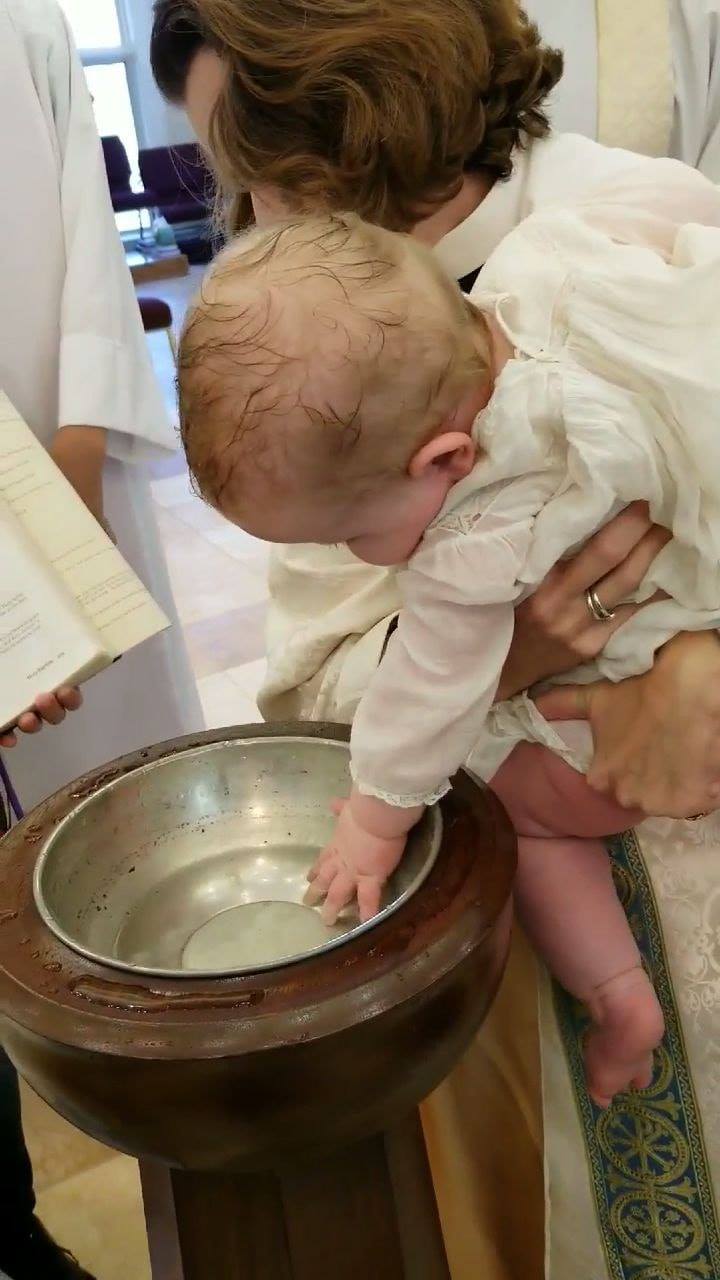
Today we are baptizing a child of God.  Her parents, godmothers, and our community will make promises today – to raise her in the community of faith, to show her to love and respect, to fight for justice and peace, to share the word of God, and to repent when she messes up.  We say those words today as we reaffirm our own baptismal covenants; but sometimes we forget how revolutionary the covenant is.  We are agreeing to teach Selah to live a revolutionary life.  When we say we will teach baby Selah to respect the dignity of every human being, we are saying we will teach her the hard work being inconvenienced and humbled in order to care for others.  When we say we will teach her to love her neighbor as herself, we are saying we will teach her that even her greatest enemies are worthy of love.  When we say we will teach her to repent when she sins, we are saying we will teach her to be willing to admit when people who we have deemed unworthy of love and care show us what true kindness really looks like.

Today, when we hear Christ’s words to “go and do likewise,” we can be encouraged that Jesus empowers us to make some promises.  Today we look at Selah’s precious, innocent face, and we promise to walk with her as she discovers how hard this work of being a faithful follower of Christ really is.  Today, we promise to confess to Selah the times when we have failed to love our neighbors as ourselves.  Today, we promise when those we despise, those who hurt us, those we cast out because they are not like us, those we can no longer see humanity in ask us, “Won’t you be my neighbor,” we will say with Selah, “Yes.  You are my neighbor too.”  Amen.

[i] Amy-Jill Levine, Short Stories by Jesus (New York:  Harper One, 2014), 99-102.

[ii] Levine, 105.

On Neighbors, Kindness, and Baptism…

10 Wednesday Jul 2019

Posted by jandrewsweckerly in Uncategorized

≈ Leave a comment

Tags

baptism, Christian, church, community, covenant, dignity, Episcopal Church, God, identity, Jesus, justice, kind, kindness, love, neighbor, welcome

wont-you-by-my-neighbor

Photo credit:  https://www.92y.org/event/won-t-you-be-my-neighbor

This weekend our parish’s Faith & Film offering was Won’t You Be my Neighbor, the documentary about Fred Rogers.  My daughter had never seen a documentary before, and I was a bit anxious about her attending for fear she would be bored or the film would be too advanced for her.  Ultimately, it was a risk I was willing to take because although though I knew she had never watched Mr. Rogers, I also knew she would appreciate his message.

But the true test came on the drive home.  As we were riding along, my daughter said, “You know what, Mom?  I think if Mr. Rogers were alive today, he would be a part of WMBGkind.”  Right then, I knew that she got it – that she had been paying attention to the witness of Mr. Rogers and his ministry of teaching children about the dignity of every human being.  That is what kindness is really all about – honoring and respecting the dignity of other human beings – no matter their age, race, ethnicity, gender, sexual identity, socioeconomic status, ability, or even their own ability to show kindness in return.

This Sunday, we are baptizing a baby into the household of God.  As part of that ritual, we will make promises about our own spiritual journey.  We will promise to gather regularly in Christian community, breaking bread and praying together; to resist evil, and repent when we fail; to proclaim the Word of God in word and deed; to seek and serve Christ, loving neighbors as ourselves; and to strive for justice and peace, respecting the dignity of every human being.  We promise to do what Christ asked us to do:  love God, love your neighbor, love yourself.

I love that my daughter is affirming her baptismal identity at Hickory Neck – whether she sees Christian witness through Mr. Rogers or through her Sunday School teachers.  I love that our younger children and older youth are learning how to live into their baptismal identity – whether through nursery care providers or youth group leaders.  And I love that our adults are still learning to live into their baptismal identities – through preaching, teaching, and our children’s witness.  At Hickory Neck, we are working across generations to keep loving God, loving our neighbors, and loving ourselves.  If you are in need of a community to help you claim that same identity and purpose, know that you are always welcome here – won’t you be our neighbor?

46040735_2084113391644910_120194659778560_o

Photo credit:  Hickory Neck Episcopal Church; permission to use required

Sermon – Jonah 3.1-10, Psalm 51.11-18, and Luke 11.29-32, Ecumenical Lenten Worship Series, March 8, 2017

15 Wednesday Mar 2017

Posted by jandrewsweckerly in Sermons, Uncategorized

≈ Leave a comment

Tags

change, ecumenical, God, hero, immature, Jonah, journey, judgment, Lent, listen, neighbor, Nineveh, renewal, repent, repentance, Sermon, sin, temper tantrum, together, witness

I have always loved Jonah’s story.  He is probably one of the most juvenile characters in the Hebrew Scriptures.  When God tells him to go to Nineveh, he runs in the opposite direction.  Only when God makes the seas roar, and he is swallowed by a fish, does Jonah call out for God’s mercy.  Jonah finally submits to God and goes to Nineveh as he is told, but then he throws a temper tantrum at God when God forgives Nineveh.  He is angry God doesn’t punish the city, and so he storms off to pout.  When a bush giving him shade withers, he ramps up his tirade.  God asks if Jonah has any right to be angry, and Jonah, in classic toddler style, whines, “Yes! Angry enough to die!”  You can almost imagine him stamping his foot, pouting his lower lip, and furrowing his brow.

Jonah is easy to make fun of because his behavior is so incredibly immature and self-centered.  We laugh at his adult-sized temper tantrum because we all know adults are too old for that sort of behavior.  But that is what is tricky about Jonah too.  Deep down, in places we do not like to talk about, we know Jonah’s experience all too well.  When we are really honest, we can confess that may or may not have thrown an epic temper tantrum in our adult lives too.  Whether over the reoccurrence of an illness, the death of a loved one, a lost cause, the job we did not get, or the love that was not returned, we have all had our Jonah moments.  Though we publicly all can say, “Silly Jonah, when will he learn?!?”, privately, we all think, “That sounds uncomfortably familiar.  I hope no one noticed my temper tantrum!”

Of course, at the end of the day, Jonah does what he is told – witnesses to the people of Nineveh, as God requests.  But in the drama of Jonah’s story, we often forget one minor, and yet central component of Jonah’s story.  Nineveh is the Rockstar of this story.  Nineveh, for all its sinfulness and shame, has no problem admitting Nineveh is wrong.  When Jonah tells Nineveh the city will be overthrown if Nineveh does not repent and change its ways, the people immediately believe God.  They proclaim a fast, and everyone – adults, elders, and children, put on sackcloth.  Even the king of Nineveh immediately rises from his throne, puts on sackcloth and sits in ashes.  He decrees that everyone in the city – humans and animals – will fast, be covered in sackcloth, and cry out their repentance to God.  He declares, “All shall turn form their evil ways and from the violence that is in their hands.  Who knows?  God may relent and change God’s mind; God may turn from God’s fierce anger, so that we do not perish.”

The king of Nineveh and the people of Nineveh are quite unlike most modern recipients of judgment.  In Nineveh, no one holds a press conference to defend their motives and actions.  No one holds a counter-protest to the judgment.  No one even argues with Jonah or asks, “Are you sure?”  Nineveh is told a cold, hard, ugly truth that exposes their deep sinfulness and grievances, and instead of getting defensive, Nineveh drops everything.  They stop in their tracks and change their ways.  They take the judgment with sobriety and honesty, and they make a change.  Though we like to give Jonah the attention, the real heroes in this story are the king and people of Nineveh.

When Jesus talks about repentance in Luke’s gospel today, and when the Church talks about repentance in the season of Lent, this is the kind of repentance we are talking about.  Jesus basically shares that he is to the people of Israel as Jonah was to the people of Nineveh.  He is their sign that repentance is needed.  The people of God are to use Nineveh as their guide for what true repentance looks like.  Jesus’ instruction and Nineveh’s example come at an opportune time for us.  We have managed to work ourselves into a time of finger pointing and name calling.  Our division is found on the political scene, between denominations of churches, and even in our families.  We have presumed that we are Jonahs and everyone else is Nineveh.  The reality, though, is much scarier.  We are not Jonahs.  We are Ninevehs.  Jesus is the Jonah of our time, calling us into repentance and renewal.  We can follow the model that Nineveh set for us, dropping everything to evaluate our sinfulness and changing our behavior immediately.  We can sit in sackcloth and work to deeply understand the role we play in sinful behaviors.  We can invite our neighbors to sit with us as we both work toward repentance.  That is what Lent is all about.

So how do we repent?  How do we take this time of Lent as a time for intentional, dramatic, meaningful change in our lives?  The psalm appointed for today gives us a few clues.  “Create in me a clean heart, O God, and renew a right spirit within me.  Cast me not away from your presence and take not your holy Spirit from me.  Give me the joy of your saving help again and sustain me with your bountiful Spirit.”  First, we ask God for help.  We ask God for help, because we know our God will enable us to do the work God has given us to do.  The psalm also tells us to bring others into our journey, “I shall teach your ways to the wicked, and sinners shall return to you.”  We not only bring our broken, sinful, hurtful selves to God, we witness our work to others, using our own vulnerability and humility as an entry to shared journey.  And then we sing.  “Deliver me from death, O God, and my tongue shall sing of your righteousness, O God of my salvation.  Open my lips, O Lord, and my mouth shall proclaim your praise.”  We use our mouths to praise our God – a God who can change course, who can see the repentance of God’s people and take away the horror of judgment.

That’s why I am grateful that we are together tonight.  We come to God across denominational differences and we sit together in worship.  We hear the witness of Nineveh tonight, and then we start the work of emulating Nineveh.  First, we hear Jonah and Jesus’ word of judgment, letting God create in us clean hearts and renewing right spirits in us.  Then, we turn to our neighbor, and work on creating a community of repentance, working to love the Lord our God and our neighbor as ourselves.  Finally, we turn to those not gathered here tonight – those who may not have a church home, and we share our witness.  We share our witness of how we have been a people of sin, and how we are hoping to change our ways.  And we ask if they might help us on that journey – not taking the judgment of Jonah out into the world, but taking the repentance of Nineveh out into the world.  Listening to our neighbors, working together for meaningful change, and creating a city that is humble enough to know that God may relent and not let us perish.  God will renew a right spirit within you, will give you the joy of God’s saving help again, and will sustain you with God’s bountiful Spirit.  Thanks be to God!  Amen.

Ecumenical Thanksgiving Homily – Ruth 2.2-9, Matthew 22.34-40, November 20, 2016

23 Wednesday Nov 2016

Posted by jandrewsweckerly in Uncategorized

≈ Leave a comment

Tags

active, Boaz, community, ecumenical, God, gratitude, Great Commandment, homily, Jesus, love, mercy, ministry, neighbor, Ruth, Thanksgiving, worship

When I learned we would be gathering for worship as ecumenical brothers and sisters to celebrate a service of Thanksgiving, I could not have been happier.  But when I realized we would be reading from the book of Ruth, I was thrilled!  Ruth has always held a special place in my heart.  This woman, a complete stranger to our faith, teaches us more about faithful living than most of our ancestors. She marries a foreigner, quickly becoming a widow with no support, following her widowed mother-in-law to a foreign land.  In her abandonment, she pledges allegiance to a God who in many ways has felt absent.  And when they return the foreign land of Bread, and she sees Naomi may not be able to support her, she takes it upon herself to go sweat in the fields, and secure them a livelihood.  She even eventually permanently ensures their security by somewhat scandalously approaching Boaz for not only food, but marriage, and progeny.  Ruth puts all others before herself, and she is faithful to God and her family.  If anyone is a beacon of living into the Great Commandment to love neighbor as self, Ruth is that beacon of light.

But the more I thought about our text today, the more I realized that despite the fact that I love Ruth, we gathered here today are more like Boaz.  You see, we are people of privilege and power.  Though we can certainly name countless people who may have more wealth and influence than we do, most of us know where our next meal is coming from, have a roof over our heads, and have our basic needs met.  Some of us are even comfortable enough to enjoy much more than our basic needs.  In that way, we are much more like Boaz, a man with power and influence, who can use that power for good or for evil.

Boaz has little obligation to Ruth, the foreigner.  He knows she is connected to Naomi, making her adopted family, but allowing her to glean with the other gleaners would have been enough.  He didn’t have to give her tips about how to be safe from the men, give her access to drinking water, feed her his bread at mealtime, and tell his men to make sure she got extra grain to glean.  He did not have to say yes when she asked for his help in taking her in.  He did not have to negotiate with the next-of-kin to have her hand.  Boaz takes God’s command to love neighbor beyond what anyone would expect.

I have been thinking about Boaz as I have been thinking about our ministry together.  Though you may not know about each case, each of the clergy here work with families in need through the use of discretionary or alms funds.  Each church here has ministries that we support – whether food pantries, homeless shelters, elder care, medical clinics, or assistance with basic needs like back-to-school supplies, clothing drives, or holiday support.  And all of us collectively have taken that a step further and agreed to help provide more food assistance by starting up a local food distribution outlet through our partners at House of Mercy.  But just because we do that work does not mean that we do that work like Boaz.

My husband is a social worker in Richmond and he was recently telling me about a client’s experience with a church.  The client reached out to a church for assistance, and instead of pastorally working with the client, the church representative gave them a hard time, wanting to know what poor decisions the client had made that brought them to the church doors.  Now, I know we all screen the clients we help.  We have to be smart about how we help those in need.  But that client experienced a loss of dignity at that church that Boaz never exerts.  In fact, Boaz knows how degrading poverty can be.  He sees Ruth, and knows simply by her gender and foreignness that she is at risk for assault and manipulation.  And so, not only does he help her, but he looks at all those around him and hold them accountable for caring for the disadvantaged too.  He does not act alone in his mercy – he makes his whole community merciful.

As we head into a holiday marked for Thanksgiving, the church invites us to look at our ancestors for the best ways to fulfill Jesus’ Great Commandment.  Want to know how to love God and our neighbors?  Look at our sister Ruth.  Want to know how to show love, dignity, and compassion?  Look at our brother Boaz.  Though many of us spend this time of year reflecting on what we have to be grateful for, the church invites us also to use this time as a time of action.  Our gratitude is not passive.  Our gratitude is active – a call to action to love God and love neighbor.  I know many families who have a tradition of going around the Thanksgiving table, enumerating those things for which they are grateful.  Perhaps this year, our families can also enumerate what we are going to do in response to those things for which we are grateful.  Our ancestors, our Savior, and our faith communities are here to embolden us in that response.  Thanks be to God!

Sermon – Lk 9.51-62, Gal 5.1, 13-25, P8, YC, June 26, 2016

29 Wednesday Jun 2016

Posted by jandrewsweckerly in Sermons, Uncategorized

≈ Leave a comment

Tags

campaign, Christ, cranky, Elijah, focus, Galatians, God, Jerusalem, Jesus, leader, love, Moses, neighbor, politics, purpose, Sermon, single-mindedness

Whenever we are in an election year, I find myself wondering how Jesus might fare in a political race.  I mean, he has a pretty awesome platform:  liberation for the poor, forgiveness of debts, healing, even eternal life.  But Jesus would be a modern campaign manager’s nightmare.  I can imagine the harried manager running around in circles after hearing this week’s text.  Just as Jesus is gaining ground and growing his constituency (or as the text calls them, disciples and followers), and just as Jesus is starting to gain prestige with comparisons to other great leaders, like Moses and Elijah, Jesus starts running his campaign into the ground.

We hear the campaign crumbling through four different incidents in our gospel lesson today.  First, we hear the story of how Jesus and his crew need shelter.  The Samaritans refuse them hospitality, and James and John, remembering how the great Elijah brought down fire on his opponents, ask Jesus if they should do the same thing.  Reigning down fire on the enemies would certainly make for great evening news coverage and might even result in a surge in the polls.  But Jesus does nothing of the sort.  Instead, Jesus just ignores the affront and keeps going.  Surely Jesus’ campaign manager would be crushed when his prepared speech about the Samaritans does not see the light of day.

Next, Jesus gets some promising news.  On the campaign trail, someone shouts, “I will follow you wherever you go!”   The campaign manager must be salivating as he hopes to tweet the comment and post the interchange on Vine or Snapchat.  But, then Jesus ruins the whole moment by saying, “Foxes have holes, and birds of the air have nests; but the Son of Man has nowhere to lay his head.”  Not exactly the best promotional video for Jesus’ campaign.  Who wants to follow a guy whose response to “I’ll follow you anywhere!” is basically, “If you follow me, get ready to feel ostracized, abandoned, and alone.”?

The day keeps getting worse for the campaign manager.  Two other people are ready to commit their lives to supporting the Jesus campaign.  But instead of joyfully receiving them after they have packed their bags and said goodbye to their families, Jesus crankily says, “Let the dead bury their own dead,” and “No one who puts the hand to the plow and looks back is fit for the kingdom of God.”  At least the great Elijah showed a little more patience than Jesus in his leadership.  If you remember, when Elijah called Elisha to follow him, he gave him the chance to say goodbye to his family.  But not Jesus.  A new sheriff is in town and he has no patience for other agendas.  I can just imagine the team of writers that the campaign manager would have to assemble to wax Jesus’ words and make them more palatable.  Jesus would be a modern political campaign’s worst nightmare.

The way the text reads today, Jesus comes off as heartless and dismissive.  But if we are really honest, Jesus can come off as heartless and dismissive through much of the gospels.  We like to remember the lovey-dovey stuff about Jesus:  the healings, the tender moments of compassion, or the motivational parables.  But like any good marriage, with all the love that comes from Jesus, we must also take the hard, uncomfortable stuff too.  Yesterday, two of our parishioners got married.  The day was a day for love and joy.  But the day was also a day for honesty and reflection.  You see, the bride and groom had both lost their first spouses to disease and death.  Between them, they have enjoyed over 90 years of happy marriages.  Though both of them are thrilled to have found love and companionship again, they entered their marriage yesterday with the sobriety that can only come when you really know what you are getting into.  I can do all the premarital counseling I want with a young couple getting married for the first time.  But eventually they will have to learn for themselves that marriage is hard and love is even harder.  Love is not all roses and champagne.  Love is working through tough times, making sacrifices, and living with a partner who can sometimes be as cranky as Jesus.

The reason we stay in committed, loving relationships is that we understand the ultimate goal:  to love and care for one another for the long run.  Jesus is probably cranky in our vignettes today because he too has an ultimate goal:  his love for us which leads to the cross.  At the beginning of our story today, the text says, “When the days drew near for Jesus to be taken up, he set his face to go to Jerusalem.”  This is our cue about Jesus’ seemingly bad mood.  Jesus does not have time for teaching and coddling.  He does not have energy for a leisurely stroll, where he can tell long parables and then explain their meaning.  No, Jesus has turned his face to Jerusalem.  We can hear in that one sentence, “When the days drew near for Jesus to be taken up, he set his face to go to Jerusalem,” an indicator of Jesus’ demeanor.[i]  I am not sure Jesus would have ever made a savvy politician anyway, but he certainly would not have done so at this point in his ministry.  Where we are in Luke’s gospel is a turning point – a dramatic shift in the narrative.  When Jesus turns his face toward Jerusalem, everything else fades away.  He takes on a “singlemindedness of purpose that is prompted by God’s profound love for humanity and all the world.”[ii]

In his epistle to the Galatians we read today, Paul has become a bit cranky too.  The Galatians are fighting and Paul tells them to “stand firm,” or, in other words, to be single-minded in their love for one another.  Paul says, “…through love become slaves to one another.  For the whole law is summed up in a single commandment, ‘You shall love your neighbor as yourself.’”  As one scholar argues, “Being good at love, …requires a fair share of determination.  Loving another is not the easiest of commitments to make.  Love, it ought not surprise us, is going to require a little crankiness along the way.  Everything that has value does, and love is what has ultimate value for, of course, it is the only thing that lasts.  According to Paul and Jesus, it really is the only commandment, the only thing life is really about.”[iii]

Though both Jesus and Paul sound cranky and harsh today, I do not think they are either.  Why Paul asserts that the Galatians stand firm and why Jesus condemns those who put their hand to the plow and then look back is because both of them know our tendencies.  “Perhaps Jesus recognizes our tendency to put off the moments in time that might actually make a difference in what we say about him.  Perhaps Jesus sees that we come with ready excuses to defer our proclamation because we think we need to be in a better place, a better time, a time when the stars align so as to make our experience of the Gospel the perfect it was never meant to be.  Perhaps Jesus simply says stop making excuses and start imagining experiences that invite ‘let’s see what happens’ instead of ‘I need all my stuff figured out.’”[iv]

That is what happens when we really love one another.  We do not worry how savvy our political campaign is.  Instead we worry about what really matters – our call to love one another as Christ loves us.  Once we start doing that, party affiliation and grandstanding matter very little.  In fact, politics becomes a lot easier when we use the Jesus standard of love.  When we single-mindedly focus on love, our actions fall less into one political party or another of this world, but instead fall into focus on the kingdom of God.

Now, like our newlyweds will you tell, loving our neighbor is not easy.  Love as a political campaign will be frustrating and at times will make us quite cranky.  But by focusing on love, we allow ourselves to let go of all the extraneous stuff of life and focus single-mindedly on God’s purpose for us.  Sorting priorities becomes easier, caring for one another becomes more satisfying, and living into our purpose in this life comes more naturally.  Perhaps that would be the slogan that Jesus’ campaign manager would eke out of all Jesus’ interactions today:  All we need is love.  Amen.

[i] Elaine A. Heath, “Theological Perspective,” Feasting on the Word, Yr. C, Vol. 3 (Louisville: Westminster John Knox Press, 2010), 190.

[ii] David J. Lose, “Homiletical Perspective,” Feasting on the Word, Yr. C, Vol. 3 (Louisville: Westminster John Knox Press, 2010), 195.

[iii] Stacy Sauls, “Cranky Jesus,” June 30, 2013, as found at http://day1.org/4897-the_cranky_jesus on June 23, 2016.

[iv] Karoline Lewis, “Every Moment Counts,” June 19, 2016, as found at https://www.workingpreacher.org/craft.aspx?post=4679 on June 22, 2016.

Sermon – John 13.31-35, E5, YC, April 24, 2016

27 Wednesday Apr 2016

Posted by jandrewsweckerly in Sermons

≈ Leave a comment

Tags

baptism, child, Christian, command, covenant, God, hard, identity, Jesus, live, love, neighbor, parent, Sermon, simple, speech, work

A few years ago, some friends of mine engaged in the elevator speech challenge.  The idea was simple.  If you were stuck in an elevator with someone for thirty seconds and were asked to tell them about your faith, what would you say?  The challenge was to explain to someone your faith in Jesus Christ in thirty seconds or less.  I remember when my friends started sharing their elevator speeches, I was totally intimidated.  First, I knew that if someone actually asked me to do this in an elevator, I would probably stutter through some answer, mostly filled with “ums” and “you knows,” and not much of substance.  But more importantly, even when I tried to sit down and give myself way more than thirty seconds to formulate my thirty-second speech, I could not do it.  I could not figure out how to distill everything that had happened to me in my faith journey, why I still believe and am so devoted to church, and who I believe the three persons of the Godhead to be.

The last night in the upper room that we hear about in our gospel lesson today is a little like Jesus’ elevator speech.  Although the disciples did not fully grasp the importance of that night, Jesus certainly did.  If you remember, back on Maundy Thursday, we joined Jesus and the disciples on this night.  Jesus tells the disciples many things.  He teaches them about the importance of servitude as he washes their feet.  He teaches them how to celebrate the Lord’s Supper.  But when Judas leaves at the beginning of our reading today, Jesus knows he is out of time.  The end is coming and he desperately wants to leave the disciples with a few words of wisdom.  Knowing his time is up, Jesus does not tell anymore parables or give them any convoluted metaphors.  He keeps his words simple and direct.[i]  “Love one another,” he tells them.  “Love one another as I have loved you.”  That is all he gives them.

His words are simple, perfect, and beautiful.  I am sure those words were in many of the elevator speeches I read.  God is love.  Our call is to love as Jesus loved us.  That is how others will know us to be Christians – through our love.  The problem is this:  though “love one another” sounds simple, perfect, and beautiful, loving one another is really hard work.  Think about that one family member who is so difficult – the sibling who always tries to start a fight, the family member who always has some story about why they need to borrow money from you, or that aunt who is just plain mean.  Jesus says we must love them.  Or think about that classmate who started a nasty rumor about you, the coworker who took credit for your idea, or that friend who shared your confidence with someone else.  Jesus says we must love them too.  Or think about that political candidate that you cannot stand, that religious leader who constantly says offensive things, or that homeless person you tried to help who was completely ungrateful.  Jesus says we must love them too.  Jesus words, “Love one another,” are simple, perfect, and beautiful.  But Jesus’ words are also hard, frustrating, and sometimes seemingly impossible.  Loving one another is at times the most wonderful, rewarding thing we do in this life, and at times is one of the most challenging, difficult things we do in this life.  But we love because that is what Jesus taught us to do.

Today we will baptize a child into the family of God.  Baptism is our sacred initiation rite.  During any initiation rite, we normally summarize what is most important to us so that the newly initiated person knows what we expect from her.  In this case, the parents and Godparents will be reminded of our ultimate priorities so that they can teach her in the years to come.  Most of those promises and priorities come in the baptismal covenant.  We ask five questions:  Will you continue in the apostles’ teaching and fellowship, in the breaking of the bread, and in the prayers?  Will you persevere in resisting evil, and, whenever you fall into sin, repent and return to the Lord?  Will you proclaim by word and example the Good News of God in Christ?  Will you seek and serve Christ in all persons, loving your neighbor as yourself?  Will you strive for justice and peace among all people, and respect the dignity of every human being?   The questions are big questions – the guiding principles of our faith.  But most of the questions boil down to that night in the upper room:  love one another.

As we think about baptizing Elaina today, and teaching her to love, some of us may feel overwhelmed.  We know how hard loving is.  Elaina will even teach her parents and godparents how difficult loving is:  when she learns and uses the word “no!”, when she throws her first epic temper tantrum, or when she first utters those dreaded words, “I hate you!”  But Elaina will also teach the parents and godparents how wonderful love is:  when she first calls you by name, when you first see her helping someone or tenderly comforting a crying friend, or when she finally learns those wonderful words, “I love you!”  Everyday her parents and godparents will have the chance to teach her about what her baptism means by showing her how to love.  They may not have a patented elevator speech, but Elaina will understand what her Christians identity means when she sees what “love one another” really means.

But today is not just about Elaina, her parents, and her godparents.  Today is for all of us.  Today is a day when we too can take stock of how well we are living into our own identity as baptized children of God.  Every day we can take a moment to remember where we have failed to show love and where we have excelled in showing love.[ii]  The moments will be small and sometimes seemingly inconsequential.  But all those tiny moments add up to a lifetime of loving one another.  And today we will promise to, with God’s help, keep trying to be a people who love another.  Loving one another may not be a fancy elevator speech.  But loving one another might be much more powerful in the long run than any fancy words we can assemble – because Jesus’ commandment today is not so much about what we believe, but about how we live.[iii]  Jesus did not tell us to love one another because he knew loving one another would be easy.  But Jesus did tell us to love one another because he knows that we can.  He has seen each one of us do that simple, perfect, and beautiful act.  Today, he invites us to keep up the good work.  Amen.

[i] Gary D. Jones, “Pastoral Perspective,” Feasting on the Word, Year C, Vol. 2 (Louisville:  Westminster John Knox Press, 2009), 468, 470.

[ii] David Lose, “On Loving – and Not Loving – One Another,” April 21, 2013, as found at https://www.workingpreacher.org/craft.aspx?post=2542 on April 20, 2016.

[iii] Jones, 470.

Homily – Deuteronomy 15.7-11, Charles Freer Andrews, February 12, 2015

11 Wednesday Mar 2015

Posted by jandrewsweckerly in Uncategorized

≈ Leave a comment

Tags

Britain, Charles Freer Andrews, Deuteronomy, dignity, friend, God, homily, human, India, neighbor, poor, social justice

Today we honor Charles Freer Andrews.  Born in Birmingham, England, in 1871, Andrews was ordained a priest in 1897.  Turned on to social justice efforts in college, Andrews became interested in the cause of social justice throughout the British Empire, especially in India.  In 1904, he began to teach philosophy in Delhi, where his students and colleagues began to refer to him by an Indian name which means “Friend of the Poor.”  Andrews openly criticized the racist treatment of the Indian people by British officials, and in 1913 he successfully mediated a cotton worker’s strike which could have become violent.  He travelled to South Africa to help Indians there.  While there, he met Gandhi.  Andrews was impressed by Gandhi’s teaching of non-violence, knowledge of Christian faith and practice of peace.  Andrews and Gandhi worked together to negotiate matters of Indian authority with the British government.  Andrews also took up the Indian cause in Fiji, and eventually returned to England where he taught about social justice and radical discipleship.

I am sure Andrews was no stranger to our text from Deuteronomy today.  The passage is all about the sabbatical year, where debts were forgiven.  The passage warned the faithful against scheming around the rules of the seventh year.  Knowing that year was approaching, people were hesitant to give to those whose debts would be quickly forgiven.  Instead, the people of God are told, “Open your hand to the poor and needy neighbor in your land.”

In many ways, St. Margaret’s is a faithful witness to opening our hands.  We are constantly collecting food and basic toiletries, giving gifts to the less fortunate and growing produce to feed the hungry.  We give liberally and ungrudgingly, as the text suggests.  But in all our good works, I sometimes wonder whether we could be labeled “Friend of the Poor,” as Andrews was.  It is one thing to give good or money to the poor, a necessary and important effort, but giving to the poor is not the same as being their friend.  Being a friend means getting involved, hearing their stories, finding out how they got to where they are today.  That work is much harder and messier, yet more meaningful.

Last week a story broke about Pope Francis and the Vatican opening up a new set of showers and a barber shop for the homeless of Rome.  The facility is beautiful and the homeless are treated with dignity and care.  The Vatican is trying to live into a life that embraces the poor and recognizes their humanity.  Now whether they become “friends of the poor” is something that is yet to be seen.  We all have that same invitation – to see the dignity of every human being and then to try to be their friend.  Good luck with your work!  Amen.

Sermon – Matthew 22.34-46, P25, YA, October 25, 2014

30 Thursday Oct 2014

Posted by jandrewsweckerly in Uncategorized

≈ 2 Comments

Tags

active, commandment, God, heart, Jesus, love, mind, neighbor, passive, Sermon, soul, stewardship

I hear it all the time.  Whether talking to engaged friends or working with a couple in premarital counseling, inevitably the question will come up, “So why do you want to get married?”  And then I get the response, “Well, we’re just so in love.”  Though their googly eyes are endearing and make me somewhat nostalgic for a time long ago, my thought is almost always, “Cute.  I wonder how long that will last.”  Though I try not to squash their mushy moment, eventually we get around to talking about life outside of their love bubble – talking about what happens when they argue, how they will negotiate the in-laws, and who will balance the checkbook.  Those are the times when the warm emotions of love are sometimes difficult, if not impossible, to maintain.  I do not meant to suggest that those warm, fuzzies of love are temporary necessarily; I simply mean that the emotional experience of love is not enough to sustain any relationship – neither those between couples, family, nor friends.  We are right to assume that love is necessary for relationships, but our definition of love has to be much bigger if we are to maintain any kind of meaningful relationships with others.

Sometimes we forget the multilayered meaning of love when we hear passages like the one from our gospel lesson today.  When asked about the greatest commandment, Jesus says, “You shall love the Lord your God with all your heart, and with all your soul, and with all your mind… and… love your neighbor as yourself.”  These commandments are so familiar to us that we sometimes forget how hard they really sound.  If our definition of love only includes the emotional kind of love that we might call “being in love,” does that mean we need to have googly eyes toward God?  I know very few people who profess to be “in love” with God.  In fact, I am not sure we would even say that we love God.  We might be grateful to God, we may revere God, or we might even be in awe of God.  But I know very few people who would say, “I love God.”  That emotion just feels strange to us.  And yet, Jesus says today, love the Lord your God with all your heart, and with all your soul, and with all your mind.

Now the second commandment is a little easier.  We are used to loving our neighbors – loving people is what we are used to doing.  We love our friends and our family.  But Jesus says to love our neighbor, not just our friends.  Our neighbor includes those grouchy neighbors next door, that kid from school or that guy from work who always pushes your buttons, and most certainly that woman who cut you off while driving.  Our neighbor also includes those neighbors that often go unseen by us: the teen at JFK High School whose family cannot afford clothes and school supplies this year, that family who picked up our produce in Huntington Station through Food Not Bombs, that homeless man who received basic toiletries from St. Ignatius this week, or that Veteran’s family who is struggling to put life back together after returning to Plainview from war.  About these grouchy, mean, and unseen neighbors Jesus says, “Love your neighbor as yourself.”

When I work with those couples planning weddings, I am grateful when they choose the First Corinthians passage for their wedding, “Love is patient, love is kind…”[i]    I am grateful because then we can talk about what love really is.  We can talk about how love is more than simply a warm feeling or even a passionate desire.  In fact, when scripture talks about love, more often than not the kind of love scripture is talking about is not a passive emotion, but an active mercy.  In scripture, love is not something we feel, but something that we do.  To help us understand the difference, scripture will often translate the word for love as “loving-kindness.”  Love is not a feeling, but a choice:  a choice that we have to make over and over again.  As one person explains, “To love neighbor as oneself is to act toward the other as one would act toward those close to you.  We treat the stranger as well as we treat those that we love emotionally.”[ii]

So what does this active love look like?  For our neighbor, this kind of love is a bit more obvious.  The next time someone is rude to you or unkind to you, instead of reacting to them defensively, perhaps you take a moment to wonder what happened to them in life that made them act this way toward you.  Once you start to wonder about what things make them human and what has hurt them in life, your ability to be angry with them for hurting you lessens a bit.  In my early working days, I worked with a woman who most of the time was pretty pleasant to be around.  But there were times that she lashed out – and when she did I used to be both perplexed and angry.  I eventually started avoiding her altogether when, in a totally different context, someone who knew her shared with me that her father and an ex-husband had been alcoholics and were both abusive.  Suddenly the pieces fell together for me.  She had not known the kind of love that God commands – and I had not loved her as my neighbor.  The next time she snapped at me, her snapping felt less personal and awful – and instead I could see a vulnerable, hurting person who did not know how to love.  When Jesus tells us to love our neighbor as ourselves, this is the kind of shift in thinking Jesus invites.

In some ways, loving our neighbor is a tangible task we can imagine assuming.  But loving God still feels a little foreign, let alone loving God with all our heart, mind, and soul.  Luckily, God leads by example.  Our stories of God tell us of how, time and again, God chooses God’s people, makes covenants with them, forgives them, and invites them into relationship again. God’s love for God’s people is not an emotion, but an action.  Just recently we reheard the Exodus stories of how as soon as the people get out of bondage, they complain about not having food, not having water, and feeling separated from their creature comforts.  We heard again about how when God takes too long with Moses up on the mountain, they quickly revert to worshiping a golden calf.  And yet God keeps providing for, caring for, and loving them.  This is our model for how we are to love God too.  “We can love with our heart: through generosity to God’s people.  We can love with our soul: by worshiping God and praying for our neighbors and ourselves.  And we can love with our minds: studying God’s Word and letting it correct us, enlighten us, and send us out in loving action to the world.”[iii]

As we continue to prayerfully walk the way through this stewardship season, I first wondered whether this lesson really had anything to say about stewardship.  But as I thought about loving God and neighbor, I realized that is what stewardship is really all about.  Like love, stewardship is not something we feel or think about – stewardship is something we do.  When we make a financial pledge or contribution, we are expressing to God our gratitude for our blessings.  We take money from our pockets – money that certainly could be used for a hundred other things we want or need – and we instead give that money to God.  This is our full-bodied way of loving God with our heart, soul, and mind.  And, when the church uses that money for educating our children, serving our neighbors in need, and sharing the Gospel in our community, the church helps us to love our neighbor through our money too.  Jesus is certainly inviting us to change our feelings about God and our neighbor – but Jesus is also inviting us to change our actions toward God and neighbor.  That is what love is.

Next week, you will have the chance to act on that love.  We will process our pledge cards forward, as a symbolic gesture of our financial commitment to the work and ministry of St. Margaret’s.  We commit to funding the worship, which helps us love God with our soul.  We commit to funding the outreach and evangelism, which helps us love God with heart.  We commit to funding education and formation, which helps us love God with our minds.  And we commit to funding a ministry that enables us to not only love God, but to love our neighbor as ourselves.  I cannot think of a better way to invest our money than to invest our money in love.  Amen.

[i] 1 Corinthians 13.1-13.

[ii] Clayton Schmit, “Matthew 22:34-46 Commentary,” 2011, as found at http://www.workingpreacher.org/preaching.aspx?commentary_id=1063 on October 21, 2014.

[iii] Schmit.

← Older posts
Newer posts →

Recent Posts

  • On the Myth and Magic of Advent…
  • On Risking Failure and Facing Fear…
  • Sermon – Luke 23.33-43, P29, YC, November 23, 2025
  • On Inhabiting Gratitude…
  • Sermon – Luke 20.27-38, P27, YC, November 9, 2025

Archives

  • December 2025
  • November 2025
  • October 2025
  • September 2025
  • August 2025
  • July 2025
  • June 2025
  • March 2025
  • February 2025
  • December 2024
  • November 2024
  • October 2024
  • September 2024
  • August 2024
  • July 2024
  • June 2024
  • May 2024
  • March 2024
  • February 2024
  • January 2024
  • December 2023
  • November 2023
  • October 2023
  • September 2023
  • August 2023
  • July 2023
  • June 2023
  • May 2023
  • March 2023
  • February 2023
  • January 2023
  • December 2022
  • November 2022
  • October 2022
  • June 2022
  • May 2022
  • January 2022
  • December 2021
  • November 2021
  • October 2021
  • September 2021
  • August 2021
  • June 2021
  • May 2021
  • April 2021
  • March 2021
  • February 2021
  • January 2021
  • December 2020
  • November 2020
  • October 2020
  • September 2020
  • August 2020
  • July 2020
  • June 2020
  • May 2020
  • April 2020
  • March 2020
  • February 2020
  • January 2020
  • December 2019
  • November 2019
  • October 2019
  • September 2019
  • August 2019
  • July 2019
  • June 2019
  • May 2019
  • April 2019
  • March 2019
  • February 2019
  • January 2019
  • December 2018
  • November 2018
  • October 2018
  • September 2018
  • August 2018
  • July 2018
  • June 2018
  • May 2018
  • April 2018
  • March 2018
  • February 2018
  • January 2018
  • December 2017
  • November 2017
  • October 2017
  • September 2017
  • August 2017
  • July 2017
  • June 2017
  • May 2017
  • April 2017
  • March 2017
  • February 2017
  • January 2017
  • December 2016
  • November 2016
  • October 2016
  • September 2016
  • August 2016
  • July 2016
  • June 2016
  • May 2016
  • April 2016
  • March 2016
  • February 2016
  • January 2016
  • December 2015
  • November 2015
  • October 2015
  • September 2015
  • August 2015
  • July 2015
  • June 2015
  • May 2015
  • April 2015
  • March 2015
  • February 2015
  • January 2015
  • December 2014
  • November 2014
  • October 2014
  • September 2014
  • August 2014
  • July 2014
  • June 2014
  • April 2014
  • March 2014
  • February 2014
  • January 2014
  • December 2013
  • November 2013
  • October 2013
  • September 2013
  • August 2013
  • July 2013
  • June 2013
  • May 2013
  • April 2013
  • March 2013
  • February 2013
  • January 2013
  • December 2012
  • November 2012
  • October 2012
  • September 2012

Categories

  • reflection
  • Sermons
  • Uncategorized

Meta

  • Create account
  • Log in
  • Entries feed
  • Comments feed
  • WordPress.com

Blog at WordPress.com.

  • Subscribe Subscribed
    • Seeking and Serving
    • Join 394 other subscribers
    • Already have a WordPress.com account? Log in now.
    • Seeking and Serving
    • Subscribe Subscribed
    • Sign up
    • Log in
    • Report this content
    • View site in Reader
    • Manage subscriptions
    • Collapse this bar
 

Loading Comments...