
• About

Seeking and Serving

~ seek and serve Christ in all persons

Seeking and Serving

Tag Archives: pandemic

On Crises, Crucibles, and Communities…

15 Wednesday Sep 2021

Posted by jandrewsweckerly in reflection

≈ Leave a comment

Tags

baptism, care, community, crucible, elders, exhausted, God, love, pandemic, parents, retirees

Photo credit: Deposit Photos (used with permission)

The parish I serve is situated in a crossroads.  In our community are two very different populations:  one is retirees who have fallen in love with the greater Williamsburg area and have settled here to enjoy their retirement; the other is families with young children, who have found a relatively affordable place where they are excited to raise their children.  In both of those populations, the moves to our area often mean people are leaving behind familial systems of support.  In that crucible of our community, Hickory Neck has worked to ensure that our faith community is a community for both populations:  that doesn’t try to just serve each unique group but tries to bring them together so that they can care for each other – surrogate grandparents for young children, and surrogate children and grandchildren the elders can love.  It has been a joy to watch our community embrace our context and thrive.

Then, 18 months ago, our world imploded.  Throughout that time, our parish has tried to be attentive.  Our younger families offered to pick up groceries for our elder members to keep them safe.  Our elders send cards to families encouraging them during these difficult times.  We all figured out new technologies together and laughed along the way.  And when there were times that we could gather, there was joy and hesitation among both populations.  Many of the elders needed to be careful about their health, even if vaccinated.  Many of the young parents were happily vaccinated but then have been forced to wait for vaccines for their children.  In so many ways, it has been the best of times and the worst of times.

Eighteen months later I find a community of parishioners who are just exhausted.  Parents have been pushed to the point of breakage at times.  I cannot tell you the number of times this article came across my desk when talking about the impact of this pandemic of families with school-aged children.  And our elders are breaking too.  Many of them have been pushed into lonely isolation, maybe having figured out technological ways to connect but missing human contact horribly.  Having ridden the rollercoaster of being rushed to be vaccinated, being told they are now safe, many of our elders now are being asked to mask and distance again, and they are terrified of the isolation they thought they had defeated.  All of us are carrying a heavy burden but in very different ways.

Having watched our faith community love and care for each other for so long, I sense now that we are at a new crossroads – one in which our love and care for one another is being tested.  When a crisis comes, adrenaline kicks in, and we move mountains to care for the “other.”  But when a new wave of crisis hits in the form of the Delta variant, our now wearied minds, bodies, and spirits are being pushed once again.  This is the moment when our community will shine.  This is the moment when superficial questions like “how are you?” are being transformed to, “No, really.  How are you?”  This is the moment when emails, texts, calls, and cards that simply say, “I see you,” mean so much – to both generations.  This is the moment when the light of our love is not done out of instinct but out of a deeply rooted baptismal identity that says, with God’s help, I will respect the dignity of every human being.  I am so grateful to be a part of our faith community now – not in the first days, weeks, and months of a pandemic, but in the heart of a long crisis whose crucible will reveal something more beautiful than I ever imagined.

On Baptisms, Babies, and Blessings…

16 Wednesday Jun 2021

Posted by jandrewsweckerly in reflection

≈ Leave a comment

Tags

absence, babies, baby, baptism, blessing, creation, family, God, loud, messy, mystery, pandemic, sacred, touch, vulnerability, wonder

Photo credit: Kim Edwards; reuse with permission only

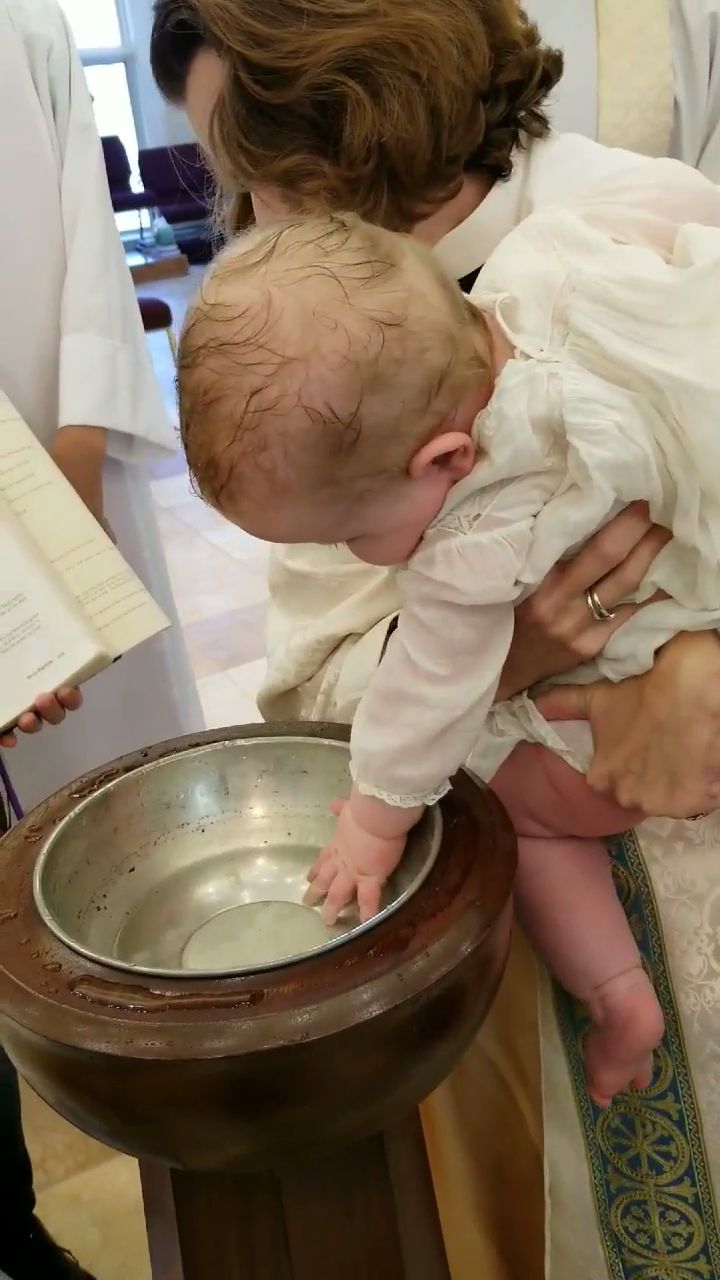
I was never really a baby person:  I did not do much babysitting as an adolescent; except for my little brother, there were not a lot of babies around me growing up; and I was just never all that jazzed about babies.  They seemed delicate, loud, messy, and mysterious.  I never had maternal urges in early adulthood, and my friends found constant amusement in any scenario where the question arose about who should take care of a baby in a pinch – obviously, the baby should not come my way.  But the time my husband and I were engaged, we were not even sure we wanted to have children.

Then in my early thirties, a switch flipped and I realized, in fact, I did want children.  I still was not sure about other babies, but I was excited about my own.  But then a funny thing happened.  I was ordained a deacon when I was about seven months pregnant.  What I did not realize was once you are ordained, you handle babies a lot – in baptisms, in walking moms through pregnancies and births, and even in the receiving line at church.  Once I went through babyhood with my own daughter, and she was no longer at that lovely, innocent stage, I realized my vocation included mothering a lot of other babies.  It has become one of my favorite parts of ministry because it is a glimpse into the wonder and mystery of creation and the grandeur of our God.

So, you can imagine, when this pandemic hit, among the myriad reasons my heart hurt was not being able to interact with babies.  Our church had babies born during the pandemic and it killed me to not be able to welcome the baby at the hospital and give the baby and family their first blessing.  My heart ached to see baby photos on social media and know the babies were growing up without the church surrounding them in love.  But mostly, my arms palpably felt the absence of holding babies, swaying to keep them calm, and smelling their unique baby scent.

As we slowly come out of this pandemic, I am keenly aware of the privilege of holding babies again.  At a recent wedding I tentatively asked a guest, who I did not know, if they would like me to hold their baby to give them a break.  When they quickly passed me the baby, my face lit up.  Last Sunday, when I finally got to hold the baby we had prayed for all during her time in the womb, I was elated.   And as we approach two more baptisms this weekend, I could not be more excited to make those special connections – even though they are not really babies anymore!  One of the blessings of the rise in vaccinations is enjoying the sacred honor of touch, of experiencing vulnerability and innocence, and of redefining the boundaries of family.  This week I give thanks for the abundance of love and joy.  May you all find your own encounters with the holy this week!

On Being Normal and Other Longings…

03 Thursday Jun 2021

Posted by jandrewsweckerly in reflection

≈ Leave a comment

Tags

church, community, connection, core, discipleship, God, goodness, happy, normal, pandemic, restrictions

Photo credit: https://avalonassnmgmt.com/2020/11/23/normal-is-overrated-for-now/

This Sunday, our parish is introducing two in-person worship services for the first time in fifteen months.  There is a lot about which to be excited!  We will be able to worship in our beloved Historic Chapel, which was not able to be used during most of the pandemic due to structural restrictions.  We will be able to sing congregationally, even if we have to keep our masks on for a little while longer.  We will be able to skip registration and check-in, we can sit wherever we want (you have no idea how hard such a simple thing has been for some of our parishioners!), and we can receive communion sitting right next to other people – some people we have loved and missed for a long time and some people who are completely new to us!  There are a few restrictions remaining, like masking, avoiding touch, and not being able to share a common cup, but we are okay with incremental change and so very happy for what we will get to experience this Sunday.

All that being said, you may have noticed I am being very careful to not say we are “going back to normal.”  Partially that is because we are not yet fully engaging in church as we once were.  And in some ways, there are permanent additions, such as livestreaming, that we never experienced pre-pandemic, that will be mainstays for us now. 

But the real reason I have avoided using the term “normal,” is because I don’t want us to go back to normal.  “Normal” in March 2020 meant a country deeply divided politically; neglecting, or downright oppressing, immigrants, the impoverished, women, and the LGBTQ community; and a deep unwillingness to talk about systemic racism.  Even our church was unwilling to fully embrace digital discipleship and evangelism.  I am not interested in returning to that kind of “normal.”

And so, although it may seem like semantics, we are introducing worship in a new way.  We are modeling all the goodness of things we once knew, and hopefully letting go of some of the things that needed to be let go.  We are holding fast to the things we loved during this pandemic – connecting to people who are far away, helping the less mobile feel a part of the community, and encouraging connection, even when the service times do not match your schedule.  And we are coming out on the other end as something different – with the same core values and passions – but expressed in a different way.  And for now, that, as God said in creation, is very good!

On Tiny Perfect Things…

26 Wednesday May 2021

Posted by jandrewsweckerly in reflection

≈ 1 Comment

Tags

blessing, Christ, God, grace, moment, pandemic, perfect, small, tiny

Photo credit: https://www.pinterest.com/pin/269441990176015475/

I just finished up a movie called The Map of Tiny Perfect Things.  The premise is much like Groundhog Day, where Bill Murray relives the same day over and over again.  But in this film, the two protagonists use their day of repetition to find tiny perfect things – an eagle grabbing a fish out of a lake, an elderly woman dancing about a game victory, a perfectly timed funny moment, a custodian sneaking on a piano, demonstrating his incredible hidden talent. 

These last weeks, I have been noticing a lot of tiny perfect things as we slowly make our way out of this pandemic:  a hug between vaccinated friends who haven’t seen, let alone touched, each other in over a year; watching kids play with bubbles, mastering not just blowing them, but popping them too; an outdoor wedding after a year of wondering if it would be possible with a long pandemic and the threat of unpredictable weather; being able to hold and bounce a baby after over a year of isolating newborns from all of us. 

We are approaching some of those tiny perfect things at our church as well.  Because we are loosening restrictions incrementally, we are not getting some magical “perfect” experience where everything “goes back to normal.”  But we are approaching a time where we can sit in pews that were off limits, where we can sing those songs and texts that have been spoken or been instrumental, where we can sit beside a friend whose physical presence we have missed, where we can receive the body and blood of Christ.  We still have to mask, and communion is being served in sealed plastic chalices – but there are tiny perfect things nonetheless. 

This week, I invite you to find your own tiny perfect things – tiny moments of grace.  Take a moment to watch children play in your neighborhood, see what wonders nature is up to, enjoy a bit of hearty laughter, or observe the way an older couple holds hands after what must be decades of marriage.  There is a lot of work to be done as Christ commissions us to go out in the world.  But what will sustain us in that work are the tiny perfect things that remind us of God’s blessing and grace that are there for us every day.  I cannot wait to hear what you find!

On Hugs and New Realities…

28 Wednesday Apr 2021

Posted by jandrewsweckerly in reflection

≈ Leave a comment

Tags

anxious, comfort, COVID, disciples, Eastertide, hugging, Jesus, Messiah, pandemic, party, relieved, slow, solidarity, tense, tentative, touch, trauma, vaccines

Photo credit: https://www.thetimes.co.uk/article/hugging-for-20-seconds-a-day-may-reduce-your-stress-2zck2d7h6

A few weeks ago, we met friends for an outdoor playdate with our kids and each other.  We had not seen them in a long time, and all of us had received one or both of our COVID shots.  Excited to see each other, there were lots of squeals and warm words of greeting.  Then my friend did something that shocked my system.  She came in close and said quietly, “I’m going to hug to you now.”  We were both masked and I have always been a “hug person.”  But when she pulled me in for a hug, I realized I have not hugged anyone outside of my immediate family for thirteen months.  I felt simultaneously anxious and comforted, tense and overwhelmingly relieved.  Feeling the conflicted reactions flooded me with a sadness for all that has been lost in this last year and a hopefulness for what is to come.

A year ago, I remember thinking that as soon as this pandemic were over, we were going to have a huge party at church.  As I think back to that sentiment now, I see how naïve it was.  I had no idea how long this would take.  I had no idea we would need vaccines, and when they finally became available, some people would refuse to take them.  I had no idea that even with adults fully eligible, children would not immediately be eligible for vaccinations.  I had no idea there would be no neat and tidy “end” to this pandemic.

And so, instead of a huge party, we are making tentative, slow steps toward a semblance of normalcy:  gathering for Eucharist, but socially distanced, masked and with only about 50 people; outdoor funerals with similar restrictions; thinking through modified baptisms and weddings that will not be the same, but at least can happen; carefully considering how we might sing together, following exceedingly stringent guidelines and regulations; and seeing faces we have missed all year, even if we cannot embrace. 

Watching all of this unfold in Eastertide somehow seems so appropriate.  We often think of Eastertide as the time we joyfully celebrate the resurrection of Jesus, a seven-weeklong party of sorts.  But that was not anything like what Eastertide was for the disciples.  There was fear, disbelief, confusion, denial, and hesitancy.  Even as Jesus offers his body as a proof text, the disciples are more often cowering in upper rooms than throwing parties in the streets.  Coming out of trauma – either of the death of your Messiah or out of a worldwide pandemic – is not instantaneous, straightforward, or clear.  This Eastertide, I have been especially grateful to journey through Eastertide with the disciples.  Somehow, their muddled, messy behavior has been a comfort and sign of solidarity during these strange times.  I hope you are finding similar companionship this Eastertide.  And if you want some modern disciples to walk with you, you are always welcome at Hickory Neck!

Sermon – Mark 16.1-8, ED, YB, April 4, 2021

28 Wednesday Apr 2021

Posted by jandrewsweckerly in Sermons

≈ Leave a comment

Tags

alleluia, brief, Easter, God, Good News, Jesus, journey, Mark, pandemic, promise, resurrection, Sermon, spectacular, story, tension

You know how when a group of friends go out for an adventure, and when they come back and try to share the story with you, but you can never quite get “THE story”?  Someone will remember the night happening one way, someone else will add another detail, another person will contradict or question that detail or embellish the story.  You get the gist of what happened, but the exact details may be a bit fuzzy.  

 On Easter Sunday, that is kind of what happens to us.  Each Gospeller – Matthew, Mark, Luke, and John – tells “THE Easter story” a little differently – different characters doing different things.  We know the basics:  the tomb is empty and Jesus is risen from the dead.  But the details make the story different and fresh every year. 

This year, we get Mark’s version.  In that group of friends trying to tell the same story, Mark would be the one known for brevity.  His version would be something like this, “The women went to anoint Jesus in the tomb, like we always do with the dead.  But when they got there, the big rock was already moved, and Jesus was gone.  Some guy was there and said Jesus has been raised.  It was terrifying.”  There are no embellishments to the story – no running around, no pronouncements of the Good News, no disciples doubting women, no victorious preaching.  Just a stunning revelation and news so shocking it leaves people afraid. 

This may not be “THE Easter Story,” as you remember.  But Mark’s version of the Easter story may be exactly the Easter story we need this year.  I do not know about you, but Easter is usually this spectacular day for me.  We journey through Lent, reflecting on our relationship with God.  We trudge through the drama and emotional labor of Holy Week.  Then, on Easter, the alleluias feel well deserved and the joy is hard to contain.  But this Easter, I am not totally there.  This pandemic is still hanging over our heads, our worship is wonderful but not all we know Easter worship to be, and our lives are still in a holding pattern as we work toward herd immunity and even hear talk of cases spiking.  I know this is a day for rejoicing, but there is still so much grief all around us, I am having a hard time fully embracing the alleluias this year.

That emotional tension is why I love Mark’s gospel this year.  The women at the tomb are coming out of a deep grief too.  The only reason they are at the tomb this morning is to do the work grieving people do – tend to the body, handle the practical details, do the things that begin the journey of healing.  So, although the news from the man in white is incredible, the news is unsettling, confusing, and a bit scary.  The women are going to need time to process this mind-blowingly good news before they can rejoice, before they give thanks to God, before they can muster up the nerve to say the good news aloud. 

What I hear in Mark’s gospel are two words of promise for us today.  First, no matter how we receive the Good News of Jesus Christ’s resurrection and triumph over death, the good news is there for us and for all anyway.  Our reaction to the news does not negate the goodness or the radical love and redemption of the resurrection.  Second, the man in white says something seemingly inconsequential that means the world.  He says, “…go, tell his disciples and Peter that he is going ahead of you to Galilee; there you will see him, just as he told you.”  If you remember, Peter denied Christ when Christ needed him most.  But today, the resurrection promise is specific:  go tell his disciples AND PETER…and you will see him.”  No matter if we have been faithful, no matter if we have actively denied Jesus, no matter if we cannot muster a joyful response to the resurrection, we will see Jesus.  The Good News of Jesus is not just for the faithful – the good news of Jesus’ resurrection is for the broken, the sinful, the despondent, and the fearful alike.  And on a day when you may or may not be feeling our alleluias 100%, the Good News is God is with you anyway, loving you and promising to carry you until you are 100%.  Thanks be to God!  Alleluia. 

Sermon – Job 14.1-14, HS, YB, April 3, 2021

28 Wednesday Apr 2021

Posted by jandrewsweckerly in Sermons

≈ Leave a comment

Tags

Christian, church, community, disciples, drama, faith, Holy Saturday, hope, Jesus, Job, liturgy, pandemic, preparation, quiet, redemption, Savior, Sermon, silence, sorrow

Up until last year, I had not remembered that there was a liturgy in our Prayer Book for Holy Saturday.  I had always thought it was Maundy Thursday, Good Friday, Easter Vigil on Saturday night (which is basically just Easter), and then Easter Sunday.  But when the pandemic hit last year, we realized doing a virtual Easter Vigil just would not work – there is so much reading, singing, doing things by candlelight, and the drama of being huddled together that we had to let the Liturgy wait until we could gather again.  So instead, we turned to this tiny liturgy, whose entire content is listed on one page of the Book of Prayer Book.

Still in a pandemic a year later, I found myself curious about this liturgy we are entering once again.  The truth is, the earliest accounts of Holy Week observances had no liturgies for Holy Saturday, with the exception of private use of the daily office.[i]  Instead, this day has simply been known as the “quietest day of the Christian year.”[ii]  That the church has not always gathered on Holy Saturday and that Christians might see this day as a day of quiet makes a lot of sense.  The Church says so much this week – from our waving of palms last Sunday, to our gathering around the upper room table to wash feet and share bread, to devastating betrayals of Jesus, to the vivid walk toward the cross, to the finality of the closed tomb.  We almost need a day of quiet to let the drama sink in and wrap our heads around what this week means.

But I suspect if your life is anything like mine or most Americans, we are not sitting quietly in our homes from 3:00 pm on Friday until Easter morning.  Instead, we are filling the time with preparations – tending to all the things we did not do while we were attending church this week:  dying eggs, entertaining children, stuffing Easter baskets, prepping Easter day meals, cleaning the house, or just having fun.  There is nothing inherently wrong about those things, but this year, of all years, I am grateful for a Holy Saturday liturgy.  With this last year of suffering through a pandemic and reflecting on our broken humanity’s inability to eliminate racism or mend civil discourse, even with the rise of vaccines, I find our country is in a Holy Saturday kind of time.  We have been through a tumultuous experience and are not yet healed. 

That is why I like having Job as a companion today.  Job’s words are stark.  As Job sits in the ashes of his sorrows, having lost his children, his livelihood, and his support system, he describes the brutality of life.  He talks about how trees have hope – even when cut down, they can sprout again, and new life can be born out of death.  But not so with humans, he argues.  No, when their bodies lay in the ground, there is nothing but death.  Job captures the essence of this day.  There is a similar finality at the door of Jesus’ tomb this day.  All the hopes and dreams, all the joys and blessings, all the promises of new life are sealed away in a tomb.  And after such a violent death and the threat for those who followed Jesus, there is no wonder why the Church has considered this a quiet day.  Unlike the quiet waiting of Advent, when the church is brimming with expectation and bustling around in preparation for Christ’s birth, today is a day of silence devoid of restorative peacefulness.  As one scholar says, “The waiting of Advent is like having warm bread in the oven.  By contrast, the air of Holy Saturday smells more like stale smoke, as though something essential was burned the day before.”[iii]  As our lives are not yet pandemic free, and as threats of spikes in cases emerge, we know that kind of waiting all too well.

And yet, in the very last verse of today’s reading, the despondent Job says something totally counter to everything else he has said.  “If mortals die, will they live again?” Job asks.  For someone who has boldly proclaimed the finality of human death, his question is a question that only a person of faith can ask – a question that reveals the tiniest bit of hope still left in Job.  Job communicates in this question a truth we people of faith hold dear:  no matter how bad the suffering, no matter how prevalent the experience of dread and doom, no matter how deep the failures of humanity seem to run, there is always hope.  The disciples and community surrounding Jesus Christ do not know that hope yet.  But as followers of Christ 2000 years later, we now stake our entire identity on the risen savior. 

So yes, receive the gift of stale smoke this day.  Sit in ashes with Job and mourn all in your life that feels dead.  Take time in this busyness of life for some uneasy silence.  Name all those who have been lost due to disease and violence.  But keep asking the questions.  Hold on to the hope, however infinitesimally small that God can indeed redeem us – us as individuals, us as country, us as Church.  Holding the two in tension is difficult – we want to rush to Easter and forget all that has happened.  But letting the power of all that has happened speak to us today will allow us to know the astounding power of resurrection much more deeply tomorrow.  Job, Jesus, and this faith community here will pull up a chair and sit with you by the ashes until we can reap with tears of joy tomorrow.  Amen.


[i] William Joseph Danaher, Jr., “Theological Perspective,” Feasting on the Word, Yr. B, Vol. 2 (Louisville:  Westminster John Knox Press, 2008), 310.

[ii] Christina Braudaway-Bauman, “Pastoral Perspective,” Feasting on the Word, Yr. B, Vol. 2 (Louisville:  Westminster John Knox Press, 2008), 312.

[iii] Braudaway-Bauman, 312

Sermon – John 13:1-17, 31b-35, MT, YB, April 1, 2021

28 Wednesday Apr 2021

Posted by jandrewsweckerly in Sermons

≈ Leave a comment

Tags

absence, church, digital, dignity, evensong, experts, grief, Holy Week, Jesus, love, Maundy Thursday, pandemic, serve, service, tension

One of the things I have learned over the years is the mixed blessing of offering pastoral care from personal experience.  The mother who lost an adult child both feels gratified to help someone else going through the same situation and angry that she is now an expert in grieving the loss of an adult child.  The man who has been through addiction is honored to help someone else through addition – and yet wishes he were not so personally knowledgeable.  The divorcee talking to a dear friend whose marriage has recently crumbled shares, “Welcome to the club you never wanted to belong to.”

As we started thinking about how to honor Maundy Thursday in a pandemic when many of the things we would normally do on this night are forbidden, we thought the same:  we already know how to do this.  We learned last year that when we cannot experience the intimacy of footwashing, the grief of the last holy meal before Easter, the dimming of the lights, the stripping of the altar, and walking out of this space in silence, turning to a totally different liturgy can create another kind of comfort.  We turn to Evensong in the hopes that another ancient tradition, one the Church celebrates almost everyday in the Cathedrals, Minsters, and colleges of the Mother Church in England, will ease the mourning of yet another loss during this time of pandemic.

But being experts in how to cope in a pandemic – either liturgically, emotionally, or spiritually – does not make the grief any easier.  We still feel the absence of what has been – almost as much as we feel the pending absence of Jesus when we will lay him in a tomb tomorrow.  Having figured out how connect with our community digitally, enjoying seeing people’s names pop up on Facebook, and loving hearing the sounds of our Choral Scholars coming through our TVs and laptops on YouTube, certainly has sufficed in these days – and in fact has brought many people into Hickory Neck who had never experienced Hickory Neck before.  But all of that does not negate our grief that a year later we are still in this liminal time of “not yet.”

So, what do we do with this internal tension that we are not yet where we are going, and certainly not fully who we have been?  I like to look at Jesus in our gospel lesson tonight.  Jesus knew what was coming on this night too.  He knew Judas, his beloved companion on his pilgrimage, was going to betray him.  He knew great tragedy was coming, abandonment by the other disciples would happen, and humiliation, pain, and death were inevitable.  Sitting in the upper room, in the tension of no longer being just a rabbi and not yet the risen Messiah, Jesus could have easily wallowed in grief.  Instead, in that overcrowded, tense upper room, Jesus gets up, takes off his outer robe, and ties a towel around his waist.  In the face of pending doom and tremendous transformation, Jesus bends down, and washes feet.  When the world is in chaos, Jesus does the work of humble service, of respecting the dignity of others, of an everyday deed of loving his neighbor.

We cannot possibly know when church will begin to feel familiar and comfortable.  We do not know which changes we have experienced in the last year will become permanent.  We cannot know the lasting impact of this pandemic on the fabric of our lives.  But we do know what Jesus says tonight.  In the face of the unknown, Jesus says to do two things:  to serve others as he served his disciples and to love one another.  Jesus makes everything quite simple tonight.  In the face of disorienting new realities Jesus says: serve and love. That is our invitation in this most sacred week – when our grief and frustration are sometimes paralyzing, engaging in the work of serving and loving are the actions that will give us strength for the days and weeks ahead.  Amen.

On Vaccines and the Cross…

24 Wednesday Mar 2021

Posted by jandrewsweckerly in reflection

≈ Leave a comment

Tags

Coronavirus, cross, dignity, freedom, Jesus, joy, love, neighbor, pandemic, respect, sacrifice, vaccine

Last week I got my first vaccine shot.  Although I am relatively young and healthy, our commonwealth updated the 1B category to include clergy.  So, when my email came to setup an appointment, I was giddy with excitement.  A flurry of joyful texts went out to friends, I had a permanent smile for the day, and there might have been some dancing.  The day of the vaccine was not much different.  Long lines usually bother me, but I have never smiled so much while just waiting.  Had we not still been in a pandemic, I might have hugged every volunteer and staffer who processed me through the various stages.  And though I have had hundreds of shots in my lifetime, I have never so eagerly proffered my arm for a shot. 

But it was not until I got in my car that I lost it.  Tears burst out of me as the emotions from a year of pandemic spilled out.  Not until that moment did I realize how much I had been holding in – trying to be strong for my family, my church, and even myself.  I still have over a month to go before I get my second shot and work my way through the waiting period, but that one little prick of a needle was the first real sign of hope for me.  I may finally get to see my family, after a year and a half of their absence.  I may finally be able to offer hospitality in my home to others without a sense of panic about safety.  I may finally feel a sense of freedom that has been absent for so long and whose value I never fully appreciated.  The tears that were streaming were the release of a year’s worth of weight on my shoulders.

Of course, even with the overwhelming joy of that day, I know our work is still not yet done.  But somehow the gift of that vaccine shifted the weight of that continued work.  Now my mask-wearing and social distancing is not so much out of fear or self-preservation.  Now my mask-wearing and social distancing can be a witness of Christ’s love for others.  From the beginning, I have said our safe practices were an act of loving our neighbor as ourselves and respecting the dignity of every human being.  But now those acts will not just be an added bonus to self-protection – they will be an act of agency, of choosing to care for others when the selfish thing to do might be to value newly regained freedom over all else. 

As we prepare for Holy Week, I am aware of the symbol we will be turning toward next week.  We will be walking toward the cross until the day of resurrection on Easter.  We will watch, and pray, and sing, and grieve as our Lord and Savior Jesus Christ witnesses the ultimate form of sacrificial love.  In this season of COVID, the cross is our invitation to love like Jesus taught us.  I look forward to making that walk with you this year in new and profound ways.

Photo credit: https://signsofthetimes.org.au/2020/04/the-power-of-the-cross/

Sermon – Jeremiah 31.31-34, L5, YB, March 21, 2021

24 Wednesday Mar 2021

Posted by jandrewsweckerly in Sermons

≈ Leave a comment

Tags

abundant, comfort, covenant, exile, faith, God, hope, Jeremiah, Jesus, Lent, love, lovingkindness, pandemic, ruin, Sermon

I do not know about you, but I entered Lent this year already done.  We talked about this reality five weeks ago, back on Ash Wednesday, when I told you that it was okay if you did not give up something this Lent – because we have already given up so much in the last year.  We have already fasted what feels like twenty Lents during this pandemic.  And then this week happened.  We started out with the words of the Vatican, declaring that although our LGBTQ brothers and sisters were still to be loved and welcomed in Church, their “sinfulness” would not be blessed within the covenant of marriage by the Roman Catholic Church.  I cannot tell you the pain and suffering those words created this week for so many who live in faithful, loving relationships and marriages.  Then, just a few days ago, a man in Atlanta murdered people of Asian descent, sparking off conversations about the rise of hate crimes against Asian Americans since this pandemic began.  Our own Sacred Ground circle, the group studying the institution of racism in our country – not just towards blacks, but towards indigenous Americans, Latinos, and Asians – just finished its ten weeks of work; and yet within the same week we are talking about racism yet again.  And then this week, as administered vaccines slowly rise in James City County, I see people becoming lax about masking and social distancing, some folks in public spaces barely covering their faces.  Even the test positivity rate – the one whose decrease has allowed us to enact regathering plans – is creeping slowly toward the numbers that will shut us back down again. 

That is why I found myself gravitating to Jeremiah this week.  Part of the attraction is the good news of the text, but a larger part of my attraction is empathizing with the Israelites.  Jeremiah writes in a time of desperation for the people of God. The Babylonians have razed the temple and carried King Zedekiah off in chains.  Effectively, the Babylonians have “destroyed the twin symbols of God’s covenantal fidelity.”[i]  Sometimes we talk about the exile so much that I think we forget the heart-wrenching experience of exile.  Being taken from homes and forced to live in a foreign land is certainly awful enough.  But the things that were taken – the land of promise, the temple for God’s dwelling, the king offered for comfort to God’s people – are all taken, leaving not just lives in ruin, but faith in question. 

But today, in the midst of the physical, emotional, and spiritual devastation, Jeremiah says God will make a new covenant.  God knows the people cannot stop breaking the old covenant, and so God promises to “forgive their iniquity and remember their sin no more.”  Instead of making the people responsible for the maintenance of the covenant, God goes a step further and writes the law in their hearts, embodies God’s way within the people.  The words of Jeremiah in the section called “the Book of Comfort,”[ii] and this new covenant by God, show a God whose abundance knows no limits.  God offers this new covenant to a people who surely do not deserve another covenant.  God has offered prophets and sages, has called the people to repentance, has threatened and cajoled, and yet still the people cannot keep the basic tenants of the covenant established in those ten commandments.  But instead of abandoning the people to exile, God offers reconciliation and restoration yet again.  And because God knows we have no power in ourselves to help ourselves, God basically says, “Here.  Let me help you.  Let me write these laws in your hearts so that you do not have to achieve your way into favor with me, but you will simply live faithfully, living the covenant with your bodies and minds.”  And when even that does not seem to work, God sends God’s only son.  God never gives up on us or our relationship with God.  Even all these years after Christ’s resurrection, God is still finding new ways to make our covenant work.  

That is where I find hope this week.  Despite how broken we may feel because of this pandemic, despite how our nation seems incapable of not harming one another due to the color of our skin, despite the ways we seek to limit God’s love and abundance, God is relentless with God’s lovingkindness.  In Jeremiah’s text, when the Israelites have hit rock bottom, God turns not to vengeance or even a notion of just desserts.  God picks up the covenant of love, not relying on our hard work to be faithful, but declaring how God will simply put God’s law within us, will write God’s law of love on our hearts, will be our God and we will be God’s people.  In essence, nothing we can do will drive God from us.  And that, my friends, is good news indeed.  God sees us in all our fullness – light and shadow alike – and loves us anyway.  In this continued time of strain and strife, in this long night of COVID, God gives us good news.  As one scholar affirms, “God will bring newness out of destruction.  God will bring hope where there is no hope.  God will bring life out of death.  God will make a way where there is no way.”[iii]  Thanks be to God!


[i] Richard Floyd, “Pastoral Perspective,” Feasting on the Word, Year B, Vol. 2 (Louisville:  Westminster John Knox Press, 2008), 122.

[ii] Jon L. Berquist, “Exegetical Perspective,” Feasting on the Word, Year B, Vol. 2 (Louisville:  Westminster John Knox Press, 2008), 123.

[iii] Floyd, 124.

← Older posts
Newer posts →

Recent Posts

  • On the Myth and Magic of Advent…
  • On Risking Failure and Facing Fear…
  • Sermon – Luke 23.33-43, P29, YC, November 23, 2025
  • On Inhabiting Gratitude…
  • Sermon – Luke 20.27-38, P27, YC, November 9, 2025

Archives

  • December 2025
  • November 2025
  • October 2025
  • September 2025
  • August 2025
  • July 2025
  • June 2025
  • March 2025
  • February 2025
  • December 2024
  • November 2024
  • October 2024
  • September 2024
  • August 2024
  • July 2024
  • June 2024
  • May 2024
  • March 2024
  • February 2024
  • January 2024
  • December 2023
  • November 2023
  • October 2023
  • September 2023
  • August 2023
  • July 2023
  • June 2023
  • May 2023
  • March 2023
  • February 2023
  • January 2023
  • December 2022
  • November 2022
  • October 2022
  • June 2022
  • May 2022
  • January 2022
  • December 2021
  • November 2021
  • October 2021
  • September 2021
  • August 2021
  • June 2021
  • May 2021
  • April 2021
  • March 2021
  • February 2021
  • January 2021
  • December 2020
  • November 2020
  • October 2020
  • September 2020
  • August 2020
  • July 2020
  • June 2020
  • May 2020
  • April 2020
  • March 2020
  • February 2020
  • January 2020
  • December 2019
  • November 2019
  • October 2019
  • September 2019
  • August 2019
  • July 2019
  • June 2019
  • May 2019
  • April 2019
  • March 2019
  • February 2019
  • January 2019
  • December 2018
  • November 2018
  • October 2018
  • September 2018
  • August 2018
  • July 2018
  • June 2018
  • May 2018
  • April 2018
  • March 2018
  • February 2018
  • January 2018
  • December 2017
  • November 2017
  • October 2017
  • September 2017
  • August 2017
  • July 2017
  • June 2017
  • May 2017
  • April 2017
  • March 2017
  • February 2017
  • January 2017
  • December 2016
  • November 2016
  • October 2016
  • September 2016
  • August 2016
  • July 2016
  • June 2016
  • May 2016
  • April 2016
  • March 2016
  • February 2016
  • January 2016
  • December 2015
  • November 2015
  • October 2015
  • September 2015
  • August 2015
  • July 2015
  • June 2015
  • May 2015
  • April 2015
  • March 2015
  • February 2015
  • January 2015
  • December 2014
  • November 2014
  • October 2014
  • September 2014
  • August 2014
  • July 2014
  • June 2014
  • April 2014
  • March 2014
  • February 2014
  • January 2014
  • December 2013
  • November 2013
  • October 2013
  • September 2013
  • August 2013
  • July 2013
  • June 2013
  • May 2013
  • April 2013
  • March 2013
  • February 2013
  • January 2013
  • December 2012
  • November 2012
  • October 2012
  • September 2012

Categories

  • reflection
  • Sermons
  • Uncategorized

Meta

  • Create account
  • Log in
  • Entries feed
  • Comments feed
  • WordPress.com

Blog at WordPress.com.

  • Subscribe Subscribed
    • Seeking and Serving
    • Join 394 other subscribers
    • Already have a WordPress.com account? Log in now.
    • Seeking and Serving
    • Subscribe Subscribed
    • Sign up
    • Log in
    • Report this content
    • View site in Reader
    • Manage subscriptions
    • Collapse this bar
 

Loading Comments...