• About

Seeking and Serving

~ seek and serve Christ in all persons

Seeking and Serving

Tag Archives: people

On Taking Church Outside…

01 Wednesday Mar 2023

Posted by jandrewsweckerly in reflection

≈ Leave a comment

Tags

Ash Wednesday, Ashes to Go, church, God, Lent, liturgy, outside, people, ritual, sacred, story

Photo credit: https://www.cincinnati.com/story/news/2023/02/21/ash-wednesday-2023-why-do-people-wear-ashes-everything-to-know-lent/69927477007/

Once upon a time, I was pretty critical of the concept of “Ashes to Go.”  I worried that by encouraging people to get quick ashes, they would miss the fullness of the liturgy, cheapening the power and importance of what we do on Ash Wednesday.  How could a three minute interaction hold the same power as an hour-long ritual?

This year, I am grateful once again that someone convinced me years ago to try Ashes to Go anyway.  As our church is located in a more suburban area, we do a drive-through ashes experience.  The reasons people stop vary widely.  For some, they do not like to drive at night, so a daytime option fits their schedule.  For others, they have young children and a school night is just too hard to rally for the family.  For others, the reasons are not totally clear, but stories are shared:  about how times are hard for their families, how they haven’t been to church in five years, how they heard about it in the neighborhood and wanted to check it out.  And for others, words fail them, but you see in their eyes how powerful the brief, intimate moment with the sacred means a tremendous amount.

If there are times I wonder if we really need to offer Ashes to Go, every year reminds me of the absolute necessity of meeting people where they are.  In fact, I have been wondering if there are not other ways we can step out of the church walls and meet people where they are.  Surely if something as grim as reminding people they are dust can compel people to drive by for ashes, there must be other ways we can take “liturgy” to the streets.  Ever since the pandemic happened and our parish embraced livestreaming, I have become increasingly aware of the church’s ability to reach people differently – to minister to and offer sacred encounters in all sorts of ways.

As we journey deeper into Lent this year, I invite you to consider where else in your life you can take church with you.  Maybe you can slow down just a bit and listen to the stories of those around you.  Maybe you can reach out to someone who is hurting today.  Or maybe you can share a bit of your own story and how your journey with God is making a difference.  I look forward to hearing how God is showing up outside the church walls this week!

Sermon – Acts 2.1-21, PT, YC, June 5, 2022

05 Wednesday Oct 2022

Posted by jandrewsweckerly in Sermons

≈ Leave a comment

Tags

hearing, Holy Spirit, languages, light, listen, love, noise, Pentecost, people, Sermon, speak

At Hickory Neck, one of our core values is creativity.  We have an openness to experimentation that has served us well throughout this pandemic.  You might have noticed our Acts reading today was a little different – allowing us to sample the idea of what it might have been like to hear the chorus of languages on that famous Pentecost Day.  In the past, we experimented a little differently – with all the languages at one time, so that a cacophony of noise filled this space.  I LOVED the experience every year.  However, some found the cacophony to be more an experience of noise as opposed to joyful noise.  So, we experimented again this year with another way to stimulate our imagination about this significant day in the life of the Church.

As I have been thinking about our experimentation with hearing today, I stumbled on the work of theologian Willie James Jennings.  Jennings argues about Pentecost, “…we must see more than a miracle of hearing.  …The miracles are not merely in ears.  They are also in mouths and in bodies.”[i]  Jennings argues that just as important as everyone hearing in their own tongues at Pentecost was the miracle of speaking in tongues.  Now I do not know how to recreate our Acts readings by randomly choosing five of you to spontaneously speak another language.  We’ll have to experiment with that next year.  But I am intrigued by why Jennings thinks the speaking is just as important as the hearing.  Jennings argues that when you can speak in the language of another group of people, you can “speak a people.”  He says, “God speaks people, fluently.  And God, with all the urgency that is with the Holy Spirit, wants the disciples of his only begotten Son to speak people fluently too.  This is the beginning of a revolution that the Spirit performs.”[ii]

During a year of volunteer AmeriCorps service, you learn to live a little differently.  I stayed in a campus ministry building on campus for free in exchange for cleaning and locking up the building every night.  I lived on a shoestring budget and managed to get by with support.  One day, I was sitting on the loading dock of the Food Bank where I was working next to older teenager, Jayden.  We had just done a lot of work with fresh produce.  He lived in a group home that was a frequent shopper at the Food Bank.  Together, we sat on the dock, sweaty and exhausted.  As our conversation meandered, we began to talk about our homes – him in the group home and me in the home that was also a job.  When I explained my arrangement to him (which I had admittedly resented sometimes – I mean who likes cleaning toilets and pest control?), he looked dreamily out into the sky in front of us and sighed, “I hope I can find a place like that someday.”  Now, Jayden did not speak a foreign language.  The Holy Spirit did not make another language burst out of my mouth.  But Jayden and I were from very different worlds – me a recent college graduate and him unsure of his fate after he aged out of the group home.  But sitting on that loading dock, the Holy Spirit allowed me to “speak a people” – to break down the walls of language so that we could sit as equals and ponder the wonder of God and express our deepest desires with vulnerability. 

Pentecost is an invitation for the Church to learn to speak a people.  Now that does not mean you need to go sign up for foreign language class – though that certainly would not hurt.  And that does not mean you need to go volunteer for a year – though that would not hurt either.  But what speaking a people means is finding ways to meet people where they are, hear their stories in their own “language,” and share the love of God that you have received so abundantly.  Speaking a people may also mean that you do not use your mouth as much as your body to show forth love and light. 

And just in case you are hearing this invitation today and thinking, “That sounds like the work preachers should be doing, or evangelicals are better at doing,” remember what happened at that festival of Pentecost.  The text tells us, “All of them were filled with the Holy Spirit and began to speak in other languages, as the Spirit gave them ability.”  As scholar Karoline Lewis reminds us, the text says “all” of them.  Not some of them.  All of them were filled with the Holy Spirit.  Just like John the Baptist was filled with the Holy Spirit, and Mary was filled with the Spirit, and Elizabeth, and Zechariah, and Simeon.  All of them were filled.[iii]  And just in case you find yourself saying, “But those were famous people, a long, long time ago.  How can I do that?”  The answer is right there in verse four.  “All of them were filled with the Holy Spirit and began to speak in other languages, as the Spirit gave them ability.”  The Spirit will give you the ability to speak a people.  The Spirit will give you the ability to listen deeply and speak meaningfully.  The Spirit will make a way for those powerful, vulnerable moments of truth and love.  So, when you hear that dismissal today, “Let us go forth into the world, rejoicing in the power of the Spirit, alleluia, alleluia,” your answer can be an emphatic, “Thanks be to God, alleluia, alleluia!”  Amen.


[i] Willie James Jennings, Acts, Belief:  A Theological Commentary on the Bible (Louisville:  Westminster John Knox Press, 2017), 29.

[ii] Jennings, 30.

[iii] Karoline Lewis, Sermon Brainwave:  #847: Day of Pentecost (C) – June 5, 2022, May 29, 2022, as found at https://www.workingpreacher.org/podcasts/847-day-of-pentecost-c-june-5-2022 on June 2, 2022.

On Stories, Remembering, and Healing…

11 Wednesday Sep 2019

Posted by jandrewsweckerly in Uncategorized

≈ Leave a comment

Tags

darkness, dignity, God, heal, honor, human being, intimacy, kindness, light, love, people, power, pryaer, reclaim, remember, respect, September 11, share, story

Story Corps

Photo credit:  https://storycorps.org/discover/september-11th/

Today marks the eighteenth anniversary of September 11, 2001 – a fateful day in the United States.  Even eighteen years later, this is a day where we as a country remember – remember where we were that day, remember the people who were touched by tragedy that day, remember how a single day could transform a nation and the world.  This day hangs heavy in our consciousness each year, the weight never quite lifting even with the passage of time.

I think part of why this day is so heavy for us as a people is because of the people this day touched.  Certainly, we could look at the death toll, and recall the names of the almost 3,000 people who died that day, most without the opportunity to say goodbye to their loved ones.  But September 11’s reach went beyond those who died.  The ripple of that day is mind-blowing:  those who were physically injured, those who were bereaved, those who were supposed to be in those buildings and somehow life’s circumstances kept them away, those whose health continues to be poor from living nearby or helping with the cleanup efforts, those who walked for hours fleeing danger, those who made hard decisions that day – some leading to life and some leading to death.

Four years after that fateful day, NPR’s StoryCorps launched their September 11th Initiative.  A program built around having people tell their stories, StoryCorps launched an effort to record the stories of that specific day – of the man who traded shifts that day and whose mentor died because he had volunteered to take his shift; of the man who consoled his wailing two-year old and had to wait four months before his wife’s body was finally identified; to the woman who sifted through bones and debris in a hanger months later, trying to help people find closure; to the airline employee who checked in the terrorists that day at the gate; the father who lost both sons, one a firefighter and one a police officer, in the line of duty that day.  Every story, every single one is gut-wrenching and tear-evoking.  And every one gives a tiny glimpse into the magnitude of the ripple effect this one day had on all of us.

This day, I invite you to honor September 11 with stories.  Talk to your neighbors, friends, and strangers about their experiences.  Listen to stories like the ones on StoryCorps.  Read whatever stories you can find.  When we engage in one another’s stories, we engage in honoring the dignity of every human being, something we pledge to do in our baptismal covenant.  We allow the depth of this day to do something to us.  And somewhere in that intimacy of story, we begin to hear an invitation – an invitation to honor life today.  Whether it is an act of kindness (maybe even the kindness of simply asking someone to tell their story), or whether it is a time of prayer to honor all that has been, or whether it is a commitment to reclaiming love so that hatred can never win in such a powerful way as it did that day.  May our stories help us connect to the cosmic story of a God who loves us and gives us light in the darkness.

On Finding God in Community…

22 Wednesday May 2019

Posted by jandrewsweckerly in Uncategorized

≈ Leave a comment

Tags

bubble, building, church, community, conversation, encounter, God, home, meet, moments, people, property

724_meeting-new-people

Photo credit:  https://www.spottie.com/blog/meeting-new-people-30

One of the quirks of being a priest is that my work is often outside of the church.  Whether I am meeting a newcomer for coffee, catching up with a parishioner over lunch, or visiting someone in the hospital, I am more often out in the community than sitting in the church office.  The challenge with that mode of operating is that I sometimes find myself with an extra hour here or there between commitments.  So I often take work with me – catching up on emails, reading for a class or sermon, or doing some writing.

Lately, that pattern has meant having all kinds of interesting encounters.  The other day I met someone who was a former parishioner of my church while buying a cup of coffee.  While responding to emails, someone who recognized me from barre class introduced herself to me, realizing we had never formally introduced ourselves, but that she had seen me around town several times.  While doing some writing while waiting for routine maintenance in the local car dealership, one of the salesmen came over to say he was one of my neighbors and we had not yet met.  Sometimes you even have to leave your home to meet those closest to your home!

Research tells us in order to grow your church community, you need to get off the property.  If you want to get to know the people who are not joining you every Sunday, you need to go where they are on the other days of the week.  Of course, just drinking coffee does not mean you will magically meet people – you do actually have to engage others in conversation – even if it is about car brand loyalty, or your favorite new drink on the coffee menu.  Getting off the property allows us to meet people where they are – and to see God in all the wonderful, myriad places God likes to hang out.  Though there are other ways to do that in reverse – holding a Fiber Festival, welcoming a school to your property – you really have to do both to have those God-moments.

All that being said, I confess, I sometimes have an easier job of talking about God.  The collar is dead giveaway.  But my invitation to you is the same.  Take a moment to get out of your bubble.  Go to an event to which you wouldn’t normally go, linger in a coffee shop you do not regularly frequent, or get even more bold, and take your committee meeting off campus and go public.  If you need some Hickory Neck gear to break the ice, I can help you out.  But my guess is you will find those God moments just by being you.  I cannot wait to hear about who you meet and what you learn!

On Community, Connection, and Blessing…

16 Thursday May 2019

Posted by jandrewsweckerly in Uncategorized

≈ Leave a comment

Tags

blessing, community, connect, development, God, joy, kind, knowledge, lead, leader, love, people, small, Williamsburg

community-building-for-entrepreneurs

Photo credit:  https://innovationlabs.harvard.edu/events/community-building-entrepreneurs/

One of the things people say about Williamsburg is that it is a small town in the truest sense.  You cannot go too far without running into someone you know – or someone who knows you through someone else.  I find that reality to be true at church all the time.  Someone will come visit the church looking for a church home, and lo and behold, they realize they work (or worked) with a parishioner without realizing they attended Hickory Neck.  Or I will have coffee with a newcomer, and we realize we have friends and acquaintances in common.  In Williamsburg, there really is about two, if not one, degree of separation between most people.

In some ways, that is very good for a pastor.  One of the many things we learn about in seminary is how important it is for clergy to get out in the community, to get to know the people surrounding them – not with the intention of evangelism; more with the intention of being a leader who can authentically lead within their community.  That was one of the major reasons I applied to be in the LEAD Greater Williamsburg program.  The program is a community immersion program for emerging and existing leaders, who also do a community service project for the wider community.  As I approach graduation this week, I am especially grateful for this aspect of the program.

What LEAD taught me affirmed what I learned in seminary – it is so important to understand, know, and appreciate the community within which you do ministry.  As much as I thought I had gotten to know many people in Williamsburg, the monthly classes and my 28 fellow classmates helped me see that there are so many people, companies, and agencies that I did not know.  Maybe some people are okay with that lack of knowledge, but for me, working on that knowledge gap has not only helped me understand my own ministry better, it has helped me fall in love with the community even more.  I am overwhelmed by the diverse, myriad ways that greater Williamsburg residents work to make our community better.  This community is filled with incredible, inspirational people, and I surmise I have only scratched the surface.

Today, my reflection is two-fold.  One, I am filled with gratitude for the amazing opportunity of being in the LEAD program this past year.  Thanks to my classmates for an incredible year of making WMBGkind!!  The blessings abound – from knowledge, to leadership development, to friendships, to joy!  But two, I find myself wanting to connect more, and I would like to invite you to do the same.  Whether you are here in the Greater Williamsburg area, or even in your own hometown, think about someone you have wondered about or admired from afar, and ask them to coffee.  Get to know the people of your community – really know them:  their work, their home life, their fears, and their joys.  My guess is that the more you expand your connection to people in your community, the more you will see ways in which God is inviting you to bring blessing to your community!

On God and Spring…

20 Wednesday Mar 2019

Posted by jandrewsweckerly in Uncategorized

≈ Leave a comment

Tags

beauty, bloom, blossom, color, fresh, glory, God, joy, love, people, spring, surprise, trees, wonder

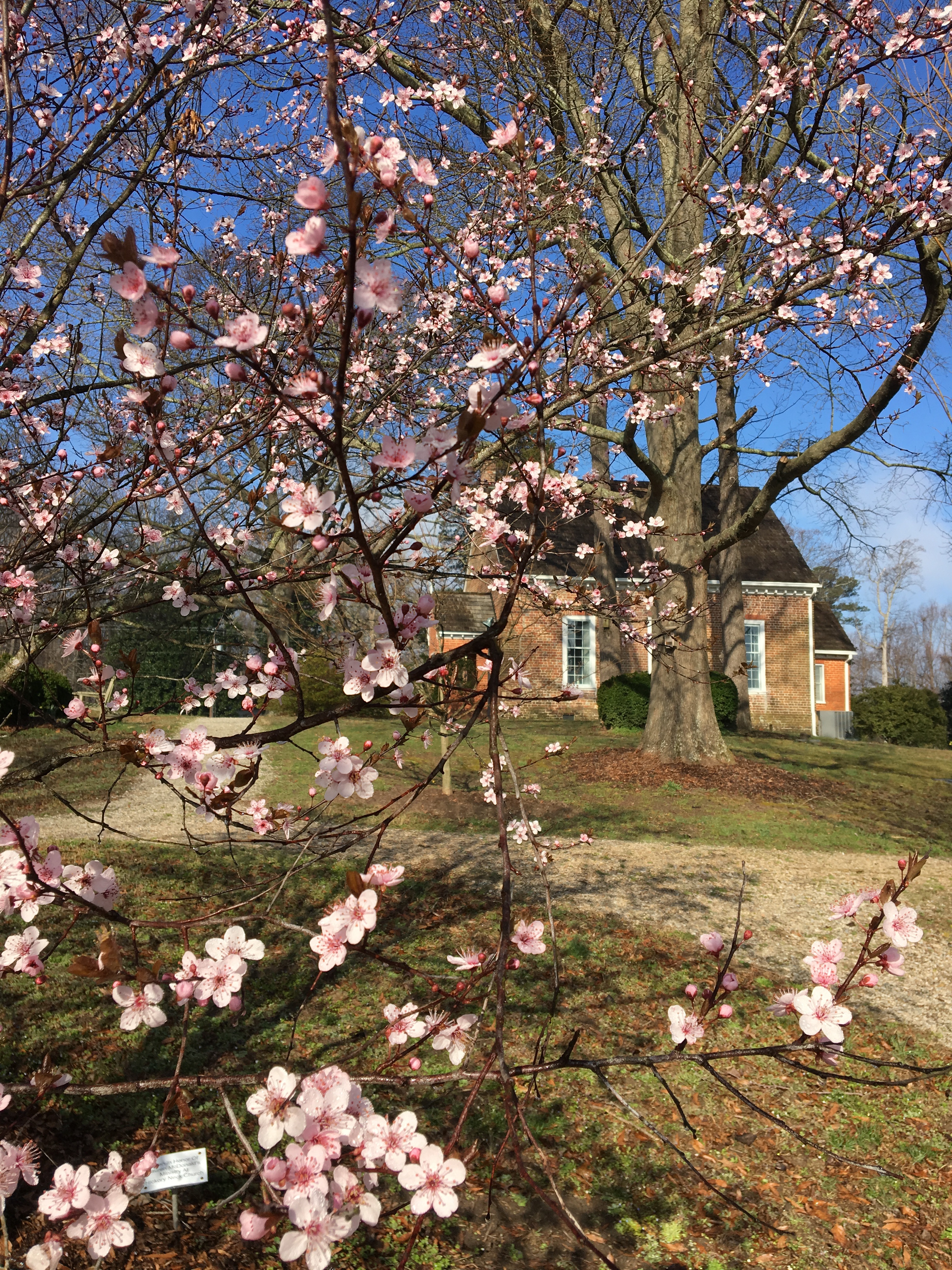
IMG_6943

Photo credit:  Jennifer Andrews-Weckerly; reuse only with permission

This year, spring has taken me a bit by surprise.  I am mostly surprised because we keep having cold bursts, and yet, the budding trees seem undeterred.  But what has also surprised me is how unprepared I have been for the emergence of color.  You see, in these brisk days, I had become accustomed to bare trees and the dormant brown of the season.  As the trees begin to blossom, though, I have been caught off guard.  I forgot how beautiful these trees can be in spring.  I forgot the soft yellows, purples, pinks, and whites of their blooms, and I had forgotten the beauty they possess.  Despite having watched these same trees blossom year after year, I still find myself surprised by their loveliness.

As I have been surprised by the beautiful emergence of spring this year, I began to wonder if I don’t do the same thing with the people around me.  Sometimes, I think we get so used to our loved ones that we forget to really see them.  We get used to the rote normalcy of life, and we get so accustomed to our routines, we sometimes fail to see the beautiful blooms of the people right in front of us.  We neglect to see the ways the people in our lives are changing and growing, and sparking new life, and we fail to see their blossoming beauty.  We fail to behold their beauty with the wonder it deserves.

I wonder who in your life has been blossoming without your notice.  I wonder whose blossoms are coming into glory and yet you have been too busy to notice.  I invite you this week to take a long look at your loved ones.  Look at them with fresh eyes, expecting to be wowed with something fresh and inspiring.  See them with the eyes of a new acquaintance instead of the eyes of someone who only sees the withered winter version.  And then, tell them what you see.  Share with your loved ones the beauty you see in them, the new life you see budding, and the ways in which their color gives joy to the world around them.

I suspect when you start to embrace this new way of seeing your loved ones you will see them as God sees them – as beautiful creations whose beauty reflects God’s glory.  You can share that gift too – the ways in which you see God’s glory reflected in them.  But beware!  Once you begin to see God’s beauty and glory in others, you might also begin to see it in yourself as well.  If you need a little help seeing the color blooming in yourself, let me know.  I’d be happy to help you see yourself as God sees you!

GC79: Kingdom Work

26 Thursday Jul 2018

Posted by jandrewsweckerly in Uncategorized

≈ Leave a comment

Tags

Episcopal Church, General Convention, God, heaven, hope, Jesus Christ, Kingdom, liberating, life-giving, loving, people

IMG_5342

Photo credit:  Ruth Beresford (reuse only with permission)

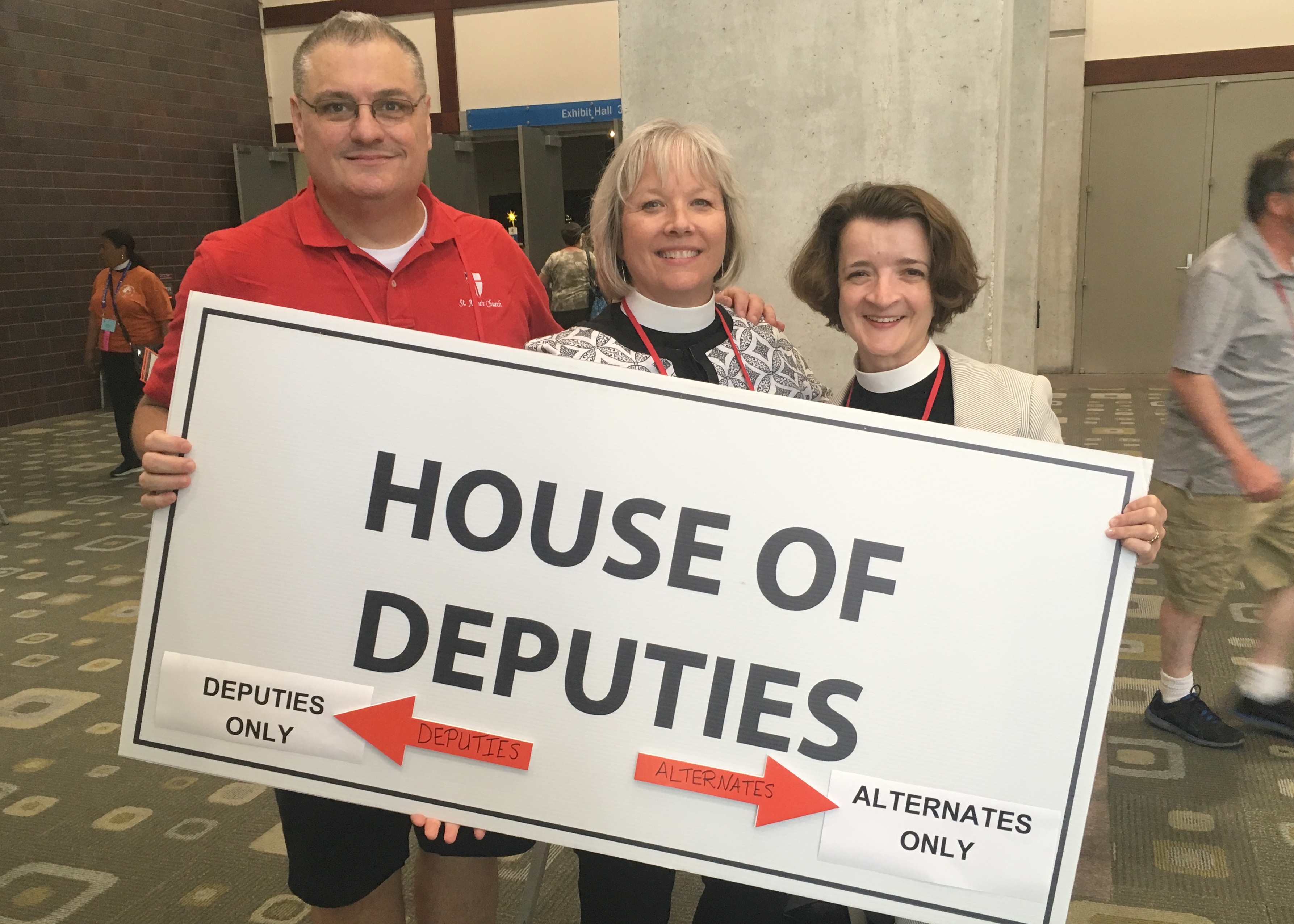
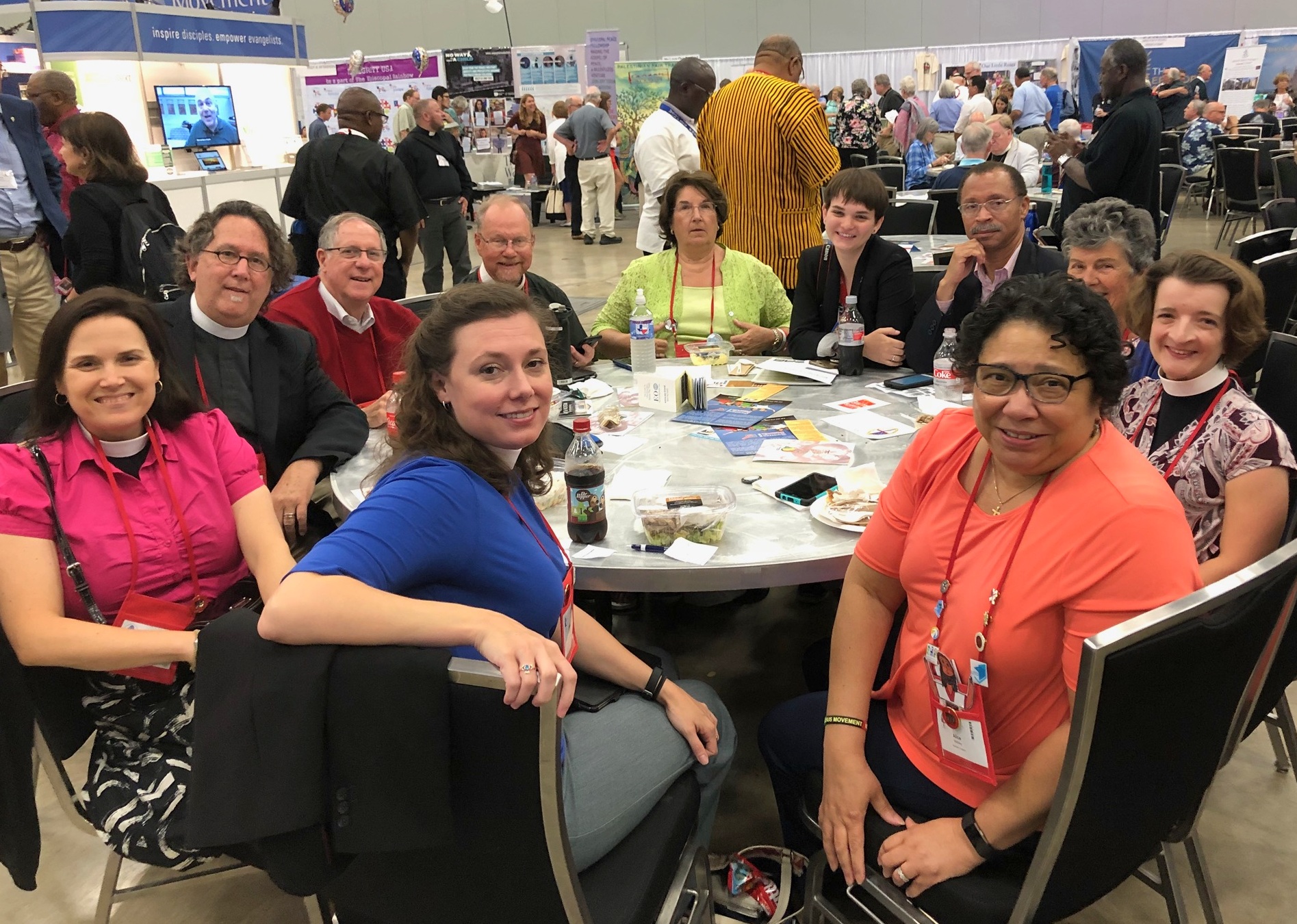
One of the questions I have received about General Convention is what it is like.  What you notice right away is General Convention’s impressive scale.  Every one of the 110 dioceses of the Episcopal Church is able to bring four clergy and four lay deputies.  They may also bring four alternate clergy and four alternate lay deputies.   In total, that’s over 800 people on the floor of the House of Deputies.  All bishops are also present, meeting in the House of Bishops.  Each diocese can have 1 – 3 bishops in place (Diocesan, Suffragan, and Assisting/Assistant).  Visitors from near and far can also attend, as well as media from dioceses, youth observers, and distinguished guests.  The Exhibit Hall also has an extraordinary number of staff and volunteers, and in addition to booths, the seminaries regularly bring in staff or faculty for seminary reunions.  Meanwhile, the entire Convention Center is run by massive amounts of volunteers – covering everything from check-in, monitoring the floor, helping with worship, to the exhibits.  Meanwhile, the ECW holds its annual triennium at the same time, which involves representatives, organizers, and volunteers.  Needless to say, Episcopalians take over the host city (this year coined as the Episcapocalypse).  Even Austin, Texas, which prides itself in being “weird,” I think was a little overwhelmed by our numbers.

IMG_1950

Photo credit:  Chris Girata (reuse only with permission)

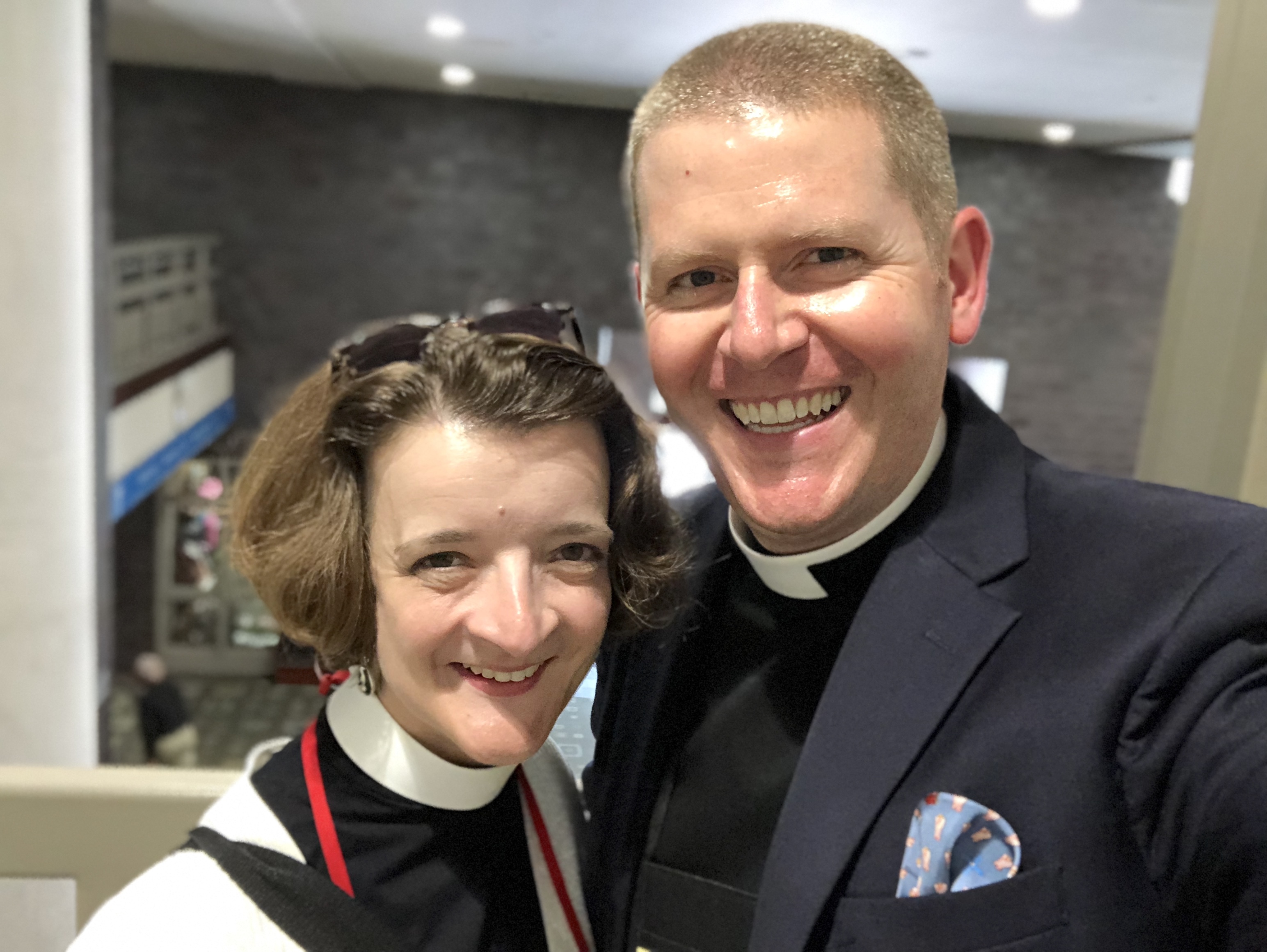
What I particularly enjoyed was getting a taste of what it might be like to enter God’s heavenly kingdom.  People from all walks of my life were present at Convention.  There were people from my time in undergraduate campus ministry, my time working as a lay person, my time in seminary, my time as a curate, my first time as a rector, and my current position.  The joy of greeting one longtime friend or colleague after another was heartwarming.  It also reminded me of how incredibly blessed my life has been to be full of incredible people who have shaped, influenced, and sometimes directed my faith life.  God’s abundance was all around me in the faces of God’s children.

IMG_1885

Photo credit:  Hickman Alexandre (reuse only with permission)

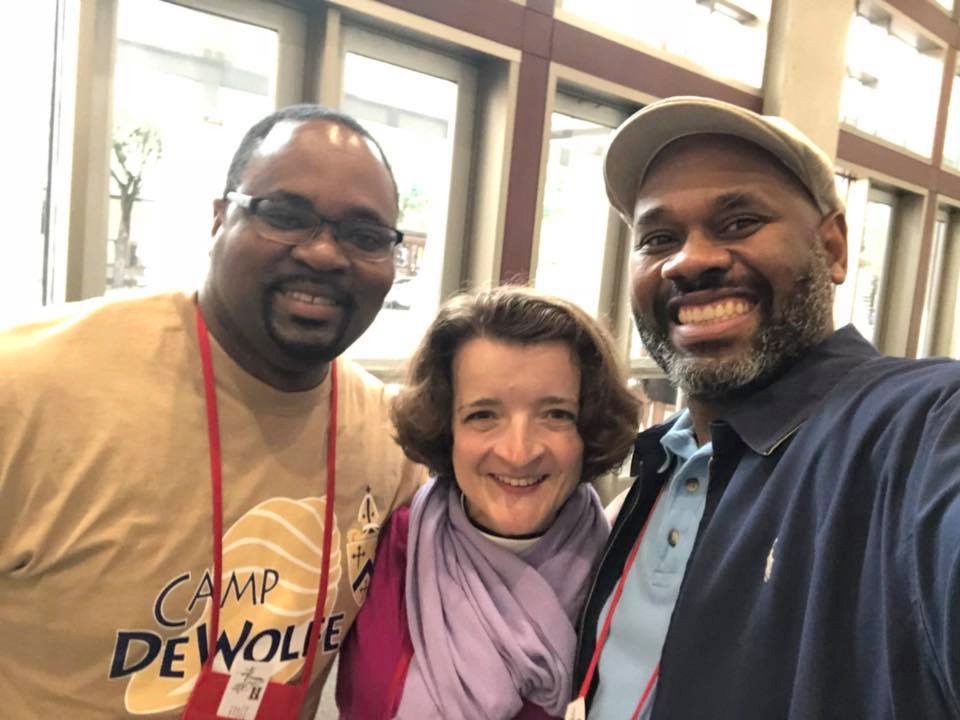
But you could not be at General Convention without meeting other people.  A conversation about something mundane would lead to the realization that we had friends in common.  Waiting in line for something would lead to a conversation about a shared passion.  People you have “met” online through vocational networking you could finally meet in person.  Suddenly, you realized you were making connections from all over the world.  The family of the Episcopal Church is deep and wide.  I leave General Convention feeling hopeful for the future of the Episcopal Church, knowing that it is full of passionate people, doing their part to create a loving, liberating, life-giving world through Jesus Christ.  Thanks be to God!

IMG_1749

Photo credit:  Ann Turner (reuse only with permission)

Sermon – Luke15.1-10, P19, YC, September 15, 2013

18 Wednesday Sep 2013

Posted by jandrewsweckerly in Uncategorized

≈ 4 Comments

Tags

belonging, church, faith, God, Jesus, party, people, Sermon, sinfulness, welcome

One of the cool things about wearing a collar around in public is the very interesting conversations that I get to have with total strangers.  For me in particular, many of the questions are not just about being a priest, but also about my gender.  Most people come from religious traditions that have not exposed them to female priests, and so they have all sorts of interesting questions – and to be honest, I think most of them are trying to figure out if the Roman Catholic Church started ordaining women without them noticing.

But once we get past the surface stuff, I usually end up asking them about their own faith experiences.  All sorts of emotions flit across peoples’ faces – from discomfort, to mistrust, to guilt, to simply hesitancy.  Just this week I had a long conversation with a woman at Staples who had a cemetery connection to St. Margaret’s; but as soon as I asked her about what church she currently attends, the stammering and eye-contact avoiding began.  I was truthfully just trying to see if the woman could use a church home, but I think she interpreted my question as judgment.  These kinds of reactions happen to me a lot, and I think the reason is that people have a lot of assumptions about church based on past experiences or even stereotypes.  There is a sense that they need to have their life more together before they even darken the door of a church; that certain people will not be accepted in church; that if they do not agree with everything that others believe they will not be welcomed; or that church is full of a bunch of hypocrites.  There is even a video that we posted on our Facebook page this week about the reasons people give for not coming to church, and all those fears and suspicions are articulated with vulnerability and honesty.

So on this “Welcome Back Sunday,” as we think about what the church is and who belongs, who do we get in our Scripture readings today?  First, Jeremiah tells us of a people so far steeped in sinfulness, that refuses to repent and return to God, being utterly destroyed.  If you remember, God invited Israel back into covenant relationship in our lesson last week – to be molded into a new people by the potter.  But the people did not listen, and now their sinfulness and unwillingness to return to God has led to judgment.  Then, in our Epistle lesson to Timothy, we hear about Paul, an apostle who admits that he was once the most horrible persecutor of believers in Christ.  If you remember, Paul used to be named Saul.  He was a faithful Jew who was persecuting the Christians because he believed them to be proclaiming a false Messiah.  Only after his dramatic conversion experience does he become Jesus’ apostle.  Finally, in our Gospel lesson, we hear about a sheep that has wondered off from the flock.  Though the shepherd has 99 other sheep to worry about, he leaves them in the wild to find the one that is lost.  If I had to pick three people to feature for an advertising campaign for the church, whose attractive features I could promote as being representative of the appealing nature of the church, I doubt the Israelites, Paul, or the lost sheep would be on the top of my list!

Of course, that is the funny thing about churches.  As much as we want people to know that all are welcome, we also are always trying to put our best foot forward.  We do choose pictures of happy, young, diverse people in our advertising because we want people to believe that we are all those things.  And in some ways those things are true, certainly of St. Margaret’s.  We are a group of people who are happy to be here, and we do have young families and some diversity.  But what our glossy advertising glosses over is that we are also all humans here.  We all have our flaws, and we all fall into separation from God and from one another at times.  There have been times when each person in this room, like the Israelites, has fallen so far into sinfulness or separation from God that we do not even know how to begin to make our way back.  There have been times when we have been as hateful and judgmental as Paul – at times our hatefulness directed toward others; or worse, at times our hatefulness directed toward ourselves.[i]  And there have certainly been times when each of us has wandered away from the flock – maybe because we just could not relate to church anymore, maybe because we were hurt by or angry at the church, or maybe because life just got the best of us.

We sometimes think about church as having insiders and outsiders.  Even in the gospel lesson, we see that division.  At the beginning of the gospel lesson, we hear the Pharisees and the scribes grumbling about how Jesus welcomes the tax collectors and sinners.  Jesus spends the rest of the lesson explaining that insiders or outsiders are totally different in Christ.  In fact, when that one lost sheep is found what happens?  A party!  Now, if we had been the shepherd, and if we had even considered the ridiculousness of leaving 99 healthy sheep at risk, our next response upon finding the sheep might have been to scold or punish the sheep.  Or if losing the sheep had been our fault, we might have been privately relieved upon the sheep’s return or quietly told a few close family members.[ii]  But no, this shepherd shouts on the mountaintop and invites all the neighbors in to celebrate.  A party ensues because in Jesus’ world, every person is important, valued, and loved – no matter where they are or where they have been.

When I was in high school – I know this might surprise you – but I was a bit of nerd.  Although I developed a wide variety of friends, I never quite felt like I fit in wholly to any one particular group.  I sort of patched together a network of friends, but no one group make me feel fully accepted and like I could be fully myself.  One summer, I went away to a six-week program that gathered talented high school students from all over the state.  My focus area was math, but other focus areas included literature, choral music, art, Spanish, and dance.  I left home that summer not knowing anyone who would be in the program, and yet as the summer went on, I found like I had found a place where I belonged.  Finally, I was meeting people like myself, who also felt slightly off from the rest of their high school classmates, who introduced me to all sorts of music, expression, and life.  I came back for that following school year knowing that I still did not have a group like that at high school, but there were people out there who knew me and loved me fully.  That sense of belonging, and total acceptance kept me going for years to come.

As I think back to that summer at Governor’s School, I realize that they taught me what church, at its best, is really like.  At church, all are welcomed in – the person thought to be beyond saving, the judgmental persecutor, and the one who feels lost or who has strayed away.  But those descriptions do not fit just one person.  The truth is we have all been each of those persons at some point in our lives – and I am sorry to break the news to you – but we will all be each of those persons again at some point in our lives.  Sometimes we are the lost person who will be feted, and sometimes we are the flock or the neighbors who will celebrate someone being found.  In fact, the reason why we can be those celebrating is because we know the feeling of being the one who is celebrated.  Because the roles are ever shifting, we know what the experiences are like on all sides.

That is the beauty of a church community.  We are all welcome because we have all been, are currently being, or will be in the future in any of the roles we hear about in Scripture today.  And the party just is not the same without each one of us there.  That party is the same party we hold every week, when we gather around the Eucharistic table, having confessed our sins, having embraced one another at the peace, and then gathering around the table to receive the celebratory food of Christ – knowing fully that each of us is welcome no matter where we are on the journey – because we have all been there.  Amen.


[i] Stephanie Mar Smith, “Theological Perspective,” Feasting on the Word, Yr. C, vol. 4 (Louisville: Westminster John Knox Press, 2010), 66.

[ii] Mary H. Schertz, “God’s Party Time,” Christian Century, vol. 124, no. 18, Sept. 4, 2007, 18.


Recent Posts

  • On the Myth and Magic of Advent…
  • On Risking Failure and Facing Fear…
  • Sermon – Luke 23.33-43, P29, YC, November 23, 2025
  • On Inhabiting Gratitude…
  • Sermon – Luke 20.27-38, P27, YC, November 9, 2025

Archives

  • December 2025
  • November 2025
  • October 2025
  • September 2025
  • August 2025
  • July 2025
  • June 2025
  • March 2025
  • February 2025
  • December 2024
  • November 2024
  • October 2024
  • September 2024
  • August 2024
  • July 2024
  • June 2024
  • May 2024
  • March 2024
  • February 2024
  • January 2024
  • December 2023
  • November 2023
  • October 2023
  • September 2023
  • August 2023
  • July 2023
  • June 2023
  • May 2023
  • March 2023
  • February 2023
  • January 2023
  • December 2022
  • November 2022
  • October 2022
  • June 2022
  • May 2022
  • January 2022
  • December 2021
  • November 2021
  • October 2021
  • September 2021
  • August 2021
  • June 2021
  • May 2021
  • April 2021
  • March 2021
  • February 2021
  • January 2021
  • December 2020
  • November 2020
  • October 2020
  • September 2020
  • August 2020
  • July 2020
  • June 2020
  • May 2020
  • April 2020
  • March 2020
  • February 2020
  • January 2020
  • December 2019
  • November 2019
  • October 2019
  • September 2019
  • August 2019
  • July 2019
  • June 2019
  • May 2019
  • April 2019
  • March 2019
  • February 2019
  • January 2019
  • December 2018
  • November 2018
  • October 2018
  • September 2018
  • August 2018
  • July 2018
  • June 2018
  • May 2018
  • April 2018
  • March 2018
  • February 2018
  • January 2018
  • December 2017
  • November 2017
  • October 2017
  • September 2017
  • August 2017
  • July 2017
  • June 2017
  • May 2017
  • April 2017
  • March 2017
  • February 2017
  • January 2017
  • December 2016
  • November 2016
  • October 2016
  • September 2016
  • August 2016
  • July 2016
  • June 2016
  • May 2016
  • April 2016
  • March 2016
  • February 2016
  • January 2016
  • December 2015
  • November 2015
  • October 2015
  • September 2015
  • August 2015
  • July 2015
  • June 2015
  • May 2015
  • April 2015
  • March 2015
  • February 2015
  • January 2015
  • December 2014
  • November 2014
  • October 2014
  • September 2014
  • August 2014
  • July 2014
  • June 2014
  • April 2014
  • March 2014
  • February 2014
  • January 2014
  • December 2013
  • November 2013
  • October 2013
  • September 2013
  • August 2013
  • July 2013
  • June 2013
  • May 2013
  • April 2013
  • March 2013
  • February 2013
  • January 2013
  • December 2012
  • November 2012
  • October 2012
  • September 2012

Categories

  • reflection
  • Sermons
  • Uncategorized

Meta

  • Create account
  • Log in
  • Entries feed
  • Comments feed
  • WordPress.com

Blog at WordPress.com.

  • Subscribe Subscribed
    • Seeking and Serving
    • Join 394 other subscribers
    • Already have a WordPress.com account? Log in now.
    • Seeking and Serving
    • Subscribe Subscribed
    • Sign up
    • Log in
    • Report this content
    • View site in Reader
    • Manage subscriptions
    • Collapse this bar
 

Loading Comments...