• About

Seeking and Serving

~ seek and serve Christ in all persons

Seeking and Serving

Tag Archives: relationship

Sermon – Matthew 18.15-20, P18, YA, September 10, 2017

13 Wednesday Sep 2017

Posted by jandrewsweckerly in Sermons, Uncategorized

≈ Leave a comment

Tags

avoidance, church, community, conflict, dignity, family, gift, healthy, Jesus, love, manage, reconciliation, relationship, Sermon, truth, witness

I have been looking forward to this Sunday for weeks!  After taking successive vacations at the end of the summer, all of our staff are finally back in town.  Many of you have been traveling, spending time away with friends, or simply taking a break to enjoy the last bits of summer.  Our musicians and liturgy team have been planning our return to three services.  Our Stewardship Committee has been organizing our new Discipleship Fair.  Our Parish Life Committee has been organizing our Parish Picnic.  Church members have been inviting friends to join them for church, or maybe you yourself decided today was the day to search for a new church home.  I have felt the anticipation building as this has day approached.

I have been so excited to kick off a new program year, to invite people to engage in their faith journey, and to share an invitation to others to discover the beauty of this vibrant community, and what does the gospel lesson from Matthew offer us?  A text about fighting within the church.  Jesus does not just admit that sometimes, every once in a while, people in the church might experience conflict.  No, Jesus goes into great detail about what to do when you face conflict in the church:  embrace conflict directly, repeatedly, and publicly.  To those of us who were raised in the South, or at least to those of us who were raised in conflict-avoidant families, this text is our worst nightmare!  And this is certainly not the joyful text I was looking for when anticipating this festive day.

Part of what bothers us about this text from Holy Scripture is many of us come to church looking for a break from the conflict that surrounds our everyday life.  Whether we experience conflict in our families, conflict in our workplaces, schools, or service organizations, or conflict in our political lives, the last thing we want to do when we come to church on Sundays is deal with more conflict.  A friend of mine once confessed to me that he was thinking about leaving his current church home over a conflict within the church.  We were both young adults, on our own for the first time since college, and we had images in our minds about what church should be and what we wanted from our church communities.  But instead of bucolic communities of peace, harmony, and justice, we were both finding churches riddled with conflict and disunity.  As we were talking about his frustration, my friend finally confessed, “When I go to church, I just want everyone to get along.  I go to church to escape what is going on in my everyday life, not relive it!”

Now, I could spend the next hour deconstructing his complaint, but there is something powerful at the heart of his complaint, and perhaps at the heart of our own experience of church.  When we talk about church as being like a family, or being like home, what we really mean is we want a place that is a bit unlike our families or homes.  We want a place that is always happy, loving, nurturing, sometimes challenging, but more often comforting.  When we think about the warm, fuzzy feeling we have, the feeling we find at a place like Hickory Neck, the last thing we think is, “Man, I love the way we handle conflict at church!”

Unfortunately, that is exactly what our text is inviting us to do – to celebrate the way that the church teaches us to fight – or to phrase it a little differently, how the church teaches us to deal with conflict in healthy ways.  In order to get to the point where we can see the gift of healthy conflict resolution as a good thing, we need to do a few things.  First, we need to get to the point where we can embrace the inevitability of conflict in the church community.  For some of us, that is not a big hurdle.  For others of us, the assumption of conflict is difficult.  Perhaps you were raised in a family who treated conflict as something to be avoided at all costs.  Or perhaps you grew up in an environment where conflict was so aggressive you created patterns of conflict-avoidance later in life.  Regardless, if we have come to see conflict as the enemy, accepting the inevitability of conflict is going to be our first task.  In Matthew’s gospel today, Jesus says, “For where two or three are gathered in my name, I am there among them.”  But what he implies is that when two are three are gathered in his name, there will be conflict.  Jesus himself was so sure there would be conflict that he developed a whole conflict management plan.  So take a deep breath, let the breath out, and repeat after me, “Conflict is unavoidable in church.”

Now that you are breathing calmly, and accepting the unavoidable, the next thing we need to do is honor the gift of conflict management Jesus gives us in scripture today.  For those of us who are conflict avoidant, Jesus’ conflict management plan is going to seem daunting.  The good news is scholars agree with you.  Many of the scholars who have written about this text say the step-by-step instructions do not necessarily need to be read as a step-by-step guide to solving conflict within a church.[i]  What is most important is what the instructions convey:  conflict in the church is not to be ignored, hidden, or buried.  Theologian Stanley Hauerwas has this to say about conflict, “[Jesus] assumes that conflict is not to be ignored or denied, but rather conflict, which may involve sins, is to be forced into the open.  Christian discipleship requires confrontation because the peace that Jesus has established is not simply the absence of violence.  The peace of Christ is nonviolent precisely because it is based on truth and truth-telling.  Just as love without truth cannot help but be accursed, so peace between the brothers and sisters of Jesus must be without illusion.”[ii]

As Christians, Jesus wants us to behave differently.  Jesus wants us to be truthful with one another.  Jesus wants us to deal with one another face-to-face instead of talking behind each other’s backs.  Jesus wants us to work on reconciliation of relationships instead of letting hurt and pain fester and erode relationships.  For Jesus, being right or wrong is much less important than being in relationship.  Being in right relationship, keeping the family together is much more important.[iii]  Jesus wants us to take a breath in, let the breath out, and repeat after him, “Conflict is not the enemy.  Letting conflict ruin relationships is the enemy.”

Finally, once we have accepted the inevitability of conflict, and once we have agreed to value relationships over the avoidance of discomfort, we are ready to embrace the gift of our gospel lesson today – and perhaps even claim that this might be the perfect lesson for a Rally Sunday.  If you came to church to escape conflict or enter some bubble of blissfully ignorant happiness, Hickory Neck is probably not the right place for you.  But, if you came to Hickory Neck to learn how to transform conflict into something holy, they you may have just found a real home – not a home based on illusion, but a home based on truth, dignity, and respect.  When you accept the inevitability of conflict and the value of meaningful relationship, you receive the tools to work through conflict and land in the reality of reconciliation.

But here is the best part of Jesus’ Conflict Resolution Class today.  If we can stay on the journey through conflict to reconciliation, gaining the tools that this community has to offer us, then we as a community create something much more powerful than can be contained in these walls.  We create a witness for our community.  We create disciples capable of not only working through conflict within the community, but also capable of modeling reconciliation beyond our community.  Anyone who has read a headline in our country in the last year knows that our country needs more models for healthy conflict engagement.  That is what Jesus offers us today:  tools to work on our own issues around conflict, tools to become a loving, honest, and reconciling community, and tools to teach reconciliation beyond these walls.  Jesus has promised to be with us as we do our work.  In fact, Jesus is here with us now as we anxiously try to step on that path toward reconciliation.  So take a deep breath, let the breath out, and repeat after me, “Conflict is a blessing my church teaches me to embrace.  Thank you, Jesus, for the blessing of conflict and the promise of reconciliation.  Help me to share that gift with others.”  Amen.

[i] David Lose, “Pentecost 14 A – Christian Community,” September 6, 2017, as found at http://www.davidlose.net/2017/09/pentecost-14-a-christian-community/ on September 7, 2017.

[ii] Stanley Hauerwas, Matthew:  Brazos Theological Commentary on the Bible (Grand Rapids:  Brazos Press, 2006), 165-166.

[iii] Barbara Brown Taylor, The Seeds of Heaven: Sermons on the Gospel of Matthew (Louisville:  Westminster John Knox Press, 2004), 88-89.

On Adventures and God…

09 Wednesday Aug 2017

Posted by jandrewsweckerly in Uncategorized

≈ Leave a comment

Tags

adventure, bruise, church, doubt, fear, fun, God, hurt, invitation, new, question, relationship

IMG_5281

Photo credit:  Elizabeth Shows Caffey

One of the themes of this summer for me has been new adventures.  This summer I tried aerial yoga for the first time – a practice of yoga that involves being suspended from the ceiling with silks.  I also rode a bike for the first time in over 20 years.  And last night, for the first time ever, I represented our church by throwing one of the first pitches at our local minor league baseball games.  In each of those instances, I was nervous, skeptical, or downright scared.  I know I yelped at least once in aerial yoga.  When I first started riding the bike, I was so stressed out that my hands started hurting from gripping the handlebars.  And as I waited to throw that first pitch, my stomach was doing flip-flops.

Those examples may not sound all that thrilling to you.  I certainly did not skydive, bungee jump, or walk a tightrope.  But those adventures were all experiences I normally would have declined – coming up with a hundred reasons why the adventures would be a bad idea:  pulled muscles, skinned knees, or a bruised ego.  But in each instance, I could see in the eyes of the people asking me to take the adventure a sense of longing, hopefulness, vulnerability.  They were inviting me into adventure, and saying “no” would have meant a crushed spirit of enthusiasm.  And so, against my better judgment, I said “yes.”  And you know what?  In every instance I had a ton of fun!

I was thinking this morning about that weighty pause when someone invites you into adventure – when you can either say “yes” or “no,” with the person left eagerly anticipating your response.  I think we experience that same weighty pause with God all the time.  God is constantly inviting us to take on new adventures:  stepping through the church doors for the first time in a long time, hoping not to be judged or hurt; going to a church study group, unsure about how your doubts or questions may be received; serving dinner at the homeless ministry, wondering what you can possibly say to or have in common with someone who lives on the streets.  If you do not have a relationship with Christ, saying “yes” can be hard.  But even when you do have a relationship with Christ, responding positively to an invitation from God can be hard.  Taking on new adventures with God means trusting, letting go of fear, and making yourself vulnerable.

I wonder what invitations to adventure God has been inviting you to try this week.  What invitation might you say “yes” to that you have been delaying or refusing altogether?  The risk is that you might pull some muscles, skin some knees, or bruise that old ego.  But the payoff is that you might find meaning, purpose, and renewed relationship with God.  And I suspect that you might also have a bit of fun!

On Food, Tears, and God…

05 Wednesday Jul 2017

Posted by jandrewsweckerly in Uncategorized

≈ Leave a comment

Tags

comfort, community, emotion, familiar, food, God, intimacy, memory, power, relationship, taste, tears, worship

IMG_5249About ten years ago, I traveled with a group of seven seminarians to Myanmar, or Burma.  The purpose was to learn about, develop relationships with, and support the Anglican Church in Myanmar.  I could talk for days about that four-week trip, but one of the experiences that lingered with me was the food.  Part of why the cuisine lingered with me was because each of my three years in seminary we had one or two Burmese students at the seminary.  After the trip, we took to having reunions at a local Burmese Restaurant.  We found the meals reminded us of the flavors of that trip, the food comforted our Burmese friends, and the fellowship kept the experience vivid and meaningful for years to come.


This past weekend I was traveling in the area of my seminary and made a trip to the restaurant for lunch.  I ordered my two favorite, most potent memory-invoking dishes:  mohingar, a fish-based soup, and pickled tea leaf salad.  I had been looking forward to the food for weeks – so much so that I was salivating by the time I pulled into the parking lot of the restaurant.  What I was not expecting was the wave of emotion that accompanied the food.  As the heat of the salad opened my sinuses, I was reminded of multiple episodes on our trip where funny food-related experiences happened – a too-hot pepper eaten, the presentation of tiny birds as an appetizer, an avocado milkshake.  As I sipped the mohingar, the warmth in my belly reminded me of all the times the food, though foreign, was exceptionally comforting – like discovering a comfort food you never knew you missed.  As those memories and feelings emerged, I became overwhelmed and found myself fighting back tears.  The rush of emotions was completely unexpected and disorienting, and I could not be sure whether I was sad or profoundly happy.

I have talked a couple of times about the power of food, taste, and memory (both here and here) to connect with our spiritual life.  But what I realized this weekend (as I tried not to cry into my mohingar) is that food and taste point to the powerful experiences that can happen in faith communities.  For the team that traveled to Burma, the food was a tool for bringing us together and sharing memories.  For our Burmese friends and fellow students, the food was an opportunity to experience intimacy and trust that I do not think would have happened in the classroom alone.  The taste of the familiar dishes were not simply familiar tastes.  They were also tools for creating and sustaining community, and honoring that community through the senses.

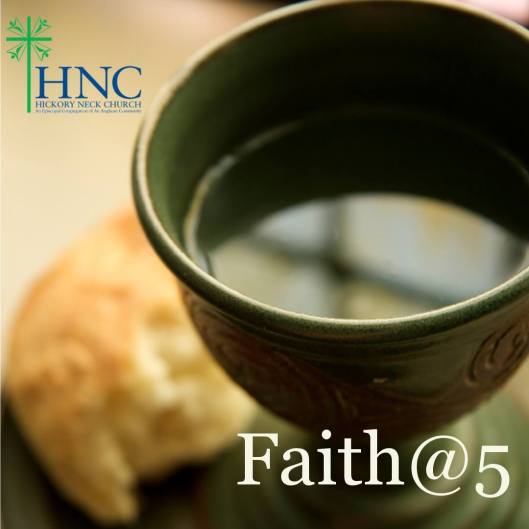
This week, we will be starting a new summertime worship service at Hickory Neck.   Though rooted in our Episcopal and Anglican identity, the service is a departure from our Sunday morning services.  We are using different prayers and music; we are settling into a more casual style of worship and preaching; and we are even changing small things like the type of bread we eat for communion.  Part of the changes are certainly meant to shift the sensory experiences of worship.  But another part of the changes is meant to shape community a bit differently – to create a sense of intimacy, familiarity, shared spiritual journey.  I am not sure if pita bread will be able to accomplish all of that, but I hope you will come out and give this new offering a try.  Who knows what memories, relationships, and encounters with God you will create?!19264649_1524550660934522_2960725217281690693_o

Sermon – John 14.15-21, E6, YA, May 21, 2017

24 Wednesday May 2017

Posted by jandrewsweckerly in Sermons, Uncategorized

≈ Leave a comment

Tags

abide, Advocate, Bible Study, hard, Holy Spirit, Jesus, love, Paraclete, promise, relationship, separation, Sermon, sin, work

If you could have any person, living or dead, over for dinner, who would it be?  We have all played the game.  Either you were asked the question at a job interview, you used the question as part of an icebreaker, or you shared the question at the family dinner table as a conversation starter.  The answers are always telling – some would like to have dinner with their favorite celebrity or sports hero; some would love to talk to a famous figure in history, like Martin Luther King, Jr. or Abraham Lincoln; while others would want to have dinner one more time with a loved one who has died.  Invariably, though, someone will give the answer we all get to eventually.  If we could have dinner with any person, dead or alive, we would want to have dinner with Jesus.  We could finally ask Jesus all the answers to our questions!  We could ask Jesus what that one parable means that we can never figure out.  We could ask Jesus what death and eternal life are like.  We could ask Jesus why things are the way they are today and what he plans on doing about them!  The options are endless and the gift of that time with Jesus seems like the gift a magic decoder ring for life.

Except, I am not sure that dinner with Jesus is the best answer to that age-old question about dinner guests.  If you remember, Jesus was not always the easiest to understand.[i]  Think about all those parables that no one understood.  Think about all those times Jesus said something to the disciples that they could not comprehend.  Think about all those times that Jesus was challenged by Pharisees, foreigners, and faithful alike, only to get cryptic, unexpected answers.  Though we like to think we would have understood better than all of those, I suspect that even a modern-day dinner with Jesus would leave us with way more questions than answers.

That’s why I love our gospel passage today.  Jesus is preparing to leave his beloved disciples.  He has gathered them for a last meal, has washed their feet, and is sharing with them all his last instructions and words of wisdom.  The anxiety of his disciples is rising as they start to piece together how Jesus is giving what we now call his “Farewell Address.”  To those anxious, confused, uncertain disciples, Jesus offers a promise.  Jesus says, “I will not leave you orphaned.”  Instead, Jesus will send the Advocate.  Actually, he says, God will send, “another Advocate, to be with you forever.”  The first Advocate is Jesus himself.[ii]  Unlike Jesus, who is limited by time and space, the next Advocate will be with us forever.  The text tells us that the Advocate will abide in us – will actually be in us.  That word, “Advocate,” is alternatively translated as “counselor, comforter, helper, mediator, or broker.”[iii]  The word in Greek is Parakletos or Paraclete, which literally means “to call alongside.”  This Holy Spirit, this second Advocate, is the one who is called to be alongside us.[iv]

In just a couple of weeks we will celebrate the fulfillment of Jesus’ promise today.  The celebration of Pentecost is a significant feast for us because what Jesus promises in his Farewell Address finally comes to fruition.  Not only does the Spirit fill for us a spiritual need, the Spirit also fills for us a practical need.  You see, throughout his final instructions, through both word and deed, Jesus gives the disciples one final instruction – to love.  Jesus wants his followers to embrace, “not an abstract philosophical concept, but the lived reality revealed in the life, relationships, and actions of a simple Nazarene who looks and talks like them and lives simply among them.”[v]

This past week, our Tuesday night Bible Study group invited a Bible Study group from New Zion Baptist Church to join us for a mutual Bible Study.  After having talked quite a lot about race relations here at Hickory Neck, and having watched our country struggle with race, our Bible Study group decided the best thing they could do was to start building relationships with people of color.  Intentionally or not, the group selected 1 Corinthians 13 as their text for study.  Most of you who have been to a wedding will know this text by heart.  “Love is patient, love is kind…”  On and on we hear Paul talk about the characteristics of love – how love is not envious, boastful, or rude; how love does not insist on its own way, and is not irritable or resentful.”  Just like with a wedding, on the surface, the text was quite romantic for what we were trying to do – talk about loving each other and how we could do that as two different communities.  But what we realized as we studied and reflected on the text is the more we talked about love, the less romantic love felt.  Quite the opposite, we realized the love we Christians are called into is hard work.  We talked about how hard being patient and kind are.  We talked about how hard not being irritable or resentful can be, and how often we insist on our own way.  What seemed like a simple text for a simple gathering – an interracial Bible Study on love, suddenly felt anything but simple.  As we shared our stories, we realized not only did we have a massive amount of work to do on ourselves, we would also have a massive amount of work to do if we were even going to attempt to love each other.

That is why Jesus’ promise today, the promise of the one who comes alongside of us, is so incredibly powerful.  Because if the disciples recall the ways that Jesus feeds the hungry, touches lepers, heals the sick, speaks and acts with care and regard toward women, shows compassion and fiercely protests against injustice,[vi] and then realize that Jesus wants them to do the same in his absence, they could indeed become overwhelmed.  They cannot even seem to get through Jesus’ farewell address without one disciple departing to betray him, and the promise of another disciple who will deny him.  How in the world will they manage to master the simple and yet enormous work of love?!?

Toward the end of our Bible Study, as we became more and more sober about the enormity and humbling nature of living a life of love, someone finally stood up and said something quite simple.  He confessed he did not have any answers and perhaps was not sure he could do what Jesus would want for us.  But what he would do is go and have coffee with anyone who was willing.  That’s all.  Coffee.  It was a simple offer, and maybe seemed like nothing on the surface.  But that offer of coffee was profound.  In that offer was an unspoken confession of sin and separation, and a commitment to turn toward love and relationship.  After over an hour of talking about love, that offer of coffee was a commitment to not just talk about love, but to act on love.

I believe the ability of that parishioner to offer coffee came because the Paraclete, the Advocate, the Spirit was abiding in him.  Jesus had not left him an orphan.  Jesus sent another Advocate who empowered him to be an agent of love.  That is the power of the gospel today.  We will never likely get that dinner with Jesus, even though I am not convinced that dinner would help us anyway.  But we do get dinner with the Spirit – everyday, offering us God’s presence and spirit of truth, empowering us to be agents of love.  We get a dinner with our Advocate, who invites us to pull up another chair, so that we can share that love with our neighbor – one coffee at a time.  Amen.

[i] N. T. Wright, John for Everyone, Part 2 (Louisville: Westminster John Knox Press, 2004), 63.

[ii] Linda Lee Clader, “Homiletical Perspective,” Feasting on the Word, Yr. A, Vol. 2 (Louisville:  Westminster John Knox Press, 2010), 491.

[iii] Larry D. Bouchard, “Theological Perspective,” Feasting on the Word, Yr. A, Vol. 2 (Louisville:  Westminster John Knox Press, 2010), 492.

[iv] Karoline M. Lewis, John:  Fortress Biblical Preaching Commentaries (Minneapolis:  Fortress Press, 2014), 191.

[v] Nancy J. Ramsay, “Pastoral Perspective,” Feasting on the Word, Yr. A, Vol. 2 (Louisville:  Westminster John Knox Press, 2010), 492.

[vi] Ramsay, 492.

On Chaos, Control, and Connection…

18 Thursday May 2017

Posted by jandrewsweckerly in Uncategorized

≈ Leave a comment

Tags

ambiguity, chaos, control, frustration, God, parenting, relationship, sacred, schedule

Stressed_businesswoman_kieferpix_Fotolia_large

Photo credit:  https://consumeraffairs.com/news/lack-of-control-in-a-high-stress-job-could-cause-you-to-die-younger-101716.html

Last week, my husband went away for five days for a family member’s graduation.  I was thrilled he was able to go, but I always get a bit nervous when I am alone with the children for several days straight.  Part of the anxiety is that managing two children is always tough.  Mornings and evenings are chaotic – just when you think everyone is settled, one child starts screaming.  When you have tucked in the youngest so you can read to the oldest, the youngest keeps getting out of bed.  Even with my husband around, the chaos often feels unmanageable.

The first couple of days after my husband was gone, things went as I suspected.  The children were loud, crazy, and frustrating.  There were lots of timeouts, lots of deep breaths, and lots of lost tempers.  But by day three, I slowly began to loosen up.  I began to realize that there was no way I was ever going to get the children to behave exactly how I wanted, when I wanted, and where I wanted.  And so I started figuring out how to pick my battles, I gave up on my own rigidity around “the schedule,” and I figured out how to shift from toleration to acceptance.  By day four, I was no longer stressed out or anxious.  I was being firm, but having fun; I was letting go of what I couldn’t control; and I was able to appreciate this sacred alone time with the girls.

Part of what took me so long to make that shift in behavior and perspective is that I am someone who likes a sense of control and order.  I get irritated when things do not go as I planned, and I get impatient when things do not happen in a timely, organized manner.  And while some may call it stubborn, I have thought through things and selected what I believe is the best course of action; so, when kids do not want to comply, I get frustrated.  These are, obviously, not the best traits for a parent.  Parenting involves much more agility, creativity, and comfort with ambiguity.

I have begun to wonder if my revelation about my own tendencies and behaviors with my children might also be true about my tendencies and behaviors with God.  How often have I wanted God to behave in a certain way, and could not seem to get God to comply?  How often have I been impatient, frustrated, and irritated with God?  How often have I been rigid in my expectations with God?  This week, I am taking a cue from my children, remembering how much more meaningful, loving, and fun our relationship can be when I let loose of my desire for control.  I suspect the same may be true of my relationship with God too!

On Disagreement and Hope…

15 Wednesday Mar 2017

Posted by jandrewsweckerly in Uncategorized

≈ Leave a comment

Tags

Bible, Christian, clergy, community, conversation, disagreement, God, hope, interpretation, Jesus, love, protest, relationship, scripture, sexuality, witness

hope (1)

Photo credit:  www.gwinnettpl.org/nine-books-on-hope-in-troubled-times/

Last week, I received an email directed to local pastors from a fellow pastor.  He wanted to draw our attention to the fact that the local elementary schools would be hosting an author whose most recent book features a family with two gay dads.  He was upset that the author had been invited and upset that the school board and principals had not been more upfront about the invitation to the author to parents and the community.  His email was an invitation for the clergy to come together to discuss what we might be able to do to voice our protest.

There were several things that alarmed me in the communication.  First, as a pastor and parent, not only am I not opposed to the author coming, I am quite pleased that a non-heteronormative story is being featured in our schools.  Second, and more importantly, I was concerned about a group of clergy gathering to present to the community the voice of the clergy – as though we are all of one mind.  At first I thought I would email the pastor, and then I thought I should email the schools and board.  But then I realized, no email or letter could fully express my concerns, and that kind of one-sided communication often leads to misunderstanding and assumptions.  And so, I decided to go.

I did not make that decision lightly.  I have many friends and family members who have a very different interpretation of the Bible and the issue of sexuality than me.  I have engaged in some deeply hurtful conversations around those topics, and knew I could be walking into a lion’s den going to the meeting.  But I kept thinking of my goddaughter, raised by two incredibly loving men, who have created a home that is a shining example of Christ’s commandment to love God and neighbor.  And so, I went.

I suspected we were heading for trouble as I listened to people talking before the meeting about how Christian morals are being corrupted by the world.  But when the meeting started, things shifted.  The inviting pastor opened with scripture, and then asked us to pray for God’s guidance and for each member of the School Board.  Out of those prayers came the same words I always use when talking about the wideness of God’s love:  inclusivity, love, transformation, loving neighbor as self, being a witness to Christ’s love.  I was fascinated to see how two opposing opinions could be rooted in the same biblical text and the witness of Christ Jesus.  After our enlightening time of prayer, people began to speak.  Some of the concerns were quite legitimate:  a lack of transparency from the schools and board, a lack of intentional engagement with the parents around the choice of the author, and a lack of clarity around why the decision was made.

Of course, where we differed was in the result we desired.  I braced myself and shared with the group why I was there.  Much to my surprise, no one freaked out, no one condemned me for my different perspective, and no one shut down.  Most of the other pastors and lay leaders were quite clear that they believe that scripture should be interpreted differently than I do, but there was no hate or malice.  We even learned that another pastor in the room shared my viewpoint.

What I came away with from the meeting was a sense of hope.  I have never seen such civility, such Christ-like conversation, as I saw that day.  I have rarely seen people of radically different opinions be able to stay at the table without walking away.  We did not change each other’s minds, but we also did not denigrate or disrespect one another.  Suddenly it hit me:  if we could take that kind of civil, Christ-like engagement out into the world, that would be a much more powerful witness of Christ’s love than pastors simply telling people to love each other without actually doing it.  I could even envision the two groups peacefully gathered at a School Board meeting, calmly presenting our opposing views; not witnesses to whether or not an author should be invited into the schools, but witnesses to what holy conflict and conversation look like.  It was a beautiful image, and a wonderful counter to our current political climate.

Now, I do not know if that image will ever come to fruition.  I do not know if the relationship-building we discussed will ever materialize.  But if nothing else, the meeting taught me that there is hope.  There is hope that God can work in the midst of conflict and disagreement and transform it into something sacred.  There is hope that we as a people can engage with one another respectfully despite our differences.  There is hope that Christ can do infinitely more than we can ask or imagine.

Sermon – Matthew 4.1-11, Genesis 2.15-17, 3.1-7, L1, YA, March 5, 2017

08 Wednesday Mar 2017

Posted by jandrewsweckerly in Sermons, Uncategorized

≈ Leave a comment

Tags

church, corrupt, disciplines, doubt, evil, God, goodness, identity, insecurity, Jesus, Lent, question, relationship, repentance, Satan, Sermon, sin, temptation, trust

On this first Sunday in Lent, I usually like to talk about Lenten disciplines.  The season of Lent is one of the few times in the Church that we take a hard look at our faith life and then actually commit to doing something tangible to strengthen our walk with Christ.  When I hear about your disciplines, I get some clue as to what feeds each of you spiritually – whether you long to connect with Holy Scripture, or hope to deepen your prayer life; whether you know that denial of certain parts of your life will create a needed discomfort or disruption, or instead find taking up something to create needed transformation; whether you are motivated by something fun and engaging (like Lent Madness), or you prefer something more philosophical (like our Lenten study group focusing on the spirituality of the Eucharist).  Lenten disciplines also give me a tiny clue about what sinful behaviors have been pulling you away from God.  As we prayed the Great Litany today, there were countless options:  pride, vainglory, hypocrisy, envy, hatred, malice, desires of the flesh, and hardness of heart.  Or, perhaps you are inspired to help one of those we prayed for in the Litany:  the lonely, the sick, the homeless, the imprisoned, broken families, the oppressed, or those suffering injustice.  There really is no wrong way to approach Lenten disciplines – that we are taking them on demonstrates a commitment to enriching our faith and growing closer to God.

Given the beginning of those practices, the text of Jesus’ temptation every year on this first Sunday in Lent has always seemed most appropriate.  How better to encourage us to engage in repentance and reformation than to remember that Jesus too was tempted – tempted to ease the discomfort of hunger, tempted to test God’s loyalty and support, and tempted to take on power – even if ill-gotten – for the greater good?  And even better that this year in Lent, we get that powerful lesson from Hebrew Scriptures of Adam and Eve’s temptation – the temptation to eat beautiful fruit, to learn what God knows but won’t tell us, to take control of our destiny.  And all of those temptations would be plenty.  But what has been striking me more powerfully this year has been what is at the root of the temptations of Satan.  You see, in all of those tests for Jesus, and even in the simple offering of forbidden fruit, Satan does something even more insidious.  Through his temptations, Satan works to undermine our relationship with God – to sow the seed of mistrust that promises to unravel the very foundation of our faith.

We can talk all we want about deepening our faith, working on our sinful behaviors, or becoming better Christians in Lent.  But much scarier to talk about is the power of evil to undo our faith altogether.  Many of us know the darkness of this power from Satan.  If we have not had a spiritual identity crisis in our lives, someone we know has.  Enough people around us die, enough suffering happens in the world, enough pain comes our way that slowly we begin to wonder if God cares at all.  We watch what Christians do to one another or how they fail to care for one another, we see the misdeeds of the Church, or the Church’s clergy disappoint us, and slowly, slowly, we begin to doubt God is even present.  As I have been watching the news, as our country becomes more deeply divided, as suffering seems to be epidemic, and as we dehumanize one another, sometimes institutionalizing that dehumanization, I see the power of evil planting seed after seed of mistrust.  Who hasn’t asked, “Where is God?” in the last year?  Who hasn’t thought, “Maybe I should stop trusting God, and start taking care of things myself.”?  Who hasn’t wondered if God is slipping into irrelevance as the world falls apart around us?

As I have pondered the temptations of Adam, Eve, and Jesus, the power of evil to corrupt has been much more powerful, potent, and pressing this year.  The “crafts and assaults of the devil” and the desire to “beat down Satan under our feet”[i] we heard in the Great Litany are much more powerful in our current climate.  I am much less worried about Adam and Eve’s original sin than I am worried about their original insecurity.  The serpent comes along and sews mistrust among Adam and Eve.  He starts out with a simple question, “Did God really say…”  And so begins the serpent’s assault on their relationship with God – misrepresenting and undermining God’s instructions, suggesting God is keeping something from them.  And as scholar David Lose suggests, once this primary relationship is undermined, Adam and Eve are “susceptible to the temptation to forge their identity on their own, independent on their relationship with God, and so take and eat the forbidden fruit… [They] forget whose they are and so lose themselves in the temptation to secure their identity on their own.”[ii]  Though Adam and Eve’s sin is grave, how the serpent gets them there is much scarier to me.

Satan attempts to do the very same thing with Jesus.  “The devil also tries to undermine Jesus’ relationship with God by suggesting [the relationship] is not secure, that he should test [the relationship] by throwing himself off the mountain, or that he should go his own way by creating food for himself, or that he should seek the protection and patronage of the devil rather than trust God’s provision.”[iii]  Satan is good!  He even tries to twist Jesus’ use of scripture to convince Jesus of God’s unworthiness of trust.  What is frightening about Satan’s tactics is that he is not just about tempting us to do bad things.  He is meddling in our relationship with God, sewing distrust, confusion, questioning our identity as beloved children of God.  And that kind of meddling leads to much worse problems than poor behavior.  Satan tries to upend who we are.

Last week, we baptized two members into the household of faith.  We talked about how baptism marks for us who and whose we are.  We gave thanks for the reminder and celebrated as a community.  We were not unlike Adam and Eve, who upon their creation, God says it is very good.  We were not unlike Jesus, who at his own baptism, which occurs immediately before his temptation today, God says, “This is my beloved, with whom I am well pleased.”  But Satan takes goodness and blessedness, and tries to taint that goodness and blessedness with doubt, mistrust, and insecurity.  He tries to confuse us, making us forget who and whose we are.

Several years ago, the movie The Help debuted.  In the film, there is a maid who cares for a child who gets a lot of verbal abuse from her mother.  In several key scenes, the maid takes the child aside and teaches the child a mantra of sorts.  In her rough grammar, she reminds the child, “You is smart, you is kind, you is important.”  Eventually the maid is fired, and the audience is left hoping that the mantra she taught the child will remind her that no matter what verbal abuse she receives, she can remember who she is – smart, kind, and important.

We do not always have caretakers in our lives who will instill in us a mantra that holds us in the face of adversity.  But we do have a church.  We have a church that will tell us we are made in the image of God, that our very creation is rooted in goodness, and that we are beloved children of God.  When we begin to be assaulted by the power of evil, which would rather us question our identity, the church reminds of us of our baptismal covenant, our identity-making set of promises, which tells us we are enough, there is plenty to go around, and we need not live in fear.  While the forces of evil will try to isolate us and send us into questions of identity, the church comes together every week to remind us that we are beloved children of God – a people of value, worth, and purpose.[iv]

I do not know what spiritual discipline you are taking up for Lent this year.  But if you do nothing else this Lent, come to church.  Come gather with the community that reminds you who and whose you are.  Come be with a people who are also assaulted by the doubts, questions, and fears of the day, but who ground themselves in their identity, and find meaning, encouragement, and purpose in this place.  Come.  Together, we will stamp down Satan under our feet as we shine light on our God who redeems, reveres, and renews us.  Amen.

[i] BCP, 151-152.

[ii] David Lose, “Lent 1A:  Identity as Gift and Promise,” February 28, 2017, as found at http://www.davidlose.net/2017/02/lent-1-a-identity-as-gift-and-promise/ on March 2, 2017.

[iii] Lose.

[iv] Lose.

Sermon – Isaiah 58.1-12, EP5, YA, February 5, 2017

08 Wednesday Feb 2017

Posted by jandrewsweckerly in Sermons, Uncategorized

≈ Leave a comment

Tags

church, fast, fasting, God, Isaiah, love, need, outreach, relationship, Sermon, serve, worship

In about three and half weeks we will gather in the Historic Chapel for Ash Wednesday services.  In the liturgy for Ash Wednesday, the priest invites us into the “observance of a holy Lent, by self-examination and repentance; by prayer, fasting, and self-denial; and by reading and meditating on God’s holy Word.”  I don’t know about you, but this invitation always makes me a little nervous.  The truth is, I am terrible at fasting.  I have often blamed the issue on low blood-sugar.  But really, I just hate the way not eating makes me feel.  I get cranky, I cannot focus on work, and I just want to crawl into bed.  And what makes fasting worse is that we get scriptural passages that warn us about grimacing while fasting – that we should go so far as to put oil on our faces so that we look shiny and happy during our fasting.

Knowing my utter sense of failure at my inability to engage in the most holy of spiritual practices, I confess that I was secretly pleased to read our text from Isaiah today.  The people of Israel have become quite good at fasting and pious worship.  We are told that day after day the Israelites come to God in worship, delighting to know more about God, and fasting like righteous followers of God.  They even bow down and lie in sackcloth and ashes.  They are the epitome of penitential Lenten worshippers.  Except for one small, teeny, tiny problem.  Despite their devotional fasting and their fervent prayers, God is angry with the Israelites.  You see, while the Israelites are piously engaging in reverent, penitential worship, their hired hands are working under their oppressive orders.  While they have been perfecting reverential bows, there are hungry, homeless, naked, impoverished peoples just outside their doors.  Oblivious, the Israelites complain to God, “Why do we fast, but you do not see?  Why humble ourselves, but you do not notice?”  God’s response is a brutal question:  Why are you here?

In polite Episcopal circles, we do not often ask that question:  Why are you here?  We might ask a visitor a much softer version of that question, “What brings you to Hickory Neck?”  But we almost never ask a regular or long-time church member, “Why are you here?”  I think part of why we do not ask someone else that question is because we are afraid someone will ask us that question.  We are afraid to be asked that question because the question feels like a trick.  If I say I am here because I want peace or comfort, does that make me a passive, self-serving Christian?  If I say I am here because I enjoy the community, does that mean my church is more like a country club than a church?  If I admit that I do not know why I am in church this morning other than a strange longing somewhere deep inside me, does that mean that my worship is superficial or doomed for ambiguity?

The scary part about our anxiety around that question, “Why are you here today,” is that God has a very clear response before we or the Israelites can even answer the question.  God says that if we do not come to worship to be changed, we are doing something wrong.  As one scholar argues, Isaiah’s words today tell us that, “Worship without justice has no value in the eyes of God.”[i]   For Isaiah, a gap has formed between the faithful’s seeking God and God’s ways and their actual way of life.  What Isaiah wants the people to know is that fasting, prayer, and worship are all well and good, but without some connection to the other 167 hours of their week, their worship, their fasting, their relationship with God is hollow.  Now, God is not telling us that worship is inherently bad or self-serving.  As another scholar points out, “worship is the most important thing we do together.  It is the place that forms us into the people of God.  It is the place where we inhale God’s love and grace, so that,” and here comes the important part, “so that we can be sent forth to exhale God’s love and grace in a broken world in need of redemption.”[ii]

One of the things that attracted me to Hickory Neck was the wide variety in styles of worship.  On any given Sunday, I can pray the Prayer of Humble Access in the midst of a quiet Rite I liturgy; I can belt out a praise song that is so familiar I don’t need to look at the words; I can chant the Eucharistic Prayer while the Choral Scholars respond with beautiful, precise, haunting harmonies; or I can sing a version of the Lord’s Prayer that my seven-year old daughter has learned by memory.  I love the variety of expressions of worship here, and love our unique gift that is rare in most parishes.  But variety can be dangerous.  Variety means bringing together people who don’t necessarily revel in the differences.  There will be people who only come to our early service because they find music to be a distraction.  There will be people who only come to the late service because anything other than traditional Anglican music interferes with their worship.  And there will be people who only like the middle service because they can let their hair down and be themselves.  Slowly, what is meant to be the gift of variety becomes a competition for the best – the most holy, most reverent, most relatable, most “of God.”  But what all that comparison leads to is not deeper relationship with God.  That comparison leads us to focus on the worship as an end unto itself, instead of as a means “right relationship.”[iii]

In order to get to the point of fasting or worship, God tells the Israelites to redefine fasting.  Instead of abstaining from food or drink, the fast God desires, “is outreach to those in need, which involves not only feeding the hungry, clothing the naked, and caring for one’s own, but also addressing the attitudes and structures responsible for injustices.”[iv]  In the Episcopal Church, we have codified this redefinition of fasting in our dismissal.  We take all of our prayers, all of learning, all of our confessions, and all of our feasting and we say, “Go in peace, to love and serve the Lord.”  In other words, we give ourselves the beauty of worship, and then remind ourselves of the point of that worship – right relationship with God and our neighbor.  I have often thought the church needs the words of the dismissal painted above the Narthex door, so that as each of us departs this space, we can jump up and slap the words – much life a sports team entering the arena who slaps a slogan or the team name.  Go in peace to love and serve the Lord.

Now some of you may be thinking about this radical redefinition of fasting and this question of why we are here in worship, and be wondering, “Can’t I just give up some food and call it a day?!?  Can’t I just sit in worship and not worry about why I am here?!?”  You may know well that righting relationships with God and neighbor is a lot harder than a day’s worth of sacrificing food or just showing up on Sunday.  But before you get too anxious, listen again to Isaiah’s words about what happens when we enter the kind of fast God prefers, “The Lord will guide you continually, and satisfy your needs in parched places, and make your bones strong; and you shall be like a watered garden, like a spring of water, whose waters never fail.  Your ancient ruins shall be rebuilt; you shall raise up the foundations of many generations; you shall be called the repairer of the breach, the restorer of streets to live in.”  God’s work is never too difficult – exhaling God’s love and grace in a broken world in need of redemption is as easy as breathing in the love and grace we inhale every Sunday.  The promise of God’s blessing is waiting – we just need to breathe.  Amen.

[i] Carol J. Dempsey, “Theological Perspective,” Feasting on the Word, Yr. A, Vol. 1 (Louisville:  Westminster John Knox Press, 2010), 314.

[ii] Andrew Foster Connors, “Pastoral Perspective,” Feasting on the Word, Yr. A, Vol. 1 (Louisville:  Westminster John Knox Press, 2010), 316.

[iii] Dempsey, 316.

[iv] Dempsey, 316.

On Roots and Relationships…

25 Wednesday Jan 2017

Posted by jandrewsweckerly in Uncategorized

≈ Leave a comment

Tags

connection, God, Jesus, parable, relationship, roots, strength, tree, weeds, wheat, yoga

ficus_roots_tree

Photo credit:  www.arborcentre.co.uk/tree-root-subsidence-damage.html

I recently started a new yoga class.  Over the years I have learned that every yoga teacher has their own language and philosophy about the practice.  I had a teacher who used to tell us that when we are feeling discomfort, we shouldn’t label it as “pain” but “awareness.”  We had tons of fun talking about how much awareness I was having as I labored with my first child.  I had another teacher who was also a priest.  Instead of saying that he honored the “light” in each of us, he would say, “I honor the Christ in each of you.”  Anytime a teacher talks about honoring the light in me now, my brain automatically translates it to “Christ.”

This new teacher has added another phrase to my list of favorites – an image, actually.  Like many other teachers, when we practice “tree” pose she has us imagine our legs as having roots that extend deeply into the earth, grounding us.  But she added another element to that image.  As we stood there – young, old, black, white, small, and large – she asked us to imagine our roots intermingling with one another’s roots.  She went on to explain how we are stronger with our interwoven roots than we are on our own.  I immediately regarded the people in that room differently – wondering what their stories were, what brought them to that room, and what about our differences and similarities might make us stronger – what might make our community stronger.

I left that room feeling a sense of embrace and comradery.  I felt the power of all the students in the class carrying me through the day.  But in the weeks since then, and especially in light of our current political climate, I have found myself wondering what it might mean that my roots are interwoven with those who are not like me at all.  What if my roots are tied in with those who disagree with me, who marginalize those I support, and who seem to be working against what I stand for?

The realization reminded me of Jesus’ parable of the weeds (Matthew 13.24-30).  A man sows good seed in his field, but in the night, an enemy sows weeds among the good seed.  The man’s workers want to know if they should pull the weeds, but the farmer knows pulling the weeds will destroy the wheat.  So they must wait until the harvest time to separate the good from the evil.  Now, before you go too far, thinking you know who are the wheat and the weeds, two things.  First, it is God who makes those judgments in the parable.  But second, the wheat cannot survive without the weeds among it.  You might imagine the wheat tolerates the weeds, but I wonder if the weeds make the wheat better – challenge the wheat to be wise, discerning, and strong.  And perhaps the wheat encourages the weeds to do likewise.  I think my yogi’s description of intertwining roots applies.  We are stronger tied together than trying to remove ourselves or ignore the roots around us.  My prayer for us this week is that we start looking at the diversity of our intertwined roots and work toward engagement, discernment, and relationship – instead of hacking away at roots that might be our own.

Homily – Matthew 11.25-30, Feast of St. Francis, October 23, 2016

26 Wednesday Oct 2016

Posted by jandrewsweckerly in Sermons, Uncategorized

≈ Leave a comment

Tags

animals, Blessing of the Animals, burden, creation, easy, homily, light, manageable, poverty, relationship, solidarity, St. Francis, wealth, yoke

Today we honor St. Francis of Assisi, one of the most beloved saints of the church.  Most of us think of Francis as the patron saint of animals and creation.  When we think of him we may think of a St. Francis statue in a garden.  We may think of various images of him preaching to birds.   Some of us may even recall that tale where Francis negotiated peace between a village and a wolf that had been terrorizing the town.  That is why when we celebrate St. Francis’ feast, we also bless animals – the creatures that were so dear to him.  That is also why we often worship outside – honoring God’s creation, which Francis loved so profoundly.

The challenge with honoring Francis in this way is that we forget the other parts of Francis’ life – quite frankly, the much more difficult parts of St. Francis’ life.  You see, Francis’ love of creation comes from a deeper place.  Francis first started his journey to God out of a new relationship with wealth.  Francis was the son of a wealthy businessman in the 1100s.  He had everything at his disposal, and his father wanted him to enjoy that privilege and pass that privilege to Francis’ own children.  But in his early twenties, Francis had an encounter with a beggar that changed everything.  Suddenly the trappings of wealth no longer felt like a safety net or source of comfort – they feel like a burden – a barrier to the life Christ calls us to lead.

And so, Francis renounced the wealth in his life, reportedly even stripping off the clothes his father had given him to show how fully committed he was to this new way of life.  He married “Lady Poverty,” and invited others to join him.  The lifestyle is so austere that many joke that that Francis is one of the most revered, and yet, least followed saints of our faith.

I remember in college having long conversations about living in solidarity with the poor.  We were presented the idea over and over again, but we could not get our heads around what living in solidarity with the poor meant.  Several graduates tried – volunteering for at least a year after college.  Some joined intentional Christian communities, in the hopes that living simple lives in community might help them get closer to that solidarity.  Some traveled to impoverished countries to serve among the poorest, while others worked in the nonprofit sector in the States.  But we always came back to one crucial question:  can we live in solidarity with the poor?  Most of us have a safety net, whether our safety net is family, wealth, education, or citizenship.  Can we even help the poor if we renounce everything like Francis?

I must confess, I do not think there is a good answer to the question about living in solidarity with the poor.  And I am not convinced that most of us can live like Francis, begging and living in tattered clothes.  But what Francis is trying to do is help us see how money gets in the way of our relationship with everything else.  That is why Jesus talked about money so much.  Jesus even led a life much more similar to Francis’ than ours – wandering through life, depending on the hospitality of strangers, and telling his disciples to give up staffs and bags when they go out to meet the people.  Both Jesus and Francis began to learn that living without the comfort of wealth meant entering oneself into a state of vulnerability – a state where true, holy, meaningful relationships begin; a state where everything’s value changes – down to the birds that sing, the creation that breathes beauty, and even the pets that show us unconditional love.

Of course, each of us has to discern what taking up Jesus’ or Francis’ way means for us, knowing that many of us have family obligations and debts that must be managed.  But what Jesus and Francis do today is invite us to not allow those burdens to become an excuse for not making ourselves vulnerable.  Jesus says today, “Take my yoke upon you, and learn from me; for I am gentle and humble in heart, and you will find rest for your souls. For my yoke is easy, and my burden is light.”  For those of you who have worked with farm animals, you know that yokes are meant to fit smoothly on to animals, distributing the weight and burden in a manageable way.[i]  That is what taking on the yoke of Christ, and walking the way of Francis is like – a life, that if taken on, is manageable.  We may be scared to put on our shoulders the burden of vulnerability.  But Jesus promises the burden is light, the yoke is easy.  And Francis shows us the world of beauty that opens when we simply let go.  Amen.

[i] Douglas R.A. Hare, Matthew, Interpretation:  A Bible Commentary for Teaching and Preaching (Louisville:  John Knox Press, 1993), 129

← Older posts
Newer posts →

Recent Posts

  • On Sharing the Love…
  • Sermon – Micah 6.1-8, Matthew 5.1-12, EP4, YA, January 30, 2026
  • On Justice, Kindness, Humility, and the Messy Middle…
  • Feast of the Rev. Dr. Martin Luther King, Jr., January 18, 2026
  • On Peace, Love, and Conduits…

Archives

  • February 2026
  • January 2026
  • December 2025
  • November 2025
  • October 2025
  • September 2025
  • August 2025
  • July 2025
  • June 2025
  • March 2025
  • February 2025
  • December 2024
  • November 2024
  • October 2024
  • September 2024
  • August 2024
  • July 2024
  • June 2024
  • May 2024
  • March 2024
  • February 2024
  • January 2024
  • December 2023
  • November 2023
  • October 2023
  • September 2023
  • August 2023
  • July 2023
  • June 2023
  • May 2023
  • March 2023
  • February 2023
  • January 2023
  • December 2022
  • November 2022
  • October 2022
  • June 2022
  • May 2022
  • January 2022
  • December 2021
  • November 2021
  • October 2021
  • September 2021
  • August 2021
  • June 2021
  • May 2021
  • April 2021
  • March 2021
  • February 2021
  • January 2021
  • December 2020
  • November 2020
  • October 2020
  • September 2020
  • August 2020
  • July 2020
  • June 2020
  • May 2020
  • April 2020
  • March 2020
  • February 2020
  • January 2020
  • December 2019
  • November 2019
  • October 2019
  • September 2019
  • August 2019
  • July 2019
  • June 2019
  • May 2019
  • April 2019
  • March 2019
  • February 2019
  • January 2019
  • December 2018
  • November 2018
  • October 2018
  • September 2018
  • August 2018
  • July 2018
  • June 2018
  • May 2018
  • April 2018
  • March 2018
  • February 2018
  • January 2018
  • December 2017
  • November 2017
  • October 2017
  • September 2017
  • August 2017
  • July 2017
  • June 2017
  • May 2017
  • April 2017
  • March 2017
  • February 2017
  • January 2017
  • December 2016
  • November 2016
  • October 2016
  • September 2016
  • August 2016
  • July 2016
  • June 2016
  • May 2016
  • April 2016
  • March 2016
  • February 2016
  • January 2016
  • December 2015
  • November 2015
  • October 2015
  • September 2015
  • August 2015
  • July 2015
  • June 2015
  • May 2015
  • April 2015
  • March 2015
  • February 2015
  • January 2015
  • December 2014
  • November 2014
  • October 2014
  • September 2014
  • August 2014
  • July 2014
  • June 2014
  • April 2014
  • March 2014
  • February 2014
  • January 2014
  • December 2013
  • November 2013
  • October 2013
  • September 2013
  • August 2013
  • July 2013
  • June 2013
  • May 2013
  • April 2013
  • March 2013
  • February 2013
  • January 2013
  • December 2012
  • November 2012
  • October 2012
  • September 2012

Categories

  • reflection
  • Sermons
  • Uncategorized

Meta

  • Create account
  • Log in
  • Entries feed
  • Comments feed
  • WordPress.com

Blog at WordPress.com.

  • Subscribe Subscribed
    • Seeking and Serving
    • Join 395 other subscribers
    • Already have a WordPress.com account? Log in now.
    • Seeking and Serving
    • Subscribe Subscribed
    • Sign up
    • Log in
    • Report this content
    • View site in Reader
    • Manage subscriptions
    • Collapse this bar
 

Loading Comments...