• About

Seeking and Serving

~ seek and serve Christ in all persons

Seeking and Serving

Tag Archives: spiritual

On Festivals, Fitness, and Fun…

16 Wednesday Oct 2019

Posted by jandrewsweckerly in Uncategorized

≈ Leave a comment

Tags

church, community, faith, festival, fun, God, good, grace, joy, love, muscle memory, passion, spiritual

44247089_2050605094995740_7020791298546204672_n

Photo credit:  Charlie Bauer; permission required for reuse.

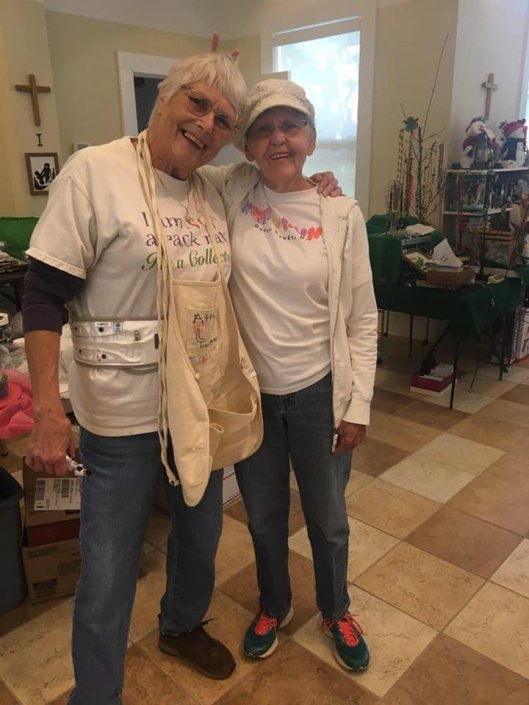
This week is one of my favorite weeks of the year.  This is the time when our church community transforms our property for our Annual Fall Festival.  Leading up to this week, there is a lot of organizing, delegating, preparing, and a fair amount of stress.  But this week, everything snaps into place.  The setup crew knows exactly what to breakdown and where it goes.  The Attic Treasures crew knows just what layout works and the room is magically converted to look like the same inviting space.  Later, our parking crew will come out and lay out where cars can park, tents will be erected, and all kinds of goods will be placed.  Having done the festival for nineteen years, we know the drill and seem to operate from muscle memory.

I love this week for several reasons.  One, I love seeing the community come together – both parishioners and neighbors alike, to make for a fun week of memories, laughter, and new experiences.  I love seeing people’s passion for helping others unfold in a way that is loving, affirming, and fun.  And I also love seeing people step up, taking on things that are a burden on their time, but doing so for the greater good.  The week truly is inspiring, and I love inviting the larger community into our joy.

This week – or perhaps next week after the dust has settled – I invite you to consider what other parts of your faith life might need to be flexed enough so that you have muscle memory around them as well.  Perhaps it is just making Sunday worship a part of your weekly experience with God – letting the routine of liturgy create a common pattern for you, while also seeing how the routine of liturgy creates surprising moments of grace and joy.  Maybe your muscle memory can form around inviting people to church.  I find the more I talk about a thing I am passionate about, the more talking about it becomes easy.  Or maybe your muscle memory will be around creating practices that feed your soul – our monthly book group, our yearly Women’s Retreat, a weekly Bible Study or Choir rehearsal.  If any of these practices create even a portion of the joy we experience during Fall Festival week, I expect you are in for a real treat.  I cannot wait to hear about it!


On the Infertilities of Life…

31 Wednesday Jul 2019

Posted by jandrewsweckerly in Uncategorized

≈ Leave a comment

Tags

calling, church, community, God, healing, infertility, limitless, limits, meaning, share, spiritual, story, struggle

tree-of-life

Photo credit:  https://cbsipandpaint.com/event/tree-of-life/

One of things I am working on this summer is helping our parish leaders plan our fall Women’s Retreat.  In interviewing guest facilitators, one of the facilitators talked about the scriptural theme of infertility.  Having some amazing people in my life who are or have struggled with infertility over the years, I immediately connected with the idea.  But the facilitator expands the definition of infertility as being unable to do the thing you felt you were created to do.

As I have been thinking about this expanded definition of infertility, I have seen that spiritual struggle all around me.  Certainly, I have been aching for those who struggle with literal infertility, knowing what a crushing experience that can be.  But I have also seen that same sense of infertility happen vocationally for people who really thought they would end up in a certain career, only to find their restrictive geography, their family responsibilities, or their inability to take on the time or financial commitment needed to pursue their dream making them unable to do the thing they felt created to do.  As our diocese is looking at electing a new bishop, I am aware that all four of the current candidates have discerned they feel created to serve in this new role, and yet only one of them will be invited into that ministry.

But infertility strikes us in other ways too.  This week I was listening to Kate Bowler’s podcast Everything Happens, and she and her guest were talking about palliative care and mortality.  The two of them talked about how one of the disadvantages of our American culture is a sense of limitless – that we can do anything we want in life.  And what both of them has seen, as a person in recovery from cancer, and a palliative care doctor, is the falsehood, or even the sinfulness, of the notion of limitlessness.  When we think we can do anything our heart desires, we are inevitably disappointed when our bodies, our mortality, or other things outside our control, throw limits around our dreams.  Part of their work has been helping people work through the sense of infertility that comes from that experience, and helping them find hope, healing, and new meaning in life.

As I have been thinking about literal and figurative infertility, I have been wondering whether sharing those stories might be a part of the healing process.  Something about naming the struggle and sharing the journey has power to not only help you move toward invitations to new vocations, but also has the power to encourage others to name their infertilities, destigmatize them, and transform them into something else that can be lifegiving.  If you are looking for a safe place to do that, I invite you to join our community of faith – a place where wounded souls are heard, broken hearts are mended, and new paths are celebrated.  You are not alone.  We would be honored to walk with you.   I suspect we need you as much as you may need us.

On Liturgy, Love, and the Lord…

19 Wednesday Jun 2019

Posted by jandrewsweckerly in Uncategorized

≈ Leave a comment

Tags

communion, community, Episcopal Church, Eucharist, God, instructed, liturgy, longing, mental, mystery, physical, ritual, spiritual, welcome, wonder

38085329_1940214422701475_4123153700623482880_n

Photo credit:  Hickory Neck Episcopal Church; reuse with permission only.

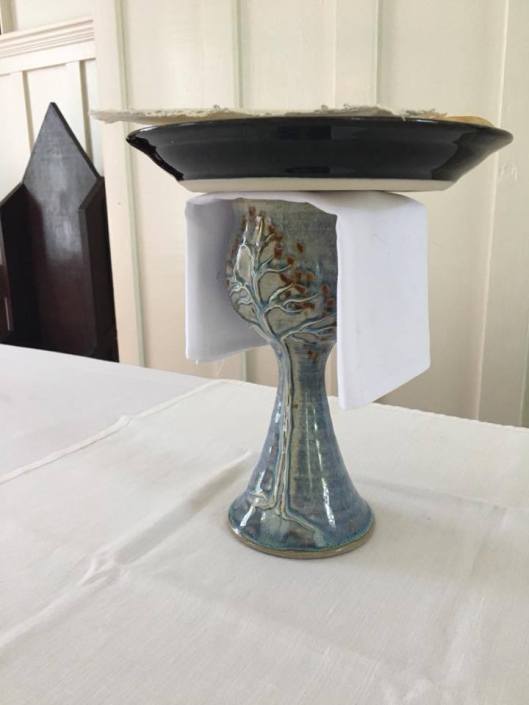
This past Sunday we celebrated an “Instructed Eucharist,” a worship service in the Episcopal Church narrated to explain how and why we do the things we do in Church.  Though Instructed Eucharists are pretty common in the Episcopal Church, I had never led one myself, and I found I was pretty nervous about how it would go.  I worried the narrative pieces would feel too long and people would start to lose attention.  I worried the worship would feel too disjointed by narration to feel like worship.  I worried the teaching portion would not be particularly meaningful for those gathered.

As in most things, my worries were unfounded.  Many of those gathered shared that the narrative did not make the service too long.  In fact, they were surprised at how seamlessly the narrative flowed, and how engaging the experience was.  Several of those gathered were touched by the parts that are always touching – scripture, music, preaching, the peace, communion, and the dismissal.  And many of those gathered, of all ages, and of all spiritual backgrounds, shared not only did they love the service, but they also learned many new things.

What caught my attention about the feedback was not simply that people liked the experience.  What caught my attention about the feedback was people were excited about worship.  Having learned something about the weekly ritual of worship allowed our worship to shift from the physical (the habits of bowing, kneeling, standing, singing, eating, greeting) to the mental (understanding the theology, history, and spirituality of our worship) to the spiritual (the opening of our bodies and minds creating deeper connection with God).  That kind of excitement is at the heart of what drew most Episcopalians to the Episcopal Church – a ritual that somehow spoke to something deep inside them, and of which they wanted more.  Sometimes that longing could be easily described, but sometimes that longing was too mysterious to capture in words.

If you had that experience this past Sunday, or if you have ever been touched by that mysterious sense of God in the worship within the Episcopal Church, I invite you to share that sense of wonder with someone today.  You may share the first moment you stepped into an Episcopal Church, or a lifetime of practice, or a simple Instructed Eucharist.  Share the wonder and beauty with someone else, and invite them into the same experience that has enlivened your spiritual journey.  And if you have never had that experience in a church before, know you are welcome to join us at Hickory Neck – a place where you can weekly come and participate – whether physically, mentally, or spiritually – in something bigger than yourself, but in something that makes you feel more grounded in yourself – something that allows you to find God within, already there waiting for you, affirmed in the community around you.  You are welcome here.

Sermon – Acts 16.9-15, E6, YC, May 26, 2019

29 Wednesday May 2019

Posted by jandrewsweckerly in Sermons, Uncategorized

≈ Leave a comment

Tags

blessing, community, convergence, conversation, conversion, divine, evangelism, faithfulness, God, guidance, Jesus, Lydia, obvious, Paul, Sermon, spiritual

Before I went to seminary, I participated in a program at my parish called EFM – Education for Ministry.  I know many Hickory Neck parishioners have done the program, but for those of you who are unfamiliar, the program is a four-year program where a small group of people gather and each year study a different topic – Old Testament, New Testament, Church History, and Theology.  When I was taking the class, during one of the scripture years, I was traveling by plane alone and I was sorely behind in my scripture reading.  So I threw my overly large study bible into my bag, planning to use flight time and layover time in airports to catch up on my scripture reading.  Now, I do not know if you have ever thought about taking a huge study bible along with you to an airport, but I would encourage you to think long and hard before you do.  Over the course of the day I found I could barely read in peace.  I had a middle-aged woman chat endlessly about her church and bible studies she had enjoyed.  And of course, there were tons of people who just stared at me warily trying to figure out what my angle was and making sure they had a ready escape just in case.  You would think the lesson from my trip would be, “Take a Bible with you, and see what evangelism opportunities the Bible creates.”  But to be honest, I found myself wanting to never carry a Bible with me again in an airport.

These days, I find wearing a collar has a similar effect.  Just this week, I was in a parking lot and some man approached me about giving money to his ministry.  After I agreed to take some information instead of giving him cash, he asked me what the thing around my neck was.  When I told him I was an Episcopal priest, he gave me a smirk, and kind of grunted as he turned away and looked for his next “customer.”  Most often when I am in my collar, people stare – sometimes discretely, but other times I have to catch their eye before they realize how blatantly they are staring.  Other times – probably my favorite times – people will tentatively ask me if I am clergy and then will ask some really interesting questions, sometimes even asking me for a prayer.

I get to have a lot of God conversations because of my collar.  But when I am in plain clothes, and I imagine for most of us here, finding ways to engage others about faith is trickier.  We certainly could lug around a huge study bible.  We could print up some Hickory Neck gear and either hope people talk to us, or make sure the gear says “Ask me about my church!”  We could get really bold and when we are at the coffee shop put up a little sign that says, “Ask me about Jesus and I’ll buy you a cup of coffee.”  Or we could take the opposite tack, and just hope not only someone will randomly talk to us, but also the conversation will magically shift toward spirituality, church, or God.

Truthfully, when most of us think about evangelism or having spiritual conversations, we kind of wish we could be a little like Paul in our scripture lesson today.  Paul travels from town to town, receives direct instruction from God about where he should go, and when he and his group talk with a group of praying women, one of them – in fact, a prominent, powerful woman of wealth, not only decides to be baptized, but also invites Paul and his group to stay in her home.  When we think about evangelism, or at least the baptismal covenant promise we make to share Good News, we want something similar.  We want God to be super obvious about where we should go and to whom we should speak.  We want to know if the coffee shop, the grocery store, or the brewery will be the place where we can avoid awkwardness and have a meaningful conversation.  We would love to know we are going to talk to a group of spiritually-minded people who are open to what we have to say.  And, secretly, we would be thrilled if whatever conversation we have leads to a total conversion – someone as enthusiastic as Lydia who wants to come with us to church on Sunday.  If Jesus, the church, or our crazy clergy keep insisting that we talk to people in our community and have God conversations, we at least want to be assured we will have as smooth of an experience as Paul.

But that’s the funny thing about Paul’s experience.  Paul does not really seem to know how to handle this evangelism thing much better than us.  In the verses of Acts before our text today, we are told that Paul starts out for Asia, but the Holy Spirit prevents him from going there.  As Paul keeps trying cities on the way to Europe, he finally has a dream where a man from Macedonia implores him to come and help.  But once Paul finally makes his way to Macedonia, the man from his vision never appears.  In fact, Paul and his crew hang out for several days in the city, not seeming to do anything.  Not until the sabbath does Paul seek out people who are already worshiping.  Paul does not approach strangers or people whose faith is unknown to him.  Instead, he finds the familiar – people of his own tradition, praying to God, and there he decides to share his faith.  And although Paul thought he was bringing blessing to others, Lydia is the one who brings blessing to him – offering her home and hospitality, and continuing to do so when Paul gets in trouble with the law (which is a story for next week!).

At the heart of what happens in our story today is what theologian Ronald Cole-Turner calls the “inexplicable convergence of human faithfulness and divine guidance.”  According to Cole-Turner, “Paul would not have been guided to this place at this moment, were he not first of all at God’s disposal, open to being guided, sensitively attuned to being steered in one direction and away from all others.  Lydia would not have arrived at this place or time, had she not first of all been a worshiper of God, a seeker already on her way.  Paul does his part and Lydia hers, but it is God who guides all things and works in and through all things, not just for good but for what would otherwise be impossible.”[i]

That is our invitation today: to be faithful.  To be willing to listen to God, to be willing to speak, even when we worry what others might think of us, and to be willing to listen to and honor the story of others.  That is really all Paul does – rather clumsily, but faithfully.  And we can be faithful in that way – on the golf course, at work or school, at the local eatery, because we know that there will be an inexplicable convergence of our faithfulness with divine guidance.  We can be faithful because we know God will show up.  God will make sure we have that casual conversation that leads to us talking about why in the world we would work so hard to get ourselves and/or our families here every Sunday.  Jesus will make sure that when someone is sharing something vulnerable or painful with us, we will be able to name God’s presence in the midst of their experience.  The Holy Spirit will make sure that when we open our mouths, despite the fact we have no idea what to say, something meaningful will be said.  Divine guidance will be there because of our human faithfulness.  Inexplicably converging, and working for good.  I cannot wait to hear your stories of convergence!  Amen.

[i] Ronald Cole-Turner, “Theological Perspective,” Feasting on the Word, Yr. C, Vol. 2 (Louisville: Westminster John Knox Press, 2009), 476.

Sermon – 1 Corinthians 12.12-31a, EP3, YC, January 27, 2019

30 Wednesday Jan 2019

Posted by jandrewsweckerly in Sermons, Uncategorized

≈ Leave a comment

Tags

affirm, body, church, community, convict, Corinthians, essential, gifts, honor, incomplete, needed, Paul, rejoice, Sermon, spiritual

Last week, Paul talked to us through his first letter to the Corinthians about spiritual gifts.  He talked about how there are a variety of gifts, and although they are all different, they are all activated by God.  As Charlie talked about this lesson last week, he encouraged us to reflect on our own spiritual gifts, and then to use that discernment to determine how we might support the ministries of Hickory Neck.  In fact, today we will gather our Time and Talent forms, blessing our discernment and our offering of those spiritual gifts.

If the portion of Paul’s letter last week affirmed that we all have gifts, the portion of Paul’s first letter to the Corinthians we hear today tells us how the use of our gifts within the church is not just a nice thing to do – like bringing someone flowers.  No, today Paul explains to us the sharing of our gifts is critical to the operation of the church as an organism.  In other words, without each of us giving our gifts to the church, the whole church either limps along as an incomplete body or does not function at all.

Any of us who have had an injury or are currently suffering through a portion of our body not working knows how this works.  A couple of weeks ago, my hands got really dry and a little crack developed on my thumb.  Literally, the crack was about an eighth of an inch in size.  And yet, it was one of the most painful experiences.  Over the next few days, I realized the pain wasn’t going to stop and the cut wasn’t going to heal until I put on a Band-Aid.  The first challenge is figuring out how to make the Band-Aid stick when the cut is not on a flat surface.  Then, of course, do you know how hard keeping the thumb dry to maintain a Band-Aid is?  Suddenly, you find you are washing your hands and your face in super awkward contortions – sometimes electing to use only one hand while washing your face, or giving up altogether so you can help give a bath to your little one.  And once you have the Band-Aid on your thumb, you do not have the same kind of grip on things like jars and bottles you are opening.

This drama is the same for any part of us that is damaged.  We never realize how important one of our body parts is until we lose or have limited use of the part.  For a brief period of time, once the body part is healed, we find ourselves thanking God for our thumb, or kidney, or heart.  But we are a pretty forgetful people, and eventually, we stop thanking God for the incredible parts of our body.  We walk, eat, talk, ponder, laugh, exercise, and breathe without thinking about all the tiny parts needed to make those functions possible in the first place.  Everyday, we could easily pray through hundreds of parts of our bodies, thanking God for each part that works.  And yet, I know very few healthy people who engage in such thanksgiving and gratitude.  Even folks who were once ill or injured seem to forget the painful reminders of not being whole once wholeness is restored.

Paul uses the classic metaphor of the body to help the Corinthians see that the body of the faithful is no different.  Once the community has done a spiritual assessment, once those Time and Talent forms are turned in, we are not done.  We do not take those forms and say, “Okay, we got an usher, someone willing to adopt a church garden, a Sunday School teacher, and someone to make meals.  We did not get someone to operate the sound system, or deliver welcome baskets to newcomers, or help layout the newsletter.  Ah well, we’ll be fine.”  Paul knows we cannot operate the body of Christ this way in the same way that anyone with a broken toe or someone with fluid in their lungs or ears cannot operate at full capacity.  As Paul familiarly says, “The eye cannot say to the hand, ‘I have no need of you,’ nor again the head to the feet, ‘I have no need of you.’”[i]

Paul’s letter today reminds of a few things.  First, we are not fully honoring our own bodies when we do not offer our gifts to the church.  When I was trying to figure out what I wanted to be when I grew up, I tried out many things.  I remember a Marketing department tried to convince me that I would be a great asset to their team.  And, I probably would have been pretty good at the work and the team did seem to have a lot of fun.  I remember how I loved working at a Food Bank and my awesome boss, even though most of my fellow volunteers were not people of faith.  I remember being thrilled when I landed at a Habitat for Humanity affiliate, serving a good cause, talking about our faith, even praying at staff meetings.  And yet, something still felt unbalanced.  And so the church became my playground.  I learned how to lead Morning Prayer, I fumbled my way through an adult bible study, and they even convinced me to co-lead the Middle School class!  What Paul would remind seekers like you and me is the church is the place where we can find a sense of wholeness by using all the parts of our bodies.  The church may be the place where the teacher by weekday brings his gifts to the Sunday School classroom on Sundays; or the church may be the place where the teacher by weekday finds her gifts are better utilized organizing a portion of the Winter Shelter.  The Church is the place where our head and our hands, our bodies, are affirmed.

The second thing Paul’s letter does is remind us how essential each person in the body is.  When other ancient writings used the metaphor of the body, they used the metaphor to determine social or political status; whomever was the head had power over the hands, feet, and legs.[ii] [iii]  Not so with Paul.  Paul says the head is just one part of many.  In fact, those parts we often forget about are usually the essential missing link to powerful ministry.  So, you may have been at home this week thinking, “Meh!  Hickory Neck has nine toes, they will be fine without me.”  Today, Paul asserts ministry does not work without you – whether you are the pinkie toe or the big toe!  Not all of us are great lectors, are handy with a wrench, or are tech savvy.  But we are all good at something – and when that “something” is not offered, the body of Hickory Neck is not whole.  Each of us, even the littlest one who goes to the nursery on Sundays, or the homebound member who rarely gets to join us, has an ability to make us better.  In fact, Paul might argue that those two individuals should have the highest honor in the community.  In other words, even if you do not think you have a gift special enough to give, the church needs you.[iv]  Hickory Neck is not whole without your offering.

The final thing Paul’s letter does is a little more subtle.  Even when all of us fill out our Time and Talent forms, and even when we make that stretch and agree to lead Children’s Chapel, take communion to a parishioner, or help with marketing, Hickory Neck will still not be complete.  There will always be parts of the body that are not operating at full capacity because not everyone is here yet.  This is why whenever a newcomer decides to become a member, we encourage them to look over the Time and Talent form – even if they join at a time well past stewardship season.  Each new person who enters through our doors has something new and fresh to teach us – something we as the community of Hickory Neck were missing until that fateful day you walked through our doors.  But if each new person makes us more whole, that means there are a lot of other holes in our body from all the people we have not yet invited into our fold.  For every neighbor, friend, and stranger who was looking for wholeness and yet we did not invite to church, our community suffers.  For every person whose socioeconomic status, skin color, or sexual orientation is not like ours that we did not invite to church, our community suffers.  For every person who is not my age, does not have my physical or mental abilities, or does not agree with my politics that we did not invite to church, our community suffers.  When we read Paul’s letter and when we look at our Time and Talent forms this week, we will invariably see the people we forgot to invite to church who would make us so much better as a community.

Today’s word from scripture is both affirming and convicting.  Paul wants us to know that each us has the capacity for wholeness when we use all the gifts God gives us.  Paul wants us to know that our Church needs us, in all our unique, odd, loveliness.  Paul wants us to know that the Church is the place where everyone has a place.  But Paul also wants us to know that we are not done.  We have sometimes not affirmed our own beautiful selves, we have sometimes held back our gifts from the church, and we have sometimes avoided welcoming in the very people who would make Hickory Neck a fuller version of her fantastic self.  Our invitation this week is to say yes:  say yes to honoring our own bodies with all their fabulous gifts; say yes to trying new adventures at church that will bless us in ways we cannot imagine; say yes to inviting a person who we might not even consider compatible with our image of who Hickory Neck should be.  Paul promises God will arrange the body so that we can all rejoice together.  Amen.

[i] 1 Corinthians 12.21

[ii] Lee C. Barrett, “Theological Perspective,” Feasting on the Word, Yr. C, vol. 1 (Louisville:  Westminster John Knox Press, 2009), 278.

[iii] Troy Miller, “Exegetical Perspective,” Feasting on the Word, Yr. C, vol. 1 (Louisville:  Westminster John Knox Press, 2009), 279.

[iv] Raewynne J. Whiteley, “Homiletical Perspective,” Feasting on the Word, Yr. C, vol. 1 (Louisville:  Westminster John Knox Press, 2009), 283.

On Cultivating Gratitude…

22 Wednesday Nov 2017

Posted by jandrewsweckerly in Uncategorized

≈ Leave a comment

Tags

blessing, cultivate, enrich, God, gratitude, intentional, joy, practices, Spirit, spiritual, Thanksgiving, Thanksgiving Day

Sixty-and-Me_Women-Over-50-Express-their-Gratitude-on-Thanksgiving-Day-740x417

Photo credit:  sixtyandme.com/50-women-over-50-express-their-gratitude-on-thanksgiving-day/

I don’t know about you, but I find my spiritual life has hills and valleys.  There are times when I feel especially close to God, and that closeness leads to a sense of overflowing gratitude.  And there are times when I fill up the extra space in my life with everything but God.  In those valleys, I sometimes feel God is far away – mostly because that is where I pushed God.  In those times, gratitude is often the last thing I experience.  Instead, I can be irritable and short-tempered.

In order to stay out of those valleys of self-absorption, I have found I need intentional practices of gratitude.  Celebrating Thanksgiving Day tomorrow helps put most of us in a spirit of gratitude (assuming we are not in a spiral of menacing traveling conditions, dread about time with challenging family members, or anxiety about food preparations).  But this year, I have found that I am coming into Thanksgiving Day with a full cup.  I am working on a stack of thank you notes for the generous pledges our parishioners have made to our church; the generosity of our parishioners makes writing the notes a joy.  Our church has been negotiating a new partnership which looks like may come to fruition; it is the culmination of a lot of dreams, most of which began before my arrival, and the promise of fulfillment is at times overwhelming.  And our church has two different services for Thanksgiving:  one with our ecumenical brothers and sisters, and a mass on Thanksgiving Day; both are occasions for deep joy and gratitude.

The thing about these events and experiences is they cultivate in me a spirit of gratitude.  When my spirit is primed for thanksgiving, every time I take a walk or hop in my car, I find a breathtaking tree that has hit its peak fall color.  When my spirit is primed for thanksgiving, the little things my family does – an unprompted “thank you,” a cleaning up of the kitchen, a spontaneous hug – all make my heart warmed.  When my spirit is primed for thanksgiving, I see the daily tasks of others that go unnoticed:  the county worker clearing a dead animal from the street, the childcare provider who sees my child being extra clingy and swoops her up in a big, distracting hug, or the administrator who has already thought about the things on my mind and started the projects I need accomplished.

If your spirit has not been primed, there is still time.  Perhaps you can start with tomorrow’s celebration, looking for glimpses of hope and blessing throughout your day (even in the midst of family drama, I promise you can find those glimpses!).  But do not let the thanksgiving end there.  Find ways to enrich your spirit each day:  whether it is putting on lenses of gratitude, taking up a tangible practice, or surrounding yourself with others who are naturally inclined toward an attitude of gratitude.  My suspicion is you will find your cup running over soon, and that overflow can be a blessing to others!

On the Power of Hands…

03 Wednesday May 2017

Posted by jandrewsweckerly in Uncategorized

≈ Leave a comment

Tags

bishop, blessing, church, confirmation, discernment, Episcopal, God, hands, journey, spiritual

confirmation

Photo credit:  https://www.sevenwholedays.org/2012/05/29/on-confirmation/

When I was confirmed as an Episcopalian, the decision to be in the Cathedral that day was preceded by a long journey.  I took not one, but two confirmation classes, not feeling entirely ready after the first class.  I was not only discerning whether I was called to membership in the Episcopal Church, I was also discerning a call to ordained ministry in the Church.  I had spent over a year studying, praying, talking to people about their denomination experiences, and listening for the voice of God.  I had to have conversations with people like my father, who not only was a United Methodist minister, but also was his father, his brother, his uncles, and on and on.  Needless to say, when I knelt down in front of the bishop that day, I came with the weight and conviction of that discernment process.

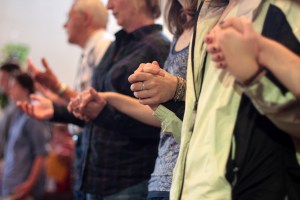
But something powerful happened when the Bishop put his hands on my head, and my presenters put their hands on my shoulders.  Though the weight of those hands was heavy, the weight also seemed to melt away the year of toil and angst.  The power of those hands seemed to push out of my being any doubt or sense of wandering, and instead, a wave of peace, affirmation, and purpose washed over me.  When the Dean helped me rise to my feet, I felt light and buoyant.  The imprint of those hands felt both oddly still heavily present and yet empowering.

This Sunday, we will be confirming and receiving several parishioners at our triennial bishop’s visit.  They come from all walks of life.  Some are youth who were born and raised in the Episcopal Church.  Some are adults from Baptist, United Methodist, and Roman Catholic backgrounds.  Some bring burdens from their past experiences in the church and some are deeply appreciative of their roots in another tradition.  All have spent time in study, reflection, and discernment about whether this is the right decision for them.  And all are excited about the new ways they have seen God inspiring their spiritual journey, and are hopeful about the ways that Hickory Neck will walk with them on that journey.

All of that – the preparation, the discernment, the long histories, the maturing of youth, the questions, and the affirmation all come through hands – hands that have been blessed through the centuries and consecrated to bless this new phase of journeys.  I look forward to this momentous occasion and all it brings for our confirmands and those being received.  And I can’t wait to see where the journey takes them in the years to come!

Gratitude and Giving

23 Friday Oct 2015

Posted by jandrewsweckerly in Uncategorized

≈ Leave a comment

Tags

church, community, encouragement, faith, giving, God, gratitude, pledging, prayer, spiritual, stewardship, upheaval

This week we begin a series of guest blog posts by parishioners at the Episcopal Church of St. Margaret in Plainview, NY.  They are reflecting on what stewardship means to them, and how God the Giver has been a part of their lives.  Our first guest post is from parishioner Phil Russo.

I am grateful for many blessings in my life but most recently I find my gratitude rooted in the support my family has received during times of adversity.  Over the course of the past two years I have encountered two sudden and unexpected upheavals.  The first involved my mom suddenly falling ill, resulting in a long hospital stay, with series of setback after setback.  As we began to grasp the reality and gravity of the situation, my family and I founds ourselves sitting in a hospice facility knowing that the end was near.

Photo credit:  http://newmanec.com/parish/prayers/

Photo credit: http://newmanec.com/parish/prayers/

The second upheaval was even more unexpected and impactful, as my wife Nancy fell seriously ill.  It turned our life upside down as we faced surgery, treatments, and adjusting to a new normal striving to get our lives back.  During both of these ordeals, I found myself praying more often, asking God for help.  At times I labored in trying to understand why these things were happening to me and my family.  As many of you know, these kinds of things can test your faith.  One constant source of support and comfort was knowing that we had a church family at St. Margaret’s praying for us, pulling for us and reaching out with words of encouragement.

St. Margaret’s for me has always been a kind of spiritual anchor, a kind of home base for me and my family in our faith journey.  It made us feel good to be part such a caring church community.  It also underlined the importance of having a spiritual support base to lean on in time of need.  I am grateful and blessed to be part of the St. Margaret’s family.  It just seems logical for me to start from a place of gratitude when I consider my thoughts about Stewardship and pledging financial support.

I am also grateful that I have gotten involved in some of the business aspects that go into keeping St. Margaret’s running.  Unfortunately, St. Margaret’s pledges do not cover expenses and we operate at a loss.  This is not sustainable.  This is an inconvenient truth that many do not realize or may choose to treat with indifference or leave to others to deal with.  It will eventually cause us to make difficult decisions and possibly cut programs near and dear to many.  Therefore, I find it helpful to keep these facts in mind as I consider my annual pledge.  It always starts with gratitude but it is also grounded in an understanding of the financial side of St. Margaret’s.

Submitted by Phil Russo.

On delight…

27 Wednesday Aug 2014

Posted by jandrewsweckerly in Uncategorized

≈ Leave a comment

Tags

adult, children, creation, delight, God, spiritual, wonder

Courtesy of http://www.garylellis.org/tag/delight-yourself-in-the-lord-and-he-will-give-you-the-desires-of-your-heart/

Courtesy of http://www.garylellis.org/tag/delight-yourself-in-the-lord-and-he-will-give-you-the-desires-of-your-heart/

As parents of two young children, whose family lives far away, we try to be diligent about documenting our children’s development and milestones.  In our family we do that with group emails and links to recent photos.  At the beginning of our children’s lives, we share about the many firsts:  first smile, first laugh, first crawl, first step.  As they age, we note other developments: conversation skills, playing abilities, sleeping habits, physical growth.  Of course we usually include funny anecdotes which give a little insight into the unique personalities of both our children.  At this age, there is a sense that everything is monumental and to be cherished.  We get excited about and are fascinated by the constant changes and growth.  Consequently, we are often scrambling for a camera, or trying to memorize details to share later.

As I was filling out my youngest child’s “First Year Calendar” this week, noting all the little details I could remember from the last month, I was thinking about what a shame it is that we do not do the same things for ourselves as adults.  I do not know about you, but I find that I am so busy looking ahead and attacking tasks in front of me, that I rarely sit down and look back at what has happened in my life – in the last day, the last week, the last month.   And when I do look back, I more often look back at things I have yet to do.  I have lost altogether a sense of wonder and amazement at my own life – the accomplishments, blessings, and goodness of life.  I cannot remember a time when I thought, “Wow, look at how I have grown and changed in this last month!  What a blessing!”

I wonder if this might be a spiritual discipline that could bring us closer to God.  Our God is a God of love, who looks at us and is well pleased.  In fact, when God created humankind, God said that it was “very good.”  I like to imagine God as the kind of God who takes the same kind of delight in each of us as we take in little children.  I invite you this week to grab your family calendar, your smart phone planner, or your recent photographs and reflect on the goodness that is you.  You are made in the image of God and are wonderfully made.  I invite you to take delight in God’s creation.

Sermon – Matthew 6.1-6, 16-21, AW, YA, March 5, 2014

06 Thursday Mar 2014

Posted by jandrewsweckerly in Uncategorized

≈ Leave a comment

Tags

Ash Wednesday, discipline, God, humor, Jesus, Lent, piety, Sermon, spiritual

As many of you know, Lent is my favorite season of the liturgical year.  I love the spiritual discipline Lent encourages, I love the liturgical uniqueness of Lent, and I love the ways that Lent encourages us as a community live life differently, even if only for a little while.  By Ash Wednesday every year, I usually have a set discipline in place, and I am eager to get going.  But this year, I find myself in a situation in which I have never been.  With the pending birth of our second child, I find myself hesitant to commit to any spiritual discipline this Lent.  I have no sense of how tired I will be, or how upended my home routine and family life will be; I have no idea whether I will be too exhausted to stay connected digitally to the world, or whether technology will be my way of escape when everything else is disjointed; and besides the desperate prayers of an exhausted, weary mother, I have no idea how to tend to my spiritual life once I step away briefly from my churchly life.

I confess this sense of being lost about Lent because I imagine some of you may be feeling that same sense of being lost as well.  We have been buried in an awful winter, longing more for spring and the joys of Easter, than preparing for burrowing deeper into the depths of penitence and discipline.  Our news feed is full of local and global disaster, making even the normal joy of international events like the Olympics feel a bit hollow.  And we have a growing itch to be more settled here at Church – as we trip over one another trying to find adequate space for normal activities while our undercroft is under construction, as our Vestry makes changes to better equip us for ministry, and as our Rector steps away for a time, making us all have to assume responsibilities that burden our already full plates and sparking concern about how we can thrive without our leader at the helm.  Who has time for figuring out a Lenten discipline when we feel like we are just barely managing our lives?

Into this sense of discombobulation, Jesus comes at us in the gospel lesson today with a scathing critique of our spiritual lives.  Jesus wants us to give alms, but to do so with such secrecy that even our own selves are unaware of our sacrifices.  Jesus wants to take our prayer to our private rooms, so we are not tempted to bring attention to ourselves in public.  Jesus wants us to gussy ourselves up daily so that no one notices the longing and discomfort our fasts are creating for us.  To be honest, his words are a bit confusing and seem contradictory to Jesus’ other messages.  This is the same Jesus who later in Matthew says, “What I say to you in the dark, tell in the light; and what you hear whispered, proclaim from the housetops.”[i]  So which are we supposed to do?  Are we to keep our faith humbly hidden so as not to be seen as braggadocios, or are we to shout about our God on the mountaintop, or at least in the local diner, so that others might see the goodness of what God has done for us, and want to join us in that joy?

Perhaps a better place for us to begin is to imagine Jesus offering this teaching with a bit of sarcastic humor.  This past stewardship season we showed a video about the ways in which people give to church with muddled intentions.  The video has a series of clips with people doing things like using their generous giving to garner the decisions they want made in church or dramatically holding up their pledge envelopes before dropping them in the plate.  Imagine the person who would rather put coins in the offering plate for the noise they make than put in bills which silently but strongly support ministry, and you have the idea.  This is the kind of ribbing Jesus is doing when he describes the showy alms giver.

In high school, I was friends with a girl whose father was an evangelical pastor.  I remember going out to dinner with her family once, and being mortified before our meal began.  Once our plates of food arrived, her father stood up in the middle of the dining area, and very loudly began a prayer that, I promise, was easily five minutes long.  My cheeks began to redden as he went on and on.  I could feel the shifting of people near us as they became equally uncomfortable.  As I peeked mid-way through his prayer, I could see a waitress approach our table for drink refills and the recoil back to her station.  I was so relieved the next week at school when my friend apologized for her dad and made a joke about how much she actually hates eating in restaurants because her food is always cold by the time the prayer is over.  This is the kind of prayer Jesus jokes about too when he sends us to our rooms to pray.

And we all know examples of that complainer who has taken up fasting or whatever form of denial they have chosen for Lent.  They regale you with stories of how they almost fainted, or how they had to avoid their favorite activities in order to stay faithful.  You almost want to give them a handkerchief so that they can more dramatically tell their tale of woe as the lift their hand dramatically to their heads.  These are those whom Jesus teases when he says to put some oil on your face – so that even if you cannot keep your mouth quiet with complaints, at least you will look good.

The challenge with us in Lent is not that our spiritual disciplines need to be so rigidly hidden away.  The danger comes when our disciplines become more about ourselves than about our relationship with God and one another.  Jesus is not telling us not to exercise our piety.  Jesus is trying to jokingly help us to see the ways in which our piety can become a stumbling block to others seeing the goodness of God.[ii]  Think of the person who gives generously, who prays prayers that always seem to touch you, or who shares with you what fasting has done for them in a way that inspires you.  Jesus is telling us to be more like them:  not to dramatically hide away our almsgiving, prayer, and fasting, but to do that almsgiving, prayer, and fasting with a genuine humility that invites others to want to know more.  And at the end of the day, Jesus is also telling us to chill out – to enjoy whatever discipline you have chosen and not to worry so much about performing that discipline, but humbling trying that discipline within a community of people who can laugh at themselves as they try to do the same.

This Lent, as I begin this journey with you, my discipline is going to be about giving myself a break, and not taking myself so seriously.  I am trusting that by not pushing myself to take on some discipline that will only make me feel like a failure by week two of newborn sleep deprivation, that God will be present, revealing God’s self to me and showing me that God can work in spite of me and in spite of what promises to be a very unique Lent in the life of a priest.  I am trusting that God, the faith of this community, and my intentional letting go this Lent will work in harmony to make this time a time of holy connection to God.  Jesus invites you into the same trusting release this Lent.  No matter what discipline you assume, or what battles you face in the coming forty days, God will give you moments of insight and blessing, and even a bit of humor to keep you going.  Amen.


[i] Mt. 10.27

[ii] Patrick J. Willson, “Homiletical Perspective,” Feasting on the Word, Yr. A., Vol. 2 (Louisville: Westminster John Knox Press, 2010), 25.

← Older posts
Newer posts →

Recent Posts

  • On the Myth and Magic of Advent…
  • On Risking Failure and Facing Fear…
  • Sermon – Luke 23.33-43, P29, YC, November 23, 2025
  • On Inhabiting Gratitude…
  • Sermon – Luke 20.27-38, P27, YC, November 9, 2025

Archives

  • December 2025
  • November 2025
  • October 2025
  • September 2025
  • August 2025
  • July 2025
  • June 2025
  • March 2025
  • February 2025
  • December 2024
  • November 2024
  • October 2024
  • September 2024
  • August 2024
  • July 2024
  • June 2024
  • May 2024
  • March 2024
  • February 2024
  • January 2024
  • December 2023
  • November 2023
  • October 2023
  • September 2023
  • August 2023
  • July 2023
  • June 2023
  • May 2023
  • March 2023
  • February 2023
  • January 2023
  • December 2022
  • November 2022
  • October 2022
  • June 2022
  • May 2022
  • January 2022
  • December 2021
  • November 2021
  • October 2021
  • September 2021
  • August 2021
  • June 2021
  • May 2021
  • April 2021
  • March 2021
  • February 2021
  • January 2021
  • December 2020
  • November 2020
  • October 2020
  • September 2020
  • August 2020
  • July 2020
  • June 2020
  • May 2020
  • April 2020
  • March 2020
  • February 2020
  • January 2020
  • December 2019
  • November 2019
  • October 2019
  • September 2019
  • August 2019
  • July 2019
  • June 2019
  • May 2019
  • April 2019
  • March 2019
  • February 2019
  • January 2019
  • December 2018
  • November 2018
  • October 2018
  • September 2018
  • August 2018
  • July 2018
  • June 2018
  • May 2018
  • April 2018
  • March 2018
  • February 2018
  • January 2018
  • December 2017
  • November 2017
  • October 2017
  • September 2017
  • August 2017
  • July 2017
  • June 2017
  • May 2017
  • April 2017
  • March 2017
  • February 2017
  • January 2017
  • December 2016
  • November 2016
  • October 2016
  • September 2016
  • August 2016
  • July 2016
  • June 2016
  • May 2016
  • April 2016
  • March 2016
  • February 2016
  • January 2016
  • December 2015
  • November 2015
  • October 2015
  • September 2015
  • August 2015
  • July 2015
  • June 2015
  • May 2015
  • April 2015
  • March 2015
  • February 2015
  • January 2015
  • December 2014
  • November 2014
  • October 2014
  • September 2014
  • August 2014
  • July 2014
  • June 2014
  • April 2014
  • March 2014
  • February 2014
  • January 2014
  • December 2013
  • November 2013
  • October 2013
  • September 2013
  • August 2013
  • July 2013
  • June 2013
  • May 2013
  • April 2013
  • March 2013
  • February 2013
  • January 2013
  • December 2012
  • November 2012
  • October 2012
  • September 2012

Categories

  • reflection
  • Sermons
  • Uncategorized

Meta

  • Create account
  • Log in
  • Entries feed
  • Comments feed
  • WordPress.com

Blog at WordPress.com.

  • Subscribe Subscribed
    • Seeking and Serving
    • Join 394 other subscribers
    • Already have a WordPress.com account? Log in now.
    • Seeking and Serving
    • Subscribe Subscribed
    • Sign up
    • Log in
    • Report this content
    • View site in Reader
    • Manage subscriptions
    • Collapse this bar
 

Loading Comments...