• About

Seeking and Serving

~ seek and serve Christ in all persons

Seeking and Serving

Tag Archives: story

Sermon – Luke 24.1-12, EV, YC, April 19, 2025

18 Wednesday Jun 2025

Posted by jandrewsweckerly in Sermons

≈ Leave a comment

Tags

church, Easter Vigil, God, Jesus, love, salvation, Savior, Sermon, story

Tonight, we celebrate one of the most ancient, and in many traditions, the most important liturgies of the Church.  This is the festival of the resurrection of our Lord – despite what you may have learned about Easter Sunday.  Tonight is the night that we liturgically mark that shift from Lent and the Passion to our Lord and Savior’s Resurrection.  The church gives us this incredible gift tonight, and our job is to hearken back to an innocent sense of awe as we realize what God does through Jesus Christ.

Luckily the Church helps us hearken back to that innocent sense of awe through the structure of the liturgy.  I like to think the Church’s work in the Easter Vigil as being like that grandfather in the movie The Princess Bride, who visits his sick grandson to read him a fantastic tale.  In that movie, the grandson is skeptical – that in fact his grandfather might be planning to read him a boring or sappy story.  But the grandfather insists that this story is one of the greatest stories ever told – a story that his father read him, that he read to his son, and now, he would read to him, his grandson.

The Church is like that grandfather to us tonight, who gathers up the grandchildren around him, and says, “Let me tell you a story.  This story is greater than any other story you have ever heard.  This story is full of intrigue and surprise, full of the primal elements, full of drama and passion, and full of twists and turns you will not expect.  Do you want to hear the story?”  And before the grandfather can even begin, we, the grandchildren, are waiting with bated breath.

“Once upon a time, before there was time, or people, or even land or sky, the earth as we know the earth was a formless void – filled with watery chaos.  God created the world as we know the world, and proclaimed that creation, ‘good.’  Sometime later, that world fell into sin and God used water to cleanse the whole earth through flood.  To the one person God saved, God promised to never do such destruction again and made a covenant of protection.  Much later, the people of God were fleeing a horrible fate – an awful leader who had enslaved the people.  This time, God once again manipulated the water – both to save God’s people and to destroy those who wished to destroy God’s people.  On the other side of the sea, on dry land, the people rejoiced.  Later, the people fell away from God and although God was grieved, God spoke to the prophet Ezekiel.  God told Ezekiel to reassemble the dry bones of God’s people, and to breathe new life into them.  And the people lived again.  Much later, when the people had become dispersed and disheartened, God proclaimed new hope.  God proclaimed that God would gather God’s people again and would eliminate their despair.

“But after all of that – after creation and floods, after the division of the sea and the giving of new life to old bones, even after promising to save the people – after all of that, yet still the people of God lived in sin and in separation from God.  And, knowing no other way, God did something so unexpected, so wonderful that we could never repay God.  God sent God’s Son to live and breathe among us, to show us the way of faithful living and the way to eternal life.  And as if that were not enough, that same Son was betrayed by his friends, mocked and reviled, and killed on a cross.  That was a dark, painful time – darker and more painful than anything the people had known before.  And so, the people of God did the only thing they knew to do:  they mourned, they hid in fear, and a few brave women went to tend to this precious gift they had been given, making his death as sacred as they knew how. 

“But something amazing happened – something no one ever anticipated.  The Son of Man, the Prince of Peace, the Messiah, Jesus was not there.  And the disciples went from east to west, sharing the sacred and imperishable proclamation of eternal salvation.”

At the end of the film The Princess Bride, the grandfather finishes the book, and tells his grandson to go off to sleep.  The once skeptical grandson hesitantly addresses his grandfather, “Grandpa?  Maybe you could come over and read it again to me tomorrow?”  His grandfather smiles and responds, “As you wish.”  Those words are significant because in the story the grandfather tells, the main characters say, “As you wish,” as their code word for, “I love you.”  Tonight, we too hear the story of our salvation, the great sweeping of our history with our Lord, and the salvific work of our Savior Jesus Christ, and we too find ourselves strangely warmed, longing to perhaps hear the story again.  And to us, the Church says, “As you wish.”  Amen.

On Stories and Wonder…

17 Wednesday Jul 2024

Posted by jandrewsweckerly in reflection

≈ Leave a comment

Tags

busyness, children, community, compassion, food insecurity, God, hunger, prayer, privilege, stories, story, summer, volunteer

Photo credit: Jennifer Andrews-Weckerly; use with permission only

This week my older daughter and I volunteered with a local agency that is providing weekday meals to children in our community experiencing food scarcity.  These are children who qualify for free lunch during the school year, but when school is out of session, lose their one steady source of food for most of the week.  On our volunteer day, we packed about 260 meals – including a protein-packed sandwich, juice, fruit, a salty snack, and a homemade cookie. 

As the smell of those freshly baked cookies wafted from the brown paper bags, I found myself wondering about the countless details of these children.  In that mass of children spread around our county, I wondered how they were getting the food from those drop-off points, knowing that many of their care providers likely work during the day.  I wondered if they took joy in the unknown contents of their bag, or if those five items felt rote for them after a summer of brown bags.  I wondered if they had siblings or friends also receiving bags and whether they traded food items like my kid does sometimes at school.  I wondered if a temporarily filled belly eased any emotional strain they may be experiencing without the socialization of school. 

Wondering about those 260 stories was an important reminder to me of how irregularly I see the world as God does and instead get lost in my own slice of the world.  As I juggle transportation of children, writing the next sermon, facilitating a church meeting, and planning meals, I totally lose the stories of those who struggle with those basic things I take for granted.  I think that is why I longed so much to know at least some of the stories of those children – so that I might more tangibly be mindful of the wideness of our community and those God loves that I have the privilege to be unconcerned about most days.

I wonder what stories you have been missing lately.  Who in your community have you forgotten – not out of malice or lack of generosity, but more out of the busyness of life?  Whose stories might help you see your family members and coworkers with a bit more compassion?  What stories might make you view politics a bit differently or impact where you give your time and resources?  My prayer for you is that you seek those stories this week – and that those stories find you.

Sermon – John 3.1-17, L2, YA, March 5, 2023

29 Monday May 2023

Posted by jandrewsweckerly in Sermons

≈ Leave a comment

Tags

belief, character, curious, faith, Jesus, Lent, love, Nicodemus, Sermon, skeptical, story

For the next four Sundays in Lent, our lectionary has us step away from the gospel of Matthew – the primary gospel for Year A in the lectionary – and take up the gospel of John.  Each of these Sundays will be a study in story and character:  today we read of Nicodemus, next week the Samaritan woman at the well, then the healed blind man, and finally the Lazarus story.  What I love about the use of the Johannine stories this Lent is they are centered on characters – people – trying to figure out this whole Jesus thing.  They are not passages like John’s flowery beginning:  “In the beginning was the Word, and the Word was with God, and the Word was God…[i]” 

Over the next four weeks, instead of pouring over John’s convoluted text, we will be using John’s stories and characters to help to illuminate that text.  But like any story, we have to be careful about the lure of familiar stories.  Today is no exception.  Right away, John begins to tell us what we presume is everything we need to know.  “There was a Pharisee named Nicodemus, a leader of the Jews.  He came to Jesus by night..”  Immediately, our brains start firing:  this is going to be one of those stories of silly leaders who should know things, but clearly do not.  And Nicodemus is sneaking in under the cover of night:  clearly Nicodemus is embarrassed, unsure, and probably a bit shady.  Two sentences in and we have this all figured out.  Forget how Nicodemus is so dimwitted he can’t understand what Jesus means by being born again.  We hear all the hints and triggers, and we’ve written the sermon before I said a word to you.  Moral of the story:  don’t be like Nicodemus; live in the light of Jesus, because God so loved the world.  Done!

But when we live in a black and white world – or this case a day and night, or darkness and light, world – we miss all the gray where we reside in our faith journey.  No doubt, Nicodemus visits Jesus from the shadows.  But we have to remember, given Nicodemus’ position, approaching Jesus publicly would have been “difficult, perhaps even dangerous…in the bright light of day.”[ii]  Truth be told, Nicodemus is not so different from any of us.  Nicodemus is “a successful and self-confident man, he plays a leadership role in his community.  He is spiritually open and curious, yet also rational.  He approaches Jesus directly and tries to figure out Jesus’ actions and social networks.  He is committed and curious enough that he makes an appointment to talk to Jesus face to face.”  Now, he may not be ready to go public, and so he, “…makes the appointment in the middle of the night, when he can keep his faith secret, separated from the rest of his life.  His imagination is caught by Jesus, but he wants to compartmentalize whatever faith he has.”[iii] 

Knowing Nicodemus has compartmentalized his faith, and knowing he is a bit skeptical, and knowing, eventually, he really does not get what Jesus is saying, the text today invites us not to judge or belittle Nicodemus, but instead see ourselves in him.  Before you get indignant about how maybe you have been born again through baptism, or how you can describe a moment when you were saved by proclaiming your belief in Jesus, I want you to remember one redeeming thing about Nicodemus today:  He is curious.  Nicodemus could have stayed even further in the shadows, he could have not approached Jesus at all, he could have said nothing when Jesus cryptically talks about being born from above.  Instead, Nicodemus stays curious.  Nicodemus may not be able to fully understand Jesus, but he follows his curiosity about Jesus.  Our instinct may be to hear judgment about Nicodemus, but what our text wants us to hear is “God blesses the curious because they are ready to learn and experience something new.”  The curious are blessed because “they can be truly born again.”[iv]

You may have heard John 3.16 today, listened to Nicodemus’ seeming failure, and thought you were going to be told to just believe today.  Diana Butler Bass explains that the word “believe” in John 3.16 comes from the German word for “love.”  To believe is not to hold an opinion.[v]  In fact, believing is “not so much about what one does with one’s mind as about what one does with one’s heart and one’s life.”[vi]  Your invitation today is not to avoid the patterns of Nicodemus, living in the light by just willing your mind to believe in Jesus.  Your invitation is to follow Nicodemus on the path of curiosity that will lead you into the life of love.  To help us on this journey toward curiosity and the life of love, I share this benediction:

Blessed are we in the tender place
between curiosity and dread,
We who wonder how to be whole,
when dreams have disappeared and
part of us with them,
where mastery, control, determination,
bootstrapping, and grit,
are consigned to the realm of before
(where most of the world lives),
in the fever dream that promises infinite
choices, unlimited progress, best life now.

Blessed are we in the after,
forced into stories we never
would have written.
Far outside of answers to questions
we even know to ask.

God, show us a glimmer of possibility
in this new constraint,
that small truths will be given back to us.
We are held.
We are safe.
We are loved.
We are loved.
We are loved.
Amen.[vii]


[i] John 1.1-5.

[ii] George W. Stroup, “Theological Perspective,” Feasting on the Word, Yr. A, Vol. 2 (Louisville:  Westminster John Knox Press, 2010), 70.

[iii] Deborah J. Kapp, “Pastoral Perspective,” Feasting on the Word, Yr. A, Vol. 2 (Louisville:  Westminster John Knox Press, 2010), 68.

[iv] 10.

[v] As explained by Debie Thomas in Into the Mess & Other Jesus Stories:  Reflections on the Life of Christ (Eugene, OR:  Cascade Books, 2022), 34.

[vi] Stroup, 72.

[vii] Brenda Thompson and Jessica Richie, Bless the Lent we Actually Have:  Sermon Guide (KateBowler.com, 2022), 9.

On Taking Church Outside…

01 Wednesday Mar 2023

Posted by jandrewsweckerly in reflection

≈ Leave a comment

Tags

Ash Wednesday, Ashes to Go, church, God, Lent, liturgy, outside, people, ritual, sacred, story

Photo credit: https://www.cincinnati.com/story/news/2023/02/21/ash-wednesday-2023-why-do-people-wear-ashes-everything-to-know-lent/69927477007/

Once upon a time, I was pretty critical of the concept of “Ashes to Go.”  I worried that by encouraging people to get quick ashes, they would miss the fullness of the liturgy, cheapening the power and importance of what we do on Ash Wednesday.  How could a three minute interaction hold the same power as an hour-long ritual?

This year, I am grateful once again that someone convinced me years ago to try Ashes to Go anyway.  As our church is located in a more suburban area, we do a drive-through ashes experience.  The reasons people stop vary widely.  For some, they do not like to drive at night, so a daytime option fits their schedule.  For others, they have young children and a school night is just too hard to rally for the family.  For others, the reasons are not totally clear, but stories are shared:  about how times are hard for their families, how they haven’t been to church in five years, how they heard about it in the neighborhood and wanted to check it out.  And for others, words fail them, but you see in their eyes how powerful the brief, intimate moment with the sacred means a tremendous amount.

If there are times I wonder if we really need to offer Ashes to Go, every year reminds me of the absolute necessity of meeting people where they are.  In fact, I have been wondering if there are not other ways we can step out of the church walls and meet people where they are.  Surely if something as grim as reminding people they are dust can compel people to drive by for ashes, there must be other ways we can take “liturgy” to the streets.  Ever since the pandemic happened and our parish embraced livestreaming, I have become increasingly aware of the church’s ability to reach people differently – to minister to and offer sacred encounters in all sorts of ways.

As we journey deeper into Lent this year, I invite you to consider where else in your life you can take church with you.  Maybe you can slow down just a bit and listen to the stories of those around you.  Maybe you can reach out to someone who is hurting today.  Or maybe you can share a bit of your own story and how your journey with God is making a difference.  I look forward to hearing how God is showing up outside the church walls this week!

On Stories and Invitation…

11 Wednesday Jan 2023

Posted by jandrewsweckerly in reflection

≈ 1 Comment

Tags

church, faith, Harry Potter, Holy Spirit, invitation, journey, joy, meaning, sharing, story, storytelling

Photo credit: https://www.npr.org/2020/10/15/923962314/good-conversations-take-time-and-attention-heres-how-to-have-better-ones

Last night, my younger daughter and I started reading the first book in the Harry Potter series.  I love the series, although I found it later in life.  I never read them as a young adult.  I started them the summer I was serving as a chaplain in a hospital in my early thirties because I needed something to read that was not overly taxing on my emotionally drained self.  Later, I read them while breastfeeding my first child (I spent a lot of time on a pump!), and then again with my first child when she was old enough.  I could not wait to start the series again with my younger child.

But what has surprised me in restarting this adventure is this is not the first attempt.  Normally an avid reader, I thought my daughter would be excited about reading them with me.  And, given my super enthusiasm for the books (and her knowledge that her older sister and I enjoyed them so much), I thought she would be equally enthusiastic.  But every time I mentioned starting them, even making a point at age eight to tell her I though she was finally old enough to enjoy the privilege, she was only lukewarm about the experience.  We even tried this fall to start them, and she just was not that excited.  With a new set of books all her own being gifted at Christmas, I am hoping this is the attempt that will stick!

I have been thinking how much her journey with Harry Potter might be like others’ experiences with churchgoers who just know that you will love their church.  I recognize I cannot speak with authority about never being raised in the Church – although my faith journey has taken me through multiple denominations, I have never not felt a draw to the Church.  But having ministered to many people who are new to the Church or who are simply Church curious from a very guarded distance, I sense that even our most enthusiastic descriptions are not always compelling to someone who has never been a part of Church culture. 

Many people who have seen the Church decline over the years perhaps feel this is an inevitable reality.  I disagree.  I believe the power of shared stories, including shared stories of faith, remains important.  I am not at all advocating for pressured pitches that many of us have been scarred by (I grew up in a very conservative area and was asked if I was saved more times that I can count).  But being willing to share your faith story is as vital as being able to share about the most amazing food you ever tasted:  it’s an exchange in joy, an exchange in life, and exchange in meaning.  The other person may not be moved to start attending your church, but they might just be intrigued enough to keep listening.  Convincing people to come to our church is not our work.  Our work is simply to share our faith journey joy and invite others to come and see.  The rest is the work of the Holy Spirit and will come (or not!) in its own time. 

Sermon – Mark 16.1-8, ED, YB, April 4, 2021

28 Wednesday Apr 2021

Posted by jandrewsweckerly in Sermons

≈ Leave a comment

Tags

alleluia, brief, Easter, God, Good News, Jesus, journey, Mark, pandemic, promise, resurrection, Sermon, spectacular, story, tension

You know how when a group of friends go out for an adventure, and when they come back and try to share the story with you, but you can never quite get “THE story”?  Someone will remember the night happening one way, someone else will add another detail, another person will contradict or question that detail or embellish the story.  You get the gist of what happened, but the exact details may be a bit fuzzy.  

 On Easter Sunday, that is kind of what happens to us.  Each Gospeller – Matthew, Mark, Luke, and John – tells “THE Easter story” a little differently – different characters doing different things.  We know the basics:  the tomb is empty and Jesus is risen from the dead.  But the details make the story different and fresh every year. 

This year, we get Mark’s version.  In that group of friends trying to tell the same story, Mark would be the one known for brevity.  His version would be something like this, “The women went to anoint Jesus in the tomb, like we always do with the dead.  But when they got there, the big rock was already moved, and Jesus was gone.  Some guy was there and said Jesus has been raised.  It was terrifying.”  There are no embellishments to the story – no running around, no pronouncements of the Good News, no disciples doubting women, no victorious preaching.  Just a stunning revelation and news so shocking it leaves people afraid. 

This may not be “THE Easter Story,” as you remember.  But Mark’s version of the Easter story may be exactly the Easter story we need this year.  I do not know about you, but Easter is usually this spectacular day for me.  We journey through Lent, reflecting on our relationship with God.  We trudge through the drama and emotional labor of Holy Week.  Then, on Easter, the alleluias feel well deserved and the joy is hard to contain.  But this Easter, I am not totally there.  This pandemic is still hanging over our heads, our worship is wonderful but not all we know Easter worship to be, and our lives are still in a holding pattern as we work toward herd immunity and even hear talk of cases spiking.  I know this is a day for rejoicing, but there is still so much grief all around us, I am having a hard time fully embracing the alleluias this year.

That emotional tension is why I love Mark’s gospel this year.  The women at the tomb are coming out of a deep grief too.  The only reason they are at the tomb this morning is to do the work grieving people do – tend to the body, handle the practical details, do the things that begin the journey of healing.  So, although the news from the man in white is incredible, the news is unsettling, confusing, and a bit scary.  The women are going to need time to process this mind-blowingly good news before they can rejoice, before they give thanks to God, before they can muster up the nerve to say the good news aloud. 

What I hear in Mark’s gospel are two words of promise for us today.  First, no matter how we receive the Good News of Jesus Christ’s resurrection and triumph over death, the good news is there for us and for all anyway.  Our reaction to the news does not negate the goodness or the radical love and redemption of the resurrection.  Second, the man in white says something seemingly inconsequential that means the world.  He says, “…go, tell his disciples and Peter that he is going ahead of you to Galilee; there you will see him, just as he told you.”  If you remember, Peter denied Christ when Christ needed him most.  But today, the resurrection promise is specific:  go tell his disciples AND PETER…and you will see him.”  No matter if we have been faithful, no matter if we have actively denied Jesus, no matter if we cannot muster a joyful response to the resurrection, we will see Jesus.  The Good News of Jesus is not just for the faithful – the good news of Jesus’ resurrection is for the broken, the sinful, the despondent, and the fearful alike.  And on a day when you may or may not be feeling our alleluias 100%, the Good News is God is with you anyway, loving you and promising to carry you until you are 100%.  Thanks be to God!  Alleluia. 

On Sacred Ground and Stories…

23 Wednesday Sep 2020

Posted by jandrewsweckerly in Uncategorized

≈ Leave a comment

Tags

God, holy, Moses, power, sacred, sacred ground, story, struggle, tender

Photo credit: https://gracechurchanderson.com/2017/09/holy-ground/

Last week, our parish kicked off a program called “Sacred Ground.”  The program comes out of the Episcopal Church and is meant to be a program to help Caucasians begin (or continue) to wrestle with the issue of racism.  As part of the introductory materials, Bishop Michael Curry retells Moses’ call narrative.  If you remember, God tells Moses to take off his shoes beside the burning bush because he is standing on holy ground.  Bishop Curry submits that the ground is holy not because of the fire but because it is the place where God tells God’s story.  Curry further suggests that anytime someone shares their story, we are standing on sacred ground with them.

As our group began to tell our stories, I began to realize perhaps this is why we are struggling as a country and community these days.  So often we assume we know people’s stories based on their political stances, their social media posts, or even our chitchat with them on a daily basis.  But every person has a story – a journey of joys and sorrows, a path of successes and failures, and a walk of pride and shame.  And until we make space to hear that story, we will judge, assume, and desecrate the holiness of others.

This week I came across a story of a project in Denmark called the Human Library.  People go to public libraries and instead of borrowing books they “borrow” people.  Each person is given a “title,” such as “Unemployed,” “Refugee,” or “Bipolar.”  When you borrow the person, you sit with them for thirty minutes and hear their story.  The idea is to break down prejudice through the power of story.

This week I invite you to reach out to someone you do not know much about – someone you only know superficially, someone different from you, or someone you already know will rub you the wrong way and ask if you can hear their story.  In this time of social distancing, maybe you start with projects like Humans of New York or StoryCorps.  But maybe you use a phone, FaceTime, or outdoor coffee as your method to connect with someone local.  Either way, this week I invite you to take off your shoes and stand on some holy ground with one another and your God.  Perhaps once we all have our shoes off, we will find ourselves walking much more tenderly with one another.

Sermon – Matthew 15.10-28, P15, YA, August 16, 2020

19 Wednesday Aug 2020

Posted by jandrewsweckerly in Sermons, Uncategorized

≈ Leave a comment

Tags

abundance, boundary, Canaanite woman, Elijah, faith, humble, loud, love, mercy, persistence, quiet, scarcity, Sermon, story, talking

If you joined us last Sunday, or saw the archived video of church, you know we talked about how Elijah spent a lot of time talking at God instead of listening to God.  In the cave, wind, earthquake, and fire passed by, but only in the sound of sheer silence could Elijah hear God.  What’s funny is today’s Gospel seems to say the complete opposite.  Instead of the Canaanite woman needing to be silent to hear God, her persistent talking to Jesus is what seems to be the instruction of the gospel.  So, either Holy Scripture has completely lost her mind, your preacher is highly confused (or did not look ahead), or something else is going on here.

Taking a closer look at the texts might help.  You see, when Elijah keeps talking and talking, Elijah has turned in on himself, is wallowing in fear, and cannot see out of his desperation.  And instead of looking to God for relief, he gets caught up in blaming others, self-pity, and an inflated sense of ego.  The Canaanite woman is completely different.  She is an outsider on every level – she’s from Tyre and Sidon – regions who are oppressing the Israelites; historically, she a Canaanite, the land Joshua conquered with the Israelites; she is a Gentile, who does not worship God and is not a part of God’s redemptive plan; she is not only a woman, but also an unnamed woman, with lower social status, whose daughter is unclean and tormented by a demon; and she is not just talking to a man in public, but shouting and making a scene.  Despite all the things that societally should keep her from pursuing Jesus, and despite the ways Jesus ignores her and insults her, she will not stop talking until she gets a blessing.  And in this instance, Jesus rewards her persistent talking.

So what is happening?  Why is Elijah’s persistence shut down, and the Canaanite woman’s persistence encouraged?  Here is the real difference between Elijah and the Canaanite woman.  Elijah looks at his life and sees scarcity.  The Canaanite woman looks at her life and sees abundance.  Now, we would need about an hour to talk about the dialogue between Jesus and the Canaanite woman, because I have a lot to say about Jesus’ behavior.  But since we are limited today, I want to shift our focus on the woman.  You see, despite the fact Jesus ignores her, and despite the fact Jesus seems to think Israelite election means Gentiles are excluded from his attention, this woman sees abundance in Israel’s election for all.  “While mercy may begin with Israel, she knows [that mercy] cannot end there, because of the very nature of Israel’s God.  [That mercy] overflows to others in the house – even to the ‘the dogs’.”[i]  And so she keeps talking, violates boundaries set up because of ethnicity, heritage, religion, gender, and demon possession.[ii]  Unlike last week when Jesus says Peter is of little faith, this woman’s persistence leads Jesus to say, “Great is your faith!”  Elijah and the Canaanite woman both are looking at a bleak situation.  But whereas Elijah sees scarcity, the Canaanite sees abundance – and she is willing to talk, to verbally engage God until God allows justice and unrestrained abundance.

So, which is the way?  Are we to be silent and humble before our God, or are we to keep coming at God until God’s mercy overflows?  The answer is, “it’s complicated.” Truthfully, the differences between Elijah and the Canaanite woman say more about the individuals than they say about God.  What happens to each character is the same:  when Elijah is able to stand in the sheer silence of God, Elijah slowly sees the abundance God has already provided for Elijah;  when the Canaanite woman persists with Jesus, the abundance she identifies is provided for her.  Either way, the answer is the same – God’s love and mercy is overflowing, obliterates manmade boundaries of ethnicity, faith, gender, and power, and can transform the world.

Our invitation this week is to ponder our own place in God’s story.  Maybe we are Elijahs who are going to need some TLC and some humbled silence to experience God’s abundance.  Maybe we are Canaanite women who need to shout from the mountaintop for justice and grace to experience God’s abundance.  Or maybe we will experience God’s abundance another way – through the stranger, the innocence of a child, or an intentional relationship with someone many may see as an enemy.  But the invitation is not just to consider where you are in God’s story.  The invitation is to acknowledge where you are in God’s story, and consider what you will do when you finally come to terms with God’s abundant mercy and love all around you.  That is where your story begins.  Amen.

[i] Iwan Russell-Jones, “Theological Perspective,” Feasting on the Word, Year A, Vol. 3 (Louisville: Westminster John Knox Press, 2011), 360.

[ii] Jae Won Lee, “Exegetical Perspective,” Feasting on the Word, Year A, Vol. 3 (Louisville: Westminster John Knox Press, 2011), 361.

On Seeing Christ in the Chaos…

08 Wednesday Jan 2020

Posted by jandrewsweckerly in Uncategorized

≈ Leave a comment

Tags

chaos, control, expectations, God, Good News, gospel, holy, Holy Spirit, Jesus, mess, sacred, scripture, story

61002735_2362089520513961_2511345267203112960_o

Photo Credit:  Charlie Bauer; reuse with permission only

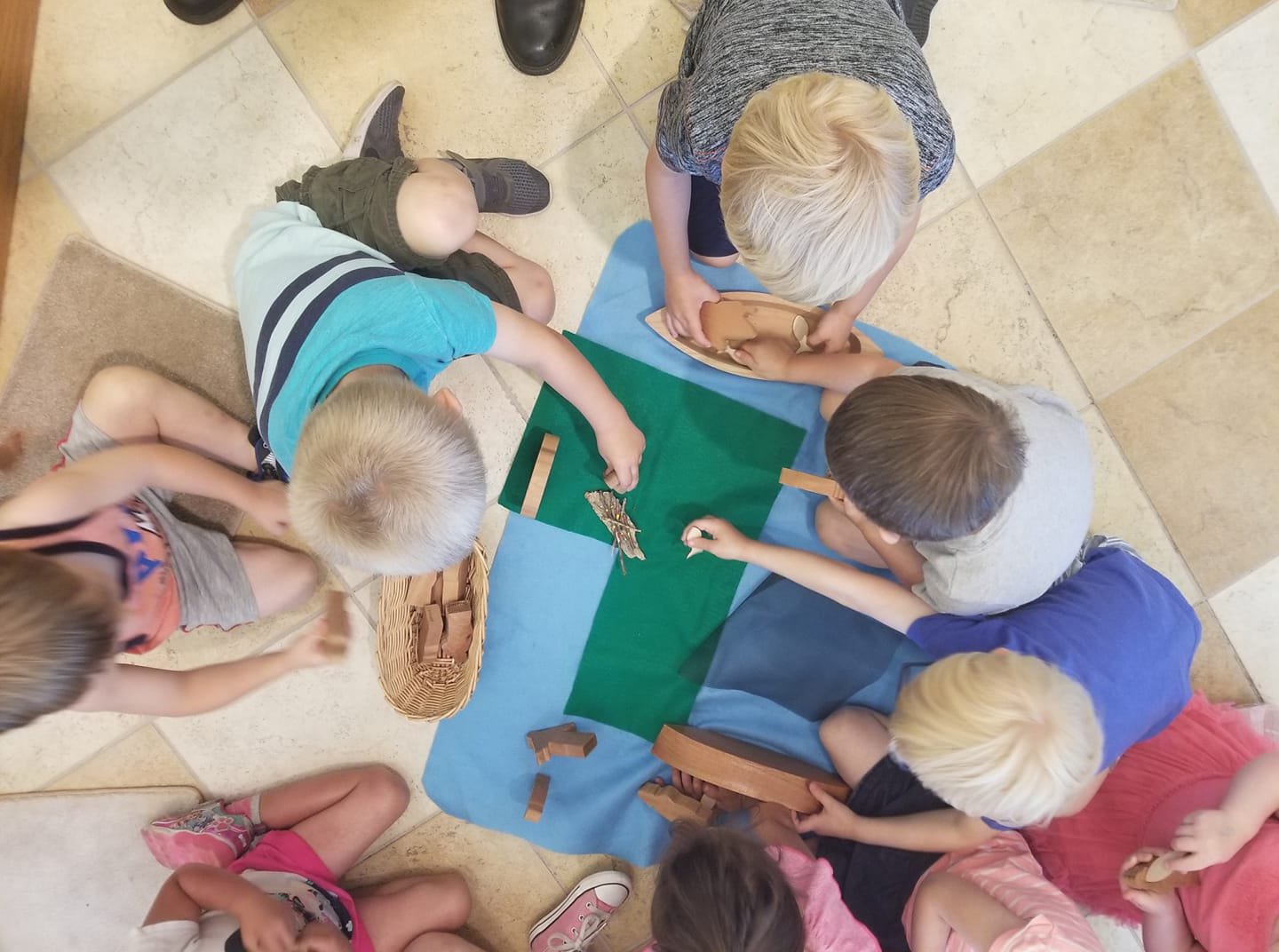
Yesterday at the Godly Play class Hickory Neck offers at The Kensington School, we finally got to tell the Epiphany story – the story of the magi visiting the Christ Child.  As we reviewed the whole story of Advent and Christmas, out came all the figurines of prophets, Mary, Joseph, Jesus, Angels, Shepherds, various animals, and wise men.  Typically, the teacher tells the story quietly, using the figurines, and then we have the kids retell the story, taking turns with the figurines.  And because the class has become so large, we usually have two sets of figurines so we can break into groups.  I would never say the class is perfectly orderly, but it is much more measured than you might imagine with two- to five-year-olds.

But not yesterday.  I’m not sure whether we, the leaders, were off our game, or the kids were still hyped up from returning from break, but the retelling portion of class was utter chaos.  Taking turns fell apart, quiet redirecting failed miserably, and by the time we regrouped to close the class, there was a mass of wooden, sacred figures in a disordered pile.  As we were making our way out, I looked at the pile sadly, grateful that they were all made out of sturdy wood and nothing more destructible, but somewhat disappointed to see such a holy mess.

But as I was thinking about the mess today, I was thinking perhaps my sadness at the chaos was my own “stuff,” having nothing to do with the success of the class.  Too often, we like our Gospel stories neat and tidy.  Too often we tell familiar scriptural stories expecting them to teach specific lessons.  But when we are honest, we know that is not how the Good News works.  The Good News upends worlds, upends social order, and upends our expectations.  Engaging with Jesus is messy work, and sometimes, in the midst of trying to figure out our faith, we end up with a messy rubble in front of us.

I do not know what you are you struggling with today – what things you wish were under control but are actually a mess, or what things you have been expecting from God that just are not how you expected, or what chaos others are making in your life that makes you feel bereft.  What I can tell you is that Christ is there, maybe a bit mired in the chaos too, but there nonetheless.  And sometimes, the mess is just what you need to shake you up and see the movement of God in a new and fresh way.  I suspect things will not turn out as you expect, but then, the Holy Spirit rarely works in ways we expect.  Sending you prayers today, that you might see Christ in the chaos!

Sermon – Luke 2.1-20, CD, YA, December 25, 2019

08 Wednesday Jan 2020

Posted by jandrewsweckerly in Sermons, Uncategorized

≈ Leave a comment

Tags

amazing, Christ Child, Christmas, Christmas Eve, church, glorify, God, love, new, noise, praise, quiet, Sermon, silence, Silent Night, story

This past year I have been learning a lot about Godly Play, the program we use with our smallest children in Sunday School, and more recently, the program we use with the Kensington School too.  At first blush, the program is pretty simple:  we tell Bible stories, using simple props to engage the children visually, we let the children play with the story, and then we wonder about the story along the way.  But when we are telling the story with the Kensington School, we have about fifteen kids, ages two-and-a-half to five years old.  I do not know how much time you have spent with that age group recently, but what that means is working super hard to hold their attention.  Being the loud extrovert that I am, I assumed holding their attention would mean using a loud, commanding voice.  But I have discovered from our seasoned teachers that the opposite is true.  They lower their voices to a slow-paced, almost whisper, and they manage to keep the children on the edges of their seats – as if something amazing is going to happen if they listen really hard.

Oftentimes, when we think of Christmas, we imagine a similar pattern.  When we gather on Christmas Eve, we look forward to savoring the familiar story, imagining being able to hear a pin drop as the beloved story is told again.  Our favorite song on Christmas Eve is usually Silent Night.  The song lulls us to imagining Mary and Joseph blissfully enjoying a silent night of wonder.  But that holy night, and most Christmas Eve services, are anything but quiet.  Bethlehem is inundated with people coming in for the registration.  The fact that there is no room for Joseph and Mary tells us how crowded Bethlehem is.  But Mary and Joseph not only have to tend with homecoming revelers, they also have to contend with the animals over whose abode they have taken.  Add into the mix a screaming newborn, and the idea of a silent night is almost comical.

But Mary and Joseph get even more noise than that.  You see, nearby shepherds hear a cacophony of praise from the heavenly hosts in the middle of the night.  Their night has been anything but quiet too.  Instead of trying to get the animals and themselves back to sleep, they decide to go into town and see this thing which has come to pass.  And so, they spend the night, talking to Mary and Joseph, maybe taking turns trying to soothe the baby Jesus.  When they leave those rudimentary quarters, they leave town praising and glorifying God.  This is no silent night for the shepherds either.

I think that is why I enjoy our celebration on Christmas Day so much.  Silence is in short supply on Christmas Eve.  We sing carols, we hear the giddy laughter of children awaiting gifts, stockings, and cookies, and we chant the mass, singing our traditionally spoken words.  For those of us with small children, even the wee hours of the morning on Christmas Day are loud – filled with cries of elation, joy, and battery-operated toys.  But on Christmas Day, after a noisy night and morning, we make our way to church and find, perhaps for the first time, the silence for which we have been looking.  We do not sing carols.  We do not have to speak over the hubbub of full pews.  Instead we gather in relative quiet, and tell the old story again – but this time with a softness that cannot be found on Christmas Eve.

What I love about finding true silence on Christmas Day is that our morning is structured a lot like I imagine that first holy morning being structured.  Christmas Eve is full of noise – of animals, shepherds, angels, and crying babies.  But that next morning, the dust has settled.  Gone are the shepherds and angels.  The animals have calmed down after too many midnight guests.  I even imagine baby Jesus has given in to sleep, since most newborns get their nights and days reversed for the first few weeks.  Into this relative quiet is when I imagine Mary treasuring all those words and pondering them in her heart.  The night before is just too loud.  The exhausted, travel-weary, physically and emotionally spent Mary gets a moment in the morning to begin to process what God has done in and through her.  After the break of dawn, as the sun rises and the loud revelers and news deliverers have gone, she can have a quiet moment as she rocks or feeds baby Jesus and ponder in her heart this child at her breast.

I do not think that night is silent.  But I understand why our hymnodists would want to talk about silence.  I think that is why I prefer the hymn, “Let all mortal flesh keep silence.”  Instead of depicting a silent night, that hymn invites us to keep silence as a form of reverence.  The first verse says, “Let all mortal flesh keep silence, and with fear and trembling stand; ponder nothing earthly minded, for with blessing in his hand, Christ our God to earth descendeth, our full homage to demand.”  I like the hymn because that is the kind of pondering I imagine Mary does in her heart this morning.  Unlike most new mothers, I do not think she is worried about the impact of birth on her body or even about her humble surroundings.  I imagine her thoughts that morning are consumed with nothing earthly minded.  Instead, I imagine her heart is pondering the blessing of Christ our God descending on earth through her – and the enormity of the event drives her to pay silent homage as she gazes on Jesus’ precious face.

That is what the church invites us to do today as well.  We structure a morning for worship.  The dust of gift wrap, eggnog, and stocking stuffers is settling.  The noise of carols, singing choirs and priests, and antsy children in pews is fading.  The anxiety of preparing for the big event of this day is easing.  And all that is left is a moment to let our mortal flesh keep silent before the Christ Child.  This morning we take a moment to ponder nothing earthly minded, and instead join Mary as she ponders all that has happened in her heart.  We come to church on this holy morning to ponder the miracle of the Christ Child.  We honor the way in which God is ever trying to honor the covenant God has made with us – willing to go to the extreme of taking on human form to care for and preserve us.  Our God’s love knows no bounds.  Humbled by that knowledge, we come to pay God homage.

The question for us in our pondering is what we will do with that love.  Though we make space this morning for silence, we do not remain here all day.  Like any other Sunday, the clergy will dismiss us to go in peace, and serve the Lord.  Anytime we feast at Christ’s table, that is our charge:  to take whatever sustenance we have gained and to go out into the world to do the work that Christ has given us to do.  Certainly that may involve cooking, travel, or more gift giving.  But the news we ponder in our hearts today is much bigger than today.  Today we are commissioned to consider the impact of the birth of the Christ Child on our lives, what our response will be to the God who is so faithful to God’s covenant with us that God would take on human flesh to redeem us.  As our talented Godly Play teachers might pose, I wonder what new work God is crafting in our hearts.  Perhaps this morning, or for at least the next few minutes, you can let your mortal flesh keep silence and ponder with Mary.  And then go out with the shepherds, glorifying and praising God in your work.  Amen.


← Older posts

Recent Posts

  • On the Myth and Magic of Advent…
  • On Risking Failure and Facing Fear…
  • Sermon – Luke 23.33-43, P29, YC, November 23, 2025
  • On Inhabiting Gratitude…
  • Sermon – Luke 20.27-38, P27, YC, November 9, 2025

Archives

  • December 2025
  • November 2025
  • October 2025
  • September 2025
  • August 2025
  • July 2025
  • June 2025
  • March 2025
  • February 2025
  • December 2024
  • November 2024
  • October 2024
  • September 2024
  • August 2024
  • July 2024
  • June 2024
  • May 2024
  • March 2024
  • February 2024
  • January 2024
  • December 2023
  • November 2023
  • October 2023
  • September 2023
  • August 2023
  • July 2023
  • June 2023
  • May 2023
  • March 2023
  • February 2023
  • January 2023
  • December 2022
  • November 2022
  • October 2022
  • June 2022
  • May 2022
  • January 2022
  • December 2021
  • November 2021
  • October 2021
  • September 2021
  • August 2021
  • June 2021
  • May 2021
  • April 2021
  • March 2021
  • February 2021
  • January 2021
  • December 2020
  • November 2020
  • October 2020
  • September 2020
  • August 2020
  • July 2020
  • June 2020
  • May 2020
  • April 2020
  • March 2020
  • February 2020
  • January 2020
  • December 2019
  • November 2019
  • October 2019
  • September 2019
  • August 2019
  • July 2019
  • June 2019
  • May 2019
  • April 2019
  • March 2019
  • February 2019
  • January 2019
  • December 2018
  • November 2018
  • October 2018
  • September 2018
  • August 2018
  • July 2018
  • June 2018
  • May 2018
  • April 2018
  • March 2018
  • February 2018
  • January 2018
  • December 2017
  • November 2017
  • October 2017
  • September 2017
  • August 2017
  • July 2017
  • June 2017
  • May 2017
  • April 2017
  • March 2017
  • February 2017
  • January 2017
  • December 2016
  • November 2016
  • October 2016
  • September 2016
  • August 2016
  • July 2016
  • June 2016
  • May 2016
  • April 2016
  • March 2016
  • February 2016
  • January 2016
  • December 2015
  • November 2015
  • October 2015
  • September 2015
  • August 2015
  • July 2015
  • June 2015
  • May 2015
  • April 2015
  • March 2015
  • February 2015
  • January 2015
  • December 2014
  • November 2014
  • October 2014
  • September 2014
  • August 2014
  • July 2014
  • June 2014
  • April 2014
  • March 2014
  • February 2014
  • January 2014
  • December 2013
  • November 2013
  • October 2013
  • September 2013
  • August 2013
  • July 2013
  • June 2013
  • May 2013
  • April 2013
  • March 2013
  • February 2013
  • January 2013
  • December 2012
  • November 2012
  • October 2012
  • September 2012

Categories

  • reflection
  • Sermons
  • Uncategorized

Meta

  • Create account
  • Log in
  • Entries feed
  • Comments feed
  • WordPress.com

Blog at WordPress.com.

  • Subscribe Subscribed
    • Seeking and Serving
    • Join 394 other subscribers
    • Already have a WordPress.com account? Log in now.
    • Seeking and Serving
    • Subscribe Subscribed
    • Sign up
    • Log in
    • Report this content
    • View site in Reader
    • Manage subscriptions
    • Collapse this bar
 

Loading Comments...