Sermon – Matthew 24.36-44, Isaiah 2.1-5, Psalm 122, Romans 13.11-14, A1, YA, December 1, 2019

Tags

, , , , , , , , , , , , , ,

One of the cooler things about my grandmother was a unique skill she had.  She could hold her fingers just so, making a perfect circle between her middle finger and thumb, place the circle in her mouth, and create a whistle so loud it could be heard across a large campus or a packed room, full of people.  The sound was as loud as any instrument you could produce, and the tone was so distinct, you knew right away my grandmother trying to get your attention.  I always thought the gift was super cool, longing to master the gift myself.  But my dad, on the other hand, hated that sound.  Having grown up with my grandmother, he associated the sound with being in trouble.  And he was not alone.  My grandmother’s whistle was so loud and so distinct, the entire neighborhood knew the sound – and also knew the Andrews kids must be in trouble.  Other kids would tell my dad, “You better hurry!”  My grandmother did not need to raise her voice, or call out for her children.  One loud whistle, and the kids knew the whistle meant drop everything you were doing and come immediately.

Today’s gospel lesson has the same kind of impact.  Matthew’s gospel talks of the second coming, a return so shocking people will be caught unawares, with neighbors, family, and friends suddenly disappearing, or swept away unexpectedly, like the people outside of Noah’s ark.  The images are so vivid and alarming, whole book and film series have been created depicting what this dramatic second coming will be like.  Countless street corner preachers have used these images to drive people to Jesus out of fear.  Unfortunately for Jesus, these preachers, books, and films have been so dramatically fantastical, that Jesus’ words have lost their sense of realism.  We hear these words now and either roll our eyes is disbelief, brush them off in discomfort, or walk away in disdain.

Now, I am not suggesting you start watching or reading the Left Behind series, and I acknowledge the two-thousand-year delay in this second coming can leave us a bit skeptical.  But I do think there is an invitation today to step into the parts of the images that are disorienting or even unsettling.  Most of the images Jesus uses today are of people doing their everyday activities:  eating, drinking, working in the fields, preparing daily meals.  These are the activities of life:  reading the paper, driving the kids to school or practice, studying for a test, tending our gardens, preparing dinner.  The space Jesus is talking about is the space in life that can become so routine we can almost do them without thinking.  In fact, sometimes, the routine is so powerful we become absorbed in the routine – not just out of habit, but also because of desire.  Burying our heads in the sand of the ordinary is one of the ways we cope with the world around us.  When the world seems overwhelming or hard, we bury ourselves in routine, leaving little space in our minds, hearts, and spirits for much else.

The problem with burying our heads in the ordinary is that we start missing things.  We pass by the children boarding a school bus from a local motel without thinking.  We ignore how much desolation, deception, and destruction is all around us by avoiding the news.  We stop noticing that elder in church whose health is starting to isolate them from the community.  And we have every reason to bury ourselves – the chaos and need in the world can be thoroughly overwhelming at times.  We all know there are much more unhealthy coping mechanisms, so burying our heads in the ordinary seems pretty tame in comparison.  My family will be the first to tell you that when mommy starts randomly deep cleaning a part of the house, something big has gone awry.

But here’s the thing:  Jesus is not telling us to avoid the ordinary.  Jesus knows as much as anyone we need food to eat – everyday.  What Jesus is asking us to do is keep a part of ourselves out of the ordinary.  Jesus wants our ears to be attuned for his distinctive whistle – the whistle that can grab our attention whether we are in the middle of a conversation, are knee deep in a project, or are binge-watching the latest Netflix release.  But the reasons Jesus wants us to have our ears attuned for his whistle may not be as nefarious as they seem.  In turning to our other three lessons today, we begin to see the light.  Isaiah tells in the days to come, the Lord will be doing some mighty things – beating swords into ploughshares, and spears into pruning-hooks.  Nation will not lift up sword against nation, nor shall they learn war any more.  Isaiah’s message of peace is a message of joy and action.  Isaiah whistles to us, “O house of Jacob, come, let us walk in the light of the Lord!”[i]

The psalmist’s whistle is similar.  “Let us go to the house of the Lord,” she says.  Out of the ordinary, and into the house of God, we hear a new prayer for us.  “May they prosper who love you.  Peace be within your walls and quietness within your towers.  For my brethren and companions’ sake, I pray for your prosperity.  Because of the house of the Lord our God, I will seek to do you good.”[ii]  Can you imagine missing such a beautiful blessing because we were working through our shopping list during mass or afraid of what we would find in the Lord’s house?

Paul whistles to us too.  “Wake up,” Paul says in Romans.  “The night is far gone, the day is near.  Let us then lay aside the works of darkness and put on the armor of light; let us live honorably as in the day…”[iii] Paul’s call for attention is a call to goodness, an invitation into a community of light – in clothing ourselves with that light.

If Jesus’s images felt threatening or scary, enough to drive our heads into the ordinary, the rest of our lessons tell us why we should, in fact, pull our heads out, and keep watch this Advent.  When we do, we hear some stunningly wonderful news – news of peace and harmony, news of blessing and soothing, news of light in a world of darkness.  Perhaps Jesus’ whistle was a bit more like my grandmothers – the whistle that let you and everyone around know you were in trouble.  But the rest of the lectionary today tells us the whistle is a gift – an invitation to turn into the light.

One of the things I loved about WMBGkind, the kindness movement happening in our community, was that the movement opened a real window into the light.  After reading the Last Word in The Virginia Gazette for several years, I had begun to bury my own head – reading the whole paper and then stopping short on the last page so I did not have to read the vitriol in our community.  But once I started paying attention to acts of kindness in our community, my perspective shifted.  I skimmed the Last Word to find the thank you notes – the notes of thanks for big and tiny acts of kindness.  I started to notice photos of countless churches, organizations, and businesses giving back to the community.  I started noticing neighbors holding doors for one another, kids picking up litter, and strangers giving up their time to help someone else.

I have seen the same sense of light here at Hickory Neck too.  As we talked about shining our light this year during Stewardship season, I saw parishioners trying out new ministries.  I watched parishioners increase pledges and talk excitedly about what a difference we could make in our community.  I have watched as longtimers offer lovingkindness to newcomers, as newcomers give of their time to welcome others, and as parishioners and clergy share laughter, love, and levity.  When I listen to the whistle of scripture, I hear light, I hear promise, and I hear invitation.

As a mother of five children, I know we often teased my grandmother for her ominous whistle.  My guess is her whistle was a necessary tool in her parenting toolbelt.  But I found myself wondering this week what might have happened if she had used the same whistle to deliver other news:  hugs and words of affirmation; a quiet whisper in their ear saying, “I just wanted you to know that I love you.”  Instead of the whistle being an ominous sound, the whistle could have been a song of promise.  That’s what today’s lessons offer to us:  a song of promise.  Sure, they may be jarring to the ear at first.  But when we really listen, we hear their promise in the depths of our souls – in places we bury when we bury ourselves in the ordinary.  Our invitation this Advent is to pay attention.  Keep awake therefore, for you do not know on what day your Lord is coming.  Amen.

[i] Isaiah 2.5

[ii] Psalm 122.6-9

[iii] Romans 13.12-13a
Sermon – Luke 23.33-43, P29, YC, November 24, 2019

Tags

, , , , , , , , , , , ,

Fifty-one years ago, Mister Rogers Neighborhood debuted on public television.  Many people criticized the show, saying the show was too slow and too boring to keep children engaged.  For critics, children’s programming needed to be loud, action-packed, full of silly gimmicks, perhaps with a few characters that were made fun of or teased.  Knowing how frenetic young children can be, television producers had decided to mirror young children’s behavior in their television programming.  But not Mr. Rogers.  In the midst of frenetic behavior, Mr. Rogers sought a different environment for his show – something slower and more thoughtful, something kind and engaging, something simple and attentive.  Critics said the show would never last, that Mister Rogers Neighborhood was not what children wanted.

On this Christ the King Sunday, the final Sunday of the Church year, this Sunday of jubilant triumph, we find a similar conundrum.  As we read from Luke’s gospel, we do not find Christ the King on a throne – we find him on a cross, leaders scoffing at him, soldiers mocking him, a criminal deriding him, and a crowd of people just standing there watching.  Nothing about today’s lesson connotes victory or royalty.  Jesus’ critics put a sign over his head that read, “This is the King of the Jews.”  The inscription is written as a declarative statement, but I wonder if there should have been a question mark at the end of that sentence.  This is the King of the Jews?  This is what royalty looks like?  This is what a savior is to you?

Of course, I am not sure the people of God were any surer about what having a king should be like.  The people of God never really had a king until they reached the Promised Land.  They saw the neighboring countries with their armies and their admirable kings, and they wanted one for themselves.  That was their first mistake.  God granted them a king to rule over them, but inevitably, the kings, like all humans, were flawed – some more than others.  Hence, there are four books in the Hebrew Scriptures about the kings who ruled and the judges who tried to correct their behavior.  Most of the kings were corrupted by power, money, and greed.  Many abused the people.  Even the most revered king, King David, was a mess.  He was the one who coveted Bathsheba, slept with her, and then killed her husband when he got her pregnant and realized he would not be able to get away with it.

Having been through a horrible patch of awful kings, the prophets predicted the coming of a Messiah – the king of kings and Lord of lords.  This king would be triumphant and would make the people of Israel dominant at last.  You can imagine that with such a great promise, the people of Israel are not too pleased with the man who finally claimed be the Messiah.  Nothing about Jesus says “king.”  He is nonviolent, hangs out with sinners of all sorts, and travels with a sorry band of misfits.  Even his grand entrance into Jerusalem where he is heralded as a king is not so grand – he rides in on a donkey, for goodness sake!  This could not possibly be the king Yahweh had promised them.

And yet, this is exactly the king God sends.  The Lord, who never wanted God’s people to have an earthly king anyway, makes a king that represents everything that is kingly:  a man who loves the poor and cares for the sick, a man who sees through the pretenses of the temple and calls for authenticity, a man who loves deeply and forgives infinitely.  So why are the people of God not excited about this king?  Why can they not love this countercultural king as much as the king they think they need?

In talking to a William & Mary student a couple of weeks ago, I was reminded of one of the first Political Science classes I took in college called Political Theory.  When we started reading the first book in our Political Theory class, I knew I was in trouble.  We read John Rawls’ A Theory of Justice.  In the book, he presents the best way to create a just political system.  He imagines gathering a random, diverse group of people who are essentially blindfolded about what their lot in life will be.  They have no guarantees about whether they will be old or young, rich or poor, male or female, member of a minority group or not.  In the midst of this blindness, the people gathered are given the task to create a set of rules to govern society.  Rawls’ basic argument is that if those people are truly blind about what their lot in life will be, they will be more likely to come up with a system of governance that is the fairest for all – since no one would want to take a chance on being the one victimized by an unfair system.  Although I appreciated what Rawls was saying, I was immediately annoyed at his argument.  How could we ever recreate a system of justice from scratch, and truly blind anyone enough to create such a system?  The entire premise seemed impossible, and thoroughly frustrating.  Needless to say, my focus in Political Science did not become Political Theory!

That being said, many years later, I think I may finally understand what Rawls was trying to communicate.  Our political system, or even this earthly life in general, is governed by a set of human-made standards that do not look out for the poor, create injustices, and benefit very few.  This is why so many of us get frustrated when we talk about justice or trying to make a difference – we see the system of injustice that fights against us and we can end up feeling helpless.  This is the very injustice that our king – Jesus – comes to fight.  Maybe Rawls saw this too.  Perhaps this world we can only achieve through blindness is the same world Jesus could see through God’s eyes.

In Rawls’ argument, when the blinded people make the rules, and then have their blindfolds removed, some are relieved to be well-off and others are dismayed to see themselves in poverty or at a disadvantage.  But all have some sense of acceptance because the rules they made do not make rich-life as advantageous and do not make poor-life as unbearable.  This is the kind of fairness into which Jesus invites us.  Jesus shows us a world where a humiliated man can look at his persecutors and forgive them.  Jesus shows a world where a man is willing to suffer for the salvation of others.  Jesus shows us a world where even a criminal can see truth in the last hour, can admit his guilt, and turn to Christ for leniency.

This is why we celebrate Christ as King today:  not because he is victorious in putting us in control over others, but because he invites us into a life that evens the playing field – the life of the kingdom of God.  There are certainly going to be days when we wish Jesus would just mount a mighty horse and triumph over evil.  Lord knows, in these days of political strife, of country-wide division and derision, of a time in our country where we say nasty things to one another, and the actions of the other side (whichever side we see as “the other”) are seen as the cause of all our troubles, we could use a Messiah, a king to come in and just “fix it” – to be a decisive, strong, powerful king to clean the slate.  But what Christ the King Sunday invites us to remember is we do not need a king on a throne; we need a king on a cross who enables us to create a world of fairness here and now – a world that is much more similar to the kingdom of God than the kingdom of humankind.

So why do we honor this not-so-kingly king today on the last day of the liturgical year?  I think the very best reason we close one year and prepare to start another with today’s gospel lesson is so that as we can more humbly approach the Christ Child.  If we can imagine ourselves gathered around that manger on that most holy of nights, not eager for vindication, but instead humbled by the path we will all walk with this king, then we enter into Advent with more reverence, less arrogance, and a healthy dose of gratitude.  This king – Christ the King – is the most sobering, challenging, merciful, joyous, steadying king for which we could hope.  He is not the king we always want, but he is certainly the king we always need.  Today we celebrate the wise gift by God of a true King – a king who makes us all better versions of ourselves, who helps us see there are no easy solutions, and who encourages us to embrace justice as fairness, not justice as vindication.  Our invitation today is to take a seat at the foot of the cross, to prepare our place in the hay surrounding the manger, to change out our shoes, to take off our jackets and zip up our cardigans, and to make a calm, quieter space for ourselves to hear how a real king can help us create not the kingdom we may want, but certainly the kingdom we need.  Amen.

On Birthdays and Blessings…

Tags

, , , , , , , , ,

My husband and I experience our birthdays very differently.  He is perfectly happy to have a quiet, reserved day, wanting to be acknowledged, but not wanting a lot of attention on him.  I, on the other hand, love have a ton of attention on my birthday – songs, cake, cheers, you name it.  So when my daughter insisted I wear a “It’s My Birthday!” sash yesterday, I only hesitated for a second.  What was funny about the sash was the experience I had wearing it.  The funniest reactions were probably at the bus stop.  I think most of the kids must have parents more like my husband as they seemed surprised I was celebrating.  But one kid in particular asked me, “So are you having a big party with your friends tonight?”  When I replied I was not, her response was, “Yeah, I guess you’re too old, huh?”

It’s funny how a six-year old can make you question your life.  I was suddenly wondering, “Should I have assembled a party?  Should I have found other big ways to celebrate?”  But as the evening closed yesterday, I reflected on what my day of celebration entailed:  a breakfast, including eggs and coffee, my children proudly made by themselves; a lunch in the school cafeteria with my older daughter and her friends; an evening watching my younger daughter’s ballet class – an activity I cherished growing up; a surprise dinner by my husband, fully ready upon our return home; not to mention cards, cupcakes, and endless texts, calls, and social media messages.  It wasn’t a party in the traditional sense, but it did feel like wonderful day of celebrating life – my life here and now.

In the last couple of weeks, I have administered last rites, conducted a funeral, spent several days with my dad who was in the hospital, talked to families dealing with crisis, consoled the bereaved, baptized a baby, and heard people’s life stories for the first time.  When you are that deep in the reality of life, parties or treats no longer seem necessary.  What suddenly becomes important are the ultimate things of life – breath, family, loved ones, intimacy, little life moments.

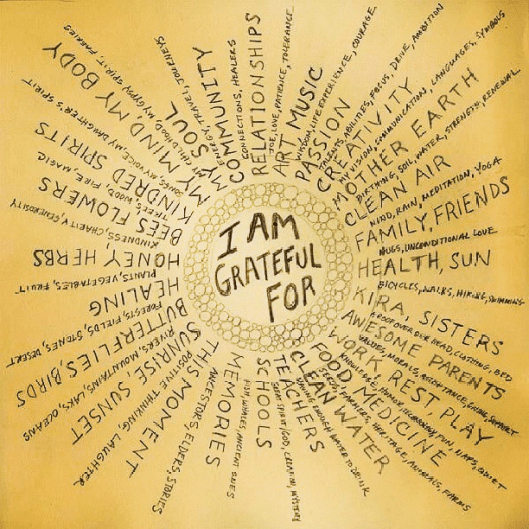
To help me keep celebrating, I invite you this week, to slow down and look at the blessings all around you.  I know some of you are hurting, some of you are just trying to get by, and some of you don’t have that many stressors right now.  Wherever you are, take a moment today to give thanks to God for all your bountiful blessings – big and very small.  Each breath, each day, each year is a gift.  Tell me where you are feeling grateful.  I’d like to celebrate with you!

On God’s Love…

Tags

, , , , , , , , , , , ,

Fall is my favorite season of the year.  Mostly I love the transformation of foliage into beautiful shades of yellow, red, and orange.  Although spring’s blossoms are certainly lovely, there is something bold and deeply stirring about fall colors that warms my entire being.  You can imagine my disappointment this year, then, when the forecasters warned us the fall foliage would likely be less vibrant this fall due to the drought we experienced at the end of the summer and into the beginning of fall in our area.  I had already seen evidence of this disappointment as some of my favorite trees turned straight from green to brown – or even a grayish brown, as if their color had been drained.

But last week, driving home from a long meeting, I turned a corner I rarely travel as the sun was lowering, when I gasped.  A tall tree had turned a brilliant shade of yellow, every leaf singing a beautiful song, as the sun made the tree dance in a radiant glow.  The sight was so stunning, I found tears prickling in the corners of my eye, and a tightness I had not realized was in my chest dissolving away.  The tree was a magnificent gift, ready for the receiving of anyone who would have it.

I was thinking how similar God’s love for us is.  We so often lower our expectations with the slightest hint of scarcity, bracing ourselves so we do not experience loneliness, disappointment, or sadness.  We do not even notice the slow development of our guardedness, and before we realize it, we cut ourselves off to others.  But God is not easily deterred.  Out of the blue, we find ourselves sideswiped by God’s love – some unexpected act of kindness by another, an undeserved gift, or an observed moment between others that restores our hope in humanity – and we realize how God’s love is there all along, shining brilliantly.  And when we stubbornly slip into a theology of scarcity or a closed-off sense of abandonment, God shows up with such force that we cannot help but see abundance and love all around us.

I invite you today to find your own moment of God’s love and beauty.  Whether it is in a brilliantly glorious display of fall foliage, a sacred act of kindness between strangers, or a moment of appreciation for the gift of this day, I invite you to look for God today.  But be forewarned:  once you finally see that God-moment today, you are likely to start seeing a lot more of them in the little, shocking, overwhelming, mundane, beautiful moments of life.  I cannot wait to hear how God is warming your heart today!

Homily – Luke 18.9-14, P25, YC, October 27, 2019

Tags

, , , , , , , , , , , , , , ,

Today’s parable from Jesus is one of those short parables that seems pretty straightforward at first glance.  Jesus describes two men who go to the temple to pray.  One is a Pharisee – a law-abiding, God-fearing man who offers a prayer of thanksgiving, albeit one that is full of self-righteousness, comparing himself and his choices favorably against those of others – suggesting in a sense that others are outside of God’s favor and grace.  The other is a tax collector – a corrupt collaborator with the government who, full of shame, humbly confesses to God his sins.  Jesus tells us the tax collector, “went down to his home justified rather than the other.”

Our temptation is to hear this text and conclude something quite simple:  the Pharisee is bad and the tax collector is good; bragging about yourself is bad and being humble is good; being a faithful person who misjudges God’s abundance is bad and being a self-aware sinner is good.  The problem with reading the text in this black-and-white way is we miss little details.  With such a stark reading, we can find ourselves walking out of church today thinking, “Thank God I’m not like the Pharisee!”  And before we even notice, we realize we are praying the same prayer as the Pharisee from the parable!

But this week, I stumbled on a little translation difference that shifted this parable for me.  In verse 14, Jesus says, “I tell you, [the tax collector] went down to his home justified rather than the other…”  But scholar Matt Skinner argues the preposition, “rather than,” should be translated instead as “alongside.”  So, verse 14 becomes, “I tell you, [the tax collector] went down to his home justified alongside the other…”[i]  Skinner argues there is much more nuance in this parable than we often allow.  That both men are praying, both men have faults, and both go home justified in different ways.  Sure, the Pharisee limits the extent of God’s grace, and he is unaware of his sinfulness in such exclusion, but the tax collector is no innocent.  Both men go home justified alongside each other.

One of the things we have been celebrating this stewardship season is our identity.  When we say, “We are Hickory Neck!” we say we are a people who have raised over $170,000 for local charities, who have over 50 volunteers on a given Sunday, who support one another through spiritual offerings like Lectio Divina, Book Club, Bible Study, and Jam Sessions, who nurture children and young families, who welcome newcomers, who work hard, and who have fun.  We are all those things are more – I imagine each of us here has a mental picture about what we mean when we say, “We are Hickory Neck!”  One of those things is that we walk home justified alongside each other.

That is what I love about this community.  This is a community that is passionate about Jesus and take’s Christ’s light out into the world.  This is a community that is passionate about caring for one another – where all can feel loved and affirmed, and all can find a place to thrive.  This is a community that is passionate about serving our neighbors – those young families looking for a sense of belonging and affirmation, and those retirees looking for a new sense of home.  This is a community that is passionate about liturgy, music, having fun, sharing sorrows, honoring history, dreaming about future possibilities, and laughing – lots of laughing.  This is a community that is passionate about investing our individual resources into Hickory Neck so Hickory Neck can bless others as Hickory Neck has blessed us.  We are Hickory Neck!  We are a community who walks alongside each other.

But that’s just me.  I want to know what gets you excited about Hickory Neck.  I want to know what saying “We are Hickory Neck!” conjures in your mind.  At your tables is a list of ideas from our Stewardship Committee.  Reread those ideas, and then talk with the people at your table about what you think of that is not on the list.  Write them down as you talk, so the Stewardship Committee understands what is important to you as we support and fund ministry.  You have about five minutes to chat and make notes, and then we’ll regather with a word of prayer…

Let us pray.  God of abundance, we come to you as self-righteous, sinful followers, who regularly mess up.  But our heart is with you.  We want to be agents of your light and your love.  Help us to love you abundantly.  Help us to support your kingdom generously.  Help us to walk alongside one another, shining your light for others so they may give glory to you.  In the name of the Father, and the Son, and the Holy Spirit.  Amen.

[i] Matt Skinner, “Sermon Brainwave #686 – Twentieth Sunday after Pentecost (Ord. 30),” October 19, 2019, as found at https://www.workingpreacher.org/brainwave.aspx?podcast_id=1192 on October 23, 2019.

On Shining Our Light…

Tags

, , , , , , , , , , , , , ,

A couple of weeks ago, Hickory Neck had a wonderful guest preacher who talked to us about stewardship.  He led with a participatory set of questions.  The first was, “What is your reaction when I tell you today is a Stewardship Sunday?”  The responses ranged from “anxiety,” “nervousness,” “dread,” and “frustration” (though some people studiously responded, “gratitude”).  The next question was, “How do you think your rector feels about Stewardship Sundays?”  The responses were fairly similar, and the preacher surmised that stewardship is something rectors dread too because so much of what they can do is based on what parishioners are willing to give.

The funny thing is though, as I sat there listening to the preacher’s question about my own feelings, my initial response about how I, as rector, felt about stewardship season was “joy.”  I know what you are thinking, “Come on, Jennifer, we know you get stressed out about money as much as we do!”  And there is probably a latent sense of anxiety or at least uncertainty.  But mostly I feel joy.  I love talking about stewardship because to me, talking about stewardship is a lot like evangelism.  Both involve talking about something you love and inviting people into that passion.  And I absolutely love and am passionate about the community of Hickory Neck and the powerful ministry we are doing.  I see every day what a powerful place this is for people, and what an incredible impact it is making on their lives.  So, asking people to financially support this place is really just a matter of inviting people to affirm that goodness in their life – to give with the same abundance that is experienced within this community.

The other reason I feel joy in talking about stewardship is because talking about our financial giving is what people do when they are in relationship with one another – they talk about what it is important to them, and what effects their everyday lives.  Money is one of those things that is at the very heart of our lives – we need it, we use it, and we often wish we had more.  Jesus even talked about money perhaps more than any other issue in his ministry.  But the reason many of us get uncomfortable talking about money is because money feels personal and intimate.  But being in authentic relationship means sharing things that are personal and intimate.  With whom else can you talk about money if not with those to whom you are closest, who support you in your darkest moments, and who love you unconditionally?

The last couple of months I have run into many colleagues and long-time friends, and invariably they ask me how things are going at Hickory Neck.  I have noticed when I answer that inquiry, my body has a visceral response.  I immediately and unconsciously smile and let out a sigh of satisfaction before I launch into what I love about our community and the work we are doing together.  As you are working on your pledge cards this week, I hope you can first think about what those things are at Hickory Neck that give you joy, that make you excited to be here, investing your time and energy.  Then I hope you can allow your financial pledge to be a testimony to that joy.  Come, shine your light with me!tens-shining-our-light-horiz

On Festivals, Fitness, and Fun…

Tags

, , , , , , , , , , , ,

44247089_2050605094995740_7020791298546204672_n

Photo credit:  Charlie Bauer; permission required for reuse.

This week is one of my favorite weeks of the year.  This is the time when our church community transforms our property for our Annual Fall Festival.  Leading up to this week, there is a lot of organizing, delegating, preparing, and a fair amount of stress.  But this week, everything snaps into place.  The setup crew knows exactly what to breakdown and where it goes.  The Attic Treasures crew knows just what layout works and the room is magically converted to look like the same inviting space.  Later, our parking crew will come out and lay out where cars can park, tents will be erected, and all kinds of goods will be placed.  Having done the festival for nineteen years, we know the drill and seem to operate from muscle memory.

I love this week for several reasons.  One, I love seeing the community come together – both parishioners and neighbors alike, to make for a fun week of memories, laughter, and new experiences.  I love seeing people’s passion for helping others unfold in a way that is loving, affirming, and fun.  And I also love seeing people step up, taking on things that are a burden on their time, but doing so for the greater good.  The week truly is inspiring, and I love inviting the larger community into our joy.

This week – or perhaps next week after the dust has settled – I invite you to consider what other parts of your faith life might need to be flexed enough so that you have muscle memory around them as well.  Perhaps it is just making Sunday worship a part of your weekly experience with God – letting the routine of liturgy create a common pattern for you, while also seeing how the routine of liturgy creates surprising moments of grace and joy.  Maybe your muscle memory can form around inviting people to church.  I find the more I talk about a thing I am passionate about, the more talking about it becomes easy.  Or maybe your muscle memory will be around creating practices that feed your soul – our monthly book group, our yearly Women’s Retreat, a weekly Bible Study or Choir rehearsal.  If any of these practices create even a portion of the joy we experience during Fall Festival week, I expect you are in for a real treat.  I cannot wait to hear about it!


On Light, Community, and Being All In…

Tags

, , , , , , , , , , , , , , , ,

70161290_10158145043567565_8013087704956796928_n

Photo credit:  Jennifer Andrews-Weckerly; resuse with permission

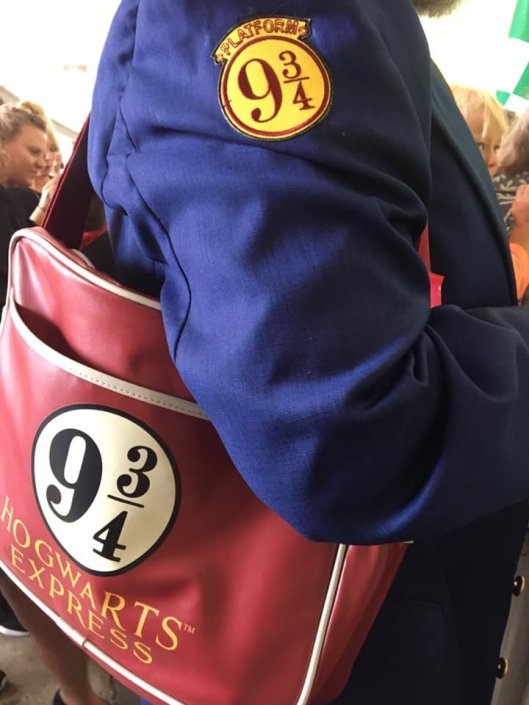
This past weekend, our family traveled to Staunton, Virginia, for their annual Queen City Mischief and Magic weekend – a weekend to celebrate all things Harry Potter.  We had a great time discovering what houses we were sorted into, observing how to duel with wands, and learning dances for the next Yule Ball.  The kids busied themselves collecting trading cards from costumed characters and from local establishments.  The whole downtown area shut down and found creative ways to channel the world of Harry Potter – from the local train station taking on the persona of Platform 9 ¾, to a photography business creating keepsake photos, to a toy store changing out their stock with Potter toys, games, and books, to the local university offering lectures related to themes from the series, to the local spirits store selling “butter beer.”  For those who love the Harry Potter books and movies, it is a great fun-filled weekend.

As we drove home, I realized what amazed me most about the weekend was not the characters, the paraphernalia, or the crowds.  What amazed me was how a few years ago this small town had a crazy idea to convert the town to this magical place – and everyone bought into the idea.  Staunton does not have some significant tie to JK Rowling or the filming of the movies.  They are just a small town in the middle of the state who decided to do something – and the whole town was all in.  I do not know the history of that idea, or how many people said, “but we’ve never done anything like this,” along the way, or how they figured out the logistics and convinced people to get on board.  But what I can tell you is after two years of attending the festival, the whole town is not just grudgingly on board, but wholeheartedly comes together to welcome people to their town that might not otherwise ever step onto their streets.

I know Staunton converts itself for just three days.  But the more I thought about the event, the more I wondered what kind of power our community might be able to harness for good.  I have certainly seen hints of that kind of energy with the WMBGkind movement in Williamsburg – a community of people committed to being a community of kindness as their dominant identity.  I think that is why I have always thought WMBGkind and the faith community can be such great partners.  Though we use religious language, the end result is the same.  We want our community to be a community that lives Christ-like lives of loving-kindness.  In that way, no matter what our denominational or faith differences are, we can step out of our day-to-day operations and be a part of something much bigger – of a people all united around mission of loving neighbor as ourselves.

This week, Hickory Neck kicked off its stewardship campaign, “Shining our Light.”  What I love about the campaign is the campaign reminds us to look at how much light we are gifted with (in worship, in learning, and in play), and then to gift that light the community around us – to shine our lights, rallying the entire community to live life differently.  That is a cause I am happy to pledge our financial giving to; that is a cause I am excited to pledge our time and talent to as well.  This month, as we pray about our own stewardship, I encourage you to think about how your giving not only supports the ministry of Hickory Neck, but might just have the power to transform our community into something much bigger than ourselves.  I am all in.  Won’t you join me?

Sermon – Luke 16.19-31, P21, YC, September 29, 2019

Tags

, , , , , , , , , , , , , , , ,

I was listening to my favorite preaching podcast this week, which is hosted by three to four seminary professors and scholars.  Usually they spend about a third to half of the podcast talking about the gospel lesson, and then spend the rest of the time on the three other lessons.  But this week, the focus on the gospel was pretty truncated.  In fact, one of the scholars basically said, “If you are looking for some new knowledge or some hidden message in this gospel, there isn’t one.  This one is pretty straightforward.”[i]  After a convoluted, at times ambiguous, lesson last week about a crooked manager who gets praised for his deviousness, this week’s gospel has very little ambiguity.  You can almost hear echoes of Luke’s beatitudes from chapter 6, “Blessed are you who are poor, for yours is the kingdom of God….but woe to you who are rich, for you have received your consolation.”[ii]

We could easily read this parable about the rich man and Lazarus and think, “Wow that rich man really messed up; I am so glad I am not rich so I do not have to worry about that kind of poor behavior.”  But here is the thing:  Jesus is not telling a story about “that guy.”  The fact that Lazarus has a name but the rich man does not gives us a big interpretive tool for this parable.[iii]  This is not a parable about a man who messed up ages ago.  This is a parable for faithful people everywhere who daily must navigate the truth of scripture with the reality of being persons of wealth.  Our very citizenship in this country means that we are people of wealth.  We are the rich man.

So, if we are the rich man, what can we learn from him?  Unlike in our passage a few weeks ago, Jesus is not telling us to give up our possessions so we are no longer rich.  What Jesus is saying is our wealth will make behaving faithfully very difficult.  Later, Luke will tell us behaving faithfully with wealth will make getting into the heavenly kingdom as difficult as getting a camel through the eye of a needle.  Jesus warns us because wealth has a corrosive impact on our lives.  Wealth can make us confuse wants with needs.  Wealth can make us think we somehow deserve wealth – as if we did something to earn favored position in life, instead of blessing coming from the grace of God.[iv]  Wealth can deaden our empathy, turning us inward, slowly turning us into people who avert our eyes in the face of poverty, who dehumanize those in poverty, seeing them as servants instead of equals, who become convinced just being Christians and not living as Christians is enough.

We can see how the rich man in our parable gets there.  We are told his clothing is of fine quality.  He eats sumptuously every day.  He clearly ignores Lazarus, sitting by his gate every day.  We know he actively ignores Lazarus because we find later he knows Lazarus’ name without ever having reached out to him.  Even in his death, the rich man is buried with dignity and care.  Therefore, his behavior in Hades, or Sheol, should be no surprise.  Even in suffering afterlife, the rich man dehumanizes Lazarus.  He regards Lazarus as a servant and messenger who can be ordered around to bring him water or warn his brothers.  When your whole life has been blessed by wealth, slipping into a pattern of forgetting to respect the dignity of every human being is quite easy.

The judgment of the parable is both gentle and direct.  Beloved father Abraham, who gathers Lazarus into his bosom, still sees the humanity in the rich man.  Calling him “child,” he almost sadly has to remind him of his poor earthly behavior.  When the rich man desperately tries to help his living brothers, Abraham finally has to be firmer.  Like the beloved father he is, Abraham draws a definitive boundary.  As the rich man insists his brothers need a personal testimony to change their own wealthy behavior, Abraham reminds the rich man they have already been warned by Moses and the prophets. And if any of us wonder if Abraham is being overly dramatic, we need only catalogue the scripture lessons warning about wealthy behavior:  Exodus 22.21-22, 23.9, Leviticus 19.9-10, 19.33, 23.22, Deuteronomy 10.17-19, 15.1-11, 24.17-18, Amos 2.6-8, Hosea 12.7-9, Micah 3.1-3, Zephaniah, Malachi, Isaiah, Jeremiah, and on, and on, and on.[v]  And Abraham is not even talking about Jesus’ warnings.  Even later letters, like we heard today in the first letter of Timothy, take up the mantle.

So if our very citizenship makes us like the rich man, what can we do to resist the corrosiveness of wealth?  The gospel lesson today seems to suggest three things.  First, one way to combat the seductive lure of wealthy living is to root ourselves in Scripture and Christian community.  One of the things our Discovery Class attendees are learning is how steeped in Scripture Episcopal worship is.  Just by coming to church on Sundays, we hear a large portion of the Bible’s words.  Add in our songs and our prayers, and suddenly we find our liturgy is dripping with the words of Scripture.  Coming to church and hearing hard texts like this one and the ones we have been having for weeks, we find ourselves among a community of people who want to live life differently, and need Holy Scripture and each other to do that.  Of course, reading and praying with scripture and your Prayer Book outside of Sundays doesn’t hurt either.

Second, another way to resist the pull of wealthy living is to spend time examining the chasms in our lives.  Abraham insists Lazarus cannot help the rich man for many reasons; one of those reasons is the great physical, uncrossable chasm between the two realities the men now inhabit.  But that chasm is just a reflection of the chasm that existed on earth too – the rich man’s gate that prohibited connection, help, or even awareness of Lazarus’s suffering and need.[vi]  We create those same chasms, those same gates in our everyday lives too.  We ignore the dilapidated housing we pass on our drives, we allow ourselves to forget the vast number of students on reduced and free lunch in our schools, we choose homes and sidewalks that allow us to avoid the homelessness we meet every winter at the Shelter.  Today’s gospel lesson encourages us to use our eyes to see, really see, the gates we have built and to begin to dismantle them.

Finally, another way we fight the power of wealth is to use the wealth for goodness – to shine our light into the world, as our stewardship team will be encouraging us to do this month.  I know that kind of charge can feel overwhelming – we could give away every cent we have and not heal every Lazarus we meet.  I am not saying we should not use some of our wealth to try – whether we give to the Lazarus in front of us, the non-profits that create support systems for Lazaruses, or, and particularly important, we use our wealth to support this faith community:  the community that teaches us how to be faithful, that brings together the community of support we need to follow Jesus, and that propels us into the world as enlightened people of faith.  As the dishonest steward taught us last week, we can use our corrupting wealth for goodness.  We can use the precarious nature of wealth to be agents of light in the world – to shine our lights as Hickory Neck.

The work will be difficult.  Jesus assures us the work will be hard and shows us that reality in parable after parable.  But we are encouraged today because of the people in this room.  This is a community of people who not only give us a sense of belonging and support, this is also a community of people who have your back in figuring out this whole faithful Christian living thing.  This is a community of people who vulnerably, humbly, and joyfully are willing to walk with you.  We can shine our lights because each person in this room is shining their light too.  Together we can do the work to open gates, dismantle closed doors, and fill in chasms of separation.  Together we can turn the lure of wealth into a tool for goodness.  Together we can show the world another way, shining our lights.  Amen.


[i] Matt Skinner, “Sermon Brainwave #682 – Sixteenth Sunday after Pentecost (Ord. 26),” September 21, 2019, as found at http://www.workingpreacher.org/brainwave.aspx?podcast_id=1180 on September 24, 2019.

[ii] Luke 6.20, 24

[iii] Charles B. Cousar, “Exegetical Perspective,” Feasting on the Word, Yr. C, Vol. 4 (Louisville: Westminster John Knox Press, 2010), 117.

[iv] Fred Craddock, Luke, Interpretation: A Bible Commentary for Teaching and Preaching (Louisville:  John Knox Press, 1990), 196.

[v] Luke Timothy Johnson, The Gospel of Luke, Sacra Pagina Series, vol. 3 (Collegeville:  The Liturgical Press, 1991), 253.

[vi] Skinner.

On Discernment…

Tags

, , , , , , , , , , , ,

This past weekend, our Diocese elected its next bishop.  Having never served in a diocese that was electing a bishop, I was not entirely sure what to expect.  I had heard stories of clergy politicking for particular candidates, trying to sway their colleagues to vote a particular way.  I knew we have a diversity of perspectives in our Diocese and coming to consensus may be difficult.  And although I had spoken to many clergy colleagues about their discernment for the best bishop, I did not know nearly as many laity and what their discernment had been like.  By the time we gathered for the election, I felt anxious, hoping we could be civil, but dreading what might be a contentious process.

Instead, I found something quite different.  Some of the difference may have been the result of careful crafting.  We were seated in an auditorium, with a long center row.  Try as one might, getting up and down to talk to others between votes was not exactly easy.  Instead, many of us were left to pray on our own or consult the limited people around us.  Likewise, once the polling was closed, we were required to wait for the candidates to be notified of the results before we were; once the results were announced though, the leadership immediately had us vote again.  We had little ability to process the results of one ballot with others before voting again.  Further, before each vote, our chaplain read a prayer from the Book of Common Prayer.  And finally, there was absolutely no internet or WiFi in the room, forcing us away from technology and into a real sense of presence in the room.

Perhaps it was the rigid structure that guided our behavior, making the election different than I expected.  But I also suspect those gathered last weekend consciously chose a different path.  Instead of dividing into camps behind one of the six candidates, our laity and clergy seemed to embrace the election as a matter of prayerful discernment, not premeditated politicking.  Limited by the confines of the room, you could sense the powerful prayers emanating from each delegate – desperately trying to discern the Holy Spirit’s will.  The pacing of the ballots did two things.  One, there was ample time to prayerfully consider the name one just submitted electronically, before knowing what everyone else had just done; and two, there was a mandate to keep moving, to keep faithfully and rapidly calling on God for answers.  Even our chaplain seemed to root us in tradition.  By using the BCP instead of extemporaneous prayer, she minimized her and our influence on one another – instead, calling us back to the book the is such a marker of our identity.

You may already know about the dramatic turn of events toward the end of our election.  I suspect the prayerful process of discernment in which we were engaged in that space was also shared among the candidates, helping them to faithfully discern what they should do too.  Having walked through that experience so prayerfully, I wonder if there is not something for us all to learn from about the hard decisions of everyday life.  Perhaps we too could stand to:  root ourselves in prayer, trust those around us to be praying too, create environments around our discernment where are weakness are less able to thrive, return again and again to the beautiful words of prayer book, make space for silence when you do not know all there is to know, and, perhaps most importantly, trust the Holy Spirit to do great things in spite of us.  If you are in discernment about something in your life, know that you have my prayers.  I would love to hear your stories of how the Spirit is moving in your life too!