On Sacred Snippets…

Tags

, , , , , , , , , ,

lent_image

Photo credit:  https://prayerbookguide.wordpress.com/living-the-season/lent/

I know many Christians who loathe the season of Lent.  They find the season to be heavy-handed, to be too somber and full of self-loathing, and to be a bit of a downer.  I am not one of those Christians.  Lent is probably my favorite season of the Church Year.  There is an honesty about Lent that feels more authentic to me.  I feel like we do not have to pretend in Lent – pretend to be happy, pretend to have our lives together, pretend to be perfect.  Instead, Lent feels like a great equalizer – a time when we all confess our utter inability to live the lives we intend, and our utter dependence upon God.  Add on top of that intentional disciplines, liturgies that articulate the tension of our sinfulness and goodness, and additional church programming, and I come alive during Lent.

But this year, I have been struggling a bit with Lent.  I have gone through all the motions of Lent:  I am reading a book with a study group, I am playing Lent Madness with my oldest child, and I am attending a weekly ecumenical worship service and fellowship gathering.  I have also worked with our liturgical team to change up the liturgies to make them just different enough to shake up the senses.  I am helping teach a bible study in preparation for Holy Week.  I participated in the winter emergency shelter our church hosted last week.  The Lenten “wheels” are all in motion.  But I find this year that I am having a difficult time getting my Lenten grounding.

Now, it could be that my family has been in and out illness over the past month.  It could be that the church schedule has been particularly full, leaving me working most Saturdays this past month.  It could be that I’m still adjusting to my first full year at Hickory Neck, not having shaped a Lenten season here yet.  Whatever is going on, I was gently reminded by my Spiritual Director once that there is no wrong or right prayer life.  Our prayer life is a reflection of the rest of our life.  The Director told me that it was no wonder that my prayers were happening on the go much of the time – because juggling a family of four and a parish means that prayers happen with the rest of life.  In fact, it is unlikely that I will have an hour of prayer time every morning – because balance means finding varied ways to pray in various stages of life.

Remembering that instruction, I have been shifting my expectation of Lent this year.  Since there is little likelihood that Lent will slow down, I am trying to catch meaningful moments as they fly by.  Like how my seven-year old demands that she be allowed to go to Ash Wednesday services to get her ashes or how she begsto go to the winter shelter one more time.  Like how a parishioner calls between drop-offs to talk about navigating the faithful raising of children.  Like how the Great Litany shakes me to my core.  Like how a sermon I prepared speaks to me on a totally different level as I am preaching it.  Like how a conversation with a parishioner reminds me of the powerful ways we are living into God’s call to respect the dignity of every human being.  I may not be finding long periods of silence, setting apart times of dutiful Lenten practices, or mastering a Zen-like experience at church.  But holiness is happening all around me.  My hope now is to savor each moment for just a bit longer, honoring the holy moments God throws my way in the midst of a chaotic season of life.

Sermon – Matthew 4.1-11, Genesis 2.15-17, 3.1-7, L1, YA, March 5, 2017

Tags

, , , , , , , , , , , , , , , , , ,

On this first Sunday in Lent, I usually like to talk about Lenten disciplines.  The season of Lent is one of the few times in the Church that we take a hard look at our faith life and then actually commit to doing something tangible to strengthen our walk with Christ.  When I hear about your disciplines, I get some clue as to what feeds each of you spiritually – whether you long to connect with Holy Scripture, or hope to deepen your prayer life; whether you know that denial of certain parts of your life will create a needed discomfort or disruption, or instead find taking up something to create needed transformation; whether you are motivated by something fun and engaging (like Lent Madness), or you prefer something more philosophical (like our Lenten study group focusing on the spirituality of the Eucharist).  Lenten disciplines also give me a tiny clue about what sinful behaviors have been pulling you away from God.  As we prayed the Great Litany today, there were countless options:  pride, vainglory, hypocrisy, envy, hatred, malice, desires of the flesh, and hardness of heart.  Or, perhaps you are inspired to help one of those we prayed for in the Litany:  the lonely, the sick, the homeless, the imprisoned, broken families, the oppressed, or those suffering injustice.  There really is no wrong way to approach Lenten disciplines – that we are taking them on demonstrates a commitment to enriching our faith and growing closer to God.

Given the beginning of those practices, the text of Jesus’ temptation every year on this first Sunday in Lent has always seemed most appropriate.  How better to encourage us to engage in repentance and reformation than to remember that Jesus too was tempted – tempted to ease the discomfort of hunger, tempted to test God’s loyalty and support, and tempted to take on power – even if ill-gotten – for the greater good?  And even better that this year in Lent, we get that powerful lesson from Hebrew Scriptures of Adam and Eve’s temptation – the temptation to eat beautiful fruit, to learn what God knows but won’t tell us, to take control of our destiny.  And all of those temptations would be plenty.  But what has been striking me more powerfully this year has been what is at the root of the temptations of Satan.  You see, in all of those tests for Jesus, and even in the simple offering of forbidden fruit, Satan does something even more insidious.  Through his temptations, Satan works to undermine our relationship with God – to sow the seed of mistrust that promises to unravel the very foundation of our faith.

We can talk all we want about deepening our faith, working on our sinful behaviors, or becoming better Christians in Lent.  But much scarier to talk about is the power of evil to undo our faith altogether.  Many of us know the darkness of this power from Satan.  If we have not had a spiritual identity crisis in our lives, someone we know has.  Enough people around us die, enough suffering happens in the world, enough pain comes our way that slowly we begin to wonder if God cares at all.  We watch what Christians do to one another or how they fail to care for one another, we see the misdeeds of the Church, or the Church’s clergy disappoint us, and slowly, slowly, we begin to doubt God is even present.  As I have been watching the news, as our country becomes more deeply divided, as suffering seems to be epidemic, and as we dehumanize one another, sometimes institutionalizing that dehumanization, I see the power of evil planting seed after seed of mistrust.  Who hasn’t asked, “Where is God?” in the last year?  Who hasn’t thought, “Maybe I should stop trusting God, and start taking care of things myself.”?  Who hasn’t wondered if God is slipping into irrelevance as the world falls apart around us?

As I have pondered the temptations of Adam, Eve, and Jesus, the power of evil to corrupt has been much more powerful, potent, and pressing this year.  The “crafts and assaults of the devil” and the desire to “beat down Satan under our feet”[i] we heard in the Great Litany are much more powerful in our current climate.  I am much less worried about Adam and Eve’s original sin than I am worried about their original insecurity.  The serpent comes along and sews mistrust among Adam and Eve.  He starts out with a simple question, “Did God really say…”  And so begins the serpent’s assault on their relationship with God – misrepresenting and undermining God’s instructions, suggesting God is keeping something from them.  And as scholar David Lose suggests, once this primary relationship is undermined, Adam and Eve are “susceptible to the temptation to forge their identity on their own, independent on their relationship with God, and so take and eat the forbidden fruit… [They] forget whose they are and so lose themselves in the temptation to secure their identity on their own.”[ii]  Though Adam and Eve’s sin is grave, how the serpent gets them there is much scarier to me.

Satan attempts to do the very same thing with Jesus.  “The devil also tries to undermine Jesus’ relationship with God by suggesting [the relationship] is not secure, that he should test [the relationship] by throwing himself off the mountain, or that he should go his own way by creating food for himself, or that he should seek the protection and patronage of the devil rather than trust God’s provision.”[iii]  Satan is good!  He even tries to twist Jesus’ use of scripture to convince Jesus of God’s unworthiness of trust.  What is frightening about Satan’s tactics is that he is not just about tempting us to do bad things.  He is meddling in our relationship with God, sewing distrust, confusion, questioning our identity as beloved children of God.  And that kind of meddling leads to much worse problems than poor behavior.  Satan tries to upend who we are.

Last week, we baptized two members into the household of faith.  We talked about how baptism marks for us who and whose we are.  We gave thanks for the reminder and celebrated as a community.  We were not unlike Adam and Eve, who upon their creation, God says it is very good.  We were not unlike Jesus, who at his own baptism, which occurs immediately before his temptation today, God says, “This is my beloved, with whom I am well pleased.”  But Satan takes goodness and blessedness, and tries to taint that goodness and blessedness with doubt, mistrust, and insecurity.  He tries to confuse us, making us forget who and whose we are.

Several years ago, the movie The Help debuted.  In the film, there is a maid who cares for a child who gets a lot of verbal abuse from her mother.  In several key scenes, the maid takes the child aside and teaches the child a mantra of sorts.  In her rough grammar, she reminds the child, “You is smart, you is kind, you is important.”  Eventually the maid is fired, and the audience is left hoping that the mantra she taught the child will remind her that no matter what verbal abuse she receives, she can remember who she is – smart, kind, and important.

We do not always have caretakers in our lives who will instill in us a mantra that holds us in the face of adversity.  But we do have a church.  We have a church that will tell us we are made in the image of God, that our very creation is rooted in goodness, and that we are beloved children of God.  When we begin to be assaulted by the power of evil, which would rather us question our identity, the church reminds of us of our baptismal covenant, our identity-making set of promises, which tells us we are enough, there is plenty to go around, and we need not live in fear.  While the forces of evil will try to isolate us and send us into questions of identity, the church comes together every week to remind us that we are beloved children of God – a people of value, worth, and purpose.[iv]

I do not know what spiritual discipline you are taking up for Lent this year.  But if you do nothing else this Lent, come to church.  Come gather with the community that reminds you who and whose you are.  Come be with a people who are also assaulted by the doubts, questions, and fears of the day, but who ground themselves in their identity, and find meaning, encouragement, and purpose in this place.  Come.  Together, we will stamp down Satan under our feet as we shine light on our God who redeems, reveres, and renews us.  Amen.

[i] BCP, 151-152.

[ii] David Lose, “Lent 1A:  Identity as Gift and Promise,” February 28, 2017, as found at http://www.davidlose.net/2017/02/lent-1-a-identity-as-gift-and-promise/ on March 2, 2017.

[iii] Lose.

[iv] Lose.

On the Power of Pancakes…

Tags

, , , , , , , , , , , ,

pancakes

Photo credit:  https://stpauls-exton.com/event/shrove-tuesday-pancake-supper/

Last night we had our annual Shrove Tuesday Pancake Supper at Hickory Neck Episcopal Church.  In some ways, the evening was just like every other year:  pancakes, sausage, and cake were in abundance, people donned their beads, and festive music was in the air.  But this year there was one big difference.  We shared the evening with some special guests.  You see, we signed up to host a week of our community’s emergency winter shelter – but without checking the liturgical calendar.  So, we had two options – invite our guests to join us, or find an alternate location for our festivities.  The decision was not an easy one.  We talked for months about the theology of hospitality and service.  We talked about the realities of life for our guests, who are often tired and usually want to get some sleep as soon as possible.  We talked about privacy, fellowship, and discomfort.  In the end, we decided sharing the evening was the most authentic, hospitable way forward, not being entirely sure how the evening would go.

In my mind the evening had two potential outcomes.  The first one I imagined was of a typical middle school dance – the girls on one side of the room and the boys on the other, neither being bold enough to get out there and dance.  I worried that our guests would feel awkward or put on the spot to socialize.  I worried that our parishioners would feel uncomfortable and would avoid contact with our guests.  The other outcome I imagined was a profound evening, where guests and parishioners would mingle with ease, where deep conversations would be had, and where God would be palpably present.  In that scenario, we would see God in the faces of each other, and we would be deeply transformed.

The reality of the evening was neither of my scenarios came to fruition.  Luckily, no one behaved awkwardly or made anyone feel uncomfortable.  But there was also not a sense of deep transformation last night.  Instead, the evening was simple, authentic, and real.  Some of the guests and parishioners kept to themselves or stuck with those like them.  Some of the guests and parishioners shared in conversation over the feast.  Children played with parishioners and guests alike, serving as a great equalizer.  Jokes and laughter were shared, a meal was had in relaxed community, and the evening ended with the goodbyes of old friends.  The only thing profound about the evening was that it was profoundly normal.

As I reflect back, I suppose that is the best outcome we could have had.  Jesus sat with all sorts of people over meals, not necessarily to have contrived, poignant encounters, but to serve as an equalizer with people who were not treated equally.  Jesus knew the power of food to move people toward honoring the dignity of every human being.  That is what we did last night.  We had fun, we feasted until we could feast no more, and we honored our baptismal covenant by seeking and serving Christ in every person, loving our neighbor as our self, and respecting the dignity of other human beings.  Not bad for a Shrove Tuesday Pancake Supper!

Homily – Matthew 17.1-9, LEP, YA, February 26, 2017

Tags

, , , , , , , , , ,

Today we celebrate two major events – the Transfiguration of Jesus and the baptism of Levi and Owen at our 9:00 am service.  I have been thinking all week about what a strange, and quite frankly, difficult combination those two events are.  For well over a month, I have been looking forward to being able to tell a child-friendly story about Jesus and baptism – until I realized we were hearing about the Transfiguration.  The Transfiguration is one of those major ah-ha moments in Jesus’ story.  Jesus had been trying to communicate his identity even before he could communicate – first with his miracle birth and the multiple witnesses to his birth.  Later, at his baptism, the voice from Heaven says, “This is my Son, the beloved, with whom I am well pleased.”[i]  Even six days before the story we hear today, Peter proclaims that Jesus is the Messiah – but then he quickly gets confused, and Jesus is telling him, “Get behind me Satan”[ii]  So, to help everyone avoid confusion about Jesus’ identity, Jesus, Peter, James, and John go up a mountain and everything becomes crystal clear.

Except, nothing about the Transfiguration is crystal clear.  Why is Jesus all of a sudden dazzling white?  Why are Moses and Elijah there?  Why is Peter babbling about making three dwelling places?  Why are the disciples terrified?  And what in the world does this have to do with baptism?  Of course, there are answers to each of those questions – what we know happens when people encounter God directly, how Moses and Elijah’s presence signify the completion of the Law and the Prophets in Jesus[iii], how dwelling places are a reference to the feast of Tabernacles[iv], and how theophanies are always terrifying.  But the last question – what the Transfiguration has to do with baptism – is the one that has been intriguing me this week.

The more I thought about the Transfiguration, the more I was grateful that Levi and Owen will have this lesson to remember their baptism.  You see, today, their parents and godparents make some promises on their behalf.  They promise to raise these two boys up in the life of faith.  Now that promise may sound simple – years from now, Levi and Owen’s godparents may be calling to say, “Have you been to church lately?”  But the promise is not that simple.  The promise is about not just bringing them to Church, but helping them engage in their faith life.  At first, engaging in their faith life will mean asking about what happened in Sunday School, or talking about something in the church service.  But as they get older, their promise will mean answering fun questions like, “Why was Jesus so shiny, and why were his clothes sparkling?”  As the boys mature, their promise will mean being role models for living a godly life – and talking about how hard that really is, how much we fail at it, and how we keep repenting and returning to the Lord.  Their promise means being willing to go to hard, vulnerable places and encouraging the boys to listen for God’s voice.

So what does the Transfiguration have to do with those promises?  I like that we get this particular lesson because this lesson is a bit of a metaphor for all of our spiritual journeys.  Throughout our spiritual journey we all have mountaintop experiences.  We have these amazing moments of clarity, of wonder, of mystery, of profound insight, and of transformation.  Those moments help define who and whose we are and how we are going to live our lives.  But just like the disciples, we also find ourselves at times, confused and certainly full of fear on that journey.  To the disciples, Jesus places his hand on them and says, “Get up and do not be afraid.”  We are given those gifts too – sometimes the power of God is so close that the power feels like a hand on us; but most times, the hand is from another pilgrim on the faith journey, encouraging us to get up and telling us not to be afraid.[v]  In many ways, our baptism is our great moment of clarity.  Our baptism is so important and so defining that every time we witness a baptism, the Church invites all of us to reaffirm our baptismal covenant – to remember that profound moment and to recommit ourselves to bringing our lives in line with the vows we took – or someone took on our behalf.

In that way, I am deeply grateful that we get this wonderful story of transformation today.  As we remember this moment of clarity, confusion, companionship, and grace, we engage in another story of transformation – the story of Levi and Owen’s transformation into full members in the body of Christ.  Today, their parents, godparents, and each one of us commit ourselves to being agents of transformation in Levi and Owen’s lives, reminding them who and whose they are as we remind ourselves of who and whose we are.  In that way, Levi and Owen give us a gift too – they gift us with the reminder of our own transformation, and encourage us to renew our faith journey.  And if we especially need it today, they too place their small hands on our shoulders and say to us, “Get up and do not be afraid.”  Because God has work for us to do!  Amen.

[i] Mt. 3.17

[ii] Mt. 16.23

[iii] Robert A. Bryant, “Exegetical Perspective,” Feasting on the Word, Yr. A, Vol. 1 (Louisville:  Westminster John Knox Press, 2010), 455.

[iv] Bryant, 457.

[v] Patrick J. Willson, “Homiletical Perspective,” Feasting on the Word, Yr. A, Vol. 1 (Louisville:  Westminster John Knox Press, 2010), 457.

On Cuisine and Community…

Tags

, , , , , , , , , , , , , ,

mac-and-cheese

Photo credit:  whoneedsacape.com/2016/10/italian-mac-cheese/

This weekend, I made a family recipe from my husband’s grandfather.  Though Grandpa Gray is no longer with us, somehow, making this recipe for the first time in a long while flooded me with all kinds of memories.  You see, Italian Mac was the family’s favorite dish – the ultimate comfort food.  One year, I finally asked for the recipe and stayed with Grandpa Gray in the kitchen while he made it.  Now, as I look at the words of the recipe, I can hear his beautiful voice in the words.  As I crush the herbs as he instructed, I can imagine his worn hands doing the same thing.  As our house fills with the aromas of Italian Mac and garlic bread, I can remember the smell of his house.  As I sip the red wine that the recipe suggests I pair with the meal, I can recall the comforting sound of his laughter.

Food has a special power.  Whenever I have been on mission trips, food has created intimate connection.  In Honduras, we all took turns helping the women of the village cook for our team.  After ten minutes of attempting to grind corn, we were all laughing at how much stronger the women were than the men who were lifting bricks to build the church.  On my second visit to Costa Rica, I wanted to learn how to make the beans and rice we ate regularly.  The women were surprised that I was willing to get up early with them and learn.  After that morning, our relationship shifted.  In Myanmar, giggles and laughter ensued as we tried new foods and our hosts appreciated our boldness.

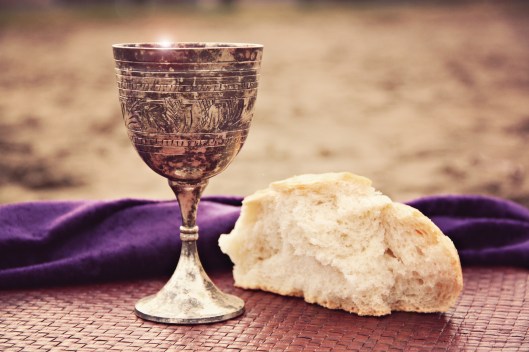
The same is true of the Eucharist.  I have been in churches that use grape juice and a small cube of pasty, crunchy “bread.”  I remember the splendor of the sweet Hawaiian bread used at another church.  I remember the first time I had real wine at communion, and the way that it burned down my throat, lighting a new fire in me.  Whether baked bread, bland wafers, or store-purchased pita bread, each texture and flavor imprints in my mind the church, the community, the spiritual place where I was at the time.  Even this weekend, at my goddaughter’s baptism, my own daughter commented on the “yucky” communion bread they had.  I would have just said it was dense, but that dense texture will linger in my mind as my reminder of our celebration.

Holy Eucharist is the comfort food of Church.  That is why I love being a part of a sacramental church that has Eucharist every Sunday.  But the Church offers other comfort foods as well.  The pancakes we eat every Shrove Tuesday remind me of years of fellowship and laughter – with communities all over the East Coast.  The Brunswick Stew of the Fall Festival at Hickory Neck will always remind me of warmth and community.  There are those dishes at every potluck that you search for, knowing the comfort it will bring.  And of course, there is the Sunday morning coffee – a staple of hospitality and grace.  If you have been missing a sense of community and comfort, I hope you will make your way to Church this week and join us in the feast that not only comforts us, but also strengthens us for the journey.  God has given us great work to do – but God has also given us the sustenance we need for the road ahead.

lords-supper-church-stock-photos

Photo credit:  stthomasnorwalk.com/religious-ed/sacraments/Eucharist

On hitting our stride…

Tags

, , , , , , ,

family-service-1This weekend, our Vestry gathered for a retreat.  Only a few things were on the agenda:  getting to know each other better (nothing like filling out some Lent Madness brackets to help you get to know someone!), defining who we are as a community, and looking forward to where we are going.  The weekend was a wonderful combination of laughter, reflection, quiet, conversation, dreaming, and planning.  I am reminded once again how blessed we are by the diverse, talented group of leaders who are helping guide our parish into its next phase of life.

One of the things we did on our retreat was to watch a video about Hickory Neck from 2004.  As a relative newcomer to Hickory Neck, it was fascinating to see so many familiar faces (don’t worry – you all still look fabulous!), to hear what was energizing the community back then, and to see what the goals and dreams were.  The video was produced to prepare Hickory Neck for a capital campaign which would support the construction of our New Chapel.  Despite the intent to raise funds, you still could hear clearly what Hickory Neck was about, and where it was going.

What I loved about watching the video was seeing how much things have changed, and how some things have not changed at all.  We are still a community of hope, joy, and belonging.  We still love to worship the Lord in the beauty of holiness, we are still journeying toward deeper relationship with God and our neighbor, and we still want to be beacon of light to our neighbors in need.  And yet, since the video was created, the economy has changed, technology has changed, and demographics have changed.  Our work now is listening to the new ways God is calling us to be faithful disciples to a world in need of redemption.

This is an exciting time for Hickory Neck.  These last ten months, we have been alternately jogging, sprinting, and trying to match each other’s pace.  As we wrap up this first year together, we are hitting a rhythmic stride together.  We have learned a lot more about each other, figured out how to adjust for each other’s gifts and talents, and are now getting ready to take off.  It’s an exciting time and the fun is just beginning.  If you haven’t met Hickory Neck yet, I would encourage you to come on over and check us out.  You won’t be disappointed!  And if you have been around a bit, I think you are going to be pleased to be a part of this next phase of life and ministry together.  God has great things in store!

Sermon – Isaiah 58.1-12, EP5, YA, February 5, 2017

Tags

, , , , , , , , , , ,

In about three and half weeks we will gather in the Historic Chapel for Ash Wednesday services.  In the liturgy for Ash Wednesday, the priest invites us into the “observance of a holy Lent, by self-examination and repentance; by prayer, fasting, and self-denial; and by reading and meditating on God’s holy Word.”  I don’t know about you, but this invitation always makes me a little nervous.  The truth is, I am terrible at fasting.  I have often blamed the issue on low blood-sugar.  But really, I just hate the way not eating makes me feel.  I get cranky, I cannot focus on work, and I just want to crawl into bed.  And what makes fasting worse is that we get scriptural passages that warn us about grimacing while fasting – that we should go so far as to put oil on our faces so that we look shiny and happy during our fasting.

Knowing my utter sense of failure at my inability to engage in the most holy of spiritual practices, I confess that I was secretly pleased to read our text from Isaiah today.  The people of Israel have become quite good at fasting and pious worship.  We are told that day after day the Israelites come to God in worship, delighting to know more about God, and fasting like righteous followers of God.  They even bow down and lie in sackcloth and ashes.  They are the epitome of penitential Lenten worshippers.  Except for one small, teeny, tiny problem.  Despite their devotional fasting and their fervent prayers, God is angry with the Israelites.  You see, while the Israelites are piously engaging in reverent, penitential worship, their hired hands are working under their oppressive orders.  While they have been perfecting reverential bows, there are hungry, homeless, naked, impoverished peoples just outside their doors.  Oblivious, the Israelites complain to God, “Why do we fast, but you do not see?  Why humble ourselves, but you do not notice?”  God’s response is a brutal question:  Why are you here?

In polite Episcopal circles, we do not often ask that question:  Why are you here?  We might ask a visitor a much softer version of that question, “What brings you to Hickory Neck?”  But we almost never ask a regular or long-time church member, “Why are you here?”  I think part of why we do not ask someone else that question is because we are afraid someone will ask us that question.  We are afraid to be asked that question because the question feels like a trick.  If I say I am here because I want peace or comfort, does that make me a passive, self-serving Christian?  If I say I am here because I enjoy the community, does that mean my church is more like a country club than a church?  If I admit that I do not know why I am in church this morning other than a strange longing somewhere deep inside me, does that mean that my worship is superficial or doomed for ambiguity?

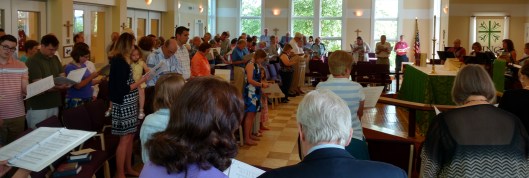
The scary part about our anxiety around that question, “Why are you here today,” is that God has a very clear response before we or the Israelites can even answer the question.  God says that if we do not come to worship to be changed, we are doing something wrong.  As one scholar argues, Isaiah’s words today tell us that, “Worship without justice has no value in the eyes of God.”[i]   For Isaiah, a gap has formed between the faithful’s seeking God and God’s ways and their actual way of life.  What Isaiah wants the people to know is that fasting, prayer, and worship are all well and good, but without some connection to the other 167 hours of their week, their worship, their fasting, their relationship with God is hollow.  Now, God is not telling us that worship is inherently bad or self-serving.  As another scholar points out, “worship is the most important thing we do together.  It is the place that forms us into the people of God.  It is the place where we inhale God’s love and grace, so that,” and here comes the important part, “so that we can be sent forth to exhale God’s love and grace in a broken world in need of redemption.”[ii]

One of the things that attracted me to Hickory Neck was the wide variety in styles of worship.  On any given Sunday, I can pray the Prayer of Humble Access in the midst of a quiet Rite I liturgy; I can belt out a praise song that is so familiar I don’t need to look at the words; I can chant the Eucharistic Prayer while the Choral Scholars respond with beautiful, precise, haunting harmonies; or I can sing a version of the Lord’s Prayer that my seven-year old daughter has learned by memory.  I love the variety of expressions of worship here, and love our unique gift that is rare in most parishes.  But variety can be dangerous.  Variety means bringing together people who don’t necessarily revel in the differences.  There will be people who only come to our early service because they find music to be a distraction.  There will be people who only come to the late service because anything other than traditional Anglican music interferes with their worship.  And there will be people who only like the middle service because they can let their hair down and be themselves.  Slowly, what is meant to be the gift of variety becomes a competition for the best – the most holy, most reverent, most relatable, most “of God.”  But what all that comparison leads to is not deeper relationship with God.  That comparison leads us to focus on the worship as an end unto itself, instead of as a means “right relationship.”[iii]

In order to get to the point of fasting or worship, God tells the Israelites to redefine fasting.  Instead of abstaining from food or drink, the fast God desires, “is outreach to those in need, which involves not only feeding the hungry, clothing the naked, and caring for one’s own, but also addressing the attitudes and structures responsible for injustices.”[iv]  In the Episcopal Church, we have codified this redefinition of fasting in our dismissal.  We take all of our prayers, all of learning, all of our confessions, and all of our feasting and we say, “Go in peace, to love and serve the Lord.”  In other words, we give ourselves the beauty of worship, and then remind ourselves of the point of that worship – right relationship with God and our neighbor.  I have often thought the church needs the words of the dismissal painted above the Narthex door, so that as each of us departs this space, we can jump up and slap the words – much life a sports team entering the arena who slaps a slogan or the team name.  Go in peace to love and serve the Lord.

Now some of you may be thinking about this radical redefinition of fasting and this question of why we are here in worship, and be wondering, “Can’t I just give up some food and call it a day?!?  Can’t I just sit in worship and not worry about why I am here?!?”  You may know well that righting relationships with God and neighbor is a lot harder than a day’s worth of sacrificing food or just showing up on Sunday.  But before you get too anxious, listen again to Isaiah’s words about what happens when we enter the kind of fast God prefers, “The Lord will guide you continually, and satisfy your needs in parched places, and make your bones strong; and you shall be like a watered garden, like a spring of water, whose waters never fail.  Your ancient ruins shall be rebuilt; you shall raise up the foundations of many generations; you shall be called the repairer of the breach, the restorer of streets to live in.”  God’s work is never too difficult – exhaling God’s love and grace in a broken world in need of redemption is as easy as breathing in the love and grace we inhale every Sunday.  The promise of God’s blessing is waiting – we just need to breathe.  Amen.

[i] Carol J. Dempsey, “Theological Perspective,” Feasting on the Word, Yr. A, Vol. 1 (Louisville:  Westminster John Knox Press, 2010), 314.

[ii] Andrew Foster Connors, “Pastoral Perspective,” Feasting on the Word, Yr. A, Vol. 1 (Louisville:  Westminster John Knox Press, 2010), 316.

[iii] Dempsey, 316.

[iv] Dempsey, 316.

On Staying at the Table…

Tags

, , , , , , , , ,

Yesterday morning, I heard a statistic that said 57% of Americans supported Trump’s current immigration ban.  The number surprised me because I had watched all weekend as people poured into airports and joined protests against the Executive Order.  Perhaps one could argue that the press loves to cover controversy and made the hype feel bigger than the numbers.  Regardless, watching the passionate, immediate, and spontaneous emergence of protests, I was surprised to hear such support in opposition to the protestors’ visceral response.  As I thought about that contradiction, I realized that there must be some part of the supporters’ position that I do not understand.

I have been thinking a lot this past week about how we are going to move through this tense time as a country.  One of the constant refrains I have been hearing is about how we need to listen – really listen – to each other and engage in meaningful conversation with the “other.”  I have appreciated articles like this one, that present a point of view without comment, which is one form of really listening.  But I have not been sure how I would go about engaging in these conversations myself.  But, as God often does, I have found it happening in spite of me.

Last week, Hickory Neck joined another Episcopal Church to host an emergency winter shelter week.  I volunteered for an evening shift.  During dinner, I found that the conversation between guests and volunteers slipped into a conversation about politics.  My initial instinct was to shut the conversation down – worrying I might step on some toes.  But I took a deep breath and tried to do what I kept hearing about – listen.  The points of view varied widely among our homeless guests and our parishioners.  Some points of view were extreme – on both sides!  And some of the things we shared I worried would cause alienation between my parishioners and I.  But we all stayed at the table.

That’s one of the things I have always loved about the Episcopal Church – we stay at the table.  Every week we bring our opposing views, our sinful hearts, and poor hearing to the table, and kneel side-by-side, remember whose we are, and go out into the world renewed and made whole.  Our table fellowship at dinner that night was not a Eucharistic meal.  But the results were quite similar.  As my volunteer shift ended, we shook hands, we looked each other in the eye, and we nodded in mutual respect.  Our conversation did not change the world.  But hopefully it changed each of us just a little.  And that may be the most we can hope for – small changes, made possible by staying at the table.  On Sundays, the church shows us how.  Our job is to create table opportunities as often as we can throughout the week.

life-changing-table

Photo credit:  www.boundless.org/life-changing-power-of-table/

On Roots and Relationships…

Tags

, , , , , , , , , ,

ficus_roots_tree

Photo credit:  www.arborcentre.co.uk/tree-root-subsidence-damage.html

I recently started a new yoga class.  Over the years I have learned that every yoga teacher has their own language and philosophy about the practice.  I had a teacher who used to tell us that when we are feeling discomfort, we shouldn’t label it as “pain” but “awareness.”  We had tons of fun talking about how much awareness I was having as I labored with my first child.  I had another teacher who was also a priest.  Instead of saying that he honored the “light” in each of us, he would say, “I honor the Christ in each of you.”  Anytime a teacher talks about honoring the light in me now, my brain automatically translates it to “Christ.”

This new teacher has added another phrase to my list of favorites – an image, actually.  Like many other teachers, when we practice “tree” pose she has us imagine our legs as having roots that extend deeply into the earth, grounding us.  But she added another element to that image.  As we stood there – young, old, black, white, small, and large – she asked us to imagine our roots intermingling with one another’s roots.  She went on to explain how we are stronger with our interwoven roots than we are on our own.  I immediately regarded the people in that room differently – wondering what their stories were, what brought them to that room, and what about our differences and similarities might make us stronger – what might make our community stronger.

I left that room feeling a sense of embrace and comradery.  I felt the power of all the students in the class carrying me through the day.  But in the weeks since then, and especially in light of our current political climate, I have found myself wondering what it might mean that my roots are interwoven with those who are not like me at all.  What if my roots are tied in with those who disagree with me, who marginalize those I support, and who seem to be working against what I stand for?

The realization reminded me of Jesus’ parable of the weeds (Matthew 13.24-30).  A man sows good seed in his field, but in the night, an enemy sows weeds among the good seed.  The man’s workers want to know if they should pull the weeds, but the farmer knows pulling the weeds will destroy the wheat.  So they must wait until the harvest time to separate the good from the evil.  Now, before you go too far, thinking you know who are the wheat and the weeds, two things.  First, it is God who makes those judgments in the parable.  But second, the wheat cannot survive without the weeds among it.  You might imagine the wheat tolerates the weeds, but I wonder if the weeds make the wheat better – challenge the wheat to be wise, discerning, and strong.  And perhaps the wheat encourages the weeds to do likewise.  I think my yogi’s description of intertwining roots applies.  We are stronger tied together than trying to remove ourselves or ignore the roots around us.  My prayer for us this week is that we start looking at the diversity of our intertwined roots and work toward engagement, discernment, and relationship – instead of hacking away at roots that might be our own.

Sermon – Matthew 4.12-23, Isaiah 9.1-4, Psalm 27.1, EP3, YA, January 22, 2017

Tags

, , , , , , , , , , , , , , , ,

Our family loves maps.  Of course, Scott and I grew up in a time when paper maps were the only kind of maps.  Since I moved around a lot and he traveled a lot, we both learned to pour over maps.  As a couple, we had road atlases for every major city in which we lived.  Looking over maps helps us understand where we are going, how different areas connect, and what the big picture is.

What you do not get from maps are the stories behind the lines.  When I lived and worked in Durham, NC, working among the hungry and poor, I soon learned more about the roads I had seen on the map.  You see, a highway cuts through Durham and was put there many years ago.  Before the highway came, there was a thriving African American community, with many small businesses.  The highway cut through the neighborhoods and businesses, dividing people from one another socially, displacing longtime community leaders, and devastating many small businesses.  The highway was essentially like tossing a small bomb into the neighborhood – without ever letting the neighborhood rebuild.  But you do not learn that kind of information from the thick blue line that conveniently cuts through town and gets you from point A to point B much faster.

Our gospel lesson today tries to give us that same kind of insight.  What sounds like a basic cartography lesson quickly becomes a socio-political lesson.  Matthew tells us, “When Jesus heard that John had been arrested, he withdrew to Galilee.  He left Nazareth and made his home in Capernaum by the sea, in the territory of Zebulun and Naphtali…”  Most of us hear all those town and territory names and tune out.  We keep racing forward, looking for the action in the story.  Now the map lovers among us might pull out one of those bibles with a map and pinpoint Galilee, Nazareth, and Capernaum.  We probably won’t find the territories of Zebulun and Naphtali on the same map, but we figure we at least have a mental picture of the setting.

In this case, skimming means we miss Matthew’s subtlety.  You see, we could certainly find Galilee, Nazareth, and Capernaum on a map relative to Jesus’ day.  But the reason we don’t see the territories of Zebulun and Naphtali is because that is the land of Abraham’s sons – over 700 years prior to the time Jesus lived.  The land of Zebulun and Naphtali represent a land that was once promised land, but for centuries has been a land of unfulfilled promise.[i]  The Assyrians were the first to conquer the land.  But they were followed by Babylon, the Persians, the Greeks, and eventually the Romans.  That kind of perpetual occupation and oppression does something to your psyche.  Generations upon generations have lived under the shadow of a dream deferred.  They have lived in darkness.

Long before Jesus, Isaiah prophesied that things would change.  We hear in Isaiah speaking that very promise today.  “There will be no gloom for those who were in anguish,” Isaiah says.  “In the former time he brought into contempt the land of Zebulun and the land of Naphtali, but in the latter time he will make glorious the way of the sea, the land beyond the Jordan, Galilee of the nations.  The people who walked in darkness have seen a great light; those who lived in a land of deep darkness–on them light has shined.”  To this place – this place where grandparent after grandparent promised their grandchildren that we would know a brighter future – to this place of darkness, Jesus goes to start his ministry.  What seems like a superfluous geographical information is actually of singular importance in understanding what Jesus is about.  The particularity of his ministry matters.  Where he goes as God made manifest says something about the kind of kingdom that is inbreaking.  His location – a land of longstanding darkness – will become a land of great light.  His location will be the place where the people of God can actually pray the psalm we prayed today, “The Lord is my light and my salvation; whom then shall I fear?  The Lord is the strength of my life; of whom then shall I be afraid?”

This week has been a loaded week.  We started off by honoring the Rev. Dr. Martin Luther King, Jr., whose passionate pleas for justice for all inspired a nation.  Dr. King understood how much location mattered.  His march from Selma to Montgomery meant something to the people who lived in Alabama at the time.  His references to freedom ringing from the mountains of New York, the Alleghenies of Pennsylvania, the snow-capped Rockies of Colorado, the curvaceous slopes of California highlighted how different regions of our country experienced racism.[ii]  He understood the value of geography when he gave his “I have a dream” speech in front of the Lincoln Memorial – a president who presided at the time of the Civil War.  And his famous speech there inspired thousands of men and women to walk yesterday in the same location – because they knew that in order to talk about injustice, you go to the most famous place where speeches about injustice have been offered.  Even the inauguration this week in front of the Capitol Building in DC signified something – that no matter how we felt about this presidential election, the new president would do what every president has done – be sworn in just like all the others.  The location mattered.

I highlight all of this because I know many of us read these texts today and are feeling like we are in a place of darkness.  Some of us see our new President as bringing in a new era of light.  But others among us see the opposite – some of us here feel like we have welcomed in a new oppressor who will keep us in the darkness.  As I have prayed with you all this week – both in person, in conversation, and in my private prayers, I kept going back to the geographical lesson of Jesus and the beginning of his ministry.  If geography matters, what does that mean for us?  Where do we see the light dawning in our time?

No matter which candidate was yours last year, I keep remembering that no candidate would have been the bearer of the light.  Only Christ does that.  But that does not mean any of us are off the hook.  Democrats or Republicans, Southerners or Non-Southerners, Women or Men – God positions each of us in a particular geography with a particular mission to bring light to where God has planted us.  Whether you are thrilled or devastated by the state of our country’s leadership, God tells us today that our work is not done.[iii]

We often say about Hickory Neck that our mission is to keep burning our light on the hill.  This hill that we are planted on has a history too.  Over 200 years ago, the people who lived and witnessed to Jesus on this hill left.  They sided with the British and the British lost.  Talk about a devastated people!  But the light never went out.  Students came to this hill to learn and grow and play their part in this location’s narrative.  Soldiers and medics came to this hill to tend the sick, mend the wounded, and bury the dead during the Civil War.  When that war was over, students came back, to continue their learning and formation.  And, around 100 years ago, the people of God came back to this hill to start shining Christ’s light again.

Knowing that we have been planted on this hill in this time has given me hope.  No matter how divided we are as a country – no matter how divided we are within these very walls – God has asked us to be light on this hill.  That means that when our neighbors are freezing in the cold nights of winter, we are going to open our doors, cook some meals, pull some all-nighters, and witness Christ’s light and love.  That means when we start developing our vision for Hickory Neck, we are not looking for a vision for St. Swithins of anyplace, USA.[iv]  We are going to be looking at how we can make an impact on Toano, Upper James City County, Williamsburg, and Southern Virginia.  Whether we build that multigenerational day center or we find something else that matters to this particular geography, our location is part and parcel of our work to bring the light of Christ out into the world.

The darkness that many of us feel about our country is not likely to dissipate any time soon.  But that darkness does not eliminate our hope.  Our ancestors walked in the darkness for over seven centuries before the light of Christ came to them.  Our own country – from its treatment of native peoples to enslaved Africans – has been a land of darkness despite the many reminders of the light.  We can become overwhelmed in the vast story of history.  But our hope is in our geography – the current moment and place where God has placed us to beacons of hope and agents of change.  This space, with its many windows that pour in light, is meant to be a place that warms you by Christ’s light every week.  But this place is also a place that needs to shine its light off the hill – to be an agent for change, compassion, and care.   Our invitation this week is to drop our nets, and to take up our work being agents of light on this hill and beyond.  Amen.

[i] Karoline Lewis, “Mapping God’s Promises,” January 15, 2017, as found at http://www.workingpreacher.org/craft.aspx?post=4796 on January 18, 2017.

[ii] Lewis.

[iii] Fritz Wendt, “The Politics of Inauguration and Surrender—Matthew 4:12-23,” January 17, 2017, as found at http://www.politicaltheology.com/blog/the-politics-of-inauguration-and-surrender-matthew-412-23-fritz-wendt/ on January 18, 2017.

[iv] Lewis.