• About

Seeking and Serving

~ seek and serve Christ in all persons

Seeking and Serving

Tag Archives: church

On Cuisine and Community…

15 Wednesday Feb 2017

Posted by jandrewsweckerly in Uncategorized

≈ 3 Comments

Tags

church, comfort, comfort food, communion, community, cuisine, Eucharist, feast, fellowship, food, God, journey, recipe, strength, sustenance

mac-and-cheese

Photo credit:  whoneedsacape.com/2016/10/italian-mac-cheese/

This weekend, I made a family recipe from my husband’s grandfather.  Though Grandpa Gray is no longer with us, somehow, making this recipe for the first time in a long while flooded me with all kinds of memories.  You see, Italian Mac was the family’s favorite dish – the ultimate comfort food.  One year, I finally asked for the recipe and stayed with Grandpa Gray in the kitchen while he made it.  Now, as I look at the words of the recipe, I can hear his beautiful voice in the words.  As I crush the herbs as he instructed, I can imagine his worn hands doing the same thing.  As our house fills with the aromas of Italian Mac and garlic bread, I can remember the smell of his house.  As I sip the red wine that the recipe suggests I pair with the meal, I can recall the comforting sound of his laughter.

Food has a special power.  Whenever I have been on mission trips, food has created intimate connection.  In Honduras, we all took turns helping the women of the village cook for our team.  After ten minutes of attempting to grind corn, we were all laughing at how much stronger the women were than the men who were lifting bricks to build the church.  On my second visit to Costa Rica, I wanted to learn how to make the beans and rice we ate regularly.  The women were surprised that I was willing to get up early with them and learn.  After that morning, our relationship shifted.  In Myanmar, giggles and laughter ensued as we tried new foods and our hosts appreciated our boldness.

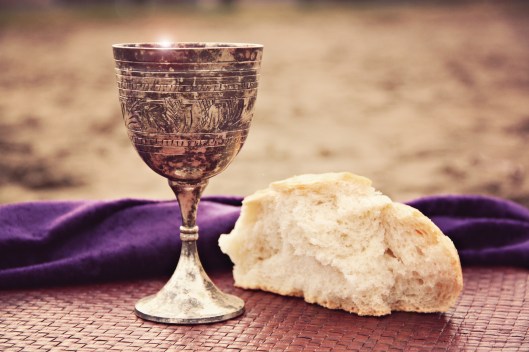
The same is true of the Eucharist.  I have been in churches that use grape juice and a small cube of pasty, crunchy “bread.”  I remember the splendor of the sweet Hawaiian bread used at another church.  I remember the first time I had real wine at communion, and the way that it burned down my throat, lighting a new fire in me.  Whether baked bread, bland wafers, or store-purchased pita bread, each texture and flavor imprints in my mind the church, the community, the spiritual place where I was at the time.  Even this weekend, at my goddaughter’s baptism, my own daughter commented on the “yucky” communion bread they had.  I would have just said it was dense, but that dense texture will linger in my mind as my reminder of our celebration.

Holy Eucharist is the comfort food of Church.  That is why I love being a part of a sacramental church that has Eucharist every Sunday.  But the Church offers other comfort foods as well.  The pancakes we eat every Shrove Tuesday remind me of years of fellowship and laughter – with communities all over the East Coast.  The Brunswick Stew of the Fall Festival at Hickory Neck will always remind me of warmth and community.  There are those dishes at every potluck that you search for, knowing the comfort it will bring.  And of course, there is the Sunday morning coffee – a staple of hospitality and grace.  If you have been missing a sense of community and comfort, I hope you will make your way to Church this week and join us in the feast that not only comforts us, but also strengthens us for the journey.  God has given us great work to do – but God has also given us the sustenance we need for the road ahead.

lords-supper-church-stock-photos

Photo credit:  stthomasnorwalk.com/religious-ed/sacraments/Eucharist

Sermon – Isaiah 58.1-12, EP5, YA, February 5, 2017

08 Wednesday Feb 2017

Posted by jandrewsweckerly in Sermons, Uncategorized

≈ Leave a comment

Tags

church, fast, fasting, God, Isaiah, love, need, outreach, relationship, Sermon, serve, worship

In about three and half weeks we will gather in the Historic Chapel for Ash Wednesday services.  In the liturgy for Ash Wednesday, the priest invites us into the “observance of a holy Lent, by self-examination and repentance; by prayer, fasting, and self-denial; and by reading and meditating on God’s holy Word.”  I don’t know about you, but this invitation always makes me a little nervous.  The truth is, I am terrible at fasting.  I have often blamed the issue on low blood-sugar.  But really, I just hate the way not eating makes me feel.  I get cranky, I cannot focus on work, and I just want to crawl into bed.  And what makes fasting worse is that we get scriptural passages that warn us about grimacing while fasting – that we should go so far as to put oil on our faces so that we look shiny and happy during our fasting.

Knowing my utter sense of failure at my inability to engage in the most holy of spiritual practices, I confess that I was secretly pleased to read our text from Isaiah today.  The people of Israel have become quite good at fasting and pious worship.  We are told that day after day the Israelites come to God in worship, delighting to know more about God, and fasting like righteous followers of God.  They even bow down and lie in sackcloth and ashes.  They are the epitome of penitential Lenten worshippers.  Except for one small, teeny, tiny problem.  Despite their devotional fasting and their fervent prayers, God is angry with the Israelites.  You see, while the Israelites are piously engaging in reverent, penitential worship, their hired hands are working under their oppressive orders.  While they have been perfecting reverential bows, there are hungry, homeless, naked, impoverished peoples just outside their doors.  Oblivious, the Israelites complain to God, “Why do we fast, but you do not see?  Why humble ourselves, but you do not notice?”  God’s response is a brutal question:  Why are you here?

In polite Episcopal circles, we do not often ask that question:  Why are you here?  We might ask a visitor a much softer version of that question, “What brings you to Hickory Neck?”  But we almost never ask a regular or long-time church member, “Why are you here?”  I think part of why we do not ask someone else that question is because we are afraid someone will ask us that question.  We are afraid to be asked that question because the question feels like a trick.  If I say I am here because I want peace or comfort, does that make me a passive, self-serving Christian?  If I say I am here because I enjoy the community, does that mean my church is more like a country club than a church?  If I admit that I do not know why I am in church this morning other than a strange longing somewhere deep inside me, does that mean that my worship is superficial or doomed for ambiguity?

The scary part about our anxiety around that question, “Why are you here today,” is that God has a very clear response before we or the Israelites can even answer the question.  God says that if we do not come to worship to be changed, we are doing something wrong.  As one scholar argues, Isaiah’s words today tell us that, “Worship without justice has no value in the eyes of God.”[i]   For Isaiah, a gap has formed between the faithful’s seeking God and God’s ways and their actual way of life.  What Isaiah wants the people to know is that fasting, prayer, and worship are all well and good, but without some connection to the other 167 hours of their week, their worship, their fasting, their relationship with God is hollow.  Now, God is not telling us that worship is inherently bad or self-serving.  As another scholar points out, “worship is the most important thing we do together.  It is the place that forms us into the people of God.  It is the place where we inhale God’s love and grace, so that,” and here comes the important part, “so that we can be sent forth to exhale God’s love and grace in a broken world in need of redemption.”[ii]

One of the things that attracted me to Hickory Neck was the wide variety in styles of worship.  On any given Sunday, I can pray the Prayer of Humble Access in the midst of a quiet Rite I liturgy; I can belt out a praise song that is so familiar I don’t need to look at the words; I can chant the Eucharistic Prayer while the Choral Scholars respond with beautiful, precise, haunting harmonies; or I can sing a version of the Lord’s Prayer that my seven-year old daughter has learned by memory.  I love the variety of expressions of worship here, and love our unique gift that is rare in most parishes.  But variety can be dangerous.  Variety means bringing together people who don’t necessarily revel in the differences.  There will be people who only come to our early service because they find music to be a distraction.  There will be people who only come to the late service because anything other than traditional Anglican music interferes with their worship.  And there will be people who only like the middle service because they can let their hair down and be themselves.  Slowly, what is meant to be the gift of variety becomes a competition for the best – the most holy, most reverent, most relatable, most “of God.”  But what all that comparison leads to is not deeper relationship with God.  That comparison leads us to focus on the worship as an end unto itself, instead of as a means “right relationship.”[iii]

In order to get to the point of fasting or worship, God tells the Israelites to redefine fasting.  Instead of abstaining from food or drink, the fast God desires, “is outreach to those in need, which involves not only feeding the hungry, clothing the naked, and caring for one’s own, but also addressing the attitudes and structures responsible for injustices.”[iv]  In the Episcopal Church, we have codified this redefinition of fasting in our dismissal.  We take all of our prayers, all of learning, all of our confessions, and all of our feasting and we say, “Go in peace, to love and serve the Lord.”  In other words, we give ourselves the beauty of worship, and then remind ourselves of the point of that worship – right relationship with God and our neighbor.  I have often thought the church needs the words of the dismissal painted above the Narthex door, so that as each of us departs this space, we can jump up and slap the words – much life a sports team entering the arena who slaps a slogan or the team name.  Go in peace to love and serve the Lord.

Now some of you may be thinking about this radical redefinition of fasting and this question of why we are here in worship, and be wondering, “Can’t I just give up some food and call it a day?!?  Can’t I just sit in worship and not worry about why I am here?!?”  You may know well that righting relationships with God and neighbor is a lot harder than a day’s worth of sacrificing food or just showing up on Sunday.  But before you get too anxious, listen again to Isaiah’s words about what happens when we enter the kind of fast God prefers, “The Lord will guide you continually, and satisfy your needs in parched places, and make your bones strong; and you shall be like a watered garden, like a spring of water, whose waters never fail.  Your ancient ruins shall be rebuilt; you shall raise up the foundations of many generations; you shall be called the repairer of the breach, the restorer of streets to live in.”  God’s work is never too difficult – exhaling God’s love and grace in a broken world in need of redemption is as easy as breathing in the love and grace we inhale every Sunday.  The promise of God’s blessing is waiting – we just need to breathe.  Amen.

[i] Carol J. Dempsey, “Theological Perspective,” Feasting on the Word, Yr. A, Vol. 1 (Louisville:  Westminster John Knox Press, 2010), 314.

[ii] Andrew Foster Connors, “Pastoral Perspective,” Feasting on the Word, Yr. A, Vol. 1 (Louisville:  Westminster John Knox Press, 2010), 316.

[iii] Dempsey, 316.

[iv] Dempsey, 316.

Come and See!

11 Wednesday Jan 2017

Posted by jandrewsweckerly in Uncategorized

≈ Leave a comment

Tags

church, come, community, connection, gospel, internet, isolation, Jesus, physical, prayer, see, snow, virtual

This past weekend, Williamsburg was hit with over a foot of snow.  Living in an area without many plows, and serving in a church without a Rectory on the campus, I knew that Sunday services at Hickory Neck would be nearly impossible.  Our parking lot did not get plowed until early Monday morning, and many of our parishioners live on rural roads.  With great disappointment, I cancelled all Sunday services.  But then my husband turned to me with a twinkle in his eye and said, “You should lead Morning Prayer on Facebook Live!”

That night I put together a video to tell people what we were going to do and where they should go to join me in worship.  And on Sunday morning, at 10:00 am, I went live.  By the time we had finished, there were over 60 views.  By the time we got to the end of the day, there were over 300 views.  By Tuesday night, there were over 700 views.  The positive feedback poured in – from our parishioners, from their neighbors, and from dozens of people who were snowed in all up and down the Atlantic coast.

As I have thought about the experience, I realized what a gift technology can be.  Isolated in homes, people were able to come together and pray the same prayers, hear the same readings, confess our sins, lift up our intercessions and thanksgivings, and give glory to God.  So often we talk about the challenge of the church is being tied to the walls of the physical building, not taking the Gospel out in the world.  Our experience on Facebook felt like a little way of getting ourselves out in the world, and sharing the beauty of worship in virtual community.

Of course, I don’t think church can always be expressed in virtual ways.  Being physically present with one another allows us to engage all our senses, to read the body language of someone who is suffering or experiencing joy, and to engage in the holy meal that brings us together despite our divisions.  But the experience certainly made me realize that we can supplement that communal physical experience with communal virtual experiences.  And once you show your neighbor that cool video from your church, then, like Jesus in our Gospel lesson this coming Sunday, you can say, “Come and see!”[i]

come-see

Photo credit:  https://www.queertheology.com/john-1-29-42


[i] John 1.39.

On Sushi and Other Adventures…

05 Thursday Jan 2017

Posted by jandrewsweckerly in Uncategorized

≈ 1 Comment

Tags

adventure, church, commit, experiment, food, God, new, try, variety

sushi-roll

Photo credit:  www.lifehack.org/articles/lifestyle/kitchen-hack-five-minute-maki-sushi-rolls.html

My husband and I have very different experiences of food.  I like to try new things and am constantly surprised but what things I discover and grow to love.  He is much less experimental and is easily turned off by new smells or flavors.  I love a variety of foods, and he is what I would call, “picky.”  Our differences have certainly made shared meals difficult.  I have learned to use meals with friends or colleagues as my time to play with food.  And I have also learned what common foods we like and can share on a weekly basis.

When we had children, I was desperate to instill in them a love of the varieties of food – not because I think my husband’s preferences are bad necessarily, but more because I want them to be willing to try new things.  That has meant introducing things to the kids at an early age, treating new foods like a fun experiment, and learning how to use “thank you, please” bites (a practice in which the child has to try at least one solid bite of a new food – every time it is served).  The experiment has taken time.  Things I introduced early did not go so well.  But over time, my oldest has become more and more interested in new tastes and textures.

This week, on a mommy-daughter date, I decided to try sushi again with my oldest.  She tried it once before (in a gracious, “thank you, please” bite), but I figured it had been a year or two and we could try again.  I got a sampling of sushi, and she bravely tried every kind.  She had miso soup for the first time, and proclaimed she loved it (I waited to tell her what the green stuff (seaweed) and white stuff (tofu) was until after she ate it first).  She also tried some noodles as a backup plan.   As we were wrapping up our fun lunch, my daughter said to me, “Mommy, I like trying new foods.”

I was thinking about her adventurous spirit and realized we could all use a little more willingness to try new things.  Your thing might not be food, but there might be other areas of life that you have been avoiding out of a sense of fear or trepidation.  Maybe it’s a new clothing style, a fun recreational activity, or a book.  Maybe it is a new form of prayer, an outreach opportunity, or a new style of worship or liturgical music.  As I look back at these first nine months at Hickory Neck, I realize we have both been doing a lot of experimenting – I have been trying new things and so has the parish.  Some of the changes we have loved, some have been a bit awkward, and some did not work at all.  But knowing that we are committed to the adventure has made the trying of things less intimidating – and I think more exciting!  We are probably not going to like everything we try, but a good, “thank you, please” bite won’t hurt.  Here’s to more adventures, Hickory Neck – with God, with one another, and with the world!

On Traditions and Routine…

08 Thursday Dec 2016

Posted by jandrewsweckerly in Uncategorized

≈ Leave a comment

Tags

Advent, church, comfort, identity, liturgy, power, routine, tradition

1st-candle

Photo credit:  https://scpeanutgallery.com/2013/12/01/1st-sunday-in-advent-isaiah-21-5-psalm-122-romans-1311-14-matthew-2436-44-suddenly-out-of-zion/

As I began personal preparations for Advent this year, I began to wonder if a change was in order.  The last few years, our family has used the same Advent calendar.  It has wonderful daily devotions, and fun, pop-out depictions to coordinate with each day.  It has suggested ways to pray as a family and how to make Advent through Epiphany Day meaningful.  But I wondered if my family was boring of the same old tradition, so I started to think about alternatives.  Right as I prepared to place my order, I mentioned something about the order to my husband.  My seven-year old immediately chimed in, “We’re getting the same calendar, right?!?  I want to do the devotions.”  Shocked by her commitment, I went back to the old order, and ordered a new calendar right away.

Just this past weekend we purchased our annual live tree.  Though I knew I had a day or two to let the tree settle, my husband was anxious for me to get the lights and ornaments on and to unpack our Christmas decorations.  I, on the other hand, was not as enthusiastic about the work it would entail.  As soon as my daughter heard that I would be unpacking ornaments, she begged to help, even though it was a school night.  So, we turned on the Christmas music and got to work.  Her enthusiasm was contagious.  As she unpacked various ornaments, she would declare, with glee, “I remember this one!!!”  She eagerly reminded me of how we strategically place delicate ornaments up high, out of reach of her younger sister.  She also worked to place all the ornaments that make noise down low so her sister could enjoy them too.  As I watched her revel in reliving Christmases of years past, I was flooded with memories of a similar routine with my own mother.

My interactions with my daughter this year have reminded me of why being a part of a liturgical church is so special.  Though “routine,” or tradition, may sound boring to some, the routine of liturgy is a tremendous source of comfort and belonging to those who participate.  Every Advent we hear of Isaiah, John the Baptist, and Mary the Mother of God.  Every Christmas we retell the Lukan nativity narrative.  Year after year, the pattern of the liturgical calendar, the repeating of holy scripture, and the weekly practice of Eucharist are our routine – our tradition.  Though we always want to keep church fresh and relevant, the routine is what grounds us.  The routine brings us comfort.  The routine gives us a sense of identity.

I am especially grateful for that grounding in identity this year.  In a year of political upheaval, of community and country divisions, and of raised awareness to the phobias and “isms” of our time, I am grateful for a liturgical pattern that reminds me of who I am, what is important, and what brings us peace.  Though I am always excited to try new experiments, I am reminded this Advent of the power of tradition – and it is anything but routine!

On Turning Down the Noise…

30 Wednesday Nov 2016

Posted by jandrewsweckerly in Uncategorized

≈ 1 Comment

Tags

Advent, breath, breathe, Christ Child, church, God, loud, noise, quiet

o-shh-facebook

Photo Credit:  www.huffingtonpost.co.uk/lucy-gaskin/playing-the-game-of-shh_b_7894332.html

I live in a noisy house.  We have tried teaching our children about volume control (we use a scale to help our oldest; e.g. “You’re at a 10.  I need you at a 6.”).  We have worked on the concept of taking turns while speaking.  We have tried yoga breathing (which more often sounds like hyperventilating that calming breaths).  And we use a lot of “time out.”  As a parent, most of the time I am used to the volume of our house.  But occasionally I spend time with families who have much more quiet homes, and the experience reminds me of how loud my house really is.

We are currently living in a culture of loud.  Every day I receive emails from some online store who promises that today’s sale is even better than yesterday’s.  When I try to work in public places on my laptop, either music or TVs are blaring loudly.  Our current political discourse feels more like a shouting match than a quiet discussion of issues.  And that does not even include the noise of Christmas preparation.  Our lives are very loud when we stop to listen.

I think that is why I love Advent so much.  It is the one church season that is almost always the total opposite of our secular season.  In a time when the secular world is getting louder and louder, the church invites us to be more and more quiet.  Our liturgies get simplified.  Our educational offerings focus more on quiet reflection than dynamic presentations or lively conversations.  Our calendar invites us to slow down.  We do all this not to be contrary, but because our church wants to give us space to ponder and savor the coming miracle of the Christ Child.

This morning I used on online version of Morning Prayer that I don’t usually use.  The nice thing about the website (or app if you use it on your phone), is the lessons are incorporated into the page so you do not have to find them separately.  Also incorporated are some hymns and canticles.  Today, the hymn was “Breathe on me Breath of God.”  I remember that old hymn from my childhood and it was just what I needed to help me stay engaged in the quiet of Advent.  My prayer for each of you today is not only that you feel God’s breath on you, filling you with life anew, but also that you breathe in God, allowing God to work through you so that God’s light might shine through you with renewed vigor.  Perhaps simply by breathing in God and allowing God to breathe on you, you might find some small way to combat the loudness of life today.

Sermon Luke 21.5-19, Isaiah 65.17-25, P28, YC, November 13, 2016

23 Wednesday Nov 2016

Posted by jandrewsweckerly in Sermons, Uncategorized

≈ Leave a comment

Tags

church, disagree, diversity, election, Episcopal Church, ethics, God, Jesus, kingdom of God, kingdom of man, love, Messiah, politics, Sermon, vote

One of the things you will learn about me as we grow together is that I generally avoid politics in the pulpit.  I avoid talking about politics because one of the blessings of the Episcopal Church is that we represent a wide range of political viewpoints.   Though some would like to categorize our church as liberal because of some of our national Church decisions, our membership is diverse.  Most of the time our diversity is a gift.  Our diversity means that we cannot become an echo chamber, always preaching to the proverbial choir.  We will have differences of opinion, we will argue and debate about how scripture is applied in modern life, and we will be forced to agree to disagree when we come to the table each week.  We are one of the rare denominations who walk that fine line well, and that ability is one of the things I love about the Episcopal Church.

The curse of our diversity means that we will rarely be on the same page about an issue on any given Sunday.  That reality is most glaringly obvious on a Sunday like this one:  the first Sunday after one of the most contentious elections in modern history.  As I step into this pulpit today, I am aware that there are people in this room who feel like we made a good decision on Tuesday – a decisive vote to do business differently on a national level.  I am aware that there are people in this room who are gravely disappointed by the decision we made on Tuesday.  They feel a range of emotions, including sadness, disappointment, hurt, anger, fear, and threat.  I am also aware that there are people in this room who do not put too much credence in what happened Tuesday.  They may have voted, but they did not feel like there were any good options, and so they were resigned to be dissatisfied with whatever the outcome would be.

The trouble with our scripture lessons from Luke and Isaiah today is that they tempt us to conflate what has happened in our political sphere this week with the kingdom of God.  Teaching at the Temple, Jesus predicts the destruction of the Temple.  When asked when this will take place and what the signs will be, Jesus’ answer is dire.  He warns of false prophets; wars and insurrections; nations rising up against each other; earthquakes, famines, and plagues; betrayals by family and friends; and personal arrests and persecutions.  Conversely, Isaiah prophesies of the coming kingdom:  where there will be no weeping or distress; people will live into old age; people will stay on their land and their fruits will prosper; and the wolf and the lamb will feed together.  We could look at these two worlds – the world of destruction and judgment and the world of the peaceful kingdom and easily say, “Well because my candidate won or lost, we will be dealing with either the day of doom or the day of the peaceful kingdom.”  The scripture today tantalizingly tempts us to look at these last five days and say with either dread or joy, “The kingdom of God has come near.”  But I would argue that that kind of conflating is not only false, but also ascribes too much power to humans.

Eight years ago, I voted for Barak Obama.  I remember feeling like he could bring us into a new era.  He talked about hope, and I felt filled with a sense of hope and renewal.  He made a lot of promises, many of which felt in line with what I would call gospel living.  When he took office, I remember holding on to that sense of hope.  I should not have been surprised years later when I became disappointed with some of Obama’s decisions.  My idyllic sense of hope began to deflate, and I remember several people talking about how disappointed they were – as if Obama was a false prophet or failed messiah.  As soon as that rhetoric surfaced, I realized the fatal flaw of my vote of confidence in Obama.  I had placed Obama in the role of Messiah – someone who would bring about the reign of God.  Suddenly, I realized how unfair, and quite frankly, unchristian, that expectation was.  Obama would never be the Messiah I wanted because I already had a Messiah.  No president could ever represent Christ effectively, because we only have one Messiah.  Not until I had that realization was I able to see politics a little differently.  Though I strongly encourage us all to be involved in the political life of our country, and I also strongly encourage us to use our Christian ethics as a moral compass in electing officials, I am also keenly aware that no political servant can ever be a messiah, because every political servant is a flawed human, just like you and me.  Likewise, I am also ever more aware that Jesus was not a Democrat or a Republican, because political parties are made up of flawed human beings with flawed abilities to fully represent the gospel of Jesus Christ.

So where does that leave us?  Are we supposed to step back from political activism if the political system is inherently flawed?  Scholars have debated this issue for centuries.  In their book Resident Aliens, Stanley Hauerwas and Will Willimon argued that Christians should be in the world, but not of the world.  They argued that, “The Confessing church does not take as its primary aim the transformation of the world through the political route of the State.  Instead, [the Church] seeks to transform the world by creating a counterculture of people who live under the reign of Jesus.  In this counterculture ‘people are faithful to their promises, love their enemies, tell the truth, honor the poor, suffer for righteousness, and thereby testify to the amazing community-creating power of God.  The confessing church has no interest in withdrawing from the world, but it is not surprised when its witness evokes hostility from the world’ (46).  In doing so this counterculture church becomes the people of the cross, demonstrating God’s love for the world.  The most ‘effective’ thing the church can do is to become the ‘actual creation of a living, breathing, visible community of faith’ (46) in a hostile world.”[i]

Here is what I know:  the kingdom of man is not like the kingdom of God.  I say that not as an excuse to hide in a bubble, but as a salve for our wounded spirits when we see how far apart the kingdom of man can be from the kingdom of God.  We could leave church today with our hands thrown up in the air, feeling like the two are different and there is nothing we can do to change it.  But that is not what Hauerwas, Willimon, or even Jesus want from us today.  In Jesus’ prediction of doom and personal persecution, Jesus also says something simple and almost comical.  He says, “This will give you an opportunity to testify.”[ii]  Our political system is not perfect.  We are not a perfect country.  We hurt each other and we suffer at the hand of one another.  But that lack of perfection and the presence of hurt is no excuse to not work on bringing about the kingdom of God here on earth.  The prophecy of Isaiah is not some pie-in-the-sky dream about what happens when we die.  The coming of Jesus meant the inbreaking of the kingdom here on earth.  In Christ’s absence, our work is turning this kingdom of man into the kingdom of God.  The vision from Isaiah is just that:  a vision for us to align our steps, and to do our work.  The vision of Isaiah is not a Republican vision or a Democrat vision.  The vision of Isaiah is the vision of God:  of taking “the original creation that the Divine called good,” and “transforming that creation into something new.”[iii]

After this contentious election, I would love to tell you that everything will be okay – that God will magically make things right.  But Jesus tells us today that he needs us to do our work.  When Jesus tells those gathered that they will have the opportunity to testify, he also tells them, “make up your minds not to prepare your defense in advance; for I will give you words and a wisdom that none of your opponents will be able to withstand or contradict.”[iv]  Things will be bad before the kingdom of God reigns over the kingdom of man.  Our political systems are not capable or perhaps even interested in bringing about the reign of God.  That work is ours to do.  But Jesus promises that he will be with us, giving us the words as we work, empowering us to right the ills of this world, strengthening us for work of kingdom making.  And you are in the right place this morning to prepare yourself for that work.  Today and every Sunday we offer you the chance to cry out to God, to confess your own complicity with sin, to learn and be formed into a disciple of Christ, to be strengthened with the holy meal, and then to get back out there in the work of bringing about the kingdom of God.  If you need to linger today a little longer at the altar rail, with your anger or your grief at what happened this week, by all means do it.  If you are emboldened by what happened this week, then take that sense of victory and turn it into kingdom work.  But before you leave today, remember that each of us, in all our diverse opinions and experiences are needed to testify and help each other testify.  We need each other and our Messiah, the Christ.  He will give us the words when the time comes so that we can create a world where the lion and the lamb feast together.  Amen.

[i] Steven Kopp, “Book Summary: Resident Aliens by Stanley Hauerwas,” August 21, 2015, as found at https://slasherpastor.wordpress.com/2015/08/21/book-summary-resident-aliens-by-stanley-hauerwas/ on November 11, 2016.  The page numbers are page citations from Hauerwas and Willimon’s book.

[ii] Luke 21.13.

[iii] Mary Eleanor Johns, “Pastoral Perspective,” Feasting on the Word, Yr. C, Vol. 4 (Louisville: Westminster John Knox Press, 2010), 290.

[iv] Luke 21.14-15.

On Saints, Elections, and God…

09 Wednesday Nov 2016

Posted by jandrewsweckerly in Uncategorized

≈ 1 Comment

Tags

altar, church, election, God, liturgy, messiness, saints, worship

14917060_1270799702976287_658328143983009977_oThis past Sunday, I got to try on one of Hickory Neck’s traditions.  For the past several years, every All Saints Sunday, the congregation has been invited to tie a ribbon on the altar rail in honor of saints who have gone before.  To be honest, before our liturgies started, I was not sure how the liturgical action would go.  I had imagined all sorts of reasons it might be awkward:  I didn’t think our early, reserved worshipers would be that interested; I worried that the ribbons would be messy, making communion at the rail difficult; I wondered if the symbolism would work in our space.  Happily, I was wrong on all accounts.

Instead, the liturgical symbolism was potent.  As I watched countless people kneel at the rail, tying on the ribbons, many with tears streaming down their faces, I realized how easy it is for me to forget the pain of grief that people struggle with every day.  When we see a well-dressed person at church on Sunday, we forget that there is a unique, sometimes painful story underneath appearances.  As I looked at ribbons draped on the altar rail, I imagined the bodies of the saints, draped on the entrance of the heavenly banquet, having given their lives to love and witness.  As my mind struggled with the messiness of the rail, my heart could see the messiness of life, clinging to the very altar where we kneel not just for solace and pardon, but for strength and renewal.  The liturgical action created a beautiful moment that was overwhelmingly powerful.

Today, I woke up to the news of election returns. Being a pastor of a diverse congregation, I know there are hearts that are relieved, hearts that are satisfied, and hearts that are saddened, fearful, and disappointed.  As I process that reality today, I am reminded of those ribbons, dripping from the altar of church.  I am reminded of the saints that have gone before, who have waded through their own times of conflict.  I am reminded of the fact that on Sunday, each worshiper will be bringing a story to the altar that I will never know fully.  I am reminded of the fact that our church offers a rail where we all kneel or stand, in all of life’s messiness, longing for something bigger and with greater meaning than we can give each other in our limited humanity.

As I got ready for the day this morning, my two-year old sat in the floor of our bedroom with some books.  I was still processing that image of All Saints Day when I heard her singing from one of her books.  “He’s got my brothers and my sisters in his hands…he’s got the whole world in his hands.”  Her sweet voice brought me to tears as I realized the deep wisdom in her, perhaps unintended, words.  In this messiness of life, there will be days that are really complicated, confusing, and hard.  But as a person of faith, I also trust that the Lord our God is holding us in God’s hands, tending not just to me, but to my brothers and my sisters.  For today, that is all I can ask for.

world6

Photo credit:  He’s Got the Whole World in His Hands, Kadir Nelson.  Photo found at http://www.walkingbytheway.com/blog/picture-books-for-transracial-adoptive-families/

Getting Real and Giving Generously…

26 Wednesday Oct 2016

Posted by jandrewsweckerly in Uncategorized

≈ Leave a comment

Tags

budget, church, giving, journey, Living Generously, ministry, money, motivation, passion, pledge, real, resources

budget

Photo credit:  www.associationserviceswa.com/2016/08/value-of-a-well-prepared-budget/

The year after I graduated from college, I volunteered fulltime through the AmeriCorps program at a Food Bank in North Carolina.  In addition to working in the warehouse and monitoring agencies, my fellow volunteers and I also had monthly classes on a variety of topics.  My favorite was a budgeting class.  Though most of us were scraping by our living stipend, we still had income and expenses like everyone else.   Our homework was to track our expenses and income for a month and then come back to class to talk about what we noticed.  After that month, I realized that I had picked up a terrible habit.  I had worked very hard to save money during that year.  As a reward for saving money, every week I would treat myself to something small.  But when I did the math, I realized the amount I had saved was much less than the amount with which I was treating myself.  The realization was shocking and wildly disappointing.

On Sunday, we are submitting our pledge commitments for the coming year at Hickory Neck.  Part of our Living Generously campaign has been talking about the powerful ministries at Hickory Neck that mean so much to us.  We have read parishioner reflections, biblical reflections from national church leaders, and a great narrative budget that helps us see how our finances function.  My husband and I are inspired and expectant about the future of Hickory Neck, and we are overjoyed to join the pledging effort to support our ministry.

Inspiration has not been a problem.  In fact, my husband and I talked about how we want to increase our pledge this year.  But as we looked at the numbers, we realized in order to align our budget with our passion, we were going to have to adjust some things.  For us, that means at least a few less meals out each month.  It also may mean being a bit more discerning about wants versus needs.  It will certainly mean keeping an eye on making sure that we are able to keep our pledge next year by saving the amount needed for our increase and not “treating” ourselves disproportionally to our increased pledge.

As the Vestry talked about Stewardship, the Vestry all realized our church giving was motivated by different things.  For some of us, understanding the mission of the church and how our pledge would be used was critical.  For others of us, we needed our giving to be rooted in a theological or spiritual understanding of resources and our stewardship of those resources.  While for others of us, our giving was more motivated by looking around us, taking stock of all the things we like about church, and calculating how much those things cost.  My hope is that our campaign has addressed all of those approaches and that our journey through stewardship season has inspired and rooted you.  I look forward to hearing your story of our journey together and kicking off another great year!tens2016logo7x12webonly

Sermon – Luke 17.11-19, P23, YC, October 9, 2016

12 Wednesday Oct 2016

Posted by jandrewsweckerly in Sermons, Uncategorized

≈ 1 Comment

Tags

church, compliment, duty, generously, giving, grateful, gratitude, guilt, Jesus, joy, leper, living, obligation, pledge, practice, praise, Sermon, stewardship, Thanksgiving, transformation, turning

I once knew a man who was impossible to compliment.  Whether you wanted to compliment a job well done or good deed, his response was always the same, “It’s not me.  All the glory goes to God.”  His response always left me feeling like I just offered a present that was rejected.  Of course, I totally agreed with what he was saying – none of us is able to do good without the God who empowers us to do so.  And truly, Jesus was not that great at accepting compliments either, especially if you recall all the times he asked people to keep a healing secret or to just go back to work.  But upon receiving a compliment, a simple, “Thank you,” would not have hurt this man.  After a while, I just stopped trying to praise his work or good deeds.

I think that is why I relate to the nine lepers who do not return to Jesus to give him thanks and praise.  There were ten lepers originally – nine who were Jewish and one who was a Samaritan.  We are not sure why the ten are together – the Jews and the Samaritans were enemies and rarely spent time together.[i]  We are told at the beginning of the text that Jesus was passing through a borderland between Samaria and Galilee, so there is a possibility that then ten men banded together through their disease instead of culture.  You see, both Samaritans and those of Galilee would have been seen as impure due to their leprosy.  Being exiled to the borders of their land, they may have found more in common than divided them.  And so, as a group, they shout out to Jesus for healing – careful not to approach him, of course, which would have been improper in their condition.  Respecting their distance, Jesus does not insist they come forward, but instead tells them to go to the priest to show themselves to be healed.  Along the way, they are healed, but they still would have needed to show a priest in order to be restored to their families and friends.[ii]

The Samaritan among them returns and gives praise to God, but the others do not.  We do not know how their journey unfolds.  Presumably they are faithfully doing what Jesus told them to do – going to the priest for restoration.  Perhaps they give praise to God once the priest restores them.  Perhaps they give praise when they are reunited with their families.  Maybe they even show their praise through helping lepers later.  But that is all supposition.  All we get today is Jesus’ criticism of the nine because they neglect to turn and give God praise and thanksgiving.

I have been reflecting on Jesus’ words this week, and what rubs me the wrong way may be the same thing that rubbed me the wrong way when that man I knew always refused praise.  In both cases, whether Jesus, or the man I knew, there is both implicit and explicit criticism of my own practice of gratitude and thanksgiving.  What irritated me about the man’s responses to me was that they made me feel guilty – that perhaps I was not grateful enough to God for the goodness in my life.  The same thing irritates me about Jesus this week – his judgment of the nine makes me feel guilty about the ways I have walked away healed and not given praise to God.

This week we are kicking off our stewardship season in a campaign called, “Living Generously.”  After the service, you will be receiving a packet of information about how you can support the ministry of Hickory Neck, and a pledge card that we will collect in a celebratory ingathering in just four weeks.  Most preachers would have read the text today and thought, “Yes!  The perfect Stewardship text!”  But the more I sat with Jesus’ words, the more I realized that his words actually bring up feelings of dread rather than joy.  Most people associate stewardship with the same sense of guilt that this reading brings up.  We feel guilted into showing gratitude, and so we guiltily look at our budgets and see if we can increase our pledge this year.

The first time I experienced the concept of pledging was when I started regularly attending an Episcopal Church.  In the churches where I grew up, you never had to tell anyone what you were going to give.  The preacher might have talked about a tithe – ten percent of your income.  But the preacher never wanted you to say exactly what you were going to give.  So when the warden of this church started explaining how he wanted us to pledge, I was aghast.  I remember thinking, “That’s private!  I don’t have to tell you how much I am going to give!”  Now, I knew we would probably tithe that year, but the idea of telling someone else about my giving seemed to go against every cultural norm I knew.  Fortunately, I stayed to hear the rest of the warden’s talk.  He explained that the way the church formed the church’s budget was through the knowledge of what income they could expect.  The Vestry would adjust expenses accordingly and try to get the budget balanced.  My outrage faded as I realized how responsible that model seemed.  Thus began my adult journey into pledging.

But that journey into pledging experienced a transformation about eight years later.  We were at a new church, and the priest asked to hold our pledge cards until a particular Sunday.  We did and the funniest thing happened.  In the middle of the service, a banner appeared.  The banner was processed down the aisle, joyful music started playing, and people started following the banner forward.  We placed our pledge in a basket, and I felt something stirring in me.  The priest blessed the pile of pledge cards, and something about stewardship turned in my heart – the pledging, the monthly giving was no longer an obligation or burden – something to be guilted into.  My pledge was a joyful sign of gratitude – a sign blessed by God and affirmed by the community.  And I have to say – it felt good!

In the gospel lesson today, the text says that the Samaritan turns back to Jesus.  That word for turns back is more than just a physical description – the action of turning back is a sign of deep transformation – a reorienting of the Samaritan’s life from duty to gratitude.[iii]  I do not think Jesus was looking for a guilty admission of thanks from the other nine lepers.  What Jesus is looking for is a transformation of the heart – a turning of one’s life away from obligation and duty to joyful gratitude and thanksgiving.

I was reading this week about a woman with an interesting habit.  Whenever someone asked her how she is – that basic question we always ask and anticipate the answer being, “Fine,” – instead she would say, “I’m grateful.”  No matter what is on her plate – stress at work or school, an illness that kept plaguing her, strife at home – her response is always the same, “I’m grateful.”[iv]  As I thought about her response this week, I realized that her response is probably one that took willful practice.  I am sure there were weeks when she really felt grateful.  But there were also probably weeks when she had to say she felt grateful even if she was not sure what there was to be grateful about.  But slowly, slowly, I imagine the practice cultivated a spirit of gratitude.  A practice like that can do exactly what Jesus wants for us all – a turning of the heart to praise and thanksgiving.  I know I will never be able to shift toward the kind of response that the man I knew always gave, rejecting praise altogether.  But learning to say, “I’m grateful,” might be a way for me to get a little closer to the same sentiment.

What that woman is doing, what Jesus is encouraging, and even what our Stewardship campaign is inviting is not a sense of guilt or burden, but a genuine invitation into a life that turns our heart to gratitude and transforms the way we see the world.  Now that does not mean that every time you write the check to fulfill your pledge you will part from that treasure with a joyful heart.  But that practice is a small invitation, every time, for us to turn our hearts and to see not only the God from whom all blessings flow, but to even see the blessings in the first place.  Jesus is not mad at those lepers because they are ungrateful – he is sad for them because they have denied themselves the gift of transformation.  That is the gift that he and the Church offer us every week – the gift of a transformed heart that can change everything.  For that, I’m grateful.  Amen.

[i] Audrey West, “Commentary on Luke 17.11-19,” October 9, 2016, as found at https://www.workingpreacher.org/preaching.aspx?commentary_id=3029 on October 5, 2016.

[ii] Oliver Larry Yarbrough, “Exegetical Perspective,” Feasting on the Word, Yr. C, Vol. 4 (Louisville: Westminster John Knox Press, 2010), 169.

[iii] Margit Ernst-Habib, “Theological Perspective,” Feasting on the Word, Yr. C, Vol. 4 (Louisville: Westminster John Knox Press, 2010), 166.

[iv] David Lose, “Pentecost 21C:  Gratitude and Grace,” October 3, 2016, as found at http://www.davidlose.net/2016/10/pentecost-21-c-gratitude-and-grace/ on October 5, 2016.


← Older posts
Newer posts →

Recent Posts

  • On Redefining Community…
  • On Parenting, Milestones, and Community…
  • Sermon – Acts 2.42-47, E4, YA, April 26, 2026
  • On Seasons of Discernment…
  • Sermon – Luke 24.13-35, E3, YA, April 19, 2026

Archives

  • May 2026
  • April 2026
  • February 2026
  • January 2026
  • December 2025
  • November 2025
  • October 2025
  • September 2025
  • August 2025
  • July 2025
  • June 2025
  • March 2025
  • February 2025
  • December 2024
  • November 2024
  • October 2024
  • September 2024
  • August 2024
  • July 2024
  • June 2024
  • May 2024
  • March 2024
  • February 2024
  • January 2024
  • December 2023
  • November 2023
  • October 2023
  • September 2023
  • August 2023
  • July 2023
  • June 2023
  • May 2023
  • March 2023
  • February 2023
  • January 2023
  • December 2022
  • November 2022
  • October 2022
  • June 2022
  • May 2022
  • January 2022
  • December 2021
  • November 2021
  • October 2021
  • September 2021
  • August 2021
  • June 2021
  • May 2021
  • April 2021
  • March 2021
  • February 2021
  • January 2021
  • December 2020
  • November 2020
  • October 2020
  • September 2020
  • August 2020
  • July 2020
  • June 2020
  • May 2020
  • April 2020
  • March 2020
  • February 2020
  • January 2020
  • December 2019
  • November 2019
  • October 2019
  • September 2019
  • August 2019
  • July 2019
  • June 2019
  • May 2019
  • April 2019
  • March 2019
  • February 2019
  • January 2019
  • December 2018
  • November 2018
  • October 2018
  • September 2018
  • August 2018
  • July 2018
  • June 2018
  • May 2018
  • April 2018
  • March 2018
  • February 2018
  • January 2018
  • December 2017
  • November 2017
  • October 2017
  • September 2017
  • August 2017
  • July 2017
  • June 2017
  • May 2017
  • April 2017
  • March 2017
  • February 2017
  • January 2017
  • December 2016
  • November 2016
  • October 2016
  • September 2016
  • August 2016
  • July 2016
  • June 2016
  • May 2016
  • April 2016
  • March 2016
  • February 2016
  • January 2016
  • December 2015
  • November 2015
  • October 2015
  • September 2015
  • August 2015
  • July 2015
  • June 2015
  • May 2015
  • April 2015
  • March 2015
  • February 2015
  • January 2015
  • December 2014
  • November 2014
  • October 2014
  • September 2014
  • August 2014
  • July 2014
  • June 2014
  • April 2014
  • March 2014
  • February 2014
  • January 2014
  • December 2013
  • November 2013
  • October 2013
  • September 2013
  • August 2013
  • July 2013
  • June 2013
  • May 2013
  • April 2013
  • March 2013
  • February 2013
  • January 2013
  • December 2012
  • November 2012
  • October 2012
  • September 2012

Categories

  • reflection
  • Sermons
  • Uncategorized

Meta

  • Create account
  • Log in
  • Entries feed
  • Comments feed
  • WordPress.com

Blog at WordPress.com.

  • Subscribe Subscribed
    • Seeking and Serving
    • Join 391 other subscribers
    • Already have a WordPress.com account? Log in now.
    • Seeking and Serving
    • Subscribe Subscribed
    • Sign up
    • Log in
    • Report this content
    • View site in Reader
    • Manage subscriptions
    • Collapse this bar

Loading Comments...