• About

Seeking and Serving

~ seek and serve Christ in all persons

Seeking and Serving

Tag Archives: church

Discovering Home…

21 Wednesday Sep 2016

Posted by jandrewsweckerly in Uncategorized

≈ Leave a comment

Tags

church, church home, discovery, Episcopal, home, identity, invitation, Jesus, spiritual journey, transformation

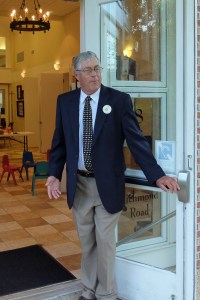
dscf1749_edited-1

Photo credit:  John Rothnie, http://www.hickoryneck.org

When my husband and I were engaged, we relocated to Delaware.  One of the first things on our priority list was finding a church home – partly because we missed church back in North Carolina, but also because we were hoping to make some new friends in our new town.  “Church shopping” was hard – nothing felt quite right, and our old standbys were not working.  I was born and raised in the United Methodist Church, and my husband had nominally been raised in the Presbyterian Church.  After months of frustration, and the recommendation of a friend, we tentatively tried out the Cathedral in Delaware.  My husband was sold on the first Sunday; I took some time to come around.  For a long time, I thought that we were just United Methodists who happened to worship in an Episcopal Church.  But what I did not realize was that a transformation was taking place – I was discovering the Church home I didn’t know I was missing.

Every person who walks in the door of a church has a similar story.  Sometimes a person is what we call a “cradle Episcopalian” – born, raised, and stayed in the Episcopal Church.  Sometimes a couple or family is looking for a compromise in faith traditions.  Sometimes people leave their denomination out of frustration and are looking for something that feels closer to the Gospel as they experience it.  And sometimes a person has never before stepped a foot in a church.  That’s part of the beauty of the Episcopal Church – our members come from a diverse set of experiences, all of which feed our mutual ministry.

That is why we are kicking off a class called “Discovery Class” this week at Hickory Neck.  Whether you are new to Hickory Neck, the Episcopal Church, or you have been around forever, I find it is always helpful to review our roots.  No matter how many times I teach this class, I find that people learn something new, feel inspired to deepen their faith, or find themselves reenergized about their Episcopal identity.  The class also gives us a chance to reflect on and celebrate the unique way that our Episcopal identity is incarnate at Hickory Neck.

I hope you will take some time this week to reflect on your own spiritual journey.  Think back to the times when you felt inspired, fed, and reinvigorated in your faith.  Recall the way you felt when you knew, or suspected, that your current faith community began to feel like a spiritual home.  And if you cannot join us at Hickory Neck, share some of those stories with your neighbors – and invite them into the wonderful work Jesus is doing in your church home!

Sermon – Luke 15.1-10, Jeremiah 4.11-12, 22-28, P19, YC, September 11, 2016

14 Wednesday Sep 2016

Posted by jandrewsweckerly in Sermons, Uncategorized

≈ Leave a comment

Tags

breath, celebrate, chaos, church, create, destroy, destruction, formless void, found, God, hope, Jesus, joy, lost, order, parable, September 11th, Sermon

I remember that day like it was months ago, not years ago.  I was driving into work, and caught the story right as I was about to exit the car.  A plane had crashed into one of the twin towers.  I rushed inside to find a radio, and my boss and I spent the day listening to the story unfold.  That night, I got the first glimpse of the destruction on television, and the visual was worse than listening to radio updates.  When the first tower fell, and then the second, the wind rushed out of me as I watched the wind rush out of those buildings.  Life lost inside, life being forced away from the wreckage, chaos and rubble left in the wake.  An eerie silence fell upon us as we watched in horror.

In Genesis 1, the narrator tells us that God forms the earth out of the formless void – tohu wa-vohu, in the Hebrew.  Out of nothingness and chaos, God forms order – separating the watery chaos from the earth, dividing the day from the night, bringing vegetation, beasts, and humans to life.  God takes chaos and creates order.  But on that day fifteen years ago, many of us felt like the opposite happened.  All of our order, routine, and compartmentalizing exploded into havoc.  Two-hundred and twenty stories of order were thrown into disorder – which does not even take into account the madness of destroyed winding hallways in the Pentagon and the decision of victims to crash into their own deaths rather than allow terrorists to use their plane for more destruction.  That day, we felt thrown back into a formless void, unsure of what end was up, and what had happened to our world.

I would like to say all is back to normal now – that after fifteen years, we or God managed to bring order back to the earth.  But all one has to do is look at the news and the state of our planet and governments around the world and feel like we are still in the formless void of post-9-11.  That is what makes the reading from Jeremiah so unsettling today.  As a foil to Genesis 1, Jeremiah 4 describes the earth as waste and void – the same word tohu wa-vohu found in Genesis.[i]  Jeremiah says that a hot, destructive wind[ii] blows and the earth becomes a mess – there is no light, the mountains quake, the people and birds of the air are gone, the fruitful land becomes a desert, and cities’ lay in ruin.  Jeremiah goes on to say something even more jarring – that the people are foolish and stupid.

Now, I imagine you may be sitting here today thinking, “This is supposed to be a celebratory day, and I managed to invite a friend to church.  Can you find us some joy, preacher?!?”  Don’t worry – we will get there.  I am happy to name where hope is today, but before we get to hope we have to go with Jeremiah into that desolate place.  You see, for those of us who know hope and joy, we know we do not arrive there on a straight path.  With the exception perhaps of children who have not begun to sense the depth of our depravity, most of us have been through the barren land Jeremiah sees coming.  Perhaps we only saw that formless void in the midst of a national tragedy, but perhaps we found that nothingness in the face of death, divorce, or debt.  Perhaps the destructive wind blew through our lives when violence, illness, or loneliness overwhelmed us.  We do not need to live in this world too long before we know exactly what that barren land looks and feels like.  There is probably even a scar left behind, or a metaphorical box we keep so that the watery chaos does not drown us.

But here is the weird part.  Only when we claim those times in our lives of tohu wa-vohu, those moments when the world is a formless void, can we experience the fullest heights of hope and joy.  Jeremiah calls the people nasty names today not because they are bad people or because they are not smart.  He calls them those nasty names because they have failed to remember gratefully and loyally who created them.  They have begun to live as if there is no hope, no grace.[iii]  And that is why we come to church.  To not let the formless voids of life overcome us, but to surround ourselves with a group of people who will remind us that there is still reason and room for hope.  We eagerly gather in church because we want to be reminded that our God graciously, lovingly, and mercifully blows a creative air into our nothingness and creates again and again.

That is why we celebrate on this day that could otherwise be a day of overwhelming sadness.  We celebrate today because Jesus tells us two parables that remind us why we are a people of hope.  These parables of being lost are why we gather with laughter and smiles today.  These parables are why we host a party later this afternoon – because we want to mirror the joy that God has over lost coins and sheep.

So how do we turn ourselves from the depths of sadness to the rejoicing of a heavenly party?  We need to do some work first.  Because the parable of the Prodigal Son follows these two short parables in Luke, we sometimes jump ahead and want to conclude, “All we need to do is repent, and the Lord will be happy.”[iv]  But today we only get these two short parables, and for that we are quite lucky.  Here’s the thing:  sheep and coins cannot repent.  They do not have the capacity to understand their own sinfulness.  They do not even have the capacity to act.  The funny thing about sheep who are lost is that they do not go around bleating for help.  They know that such noise might attract a predator.   Instead, they crouch behind a bush or other cover, and try to become invisible – paralyzed by the fear of being consumed in addition to being lost.[v]  Likewise, coins have no agency.  They cannot shout from under the couch cushion, “Over here by the crumbs!!”  Those being found cannot cause God to find them.  Nothing we do can earn us being found by God.  Being found, as always, is a gift from our loving God – who is the kind of God who will always seek us, ever search for us, even when searching for us may seem like a lost cause.  And on top of that, when those who are lost are found, the party that ensues is lavish, extravagant, and a taste of the heavenly banquet, as the heavens rejoice with God.

When I was growing up, money was often tight.  Though my parents rarely talked about our finances, I could tell the financial strain made them anxious.  As an adult, my father finally explained how they got by in scarce times.  A box of produce would show up on our doorstep on a day my dad was wondering what we eat that night.  A large bill would be sitting on the table and in our mailbox he would fine an envelope of cash – sometimes with a note that said, “thinking of you,” but sometimes without even a name.  Now, I am not saying that our family’s experience was the best financial planning model, but what our experience taught us is that sometimes you have no control over the good that happens in your life.  Sometimes you do not even have a person to thank.  Regardless, whatever blessing, whatever good comes our way, what Jesus invites us to do today is to be people who celebrate the God who, sometimes completely illogically, searches us out and finds us – and then throws a party when we are found.

When I realized we would be kicking off our program year on the same day as the fifteenth anniversary of September 11th, I was overcome with dread, wondering if maybe I could just ignore the anniversary and turn our hearts toward celebration.  But our scripture today made me realize that celebration – true, deep, heart-rending celebration – can only happen when we understand the depths of our indebtedness toward our gracious God.  Once we understand that debt, then we can celebrate with grateful hearts.  I am thrilled to be embarking on a new program year with Hickory Neck and look forward to all that this year brings.  But that sense of excitement is especially deep because I know the depths of the formless void – the chaos from which we were created and back into which we sometimes slide.  Having seen the barren land that we sometimes create, I can only be even more filled with gratitude that our God is a God who scours every corner to find the coin She has lost.  Today is a day for sobriety – but that sobriety also leads us to a celebration of the heart:  a lavish party with the heavenly host.  I am grateful to be a part of a faith community that invites me to be a person of abiding hope.  Amen.

[i] Anathea Portier-Young, “Commentary on Jeremiah 4:11-12, 22-28,” September 11, 2016, as found at http://www.workingpreacher.org/preaching.aspx?commentary_id=2973 on September 7, 2016.

[ii] George W. Ramsey, “Exegetical Perspective,” Feasting on the Word, Yr. C, Vol. 4 (Louisville: Westminster John Knox Press, 2010), 51.

[iii] Dwight M. Lundgren, “Homiletical Perspective,” Feasting on the Word, Yr. C, Vol. 4 (Louisville: Westminster John Knox Press, 2010), 53.

[iv] Karoline Lewis, “Lost and Found,” September 4, 2016, as found at http://www.workingpreacher.org/craft.aspx?post= 4708 on September 7, 2017.

[v] Helen Montgomery DeBevoise, “Pastoral Perspective,” Feasting on the Word, Yr. C, Vol. 4 (Louisville: Westminster John Knox Press, 2010), 70.

Working Together to Make it Work

07 Wednesday Sep 2016

Posted by jandrewsweckerly in Uncategorized

≈ Leave a comment

Tags

Christ, church, faith, family, generation, grow, love, multigeneration, witness

multigenerational

Photo credit:  https://www.indacoriskadvisors.com

Every year our family vacations at a place called, “Memorial House,” in Rehoboth Beach.  The house is owned by the Diocese of Delaware and is an 11-bedroom home used for retreats, meetings, and, in the summer, for family and church vacations.  Each family or individual has a private room, but the dining and living area is shared.  Each day in the summer, a full, hot breakfast and dinner is served buffet-style, and enjoyed at shared tables with the other guests.

This year, our family vacationed with another family with two children.  Joining us were a family with adult children, older couples, and some retired singles.  Our four children were the only children this year, making our eight-person dinner table the most raucous.  I lost count on how many tablecloths we changed, and the broom was never far from hand.  The other mom and I worried a bit that we might be disturbing what could have been a perfectly peaceful vacation for the others.

Luckily, I had two encounters that told a different story.  The first was with a grandmother who talked to us as we were preparing lunches.  She joked with us about how much work she saw us doing.  She confessed that she had already spent one week this summer at the beach with her own family – including children and grandchildren.  But she had done so much work that week that she decided to come to Memorial House so she could have an “actual vacation”!  Another grandmother talked to me at the end of our week.  She pulled me aside and said, “You know, I had forgotten how much work I did as a young mom.  You guys are doing a great job!”

What Memorial House does is a little like what Church does, when Church is at its best.  You see, Church is one of the few places that multiple generations gather to worship, learn, and grow together.  When the Church is at its best, grandmothers distract an inconsolable child when a mom or dad is at her or his wits end.  When Church is at its best, a retiree is teaching children his favorite Bible Stories in dramatic and fun ways.  When Church is at its best, youth know adults who might give them the same answers as their parents, but the youth can hear it better from someone else.  When Church is at its best, we are a multigenerational family, welcoming those from all walks of life, making sure we are all fed, nurtured, and empowered to go out into the world to witness the love of Christ.  This week, I am especially grateful for that gift!

Sermon – Jeremiah 1.4-10, P16, YC, August 21, 2016

07 Wednesday Sep 2016

Posted by jandrewsweckerly in Uncategorized

≈ Leave a comment

Tags

called, calling, church, God, Jeremiah, ministry, priest, prophet, Sermon, vocation

“What do you want to be when you grow up?”  I have lost count of how many times we have asked that question to our oldest daughter.  The answer varies widely depending on what phase she is in or what they have been talking about in school.  I confess that there have been times when I was disappointed when she changed her mind – “author and illustrator” was my favorite, though “engineer” was a pretty good one recently.  But my all-time favorite conversation about what she wanted to be when she grew up was actually a conversation about priesthood.  I asked her my typical question, “So have you decided what you want to be when you grow up?”  She replied thoughtfully, “I can’t decide.  There are too many options.”  Sympathetically I said, “I totally understand.  It took me years to decide what I wanted to be.”  And without a beat, she replied, with disgust, “And you decided to become a priest?!?”

The thing is, I do not think my daughter’s reaction is all that different than most people.  Very few people ever imagine themselves being ordained.  The vocation seems too foreign, to require some mysterious amount of holiness, or to just be too weird.  All of that makes sense to me – not everyone feels called to the priesthood.  But too often acknowledging we do not want to be a priest means that we stop using “call” language altogether.  Instead of being able to talk about what we feel called to do in life, we instead talk about what we want to be when we grow up.  A calling, a ministry, or even a vocation is something that clergy people do, not what we all do.

At least, that is what the secular world would have us believe.  The church says something a bit different.  Throughout our liturgies and Prayer Book, we talk about the ministry of all people.  Our Catechism defines the ministers of the Church as lay persons, bishops, priests, and deacons.  The Catechism further states that the ministry of lay persons is to represent Christ and his Church; to bear witness to him wherever they may be; and, according to the gifts given them, to carry on Christ’s work of reconciliation in the world; and to take their place in the life, worship, and governance of the Church.”[i]  In the baptismal covenant, we all promise to proclaim, by word and example, the Good News of God in Christ, to seek and serve Christ in all persons, and to strive for justice and peace.  Now some of you may argue that you do those things – just not as your daily work.  You are happy to be involved in church, but you do not see your life as a student, a secular worker, or a retiree as a vocation.

And stories like the one we hear in Jeremiah do not help us in this distinction.  You see, we hear Jeremiah’s call today like we hear the call of most prophets – and rightly so, since Jeremiah is so similar to other prophets.  Like Moses, Isaiah, and Ezekiel, Jeremiah balks at the idea that God may be calling him to do something.  Jeremiah protests that he is too young.  Similarly, Moses tried to argue he was unskilled, Isaiah that he was unworthy, and Ezekiel that he did not know what to say.[ii]  When God calls people to do big things, they often push back and seek an out.  In most cases, their fear is legitimate.  Being a prophet is often a thankless job – which can certainly lead to suffering, if not death.  But invariably, God reassures the person being called.  In Jeremiah’s case, God tells Jeremiah that he was born for this job.  “Before I formed you in the womb I knew you; and before you were born I consecrated you; I appointed you a prophet to the nations.”

All of that sounds nice. In fact, many of us love this verse from scripture because the verse gives us a sense of comfort, belonging, and affirmation – a sense that we are all known by God.[iii]  But what we forget is that in knowing Jeremiah so deeply, God also knows that Jeremiah will have to do a really hard job.  The touchy-feely part of the text starts to wane when we hear the part about being a prophet – especially a prophet who will need to fear others.  But here’s the real problem with Jeremiah’s call:  we do not think God similarly calls us.  Not even all priests see themselves as prophets.  Prophets, priests, deacons – those are jobs that other people do.  Those are not jobs we do.  We go to school everyday.  We are teachers, financial consultants, government workers, stay-at-home parents, or journalists.  We are retired and are done with the “job” part of our lives.  We hear stories like the call narratives of Jeremiah, Moses, Ezekiel, and Isaiah, and we can keep ourselves at a safe distance because those are the jobs that those people do.

But remember that catechism and baptismal covenant?  The truth is we are all called to something.  We all have a vocation.  That calling or vocation may be our jobs or what we do every day.  We may live out our vocation as a student when we stand up to a bully, play with the new kid who seems lonely, or help tutor the troublemaker clearly needs help.  We live out our vocations at work when we advocate for justice for our coworkers, when we offer an ear to a coworker who is struggling, or when we organize a volunteer day for our company.  We live out our vocations as retirees when we volunteer at the local homeless shelter, when we treat with dignity the workers we encounter who provide us services, and when we use our time to advocate for the poor.

But vocation is sometimes found outside of those typical confines.  Sometimes living into our vocation means calling that person who has been on our minds – only to discover how much they needed a word of encouragement.  Sometimes living into our vocation means helping the mom in front of us in the grocery store line who is clearly juggling children, groceries, and dealing with a cashier who has never handled food stamps or WIC benefits.  Sometimes living into our vocation means praising and giving thanks to a preschool teacher who just got chewed out by a parent who thinks their child is just fine (when you suspect the child is actually really hard for the teacher to manage).

This fall, we will be starting up an adult education series called Discovery Class.  The class is for newcomers and members alike, who want to learn more about our Episcopal Identity, the work of Hickory Neck, and how we can connect to a ministry.  In the final session, participants will take a survey to help us discern how our gifts might best tie in with a ministry at Hickory Neck.  The survey is a great resource because sometimes teachers are the best matches for Sunday School and Youth Group leadership.  But sometimes, best matches for Sunday School and Youth Group are retirees who have been around the block and get how hard the teenage years are.  Likewise, someone may have been may have been in construction or administration during their career, but really want to learn how to arrange flowers with the Flower Guild, or play with babies in the nursery.  Though many of us have vocations and callings out in the world, sometimes the church is another place where our vocations and callings feed us and others.

So if we are willing to agree that we all have a calling or vocation, recognizing that some vocations can change and evolve over time, how do we know if we are living into our calling?  The true test of a vocation might be something like this:  whatever in your life is the most intimidating, daunting, or even terrifying task (be it teaching teenagers, asking for money for church, or praying in front of a group), and yet, when you try doing that task gives you an odd sense of deep satisfaction and meaning, is probably your vocation.  Prophets would not go kicking and screaming if being a prophet was easy.  And yet, prophets would not say yes without the assurance that God is with them, empowering them to be God’s agents.[iv]

This fall, I hope we will all prayerfully consider what ministry God is calling us to do.  Paul says in his letter to the Ephesians, “I therefore, the prisoner in the Lord, beg you to lead a life worthy of the calling to which you have been called, …The gifts he gave were that some would be apostles, some prophets, some evangelists, some pastors and teachers, to equip the saints for the work of ministry, for building up the body of Christ, until all of us come to the unity of the faith and of the knowledge of the Son of God, to maturity, to the measure of the full stature of Christ.”[v]  Though Church is certainly meant to give us comfort and encouragement each week, Church is also the place that strengthens us and sends us out into the world to do the work Christ has given us to do.  One of my favorite church signs looked simple enough from the road – with the name of the church emblazed on front, as you drove into the parking lot.  But on the backside, as you were leaving church each week, the sign had a separate message.  The sign read, “Go in Peace to Love and Serve the Lord.”  That is our dismissal this and every week – to not just consume Church, but to use Church as our foundation to go out into the world to love and serve.  And our response is, as always, “Thanks be to God!”  Amen.

[i][i] BCP, 855.

[ii] Bruce C. Birch, “Exegetical Perspective,” Feasting on the Word, Yr. C, Vol. 3 (Louisville: Westminster John Knox Press, 2010), 367.

[iii] John t. DeBevoise, “Pastoral Perspective,” Feasting on the Word, Yr. C, Vol. 3 (Louisville: Westminster John Knox Press, 2010), 364.

[iv] Thomas R. Steagald, “Theological Perspective,” Feasting on the Word, Yr. C, Vol. 3 (Louisville: Westminster John Knox Press, 2010), 366, 368.

[v] Ephesians 4.1, 11-13.

So Let Your Light Shine…

03 Wednesday Aug 2016

Posted by jandrewsweckerly in Uncategorized

≈ Leave a comment

Tags

Christ, church, glory, God, inspire, joy, light, passion, shine, transformation

Let-Your-Light-Shine-Banner

Photo credit:  embracingbeauty.com/2013/04/20/letting-our-light-shine-by-donating-w-champions-for-kids-mobilizingmillions-cbias/

These last few weeks, I have been visiting outreach ministries that our parish supports.  The ministries have varied widely – from a free health clinic, to a ministry aimed at keeping seniors independent as long as possible, to a multi-service agency that works in a particularly impoverished area of our community.  Visiting the agencies has given me a great deal of perspective on the larger Williamsburg community – the various ways that poverty can impact the lives of our neighbors.  Whether the challenge is housing, health care, food, clothing, transportation, or education, the needs vary wide.  Luckily, there are people who are passionate about each need, and are working hard to make life a little better for our neighbors.

Equally helpful to learning the statistics and needs of each agency has been watching the passion of our parishioners who are involved in the ministries.  At each agency, a parishioner has shared with me why they volunteer, what inspires them, and how important the ministry is to our community.  With each parishioner, I see a certain tenderness toward the clients and a passion about the issue.   The parishioner’s entire demeanor changes when they talk about the ministry – making the case even more compelling than the executive director of the agency can make it.

As I have watched the physical transformation of our parishioners as they tell me about their passion for outreach ministries, I realized that is the same transformation I hope to see when they tell their friends about Hickory Neck.  You see, just like outreach ministries give us a sense of purpose outside of ourselves, church should similarly give us a sense of purpose outside of ourselves.  At church, we find ourselves inspired by worshiping our God.  At church, we find ourselves renewed as we learn and grow in our faith journey.  At church, we find ourselves made whole as we laugh and rejoice together.  At church, we are changed, we change others, and we change our community beyond the church walls.

I saw that same transformation as I interviewed with the Search Committee and Vestry over six months ago.  I saw that transformation in our parishioners this summer when I asked each of you what brings you joy about Hickory Neck.  And today, I imagine each of you might feel that inner transformation, that deep sense of joy, if you were to think about why you love Hickory Neck.  My invitation for all of us in the coming weeks is to take ourselves to that deep, inner sense of meaning, purpose, and joy, and to start inviting your friends and neighbors into that same experience.  If you speak from the heart, letting your light and passion shine through you, I promise you will inspire others more than you know.  Just like I saw the bodily transformation when you talked about your passions for outreach, your neighbors will be equally drawn in by your passion for church.  As we look to kick off the program year, I look forward to hearing how our newcomers were inspired by the Christ light shining in you, and wanted to find out how to capture that same light.

Putting Paint to Canvas…

27 Wednesday Jul 2016

Posted by jandrewsweckerly in Uncategorized

≈ Leave a comment

Tags

art, calendar, church, collaborate, community, masterpiece, ministry, mission, paint, priorities

paintbrush

Photo credit:  www.colortheorypainting.com/color-theory-blog/

This past winter, my church at the time held a “Paint Nite,” as a fundraising event.  As someone who has very little artistic skill, I was skeptical that I would come away with anything of worth.  Just sitting in front of the blank canvas seemed daunting.  When we took our first strokes to prepare the canvas for more color, I was convinced I would ruin the whole thing.  But as our teacher for the night slowly guided us through the exercise, breaking down each step of the process, the blank canvas slowly transformed.  First, into blocks of color; then with odd shapes inserted here and there; and finally, a picture emerged.  When I finished for the night, I sat back and thought to myself, “That’s not actually all that bad.”  As I looked around the room, all of our once blank canvases were transformed into unique, yet similar, works of art.

In some ways, that is the work of Hickory Neck this summer.  Committee leaders and Vestry liaisons have been gathering these past couple of months to prepare for our Vestry’s retreat/workday on Saturday.  Each Vestry member is assigned to be a liaison to a ministry area of the church and has been asked to assemble a calendar of the work each ministry area would like to do this year.  The Vestry and clergy will come together on Saturday to put that work together on a blank calendar and see what work of art emerges.

To some, working on calendars for a whole day may sound dull.  But I am convinced that our work this Saturday is important work for the life of the community.  By taking a holistic look at our calendar, we get a sense of our priorities, our strengths, and our challenges.  Instead of each ministry area doing what they do in isolation, we can step back and look at the fuller tapestry of life at Hickory Neck and discern whether the picture our calendar presents is the image we really want.  This is exciting work, full of possibility and potential.

I ask that you hold our Vestry in prayer this weekend as we do this collaborative work.  If you have already spent time working with your Vestry liaison, reflecting on goals and plans, thank you for the work you have already done.  If your ministry area has not yet had a chance to offer your dreams and goals with your Vestry liaison, please reach out to them this week.  This weekend we will be painting a beautiful picture together and I look forward to sharing the masterpiece with each of you as we kickoff our program year in September.  Great things are already happening at Hickory Neck.  Your Vestry and clergy are excited to make that work even better!

The Sound of Silence…

07 Thursday Jul 2016

Posted by jandrewsweckerly in Uncategorized

≈ 1 Comment

Tags

brokenness, church, contemplations, Episcopal, God, listen, noise, prayer, Rite I, silence, sinfulness, worship

The-Sound-of-Silence

Photo credit:  advisoranalyst.com/glablog/s015/05/27/jeff-miller-the-sound-of-silence.html

In almost every parish I have served, there has been an 8:00 am, Rite I, spoken service.  The crowd usually is not that large.  Because the service is spoken, it tends to be very quiet and to be the shortest service of the day.  Those who are attracted to the service usually like the language (We use “thee” and “thou” language and the service has a more penitential tone.)  Others like the brevity of the service – appreciating both going to church and having the rest of the day free.  While others like the service because it feels more contemplative and centering.

Though the service is always pretty quiet in whatever Episcopal Church you choose, what I have noticed about the 8:00 am crowd at Hickory Neck is that they tend to be not just prompt, but early.  Every Sunday, at least five minutes before the service begins, everyone is seated and is silent.  Up until this past Sunday, I found the practice unsettling.  On Sundays, I am usually amped up, and ready to jump into liturgical leadership.  As an extrovert, I am chatty, and am used to some lighthearted conversation before the service starts.  So the silence immediately before the service feels discordant with my pent-up energy.

But this past Sunday, I remembered a complaint long ago from a fellow parishioner at the Cathedral where I became an Episcopalian.  She used to complain that the beginning of the service was not meant to be happy hour – she was irritated by the chatter all around her when all she wanted to do was kneel on the prayer cushion in front of her and enjoy a moment of silence before the service began.  Even the bulletin had a comment at the beginning that reminded people that we should respect others’ desire to begin our worship in quiet contemplation and centering prayer.  Though I appreciated the guidance, I never really “got” it – until this past Sunday.

The beauty of five minutes of silence before worship is that you can let go of all the stuff on your to-do list.  The beauty of the five minutes of silence before worship is that you can let go of the pain, worry, anger, or stress that is ever present and present yourself humbly before worship.  The beauty of the five minutes of silence before worship is that you can listen to God instead of talk to God.  As a celebrant, I do not know that I will ever be able to use those last five minutes to center myself (I tend to arrive much earlier at church to find that centering time).  But as one who facilitates worship, I have found myself greatly appreciating the gift of those five minutes for our parishioners.  I could use a good five minutes today to just listen.  In the noise of mass gun violence, terrorism, racism, poverty, and suffering, I am a bit out of things to say to God.  Instead I would rather kneel in silence today and give humanity’s and my own brokenness and sinfulness to God.  What might you offer to God today in that silence?  What do you imagine you might hear in that silence?

Making hay…

29 Wednesday Jun 2016

Posted by jandrewsweckerly in Uncategorized

≈ Leave a comment

Tags

abundance, church, enjoy, God, goodness, make hay, proverb, summer, time, work

hay in field 1100_0

Photo credit:  www.cattlenetwork.com/advice-and-tips/cattle-feeding/make-hay-supplies-last-through-winter

“Make hay while the sun shines.”  That has been the motto this summer at our household.  Being new to our town, we are discovering all sorts of fun things – places to go, foods to try, even a community pool to enjoy.  I suppose coming from a climate that has long, sometimes tough winters, summer in a new place has felt like an open invitation to enjoy all the goodness around us for as long as we can (even though we have heard that winters are not so bad here).

In some ways, living by that old proverb has been a ton of fun.  For those of you who know me, I can be a creature of habit – Mondays are laundry day, Fridays are pizza night, etc.  Plus, we have young children who can be quite cranky if they do not get enough sleep or who can be quite rowdy if they do not get proper nutrition (e.g. too much ice cream from the awesome homemade ice cream joint within walking distance means sugar-crazed bedtime routines).  But despite my penchant for order and predictability, I am trying to embrace the “Make hay while the sun shines” mantra because we having a lot of fun.

That proverb is embraced at church over the summer too.  In the ebb and flow of church life, the program year (September through May) is the busy time of year – more programs, more activities, and more meetings.  In the summer, people travel, kids are off on adventures, and some of us are “making hay.”  Based on that shift, one might imagine that all is quiet at church during the summer.  In fact, we too are busy “making hay.”  The program year is being planned, calendars are coming together, and groups are meeting to strategize for needs in the fall.

I am grateful for time set apart for hay making.  Parishioners at Hickory Neck are working hard so that when things kickoff in the fall, all runs smoothly.  I am grateful for the time that people are committing to the church, the creativity they are contributing, and the joy and laughter with which we do it all.  Thank you to all those contributing behind the scenes!  I am happy to be making hay with you this summer!!

On Big Changes…

08 Wednesday Jun 2016

Posted by jandrewsweckerly in Uncategorized

≈ Leave a comment

Tags

baptism, being, celebrate, change, church, Holy Spirit, identity, nature, ontological change, ordination

4792_115739632564_7119988_n

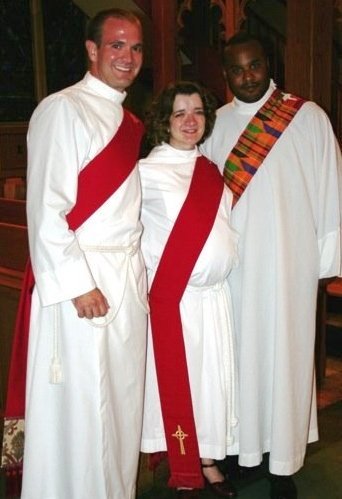
The Reverands Jody Burnett, Jennifer Andrews-Weckerly, and Charles Fischer III, Cathedral Church of St. John, June 24, 2009

Later this month I will celebrate the seven-year anniversary of my ordination.  What most people remember about that day was that I was very pregnant.  I confess that my large belly in an alb and a stole were rather extraordinary.  But what I remember about that day was a brief, but profound encounter.  I had gotten to the Cathedral early to make sure everything was in place and everyone knew where to go.  I was bustling around, managing logistics, when I ran into my boss, who was the rector of the church where I was serving.  She saw that I had my clergy shirt on but that I had not yet put on my collar.  You see, although you are not technically ordained until midway through the liturgy, you put your collar on before the liturgy starts.  The idea seemed strange to me to put it on before the bishop laid hands on me.  And if I am really being honest, I was really nervous about the whole endeavor.  My rector put her hands on my shoulders, looked me square in the eye, and said, “Jennifer, it’s time.  Go put on your collar.”

When we talk about ordination, we talk about the newly ordained experiencing an ontological change – a change in who the person is and in the nature of her existence.  It sounds rather dramatic because the change is dramatic.  When we ordain someone, we forever set them apart for a specific role in the church.

This Saturday, we will join our new curate, Charlie Bauer, as he is ordained to the transitional diaconate.  Charlie will be facing a similar ontological change – committing the rest of his life to this new way of being in and for the church.  Ordained persons do not simply start a new job.  Their whole person and existence is changed.  That is why an ordination is so special – because it is a day set apart for honoring this tremendous change.

Of course, all people in the church have access to ontological change.  Both baptism and confirmation are considered similar ontological changes – something profound happens in those moments, moments that only happen once in a lifetime.  We are marked as something different, and the way that we live our lives changes forever.  Because that change for all of us is so profound, the church sets apart days that we reaffirm our baptismal covenant and ordination vows.  We want to remember those tremendous moments when we put on a collar or stole, when water was poured over our heads, when a bishop placed heavy hands on our heads, and when we felt the Holy Spirit whisk through the room.  I hope you will join us as we celebrate this ontological change with Charlie.  But I especially hope you will take a moment to remember your own change and how the Spirit invites you to reclaim your changed identity.


The Power of Stories

18 Wednesday May 2016

Posted by jandrewsweckerly in Uncategorized

≈ Leave a comment

Tags

church, connect, encounter, meet, power, sacred, stories, stranger

Story

Photo credit: coolerinsights.com/2016/04/how-to-tell-winning-brand-stories-on-social-media/

Last week we started our Meet and Greets at Hickory Neck.  I knew that I wanted to get to know the people of the parish in a more meaningful way than just shaking hands in the receiving line after church.  And so, we are gathering in small groups of 10-12 people, and taking time to tell our stories.  The gatherings have already been a tremendous blessing.  I am learning about the varied ways that people found their way to Hickory Neck, their loves and passions, and their hopes and dreams.

What I particularly enjoy about the gatherings is the reminder of how powerful our stories are.  Each person in our community has a unique story, with elements that are quite familiar to us, and elements that are totally foreign to us.  I think that fascination with stories is why I have been attracted to efforts like Humans of New York or StoryCorps.  Those efforts are hoping to capture the everyday nature of our stories, while demonstrating the powerful ways that we connect through our stories.  Our stories have the ability to bring others joy, to elicit empathy, to bring us to tears, and to open up new worlds.

Too often, we are tempted to ignore the depth of those stories with strangers.  We are busy about our business, trying to accomplish tasks, or stick to a schedule.  In that routine, we forget that there are people all around us who have rich stories and whose lives may have something to teach us.  From that man who snapped at you in line, to the child who fell asleep in school, to the mom out in public in her pajamas, to the teen engrossed in social media, each person has a story behind their behavior – and the story may be much different than a quick glance allows us to assess.

If you have not joined a Meet and Greet, I encourage you to sign up at church.  In fact, even last night someone commented about how much they were learning about people they had known for quite some time.  But beyond our work within the community, I invite you to start looking at those outside of our community with a different eye:  the eye of someone who sees the unique and sacred stories we all have.  I look forward to hearing how your encounters go.

← Older posts
Newer posts →

Recent Posts

  • On Redefining Community…
  • On Parenting, Milestones, and Community…
  • Sermon – Acts 2.42-47, E4, YA, April 26, 2026
  • On Seasons of Discernment…
  • Sermon – Luke 24.13-35, E3, YA, April 19, 2026

Archives

  • May 2026
  • April 2026
  • February 2026
  • January 2026
  • December 2025
  • November 2025
  • October 2025
  • September 2025
  • August 2025
  • July 2025
  • June 2025
  • March 2025
  • February 2025
  • December 2024
  • November 2024
  • October 2024
  • September 2024
  • August 2024
  • July 2024
  • June 2024
  • May 2024
  • March 2024
  • February 2024
  • January 2024
  • December 2023
  • November 2023
  • October 2023
  • September 2023
  • August 2023
  • July 2023
  • June 2023
  • May 2023
  • March 2023
  • February 2023
  • January 2023
  • December 2022
  • November 2022
  • October 2022
  • June 2022
  • May 2022
  • January 2022
  • December 2021
  • November 2021
  • October 2021
  • September 2021
  • August 2021
  • June 2021
  • May 2021
  • April 2021
  • March 2021
  • February 2021
  • January 2021
  • December 2020
  • November 2020
  • October 2020
  • September 2020
  • August 2020
  • July 2020
  • June 2020
  • May 2020
  • April 2020
  • March 2020
  • February 2020
  • January 2020
  • December 2019
  • November 2019
  • October 2019
  • September 2019
  • August 2019
  • July 2019
  • June 2019
  • May 2019
  • April 2019
  • March 2019
  • February 2019
  • January 2019
  • December 2018
  • November 2018
  • October 2018
  • September 2018
  • August 2018
  • July 2018
  • June 2018
  • May 2018
  • April 2018
  • March 2018
  • February 2018
  • January 2018
  • December 2017
  • November 2017
  • October 2017
  • September 2017
  • August 2017
  • July 2017
  • June 2017
  • May 2017
  • April 2017
  • March 2017
  • February 2017
  • January 2017
  • December 2016
  • November 2016
  • October 2016
  • September 2016
  • August 2016
  • July 2016
  • June 2016
  • May 2016
  • April 2016
  • March 2016
  • February 2016
  • January 2016
  • December 2015
  • November 2015
  • October 2015
  • September 2015
  • August 2015
  • July 2015
  • June 2015
  • May 2015
  • April 2015
  • March 2015
  • February 2015
  • January 2015
  • December 2014
  • November 2014
  • October 2014
  • September 2014
  • August 2014
  • July 2014
  • June 2014
  • April 2014
  • March 2014
  • February 2014
  • January 2014
  • December 2013
  • November 2013
  • October 2013
  • September 2013
  • August 2013
  • July 2013
  • June 2013
  • May 2013
  • April 2013
  • March 2013
  • February 2013
  • January 2013
  • December 2012
  • November 2012
  • October 2012
  • September 2012

Categories

  • reflection
  • Sermons
  • Uncategorized

Meta

  • Create account
  • Log in
  • Entries feed
  • Comments feed
  • WordPress.com

Blog at WordPress.com.

  • Subscribe Subscribed
    • Seeking and Serving
    • Join 391 other subscribers
    • Already have a WordPress.com account? Log in now.
    • Seeking and Serving
    • Subscribe Subscribed
    • Sign up
    • Log in
    • Report this content
    • View site in Reader
    • Manage subscriptions
    • Collapse this bar

Loading Comments...